Choosing the Right Phospholipid Carrier Can Determine the Success of Your Liposomal Product
Different phospholipid systems can lead to significant differences in encapsulation efficiency, particle size, stability, manufacturing cost, and commercial scalability. This guide explains how OEM manufacturers evaluate carrier systems and what supplement brands should verify before selecting a manufacturing partner.
Table of Contents
- Why Carrier Selection Is One of the Biggest Risks in Liposomal Manufacturing
- What Is a Phospholipid Carrier System?
- Common Procurement Mistakes
- How OEM Manufacturers Select Carrier Systems
- Why Building Stable Liposomes Is More Difficult Than Choosing Phospholipids
- Types of Phospholipid Carrier Systems
- Core Components of a Phospholipid Carrier System
- Critical Quality Parameters: What Procurement Teams Should Verify
- Quality by Design (QbD) for Phospholipid Carrier Systems
- Applications by Active Ingredient
- Manufacturing Process: A Step-by-Step Guide
- Common Manufacturing Challenges and Solutions
- How to Evaluate an OEM Manufacturer
- Case Study: From 79% to 93% Encapsulation Efficiency
- Choosing the Right Carrier Platform by Product Format
- Procurement Checklist: Selecting a Phospholipid Carrier System
- Frequently Asked Questions
- Related Technologies
- Need Help Selecting the Right Carrier System?
1. Why Carrier Selection Is One of the Biggest Risks in Liposomal Manufacturing
For B2B OEM partners, the phospholipid carrier decision is not merely a formulation choice—it is a strategic risk point that affects every downstream commercial parameter:
| Risk Factor | Impact of Poor Carrier Selection | Consequence for Your Brand |
| Encapsulation Efficiency (EE) | Low EE means more active ingredient wasted per batch | Higher cost per dose; lower potency claims |
| Shelf Life Stability | Inadequate carrier composition leads to leakage, aggregation, oxidation | Product recall; regulatory non-compliance; brand damage |
| Manufacturing Cost | Suboptimal lipid:active ratio increases raw material waste | Reduced margins; uncompetitive pricing |
| Particle Size Distribution | Oversized particles reduce bioavailability; undersized particles risk physical instability | Reduced clinical efficacy; batch-to-batch inconsistency |
| Scalability | Carrier systems optimized only at lab scale fail during commercial batch-up | Production delays; failed technology transfer |
| MOQ Flexibility | Inflexible carrier platforms require large minimum orders | Working capital strain; inventory risk |
A clinical study on liposomal vitamin C demonstrates why carrier quality directly impacts commercial outcomes: liposomal delivery achieved 27% higher peak plasma concentration (Cmax) and 21% greater total systemic exposure (AUC0-24) compared to standard vitamin C in a randomized, double-blind, placebo-controlled crossover trial (n=27). Source: PMC11519160
This is not merely a technical difference—it is the difference between a product that delivers measurable clinical benefit and one that does not.
The Procurement Reality
Purchasing managers at supplement brands are not searching for “What is a phospholipid carrier?” They are searching for answers to questions like:
- Why does my liposomal glutathione product lose potency after 6 months?
- Why are quotes from three different OEM manufacturers varying by 300% for the same formulation?
- How do I know if my manufacturer is actually producing liposomes—or just mixing phospholipids with actives?
- Which carrier system will give me 24-month shelf life at ambient temperature?
This guide answers those questions.
2. What Is a Phospholipid Carrier System?
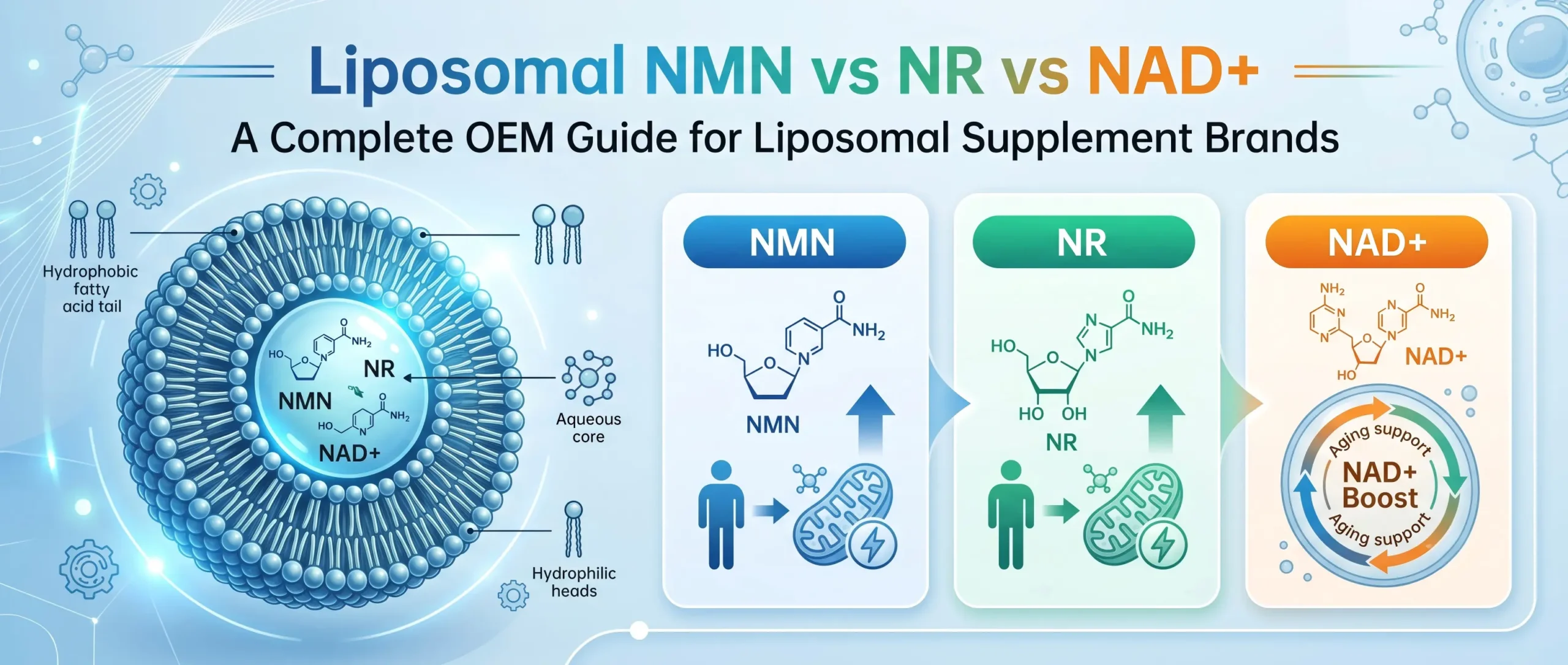
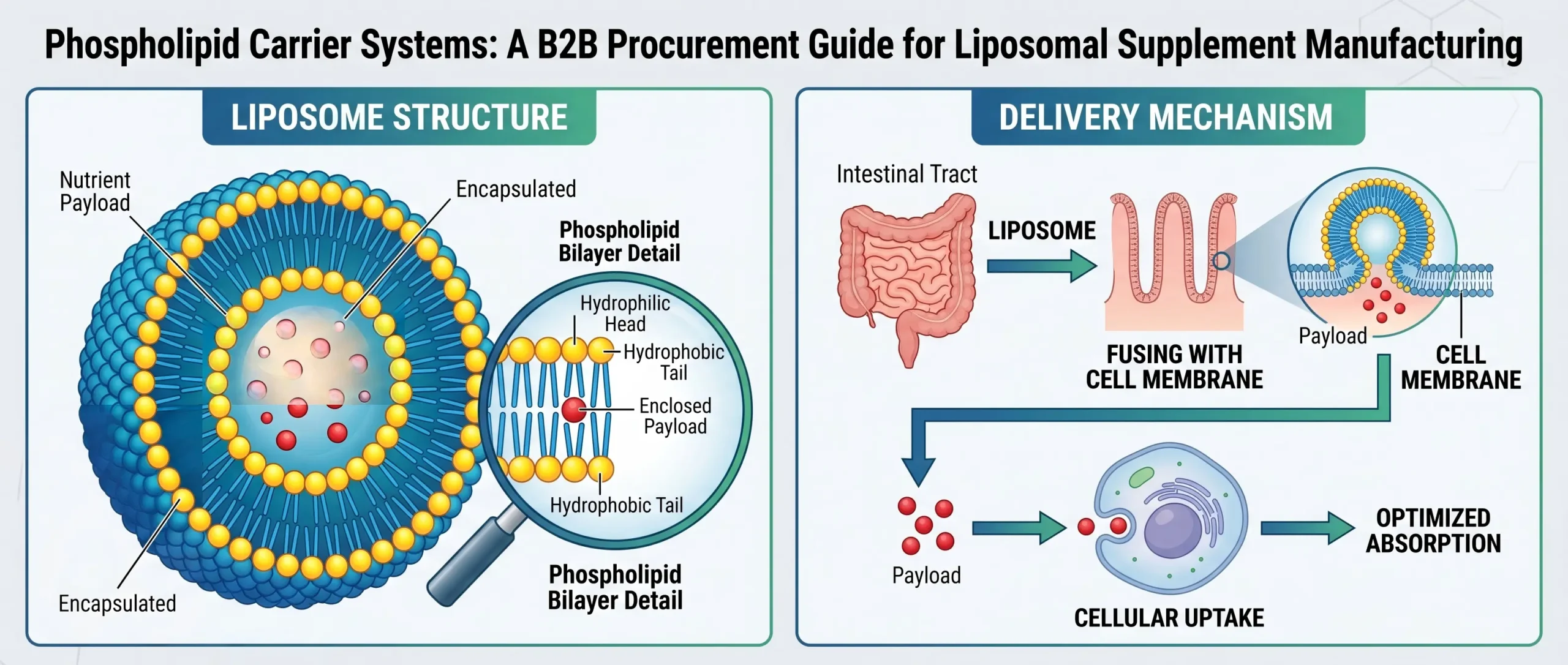
A phospholipid carrier system is a self-assembling lipid vesicle composed of amphiphilic phospholipids arranged in a bilayer structure. In aqueous environments, these molecules spontaneously organize into spherical vesicles with:
- Hydrophilic heads: facing outward (toward water)
- Hydrophobic tails: forming the membrane interior
- Aqueous core: for hydrophilic actives
- Lipophilic membrane interior: for fat-soluble compounds
This dual-compartment structure enables simultaneous encapsulation of both water-soluble and lipid-soluble bioactives—an advantage no single-phase delivery system can match.
Key Functions
| Function | Mechanism | Commercial Relevance |
| Bilayer Formation | Creates a membrane mimicking human cell structure | Biocompatibility; reduced immune clearance |
| Active Protection | Shields sensitive compounds from pH, enzymes, and oxidation | Extended shelf life; label claim compliance |
| Cellular Transport | Facilitates uptake via membrane fusion and endocytosis | Clinically verifiable bioavailability improvement |
| Controlled Release | Modifies release profiles through lipid composition tuning | Dose optimization; reduced side effects |
| Water Dispersion | Converts lipophilic actives into stable aqueous suspensions | Enables beverage and liquid formulations |
How Phospholipid Carriers Work:
- Self-Assembly: Phospholipids dispersed in aqueous media spontaneously orient based on hydrophobic/hydrophilic interactions.
- Hydration: Controlled hydration triggers the transition from lipid aggregates to lamellar sheets.
- Bilayer Formation: Sheets fold into closed vesicles, creating an aqueous core enclosed by a phospholipid bilayer.
- Active Entrapment: Hydrophilic actives (e.g., vitamin C, glutathione) load into the aqueous core. Lipophilic actives (e.g., curcumin, CoQ10) insert into the bilayer membrane.
- Nano-Vesicle Formation: High-pressure homogenization or microfluidic processing reduces vesicle size to the 100–300 nm range—optimal for cellular uptake and physical stability.
Research confirms that phosphatidylcholine (PC) is the backbone of liposome technology. The quality and purity of the PC used directly determines liposome size, encapsulation efficiency, and stability—all critical for pharmaceutical and nutraceutical performance. Source: Amitex India
3. Common Procurement Mistakes
After auditing hundreds of liposomal OEM formulations, we consistently see the same procurement errors. Avoiding these mistakes can save months of development time and significant commercial risk.
Mistake 1: Asking “What Phospholipid Do You Use?” Instead of the Right Questions
Wrong approach: “Do you use phosphatidylcholine?”
Right approach: Ask these specific technical questions:
| Question | Why It Matters | What Good Answer Looks Like |
| What is the PC purity percentage? | Determines self-assembly efficiency and vesicle uniformity | ≥90% for premium; ≥70% for standard formulations |
| What is the phospholipid source? | Affects allergen status, regulatory positioning, formulation compatibility | Sunflower (allergen-free), Egg (high purity), Soy (cost-effective) |
| Is the phospholipid hydrogenated or non-hydrogenated? | Hydrogenated improves oxidative stability; non-hydrogenated offers better fluidity | Hydrogenated for shelf-stable products; non-hydrogenated for premium bioavailability |
| What is the particle size after homogenization? | Influences bioavailability, physical stability, and batch uniformity | 100–220 nm for oral supplements |
| How is encapsulation efficiency validated? | Ensures the stated EE is real and reproducible | HPLC-based separation; free vs. encapsulated active quantification |
| Can you provide a 6-month accelerated stability report? | Verifies shelf-life claims before commercialization | ICH Q1A conditions: 40°C ± 2°C / 75% RH ± 5% |
Mistake 2: Comparing Quotes Based Only on Price Per Kilo
A manufacturer quoting $180/kg for liposomal glutathione with 55% EE is not “cheaper” than one quoting $280/kg with 93% EE. The effective cost per encapsulated gram of active is what matters:
| Scenario | Price/kg | EE | Effective Cost per Gram of Encapsulated Active |
| Low-cost option | $180 | 55% | $327 |
| Premium option | $280 | 93% | $301 |
The premium option is actually 8% less expensive on a functional basis—and typically delivers better stability, smaller particle size, and fewer batch failures.
Mistake 3: Not Verifying the Manufacturing Method
Not all “liposomal” products are true liposomes. A 2024 analysis found that products made by simple mixing (without controlled hydration and size reduction) showed EE as low as 12–17%, compared to >90% for properly manufactured liposomes. Source: Semantics Scholar
Mistake 4: Ignoring the Drying Technology
For powder products, the drying method is as important as the liposome formation: – Spray drying: Faster, lower cost, but can stress liposomal structure – Freeze drying: Preserves liposome integrity, higher cost, longer processing time – The choice of carrier excipient (maltodextrin, gum arabic, pullulan) significantly impacts powder stability and reconstitution performance.
4. How OEM Manufacturers Select Carrier Systems
Instead of using a standard phospholipid for every formulation, experienced manufacturers evaluate multiple variables to match the carrier system to the active ingredient and finished product requirements.
The Formulation Evaluation Matrix
| Evaluation Parameter | What We Assess | Impact on Carrier Selection |
| Active Polarity | Hydrophilic vs. lipophilic vs. amphiphilic | Determines aqueous core loading vs. bilayer incorporation |
| Molecular Weight | Small molecule vs. peptide vs. macromolecule | Affects encapsulation efficiency and release kinetics |
| Oxidation Sensitivity | Presence of thiol groups, unsaturated bonds, phenolic structures | Dictates need for hydrogenated phospholipids, antioxidant additives, nitrogen processing |
| Final Dosage Form | Liquid, powder, softgel, gummy, beverage | Determines carrier type, drying method, and stabilizer selection |
| Shelf-Life Target | 12 months, 24 months, 36 months | Influences sterol content, phospholipid saturation, packaging requirements |
| Filling Process | Aseptic cold-fill, hot-fill, encapsulation | Temperature constraints affect carrier composition |
| Packaging Format | Amber bottle, sachet, blister pack, bulk drum | Light, oxygen, and moisture barriers determine stability additives |
Example: Different Formulations Require Different Phospholipid Systems
| Active Ingredient | Carrier System | Rationale |
| Glutathione | High-PC nano-liposome (sunflower, ≥90% PC) | Thiol group protection; oxidation prevention; small particle size for cellular uptake |
| Curcumin | Bilayer-loading liposome with phytosterols | Lipophilic active requires bilayer incorporation; phytosterols stabilize membrane |
| NMN | Low-temperature process liposome | Heat-sensitive; requires controlled hydration below 45°C |
| Vitamin C | Standard liposome or nano-liposome | Hydrophilic; loads in aqueous core; high EE achievable with optimized lipid ratio |
| CoQ10 | Lipid-paste concentrated dispersion | Highly lipophilic; requires high lipid:active ratio to prevent crystallization |
This is where OEM expertise creates differentiation. A manufacturer that uses the same phospholipid grade for every active ingredient is not optimizing for performance—they are optimizing for procurement convenience.
5. Why Building Stable Liposomes Is More Difficult Than Choosing Phospholipids
Many brands assume that changing phospholipids automatically improves bioavailability. In reality, carrier selection is only one variable in a multi-parameter system.
Manufacturing Variables That Affect Final Product Quality
| Variable | Impact | Common Failure Mode |
| Homogenization Pressure | Determines particle size distribution and lamellarity | Insufficient pressure → large particles, low EE; Excessive pressure → bilayer disruption |
| Cycle Number | Affects size uniformity and PDI | Too few cycles → broad distribution; Too many → heat buildup, lipid degradation |
| Hydration Temperature | Controls bilayer formation kinetics | Too low → incomplete hydration; Too high → oxidation of heat-sensitive actives |
| Lipid Ratio | Determines membrane rigidity and loading capacity | Incorrect ratio → leakage, poor EE, physical instability |
| pH | Influences active ionization and electrostatic loading | Wrong pH → precipitation of ionizable actives, low EE |
| Active Loading Method | Passive vs. active loading determines EE | Passive loading often limited to <50% for some actives; active loading requires pH gradients |
| Drying Process | Affects liposome integrity in powder forms | Aggressive drying → bilayer collapse, leakage upon reconstitution |
| Storage Conditions | Determines shelf-life stability | Light, heat, oxygen exposure → oxidation, hydrolysis, aggregation |
A study on CoQ10 nanoliposomes demonstrated that high-pressure microfluidic homogenization achieved >96% encapsulation efficiency and PDI <0.3, with over 90% active retention after 40 days at 4°C—but only when pressure, cycle number, and temperature were precisely controlled. Source: MDPI Biomedicines
Why This Matters for Procurement
When evaluating an OEM manufacturer, ask not just “What phospholipid do you use?” but: – “What is your validated homogenization pressure range?” – “How many cycles do you run, and how do you prevent heat buildup?” – “What is your in-process particle size monitoring protocol?” – “How do you verify liposome integrity after drying?”
These questions separate technology-driven manufacturers from mixing operations.
6. Types of Phospholipid Carrier Systems
| Carrier Type | Structure | Best For | Key Advantage |
| Liposome | Phospholipid bilayer enclosing aqueous core | General nutraceuticals; dual encapsulation | Versatility; established regulatory history |
| Micelle | Single-layer spherical assembly | Lipophilic actives (curcumin, resveratrol) | Simple preparation; high solubilization capacity |
| Transfersome | Ultra-flexible vesicle with edge activators | Transdermal delivery | Skin penetration; deformable membrane |
| Ethosome | Soft phospholipid vesicle with ethanol | Topical and transdermal applications | Enhanced skin permeation |
| Nano-Liposome | Sub-200 nm liposome | IV and high-bioavailability oral formulations | Optimal cellular uptake; long circulation |
| Solid Lipid Nanoparticle (SLN) | Solid lipid core with phospholipid shell | Temperature-sensitive actives; sustained release | High physical stability; controlled release |
7. Core Components of a Phospholipid Carrier System
Core Bilayer Phospholipids
| Phospholipids | Primary Role | Key Characteristic |
| PC (Phosphatidylcholine) | Primary bilayer former; vesicle stability | Self-assembly capability; membrane fluidity regulator |
| PE (Phosphatidylethanolamine) | Promotes bilayer curvature; fusion enhancement | Cone-shaped geometry; supports non-lamellar phases |
| PS (Phosphatidylserine) | Surface charge modulation; targeting | Negative charge; recognized by immune cells |
| PG (Phosphatidylglycerol) | Anionic stabilization; charge repulsion | Prevents aggregation; supports bilayer rigidity |
| Sphingomyelin | Membrane rigidity; cholesterol interaction | Hydrogen bonding capacity; reduces permeability |
Phospholipid Source Selection Guide
| Source | PC Content | Advantages | Best For |
| Soy Lecithin (natural) | 20–25% PC | Widely available; cost-effective | Mass-market products; cost-sensitive formulations |
| Soy Lecithin (deoiled) | 30–40% PC | Better hydration properties; improved nano-vesicle uniformity | Standard liposomal formulations |
| Sunflower Lecithin | 25–90% PC (varies by grade) | Allergen-free; non-GMO; clean-label preferred | Premium positioning; allergen-sensitive markets |
| Egg PC | >50–95% PC | High vesicle-forming capability; strong bilayer formation | Clinical nutrition; high-EE requirements |
Critical insight: Higher PC purity directly correlates with more stable and efficient liposomes. The difference between 50% PC and 90% PC can mean the difference between 70% EE and 93% EE.
Membrane Stabilizers
| Stabilizer | Function | Considerations |
| Cholesterol | Traditional stabilizer; reduces membrane fluidity and permeability | Cost-effective; well-documented; not suitable for vegan claims |
| β-sitosterol | Plant-derived alternative; comparable membrane-stabilizing function | Research shows better membrane fluidity and physical stability than cholesterol in specific applications Source: PMC12896970 |
| Campesterol | Plant-derived; supports clean-label positioning | Vegan-compatible; clean-label compatible |
| Stigmasterol | Plant-derived; antioxidant activity | Can delay liposomal membrane peroxidation; excellent physical stability |
Research demonstrates that phytosterol oleate esters can effectively replace cholesterol to enhance liposome stability while supporting cardiovascular-friendly product positioning. Source: PMC12896970
Surface Modifiers
| Modifier | Function | Application |
| PEG (Polyethylene Glycol) | Extends circulation time; reduces immune clearance | Long-circulation formulations; targeted delivery |
| Chitosan | Positive surface charge; mucoadhesive properties; gastric protection | Oral delivery; gastric retention |
| Pectin | Natural coating; sustained release; clean-label compatible | Clean-label products; modified release |
| Proteins | Targeting ligands; enhanced cellular recognition | Targeted delivery systems |
Powder Carrier Materials (Drying Carriers)
These excipients convert liquid liposomal dispersions into stable powders:
| Carrier | Properties | Best For |
| Maltodextrin | Cost-effective; good solubility; glass transition control | Standard powder products |
| Gum Arabic | Excellent emulsifying properties; natural | Clean-label; beverage applications |
| Pullulan | Film-forming; oxygen barrier; premium positioning | High-stability requirements; premium products |
| Resistant Starch | Prebiotic benefit; controlled release | Functional food applications |
| Inulin | Prebiotic; soluble fiber; health halo | Health-positioned products |
Processing Aids
| Aid | Function |
| Glycerol | Cryoprotectant; viscosity modifier |
| MCT (Medium-Chain Triglycerides) | Lipophilic active solubilizer |
| Poloxamer | Stabilizer; prevents aggregation |
| Tween 80 | Emulsifier; particle size control |
| Silica | Flow agent; anti-caking in dried powders |
8. Critical Quality Parameters: What Procurement Teams Should Verify
Before approving any batch, procurement and QA teams should verify these parameters against scientifically validated target ranges:
| Parameter | Target Range | Impact on Product | Testing Method |
| Phospholipid Purity | ≥90% premium; ≥70% standard | Higher purity = better EE, smaller particle size | HPLC, TLC |
| PC Content | 30–95% depending on grade | Determines self-assembly efficiency and vesicle uniformity | HPLC-ELSD |
| Carrier Composition | Optimized lipid:sterol ratio | Affects membrane rigidity and release kinetics | Formulation documentation |
| Particle Size | 100–300 nm (optimal: 100–220 nm) | Smaller particles = higher bioavailability; larger may accumulate in liver/spleen | Dynamic Light Scattering (DLS) |
| PDI (Polydispersity Index) | ≤0.25 (premium: ≤0.20) | Uniformity indicator; lower = more consistent batch performance | DLS |
| Zeta Potential | ≥±30 mV | Colloidal stability; prevents aggregation | Electrophoretic Light Scattering |
| Encapsulation Efficiency (EE) | ≥85% (premium: ≥90%) | Active protection; dose accuracy; cost efficiency | HPLC separation (free vs. encapsulated) |
| Temperature Stability | Validated at 25°C/60% RH and 40°C/75% RH | Shelf-life prediction; storage condition definition | ICH Q1A accelerated stability |
| Oxidation Status | Peroxide value ≤3; TOTOX ≤10 | Prevents rancidity; maintains phospholipid integrity | Peroxide value titration |
| Moisture Content | ≤5% in powders | Prevents hydrolysis; maintains liposomal structure | Karl Fischer titration |
Clinical validation: A randomized, double-blind, placebo-controlled trial on liposomal vitamin C confirmed that particle size below 220 nm with PDI <0.3 is associated with significantly enhanced absorption—+27% higher plasma Cmax compared to standard vitamin C. Source: PMC11519160
9. Quality by Design (QbD) for Phospholipid Carrier Systems
Quality by Design (QbD) is a systematic approach to pharmaceutical development that begins with predefined objectives and emphasizes product and process understanding and process control. Regulatory agencies including the US FDA and EMA strongly encourage QbD implementation for liposomal products. Source: PMC9822211
The QbD Framework for Liposomal Manufacturing
The QbD approach follows a structured hierarchy:
Quality Target Product Profile (QTPP) → Critical Quality Attributes (CQAs) → Critical Material Attributes (CMAs) + Critical Process Parameters (CPPs) → Design Space → Control Strategy
Critical Material Attributes (CMAs)
| Material Attribute | Impact on Quality | What to Control |
| PC Purity | Directly affects EE, particle size, and vesicle stability | ≥90% for premium; Certificate of Analysis required |
| Phospholipid Source | Allergen profile; fatty acid saturation; regulatory status | Sunflower (allergen-free), Egg (high performance), Soy (cost-effective) |
| Fatty Acid Profile | Membrane fluidity; oxidation stability | Saturated (hydrogenated) for stability; unsaturated for fluidity |
| Sterol Content & Type | Membrane rigidity; release kinetics | Cholesterol (traditional) or phytosterols (vegan/clean-label) |
| Moisture Content | Hydrolysis risk; liposomal integrity | ≤5% in incoming raw materials |
| Peroxide Value | Oxidation status; shelf-life prediction | Peroxide value ≤3; TOTOX ≤10 |
Critical Process Parameters (CPPs)
| Process Parameter | Impact on Quality | Control Range |
| Homogenization Pressure | Particle size; PDI; bilayer integrity | 50–150 MPa (formulation-dependent) |
| Cycle Number | Size uniformity; heat exposure | 3–7 cycles (balance efficiency vs. heat) |
| Hydration Temperature | Bilayer formation; active stability | 40–60°C (adjust for heat-sensitive actives) |
| Hydration Time | Vesicle completeness; EE | 30–120 minutes |
| pH | Active ionization; electrostatic loading | pH 5.0–7.5 (active-dependent) |
| Lipid:Active Ratio | Loading capacity; EE | Optimized per active (typically 5:1 to 20:1) |
| Drying Temperature | Liposome integrity in powders | Inlet: 120–160°C; Outlet: <60°C (spray drying) |
Critical Quality Attributes (CQAs)
| Quality Attribute | Target | Measurement Method |
| Particle Size | 100–220 nm | DLS |
| PDI | ≤0.25 | DLS |
| EE (Encapsulation Efficiency) | ≥85–93% | HPLC |
| Zeta Potential | ≥±30 mV | Electrophoretic Light Scattering |
| Stability (Accelerated) | Pass at 40°C/75% RH, 6 months | ICH Q1A |
| Active Assay | 95–105% of label claim | HPLC/UV |
The QbD approach ensures that quality is built into the product from the start—rather than tested in at the end. Manufacturers operating within a validated design space can make process adjustments without requiring regulatory re-approval, enabling continuous improvement and faster scale-up. Source: Frontiers in Drug Delivery
10. Applications by Active Ingredient
The following table provides procurement-relevant data for high-demand nutraceutical actives, including recommended carrier systems, manufacturing challenges, and typical encapsulation efficiency ranges:
| Active Ingredient | Recommended Carrier System | Manufacturing Challenge | Typical EE Range | Key Bioavailability Evidence |
| Glutathione | High-PC nano-liposome (sunflower, ≥90% PC) | Oxidation of thiol groups during processing | 85–93% Source: WBCIL | Proliposome formulations showed enhanced bioavailability vs. commercial capsule and pure GSH in rat models Source: PMC6407602 |
| Curcumin | Bilayer-loading liposome with phytosterols | Aggregation; extreme lipophilicity | 80–90% | Liposomal curcumin achieved ~31% oral bioavailability vs. <5% for free curcumin (nearly 6x improvement) Source: Longdom |
| NMN | Low-temperature process liposome (DMPC-based) | Hydrolysis; heat sensitivity; controlled release needed | 35–40% Source: PMC12192994 | DMPC-NMN liposomes demonstrated blood-brain barrier permeability and protective effects against oxidative stress in sarcopenia models Source: PMC12192994 |
| CoQ10 | Lipid-paste concentrated liposomal dispersion | High lipophilicity; crystallization risk | >96% Source: MDPI | High-pressure microfluidic homogenization achieved >96% EE with PDI <0.3 and 90% retention after 40 days |
| Vitamin C | Standard liposome or nano-liposome | Gastric degradation; dose-dependent absorption saturation | 65–80% | Randomized DBPC trial (n=27): +27% plasma Cmax, +21% AUC vs. standard vitamin C Source: PMC11519160 |
| PQQ | Bilayer incorporation + aqueous core loading | Instability; poor water solubility | 75–85% | Dual-loading strategy maximizes PQQ content per vesicle |
| Resveratrol | Encapsulation in bilayer + optional PEGylation | Poor solubility; rapid clearance | 80–90% | PEGylation extends circulation time for sustained release |
| Vitamin D | Micellar/liposomal dispersion | Fat-soluble; absorption variability | 85–92% | Liposomal dispersion ensures consistent dosing |
| Quercetin | Liposomal encapsulation | Low bioavailability; poor solubility | 75–85% | Liposomal delivery enhances antioxidant delivery |
| Berberine | Liposomal bypass of efflux pumps | P-glycoprotein efflux; low absorption | 70–80% | Liposomal encapsulation achieves 10–20x bioavailability improvement |
Procurement Note: The EE ranges above represent what is achievable with optimized formulations and validated manufacturing processes. If your current manufacturer reports EE significantly below these ranges, the issue may be formulation-related—not active-related.
11. Manufacturing Process: A Step-by-Step Guide
Understanding the manufacturing process helps procurement teams identify where quality risks occur—and which questions to ask potential OEM partners.
Step 1: Raw Material Qualification
| Check | What to Verify |
| Phospholipid COA | PC content, peroxide value, fatty acid profile, non-GMO status |
| Active Ingredient COA | Potency, purity, heavy metals, microbial limits |
| Excipient COA | Sterol purity, carrier material specifications |
| Supplier Qualification | cGMP certification, audit history, supply chain traceability |
Step 2: Incoming QC
- Identity testing (FTIR, TLC)
- Potency verification
- Moisture content
- Peroxide value (for phospholipids)
- Microbial screening
Step 3: Hydration
Phospholipids are dispersed in aqueous media at controlled temperature (40–60°C) with continuous mixing. Hydration time: 30–120 minutes depending on formulation.
Failure point: Insufficient hydration → incomplete vesicle formation → low EE.
Step 4: Homogenization / Size Reduction
| Method | Pressure/Speed | Typical Output | Best For |
| High-Pressure Homogenization (HPH) | 50–150 MPa | 100–300 nm | Large-scale production; cost efficiency |
| Microfluidic Processing | Controlled flow rates | 80–200 nm; PDI <0.2 | Premium products; precise size control |
| Ultrasonication | Probe sonication | 100–500 nm | Lab-scale; rapid processing |
Research confirms that traditional manufacturing methods (simple hydration, basic sonication) typically achieve only 20–40% EE, while advanced methods like high-pressure microfluidic homogenization can achieve >96% EE. Source: Nanotechs Application Note
Failure point: Excessive heat during homogenization → lipid oxidation → rancidity → shelf-life failure.
Step 5: Nano-sizing (Extrusion)
Extrusion through polycarbonate membranes with defined pore sizes (e.g., 100 nm, 200 nm) ensures uniform particle size distribution and reduces PDI.
Step 6: Encapsulation Efficiency Testing
HPLC-based separation of free vs. encapsulated active. Target: ≥85% (premium: ≥90%).
Step 7: Drying (for Powder Products)
| Method | Temperature | Liposome Integrity | Cost |
| Spray Drying | Inlet 120–160°C; Outlet <60°C | Moderate (carrier-dependent) | Lower |
| Freeze Drying (Lyophilization) | Sublimation at low temperature | Excellent | Higher |
Failure point: Aggressive spray drying → bilayer collapse → EE drops upon reconstitution.
Step 8: Packaging
- Nitrogen flushing to prevent oxidation
- Light-blocking packaging (amber bottles, opaque films)
- Moisture-barrier films (for powders)
- Oxygen absorbers (for oxygen-sensitive actives)
Step 9: Stability Testing
| Test | Condition | Duration |
| Accelerated | 40°C ± 2°C / 75% RH ± 5% | 6 months |
| Intermediate | 30°C ± 2°C / 65% RH ± 5% | 12 months |
| Long-term | 25°C ± 2°C / 60% RH ± 5% | 24–36 months |
Step 10: Release Testing
Final QC before release: particle size, PDI, zeta potential, EE, active assay, microbial limits, heavy metals.
12. Common Manufacturing Challenges and Solutions
| Challenge | Root Cause | Solution |
| Leakage | High membrane fluidity; small particle size; incorrect sterol ratio | Optimize cholesterol/phytosterol ratio; use hydrogenated phospholipids; validate sterol content |
| Aggregation | Insufficient surface charge; high ionic strength; pH near isoelectric point | Ensure zeta potential ≥±30 mV; optimize buffer composition; adjust pH away from isoelectric point |
| Oxidation | Unsaturated fatty acids; light/heat exposure; inadequate antioxidant protection | Use hydrogenated phospholipids (HSPC); add tocopherols; nitrogen packaging; light-blocking containers |
| Poor Dispersion | Inadequate hydration; incompatible drying carrier; high powder moisture | Optimize powder carrier selection; validate reconstitution protocol; control inlet temperature during drying |
| Low EE | Incorrect lipid:active ratio; incompatible charge; insufficient hydration | Adjust drug:lipid ratio; incorporate charged lipids for electrostatic loading; extend hydration time |
| Powder Collapse | High moisture; incompatible carrier; glass transition issues | Use glass transition-optimized carriers (maltodextrin DE<10, gum arabic); control moisture ≤5% |
| Batch-to-Batch Variability | Inconsistent raw materials; uncontrolled process parameters | Implement QbD; validate design space; incoming QC on every batch |
13. How to Evaluate an OEM Manufacturer
Before committing to a manufacturing partnership, request the following documentation and capabilities:
Technical Documentation Checklist
| Document | Why It Matters | Red Flags |
| Particle Size Report | Verifies nano-range; confirms bioavailability potential | No DLS data; average size >300 nm; PDI >0.3 |
| PDI (Polydispersity Index) | Indicates batch uniformity and manufacturing consistency | PDI >0.25; no PDI reported |
| Zeta Potential Report | Predicts colloidal stability and shelf life | <±25 mV; no zeta potential data |
| EE Validation Method | Ensures stated EE is real, not estimated | No HPLC method; EE estimated by indirect method; EE <70% |
| Accelerated Stability Data | Verifies shelf-life claims before you invest in commercialization | No 40°C/75% RH data; stability <12 months claimed without data |
| TEM Images | Visual confirmation of liposome morphology; detects aggregation | No microscopy data; images show irregular shapes or aggregates |
| Raw Material COA | Ensures phospholipid quality and purity | No COA; PC content not specified; high peroxide value |
| Heavy Metals Report | Regulatory compliance; consumer safety | No heavy metals testing; exceeds USP/EP limits |
| Residual Solvent Analysis | Safety verification (for solvent-based processes) | No GC-MS residual solvent data |
| Microbiological Report | Confirms product safety | No microbial testing; exceeds USP <61>/<62> limits |
| Manufacturing SOP | Process consistency; technology transfer capability | No documented SOPs; batch records incomplete |
| Scale-Up Validation | Confirms lab results translate to commercial batches | No pilot batch data; no process validation at target batch size |
Facility and Quality Certifications
| Certification | What It Confirms |
| cGMP | Current Good Manufacturing Practices compliance |
| ISO 22000 / FSSC 22000 | Food safety management system |
| Non-GMO Verification | Supply chain integrity for non-GMO claims |
| Allergen-Free Certification | Critical for sunflower/egg phospholipid sources |
| Third-Party Analytical Verification | Independent verification of CoA, stability data, heavy metals, microbial testing |
Key Questions to Ask
- “What is your validated encapsulation efficiency range for [specific active]?”
- “Can you provide a 6-month accelerated stability report under ICH Q1A conditions?”
- “What is your in-process particle size monitoring frequency?”
- “How do you control homogenization temperature to prevent oxidation?”
- “What is your maximum commercial batch size for this formulation?”
- “Can you provide a Certificate of Analysis for every raw material lot?”
- “What is your validated design space for this product?”
14. Case Study: From 79% to 93% Encapsulation Efficiency
The Problem
A supplement brand’s liposomal glutathione product showed visible separation after 3 months of ambient storage. Customer complaints were increasing. The brand’s existing OEM manufacturer insisted the formulation was “standard.”
The Investigation
Independent analysis revealed: – Carrier phospholipid PC content: Only 45% (manufacturer claimed “pharmaceutical grade”) – Particle size: 380 nm average (well above the optimal range) – PDI: 0.42 (indicating highly inconsistent batch quality) – Actual EE: 79% (manufacturer claimed “over 90%”) – Zeta potential: -18 mV (below the stability threshold of ±30 mV)
The root cause: The manufacturer was using low-cost soy lecithin with minimal purification, inadequate homogenization pressure, and no validated process parameters.
The Optimization
| Parameter | Before | After |
| Phospholipid Source | Low-purity soy lecithin (45% PC) | High-purity sunflower phospholipid (≥90% PC) |
| Homogenization Method | Basic HPH, 1 pass | Optimized microfluidic homogenization, 3 cycles |
| Sterol Addition | None | β-sitosterol at optimized ratio |
| Hydration Protocol | 30 minutes at 50°C | 90 minutes at 45°C with controlled pH |
| Nitrogen Processing | No | Full nitrogen blanket during hydration and homogenization |
The Result
| Metric | Before | After |
| Encapsulation Efficiency | 79% | 93% |
| Particle Size | 380 nm | 168 nm |
| PDI | 0.42 | 0.19 |
| Zeta Potential | -18 mV | -42 mV |
| Shelf Life (Validated) | 6 months (actual: 3 months) | 24 months at ambient temperature |
| Batch Failure Rate | 23% | <2% |
Clinical context: Research by WBCIL demonstrated that liposomal glutathione with >90% EE maintains encapsulation efficiency above 80% throughout 3 years of storage at 40°C ± 2°C and 75% RH ± 5%—confirming that high EE and validated manufacturing translate directly to commercial stability. Source: WBCIL
The Lesson
The difference between a failed product and a market-leading product was not the active ingredient—it was the carrier system, the manufacturing process, and the quality controls surrounding them.
15. Choosing the Right Carrier Platform by Product Format
| Finished Product Format | Recommended Carrier System | Key Considerations |
| Liquid Supplement | Standard liposome or nano-liposome | Ready-to-dispense; stable in aqueous media; preservative system required for multi-dose |
| Powder/Sachet | Spray-dried liposome with protective carrier | Reconstitutes instantly; extended shelf life; carrier selection critical for dispersibility |
| Hard Capsule | Freeze-dried liposomal powder | Compatible with standard encapsulation equipment; moisture control essential |
| Softgel | Lipid paste or concentrated liposomal dispersion | Direct filling; no water activity concerns; compatible with standard softgel manufacturing |
| Gummy | Heat-stable liposomal powder or pre-dispersed liquid | Must survive gummy manufacturing temperatures (70–90°C); heat-stable formulation required |
| Functional Beverage | Nano-liposomal liquid concentrate (sub-200 nm) | Clear dispersion; no sedimentation; rapid absorption; beverage-compatible preservative system |
16. Procurement Checklist: Selecting a Phospholipid Carrier System
Use this checklist when evaluating carrier systems and OEM manufacturers. This is the document procurement managers save, print, and share with their technical teams.
| Evaluation Item | Why It Matters | Minimum Requirement | Preferred Target |
| PC Purity | Determines bilayer quality, EE, and vesicle stability | ≥70% | ≥90% |
| Phospholipid Source | Affects allergen status, regulatory positioning, formulation compatibility | Documented source (soy/sunflower/egg) | Sunflower (allergen-free) or Egg (high purity) |
| Encapsulation Efficiency | Indicates loading efficiency and dosage consistency | ≥70% | ≥85–93% (active-dependent) |
| Particle Size Distribution | Influences bioavailability and batch uniformity | 100–300 nm | 100–220 nm |
| PDI | Reflects manufacturing consistency | ≤0.30 | ≤0.20 |
| Zeta Potential | Predicts colloidal stability and aggregation risk | ≥±25 mV | ≥±30 mV |
| Stability Data | Verifies expected shelf life under real storage conditions | 3 months accelerated | 6 months accelerated (ICH Q1A) |
| Manufacturing Method | Impacts scalability and reproducibility | Documented SOP | Validated QbD approach |
| Drying Technology | Critical for powder recovery and long-term stability | Appropriate for format | Validated for liposome integrity |
| OEM Technical Support | Essential for formulation optimization and commercialization | Basic QC support | Full QbD support; design space validation; regulatory documentation |
| Raw Material COA | Ensures quality and traceability | Per batch | Per batch + supplier qualification |
| Regulatory Compliance | Market authorization and consumer safety | cGMP | cGMP + ISO 22000 + third-party verification |
17. Frequently Asked Questions
Q: How do I compare two OEM manufacturers for the same liposomal product?
A: Compare these five parameters head-to-head: 1. Encapsulation Efficiency (HPLC-validated, not estimated) 2. Particle Size + PDI (DLS report, not microscopy alone) 3. Accelerated Stability Data (40°C/75% RH, minimum 3 months, preferably 6) 4. Raw Material COA (PC content, peroxide value, source) 5. Manufacturing Method Documentation (SOP, validated parameters, design space if QbD)
The manufacturer that provides complete documentation for all five is the lower-risk choice—even if their price per kilo is higher.
Q: Why are two liposomal products using the same phospholipid performing differently?
A: Because the phospholipid is only one variable. The difference typically comes from: – Homogenization parameters (pressure, cycles, temperature control) – Hydration protocol (time, temperature, pH) – Lipid:active ratio (optimized vs. generic) – Sterol content (presence/absence, type, ratio) – Drying method (spray vs. freeze drying; carrier selection) – Quality controls (in-process monitoring vs. end-point testing only)
Q: Can high EE still result in poor stability?
A: Yes. High EE at Day 0 does not guarantee stability at Month 12. Stability depends on: – Membrane composition (sterol content, phospholipid saturation) – Zeta potential (colloidal stability) – Antioxidant protection – Packaging (nitrogen flushing, light blocking, moisture barriers) – Storage conditions
Always request accelerated stability data (ICH Q1A: 40°C/75% RH) to verify that high EE is maintained over time.
Q: Does higher phospholipid purity always mean better performance?
A: Not always, but generally yes. Higher PC purity (>90%) provides: – Better self-assembly → smaller, more uniform particles – Higher EE → less wasted active – Better stability → longer shelf life
However, for some cost-sensitive applications, 70% PC may be adequate if the formulation is otherwise well-optimized. The key is matching the purity grade to the product positioning and performance requirements.
Q: Why does one manufacturer recommend soy while another recommends sunflower phospholipids?
A: Each source has distinct advantages: – Soy: Lower cost; widely available; good for standard formulations – Sunflower: Allergen-free; non-GMO; clean-label preferred; better for premium positioning – Egg: Highest PC purity; strongest vesicle formation; best for clinical nutrition
The recommendation depends on your target market (allergen sensitivity, clean-label demand), price positioning, and performance requirements.
Q: How much phospholipid is typically required for 1 kg of active?
A: The lipid:active ratio varies by active and target EE: – Small hydrophilic molecules (vitamin C, glutathione): 5:1 to 10:1 – Lipophilic actives (curcumin, CoQ10): 10:1 to 20:1 – Large or complex molecules (peptides): 15:1 to 30:1
A well-optimized formulation achieves higher EE at lower ratios—this is where OEM expertise matters.
Q: Can one carrier platform support multiple active ingredients?
A: Yes, within limits. The dual-compartment structure of liposomes allows simultaneous loading of: – Hydrophilic actives in the aqueous core – Lipophilic actives in the bilayer membrane
However, compatibility testing is essential to prevent: – Competition for encapsulation space – Charge interactions that reduce EE – Chemical degradation of one active by another
Request compatibility data from your OEM partner before committing to multi-active formulations.
Q: How should EE be validated?
A: The gold standard is HPLC-based separation: 1. Separate free active from liposome-encapsulated active (ultrafiltration, size-exclusion chromatography, or protamine precipitation) 2. Quantify free active in the filtrate 3. Disrupt liposomes (methanol, Triton X-100, or freeze-thaw) and quantify encapsulated active 4. Calculate: EE% = (Encapsulated Active / Total Active) × 100
Be wary of indirect methods (turbidity, dye exclusion) that estimate rather than measure EE.
Q: What stability studies should I request before commercialization?
A: Minimum requirements: | Study | Condition | Duration | What It Tells You | |——-|———–|———-|——————-| | Accelerated | 40°C ± 2°C / 75% RH ± 5% | 6 months | Shelf-life prediction; degradation kinetics | | Intermediate | 30°C ± 2°C / 65% RH ± 5% | 12 months | Confirmation of accelerated data | | Long-term | 25°C ± 2°C / 60% RH ± 5% | 24–36 months | Real-time shelf-life verification | | Freeze-Thaw | 3 cycles: -20°C to 25°C | 1 week | Shipping and handling robustness | | Light Stability | ICH Q1B (1.2 million lux hours) | Variable | Packaging adequacy for light-sensitive products |
Q: What is a phospholipid carrier?
A: A self-assembling lipid vesicle composed of phospholipid bilayers that encapsulates, protects, and delivers bioactive compounds. It mimics natural cell membranes for enhanced biocompatibility and cellular uptake.
Q: How is a phospholipid carrier different from a liposome?
A: A liposome is one type of phospholipid carrier. The term “carrier system” encompasses liposomes, micelles, transfersomes, ethosomes, and solid lipid nanoparticles—each optimized for specific delivery requirements.
Q: What affects carrier stability?
A: Key factors include phospholipid purity, PC content, sterol composition, particle size, zeta potential, storage temperature, moisture, and light exposure. Hydrogenated phospholipids and proper antioxidant protection significantly extend shelf life.
Q: Which phospholipid performs best for liposomes?
A: Phosphatidylcholine (PC) is the primary bilayer former. For premium formulations, purified PC (≥90%) from sunflower or egg sources provides optimal vesicle formation and encapsulation efficiency. For cost-sensitive products, soy lecithin (30–50% PC) remains viable.
Q: Can phytosterols replace cholesterol in liposomal formulations?
A: Yes. β-sitosterol, stigmasterol, and campesterol offer comparable membrane-stabilizing properties while supporting vegan, clean-label, and cholesterol-free product positioning. Research shows β-sitosterol can provide better membrane fluidity and physical stability than cholesterol in specific applications. Source: PMC12896970
Q: What particle size is optimal for oral liposomal supplements?
A: 100–220 nm is the validated sweet spot—small enough for efficient cellular uptake and lymphatic transport, yet large enough to maintain physical stability and avoid rapid RES clearance.
Q: How do I verify encapsulation efficiency?
A: Reputable OEM partners provide HPLC-based EE testing, separating free active from encapsulated active. Premium manufacturers achieve ≥90% EE for water-soluble vitamins and ≥85% for lipophilic botanicals.
Q: Are phospholipid carriers suitable for heat-sensitive actives?
A: Yes, but process temperature must be controlled. High-PC phospholipids form bilayers at moderate temperatures (40–60°C). For highly heat-sensitive actives (e.g., certain peptides, NMN), consider post-loading or solvent-free microfluidic methods.
Q: What is the difference between a liposome and a micelle?
A: Liposomes have a bilayer structure with an aqueous core, capable of encapsulating both hydrophilic and lipophilic actives. Micelles are single-layer assemblies that primarily solubilize lipophilic compounds in their hydrophobic core.
Q: Can phospholipid carriers be used in beverages?
A: Yes. Nano-liposomal dispersions (sub-200 nm) can create clear, stable aqueous solutions without sedimentation—ideal for functional beverages and liquid shots.
Q: How long do liposomal products remain stable?
A: Properly formulated and packaged liquid liposomes typically maintain stability for 12–24 months at 2–8°C. Spray-dried liposomal powders can achieve 24–36 months at ambient temperature when moisture is controlled.
Q: What certifications should I look for in a phospholipid carrier supplier?
A: cGMP, ISO 22000/FSSC 22000, non-GMO verification, allergen-free certification (for sunflower/egg sources), and third-party analytical verification (CoA, stability data, heavy metals, microbial testing).
Q: Can I combine multiple actives in one liposomal carrier?
A: Yes. The dual-compartment structure allows simultaneous loading of hydrophilic actives (aqueous core) and lipophilic actives (bilayer membrane). However, compatibility testing is essential to prevent interaction or competition for encapsulation space.
Q: What is the minimum order quantity (MOQ) for liposomal OEM?
A: Premium OEM partners typically offer 1–5 kg MOQ for custom formulations, scaling to 100+ kg for established products. Bulk phospholipid carrier materials are available at metric-ton quantities.
Q: How do phospholipid carriers compare to solid lipid nanoparticles?
A: Liposomes offer superior versatility for dual encapsulation and established regulatory acceptance. SLNs provide higher physical stability and controlled release but are less flexible for hydrophilic actives. The choice depends on active properties and target product format.
18. Related Technologies
- [Liposome Manufacturing Guide]
- [Nanoemulsion Technology]
- [Phytosome Complexation]
- [Microencapsulation Systems]
- [Spray Drying for Nutraceuticals]
- [Encapsulation Efficiency Explained]
- [Particle Size Guide]
- [Microfluidization Technology]
- [Liposomal Glutathione Manufacturing]
- [Liposomal NMN Manufacturing]
- [Liposomal Curcumin Manufacturing]
- [Sunflower Lecithin vs. Soy Lecithin]
19. Need Help Selecting the Right Carrier System?
Our formulation team can recommend an optimized phospholipid platform based on:
- Active ingredient properties and compatibility
- Target dosage form (liquid, powder, softgel, gummy, beverage)
- Stability requirements and shelf-life targets
- Desired particle size and bioavailability profile
- Commercial production scale and MOQ flexibility
Request a Technical Consultation
| Service | What You Receive | Timeline |
| Sample Evaluation | Physical and chemical characterization of your current or prospective product | 5–7 business days |
| Compatibility Review | Assessment of active-carrier compatibility and preliminary formulation recommendation | 3–5 business days |
| Pre-formulation Assessment | Detailed formulation proposal with predicted EE, particle size, and stability profile | 7–10 business days |
| Pilot Batch | Small-scale manufacturing run (100g–1kg) with full analytical characterization | 2–4 weeks |
| Full Scale-Up | Technology transfer to commercial production with validated QbD parameters | 4–8 weeks |
This guide is updated regularly to reflect the latest clinical evidence, regulatory guidance, and manufacturing best practices. Last updated: July 2026.
For technical inquiries or partnership discussions, contact our formulation team.