




Your Strategic Manufacturing Partner for High-Performance Digestive Health Products
KS Nutripharma supports OEM, ODM, and private-label development of digestive health supplements, from reference-label adaptation to custom formulations. Projects are assessed for ingredient specifications, serving size, dosage-form feasibility, quality requirements, and commercial targets before production planning.
Product concept → Formula and specifications → Format feasibility → Commercial quote → Sample approval → Production.
What are Digestive Health Supplements and Product Development Routes
Digestive Health Supplements are functional formulations designed to support gut balance, nutrient absorption, and overall gastrointestinal performance. These typically include probiotics, digestive enzymes, herbal extracts, and gut-repair nutrients that help address common issues such as bloating, poor digestion, and microbiome imbalance.
However, developing effective digestive products comes with key challenges—ingredient stability (especially probiotics and enzymes), dosage accuracy, and ensuring real functional efficacy.
At KS NUTRIPHARMA, we address these with science-driven formulation strategies, controlled processing for sensitive ingredients, and scalable manufacturing systems. From concept to commercialization, we help you build stable, effective, and market-ready digestive solutions with confidence.
Start with the product concept you want to launch, or the ingredient system you want to build around. KS reviews the proposed ingredients, serving size, dosage form, target market, and order quantity to assess feasibility and prepare a project-specific quote.
Ingredient-Led Formulation Routes

Development Direction: Single- or multi-enzyme formulas, with activity matched to the serving and the finished format.
Key Specifications: Enzyme source, activity units, assay method, and processing temperature and humidity. Blend weight in milligrams does not replace activity units.

Development Direction: Microbiome-focused formulas built around live cultures, prebiotics, or other selected microbial materials, depending on the product brief.
Key Specifications: For live-culture formulas: strain identity, CFU declaration and test point, stability requirements, and packaging. Other microbial materials are specified by identity and the tests that apply to that material.

Development Direction: Formulas that combine defined live cultures with specified prebiotic ingredients in the same serving.
Key Specifications: Each strain, CFU at the declared test point, prebiotic identity and grams, water activity, and whether that serving fits the format.

Development Direction: A formula sold by the fiber serving.
Key Specifications: Fiber source, grams per serving, and the solubility, viscosity, or swelling property that applies to that material. Those parameters set serving size, dosage form, and pack.

Development Direction: Formulas built around L-glutamine, zinc carnosine, or a combination selected for the product concept, subject to serving size and dosage-form feasibility.
Key Specifications: L-glutamine per serving, and whether zinc carnosine is declared by complex weight or by elemental zinc. Total active load and the dosage form are assessed together.
Market-Positioning Routes

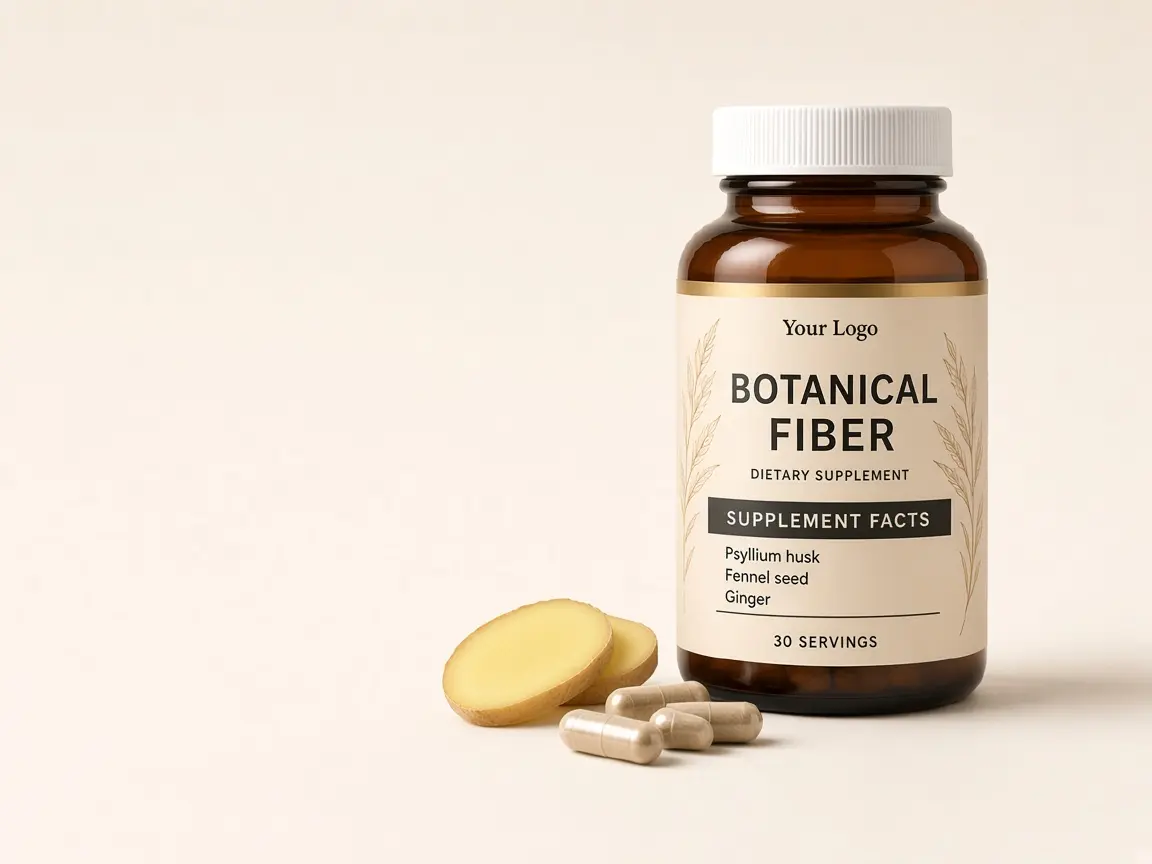
Product Concept: A comfort-positioned formula built on ginger, peppermint, fennel, or a similar culinary botanical.
Ingredient Systems: Species, plant part, and powder or extract on the botanical row. An added enzyme still needs activity units. An added fiber still needs grams per serving.
Claim Review: Product positioning and proposed label claims are reviewed for the intended market.
Product Concept: A cleanse-positioned finished product, briefed separately from a daily fiber formula.
Ingredient Systems: The fiber or botanical in the unit, with its own identity and grams per serving.
Claim Review: Ingredient selection and label positioning are reviewed against the intended market and the product brief.

Product Concept: A regularity-positioned finished product.
Ingredient Systems: The proposed fiber, target serving size, and format are assessed together for fill volume, pack size, and manufacturing feasibility.
Claim Review: Product positioning and proposed label claims are reviewed for the intended market.
Choose the Digestive Health Format: Capsules, Tablets, Powders, Stick Packs, Gummies or Selected Liquids
Match the serving to a format that can carry it. One ingredient system can use more than one format. A softgel is reviewed when the fill is compatible with the shell. Oil-phase formulas are the grades taken into that review.

Feasibility Checks: Fill weight, powder flow, shell compatibility (gelatin or HPMC), and units per serving. Delayed-release applies only when the brief asks for it.

Feasibility Checks: Compressibility, tablet size, hardness, and disintegration. High-load fiber formulas may be better suited to powders or stick packs, subject to serving size and process assessment.

Feasibility Checks: Serving weight, bulk density, dispersion, taste, and moisture protection.
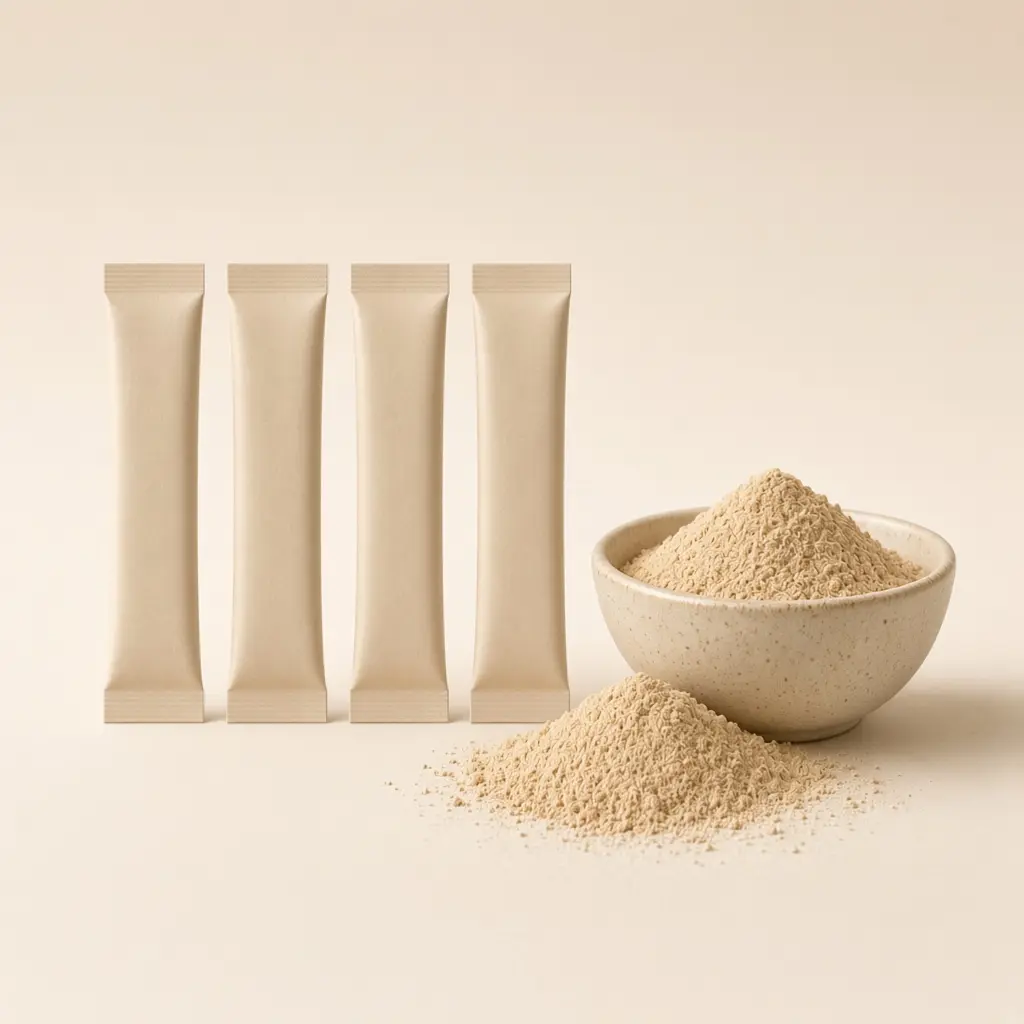 Stick Packs
Feasibility Checks: Fill weight, flowability, dose uniformity, film barrier, and seal integrity. Water activity is set on the finished specification. The film specification is separate.

Feasibility Checks: Active compatibility with the process, piece load, water activity, texture, and stability. Live cultures and heat-sensitive enzymes need that assessment before a gummy is accepted.

Feasibility Checks: Solubility or dispersion, pH, preservation system, packaging compatibility, and stability. These factors inform the preservation strategy, packaging requirements, and stability assessment.
Material Specifications for the Formula
Grades below are the ones published for supply. They are listed grades, not a single-lot COA result. Marker and method stay on the same line when a percentage is quoted.

Supply Grades: Zingiber officinale rhizome. 10:1. Gingerols 5% and 50%.
 Peppermint Extract
Supply Grades: Published as a clear to pale yellow liquid from peppermint. Menthol 40–50%, menthone 20–30%, menthyl acetate 3–10%. Relative density 0.900–0.916. Refractive index 1.456–1.466 at 20°C. A dry mint extract is a different listing.
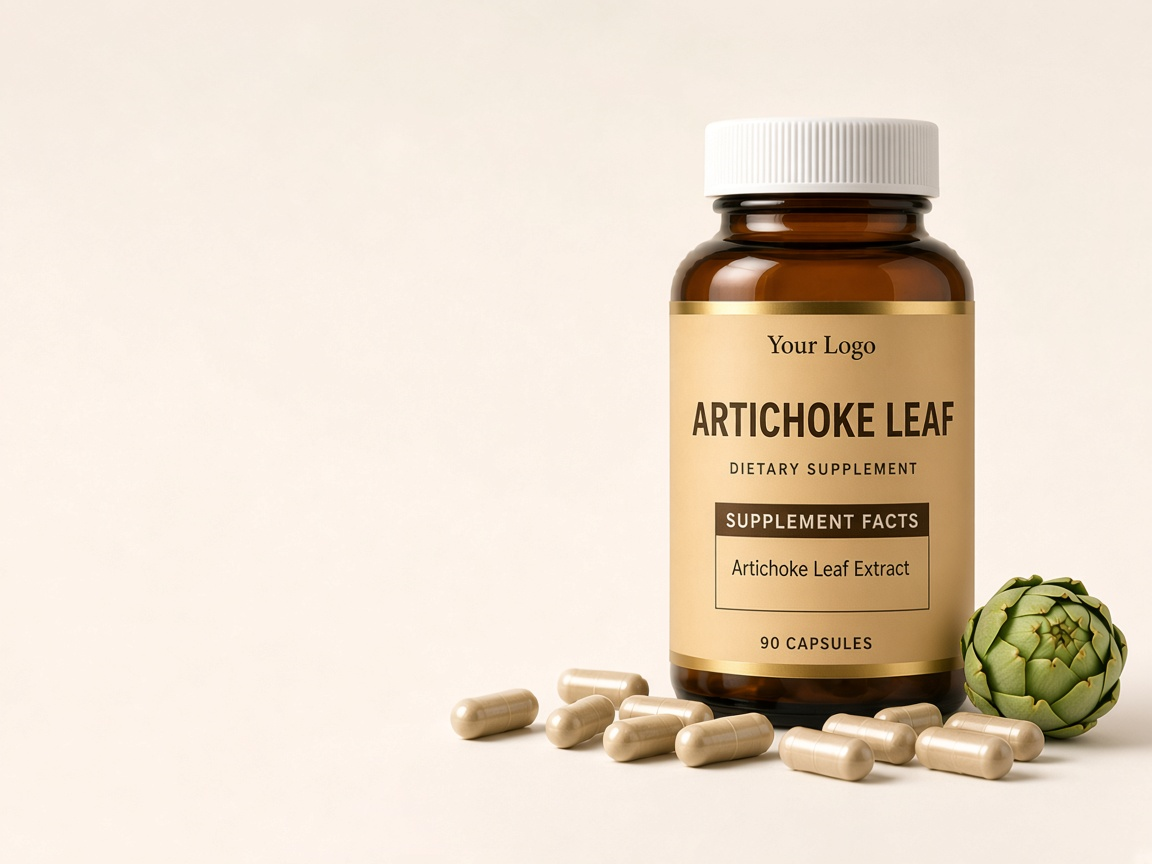
Supply Grades: Cynara scolymus leaf. 10:1, 20:1, and 30:1. Cynarin 2.5% by TLC or UV. 95% passes 80 mesh. Cynarin and total caffeoylquinic acids are different markers.
 Bromelain
Supply Grades: Ananas comosus stem. Enzyme powder listed at 100–2400 GDU. Named activity grades: 600, 1000, 1800, 2000, and 2400 GDU/g.
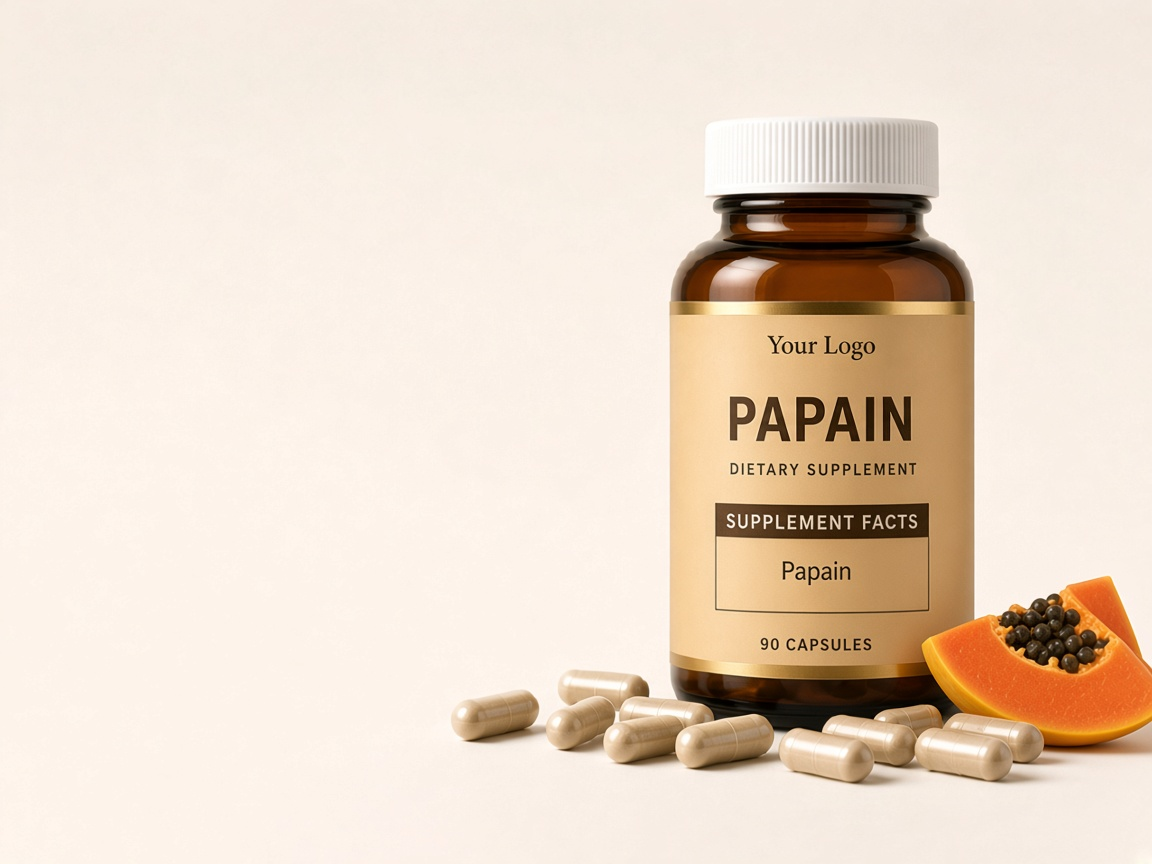
 Papain
Supply Grades: Carica papaya extract. Papain 0.5–1.5%, chymopapain 0.2–1.0%, moisture ≤5%. Activity is described as units per gram. That extract page does not list a numeric activity grade. This composition is not a bromelain GDU grade.
 Fennel Extract
Supply Grades: Foeniculum vulgare seed. Anethole assay ≥50%. 100% passes 80 mesh. Loss on drying ≤5%. The same listing’s composition table gives anethole 50–60% and fenchone 15–20%.
 Psyllium Husk Extract
Supply Grades: Plantago ovata husk extract. Soluble fiber ≥85%. Mesh 80–100. Moisture ≤10%.
 Chicory Root Inulin
Supply Grades: Cichorium intybus root, water-soluble. Regular inulin ≥85%. High purity ≥90–95%. Ultra-high purity ≥98%. FOS-type grade ≥55% FOS, with the balance as inulin.
Digestive Health Manufacturing Success Stories
From Formulation Concepts to Market-Ready Digestive Health Products
Explore how KS Nutripharma supports supplement brands in developing digestive health products through tailored formulations, flexible dosage forms, and scalable contract manufacturing. From probiotic and digestive enzyme blends to gut health capsules, powders, and functional gummies, we work with clients to align ingredient selection, product specifications, and manufacturing requirements with their target markets.
Every project starts with the product brief and ends with a manufacturing solution built around the client’s requirements.
Have a digestive health product in mind? Share your reference formula, target ingredients, or product concept with our team to discuss formulation feasibility, dosage form options, MOQ, and production requirements.
 Culture Blend with a Prebiotic
Five named strains share one declared count, and fructooligosaccharides share the capsule. The manufacturing file lists each strain and the test point for that count, then checks that the prebiotic still fits a single shell. The pack on this panel is 60 capsules, one per serving.
 Lactobacillus rhamnosus GG
One strain carries the label. There is no blend to split and no second active to assay. The specification is Lactobacillus rhamnosus GG, the declared count, and a one-capsule serving in a 50-capsule pack.
 Lactobacillus plantarum 299v
 is the only culture, at the same count as a single-strain neighbor and in a shorter 30-capsule pack. The strain code stays on the specification. A genus-only line would be a different product.
 Lactobacillus acidophilus La-14
 in a vegetarian capsule, once daily, 30 capsules to the pack. The shell is part of the quote. A gelatin capsule of the same strain is a separate specification.
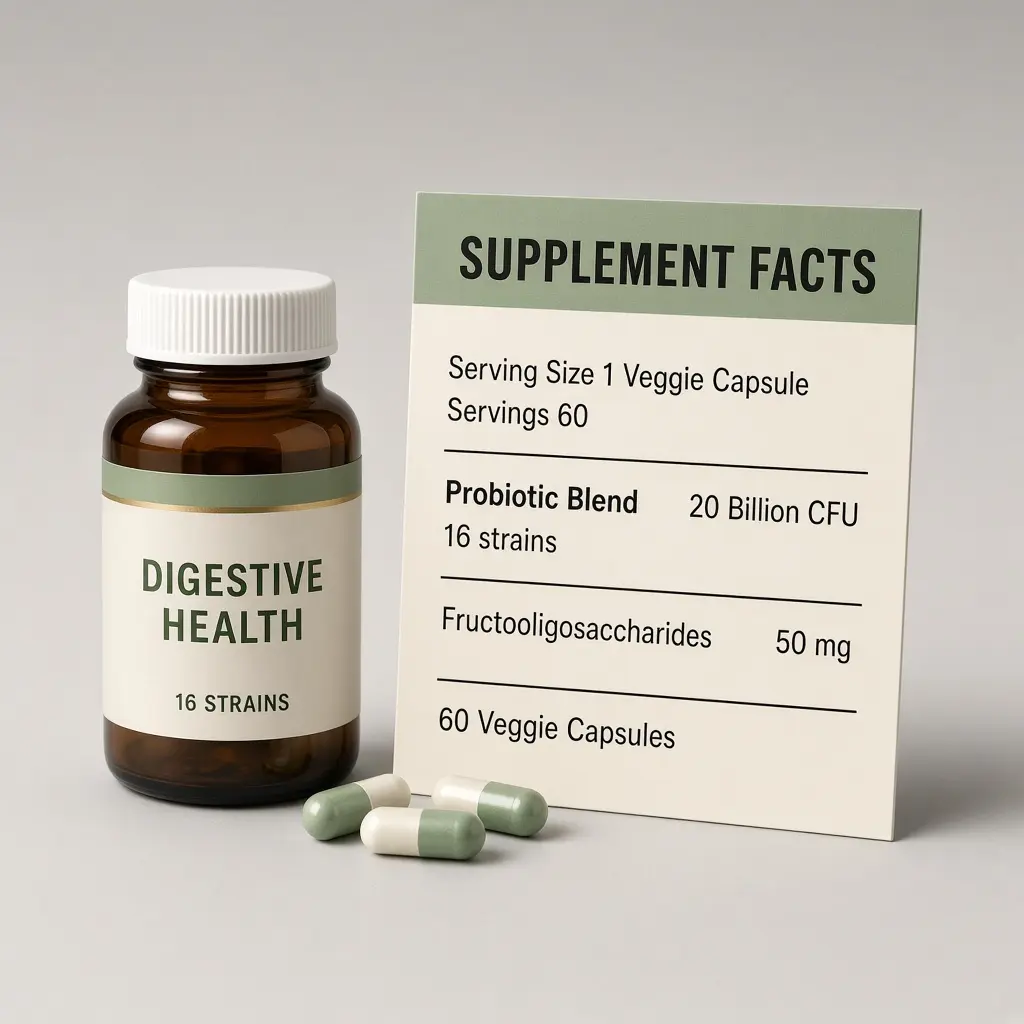 Sixteen-Strain Culture Count
Sixteen strains sit under one higher count, with a small prebiotic in a vegetarian capsule. The front panel can say sixteen. The file still names every strain from the source label, plus the test point for the 20 billion count. Pack is 60 capsules.
 Red Yeast Rice and Fish-Oil Powder
Two powders share a vegan capsule: red yeast rice, and a fish-oil powder supplying DHA and EPA. The serving is two capsules, and the pack runs to 120. Fish stays on the allergen line, and each powder is assayed on its own.
 Fiber Scoop in a Pouch
Fiber sold by the gram, from flax, pea fiber, psyllium husk, and chia. A 13 g scoop is the serving, so this brief is a pouch, not a capsule. The quote starts from dietary fiber per scoop and the blend weight behind it.
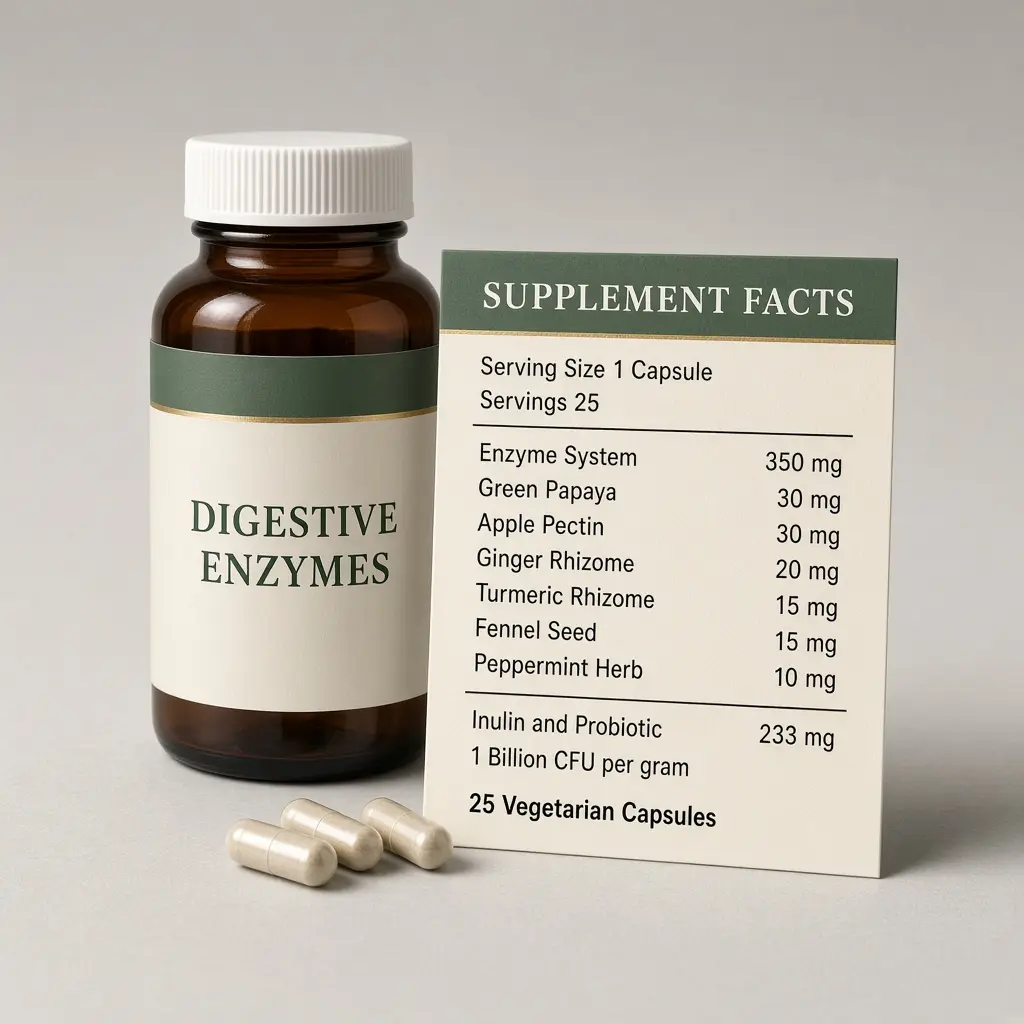 Enzymes, Botanicals, Inulin, and a Probiotic
One vegetarian capsule carries an enzyme system, green papaya, apple pectin, ginger, turmeric, fennel, and peppermint, then inulin with a probiotic. Activity units and the culture count are written as their own lines beside the milligram blend. Pack is 25 capsules.
 Chicory Fiber Gummies
A gummy sold on chicory root and fructooligosaccharides. Three pieces make the serving, and the bottle holds 120. Piece weight, the cook, and water activity are set before the mold is approved.
 Fiber and Botanical Capsules
Two capsules carry a fiber gram, a botanical blend of fennel, marshmallow, ginger, and peppermint, and triphala. This bottle is quoted on its own. A companion product in the same program is a separate specification and a separate run.
 Cultures with Coenzyme Q10
A delayed-release capsule pairs an 18 billion culture blend with coenzyme Q10. Lactobacillus reuteri NCIMB 30242 and Lactobacillus rhamnosus GG stay on the strain line. The release profile is part of the specification, and the pack is 30 capsules.
 Children's Tapioca Fiber Gummies
A children’s gummy whose fiber comes from organic tapioca. Three pieces make the serving, at 3 g of fiber, in a 60-gummy pack. Piece weight and that fiber gram belong to this SKU alone.
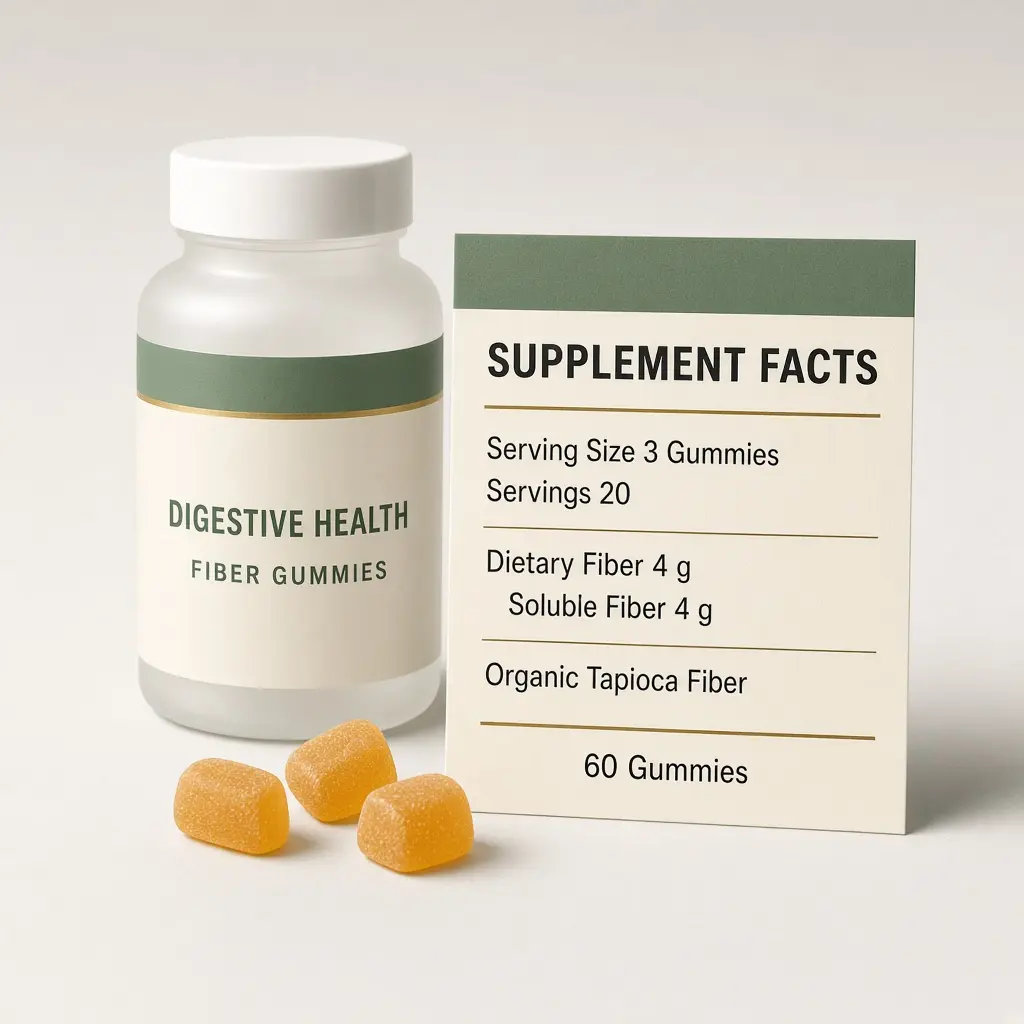 Adult Tapioca Fiber Gummies
An adult tapioca-fiber gummy, still three pieces per serving, at 4 g of fiber and a 60-gummy pack. This SKU keeps its own specification. The higher gram is confirmed against piece weight before artwork.
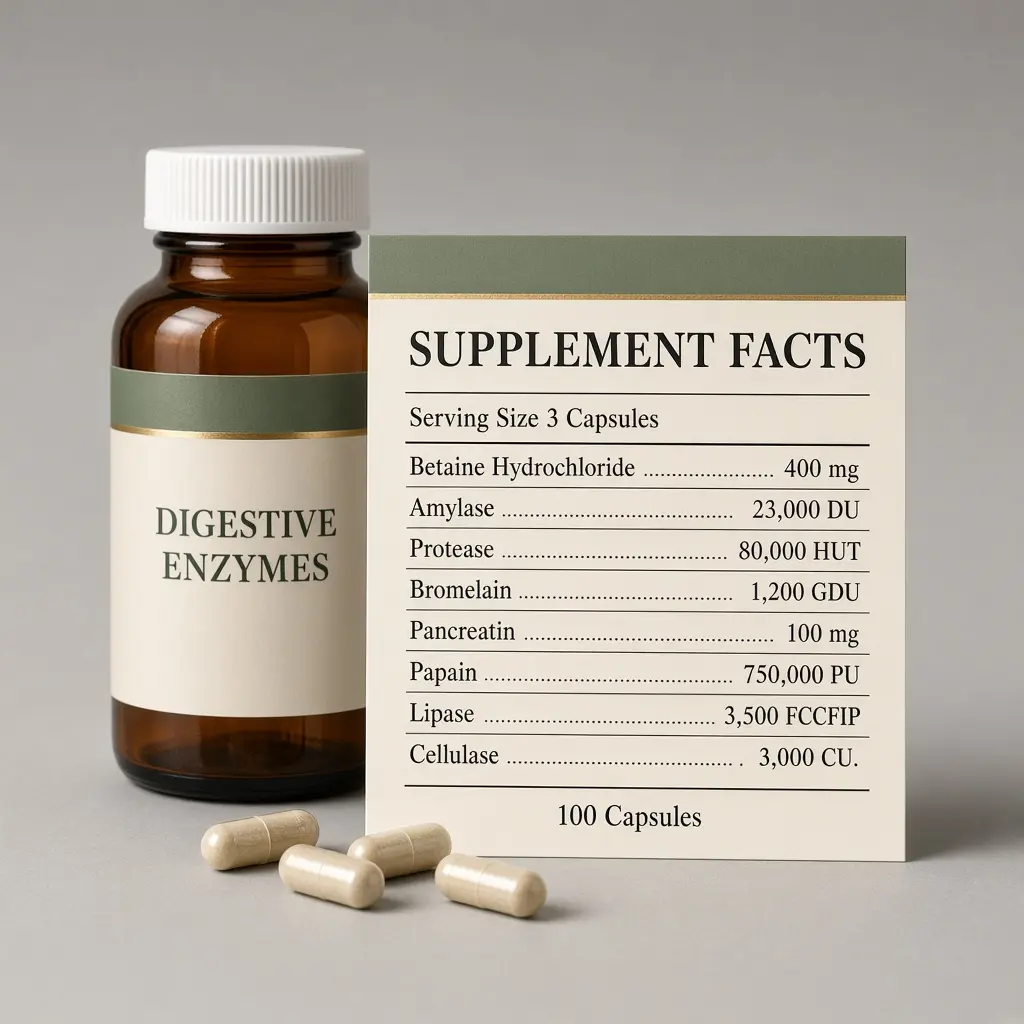 Betaine Hydrochloride with Digestive Enzymes
Three capsules led by betaine hydrochloride, with amylase, protease, bromelain, pancreatin, papain, lipase, and cellulase declared in activity units. The source shell is gelatin, and the bottle holds 100 capsules. The source label states no servings per container, so the quote does not add one.
 Pancreatin and Ox Bile Tablet
One tablet holds pancreatin 4x, ox bile powder, and a short enzyme list with a low betaine hydrochloride. Ox bile and pancreatin take this panel off a vegetarian claim. The bottle is 180 tablets, one per serving.
 Children's Bacillus Gummies
A children’s gummy on Bacillus coagulans GBI-30, 6086, two pieces per serving, 60 gummies to the pack. The viable count is the line that gets tested, and it is the line written into the specification.
 Plant-Source Enzyme Capsule
One vegetarian capsule of plant-source enzymes, 180 to the pack. Headline activities can sit on the front panel. The quote attaches the full activity string, including lipase at 200 LU (500 FIP), before the specification is closed.
 Enzyme and Berberine Packet
One packet holds a phyto enzyme complex, berberine hydrochloride, coptis root, an Oregon grape root 4:1 extract, and a 4:1 herbal extract. The herbs inside that extract stay on the specification. Sixty-three packets is the pack, and the serving is the packet itself.
 Three-Blend Enzyme Capsule
Three capsules, 90 to the bottle, built as three lines: a digestive enzyme blend with protease 250 DPP-IV, an herbal blend of gentian, ginger, and fennel, and a whole-food blend. Activities inside the enzyme blend follow the source panel in full.

| Development Factor | What Is Assessed |
|---|---|
| Ingredient Specifications | Source, grade, assay or activity, supporting documents, and ingredient compatibility |
| Serving Size and Active Load | Total formula weight, target serving, and units per serving |
| Dosage Form and Processing | Fill or compression requirements, dispersion, and process constraints |
| Commercial Requirements | Target cost, order quantity, packaging configuration, and production schedule |
Where specifications cannot be finalized from the documents alone, a laboratory assessment or a pilot trial may be required.
Release follows the specification agreed for that SKU. The items below are set for the project. They are not one fixed panel for every digestive product.
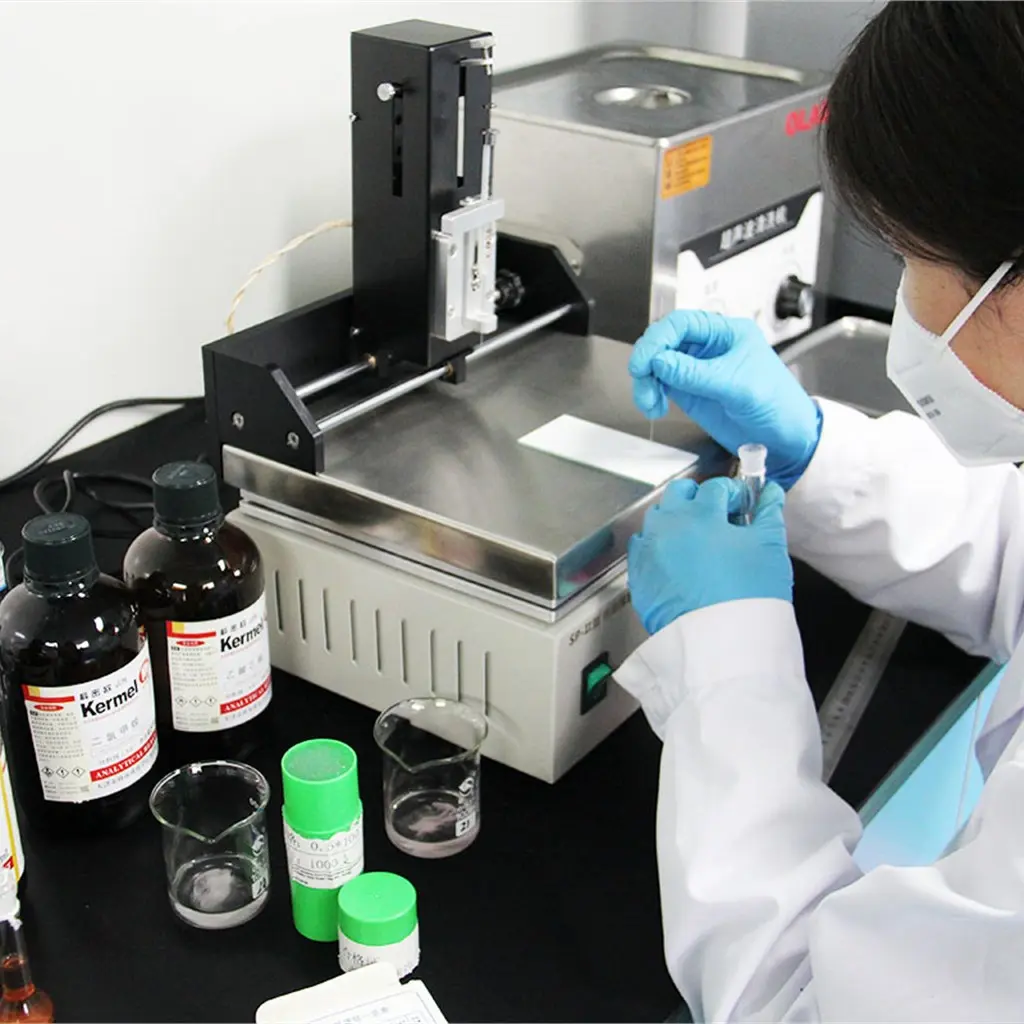
Incoming Materials. Identity, the approved specification, the COA, and the contaminant and microbial limits that apply to that material.
In-Process Controls. Blending, filling, compression, moisture, or other checks that belong to that dosage form.
Finished-Product Release. Identity, potency or activity where the label states one, microbiology, contaminants, and any other test written into that product’s specification.
Stability and Packaging. For enzymes, live cultures, and other sensitive ingredients, pack, storage, and shelf life follow the data and the validation plan for that formula. Facility certifications are not a product approval. Long-term stability data are not assumed for every SKU.
Indicative minimums depend on dosage form, packaging configuration, formula complexity, and production requirements. The confirmed minimum follows review of the project specification. A custom material, extra testing, or a pilot trial can extend the planning window. A sample and a commercial batch are separate stages.
Finished-pack counts below are packaged units. Stick packs are counted as sticks, not retail cartons. Bulk powder is assessed from batch size and specification, not from the pack minimums.
Product Format | Indicative MOQ |
|---|---|
| Capsules | 3,000–5,000 units |
| Tablets | 5,000–10,000 units |
| Softgels, oil-phase formulas | 3,000–5,000 units |
| Powder products | Around 3,000 units |
| Powder sachets | Around 5,000 units |
| Stick packs | Around 30,000 sticks |
Softgels are reviewed when the fill is compatible with the shell. Oil-phase formulas are the grades taken into that review.
Stage | Indicative Planning Time | Timing Basis |
|---|---|---|
| Sample development | 7–15 days | After the specification needed for that sample is set. A new formula, an existing formula, and a material sample are different jobs. |
| Powder production | About 25–30 days | After specifications and the production slot are confirmed |
| Other finished formats | About 30–45 days | After formula, artwork, packaging, and the production slot are confirmed |
| Stick packs | About 15–30 days | Projects that fit the stick line, after the slot is confirmed |
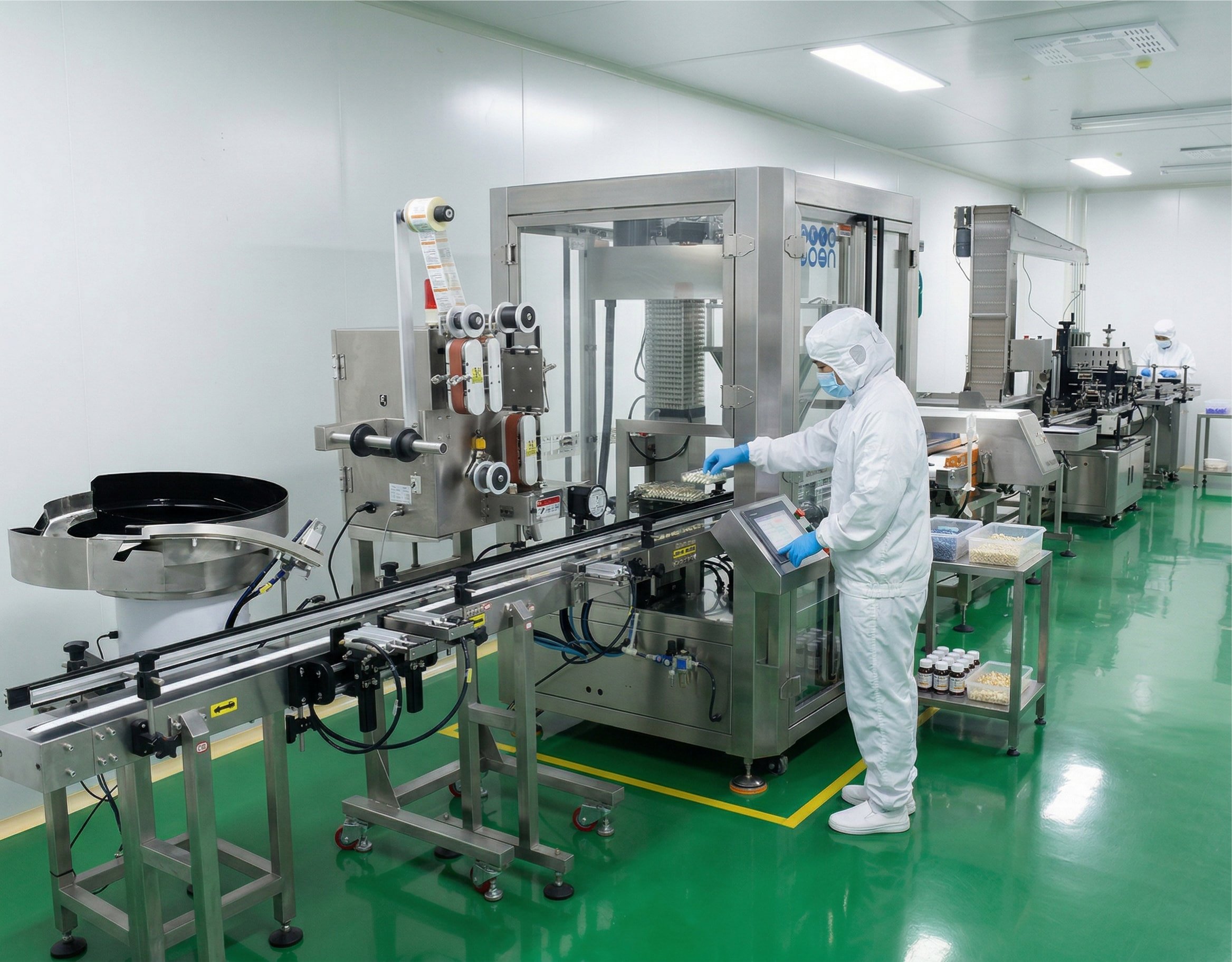
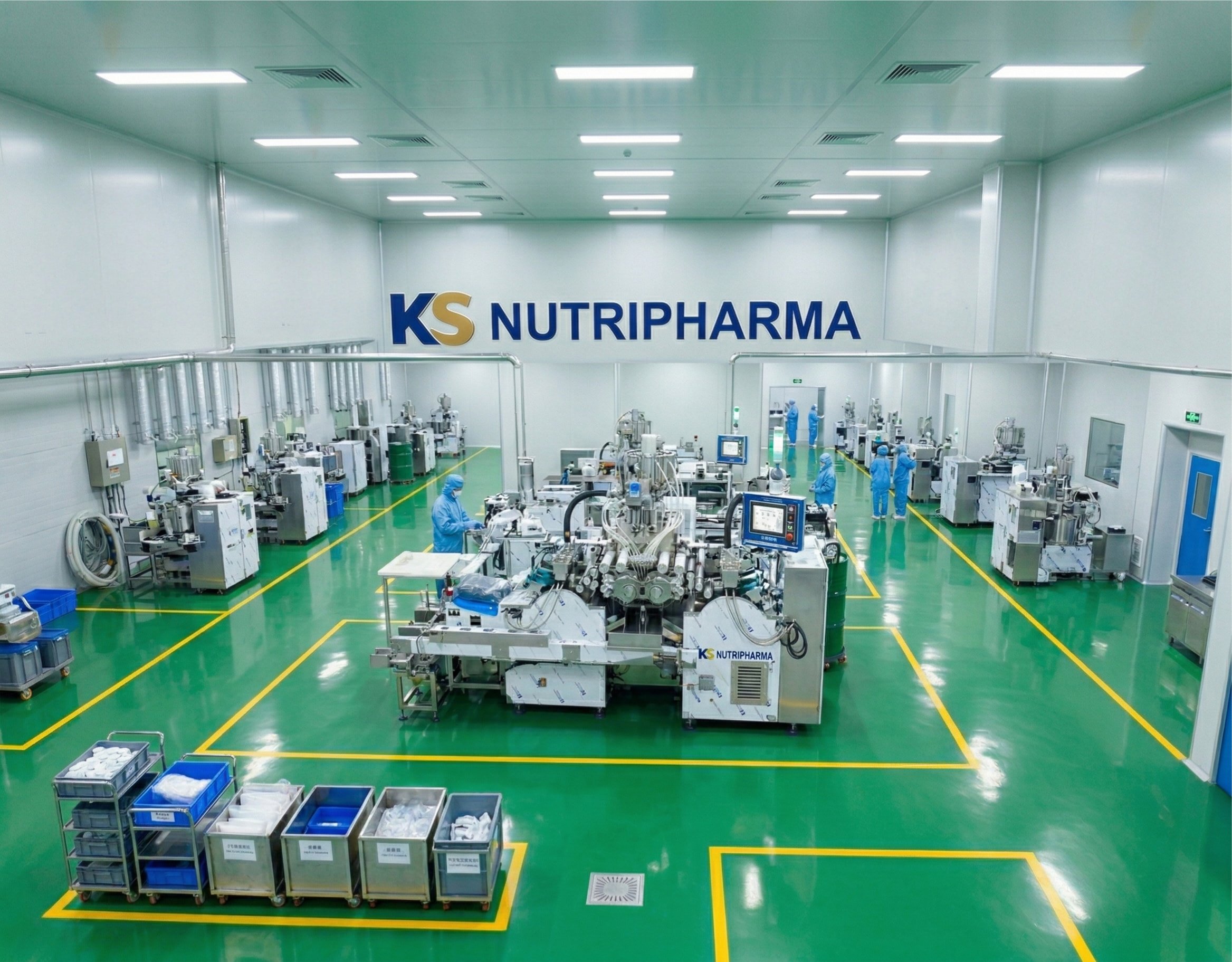
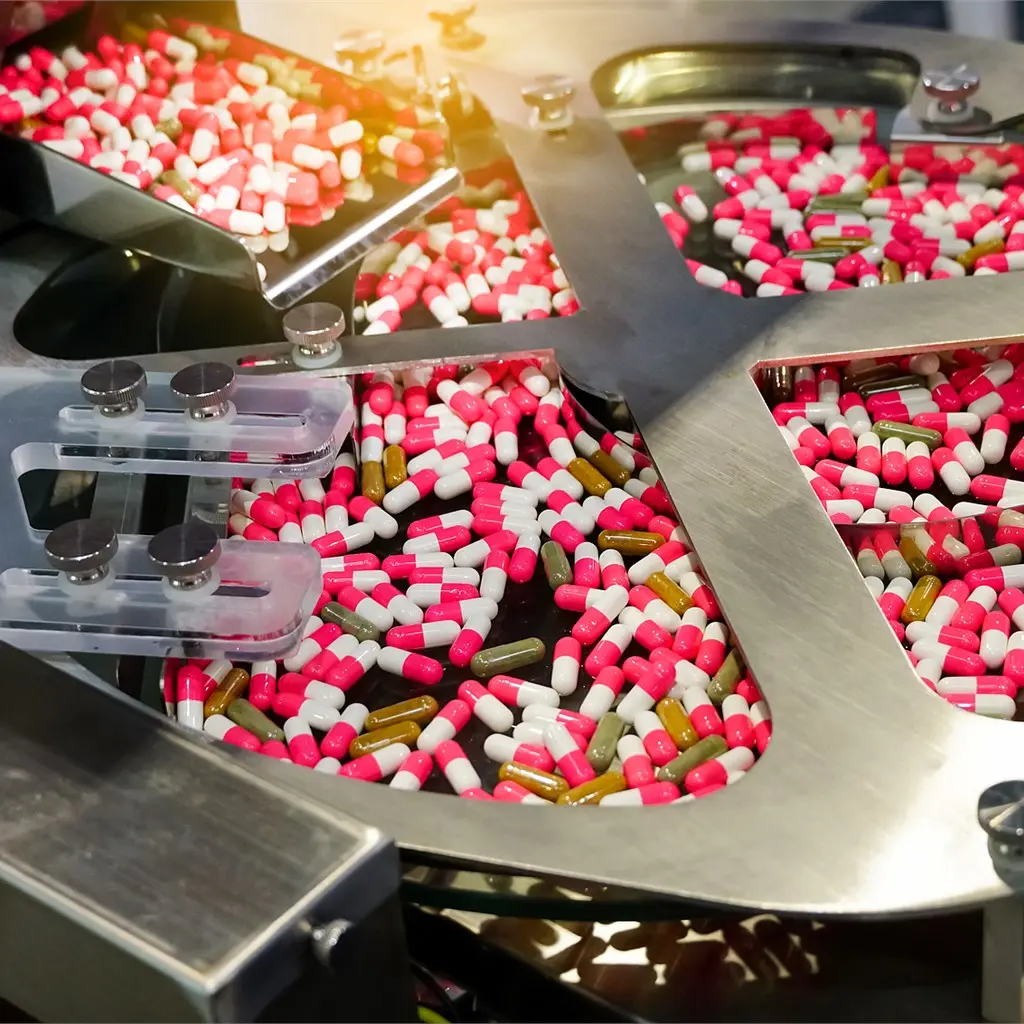
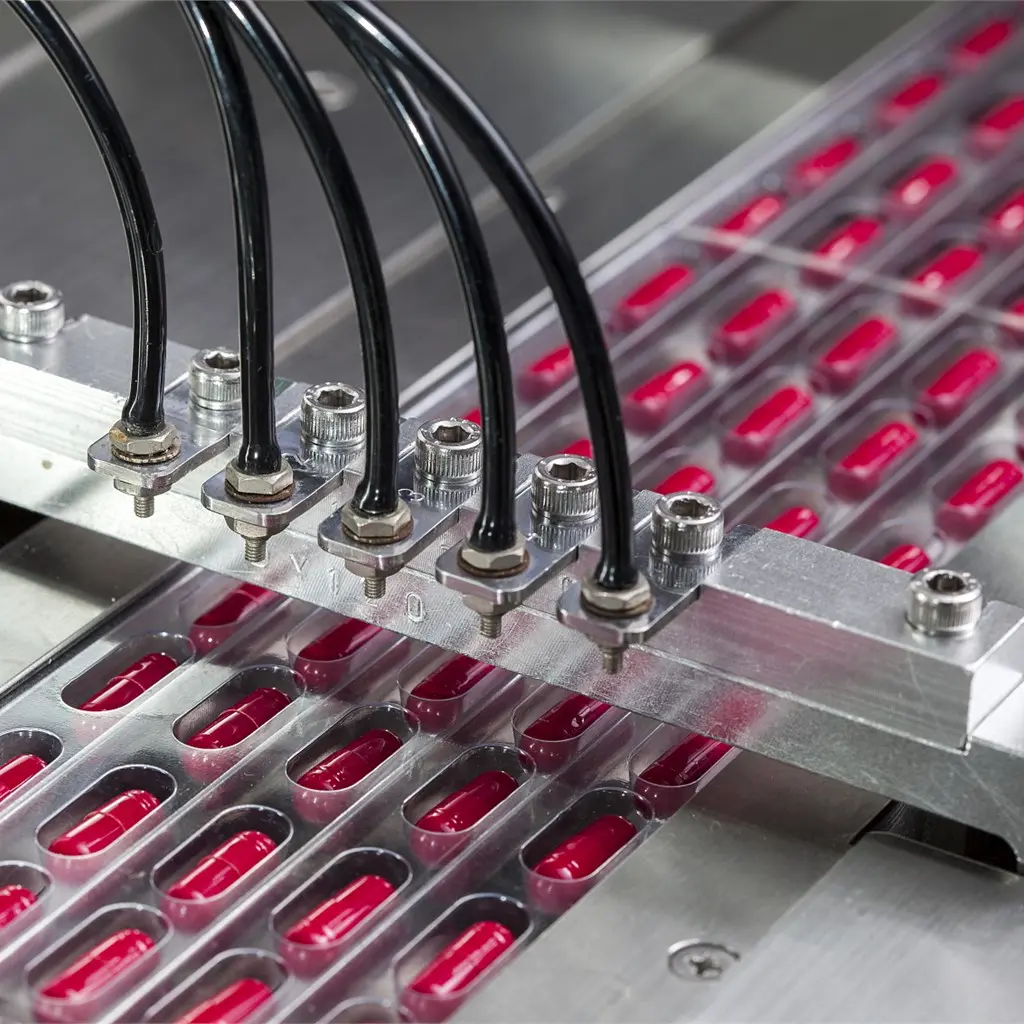
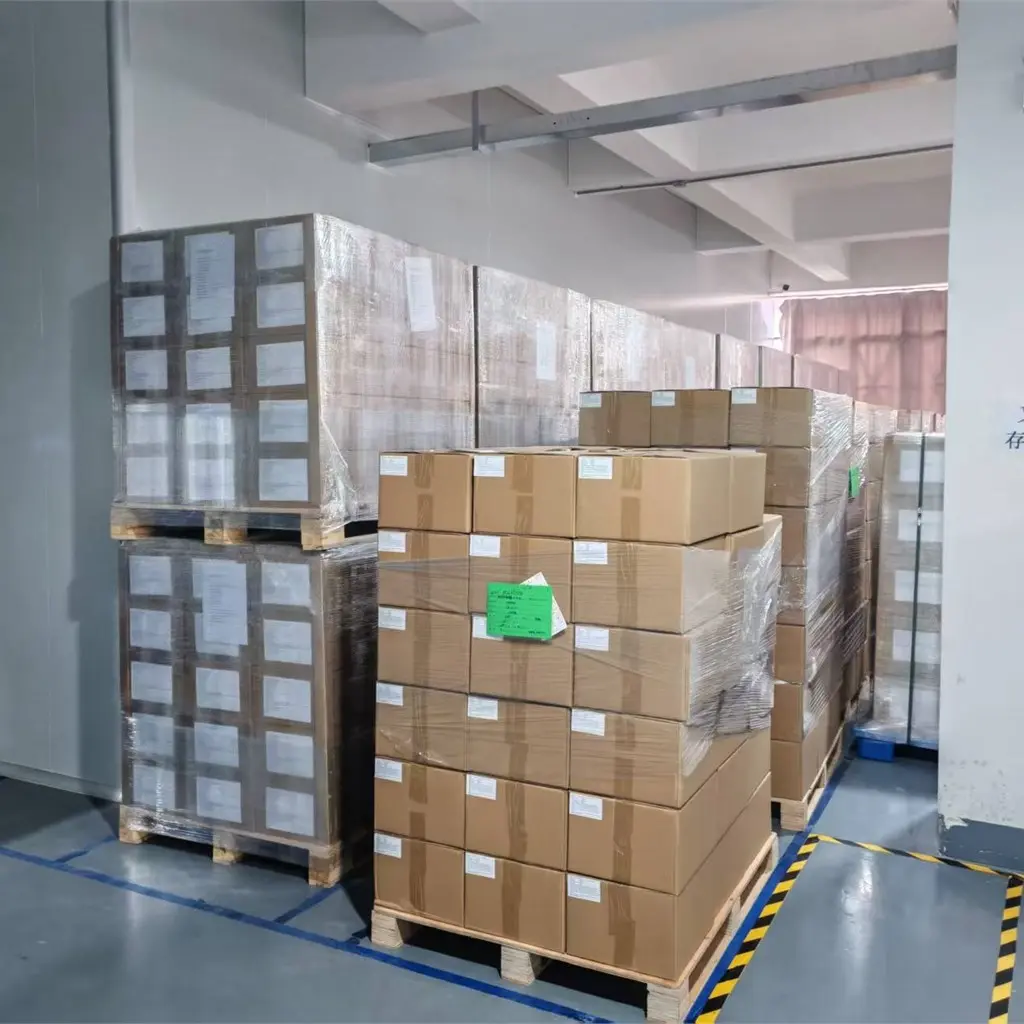
KS Nutripharma has manufactured supplements since 2007. The manufacturing network includes five manufacturing bases, 12 automated production lines, and two R&D centers. Applicable certifications, including cGMP/GMP, ISO 9001, ISO 22000, HACCP, FSSC 22000, Halal, and Kosher, vary by facility and scope. The manufacturing site and process for each project are confirmed during feasibility review. Facility certifications are not a product-specific approval.
Start Your Project Inquiry with KS Nutripharma
A new digestive concept, a reference label, or a current SKU under second-source review can all open a feasibility review. The review uses the target specification and the commercial requirements you already have.
To start, share what you have:
- Product concept or reference label
- Proposed ingredients and amounts per serving, if available
- Target dosage form and packaging
- Intended market
- Estimated order quantity and target unit cost, if defined
If the formula is not finalized, start with the product concept and the target format. Open specifications are reviewed before the commercial quote is closed.
Request a digestive health manufacturing quote.
Disclaimer
Wholesale and brand-manufacturing reference only. Not intended to diagnose, treat, cure, or prevent any disease. Dietary supplements are not drugs. These routes are commercial formulation options. They are not medical claims for bloating, constipation, inflammatory bowel disease, or intestinal disease. Milligram and gram examples are not stated here as recommended intakes; serving size is set on the project specification. Brand owners remain responsible for structure/function or other claim substantiation, notifications where required, and finished-label compliance in each destination market. Activity units, CFU, and shelf life follow the finished formula, the test point, and the pack.
Written by KS Nutripharma Formulation Team | Reviewed by KS Nutripharma Director of R&D (PhD, Food Science | 19+ years nutraceutical development) | Technical review scope: enzyme activity units versus blend weight, bromelain GDU/g grades, papaya extract composition versus a numeric papain activity grade, strain identity and CFU test point, fiber identity versus grams and viscosity, chicory inulin grades, zinc carnosine complex versus elemental zinc, format feasibility for capsules, tablets, powders, stick packs, gummies, and selected liquids | Updated October 2026
Yes, we offer free samples of most dosage forms, including powders, capsules, tablets, gummies, and liquids, to help you evaluate quality and suitability before production.
Absolutely. We prioritize high-quality botanical extracts, herbal powders, and plant-based probiotics, ensuring products are natural and safe for digestive health.
Yes. All manufacturing follows cGMP, HACCP, ISO certifications, and we can provide third-party testing reports, COAs, and export-ready documentation to meet global regulatory requirements.
Yes. With 12 production lines, we can manufacture powders, capsules, tablets, softgels, liquids, and gummies simultaneously, accommodating mixed orders or multi-formula launches.
Lead times vary depending on dosage form and order size, but our experienced team ensures efficient scheduling and reliable delivery, typically within 6–10 weeks for standard batches.
Yes. We provide flexible packaging options, custom labeling, and documentation support to comply with export requirements and retailer standards.
Yes. We work with brands to establish multi-batch production schedules and long-term supply partnerships, ensuring consistent product availability, stable quality, and reliable planning for seasonal or recurring launches.
Absolutely. Our team is experienced in export documentation, customs compliance, and global logistics coordination, ensuring smooth delivery of products to destinations worldwide with proper certificates and labeling.