



Tablet supplement manufacturing Service
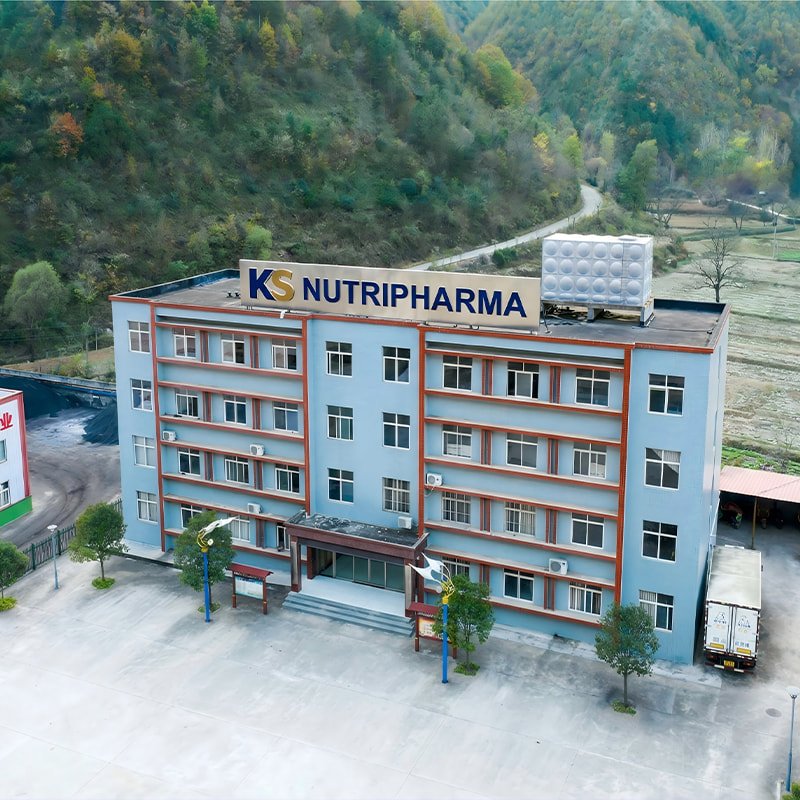
KS Nutripharma is a tablet manufacturer and tablet supplement manufacturer from our China production base: tablet contract manufacturing from formula review through compression, coating, pack or bulk, and batch documentation.
China tablet contract manufacturing
12,000,000+ tablets/day site compression capacity on high-speed rotary presses (including 83-station machines) · samples 7–15 days after the brief can be compressed · typical finished start 5,000–10,000 bottles or equivalent commercial units · first standard commercial lot typically 4–6 weeks after formula, artwork, and pilot confirmation
A usable OEM tablet quote locks formula, tablet weight, coat or tooling, and pack.
Tablet Manufacturing Models
Private label is your brand on the pack. OEM and ODM describe who owns the formula. Custom tablet manufacturer work is the ODM path when the file is not frozen.
You do not need to name the model on day one. Send the brief; the review will say which path fits.
You provide: locked formula or specification.
We provide: granulation or direct compression, tableting, coating as scoped, packaging or bulk, and batch documentation.
Best for: brands that already have a frozen file.
You provide: a product brief (ingredient, dose, market, format).
We provide: format recommendation, formulation, and manufacturing.
Best for: new SKU development when the formula is not locked.
You provide: a product concept, a selected formula, or a catalog direction.
We provide: the finished packed SKU under your brand. The technical path may be OEM compression or ODM formulation, then bottling, labeling, and packing as scoped.
KS Nutripharma also provides private label tablets when the brief needs a market-ready retail unit.
Best for: brands that need a finished packed SKU.
You provide: formula or specification.
We provide: compressed tablets supplied in bulk packaging (coated if specified) for bottling or blistering elsewhere — a bulk tablet manufacturer path when pack MOQ or local filling sits on your side.
Best for: repackers, destination-market copackers, and brands that split bottle printing from the press run.
Lock: tablet weight, coat, count per liner bag or drum, lot identification, storage condition, desiccant, and freight protection. A CoA still follows the batch. Bulk MOQ is quoted separately from bottled programs.
Choose the Tablet Format: Compressed, Chewable, Effervescent, Bilayer or ODT
Release profile is specified separately from tablet format. Immediate-release, delayed-release, and modified-release requirements can affect core formulation, coating, testing, and stability.
Children’s products require a separate formulation, flavor, dosage, and destination-market review.
If the powder will not compress, or the dose will not fit a swallowable tablet, the review may recommend a hard capsule or powder stick.
Best for: vitamins, minerals, and botanical tablets when the dose will compress into a swallowable unit.
Why this path: highest throughput; coat can add moisture, light, or taste control after hardness is in spec.
Typical lock: mg per tablet, tablets per serving, uncoated vs film-coated, round / oval / oblong.
What to lock: mineral salt or extract grade; whether one tablet or two is acceptable if the dose will not fit a swallowable size. Milligrams are not tablet diameter.
Manufacturing note: High mineral load often needs granulation. Coat after hardness, friability, and weight variation are in range.
A chewable tablet manufacturer path is the fastest start when the brief needs a flavored bite instead of a swallowable core.
Best for: flavored mineral or vitamin SKUs for adult chewables.
Why this path: taste and texture are part of the formula file.
Typical lock: flavor direction, sweetness, hardness window that still chews.
What to lock: which notes must be masked (mineral, botanical, acid).
Manufacturing note: Flavor is formula. Hardness and chew sit in tension — too hard fails the chew; too soft fails freight.
An effervescent tablet manufacturer path is a daily quote.
Best for: drink-to-mix vitamins and minerals when the brief names a tube or equivalent dry pack.
Why this path: acid–base reaction in water is the format.
Typical lock: tube or equivalent barrier pack, desiccant, humidity-controlled process.
What to lock: labeled reconstitution volume, flavor, and whether the unit is a standard effervescent or a micro-effervescent tablet (smaller unit weight, with disintegration or dissolution targets named in the specification, and a tighter moisture file). A client’s own branded format name can sit on their artwork.
Manufacturing note: Humidity is feasibility. A bottled SKU does not copy onto a tube without a moisture plan.
A bilayer tablet manufacturer / double-layer path is a daily quote when two layers are required.
Best for: two actives that should not share one blend, or a staged-release brief that names two compression layers.
Why this path: physical separation on the press.
Typical lock: layer A / layer B weights, colors, and whether release is immediate in both or staggered by design.
What to lock: which incompatibility you are solving (chemical, color, or release).
Manufacturing note: Each layer needs its own compressibility file. Tooling and both layer weights lock before the first bilayer sample.
An ODT tablet manufacturer path (orally disintegrating tablets) is quoted on this line. Sublingual tablets share compression equipment but are a separate administration specification.
ODT — lock: rapid disintegration method and time, mechanical strength, mouthfeel, moisture, and high-barrier pack.
Sublingual — lock: labeled hold site, disintegration or dissolution profile, taste, dose, and pack.
Best for: briefs that name orally disintegrating use, or a sublingual instruction when that file is in scope.
Manufacturing note: Moisture and pack usually fail this path before the press does.
Tablet Coating
Coat after the core meets weight, hardness, and friability. Color is a brand choice on top of that file.
Standard round, oval, and oblong punches are the usual start. Custom geometry, logo deboss, and brand-matched coat color add tooling lead time.
Best for: moisture or light protection, swallow help, light taste mask.
What to lock: polymer system, colorant rules, and target weight gain.
Manufacturing note: Film will not rescue a core that already caps or laminates.
Best for: actives that must resist release under specified acidic conditions and release under the named downstream conditions.
What to lock: polymer system, coating weight gain, the delayed-release or acid-resistance test, and the dissolution method and limits in the specification.
Manufacturing note: Extra development, humidity, and pack care. Not a default coat on every vitamin SKU.
Best for: traditional appearance when the brief names it.
What to lock: cycle time and humidity; slower than film.
Manufacturing note: Appearance coat. Scoped when requested.
Tablet Packaging
Packaging is part of the formula file.
Logistics can ship from China as bulk tablets or finished packed goods. When the project uses it, fulfillment can include the U.S. shared warehouse network.
HDPE or PET as scoped, with induction seal and child-resistant or tamper-evident closures when the destination file requires them.
Unit-dose protection and retail presentation for tablets. Film and forming web follow moisture and light.
High-barrier blister or pouch, with desiccant and mechanical strength locked to the core. Not an effervescent tube.
Compressed tablets in liner bags or drums: lot ID, count, desiccant, and storage condition with the ship file.
We align bottle, blister, carton, and artwork space to the destination market on the RFQ. Multi-language labels can be coordinated. Brand owners remain responsible for Supplement Facts, claims, and finished-label legal compliance.

Feasibility is whether the labeled dose will compress, hold mechanically, and meet the named disintegration or dissolution check through process and pack.
We review, against the brief:
- Particle size, bulk density, and flow — direct compression vs wet or dry granulation
- Precompression and main compression to limit capping, lamination, and sticking
- High mineral load vs swallowable size and punch geometry
- Hygroscopic, odor-sensitive, or oxygen-sensitive materials (humidity, barrier pack, and nitrogen blanketing or headspace control where the file requires them)
- Tablet weight vs tooling
A capsule formula is re-validated before a tablet run. Grades, lubricants, and tablet weight usually change.
If the brief cannot run as a tablet, say so before tooling is cut.
Quoted when the brief needs them — not the default first sample.
Microencapsulated tablets
When: odor, oxidation, acid exposure, or two actives that should not meet in one blend.
What we lock: wall type, payload, and whether the microcaps survive compression.
Use: taste mask, isolation, or stability engineering.
Probiotic tablets
When: a live-culture tablet is the named SKU.
What we lock: strain identity, target CFU, moisture control, oxygen management, any protective technology (including microcaps or bilayer), and end-of-shelf-life testing when that file is in the quote. CFU is reported on the CoA against the agreed method and time point.
Modified-release files
When: the brief names delayed or modified release, not only a coat color.
What we lock: dissolution method and limits; whether the path is enteric coat, a matrix/membrane file, or a format change.
Manufacturing note: Enteric is the usual delayed-release start. Osmotic-pump or other device-style files are project-quoted. Not a default vitamin SKU.
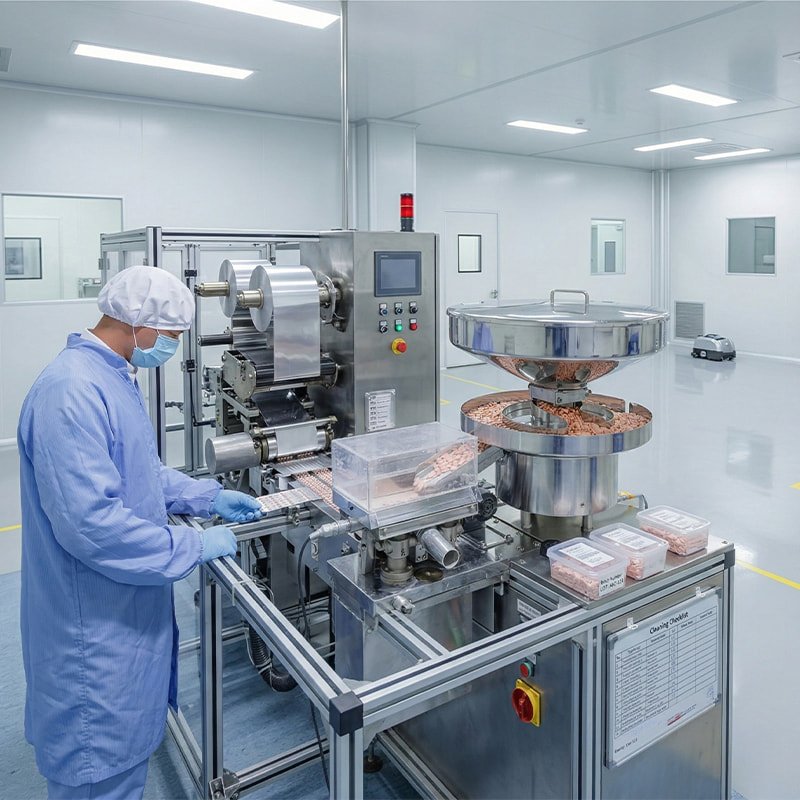
Tablet production here follows dietary-supplement cGMP, including 21 CFR Part 111 as it applies to the operation.
Incoming. Actives, excipients, and packaging released against the SKU file.
In-process. Blend uniformity sampling; tablet weight variation; compression force consistency; visual checks for capping, lamination, and sticking. Weight variation is an in-process control; it does not by itself establish active-ingredient uniformity. Content uniformity or dosage-unit testing is included when required by the product specification or applicable standard.
Finished-product (as specified). Hardness, friability, disintegration; dissolution when the SKU file names it; assay; microbiology; heavy metals as scoped. Probiotic SKUs add the agreed CFU method and time point.
Stability. Evaluated against the finished formulation and packaging configuration when the project requires it. A raw-material CoA does not set finished dating.
Release. CoA and traceability from input lots to packed or bulk lot. A CoA reports the tests specified for that SKU. How to read the four blocks: how to read a CoA.
We do not act as the brand’s legal or registration agent. Retailer or marketplace documentation can be scoped separately when required.
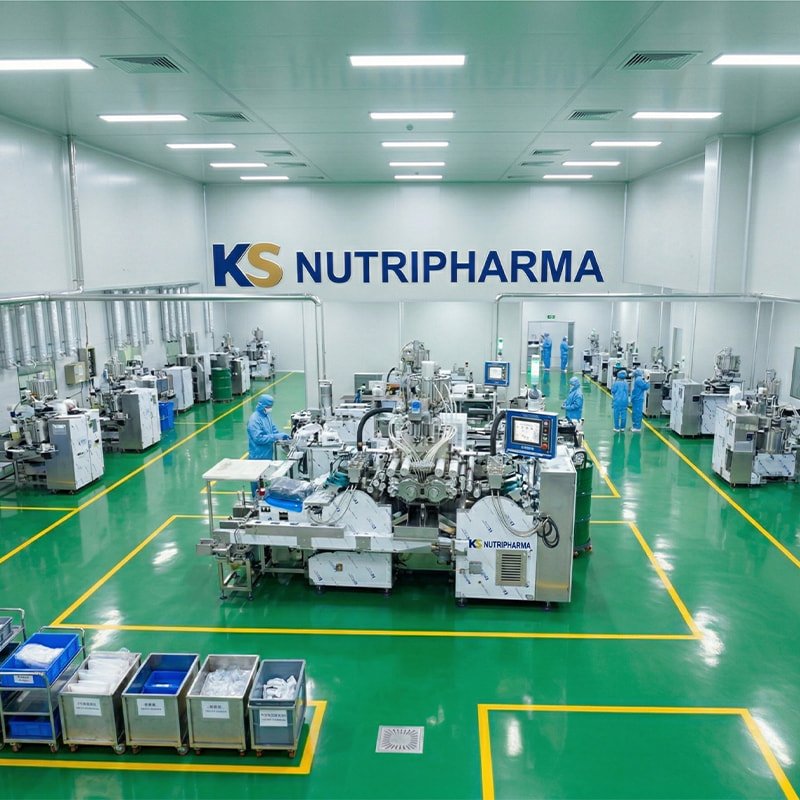
- 81,000㎡ integrated site; 260+ production, QA, QC, and R&D staff; two R&D and QC centers
- 12,000,000+ tablets/day site compression capacity on high-speed rotary presses, including 83-station machines — actual output depends on tablet specification, tooling, and production allocation
- MES for batch execution records and AGV for in-plant material movement
- 5,000+ tons/year powder ingredient capacity; integrated botanical sourcing for selected tablet programs
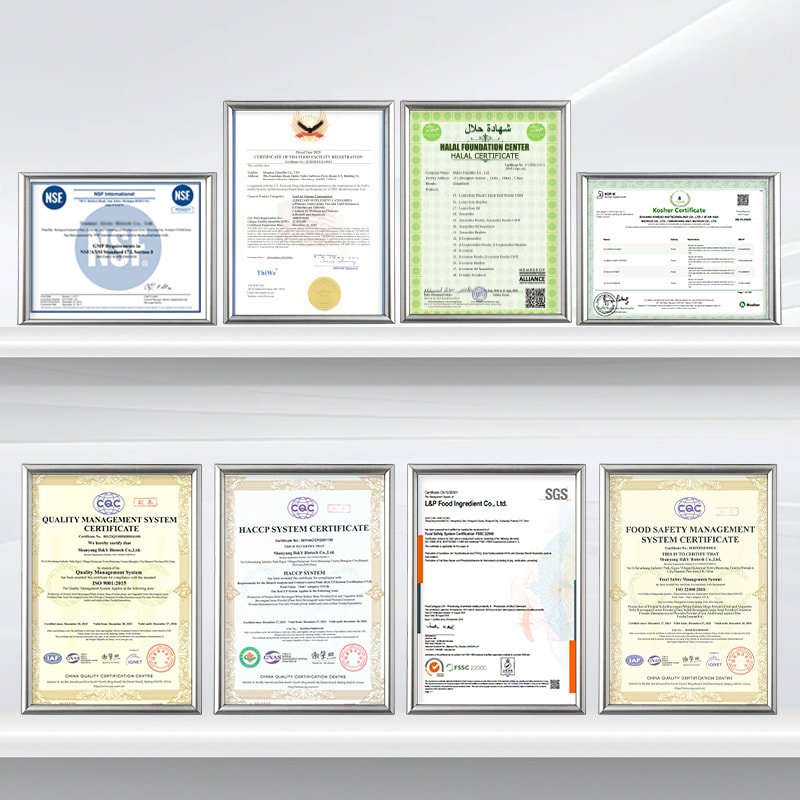
- Eight baseline credentials (as applicable to the SKU): cGMP, ISO 9001, ISO 22000, HACCP, FSSC 22000, Halal, Kosher, and manufacturing practices aligned with 21 CFR Part 111. Facility CGMP is not FDA product approval.
Site-level certificates: certifications and compliance.
Typical finished-product starting quantity: about 5,000–10,000 bottles or equivalent commercial units (tubes or blister counts quoted as packed units). Bulk-tablet MOQ is quoted separately. Custom punches and enteric coats can raise the practical minimum.
Sample / pilot
What it covers: Appearance, weight, hardness, friability, disintegration, assay as specified, and pack or bulk compatibility on a trial.
Quantity: Scoped to the trial.
Clock starts when: Formula, tablet weight, and pack (or bulk liner) are aligned enough to compress.
Typical window: 7–15 days after that alignment.
First commercial lot — standard path
What it covers: Production after formula, artwork, and pilot confirmation.
Quantity: Quoted per project for a standard compressed or film-coated file on catalog punches.
Clock starts when: Formula, artwork, and pilot are locked; materials and pack components are orderable.
Typical window: 4–6 weeks to first commercial production on that frozen file. Bottle, tube, blister, or printed components often sit on the critical path.
Custom tooling, enteric, or long-lead pack — project quoted
What it covers: Custom punches, logo deboss, enteric coating, or pack that is not in stock. Effervescent, bilayer, ODT, and bulk remain standard quote paths — they add moisture, dual-layer, or liner locks.
Quantity and clock: Set after tooling and pack lead times are reviewed. When raw-material procurement and release are on the clock, a full mature-file path commonly lands in about 8–14 weeks from lock to ship.
Re-orders on a frozen file are shorter than a first commercial run.
A standard commercial path:
- Incoming release of actives, excipients, and pack
- Weighing and blending
- Wet or dry granulation when flow or compressibility requires it; otherwise direct compression
- Compression (precompression and main compression as the file requires)
- Optional coating
- In-process and finished checks against the specification
- Pack or bulk, CoA release, ship
Pilot confirmation sits before step 4 is frozen for mass. Supporting process pages are not linked until they are live.
What to Send So the First Review Is Usable?
- Formula: Actives; target weight per tablet and per serving; tablets per serving; excipients already in the blend or “design the core.”
- Powder/dose architecture: Botanical extract vs mineral salt; marker or assay if used; particle and moisture notes if known; whether one large tablet or two smaller tablets is acceptable.
- Coat and tooling: Uncoated / film / enteric / “recommend”; round, oval, or oblong; deboss or not. Bilayer: what sits in each layer. ODT or sublingual: administration, disintegration target, and pack. Probiotic: strain identity and CFU time point (at manufacture and/or end of labeled shelf life).
- Pack and market: Bottle, blister (for tablets), effervescent tube, ODT barrier pack, or bulk tablets; destination market; estimated bottles or bulk count; whether the U.S. shared warehouse is in scope.
What Happens After You Send an Inquiry?
- Brief — the fields above
- Feasibility — compressibility, moisture, coat, pack or bulk
- Locks — tablet weight, punches, coat, pack
- Sample / pilot — after the brief can run
- Checks — against the named specification
- Mass production — after formula and artwork lock
- Pack or bulk, release, ship
Enteric, custom tooling, and first-time live-culture files extend the window.
What Is Included in the Pre-Production Review?
- Format recommendation (compressed vs chewable vs effervescent vs bilayer vs ODT, or a format change)
- Direct compression vs granulation
- Tablet weight and punch geometry
- Coat intent (none / film / enteric / sugar)
- Pack, blister, tube, or bulk-liner recommendation
- Testing list for that SKU, including CFU time point when the file is probiotic
- MOQ estimate and sample timeline
- Preliminary or technical quotation
Commercial production starts after formulation lock, artwork approval, and pilot confirmation.
Request the First Tablet Review
Send the brief in the four groups above — or attach a locked specification on the same form. The return is the pre-production review, then a sample when that brief can run.
Technical References
Manufacturing and testing follow the SKU file and destination market. These sources describe the frameworks we work against — they do not approve a finished product.
- 21 CFR Part 111 — Current good manufacturing practice for dietary supplements
- USP general chapters commonly used when named in a specification (for example disintegration, dissolution, uniformity of dosage units, tablet friability)
- ISO 22000 — Food safety management systems
- FSSC 22000 as the GFSI-recognized scheme built on ISO 22000, where the site certificate applies