








Dietary Supplement Compliance & GMP Quality System | FDA, EU & Canada Audit-Ready Framework
This document defines an integrated regulatory compliance and quality management system for dietary supplement development and manufacturing, covering the full product lifecycle from raw material sourcing to finished product release and export distribution.
The system is designed to ensure regulatory compliance, product quality, traceability, and documentation integrity across key global markets, including the United States, European Union, United Kingdom, Canada, and other applicable jurisdictions.
It integrates FDA dietary supplement GMP requirements (21 CFR Part 111), EU food safety and GMP principles, Health Canada Natural Health Product requirements, and internationally recognized quality management standards into a unified operational framework.
The system is structured across five core functional domains:
- Raw material qualification and supplier management
- Manufacturing and GMP-controlled production processes
- Analytical testing and quality verification systems
- Documentation control and data integrity (ALCOA+ principles)
- Regulatory compliance assessment and export readiness control
All processes are executed under controlled SOPs with defined responsibilities, validated procedures, and documented evidence systems. Full traceability and audit trail mechanisms are maintained to ensure verifiability during internal and external regulatory inspections.
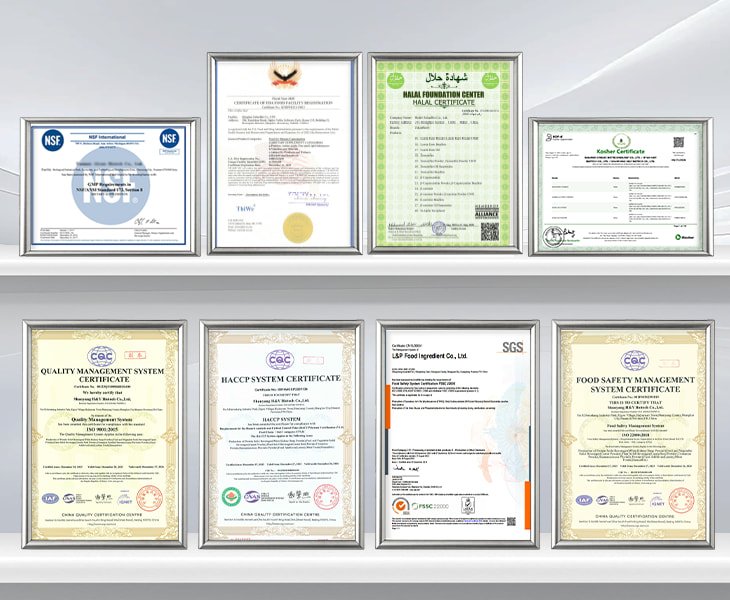
PART A
Dietary Supplement Compliance & Market Entry Risk Control System
FDA | EU | Canada | Australia Regulatory Readiness Framework
1. Why Dietary Supplement Products Fail Regulatory Review
Across FDA import enforcement actions, EU border rejection cases, and internal compliance audits, most dietary supplement failures are not related to product safety.
These problems are primarily caused by insufficient regulatory alignment prior to manufacturing and shipment.
Common failure categories observed in regulatory practice:
- Ingredient documentation inconsistencies between the COA and the final product composition
- Label non-compliance with mandatory formatting and disclaimer requirements
- Incomplete supplier qualification or missing raw material traceability records
- Insufficient pre-market regulatory classification assessment (especially Novel Food / NDI cases)
These issues are typically identified during inspection or import review, when correction is operationally costly or no longer feasible.
2. Compliance Built Before Production (Pre-Manufacturing Control System)
Compliance is integrated as a pre-production validation framework, not a post-production review activity.
The system aligns with FDA, EU food laws, Health Canada NHP requirements, and selected TGA expectations for export markets.
2.1 Raw Material Verification (Pre-Approval Stage)
Each raw material must complete a defined qualification process prior to release into formulation:
- COA verification against internal specification standards
- Independent laboratory confirmation (ISO/IEC 17025 accredited testing laboratories where applicable)
- Botanical identity confirmation using chromatographic profiling (HPLC/TLC methods depending on material type)
- Risk-based identity authentication approach (DNA barcoding applied only where scientifically appropriate, primarily for non-extracted botanical materials)
- Regulatory classification screening (including Novel Food / NDI assessment where applicable)
2.2 Pre-Market Compliance Simulation
Before production, formulations undergo a structured compliance review against target markets:
- FDA Supplement Facts labeling review aligned with 21 CFR 101.36 and related labeling provisions
- EU health claim screening aligned with Regulation (EC) No 1924/2006 and EFSA claim database
- Ingredient restriction and dosage compliance screening across US / EU / Canada frameworks
- Novel Foods and NDI pre-assessment for formulation eligibility in target jurisdictions
2.3 Manufacturing Compliance Integration
Compliance requirements are embedded into production planning and execution:
- Master batch records are defined and approved before production starts
- QA-controlled batch release structure established prior to manufacturing
- Full traceability structure assigned at raw material stage
- Compliance documentation generated in parallel with production records (not after completion)
2.4 Export Readiness Control
Each shipment is subject to pre-export compliance verification:
- Market-specific documentation checklist validation prior to release
- Export documentation preparation aligned with destination requirements
- Free Sale Certificate readiness (where applicable)
- Regulatory entry requirement verification by the destination market
3. Business Impact of Compliance Control System
This system is designed to reduce preventable regulatory and customs-related failures, including:
- Customs detention due to incomplete or inconsistent documentation
- Label rejection caused by regulatory misalignment
- Product recall risks due to traceability gaps
- Market entry delays caused by ingredient classification issues
- Import refusals due to non-compliant claims or formulation structures
4. Operational Compliance Performance Benchmarks
System performance is measured through defined operational controls:
- Full batch traceability: target ≤ 4 hours from finished product to raw material lot
- Pre-shipment compliance review: 100% mandatory execution
- Supplier qualification coverage: 100% approved supplier sourcing policy
- Continuous regulatory monitoring across the US / EU / Canada frameworks
- Documentation readiness integrated into production workflow (parallel generation model)
5. Regulatory Risk Prevention Case (Structured Example)
A botanical supplement project intended for the EU market entry included a Rhodiola rosea extract.
During pre-market regulatory classification review:
- The selected extract specifications were assessed against EU Novel Food requirements and available authorization listings
- The formulation was identified as not aligned with the authorized use conditions for that specific extract standardization in the target market
Corrective actions implemented:
- Reformulation using an EU-accepted standardized extract specification
- Re-assessment of compliance status prior to production release
- Updated labeling and claim review based on revised composition
Outcome:
- Avoided potential customs detention and destruction costs
- Prevented downstream reformulation after market entry
- Reduced regulatory approval uncertainty prior to production investment
6. Regulatory Feasibility Review (Pre-Production Service)
Before manufacturing begins, a structured regulatory assessment is provided:
- Market entry feasibility evaluation (FDA / EU / Canada)
- Ingredient compliance risk screening
- Label compliance pre-check against target jurisdiction requirements
- Export readiness and regulatory gap report
👉 Request a Regulatory Feasibility Review (no obligation, pre-production only)
PART B
Technical Quality & Regulatory Compliance System Documentation
Audit-Ready Manufacturing & Quality Governance Framework
1. Quality Governance System Architecture
Manufacturing and compliance activities operate under a controlled quality management system aligned with:
- FDA 21 CFR Part 111 (Dietary Supplement GMP requirements)
- EU food safety hygiene framework (Regulation (EC) No 852/2004 and applicable national GMP guidance where relevant)
- ISO 22000 Food Safety Management System principles
- ISO 9001 Quality Management System framework
Where applicable, additional industry standards (e.g., NSF/ANSI 173, USP dietary supplement guidelines) are applied as supplementary controls.
2. Supplier Qualification & Raw Material Control System
Supplier Lifecycle Management
- Initial qualification audit prior to approval
- Risk-based classification system (critical / medium / low risk suppliers)
- Periodic requalification based on risk profile
- Critical suppliers: annual on-site audit
- Medium risk: biennial review
- Low risk: document-based reassessment
Supplier Performance Monitoring
- COA accuracy vs internal verification results
- Delivery consistency and deviation history
- Quality incident frequency and CAPA records
Raw Material Verification Protocol
Each incoming batch is controlled through:
- Specification-based COA verification
- Independent laboratory testing (ISO/IEC 17025 accredited laboratories where applicable)
- Analytical method alignment check (USP / AOAC / validated internal methods)
- Identity verification via chromatographic profiling (HPLC/TLC depending on material type)
- Contaminant screening (heavy metals, pesticides, microbiological limits)
3. Manufacturing Control System (GMP Execution Framework)
Production Governance
- Master Manufacturing Records approved prior to production
- Batch Production Records reviewed and released by QA authority
- Defined Critical Quality Attributes (CQA) per product category
- Controlled environment monitoring system for production areas
Change Control System
All changes require formal documented control:
- Change request submission
- Risk impact assessment (quality / regulatory / supply chain)
- QA approval prior to implementation
- Post-implementation verification where applicable
Deviation & CAPA System
Deviation classification:
- Critical deviation
- Major deviation
- Minor deviation
Each deviation requires:
- Root cause investigation
- Corrective and preventive action plan (CAPA)
- Effectiveness verification
- QA closure authorization
4. Data Integrity System (ALCOA+ Framework Implementation)
Data integrity is enforced through system-level controls aligned with ALCOA+ principles:
- Attributable: user-specific login and audit trail logging
- Contemporaneous: time-stamped real-time data entry control
- Original: raw data retention without overwriting capability
- Accurate: dual verification for critical calculations
- Complete: full dataset retention including deviations and corrections
Electronic Audit Trail Controls
- System-generated audit logs for all modifications
- Role-based access control
- Immutable record retention architecture (WORM-compatible storage where applicable)
- Secure backup and archival system
5. Verification & Evidence Management System
All compliance outputs must be supported by validated documentation:
Accepted evidence sources:
- Validated analytical methods (USP / AOAC / ISO standards where applicable)
- ISO/IEC 17025 accredited laboratory reports
- Batch manufacturing records and QA release documentation
- Supplier qualification and audit records
- Stability testing data aligned with ICH Q1A(R2) principles (adapted for dietary supplement shelf-life validation)
6. Traceability & Recall Simulation System
Traceability Framework
- Full bidirectional traceability (raw material ↔ finished product)
- Traceability resolution target: ≤ 4 hours
- 100% traceability coverage for all approved suppliers
Recall Simulation Program
- Periodic mock recall exercises under QA supervision
- End-to-end traceability verification testing
- Documented performance evaluation and corrective actions
7. Export Compliance & Market Authorization Framework
Regulatory export readiness includes:
- Pre-shipment compliance validation for all export batches
- Market-specific documentation packages per destination requirement
Regulatory system coverage:
- United States: FDA export certification processes (where applicable)
- European Union: TRACES NT system for food export traceability
- Canada: Natural Health Products (NHP) compliance requirements
- Australia: TGA export and manufacturing compliance requirements (where applicable to product classification)
8. Document Control System
- Controlled document lifecycle management (creation, review, approval, revision)
- Version history tracking with full audit traceability
- Regulatory retention period compliance (aligned with 21 CFR 111.605 where applicable)
- Secure archival and retrieval system for all GMP documentation
9. Computerized System Validation (CSV)
Where digital systems are used (ERP / MES / LIMS):
- Validation aligned with 21 CFR Part 11 and EU Annex 11 principles
- Access control and electronic signature governance
- System audit trail verification
- Data integrity and backup validation
10. Quality Responsibility Statement
The quality system is operated by dedicated QA and regulatory functions responsible for:
- Regulatory intelligence monitoring and interpretation updates
- Supplier qualification and audit execution
- Batch release authorization and documentation approval
- Cross-market compliance coordination
- Continuous system improvement based on deviation and audit findings
Closing Statement
This quality and compliance system is designed to ensure:
- Controlled manufacturing execution under validated GMP systems
- Regulatory alignment across multiple target markets prior to production
- Full traceability and audit readiness at any inspection stage
- Documented evidence-based compliance rather than declarative compliance statements