


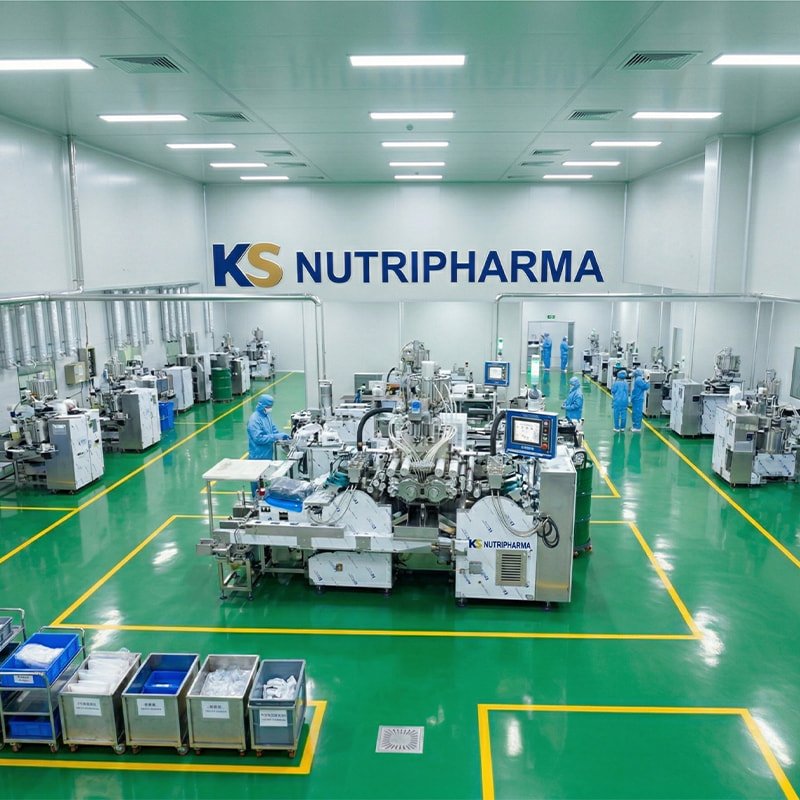
Partner With KS Nutripharma for Hard Capsule Contract Manufacturing
KS Nutripharma is a hard capsule manufacturer offering hard capsule contract manufacturing from our China production base for export nutraceutical brands — formulation, encapsulation, and documentation support, not a legal-approval service. Request a technical review What hard capsules are made of (shell polymer plus fill) is locked before size and filling are quoted.
- Expert formulation guidance
- Raw material evaluation and optimization
- Precision filling and density control
- Scalable production with predictable lead times
- Documentation support for global regulatory submissions
What to send so the first review is usable
Formula
Actives; target fill weight per capsule and per serving; capsules per serving; excipients already in the blend or still to be designed.
Raw material
Botanical vs synthetic or mineral source; extract ratio or marker if used; carrier identity and percentage; particle and moisture notes if known.
Capsule
Gelatin or HPMC (or “recommend”); size if already locked; color; opaque vs transparent. Named empty-capsule grade follows the destination market.
Pack and market
Bottle, blister, or bulk; destination market; pilot vs commercial scale.
If the capsule size has not been determined, we can recommend a candidate size after reviewing the formula, target fill weight, and powder characteristics — then confirm on a fill trial. Size is volume and packing, not the active milligrams alone. How a finished SKU is filled (purchased empty shells, not in-house dipping) is covered in hard capsule manufacturing process.
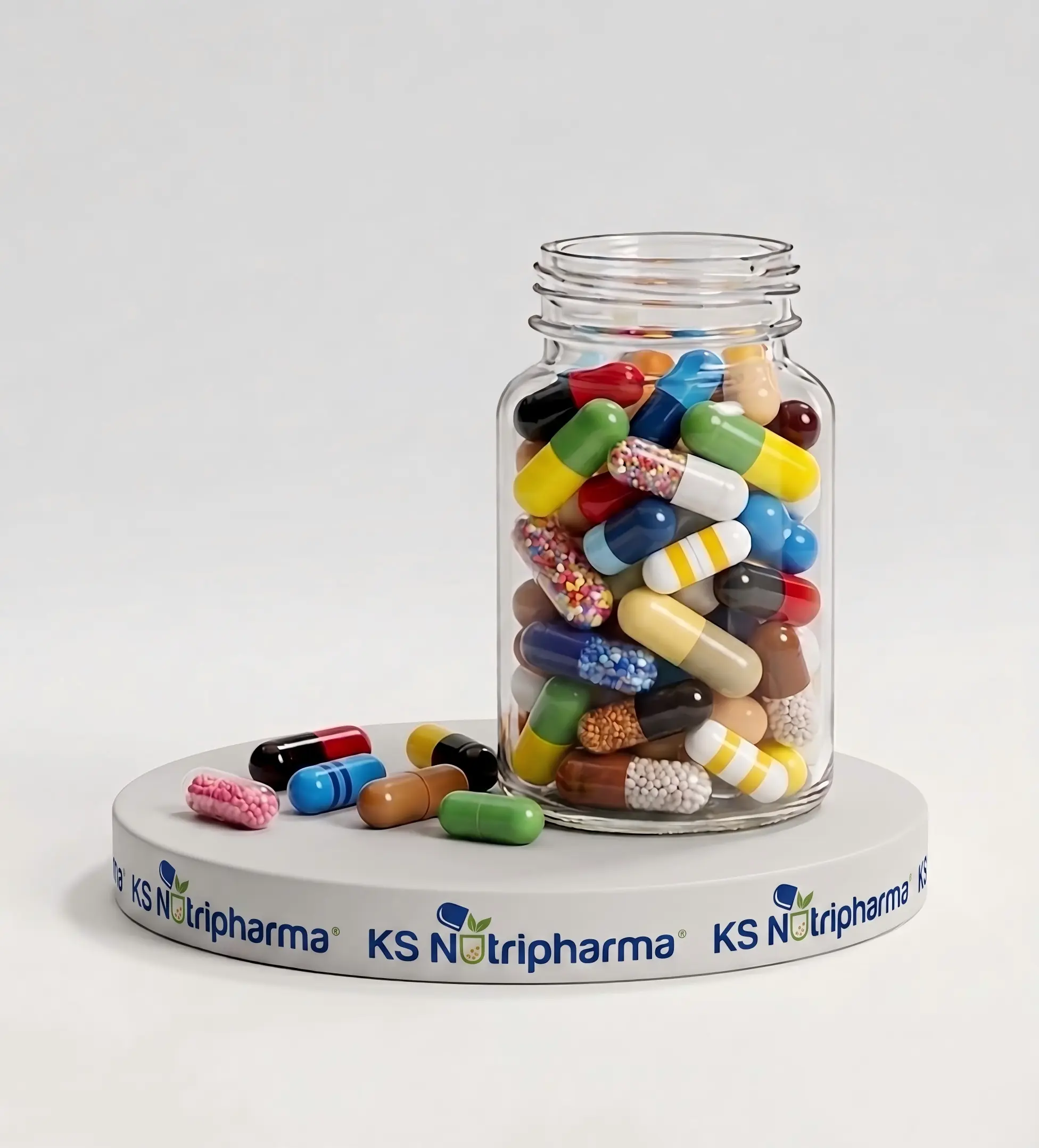
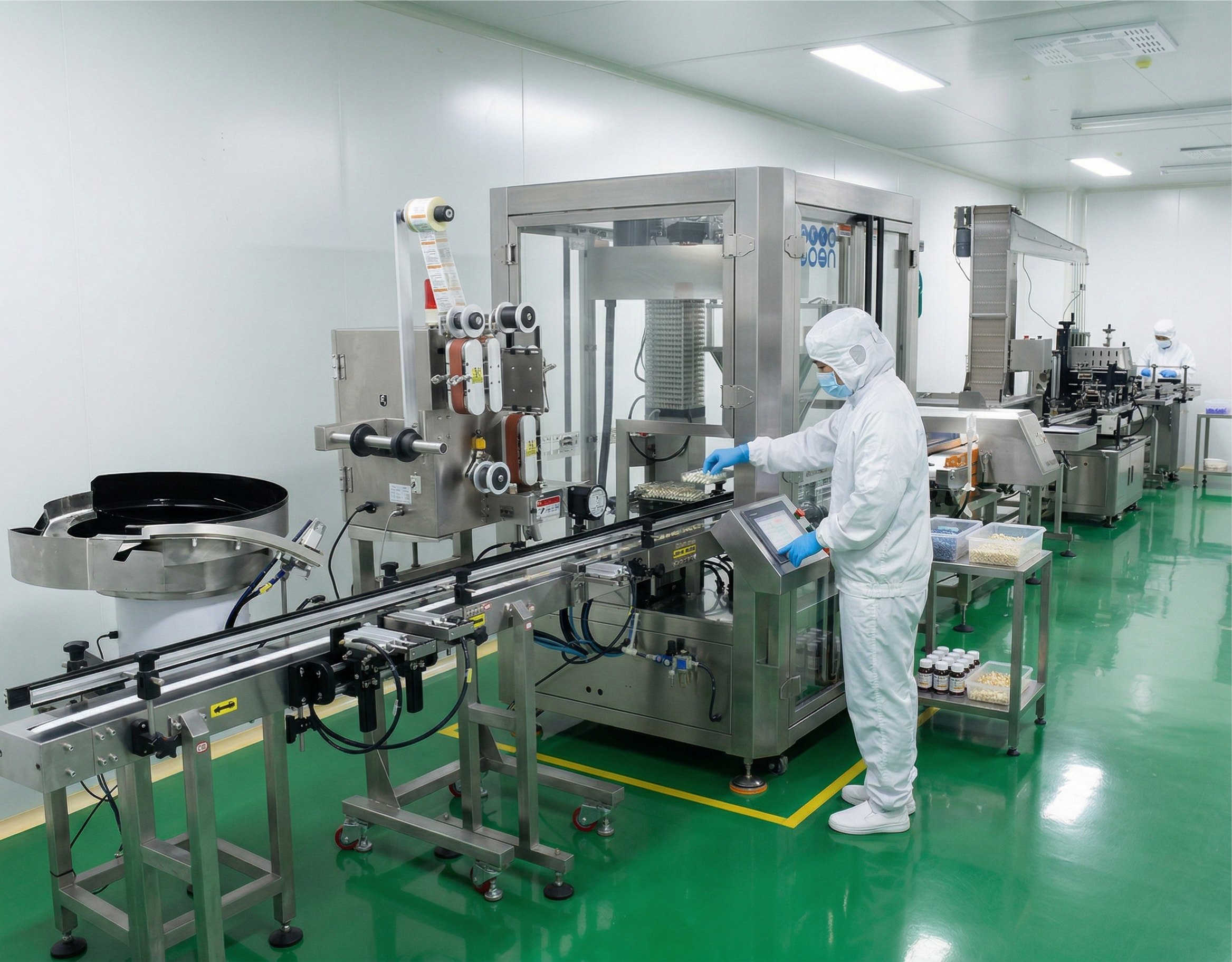
Our Moisture Sensitivity Solutions for Hard Capsules
Moisture can affect the fill and the shell in different ways. Excess humidity can soften gelatin or HPMC; gelatin that loses residual moisture can become brittle. Opening performance follows the product specification — it is not a universal moisture equation.
Our Solutions:
- Controlled drying environments
- Desiccant packaging options
- Excipient choices reviewed against the named fill (moisture-holding aids are not a default for hygroscopic extracts)
Hygroscopic botanicals and extract powders are diagnosed on capsule filling problems in botanical supplements.
Our Poor Flow / High Cohesivity Solutions for Hard Capsules
Fine, cohesive powders can bridge or clog feeders.
Our Solutions:
- Granulation (wet or dry)
- Flow-aids (glidants)
- Particle engineering
Carr’s Index and Hausner Ratio may be used as comparative tools; they do not by themselves guarantee high-speed filling. Finished-blend flow and density sit on powder flow and bulk density for capsule filling.

Density Match in Blends
When ingredients have widely different densities, segregation occurs. Our Solutions:
- Blending protocols
- Pre-granulation
- Mass-uniformity testing
Weight evenness is not the same as content evenness. Low-dose actives still need a blend-uniformity file.
Reliable Supply Chain & Certified Manufacturing
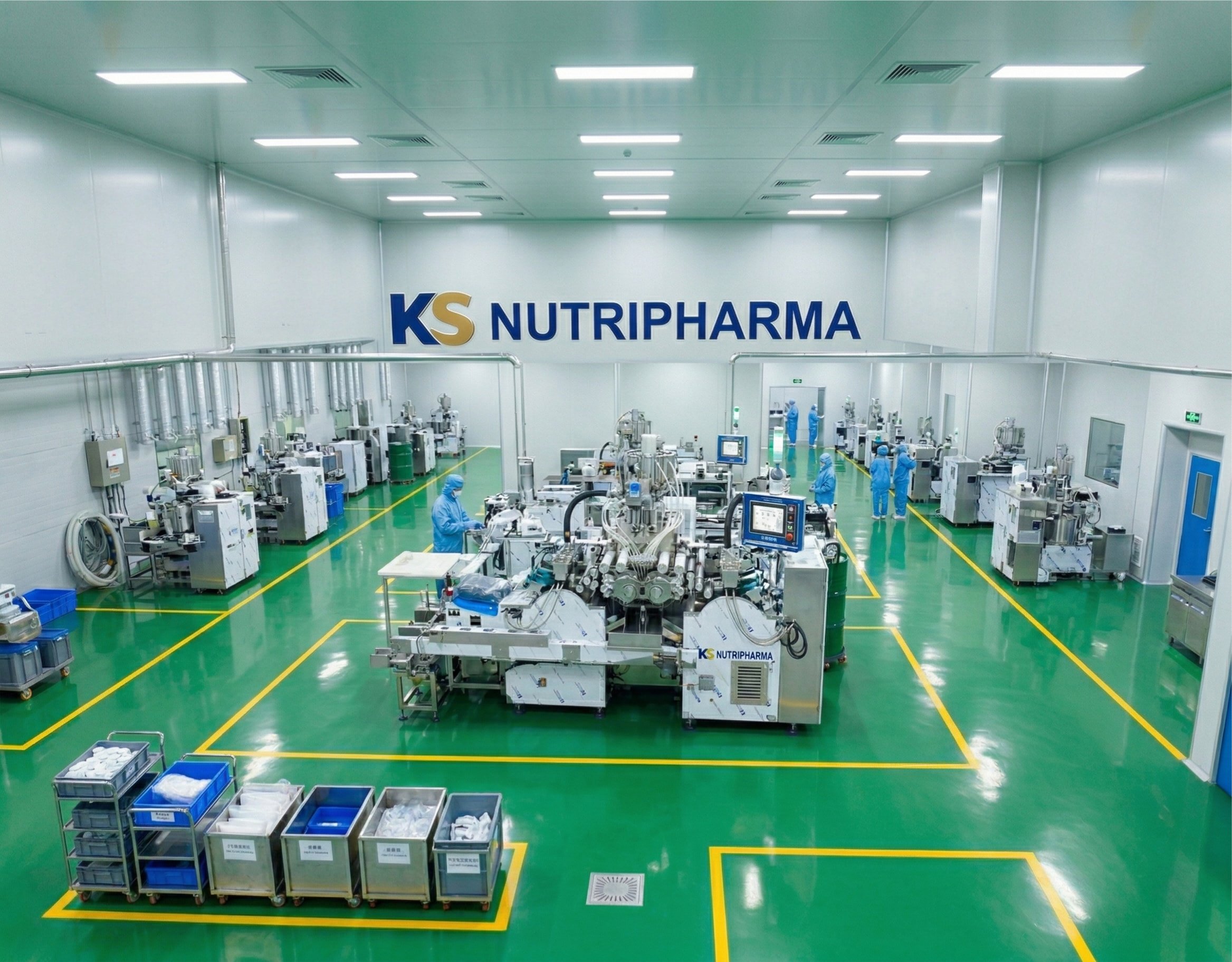
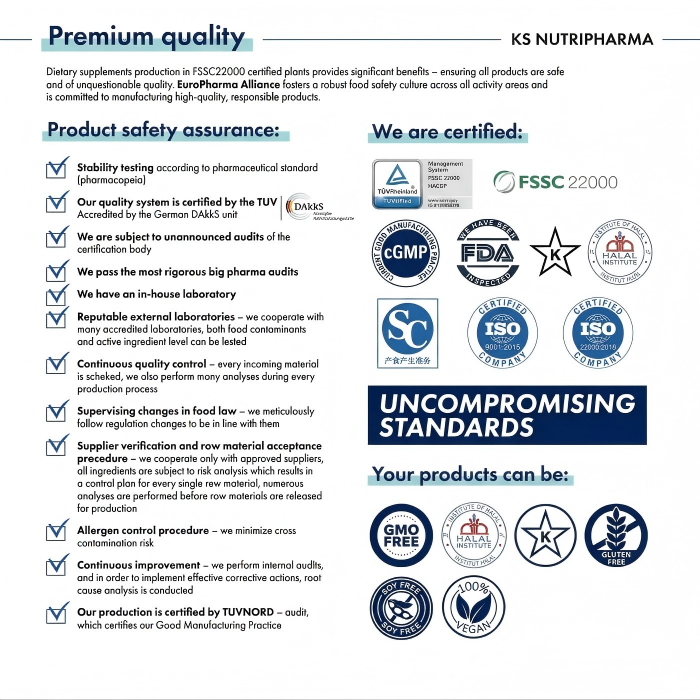
- 81,000㎡ integrated manufacturing facility with end-to-end production control
- 12 advanced production lines covering capsules, softgels, tablets, and gummies
- Annual production capacity: 5,000+ tons of powder ingredients
- 260+ experienced production, QA, QC, and R&D professionals
- 2 independent R&D and quality control centers for formulation development and testing
- 4 GAP-certified planting bases ensuring a stable and traceable raw material supply
- Strict raw material sourcing and supplier qualification system with full audit control
- Certified under cGMP, ISO, HACCP, FSSC22000, HALAL, and KOSHER standards
- Full COA documentation support with a complete batch traceability system
- Third-party laboratory testing available upon the client’s requirement
- Daily production capacity: Capsules: 5,000,000+ pcs/day; Softgels: 2,000,000+ pcs/day; Tablets: 12,000,000+ pcs/day; Gummies: 2,500,000+ pcs/day
Why Hard Capsules Matter in Nutraceuticals
Hard Capsules are one of the most versatile and widely accepted dosage forms in the nutraceutical and dietary supplement industry. They offer:
- A familiar two-piece format for many supplement channels
- Minimal taste and odor interference
- Target fill-weight control on a volumetric filler (content uniformity is specified separately)
- Compatibility with diverse active ingredients
At KS NUTRIPHARMA, our capsule manufacturing capabilities combine advanced process control, raw material expertise, and formulation precision to deliver capsules that meet the quality, stability, and documentation expectations of the destination market.
Hard Capsule Types We Manufacture
We provide a broad range of capsule formats, enabling brand differentiation and functional performance. Each capsule format is selected and optimized based on the ingredient profile, intended functionality, and target market claims.
Delayed-release, liquid-filled hard capsules, and capsule-in-capsule are manufactured as specialty paths — see advanced hard capsule technologies.
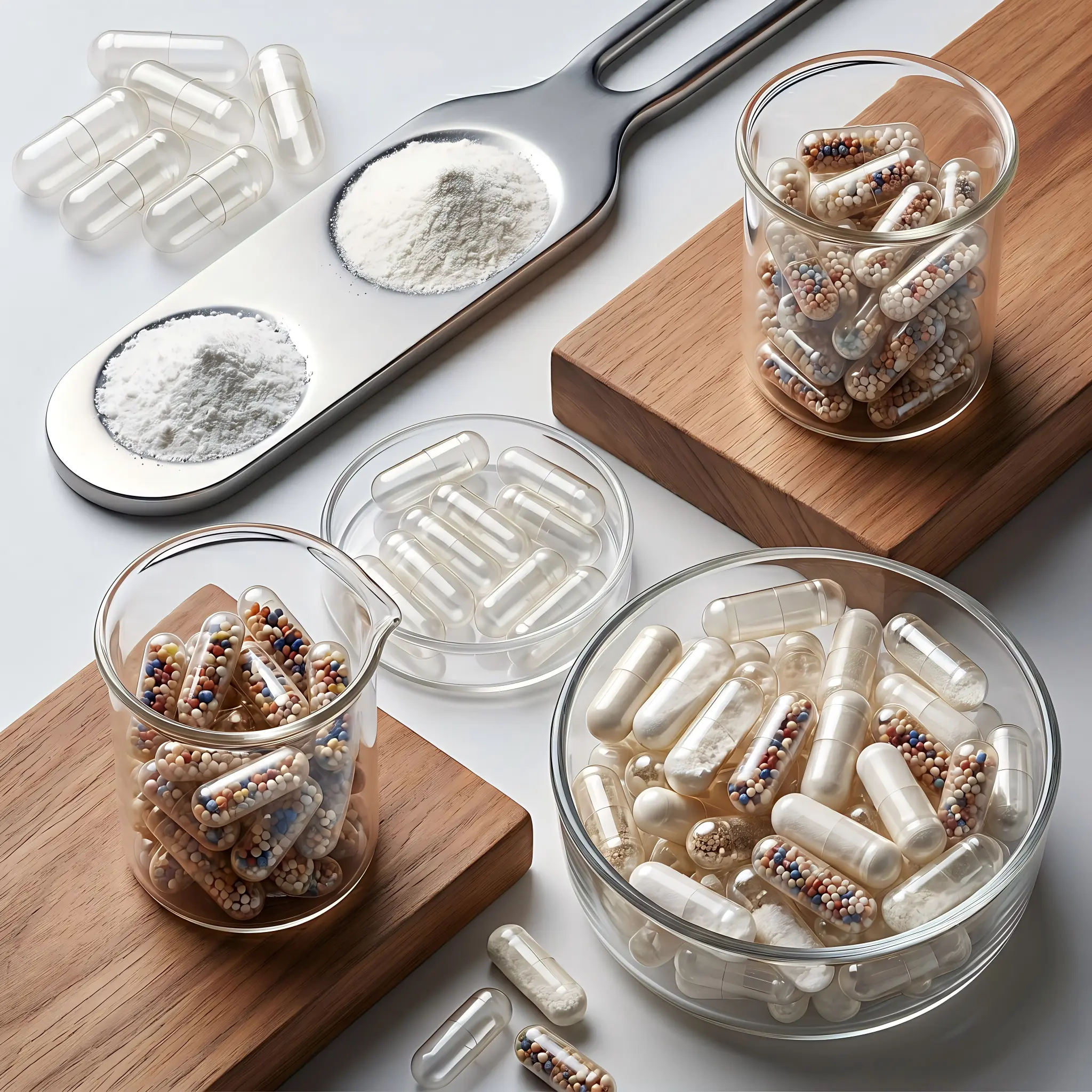
- Traditional and cost-effective
- Suitable for dry powdered or granulated ingredients
- Well-established regulatory history
- Specify named gelatin grade, residual moisture, and CoA — not “gelatin” as a generic
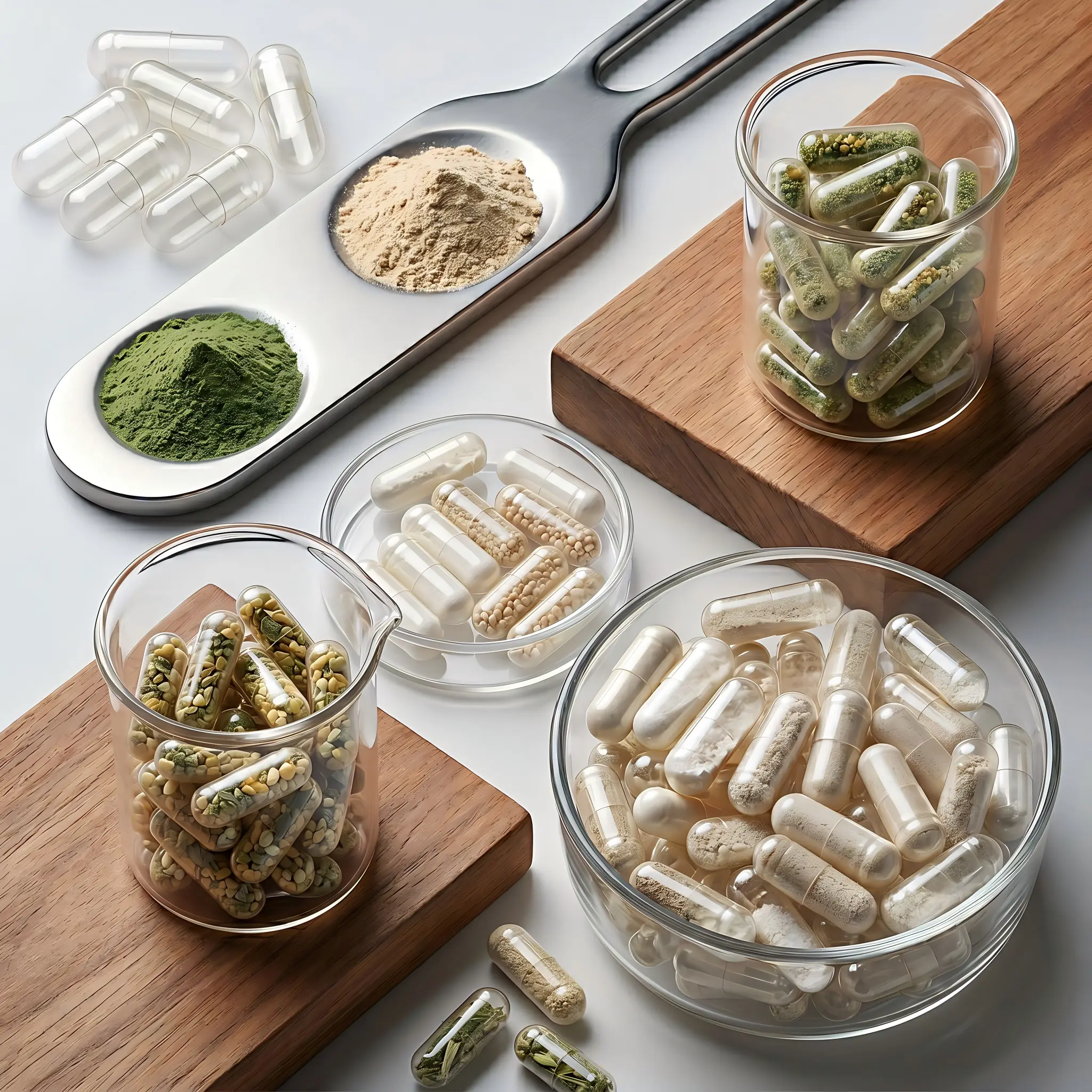
- Vegetarian/vegan-friendly
- Free of animal-derived gelatin
- Compatible with stringent dietary preferences
- HPMC is a shell-polymer choice, not delayed release. Grade comparison: HPMC vs gelatin capsules.
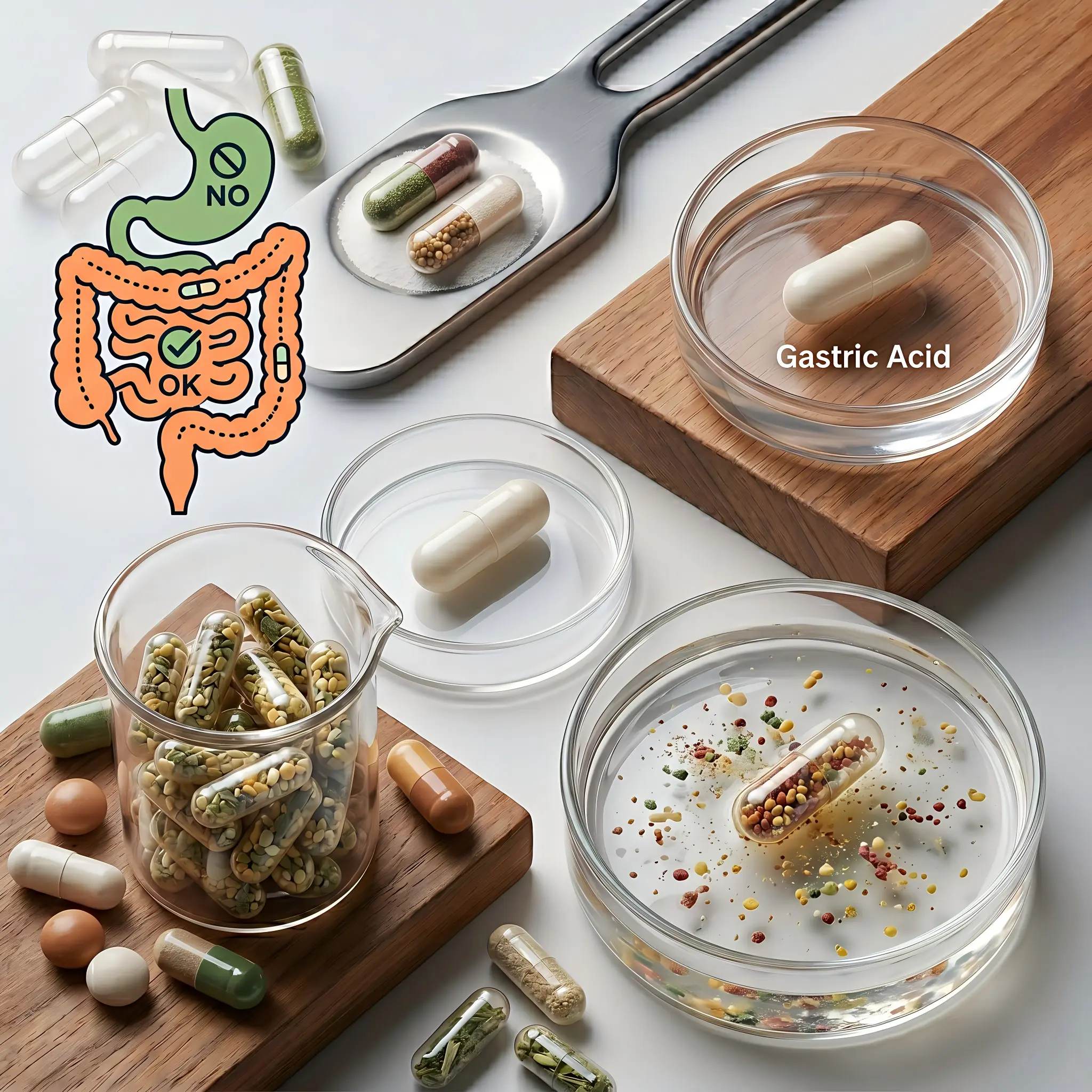
- Designed to bypass the stomach environment
- Useful for acid-sensitive actives and targeted intestinal release
Confirm the route: delayed-release empty shell, coating, or coated pellets — polymer name alone is not enough

- Sustained or delayed release profiles
- Set against a named opening target for the nutraceutical brief — not a therapeutic claim
- Designed based on dissolution modeling where the product specification requires an opening test
Capsule Shell Options — Color & Source
Capsule shells are not just containers — their composition and appearance affect consumer perception, regulatory compliance, and ingredient compatibility. We provide a range of options tailored for functional performance and brand aesthetics:
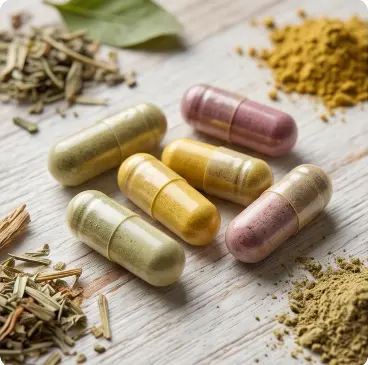
- Derived from plant-based pigments such as turmeric, beetroot, spinach, and anthocyanins
- Ideal for clean-label and vegetarian/vegan claims
- Supports transparent marketing: “naturally colored capsules.”
Compatibility is confirmed against the named dry fill — not assumed for every powder
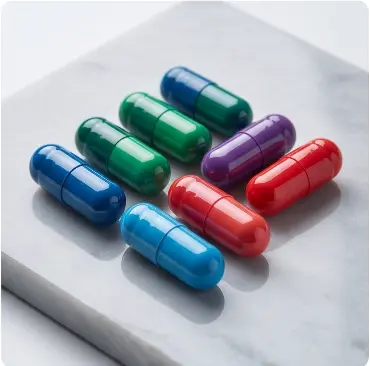
- Formulated with certified food-grade colorants
- Broad palette of colors for brand differentiation
Humidity and heat stability depend on the named colorant system and pack — confirm on the grade you will buy
- Suitable when a consistent visual appearance is prioritized over natural labeling
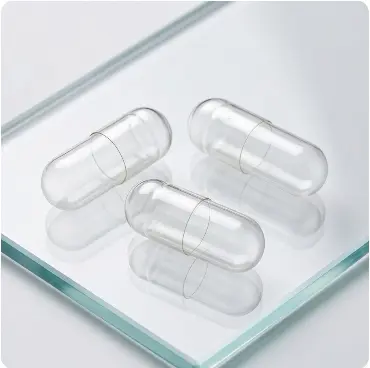
- Neutral appearance, showcasing the powder or granulate inside
- Preferred for premium or functional blendswhere ingredient visibility is a marketing point
- Compatible with most fill powders, but sensitive to moisture and light; recommended protective packaging
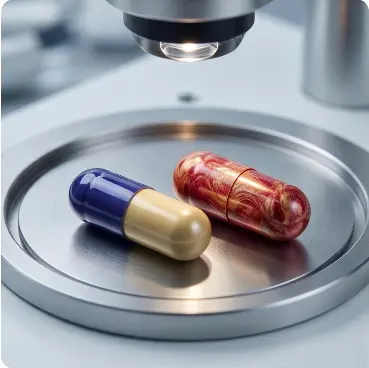
- Tailored blends possible for brand-specific color schemes
- We support technical assessment to ensure colorant stability and ingredient compatibility
Opacifier and TiO₂ status follow the destination-market file, not a global default
Capsule Size Selection & Fill Weight Precision
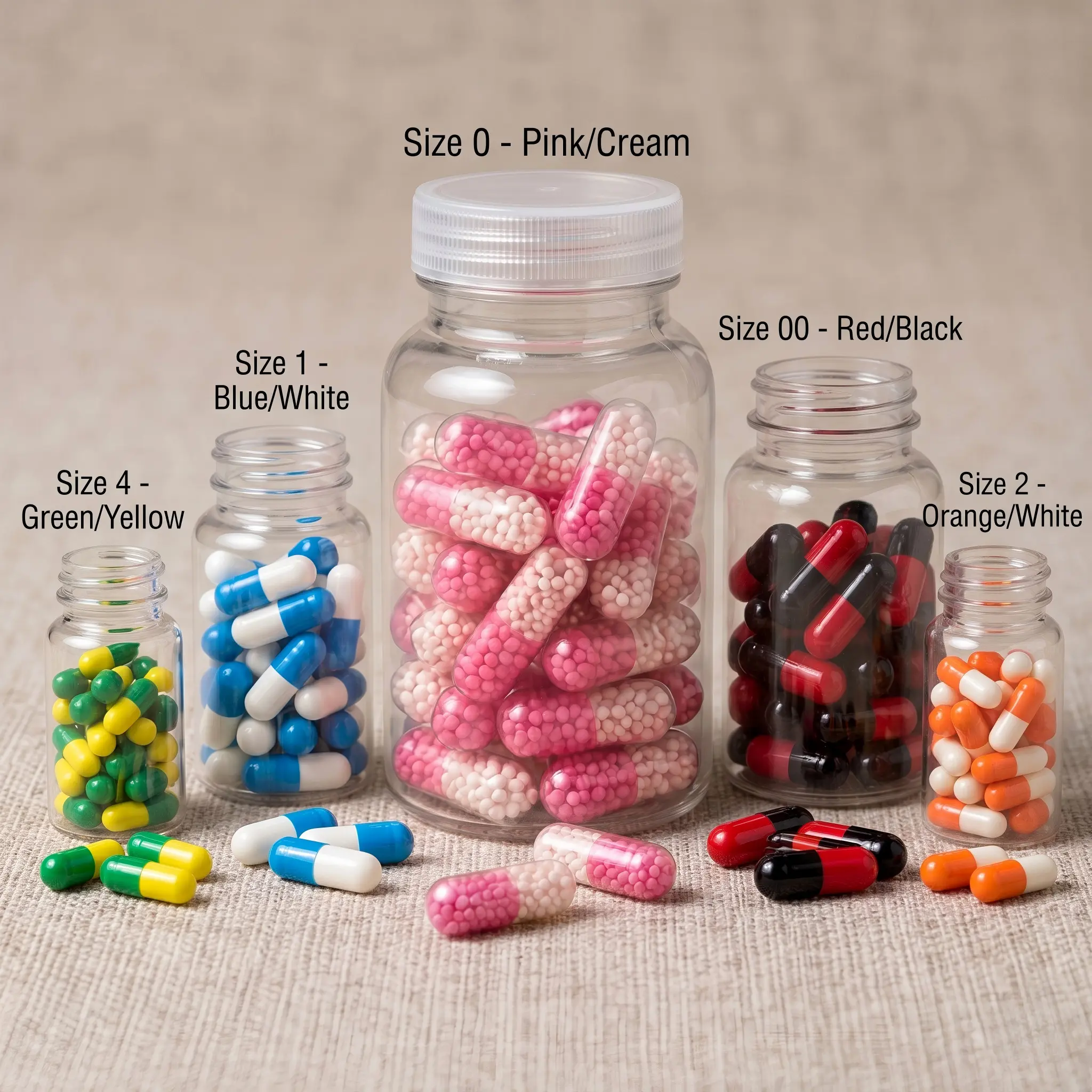
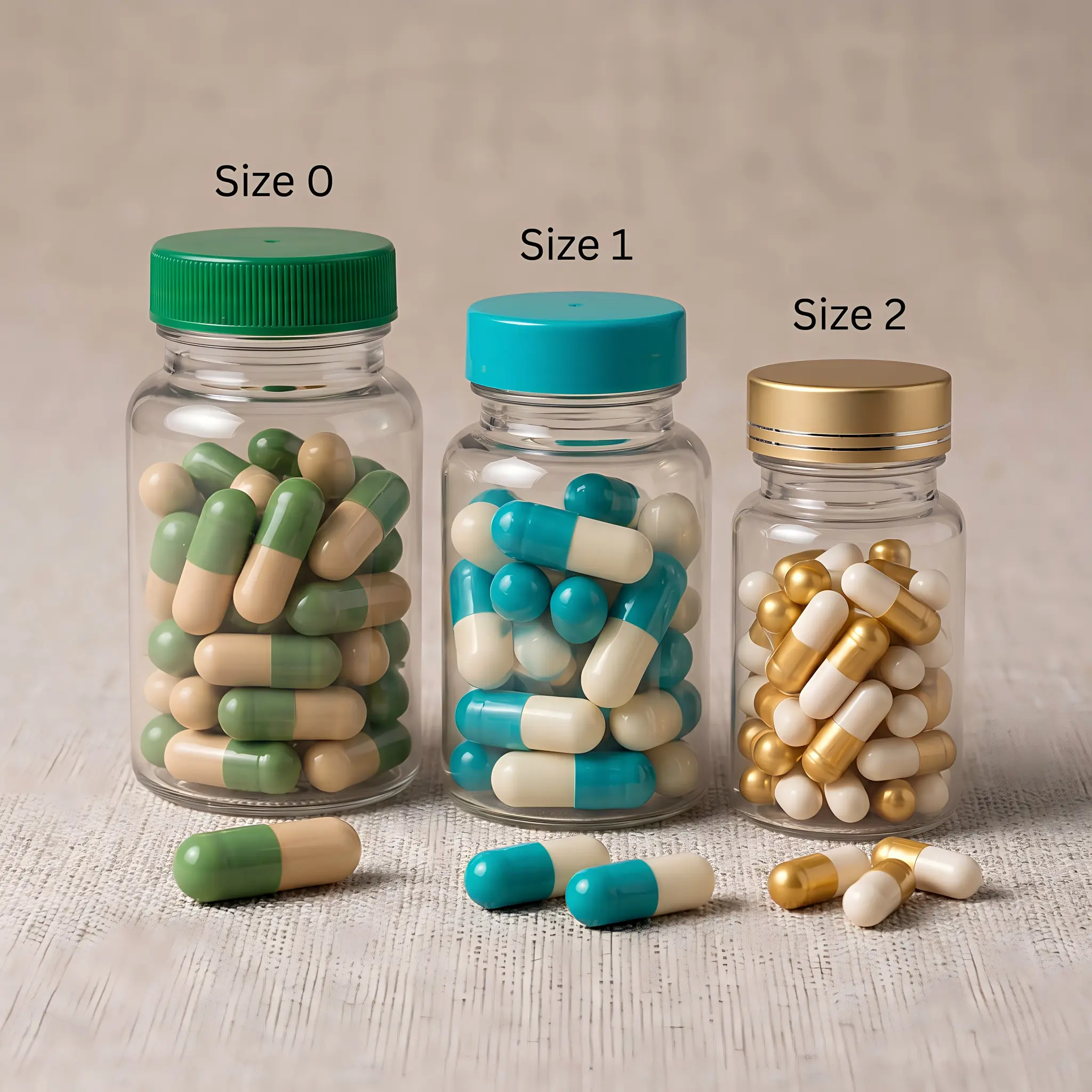
Capsule size selection is a critical part of formulation design. We optimize fill weights based on density, bulk behavior, and active potency to achieve precise dosages with minimal variability.
How to Choose the Right Capsule Size
Capsule size selection directly impacts formulation feasibility, consumer experience, and cost structure. At KS Nutripharma, we support precise capsule size matching based on:
- Bulk density of your powder or granules
- Target dosage per serving
- Number of capsules per daily intake
- Consumer positioning (mass market vs premium/high-potency)
Milligrams on the brief are mass. The empty shell is a cavity. Candidate size comes from finished-blend volume versus the shell drawing; production size is locked on a fill trial. How to choose capsule size
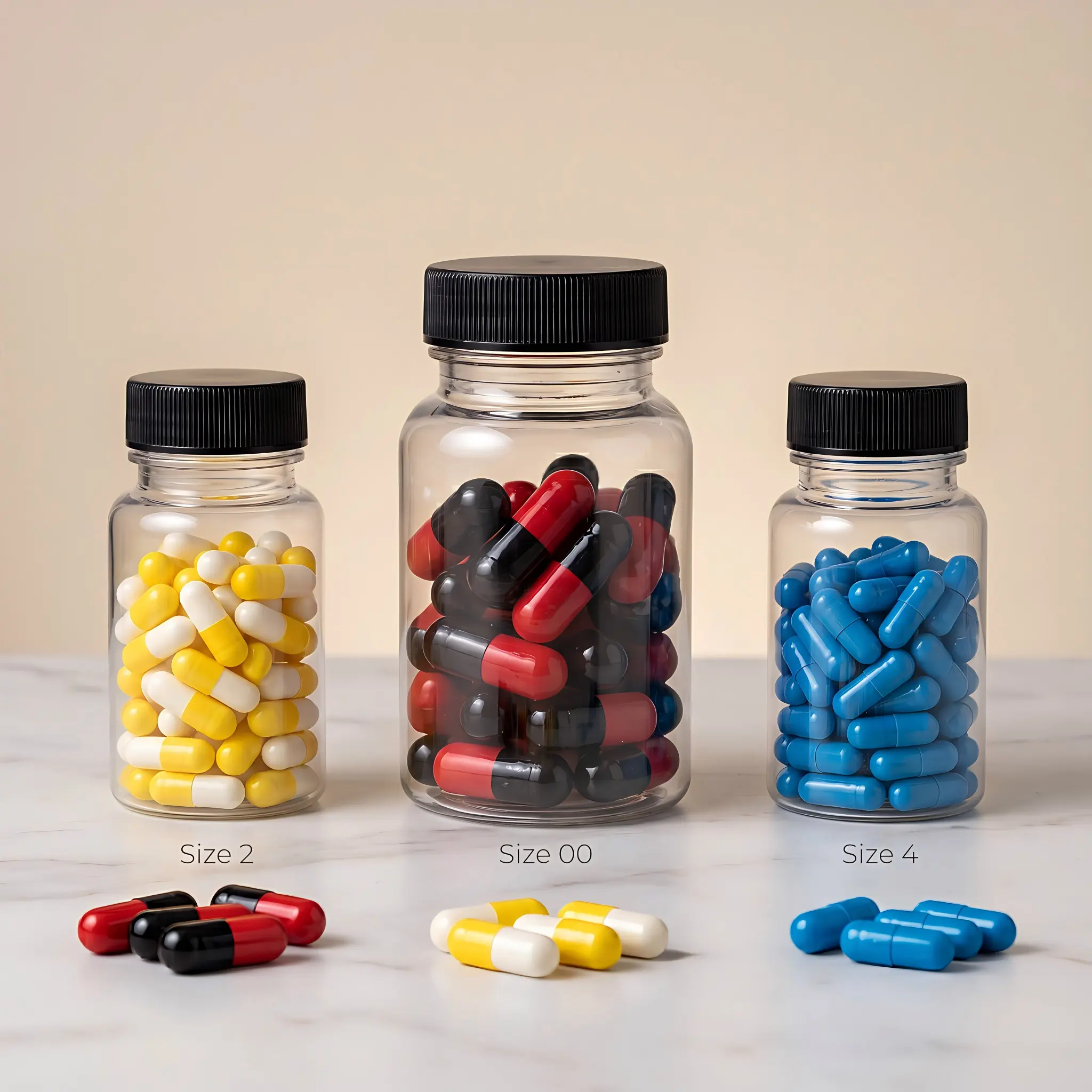
We help optimize your formulation to achieve the ideal balance between dosage accuracy, capsule count, and user compliance. We work with a range of standard capsule sizes as follows:
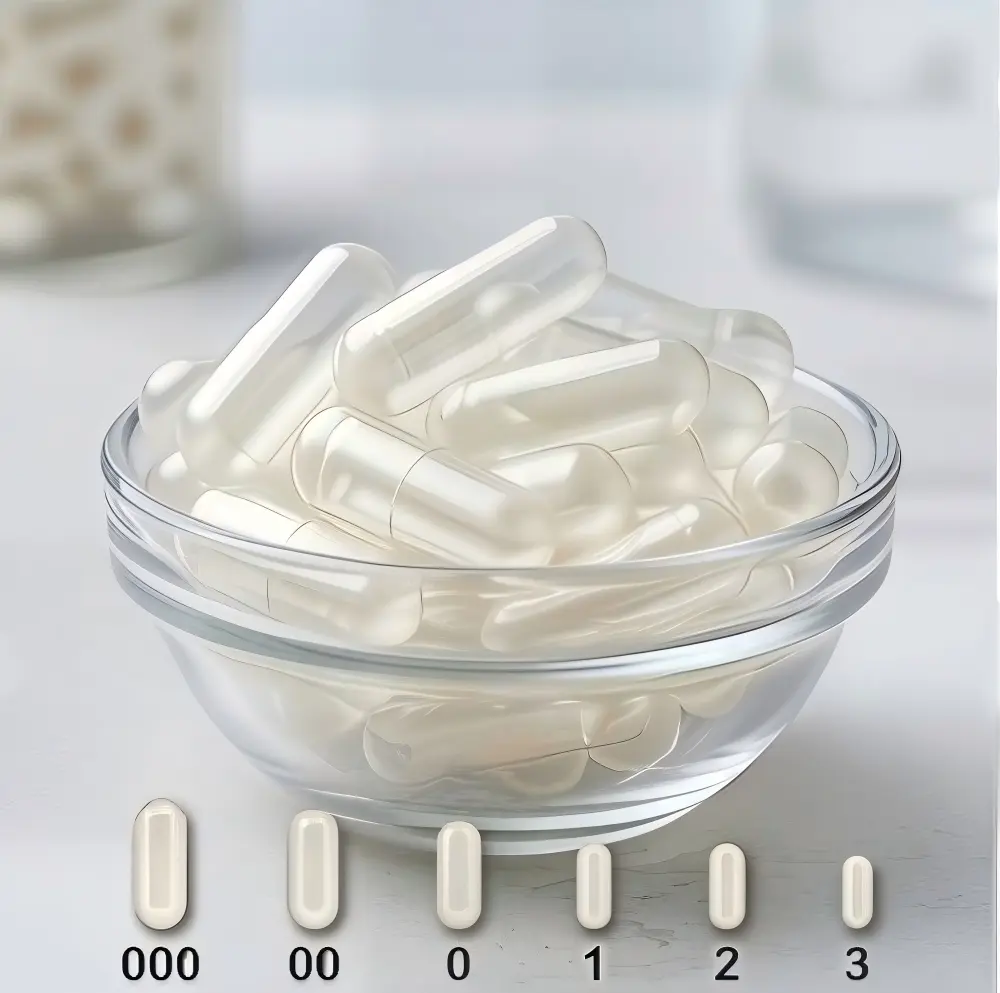
High-Dose Solution
Fill Volume: ~1.37 mL
Use: High-dose powders
Best For: Protein, fiber, bulk botanicals
A larger cavity does not by itself prove the serving can be delivered in one unit — see high-dose capsule formulation.Figures above are screening values, not guaranteed fill weights. Gelatin and HPMC share size numbers; confirm fill on the selected polymer and grade.
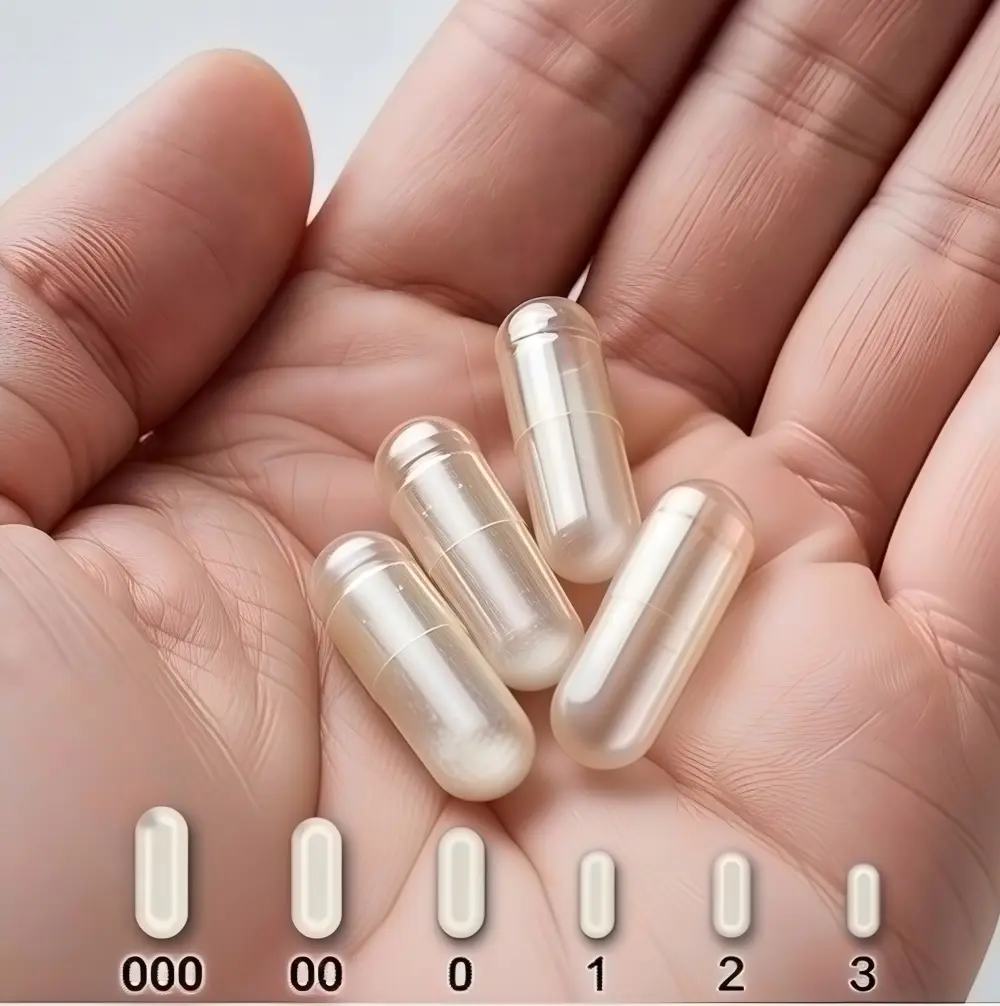
Most Popular Choice
Fill Volume: ~0.90–0.95 mL
Use: Multi-ingredient blends
Best For: Multivitamins, complex formulas
Nominal cavity from typical empty-shell charts — lock the drawing for the grade you will buy.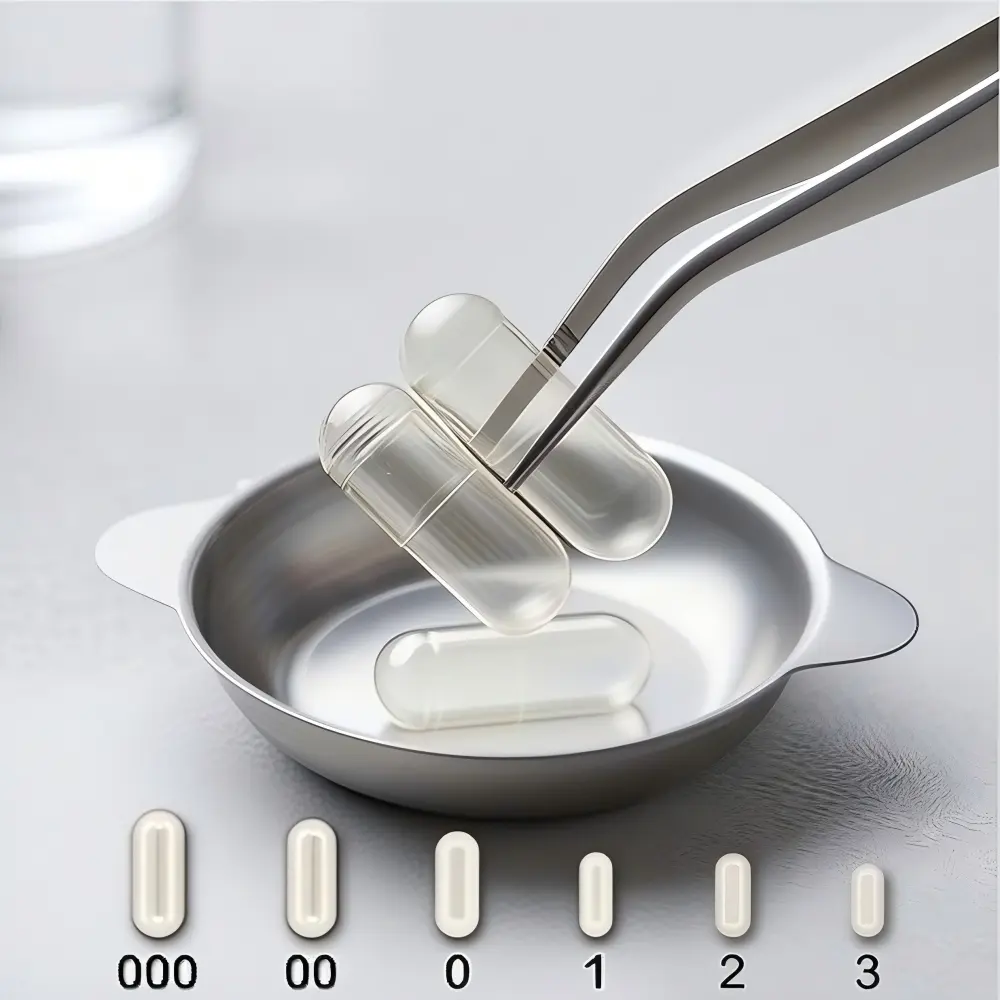
Balanced & Cost-Efficient
Fill Volume: ~0.68 mL
Use: Mid-range doses
Best for: Herbal extracts, single actives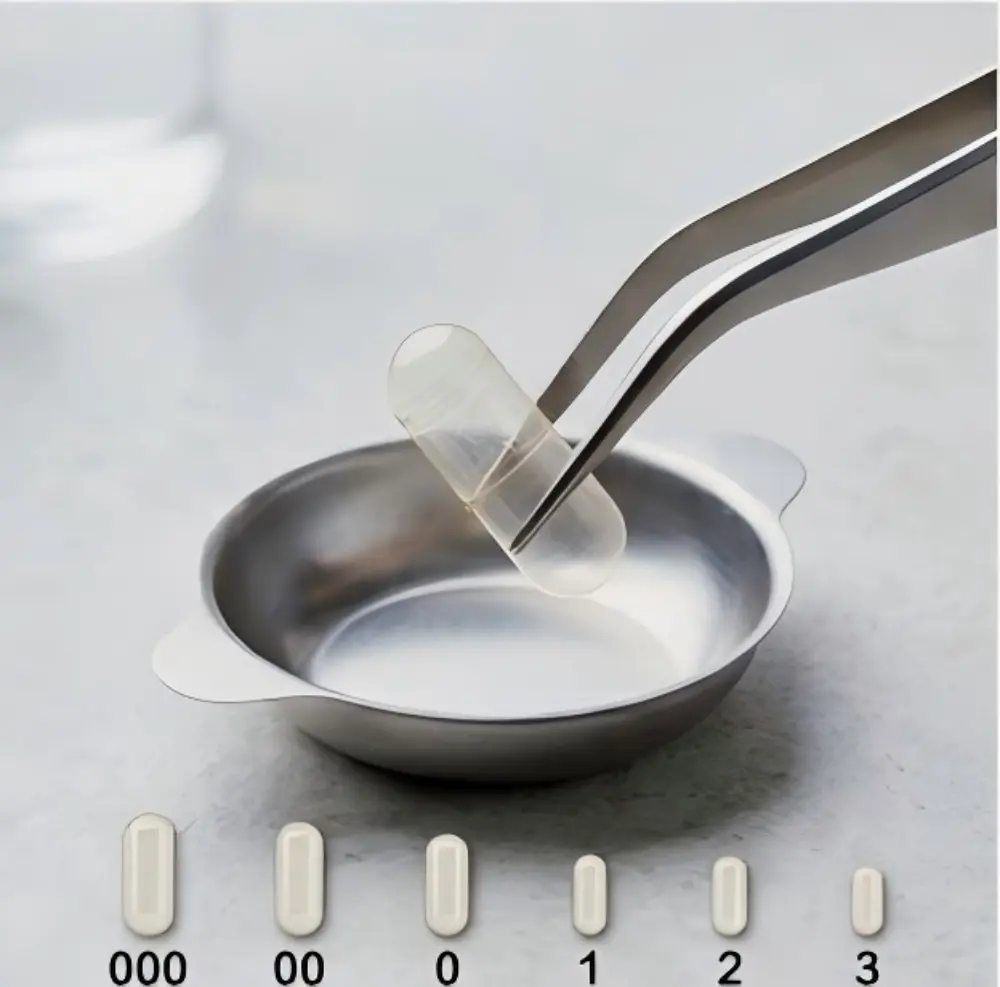
Smaller Size, Higher Compliance
Fill Volume: ~0.50 mL
Use: Lower-dose / potent actives
Best For: Concentrated ingredients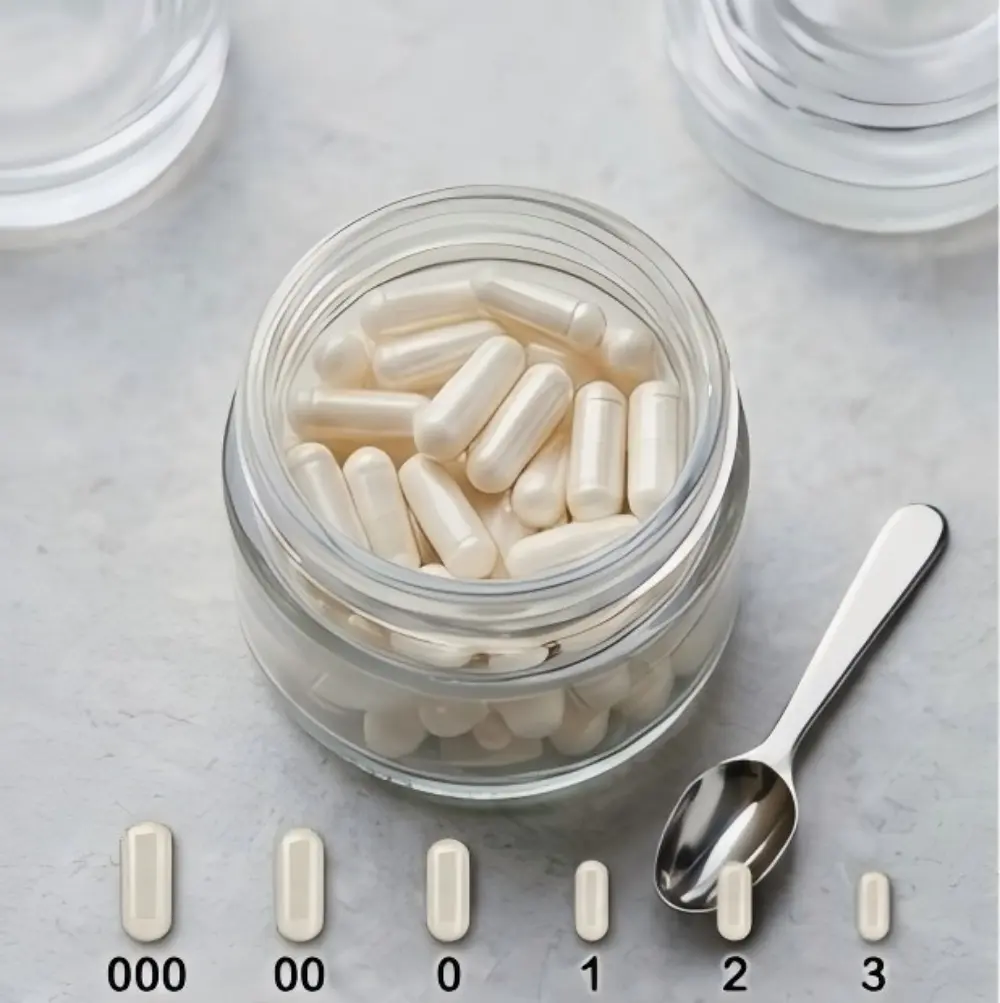
Precision Dosing
Fill Volume: ~0.36 mL
Use: Low-dose formats
Best For: Vitamins, minerals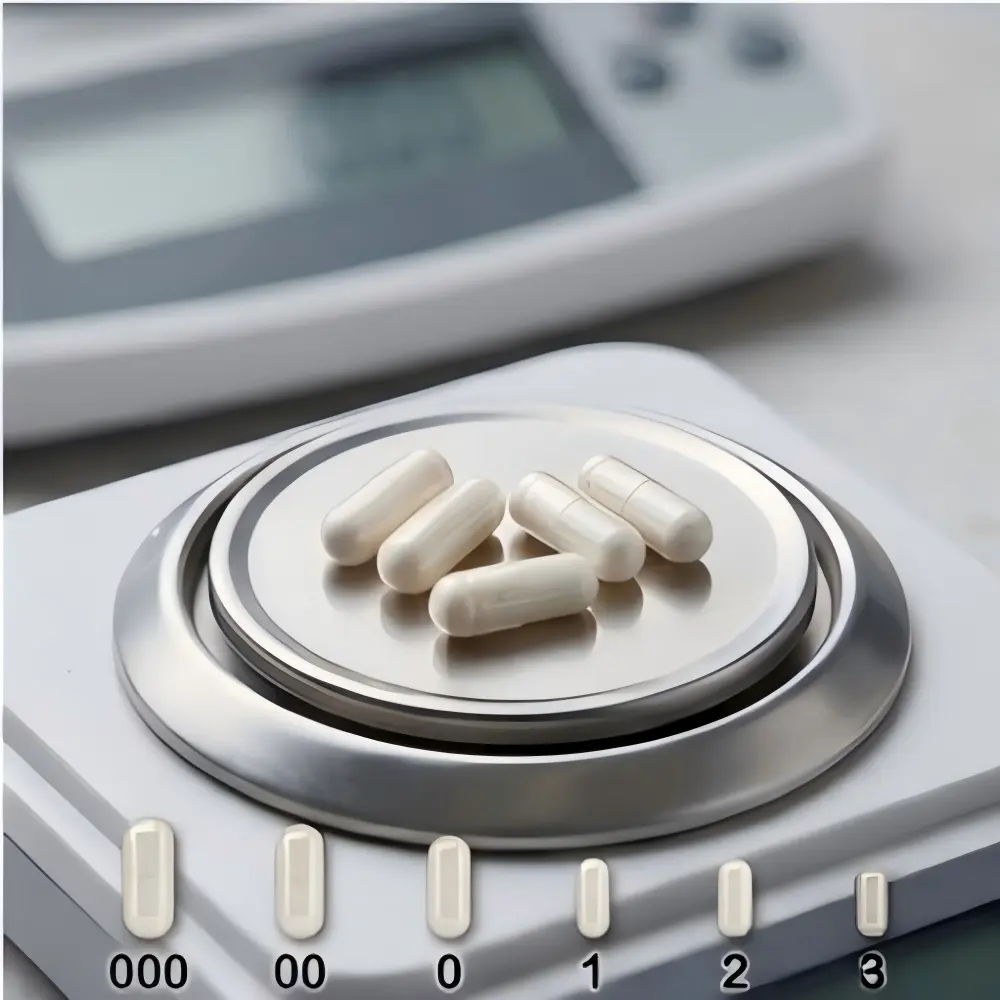
Micro-Dose Specialist
Fill Volume:~0.26–0.30 mL (confirm drawing)
Use: Micro-dosing
Best For: High-potency niche ingredients
Capsule Manufacturing Engineering
Engineering below supports conventional two-piece powder filling. Tools are comparative unless the product specification says otherwise.

Accurate control of bulk and tapped density ensures optimal capsule size selection, consistent fill weight, and stable encapsulation performance.
Flowability assessment using Carr’s Index and Hausner Ratio can compare lots and help feeding, reduced machine stoppages, and reliable high-speed capsule production. They are not a universal release cutoff.
Powder particle size is specified per formula — not a single factory mesh range for every SKU. Mesh windows are chosen to support packing, opening behavior where tested, and ingredient uniformity for that blend.
Advanced blending systems support even distribution of active ingredients, preventing segregation and maintaining consistent fill across every capsule batch. Content uniformity remains a separate specification when the dose requires it.
Humidity-controlled production environments protect hygroscopic ingredients, reducing the risk of clumping, capsule deformation, and stability loss during encapsulation.
Pre-production testing checks compatibility between formulation and capsule shells, including gelatin and HPMC vegetarian capsules.
Validated encapsulation lines maintain stable fill weights and output efficiency during high-volume capsule manufacturing.
Integrated quality control monitors weight variation, capsule integrity, and blend uniformity as specified for the product to support consistent production quality.

Flexible packaging formats and coordinated logistics designed to support supplement brands from production to market launch.
1. Bottle & Jar Packaging
Support for multiple bottle and jar formats with child-resistant and tamper-evident closures, ensuring product safety while meeting regulatory requirements across global supplement markets.
2. Blister Pack Solutions
Blister packaging options are designed for unit-dose protection, improved shelf stability, and premium retail presentation for capsules in pharmacy and e-commerce channels.
3. Sachet Capsule Packs
Multi-capsule sachet packaging is designed for travel packs, daily-dose formats, or sample kits commonly used in direct-to-consumer supplement brands.
4. Custom Labeling Compliance
Packaging specifications aligned with international labeling requirements, including multi-language labeling, supplement facts formatting, and regulatory market compliance.
5. Brand-Oriented Packaging Coordination
We coordinate packaging specifications with trusted partners to ensure packaging structure, materials, and design match your brand positioning and product category.
6. Integrated Global Distribution
Logistics planning can be integrated with our U.S. shared warehouse network, enabling faster regional fulfillment and efficient distribution to North American markets.
At KS NUTRIPHARMA, capsule production operates under strict quality management systems designed to ensure consistent product performance and regulatory reliability.
Our manufacturing processes follow cGMP standards, supported by in-process controls including capsule weight checks, fill accuracy monitoring, and blend uniformity verification. Additional testing, such as disintegration and dissolution evaluation, is applied where the product specification and destination market require those tests — not as a universal panel on every lot.
Finished products are inspected according to internationally recognized pharmacopeial standards including USP and EP when those tests are written into the specification, so each production batch can be released against the agreed file for nutraceutical supplements.
Fill-weight control is not the same as content uniformity. How variation is verified: capsule weight variation and quality control.
Each capsule batch is tested against the established product specification to verify safety, stability, and regulatory compliance.
Quality control parameters include capsule weight variation, and — when specified — dissolution and disintegration profiles, microbial safety testing, and analysis for heavy metals or residual solvents when applicable. All production and testing records follow ALCOA+ data integrity principles, ensuring reliable documentation and full traceability.
Each batch is accompanied by a Certificate of Analysis (CoA), providing transparent verification of product specifications and supporting regulatory submissions across international supplement markets.
Advanced Hard Capsule Technologies
Delayed-Release, Liquid-Fill & Capsule-in-Capsule
Use this contract-manufacturing page for conventional dry-powder gelatin or HPMC fills. Move to the advanced page when the brief needs delayed gastric opening, a liquid or oil phase in a two-piece shell, two formulas in one unit, or a named TiO₂-free / barrier empty-capsule grade.
Polymer name alone (HPMC vs gelatin) does not create delayed release. Specialty paths are evaluated, trialled, then quoted — a bench unit that looks right is not a commercial path until leak, lock, weight, and (if specified) opening are shown on production-relevant equipment.
Related Capsule Manufacturing Guides
– What Are Hard Capsules Made Of
– HPMC vs Gelatin Capsules
– How to Choose Capsule Size
– High-Dose Capsule Formulation
– Powder Flow and Bulk Density for Capsule Filling
– Capsule Filling Problems in Botanical Supplements
– Hard Capsule Manufacturing Process
– Capsule Weight Variation and Quality Control
– Advanced Hard Capsule Technologies
– How to Read a COA