
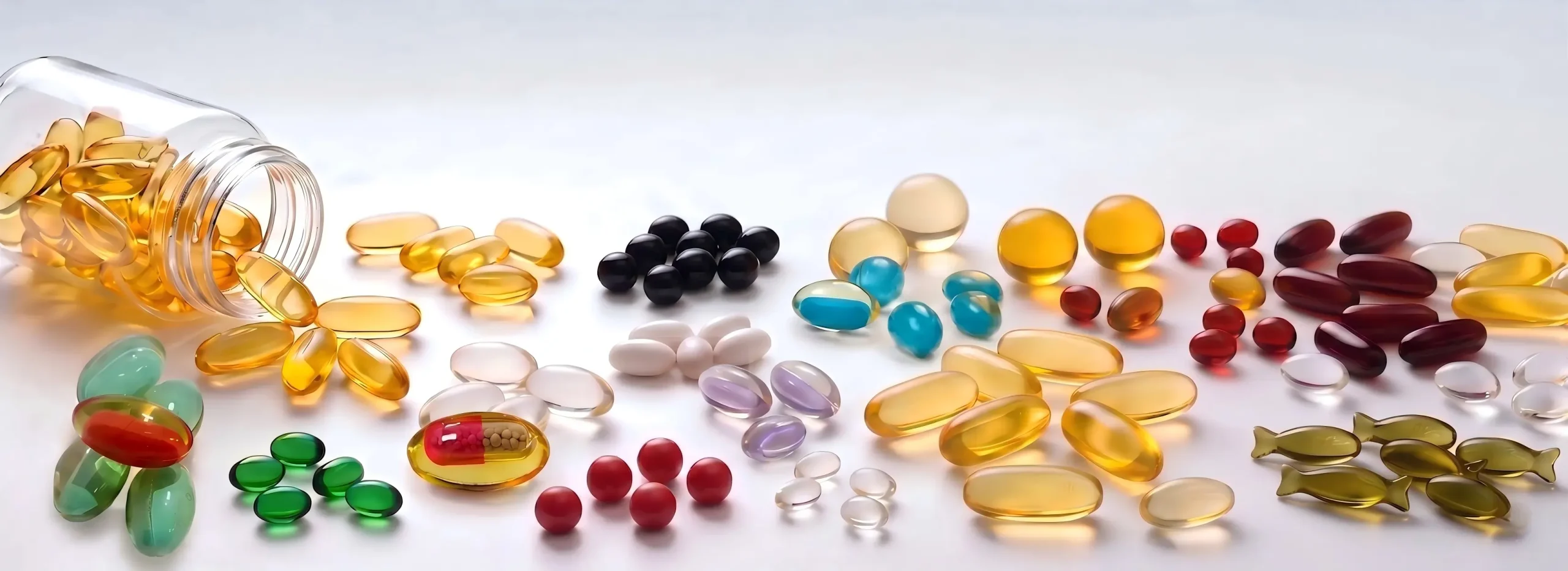
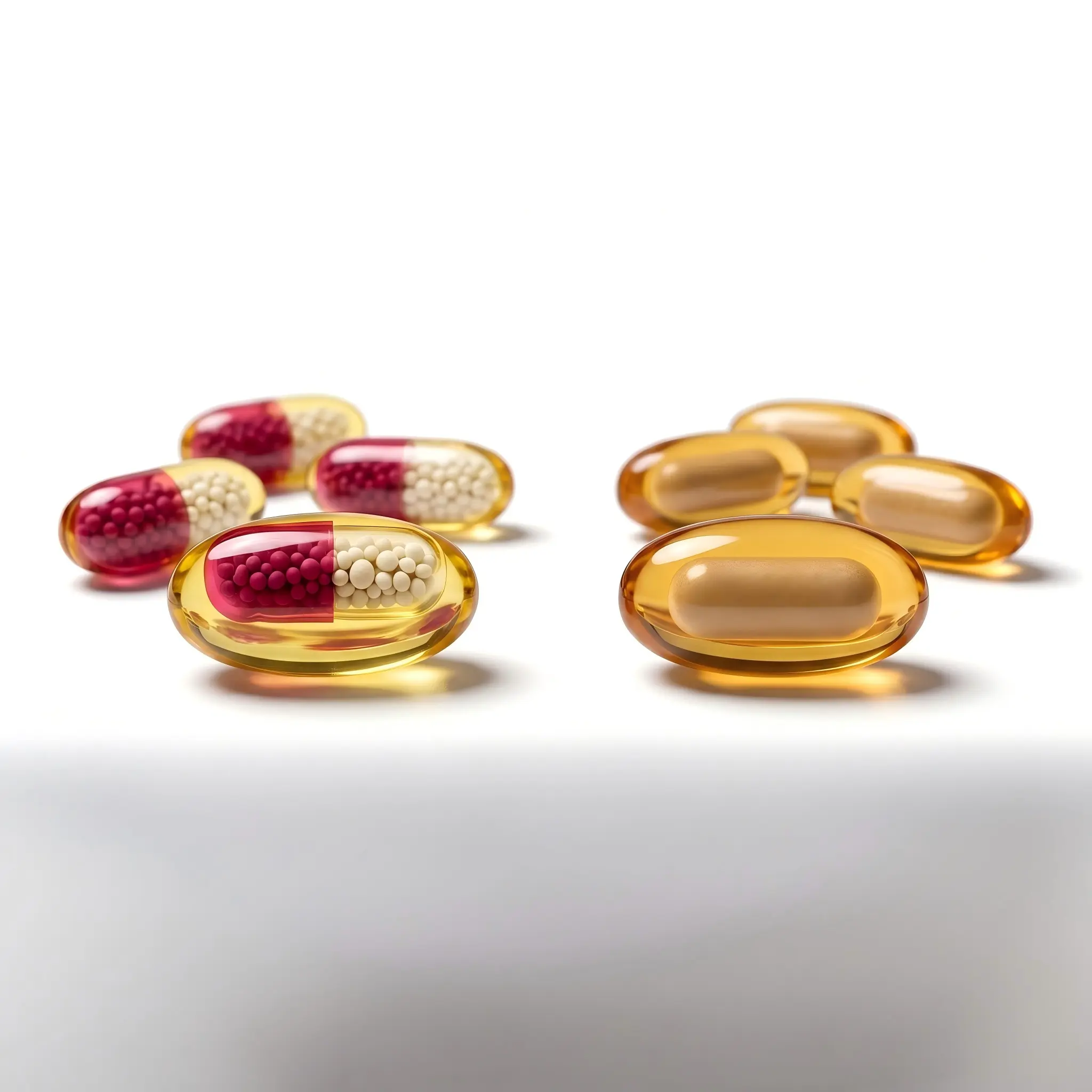
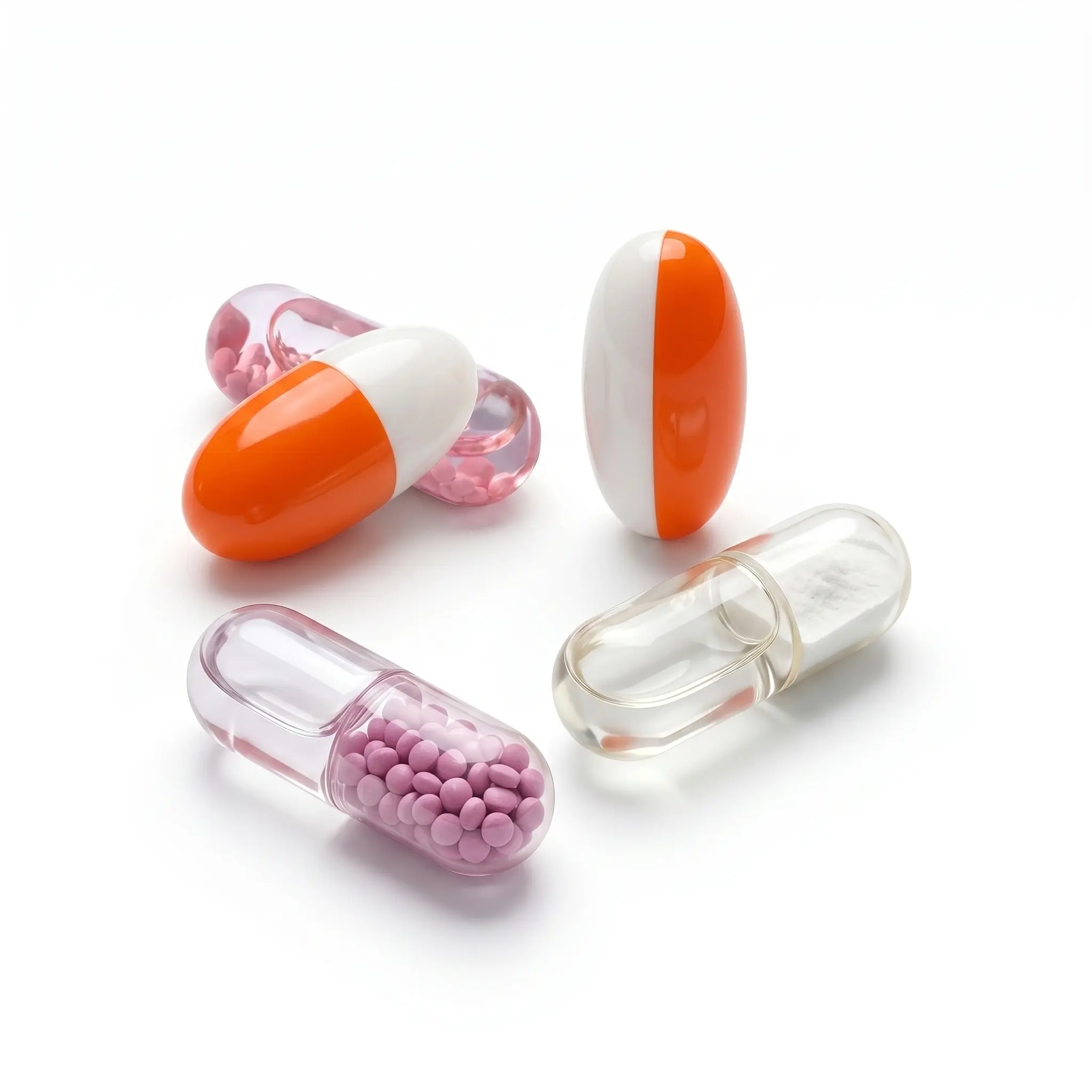
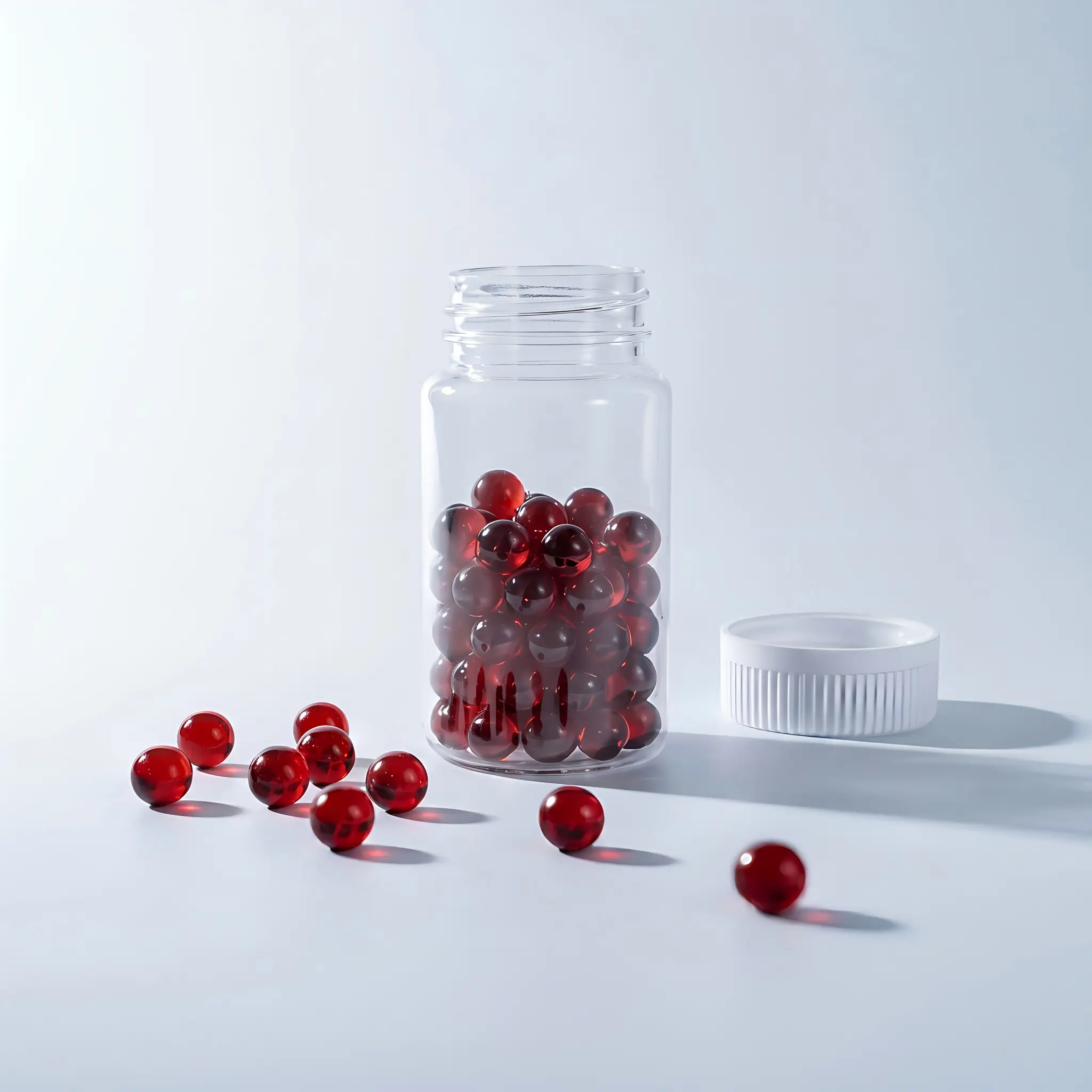
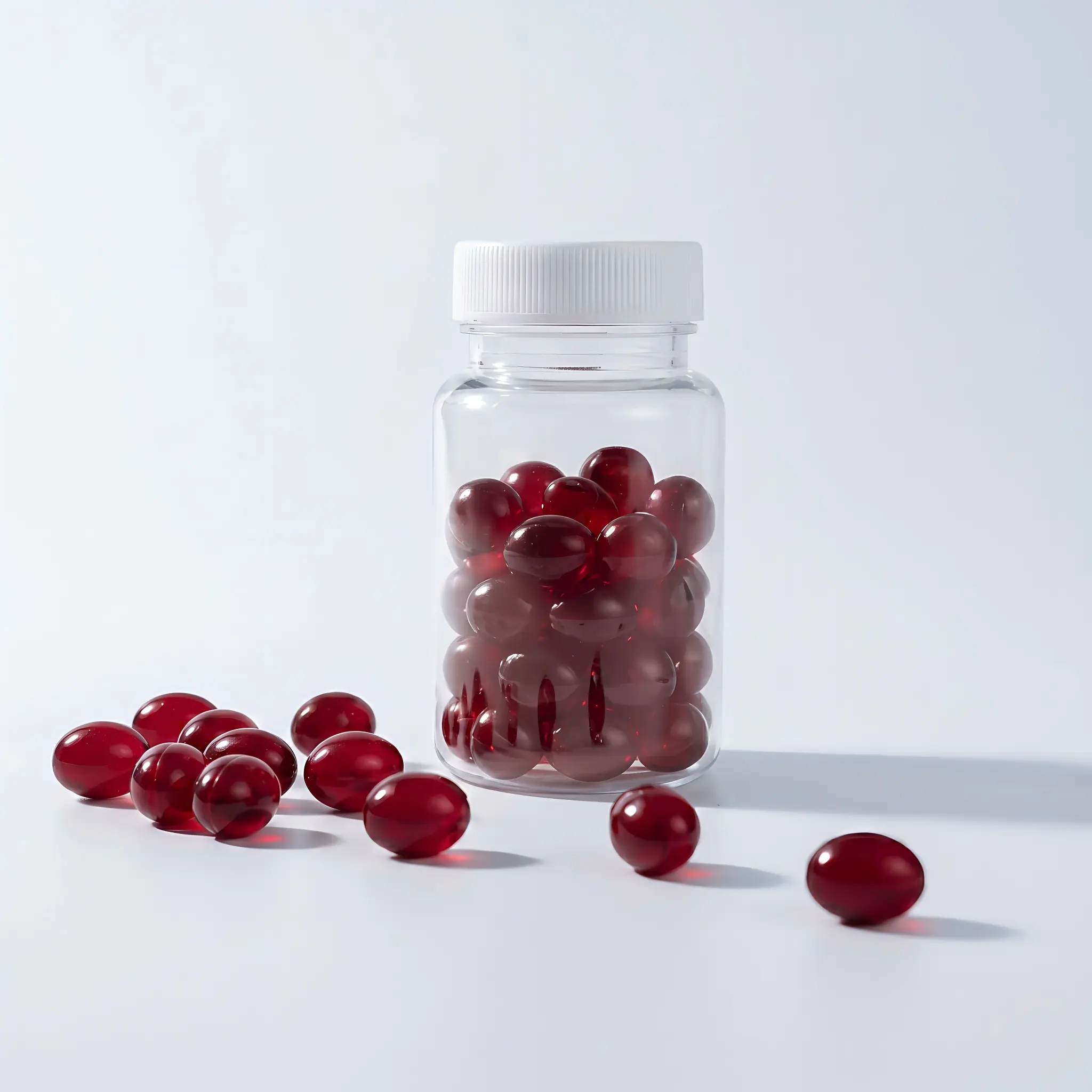
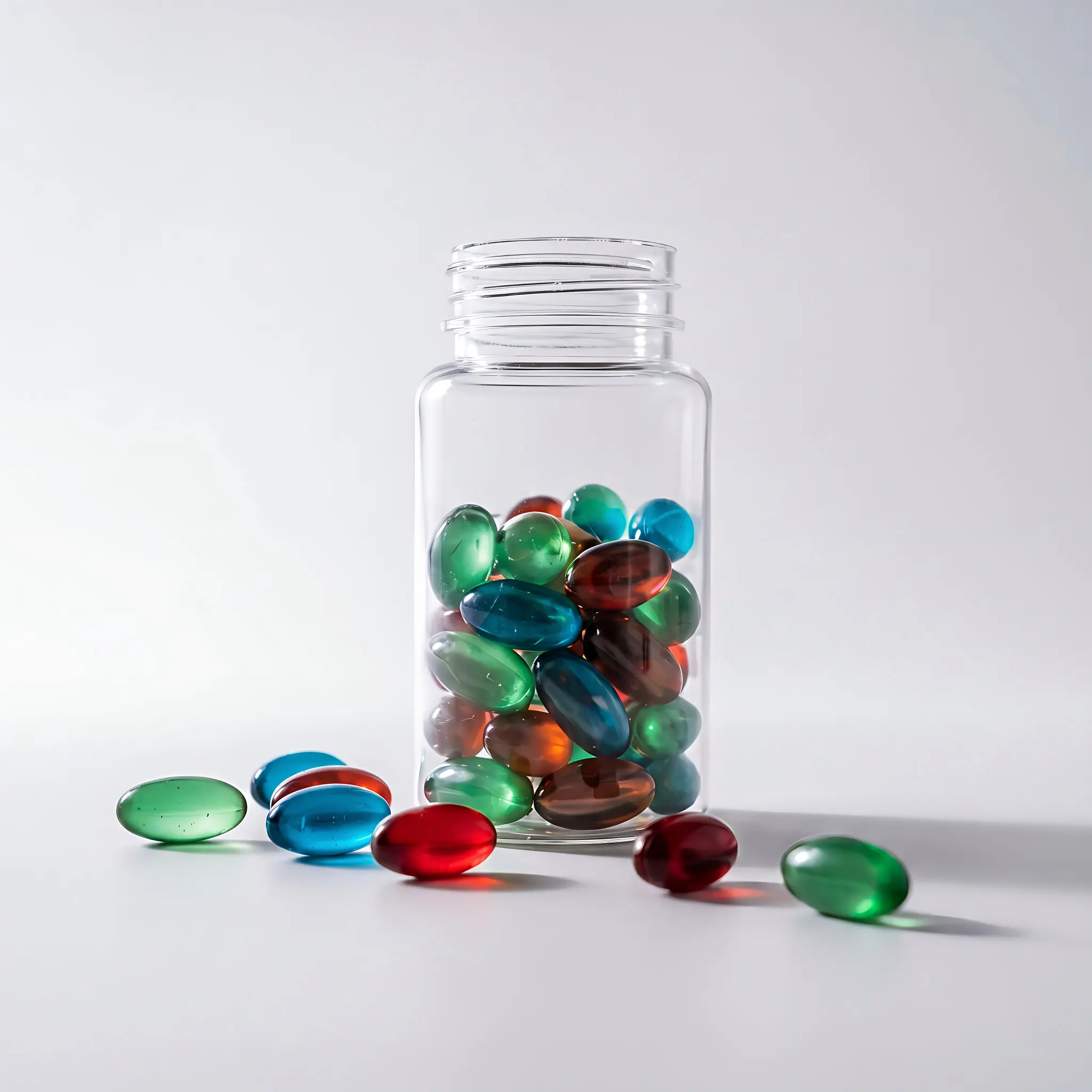
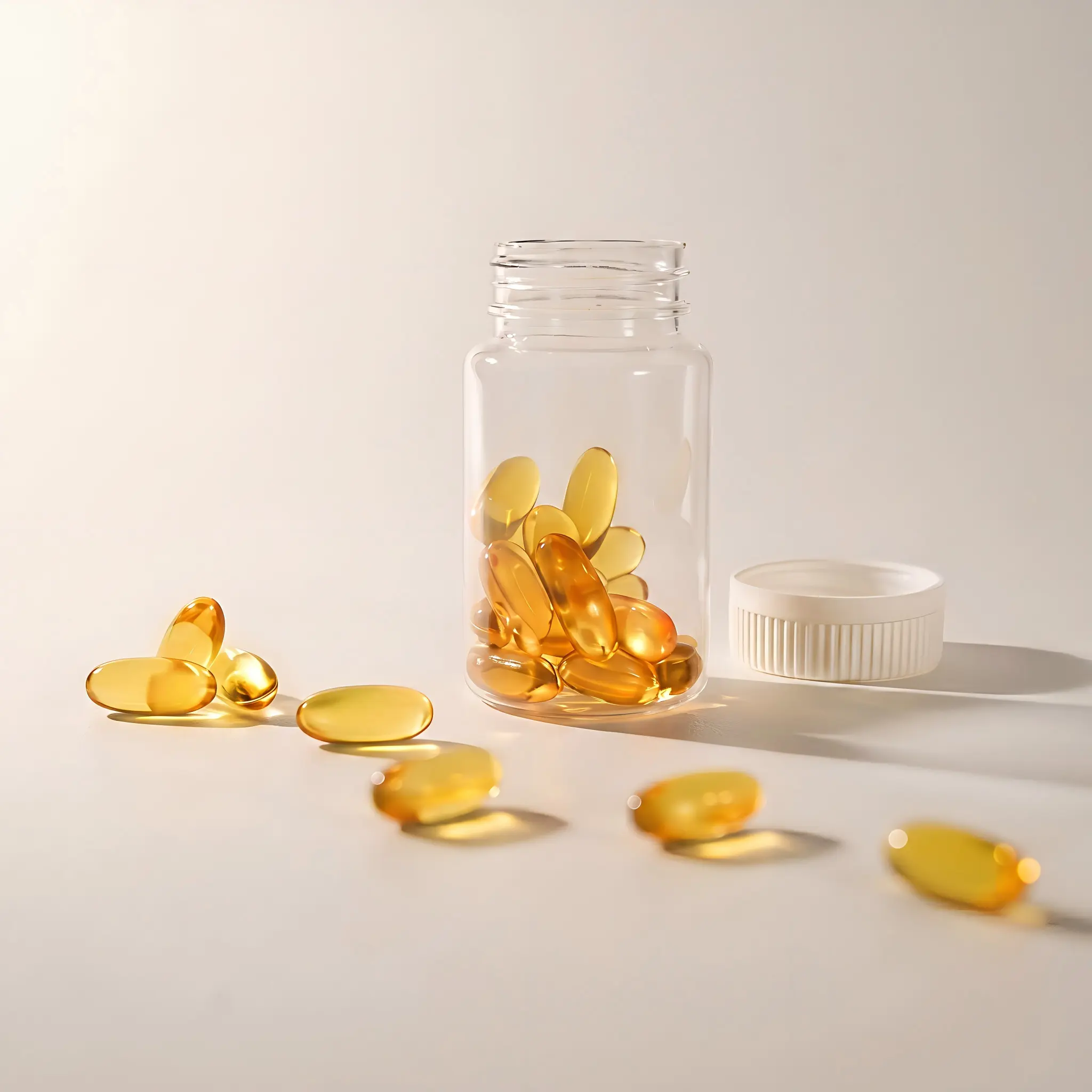
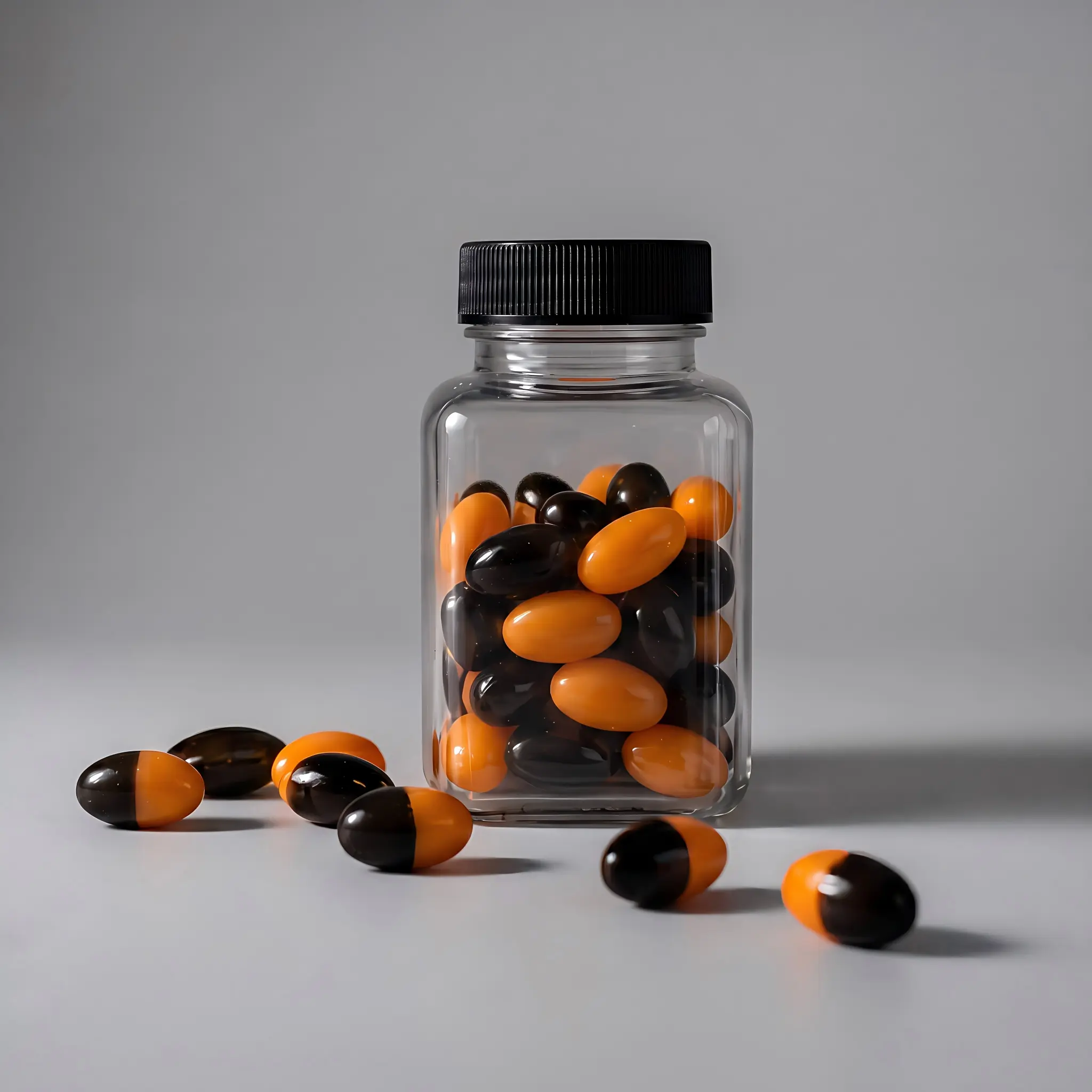
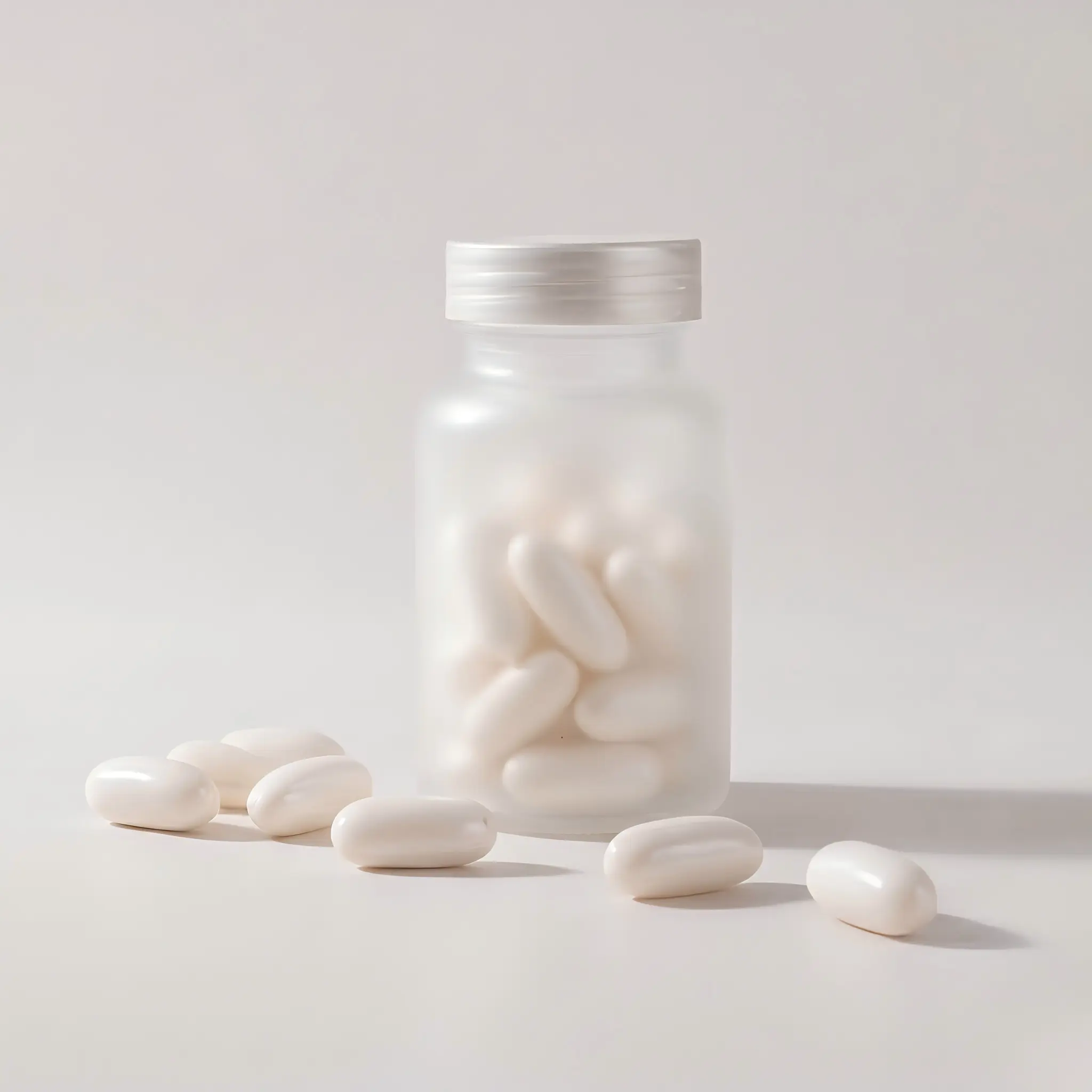
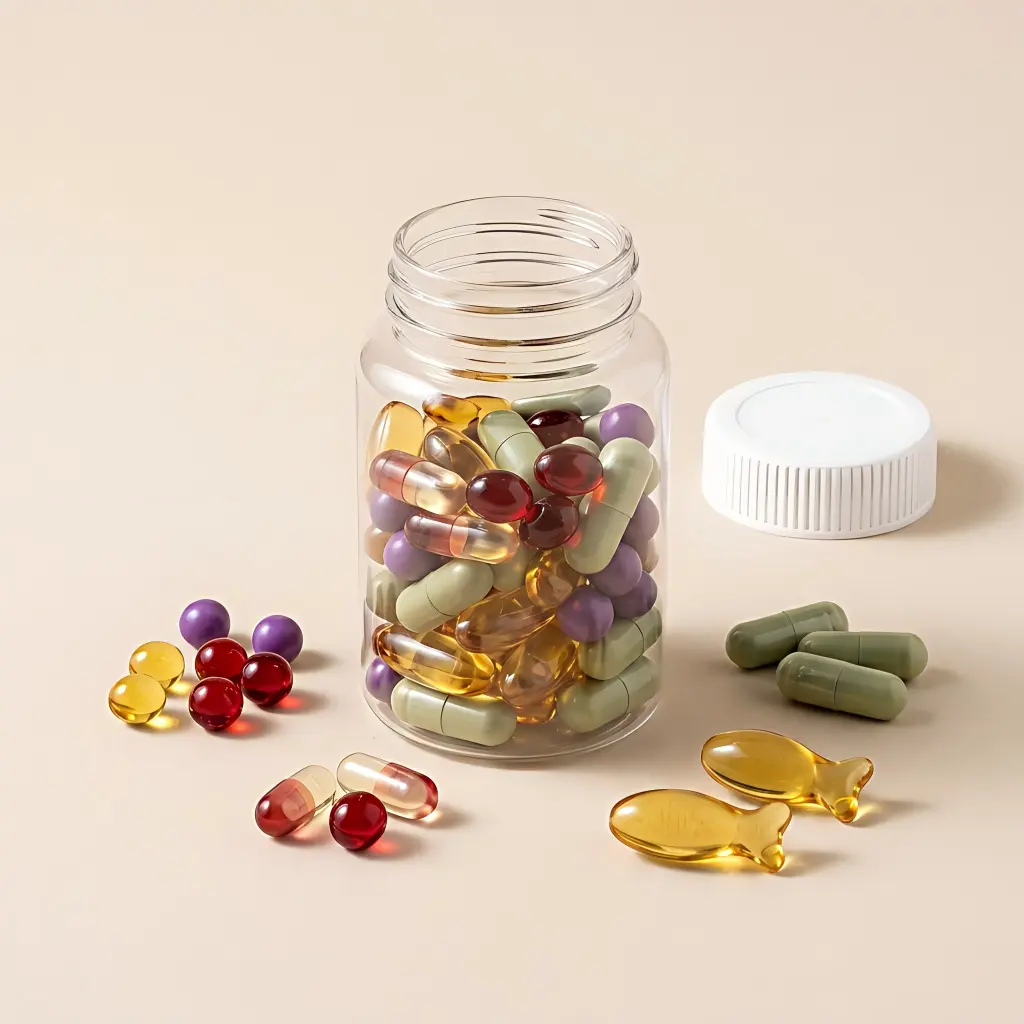
Softgels Manufacturer | Contract Manufacturing
OEM, ODM, and private label softgels for nutraceutical brands — formulation support, encapsulation, and batch documentation.
KS Nutripharma is a softgel manufacturer and softgel contract manufacturer offering softgel contract manufacturing from our China production base for export nutraceutical brands. Commercial work is gelatin and vegetarian ribbons, oil and suspension fills, and the batch file that goes with them. Submit your formula
- Gelatin and vegetarian shells, locked to the fill and destination market
- Oil-based and suspension fills on commercial encapsulation lines
- Feasibility review before quote: whether a standard softgel encapsulation path can run, and whether a pilot is required
- Seam, leak, drying, and fill-weight control written into the product specification
- 2,000,000+ softgels/day for pilot-to-commercial scale-up
- CoA and traceability with the batch
A usable OEM softgel quote is a set of locks — fill, shell, and die — not a catalog screenshot. Specifications, MOQ, testing, and lead times are project-specific and confirmed during technical review.
Why Softgel Capsules Dominate High-Value Supplement Markets?
Softgels are not just a dosage form — they are a lipid-based delivery system that significantly improves the absorption of fat-soluble nutrients and poorly bioavailable compounds.
Compared to tablets or powders, softgels provide:
- Enhanced bioavailability (especially for carotenoids, CoQ10, curcumin)
- Better stability for sensitive actives
- Improved consumer experience (easy to swallow, no taste)
This makes softgels the preferred format in beauty, cardiovascular, brain health, and premium nutrition segments.
Which Softgel Manufacturing Model Do You Need?
You do not need to name the model on day one. Send the brief; the review will say which path fits.
You provide: locked formula or specification.
We provide: encapsulation, packaging as scoped, and batch documentation.
Best for: established brands with a frozen file.
You provide: a product brief (ingredient, dose, market).
We provide: fill-path recommendation, formulation support, and manufacturing.
Best for: new SKU development.
You provide: a product concept or an existing formula.
We provide: formula support, production, and finished packaging as scoped.
Typical scope: formula review → softgel production → bottle or blister → label and packaging as scoped.
Best for: new brands that need a packed SKU.
You provide: formula or specification.
We provide: finished bulk softgels for you to pack elsewhere.
Best for: repackers and distributors.
Which Fills Are Suitable for Softgels?
A dietary supplement softgel manufacturer quotes a fill-physics path, not an ingredient slogan. Suitability is whether the active can sit as a lipid solution or a controllable suspension.
When a requested formula cannot be manufactured reliably as a softgel, the review may recommend a two-piece capsule, tablet, or powder path instead of freezing a rotary die.
Main risk: oxidation, viscosity, shell–fill compatibility.
What we evaluate: pumpability, antioxidant and pack intent, seam behavior.
Typical fills: fat-soluble vitamins (A, D3, E, K2); carotenoids; CoQ10 and similar specialty lipids; botanical oils; marine or algal lipids when the brief is that oil file.
Main risk: sedimentation, fill-weight scatter, nozzle behavior.
What we evaluate: particle size intent, viscosity window, whether the serving can stay one softgel.
Typical fills: high-dose minerals; poorly soluble botanicals; mixed oil + powder stacks.
Path selection: oil fill vs suspension softgels.
Main risk: shell compatibility (high water-activity or alcohol-heavy liquids); flow and moisture (dry powders).
What we evaluate: whether the brief should change format before die and artwork.
Typical fills: water-based syrups as the fill; high-ethanol flavors as the bulk; unformulated extract powders.
Dry powders belong on a hard capsule path unless a defined oil twin is in scope. Format choice: softgel vs hard capsule.
Advanced Softgel Technology Platform
Default quotes are gelatin or vegetarian ribbons with oil or suspension fills on commercial rotary-die lines. The routes below are named production systems when the brief needs two phases, delayed opening, a nested unit, or oxidation-controlled oil handling. They are not a slogan, and they are not the default commercial quote.
A bench unit that looks right is not a commercial path until leak, seam, fill weight, and — if specified — opening are shown on production-relevant equipment. Process engineering sits on advanced softgel technologies.
Vegetarian ribbons and catalog oval / oblong / round dies are standard on this page, not specialty extras. Twist-off, pearl, and custom color are tooling add-ons. Self-emulsifying and liposomal systems: specialty routes require separate feasibility and pilot review.
What it is: Two compartments in one unit so incompatible fills stay apart (oil phase vs a second phase).
What to lock: Which active sits in which chamber; leak and moisture migration between chambers; a production-relevant trial — not a hand-filled mock-up.
Typical brief: Two actives that degrade or react if mixed in one fill.
What it is: Two ribbon colors on one die, with a visible join.
What to lock: Colorant file for the destination market; join quality and leak at the color interface; extra appearance QC.
Typical brief: Two shell colors as a specified appearance.
What it is: A smaller two-piece or sealed unit inside a larger capsule structure. Two delivery systems, one swallow.
What to lock: Inner vs outer fill; insertion method; leak and lock on the equipment that will run the lot.
Typical brief: Actives that cannot share one fill (example: a dry inner with an oil outer), after a standard twin-SKU is ruled out.
What it is: A smaller sealed softgel inside a larger softgel.
What to lock: Inner and outer oils; thermal and seam sequence; leak between layers.
Typical brief: Two oil fills that must not mix until use.
What it is: A tablet or compressed core inside a liquid-filled softgel.
What to lock: Core hardness and moisture; oil–core interaction; weight of core + fill as two files.
Typical brief: A solid dose that cannot dissolve in the oil, plus a lipid fill, in one unit.
What it is: Functional pellets or beadlets suspended or placed in the fill.
What to lock: Pellet fracture; suspension stability; fill-weight vs pellet count.
Typical brief: A multi-particulate that must stay intact through encapsulation.
What it is: Opening is moved later against a named test in the specification.
What to lock: Route — delayed-release ribbon, coating, or both. “Enteric” as a word is not a method. Coating adhesion and opening results on production-relevant units.
Typical brief: The specification requires delayed opening; quoted after pilot confirmation.
What it is: Encapsulation plus pack for oxygen- or moisture-sensitive lipids — antioxidant system, process oxygen, barrier bottle or blister, opaque or amber shell when light is in the file.
What to lock: Named oil; any peroxide / anisidine (or other) limits in the specification. There is no universal oxidation passing panel.
Typical brief: CoQ10, carotenoids, and other oxidation-sensitive oils. Limits are SKU-specific.
What Can Go Wrong in Softgel Manufacturing?
The main manufacturing risks are not the same for every fill. Pilot production is used to confirm fill weight, seam integrity, and process behavior before commercial scale-up. Later sections call that pilot confirmation.
Risk: peroxide rise, odor, rancidity in storage or freight.
Control: antioxidant system matched to the named oil, process oxygen, barrier pack. Limits are SKU-specific.
Risk: pumping scatter or seam stress.
Control: viscosity window on this die, confirmed at pilot confirmation.
Risk: fill-weight scatter, assay scatter, nozzle issues.
Control: particle size, rheology, hold and transfer.
Risk: die volume will not hold the target in one unit.
Control: density and die screening on the size page — not a hard-capsule size 00.
Risk: drying and sealing copied from a gelatin file.
Control: named plant-gel grade and its own drying trial.
Risk: degradation in a clear shell.
Control: opaque or amber shell plus pack barrier.
Risk: bottle oil, returns, later oxidation.
Control: process control plus a named seam or leak check. Diagnosis: why softgels leak.
Risk: shell or process instability on a standard ribbon.
Control: format review before die freeze.

Each commercial path is a shell + fill + die file. That combination is defined here once. Polymer name alone does not create delayed release, vegan status, or oxidation control. Composition: what softgels are made of.
Gelatin Softgels
Default commercial path for most oil fills — the usual gelatin softgel manufacturer path when the market accepts animal gelatin. Bovine or porcine gelatin as specified; fish-gelatin grade when the brief requires that shell polymer. Named gelatin grade, plasticizer ratio, and CoA.
Vegetarian Softgels
Plant-based ribbons (starch, pectin, or carrageenan systems as scoped) — the vegetarian softgel manufacturer path when the label needs vegetarian / vegan positioning. Fill compatibility and drying are checked on the named vegetarian grade. HPMC is a two-piece hard-capsule polymer. It is not a softgel ribbon. Writing “HPMC vegetarian softgel” on an RFQ sends the project to the wrong machine.
Shell choice: gelatin vs vegetarian softgels.
Custom softgel manufacturing starts with whether the active belongs in an oil fill, a suspension, or a different dosage form. Fill-path risks sit in the suitability cards above. Oil-system sourcing: lipid ingredients.
Size and fill volume
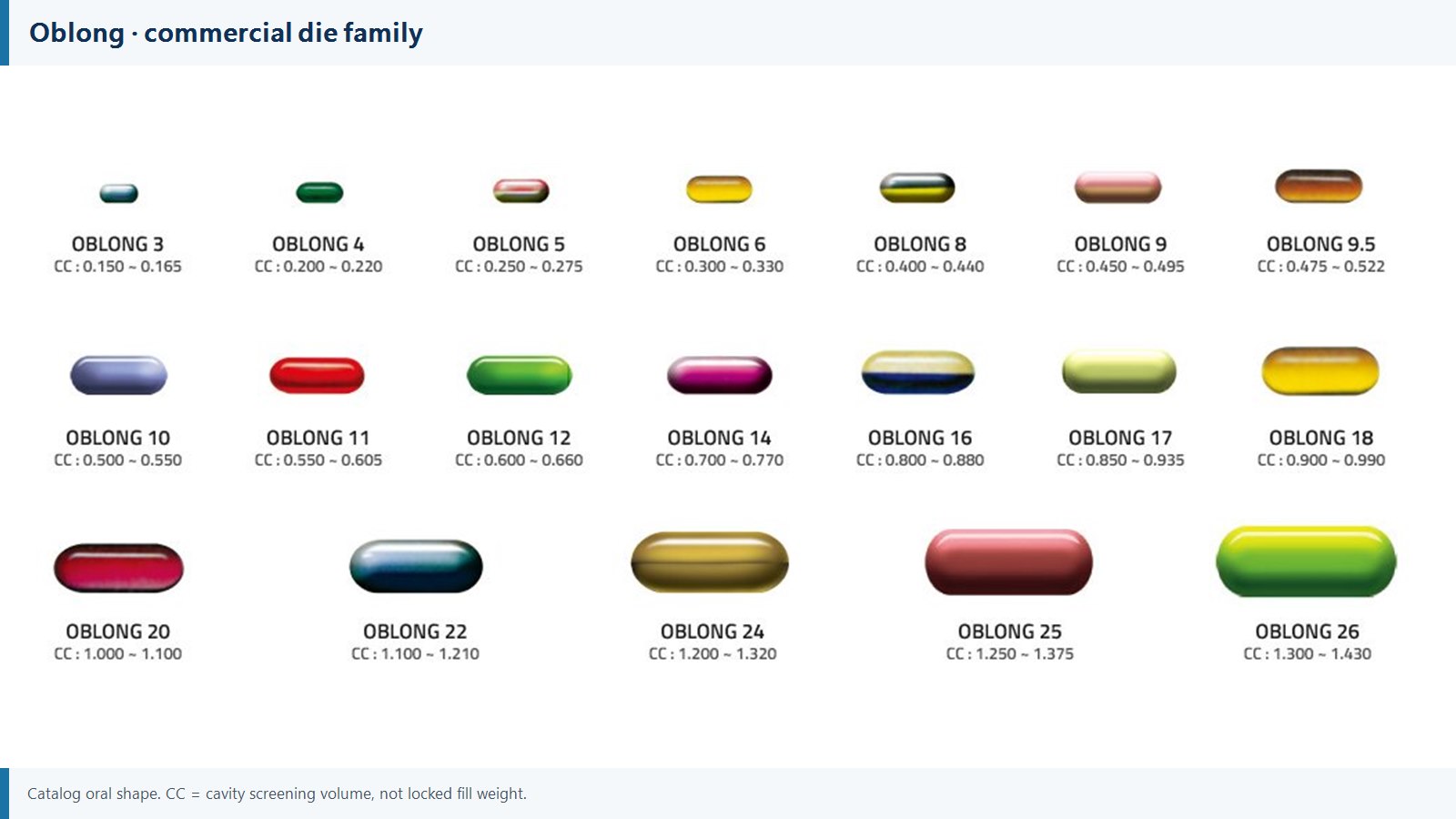
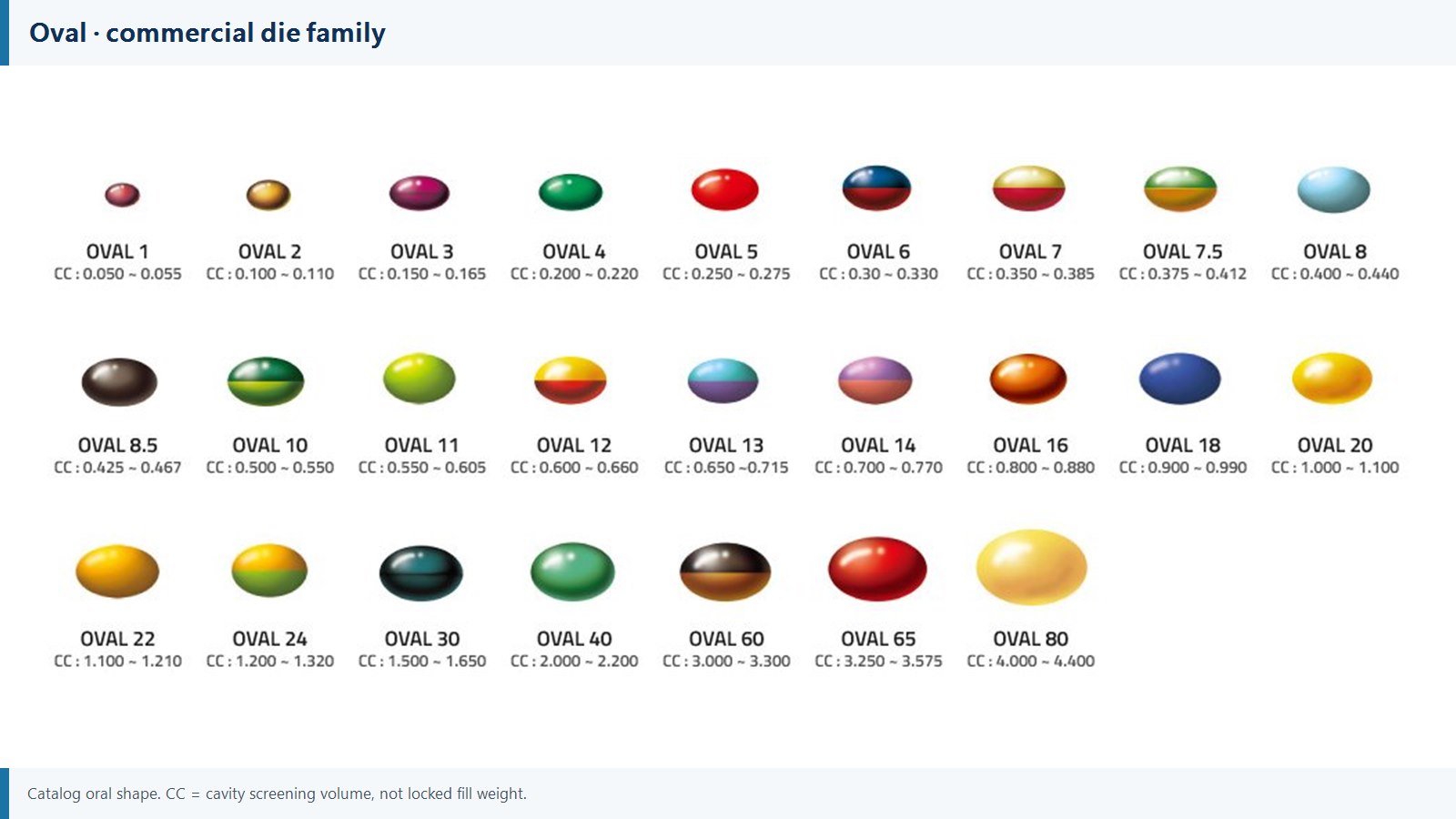
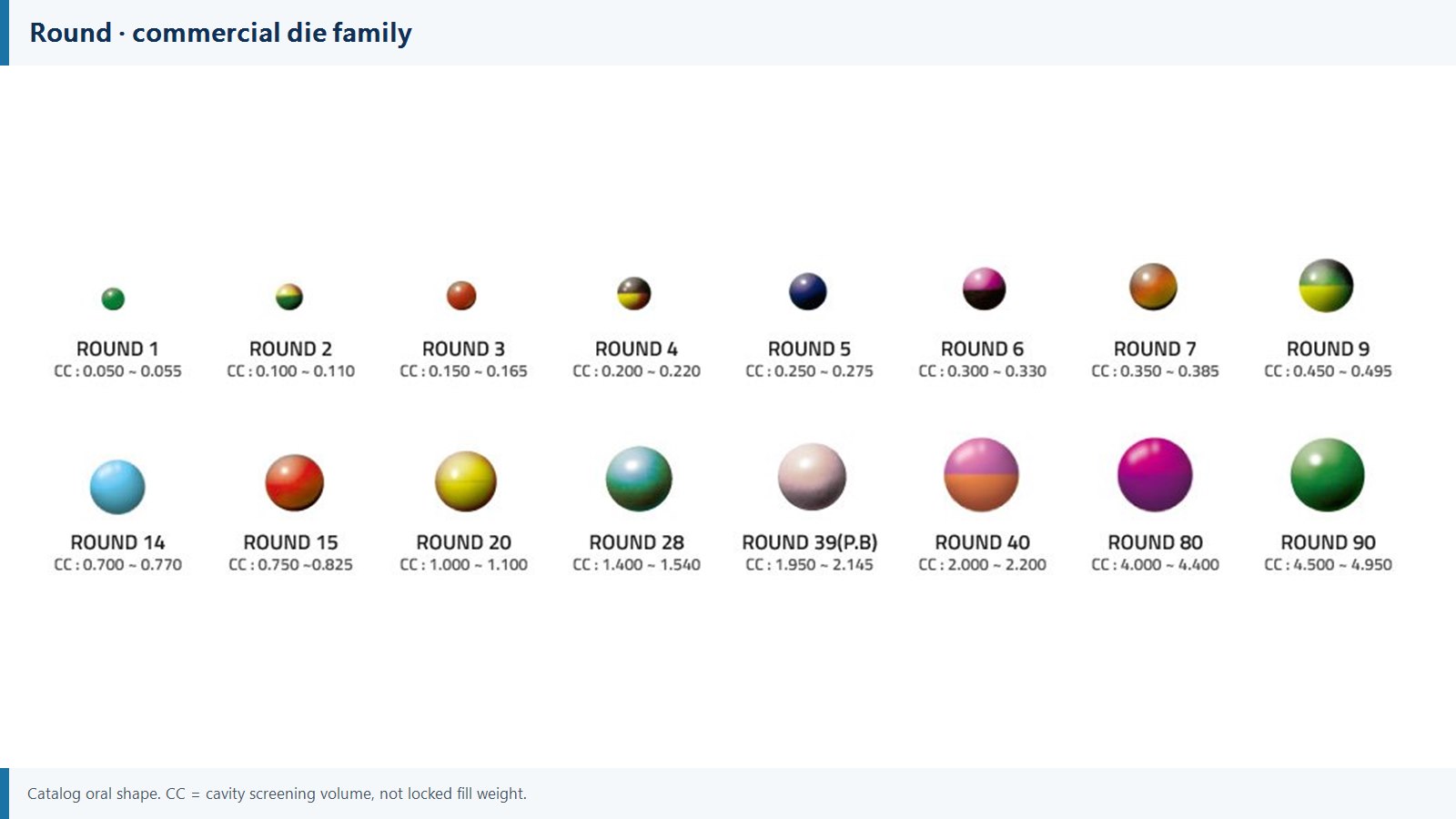
What we customize: Catalog oval, oblong, and round dies against target milligrams and the actual fill density.
What to lock: Candidate die on the drawing you will run. Milligrams per die are screening values; production fill weight is locked on the fill you will run.
Not this card: A global minims catalog, or copying another factory’s “20 oblong” as the same cavity. Candidate die: how to choose softgel size.
Oblong catalog dies — cavity CC is screening volumeOval catalog dies — cavity CC is screening volumeRound catalog dies — cavity CC is screening volume
Color and opacity
What we customize: Colorant and clear vs tinted vs opaque shells against the destination-market colorant file.
What to lock: Light- and oxygen-sensitive oils (typical briefs: carotenoids, CoQ10) often need opaque or amber shells plus a barrier pack. Color is a specification line, not a shelf-appeal claim.
Not this card: Custom color as a free catalog extra. Pearl and custom color add tooling time and practical MOQ.
Twist-off (tube) dies
What we customize: A squeeze / twist-off unit when the brief is unit-dose delivery, not a swallowed oval.
What to lock: Die, fill viscosity, and residual-seal behavior on a production-relevant trial. Typical channels: topical / cosmetic liquids, pediatric unit-dose, and other single-use liquids.
Not this card: A row on the oval / oblong / round list. It is a separate delivery brief and is quoted with the die file.
Tube / twist-off dies — separate delivery brief
Chewable softgels
What we customize: A flavored ribbon and fill when the SKU must be chewed, not swallowed whole.
What to lock: Sensory file, plasticizer, and a trial on the chewable mass — a gelatin oval oil file does not convert by changing artwork.
Not this card: A kids-compliance or taste claim. Chewable is a separate brief: flavor and texture are confirmed at sample.
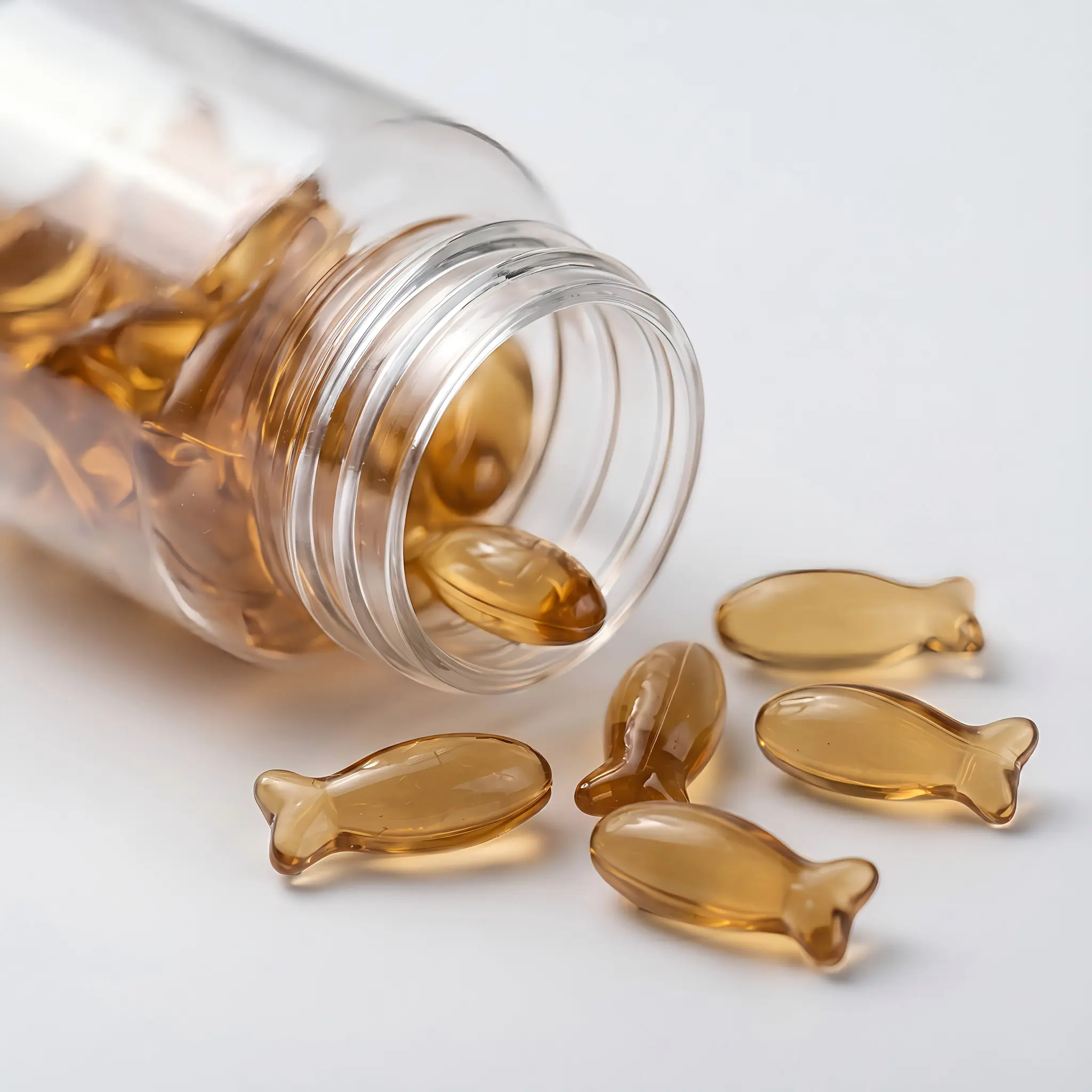
Commercial softgel production here is rotary-die encapsulation: ribbons formed, fill metered, units formed, sealed, and cut, then dried. Step-by-step: how softgels are made. Custom geometry (including novelty and fish dies) is a tooling brief: it raises lead time and practical MOQ and is not a catalog oral shape.
A 1,000 mg oil softgel and a 300 mg high-load suspension softgel may have very different manufacturing costs even at the same order quantity.
Cost typically moves with:
- Fill material and active concentration
- Target fill weight and die / capsule size
- Shell type (gelatin vs vegetarian) and custom color or printing
- Tooling (catalog oval / oblong / round vs custom die)
- Testing and any stability work named in the specification
- Packaging (bottle, blister, bulk)
- Quantity / MOQ
MOQ is not determined by capsule count alone. Custom tooling, shell material, suspension processing, testing, and packaging can set the practical minimum for a SKU. A bottle-count request still has to be converted to total softgel units, then checked against die, fill, shell, pack, and testing.
Send the formula and quantity for a project-specific estimate. This page does not publish a price list.
Minimum information
- Ingredient / product
- Target dosage
- Estimated quantity
- Destination market
- Existing sample or formula — optional
Not sure about shell, die, or fill type? Leave them blank. Ingredient, dosage, market, and quantity are enough for a preliminary technical review.
If you already have more
- Oil solution or suspension — or “recommend”
- Target milligrams of fill and of named active per softgel
- Gelatin or vegetarian — or “recommend”
- Bottle, blister, or bulk
- Named shelf-life target if the file has one
- Halal / Kosher / vegetarian claim that must be true on the BOM
- Own formula, match an existing SKU, or formulation from a brief
- Budget band if you have one — used to choose die and pack
A milligram line may be enough for a preliminary discussion. A production quote requires fill, shell, die, quantity, packaging, and specification to be reviewed.
Quote Path
Preliminary quote
Ingredient, dosage, quantity, and market are on the brief. Output: budget range and whether a standard ribbon is in scope.
Technical quote
Formula or specification, fill path, shell, die, and pack are reviewed. Output: production quotation against named locks.
Development project
Formulation, pilot, custom die, stability, or a specialty route is still open. Output: development plan first, then quotation after pilot confirmation.
- Formula feasibility feedback
- Proposed fill type (solution vs suspension vs format change)
- Shell recommendation
- Candidate die and target fill weight
- MOQ estimate and sample timeline
- Testing and documentation required for that SKU
- Packaging recommendation
- Production quotation (preliminary or technical, depending on the brief)
Typical commercial production starts after formulation lock, artwork approval, and pilot confirmation.
- Send the brief — formula, dose, market, quantity; sample optional
- Technical feasibility review — fill path, shell, candidate die
- Confirm fill weight, shell, and specification locks
- Sample / pilot production — often 7–15 days after the brief is aligned enough to run
- Testing and approval against the named specification
- Mass production — often 5–7 weeks after formula and artwork lock
- Packaging and shipment as specified
Vegetarian ribbons, delayed-release routes, custom tooling, and unstable oil files extend the window. Re-orders on a frozen file are shorter than a first commercial run.
Starting MOQ: 3,000 softgels for a selected standard path — gelatin ribbon, oil fill, and a catalog oval / oblong / round die — once fill and pack are in a normal commercial file.
Vegetarian ribbon, delayed-release, nested or other specialty routes, custom dies, high-load suspensions, extra testing, and specialty pack are quoted per project. Those files usually sit above the 3,000-softgel start.
If you brief in bottles, convert first so the two numbers are not mixed:
5,000 bottles × 60 softgels = 300,000 units on the encapsulator — a different conversation from a 3,000-softgel start.
Sample / Pilot
What it covers: Enough units to confirm fill weight, seam, and appearance on the die you will run.
Quantity: Scoped to the trial. It can sit below the 3,000-softgel commercial start.
Clock starts when: Fill, shell, and die are aligned enough to encapsulate.
Typical window: 7–15 days after that alignment.
First commercial lot — standard path
What it covers: Production after formula, artwork, and pilot confirmation.
Quantity: From 3,000 softgels on the standard gelatin / oil / catalog-die path.
Clock starts when: Formula and artwork are locked — not when the first email arrives.
Typical window: 5–7 weeks after that lock.
Custom or advanced — project quoted
What it covers: Vegetarian shell, delayed-release, nested units, custom dies, high-load suspension, or a pack that is not a standard bottle/bulk file.
Quantity: Set on the project after tooling, ribbon, testing, and pack are reviewed — not copied from the 3,000-softgel start.
Clock: Extends with custom tooling, vegetarian drying, delayed-release trials, and extra tests.
Re-orders on a frozen standard file can repeat from the 3,000-softgel start. A frozen custom or advanced file still follows that project’s minimum.
China-based production for export nutraceutical brands. Projects can be supplied as bulk softgels or finished packaged products, with manufacturing documentation, CoA, and traceability. Destination-market files commonly include the USA, EU, UK, Southeast Asia, and the Middle East. Brand owners own finished-label legal compliance. Logistics can include bottle, blister, bulk, and — when the project uses it — the U.S. shared warehouse network.
Commercial production
- 81,000㎡ manufacturing facility
- Commercial rotary-die softgel lines
- 2,000,000+ softgels/day
Quality system
- QA / QC / R&D centers
- cGMP, ISO, HACCP, FSSC22000, HALAL, and KOSHER as applicable to the line that will run the SKU
- In-house laboratory plus third-party testing when the client file requires it
Batch documentation
Product specification; incoming material lots; batch number; assay of the named active; net fill-weight results; microbiology and any oil-oxidation tests written into the specification; packaging lot; release status. A CoA reports the tests specified for that SKU and lot.
Inside the softgel line
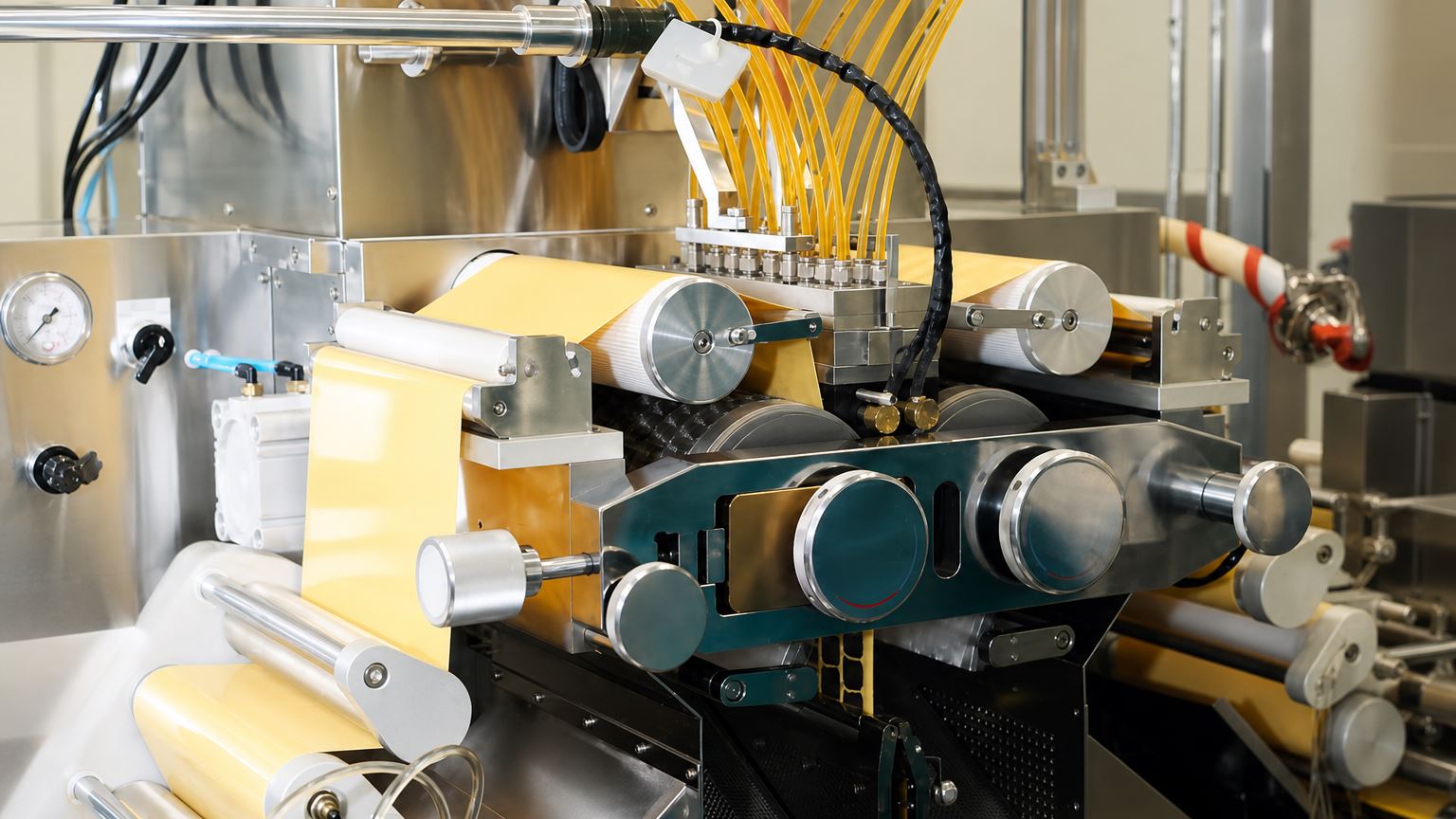
Ribbon forming
Gelatin or plant-gel mass is cast into two continuous ribbons that feed the rotary dies.
Gelatin ribbons feeding a rotary-die softgel encapsulator
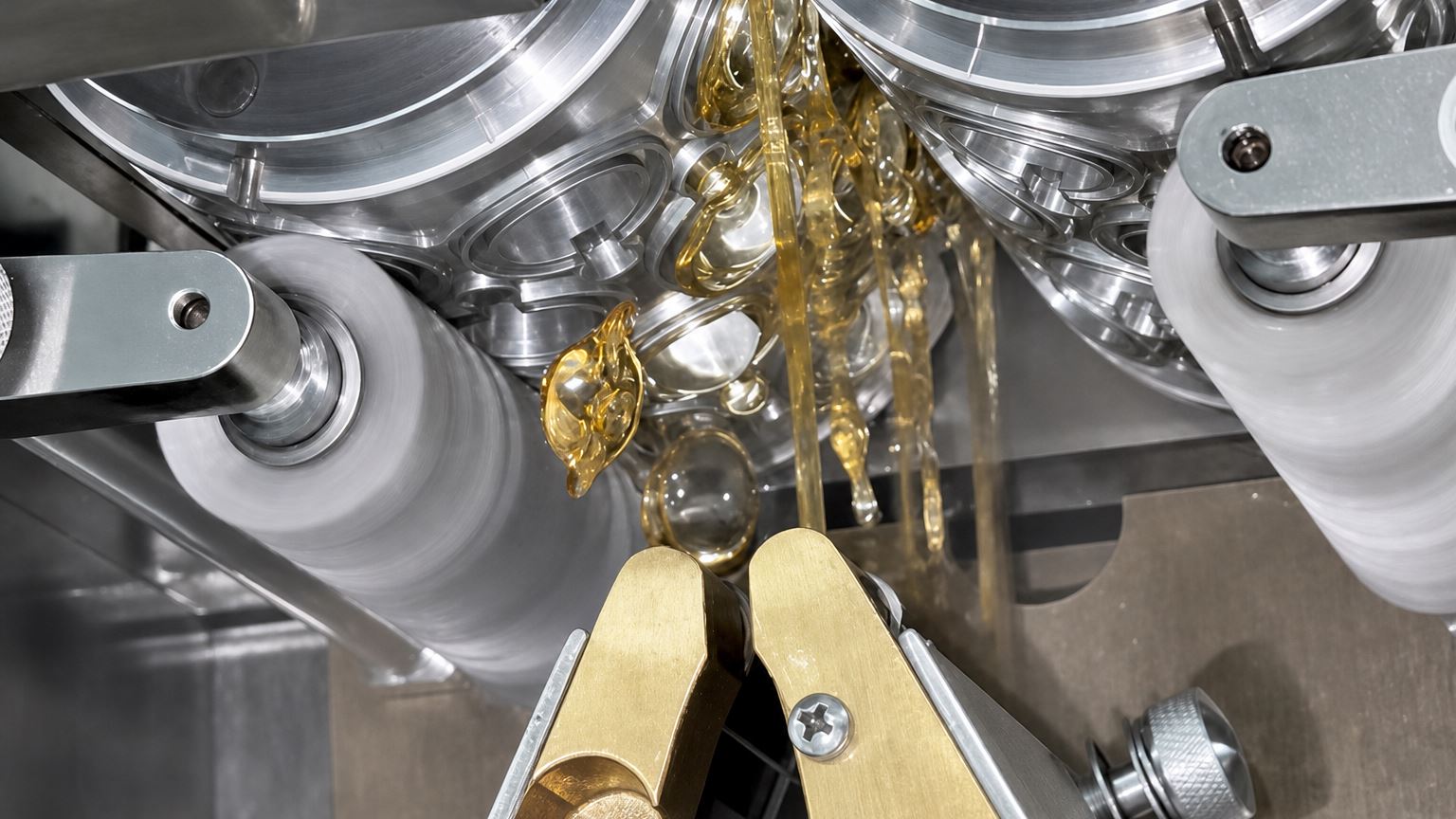
Rotary-die encapsulation
Two gelatin or plant-gel ribbons are formed around a metered fill and sealed in the same operation.
Rotary dies forming and ejecting oil-filled softgels
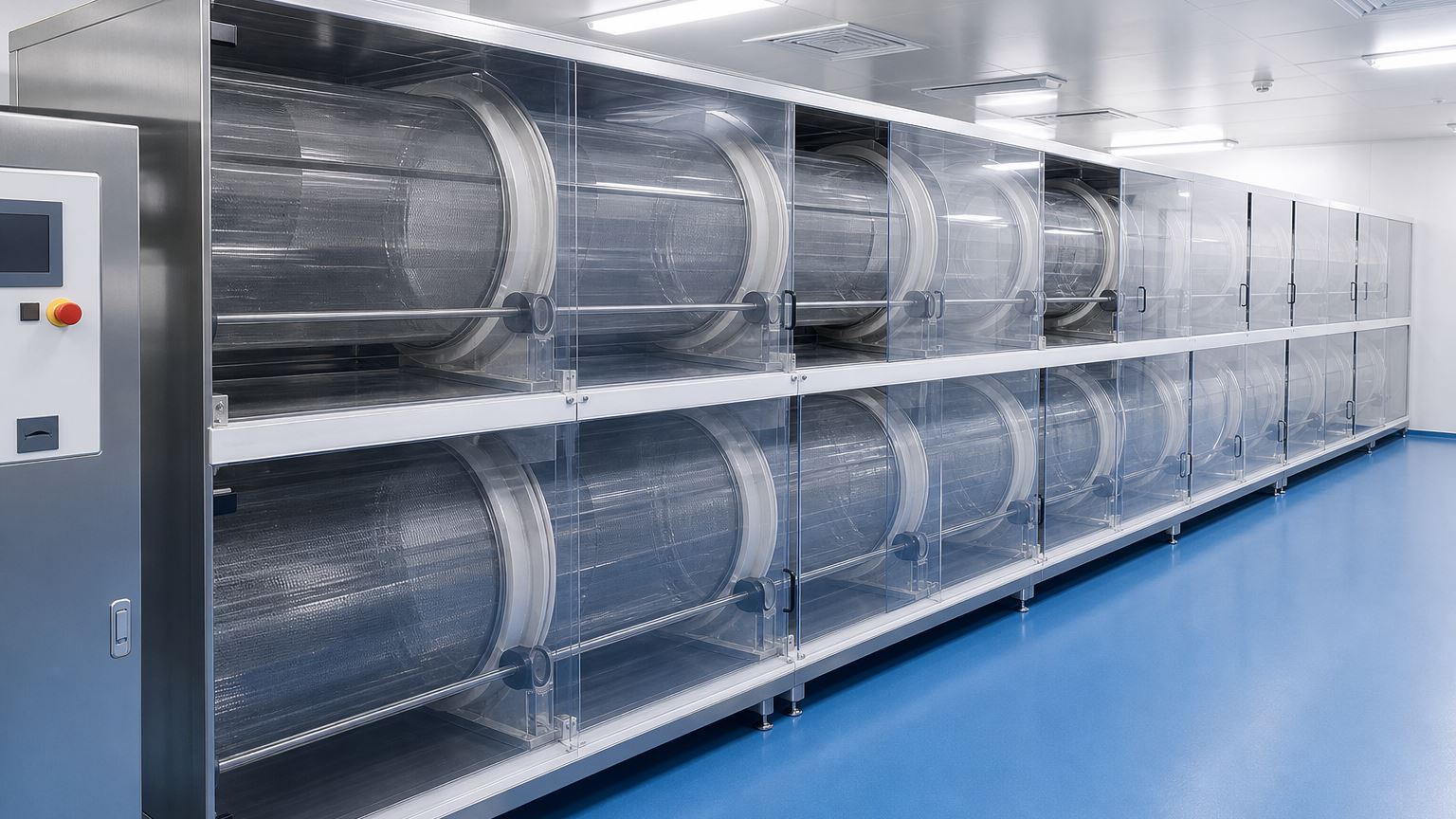
Drying
Fresh units are dried and equilibrated to the named shell mechanical state before packing.
Two-tier tumble dryers for freshly encapsulated softgels
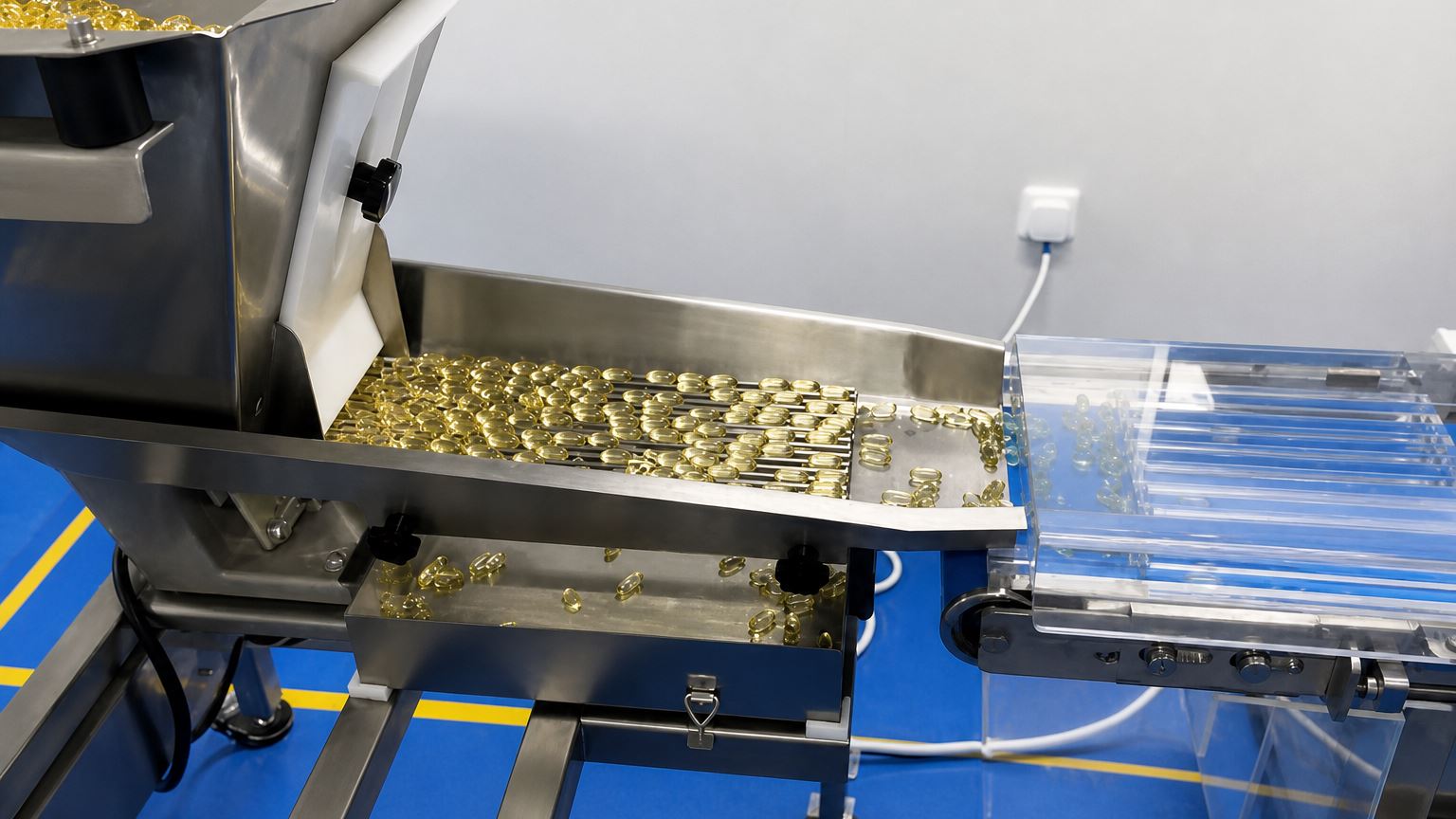
Sorting and inspection
Visual defect removal and named in-process checks sit after drying, not only at pack.
Golden oval softgels aligning on a stainless sorting tray
QC laboratory
Assay, fill-weight, and specification tests are run against the SKU file — in-house and, when required, third-party.
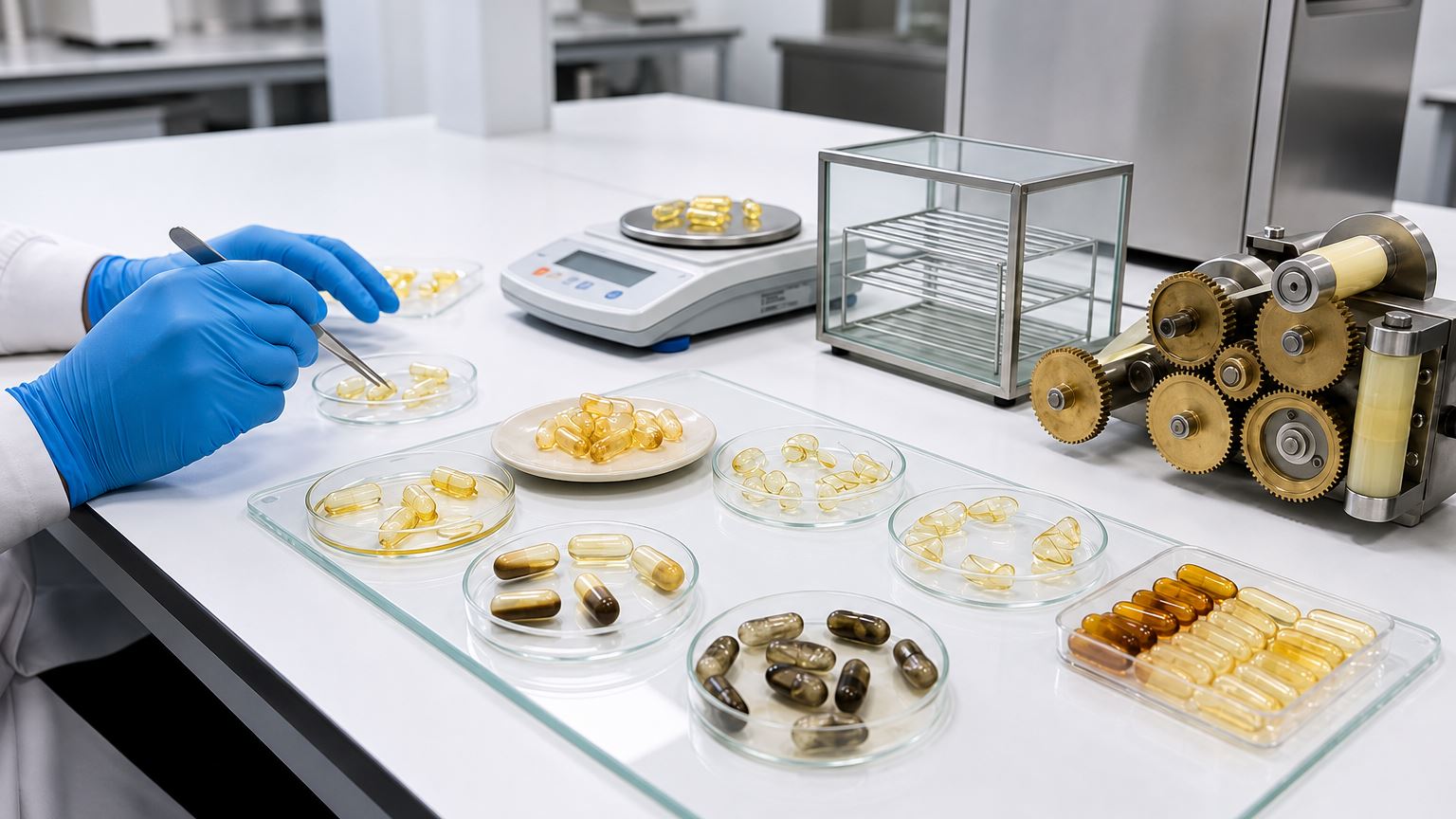
Softgel samples weighed and inspected on a QC bench
Finished softgels
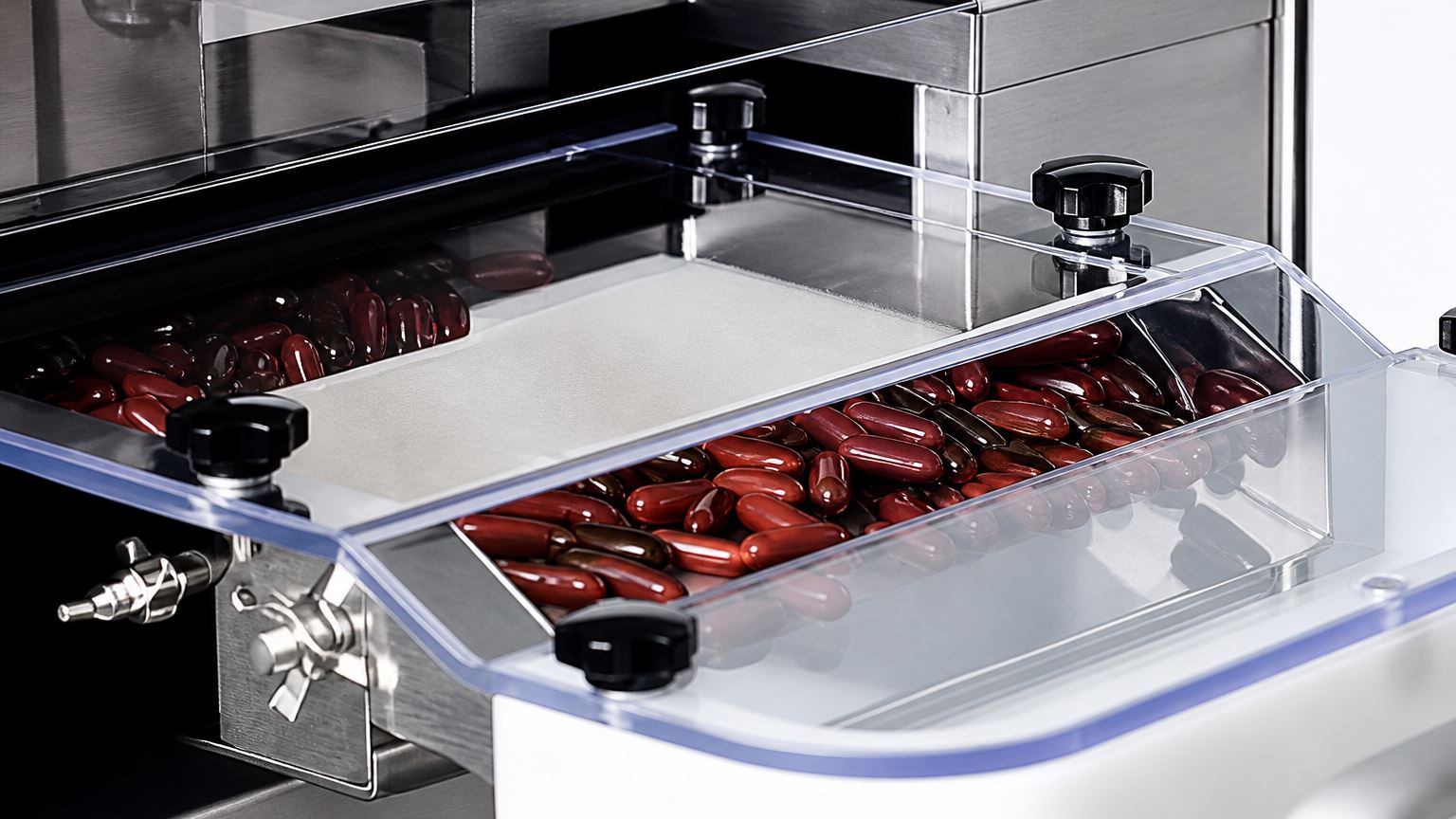
Catalog commercial shapes on this line are oblong, oval, and round. Custom dies are quoted with the die file.
Finished oblong softgels on a stainless outfeed chute
These are BOM and certificate paths.
- Halal / Kosher — gelatin source, line, and certificates named for the SKU.
- Vegan / vegetarian — a named plant-gel ribbon. HPMC is not a vegan softgel ribbon.
- Non-GMO / organic-compliant — only when incoming materials and the destination-market file support those statements.
Bottle and jar
Child-resistant and tamper-evident closures as required by the destination file. Oil fills need a barrier resin and a headspace plan (oxygen and light), not only a count and a label.
Blister
Unit-dose protection for pharmacy and e-commerce packs. High-barrier structures when the fill is oxidation- or moisture-sensitive. The blister file is part of the same specification as the shell, not a late artwork choice.
Bulk softgels
Finished undivided softgels for brands packing elsewhere. Drying state, residual moisture, and transit belong in the ship file. This is a different PO from retail-ready bottles.
Multi-count sachets
Travel, daily-dose, or sample kits when the brief names that pack. Film barrier and seal strength are scoped with the fill — especially for oxidation-sensitive oils.
Label and pack file. We align bottle, blister, sachet, and carton specifications — including count, barrier, and space for multi-language artwork — to the destination market named on the RFQ. Brand owners remain responsible for finished-label legal compliance. KS Nutripharma provides manufacturing documentation support, not legal approval.
Logistics. Pack-out can ship from China as bulk or finished goods. When the project uses it, fulfillment can include the U.S. shared warehouse network for North American distribution.
Softgel production here follows cGMP. Fill weight and seam integrity are controlled as separate quality attributes — target fill mass, assay, uniformity where specified, and a named seam or leak check. How to specify that file: softgel fill weight and seam integrity.
Supplier qualification. Incoming oils, gelatin or plant-gel grades, and excipients are released against the SKU file.
In-process. Fill weight, seam/appearance, and drying endpoint as written into the specification.
Laboratory. In-house tests plus third-party verification when required. Stability follows the methods named for the destination market.
Release. Each batch ships with a CoA and traceability from input materials to packed lot. A CoA reports the tests specified for that SKU — not a universal panel. How to read identity, potency, safety, and physical blocks: how to read a CoA.
What KS Nutripharma Provides for Your Softgel Project
A custom softgel manufacturer should return a runnable file, not a catalog screenshot. On this line that means the following scope.
Formulation and feasibility
Locked OEM formulas are filled as specified. Open briefs get a fill-path, shell, and die review first — including whether the SKU should stay a softgel or move to another format. Ingredients can be sourced under supplier qualification, or customer-supplied lots that pass incoming checks.
Commercial encapsulation
Gelatin and vegetarian ribbons on rotary-die equipment. Oil solutions and suspensions. Catalog oval, oblong, and round dies; custom dies quoted with the tooling file. Standard gelatin / oil / catalog-die lots start at 3,000 softgels. Commercial capacity: 2,000,000+ softgels/day.
Specialty routes
Delayed-release, nested, dual-chamber, and related systems are named production routes after pilot confirmation — not catalog extras. Process engineering sits in Advanced Softgel Technology Platform on this page.
Quality and batch documentation
Fill weight and seam integrity as separate specification attributes. In-process checks, laboratory tests, and a CoA with the batch. Traceability from incoming lots to packed release. Documentation support — not legal approval of the finished label.
Pack and export
Bottle, blister, or bulk as scoped. Finished packaged products or undivided softgels for you to pack elsewhere. Manufacturing documents for USA, EU, UK, Southeast Asia, and Middle East destination files; the brand owner owns finished-label compliance.
Sample to shipment
Typical sample 7–15 days after fill, shell, and die can run. Mass production often 5–7 weeks after formula and artwork lock. Vegetarian, delayed-release, custom tooling, and unstable oil files extend the window. Re-orders on a frozen file are shorter.
Related Softgel Manufacturing Guides
- What Are Softgels Made Of
- Gelatin vs Vegetarian Softgels
- How to Choose Softgel Size
- Oil Fill vs Suspension Softgels
- Why Softgels Leak
- How Softgels Are Made
- Softgel Fill Weight and Seam Integrity
- Softgel vs Hard Capsule
Both. Locked OEM formulas are filled as specified. Open briefs get a softgel formulation review first — fill path, shell, and die — then a trial if needed. Ingredients can be sourced under the supplier-qualification system, or customer-supplied materials that pass incoming checks.
Yes. A match still needs a trial on our die and shell; an incumbent bottle is not a process specification.
Yes, on a named plant-gel ribbon. Claims follow the BOM and certificates.
Yes as named routes after a trial — delayed-release (ribbon vs coat), dual-chamber, nested units, and related systems. They are not the default gelatin/vegetarian quote. Named routes sit in Advanced Softgel Technology Platform on this page.
Standard gelatin / oil / catalog-die lots start at 3,000 softgels. Samples are scoped to the trial and are often 7–15 days after fill, shell, and die can run. Mass production is often 5–7 weeks after formula and artwork lock. Vegetarian, delayed-release, nested, custom-die, and other advanced files are quoted per project.
Yes. Residual moisture, packing, and transit have to be in the ship file.
When the product specification and destination market require it.
We supply manufacturing documentation (CoA, traceability, tests in the specification). We do not act as the brand’s legal or registration agent.