

Joint Health Supplement Manufacturing at a Glance
KS Nutripharma is a joint health supplements manufacturer for OEM, ODM, and private-label programs. We develop and manufacture finished joint support supplements in capsules, tablets, powders / sticks, scoped gummies, and softgels. Send Your BOM to start a custom formula or an existing-BOM review.
Specification depth for a single hero sits on that ingredient page when the URL is live.
Compare Two COAs · Request Formula Feasibility
Typical first reply is within one business day on a complete brief. NDA available.
About Us · Manufacturing Capacity · Certifications · Quality Control
Manufacturing at a Glance
Item | Typical information |
|---|---|
| Business model | OEM, ODM, private label |
| What we manufacture | Finished joint-health / joint-support units |
| Comparable quote | Identity · potency · source / method · dosage form |
| Buyer scan first | Glucosamine salt + shellfish vs fermentation · chondroitin source + assay method · MSM fill · undenatured type II vs hydrolyzed peptides · TBA vs AKBA · elemental calcium if bone is on the label |
| Formats | Capsules · tablets · oil-phase softgels · powders / sticks · gummies after cook feasibility · liquids after a documented path |
| Formula | Classic matrix · low-dose mobility · plant-led botanical · collagen / membrane · bone-plus-joint · active-lifestyle · marine oil · allergen-led / next-wave |
| MOQ / lead time | Capsules often about 3,000–5,000 finished units/SKU; tablets about 5,000–10,000; powder / stick often from about 10,000. Testing and pack still move the clock |
| Documents | Specification, batch COA, incoming + finished assay as scoped |
Joint Support Architectures We Manufacture
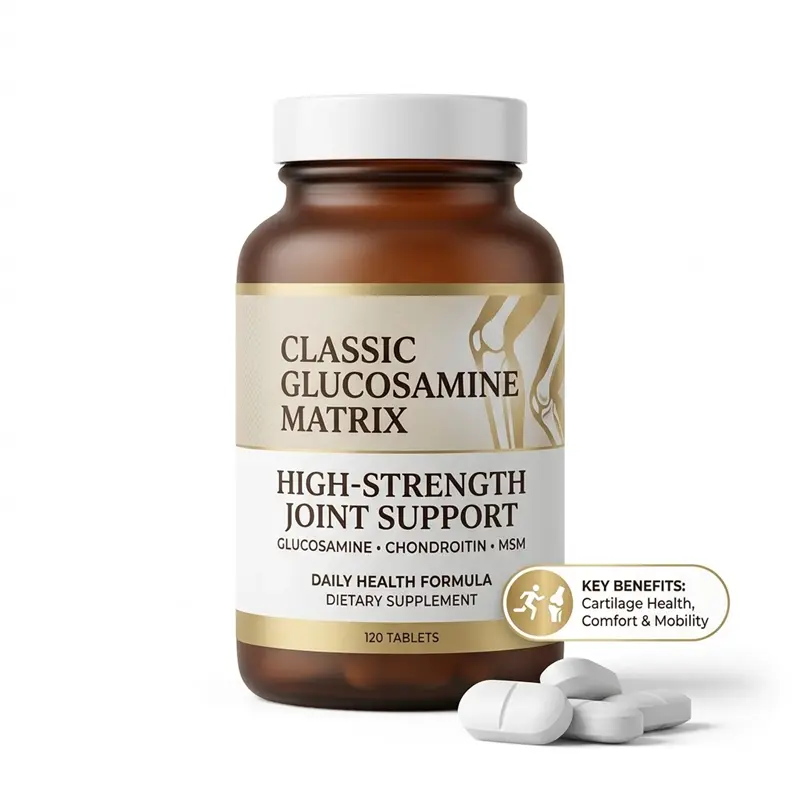
Use when: Mainstream joint-support retail that still sells a glucosamine-led SKU.
Direction: High-load glucosamine with chondroitin and optional MSM, as one unit or a planned multi-count.
Trade-off: Fill and tablet mass versus a one-capsule undenatured line.
Default format: Tablet or multi-count capsule.
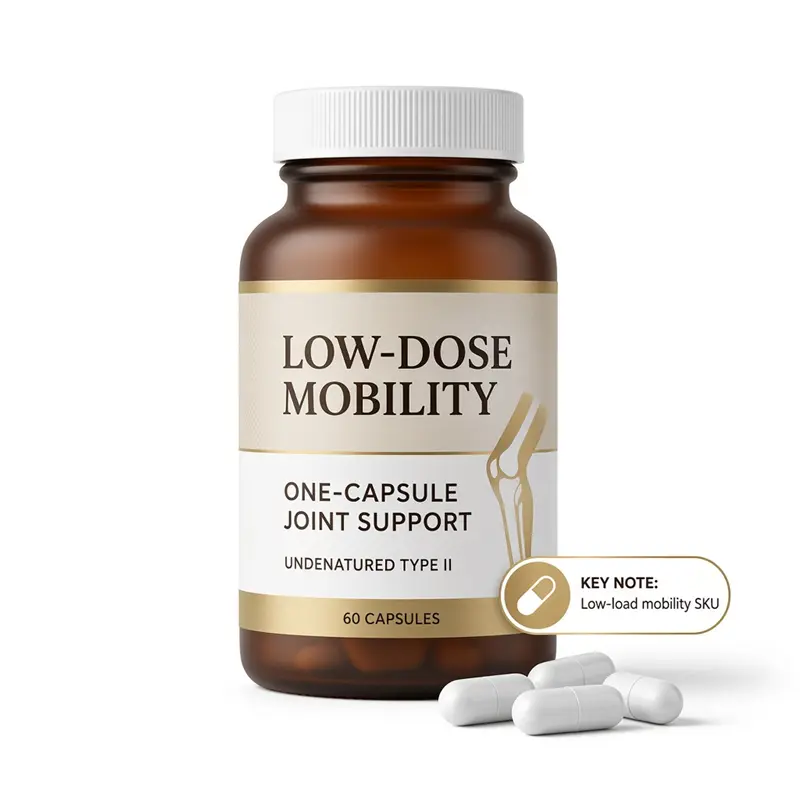
Use when: Premium, one-capsule mobility positioning.
Direction: Undenatured type II as the hero; HA only if it prints as its own row.
Trade-off: Peptide grams and the classic matrix need separate SKUs.
Default format: Capsule.
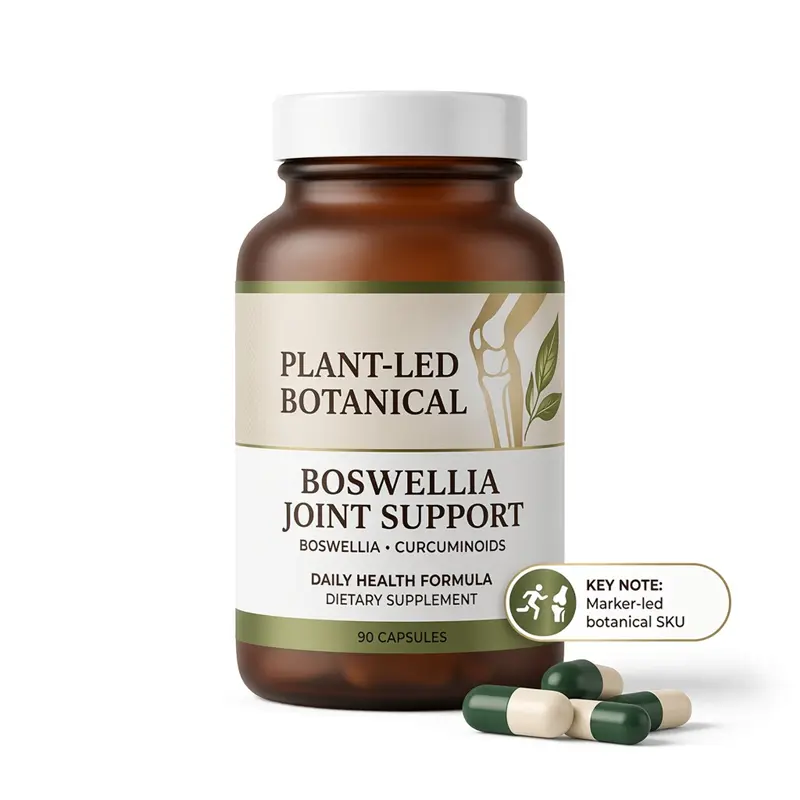
Use when: Glucosamine is off the brief or is a twin SKU.
Direction: Boswellia-led, with or without curcuminoids and a named ginger row.
Trade-off: Marker QC versus the familiar glucosamine story. Structure/function only after counsel.
Default format: Capsule.
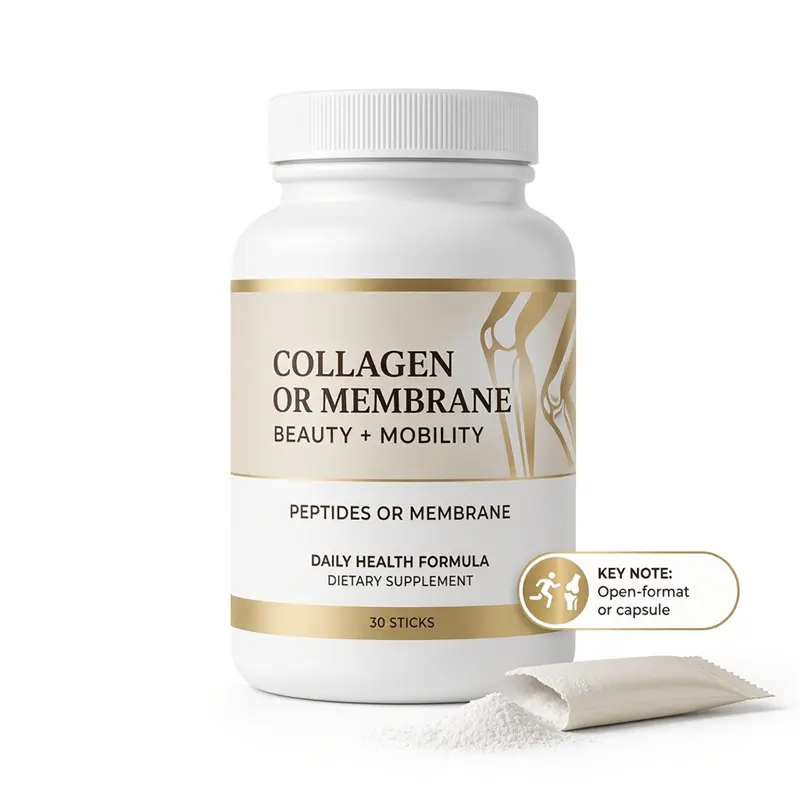
Use when: Beauty + mobility crossover, or a membrane raw is the hero.
Direction: Hydrolyzed peptide grams or an eggshell-membrane identity — not both as one assay.
Trade-off: Open-format drink versus a low-milligram undenatured capsule.
Default format: Powder / stick for peptides; capsule for membrane.
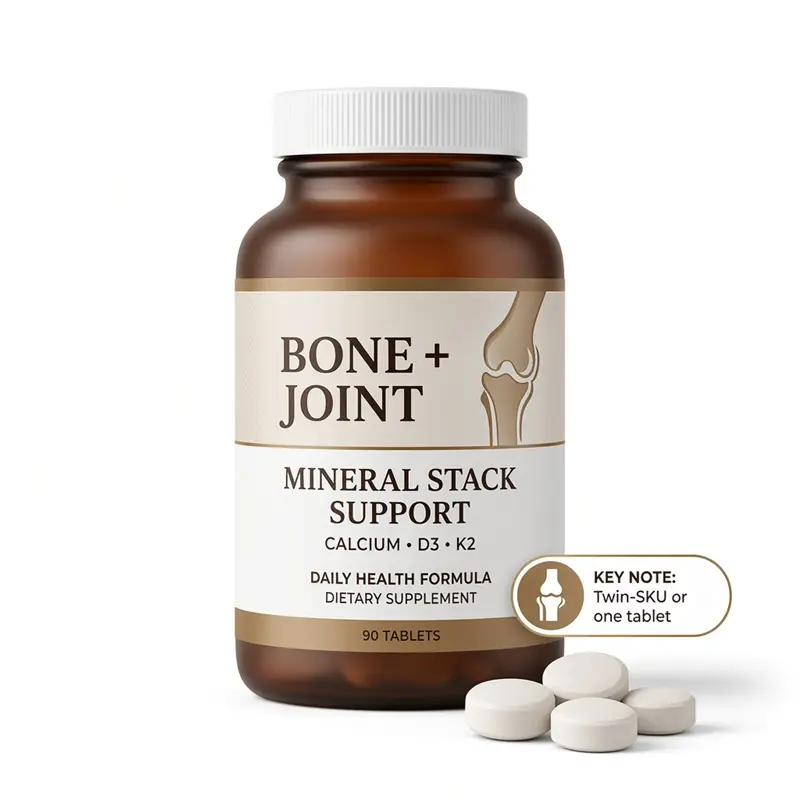
Use when: Mature-adult assortment needs bone minerals with a joint active — or as a twin SKU.
Direction: Elemental calcium + D3 + K2, then the joint active that still fits the tablet.
Trade-off: Tablet mass versus the classic matrix in one swallow.
Default format: Tablet.
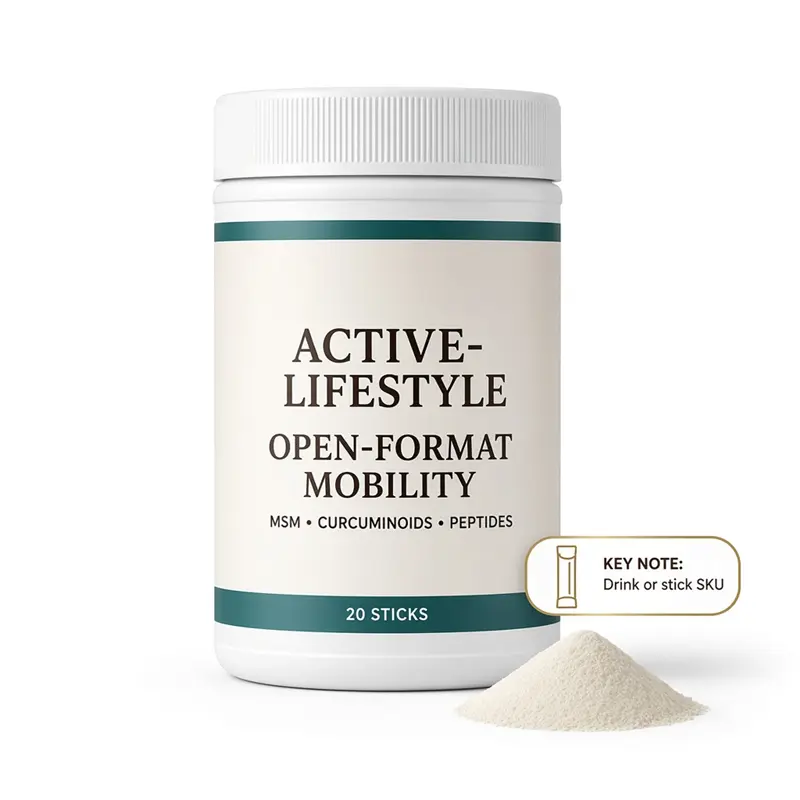
Use when: Sports / mobility drink or stick, not a one-capsule story.
Direction: MSM, curcuminoids, peptide grams, and optional magnesium as named rows in an open format.
Trade-off: Flavor and assay after the commercial mix versus a dry capsule or classic tablet.
Default format: Powder / stick.
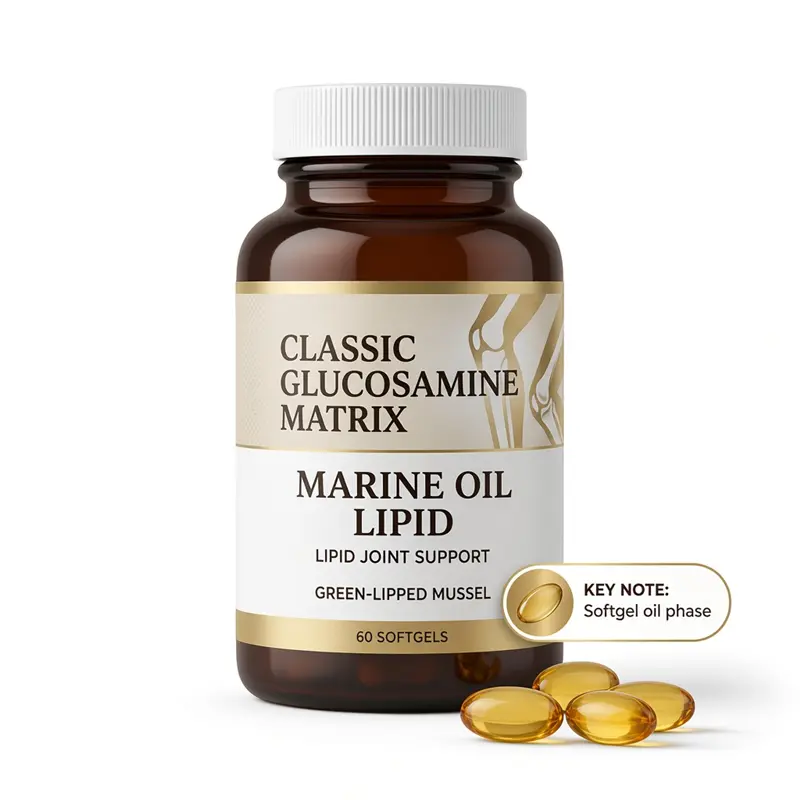
Use when: The hero is a lipid extract, or the next SKU is an oil-phase split.
Direction: Green-lipped mussel lipid today; oil-phase curcumin or a scoped omega split when the brief has an oil phase.
Trade-off: Dry mussel powder stays on capsule or tablet.
Default format: Softgel.
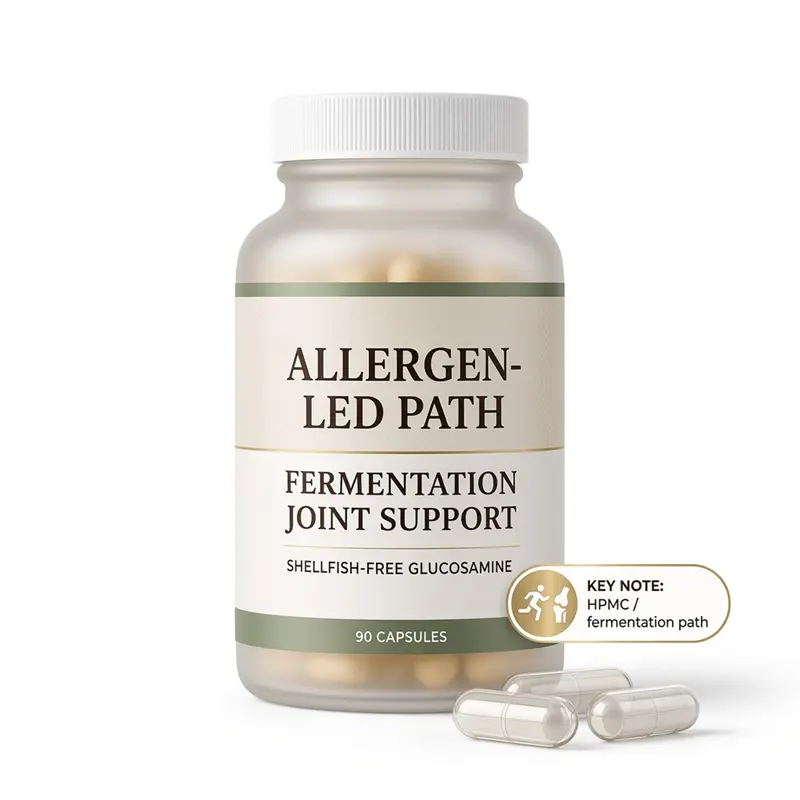
Use when: The brief is shellfish-free, vegan-leaning, or a named advanced active.
Direction: Fermentation glucosamine and HPMC today; PEA or another named next-wave active when destination allows.
Trade-off: Changing only the glucosamine row leaves animal and marine allergens on the rest of the BOM.
Default format: Capsule.
Core Ingredients for Joint Supplements
Finished units are quoted by default; bulk orders are quoted by raw-material grade and drum quantity.
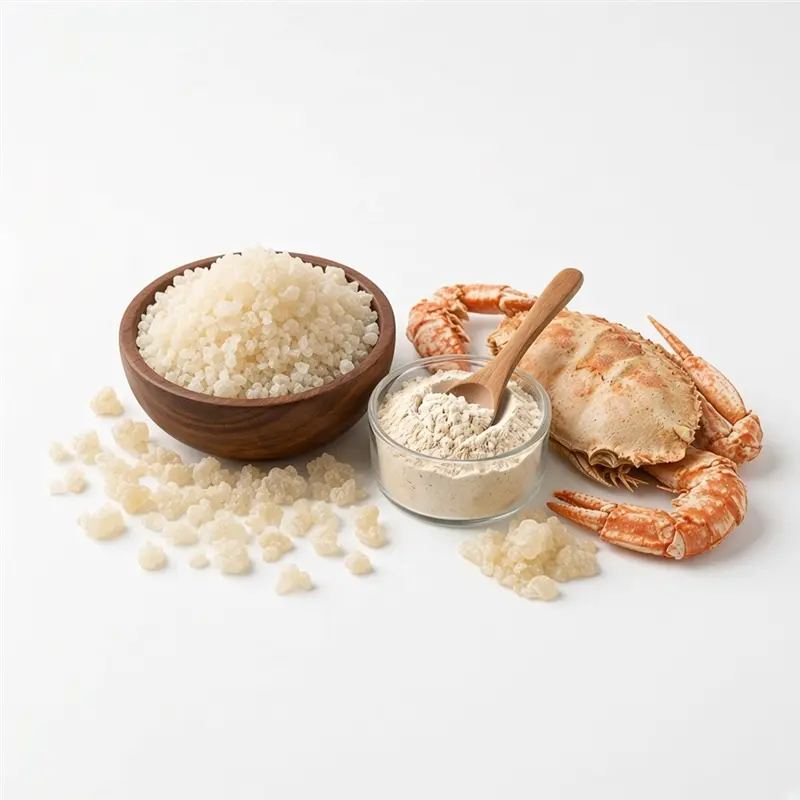
Grades: Sulfate · HCl · shellfish · fermentation.
Quoted as: Classic-matrix hero, or the fermentation / shellfish-free path.
Bulk: Named salt drum — not the finished-tablet MOQ.
Format: Tablet or multi-count capsule.
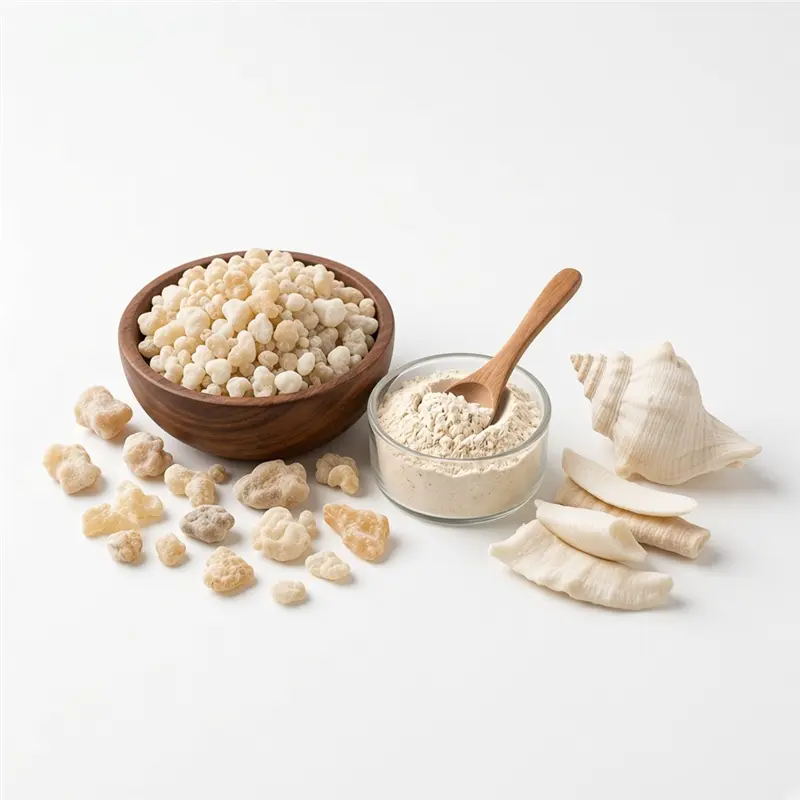
Grades: Bovine · porcine · avian · marine.
Quoted as: Classic-matrix second row. Animal or marine — not a vegan substitute.
Format: Tablet or multi-count capsule.
Grades: Purity and mesh as specified.
Quoted as: Classic-matrix load, or an open-format stick row.
Format: Tablet, multi-count capsule, or powder / stick.
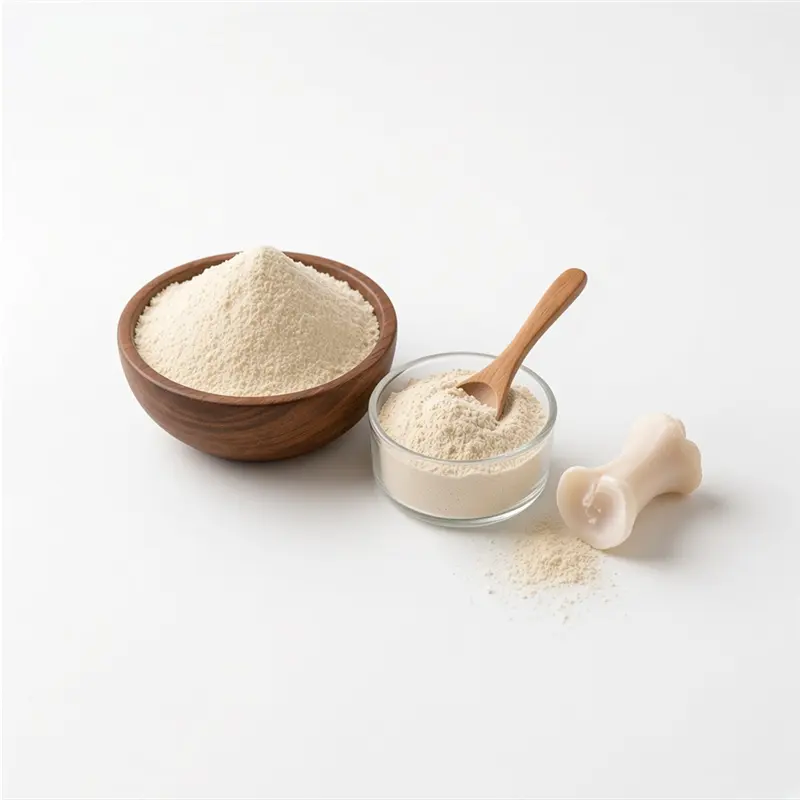
Grades: Generic undenatured · licensed branded.
Quoted as: Low-dose mobility hero — not a peptide gram.
Format: Capsule.
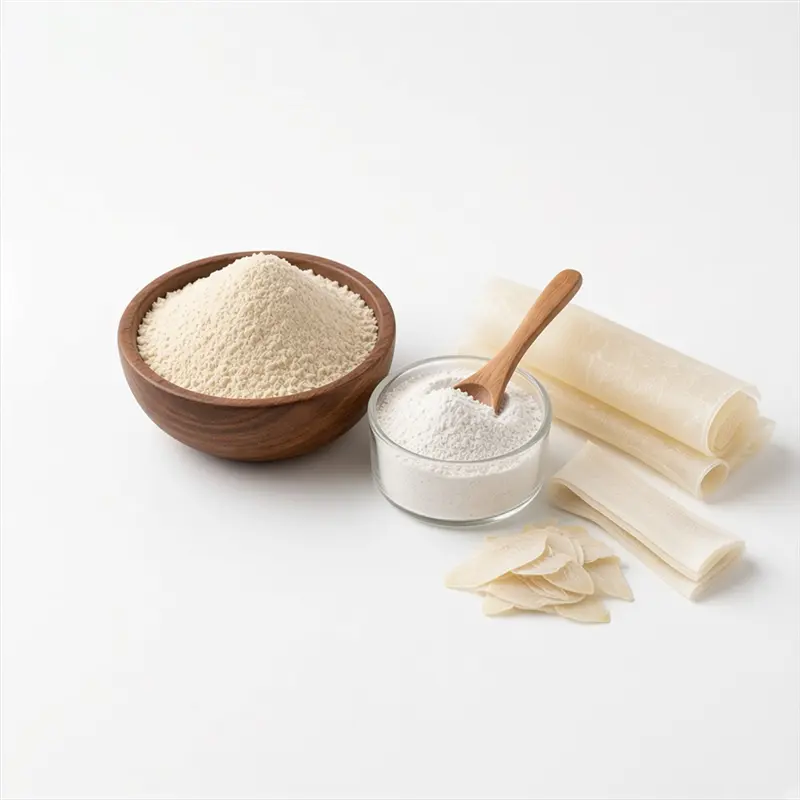
Grades: Type I or II · bovine or marine.
Quoted as: Gram-level drink and beauty-mobility duals.
Bulk: Peptide kilograms — not the stick-SKU MOQ.
Format: Powder / stick.
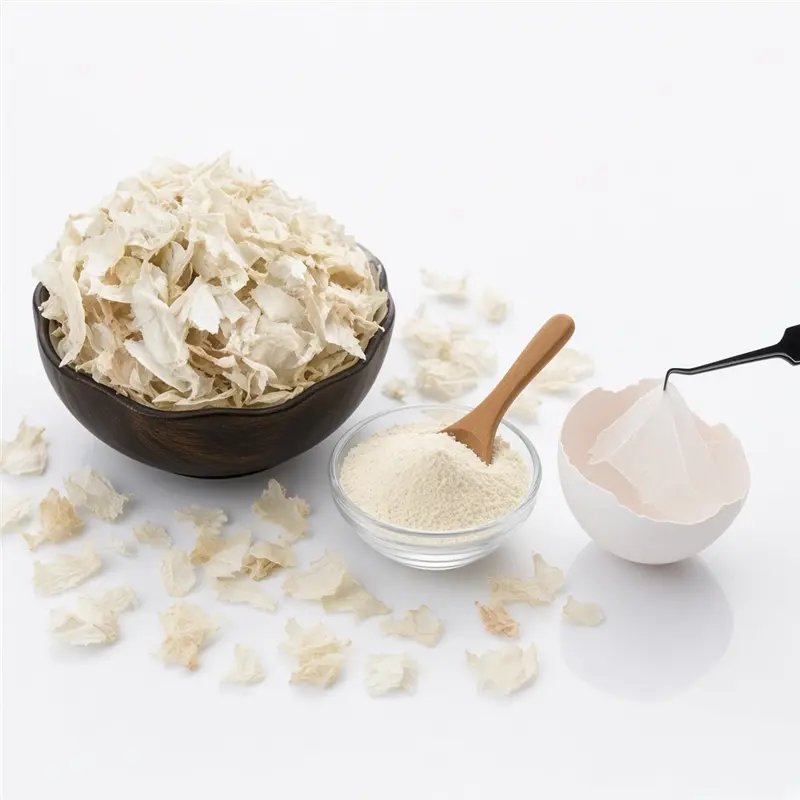
Grades: Membrane as hero · assayed native fractions only if printed.
Quoted as: Membrane-led capsule.
Format: Capsule.
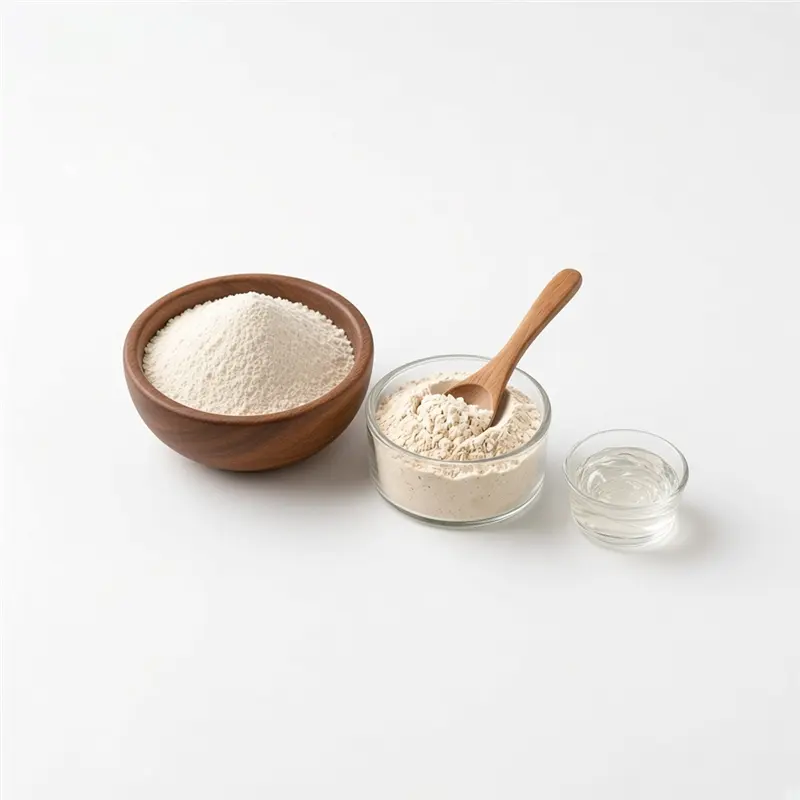
Grades: Assay + MW band · fermentation when claimed.
Quoted as: Add-on row on mobility or classic — not the only spec.
Format: Capsule; liquid only when mg/mL can be released.
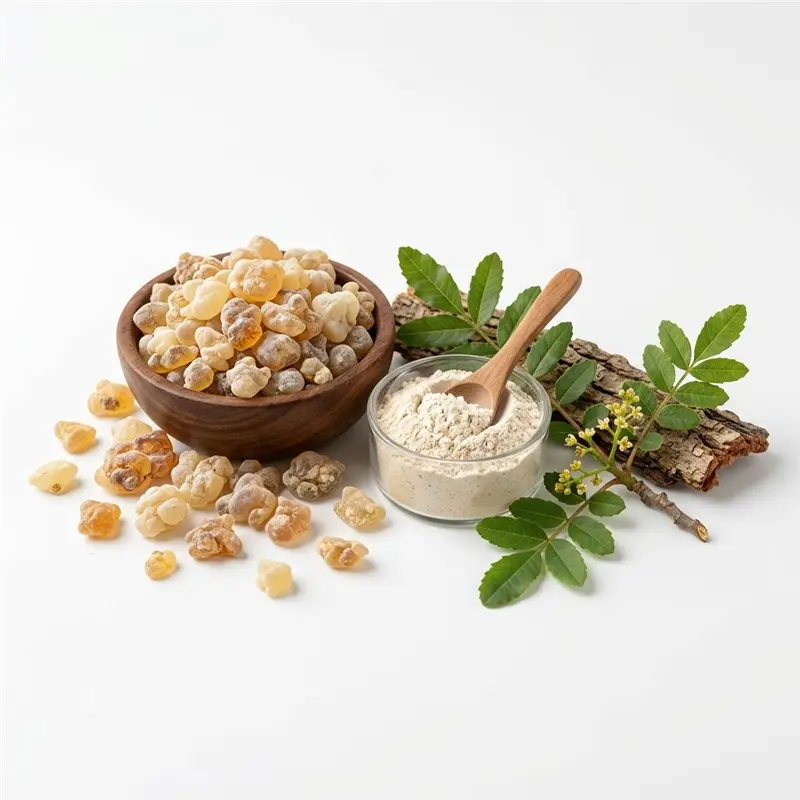
Grades: Resin powder · ratio extract · TBA · named AKBA.
Quoted as: Boswellia-only TBA or AKBA, and Boswellia + curcuminoids (ginger or piperine only when named).
Bulk: Standardized extract drum — not the finished-capsule MOQ.
Format: Capsule.
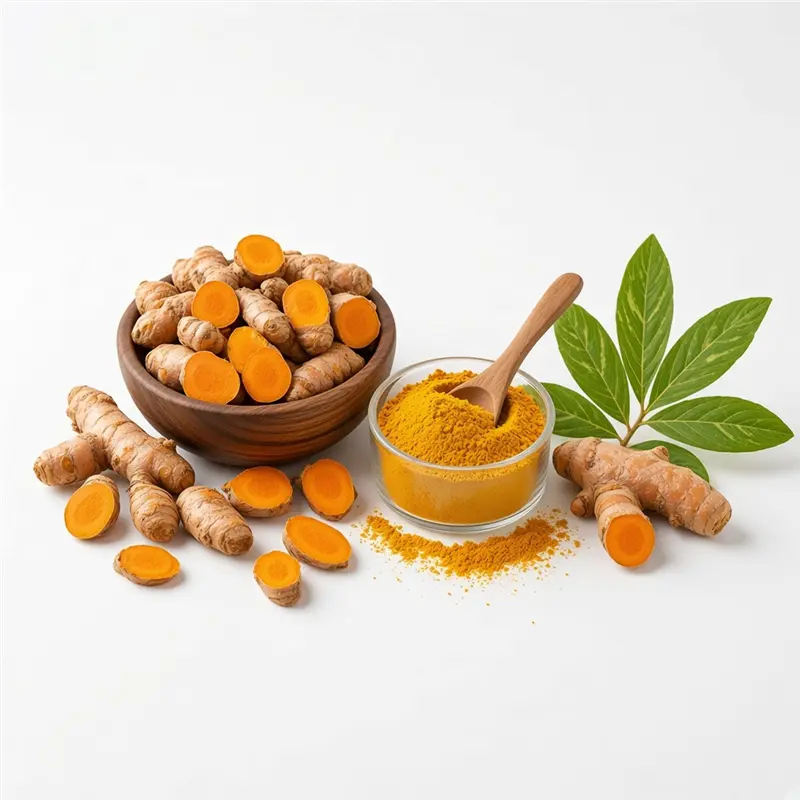
Grades: Turmeric extract · curcuminoids % · liposomal / oil carrier.
Quoted as: Botanical duals, or a liposomal curcumin SKU.
Format: Capsule; softgel only with an oil phase.
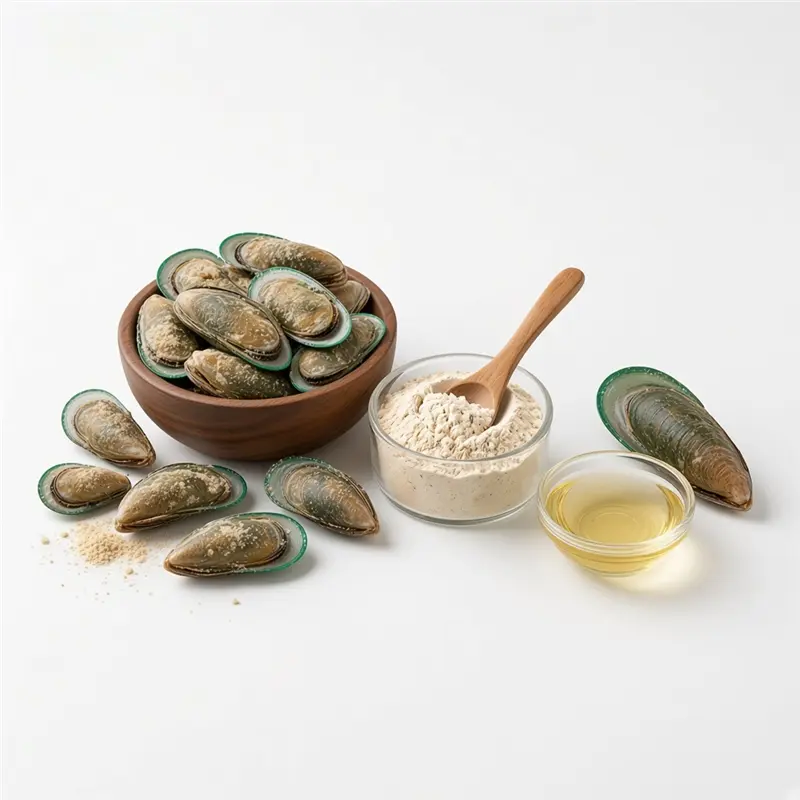
Grades: Powder · lipid / ETA.
Quoted as: Marine-oil architecture.
Bulk: Powder drum and lipid extract are different POs.
Format: Capsule or tablet for powder; softgel for lipid.
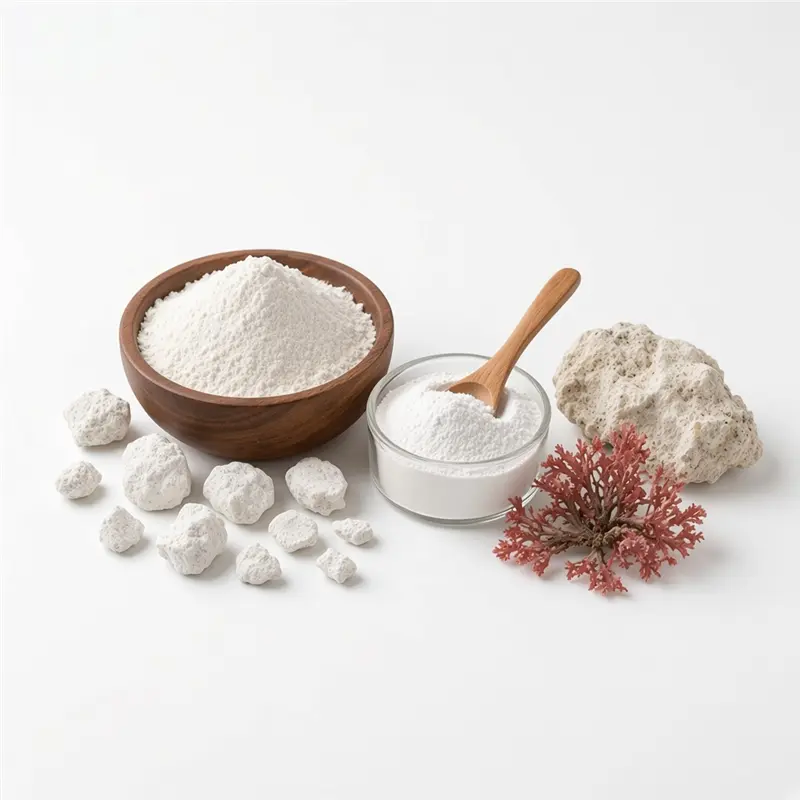
Grades: Carbonate · citrate · algae.
Quoted as: Bone-plus-joint tablet, or a twin mineral SKU.
Format: Tablet.
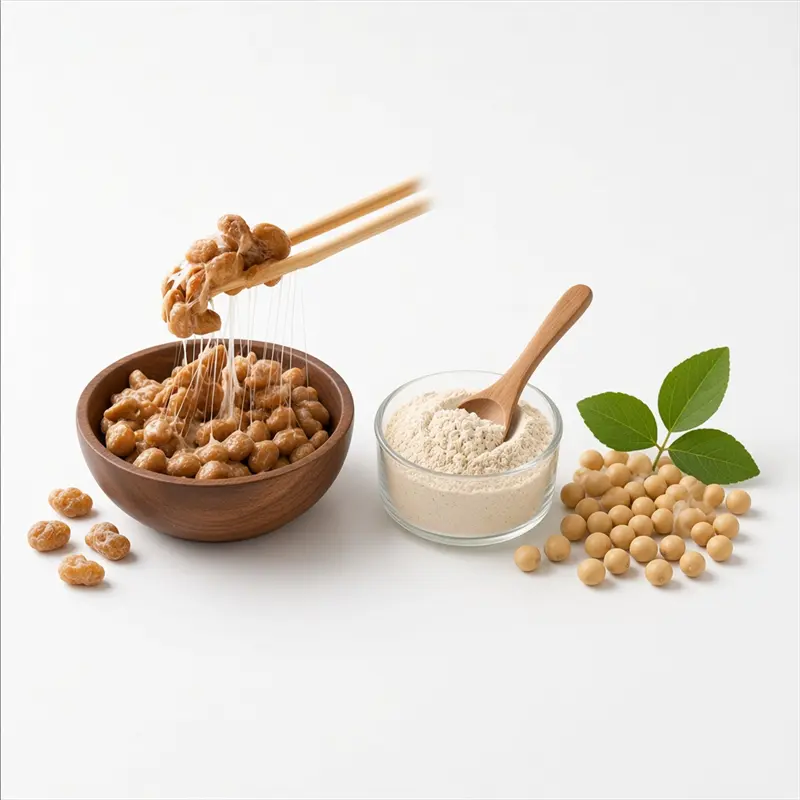
Grades: MK-7 / all-trans when that is what will print.
Quoted as: Bone-plus-joint companion.
Format: Tablet or capsule.
Additional Actives We Can Quote on a Joint-Adjacent Brief
These actives are quoted against identity, milligrams or marker, and destination.
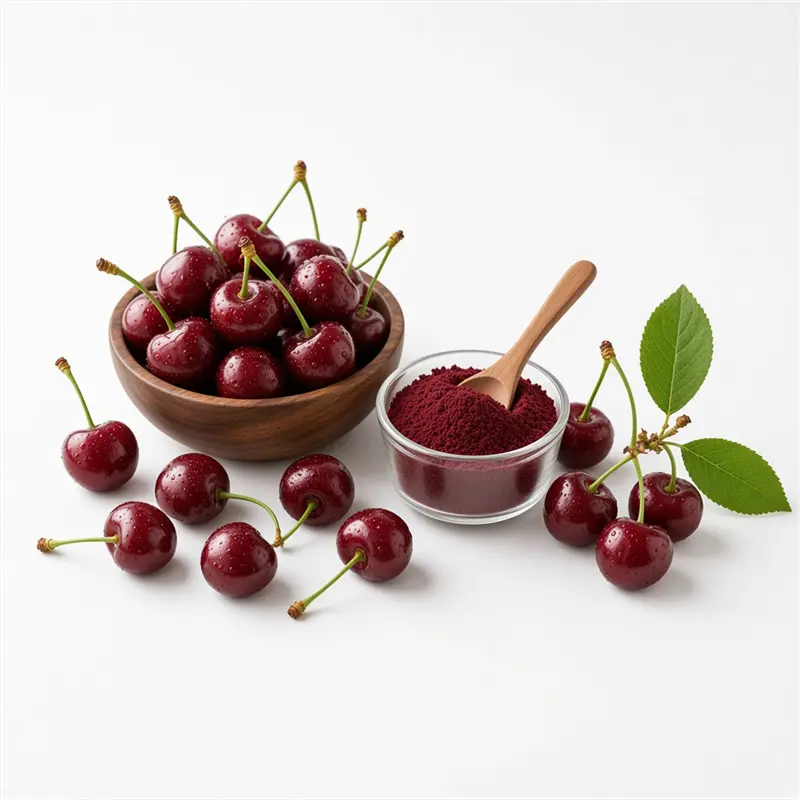
Grades: Fruit powder vs extract; anthocyanin or polyphenol method if claimed.
Quoted as: Recovery-adjacent duals.
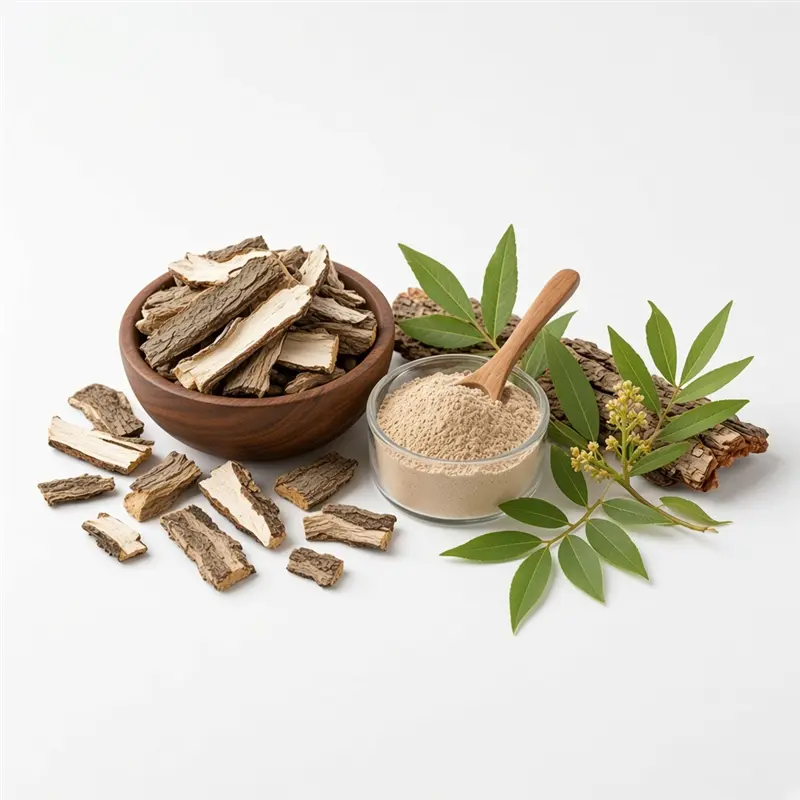
Grades: Species + salicin % + method.
Quoted as: Named botanical add-on after the destination file.
Grades: Named salt + stability pack.
Quoted as: Destination-scoped SKU — not a default joint hero.
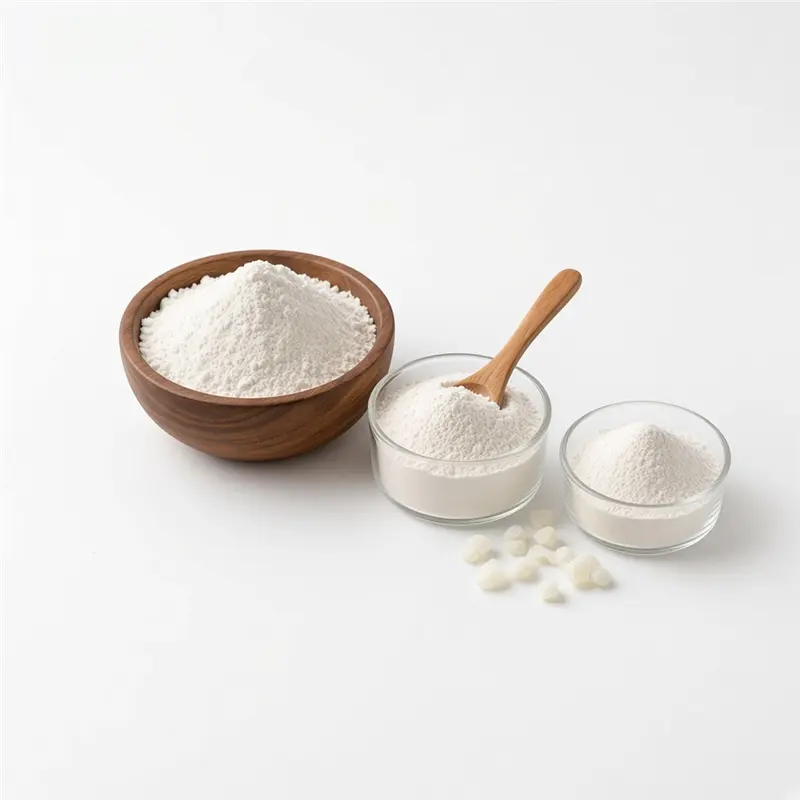
Grades: Identity + mg; micronized or enhanced as a second grade.
Quoted as: Next-wave named active when destination allows.
Companion Ingredients for Joint-Support Formulas
These ingredients are available as secondary formula components.
- Ginger extract — named companion on a Boswellia / curcumin system (gingerols + part).
- Magnesium bisglycinate — salt + elemental mg on an active-lifestyle powder.
- Liposomal vitamin C — named companion; dry ascorbic acid is a separate specification.
- Liposomal quercetin — named companion on a botanical or seasonal stack; quercetin dihydrate is a separate specification.
- Bromelain or piperine — only when named; compatibility and destination review first.
- Anti-inflammatory supplements — adjacent botanical assortment, not an arthritis-treatment path.
Joint Supplement RFQ: What to Specify
| Architecture | Core specification | Format / quote impact |
|---|---|---|
| Classic matrix | Glucosamine salt + assay basis; chondroitin source + method; MSM mg if used | Tablet / multi-count |
| Low-dose mobility | Undenatured type II identity + mg; HA only if printed; license if branded | Capsule |
| Plant-led botanical | Boswellia TBA or AKBA + HPLC; curcuminoids % or delivery file | Capsule |
| Collagen / membrane | Peptide type + protein / grams or membrane grade + egg allergen | Powder / stick or capsule |
| Bone-plus-joint | Elemental Ca; D3 mcg and IU; K2 MK-7; remaining room for the joint active | Tablet mass |
| Active-lifestyle | Named rows per stick; stain and film | Powder / stick |
| Marine oil | Powder vs lipid; allergen; origin file | Softgel vs capsule |
| Allergen / next-wave | Fermentation salt + remaining allergen rows or PEA identity + destination | Capsule |
Name the destination before artwork. A U.S. panel does not automatically travel across Canadian NHP, EU / member-state, or Australian pathways.
Serving-size bands (development examples, not intakes). Glucosamine HCl 1,500 mg and chondroitin 800 mg. Raise load by adding a unit or changing format before changing the headline. Undenatured type II stays in a low-milligram architecture. Peptide SKUs are quoted in grams. A single “joint blend” weight cannot be assayed.
Print joint-support or mobility structure/function language after destination counsel signs off. Arthritis treatment, cartilage-repair, and onset-day copy stay off the brief.
Why These Fields Matter
Glucosamine salt and assay basis. Sulfate (often as the potassium chloride salt) and HCl are not interchangeable. A sulfate·2KCl unit and an HCl unit can both print “glucosamine 1,500 mg” with different label math. Sulfate pulls potassium or sodium onto the panel. Shellfish vs fermentation is an allergen file — fermentation glucosamine does not make chondroitin, type II, membrane, or mussel vegan.
Chondroitin source and method. CPC, enzymatic, and HPLC are not one number. Bovine, porcine, avian, and marine lots are different identity files. Put species, assay %, and the method name on the same line.
Undenatured type II vs peptides. Undenatured type II is a low-dose identity — often 40 mg — plus a method that shows the collagen is still undenatured. Hydrolyzed peptides are gram-level protein. Hydrolyzed type II does not substitute for undenatured type II. Branded grades (including UC-II®) only with a license.
Boswellia TBA or AKBA + HPLC. A printed 10:1 is not a specification. Lock B. serrata resin / gum-resin with total boswellic acids or a named AKBA % and HPLC.
Choose the Joint Health Format
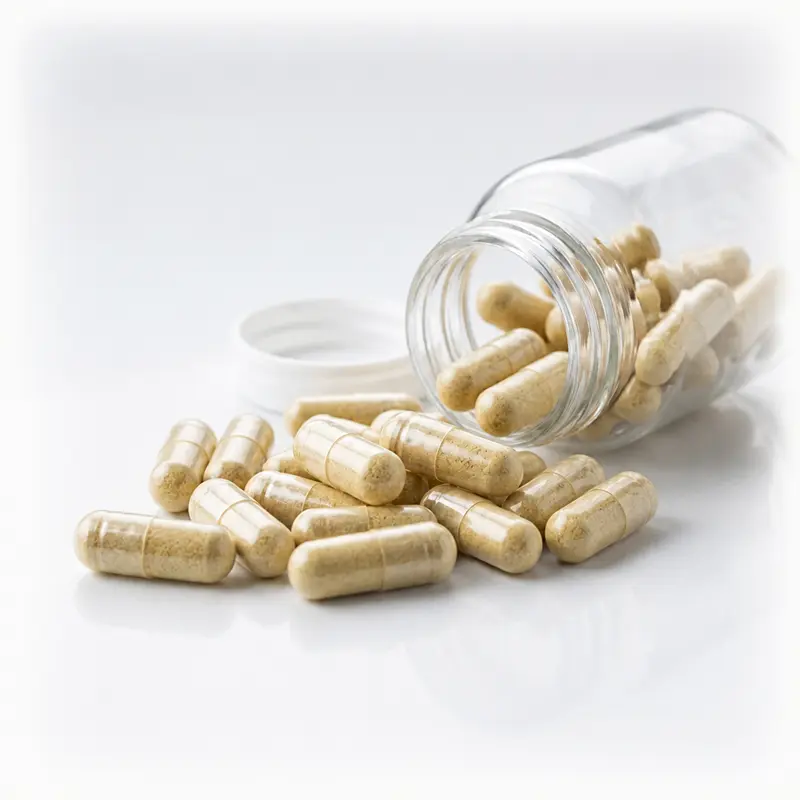
Best for: Low-to-moderate load — undenatured type II, Boswellia, curcuminoids, membrane, fermentation glucosamine.
Why: Size 0 typically holds ~350–450 mg; size 00 ~500–650 mg, confirmed against tap density. Bitter botanicals stay in the shell.
Typical formulas: Low-dose mobility; plant-led botanical; allergen-led path.
What to lock: HPMC vs gelatin; tap density; unit count; flow and lubricant system.
Manufacturing note: A typical glucosamine HCl 1,500 mg + chondroitin 800 mg + MSM 750 mg formula usually exceeds 3 g fill weight before excipients — tablet or two-to-three capsules, not one size 00. High-density glucosamine salts and bulky botanicals also segregate in the hopper.
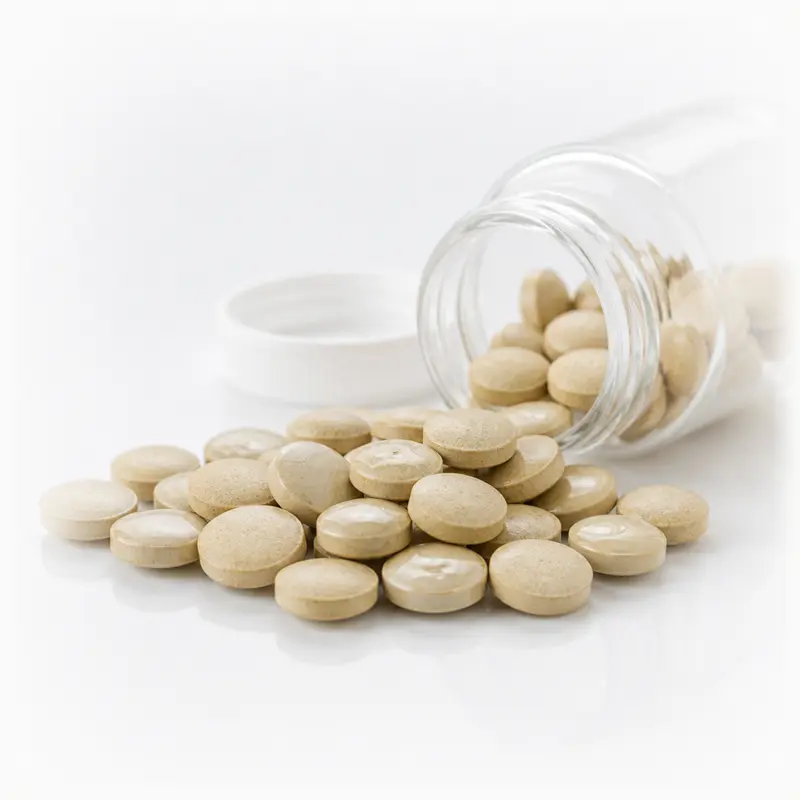
Best for: High-load glucosamine / chondroitin / MSM and bone-plus-joint mineral stacks.
Why: A press carries more solids than one capsule; cost per count on mature-adult SKUs.
Typical formulas: Classic glucosamine matrix; bone-plus-joint.
What to lock: Punch tooling, tablet weight and thickness, hardness, friability, disintegration, film coat.
Manufacturing note: A capsule BOM is re-validated before a press run. High MSM changes hardness and odor; calcium carbonate raises tablet mass and can slow disintegration. Tablet weight above approximately 1.8–2.0 g may require a two-tablet daily serving depending on punch diameter.
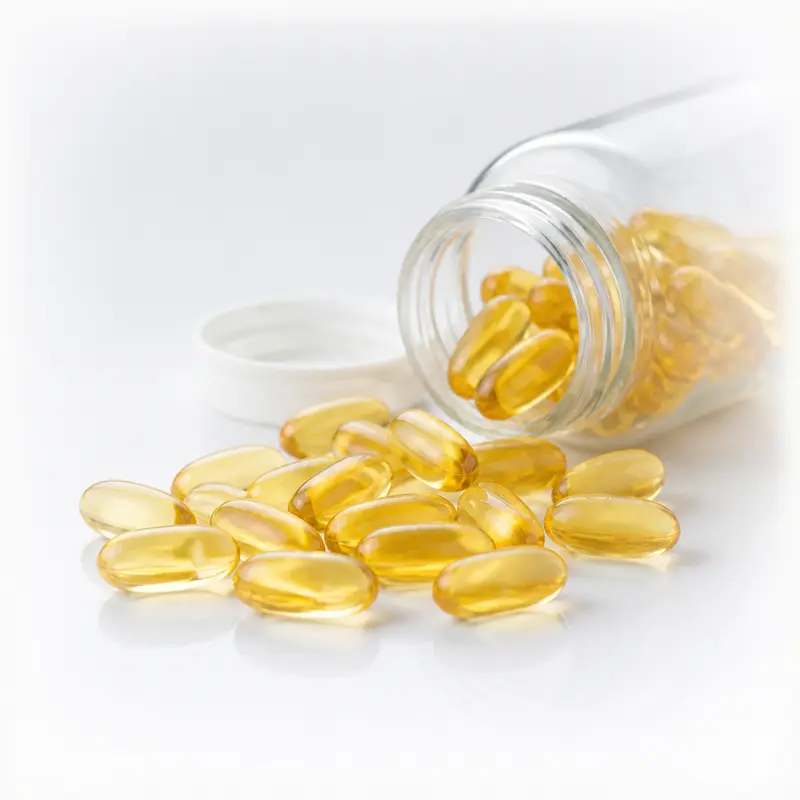
Best for: Green-lipped mussel lipid, curcumin oil systems, or a scoped omega split.
Why: Lipid extracts are typically developed as softgels.
Typical formulas: Marine oil / lipid joint.
What to lock: Carrier oil, fill volume, leak and bloom, marine allergen, gelatin shell.
Manufacturing note: Dry GLM powder and lipid extract follow different manufacturing routes and stability programs. Oxygen and leak set the pack.
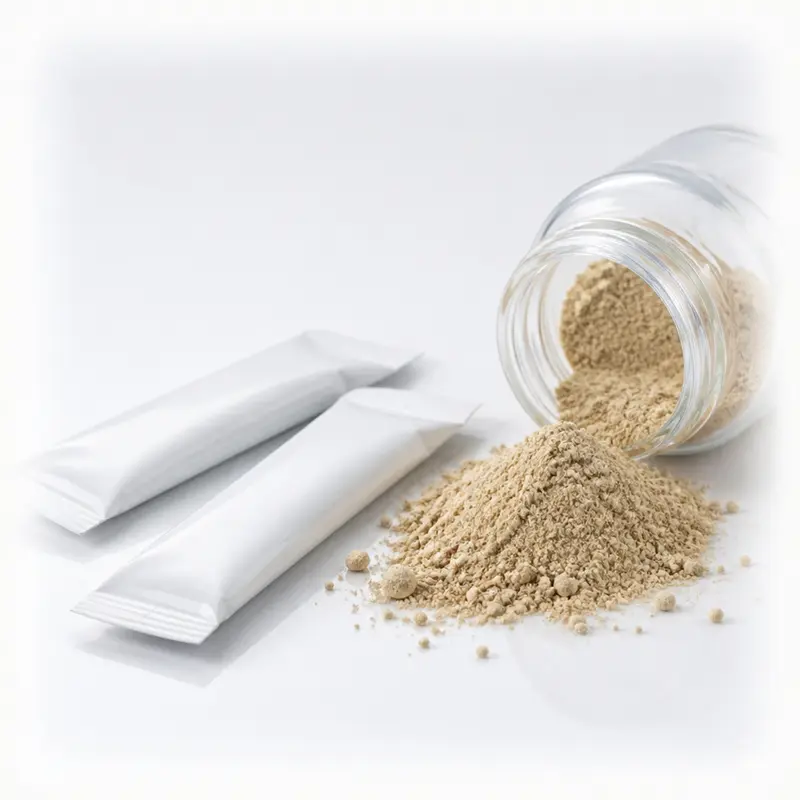
Best for: Collagen grams, high MSM, active-lifestyle drink mixes.
Why: Collagen peptides usually exceed practical capsule count above 3–5 g/day.
Typical formulas: Collagen or membrane; active-lifestyle open format.
What to lock: Flavor, curcumin stain, moisture-barrier film, assay per stick, stick vs jar.
Manufacturing note: Instantization only when the brief needs a drink-mix claim. Assay is per stick after the commercial mix, not the drum %.
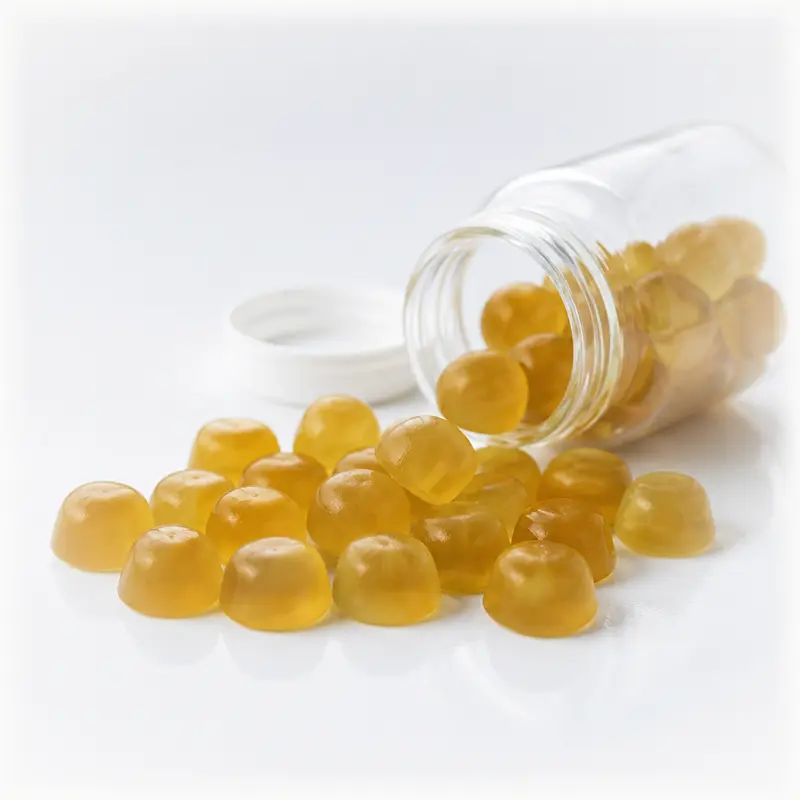
Best for: Lifestyle retail and low-load actives (HA, light botanical).
Why: Cook temperature, residence time, and water activity set the assay ceiling.
Typical formulas: Low-dose botanical or HA add-ons after a cook-and-assay pilot.
What to lock: Pectin vs gelatin; sugar or sugar-free; piece weight; finished-piece assay.
Manufacturing note: Drum % is not finished-piece potency. A classic-matrix gummy fails on cook load and serving count — keep that matrix on a tablet.
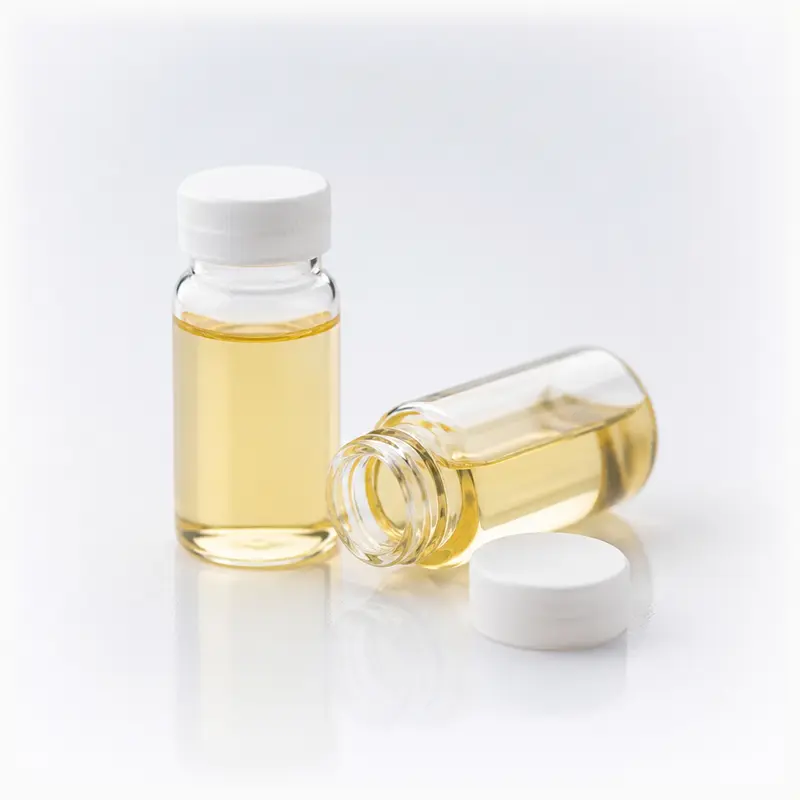
Best for: Documented HA or dispersible botanicals when mg/mL can be released.
Why: mg/mL must be measurable; peptides and dry salts hydrate differently.
Typical formulas: Scoped HA after assay-per-mL and preservation are locked.
What to lock: Assay per mL; preservation; light barrier; viscosity.
Manufacturing note: Dispersion stability and microbial limits are piloted before artwork. A dry glucosamine matrix does not become a liquid by adding water.
High-load fill and compression
Challenge
Classic glucosamine + chondroitin + MSM drives tablet weight, punch selection, hardness, and disintegration. Forcing that matrix into one size 00 capsule usually fails before the coat is chosen.
Our manufacturing approach
We lock unit count against tap density and punch diameter at feasibility. When one swallow cannot hold the printed load, the SKU becomes a multi-count tablet or two-to-three capsules — before artwork, not after the first press trial.
Blend uniformity
Challenge
Glucosamine salts, light botanicals, and calcium minerals differ in density. Segregation in the hopper can leave one printed assay off-spec even when the drum weight looks correct.
Our manufacturing approach
Particle-size pairing, lubrication, and in-process weight or content-uniformity checks are set before the hopper is booked. Each printed active keeps its own identity and assay line so release can hold every marker, not only total fill.
Moisture, odor, and stain
Challenge
MSM odor, curcumin stain, and marine-oil oxidation show up in process and pack.
Our manufacturing approach
MSM briefs name odor and coat so hardness and bottle or blister are set together. Curcumin goes into an opaque pack. Marine-oil softgels use a nitrogen-aware bottle or blister and a leak check. Those pack fields sit on the same feasibility file as the formula.
Release is against the approved specification — incoming paperwork is not the finished label.
Incoming. Identity, assay / marker with the method on the same line, heavy metals, micro, residual solvents where applicable, allergen statement (shellfish, egg, fish / mollusc). Undenatured type II: the identity method that matches the undenatured claim.
In-process. Blend uniformity, fill or tablet weight, hardness / disintegration on high-load tablets, moisture.
Finished unit. Printed assay, weight variation, disintegration as specified, micro, pack integrity.
Batch file. Specification, batch COA, test records, batch genealogy, and stability documentation where the brief asks.
See How to Read a COA. Supplier swap, lot consistency, and accelerated stability are scoped on that file.
Packaging is selected against moisture, oxidation, odor, stain, allergen, and stability requirements.
High-load tablets. Moisture and breakage — desiccant, adequate bottle or blister; humid lanes often want alu-alu.
MSM / peptides. Caking and odor — barrier film on sticks; induction seal on bottles.
Curcumin. Light and stain — opaque pack.
Marine oil softgels. Oxygen and leak — blister or nitrogen-aware bottle as scoped.
Allergen SKUs. Line clearance and label copy must match shellfish, egg, or mussel rows.
Shelf-life months follow that SKU’s stability file.
R&D / feasibility. Fill weight, allergen path, and whether oil and dry split into two SKUs. → R&D Center
QC / release. Finished assay is verified against the approved specification before release.
Capacity / format. Capsules, tablets, softgels, powders, gummies, and liquids on the same site. Daily output is published on the manufacturing capacity page (5+ million capsules, 12+ million tablets, 2+ million gummies).
Certificates. cGMP, ISO 9001, ISO 22000, HACCP, FSSC 22000, Halal, Kosher as published. We issue specification and batch documents. Brand-owner counsel owns U.S. Supplement Facts, EU/UK claim lists, Canada NHP, and Halal artwork. This is not an FDA product approval.
1. Brief. Destination, format, architecture or BOM, claim direction, target cost, first-order quantity.
2. Feasibility. Load, compatibility, allergen, stability, and whether the destination can sell the named actives.
3. Prototype and testing.
4. Artwork. Supplement Facts follow the locked specification.
5. Pilot → production → batch release.
Typical MOQ and Lead Time
Format | Typical planning MOQ | Typical clock |
|---|---|---|
| Capsules | About 3,000–5,000 finished units/SKU | Sample 7–15 days after spec lock; mass production often 4–6 weeks after formula, artwork, testing plan, and schedule |
| Tablets | About 5,000–10,000 units | Same clock after press parameters are locked |
| Powder / stick | Often from about 10,000 units | Film and flavor / stain pilot first |
| Softgels / gummies / liquids | Quoted after the oil, cook, or dispersion pilot | Send format and first-order quantity for a project number |
A kilogram drum quote is not a finished-unit MOQ. Reorders are usually shorter than the first commercial batch.
Can glucosamine HCl and sulfate be quoted at the same labeled dose?
They can print the same “glucosamine” milligram and still be different quotes. Salt, assay basis (as sulfate, as HCl, or as free glucosamine), and potassium or sodium from a sulfate salt have to match before the two lines are comparable.
Can you manufacture shellfish-free glucosamine?
Yes, as a fermentation-derived salt when the brief names it. Animal chondroitin, undenatured type II, membrane, and mussel still need their own allergen path — or they come off the BOM.
Can one joint formula be sold in the U.S., EU, UK and Canada?
We issue specifications and batch files. U.S. Supplement Facts, EU/UK claim lists, and Canada NHP are not the same path. We do not register the finished label as the brand owner. White willow and SAMe need the destination file before a sample is promised.
Can you manufacture joint-support gummies or liquids?
Gummies after a cook-and-assay pilot — pectin or gelatin, flavor, sugar-free if required, and piece weight. Keep the classic glucosamine matrix on a tablet; a gummy brief should stay on HA or a light botanical. Liquids only when mg/mL can be released. A dry glucosamine matrix does not become a liquid by adding water.
Confidential Product Development
NDA available for custom formulations, customer-specific specifications, and product-development information. See Confidentiality & IP Protection.
Discuss a confidential project
Send a Brief, a BOM or Two COAs
No concept yet. Destination + architecture + format.
Discuss a Joint Product Concept
BOM already in hand. Actives, milligram or marker fields, allergen path, format, pack.
Send Your BOM
Two COAs or a finished reference. We compare methods and finished-unit assay.
Compare Two COAs · Request Formula Feasibility
Related Supplement Manufacturing Solutions
- Boswellia Serrata Supplement Manufacturer
- Liposomal Curcumin Supplement Manufacturer
- Collagen Supplement Manufacturer
- Calcium Supplement Manufacturer
- Tart Cherry Supplement Manufacturer
- Liposomal Vitamin C Supplement Manufacturer
- Liposomal Quercetin Supplement Manufacturer
- Anti-Inflammatory Supplement Manufacturer
- Vitamin K2 Supplement Manufacturer
Disclaimer: Wholesale / brand manufacturing and product-development reference only. Dietary supplements are not intended to diagnose, treat, cure, or prevent any disease. This page is not an arthritis-treatment, cartilage-repair, meniscus-repair, or anti-inflammatory-drug offer. KS Nutripharma manufactures oral dietary supplements. Structure/function language, ingredient status, and product classification vary by country. Brand owners remain responsible for finished-label compliance with local counsel. KS Nutripharma provides manufacturing feasibility and documentation support — not legal approval. Milligram figures, marker percentages, fill windows, and formula examples are development references, not recommended intakes or catalog guarantees. Branded ingredient names appear only as customer-licensed options, not as default house grades.