





Professional Calcium Supplements Contract Manufacturer
KS Nutripharma develops finished calcium supplements for OEM, ODM, and private-label projects. A product concept, a reference label, or an existing BOM can open the file. The first review checks the calcium source, the elemental-calcium target, the serving size, the dosage form, and the destination market, then says whether a quotation can be compared.
Start with Your Calcium Supplement Brief
A complete formula is not required. Use the entry that matches what you already have. Each one opens the same form.
I have a product concept. Send the target market, the dosage form you have in mind, and the order quantity you are considering. The reply is a first read on whether that direction can be specified. Discuss your calcium supplement concept.
I have a formula or a reference label. Send the calcium source, the elemental-calcium target, the units per serving, any vitamin D3, magnesium, or vitamin K, and the pack. The reply is a feasibility read for that formula and that unit. Request a formula feasibility review.
I am comparing suppliers. Send two quotations or two labels, the destination market, the order quantity, and the tests that market requires. The reply lines the specifications up before the prices are compared. Compare calcium supplement specifications.
At a glance
Field | Detail |
|---|---|
| Formula | Calcium salt, elemental calcium per serving, vitamin D3 if included, and any magnesium, zinc, or vitamin K line |
| Format | Tablet, softgel, bottled liquid, chewable, gummy, or capsule, after a feasibility check |
| Label basis | A U.S. Supplement Facts panel declares elemental calcium. Compound weight is a separate purchasing line |
| Label examples | Patterns from labels read in product development. Not lot assays, and not servings KS sets |
| Before a price is compared | Salt, elemental calcium, units per serving, pack count, test scope, and order quantity |
Why 600 mg Calcium Carbonate and 600 mg Calcium Citrate Are Not the Same Tablet
On a U.S. supplement label, the calcium number is elemental calcium. NIH ODS states that calcium carbonate is about 40 percent calcium by weight and calcium citrate about 21 percent [1]. Those percentages are for a first estimate. The amount of salt in the formula is calculated from the assay of the ingredient that was specified.
A purchasing specification that requires a minimum of 38 percent calcium cannot be filled by assuming 40 percent. The approved material specification is the weighing basis. Hydration and a finished-unit calcium test still apply before the label is locked.
Using the 40 percent and 21 percent estimates, 600 mg of elemental calcium is about 1,500 mg of calcium carbonate, or about 2,860 mg of calcium citrate. A line written as 500 mg, 1,000 mg, or 1,200 mg still needs the salt named. If “1,000 mg calcium citrate” means the weight of the salt, that is about 210 mg of elemental calcium. If it means elemental calcium, the salt weight is about 4,760 mg. The named material and its assay replace either estimate.
ODS food figures use a 1,300 mg Daily Value for calcium [1]. A panel that prints 600 mg calcium as 60 percent DV is using a 1,000 mg Daily Value. Percent Daily Value follows the destination’s labeling rules. It is not a recommended intake.
Which Calcium Formula Should the Brief Name?
The weights above settle the salt. The cards name what else is on the label. Calcium lactate and calcium gluconate are quoted from their own assay when the brief names them.

Core ingredients: Calcium carbonate. Vitamin D3 in micrograms. Trace magnesium, zinc, copper, manganese, or boron only at the amounts written beside them. Fits: Carbonate formulas taken with food. Labels in this review sit near 600 mg elemental calcium, with vitamin D3 at 10 mcg (400 IU) or 20 mcg (800 IU). Factors: A 50 mg magnesium line stays on this formula. Magnesium in the hundreds of milligrams is the magnesium formula.

Core ingredients: Calcium citrate. Vitamin D3 when the label includes it. Fits: A formula that can be taken without a meal. One retail label shows 650 mg elemental calcium from citrate and 25 mcg (1,000 IU) vitamin D3. The hydrate and the lot assay were not on that label, so 650 mg is not a formula standard. Factors: Calcium citrate malate and calcium malate are named-source formulas. ODS describes citrate as less dependent on stomach acid than carbonate, so it can be taken without food, and describes supplement absorption as generally better with food [1].

Core ingredients: Calcium carbonate or calcium citrate, plus vitamin D3 when the label has it. Fits: A women’s label, a bone-health label, or a label aimed at adults over 50. Factors: A higher daily amount is more of the same serving. A women’s multivitamin that cannot hold this mineral load is a separate SKU. Formula architecture: women’s multivitamin supplements.

Core ingredients: One calcium salt and one magnesium salt, each with its own elemental milligrams. Zinc only when the brief names the zinc salt and the elemental zinc. Boron, copper, and manganese each need a salt and a quantity. Fits: Elemental magnesium that counts as its own ingredient. Labels in this review pair calcium with about 300 mg elemental magnesium. That is a label line, not a required ratio. A panel with 50 mg magnesium and 7.5 mg zinc beside 600 mg calcium is still the carbonate formula. Factors: Oxide, citrate, and glycinate are different magnesium salts and different compound weights. Identity and elemental magnesium are specified on magnesium supplements.

Core ingredients: The calcium salt, vitamin D3 in micrograms, and vitamin K in micrograms. Vitamin K2 is MK-7. Vitamin K1 is a different ingredient. Fits: Briefs that add vitamin K2 or vitamin K1. Factors: One label shows 300 mg calcium, 3.5 mcg (140 IU) vitamin D3, and 32.5 mcg vitamin K1. That panel is not an MK-7 target. MK-7 identity and micrograms are specified on the vitamin K2 supplement file.

Core ingredients: The material the brief names, with that material’s calcium assay. Calcium citrate malate. Calcium malate. Calcium phosphate, with the phosphate form named. Algae calcium, with the organism or the material named. An amino-acid chelate, such as calcium glycinate, with the ligand named. Microcrystalline hydroxyapatite. Fits: Only when the brief names that material. Factors: The assay belongs to the material, not the 40 percent carbonate estimate. Calcium D-glucarate, calcium HMB, calcium AKG, and calcium fructoborate are different compounds and are not quoted from these formulas.
Which Calcium Supplement Format Fits Your Formula?
Labels that say liquid calcium use two units: a softgel, or a bottled liquid taken by the spoon. Pick the unit, then lock the lines under it.
 Tablet
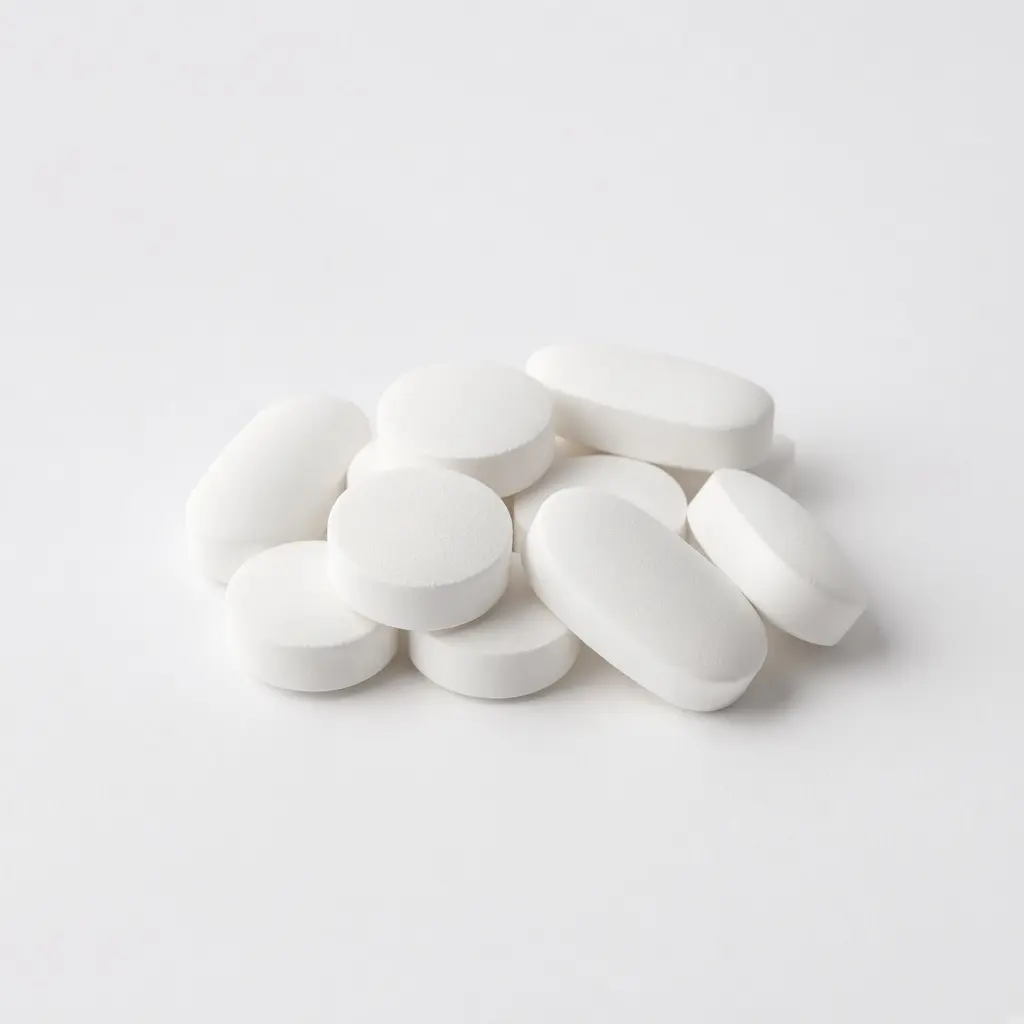
Best fit: A high elemental load. Carbonate labels in this review use one tablet for 600 mg elemental calcium. Citrate labels use two caplets. Main constraint: The press has to hold the salt plus excipients. A fine powder and a granular, directly compressible grade do not run on the same setting. Required specification: Finished tablet weight, powder grade, coating, and a finished-tablet calcium assay. Tablets covers coating and press settings.
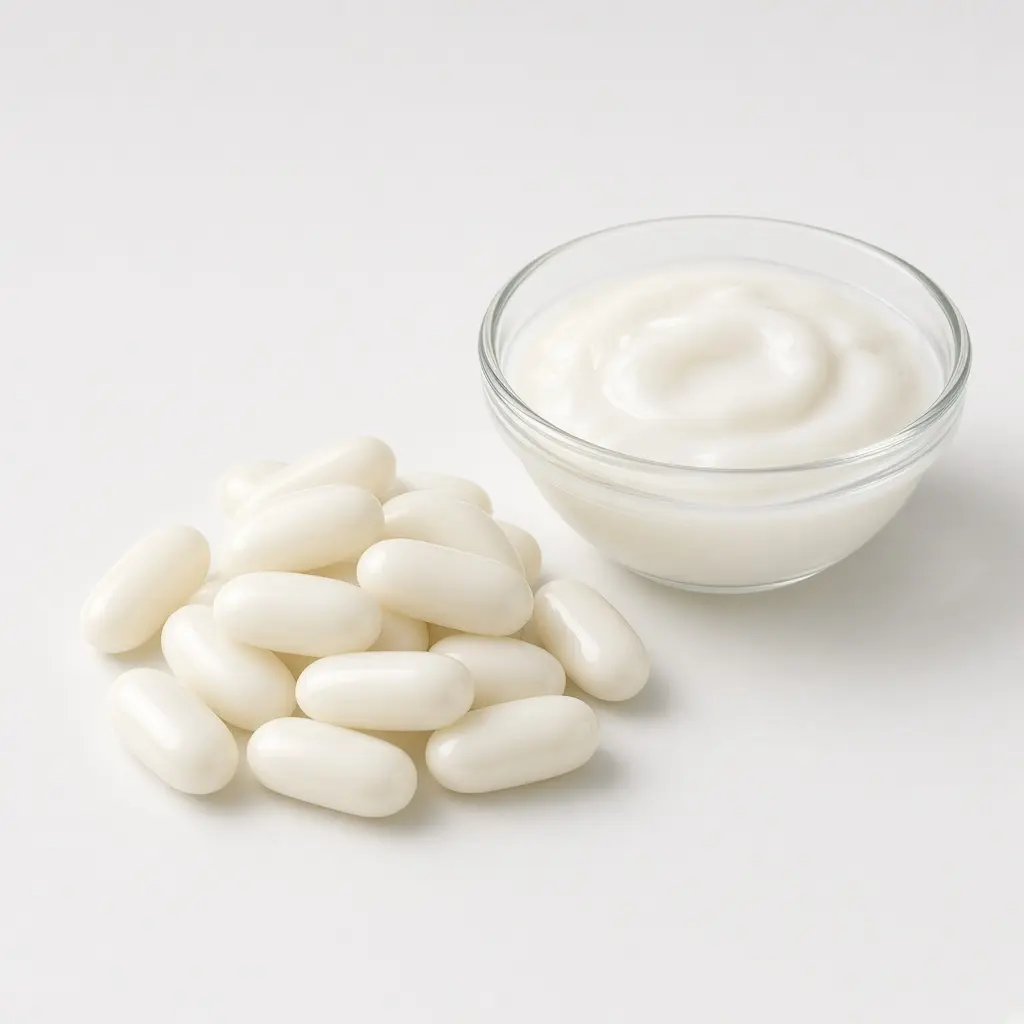 Softgel
Best fit: A calcium-plus-vitamin-D piece sold in some markets as liquid calcium. Pieces in this review hold about 250–300 mg elemental calcium, with vitamin D3 at 1.25 mcg (50 IU) or 3.5 mcg (140 IU). Main constraint: The salt has to be dispersed in a named oil or paste. Dry powder does not fill a softgel. A 600 mg elemental carbonate serving is a different fill from those pieces. Required specification: Fill weight, shell, and calcium and vitamin D assays on the finished softgel. Softgels covers fill and shell.
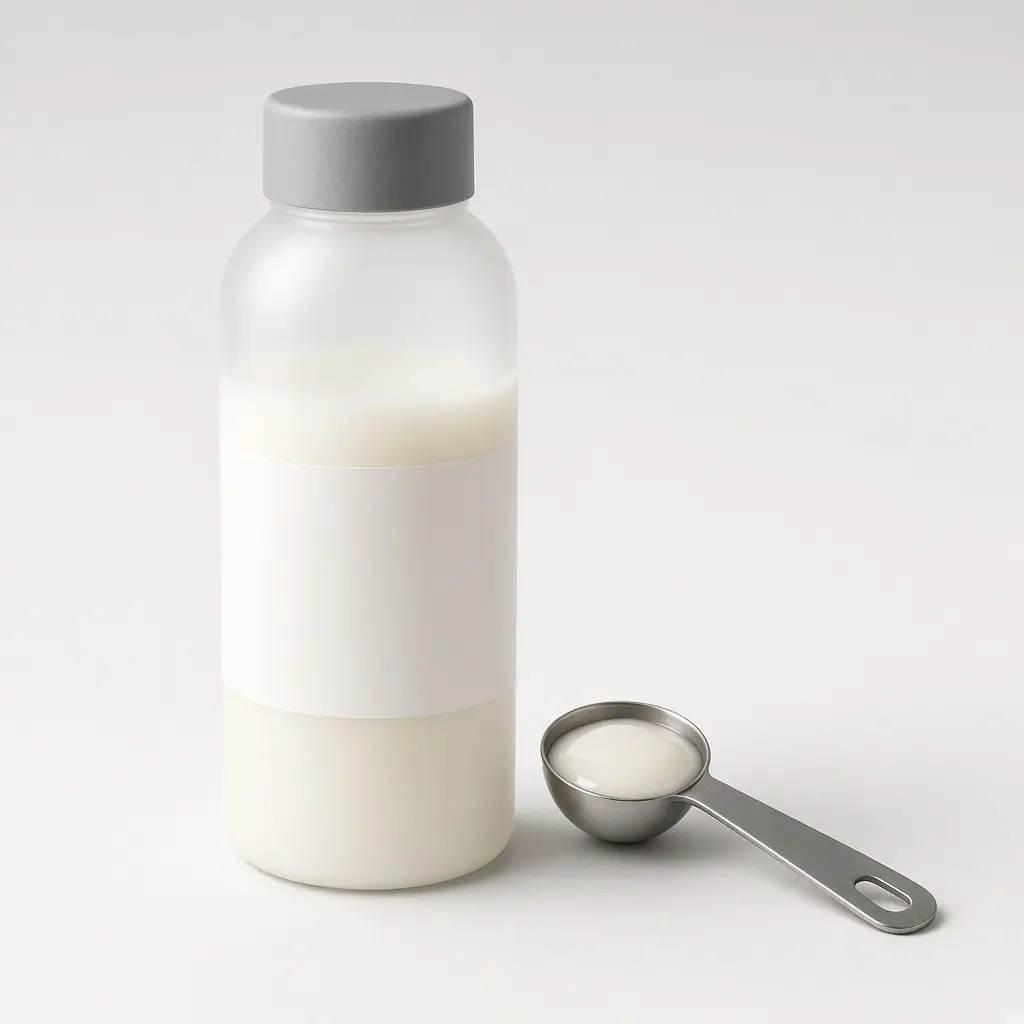 Bottled liquid
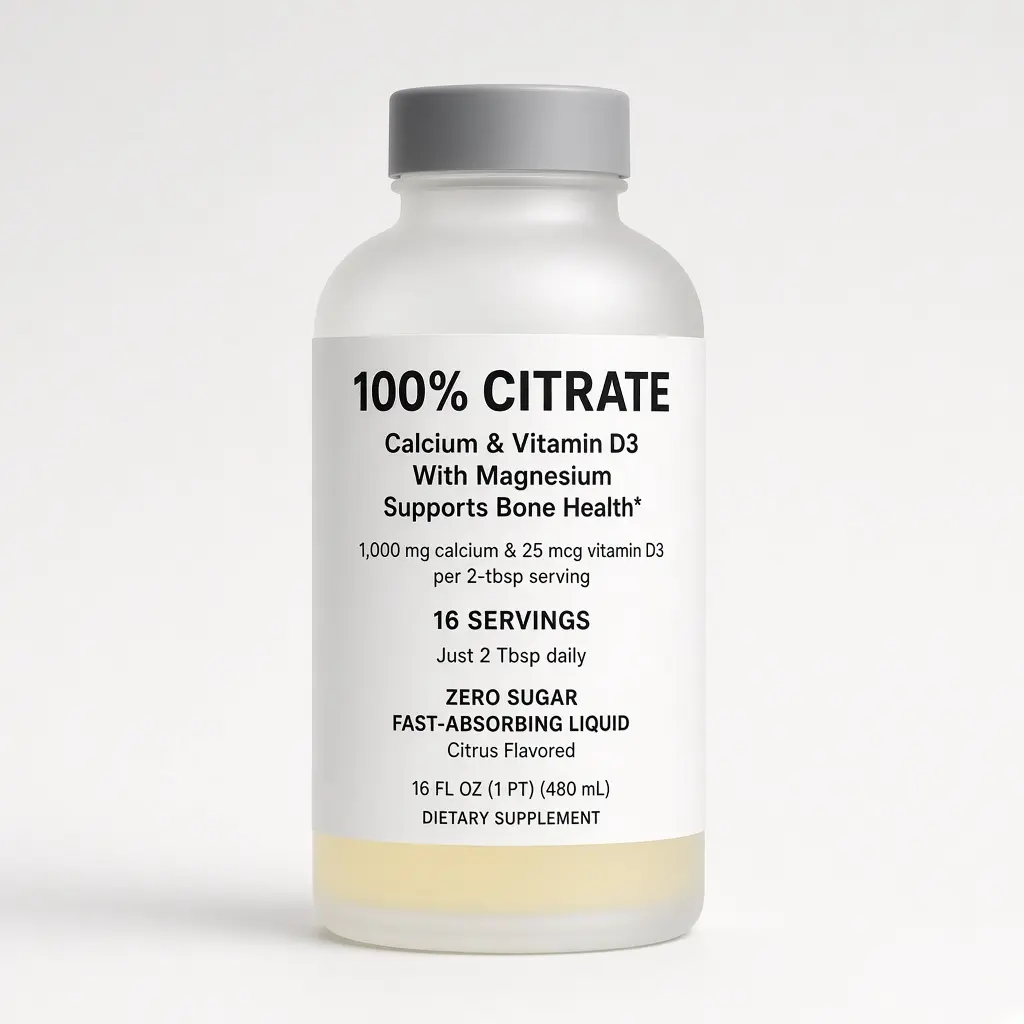
Best fit: A measured spoon. Separate citrate labels show about 600 mg elemental calcium per 15 ml, or about 750 mg per 15 ml. Those are different products. Main constraint: The suspension has to redisperse after shaking. A children’s dropper is a different volume. Lecithin on an ingredient list does not document a liposome. Required specification: Elemental calcium per labeled spoon, flavor, and sweetener. Liquids covers the suspension.
 Chewable
Best fit: The carbonate formula in a piece that is chewed. Main constraint: Flavor, hardness, and dust. An antacid chewable is a drug and is not made on this specification. Required specification: Flavor, piece weight, and elemental calcium per piece.
 Gummy
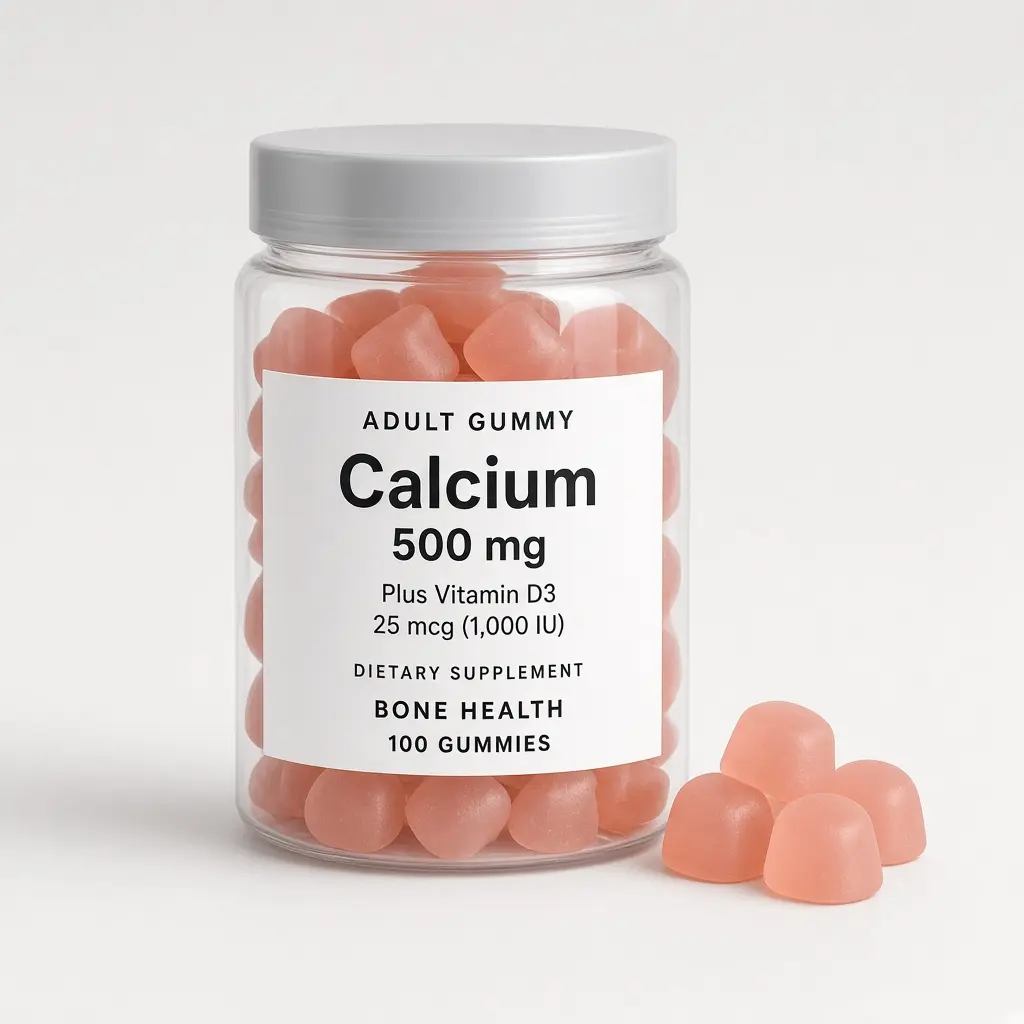
Best fit: A flavored piece after a cook trial has stated the elemental calcium that piece still holds. Main constraint: A 600 mg elemental carbonate tablet does not show that a gummy piece can carry the same serving. Required specification: Elemental calcium per piece after the cook, piece weight, and flavor. Gummies covers deposit and cure.
 Capsule
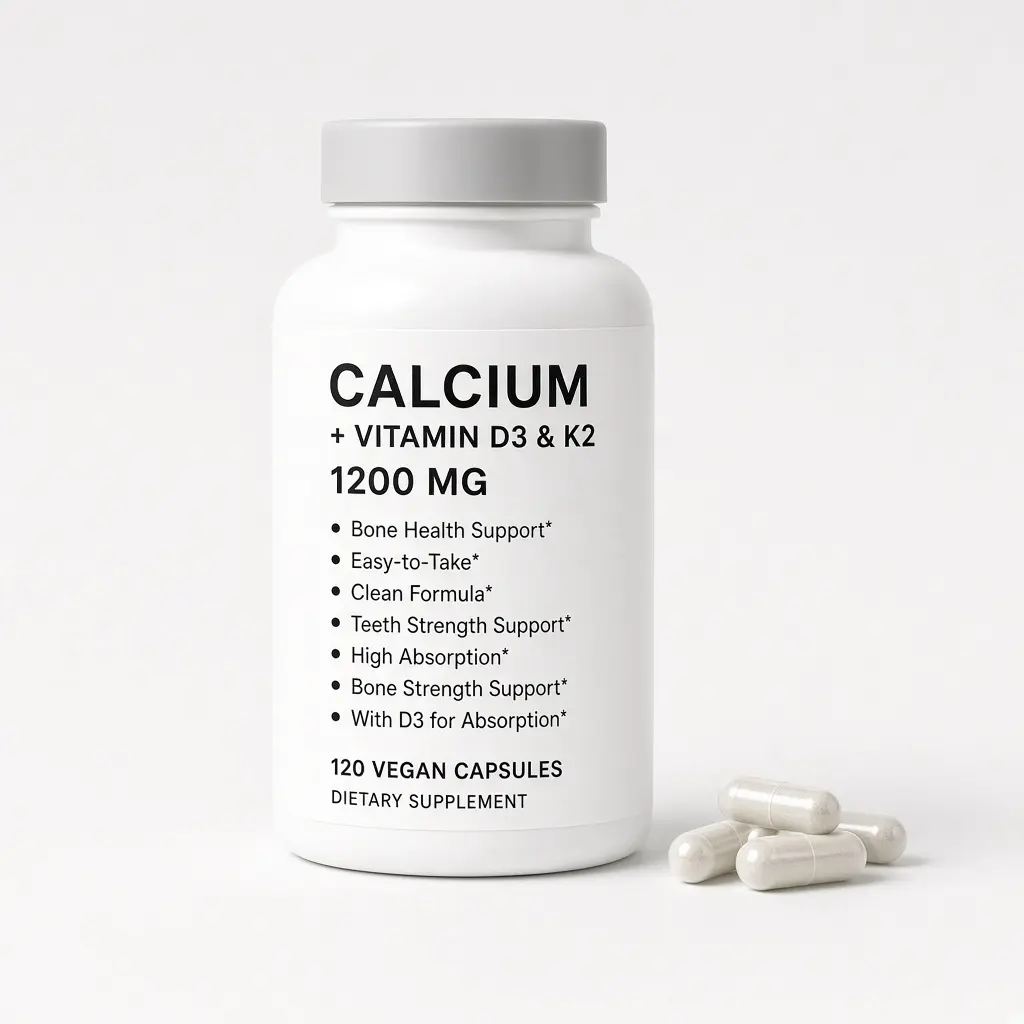
Best fit: A powder that will not press, or a bulky named mineral. One algae-calcium label uses six capsules for 800 mg elemental calcium. Main constraint: Fill weight against shell size. A liposomal powder still needs phospholipid in that fill, plus the structural evidence a liposomal claim requires. Required specification: Capsule size, capsules per serving, and a finished-capsule calcium assay.
Vitamin D3 is specified in micrograms. IU in parentheses is only for matching older artwork. A change in vitamin D3 potency changes the premix, the overage, and the finished vitamin D test.
Structure/function wording is reviewed for the destination market. In the United States, FDA has authorized a health claim relating calcium, or calcium and vitamin D, to a reduced risk of osteoporosis, with conditions of use in the agency’s guide [2]. A finished calcium result does not authorize the claim. ODS notes that trials of calcium, with or without vitamin D, do not all show fewer fractures [1]. Pregnancy intake stays in the brand’s prenatal file. This specification does not set a pregnancy or a children’s intake.
The salt weights above decide the tablet. About 1,500 mg of calcium carbonate, before excipients and coating, is the compound behind a 600 mg elemental target. Labels in this review print that target as one tablet. The finished tablet is heavier than the salt, and this file does not include a weighed tablet from those bottles. Citrate at the same elemental target is about 2,860 mg of salt. Labels in this review split it across two caplets.
ODS notes that the fraction absorbed is higher when the elemental calcium taken at one time is 500 mg or less [1]. Labels that go above that in a day repeat the serving. Two 600 mg servings and one 1,200 mg tablet are quoted separately. Directions on the carbonate labels say with food. ODS reports constipation, gas, and bloating more often with carbonate than with citrate, particularly for older adults, and describes a different salt, smaller amounts taken more often, or the dose with a meal as the responses [1].
A comparable price uses the same salt, the same elemental calcium, the same units per serving, the same companions, the same count per bottle, the same test scope, and the same order quantity.
Line | Carbonate | Citrate |
|---|---|---|
| Elemental calcium | 600 mg | 600 mg |
| Compound weight before excipients | about 1,500 mg | about 2,860 mg |
| Units in the serving, on labels in this review | 1 tablet | 2 caplets |
| Vitamin D3 | its own microgram line | its own microgram line |
The citrate file buys more kilograms of salt and usually more pieces. A liquid-calcium softgel adds an oil or paste and a shell at a lower elemental load per piece. No savings percentage is published from these comparisons.
There is no single calcium minimum. The quotation sets it from the dosage form, the changeover, pack materials and print run, tests, batch size, and material-purchasing terms. A pilot quantity is scoped to the trial. The ranges below come from the dosage-form pages. They are not a guaranteed lead time for a calcium formula. Material procurement and custom packaging sit outside the sample window.
Format | Typical starting quantity | Sample or production timing | Confirmed on the quotation |
|---|---|---|---|
| Tablet | 5,000–10,000 bottles, or equivalent commercial units, on the tablet page | Samples 7–15 days after the brief can be compressed. A first standard commercial lot is typically 4–6 weeks after formula, artwork, and pilot confirmation | Tablet weight, tooling, coating, pack, order quantity. Tablets |
| Bottled liquid | No universal bottle minimum on the liquids page | Sample typically 7–14 business days after the brief can be made. Production timing is confirmed at quotation | Fill volume, bottle and closure, stock or custom pack |
| Gummy | No universal bottle minimum on the gummies page | Sample development stated as within 7–10 days. Depositing capacity stated as more than 2.5 million gummies a day | Piece weight, gelling system, pack, batch size |
| Softgel, capsule, chewable | No separate public starting quantity | Set at quotation | Fill or piece weight, shell or die, pack, order quantity |
Before the quotation, the brief needs the salt, the elemental target, the units per serving, and the dosage form. Taste, suspension, and the finished tablet weight are confirmed in the trial. MOQ, pack, test scope, and timing are confirmed after that trial, not from the ranges above alone.
- The brief arrives as a concept, a reference label, or a BOM.
- Salt, elemental calcium per serving, and dosage form are confirmed.
- A trial checks load, process, taste or mouthfeel where the format has them, and pack.
- The sample standard and the commercial specification are the same file.
- Sample approval, production, and batch release follow that file.
A later change of salt, elemental target, dosage form, or pack is a new specification. A reorder repeats the locked specification. The calcium grade on the quotation includes assay, particle size, contaminant limits, and whether a later lot of the same grade can replace the first.
Manufacturing capacity states five bases, more than 81,000 m², and 12 production lines. Tablet compression is published above 12 million tablets a day. A calcium order uses the supplement lines and the slot that matches the format. The useful evidence for this project is the elemental-calcium calculation, the format trial, and batch release against the finished specification, not the floor area by itself. Credentials that can apply to a SKU are cGMP, ISO 9001, ISO 22000, HACCP, FSSC 22000, Halal, and Kosher, plus manufacturing practices aligned with 21 CFR Part 111. Facility cGMP is not an FDA product approval. The SKU document list is on certifications and compliance.
The incoming certificate covers the calcium salt, the assay, the particle-size grade, and the contaminant limits agreed for that material. It does not prove elemental calcium in the finished unit. The finished-product specification states what the batch must meet. The batch certificate reports that batch.
For a dietary supplement distributed in the United States, 21 CFR Part 111 requires specifications and verification that the batch meets them, including product manufactured abroad for that market [3]. It does not set one test list for every calcium product. The finished check names elemental calcium by the agreed method, vitamin D potency when vitamin D is on the label, and the microbiology, contaminant, and uniformity items that the format and the destination require. How to read those lines is covered in How to Read a COA.
Use the matching entry at the top of this page.
A concept brief names the destination market, the dosage form in mind, and the quantity under consideration. You receive a first read on what still has to be specified.
A formula-ready brief names the salt and grade, elemental calcium per serving, units per serving, vitamin D3, magnesium, zinc, or vitamin K if they are included, and the pack. You receive a feasibility read for that formula and that unit.
A comparison brief sends two labels or two quotations, the destination market, the order quantity, and the required tests. You receive the alignment of those specifications. Prices are compared after the salt, the elemental calcium, the unit count, and the pack match.
A note is typically answered within one business day. An NDA is available for a custom formula. The quotation itself follows once the specification and the pack are locked.
Related
References
- NIH Office of Dietary Supplements. Calcium — Health Professional Fact Sheet. https://ods.od.nih.gov/factsheets/Calcium-HealthProfessional/
- U.S. Food and Drug Administration. Small Entity Compliance Guide: Health Claims on Calcium and Osteoporosis; and Calcium, Vitamin D, and Osteoporosis. https://www.fda.gov/regulatory-information/search-fda-guidance-documents/small-entity-compliance-guide-health-claims-calcium-and-osteoporosis-and-calcium-vitamin-d-and
- U.S. Code of Federal Regulations, Title 21, Part 111. Current Good Manufacturing Practice in Manufacturing, Packaging, Labeling, or Holding Operations for Dietary Supplements. https://www.ecfr.gov/current/title-21/chapter-I/subchapter-B/part-111
Disclaimer: Wholesale and product-development reference only. Dietary supplements are not intended to diagnose, treat, cure, or prevent any disease. KS Nutripharma manufactures oral calcium dietary supplements. Antacid drugs, veterinary products, and disease-treatment products are not manufactured from this specification. Milligram patterns are observed retail-label patterns from product-development review, or theoretical yields from the 40 percent and 21 percent figures. They are not lot assays and not recommended intakes. The NIH ODS Tolerable Upper Intake Level for calcium is a U.S. reference for total intake from food and supplements, for the age group stated in that fact sheet. It is not a prescribed dose and not a worldwide ceiling. Brand owners remain responsible for finished-label compliance in the destination market. Branded algae minerals and other branded calcium sources are customer-licensed grades, not default materials, and retail bottles are not licensed for copying.
Written by KS Nutripharma Formulation Team | Technical review by KS Nutripharma Director of R&D, PhD in Food Science, with 19+ years of nutraceutical development experience | Updated October 14, 2026