
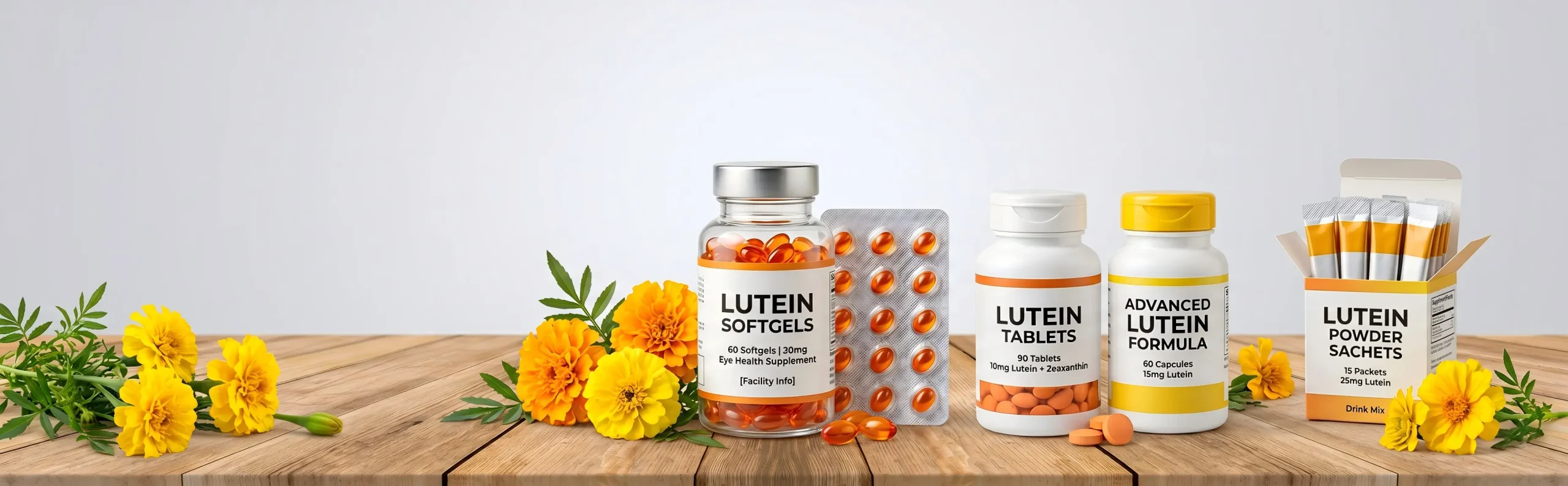
Lutein Supplements OEM/ODM Solutions for Global Supplement Brands
KS Nutripharma® | Science-Driven Nutraceutical Contract Manufacturer
Partner with a cGMP nutraceutical manufacturer for lutein supplements—private label, OEM, and ODM—across softgels, capsules, tablets, gummies, powders, and stick packs. We help brands lock lutein/zeaxanthin specs, choose free lutein vs ester pathways, document quality, and scale from pilot to reorder—so eye-health projects reach commercial launch with fewer sourcing and stability surprises.
Manufacturing Highlights
- Marigold-Sourced Lutein Ingredient Pathways
- Custom Formulation & Private Label Solutions
- Softgels, Capsules, Tablets, Gummies & Stick Packs
- cGMP-Compliant Manufacturing Facility
- Global Export Experience (60+ countries)
Trust Bar
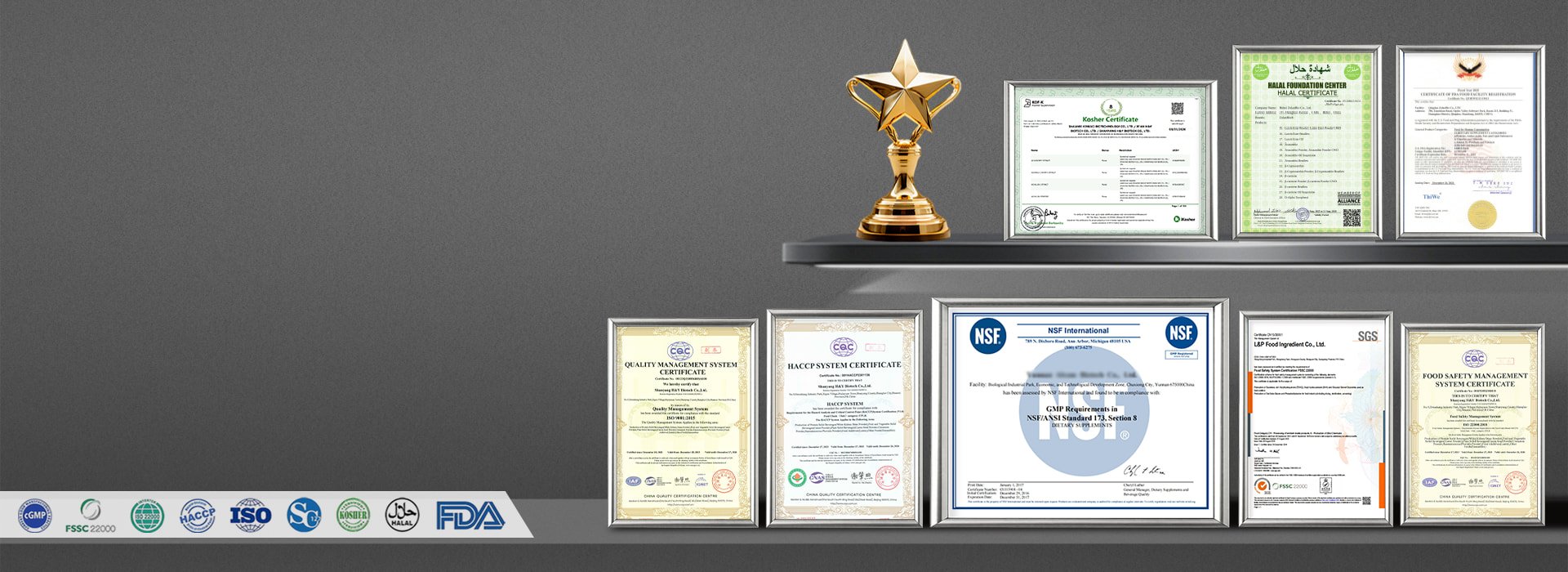
cGMP · ISO 9001 · ISO 22000 · HACCP · FSSC 22000 · Third-party Tested (project-scoped) · Flexible MOQ · Documented Lead Times · Halal · Kosher · Non-GMO pathways
→ About Us · Manufacturing Capacity · Certifications · Quality Control
Why Is Lutein Popular for Supplement Brands?
Lutein remains one of the most commercially attractive ingredients in the eye health category because it aligns with several long-term consumer trends simultaneously.
Consumers spend increasing amounts of time using smartphones, computers, tablets, and digital devices, creating demand for products positioned around visual wellness and screen-intensive lifestyles.
Eye health remains one of the most established segments within healthy aging nutrition, particularly among consumers aged 45 and above.
Unlike highly specialized ingredients, lutein can be formulated for:
- Adults
- Seniors
- Office professionals
- Students
- Gamers
- Children
This broad market appeal enables brands to build multiple product lines around a single ingredient platform.
Lutein can be successfully incorporated into gummies, softgels, capsules, powders, stick packs, and beverage systems, making it suitable for both traditional and innovative product formats.
Best-Selling Lutein Formulation Combinations
Market-proven concepts with clear dosages—customize ratio, actives, and format for your brand.
Positioning: Everyday eye wellness / mass retail
Core formula: Lutein 10 mg + Zeaxanthin 2 mg + Vitamin A + Vitamins C & E
Recommended forms: Softgels · Capsules · Tablets
Best for: Brands building a core SKU with the widely recognized 10:2 lutein–zeaxanthin ratio.
Positioning: Office workers · students · heavy screen users
Core formula: Lutein esters + Zeaxanthin + Astaxanthin + Bilberry extract
Recommended forms: Softgels · Gummies · Stick packs
Best for: Lifestyle brands targeting visual comfort under prolonged screen exposure.
Positioning: Healthy aging / clinically familiar positioning
Core formula: Vitamin C + Vitamin E + Zinc + Copper + Lutein & Zeaxanthin (AREDS2-style)
Recommended forms: Tablets · Capsules
Best for: Premium aging-vision lines that need a research-aligned ingredient framework.
Claims and labeling adapted per target market regulations.
Positioning: Children’s vision + cognitive nutrition
Core formula: DHA + Lutein + Vitamin A
Recommended forms: Softgels · Gummies · Liquids
Best for: Pediatric or family brands needing taste-friendly, compliance-ready formats.
Positioning: Dry-eye comfort + ocular circulation support
Core formula: Omega-3 (DHA/EPA) + Bilberry + Ginkgo biloba + Hyaluronic acid
Recommended forms: Softgels · Liquids · Capsules
Best for: Multi-benefit eye comfort SKUs beyond carotenoids alone.
Positioning: Visual performance + cognitive wellness
Core formula: Liposomal or oil-based lutein + DHA + Citicoline + Phosphatidylserine
Recommended forms: Softgels · Dual-phase systems · Premium capsules
Best for: Differentiated premium lines for professionals and active aging.
Positioning: Clean-label eye support / pharmacy & e-commerce
Core formula: Free lutein 10–20 mg + Zeaxanthin 2–4 mg (oil suspension)
Recommended forms: Softgels
Best for: Simple, high-velocity softgel lines with strong bioavailability positioning.
Positioning: Entry-level / high-volume retail
Core formula: Lutein ester (equivalent to 6–10 mg free lutein) + Zeaxanthin + Vitamin A
Recommended forms: Softgels · Capsules · Tablets
Best for: Cost-sensitive markets that still need a credible carotenoid story.
Advanced Delivery Technologies & Stability Solutions
As eye health supplements continue to evolve, ingredient stability, bioavailability, formulation compatibility, and product differentiation have become increasingly important considerations during product development.
Modern lutein supplements are no longer limited to conventional capsules and softgels. Advanced delivery technologies allow manufacturers to improve ingredient protection, combine incompatible actives, and create premium product positioning opportunities.
Liposomal technology utilizes phospholipid-based vesicles to encapsulate lutein, helping protect sensitive carotenoids while improving formulation versatility.
As consumer interest in advanced delivery technologies continues to grow, liposomal eye health products are emerging as a premium category within the global nutraceutical market.
Potential Benefits
- Enhanced ingredient protection
- Improved dispersion characteristics
- Advanced formulation positioning
- Premium product differentiation
- Suitable for next-generation wellness products
Typical Applications
- Liquid supplements
- Oral sprays
- Sachets
- Functional beverages
- Premium capsules
- Advanced eye health formulations
Target Market Positioning
- Premium eye health
- Healthy aging
- Longevity nutrition
- Eye-brain wellness
- Beauty-from-within products
Microencapsulation is one of the most widely adopted technologies for lutein, zeaxanthin, and other carotenoids.
By surrounding active ingredients with a protective coating matrix, microencapsulation helps improve processing stability and shelf-life performance.
Potential Benefits
- Improved oxidation resistance
- Enhanced stability against heat, light, and moisture
- Better ingredient dispersibility
- Reduced interaction with sensitive actives
- Improved processing compatibility
Typical Applications
- Hard capsules
- Tablets
- Gummies
- Stick packs
- Sachets
- Functional beverages
- Premix systems
Suitable Ingredient Systems
- Microencapsulated powders (CWS)
- Microencapsulated beadlets
- Water-dispersible carotenoid systems
Combination packaging formats are becoming increasingly common in premium eye health products.
This approach allows different ingredients to be delivered in their most suitable dosage forms.
Example Concepts
Softgel
- Lutein
- Zeaxanthin
- Astaxanthin
- Omega-3
Tablet
- Vitamin C
- Zinc
- Bilberry
- Botanical extracts
Potential Benefits
- Improved formulation flexibility
- Higher active loading capacity
- Premium product positioning
- Convenient daily dosing systems
This format combines lipid-soluble and water-soluble ingredients within the same product program.
Example Concepts
Softgel
- Lutein
- Zeaxanthin
- Astaxanthin
Capsule
- Saffron
- Citicoline
- Phosphatidylserine
- Bilberry Extract
Potential Benefits
- Greater formulation freedom
- Improved ingredient compatibility
- Premium eye-brain or eye-longevity concepts
- Multi-functional wellness positioning
Market Challenges & Product Development Solutions
Developing successful lutein supplements requires more than selecting a lutein ingredient. Brands must address formulation stability, consumer expectations, dosage form preferences, ingredient compatibility, and regulatory considerations throughout product development.
Lutein is naturally sensitive to oxygen, heat, light, and moisture. Potency loss may occur during manufacturing, transportation, storage, and consumer use if formulation and packaging systems are not properly designed.
Potential Solutions
- Microencapsulation technologies
- Oil suspension systems
- Nitrogen-flushed production
- Oxygen-barrier packaging
- Aluminum blister packaging
- Desiccant integration
- Stability-focused formulation strategies
In many cases, optimized packaging systems can provide a cost-effective approach to improving product stability alongside advanced ingredient technologies.
Many consumers expect rapid or noticeable changes after beginning supplementation. Eye health products often require long-term and consistent use, which may create unrealistic expectations.
Potential Solutions
Develop positioning that extends beyond traditional vision support concepts.
Examples include:
- Digital lifestyle nutrition
- Daily eye wellness
- Screen exposure support
- Healthy aging nutrition
These approaches help align product positioning with realistic consumer expectations and daily wellness habits.
The majority of products in the market continue to rely on standard lutein and zeaxanthin combinations, making differentiation increasingly difficult.
Potential Solutions
Develop next-generation positioning concepts such as:
- Eye + Brain
- Eye + Beauty
- Eye + Sleep
- Eye + Longevity
- Eye + Gaming
- Eye + Productivity
These platforms create stronger brand storytelling and greater market differentiation.
Lutein is a fat-soluble carotenoid, and ingredient performance may vary depending on formulation design and delivery format.
Potential Solutions
- Oil-based softgels
- Lipid delivery systems
- Emulsified technologies
- Dual-phase delivery systems
- Advanced softgel technologies
Premium products may also explore dual-chamber capsules and capsule-in-capsule systems to support more sophisticated formulation strategies.
While capsules remain important, younger consumers increasingly prefer convenient and lifestyle-oriented dosage forms.
Potential Solutions
- Expand product portfolios into:
- Eye health gummies
- Functional beverage systems
- On-the-go sachets
- Stick packs
- Ready-to-mix powders
These formats can improve consumer engagement and repeat purchase potential.
Combining lutein with multiple active ingredients may create formulation challenges related to stability, processing compatibility, or shelf-life performance.
Examples may include:
- Polyphenols
- Probiotics
- Omega-3 oils
- Mineral systems
Potential Solutions
- Encapsulation technologies
- Capsule-in-capsule systems
- Multi-phase delivery platforms
- Controlled-release systems
- Ingredient segregation technologies
These approaches can help maintain ingredient integrity throughout the product lifecycle.
Consumer expectations often exceed what is permitted under dietary supplement regulations in many global markets.
Brands may wish to communicate concepts such as vision improvement or eyesight restoration, which may not be permitted in certain jurisdictions.
Potential Solutions
Develop compliant marketing frameworks focused on:
- Eye health
- Visual wellness
- Digital lifestyle support
- Healthy aging nutrition
- Antioxidant support
This approach supports regulatory compliance while maintaining strong consumer relevance across international markets.
The eye health category has become increasingly crowded, with many products utilizing similar lutein and zeaxanthin combinations.
As a result, brands often face:
- Limited differentiation
- Pricing pressure
- Reduced consumer engagement
- Difficult premium positioning
Potential Solutions
- Liposomal delivery systems
- Capsule-in-capsule technologies
- Dual-chamber capsules
- Multi-functional wellness concepts
- Premium ingredient combinations
These approaches may help brands create stronger product differentiation while supporting premium market positioning.
Lutein supplements are finished nutraceutical products formulated with lutein—a naturally occurring carotenoid most often sourced from marigold (Tagetes erecta)—to support eye health, visual wellness, and healthy-aging nutrition. In commercial manufacturing, lutein is rarely positioned as a single-ingredient novelty. It is developed as a product platform across softgels, capsules, tablets, gummies, stick packs, and powders, often combined with zeaxanthin and complementary actives such as astaxanthin, bilberry, DHA, or vitamins C and E.
For brands and procurement teams, “lutein supplements” means more than adding carotenoid milligrams to a label. Successful OEM/ODM development requires the right ingredient pathway (free lutein vs lutein ester), a commercially recognized dose and L:Z ratio, a dosage form matched to stability and bioavailability needs, and packaging designed to protect oxygen- and light-sensitive actives through shelf life. That is why lutein projects are typically evaluated as a full manufacturing system—from specification and formulation to process control, documentation, and commercial scale-up.
Formulation & Dosage Related Pages
- Lutein and Zeaxanthin Supplements Formulation Guide — How to choose ratios, ingredient forms, and a market-ready development path.
- Lutein 10mg vs 20mg vs 40mg — Compare common commercial doses and what they mean for positioning and cost.
- Lutein, Zeaxanthin, and Astaxanthin Formulation Guide — Build stronger eye-health stacks beyond a basic L/Z formula.
- Marigold Lutein Ester Powder Guide — Understand ester specs, applications, and when ester systems make sense.
- Lutein Gummies: Ingredients, Dosage, and Manufacturing — Practical guidance for gummy formats, stability, and production constraints.
The real risk behind “it looks fine”
A softgel can look perfect and still fail because potency drifted, microbes exceeded limits, or batch records can’t answer a retailer’s question. For brand owners, that means delayed launch, rejected shipments, or painful recalls.
What we lock down before your product ships
1. Will the raw material even enter production?
Every lutein / zeaxanthin lot is gated before use: identity, HPLC assay, residual solvents, heavy metals, pesticides, and microbiology. Fail the gate—it doesn’t get blended into your batch.
2. What is checked during manufacturing?
We monitor the points that usually create silent failures:
- Blend uniformity
- Fill weight / softgel seal integrity
- Moisture where relevant
- Appearance and color drift in carotenoid systems
3. What must pass before release?
Finished goods are released against an agreed specification, typically including:
- Lutein / zeaxanthin assay vs. label claim
- Microbial limits
- Heavy metals
- Appearance and dosage-form checks (seal, disintegration, etc.)
- Residual solvents when applicable
4. Is shelf life based on data—or optimism?
For new formulas and sensitive formats (especially gummies and powders), we support accelerated and real-time stability planning so dating is evidence-based.
5. Can you trace a problem in minutes, not weeks?
Batch records connect raw-material lot → production batch → packaging lot → shipment. When a buyer asks “which lot?”, you get a chain of custody—not a guessing game.
6. Need third-party proof for Amazon, distributors, or market entry?
Independent testing and COA packages can be arranged on request.
What you receive with each commercial batch
- COA matched to your product spec
- Clear batch / lot identification
- Retained samples held for investigation support
Most OEM partners disappear after the container leaves
That’s exactly when problems show up: retailer complaints, potency questions, sensory issues, or a second order that doesn’t match the first. After-sales is not a courtesy—it’s how you protect margin and reputation.
How we stay accountable after shipment
1. Who do you call?
A named project owner stays with your account for reorders, documents, and post-shipment issues. No anonymous ticket queue.
2. How fast do we respond?
- Acknowledgement: within 1 business day
- Preliminary batch trace: within 3 business days
(Complex lab confirmation may take longer—we’ll tell you the timeline up front.)
3. What’s the investigation process?
- Confirm batch / lot and pull retained samples
- Compare retained sample vs. complaint sample when available
- Isolate root cause: material, process, packaging, storage, or transport
- Issue written findings + corrective / preventive action (CAPA)
4. Do you only get an apology—or a fix?
If the issue is formulation- or packaging-related, we propose a concrete correction path:
- Assay / overage adjustment
- Antioxidant system optimization
- Packaging upgrade
- Process parameter change
Then we validate on pilot or next-run production before scaling the reorder.
5. Will reorder #2 match reorder #1?
Approved formula version, material specs, and packaging configuration are locked so repeat POs stay consistent.
6. Expanding from US to EU (or adding a new pack size)?
We support documentation packs, artwork coordination, and controlled formula variants—without forcing you to restart from zero.
What we won’t do
We won’t default to “client storage problem” without evidence. If storage or transport is the cause, you’ll get the data plus a pack/handling recommendation to prevent repeat failure.
Your risk
Lutein fades with oxygen, light, heat, and moisture. A strong formula can still fail on shelf if packaging is weak—leading to low assay, color change, customer returns, and claim risk.
Packaging is part of the formula
We treat barrier packaging as a stability tool, not a cosmetic choice. For carotenoid products, we recommend the lowest-complexity option that still protects potency for your channel and climate.
Decision guide (practical, not theoretical)
What we do before you lock packaging
- Match ingredient system + dosage form + target shelf life + destination climate
- Flag weak pack choices early (especially for gummies and powders)
- Align label shelf life with a realistic stability plan
- Optional: packaging compatibility / accelerated stability support for new SKUs
Clear recommendation principle
Don’t over-engineer the formula if packaging can solve it cheaper.
Many lutein failures are oxygen/light problems. We will tell you when a blister, nitrogen flush, or foil stick pack is the smarter fix versus adding more process complexity.
Because oxygen, light, heat, and moisture don’t care about your marketing story
Carotenoids are unstable. Many “mystery” assay failures are packaging failures—weak bottles, repeated air exposure, humid export routes, or light-permeable packs.
Packaging is part of the formula
We treat barrier packaging as a stability tool, not a cosmetic upgrade. The goal is simple: protect potency for your channel and climate with the least unnecessary cost.
Which packaging actually reduces your risk?
What we decide with you before packaging is locked
- Ingredient system + dosage form + target shelf life + destination climate
- Early warning on weak pack choices (especially gummies and powders)
- Shelf-life claims aligned to a realistic stability plan
- Optional packaging compatibility / accelerated stability support for new SKUs
The rule that saves budget
Don’t over-engineer the formula if packaging can solve it cheaper.
If blister, nitrogen flush, or foil sticks fix oxidation risk, we’ll recommend that before pushing more expensive delivery technology.
The wrong ingredient form creates process problems, stability risk, and hidden cost. Use the systems below to match specification → dosage form → application.
Standard Powder Systems
Best for: tablets, hard capsules, gummies, premixes, encapsulated blends
Advantages
- Broad specification range
- Cost-effective
- Suitable for multiple dosage forms
- Flexible formulation development
Oil Suspension Systems
Best for: premium softgels and lipid-based formulas
Advantages
- Suitable for fat-soluble carotenoids
- Excellent softgel manufacturing compatibility
- Supports premium product positioning
Microencapsulated Powder Systems (CWS)
Best for: beverages, gummies, stick packs, sachets, premixes
Advantages
- Improved water dispersibility
- Enhanced processing stability
- Suitable for beverage systems
- Compatible with gummy production
Typical applications
- Functional drink powders
- Sachets
- Stick packs
- Gummies
- Premix systems
Microencapsulated Beadlet Systems
Best for: tablets, capsules, and multi-active formulas that need process protection
Advantages
- Improved oxidation protection
- Better ingredient stability during processing
- Reduced interaction with sensitive ingredients
- Enhanced shelf-life performance
- Suitable for direct-compression tableting
Typical applications
- Tablets
- Hard capsules
- Gummies
- Functional beverage systems
- Premixes
- Stick packs
Not Sure Which System Fits Your SKU?
Important: Because lutein is sensitive to oxygen, light, heat, and moisture, ingredient selection should be evaluated together with packaging and process design.
Why two “similar” lutein softgels can differ by 30%+
A quote is not one line item. It’s a stack of choices: active grade, dose, format, technology, packaging, MOQ, and documentation scope. If you understand the cost structure, you can protect both quality and margin.
The cost stack—read this before you ask for “best price”
How smart buyers control cost without weakening the product
- Start with the channel. Mass retail and premium DTC should not share the same default tech/pack.
- Lock the claim first. Dose and L:Z ratio set your active cost floor.
- Don’t buy unnecessary technology. If packaging solves oxidation, skip the expensive delivery upgrade.
- Separate launch cost from reorder cost. Pilot, artwork, and stability are front-loaded; repeats are leaner.
- Share your target EXW/FOB range early. We’ll recommend a fit-for-margin path—not the most complex option by default.
What we need for an accurate quote
Target market · dosage form · daily dose · first MOQ / annual volume range · packaging preference · certification needs · benchmark product (optional).
[Request a Costed Formula Option]
We’ll typically return 1 value option + 1 performance option, so you can compare cost vs. risk clearly.
Ready to Start—But Not Sure What to Send Us?
Why brands choose KS Nutripharma for lutein manufacturing
KS Nutripharma is a global nutraceutical manufacturer with integrated botanical ingredient and finished-supplement capabilities. Since 2007, we have supported 500+ brands across 60+ countries through formulation, manufacturing, and export-ready execution—backed by multiple production bases, 12 production lines, and 5,000+ tons of annual capacity.
For lutein projects, you work with one accountable manufacturing team from commercial briefing to repeat supply—not a trading desk routing your formula between factories.
What’s the fastest way to leave an inquiry?
Use any one path below:
- Website form: name · email · company · target market · dosage form · requirement
- Email: donna.ks@kingsci.com
- Phone / WhatsApp: +86-153-19401177
- Optional upload: brief, benchmark label, or target formula file
What should you include so we don’t bounce questions back?
- Target country/channel
- Dosage form (softgel, capsule, tablet, gummy, stick pack, etc.)
- Target lutein dose—or “recommend for my market”
- First order quantity range
- Packaging preference (if known)
What response will you get after inquiring?
You won’t get a generic catalog reply. You’ll get a manufacturable path: formula → format → pack → timeline.
Want a clear next step today?
[Request a Quote] [Send Your Brief] [Email the Team]
KS Nutripharma — OEM/ODM manufacturing for brands that need reliable lutein products, clear communication, and repeatable commercial supply.
Explore Related Resources
Building a lutein product is rarely just about one ingredient. Use these guides to finalize dose, format, and supporting actives before you request a quote.
Formulation & Dosage
- Lutein and Zeaxanthin Supplements Formulation Guide — How to choose ratios, ingredient forms, and a market-ready development path.
- Lutein 10mg vs 20mg vs 40mg — Compare common commercial doses and what they mean for positioning and cost.
- Lutein, Zeaxanthin, and Astaxanthin Formulation Guide — Build stronger eye-health stacks beyond a basic L/Z formula.
- Marigold Lutein Ester Powder Guide — Understand ester specs, applications, and when ester systems make sense.
- Lutein Gummies: Ingredients, Dosage, and Manufacturing — Practical guidance for gummy formats, stability, and production constraints.
Eye-Health Product Platforms
- Eye Health Supplements — Full OEM/ODM options across vision, screen lifestyle, and aging-care formulas.
- AREDS Eye Vitamins — Explore clinically familiar macular-support frameworks for aging markets.
- Blue Light Protection Supplements — Concepts for digital-lifestyle and screen-exposure positioning.
- Eye Strain Supplements — Formula directions for visual comfort under prolonged device use.
- Dry Eye Supplements — Hydration- and comfort-focused concepts that pair well with carotenoid lines.
- Eye Health Ingredients — Browse the broader ingredient toolkit used in vision-support manufacturing.
Supporting Actives for Lutein Formulas
- Astaxanthin Supplements — A common premium add-on for antioxidant and screen-lifestyle formulas.
- Bilberry Supplements — Popular botanical partner for European-style eye-wellness products.
- DHA Supplements — Key for kids, eye-brain, and softgel combination concepts.
- Eye Antioxidants — Broader antioxidant systems used alongside lutein in finished products.
Deeper Reading
- Lutein for Eye Health: Benefits and Formulation — A practical overview of benefits framing and formulation considerations for brand teams.