
1. What Are Lutein Supplements?
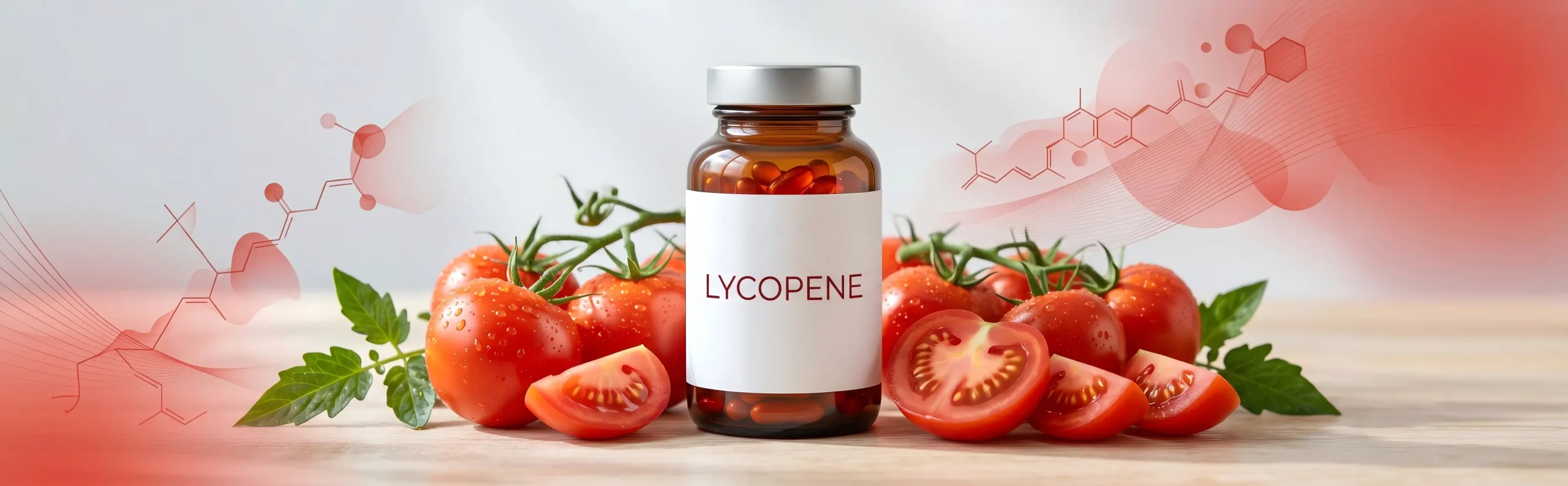
Lycopene supplements are dietary formulations containing lycopene, a carotenoid commonly derived from tomato extract, fermentation-based production, or synthetic synthesis. In the supplement industry, lycopene is not only used as a standalone antioxidant ingredient but also as a core formulation component in finished dosage forms such as capsules, softgels, tablets, gummies, and powder blends.
It is widely applied in antioxidant, men’s health, and healthy aging supplement categories, often combined with other functional ingredients such as CoQ10, astaxanthin, zinc, and herbal extracts to create multi-functional nutrition products.
KS Nutripharma provides lycopene ingredient supply and OEM/ODM manufacturing support across capsules, softgels, tablets, gummies, sachets, and powder formulations. Multiple potency options, microencapsulation technologies, and customized formulation services are available to support diverse market positioning and product development requirements.
2. Available Ingredient Systems & Delivery Technologies
Different formulation goals often require different lycopene delivery systems.
Available Assays
- Natural: 5%–10%
- Fermentation/Synthetic: 5%–96%
Applications:
- Tablets
- Hard capsules
- Gummies
- Premixes
Available Assays
- Natural: 6%
- Fermentation/Synthetic: 5%–20%
Applications:
- Softgels
- Oil-based formulations
- Functional foods
Cold-water dispersible microencapsulation technology designed for improved dispersion in beverage and gummy systems.
Applications:
- Functional beverages
- Gummies
- Sachets
- Powder sticks
Microencapsulated beadlet systems designed to improve ingredient stability and processing performance.
Applications:
- Tablets
- Capsules
- Premixes
- Gummies
3. How to Choose the Right Lycopene Source?
Different lycopene sources offer distinct advantages in terms of positioning, cost structure, formulation flexibility, and regulatory strategy. The optimal choice depends on the target market, product concept, dosage level, and commercial objectives.
Best For
- Clean-label supplements
- Plant-based products
- Premium wellness brands
- Beauty-from-within formulations
- Natural antioxidant positioning
Advantages
- Consumer-friendly “tomato-derived” positioning
- Strong natural ingredient appeal
- Suitable for premium product concepts
- Supports plant-based marketing claims
Considerations
- Higher raw material cost
- Lower active concentration compared with synthetic sources
- Greater sensitivity to agricultural supply fluctuations
Typical Applications
- Premium capsules
- Softgels
- Gummies
- Functional foods
Best For
- Sustainable nutrition concepts
- Vegan formulations
- Next-generation nutraceutical products
- Brands seeking consistent quality and supply
Advantages
- Controlled production environment
- High batch-to-batch consistency
- Reduced agricultural dependency
- Supports sustainability-focused positioning
Considerations
- Consumer awareness remains lower than tomato-derived lycopene in some markets
- Regulatory positioning may vary by region
Typical Applications
- Capsules
- Tablets
- Gummies
- Functional beverages
Best For
- High-potency products
- Cost-sensitive projects
- Large-volume supplement production
- Standardized formulations
Advantages
- High purity levels available
- Excellent batch consistency
- Competitive cost structure
- Reliable global supply
Considerations
- Not suitable for natural-positioned products
- Limited appeal for clean-label consumers
Typical Applications
- Multivitamins
- Men’s health supplements
- High-strength antioxidant formulas
- Large-scale OEM production
While source selection is important, product performance and consumer experience are frequently influenced by the delivery system used.
Brands increasingly choose:
- Oil suspensions for softgels
- Microencapsulated CWS powders for beverage applications
- Beadlet technologies for improved stability
- Lipid-based delivery systems for premium formulations
As a result, many successful products compete not only on lycopene source, but also on absorption, stability, formulation compatibility, and finished dosage form design.
4. Best-Selling Lycopene Formulation Combinations
Lycopene is rarely marketed as a standalone ingredient in successful commercial supplements. Instead, it is most commonly used as a core carotenoid building block in multi-ingredient formulations targeting men’s health, healthy aging, antioxidant support, and beauty-from-within categories.
Below are the most widely adopted and commercially proven formulation concepts based on global supplement market trends.
One of the strongest commercial applications of lycopene is in men’s wellness products, especially prostate support positioning.
Typical formulation stack:
- Lycopene
- Saw Palmetto Extract
- Zinc
- Selenium
- Pumpkin Seed Extract
Why it sells well:
- Strong category awareness in global markets
- Clear “men’s health” positioning
- High repeat purchase potential
- Works well in capsule and softgel formats
This is a premium positioning segment targeting long-term wellness and oxidative stress management.
Typical formulation stack:
- Lycopene
- Astaxanthin
- CoQ10 (Ubiquinone / Ubiquinol)
- Vitamin E
- Resveratrol
Why it sells well:
- Premium “longevity” positioning
- Strong crossover between antioxidant ingredients
- Suitable for high-margin softgel products
- Widely used in global anti-aging supplement brands
Lycopene is increasingly used in beauty nutrition products targeting skin appearance and oxidative skin stress.
Typical formulation stack:
- Lycopene
- Astaxanthin
- Collagen peptides
- Hyaluronic Acid
- Vitamin C
Why it sells well:
- Strong demand in beauty supplement category
- Social media-driven consumer awareness
- Works well in gummies and powders
- Supports “glow” and skin wellness positioning
This formulation targets general cardiovascular wellness and antioxidant protection positioning.
Typical formulation stack:
- Lycopene
- CoQ10
- Omega-3 Fatty Acids
- Garlic Extract
- Vitamin K2
Why it sells well:
- Strong mainstream health category demand
- Suitable for softgels and capsules
- Often used in daily wellness supplements
- High trust perception in older demographics
A premium multi-carotenoid concept increasingly used in high-end antioxidant blends.
Typical formulation stack:
- Lycopene
- Astaxanthin
- Lutein
- Zeaxanthin
- Beta-Carotene
Why it sells well:
- Strong “comprehensive antioxidant” positioning
- Premium ingredient storytelling
- Suitable for high-end multi-function supplements
- Supports differentiation in competitive markets
A broader lifestyle positioning beyond prostate health, focusing on daily wellness.
Typical formulation stack:
- Lycopene
- Magnesium
- Zinc
- Vitamin B Complex
- Herbal adaptogens (e.g., ginseng or maca extract)
Why it sells well:
- Expands beyond “clinical” men’s health positioning
- Strong mass-market appeal
- Works in capsules, tablets, and powder sticks
- Suitable for entry-level supplement SKUs
5. Emerging Product Innovation Opportunities
The lycopene supplement category continues to evolve beyond traditional antioxidant products. As consumer preferences shift toward personalization, healthy aging, beauty nutrition, and lifestyle-focused wellness, new opportunities are emerging for brands seeking differentiation in increasingly competitive supplement markets.
One of the fastest-growing opportunities is the integration of lycopene into healthy aging product platforms.
Rather than focusing solely on antioxidant messaging, brands are increasingly positioning products around long-term wellness, active aging, and daily vitality.
Market Drivers
- Aging global populations
- Increased consumer interest in longevity-focused nutrition
- Growing demand for proactive wellness solutions
- Expansion of preventive health categories
Product Opportunities
- Daily healthy aging capsules
- Premium longevity softgels
- Mature adult wellness programs
- Active aging nutritional systems
Beauty nutrition continues to be one of the fastest-growing supplement sectors globally.
Lycopene’s natural association with tomato carotenoids and antioxidant nutrition creates opportunities for integration into beauty-focused product concepts.
Market Drivers
- Growing beauty supplement adoption
- Social media-driven wellness trends
- Demand for holistic skin wellness solutions
- Expansion of ingestible beauty categories
Product Opportunities
- Beauty gummies
- Daily beauty capsules
- Beauty powder sticks
- Women’s wellness supplement systems
Men’s health supplements are evolving beyond traditional single-focus products toward broader daily wellness positioning.
Modern consumers increasingly seek convenient products that support overall vitality, healthy aging, and lifestyle wellness.
Market Drivers
- Increasing awareness of men’s preventive health
- Demand for all-in-one wellness solutions
- Growth of subscription-based supplement programs
Product Opportunities
- Daily men’s wellness systems
- Active lifestyle nutrition products
- Men’s healthy aging supplements
- Comprehensive wellness packs
The supplement industry is moving toward more individualized nutrition strategies.
Brands are increasingly developing product portfolios designed around specific demographics, lifestyles, and wellness goals.
Market Drivers
- Consumer demand for personalization
- Expansion of digital health ecosystems
- Growing interest in targeted supplementation
Product Opportunities
- Age-specific supplement programs
- Gender-targeted wellness products
- Lifestyle-focused nutrition systems
- Subscription-based product ecosystems
Consumer preferences continue shifting toward convenient, easy-to-integrate supplement routines.
Products that fit seamlessly into daily lifestyles are increasingly favored over complex supplementation regimens.
Market Drivers
- Busy lifestyles
- Preference for simplified wellness routines
- Growth of on-the-go nutrition
Product Opportunities
- Single-serving stick packs
- Travel-friendly supplement formats
- Daily wellness kits
- Portable nutrition solutions
The boundary between supplements and functional foods continues to narrow.
Consumers increasingly seek wellness solutions integrated into everyday consumption habits.
Market Drivers
- Growth of functional nutrition categories
- Consumer preference for food-like delivery formats
- Expansion of wellness-focused food innovation
Product Opportunities
- Functional nutrition powders
- Wellness beverage systems
- Nutritional snack concepts
- Everyday antioxidant nutrition products
As antioxidant supplement markets mature, brands are increasingly competing through positioning, user experience, and category specialization rather than ingredient inclusion alone.
Market Drivers
- Increasing market competition
- Consumer willingness to pay for premium experiences
- Demand for differentiated wellness solutions
Product Opportunities
- Premium wellness collections
- High-value gift sets
- Lifestyle-oriented supplement lines
- Premium subscription programs
Future growth opportunities for lycopene supplements are increasingly driven by consumer lifestyle trends rather than ingredient trends alone.
The strongest opportunities are emerging within:
- Healthy aging and longevity nutrition
- Beauty-from-within products
- Men’s wellness platforms
- Personalized nutrition programs
- Convenient daily wellness formats
- Functional food and supplement convergence
For brands and OEM partners, success will increasingly depend on aligning lycopene-based products with evolving consumer behaviors, category expansion opportunities, and long-term wellness positioning strategies rather than relying solely on traditional antioxidant product concepts.
6. Common Dosage Ranges & Regulatory Considerations
Lycopene is widely used in dietary supplements, functional foods, and nutraceutical formulations. Commercial products typically provide lycopene at levels ranging from low-dose daily wellness products to higher-strength premium formulations. The appropriate dosage should be determined based on product positioning, target consumer groups, applicable regulations, and the lycopene source used.
| Lycopene Per Serving | Typical Market Positioning |
|---|---|
| 5 mg | Entry-level daily wellness products |
| 10 mg | Mainstream antioxidant supplements |
| 15 mg | Premium daily nutrition formulas |
| 20 mg | Advanced antioxidant formulations |
| 25–30 mg | High-strength supplement products |
| 40–50 mg | Specialty and premium-positioned formulations |
In global markets, 10–30 mg per serving is the most commonly observed dosage range across capsules, softgels, tablets, and gummy supplements.
When determining formulation strength, manufacturers should consider:
- Intended product positioning
- Recommended serving size
- Delivery format (capsule, softgel, tablet, gummy, powder)
- Lycopene source and concentration
- Target market regulatory requirements
- Stability and shelf-life objectives
Higher dosage products may require additional formulation considerations to maintain content uniformity, stability, and processing efficiency.
Lycopene is included in various food, dietary supplement, and nutraceutical applications globally. However, permitted uses, maximum usage levels, labeling requirements, and health claim restrictions may vary significantly between jurisdictions.
Manufacturers should evaluate:
- Ingredient regulatory status in the destination market
- Source-specific requirements (natural, fermentation-derived, or synthetic lycopene)
- Product category classification
- Labeling and declaration requirements
- Applicable health claim regulations
- Market-specific compliance documentation
Regulatory requirements may differ among the United States, European Union, United Kingdom, Middle East, Asia-Pacific, and other international markets.
The United States Pharmacopeia (USP) and European Pharmacopoeia (EP) provide quality standards and monograph requirements for pharmaceutical and ingredient quality control. However, they generally do not establish recommended daily intake levels for dietary supplement products.
For dietary supplements, formulation levels are typically determined based on:
- Scientific literature and safety assessments
- Market-established usage practices
- Regulatory evaluations conducted by relevant authorities
- Product positioning and serving recommendations
Manufacturers should ensure that finished products comply with all applicable local regulations and quality standards before commercialization.
7. Market Challenges & Technical Solutions in Lycopene Supplement Manufacturing
Although lycopene is a widely used carotenoid ingredient in global supplement formulations, its successful commercialization depends heavily on formulation design and manufacturing technology. Product performance, stability, and consumer experience are strongly influenced by delivery systems and processing conditions rather than the ingredient itself.
In the global supplement market, several demand-side factors influence how lycopene products are developed and positioned. These are not formulation failures, but rather common market expectations that manufacturers must address during product design.
- Absorption expectation gap: Consumers often expect visible or rapid effects, while lycopene is a long-term nutritional antioxidant ingredient.
- Source positioning confusion: Natural, fermentation-derived, and synthetic lycopene create different labeling and marketing interpretations across regions.
- Dosage inconsistency: Products on the market vary significantly in strength, making consumer comparison and positioning more complex.
- Product form dissatisfaction: Different delivery formats (capsules, softgels, tablets, gummies) directly impact user experience and brand perception.
From a manufacturing perspective, lycopene presents several technical challenges that must be carefully controlled during production and product development.
- Oxidation & stability sensitivity: Lycopene is highly sensitive to oxygen, light, and heat, which may lead to potency loss and color degradation.
- Oil-solubility limitation: As a fat-soluble carotenoid, lycopene has limited dispersibility in aqueous systems without specialized delivery technologies.
- Uniformity issues: Low inclusion levels in complex formulas may lead to blending and content uniformity challenges.
- Heat sensitivity in gummies: High-temperature processing in gummy production can affect stability and active content retention.
- Multi-ingredient compatibility: Lycopene is often combined with other actives, requiring careful control of interaction, stability, and processing order.
To address the above challenges, modern lycopene supplement manufacturing relies on advanced formulation engineering and delivery system technologies.
- Microencapsulation technology: Improves oxidative stability, protects active content, and extends shelf life.
- Beadlet systems: Enhances powder flowability, blending uniformity, and compression performance in tablets and capsules.
- Oil suspension delivery systems: Optimized for softgel applications, improving compatibility with lipid-based absorption pathways.
- CWS (Cold Water Soluble) technology: Enables improved dispersibility for beverage powders, gummies, and instant nutrition formats.
- Capsule-in-capsule systems: Allows separation of incompatible ingredients and enables advanced multi-phase formulation design.
Why Supplement Brands Partner with KS Nutripharma
- Comprehensive OEM & ODM manufacturing solutions
- Multiple dosage form capabilities
- Advanced delivery technology platforms
- International quality and compliance systems
- Flexible production scaling
- Global ingredient sourcing network
- Dedicated technical and after-sales support
From formulation development and ingredient sourcing to manufacturing and commercial production, KS Nutripharma supports brands throughout the entire product development lifecycle.