
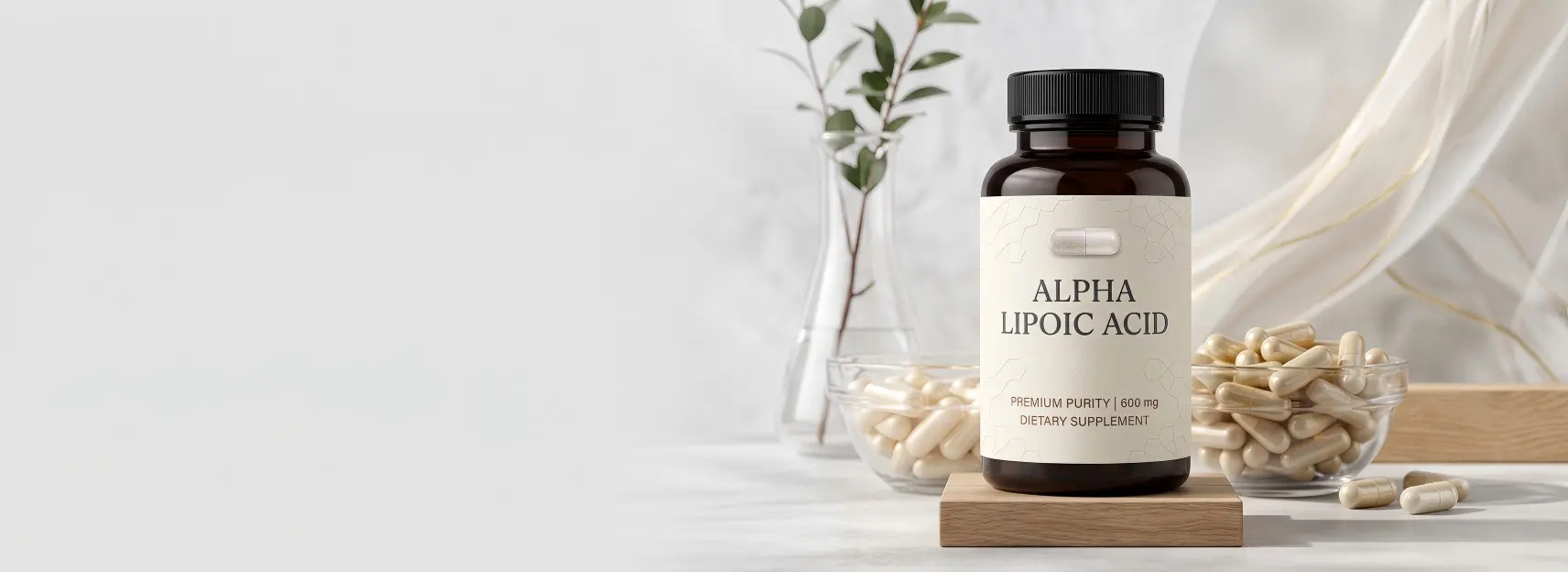
ALA Supplement Manufacturing for OEM & Private Label Brands
From Concept or Owned Formula to Commercial Production
KS Nutripharma® | Science-Driven Nutraceutical Contract Manufacturer
KS Nutripharma manufactures Alpha Lipoic Acid (ALA / thioctic acid) supplements for brand owners who need private label speed, custom formulation support, or contract manufacturing of an owned formula. We support standard ALA capsules, premium R-ALA programs, and mature combination systems used across antioxidant, metabolic wellness, and healthy aging assortments.
| 5-Second Supplier Answers | Detail |
|---|---|
| Who we are | KS Nutripharma® — nutraceutical contract manufacturer (founded 2007) |
| What we make | Finished ALA / R-ALA supplements under your brand |
| Engagement models | Private label · Custom formulation (ODM) · Contract manufacturing (OEM) |
| Facility | 81,000+ m² cGMP · 5 bases · 12 specialized lines |
| Scale | 19+ years · 500+ brand projects · 60+ export markets |
| Line capacity | Capsules 5M+/day · tablets 12M+/day · softgels 2M+/day · gummies 2.5M+/day · powders 5,000+ tons/year |
| Typical capsule MOQ | From ~3,000–5,000 units/bottles (pilot options confirmed with quote) |
| Typical lead time | Sample 7–15 days · production commonly 4–8 weeks after formula & artwork lock |
| Docs | Spec sheet · COA · identity · metals · micro · stability (project-scoped) · export packs |
Request Manufacturing Quote · Request Sample + COA · Get MOQ & Lead Time · Talk to Formulation Experts
Trust Bar
cGMP · ISO · HACCP · FSSC 22000 · Halal · Kosher · Flexible MOQ · Documented Lead Times · Export Documentation Support
→ About Us · Manufacturing Capacity · Certifications · Quality Control
Alpha Lipoic Acid Ingredients Supply Options Overview
For brand and procurement teams, the first specification decision is usually grade selection — not a consumer encyclopedia definition.
Type | Typical Brand Use |
|---|---|
| DL-Alpha Lipoic Acid (standard / racemic ALA) | Cost-efficient mass-market supplements |
| R-Alpha Lipoic Acid (R-ALA) | Premium antioxidant & healthy aging SKUs |
| Stabilized R-ALA | High-end formulas needing improved handling stability |
| Sodium R-Lipoate | Specialized delivery or solubility-focused projects |
Also known as: Alpha Lipoic Acid · Thioctic Acid · ALA
R-ALA is commonly selected for premium differentiation from generic racemic ALA capsules. Stabilized R-ALA and sodium R-lipoate pathways are evaluated when stability, fill behavior, or delivery format requirements exceed standard ALA programs.
→ Global Raw Material Supply Network · Ingredient Guide
What Procurement Teams Should Confirm Before RFQ
- Target retail price band and channel
- Single-ingredient hero vs multi-ingredient system
- Preferred dosage form and serving size design
- ALA grade preference and documentation expectations
- Destination markets and claim language constraints
Why Alpha Lipoic Acid Supplements Are Growing Globally
ALA remains commercially relevant because it sits across several mature retail categories — allowing brands to launch a hero SKU or build multi-ingredient systems without relying on a single claim lane.
Popular Alpha Lipoic Acid Formula Concepts
Many successful retail products use ALA as a single-ingredient hero or as part of proven multi-ingredient systems. The concepts below reflect mature, widely commercialized formula directions — not speculative stacks.
Custom dosages and label strategies can be adjusted by market. Each concept is intentionally distinct.
Ingredient Compatibility Snapshot
Companion Ingredient | Common Commercial Concept |
|---|---|
| Acetyl L-Carnitine | Energy / mitochondrial support |
| CoQ10 | Healthy aging / cellular energy |
| PQQ | Longevity / cellular aging |
| NAC | Glutathione pathway / antioxidant |
| Benfotiamine | Metabolic / nerve-support stacks |
| Vitamin C / Vitamin E / Selenium | Antioxidant network |
| Berberine / Chromium | Metabolic wellness |
| Biotin | Common co-add in R-ALA SKUs |
| Magnesium | Metabolic / active aging companions |
| Resveratrol | Longevity positioning |
Common ingredients:
- Alpha Lipoic Acid
- N-Acetyl Cysteine (NAC)
- Optional: Vitamin C or selenium
Market position: Cellular wellness formulas emphasizing glutathione-pathway support language.
Common ingredients:
- Alpha Lipoic Acid (commonly 300 mg per capsule)
- Benfotiamine (commonly 150 mg per capsule)
Market position: Mature retail duo for metabolic wellness and nerve-support-oriented brands.
Common ingredients:
- Alpha Lipoic Acid
- Benfotiamine
- Acetyl L-Carnitine
- N-Acetyl Cysteine (NAC)
Market position: Broader specialty nerve-support complexes — distinct from the simple ALA + benfotiamine duo.
Common ingredients:
- Alpha Lipoic Acid
- Berberine
- Chromium
- Optional: Cinnamon extract, magnesium, or taurine
Market position: Multi-pathway metabolic wellness assortments. Claim strategy must be reviewed by market.
Common ingredients:
- R-Alpha Lipoic Acid
- CoQ10
- PQQ
- Optional: Resveratrol
Market position: Premium longevity lines where R-ALA supports higher retail positioning.
Common ingredients:
- Alpha Lipoic Acid
- Vitamin C
- Collagen peptides or hyaluronic acid (format-dependent)
- Optional: Grape seed extract or other polyphenols
Market position: Beauty portfolios using ALA as an antioxidant companion rather than a standalone hero.
Typical Commercial Dosage & Specification Considerations
Positioning | Common ALA Level |
|---|---|
| Daily antioxidant / entry SKUs | 100–300 mg |
| Mainstream single-ingredient products | 300–600 mg |
| Premium / professional-style formulas | 600 mg+ (often split servings) |
| R-ALA programs | Frequently 100–300 mg serving strategies by grade and cost target |
Actual levels should be locked to ingredient grade, fill feasibility, sensory limits, and destination-market regulations. Racemic ALA and R-ALA should not be treated as interchangeable line items.
Available Supplement Formats
We support multiple dosage forms to meet different market positioning and consumer preferences.
Available options:
- Bulk powders
- Stick packs
- Daily wellness sachets
- Premix blends
- Halal-oriented premix pathways (project-scoped)
Advantages
- Room for multi-ingredient antioxidant or metabolic stacks that exceed capsule volume
- Strong fit for functional nutrition, travel packs, and convenience export channels
- Flexible serving math for tubs, sticks, and sachets
Trade-offs
- Mixability and flavor systems must be engineered early
- Daily single-ingredient compliance can be lower than capsules
- Stick / sachet barrier and pack design affect shelf appearance more than bottle SKUs
Capacity / MOQ / lead time: 5,000+ tons powder/year · powder from ~hundreds of kg · sticks often from ~10,000 units · typically 4–7 weeks
Available options:
- Softgel twins for oil-soluble companions (e.g., CoQ10, Vitamin E, omega oils)
- Dual-SKU programs: ALA capsule hero + softgel companion
- Softgel-in-capsule pathways when one-unit convenience is required
Advantages
- Best home for oil-soluble companions that do not belong in a dry ALA powder fill
- Supports premium dual-SKU architecture beside an ALA solid-dose hero
- Clean consumer experience for lipid actives such as CoQ10
Trade-offs
- Not the primary format for dry ALA / R-ALA powder matrices
- Higher MOQ and longer lead time than standard capsule launches
- Requires oil-system compatibility work separate from the ALA powder BOM
Capacity / MOQ / lead time: 2M+ softgels/day · project-based MOQ · typically 5–7 weeks
→ Softgel Solutions · Advanced Softgel Technologies · Advanced Nutraceutical Delivery Systems
HDPE / PET bottles with induction seals · blisters · foil bags · stick multipacks · retail cartons · export master cases · desiccant and tamper-evident finishes as scoped
For ALA-specific humidity, odor, and 600 mg manufacturability decisions, see Manufacturing Challenges & Solutions below.
ALA projects often fail in scale-up when treated like a simple commodity vitamin fill. Below is how we usually lock decisions before artwork and mass production.
Stability Management
What goes wrong: Assay drift, caking, or shelf-life shortfalls when humidity and grade are not locked early — especially with R-ALA vs racemic ALA.
What we typically do:
- Weighing/blending under controlled humidity (project target often RH ≤ 40–45%)
- Lock grade on BOM: DL-ALA · R-ALA · Stabilized R-ALA · Sodium R-Lipoate
- Default pack path for sensitive lots: HDPE bottle + desiccant; foil pouch when needed
- Project-scoped stability checks (assay / appearance / odor) before commercial release
Confirm with us: target shelf life, destination climate, and exact grade name on COA — not “ALA 600 mg” alone.
→ Moisture Control & Stability Engineering
Odor Management
What goes wrong: Sulfur-like odor triggers consumer complaints in powders, stick packs, and weakly protected solid doses; different lots of the “same” grade can smell different.
What we typically do:
- Incoming sensory screening before pilot
- Prefer hard capsules or film-coated tablets for first launches
- Use delayed-release shells or film coating when odor risk is high
- Require customer approval samples for smell before scale-up — not after labels are printed
Confirm with us: format priority (capsule / tablet / powder / stick) and whether a flavored system is in scope.
High-Dose Formulation
What goes wrong: Forcing “one capsule = 600 mg” creates fill-weight variation, oversize shells, or compression failures — then costly reformulation.
Default manufacturable paths:
| Label target | Usual path |
|---|---|
| 300 mg | Single capsule (#1 / #0) — preferred first SKU |
| 600 mg | Two capsules × 300 mg — often more stable than one oversized fill |
| 600 mg one-unit | Film-coated tablet when bottle economics favor tablets |
| Multi-ingredient high load | ALA solid dose + CoQ10 softgel twin SKU instead of one overloaded capsule |
Confirm with us: one-unit vs split-serving preference before capsule size is locked.
Grade Lock (Do Not Skip)
RFQ must state DL-ALA / R-ALA / Stabilized R-ALA / Sodium R-Lipoate, dose per serving, dosage form, and one- vs two-unit preference. Source or grade changes require re-qualification — silent “same-name ALA” swaps are not used to keep supply moving.
Will each batch meet the agreed ALA specification? and Will the next order stay the same as the approved first order?
1. ALA Raw Material Release (What We Check Before Production)
We do not treat “ALA” as one interchangeable item. Before weighing starts, the lot must match the locked grade on your project file.
Check | What it means for your order |
|---|---|
| Grade name on COA | DL-ALA, R-ALA, Stabilized R-ALA, or Sodium R-Lipoate — written clearly, not only “Alpha Lipoic Acid” |
| Assay / purity | Content must fall inside the agreed specification range |
| Odor screen | Pass / hold / reject — because sulfur-like smell varies by lot and affects consumer complaints |
| Safety tests | Heavy metals and microbiology (plus other tests if the grade requires them) |
| Powder behavior | Flow / particle behavior reviewed when the dose is high (e.g., 600 mg fills) |
If the COA grade does not match the BOM grade, the material is not released for production.
2. In-Process & Finished Product Release
During and after manufacturing, we focus on the points that commonly cause ALA order problems:
- Fill / tablet weight control for high-dose programs
- Assay confirmation on the finished lot
- Content uniformity where applicable
- Dissolution where the dosage form requires it
- Odor / appearance check before shipment release when the format is sensitive (especially powders and lightly protected packs)
Retain samples are kept by lot so that if a buyer reports smell or potency issues later, we can compare against the shipped batch.
3. Reorder Continuity (How We Keep Batch 2 = Batch 1)
After the first commercial batch is approved:
- The BOM is frozen (ALA grade + supplier pathway + capsule/tablet/softgel system + desiccant / pack format)
- Reorder POs should reference the previous commercial lot / BOM version
- A supplier or grade change needs re-check (assay + odor + small pilot when needed) and written customer approval before full production
- Backup sources, if used, must be the same locked grade and pre-qualified — not a cheaper “also called ALA” substitute
4. What We Will Not Do to “Keep Supply Moving”
- Switch racemic ALA ↔ R-ALA / stabilized grades without written approval
- Ship while the COA pack is still incomplete
- Change critical process or packaging parameters after commercial lock without customer confirmation
Request COA Example Pack · Request Supply & Traceability Brief
Commercial shipments can be supplied with the documentation packs commonly required for quality release, import clearance, retailer onboarding, and customer audits. After launch, we support reorder continuity and structured quality-issue handling.
Documentation Commonly Provided
Product & batch documents
- Certificate of Analysis (COA)
- Product Specifications / TDS
- Stability documentation (where applicable)
- Allergen statements
- Non-GMO documentation (where applicable)
- Heavy metal and microbiological test reports
- Manufacturing / batch documentation
- Export documentation support
Third-party testing (project-scoped)
- Independent laboratory testing can be arranged when buyers, retailers, or destination markets require third-party verification
- Typical scopes: assay / identity confirmation, heavy metals, microbiology, and other agreed raw-material or finished-product items
- Reports are issued against the locked specification and lot number for audit use
Packaging material documents (when required)
- Food-contact / packaging compliance statements for bottles, liners, pouches, and film systems used on the project
- Plasticizer / migration-related test reports for plastic bags, films, or soft packaging when the destination market or customer brief requires them
- Other pack-material reports (e.g., heavy metals in packaging contact materials) can be added by project scope
Tell us the destination market and retailer checklist early — document packages differ by country and channel.
→ Regulatory Compliance Guide · Global Presences
Compliance Pathways
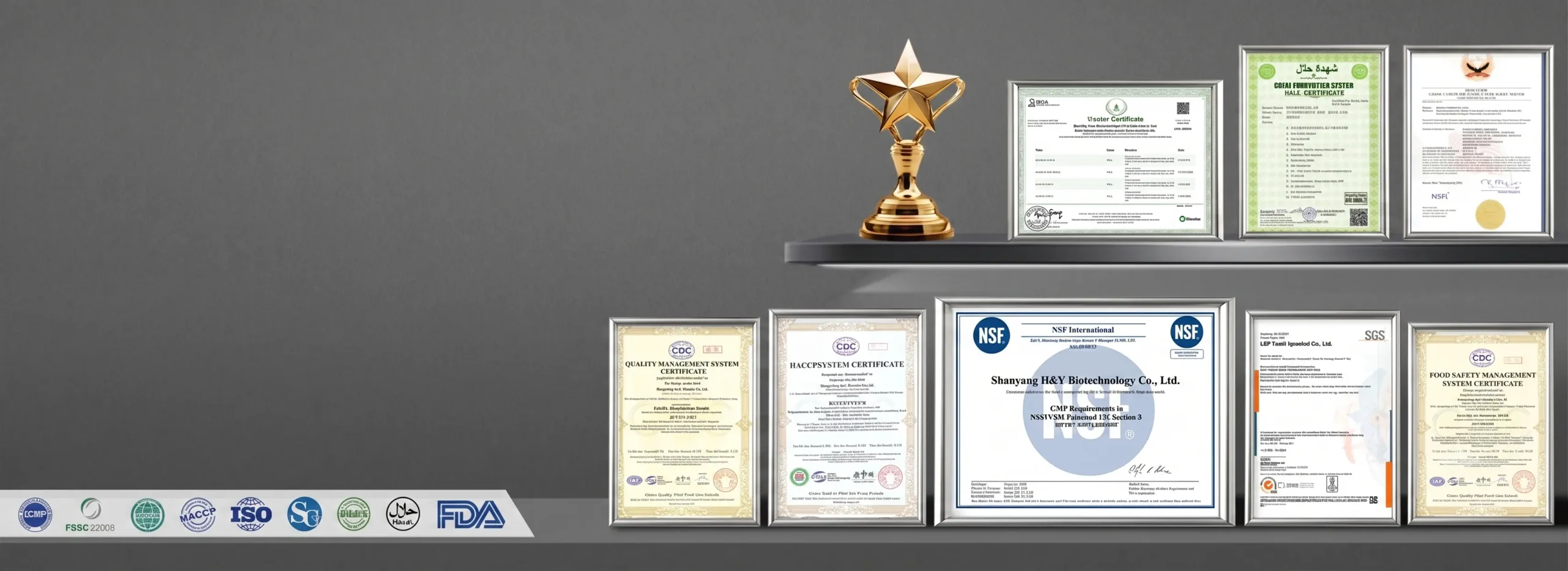
Manufacturing systems operate under internationally recognized standards, including:
- cGMP
- HACCP
- ISO Quality Management Systems
- FSSC 22000
- Halal
- Kosher
After-Sales & Brand Protection Process
If a quality concern appears after shipment, buyers usually need a fast, clear answer — not a long internal CAPA lecture. For ALA programs, we handle cases around the issues that most often affect brand reputation.
ALA cases we see most often
Situation | Typical buyer concern |
|---|---|
| Odor complaint | Bottle smells stronger / more “sulfur-like” than the approved sample |
| Assay dispute | Third-party or inbound test is lower than label / COA expectation |
| Appearance / caking | Soft capsules, clumping powder, or pack moisture signs |
| Batch-to-batch difference | Reorder feels different from the approved first commercial lot |
How a case is handled
- Freeze first — identify affected lot(s), review what is still in warehouse / in transit, and stop further shipment of the suspect lot when needed
- Compare evidence — open retain samples vs customer sample; check COA grade lock (DL-ALA / R-ALA / stabilized), desiccant & pack format vs frozen BOM, and fill/compression records for high-dose runs
- Retest when needed — repeat assay / key tests in-house; arrange third-party retest if the buyer or market requires it
- Decide & prevent — agree disposition (replace / resupply / conditional acceptance per contract), then lock any BOM, packaging, or process fix into the next reorder file
What you receive
- A short lot investigation summary (what was checked and the conclusion)
- A clear handling proposal for the affected goods
- Updated reorder controls so the approved fix stays locked for future POs
Request Document Pack Checklist · Request Quality Issue Handling Brief
Step 1 — Formula Discussion
Align category positioning, ALA vs R-ALA strategy, dosage form, claim constraints, and target markets.
Step 2 — Ingredient Selection & Prototype
Lock specifications, develop prototypes, and evaluate manufacturability (stability, odor, fill, packaging fit).
Step 3 — Testing & Approval
Confirm assay/quality checks and customer approval samples before artwork finalization where applicable.
Step 4 — Mass Production
Scale approved formulas under controlled manufacturing systems with batch traceability.
Step 5 — Packaging & Delivery
Complete packaging, documentation package, and shipment coordination for destination markets.
→ Supplement Development Guide · Processing Technologies · Confidentiality & IP Protection
MOQ varies by formula complexity, dosage form, packaging, and ingredient grade.
- Capsules: often from about 3,000–5,000 bottles (pilot options confirmed with quote)
- Tablets: often from about 5,000–10,000 bottles
- Softgels: project-based by fill and packaging
- Gummies: often from about 5,000–10,000 bottles
- Powder / premix: project-based (commonly from hundreds of kg)
Premium R-ALA or complex multi-actives may require higher practical MOQs than standard racemic ALA capsule programs because of raw material packing sizes and process setup.
- Sample/prototype: approximately 7–15 days after formula confirmation
- Existing / private label formulas: approximately 4–8 weeks
- Customized formulations: approximately 6–10 weeks (often within a 30-60 day commercial production window after approvals)
- New development projects: subject to validation and approval timelines
Final lead times are confirmed after formula review, packaging selection, and order confirmation. Custom-printed packaging artwork approval should be included in the overall schedule.
Develop Your Alpha Lipoic Acid Supplement Line With KS Nutripharma
Whether you need standard ALA capsules, premium R-ALA formulas, or mature combination systems such as ALA + ALCAR + CoQ10, our team can support product development from ingredient selection to commercial manufacturing.
- Alpha Lipoic Acid formula development
- ALA vs R-ALA sourcing strategy
- Dosage form optimization
- MOQ and launch planning
- Packaging and documentation support
- Commercial-scale manufacturing
Contact KS Nutripharma to discuss your target market, product positioning, and commercialization requirements.
Related Supplement Manufacturing Solutions
Antioxidant / cellular & ingredient pathways
- Antioxidant Supplements Manufacturer
- CoQ10 Supplement Manufacturer
- NAC Supplement Manufacturer
- Glutathione Supplements Manufacturer
- Liposomal Glutathione Supplements
- PQQ Supplements
- Ergothioneine Supplements
- NAD Cell Formula
- Spermidine Supplements
- Urolithin A Supplements
- Astaxanthin Supplements
Men’s Health
- Men’s Health Supplements
- Men’s Energy Supplements
- Testosterone Support Supplements
- Male Performance Supplements
- Anti-Aging Supplements for Men
- Tongkat Ali Supplement Manufacturer
- Maca Extract Supplement Manufacturer
Women’s health & beauty
- Women’s Wellness Supplements
- Women’s Hormone Balance Supplements
- Women’s Multivitamin Supplements
- Beauty Supplements for Women
- Anti-Aging Supplements for Women
- Menopause Supplements
- Beauty Supplements
- Collagen Supplements
- Hair Skin and Nails Supplements
KS Nutripharma® — Alpha Lipoic Acid Supplement Manufacturer | OEM, ODM & Private Label Partner
KS Nutripharma manufactures for business clients only.
Standard commercial ALA is typically a racemic mixture. R-ALA is the naturally occurring R-form and is commonly used for premium positioning. Selection depends on price target, stability needs, and brand strategy.
Yes. We support private label and OEM programs, including formula development, manufacturing, packaging, quality documentation, and export support.
Capsules, tablets, softgels, gummies, powders, stick packs, and selected advanced capsule architectures — depending on formula requirements.
Yes. These are among the most commercially mature combination directions. We also support benfotiamine, berberine, chromium, vitamin, and longevity-stack concepts.
Yes. Our R&D team develops customized formulas based on target market, positioning, dosage form, and regulatory considerations.
Manufacturing systems include GMP, HACCP, ISO, FSSC 22000, Halal, and Kosher pathways. COA, specifications, and market-support documents are available according to project scope.
Capsule programs often start around 3,000–5,000 bottles, with pilot options confirmed at quotation. Exact MOQ depends on formula, pack count, and packaging.
Yes. We can align naming and documentation to project requirements, including thioctic acid synonym usage where appropriate and R-ALA grade specification packages for premium programs. Final label language remains the brand owner’s compliance responsibility.