





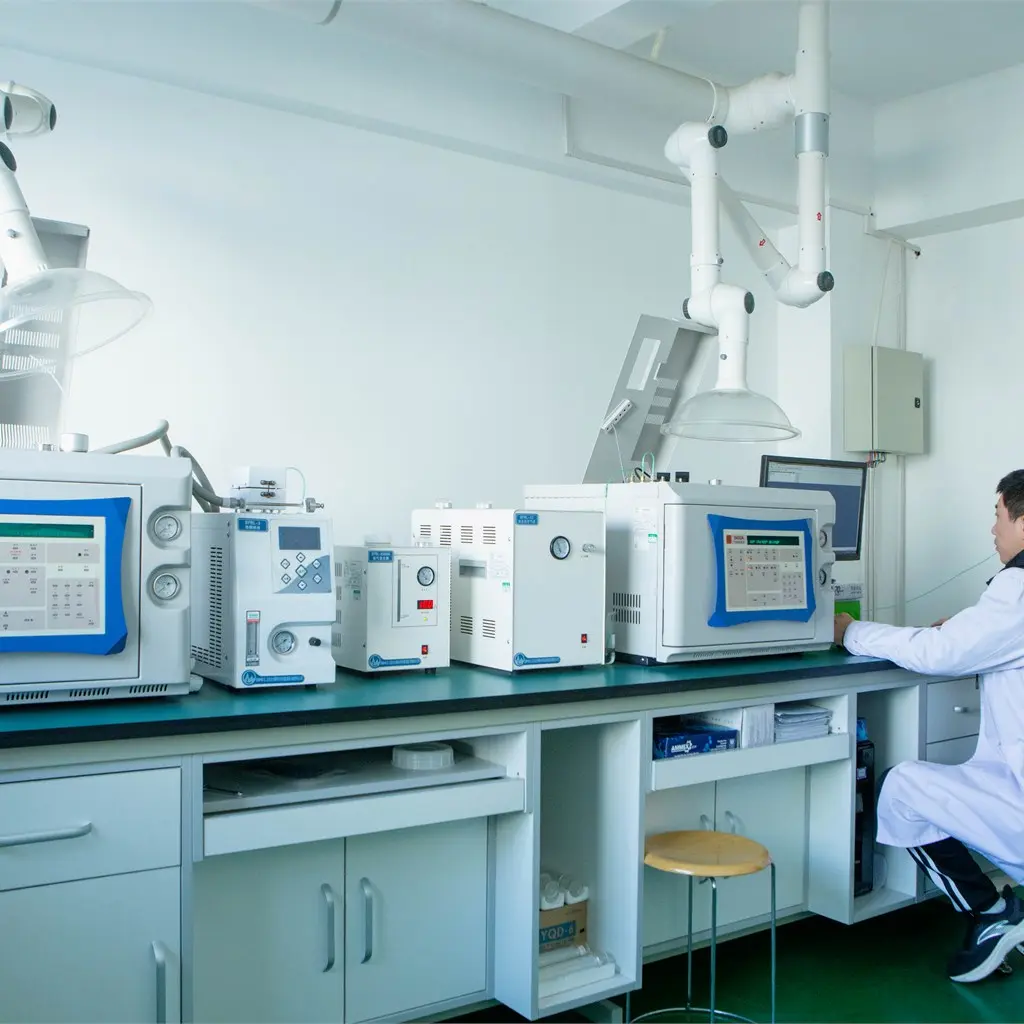

PQQ Supplement OEM, ODM, and private-label Solutions
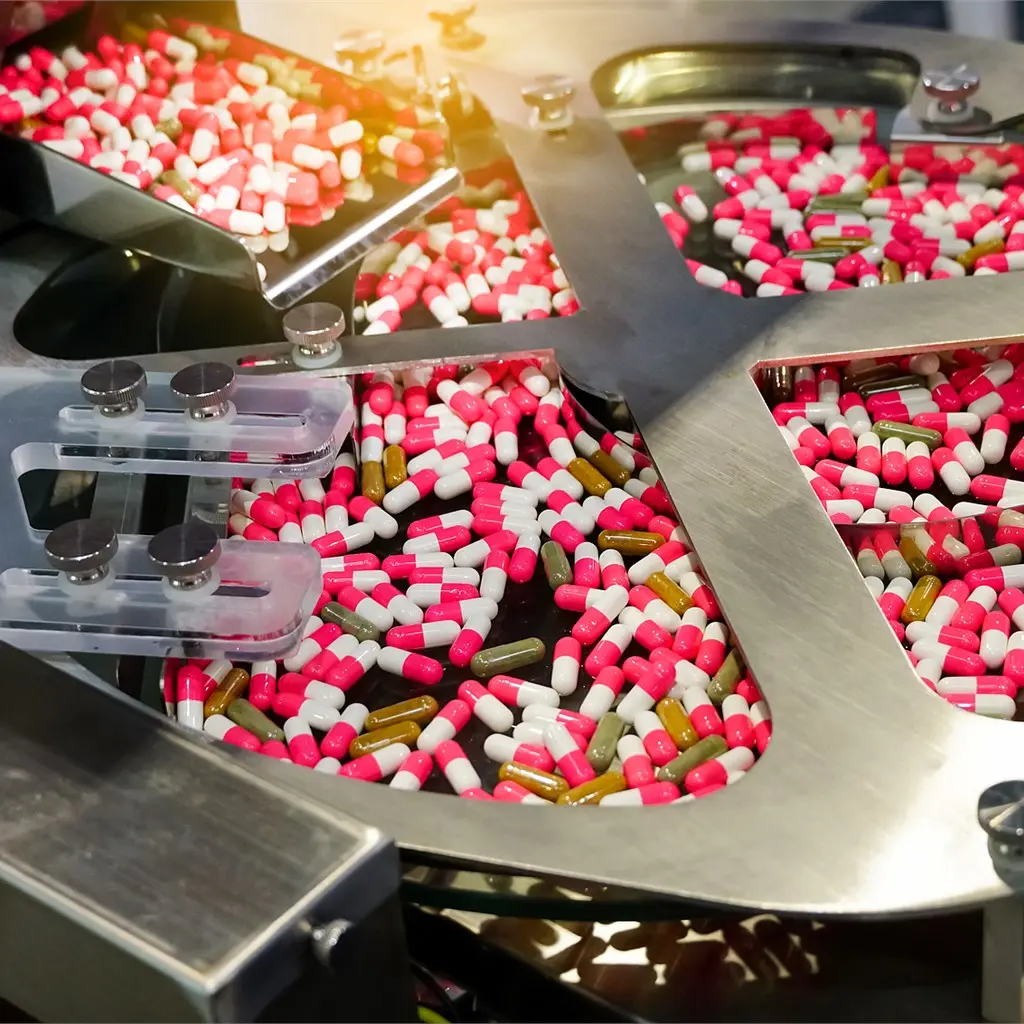
KS Nutripharma is a PQQ supplement manufacturer for OEM, ODM, and private-label programs. Finished PQQ supplements for antioxidant lines start with hard capsules and powders. A softgel is quoted when the formula already needs an oil fill. A liposomal unit is quoted when the brief names a phospholipid system.
The quotation specifies the PQQ salt, the active level, the manufacturing route, and the finished dosage form.
A current label, a COA, a BOM, or a short note is enough to start. We use the information you already have to identify the missing specification points and move the project toward a manufacturable formula.
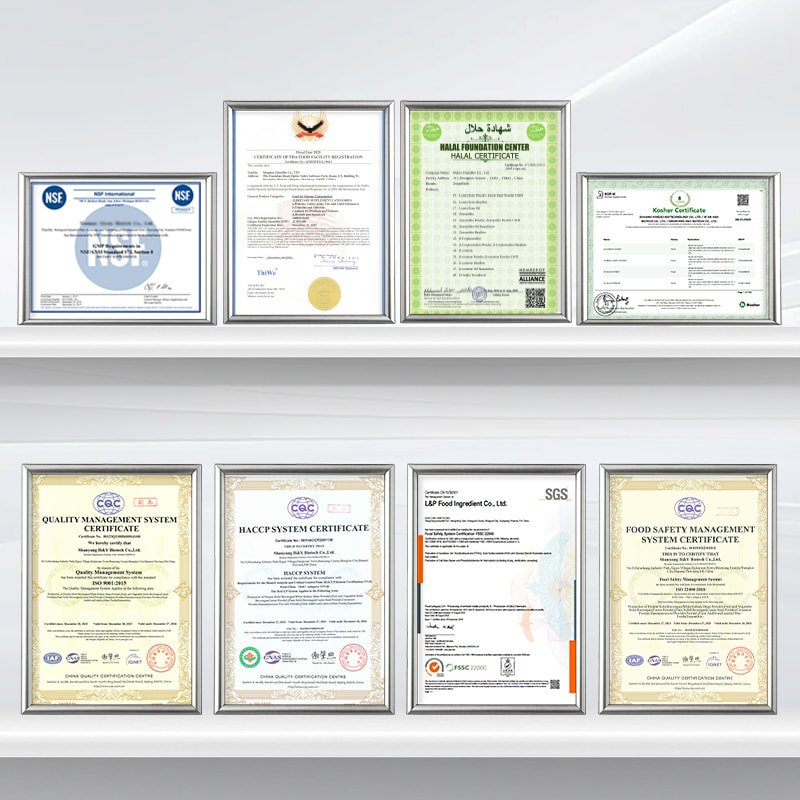
cGMP · ISO 9001 · ISO 22000 · HACCP · FSSC 22000 · Halal · Kosher · batch COA
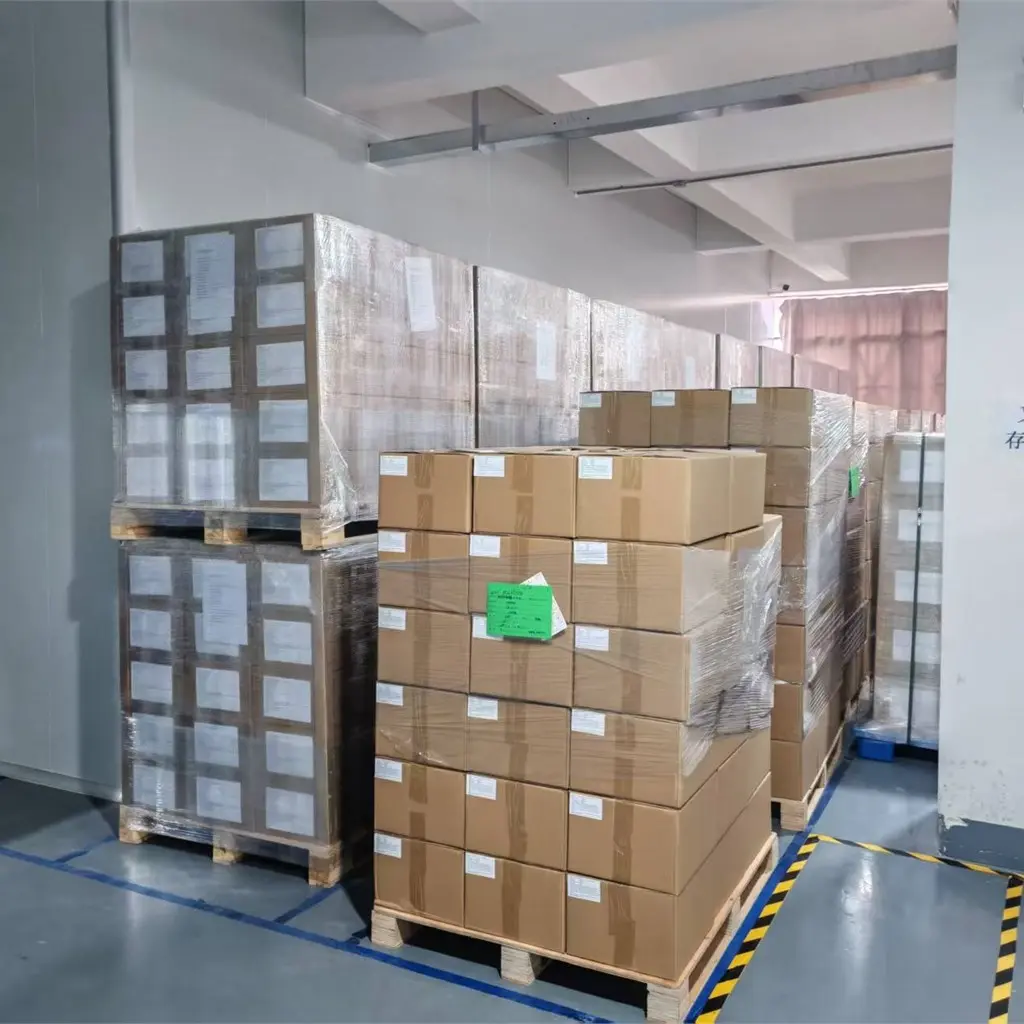
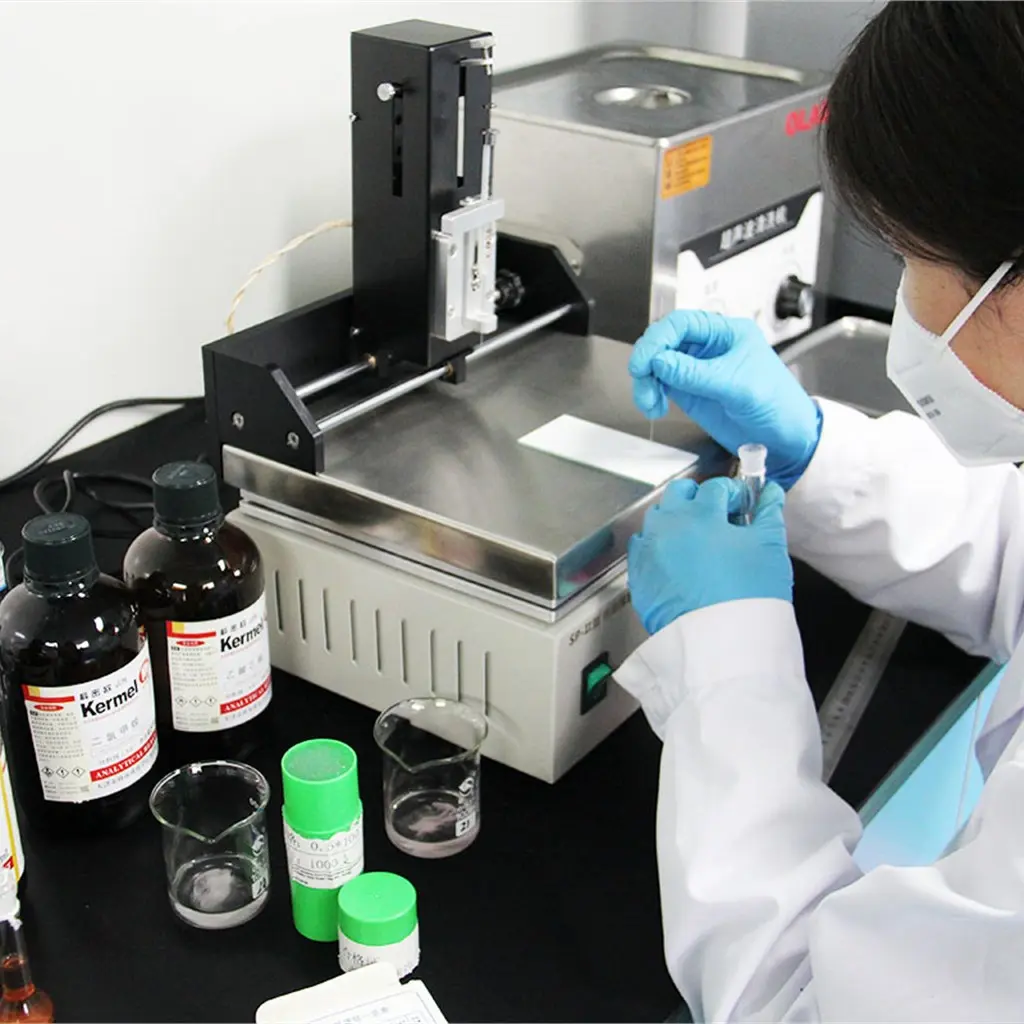
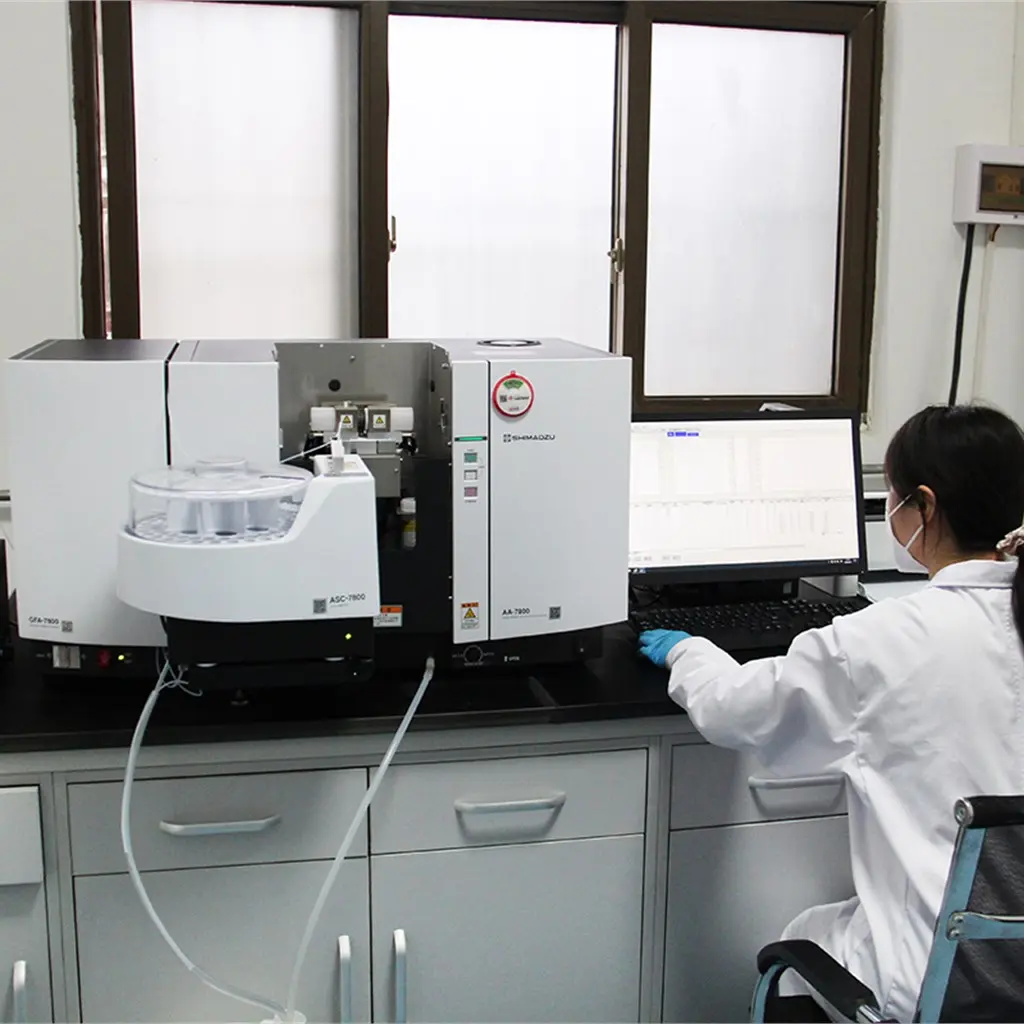
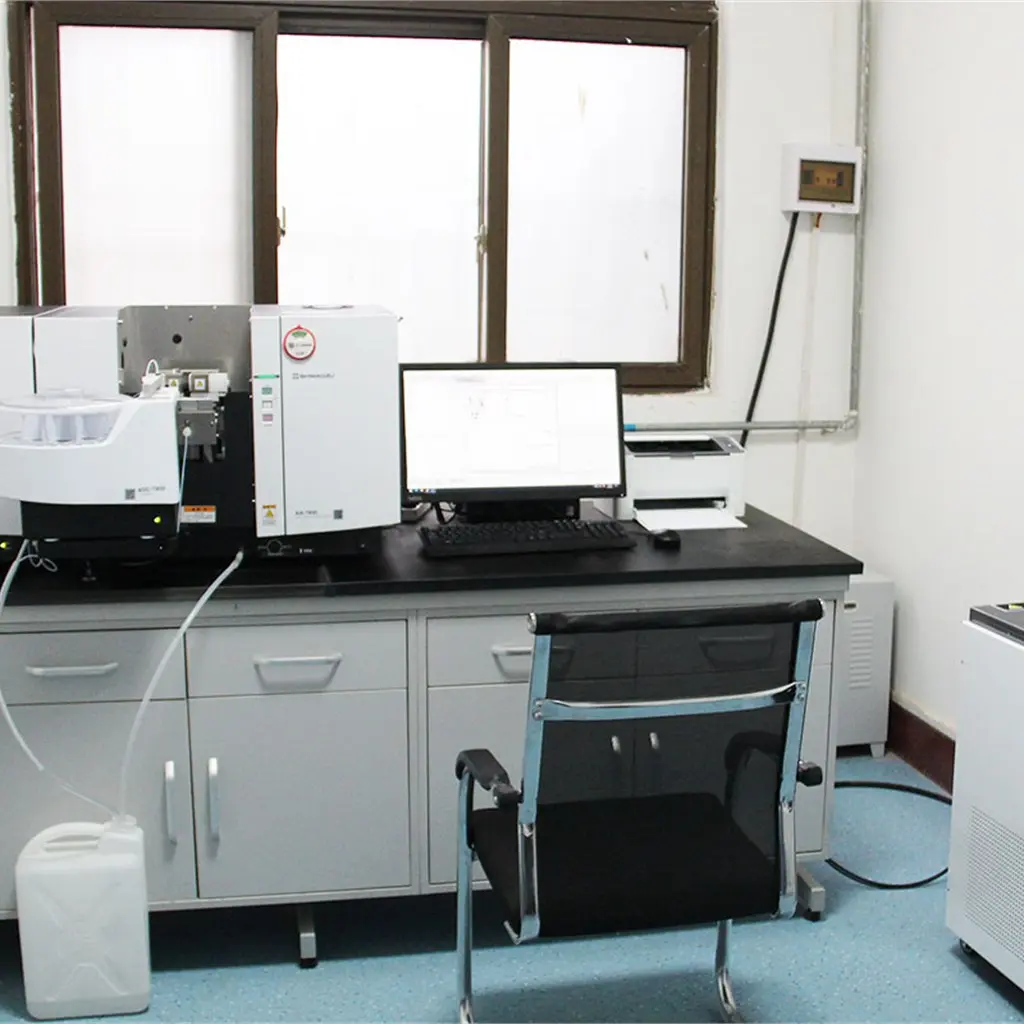
Manufacturing Capacity · Certifications · Quality Control
PQQ Supplement Manufacturing at a Glance
Decision | PQQ manufacturing scope |
|---|---|
| Active | Pyrroloquinoline quinone disodium salt |
| Main formats | Hard capsule and finished powder |
| Formula families | Standalone, PQQ + CoQ10, PQQ + alpha-lipoic acid, and other project-specific combinations |
| Raw-material controls | Identity, assay, source or route, and documentation |
| Finished-product controls | Uniformity, finished-unit assay, and packaging stability |
| Market | Destination-specific specification and documentation |
PQQ Formula Options
Four formulation families. Milligrams inside a family are reference windows, not separate formulas. Different PQQ loadings change the fill architecture. They do not by themselves create another family. Fill weight and blend uniformity are checked during formulation feasibility before artwork is finalized. Figures are development windows, not recommended intakes. Write milligrams per capsule and capsules per serving as two numbers.

Use when: The only active is pyrroloquinoline quinone disodium salt.
Specify: 10 mg or 20 mg of the salt per capsule, and the capsule count per serving. A higher serving uses more capsules of the same fill and stays in this family. Shell: hypromellose or gelatin.
Manufacturing implication: Loading changes the salt-to-excipient ratio and the capsule size. One capsule at 40 mg of the salt plus a second active is a combination family, not a larger standalone fill.
Default format: Hard capsule. Powder, sachet, or stick when the brief asks for that unit.
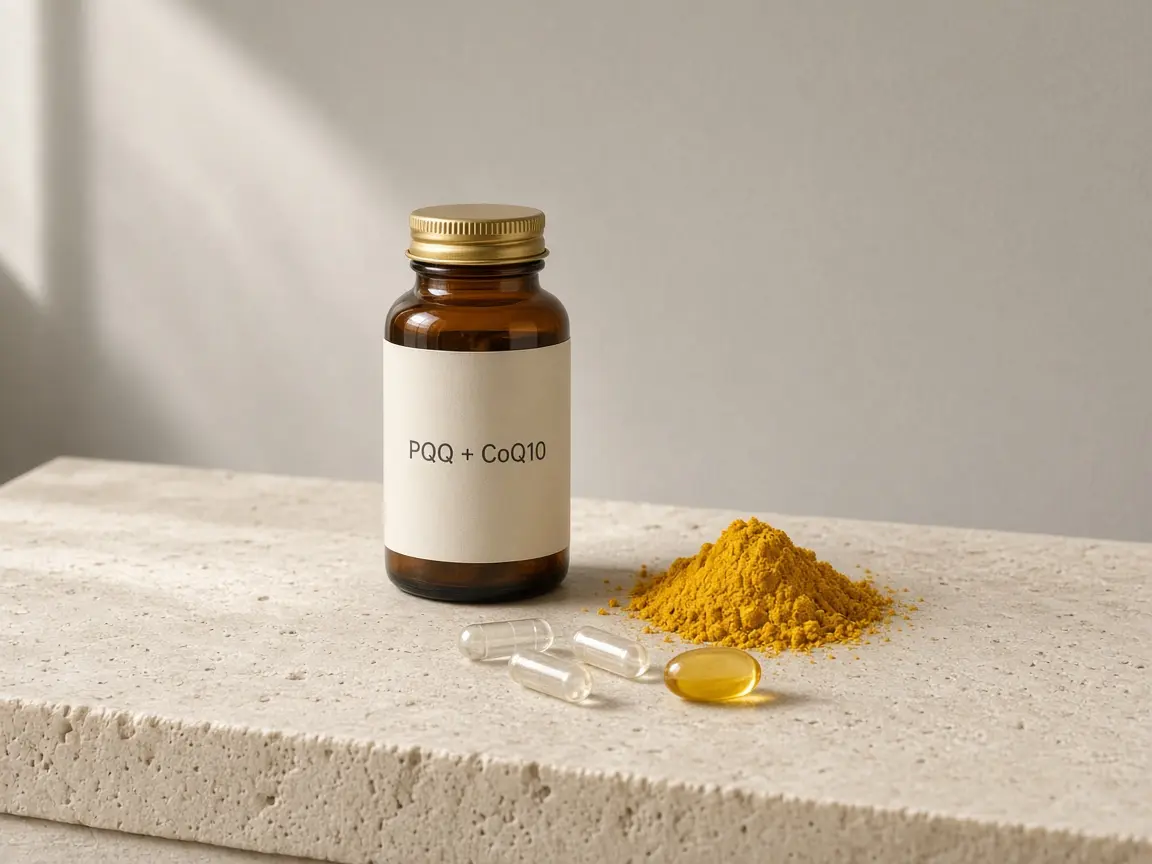
Use when: Both CoQ10 and the PQQ salt are on the label. See CoQ10 supplements.
Specify: Which line is larger, then milligrams per capsule and per serving.
CoQ10-led: 100 mg CoQ10 + 10 mg salt in one capsule, or 300 mg CoQ10 + 20 mg or 30 mg salt. Not one stock formula.
PQQ-led: two capsules, 40 mg salt + 10 mg CoQ10. Matching capsules hold 20 mg salt + 5 mg CoQ10 each.
Manufacturing implication: The larger line changes capsule count and fill. Ubiquinone powder stays in a hard capsule. A ubiquinol softgel is quoted only after the oil fill is defined. Reading the 100 mg CoQ10 line as 100 mg PQQ is a different formula.
Default format: Hard capsule for ubiquinone powder. Softgel when an oil fill is specified. Liposomal only when a phospholipid system is named.
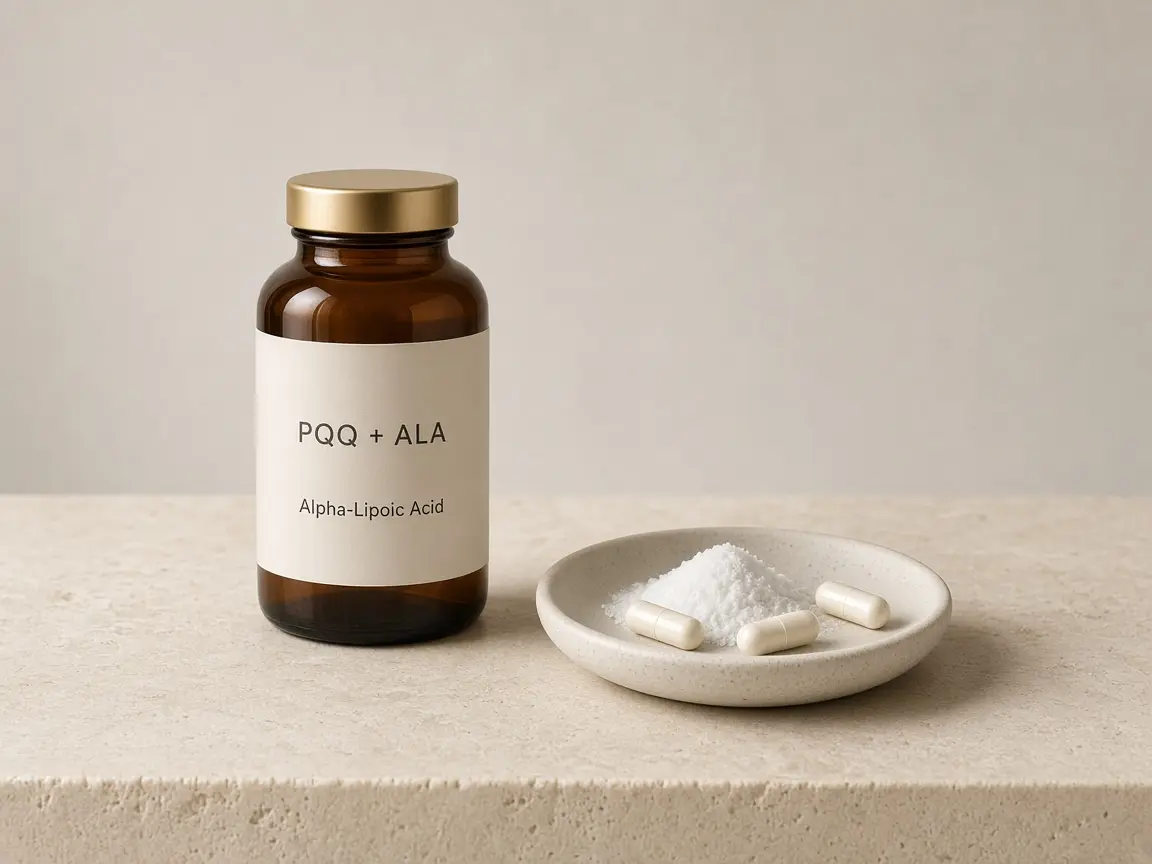
Use when: The salt is paired with alpha-lipoic acid. A reference combination, not a second default beside PQQ + CoQ10.
Specify: One capsule: 40 mg disodium salt and 200 mg alpha-lipoic acid. Per capsule and per serving are the same.
Manufacturing implication: Two assays, and a higher salt load than the 10–20 mg standalone window. For a product relying on the cited EU Union-list entry, 40 mg/day exceeds that entry’s 20 mg/day maximum and needs a different regulatory assessment.
Default format: Hard capsule.

Use when: The BOM adds an active other than CoQ10 or alpha-lipoic acid.
Specify: NMN, resveratrol, citicoline, or a botanical such as lion’s mane. Milligrams per capsule and capsules per serving come from that BOM, not from a stock formula. NMN: NMN supplements.
Manufacturing implication: Dose, blend, capsule capacity, and destination market are assessed together. No listed reference serving.
Default format: Hard capsule, unless the brief names a powder, an oil phase, or a phospholipid system.
What Changes a PQQ Manufacturing Quote
| Quote variable | What changes | Why it matters |
|---|---|---|
| PQQ identity | Generic disodium salt, or a named trademark and source | Sourcing and the documents that travel with the lot |
| Assay | The specification and the test method | Material qualification and the release basis |
| Dose | 10 mg, 20 mg, or 40 mg per capsule or per serving | Blend ratio, capsule count, and testing |
| Second active | CoQ10, alpha-lipoic acid, or another active from the BOM | Fill, a second assay, and formula complexity |
| CoQ10 form | Ubiquinone or ubiquinol | A dry capsule, or an oil-softgel route when a softgel is specified |
| Dosage form | Capsule, tablet, powder, sachet, or softgel | The process and the release test |
| Destination | US, EU, or another market | Which ingredient documents apply |
| Packaging | Bottle, blister, sachet, or stick | Pack specification and stability |
| Production quantity | Finished-unit quantity, or a pilot requirement | Material planning, MOQ, and production scheduling |
Choose the PQQ Format: Capsules, Powder, Tablets, Softgels or Liposomal
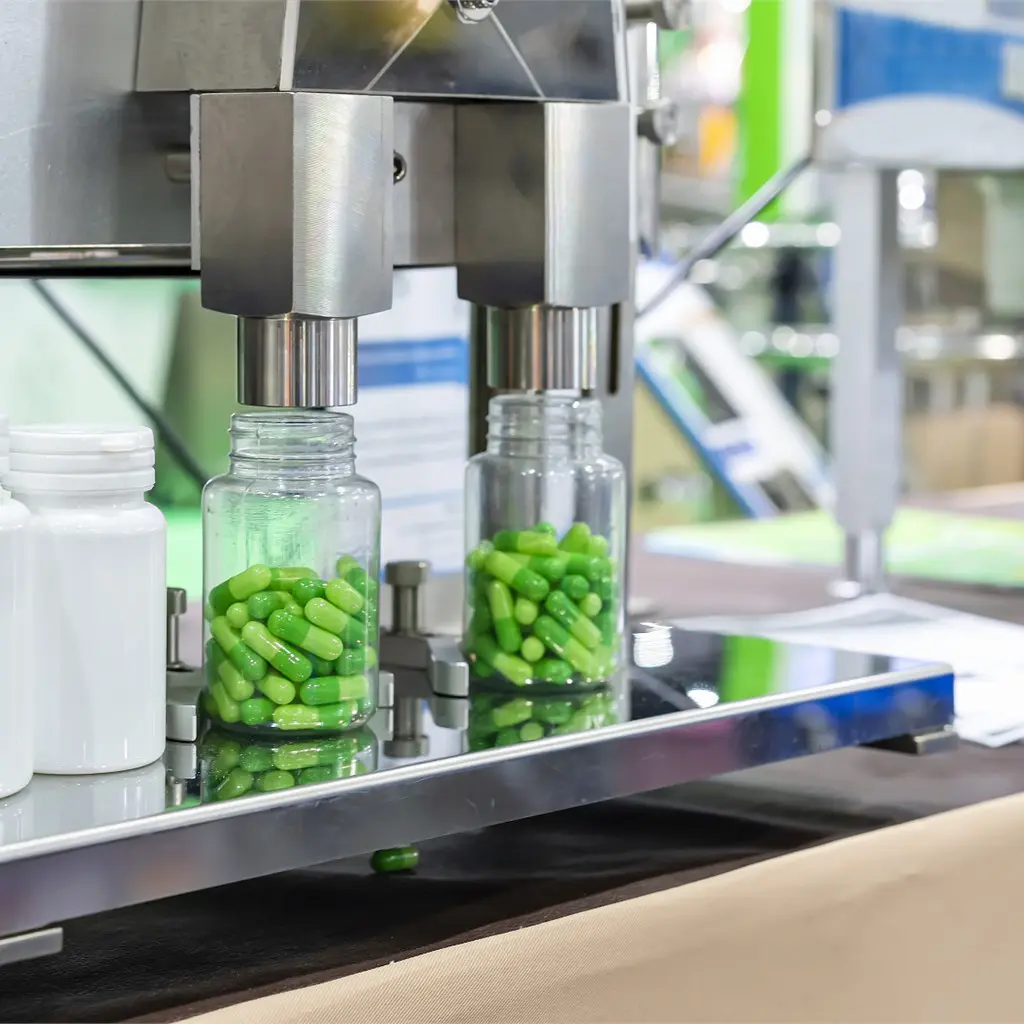
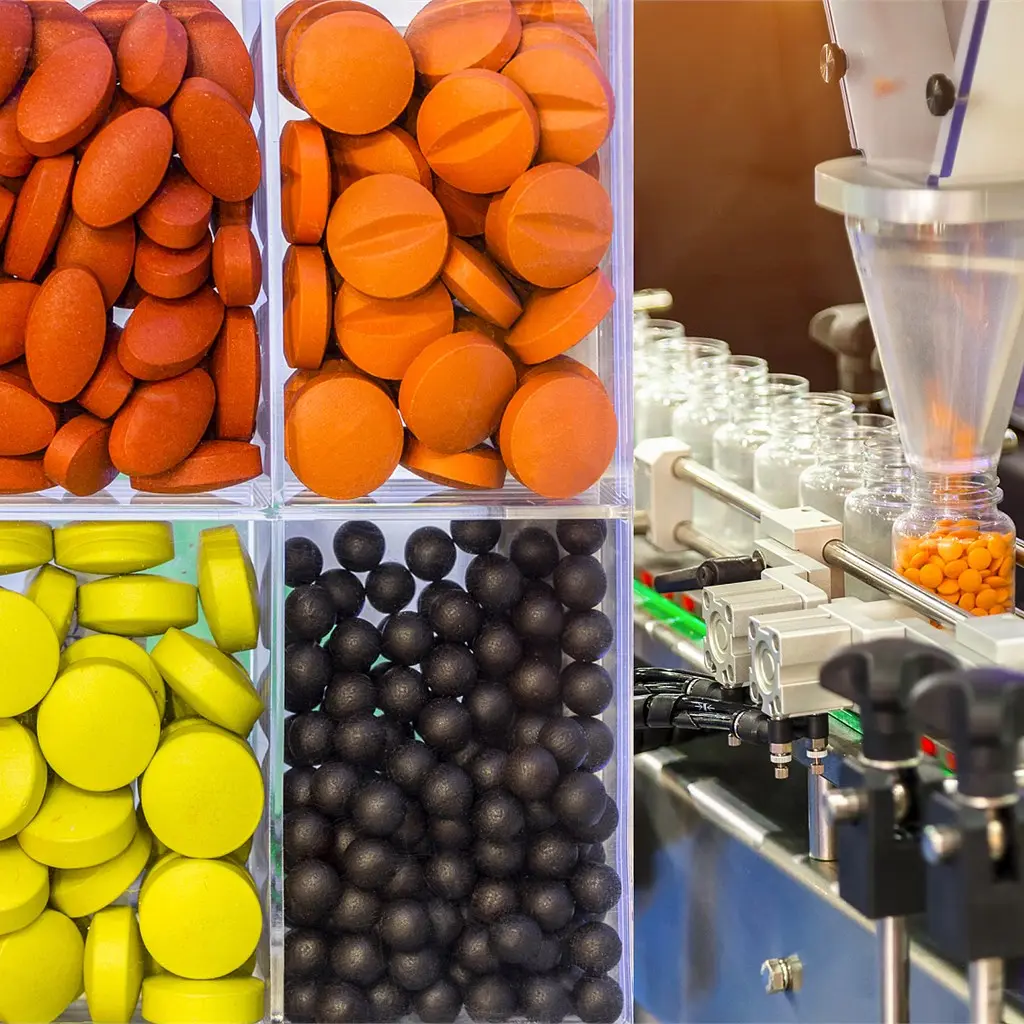
Hard capsules are the primary format for standalone PQQ disodium salt and for dry combinations. Finished powder, sachets, and sticks are a separate finished-unit brief. Tablets can be considered when the brief requires compression and the formulation passes compression and uniformity feasibility review. Softgels fit an oil-based combination. Liposomal units fit a named phospholipid system. Gummies need a separate feasibility review because the matrix, flavor, stability, and finished assay differ from a capsule.
For a finished supplement, powder means a finished powder, sachet, or stick. A kilogram price for incoming salt is not that finished-unit quote. This page covers finished PQQ supplement manufacturing rather than bulk raw-material supply.
Reference configuration | PQQ disodium salt | CoQ10 |
|---|---|---|
| Two-capsule serving | 20 mg | 300 mg |
| 20 mL liquid packet | 30 mg | 300 mg |
Manufacturing note: A liposome is its own fill. It is not a purity upgrade of the hard-capsule salt.

Best for: Standalone salt, the alpha-lipoic acid reference unit, and a ubiquinone plus PQQ salt fill.
Why this format: The shell is hypromellose or gelatin. A vegetarian claim follows the shell.
What to lock: Salt milligrams per capsule, capsules per serving, every other active, capsule size, and shell.
Manufacturing note: Finished-unit assay is the release for the declared amount.
Best for: A finished powder, sachet, or stick.
Why this format: The buyer is specifying a finished dose, not a capsule with the shell removed.
What to lock: Salt form, assay basis and method, route, destination market, and milligrams per serving. A “99% PQQ” line alone does not identify the material.
Manufacturing note: For sachets and sticks, the declared amount is verified against the finished-unit specification.
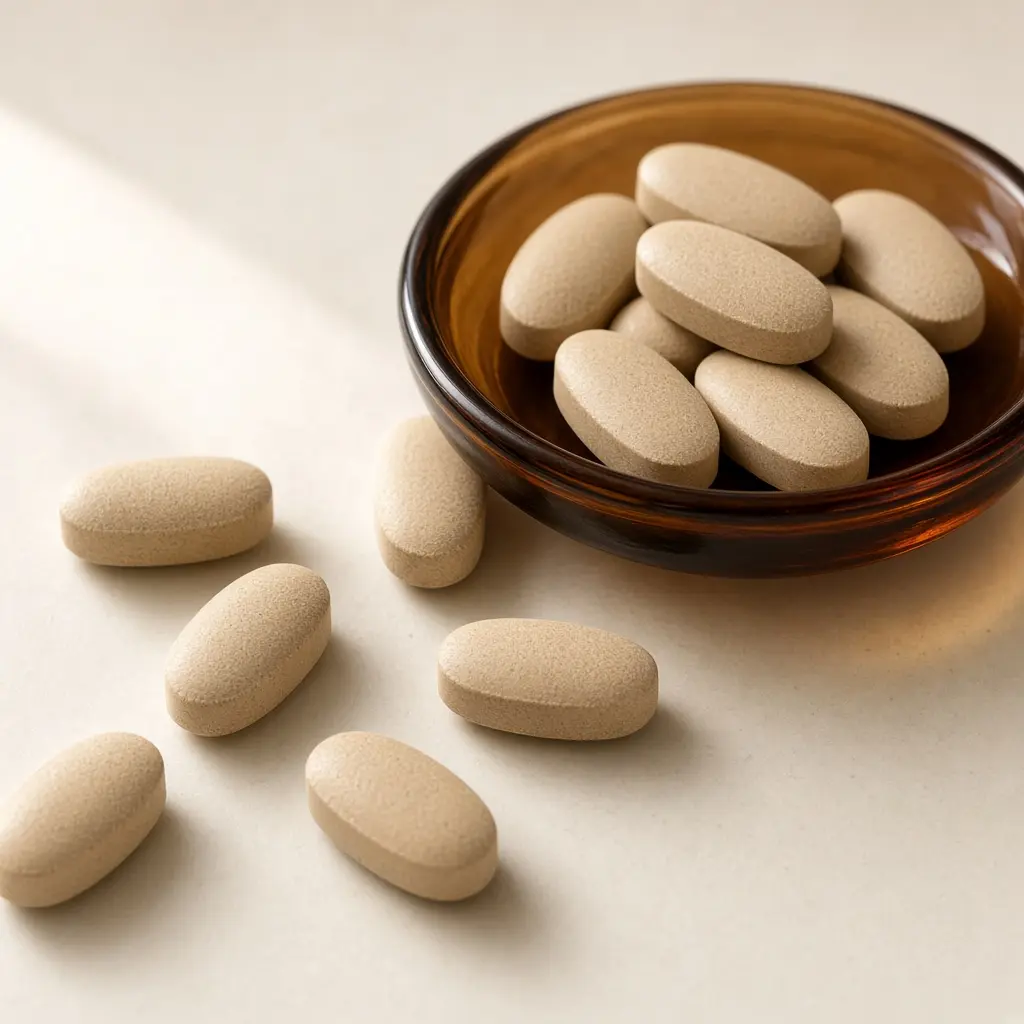
Best for: A brief that requires compression.
Why this format: The primary standalone format remains a hard capsule. A tablet is considered when compression and uniformity both pass feasibility review.
What to lock: Tablet weight, hardness, friability, disintegration, and the same salt milligrams as the capsule brief.
Manufacturing note: A capsule quotation does not transfer onto a tablet without a new uniformity check.
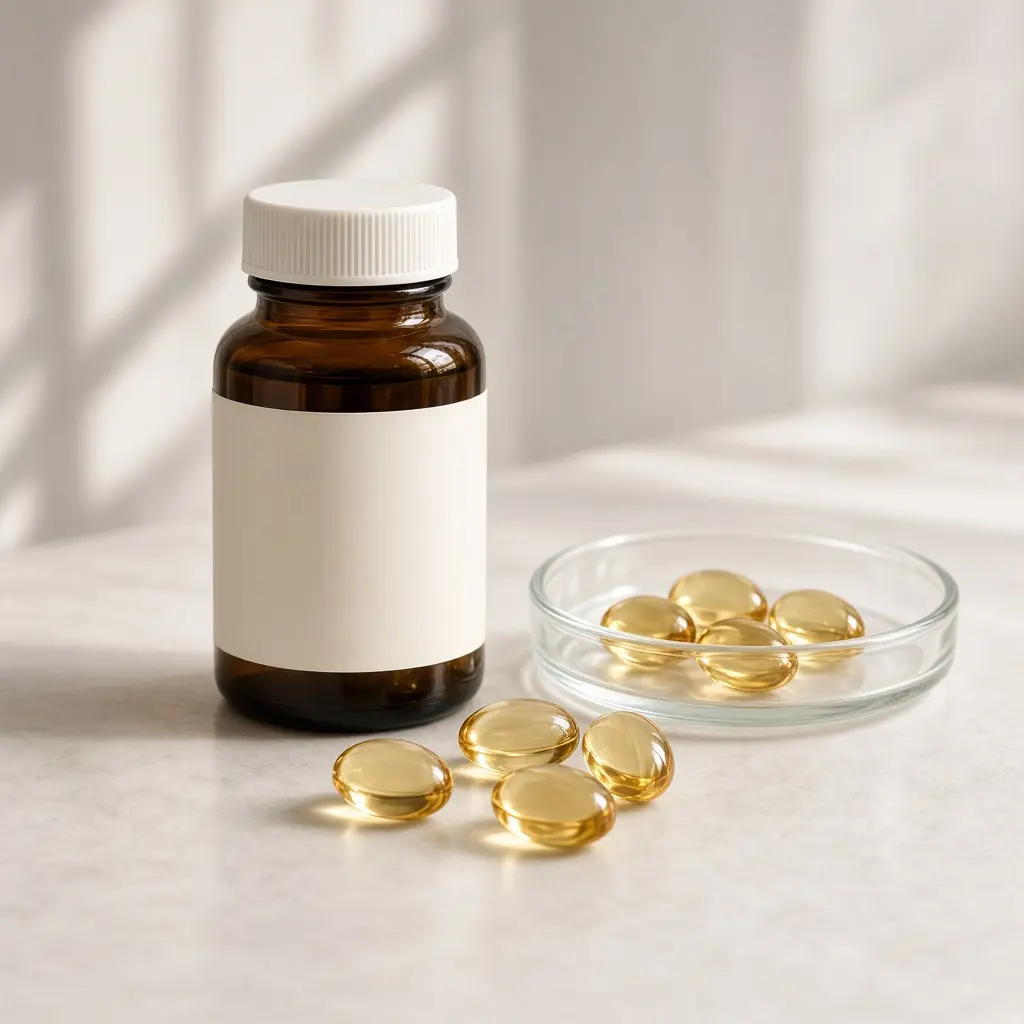
Best for: A PQQ formula that already includes an oil-compatible active, or that requires an oil-based delivery system. A reference example is ubiquinol with PQQ disodium salt as the smaller line.
Why this format: The oil fill defines the softgel. A standalone salt capsule does not become a softgel because the label says PQQ.
What to lock: The oil-compatible active, the oil, PQQ salt milligrams per softgel, and the shell.
Manufacturing note: The softgel route is confirmed after the oil-fill system is defined. A hard-capsule salt price does not transfer.
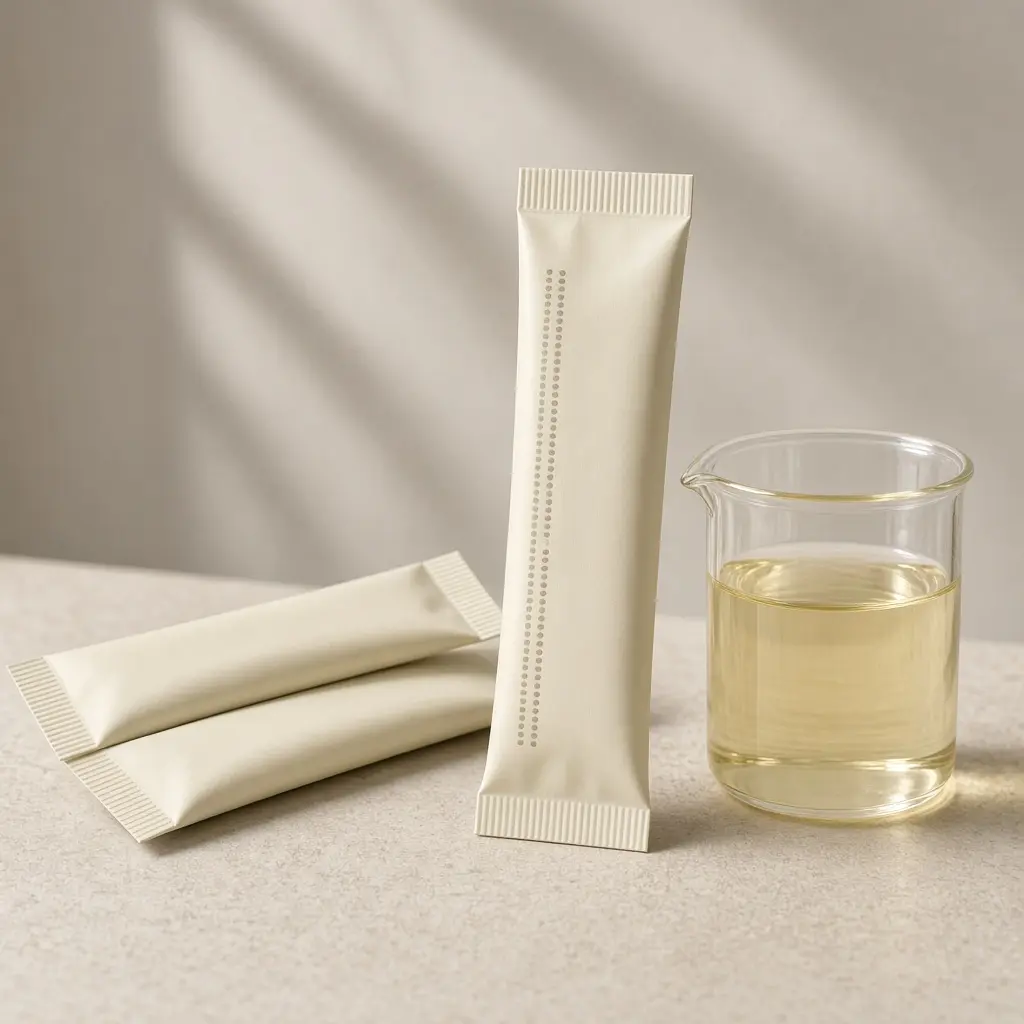
Best for: A brief that names a phospholipid system. Reference market configurations pair PQQ with CoQ10 in capsule and liquid systems. A PQQ-only phospholipid system needs a separate feasibility review.
Why this format: A project-specific liposomal formula requires the phospholipid system, active levels, serving size, and finished-product specifications to be defined together.
What to lock: Phospholipid composition, both milligrams per serving, and the destination market.
Case Show From KS Nutripharma


PQQ is a low-inclusion active, but “PQQ” alone is not a complete manufacturing specification. The PQQ disodium salt specification for supplement manufacturing identifies the salt, the assay basis and method, the source or route, trademark status where applicable, and the destination-market requirements. Active level, dosage form, and destination market can change the quotation. A trademark, a purity percentage, an authorised use level, a GRAS letter, and a study dose do not replace one another. Label milligrams in the formula families are weights of this salt, not free quinone and not CoQ10.
Salt Identity
| Raw-material identity | Specification |
|---|---|
| Common name | Pyrroloquinoline quinone disodium salt. “PQQ” is the market abbreviation |
| CAS | 122628-50-6 |
| Molecular formula | C14H4N2Na2O8 |
| Molecular weight | 374.17 Da |
| Chemical name | Disodium 9-carboxy-4,5-dioxo-1H-pyrrolo[5,4-f]quinoline-2,7-dicarboxylate |
These figures are the ones in Commission Implementing Regulation (EU) 2018/1122.
Assay
Assay should state the result basis and the analytical method. For the cited EU specification, purity is at least 99.0% on a dry-weight basis. Other source documents do not all use that floor. A 99% raw-material result does not determine the milligrams declared in the finished unit.
Source and Route
The purchase specification identifies the applicable raw-material documentation. Fermentation alone does not identify the material.
| Example | Route | What to verify |
|---|---|---|
| Hyphomicrobium denitrificans CK-275 | Fermentation | The organism named in the cited EU entry, and the BioPQQ documentation described with it |
| Methylovorus glucosotrophus, GRN 1118 | Fermentation | A separate US notice. FDA’s letter of 31 July 2023 stated no questions. Beverage uses in that notice are not a capsule strength |
| Synthetic disodium salt | Synthetic | Identity, assay, and whether the destination-market documentation accepts that route |
| Generic PQQ disodium salt | Depends on supplier | Identity, assay, source or route, and destination-market documentation |
CK-275 and Methylovorus glucosotrophus are different documented fermentation sources. A fermentation claim does not make two lots interchangeable. A Methylovorus powder does not enter the cited EU entry by matching the CAS number.
Branded and Generic Salt
BioPQQ and PureQQ are trademarks, not assay values. BioPQQ is a trademark of Mitsubishi Gas Chemical. If a brand specifies either trademark, the supplied raw material and supporting documentation must correspond to that named material. Otherwise, the finished label uses the applicable ingredient name. “Natural PQQ” still requires the organism or the synthetic route.
Destination Market
For products relying on the cited Union-list entry, that entry specifies a maximum use level of 20 mg/day in food supplements, for adults, excluding pregnant and lactating women, with the designation “Pyrroloquinoline quinone disodium salt” and the adult-only warning. That figure is the maximum use level of that entry. It is not a recommended intake, not a United States ceiling, and not a rule for every product sold as PQQ.
Data protection under the original authorization ended on 2 September 2023. The current Union List still specifies the authorised food category, the 20 mg/day maximum level, the labelling condition, and the CK-275 raw-material specification for products relying on this entry.
For a product relying on that entry, a serving above the 20 mg/day maximum needs a different regulatory assessment. US labels use more than one salt strength. A GRAS notice documents identity and intended use. It is not an approval of a finished supplement, and it is not the Union-list entry. BioPQQ is not the only salt in the US public-notice set.
Finished units that sit beside other actives in a wider cellular-energy line are specified on the antioxidant supplements manufacturing path.
Five variables commonly make PQQ quotations non-comparable. When one of these changes, the quoted specification may also change.
The PQQ line is not the same
CoQ10 100 mg with 10 mg of the salt is not PQQ 40 mg with CoQ10 10 mg across two capsules. Both lines and the capsule count are specified. Alpha-lipoic acid at 200 mg beside 40 mg of the salt is a third formula.
The salt and source are not the same
A generic disodium salt, a named trademark lot, and a different fermentation or synthetic route are three sourcing paths. Two COAs that both say 20 mg of fermented PQQ still need the organism or the synthetic route.
The assay is not the finished-product claim
A 99% ingredient result is the raw-material assay. It is not proof that the finished unit contains the declared milligrams.
The dosage form is not the same
A hard capsule, an oil softgel, and a powder or stick are different processes and different release tests.
The destination is not the same
A US label, the EU Union-list condition for products that rely on that entry, and another market’s specification are not one document set.
A raw-material COA qualifies the incoming salt. Finished-product release verifies the declared amount in the unit.
Because PQQ is a low-inclusion active, blend uniformity and a finished-unit assay are release checks, after a defined blending process.
| Stage | What it verifies |
|---|---|
| Raw-material qualification | Identity, assay, purity, contaminants, and route or source documentation |
| Blending and in-process | Blend uniformity, fill weight, and process controls |
| Finished-product release | Declared PQQ amount and assays for any other active |
| Stability and packaging | Product performance through the proposed shelf life and pack |
Customer-supplied raw materials are evaluated against the agreed incoming specification before use. For a lot aimed at the cited EU entry, that entry includes a moisture limit of 12%. That limit is a document check. It is not a light, oxidation, pH, gummy, or liquid shelf-life result. Moisture protection follows the stability plan for the pack and the destination.
Batch records include the specification, the COA, and the method names. See How to Read a COA.
Daily figures are shared plant capacity across 12 production lines, not a quantity reserved for PQQ. Manufacturing capacity. Final quantity is confirmed at quotation.
| Format | Plant capacity | Typical planning quantity |
|---|---|---|
| Hard capsules | 5+ million per day | About 3,000–5,000 finished units |
| Tablets | 12+ million per day | Quoted after compression and uniformity pass feasibility review |
| Softgels | 2+ million per day | About 3,000–5,000 finished units, only after the oil fill is confirmed |
| Powder, sachets, sticks | No separate daily rate | Quoted from the formula and the pack |
Sample development is typically about 7–15 days where no special raw-material or packaging constraint applies. Commercial production is scheduled after formula, artwork, packaging, and the test plan are locked. A powder, sachet, or stick may need a pilot when flow, moisture, or dose uniformity has to be tried first.
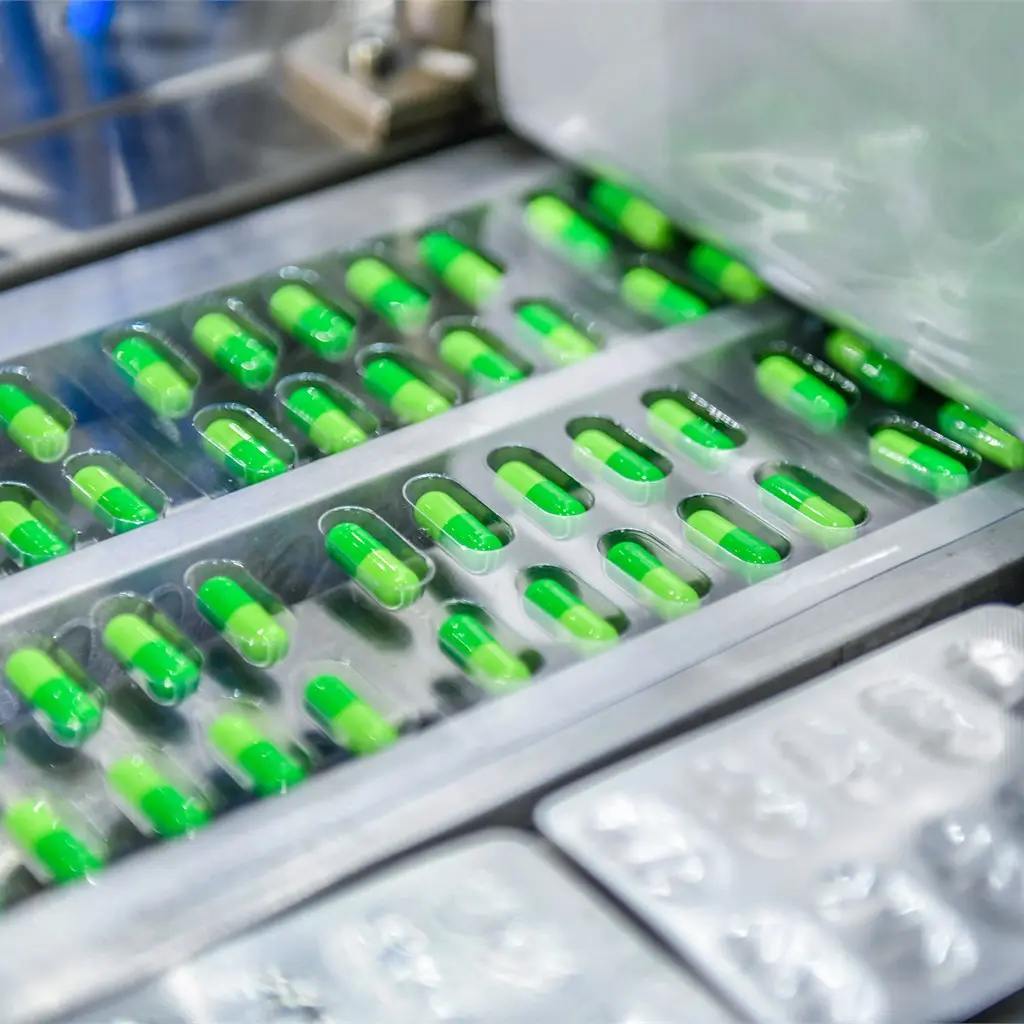
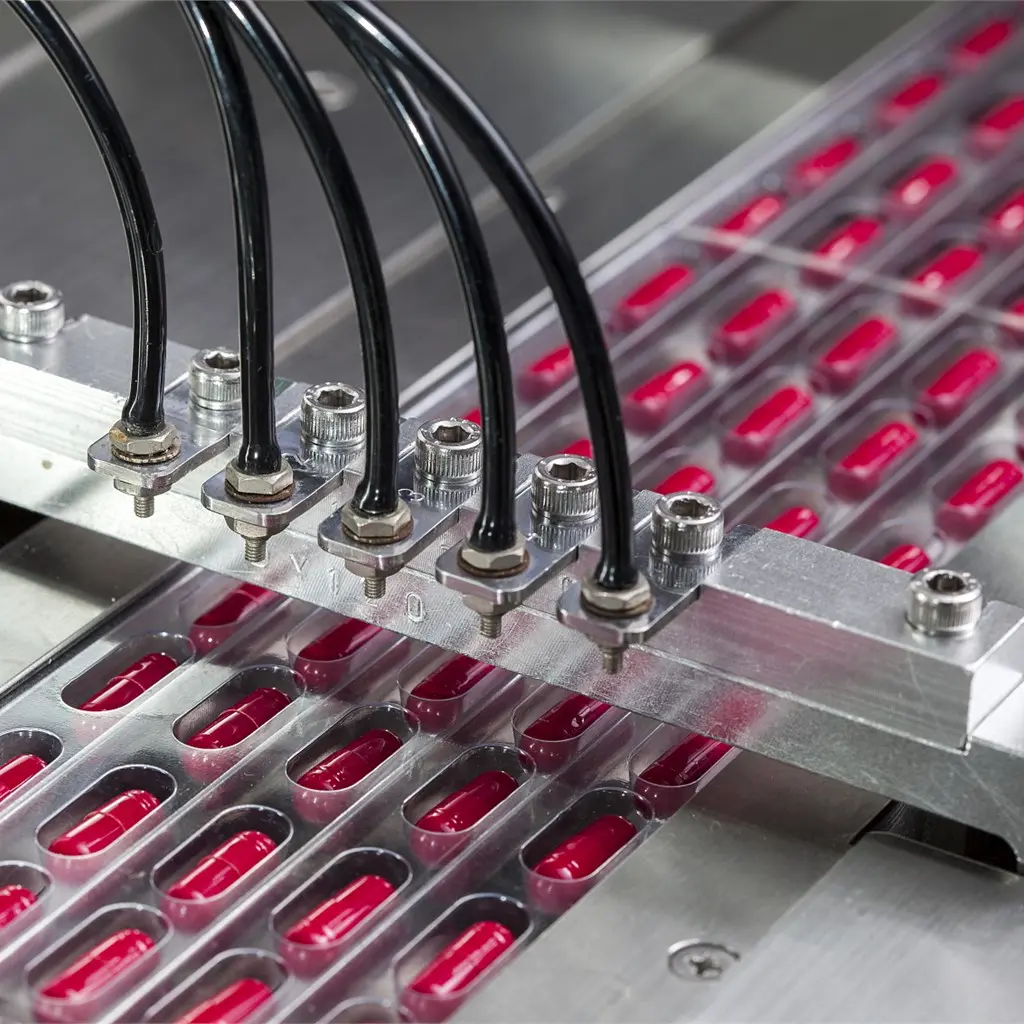
Packs are bottles, blisters, sachets, and sticks. Humid lanes still need a barrier decision for the pack.
Q: What raw-material documents do you need for a PQQ manufacturing project?
A: A COA, a specification, source or route information, trademark documentation when a trademark is named, and destination-market documentation. Those documents identify the salt before the finished-unit assay is set.
Q: Is the milligram on the label the disodium-salt weight?
A: Yes, for the reference units here. It is not rewritten as free quinone, and it is not the CoQ10 milligram on a combination label.
Q: What changes a PQQ manufacturing quote?
A: Salt identity, assay, dose per capsule and per serving, any second active, CoQ10 form, dosage form, destination, pack, and production quantity.
Q: Can PQQ be combined with CoQ10?
A: Yes. CoQ10-led and PQQ-led servings are both manufactured. They are specified as two lines, not as one title milligram.
Q: Can you manufacture PQQ capsules, powders, and softgels?
A: Capsules and finished powders are the primary formats. Softgels are quoted when the formula has an oil fill. Tablets are considered when compression passes feasibility review. Liposomal units are quoted when the brief names a phospholipid system.
Q: What changes between a US project and an EU project?
A: A US label strength is not copied onto an EU specification. For products relying on the cited Union-list entry, that entry’s use level and adult-only condition apply. A GRAS letter is a different document.
Start a PQQ Supplement Manufacturing Project
Send whatever you already have. A finished specification is not required to open a review.
A label or a short note. Send Your Current Label
Example: “20 mg PQQ capsule for the US, vegetarian shell.” We map the label to the PQQ salt, the active level, and the dosage form, then identify any remaining feasibility points.
Two COAs. Compare Two PQQ COAs
We separate salt identity, assay basis, route, and trademark status.
A formula you already sell. Send the PQQ BOM
The review follows that formula, including CoQ10 form and any second active. It does not replace that formula with a different strength.
A new project. Start a PQQ Formula Review
We start from the closest formulation family and resolve the remaining feasibility points with you.
A complete brief typically receives a reply within one business day. A project manager is assigned. An NDA is available for a custom formula. See Confidentiality & IP Protection.
Related Supplement Manufacturing Solutions
Disclaimer: Wholesale and brand-manufacturing reference only. Dietary supplements are not intended to diagnose, treat, cure, or prevent any disease. This page is not a mitochondrial-disease, cognitive-treatment, or longevity-treatment offer. Pyrroloquinoline quinone disodium salt is a different specification from a CoQ10 milligram, from a free-quinone conversion, and from the BioPQQ and PureQQ trademarks. Those trademarks appear on the finished label only when the customer names that material and the lot matches it. Strain CK-275 is the organism named in the cited EU Union-list entry, not a description of every fermented lot. Data protection under that authorization ended on 2 September 2023. That expiry is not the end of the authorization. GRN 1118 names Methylovorus glucosotrophus for beverage uses. It is not a capsule strength and not that Union-list entry. Milligram figures are development examples, not recommended intakes and not catalog guarantees. For products relying on the cited Union-list entry, 20 mg/day is that entry’s maximum use level for adults, excluding pregnant and lactating women. It is not a dose recommendation, not a United States ceiling, and not a rule for every product sold as PQQ. Structure/function language and ingredient classification vary by country. Brand owners remain responsible for finished-label compliance. KS Nutripharma provides manufacturing feasibility and documentation support, not legal approval.