



Tongkat Ali Supplement OEM, ODM and Private Label Project Supplier
KS Nutripharma is a tongkat ali supplement manufacturer for OEM, ODM, and private-label programs serving men’s health supplement brands.
Each project is scoped around the root-extract specification, eurycomanone assay requirements where the label includes them, dosage form, serving size, packaging, and required testing before quotation.
Tongkat Ali Supplement Manufacturing At A Glance
5-Second Procurement Answers | Details |
|---|---|
| Who we are | KS Nutripharma® — nutraceutical contract manufacturer (founded 2007) |
| What we make | Finished Tongkat Ali supplements under your brand (OEM / ODM / private label) |
| Raw Ingredients grades | Ratio 10:1, 50:1, 100:1, 200:1 · HPLC eurycomanone ≥0.5% / ≥1.0% / ≥2.0% |
| Why we are credible | Identity diligence · eurycomanone grade lock · metals / micro / adulterant control · COA release · cGMP systems |
| How to work with us | Brief → grade/format lock → sample/COA → pilot → commercial production |
| Technical edge | HPLC eurycomanone pathway · HPTLC identity · ICP-MS metals · LC-MS/MS adulterant screen as scoped |
| Facility | 81,000+ m² cGMP · 12 lines · FDA-registered posture |
| Scale | 19+ years · 500+ brand projects · 60+ export markets |
| Typical capsule MOQ | From ~5,000 bottles (pilot options confirmed with quote) |
| Typical powder/stick MOQ | Powder blends from ~500 kg · sticks often from ~10,000 units (project-dependent) |
| Typical lead time | 4–8 weeks after formula and artwork lock (by format) |
| Docs | Spec sheet · COA · metals · micro · identity / assay · adulterant screen as scoped · export packs |
Request Tongkat Ali Manufacturing Quote · Request Sample + COA · Get Tongkat Ali Procurement Checklist · Talk to Formulation Experts
Trust Bar
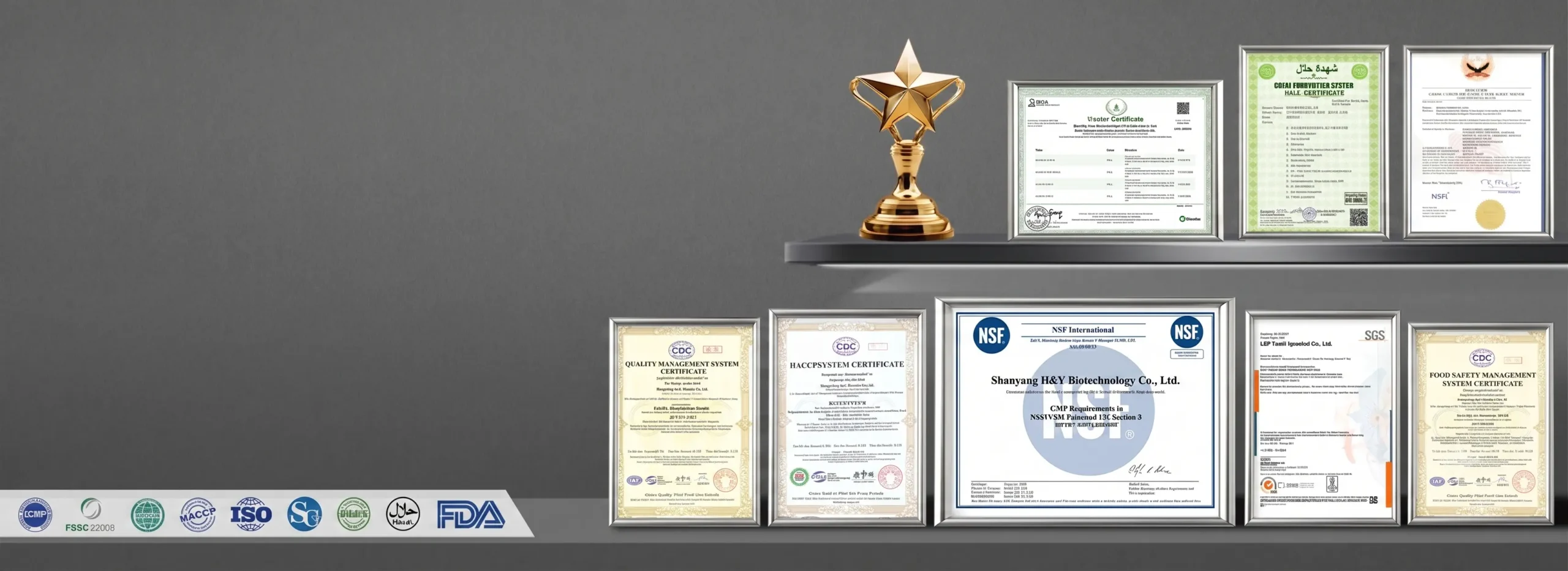
cGMP · ISO 9001 · ISO 22000 · HACCP · FSSC 22000 · Third-party Tested (project-scoped) · Flexible MOQ · Documented Lead Times · Halal · Kosher · Non-GMO pathways
→ About Us · Manufacturing Capacity · Certifications · Quality Control
Tongkat Ali Formula Architectures
The following formula concepts illustrate different product configurations for OEM and private-label development. Final extract specifications, serving sizes, and dosage forms are confirmed against the selected ingredient grade, label requirements, and manufacturing feasibility.

Formula Concept: Tongkat Ali is the only botanical, and the label prints an eurycomanone percentage.
Key Specification: Root extract; HPLC eurycomanone at ≥0.5%, ≥1.0%, or ≥2.0%.
Manufacturing Consideration: Capsule size follows the selected grade and the total fill. When the brief is choosing this root or cistanche, that comparison is on cistanche vs Tongkat Ali.

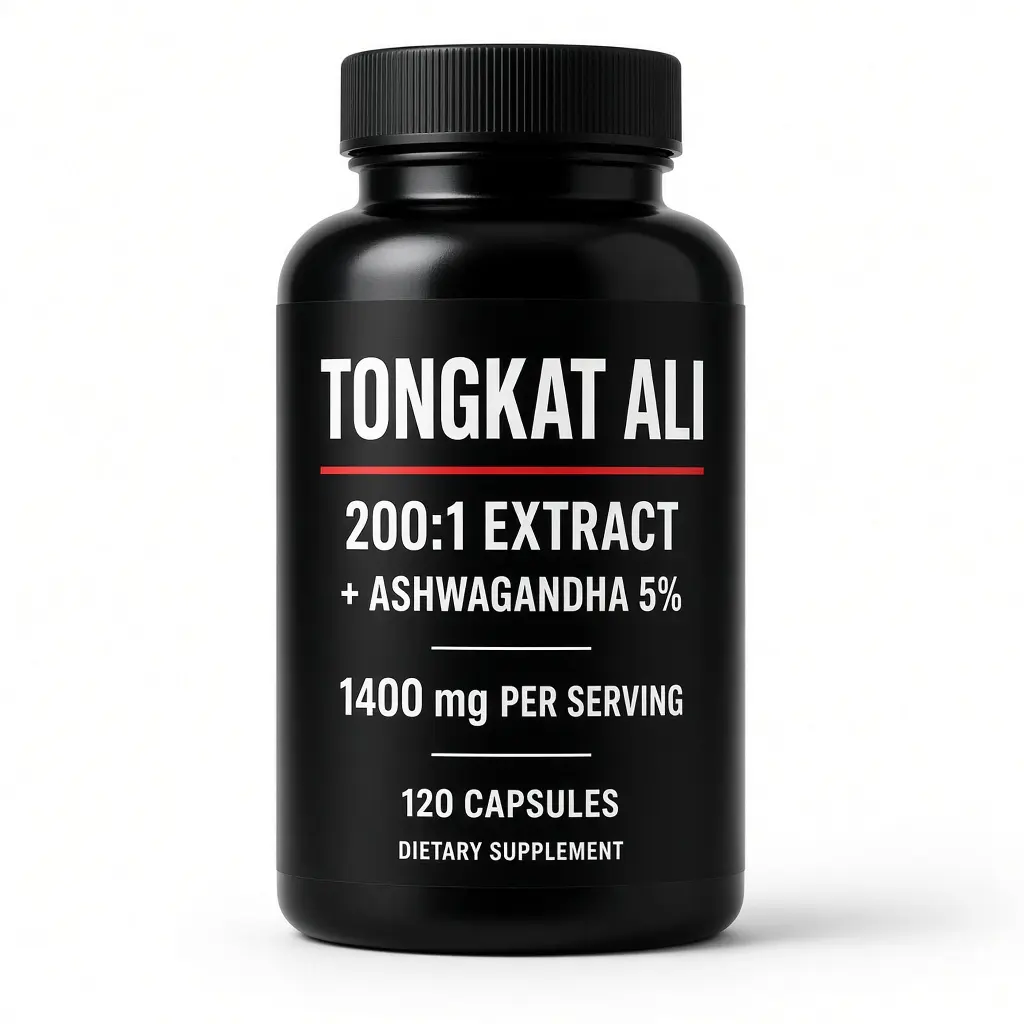
Formula Concept: The label prints a ratio and an extract weight. Identity is verified by TLC or HPLC.
Key Specification: 10:1, 50:1, 100:1, or 200:1, plus the extract amount on the reference label.
Manufacturing Consideration: An extract ratio does not establish its eurycomanone content. If the finished-product specification includes a eurycomanone claim, confirm the assay method and the measured result for the selected lot before finalizing the specification and quote.

Formula Concept: Tongkat Ali is one line in a men’s daily capsule with fenugreek and a mineral panel.
Key Specification: Tongkat Ali grade from the specification table; fenugreek extract amount and saponin percentage; zinc as elemental milligrams and salt; vitamin D3 as IU and form. Boron is added only when the destination allows that line.
Manufacturing Consideration: Fenugreek and the mineral salts share the shell, so capsule size is set from the combined fill.

Formula Concept: A botanical pair, Tongkat Ali plus maca, without a vitamin panel.
Key Specification: Maca type (gelatinized root or raw root powder) and milligrams, on a separate line from the Tongkat Ali grade.
Manufacturing Consideration: Maca bulk is usually what moves this pair to a larger shell or a two-capsule serving.

Formula Concept: One capsule carries a stress-adjacent botanical and a men’s vitality botanical.
Key Specification: Ashwagandha root, withanolide percentage and method; Tongkat Ali grade; the markers the finished unit must assay.
Manufacturing Consideration: A high combined extract load may need a split serving. A gummy version depends on the per-piece target, taste, and matrix.
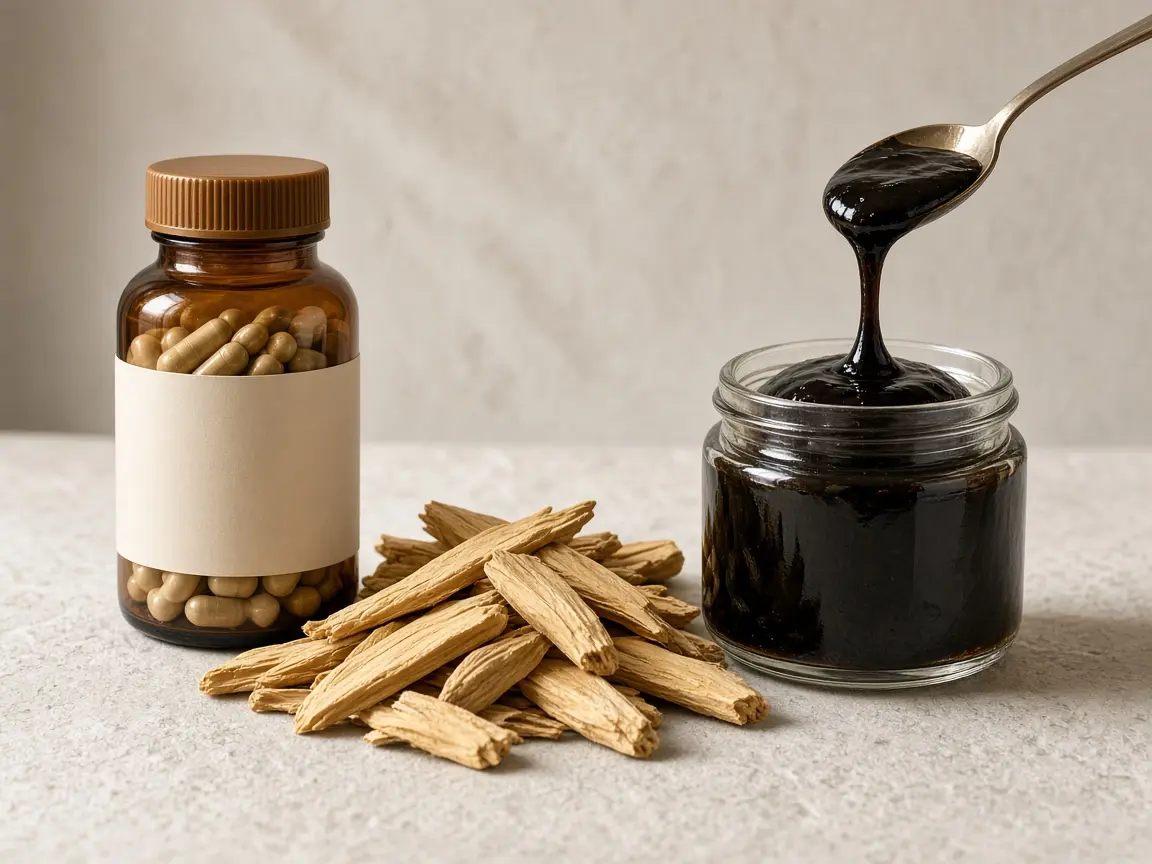
Formula Concept: A premium capsule pairing the root extract with shilajit.
Key Specification: Shilajit grade and the fulvic-related parameter that grade uses; metals scope for the resin; Tongkat Ali grade.
Manufacturing Consideration: The resin adds a metals panel that the single-extract capsule does not carry. Quote that panel before artwork.
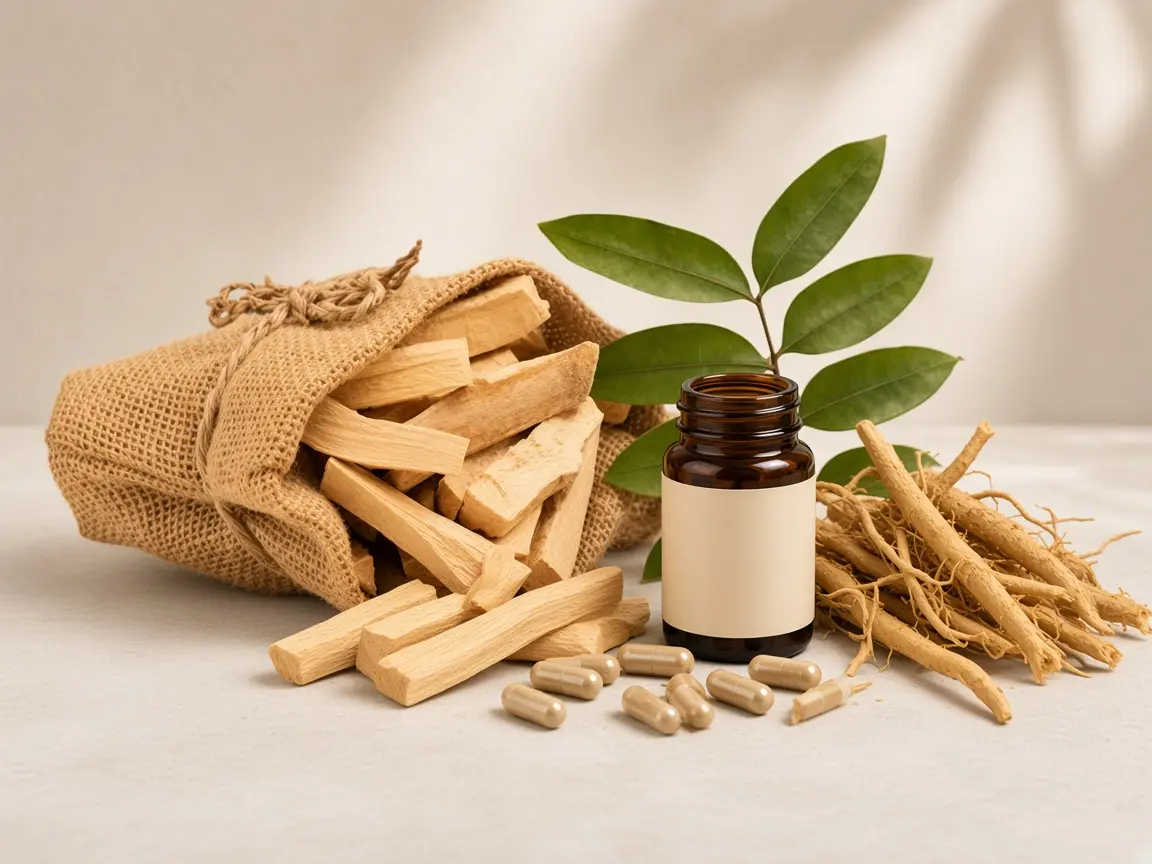
Formula Concept: A two-botanical capsule, Tongkat Ali plus fadogia agrestis.
Key Specification: Each species, each plant part, each ratio or marker, and each method. Fadogia stays on the buyer’s confirmed specification.
Manufacturing Consideration: The label and the COA each need a line per root. A single “men’s blend” milligram does not replace those lines.

Formula Concept: Instant coffee or a single-serve premix for convenience channels.
Key Specification: A water-dispersible extract, milligrams per sachet, coffee solids, and the creamer or sweetener system. Confirm whether that market files the SKU as a supplement or a food.
Manufacturing Consideration: The extract has to disperse in the drink and hold through the premix process. The capsule specification is not reused on this line.
Choose the Tongkat Ali Format: Capsules, Tablets, Powder or Gummies
The commercial input is a powder. Bitterness and flow are handled in the format that will actually be made.
The standard input is a powder extract. An oil softgel is quoted only after the project has a confirmed oil-phase formula.

Best For: First commercial SKUs, Amazon and DTC bottles, and formulas that print an assay.
Why: The shell keeps the bitter root extract off the dose. HPMC, gelatin, and pullulan are on the capsule line.
Typical Formula Cards: Marker-locked single, ratio-labeled single, fenugreek panel, maca, ashwagandha, shilajit, fadogia.
What to Lock: Extract amount per capsule, bulk density, capsule size (000 through 3), and a desiccant or barrier bottle for humid lanes.
Manufacturing Note: Hygroscopic lots are blended under humidity control. Fill weight is checked on the commercial filler before the pilot is signed.
Best For: Higher-count bottles and formulas that need a different unit load than a small capsule.
Why: A tablet can be designed around a higher unit load. Unit cost still depends on tablet weight, coating, process, and pack.
Typical Formula Cards: Ratio-labeled extracts at the higher fill band; combination panels that outgrow one capsule.
What to Lock: Tablet weight, hardness, disintegration, and whether bitterness or moisture calls for a film coat.
Manufacturing Note: When native flow is insufficient, granulation, excipients, and flow aids are assessed before the press. Coating is decided at sample.
Best For: Servings that exceed a capsule, powder products for sports-nutrition channels, stick packs, and the coffee premix.
Why: An open format can carry a larger serving, including creatine or electrolytes when the brief is a training powder.
Typical Formula Cards: Coffee or premix sachet; capsule architectures whose combined fill no longer fits one shell.
What to Lock: Dispersion in water, flavor system, fill weight, and a moisture-barrier film.
Manufacturing Note: Instantizing is used when the brief is a drink mix.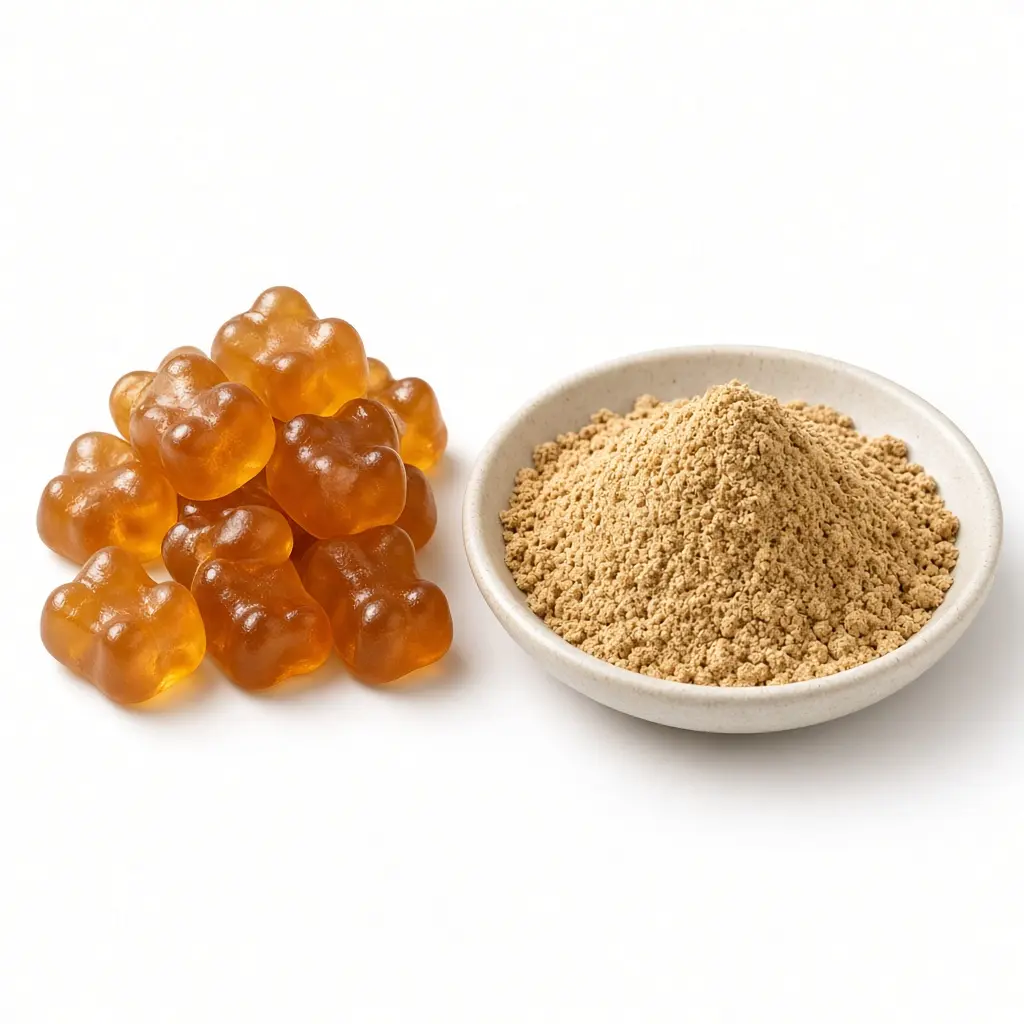
Best For: A flavored piece after the extract grade is already locked on a capsule project.
Why: Taste, extract load per piece, and processing conditions decide whether a gummy can carry the label.
Typical Formula Cards: Short single-extract pieces. Dual-extract cards are quoted as capsules unless a pilot shows the piece can carry the load.
What to Lock: Active per piece, pectin or gelatin, water activity, and any overage required at the end of shelf life.
Manufacturing Note: Gummy processing conditions can affect flavor and marker stability. Both are confirmed on a pilot before tooling.
Extract ratio and eurycomanone standardization are separate specification fields and should be documented independently.
Extract grade | Marker / verification | Primary commercial use | Formulation guidance (project-dependent) |
|---|---|---|---|
| Ratio extract 10:1 / 50:1 | Concentrated extract · TLC/HPLC identity verified | Budget vitality · high-volume tablets | Higher fill, often 300–500 mg |
| Ratio extract 100:1 / 200:1 | Concentrated extract · identity verified | Mid-tier sports and lifestyle capsules | Common label dose 200–300 mg/day |
| Standardized ≥0.5% eurycomanone | HPLC verified | Entry standardized men’s SKUs | Standardized assay at a lower marker band |
| Standardized ≥1.0% eurycomanone | HPLC verified | Primary retail SKUs and combination formulas | Compact dosing, often 100–200 mg extract/day |
| High-potency ≥2.0% eurycomanone | HPLC verified | Premium and athlete positioning | Lower extract weight for the same nominal marker amount |
| Licensed branded pathway | Multi-marker profile under a valid supply agreement, including LJ100® where that agreement is in place | Retailer or literature-led briefs | Supplied only with the license. A generic HPLC grade is a separate line |
Fill figures above are formulation guidance for that grade. They are confirmed again on the project label.
Marker amount equals extract weight times the eurycomanone percentage. On the ≥1.0% grade, 200 mg of extract contributes 2 mg of eurycomanone. At a confirmed 2.0% specification, the same 2 mg of marker requires 100 mg of extract. Capsule size may change with that fill, subject to the full formula.
The label check is three lines:
- Extract specification and assay method
- Extract amount per serving
- Serving size and units per day
Zinc, vitamin D3, and other companion lines keep their own forms.
Line | What it records |
|---|---|
| Species and part | Eurycoma longifolia Jack, root. Stem or leaf fractions are declared when they are in the lot |
| Origin documentation | Supply documents behind a Malaysia or Indonesia claim. Finished goods are manufactured at KS facilities |
| Moisture, mesh, bulk density | Values the filler or press uses. Sticks, sachets, and coffee premixes also record water dispersibility |
| Residual solvent, metals, microbes | Destination limits for that daily serving |
| PDE-5 inhibitor screen | Added when the channel requires it, with the method and reporting limit written into that project |
Three gates, each against the approved specification. Facility systems sit on Quality Control. How to read the lot sheet sits on How to Read a COA.
Incoming. Appearance, moisture, identity against Eurycoma longifolia root, and the ratio or eurycomanone result on the supplier COA. A lot that does not match the locked grade stays in quarantine. Metals, microbes, residual solvents, and pesticides follow the destination list for that serving.
In Process. Blend order, fill weight or tablet weight, and moisture on hygroscopic extracts. Gummy pilots add a taste check and a marker check after processing. If the locked grade changes after sample approval, the project is resampled under that project’s change control before commercial production.
Finished Release. The commercial batch is checked against the same specification: assay where the label states one, identity appropriate to the dosage form, and weight variation. The adulterant screen is included when it is in the project specification. Batch-specific quality documentation supplied with the shipment includes the specification, the COA, and the reports listed for that project. Retention samples stay with the lot history so a reorder can be matched.
OEM. The brand supplies the formula. KS manufactures it under the locked bill of materials, pack, and tests.
ODM. The brief names one of the architectures above, or a reference label. KS builds the specification, the fill, and the sample.
Private Label. Artwork and brand name go on an agreed architecture. The specification is locked before print.
Figures below are the published manufacturing capacity rates. Project allocation follows the production schedule.
| Item | Published range |
|---|---|
| Starting order | 3,000–5,000 units, confirmed by format on the quote |
| Sample | Free sample evaluation for qualified projects |
| Capsules | 5+ million a day |
| Tablets | 12+ million a day |
| Gummies | 2+ million a day |
| Powder | About 5,000 tons a year |
| Sites | 5 bases · 12 lines · 81,000+ m² |
| Lead time | Quoted after the formula and artwork are locked, by format |
Format | Pack |
|---|---|
| Capsules and tablets | HDPE, PET, or glass bottles; child-resistant and tamper-evident closures; alu-alu or PVC-alu blister |
| Powders and premixes | Sachets and stick packs |
| Amazon | Amazon-oriented packing when the brief includes it |
What moves the unit cost | Compare quotes by |
|---|---|
| Eurycomanone percentage | The same assay method |
| Extract weight per unit | Marker contribution per serving |
| Companion assays | The finished unit |
| Capsule size or sachet film | The finished unit |
| Pack | The finished unit |
| Adulterant screen or Halal file, when the project adds either | The finished unit |
What to Send for a Quote
Please share your target market, preferred dosage form, reference label or ingredient specification, estimated order quantity, and packaging requirements. If available, include the extract ratio and eurycomanone assay specification.
KS will review the proposed formula, unit fill, packaging, and testing requirements to assess manufacturing feasibility and prepare a project-specific quote. NDA is available on request.
Request a Tongkat Ali Manufacturing Quote
Related
- Maca Extract Supplements
- Fenugreek Supplement Manufacturer
- Ashwagandha Supplements
- Shilajit Supplement Manufacturer
- Cistanche Supplement Manufacturer
- Male Performance Supplements
- Black Ginger Supplement Manufacturer
Disclaimer: Wholesale and brand-manufacturing reference only. Not intended to diagnose, treat, cure, or prevent any disease. Tongkat Ali (Eurycoma longifolia) regulatory status, novel food status, and claim language vary by country. Brand owners remain responsible for finished-label compliance. KS Nutripharma provides manufacturing feasibility and documentation, not legal approval.
Written by KS Nutripharma Formulation Team · Reviewed by KS Nutripharma Director of R&D (PhD, Food Science · 19+ years nutraceutical development) · Updated October 2026 · R&D Center