This article is for educational and product-development purposes and is not medical advice. People with diagnosed eye conditions should consult an ophthalmologist or qualified healthcare professional.
Table of Contents
- Introduction: What Can Lutein Do for Eye Health?
- What Is Lutein?
- How Does Lutein Work in the Eyes?
- Potential Benefits of Lutein for Eye Health
- What Lutein Cannot Be Expected to Do
- Who May Be Interested in Lutein Supplements for Eye Health?
- Food Sources vs. Lutein Supplements
- Common Lutein Supplement Specifications
- Common Ingredients Paired with Lutein
- How Brands Can Position a Lutein Eye Supplement
- Choosing the Right Dosage Form
- Ingredient Quality and Stability
- How to Choose a Lutein Formula for Your Brand
- Claims Compliance for Lutein Eye-Health Products
- OEM Development Process for Lutein Supplements
- Frequently Asked Questions About Lutein for Eyes
- Developing an Evidence-Based Lutein Eye Supplement
- References and Sources
Introduction: What Can Lutein Do for Eye Health?
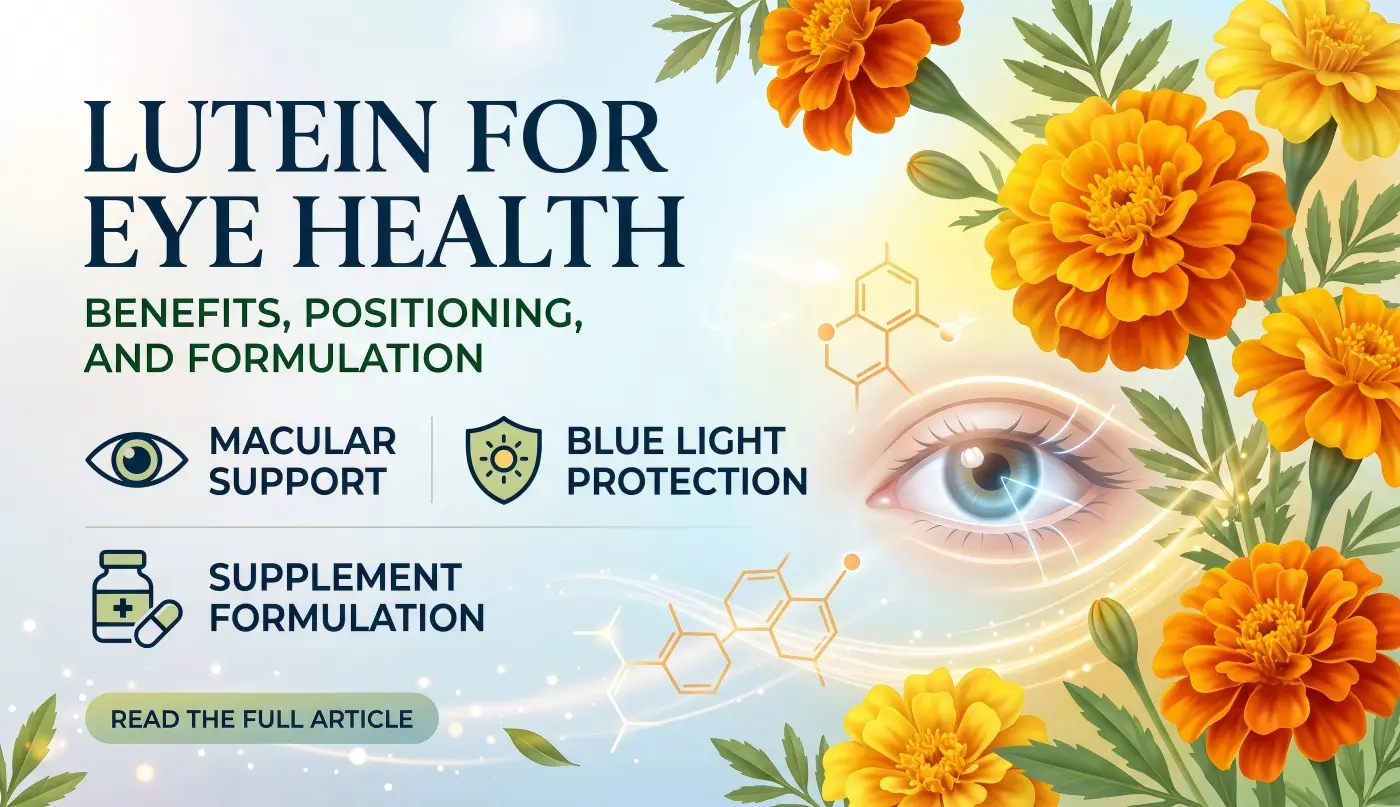
Lutein is a carotenoid naturally concentrated in the macula of the eye. It contributes to macular pigment and has antioxidant properties, but the clinical benefits of supplementation depend on the population, formula, dosage and health context. Lutein supplements should not be presented as treatments for eye disease or substitutes for professional eye care.
When consumers search for lutein for eyes or lutein benefits, they are often looking for clear, evidence-based information about how this nutrient relates to visual wellness. This article addresses those questions first from a consumer perspective, then explores how health brands and product developers can formulate, position and manufacture compliant lutein eye supplement products.
Understanding lutein eye health begins with recognizing its biological role. Lutein and its related compound zeaxanthin are the primary carotenoids found in the human retina. They are not produced by the body, which means they must come from dietary sources or supplementation. However, the presence of a nutrient in a tissue does not automatically mean that supplementing with it will improve function or prevent disease.
What Is Lutein?
Lutein as a Carotenoid
Lutein belongs to the xanthophyll subclass of carotenoids. Unlike beta-carotene, it is not a vitamin A precursor. The human body cannot synthesize lutein, so it must be obtained through diet or supplements. Lutein is fat-soluble, which means its absorption is influenced by dietary fat intake and formulation factors.
From a product development standpoint, this classification matters because lutein’s fat-solubility affects formulation choices. Oil-based delivery systems such as softgels are commonly used for lutein supplements, though other dosage forms are also viable with appropriate formulation techniques.
Where Is Lutein Found in the Eye?
Lutein and zeaxanthin are concentrated in the retina, particularly in the macula, where they form a major component of macular pigment. This yellowish pigment is located in the central region of the retina responsible for detailed central vision. Macular pigment is associated with blue-light filtering and antioxidant defense mechanisms, though these biological roles should not be equated with proven disease prevention in all populations.
The distribution of lutein in the eye has been well documented through autopsy studies and non-invasive imaging techniques. Researchers use macular pigment optical density (MPOD) as a measurable biomarker, though changes in MPOD do not necessarily equate to improved visual outcomes or disease reversal.
Natural Sources of Lutein
Lutein occurs naturally in many plant-based foods. The richest dietary sources include:
- Spinach and other dark leafy greens
- Kale
- Broccoli
- Peas
- Corn
- Egg yolk
Foods are a natural source of lutein, and nutrient content varies by variety, growing conditions, and cooking method. Supplements provide more standardized amounts, but they do not replace a balanced diet. Consumers interested in lutein benefits for eyes should consider their overall dietary pattern alongside any supplement decisions.
Source: NIH Office of Dietary Supplements – Vitamin A and Carotenoids
How Does Lutein Work in the Eyes?
This section explains the biological mechanisms through which lutein interacts with ocular tissues. It is important to distinguish these mechanisms from clinical outcomes: understanding how something works biologically does not prove that a supplement will improve vision or prevent disease in any specific individual.
Macular Pigment
Lutein, zeaxanthin and meso-zeaxanthin are associated with macular pigment, which is located in the central retina. This pigment can be measured as macular pigment optical density (MPOD) and serves as a research indicator. Changes in MPOD are observable biomarkers, but an increase in pigment density does not automatically mean that vision disease has been cured or that visual performance has improved.
Blue-Light Filtering
Lutein absorbs certain wavelengths of blue light. This is a biological and optical mechanism supported by spectroscopic data. However, this property should not be used to market products as blocking electronic screen damage or replacing healthy screen habits. Lutein supplements do not substitute for reducing screen time, adjusting lighting or receiving regular eye examinations.
For consumers researching blue light protection supplements, it is worth noting that lutein’s light-filtering properties have been studied primarily in laboratory and dietary contexts, not as a proven intervention against digital eye strain.
Antioxidant Activity
The retina has high metabolic activity and is exposed to oxidative stress from light and normal cellular processes. Carotenoids, including lutein participate in antioxidant defense systems. Phrases such as “contributes to antioxidant defenses,” “helps maintain normal eye health”, and “supports macular pigment” represent safer characterizations than claims suggesting disease prevention or cure.
| Safer Wording | Higher-Risk Wording |
| contributes to antioxidant defenses | prevents retinal damage |
| helps maintain normal eye health | repairs the retina |
| supports macular pigment | reverses vision loss |
Potential Benefits of Lutein for Eye Health
Evidence related to lutein benefits varies in strength depending on the outcome measured, the population studied and the formulation used. The following sections organize the evidence by level of scientific support.
Established Biological Role
Lutein has a well-established biological presence in the retina. It is a component of macular pigment, participates in blue-light absorption and contributes to antioxidant defenses. However, biological plausibility alone does not prove that every lutein supplement improves visual outcomes. The gap between biological mechanism and clinical effect is a critical distinction for both consumers and product developers.
Evidence from AREDS2
The Age-Related Eye Disease Study 2 (AREDS2), conducted by the National Eye Institute, is the most frequently cited clinical trial in discussions about lutein and eye health. It is essential to understand what this study actually examined:
- AREDS2 tested a specific combination formula, not lutein alone
- The formula included: Lutein 10 mg, Zeaxanthin 2 mg, Vitamin C, Vitamin E, Zinc, and Copper
- Participants were primarily individuals with intermediate age-related macular degeneration (AMD) or advanced AMD in one eye
- Results showed the formula could help slow progression in certain AMD patients
- AREDS2 did not prove that the formula prevents AMD in healthy people
- AREDS2 did not cure AMD or restore lost vision
The AREDS2 evidence applies to a specific population using a specific formula. It should not be generalized to all lutein supplements or all consumers. For brands developing areds eye vitamins, understanding these limitations is essential for compliant product positioning.
Lutein and Visual Function in Healthy Adults
Some studies have examined whether lutein supplementation affects visual function measures such as contrast sensitivity, glare recovery, and MPOD in adults without diagnosed eye disease. Results vary by study design, dose, duration and participant characteristics.
Appropriate characterizations include: lutein may support certain measures of visual function; evidence varies by study design and population; and more research may be needed to clarify effects in different groups. Claims such as “improves eyesight” or “enhances vision” overstate the current evidence base.
Lutein for Screen Users
Screen users represent a significant portion of consumers searching for eye strain supplements and vision support supplements. Extended screen time is associated with visual discomfort, though this involves multiple factors including reduced blinking, viewing distance, ambient lighting, and insufficient breaks.
Lutein can be positioned within digital lifestyle products focused on visual wellness. However, it cannot be claimed to treat digital eye fatigue or prevent screen-related damage. Non-supplement recommendations that should accompany any product discussion include:
- Taking regular breaks using the 20-20-20 rule
- Maintaining appropriate screen distance and ergonomics
- Reducing glare and adjusting ambient lighting
- Seeking professional evaluation for persistent symptoms
Lutein and Healthy Aging
Aging consumers often show increased interest in eye health ingredients and nutritional strategies for maintaining wellness. AREDS2 provides clinical evidence for a specific AMD population, but healthy older adults without AMD are a different group. Products can be positioned around healthy aging concepts such as daily visual wellness and carotenoid nutrition, without implying prevention or treatment of age-related diseases.
What Cannot Be Expected from Lutein?
This section is essential for meeting YMYL (Your Money or Your Life) quality standards and building reader trust. Lutein supplements must not be described as able to:
- Restore vision that has already been lost
- Cure cataracts
- Treat glaucoma
- Treat diabetic retinopathy
- Eliminate eye floaters
- Cure dry eye syndrome
- Prevent all age-related eye diseases
- Replace professional eye examinations or prescribed treatments
Even when a nutrient participates in normal eye physiology, this does not mean that supplementing with it produces disease-treatment effects. Product claims must stay within the bounds of actual formulation and research evidence. Single-ingredient studies cannot automatically justify claims for multi-ingredient products, and vice versa.
The FDA has issued warning letters to companies making unsubstantiated disease claims for eye health supplements. Brands should review FDA guidance on structure/function claims and ensure all marketing materials comply with applicable regulations.
Who May Be Interested in Lutein Supplements for Eye Health?
Rather than suggesting who “needs” to take lutein, this section identifies consumer groups who may consider lutein supplements for eye health as part of their broader wellness approach.
Adults with Low Dietary Intake
Individuals who rarely consume dark green vegetables or other lutein-rich foods may be interested in supplementation. Whether a nutritional gap exists should be assessed in the context of overall dietary patterns. Supplements do not replace a healthy diet.
Adults Focused on Healthy Aging
Eye health is an important component of the healthy aging market. Lutein supplements fit within daily nutrition and long-term wellness positioning, though products should not imply prevention of age-related disease.
Office Workers and Frequent Screen Users
This audience represents a growing segment for digital wellness products. Positioning can focus on visual wellness and antioxidant nutrition for people with screen-intensive lifestyles. Products should not guarantee reduction of all screen-related discomfort and should be paired with education about healthy screen habits.
Consumers Seeking Eye-Health Formulas
Consumers already using multivitamins or eye-health products may be interested in formulas containing lutein. These individuals should check for overlapping nutrients, particularly zinc, vitamin A and vitamin E, as multi-product use can lead to excessive intake of certain vitamins and minerals.
People with Diagnosed Eye Conditions
Individuals with diagnosed eye conditions should not self-select AREDS2 or high-dose formulations based on blog content alone. AMD management varies by stage, and decisions about supplementation should involve an ophthalmologist. This article does not provide individual diagnosis or treatment recommendations.
Groups Requiring Additional Caution
The following groups should consult a qualified healthcare professional before using lutein supplements:
- Pregnant or breastfeeding individuals
- Children and adolescents
- People taking medications
- Individuals with diagnosed eye disease
- Those already taking high-dose supplements
- Individuals with known allergies to formulation excipients
The term “natural” should not be equated with safe for all populations. Every supplement should be evaluated in the context of individual health status and concurrent product use.
Food Sources vs. Lutein Supplements
Benefits of Food Sources
Food sources of lutein provide additional nutrients including fiber, vitamins and minerals that supplements do not replicate. A diet rich in leafy greens and colorful vegetables supports overall health beyond any single compound. Food sources also avoid the excipient and dosage-form considerations associated with supplement products.
Benefits of Standardized Supplements
Lutein supplements offer specific advantages for consumers and brands:
- Defined, consistent amounts per serving
- Convenient daily use
- Ability to combine lutein with zeaxanthin and other eye-health ingredients
- Flexible product design for different market positions
Absorption Considerations
Lutein is fat-soluble, and co-ingestion with dietary fat may support absorption. Raw material form and formulation matrix can also influence bioavailability. Brands should not claim specific absorption multiples without product-specific clinical data supporting such statements.
Common Lutein Supplement Specifications
The following sections transition from consumer-oriented information to product development considerations for brands entering the eye health supplements market.
Common Market Dosages
Lutein supplements are available in various potencies. Market-visible dosages include 6 mg, 10 mg, 20 mg and 40 mg per serving. These represent commercially available specifications, not universally recommended doses. The appropriate amount depends on product positioning, target population, formula design and regulatory considerations. Higher amounts do not necessarily indicate greater efficacy.
Lutein 10 mg + Zeaxanthin 2 mg
This combination is among the most recognized in the eye health category because the amounts match the carotenoid doses used in AREDS2. However, a product containing 10 mg lutein and 2 mg zeaxanthin should not automatically be marketed as an “AREDS2 formula” unless it matches the full study composition and is targeted at the appropriate population.
Free Lutein vs. Lutein Ester
Free lutein and lutein esters are not identical raw material forms. Labeling and dose conversion should be based on the specific raw material specifications and assay data. Brands must clarify whether the labeled amount refers to active lutein content or total raw material weight. This distinction affects formulation accuracy, cost calculations and regulatory compliance.
Common Ingredients Paired with Lutein
Eye-health formulas often combine lutein with complementary ingredients. Each combination should be evaluated for formulation compatibility, evidence alignment and regulatory permissibility in the target market.
Zeaxanthin
Zeaxanthin is the most common co-ingredient in lutein eye supplement formulations. Together, these carotenoids form the basis of macular pigment nutrition concepts. The typical ratio is 10 mg lutein to 2 mg zeaxanthin, though other ratios are also used in commercial products.
Astaxanthin
Astaxanthin is a red carotenoid sometimes included in premium formulas targeting digital lifestyles and antioxidant nutrition. Research on astaxanthin should not be extrapolated to justify claims for finished products containing multiple carotenoids.
Bilberry Extract
Bilberry extract, standardized for anthocyanins, is used in eye-health and circulation-support formulas. Product developers should verify anthocyanin content, stability, color characteristics and odor profile. Bilberry pairs well with capsules, tablets and gummy formats. For more information, see our bilberry supplements page.
Saffron
Saffron is an emerging ingredient in premium visual health products, particularly for European market differentiation. Brands should select suppliers with clear specification sheets and identity testing. Any efficacy claims must align with the specific saffron extract and dose used in supporting studies.
Vitamins and Minerals
Common additions to eye-health formulas include Vitamin C, Vitamin E, Zinc, Copper and Vitamin A. Brands should not copy AREDS2 formulations for general consumer marketing without understanding the implications of high-dose mineral and vitamin intake. Safety assessments and regulatory compliance reviews are essential.
Omega-3 Fatty Acids
Omega-3s, particularly DHA, support both eye and cognitive health positioning. They are compatible with softgel formats. Notably, AREDS2 found that adding Omega-3 fatty acids to the study formula did not provide additional AMD risk reduction beyond the core formula. Products should not be positioned as “enhanced AREDS2” simply because they contain lutein plus Omega-3. For DHA-specific formulations, see our dha supplements section.
How Brands Can Position a Lutein Eye Supplement
Product positioning defines how a lutein eye supplement is presented to consumers. The following frameworks represent common, lower-risk positioning strategies.
Daily Eye Nutrition
Target audience: General adults interested in daily wellness. Appropriate characterizations include: supports daily eye nutrition, supports normal visual function and helps maintain eye health. This is the broadest and generally lowest-risk positioning category.
Digital Lifestyle and Screen Wellness
Target audience: Office workers, students, gamers and frequent device users. Safe positioning language includes: formulated for screen-intensive lifestyles, visual wellness support and antioxidant nutrition for digital lifestyles. Brands should avoid claims such as “prevents blue-light damage,” “repairs screen-damaged eyes” or “eliminates digital eye strain.”
Healthy Aging
Target audience: Adults 50 and older focused on maintaining wellness. Appropriate language includes: eye-health support for healthy aging, daily visual wellness for adults and carotenoid nutrition for aging consumers. Products should not claim to prevent age-related macular degeneration, stop age-related vision loss or prevent cataracts.
Premium Multi-Ingredient Formula
Premium positioning may include combinations such as lutein + zeaxanthin, lutein + zeaxanthin + astaxanthin, lutein + bilberry, lutein + saffron, or eye + brain dual-concept formulas. Every claim must be supported by evidence relevant to the actual formulation, dose and target population.
Choosing the Right Dosage Form
Dosage form selection affects manufacturing feasibility, consumer preference, cost structure and stability. The optimal form depends on ingredient compatibility, target market and product positioning.
Softgels
Softgels are well-suited for oil-suspension lutein and fat-soluble co-ingredients such as zeaxanthin, astaxanthin and Omega-3 fatty acids. They support premium product positioning and offer good protection for sensitive ingredients.
Key formulation considerations include: sedimentation of suspended solids, oxidation sensitivity, shell-content compatibility and light protection requirements.
Hard Capsules
Hard capsules accommodate lutein powder, microencapsulated powder and beadlets, as well as plant extract combinations. They offer formulation flexibility and relatively fast development timelines. Plant-based capsule options are available for vegetarian positioning.
Challenges include: powder flow characteristics, fill weight uniformity, capsule size constraints for multi-ingredient formulas and moisture sensitivity of certain actives.
Tablets
Tablets are suitable for lutein beadlets, vitamin-mineral combinations and multi-ingredient eye-health formulas. They support cost-effective manufacturing at scale.
Considerations include: compression force effects on sensitive actives, processing heat exposure, active ingredient loading capacity and disintegration performance requirements.
Gummies
Gummies appeal to younger consumers, family products and individuals who prefer not to swallow capsules. They require specialized ingredient forms such as cold-water-dispersible (CWS) microencapsulated powders or beadlets suitable for gummy processing.
Development challenges include: heat processing effects, moisture and oxidation sensitivity, color and flavor masking, uniform distribution of actives and sugar versus sugar-free formulation options.
Powders and Stick Packs
Powder formats work well for drink-mix products, eye + cognition combination formulas and digital lifestyle positioning. Challenges include: water dispersibility, color and flavor management, solution stability and single-serving dose uniformity.
When selecting a dosage form for lutein supplements for eye health, manufacturers should evaluate all technical, regulatory and market factors holistically. For brands exploring custom lutein eye supplements, dosage form selection is a key discussion point in the product development process.
Ingredient Quality and Stability
Raw Material Source
Brands should verify the following for lutein raw materials:
- Marigold flower source and extraction method
- Free lutein versus lutein ester specifications
- Active content specification and assay method
- Extraction solvent and standardization information
- Supplier traceability and documentation
Quality Documentation
Recommended documentation includes: Certificate of Analysis, specification sheet, identity testing results, assay results, heavy metals testing, microbiological testing, pesticide residue analysis, residual solvent testing, allergen statement, GMO status documentation and stability data.
Main Stability Risks
Lutein is sensitive to oxygen, light, heat and moisture. Ingredient interactions in multi-component formulas can also affect stability. These factors must be addressed through formulation design, packaging selection and storage recommendations.
Protection Strategies
Common protection approaches include: microencapsulation technology, beadlet formulations, antioxidant systems in the formulation matrix, nitrogen protection during manufacturing, light-resistant packaging materials, oxygen-barrier packaging and desiccant inclusion. Brands should not promise specific shelf-life periods without supporting stability data for the finished product.
How to Choose a Lutein Formula for Your Brand
The following framework guides brands through product development decisions in sequence.
Define the Target Consumer
Identify the primary audience: general adults, healthy aging consumers, screen-intensive users or premium eye-nutrition seekers. Avoid targeting disease patients directly with general wellness supplement marketing.
Choose the Product Positioning
Select a positioning framework: daily eye nutrition, screen-focused wellness, healthy aging, premium carotenoid formula or eye + brain nutrition.
Select Ingredients and Specifications
Confirm: lutein form (free vs ester), lutein amount per serving, zeaxanthin inclusion and ratio, additional plant extracts or nutrients and daily serving size.
Select the Dosage Form
Evaluate based on: ingredient compatibility, target cost structure, minimum order quantities, consumer experience preferences, packaging requirements and target market regulations.
Complete Regulatory and Evidence Review
Before finalizing, verify: formula permissibility in target markets, dose compliance with local regulations, availability of evidence for planned claims, label and website consistency and absence of implied disease claims.
Claims Compliance for Lutein Eye-Health Products
Claims compliance is one of the most important aspects of lutein eye supplement development. The following guidance applies particularly to the U.S. market; brands must verify requirements for each target country.
Generally Lower-Risk Structure/Function Wording
Structure/function claims describe the role of a nutrient in affecting normal structure or function of the body. Examples with relatively lower regulatory risk include:
- Supports eye health
- Supports normal visual function
- Helps maintain macular pigment
- Provides antioxidant support
- Supports daily eye nutrition
- Formulated for visual wellness
Even lower-risk claims require substantiation. Brands should maintain evidence files supporting each claim made.
High-Risk or Prohibited Disease Claims
The following claims should be avoided entirely in supplement marketing:
- Treats macular degeneration
- Prevents cataracts
- Reverses vision loss
- Cures dry eyes
- Treats glaucoma
- Repairs retinal damage
- Prevents diabetic retinopathy
- Eliminates eye floaters
Implied Claims Also Matter
Even without explicit disease words, certain presentations can create implied disease claims:
- Disease imagery paired with product purchase buttons
- Before-and-after photos suggesting disease improvement
- “Doctors don’t want you to know” messaging
- User testimonials describing disease improvement
- SEO titles containing “cure” or “treatment”
- Disease content sections adjacent to product CTAs
A disclaimer does not fix an otherwise unlawful or misleading claim. The claim itself must be compliant.
Evidence Must Match the Product
The FTC requires that objective health claims be supported by competent and reliable scientific evidence before they are disseminated. Evidence must match: the actual raw material used, the raw material form, the dose, the complete formula composition, the target population, the duration of use and the specific outcome claimed. A study on 10 mg lutein cannot support claims for a product containing 1 mg lutein in a different form.
US Labeling Considerations
For products marketed in the United States: structure/function claims must be truthful and not misleading; companies must maintain substantiation; FDA notification is required within 30 days of first marketing; and labels must include the FDA-mandated disclaimer for structure/function claims. Specific implementation should be reviewed by qualified regulatory personnel.
OEM Development Process for Lutein Supplements
For brands seeking private label lutein supplements, a structured development process ensures product quality, regulatory compliance and market readiness.
Step 1 – Product Brief
The brand provides: target market, target demographic, product positioning, preferred dosage form, target retail price, packaging preferences and forecast volumes.
Step 2 – Formula and Ingredient Review
The manufacturer evaluates: raw material forms, formulation compatibility, active ingredient payload capacity, stability risks, preliminary cost structure and regulatory feasibility in the target market.
Step 3 – Prototype Development
Prototypes are developed and evaluated for: visual appearance, color, flavor or odor profile, capsule or tablet size, daily serving count and preliminary stability observations.
Step 4 – Testing and Packaging
Finished prototypes undergo: active content assay, microbiological testing, heavy metals analysis, content uniformity verification, packaging compatibility assessment and stability protocol design.
Step 5 – Label and Claims Review
Labels are reviewed for: Supplement Facts accuracy, ingredient naming compliance, serving size correctness, suggested use instructions, claim language appropriateness, required warnings and disclaimer inclusion.
Step 6 – Production and Release
Commercial production includes: batch manufacturing records, in-process quality checks, finished product testing, release documentation and batch traceability systems.
Brands interested in lutein supplement manufacturing should partner with experienced developers who understand both the technical and regulatory complexities of eye-health products.
Frequently Asked Questions About Lutein for Eyes
What are the main lutein benefits for the eyes?
Lutein is a carotenoid concentrated in the macula, where it contributes to macular pigment, participates in filtering blue light, and supports antioxidant defenses. Clinical effects depend on the specific population, formula, dosage, and health context.
Does lutein improve eyesight?
Some studies have observed changes in specific visual function measures such as contrast sensitivity and glare recovery with lutein supplementation, but results vary significantly by study design and population. Lutein does not guarantee improved eyesight or restoration of lost vision.
How much lutein should a person take?
There is no universal recommended personal dose. Market-available specifications range from 6 mg to 40 mg per serving. Individual needs should be considered in the context of dietary intake, product labeling, and professional guidance.
Is 20 mg better than 10 mg lutein?
A higher milligram amount does not automatically indicate superior efficacy. Comparison requires examining the research evidence, target population, formulation approach, and safety considerations for each dose level.
Is lutein good for screen users?
Lutein can be included in visual wellness products marketed to screen users, but it does not replace rest breaks, ergonomic adjustments or professional evaluation of persistent symptoms.
What is the difference between lutein and zeaxanthin?
Both are xanthophyll carotenoids found in the macula. They are often combined in supplements because together they represent the primary constituents of macular pigment. Zeaxanthin is more concentrated in the central macula, while lutein is more abundant in the peripheral macula.
Are lutein supplements the same as AREDS2?
No. AREDS2 was a specific clinical trial using a defined multi-ingredient formula in a specific patient population. Only products matching that full composition and appropriately targeted can accurately reference AREDS2 evidence.
Can lutein prevent macular degeneration or cataracts?
AREDS2 showed that a specific formula could slow progression in certain AMD patients, but it did not prove prevention of AMD onset or treatment of cataracts. General lutein supplements should not be marketed with disease prevention claims.
Which dosage form is best for a lutein eye supplement?
The optimal dosage form depends on the raw material type, co-ingredients, target consumer preferences, cost targets and stability requirements. Common options include softgels, hard capsules, tablets, gummies, and powders.
Developing an Evidence-Based Lutein Eye Supplement
Lutein is a well-studied carotenoid with established biological relevance to eye health. It contributes to macular pigment, participates in blue-light filtering, and supports antioxidant defenses. However, the translation from biological mechanism to clinical benefit depends on many factors, including the specific formulation, dose, target population, study design, and outcome measures.
AREDS2 provided important evidence for a specific multi-ingredient formula in a defined AMD population, but these results cannot be generalized to all lutein products or all consumers. Brands developing eye-health supplements must carefully evaluate dose, dosage form, raw material quality, stability, regulatory compliance, and evidence alignment for every claim.
The eye health supplements market continues to grow as consumers seek nutritional approaches to visual wellness. Success in this category requires products that are not only well-formulated but also responsibly marketed with claims that reflect actual evidence.
Developing a lutein eye-health supplement requires careful evaluation of ingredient form and dosage, supporting nutrients, delivery format, stability, and target-market claims. Share your product concept with our formulation team to receive a customized manufacturing proposal.
Discuss Your Eye-Health Formula | Request an OEM Quote | Explore Lutein Manufacturing Options
References and Sources
This article was developed using the following authoritative sources. Commercial blogs, retailer product descriptions and unauthored health websites were not used as primary scientific references.
[1] National Institutes of Health, Office of Dietary Supplements. Vitamin A and Carotenoids Fact Sheet for Health Professionals. Available at: ods.od.nih.gov
[2] National Eye Institute. Age-Related Eye Disease Study 2 (AREDS2) Research Group. “Lutein/Zeaxanthin for the Treatment of Age-Related Cataract.” JAMA Ophthalmology, 2013.
[3] National Eye Institute. AREDS2 Results. nei.nih.gov
[4] U.S. Food and Drug Administration. Structure/Function Claims: Small Entity Compliance Guide. fda.gov
[5] Federal Trade Commission. Health Products Compliance Guidance. ftc.gov
[6] Ma L, Dou HL, Wu YQ, et al. “Lutein and zeaxanthin intake and the risk of age-related macular degeneration.” British Journal of Nutrition, 2012.
[7] Stringham JM, Bovier ER, Wong JC, Hammond BR. “The influence of dietary lutein and zeaxanthin on visual performance.” Journal of Food Science, 2010.
About This Article
This article was written by a nutrition and supplement formulation specialist with experience in eye-health product development. Medical content was reviewed for accuracy by a qualified healthcare professional.
Commercial Disclosure: This content is published by a dietary supplement manufacturer. It is not authored by an independent medical institution and does not constitute medical advice.