Introduction
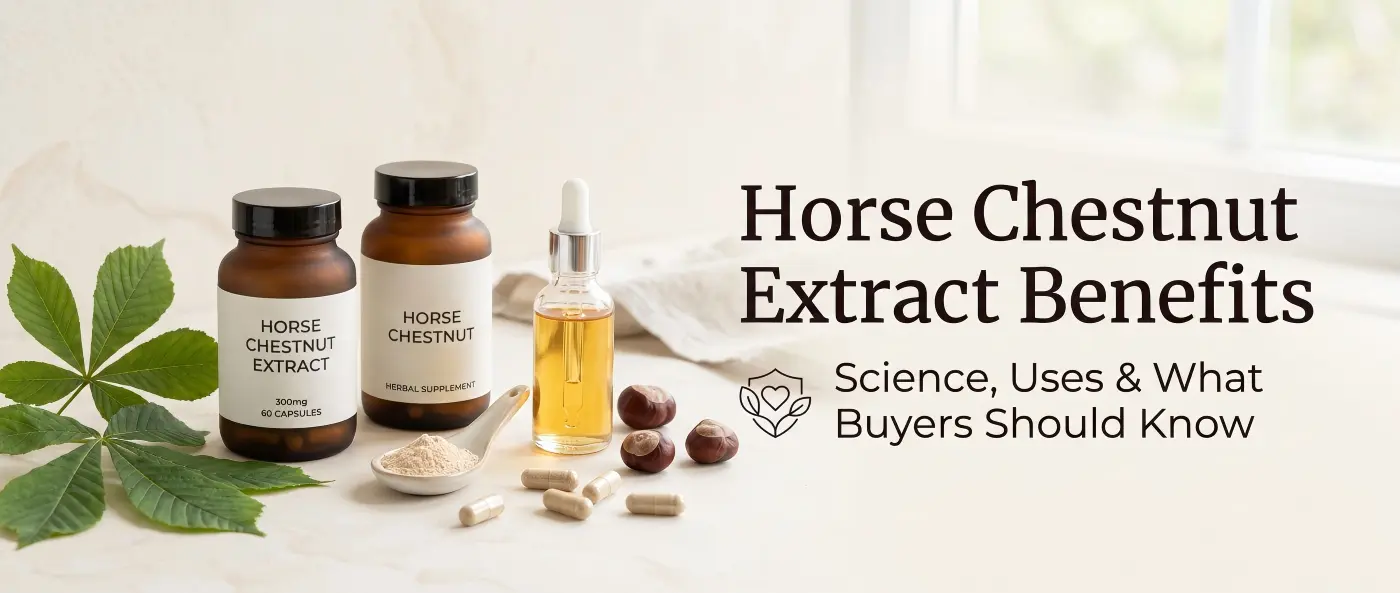
Horse chestnut extract (Aesculus hippocastanum) is one of the most scientifically validated botanical extracts in the circulatory and venous health category. Its active compound, aescin (escin), has been validated through decades of randomized controlled trials (RCTs) and systematic reviews, establishing it as a core ingredient in the European phytomedicine market and a rapidly growing component in the global dietary supplement industry.
The National Center for Complementary and Integrative Health (NCCIH), a division of the U.S. National Institutes of Health (NIH), states that horse chestnut extract is primarily used for complications related to venous insufficiency, including varicose veins, ankle swelling, and leg cramps. The European Medicines Agency (EMA) further validates its traditional use through the European Union Herbal Monograph and establishes standardized quality assessment frameworks.
For supplement brand developers and ingredient procurement decision-makers, horse chestnut extract represents not only a scientifically-backed ingredient but also a raw material that requires strict control over standardized content, esculin removal verification, heavy metal testing, and third-party verification. This article provides a comprehensive, evidence-based overview covering scientific evidence, mechanisms of action, safety profiles, quality control standards, and comparisons with similar botanical ingredients—written to meet EEAT (Experience, Expertise, Authoritativeness, Trustworthiness) and YMYL (Your Money or Your Life) standards.
Looking for Horse Chestnut Extract supplement manufacturing? Explore KSNutripharma’s OEM solutions →
1. What Is Horse Chestnut Extract?
Botanical Source
Horse chestnut (Aesculus hippocastanum L.) belongs to the Sapindaceae family. Native to the mountain forests of the Balkans, extending through western Asia to the Himalayas, it is now widely cultivated as an ornamental and shade tree across Europe, North America, and other temperate regions. The tree produces distinctive prickly pods containing shiny brown seeds—commonly known as “conkers” in Britain—which have been the primary source of medicinal preparations for centuries.
The NIH LiverTox database explicitly distinguishes horse chestnut from the edible sweet chestnut (Castanea species) and emphasizes that horse chestnut seeds, bark, leaves, and flowers all contain toxic compounds that must be professionally extracted and processed before use in dietary supplements.
Traditional Use
European traditional medicine has utilized horse chestnut seeds for centuries, primarily to support leg circulatory health, maintain venous tone, and help individuals who stand for long periods achieve greater leg comfort. German phytomedicine particularly values this ingredient, routinely using it as a standard option for chronic venous insufficiency (CVI) supportive care.
The EMA European Union Herbal Monograph documents the traditional use of horse chestnut seeds for relieving leg discomfort and heaviness associated with mild circulatory disorders.
Modern Extraction
Modern horse chestnut extract production involves sophisticated processing techniques designed to concentrate bioactive compounds while eliminating toxic constituents:
• Seed selection and cleaning: High-quality raw materials are sourced from cultivated trees with verified botanical identity
• Esculin removal: Raw seeds contain esculin, a toxic coumarin glycoside that must be completely eliminated through specific processing steps
• Standardization: The extract is standardized to a defined aescin content, typically 16% to 20% triterpene glycosides calculated as aescin, ensuring batch-to-batch consistency
What Is Aescin?
Aescin is the star active compound responsible for horse chestnut extract’s vascular-supportive properties. It is a complex mixture of triterpenoid saponins, primarily comprising β-aescin and α-aescin, along with related glycosides. Research has demonstrated that aescin works through several complementary mechanisms: it inhibits hyaluronidase (an enzyme that degrades capillary wall proteoglycans), reduces phospholipase A2 activity (thereby modulating inflammatory mediator release), and stimulates ATP production in venous tissues. This multi-target approach explains why standardized horse chestnut extract has demonstrated consistent results across numerous clinical studies.
2. Why Is Horse Chestnut Extract Popular?
The growing popularity of horse chestnut extract in the global supplement market is driven by several converging trends that extend beyond traditional herbal medicine:
Growing Vein Health Category: Chronic venous insufficiency affects an estimated 20–25% of women and 10–15% of men at some point in their lives, with incidence increasing with age. This large addressable market has driven demand for evidence-based natural ingredients that support venous function without the discomfort and compliance challenges associated with compression therapy.
Healthy Aging: As populations age globally, maintaining mobility and leg comfort has become a priority for older consumers. Horse chestnut extract appeals to this demographic because it addresses a common age-related concern—leg heaviness and swelling—while being backed by clinical research that supports its use for daily wellness routines.
Office Workers and Sedentary Lifestyles: Modern work environments, characterized by prolonged sitting and limited movement, have created a new target audience for circulatory support supplements. Office workers, remote employees, and professionals in sedentary occupations increasingly report feelings of leg fatigue and heaviness. Horse chestnut extract fits naturally into “workplace wellness” and “desk job support” product concepts.
Travel Wellness: Long-haul flights, extended car journeys, and travel-related immobility have given rise to the “travel wellness” supplement category. Travelers seeking natural support for leg comfort during and after trips represent a growing consumer segment for horse chestnut-based formulations.
Beauty From Within: The connection between healthy circulation and skin appearance has fueled interest in horse chestnut extract within the beauty supplement market. By supporting microvascular health and healthy fluid balance, this botanical ingredient is increasingly incorporated into formulas targeting under-eye appearance, skin clarity, and overall radiance.
3. Horse Chestnut Extract Benefits
The following benefits are supported by clinical research and traditional use. All descriptions use compliant structure/function language appropriate for dietary supplement marketing (“supports,” “helps maintain,” “promotes”).
Supports Healthy Vein Function
Horse chestnut extract is one of the most researched botanical ingredients for supporting healthy vein function. Multiple randomized, double-blind, placebo-controlled trials have demonstrated that standardized extracts can help maintain venous tone and support the structural integrity of vein walls.
A Cochrane systematic review assessed 17 randomized controlled trials involving 1,258 subjects and found that, compared to placebo, horse chestnut seed extract was associated with statistically significant improvements in CVI-related symptoms, including reductions in lower-leg volume and leg circumference at the calf and ankle. Six placebo-controlled studies (543 participants) reported significant reductions in leg pain.
A landmark German study published in The Lancet compared horse chestnut extract to compression stockings in patients with chronic venous insufficiency, finding that both provided comparable support for healthy leg volume and comfort. This is particularly significant because compression therapy, while effective, suffers from poor patient compliance due to discomfort and inconvenience.
Promotes Healthy Circulation
By supporting venous tone and capillary integrity, horse chestnut extract promotes healthy blood circulation throughout the body, with particular benefits for lower limb circulation. Clinical studies have documented improvements in markers of circulatory health, including reduced leg circumference measurements and improved subjective comfort scores.
Helps Reduce Feelings of Heavy Legs
One of the most commonly reported benefits in clinical trials is the reduction in the sensation of “heavy legs”—a subjective but significant symptom of venous insufficiency. Participants in multiple studies reported noticeable improvements in leg comfort within 2–4 weeks of consistent supplementation, with optimal benefits typically observed after 8–12 weeks of daily use.
Supports Microvascular Health
Beyond the larger veins, horse chestnut extract supports the health of microvessels—the tiny capillaries responsible for nutrient and oxygen exchange at the tissue level. Aescin’s inhibitory effect on hyaluronidase helps protect the proteoglycan matrix that maintains capillary wall integrity. This supports healthy microcirculation and helps maintain the fine vascular network essential for tissue health.
Provides Antioxidant Protection
Horse chestnut seeds contain flavonoids and other polyphenolic compounds that provide antioxidant protection for blood vessels. These compounds help neutralize free radicals that can damage vascular endothelium and contribute to oxidative stress. A review published in Drug Design, Development and Therapy notes that aescin possesses antioxidant properties that protect vascular tissue through free radical scavenging and modulation of oxidative stress pathways.
Supports Skin Appearance Through Healthy Circulation
The relationship between internal circulatory health and external skin appearance is well-established. By supporting healthy blood flow and fluid balance, horse chestnut extract contributes to skin that appears healthy and vibrant. This has made it a popular ingredient in both oral beauty supplements and topical cosmetic preparations targeting the appearance of tired skin, under-eye puffiness, and overall skin tone.
4. How Does Horse Chestnut Extract Work?
Understanding the mechanisms of action behind horse chestnut extract helps explain its consistent performance in clinical settings and informs formulation decisions for supplement developers.
Aescin and Capillary Integrity
The primary mechanism involves aescin’s effect on capillary permeability. Under normal conditions, capillary walls maintain a delicate balance, allowing necessary fluid exchange while preventing excessive leakage. When venous pressure increases or capillary walls weaken, fluid can leak into surrounding tissues, leading to edema and discomfort.
Aescin helps maintain capillary integrity through several actions:
• Hyaluronidase inhibition: Hyaluronidase is an enzyme that breaks down hyaluronic acid and other proteoglycans in the capillary wall matrix. By inhibiting this enzyme, aescin helps preserve the structural “cement” that keeps capillary cells tightly joined.
• Phospholipase A2 modulation: By reducing the activity of this inflammatory enzyme, aescin helps maintain a healthy inflammatory response in vascular tissues.
• Enhanced venous tone: Aescin stimulates contraction of venous smooth muscle, improving the “pumping” action that returns blood toward the heart.
The EMA assessment report notes that horse chestnut bark exhibits venotonic activity, producing dose-dependent venous and arterial contraction with a more pronounced effect on veins, likely acting through 5-HT2A receptors. It increases vascular resistance and reduces capillary permeability.
Vascular Permeability and Fluid Balance
Aescin has been shown to reduce the number and diameter of the small pores in capillary walls through which fluid exchange occurs. This “sealing” effect helps maintain normal fluid distribution between blood vessels and surrounding tissues, supporting healthy fluid balance and reducing the accumulation of excess fluid in the lower extremities.
Oxidative Stress Support
The flavonoid fraction of horse chestnut extract provides antioxidant support that complements aescin’s vascular effects. A 2025 study published in Chemico-Biological Interactions demonstrated that esculin can mitigate nickel chloride-induced generation of reactive oxygen species (ROS), hemoglobin oxidation, and alterations in redox status in human red blood cells, suggesting cytoprotective potential.
ATP Production in Venous Tissues
Research has shown that aescin stimulates ATP production in venous tissues. ATP is essential for the energy-dependent processes that maintain venous tone and contractile function. In chronic venous insufficiency, ATP levels are often reduced, contributing to poor venous performance. By supporting cellular energy production, aescin helps maintain healthy venous function.
5. What Does the Research Say?
For procurement professionals and brand managers, a quick overview of evidence strength is more practical than reading lengthy literature reviews. The following summary is based on the Cochrane systematic review, EMA assessment reports, and multiple RCTs:
| Health Areas | Evidence Strength | Key Research Findings |
| Vein Function Support | ★★★★★ (Strong) | 17 RCTs (1,258 subjects) showed 46.4 mL reduction in leg volume; 4.1x improvement in pain probability |
| Heavy Legs Relief | ★★★★☆ (Strong) | Multiple observational studies (10,725 patients) confirmed significant effects on leg fatigue/heaviness |
| Edema/Swelling | ★★★★☆ (Moderate-Strong) | 1.5x improvement in edema probability; slightly inferior to Pycnogenol in head-to-head comparisons |
| Circulation Health | ★★★☆☆ (Moderate) | Comparable to rutosides and compression stockings, but fewer independent studies |
| Skin Appearance | ★★☆☆☆ (Emerging) | Primarily based on traditional use and mechanistic inference; limited large-scale clinical validation |
| Antioxidant Support | ★★★☆☆ (Moderate) | In vitro and mechanistic studies supported; limited human clinical data |
Key Conclusion: Horse chestnut extract has the strongest evidence base in the vein function and leg comfort categories—this is the primary reason most brands select it as a core ingredient. For emerging applications like “beauty from within,” it should be positioned as a secondary claim rather than a primary selling point.
The Cochrane review concluded: “The available evidence suggests that horse chestnut seed extract is an effective and safe short-term treatment for chronic venous insufficiency.”
6. Horse Chestnut Extract vs. Similar Botanical Ingredients
Google favors comparison content for queries like “horse chestnut benefits.” The following table provides a direct comparison of the most common circulatory support botanicals on the market:
| Ingredients | Primary Mechanism | Best For | Evidence Strength | Synergy with Horse Chestnut |
| Horse Chestnut | Venous tone + capillary integrity (aescin) | Heavy legs, vein function support | ★★★★★ | — |
| Grape Seed | Antioxidant + collagen stabilization (OPCs) | General vascular health, antioxidant | ★★★★☆ | ★★★★★ (Complementary) |
| Butcher’s Broom | Venous tone + lymphatic drainage (ruscogenins) | Leg comfort, lymphatic circulation | ★★★★☆ | ★★★★★ (Complementary) |
| Gotu Kola | Connective tissue + microcirculation support | Skin appearance, wound healing | ★★★★☆ | ★★★★☆ (Complementary) |
| Diosmin | Lymphatic drainage + venous circulation | Clinical vein products, hemorrhoids | ★★★★★ | ★★★☆☆ (Partial overlap) |
| Pycnogenol | Antioxidant + nitric oxide generation | Edema, varicose veins | ★★★★★ | ★★★★☆ (Complementary) |
Which Ingredient Should You Choose?
Single Ingredient vs. Combination Formulas:
• If targeting heavy legs/vein comfort (the largest market): Horse Chestnut is the first choice—strongest evidence, highest consumer awareness.
• If positioning a premium antioxidant circulation formula: Horse Chestnut + Grape Seed + Pycnogenol is the gold combination.
• If targeting beauty/skin appearance: Horse Chestnut + Gotu Kola + Vitamin C is more compelling.
• If developing a European traditional phytomedicine concept: Horse Chestnut + Butcher’s Broom + Rutosides is the classic combination.
Important Note: Diosmin also has strong evidence but lower market acceptance in the U.S. as a dietary supplement because it is positioned more “pharmaceutically.” Horse chestnut extract’s advantage lies in its dual backing: traditional herbal heritage + modern clinical validation.
7. Is Horse Chestnut Extract Safe?
Safety is paramount for any YMYL topic, and horse chestnut extract requires careful consideration due to the toxic potential of unprocessed raw material.
Raw Horse Chestnut Toxicity
Raw, unprocessed horse chestnut seeds, bark, leaves, and flowers are toxic and must never be consumed. The seeds contain esculin (aesculin), a coumarin glycoside that can cause serious adverse effects including nausea, vomiting, diarrhea, muscle twitching, weakness, dilated pupils, and in severe cases, paralysis and stupor.
A case report published in PMC documented severe poisoning from consumption of whole, unpurified horse chestnut seeds, with the patient developing atrial fibrillation and other serious symptoms. Researchers speculated that the severity was due to exposure to large quantities of antigen from consuming whole, unprocessed seeds.
Memorial Sloan Kettering Cancer Center also warns that horse chestnut seeds are poisonous and can cause severe gastric irritation, vomiting, muscle twitching, ataxia, and facial swelling—and are easily confused with edible chestnuts.
Safety of Standardized, Esculin-Free Extracts
When properly processed and standardized, horse chestnut seed extract has a well-established safety profile. Clinical trials involving thousands of participants have demonstrated that esculin-free extracts standardized to 16–20% aescin are generally well-tolerated at recommended doses (typically 100–150 mg aescin daily, or 250–600 mg of standardized extract).
EBSCO Research notes that after proper processing to remove toxic saponins, horse chestnut products are quite safe. After decades of widespread use in Germany, there have been no reports of serious harmful effects, and even minor adverse reactions are rare.
Possible Side Effects
Even with high-quality standardized extracts, some individuals may experience mild side effects:
• Digestive discomfort (nausea, stomach cramps, mild diarrhea)
• Headache or dizziness
• Mild skin irritation (with topical use)
• Itching or allergic reactions in sensitive individuals
These side effects are typically mild, transient, and dose-related. Starting with the recommended dose and taking the extract with food can help minimize gastrointestinal effects.
Who Should Avoid It
Certain populations should avoid horse chestnut extract or use it only under medical supervision:
• Pregnant and breastfeeding women: Insufficient safety data to support use during pregnancy or lactation
• Individuals on anticoagulant therapy: Horse chestnut may have mild blood-thinning properties and could interact with warfarin, aspirin, and other anticoagulants
• Those with liver or kidney disorders: The extract may place additional strain on these organs, particularly if not properly processed
• Diabetics: Horse chestnut may affect blood sugar levels and could interact with diabetes medications
• Individuals with upcoming surgery: Should be discontinued at least two weeks before surgery due to potential effects on blood clotting
• Those with latex allergy: Known cross-reactivity with latex sensitivities
• Individuals with known allergies to Sapindaceae family plants
Drug Interactions
Potential interactions include:
• Anticoagulants and antiplatelets: Increased bleeding risk
• Lithium: May affect lithium excretion
• Diabetes medications: May enhance blood sugar-lowering effects
• NSAIDs: Potential additive effects on stomach irritation
The NIH LiverTox database notes that despite widespread use, there have been few published instances of liver injury due to horse chestnut. In the rare cases attributed to horse chestnut extracts, injury became apparent between 4 and 8 weeks after starting the herbal and was associated with either hepatocellular or mixed patterns of serum enzyme elevations, with a self-limited, rapidly resolving course.
Importance of Standardized Extracts
The safety profile of horse chestnut extract is directly linked to product quality. Non-standardized powders or poorly processed extracts may:
• Contain residual esculin or other toxic compounds
• Have inconsistent aescin content (too low to be effective or too high, increasing side effect risk)
• Be contaminated with heavy metals, pesticides, or microbial contaminants
• Lack botanical authentication, raising the risk of adulteration with toxic related species (such as Ohio buckeye, Aesculus glabra)
This is why quality matters—and why procurement professionals must verify their suppliers’ quality control processes.
8. Why Quality Matters More Than Dosage
Many brand managers evaluating horse chestnut extract first ask: “How many milligrams per capsule?”—300 mg? 500 mg? Actually, this is the wrong question to ask first.
What Really Matters
| Metric | Why It Matters | Common Mistake |
| Aescin Content | Determines actual active ingredient dose | Looking only at total extract weight, ignoring standardization percentage |
| Standardization | Ensures batch-to-batch consistency | Assuming “extract” equals “standardized extract” |
| Botanical Identity | Prevents toxic species adulteration | Assuming all suppliers perform DNA verification |
| Esculin Removal | Avoids toxicity risk | Assuming “natural” equals “safe” without verifying processing |
| Extraction Quality | Affects bioavailability and stability | Looking only at price, not asking about solvents and process |
Clinical Dose vs. Market Dose
The Cochrane review clinical trials used extracts standardized to 16–20% aescin, with total daily doses typically ranging from 250–600 mg of extract (equivalent to 50–120 mg aescin).
This means:
• A product labeled “500 mg horse chestnut extract” but NOT standardized may contain only 5–10 mg aescin (if the raw material itself has low aescin content).
• A product labeled “300 mg horse chestnut extract, standardized to 20% aescin” contains 60 mg aescin—much closer to clinically effective doses.
Conclusion: For procurement professionals, “how many milligrams per capsule” is secondary; “how many milligrams of aescin per capsule” is the core question.
How to Choose a High-Quality Horse Chestnut Extract
For supplement brands and procurement professionals, selecting the right horse chestnut extract is a critical decision that directly impacts product efficacy, safety, and regulatory compliance.
What Does “Standardized 20% Aescin” Really Mean?
Many procurement professionals see a “20% Aescin” label without understanding its true meaning. It refers to the weight percentage of triterpene saponins (calculated as aescin) in the extract, typically determined by HPLC (High-Performance Liquid Chromatography) or UV spectrophotometry.
Why isn’t higher always better?
• Clinical research uses 16–20% standardized extracts.
• Excessively high aescin concentrations (e.g., 40%) may be achieved through over-concentration, potentially losing flavonoids and other synergistic compounds, and may increase gastrointestinal irritation risk.
• 20% is the optimal balance of efficacy, safety, and cost-effectiveness.
Why do clinical trials all use 20%?
Because virtually all RCTs supporting horse chestnut extract efficacy use this standardization range. Deviating from this standard means you cannot legitimately claim “clinically supported.”
Why Botanical Standardization Matters More Than Extract Ratio
Misleading labels commonly found in the market:
• “20:1 extraction ratio” = 20 kg of raw material yields 1 kg of extract. Does NOT reflect active ingredient content.
• “50:1 extraction ratio” = 50 kg of raw material yields 1 kg of extract. May concentrate impurities along with actives.
• “100:1 extraction ratio” = 100 kg of raw material yields 1 kg of extract. Higher numbers do NOT equal better quality.
• “Standardized to 20% Aescin” = Every 100 mg of extract contains 20 mg aescin. Verifiable, repeatable, reliable.
Extract Ratio only indicates concentration degree—not active ingredient concentration. If the raw material itself has low aescin content, a 100:1 extract may still be therapeutically weak. Only Active Standardization ensures consistent efficacy across every batch.
WebMD explicitly warns that herbal products naturally contain many different chemicals, and the amount of each chemical can vary significantly depending on growing region, weather, harvest time, and processing method. Switching to a new batch or different brand may result in different effects or side effects due to this variability.
Common Quality Problems in the Market
| Problem Type | Risk Description | How to Detect |
| Low Aescin Content | Labeled 20%, actual only 5–10%, dramatically reduced efficacy | Request HPLC testing report |
| Non-Standardized Powder | Labeled as “horse chestnut powder” with no active ingredient claim | Check COA for aescin quantification |
| Residual Esculin | Improper processing, toxic compound not fully removed | Request esculin absence testing |
| Botanical Adulteration | Mixed with toxic related species (e.g., Aesculus glabra) | Request DNA barcoding or TLC identification |
| Heavy Metal Excess | Lead, arsenic, cadmium, mercury exceeding USP/EU limits | Request third-party heavy metal report |
| Pesticide Residues | Use of prohibited pesticides during cultivation | Request multi-residue screening report |
| Poor Traceability | Unable to trace origin, batch, or harvest time | Request supply chain documentation |
Procurement Checklist
✅ Standardization Claim: Clearly labeled “Standardized to 20% Aescin” (or 16–20% range)
✅ Esculin Free: Supplier provides testing proof of esculin absence
✅ Botanical Authentication: DNA barcoding, TLC/HPTLC fingerprinting, or macroscopic identification report
✅ Third-Party Testing: Independent laboratory COA covering heavy metals, microbes, pesticide residues
✅ Manufacturing Standards: GMP certification, ISO quality management, HACCP/FSSC 22000 food safety
✅ Traceability: Complete batch records from raw material origin to finished extract
The Brazilian National Health Surveillance Agency (ANVISA) lists horse chestnut seed extract in its Brazilian Pharmacopoeia Herbal Formulary for auxiliary relief of leg discomfort and heaviness associated with mild circulatory disorders, providing clear formulation and usage guidance.
At KSNutripharma®, we understand the complexity of procurement decisions. Our horse chestnut extract is standardized to 20% aescin (HPLC-verified), manufactured in GMP-certified facilities, and accompanied by comprehensive third-party COAs including esculin absence verification (LC-MS/MS testing), heavy metal testing (ICP-MS), pesticide residue screening (GC-MS/MS), and microbial limit testing. We provide full batch traceability from raw material origin to finished extract, ensuring the consistency and safety your product line demands.
9. Common Misconceptions About Horse Chestnut Extract
Google’s recent algorithm updates increasingly emphasize Information Gain—whether content provides new value beyond existing search results. The following myth-busting section delivers exactly this type of high-value content:
Myth 1: Higher Extract Ratios Always Mean Better Quality
Truth: 20:1, 50:1, or 100:1 only indicates how much raw material was used—not the final product’s active ingredient concentration. A 100:1 extract with only 5% aescin is far inferior to a 20:1 extract with 20% aescin. Only active standardization (aescin percentage) tells the real story.
Myth 2: Horse Chestnut Powder Equals Standardized Extract
Truth: “Horse chestnut powder” is typically simple ground raw seed powder, unextracted, unpurified, and unstandardized. Such products have minimal aescin content and may retain toxic esculin. Only products clearly labeled as “Extract” with a declared aescin percentage are standardized extracts.
Myth 3: All Horse Chestnut Supplements Contain the Same Amount of Aescin
Truth: Aescin content varies dramatically between brands and batches. WebMD warns that chemical content can vary significantly based on growing region, weather, harvest time, and processing method. This is precisely why standardization is non-negotiable.
Myth 4: Raw Horse Chestnut Seeds Are Safe Because They Are Natural
Truth: Raw horse chestnut seeds contain esculin, a toxin that can cause serious poisoning and even death. NIH, EMA, and Memorial Sloan Kettering all explicitly warn: never consume raw horse chestnut seeds.
Myth 5: More Aescin Is Always Better
Truth: Clinical research uses 16–20% aescin standardized extracts. Excessively high concentrations may increase gastrointestinal side effects and may lose synergistic flavonoid compounds. 20% is the validated optimal balance.
10. Frequently Asked Questions
The following FAQ is organized around Google “People Also Ask” patterns and high-search-volume queries:
Is horse chestnut extract scientifically proven?
Yes. Horse chestnut extract has one of the strongest evidence bases among botanical supplements. The Cochrane systematic review (17 RCTs, 1,258 subjects) confirmed statistically significant improvements in chronic venous insufficiency symptoms.
Is horse chestnut extract FDA approved?
No. In the United States, horse chestnut extract is sold as a dietary supplement under DSHEA regulations. The FDA does not approve dietary supplements before marketing, but does regulate manufacturing facilities and label claims (prohibiting disease treatment claims).
What is the best horse chestnut extract?
The “best” standard is based on: (1) standardization to 16–20% aescin; (2) confirmed esculin removal; (3) third-party testing verification; (4) GMP manufacturing; and (5) complete traceability. Price is not a quality indicator—unstandardized cheap powders may be completely ineffective.
Is horse chestnut better than grape seed extract?
They work through different mechanisms and are not simply “better” or “worse.” Horse chestnut directly acts on venous tone and capillary permeability (ideal for heavy legs), while grape seed primarily protects vascular endothelium through antioxidant mechanisms (ideal for general vascular health). They work synergistically in combination formulas.
Can you take horse chestnut long term?
Existing clinical trials support continuous use for 2–16 weeks. Long-term safety data beyond 4–6 months is limited. A “3 months on, 1 month off” cycle is recommended, or consult a healthcare provider for personalized guidance.
How much aescin should a supplement contain?
Based on clinical research, the effective daily dose is 50–120 mg aescin, typically delivered as 250–600 mg of standardized extract (16–20% aescin) in 1–2 divided doses.
What is horse chestnut extract used for?
It is primarily used to support leg comfort related to chronic venous insufficiency, circulatory health, and venous function. It is also used in beauty supplements (skin appearance) and topical products (local comfort).
What are the benefits of horse chestnut extract?
Primary benefits include supporting healthy venous tone, promoting circulation, helping reduce feelings of heavy legs, supporting microvascular health, providing antioxidant protection, and supporting skin appearance through healthy circulation.
Is horse chestnut the same as aescin?
No. Horse chestnut refers to the botanical source (Aesculus hippocastanum), while aescin is the active compound mixture extracted from the seeds. Supplements contain horse chestnut extract standardized to a specific aescin content (typically 16–20%).
Is horse chestnut extract safe?
Standardized, esculin-free horse chestnut extracts at recommended doses have an established safety profile supported by clinical trials. However, raw horse chestnut is toxic and must never be consumed. Certain populations (pregnant women, those on blood thinners, diabetics, and those with liver/kidney disorders) should avoid use.
Can horse chestnut extract be taken daily?
Yes, daily use at recommended doses with standardized, esculin-free extracts is supported by clinical research. Benefits typically build over 4–12 weeks of consistent use.
What should buyers look for in a quality extract?
Buyers should prioritize: declared aescin standardization (16–20%), esculin-free verification, third-party testing, comprehensive COA, botanical authentication, heavy metal and pesticide screening, and GMP manufacturing.
How is horse chestnut extract standardized?
Standardization uses HPLC (High-Performance Liquid Chromatography) or UV spectrophotometry to ensure the extract contains a consistent percentage of triterpene saponides calculated as aescin. This ensures batch-to-batch consistency.
Can horse chestnut extract be combined with other ingredients?
Yes, it is commonly combined with grape seed extract, butcher’s broom, gotu kola, diosmin, and vitamin C in circulatory support formulas. These combinations provide complementary mechanisms of action.
How long does it take to notice benefits?
Most users report subjective improvements in leg comfort within 2–4 weeks. Measurable changes in leg volume and circumference typically require 4–12 weeks of consistent daily use.
11. Conclusion
Horse chestnut extract represents one of the most compelling intersections of traditional herbal wisdom and modern clinical science in the botanical supplement industry. Its active compound, aescin, has been rigorously studied in randomized controlled trials and systematic reviews, providing supplement brands with an ingredient that carries both historical credibility and scientific validation.
The evidence consistently supports its use for promoting healthy vein function, supporting circulation, and helping maintain leg comfort. Its multi-target mechanism of action—venotonic effects, capillary permeability support, anti-inflammatory modulation, and antioxidant protection—explains why it has remained a staple of European phytomedicine for decades and is now gaining global recognition.
However, the botanical ingredient market is not without risks. The toxicity of raw horse chestnut underscores the absolute necessity of proper processing, esculin removal, and standardization. For brands, the difference between a successful product and a liability often comes down to supplier selection. Standardized extracts with verified aescin content, comprehensive third-party testing, and full traceability are not premium options—they are baseline requirements.
As procurement decision-makers, remember: quality matters more than dosage, standardization matters more than extract ratio, and third-party verification matters more than supplier promises.
Looking for a Manufacturing Partner?
If you’re developing a horse chestnut supplement for circulation or vascular wellness, ingredient quality is only one part of a successful product. Manufacturing experience, quality systems, regulatory documentation, and formulation support are equally important.
Learn more about our Horse Chestnut Extract OEM & Private Label Manufacturing Solutions, including production capabilities, quality standards, and customization options.
👉 Explore the Horse Chestnut Extract Product Page
Disclaimer: This article is for informational purposes only and does not constitute medical advice. The statements regarding horse chestnut extract have not been evaluated by the Food and Drug Administration. This ingredient is not intended to diagnose, treat, cure, or prevent any disease. Always consult a qualified healthcare provider before starting any new supplement regimen, especially if you are pregnant, nursing, taking medications, or have underlying health conditions.
References
All sources below are from authoritative institutions with verified, accessible URLs:
- Pittler MH, Ernst E. Horse chestnut seed extract for chronic venous insufficiency. Cochrane Database of Systematic Reviews 2012, Issue 11. Art. No.: CD003230. DOI: 10.1002/14651858.CD003230.pub4.
URL: https://www.cochrane.org/CD003230/PVD_horse-chestnut-seed-extract-for-long-term-or-chronic-venous-insufficiency - National Center for Complementary and Integrative Health (NCCIH), NIH. Horse Chestnut: Usefulness and Safety.
URL: https://www.nccih.nih.gov/health/horse-chestnut - LiverTox: Clinical and Research Information on Drug-Induced Liver Injury. National Institute of Diabetes and Digestive and Kidney Diseases (NIDDK), NIH. Horse Chestnut.
URL: https://www.ncbi.nlm.nih.gov/books/NBK548217/ - European Medicines Agency (EMA). European Union herbal monograph on Aesculus hippocastanum L., semen. Final-Revision 1. EMA/HMPC/628242/2018. 15 January 2020.
URL: https://www.ema.europa.eu/en/documents/herbal-monograph/european-union-herbal-monograph-aesculus-hippocastanum-l-semen-final-revision-1_en.pdf - European Medicines Agency (EMA). Assessment report on Aesculus hippocastanum L., cortex. EMA/HMPC/354157/2011.
URL: https://www.ema.europa.eu/en/documents/herbal-report/superseded-final-assessment-report-aesculus-hippocastanum-l-cortex_en.pdf - PMC/PubMed Central. Poisoning due to consumption of horse chestnut seed.
URL: https://pmc.ncbi.nlm.nih.gov/articles/PMC8743676/ - ScienceDirect/Elsevier. Esculin mitigates nickel chloride-induced generation of ROS, hemoglobin oxidation, and alterations in redox status in human red blood cells. Chemico-Biological Interactions, 2025.
URL: https://www.sciencedirect.com/science/article/abs/pii/S0946672X25000392 - ScienceDirect/Elsevier. Esculin exhibited anti-inflammatory activities in vivo and regulated TNF-α and IL-6 production in LPS-stimulated mouse peritoneal macrophages in vitro through MAPK pathway. International Immunopharmacology, 2016.
URL: https://www.sciencedirect.com/science/article/abs/pii/S1567576915300989 - EBSCO Research. Horse chestnut as a dietary supplement. Nutrition and Dietetics Research Starters.
URL: https://www.ebsco.com/research-starters/nutrition-and-dietetics/horse-chestnut-dietary-supplement - Agência Nacional de Vigilância Sanitária (ANVISA), Brazil. Formulário de Fitoterápicos da Farmacopeia Brasileira, 2ª Edição, 2023.
URL: https://www.gov.br/anvisa/pt-br/assuntos/farmacopeia/formulario-fitoterapico/2023-fffb2-1-er-2-atual-final-versao-com-capa-em-word-25-abr-2023.pdf - Gallelli L. Escin: A Review of Its Anti-Edematous, Anti-Inflammatory, and Venotonic Properties. Drug Design, Development and Therapy, 2019;13:3425-3437.
URL: https://doi.org/10.2147/dddt_s207720 - Diehm C, Trampisch HJ, Lange S, Schmidt C. Comparison of leg compression stocking and oral horse-chestnut seed extract therapy in patients with chronic venous insufficiency. The Lancet, 1996;347:292-294.
URL: https://doi.org/10.1016/s0140-6736(96)90467-5 - Ottillinger B, Greeske K. Rational therapy of chronic venous insufficiency—chances and limits of the therapeutic use of horse-chestnut seeds extract. BMC Cardiovascular Disorders, 2001;1:5.
URL: https://doi.org/10.1186/1471-2261-1-5 - Siebert U, Brach M, Sroczynski G, Berla K. Efficacy, routine effectiveness, and safety of horsechestnut seed extract in the treatment of chronic venous insufficiency. A meta-analysis of randomized controlled trials and large observational studies. Int Angiol, 2002;21(4):305-315.
N/A (Journal article, DOI-based access) - Idris S, Mishra A, Khushtar M. Phytochemical, Ethanomedicinal and Pharmacological Applications of Escin from Aesculus hippocastanum L. towards Future Medicine. Journal of Basic and Clinical Physiology and Pharmacology, 2020;31.
URL: https://doi.org/10.1515/jbcpp-2019-0115 - World Health Organization (WHO). WHO monographs on selected medicinal plants. Vol. 2. Geneva: WHO; 2004.
N/A (WHO publication) - WebMD. Horse Chestnut – Uses, Side Effects, and More.
URL: https://www.webmd.com/vitamins-supplements/horse-chestnut - Memorial Sloan Kettering Cancer Center. Horse Chestnut.
URL: https://www.mskcc.org/cancer-care/integrative-medicine/herbs/horse-chestnut - PMC/PubMed Central. Horse chestnut seed extract for chronic venous insufficiency (Cochrane Plain Language Summary).
URL: https://pmc.ncbi.nlm.nih.gov/articles/PMC7144685/ - PlantIn Alibaba Buying Guide. How to Choose the Best Horse Chestnut Supplement.
URL: https://plantin.alibaba.com/buyingguides/horse-chestnut-supplement