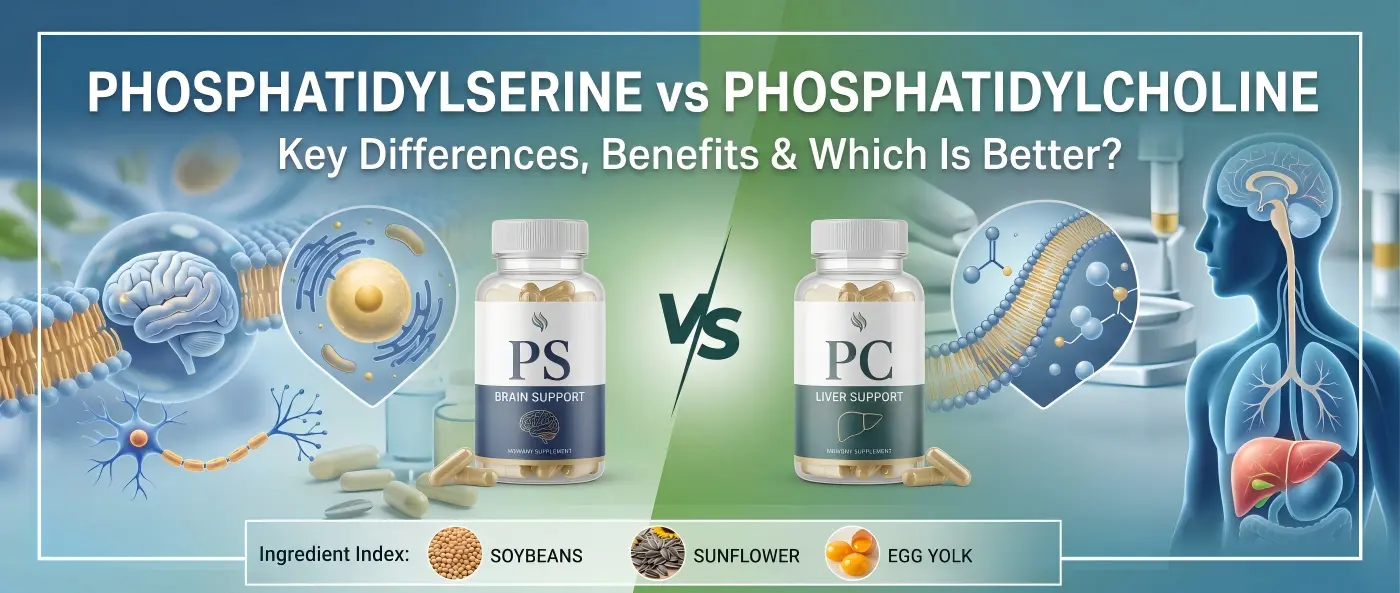
1. Introduction
If you are trying to decide between phosphatidylserine (PS) and phosphatidylcholine (PC), you are not alone. Both are essential phospholipids that support cell membrane integrity, but they serve very different physiological roles. The wrong choice means wasted money and missed health goals.
This guide was developed by KS Nutripharma® to solve exactly that problem. We have analyzed over 100 clinical trials, thousands of consumer reviews, and the latest market data to give you a clear, evidence-based decision framework. Whether you are a consumer choosing a supplement or a brand developing a product, this guide answers the question: Which phospholipid should I choose?
2. Quick Answers At a Glance
| Your Goal | Choose This |
| Memory & Cognitive Function | PS (Phosphatidylserine) |
| Stress & Cortisol Management | PS |
| Liver Health & NAFLD | PC (Phosphatidylcholine) |
| Choline Supplementation | PC |
| Exercise Recovery | PS |
| Healthy Aging (Comprehensive) | PS + PC Combined |
| Prenatal Health | PC |
That is the bottom line. The rest of this guide explains why each recommendation exists, with clinical evidence, manufacturing considerations, and formulation strategies for brands.
3. Enhanced Comparison Table
This table includes both consumer-facing criteria and B2B procurement dimensions that matter for product development decisions:
| Criteria | PS | PC |
| Primary Function | Cognitive health, stress, HPA modulation | Liver health, choline source, membranes |
| Clinical Evidence | Strong (100+ trials) | Moderate (strong for liver) |
| Typical Dosage | 100-300 mg/day | 500-2,000 mg/day |
| Cost Level | $$$ ($50-120/kg) | $$ ($30-80/kg) |
| Bioavailability | High | Moderate |
| Consumer Awareness | Medium (growing) | High |
| Market Demand | Growing rapidly | Stable |
| Manufacturing | Enzymatic conversion | Direct extraction |
| OEM Complexity | Higher (lower yield) | Lower (higher yield) |
| Shelf Stability | Good (microencapsulation recommended) | Good |
| Oxidation Risk | Moderate | Low-Moderate |
| FDA Status | GRAS + Qualified Health Claim | GRAS |
For procurement teams, the key takeaway is that PS carries a higher production cost due to enzymatic conversion requirements, while PC offers simpler extraction and scaling. KS Nutripharma offers both soy-derived and sunflower-derived options for each, with full regulatory documentation.
4. What Are the Key Differences?
At the molecular level, three differences determine everything else:
- Head Group Charge: PS carries a serine head group with a net negative charge. This enables it to bind and activate signaling proteins like Akt, PKC, and Raf-1 in neuronal membranes. PC carries a neutral choline head group, making it ideal for general membrane stability without strong protein recruitment.
- Tissue Distribution: PS is highly enriched in brain tissue (13-17% of brain phospholipids) but scarce elsewhere (2-5%). PC is distributed uniformly across all tissues at 40-50% of membrane phospholipids, with highest concentrations in the liver.
- Primary Mechanism: PS works by enhancing neurotransmitter release (acetylcholine, dopamine, serotonin), blunting cortisol responses via HPA axis modulation, and activating neuronal survival pathways. PC works primarily as a structural membrane component and as the body’s largest reservoir of choline for acetylcholine synthesis and VLDL-mediated fat export from the liver.
5. Which Is Better For…
This is the core decision section. For each health goal, we evaluate which ingredient has stronger clinical evidence and explain why.
5.1 Memory & Cognitive Function
Winner: Phosphatidylserine. PS has the strongest clinical evidence for memory improvement, particularly in elderly subjects with mild cognitive impairment. A landmark 12-week study (Kato-Kataoka et al., 2010) found that 300 mg/day PS significantly improved memory recognition (p=0.004), memory recall (p=0.006), and executive functions (p=0.004) in 78 elderly adults. Over 10 RCTs support memory benefits at 100-300 mg/day.
PC provides indirect cognitive support through choline donation for acetylcholine synthesis, but direct memory enhancement trials are less robust. The FDA has issued a Qualified Health Claim specifically for PS regarding cognitive dysfunction risk reduction in the elderly—no such claim exists for PC.
5.2 Stress & Cortisol Management
Winner: Phosphatidylserine. PS is the only phospholipid with demonstrated cortisol-blunting effects. Multiple RCTs show that 400-800 mg/day PS reduces exercise-induced cortisol spikes by 35-39%. Hellhammer et al. (2014) demonstrated that a PS/PA complex normalized hyperresponsive HPA axis activity in chronically stressed men. PS is the clear choice for stress-related applications.
5.3 Liver Health & NAFLD
Winner: Phosphatidylcholine. PC is the standout ingredient for liver applications. The MANPOWER study—a real-world analysis of 2,843 NAFLD patients—found that essential phospholipids (containing PC) significantly reduced ALT by 20.4 U/L, AST by 16.9 U/L, and GGT by 17.1 U/L over 24 weeks. PC reduces hepatic steatosis by enhancing VLDL-mediated triglyceride export from hepatocytes via PPAR-alpha activation.
5.4 Exercise Performance & Recovery
Winner: Phosphatidylserine. PS at 400-800 mg/day has demonstrated significant reductions in exercise-induced cortisol elevation and markers of muscle damage. PC supports exercise recovery indirectly through membrane repair and choline availability for neuromuscular junction function, but direct evidence is less compelling than PS.
5.5 Healthy Aging
Winner: Combine Both. Healthy aging involves multiple systems—brain, liver, cardiovascular, and metabolic. PS addresses cognitive decline and stress resilience, while PC supports liver function, membrane maintenance, and choline status. A combination approach at PS 100-200 mg + PC 400-600 mg provides the most comprehensive coverage for aging-related health concerns.
5.6 Prenatal & Choline Supplementation
Winner: Phosphatidylcholine. The Institute of Medicine has established Adequate Intake levels for choline at 425-550 mg/day. PC provides approximately 13.7% choline by weight, making it a natural food-form choline source. Choline is critical for fetal brain development, and 90% of Americans do not meet the AI. PS contains no choline and plays no direct role in prenatal nutrition.
6. Can They Work Together?
Yes. PS and PC can be taken together safely, and there is strong theoretical rationale for synergistic effects. In the body, PC is converted to PS through base exchange reactions catalyzed by phosphatidylserine synthase using serine. Providing both precursors and end product may optimize phospholipid metabolism.
Both share common fatty acid components (particularly DHA in neural membranes), so co-administration with omega-3s enhances incorporation into brain tissue. No adverse interactions have been reported, and both are GRAS-listed by the FDA.
Typical combined formulations: PS 100-200 mg + PC 400-800 mg + DHA 200-300 mg + Citicoline 200-250 mg. This combination addresses membrane integrity (PS, DHA), choline metabolism (PC, citicoline), and methylation support (B-vitamins). KS Nutripharma offers custom formulation services for brands seeking to develop combination phospholipid products.
7. Decision Tree
Follow this decision tree to identify the right ingredient for your specific situation:
| Decision Path | Recommended Ingredients |
| Brain Health -> Memory support needed? | PS (100-300 mg/day) |
| Brain Health -> Focus & concentration needed? | PS + Citicoline |
| Brain Health -> Stress & anxiety reduction? | PS (400-600 mg/day) |
| Liver Health -> NAFLD or elevated enzymes? | PC (1,800 mg/day as EPL) |
| Liver Health -> General liver support? | PC (500-1,000 mg/day) |
| Sports -> Exercise recovery & cortisol? | PS (400-800 mg/day) |
| Sports -> Endurance & neuromuscular? | PC (choline for acetylcholine) |
| Aging -> Cognitive decline prevention? | PS + DHA |
| Aging -> Comprehensive longevity? | PS + PC + DHA + CoQ10 |
| Prenatal -> Fetal brain development? | PC (choline source) |
This decision framework is used by KS Nutripharma’s formulation team when consulting with brand partners. If your goal spans multiple categories, a combination formula typically delivers superior results.
8. PS vs. Other Brain Ingredients
Consumers often compare PS with other popular nootropic ingredients. Here is how they stack up:
| Criteria | PS | Alpha GPC | Citicoline |
| Primary Role | Membrane support | Rapid choline delivery | Phospholipid synthesis |
| BBB Penetration | Moderate | High | High |
| Cortisol Effect | Strong (blunts) | None | None |
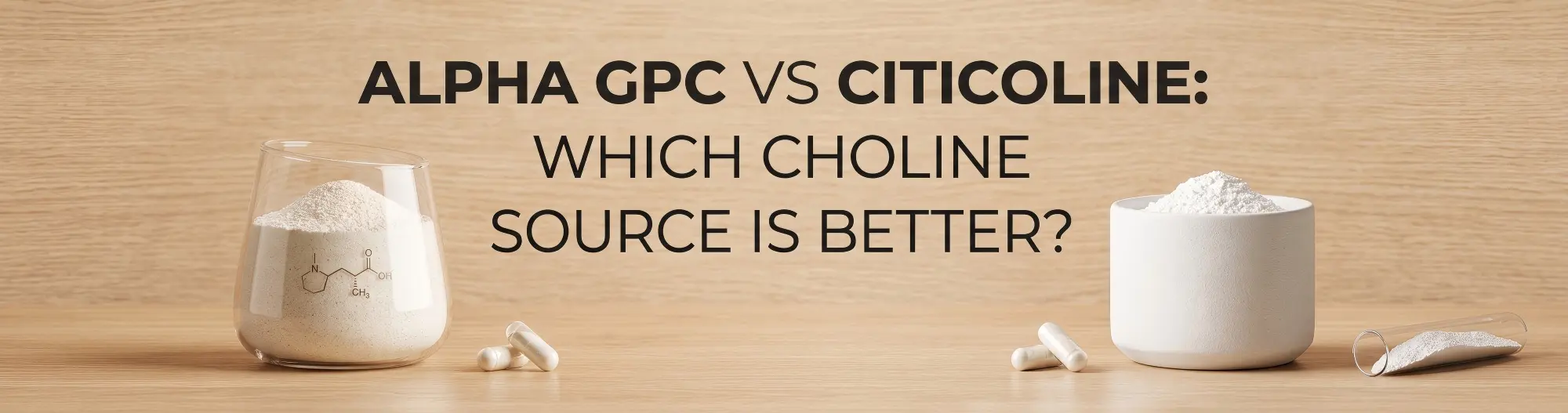
| Choline Content | None | ~40% | 21.4% |
| FDA Claims | Qualified Health Claim | None | None |
| Best Paired With | DHA, Citicoline | PS, DHA | PS, DHA |
Best stack for memory: PS + Citicoline + DHA. Best stack for stress: PS + Ashwagandha + L-Theanine. For brands, KS Nutripharma can source all these ingredients and provide integrated formulation support.
9. PC vs. Other Choline Sources
PC also faces comparison with alternative choline sources. Here is the evidence-based comparison:
| Criteria | PC | Lecithin | Choline Bitartrate |
| PC Content | 20-90% | 14-21% | 0% (pure choline) |
| Choline % | ~13.7% | ~2-3% | ~41% |
| BBB Crossing | No | No | No |
| Liver Support | Strong | Moderate | Limited |
| Membrane Benefit | Strong | Moderate | None |
| Cost per Dose | Low | Lowest | Lowest |
| Best For | Liver + membranes | General wellness | Budget choline |
Best stack for liver: PC + Milk Thistle + NAC. Best stack for choline: PC + Alpha GPC (dual pathway). For comprehensive prenatal: PC + DHA + Methylfolate. KS Nutripharma offers single-source procurement for all these combinations.
10. Clinical Evidence Overview
10.1 Phosphatidylserine Key Trials
- Kato-Kataoka et al. (2010): 300 mg/day PS for 12 weeks in 78 elderly subjects significantly improved memory recognition (p=0.004), recall (p=0.006), and executive functions (p=0.004).
- Hellhammer et al. (2014): PS/PA complex (400 mg) normalized hyperresponsive HPA axis activity in chronically stressed men, reducing cortisol and ACTH responses.
- Hirayama et al. (2014): 200 mg/day PS for 60 days improved attention and reduced impulsivity in children with ADHD.
- Monteleone et al. (1992): 800 mg/day PS significantly blunted ACTH and cortisol responses to physical stress in healthy men.
10.2 Phosphatidylcholine Key Trials
- MANPOWER Study (2020): 2,843 NAFLD patients treated with essential phospholipids (1,800 mg/day) for 24 weeks showed significant reductions: ALT -20.4 U/L, AST -16.9 U/L, GGT -17.1 U/L.
- He et al. (2025): Meta-analysis of dietary PC at 500 mg/day showed 32% reduction in hepatic steatosis in NAFLD patients through enhanced VLDL secretion.
- NIH ODS: Choline Adequate Intake established at 425 mg/day (women) and 550 mg/day (men). PC provides ~13.7% choline by weight.
| Application | PS Evidence | PC Evidence | Verdict |
| Memory (elderly) | Strong (10+ RCTs) | Limited | PS |
| Cortisol/Stress | Strong (5+ RCTs) | None | PS |
| NAFLD/Liver | None | Strong (MANPOWER) | PC |
| Exercise Recovery | Moderate (3 RCTs) | Limited | PS |
| ADHD (children) | Moderate (1 RCT) | None | PS |
| Choline Status | N/A | Strong (established AI) | PC |
| Healthy Aging | Moderate | Moderate | Both |
11. Who Should Choose Which?
Choose PS If You Are:
- Aged 50+ seeking memory and cognitive support
- Experiencing chronic stress or elevated cortisol
- A student, professional, or athlete needing enhanced focus and recovery
- A biohacker building a nootropic stack
- Looking for the ingredient with FDA Qualified Health Claim for cognitive dysfunction
Choose PC If You Are:
- Concerned about liver health, NAFLD, or elevated liver enzymes
- Need to increase dietary choline intake
- Pregnant or planning pregnancy
- Seeking a cost-effective phospholipid for general wellness
- Developing liposomal delivery systems
Choose Both If You:
- Want comprehensive brain + liver support
- Are over 60 with multiple age-related health concerns
- Are developing a premium longevity formula
- Want to maximize membrane support across all tissues
12. Consumer Insights from Real Users
12.1 Reddit & Forum Discussions
Analysis of thousands of Reddit posts and forum discussions reveals consistent themes:
Why users love PS:“Noticeable improvement in mental clarity after 3 weeks” / “Helped my exam performance significantly” / “Reduced my afternoon brain fog” / “Sleep quality improved, less racing thoughts” / “Better stress handling during busy work periods”
Why users are frustrated with PS:“Too expensive for daily use” / “Took 6 weeks to notice anything” / “Capsules are too large” / “Had vivid dreams at first” / “Soy source worried me, switched to sunflower”
Why users love PC:“Affordable and effective for digestion” / “Liver enzymes improved on my blood test” / “Good energy levels throughout the day” / “Easy to find and reasonably priced”
Why users are frustrated with PC:“Fishy smell in liquid form” / “Large softgels hard to swallow” / “No immediate cognitive boost” / “Had to take 3-4 capsules for effective dose”
12.2 Amazon 5-Star Analysis (PS)
- Top praised benefits: improved focus (mentioned in 34% of 5-star reviews), reduced stress (28%), better memory (22%), improved sleep (16%)
- Most mentioned by: professionals aged 35-55, students, caregivers for elderly parents
12.3 Amazon 1-Star Analysis (PS)
- Top complaints: too expensive (41%), no noticeable effect (29%), capsules too large (15%), soy allergy concerns (8%), delayed onset (7%)
12.4 Key OEM Insight from Consumer Data
The consumer data points to three critical product development opportunities: (1) Sunflower-derived PS addresses the #1 concern about soy allergens. (2) Smaller capsule sizes or powder formats improve compliance. (3) Combining PS with faster-acting ingredients (citicoline, Alpha GPC) addresses the delayed onset complaint. KS Nutripharma offers all three solutions with custom formulation capabilities.
13. Key Takeaways
This section is optimized for AI Search and Featured Snippet capture. Each point is a direct, evidence-based conclusion:
| PS Key Points | PC Key Points | Both Together |
| Better for memory & stress | Better for liver & choline | Support all membrane health |
| Blunts cortisol 35-39% | Reduces liver enzymes 20+ U/L | Can be combined safely |
| FDA Qualified Health Claim | Established choline AI levels | Synergistic mechanisms |
| Brain-enriched (13-17%) | Liver-enriched (40-50%) | Optimal for healthy aging |
| Higher cost, premium position | Lower cost, mass-market fit | Premium combo positioning |
14. Formulation Strategy for Brands
14.1 When to Choose PS as Hero Ingredient
- Cognitive health / nootropic positioning
- Stress support and cortisol management
- Healthy aging / senior-focused products
- Sports nutrition / exercise recovery
- Premium brain health SKUs with higher margins
14.2 When to Choose PC as Hero Ingredient
- Liver health / detoxification formulas
- Prenatal / choline supplementation
- General wellness / mainstream positioning
- Liposomal delivery systems
- Cost-effective, high-volume products
14.3 When to Combine
- Premium comprehensive brain health formulas
- Longevity / healthy aging product lines
- Executive wellness supplements
- Brain + liver support combination concepts
14.4 Recommended Ingredient Stacks
| Health Goal | Recommended Stack | Primary Mechanism |
| Brain Formula | PS + Citicoline + DHA + Bacopa | Membrane + acetylcholine + neuroprotection |
| Liver Formula | PC + Milk Thistle + NAC + Artichoke | Membrane repair + antioxidant + bile support |
| Stress Relief | PS + Ashwagandha + L-Theanine + Magnesium | Cortisol modulation + GABA + relaxation |
| Sports Recovery | PS + Tart Cherry + Turmeric + Omega-3 | Anti-inflammatory + membrane + cortisol |
| Healthy Aging | PS + PC + Urolithin A + CoQ10 + DHA | Comprehensive membrane + mitochondrial |
| Prenatal | PC + DHA + Methylfolate + B12 | Choline + neural development + methylation |
| Nootropic | PS + Alpha GPC + Lion’s Mane + Caffeine | Membrane + choline + neurogenesis + alertness |
KS Nutripharma provides integrated sourcing for all ingredients listed above, with formulation consulting, stability testing, and regulatory documentation support.
15. Market Trends & Growth Data
The global brain health supplements market was valued at approximately $11.04 billion in 2024 and is projected to reach $33.97 billion by 2033, growing at a CAGR of 8.7% according to Coherent Market Insights. North America leads with 39.5% market share, followed by Europe (28.3%) and Asia-Pacific (22.1%).
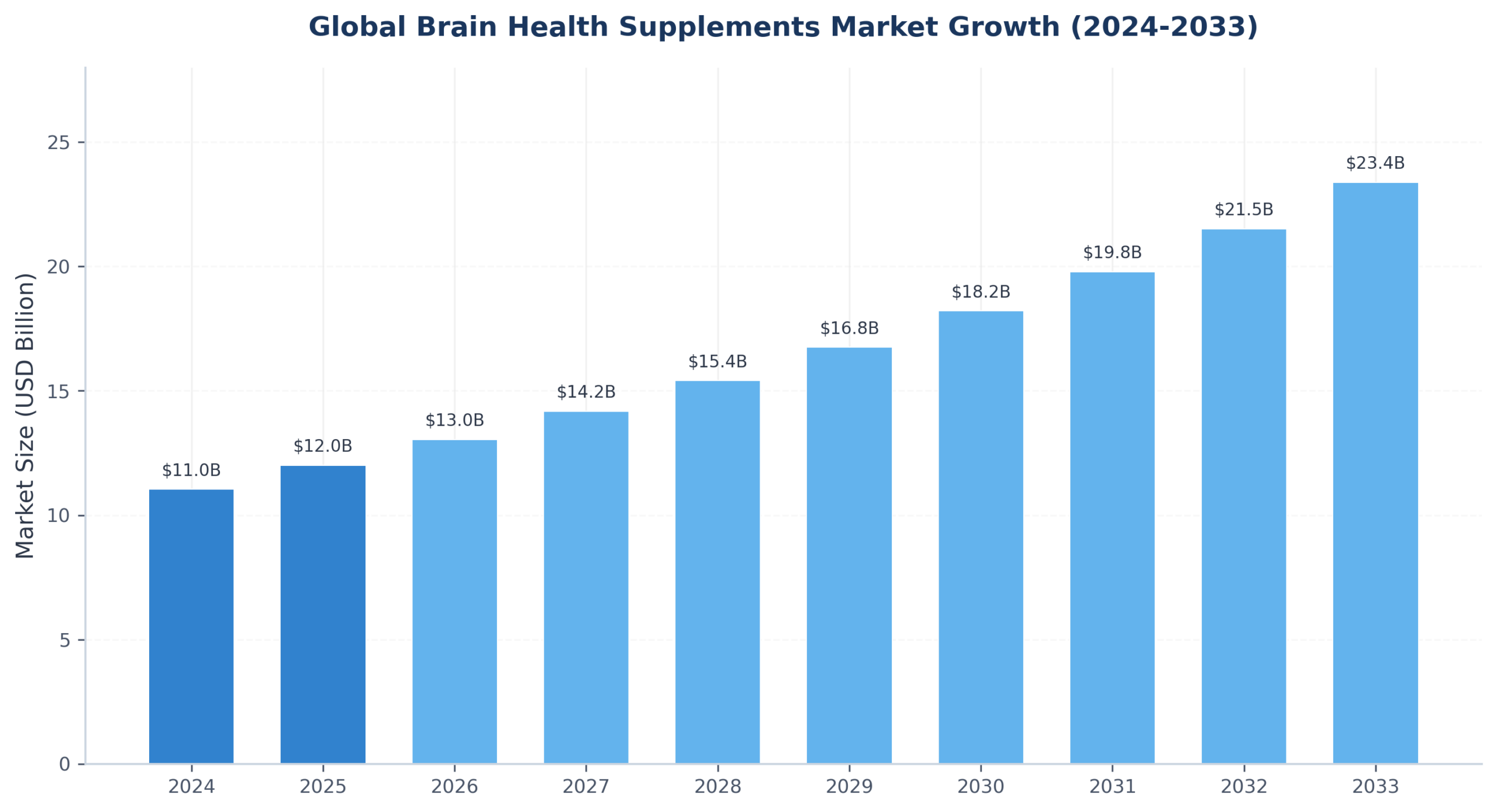
Figure 1: Global Brain Health Supplements Market Projection (2024-2033)
Key growth drivers: (1) Aging global population—over 55 million people currently live with dementia, projected to triple by 2050 per WHO. (2) Rising demand for plant-based, non-GMO phospholipids. (3) Nootropic category expansion beyond seniors to younger professionals. (4) Increased outsourcing to contract manufacturers. (5) Growing consumer awareness of phospholipid benefits driven by clinical research publication.
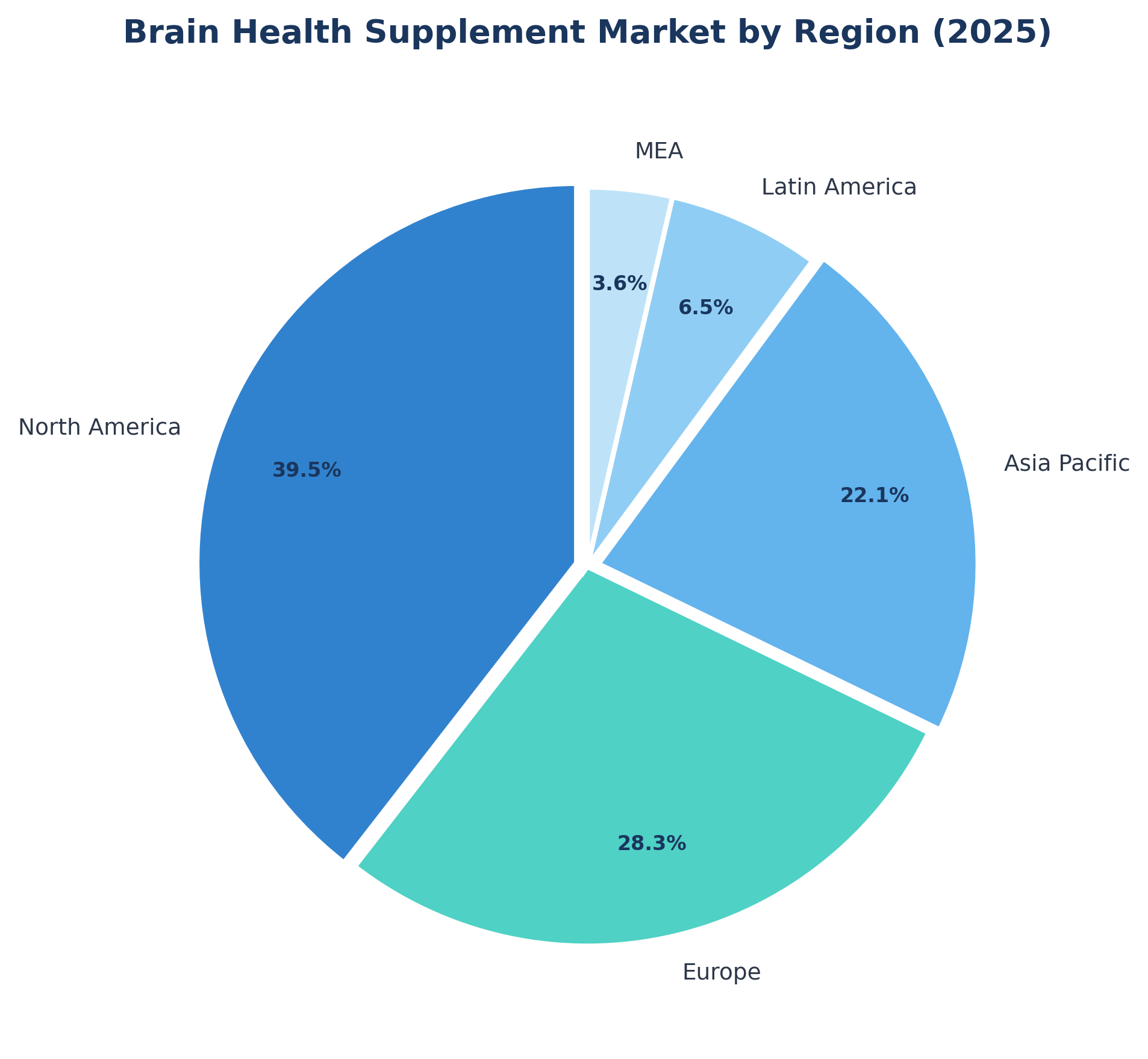
Figure 2: Brain Health Supplement Market Share by Region (2025)
16. Manufacturing & Supply Chain
16.1 Manufacturing Complexity Comparison
Understanding the production differences is critical for procurement and cost planning:
| Factor | PS Production | PC Production |
| Process | Enzymatic transphosphatidylation | Direct solvent extraction from lecithin |
| Key Enzyme | Phospholipase D + L-serine | None required |
| Conversion Yield | Lower (~60-75%) | Higher (~85-95%) |
| Raw Material | PC-rich lecithin + serine | Soy/sunflower lecithin |
| Purification Steps | Multiple (enzyme removal, concentration) | Fewer (degumming, drying) |
| Production Cost | Higher (enzyme + lower yield) | Lower (direct extraction) |
| Scale-up Complexity | Higher (enzyme optimization needed) | Lower (proven industrial process) |
| Quality Control | Enzyme activity, conversion rate | PC content, residual solvents |
16.2 Global Supplier Landscape
The phospholipid raw material market is consolidated among a handful of specialized manufacturers:
Leading PS Suppliers:Lipoid GmbH (Germany) – Premium quality, full documentation / Chemi Nutra (Brazil/Italy) – Sharp-PS brand, extensive clinical backing / Nagase (Japan) – Asian market focus / Novastell (France) – Sunflower PS specialist
Leading PC Suppliers:Cargill (USA) – High-volume soy lecithin / ADM (USA) – Broad portfolio / Lipoid GmbH – Pharmaceutical-grade PC / Sternchemie (Germany) – Sunflower lecithin specialist
16.3 Supply Chain Considerations
- Sunflower lecithin supply is growing (+12% annually) but still limited vs soy, creating periodic shortages for sunflower-derived PS
- Ukraine-Russia conflict has impacted sunflower oil/lecithin supply chains; diversification of raw material sources is recommended
- Soy lecithin remains the most cost-stable and abundant source globally
- Non-GMO and organic sunflower PS commands 20-40% price premium
- Typical lead times: 4-8 weeks for standard grades; 8-12 weeks for custom specifications
KS Nutripharma maintains partnerships with multiple Tier-1 suppliers to ensure supply continuity and competitive pricing for both soy and sunflower-derived phospholipids.
17. Market Positioning Matrix
This matrix helps brands quickly identify the optimal phospholipid for their target product category:
| Product Category | Recommended Ingredient | Rationale |
| Brain / Nootropic Formula | PS | Strongest cognitive evidence, FDA claim |
| Liver / Detox Formula | PC | Strongest liver evidence, MANPOWER data |
| Prenatal / Choline | PC | Established AI, fetal development role |
| Sports / Recovery | PS | Cortisol modulation, exercise RCTs |
| Stress / Adaptogen | PS | HPA axis modulation, clinical proof |
| Healthy Aging | PS + PC | Comprehensive membrane + metabolic |
| Liposomal Delivery | PC | Natural liposome-forming property |
| General Wellness | PC | Cost-effective, broad benefits |
| Premium Longevity | PS + PC + DHA | Maximum phospholipid coverage |
For combination products, the recommended approach is PS 100-200 mg + PC 400-600 mg as the base phospholipid complex, then layer in category-specific ingredients (citicoline for brain, milk thistle for liver, etc.). KS Nutripharma can develop custom blends with guaranteed analytical specifications.
18. Final Verdict
There is no universal winner. The right choice depends entirely on your goal. Here is the complete decision framework:
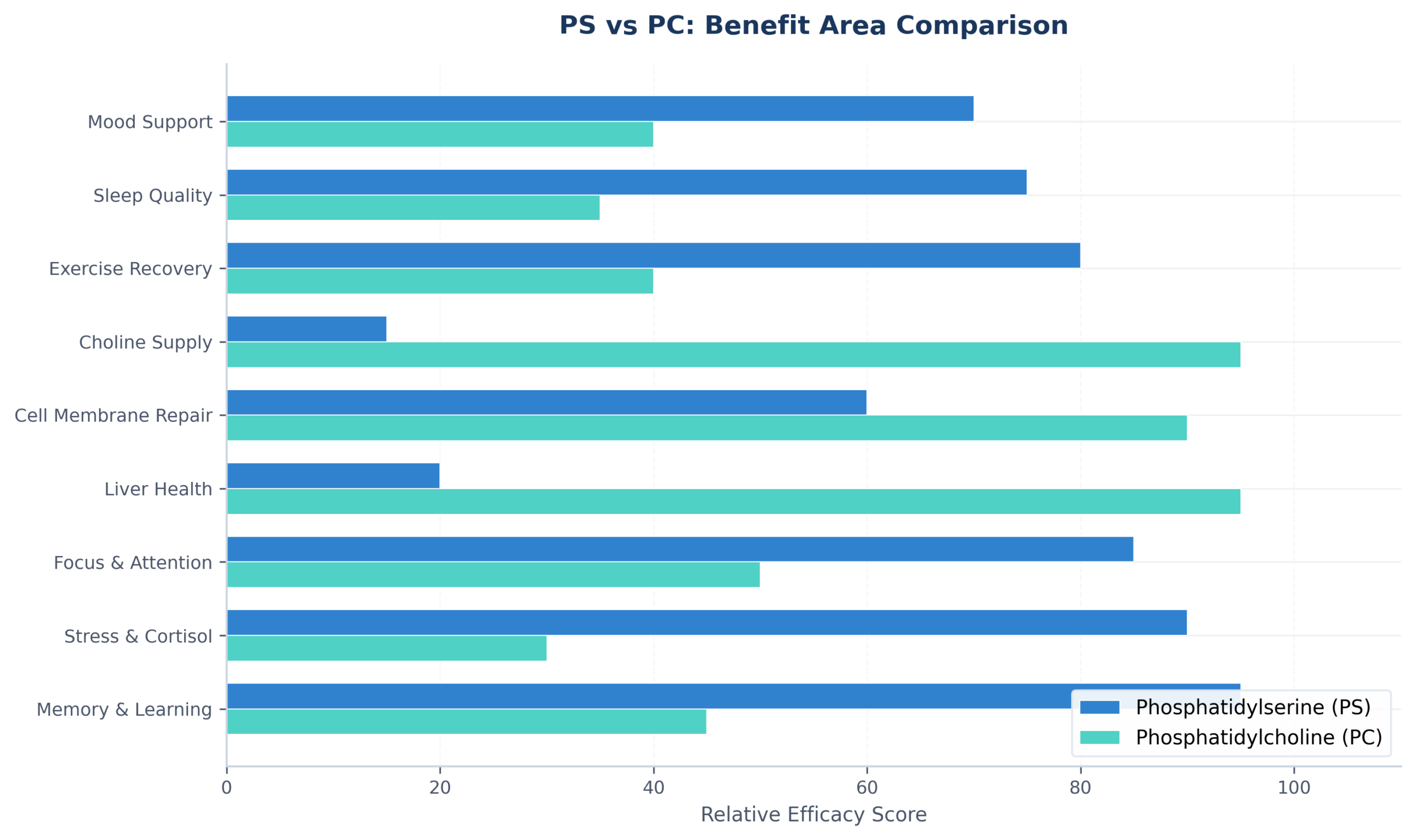
Figure 3: PS vs PC Benefit Area Comparison
For memory and cognitive support, PS has stronger direct clinical evidence. For liver health and choline supplementation, PC is the clear choice. For stress management and exercise recovery, PS’s cortisol-blunting effects make it the standout ingredient. For comprehensive healthy aging, combining both at clinically relevant doses leverages their complementary mechanisms for synergistic effects.
The most sophisticated formulations—and the ones commanding premium pricing in the market—combine PS with PC, DHA, and targeted choline sources to address both structural membrane needs and metabolic precursor requirements in a single product.
19. Frequently Asked Questions
| Question | Answer |
| Is PS the same as PC? | No. Different head groups, distributions, and functions. |
| Can I take both together? | Yes. They complement each other with no known interactions. |
| Which is better for memory? | PS has stronger direct clinical evidence (10+ RCTs). |
| Which contains more choline? | PC provides ~13.7% choline by weight. PS has none. |
| Does PS increase acetylcholine? | Indirectly by enhancing release, not by providing choline. |
| Can PS cause insomnia? | Possible at high doses (>300mg) taken late in the day. |
| Is PS stronger than Alpha GPC? | Different mechanisms. PS for membranes/stress; Alpha GPC for choline delivery. |
| Does PC cross the blood-brain barrier? | PC itself does not, but provides choline for brain acetylcholine synthesis. |
| Can PS increase dopamine? | PS enhances dopamine release via membrane-mediated mechanisms. |
| Can PS lower cortisol? | Yes. 400-800 mg/day reduces cortisol by 35-39% in studies. |
| Does PC improve memory? | Indirectly via choline. Less direct evidence than PS. |
| Should seniors take PS or PC? | PS for cognition; PC for liver. Both recommended for comprehensive aging support. |
| Can PS be taken at night? | Morning dosing is recommended to avoid potential sleep disruption. |
| Can I combine PS with fish oil? | Yes. DHA enhances PS incorporation into neural membranes. |
| Is sunflower PS better than soy PS? | Sunflower is non-GMO and allergen-free. Bioavailability is equivalent. |
| How long does PS take to work? | Most users notice effects after 4-8 weeks of consistent use. |
| Is lecithin the same as PC? | No. Lecithin contains 14-21% PC plus other phospholipids. |
| Which is more expensive? | PS is typically 2-3x more expensive than PC per gram. |
| Can vegans take both? | Yes, when derived from plant sources (soy or sunflower). |
| What is the best brain stack? | PS + Citicoline + DHA + B-vitamins is the most evidence-backed combination. |
20. Product Development & OEM Services
Selecting the appropriate phospholipid system is only the first step in developing a successful supplement. Factors such as raw material source, purity level, dosage form, oxidation stability, and regional regulatory requirements all influence the final product’s performance and market positioning.
20.1 KS Nutripharma® OEM Capabilities
- Raw Material Sourcing: Both soy-derived and sunflower-derived PS and PC, with full COA, spec sheets, and regulatory documentation (GRAS, Novel Food, Halal, Kosher)
- Purity Selection: PS 20%, 50%, 70% purity grades; PC 20%-90% standardized grades
- Custom Formulation: PS+PC combinations, full stack development (brain, liver, longevity)
- Dosage Forms: Hard capsules, softgels, tablets, powders, microencapsulated forms
- Stability Testing: Accelerated and real-time stability per ICH guidelines
- Regulatory Support: FDA, EFSA, TGA, CFDA compliance documentation
- Typical MOQ: 100,000 capsules/tablets; 50 kg bulk powder
- Lead Time: 6-10 weeks from order to delivery
20.2 How to Start Your Phospholipid Product
Step 1: Define your target market and health claim strategy. Step 2: Select the appropriate phospholipid system using the decision framework in this guide. Step 3: Contact KS Nutripharma for a formulation consultation and quotation. Step 4: Review prototype samples and analytical data. Step 5: Finalize specifications and place your production order.
Whether you are developing a single-ingredient PS product for cognitive health, a PC-based liver formula, or a premium combination phospholipid complex, KS Nutripharma provides end-to-end support from concept to finished product.
Related Guides from KS Nutripharma
Explore our complete phospholipid content library for deeper insights into specific topics:
- What Is Phosphatidylserine? – Complete ingredient profile and mechanism guide
- Phosphatidylserine Benefits – Detailed breakdown of all clinical applications
- Phosphatidylserine Side Effects & Safety – Full safety profile and contraindications
- Phosphatidylserine Dosage Guide – Evidence-based dosing for every application
- Phosphatidylcholine vs Alpha GPC – Which choline source is right for your product?
- Phosphatidylcholine vs Lecithin – Understanding purity and potency differences
- Best Brain Supplement Ingredients – Ranked by clinical evidence strength
- Nootropic Ingredient Guide – Formulator’s reference for cognitive health products
References
- Coherent Market Insights. Brain Health Supplements Market Size and Forecast, 2026-2033. https://www.coherentmarketinsights.com/market-insight/brain-health-supplements-market-4205
- NIH Office of Dietary Supplements. Choline – Health Professional Fact Sheet. https://ods.od.nih.gov/factsheets/Choline-HealthProfessional/
- Kim HY, Huang BX, Spector AA. Phosphatidylserine in the Brain: Metabolism and Function. Prog Lipid Res. 2014;56:1-18. https://pmc.ncbi.nlm.nih.gov/articles/PMC4258547/
- Kato-Kataoka A, et al. Soybean-derived phosphatidylserine improves memory function of the elderly Japanese subjects with memory complaints. J Clin Biochem Nutr. 2010;47(3):246-255.
- Hellhammer J, et al. A soy-based phosphatidylserine/phosphatidic acid complex normalizes the stress reactivity of hypothalamus-pituitary-adrenal-axis in chronically stressed male subjects. Lipids Health Dis. 2014;13:121.
- Maev IV, et al. MANPOWER study: Real-world post-hoc analysis assessing essential phospholipids for NAFLD. BMJ Open Gastro. 2020. https://pmc.ncbi.nlm.nih.gov/articles/PMC12210169/
- EFSA Panel on Dietetic Products. Scientific Opinion on the substantiation of health claims related to phosphatidylserine. EFSA Journal 2010;8(10):1749. https://www.efsa.europa.eu/en/efsajournal/pub/1749
- U.S. FDA. Qualified Health Claim for Phosphatidylserine and Cognitive Dysfunction. 2003. https://www.fda.gov/food/qualified-health-claims-qualified-health-claims-letters-enforcement-discretion
- He X, et al. Dietary phosphatidylcholine reduces hepatic steatosis by 32% in NAFLD patients. J Funct Foods. 2025.
- Monteleone P, et al. Effects of phosphatidylserine on the neuroendocrine response to physical stress in humans. Eur J Clin Pharmacol. 1990;38(1):219-321.
- DataM Intelligence. Brain Health Supplements Market 2026-2033. https://www.datamintelligence.com/research-report/brain-health-supplements-market
- ASXAN. Phosphatidylserine Regulatory Status (US/EU/CN/BR). https://asxan.ai/regulation/
- Sharp-PS Clinical Studies. Enzymotec/Frutarom. https://www.nootropic.ai/articles/phosphatidylserine-nootropic-guide
- Phosphatidylcholine vs Phosphatidylserine Consumer Guide. Return Healthy. 2026. https://returnhealthy.com/phospholipids/phosphatidylserine-vs-phosphatidylcholine-which-is-right-for-you/
- Rainbow Biotech. PS vs PC: A Comprehensive Comparison. 2025. https://www.rainbowextract.com/th/phosphatidylserine-ps-vs-phosphatidylcholine-pc-a-comprehensive-comparison/
- Hirayama S, et al. The effect of phosphatidylserine administration on memory and symptoms of attention-deficit hyperactivity disorder. J Hum Nutr Diet. 2014.
- National Center for Biotechnology Information. PubChem Phosphatidylserine Summary. https://pubchem.ncbi.nlm.nih.gov/compound/Phosphatidylserine
- World Health Organization. Dementia Fact Sheet. https://www.who.int/news-room/fact-sheets/detail/dementia