

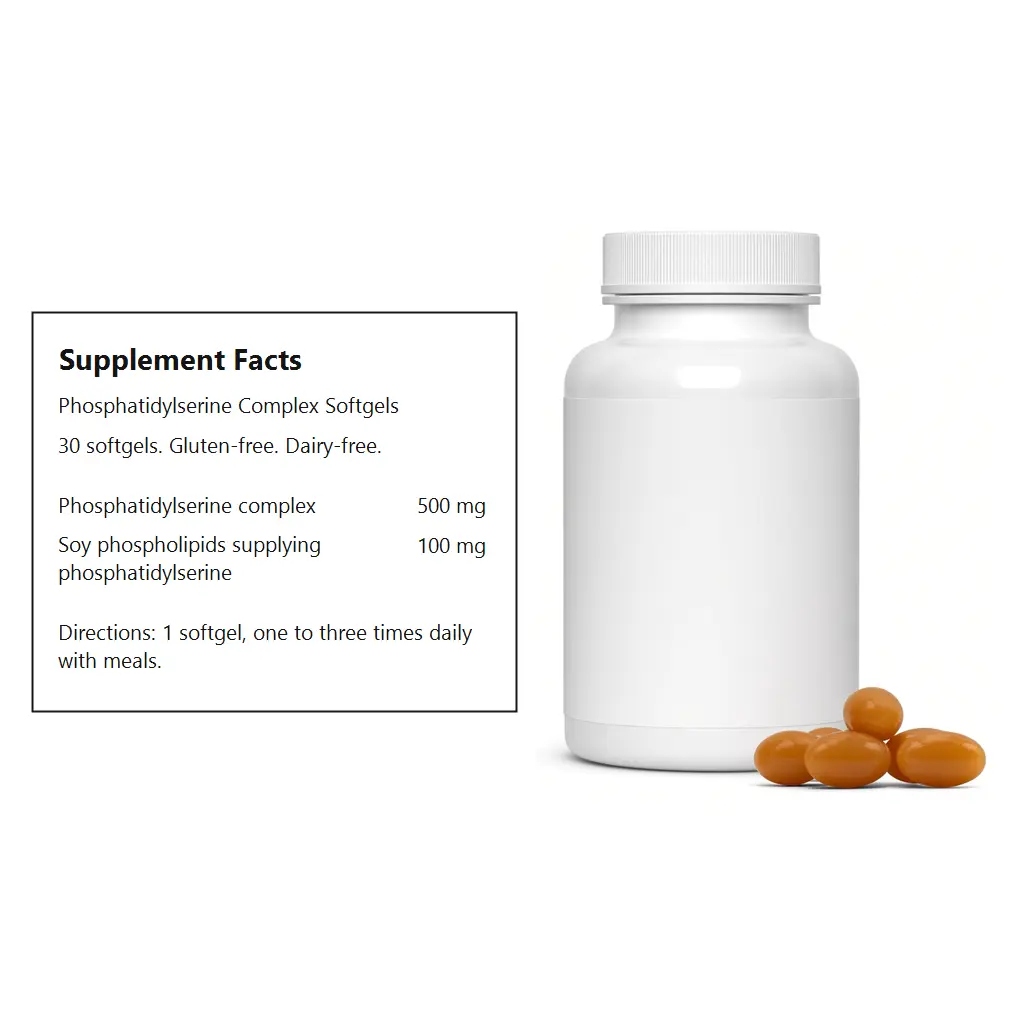
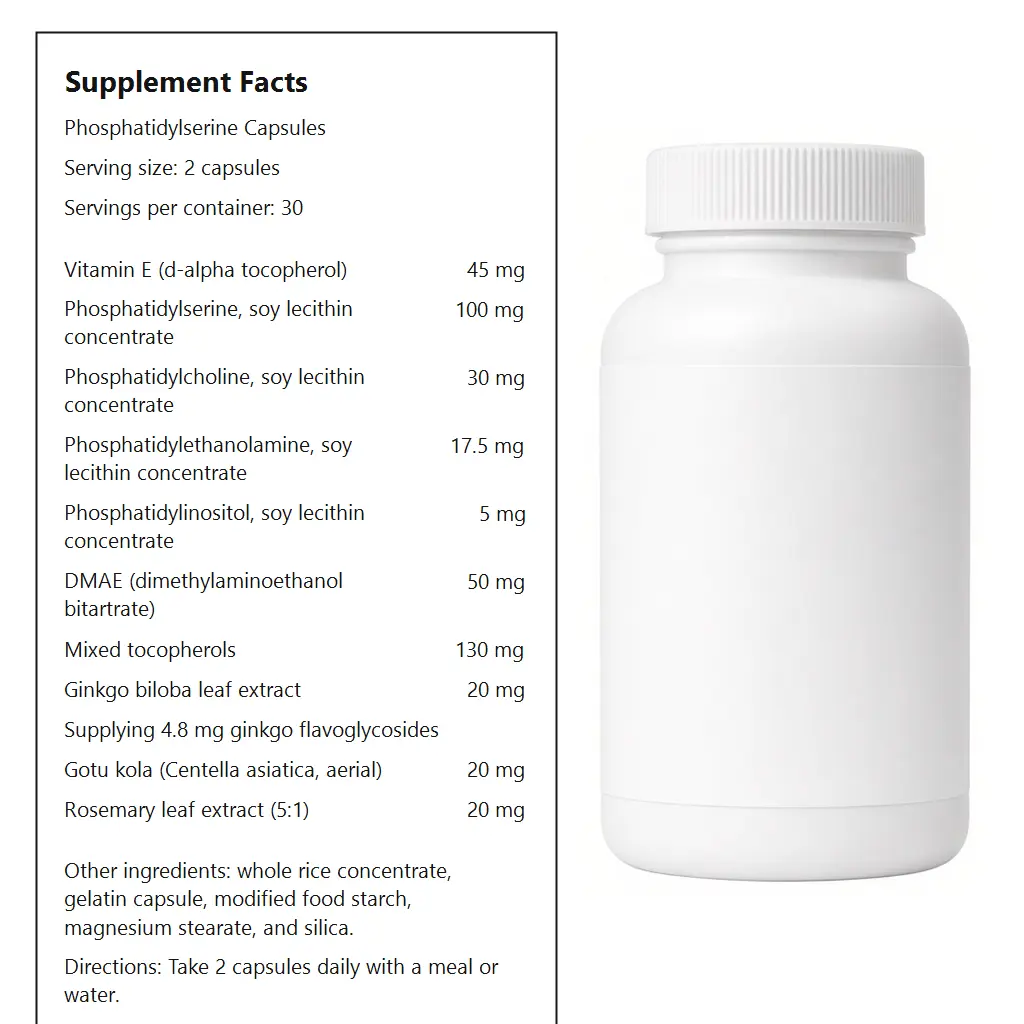

Phosphatidylserine Supplement Manufacturing
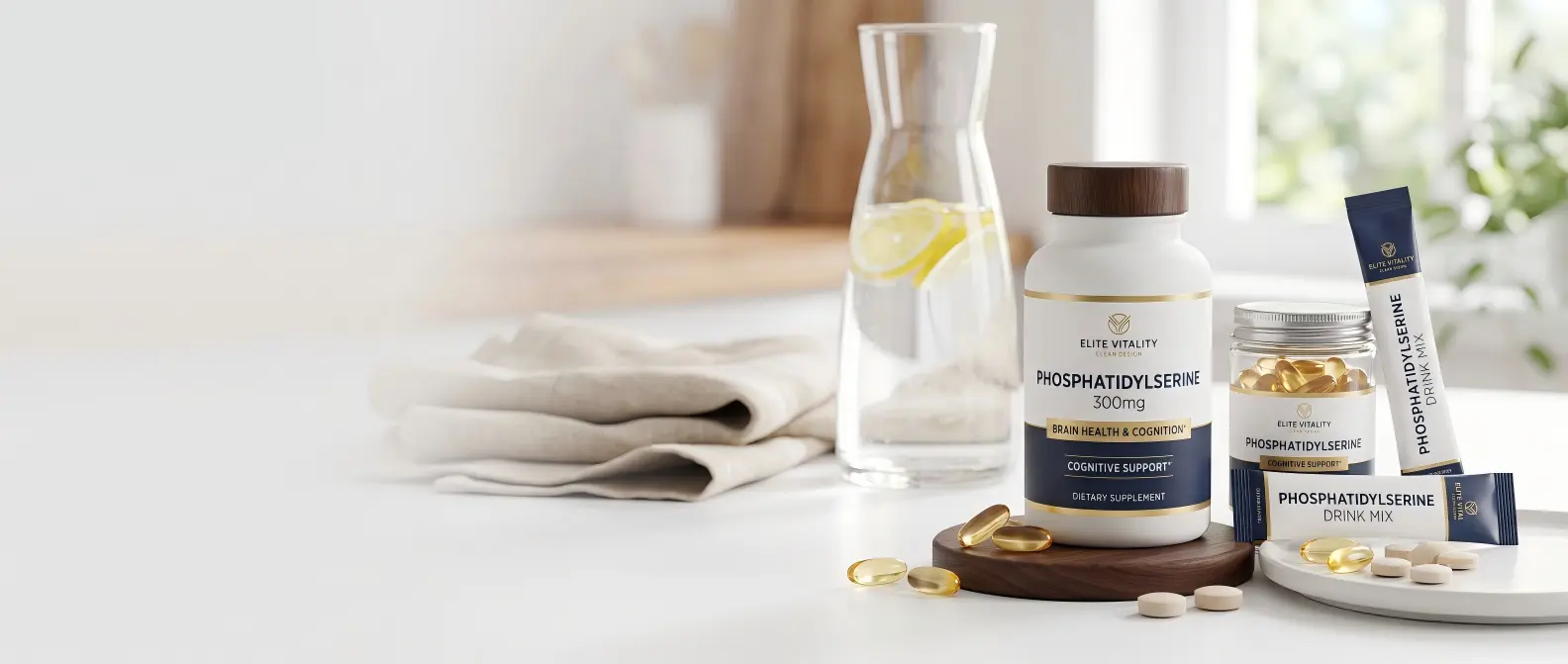
KS Nutripharma is a phosphatidylserine supplement manufacturer for OEM, ODM, and private-label brands. We assess the phosphatidylserine (PS) grade and source against the target label amount, then review ingredient weight, total fill, dosage-form feasibility, and documentation before quotation and sampling.
Quoted grades are 20%, 50%, or 70% PS by HPLC. The quoted specification identifies the soy or sunflower source. Availability is confirmed for that material.
Send a label, a formula, or a raw-material COA. A complete technical file is not required for an initial review. Firm pricing depends on the specification, the order quantity, and the pack.
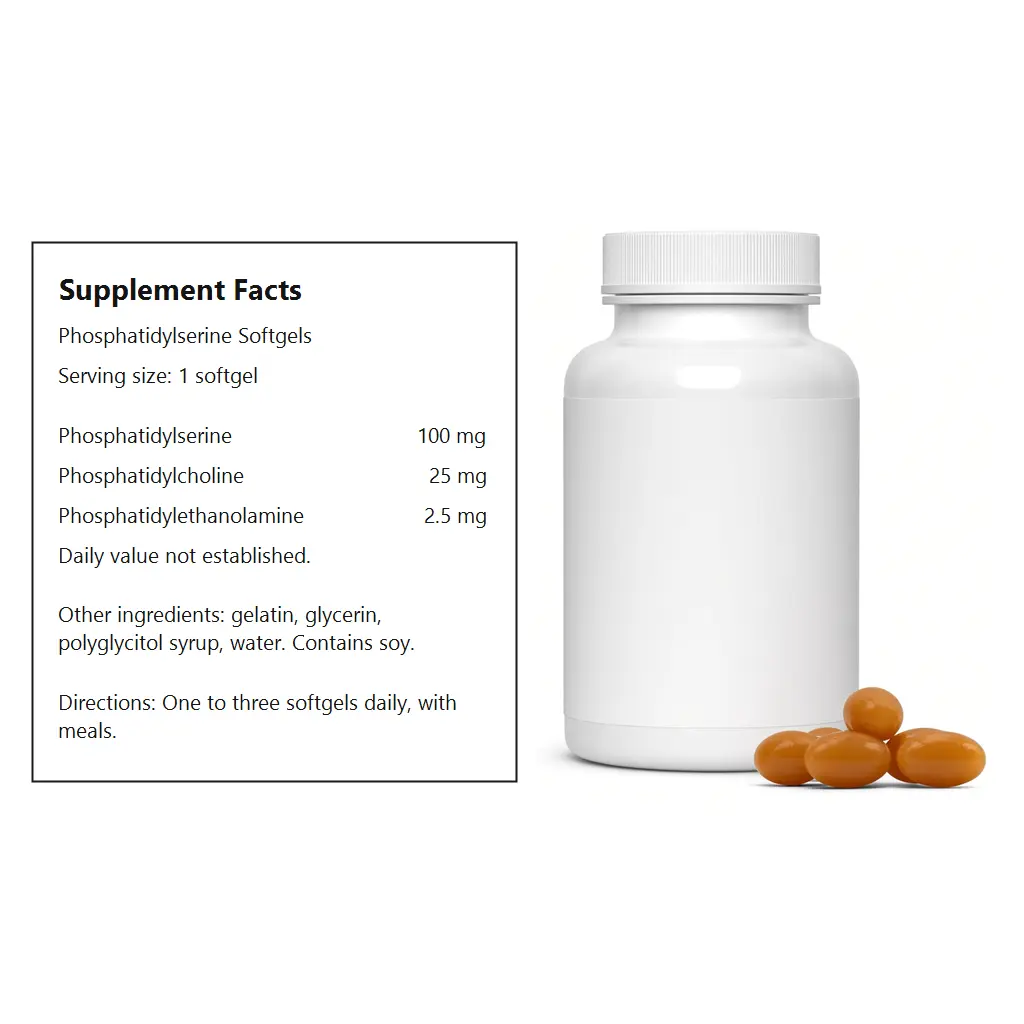
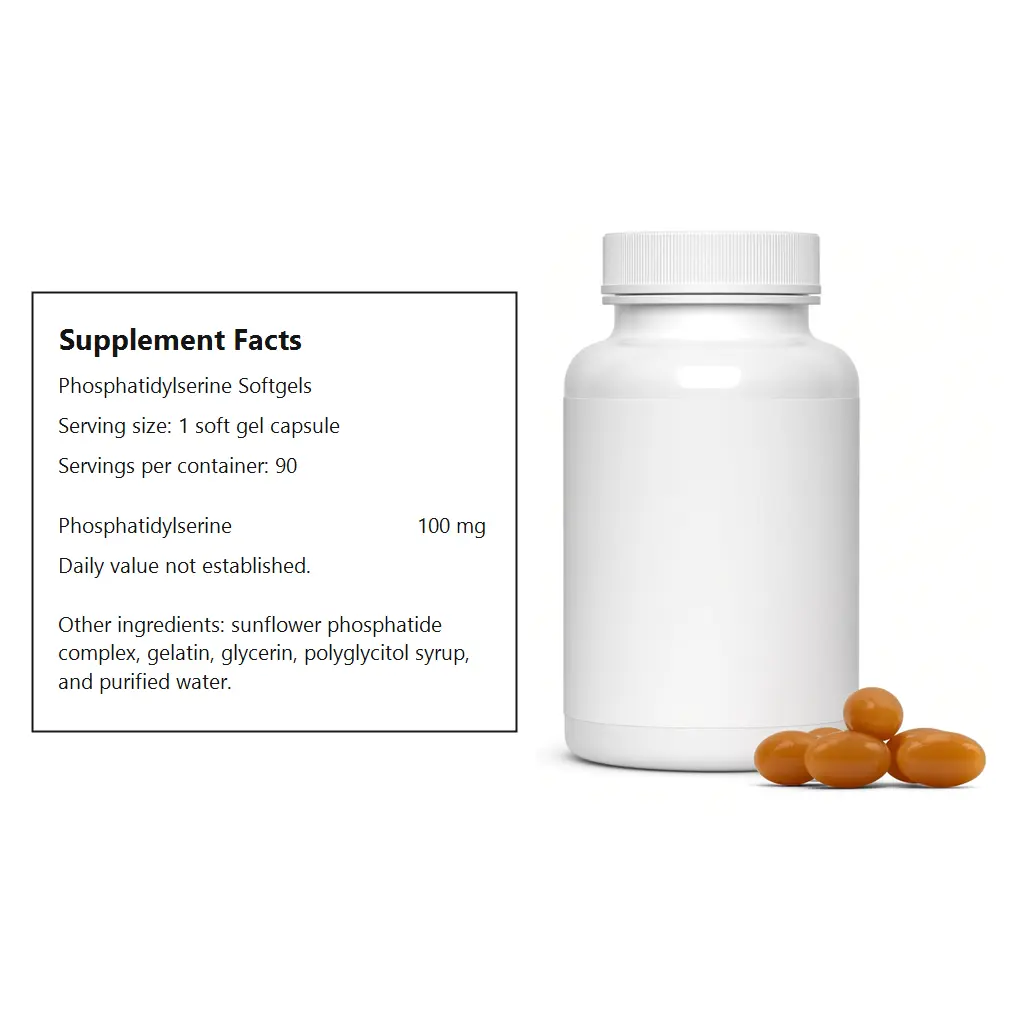
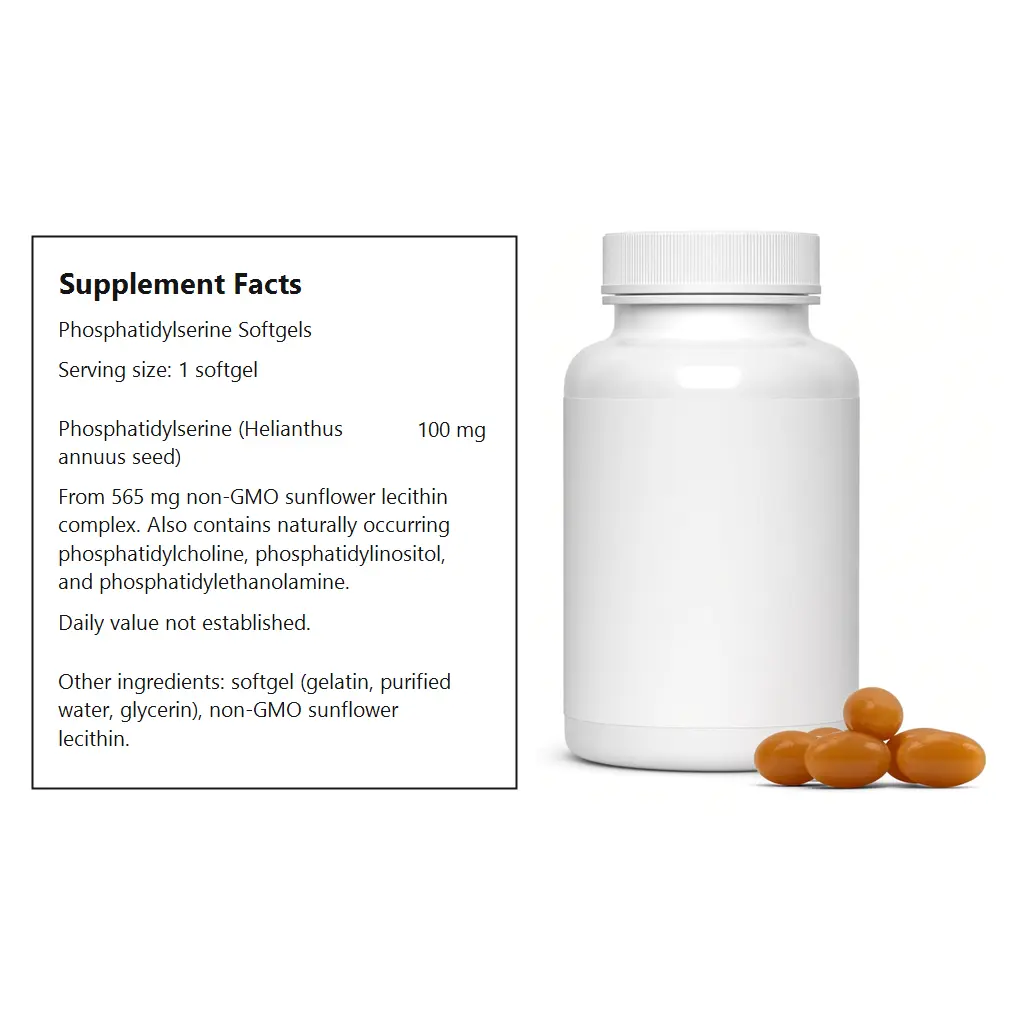
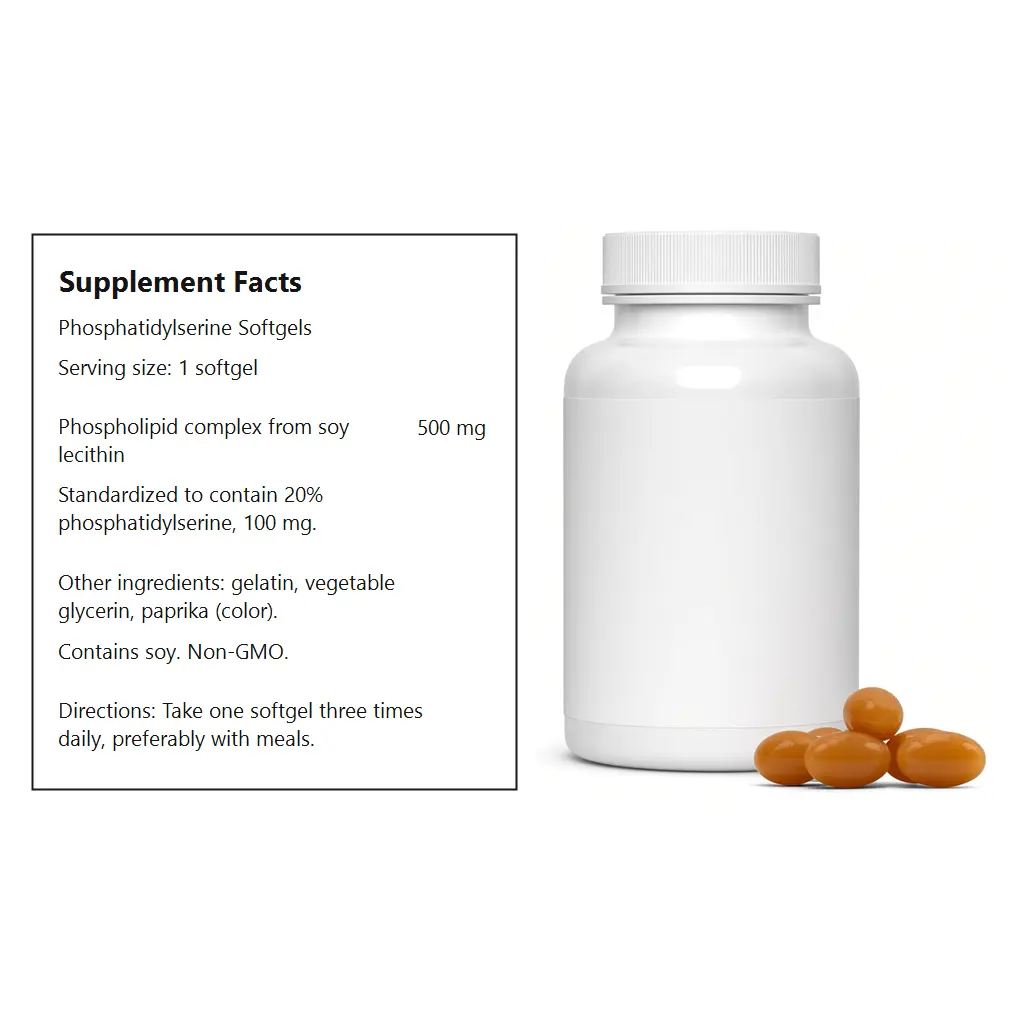
Milligram figures below are fill illustrations, not recommended intakes.
cGMP · ISO 9001 · ISO 22000 · HACCP · FSSC 22000 · Halal · Kosher
Certificates apply to the named site and scope. They are not a finished-product approval.
Manufacturing Capacity · Certifications
Since 2007 · 81,000+ m² · 12 production lines · 5 manufacturing bases · 260+ professionals
What Determines a Comparable PS Quote
| Decision | Confirmed before a comparable quote |
|---|---|
| PS specification | Label amount per serving, source, assay grade, and method |
| Ingredient weight | Calculated raw-material weight before other actives and excipients |
| Dosage form and pack | Capsule, softgel, tablet, gummy, powder, or liquid, and the pack |
| Quality requirements | Raw-material specification and COA, applicable allergen or GMO documents, and the agreed finished-product release tests |
Two quotes for “100 mg PS” are comparable only when the grade, source, ingredient weight, dosage form, pack, and order quantity are aligned.
PS Formula Routes
The routes below cover eight common formulation scenarios, from single-ingredient PS to live-culture combinations and formulas with high ingredient loads. Each starts with the target PS amount, source, and assay grade. Further requirements depend on the other actives and the dosage form.
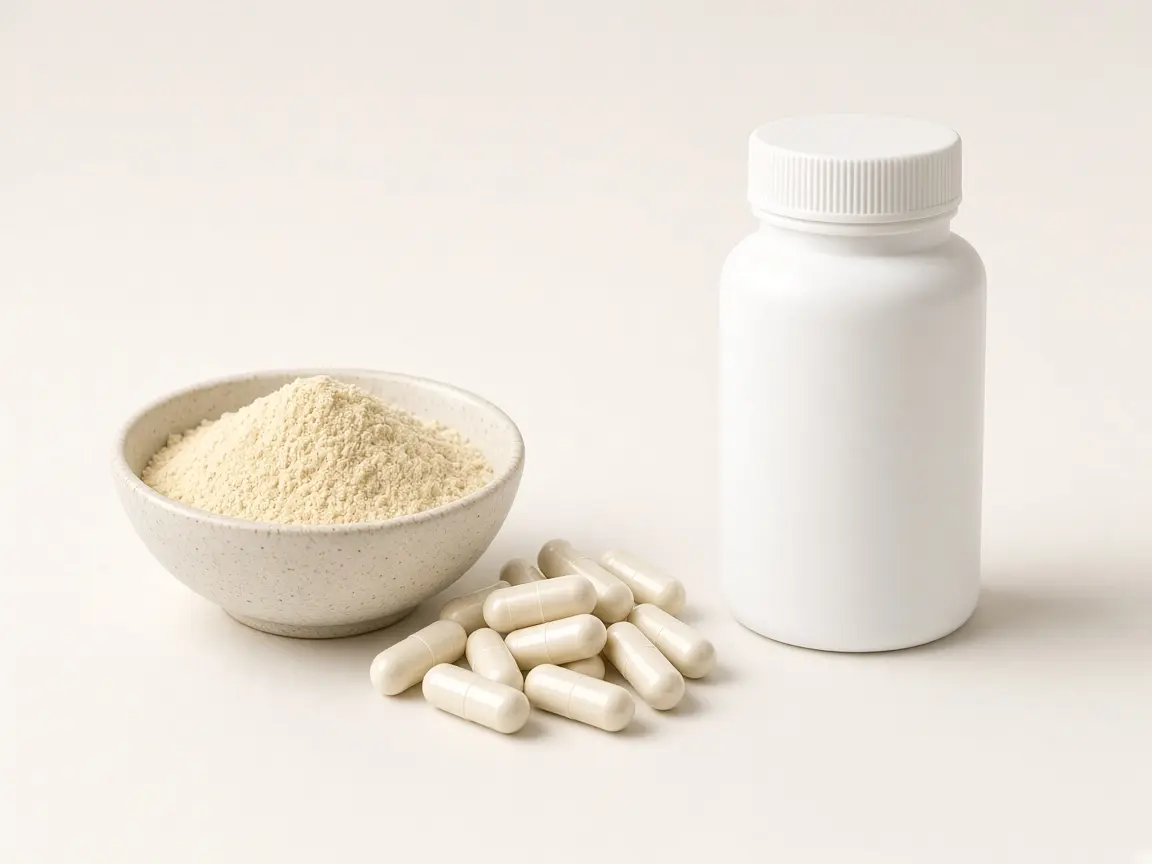
Use when: PS is the only active, including a private-label capsule.
Specify: Declared PS per serving, the grade, and soy or sunflower.
Trade-off: A 20% grade needs more raw material than a 70% grade for the same declared amount. That changes fill weight, capsule capacity, and raw-material cost.
Typical starting format: Hard capsule.
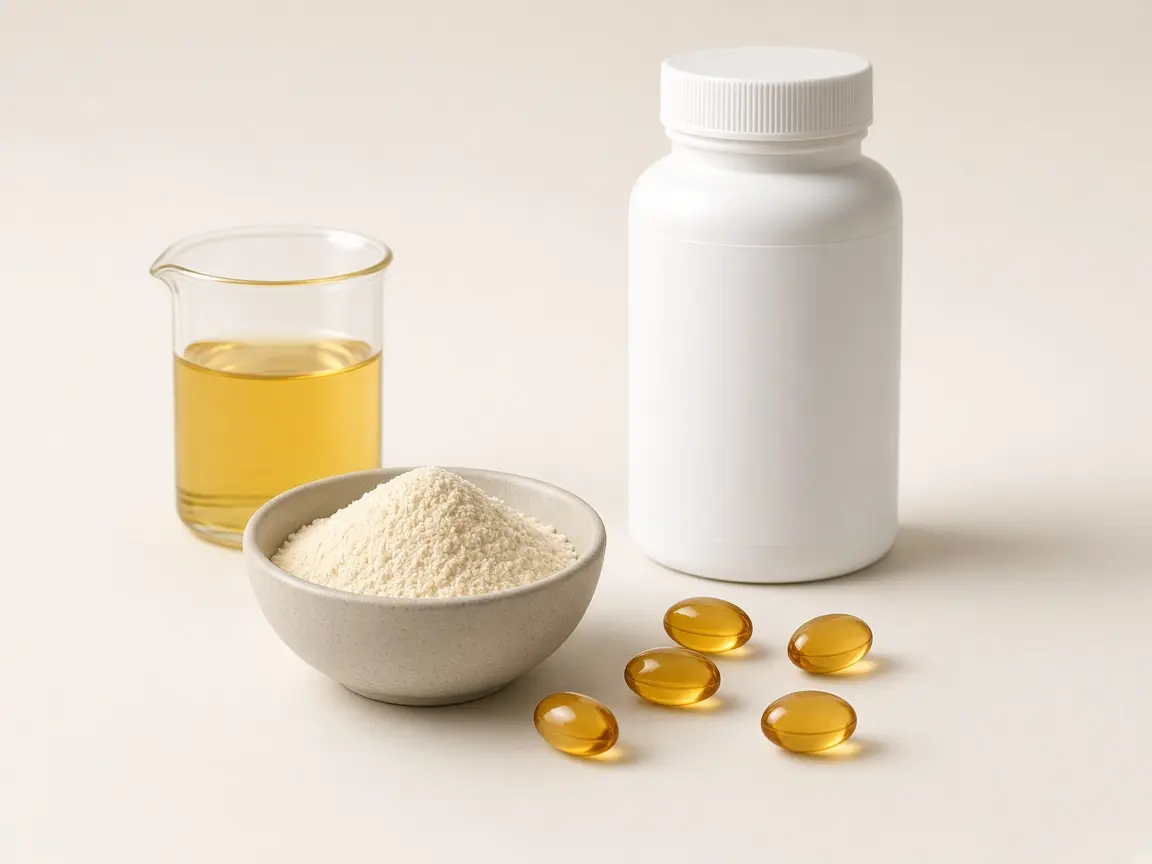
Use when: The formula combines PS with DHA or another oil-supplied active.
Specify: DHA source, declared DHA amount, oil composition, target fill weight, and the oxidation specification for that oil. DHA supplements carry the oil specification.
Trade-off: A conventional oil fill is usually assessed for a softgel or a liquid. A hard capsule is considered only when the selected system and process can hold the fill. The development checks cover oil compatibility, shell integrity where a shell is used, and oxidation control. Astaxanthin or coenzyme Q10 supplied as an oil follows the same assessment. A powder grade of those materials is a separate purchase.
Typical starting format: Softgel, when the fill is a conventional oil.
Use when: The label prints both phospholipids.
Specify: Phosphatidylcholine as declared PC milligrams, as lecithin milligrams plus a PC line, or as a complex total with no separate PC line. Phosphatidylcholine supplements carry that specification.
Trade-off: Each phospholipid is purchased and assayed on its own specification. Replacing one with the other changes the label and the test plan. Curcumin supplied as a phospholipid complex or as an oil is specified by its curcumin content and its form. It does not substitute for the declared PS amount. An oil form follows the oil-fill assessment. A longer comparison of the two phospholipids is on PS compared with phosphatidylcholine.
Typical starting format: Softgel for a compatible oil-based fill. Hard capsule for compatible dry-powder grades.
Use when: The formula adds Alpha-GPC or citicoline beside PS.
Specify: The compound on the label, its milligrams, and the assay or salt basis. Citicoline uses its own salt or assay. L-theanine, when the formula names it, is a 50% or a 98% grade, both by HPLC. Caffeine is its own milligram line. See Alpha-GPC supplements and citicoline supplements.
Trade-off: Ingredient weight depends on the compound and the assay basis. On a 50% Alpha-GPC grade, powder weight is twice the labeled Alpha-GPC amount when both figures use the same basis. A 50% theanine grade needs twice the raw-material weight of a 100% reference for the same label amount. Alpha-GPC and citicoline are quoted on their own specifications.
Typical starting format: Hard capsule.
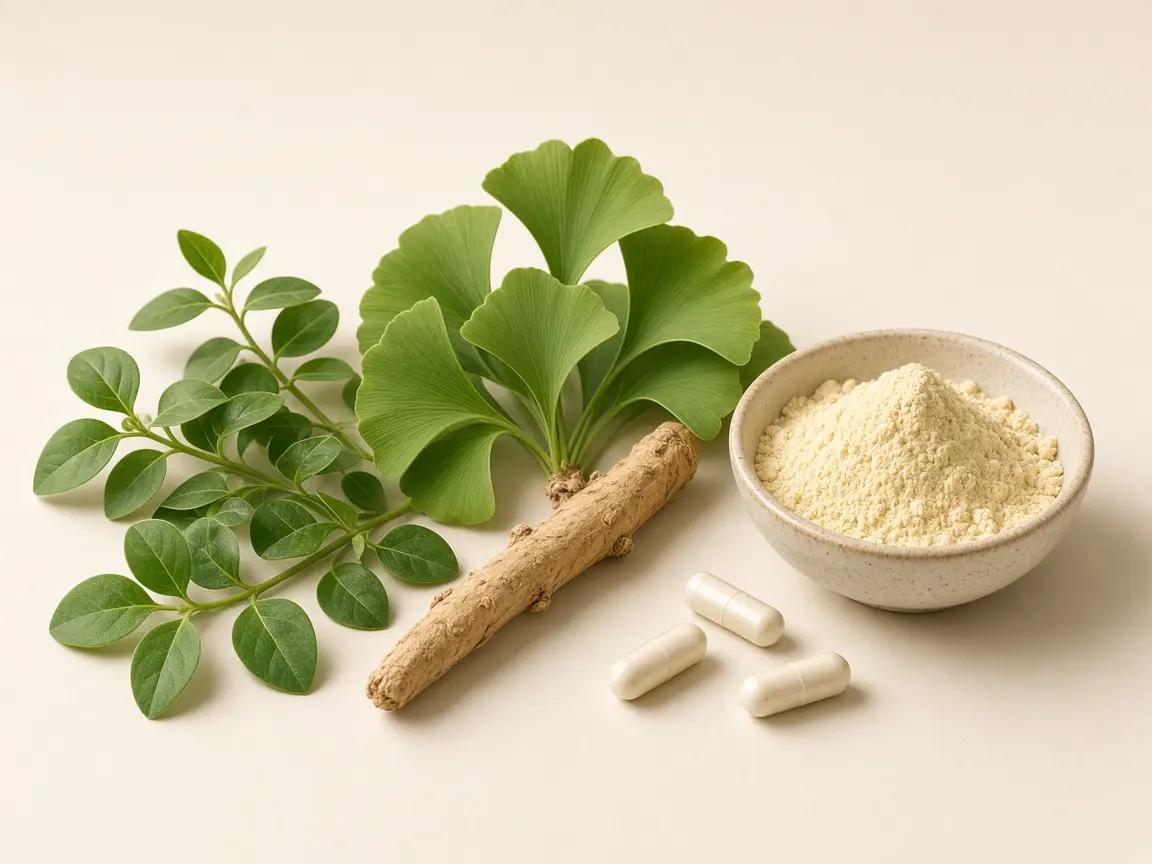
Use when: Bacopa, ginkgo, or ashwagandha is on the panel with PS.
Specify: Bacopa: plant part, extract amount, bacoside definition, and assay method. See bacopa supplements. Ginkgo leaf: flavone glycosides and terpene lactones, for example a 24% / 6% specification, plus any ginkgolic-acid limit the specification includes. See ginkgo supplements. Ashwagandha: root or root-and-leaf, the withanolide marker, and the assay method. See cortisol support supplements.
Trade-off: Extract milligrams do not make two standardization methods comparable. The ginkgolic-acid limit sits on the ginkgo specification, separate from the PS assay.
Typical starting format: Hard capsule. Softgel when the same serving also contains an oil.
Use when: The formula includes a microgram active, such as huperzine A.
Specify: The microgram amount, the extract strength that supplies it, and the powder weight of that extract. Spermidine, when named, is the spermidine milligrams and the extract weight that supplies them. 5-HTP or melatonin, when named, is checked against the destination market before sampling. Enteric coating or sublingual delivery is included only when explicitly requested and feasible for that formula.
Trade-off: The blend and the sampling plan are set for that concentration. A 100 mg PS capsule does not set that plan.
Typical starting format: Hard capsule, after the blend trial.
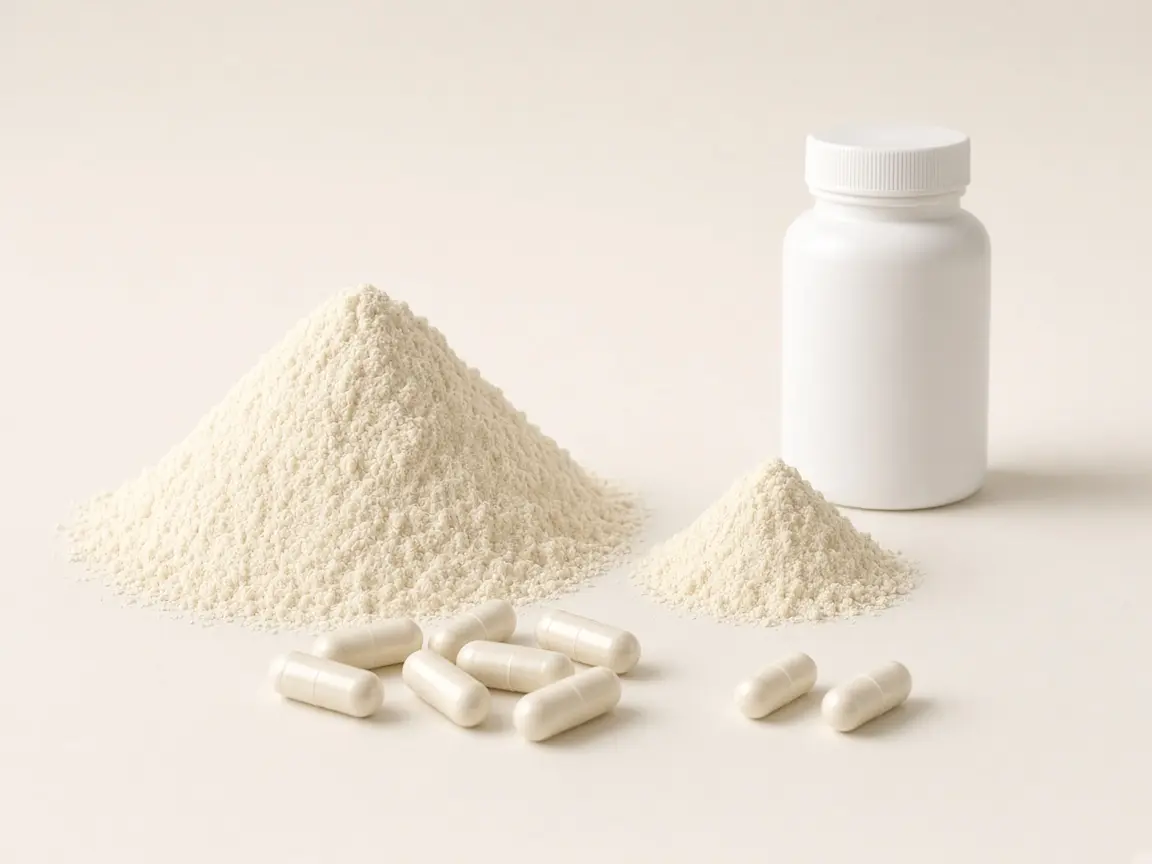
Use when: The PS ingredient weight, alone or with the other actives, may not fit the selected capsule.
Specify: Declared PS, the grade, the weight of every other active, and the target capsules per serving. Magnesium L-threonate, when named, is written as the salt milligrams and the elemental magnesium.
Trade-off: At 300 mg declared PS, a 20% grade requires about 1,500 mg of PS ingredient, versus about 429 mg for a 70% grade, before other actives and excipients. These figures estimate PS ingredient weight only. They do not set capsule size or show that a one-capsule serving is feasible. The choice depends on the full blend, bulk density, capsule size, and units per serving. Oversized fills are reviewed as high-dose capsule formulation.
Typical starting format: Hard capsule when the fill fits. Powder when the serving is a weighed powder.
Use when: Live cultures are in the same product as PS.
Specify: Strain, CFU at the labeled end of shelf life, and whether the culture and the PS share one capsule or are packed apart. Prebiotic fiber grams only when the formula names that row.
Trade-off: The culture’s stability sets the water-activity limits, storage conditions, and pack. Gram-level prebiotic fiber is assessed as part of the total powder serving. Probiotic supplements carry the culture specification.
Typical starting format: Capsule, or separate packs when the culture and the PS do not share one unit.
Choose the PS Format: Capsules, Softgels, Tablets, Gummies, Powder or Liquid
The format follows the physical form of the fill, the total weight per serving, and the pack.
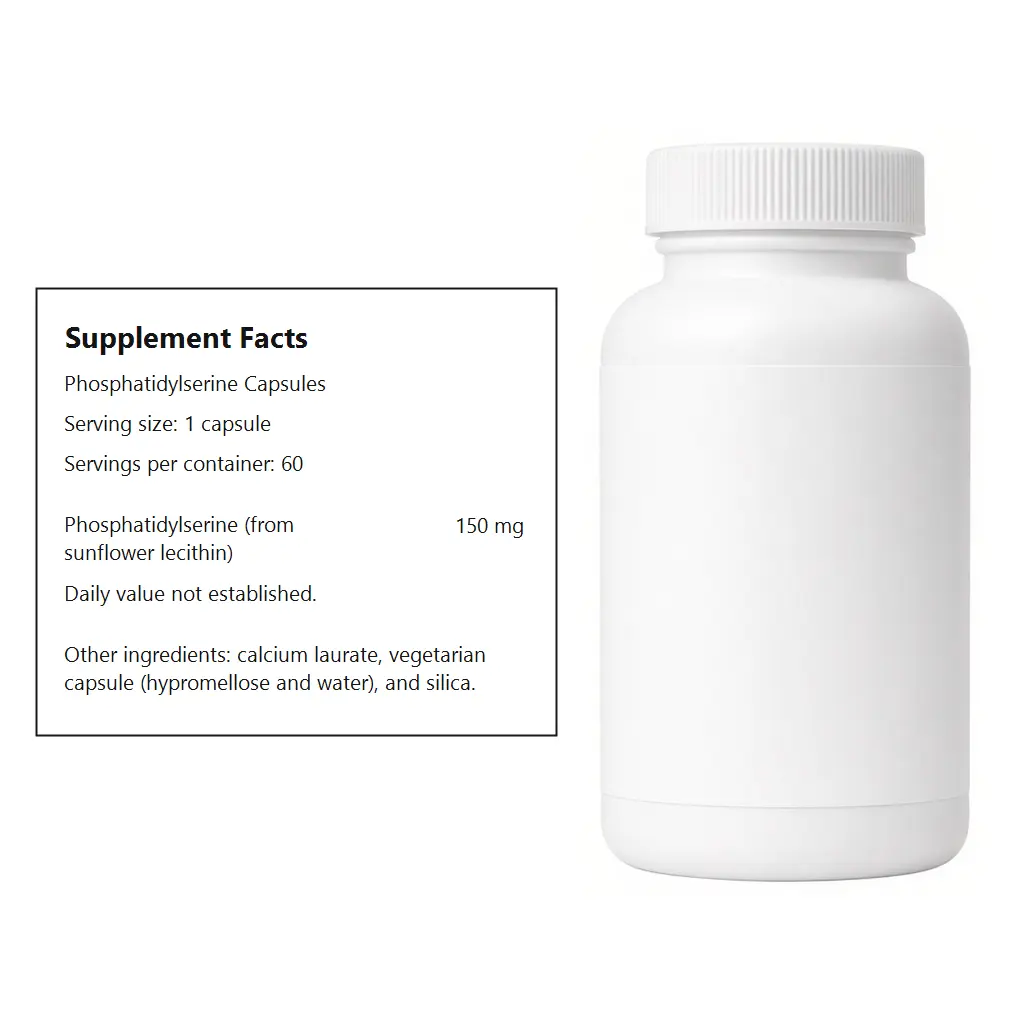
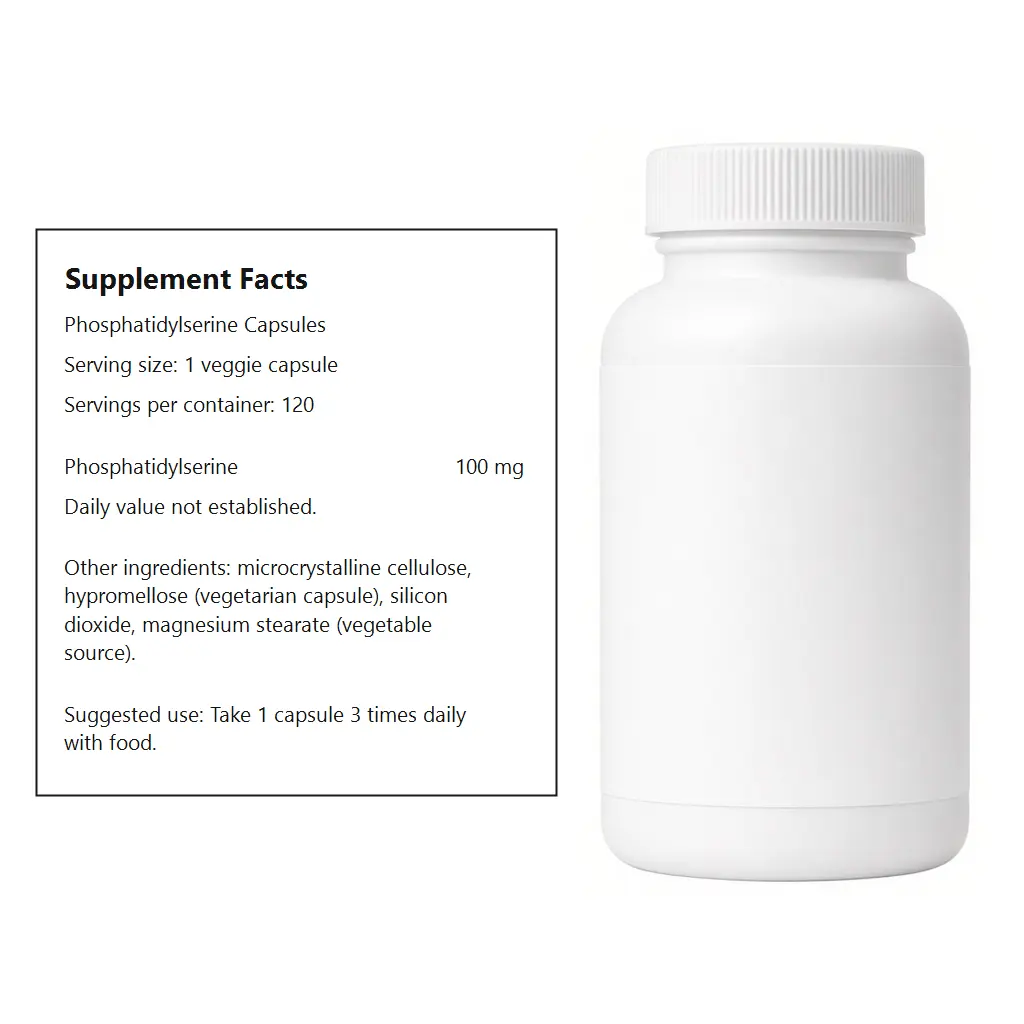
Best for: A dry PS grade, alone or in a blend whose fill fits the shell.
Why: Total fill weight, bulk density, capsule size, and capsules per serving decide whether the blend fits.
What to lock: HPMC or gelatin, capsule size, capsules per serving, declared PS, and the grade.
Manufacturing note: Flow, fill weight, and content are checked on the lot.
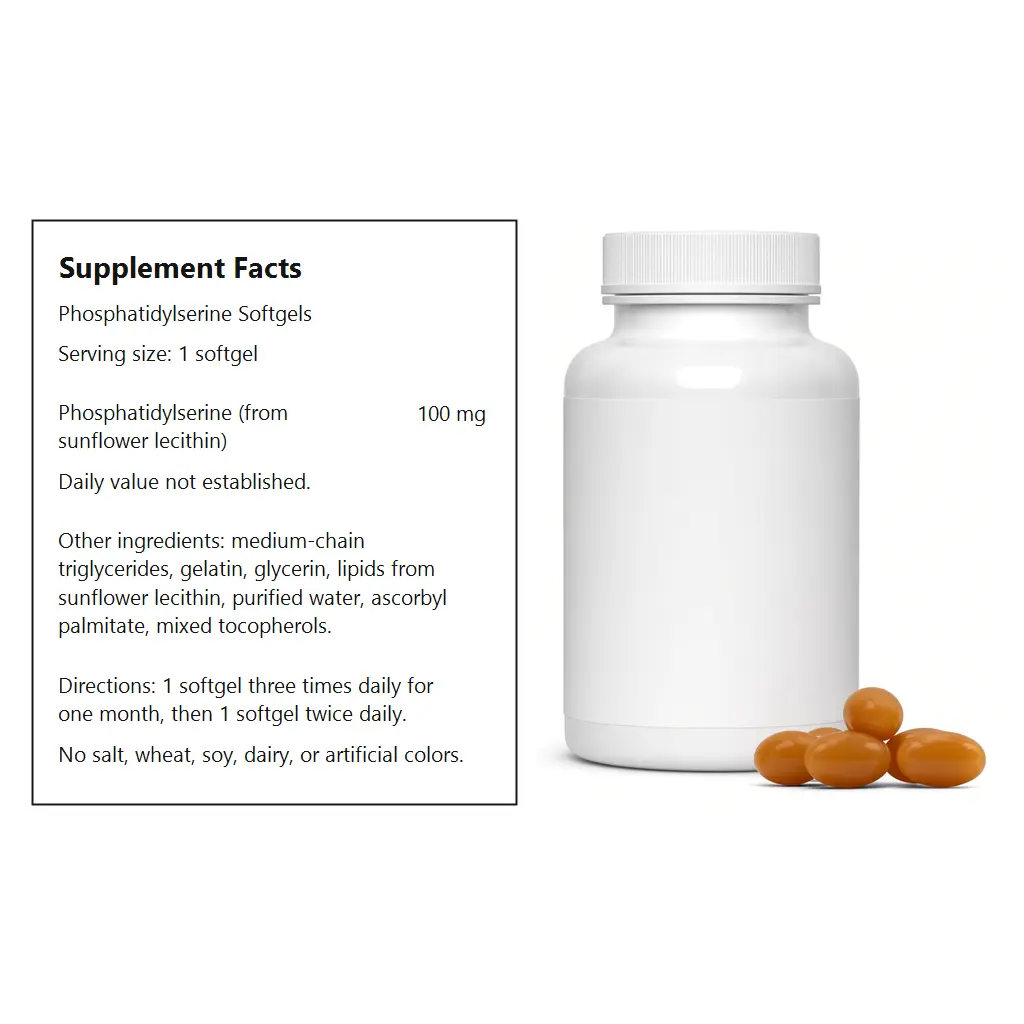
Best for: A conventional oil fill, such as DHA with PS.
Why: Oil compatibility, fill weight, shell material, seal integrity, and oxidation control are set together.
What to lock: Oil identity, fill weight, gelatin or a vegetarian shell, and the oxidation tests for that oil.
Manufacturing note: The softgel trial checks oil compatibility and seal integrity.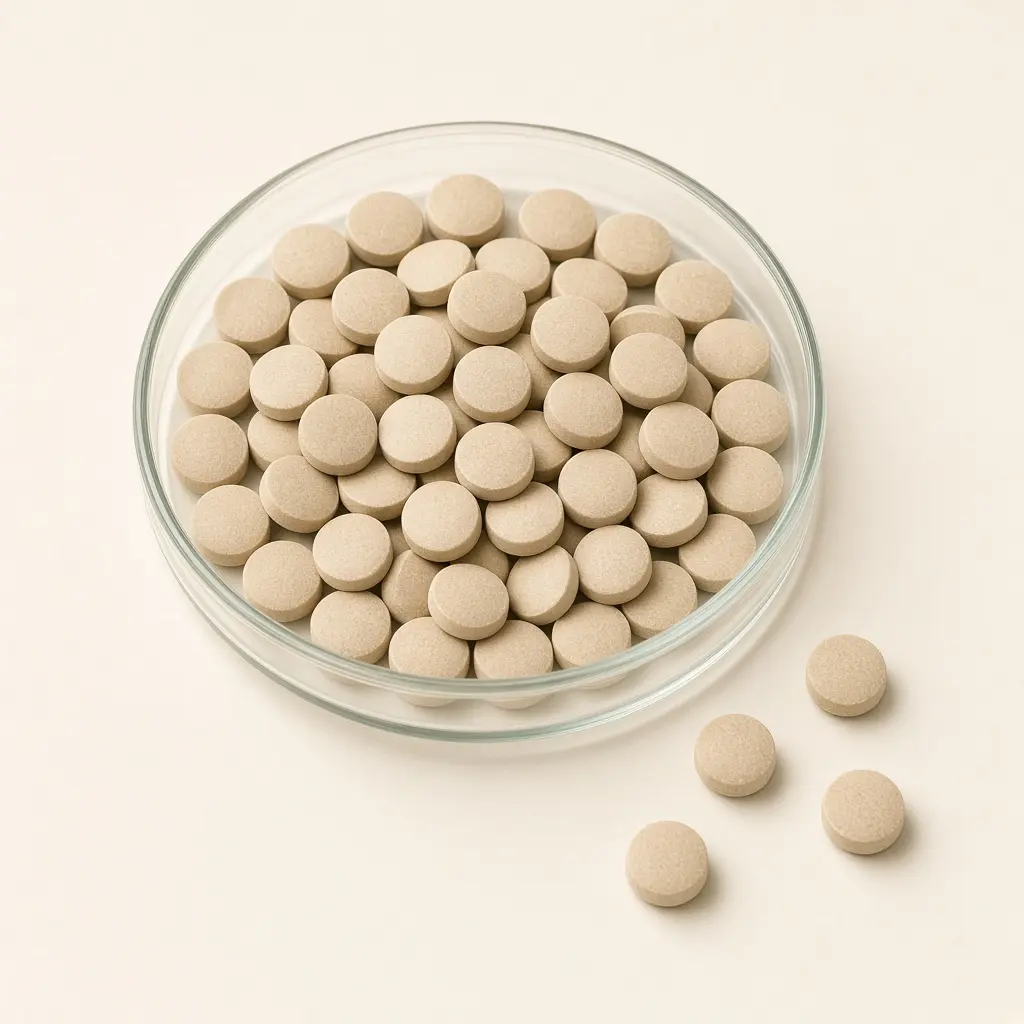
Best for: A formula already specified as a tablet.
Why: Moisture behavior, flow, compressibility, and the excipient system affect tablet weight, hardness, and disintegration.
What to lock: Tablet weight, tablets per serving, hardness, disintegration, and moisture protection for that pack.
Manufacturing note: Confirm the target weight in a compression trial.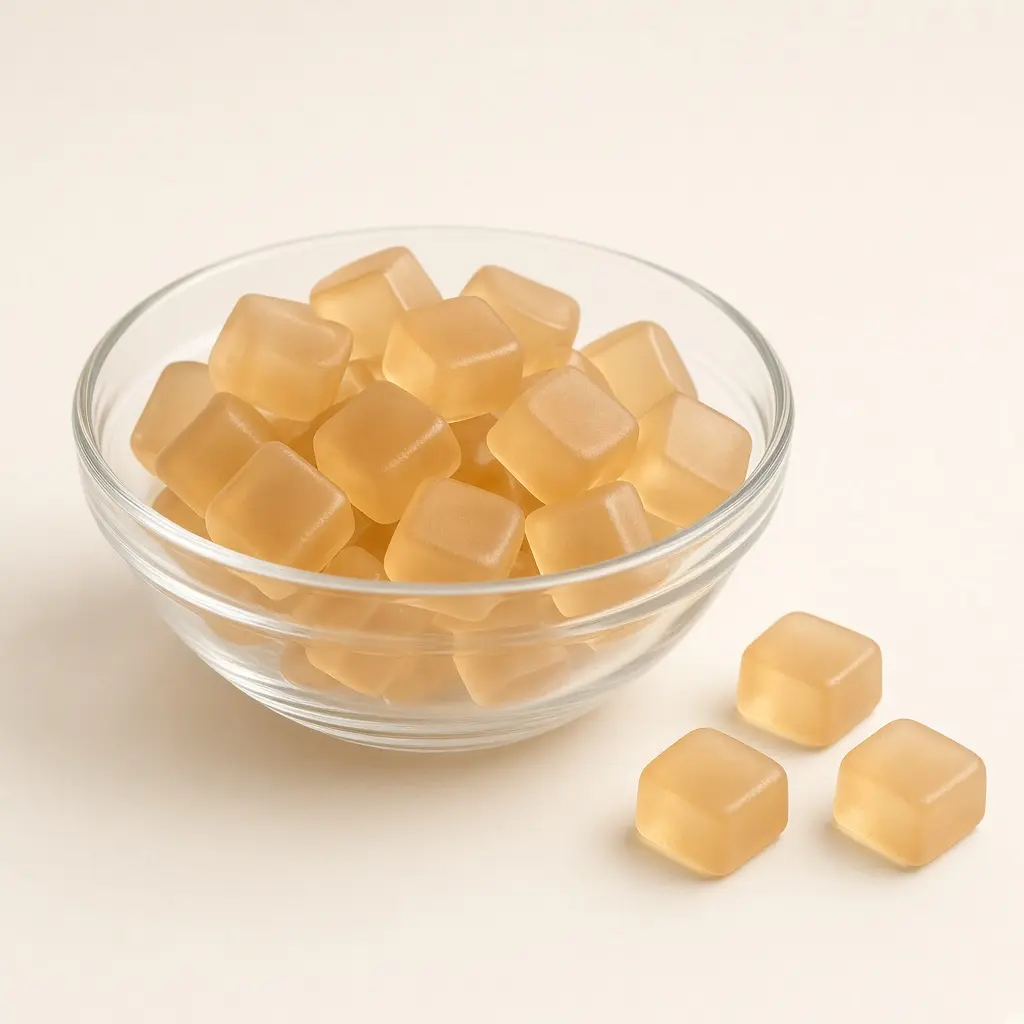
Best for: A formula that can hold the target PS amount per piece, with an acceptable taste after the cook.
Why: Heat, piece weight, and flavor decide whether that amount survives the process.
What to lock: Declared PS per piece, pieces per serving, pectin or gelatin, the flavor system, and assay before and after the cook when the specification requires both.
Manufacturing note: The order quantity is set after the cook trial.
Best for: A serving whose total weight leaves the capsule, or a retail-ready tub of PS powder.
Why: Serving weight, bulk density, caking, flavor, and moisture protection decide the stick or the tub.
What to lock: Declared PS per serving, the grade, bulk density, and moisture protection.
Manufacturing note: A drum of raw material and a finished tub or stick are quoted separately. 6. Liquid
Best for: A measured liquid serving, after a dispersion trial.
Why: An ordinary PS powder grade cannot be assumed to form a stable, uniform aqueous system. Feasibility depends on the grade, the target concentration, the carrier, the process, and storage.
What to lock: Milliliters per serving, declared PS per serving, the dispersion system, and storage.
Manufacturing note: A gram-level MCT serving is reviewed as its own formula and delivery format. It is not assumed to be a softgel.
Soy and sunflower grades are compared by PS assay, the stated test method, and the lot documents, not by source alone.
Source | What the specification records | When it is selected |
|---|---|---|
| Soy | Assay, the HPLC method named for that grade, the soy allergen statement, and GMO status when the lot documents it | When soy-derived PS meets the formula and the allergen declaration is acceptable |
| Sunflower | Assay, the HPLC method, and the documents for a soy-free claim when that claim is required | When the specification requires a soy-free source |
A soy-free claim needs the documents for that lot and the cross-contact controls. It covers soy. It does not clear every other allergen, and it is not a Non-GMO statement, unless those documents say so.
Raw-material assay is the PS content of the ingredient. The label claim is the PS amount per serving.
PS assay, declared PS amount, and ingredient weight are different measures.
Term | Meaning |
|---|---|
| PS assay | The PS content of that raw material by the agreed method |
| Declared PS | The PS amount on the label, per serving |
| Ingredient weight | The raw-material weight estimated from that assay and its calculation basis |
As a theoretical estimate, ingredient weight equals the declared PS amount divided by the assay fraction. A 50% assay is entered as 0.50. Production use follows the supplier’s agreed assay basis, the batch result, and the approved formula.
Declared PS | 20% grade | 50% grade | 70% grade |
|---|---|---|---|
| 100 mg | 500 mg | 200 mg | about 143 mg |
| 200 mg | 1,000 mg | 400 mg | about 286 mg |
| 300 mg | 1,500 mg | 600 mg | about 429 mg |
In a hard capsule, PS ingredient weight is only part of the total fill. The fill also includes other actives, excipients, and carriers. Capsule-shell weight is separate. Feasibility depends on total fill weight, bulk density, capsule size, and units per serving.
For a like-for-like comparison, calculate raw-material cost per serving at the target PS claim, then assess processing, testing, packaging, and order quantity separately.
Other phospholipids and carriers in a PS concentrate are verified against that supplier’s specification. Composition can vary by grade and by supplier.
HPLC results are comparable only when the method, the reference standard, and the calculation basis are aligned. An “HPLC” designation alone does not make two assays the same specification.
A usable specification defines measurable attributes. “High purity” alone is not an acceptance criterion. The percentage on these grades is a PS assay, not a claim that the whole powder is chemically pure.
Document or check | What a buyer uses it for | What to agree |
|---|---|---|
| Ingredient specification | Source, assay, HPLC method, and the raw-material requirements | The grade limit for the purchase |
| Batch COA | Results of the tests run on that lot | Which tests that lot’s COA actually reports |
| Allergen and GMO documents | Support for the soy, soy-free, or Non-GMO line | The supplier document that carries that statement |
| Finished-product specification | Declared amount, fill weight, and release tests | The tests that release the finished unit |
| Blend or content uniformity, where required | Distribution of an active in the finished unit | The checks for that formula and that concentration |
| Stability and pack | Whether the unit holds its specification in the pack and storage that will ship | The pack and storage written into the stability file |
A batch COA reports the results for that lot. Identity, moisture, oxidation, contaminants, microbiology, and residual solvents are set from the ingredient requirements and the risk assessment. They are not assumed to appear on every COA. See Quality Control and How to Read a COA.
Where a market allows a PS claim, the artwork uses the authorized wording and the required disclaimer. The brand’s counsel approves that wording.
MOQ and lead time depend on the dosage form, the pack, raw-material availability, and any formulation or process trial. A market check for huperzine A, 5-HTP, or melatonin can also change the schedule.
These are planning ranges, not guaranteed minimums. The confirmed MOQ and schedule depend on the formula, the pack, material availability, testing, and the production schedule.
Format | Planning range | Confirmed after |
|---|---|---|
| Hard capsules | About 3,000–5,000 finished retail units | Formula, capsules per serving, shell, pack |
| Tablets | About 5,000–10,000 finished retail units | Tablet weight, compression trial, pack |
| Powder sticks | Often from about 10,000 sticks | Fill weight per stick, formula, film, flavor |
| Powder tubs | Quoted with the formula and the tub | Fill weight, pack |
| Softgels | Quoted after formula and pack review | Oil composition, shell, target count |
| Gummies | Quoted after the cook trial | Amount per piece, piece weight, process, flavor |
| Liquids | Quoted after formula and pack review | Serving volume, dispersion system, pack, storage |
| Bulk powder | Quoted by kilogram | Grade, source, quantity |
A drum of PS and a finished retail unit are separate quotations.
Is sunflower PS stronger than soy PS?
Not by source alone. A 50% sunflower grade and a 50% soy grade have the same nominal assay. Source selection depends on the formula, the allergen requirement, and the lot documents.
Does a lower price per kilogram mean a lower cost per serving?
Not necessarily. Compare the ingredient cost required for the target PS amount per serving, then assess processing, testing, packaging, and order quantity separately.
Does the raw-material COA verify the finished label claim?
No. A raw-material COA reports tests on the supplied lot. Finished-product release follows the approved specification and its release tests.
Can a private-label PS supplement remain single-ingredient?
Yes. Specify the target PS amount, the assay grade, the source, the dosage form, and the pack. Additional actives add further formulation and testing requirements.
Request a PS Feasibility Review
1. Submit the project brief. Target market, preferred dosage form, declared PS per serving, source if already chosen, the formula or reference label or raw-material COA, and the expected order quantity and pack.
2. Review the formula requirements. We assess the PS grade and source, the estimated ingredient weight, the total fill once the other actives are known, dosage-form feasibility, and which documents and release tests need to be agreed.
3. Confirm the quotation basis. The specification, quantity, pack, testing, and any open technical condition are fixed before pricing and sampling.
Custom formulas can sit under an NDA. See Confidentiality and IP Protection.
Related Supplement Solutions
- Phosphatidylcholine Supplement Manufacturer
- Alpha-GPC Supplements
- DHA Supplements
- Lion’s Mane Mushroom Supplements
Disclaimer: Wholesale and brand-manufacturing reference only. Dietary supplements are not intended to diagnose, treat, cure, or prevent any disease. Milligram figures are fill illustrations, not recommended intakes. The routes above are quotation paths. They become production files after the specification and the required trials are approved. Huperzine A, 5-HTP, and melatonin are manufactured only for markets where that ingredient may appear on a supplement label. Brand owners remain responsible for finished-label compliance in the destination market. KS Nutripharma provides manufacturing feasibility and documentation, not legal approval.
Written by KS Nutripharma Formulation Team | Reviewed by KS Nutripharma Director of R&D (PhD, Food Science | 19+ years nutraceutical development) | Technical review scope: declared amount versus ingredient weight, soy versus sunflower documents, dosage-form feasibility, and finished-product release | Updated October 2026