


Cortisol Support Manufacturing
KS Nutripharma® develops and manufactures cortisol support supplements. The materials already provided are turned into a working specification: the raw-material grade, the amount per serving, and dosage-form feasibility, before quotation and sampling. Request a formula review
This page covers daily stress-support formulas built around Withania somnifera and the companion ingredients named in the formula. Products developed primarily for sleep support follow a separate formulation route.
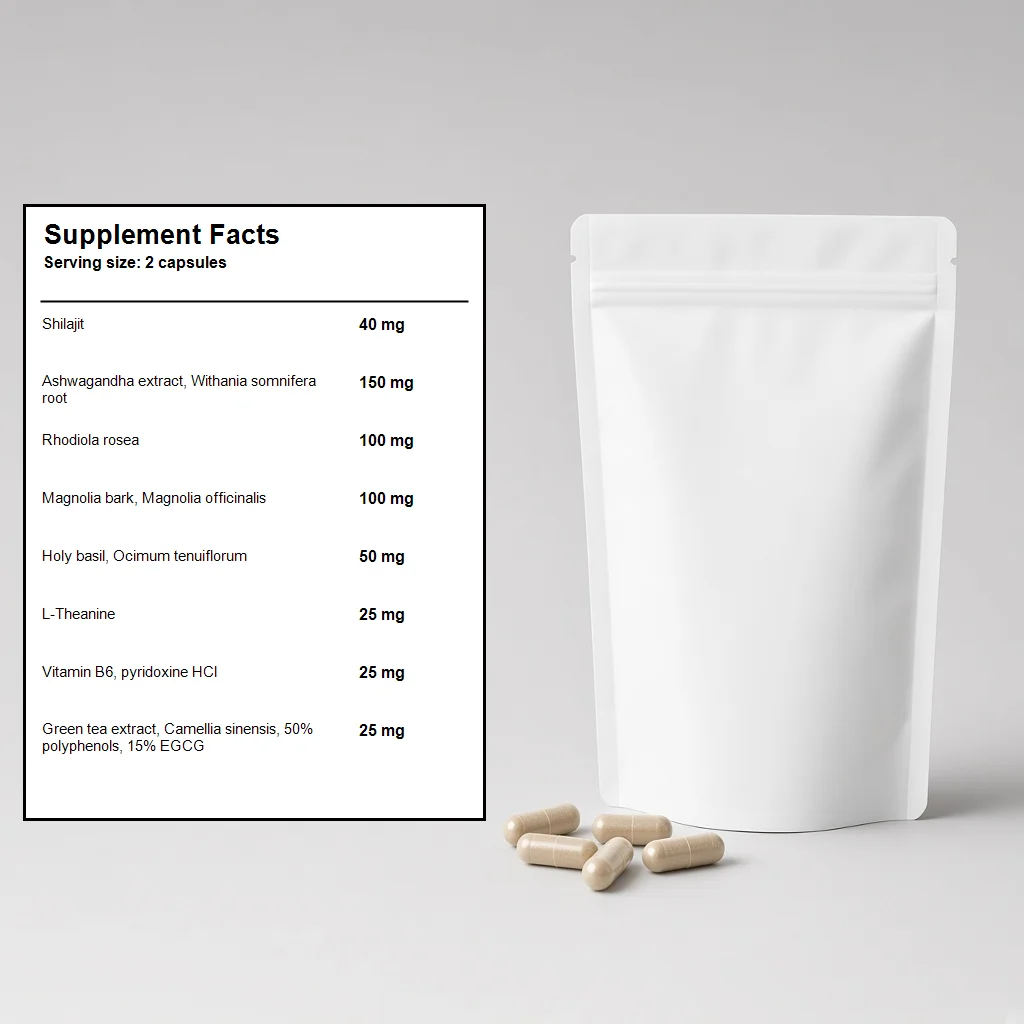
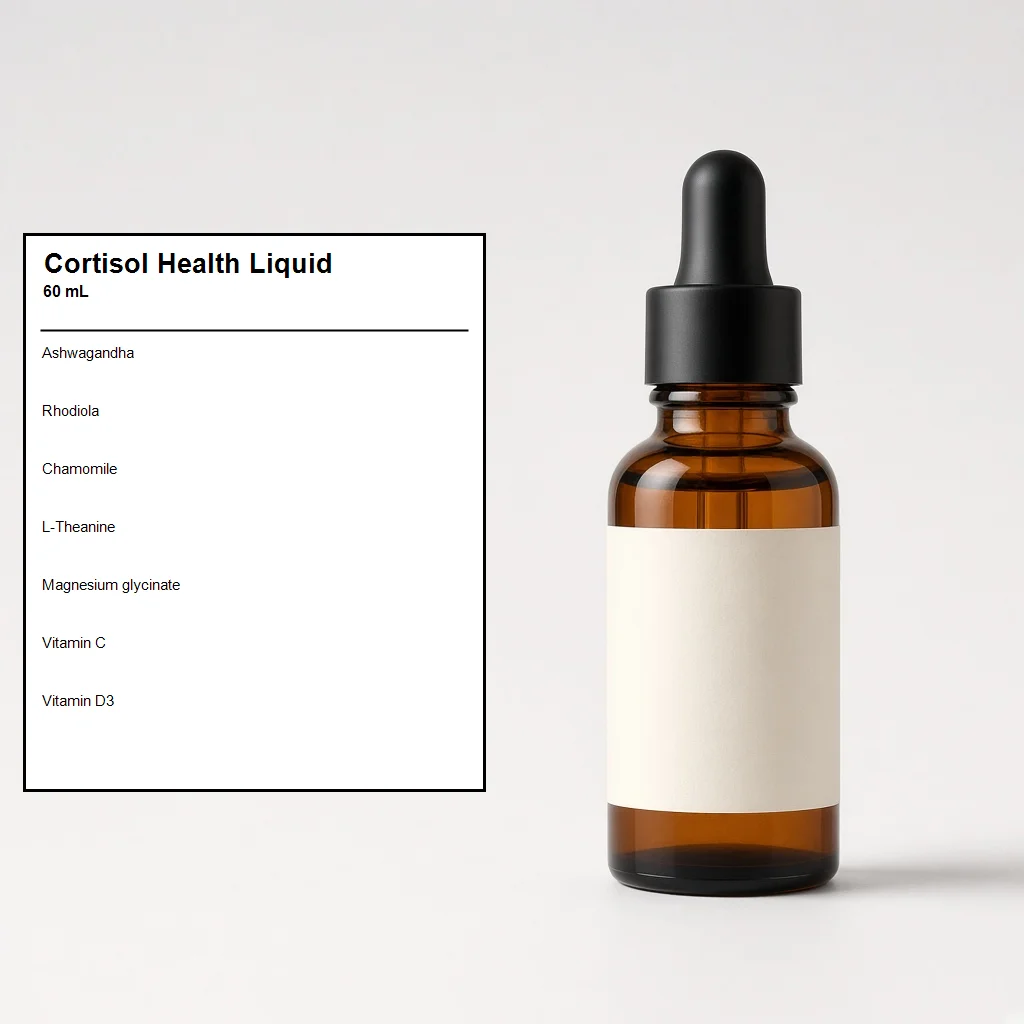
The label photographs are commercial comparisons, not released stock formulas.
Start Your Cortisol Support Supplement Project
Existing Formula
Send: The ingredient list, amount of each ingredient per serving, dosage form, target market, and expected order quantity.
Reference Label
Send: The product label, target market, preferred dosage form, and expected order quantity. The label is enough to start the review; additional supplier specifications can be provided later.
Product Concept
Send: Your product concept, target market, preferred dosage form, expected order quantity, and target cost, if available. You do not need a finished formula to begin.
Cortisol Support Supplement Manufacturing at a Glance
Item | Snapshot |
|---|---|
| Commercial planning | Capsules: about 3,000–5,000 finished retail units (a bottle or carton). Tablets: about 5,000–10,000 finished retail units. Planning figures; the confirmed minimum follows the formula. Full ranges and lead times are below. |
| Manufacturing capabilities | 81,000+ m² · 12 automated lines · 5 manufacturing bases · 2 R&D centers · since 2007. Published daily capacity: 5+ million capsules · 12+ million tablets · 2+ million softgels · 2.5+ million gummies. These are plant totals. A gummy or a high-fill powder still needs its own feasibility review. Manufacturing capacity |
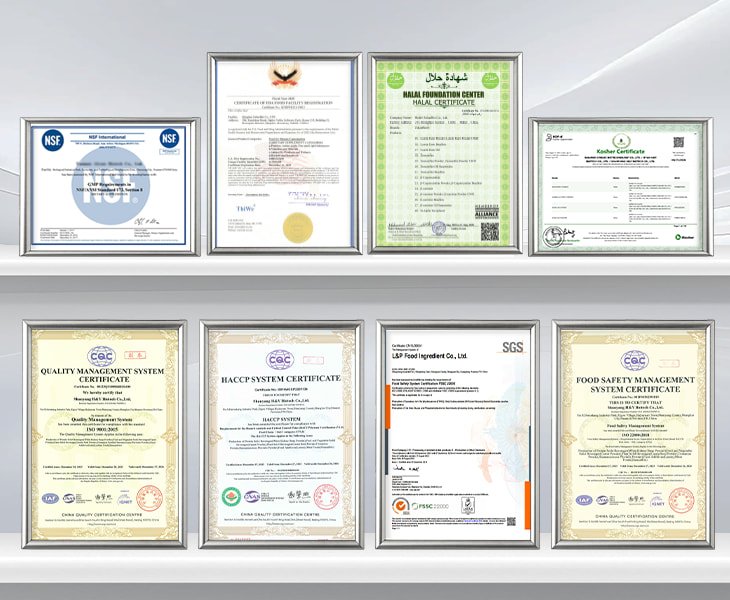
| Quality certifications | cGMP · ISO 9001 · ISO 22000 · HACCP · FSSC 22000 · Halal · Kosher. These apply to the relevant quality systems. They are not approval of an individual formula or of a batch result. Certifications and compliance |
| Dosage forms on this range | Capsules · tablets when the serving is already a tablet · powders and stick packs when the fill leaves the capsule · gummies after the active load is confirmed |
Cortisol Support Formula Options
Each route opens a quotation. None of the five is a released stock formula.

Use when: The brand is launching a single-ingredient ashwagandha product, or extending an existing ashwagandha line.
Specify: Plant part, marker definition, assay method, and extract amount per serving. A liposomal grade also names the withanolide percentage and the phospholipid carrier.
Trade-off: Root and root-and-leaf are separate specifications. An extract ratio does not establish the withanolide content.
Default format: Hard capsule.

Use when: L-theanine is added to an ashwagandha serving, or the reference label already lists both.
Specify: Milligrams of ashwagandha extract and milligrams of L-theanine, each on its own.
Trade-off: If the label lists them as one blend, the individual amounts have to be confirmed before the formula can be quoted.
Default format: Hard capsule. A reference product that is already tablets stays on tablets.

Use when: The formula names holy basil, Rhodiola rosea, or both, each as its own ingredient.
Specify: Species, plant part, extract amount, and marker specification for each botanical.
Trade-off: A daytime formula led by rhodiola is quoted on stress-relief supplements.
Default format: Hard capsule, commonly more than one capsule when both extracts are in the serving.

Use when: The product is positioned for evening relaxation, and sleep is not the primary product purpose.
Specify: The ashwagandha grade, L-theanine milligrams, and any GABA or magnesium included.
Trade-off: Products developed primarily for sleep follow the sleep support route.
Default format: Hard capsule. A reference label in this group uses two capsules per serving.
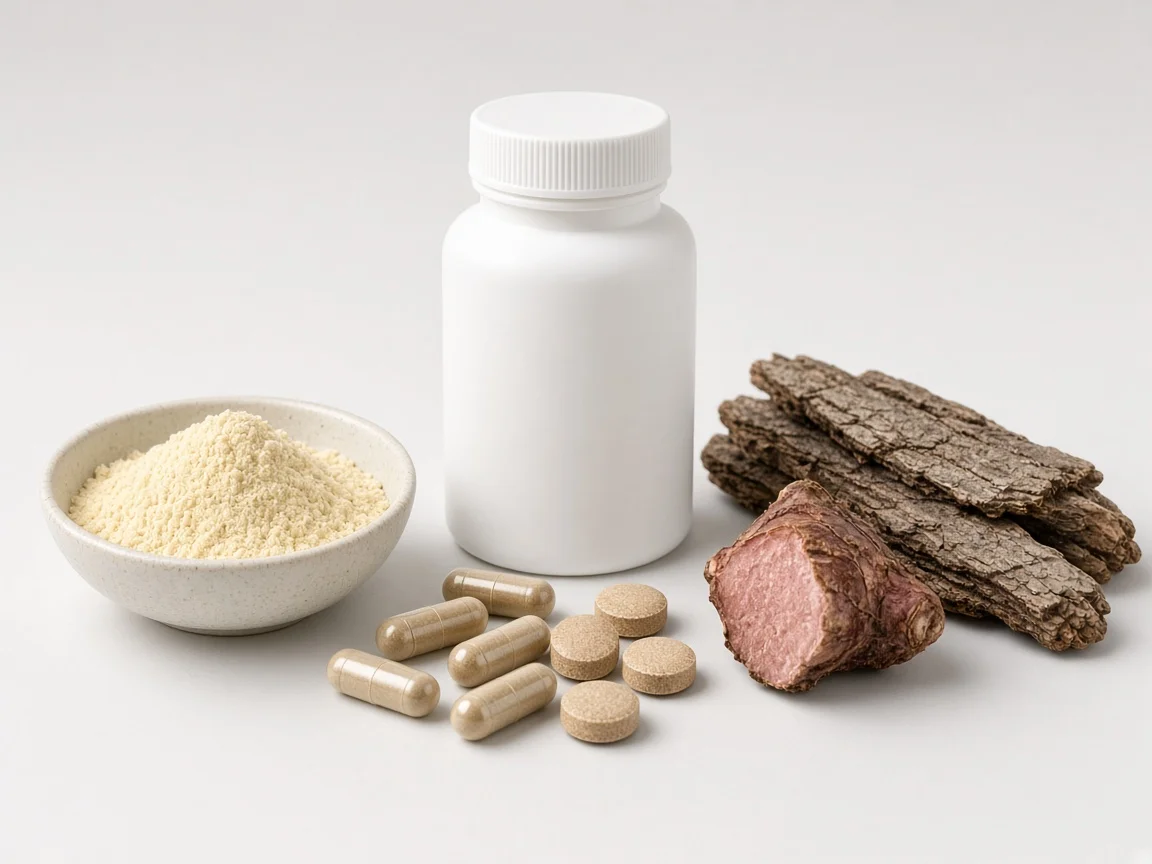
Use when: The project follows a reference label that combines phosphatidylserine with several botanicals.
Specify: Phosphatidylserine milligrams and the source, soy or sunflower. Plant part, marker, and milligrams for each botanical. Epimedium only when the destination market accepts it.
Trade-off: Soy and sunflower phosphatidylserine require different allergen documents.
Default format: Capsule or tablet, matching the reference product and the confirmed ingredient load.
Choose the Cortisol Support Format: Capsules, Tablets, Powders or Gummies
Dosage-form feasibility depends on the serving size, the total ingredient load, and the process. Softgels are considered when the formula includes an oil. Liquids are considered when the formula is a liquid. These dry blends start as capsules, tablets, powders, or gummies.

Best for: A single ashwagandha extract, L-theanine, holy basil, or a multi-ingredient blend whose fill fits the capsule size and the capsule count.
What to lock: HPMC or gelatin shell, capsule size, fill weight, capsules per serving, and blend uniformity once each powder weight is known.
Manufacturing note: In a multi-ingredient blend, each raw material needs a defined amount on the manufacturing specification. If the serving does not fit the selected capsule size or count, a larger capsule, a higher count, or another dosage form can be assessed, including high-dose capsule formulation.
Best for: A multi-ingredient serving already specified as tablets, including a 2-tablet commercial pattern.
What to lock: Tablet weight, tablets per serving, hardness, disintegration, and the ingredient load.
Manufacturing note: Moving a capsule formula onto a tablet press is a separate compression review.
Best for: A serving that no longer fits the selected capsule, or a formula already written as a drinkable powder.
What to lock: Bulk density, flavor, fill weight, pack size, and moisture protection.
Manufacturing note: The sample review checks taste and the specified physical properties of the powder. Stick packs, tubs, and bottles are costed on their own filling and packaging. Phosphatidylserine powders and botanical extracts are specified with moisture protection.
Best for: A serving whose actives still fit after the cook.
What to lock: Active load after the cook, gummies per serving, piece weight, pectin or gelatin, and the sweetener system.
Manufacturing note: A capsule formula is not transferred to gummies without a feasibility review. Final MOQ and pricing are confirmed after the cook trial, from the formula, the batch size, and the pack.
Ingredient Specifications Supplied for Cortisol Support Formulas
The following raw-material grades are available for quotation. Each grade is defined by its source, the relevant plant part, the marker specification, and the assay method. A batch CoA reports results for the tested lot and does not replace the agreed raw-material specification. The extract weight per serving follows the formula and the selected grade.
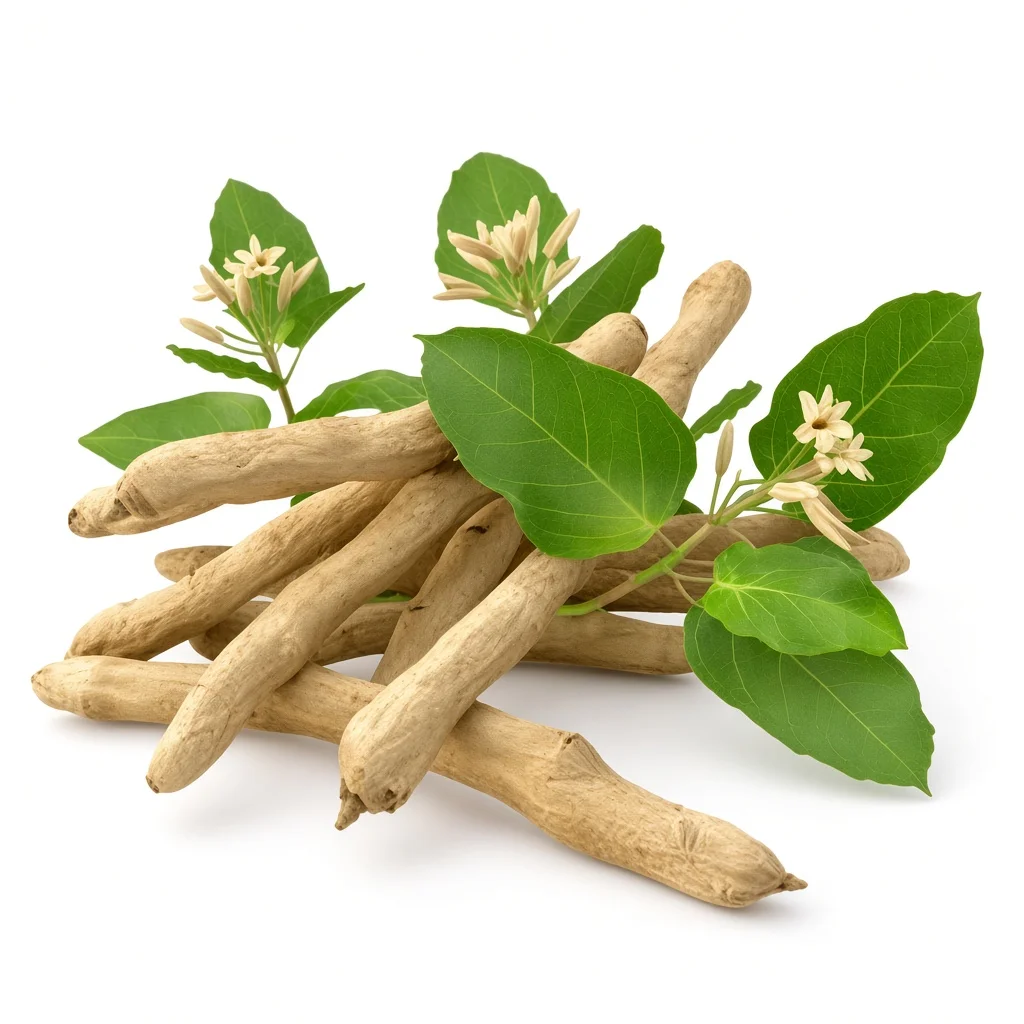
Ashwagandha is Withania somnifera. Withanolides and withanolide glycosides are separate specifications.
Grade | Plant part | Marker | Method | Form |
|---|---|---|---|---|
| Standardized root extract | Root | Withanolides 1.5%, 2.5%, 5%, or 10% | HPLC | Brown powder |
| Root and leaf, after authorization | Root and leaf | Withanolide glycosides, 10% and above | Named on that grade | Quoted with the supplier file |
| High-withanolide grade, after authorization | Named on that grade | Withanolides 35% | Named on that grade | Quoted with the supplier file |
| Liposomal powder | Root extract with a phospholipid carrier | Withanolides 5% and above | HPLC | Light brown, water-dispersible powder |
The liposomal grade is quoted on its own supplier file: assay, phospholipid carrier, and delivery-system details. Withanolide content is the marker. Non-standardized root powder commonly runs 0.3%–1.5% withanolides.

L-theanine is available for quotation at 50% and at 98% and above. Both grades are assayed by HPLC. The 98%-and-above grade is a white crystalline powder. The selected grade and its assay basis set the raw-material weight for the target amount per serving.
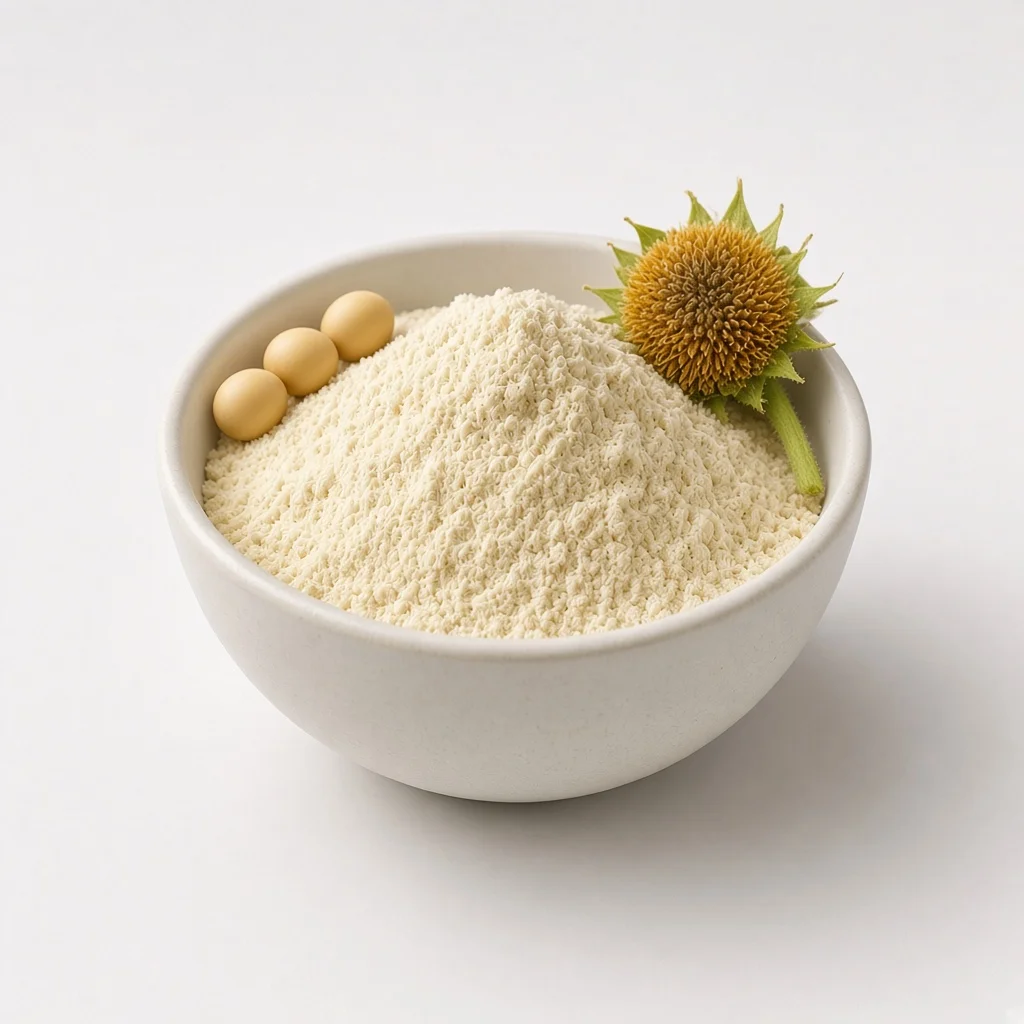
Phosphatidylserine is quoted from the concentrate, not from the milligrams printed on a finished label. The published grades are 20%, 50%, and 70% phosphatidylserine, from soy or sunflower, assayed by HPLC. Soy and sunflower use different allergen documents. The label claim refers to the amount of phosphatidylserine, not the total weight of the concentrate. Powder weight follows the percentage on the selected grade.

Magnolia bark is Magnolia officinalis bark, supplied as an off-white powder. The published specification is honokiol, magnolol, or honokiol plus magnolol, from 2% to 98%, by HPLC. The quotation names which analyte and which percentage inside that range. Epimedium is included only when the destination market accepts it, and it is specified on its own.

Rhodiola root extract is quoted by species. An extract ratio does not set rosavin or salidroside.
Species | Marker | Method | Form |
|---|---|---|---|
| Rhodiola rosea root | Rosavins 1%–3% | HPLC | Light brown to brown-red powder |
| Rhodiola rosea root | Rosavins 3% and above, and salidroside 1% and above | HPLC | Brown powder |
| Rhodiola crenulata root | Salidroside 1%–5%, or a 10:1 or 20:1 extract | HPLC or UV | Brown-yellow to brown powder |
On the dual-marker Rhodiola rosea grade, rosavins can be named from 1% to 5% and salidroside from 0.5% to 5%.

Holy basil is Ocimum tenuiflorum leaf. The same leaf is also labeled Ocimum sanctum. The quotation grade is leaf extract standardized to ursolic acid at a minimum of 2.5%, by HPLC. Ocimum basilicum is a different species. A eugenol grade or a rosmarinic-acid grade is a separate specification when the formula names that marker.

Magnesium is quoted by salt. The published salt choices are glycinate or bisglycinate, citrate, malate, taurate, L-threonate, and oxide. The quotation names the salt, the salt weight, and the elemental magnesium on that grade’s specification. The salt weight and the elemental magnesium content are specified separately. The elemental percentage comes from the incoming specification for the salt that was selected.

Black pepper, maral root, GABA, pantothenic acid, passion flower, and wild jujube are quoted on the identity and the marker specified in the project brief. They are not default cortisol-support grades. A blend weight is not split into milligrams for each plant.
| Quote variable | What to send | Why it changes the quote |
|---|---|---|
| Formula identity | An existing formula, a reference label, or a new concept, plus the target market | Sets transfer, label matching, or a new specification |
| Ingredient grade | Species or chemical identity, plant part or source, analyte, method, and the supplier specification | Sets which material is priced, and whether authorization is required |
| Serving | Amount of each ingredient per serving, and units per day | Sets fill weight, unit count, and the label structure |
| Dosage form | Capsule size, tablet weight, gummy piece weight, or stick weight | Sets whether that load can be made |
| Compatibility | Hygroscopic salts, botanical taste, cook temperature, and pack contact | Sets whether the formula can be made and held in that pack |
| Packaging | Bottle, blister, stick, or tub, and the count or net weight | Sets materials, filling, and pack cost |
| Order quantity | Finished units, number of SKUs, and raw-material minimums | Sets batch size and how fixed costs are spread |
| Testing scope | Incoming tests, finished-product tests, named markers, and any third-party test | Sets test cost, documents, and the schedule |
Branded ingredients are included after authorization, once the supplier documentation is confirmed. Otherwise the quotation uses the agreed generic grade.
What the Initial Review Delivers
- A preliminary assessment of dosage-form feasibility.
- The specifications confirmed from the information provided, and the inputs still unresolved.
- The quotation scope, and the next steps toward sampling.
Quality control covers incoming materials, in-process checks, and finished-product release. The tests and acceptance criteria come from the approved specification. A supplier CoA and a finished-product result are different records.
Incoming Material Verification
Incoming testing verifies identity, the specified marker, and the contaminants required for that material. Withanolides, withanolide glycosides, and extract ratios are reported as the raw-material specification defines them. They are not interchangeable measures.
In-Process Controls
In-process checks follow the dosage form: blend uniformity, capsule fill weight, tablet weight, hardness and disintegration, gummy piece weight, or stick-pack fill weight.
Finished-Product Release
Release testing follows the approved finished-product specification. That specification may include identity, the marker or nutrient assay named for the product, microbiology, heavy metals, and the physical checks for the format. Withanolides, withanolide glycosides, honokiol, magnolol, elemental magnesium, or phosphatidylserine are assayed on release when the specification names them.
Quality control
Third-Party Testing and Batch Records
A third-party report is added when the specification names the test, the sample, and the laboratory. A supplier CoA, a finished-product CoA, and an independent laboratory report are different evidence. The agreed testing scope decides which of them go in the batch file.
How to read a CoA
Stability
Stability is checked on the finished formula in the pack that will ship. The checks are moisture, appearance, and the named assay. A gummy is checked after the cook. A formal stability study is added when the specification or the destination market requires one. A preliminary feasibility review does not replace that study.
Packaging
Packaging is finalized with the formula: container, closure, and moisture protection when the grade needs it. Botanical powders, phosphatidylserine, and magnesium citrate are specified with that protection.
Destination Market
Ingredient eligibility, labeling requirements, and applicable warnings are checked for the destination market. Epimedium on a reference label is included only when that market accepts it.
The figures below are planning ranges. Final MOQ and lead time depend on the confirmed formula, packaging, raw-material availability, testing, and the production schedule.
Format | Planning MOQ | Unit |
|---|---|---|
| Capsules | About 3,000–5,000 | Finished retail units (bottle or carton) |
| Tablets | About 5,000–10,000 | Finished retail units (bottle or carton) |
| Powder sticks | Often from about 10,000 | Individual stick packs |
| Powder tubs | Quoted with the formula and the tub | Tub |
| Gummies | Set after the cook trial | Finished retail units (bottle or carton) |
Bulk powder is quoted by kilogram. For repeat orders, confirm the applicable raw-material lot, specification, packaging, and finished-product testing requirements.
Stage | Typical lead time | Starts after |
|---|---|---|
| Sample | 7–15 days | An approved working specification. Ingredient procurement, new flavors, and packaging tooling sit outside this window unless the schedule includes them |
| Production | 30–45 days | Approval of the final specification, pack, artwork, order, and production schedule |
- Submit the brief. A formula, a reference label, or a product concept, with the target market, the dosage form, and the expected quantity.
- Review the specification. Confirm ingredient grades, serving amounts, and any missing information.
- Confirm the quotation. Agree on the formula, packaging, order quantity, and testing scope.
- Approve the sample. The approved specification covers the formula, the label information, the packaging, and the finished-product tests.
- Release for production. Production proceeds after the specification, artwork, order, and schedule are approved.
Can a product be developed from a reference label?
Yes. Send the label, the target market, the preferred dosage form, and the expected order quantity. That package is enough to open the review.
Can an accurate quotation be prepared if the label lists a proprietary blend?
Not from the blend weight alone. The individual ingredient amounts and the relevant raw-material grades must be established before an exact formula match can be quoted. Where those details are unavailable, the quotation uses an agreed alternative specification.
Can the dosage form or the ingredient supplier change?
Yes, after a new feasibility or equivalence review. A dosage-form change is assessed on fill weight, processing, and the finished unit. A second source is compared on identity, plant part or source, marker definition, assay method, and serving amount.
Is the MOQ a bottle count or a capsule count?
Capsule and tablet ranges count finished retail units, such as bottles or cartons. Powder sticks are counted individually. Tubs and gummies are quoted from their own production and packaging requirements.
Which documents are needed at the inquiry, and which come later?
A formula, a reference label, or a product concept is enough to start. Supplier specifications, assay methods, and CoAs are requested as the formula is reviewed. Finished-product tests and any third-party tests are agreed before production.
Related Manufacturing Routes
Stress-relief supplements · Sleep support · Men’s energy · Men’s health supplements
Request a Cortisol Support Formula Review
Send the formula, reference label, or product concept, with the target market, the preferred dosage form, and the expected order quantity. The initial review returns dosage-form feasibility, the specifications that can be quoted from the information provided, and the next steps toward sampling.
Disclaimer: This page is for wholesale and supplement-manufacturing reference only. It does not provide medical advice and it does not claim that a formula treats high cortisol or any other disease. Ashwagandha research uses specific preparations and does not transfer to every extract grade on a purchase order. Ingredient eligibility and required warnings vary by market. KS Nutripharma provides manufacturing feasibility and the technical documents agreed for each project, not regulatory approval or legal advice. The brand owner is responsible for the final label and market compliance.
Written by KS Nutripharma Formulation Team · Reviewed by KS Nutripharma Director of R&D (PhD, Food Science · 19+ years nutraceutical development) · Updated October 16, 2026 · About Us