KS Nutripharma Contract Manufacturing Overview:
- ✓ OEM & Private Label Available
- ✓ Bulk Powder: 25 kg MOQ
- ✓ MOQ: 5,000 units (flexible for trial orders)
- ✓ Lead Time: 4–6 weeks
- ✓ Certifications: cGMP, ISO 9001, ISO 22000, HACCP, FSSC, HALAL, KOSHER, FDA-registered facility
- ✓ Dosage Forms: Liposomal liquid, softgel, capsule, powder sachet, bulk powder
- ✓ Production Capacity: 500,000+ units/day
- ✓ Request Quote →
Table of Contents
- Quick Comparison: Liposomal NAC vs Liposomal Glutathione for Supplement Brands
- Why Liposomal Delivery Changes the Comparison
- Liposomal NAC: Advantages and Formulation Considerations
- Liposomal Glutathione: Advantages and Formulation Considerations
- Can NAC and Liposomal Glutathione Be Combined?
- Manufacturing Considerations When Developing Liposomal NAC and Glutathione Products
- Which Formula Should Your Brand Develop?
- How Supplement Brands Choose Between NAC and Glutathione
- Need Help Choosing the Right Formula?
- Ready to Develop Your Liposomal Antioxidant Line?
- Conclusion
- References
Introduction
For supplement brands developing premium antioxidant products, choosing between liposomal NAC and liposomal glutathione is not simply a scientific decision. It directly impacts formulation cost, stability requirements, dosage form selection, regulatory pathway, and market positioning.
NAC (N-acetylcysteine) acts as a cysteine donor to fuel your body’s own glutathione production. Glutathione (GSH) is the master antioxidant itself—directly neutralizing free radicals and supporting liver detox pathways. Liposomal delivery technology has changed the game for both: it protects actives from gastric breakdown, improves mucosal absorption, and allows brands to command premium pricing.
This guide is built for B2B procurement teams, product development managers, and brand owners who need a commercially actionable comparison—not a consumer health blog. We cover manufacturing feasibility, dosage form economics, and OEM decision-making so you can choose the right antioxidant formula for your product line.
Quick Comparison: Liposomal NAC vs Liposomal Glutathione for Supplement Brands
Use this at-a-glance table to align ingredient selection with your business model before diving into technical details.
| Decision Factors | Liposomal NAC | Liposomal Glutathione |
| Primary Role | GSH precursor; supports endogenous antioxidant synthesis | Direct antioxidant; immediate cellular ROS neutralization |
| Market Positioning | Clinical wellness, respiratory, sports recovery, liver support | Premium anti-aging, beauty-from-within, functional medicine, detox |
| Cost Level (Raw Material) | Medium ($$) | High ($$$) |
| Stability in Formulation | Easier; moderate moisture sensitivity; oxidation manageable | More challenging; rapid GI degradation without encapsulation; pH-sensitive |
| Best Dosage Forms | Capsules, bulk powder, liquid, softgel, sachet | Liquid, softgel, sachet (capsule less common due to taste/odor) |
| Manufacturing Complexity | Moderate; standard liposomal equipment sufficient | High; requires precise pH control, nitrogen flushing, flavor masking |
| Premium Pricing Potential | Medium; strong value proposition at $20–$40/month | High; commands $60–$120/month in functional medicine channels |
| Regulatory Risk (US) | Low; established Old Dietary Ingredient status | Low–Moderate; GRAS for food, but EFSA Novel Food complexity in EU |
| Typical MOQ (OEM) | 5,000 units; 25 kg bulk powder | 3,000–5,000 units; limited qualified manufacturers |
Key Takeaway:
- If your brand targets mass-market wellness or sports nutrition with tight COGS, liposomal NAC is the pragmatic choice.
- If you are building a premium anti-aging or clinical detox line with higher margin tolerance, liposomal glutathione offers stronger differentiation.
Why Liposomal Delivery Changes the Comparison
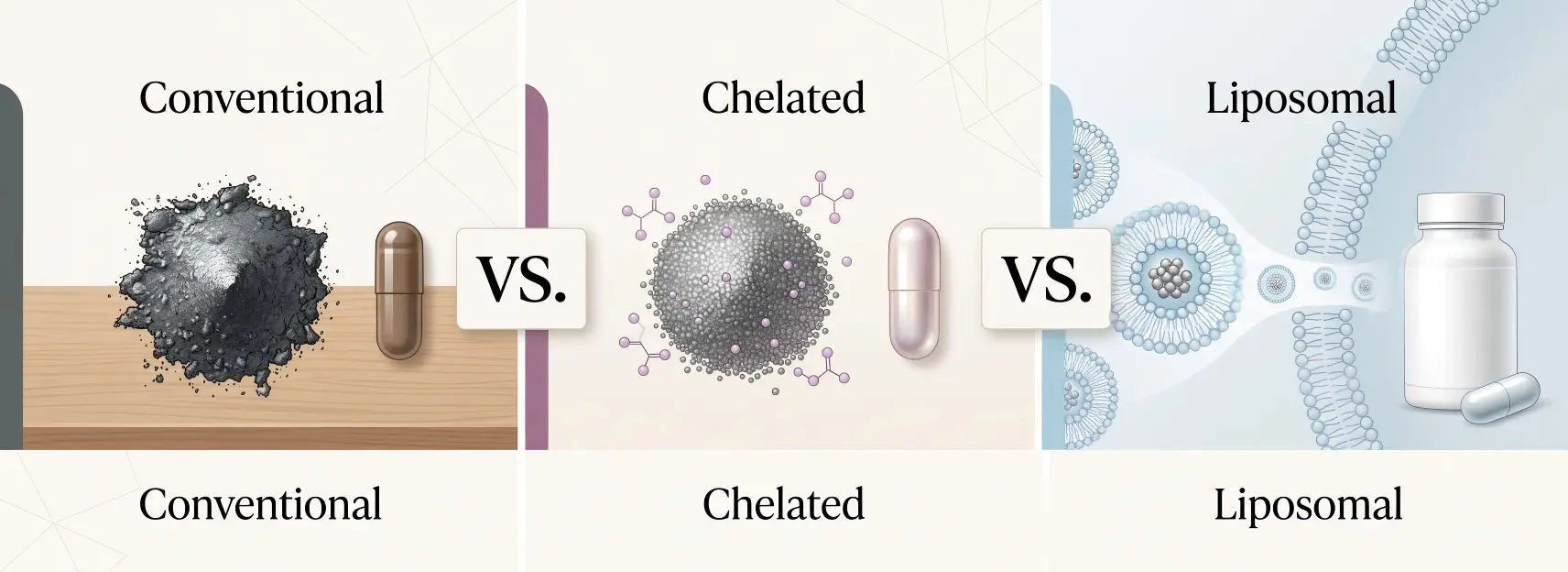
Standard oral glutathione has historically shown limited systemic availability because a significant portion is degraded by intestinal enzymes before reaching circulation. NAC fares better than glutathione in conventional form, but it still relies on a two-step metabolic conversion—deacetylation to cysteine, then intracellular glutathione synthesis—that can bottleneck in aging or compromised populations.
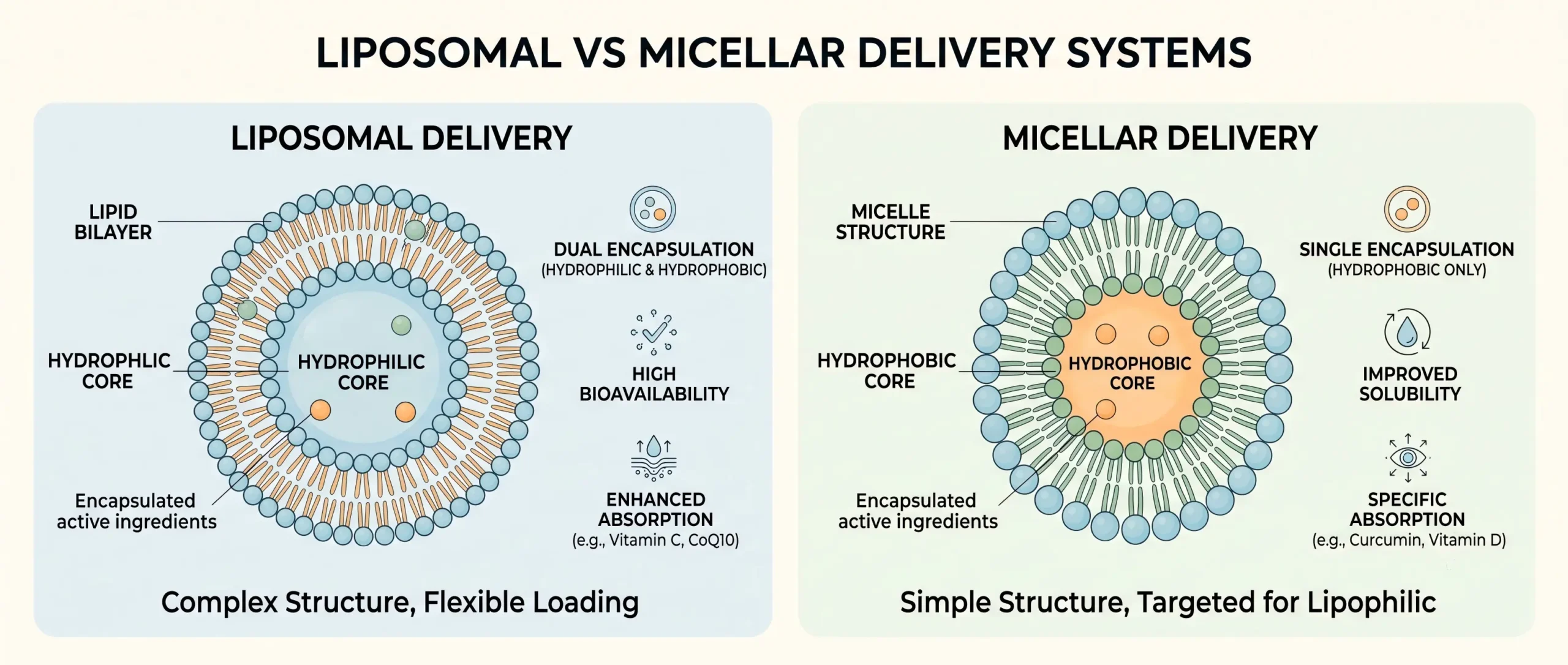
Liposomal technology addresses these limitations by encapsulating active molecules in phospholipid bilayers—typically non-GMO sunflower or soy lecithin. For B2B buyers, this means:
- Protection from gastric degradation and enzymatic hydrolysis, reducing the required dose per serving
- Enhanced mucosal absorption via fusion with enterocyte membranes, improving cost-efficiency at formulation level
- Extended shelf-life potential when combined with proper packaging and stabilizers
- Premium positioning that supports higher retail price points and stronger brand differentiation
For procurement teams, the critical distinction is this:
Liposomal glutathione has enabled brands to position GSH products at a higher-value segment by addressing traditional formulation limitations. Liposomal NAC, meanwhile, elevates an already-proven ingredient into a differentiated, higher-absorption format suitable for clinical and anti-aging positioning.
Liposomal NAC: Advantages and Formulation Considerations
Liposomal NAC is gaining traction as brands seek to differentiate beyond standard 600 mg capsules. The format offers clear formulation advantages, but procurement teams should evaluate manufacturing complexity and stability trade-offs.
Bioavailability & Product Positioning
NAC has moderate oral bioavailability in its conventional form. Liposomal encapsulation improves cellular uptake and reduces first-pass metabolic load. The phospholipid shell also acts as a physical barrier against oxidative degradation, extending shelf life compared to plain powder.
Dosage Forms & Manufacturing Feasibility
For OEM/ODM partners, liposomal NAC can be delivered in multiple formats:
- Liquid Liposomal NAC: Most common format; requires nanoemulsion equipment (high-pressure homogenization or microfluidization). Typical spec: 200–500 mg NAC per 5–10 mL serving. MOQ: 3,000–5,000 units. Shelf life: 12–18 months refrigerated; 6–9 months ambient with stabilizers.
- Liposomal Softgel: Encapsulates liquid NAC-liposome core in gelatin or plant-based shell. Higher MOQ (10,000+ units) due to tooling costs. Preferred for travel and convenience segments.
- Liposomal Powder / Sachet: Spray-dried or freeze-dried liposomal powder for reconstitution. Best ambient stability and lowest shipping weight. Ideal for e-commerce and subscription models. MOQ: 5,000–10,000 sachets.
- Liposomal Capsule: Less common for NAC due to liquid-core leakage risks, but feasible with enteric-coated hard-shell technology for acid-resistant delivery.
- Bulk Powder (25 kg MOQ): For brands with in-house encapsulation or tableting capabilities, bulk liposomal NAC powder offers maximum formulation flexibility and lowest per-kilogram cost. Requires dry, climate-controlled storage and in-house QC testing.
Stability & Shelf-Life Considerations
NAC is hygroscopic and prone to oxidation during storage. In liposomal form, the phospholipid bilayer provides a moisture barrier, but the formulation still requires:
- Airtight, UV-protective packaging (amber glass or opaque HDPE)
- Desiccant inserts for powder and bulk forms
- Refrigerated storage recommendation for liquid liposomal products (5 ± 3 °C optimal)
- Ascorbic acid or citric acid as stabilizers (formulation testing required to avoid pH-driven dimerization)
From a procurement standpoint, liposomal NAC carries lower stability risk than liposomal glutathione but higher risk than conventional NAC powder. The trade-off is justified by premium positioning and higher per-unit retail price.
→ Explore OEM manufacturing options: liposomal-nac-supplements
Liposomal Glutathione: Advantages and Formulation Considerations
Liposomal glutathione is the most significant delivery innovation in the GSH category. Without advanced encapsulation, oral glutathione supplements struggle to raise systemic GSH levels meaningfully. With liposomal technology, the ingredient becomes clinically viable and commercially premium.
Bioavailability & Clinical Evidence
A landmark randomized trial published in the European Journal of Nutrition (2015) demonstrated that liposomal glutathione supplementation over 4 weeks produced significant increases in whole blood GSH, lymphocyte GSH, and natural killer cell activity—effects not observed with non-liposomal controls at equivalent doses. Further research confirmed that liposomal encapsulation increases glutathione bioavailability by approximately 40-fold compared to free-form oral administration, driven by protection from intestinal degradation and enhanced mucosal absorption.
Recent pharmacokinetic data showed that a single 1 g dose of liposomal glutathione achieved peak plasma concentrations roughly six times higher than plain reduced glutathione. However, B2B buyers should note that long-term efficacy data (6+ months) remains stronger for high-dose reduced glutathione (1,000 mg/day) than for liposomal forms, suggesting that liposomal GSH excels in per-milligram absorption and rapid onset, while non-liposomal GSH can achieve comparable outcomes at higher doses and lower cost.
Formulation Challenges Specific to Liposomal GSH
Glutathione presents unique formulation hurdles that NAC does not:
- Sulfurous Taste & Odor: The thiol group produces a characteristic smell. Liquid liposomal GSH requires aggressive flavor masking (mixed berry, citrus) or monk fruit sweetening. Softgels are often chosen specifically to avoid taste issues.
- Oxidation Sensitivity: Reduced glutathione (GSH) oxidizes to glutathione disulfide (GSSG), which has lower antioxidant activity. Formulations must minimize headspace oxygen and may include nitrogen flushing during production.
- pH Sensitivity: GSH stability is pH-dependent; acidic environments accelerate degradation. Liposomal formulations must buffer the aqueous core to pH 6.0–7.5 for optimal stability.
- Phospholipid Source: Non-GMO sunflower lecithin is increasingly preferred over soy lecithin due to allergen and clean-label demands. This affects raw material cost and supply chain resilience.
Dosage Forms & B2B Positioning
- Liquid Liposomal GSH: Dominant format. Typical dose: 250–500 mg per 4–8 mL. Premium positioning ($60–$130/month retail). Best for clinical, functional medicine, and anti-aging channels.
• Liposomal Softgel: Odorless, portable, shelf-stable. Preferred by mass-market brands targeting beauty-from-within. MOQ: 10,000+ units.
• Sublingual / Spray: Emerging format claiming oral mucosal absorption. Regulatory classification varies by market; requires careful claim substantiation.
• S-Acetyl-L-Glutathione (SAG): A chemically modified alternative that is not liposomal but offers enhanced stability. EFSA has issued a positive draft opinion for SAG as a Novel Food (300 mg/day max for adults), providing a regulatory pathway in the EU that liposomal GSH currently lacks in some member states.
→ Explore OEM manufacturing options: liposomal-glutathione-supplements
Can NAC and Liposomal Glutathione Be Combined?
From a product development perspective, combining NAC and liposomal glutathione is not only feasible but strategically compelling. The two ingredients operate through complementary mechanisms:
- NAC provides the cysteine substrate for endogenous GSH synthesis, supporting long-term antioxidant capacity and transsulfuration pathway health.
- Liposomal glutathione delivers preformed, bioavailable GSH for immediate cellular replenishment—particularly valuable during acute oxidative stress, detox protocols, or immune challenges.
This dual-pathway approach allows brands to position a combination supplement as ‘complete antioxidant support’ or ‘precursor + direct action’—a differentiated claim in a crowded market.
Formulation & Positioning Considerations for Combination Products
When developing a combination formula, B2B buyers should consider:
- Dose Ratio: Common ratios range from 1:1 to 2:1 (NAC:GSH). Example: 600 mg NAC + 300 mg liposomal GSH per serving. This balances cost (NAC is cheaper) with perceived premium value (liposomal GSH).
- Synergistic Co-Factors: Vitamin C (recycles oxidized GSH to reduced GSH), selenium (cofactor for glutathione peroxidase), and alpha-lipoic acid (GSH regenerator) are clinically supported additions that enhance credibility and justify higher price points.
- Stability Interactions: NAC and GSH are both thiols. In liquid liposomal matrices, they can interact or accelerate oxidation if pH and redox potential are not controlled. Separate-layer encapsulation or dry-blend sachets may be preferable to single-liquid matrices.
- Regulatory Caution: Combination antioxidant claims must avoid disease language. Structure/function claims such as ‘supports the body’s natural antioxidant defenses’ or ‘helps maintain healthy glutathione levels’ are compliant under DSHEA but require substantiation.
- Market Segmentation: Combination products work well in premium functional medicine, sports recovery, and anti-aging channels. They are less suited for mass-market price-sensitive retail where single-ingredient NAC dominates.
Key Takeaway: A combination formula is a defensible product strategy when the formulation is technically sound and the positioning targets consumers or practitioners who understand antioxidant biochemistry. For brands, it also opens a higher price tier than either ingredient alone.
Manufacturing Considerations When Developing Liposomal NAC and Glutathione Products
Beyond ingredient selection, the commercial success of a liposomal antioxidant product depends on manufacturing execution. The following factors directly impact COGS, lead time, regulatory compliance, and batch consistency.
Raw Material Selection
For liposomal formulations, phospholipid source selection influences oxidation resistance, allergen requirements, clean-label positioning, and cost structure:
- Non-GMO sunflower lecithin: Preferred for clean-label and allergen-free positioning; 15–25% cost premium over soy lecithin.
- Soy lecithin: Lower cost, widely available, but carries allergen labeling requirements in EU and US markets.
- Hydrogenated vs. non-hydrogenated phospholipids: Hydrogenated variants improve oxidation stability but may conflict with clean-label positioning.
- NAC raw material: Pharmaceutical-grade (USP/EP) NAC is essential for liposomal encapsulation; feed-grade or industrial-grade cysteine derivatives will fail encapsulation efficiency targets and may trigger regulatory rejection.
Process Control & Quality Parameters
Critical manufacturing parameters that B2B buyers should verify in a contract manufacturer’s SOPs and validation documents:
- Particle Size Distribution: Target mean diameter 100–300 nm for optimal mucosal absorption. Above 500 nm, bioavailability drops significantly.
- Polydispersity Index (PDI): PDI < 0.3 indicates a homogeneous liposome population; higher PDI signals batch inconsistency and potential stability issues.
- Encapsulation Efficiency: Minimum 80% for commercial viability; premium products target 85–90%. Low EE means higher raw material waste and elevated COGS.
- Zeta Potential: ±30 mV or higher (absolute value) indicates good colloidal stability and resistance to aggregation during storage.
- Microbial Control: Liposomal matrices are susceptible to microbial growth. Manufacturing must occur in ISO 7 or ISO 8 cleanrooms with validated sterilization or filtration protocols.
- Accelerated Stability Testing: ICH Q1A conditions (40 °C / 75% RH for 6 months) should demonstrate <5% active degradation and <10% particle size shift.
Quality Documentation for B2B Procurement
Procurement teams and regulatory affairs managers typically require the following documentation before approving a supplier or placing an OEM order:
- Certificate of Analysis (COA) per batch: Active content, heavy metals, microbial limits, residual solvents
- Specification Sheet: Physical appearance, pH, viscosity, particle size, encapsulation efficiency, shelf life
- Stability Report: Real-time and accelerated data supporting claimed shelf life
- Allergen Declaration: Per EU Regulation 1169/2011 and FDA FALCPA requirements
- Heavy Metal & Microbial Testing: Third-party lab results for lead, cadmium, arsenic, mercury, total plate count, yeast/mold, E. coli, Salmonella
- Regulatory Support Documents: GRAS affirmation, Novel Food status letters (where applicable), structure/function claim substantiation files
- Manufacturing Facility Certifications: cGMP, ISO 9001, ISO 22000, HACCP, FSSC 22000, HALAL, KOSHER, FDA registration
→ See our full liposomal process validation standards: Liposomal Supplement Manufacturing & Process Standards
Which Formula Should Your Brand Develop?
Use this decision matrix to align your business goal with the right antioxidant formula. This is designed for brand owners and product managers who need a fast, commercially grounded recommendations.
| Business Goal | Recommended Formula | Why This Fits |
| Premium anti-aging / longevity | Liposomal Glutathione | Highest perceived value; direct antioxidant messaging; functional medicine channel alignment |
| Affordable antioxidant for mass market | Liposomal NAC | Lower COGS; strong clinical literature; easier manufacturing; competitive at $20–$35/month |
| Clinical wellness/practitioner channel | NAC + Liposomal GSH Combination | Dual-pathway science resonates with NDs and functional medicine practitioners; supports premium pricing |
| Beauty-from-within / skin brightening | Liposomal Glutathione | Established consumer association with skin tone and melanin inhibition; softgel format ideal for beauty retail |
| Sports recovery / athletic performance | Liposomal NAC | Respiratory and liver support positioning; lower price point suits sports nutrition buyers; bulk powder option for stack manufacturers |
| Detox / cleanse protocols | Liposomal Glutathione or Combination | GSH directly conjugates toxins; combination with NAC supports Phase II detox pathway; high-margin subscription model potential |
| Private label / white-label speed to market | Liposomal NAC (capsule or liquid) | Faster formulation validation; broader contract manufacturer availability; lower regulatory risk |
| Highest margin per SKU | Liposomal Glutathione (liquid or softgel) | Retail price 2–3x NAC products; lower competition in premium liposomal segment; strong repurchase rates in functional medicine |
Pro Tip: If you are unsure which direction fits your brand portfolio, start with a liposomal NAC trial run (5,000-unit MOQ) to test market response before committing to the higher investment of a liposomal glutathione or combination line.
How Supplement Brands Choose Between NAC and Glutathione:
A Procurement Decision Framework
This framework aligns ingredient selection with your business model, target market, and operational constraints. Use it to validate your product concept before committing to formulation and manufacturing.
| Decision Factors | Choose Liposomal NAC If… | Choose Liposomal Glutathione If… |
| Target Market | Mass-market wellness, sports nutrition, respiratory health, price-sensitive consumers | Premium anti-aging, functional medicine, beauty-from-within, clinical detox protocols |
| Dosage Form Preference | Capsules, tablets, bulk powder; simpler supply chain; lower packaging complexity | Liquid, softgel, sachet; willingness to manage cold-chain or nitrogen-flushed packaging |
| Stability Requirements | Ambient shelf stability (12–24 months); minimal refrigeration; e-commerce friendly | Acceptable to recommend refrigeration; shorter shelf life (6–12 months) offset by premium pricing |
| Regulatory Considerations | Lower risk; established Old Dietary Ingredient status in US; broad global acceptance | Low–Moderate risk in US (GRAS); EU Novel Food complexity for some GSH forms; S-Acetyl-GSH offers clearer EU pathway |
| Cost Positioning / COGS | Target retail: $15–$35/month; COGS optimized for volume | Target retail: $50–$120/month; margin-driven rather than volume-driven |
| Clinical Positioning | Precursor-based, ‘body-ready’ messaging; supports natural production | Direct antioxidant, ‘master detoxifier’ messaging; immediate cellular delivery |
| MOQ & Manufacturing Flexibility | MOQ 5,000–10,000 units; 25 kg bulk powder; fast turnaround; multiple qualified manufacturers | MOQ 3,000–5,000 units for liquid; limited qualified liposomal manufacturers; longer lead times for equipment setup |
| Combination Strategy | Stack with glycine, selenium, or vitamin C for glutathione pathway support | Stack with NAC, vitamin C, or alpha-lipoic acid for synergistic antioxidant recycling |
Regulatory Note for Global Brands: In the United States, both NAC and glutathione are permitted as dietary supplement ingredients under DSHEA, with GRAS status for food use. However, the FDA has not authorized any specific health claims for glutathione, and structure/function claims must be carefully worded. In the European Union, glutathione may fall under Novel Food Regulation (EU 2015/2283), and EFSA has not approved glutathione-specific health claims under Regulation (EC) No 1924/2006. S-Acetyl-L-Glutathione has received a positive EFSA draft opinion for Novel Food status (300 mg/day max), offering a clearer EU pathway. In China, L-glutathione is permitted in health foods but requires SAMR registration with clinical efficacy data. Always verify local regulatory requirements before formulation and import.
Need Help Choosing the Right Formula?
KS Nutripharma® formulation and OEM team works with supplement brands at every stage—from ingredient selection to finished product. We can help you evaluate:
- ✓ NAC vs glutathione positioning for your target demographic
- ✓ Dosage form selection based on your distribution channel (e-commerce, practitioner, retail, subscription)
- ✓ Stability requirements and shelf-life validation for your climate and logistics model
- ✓ Target market strategy and competitive pricing analysis
- ✓ Regulatory pathway assessment for US, EU, UK, Australia, and Asia-Pacific markets
No commitment required. We provide a complimentary 30-minute formulation consultation for qualified brands.
→ Book a Free Formulation Consultation
Ready to Develop Your Liposomal Antioxidant Line?
Whether you are launching a premium liposomal glutathione serum, a clinical-grade NAC capsule, or a combination antioxidant stack, your formulation and manufacturing partner determines your speed to market, regulatory compliance, and profit margin.
KS Nutripharma’s liposomal manufacturing capabilities include:
- High-pressure homogenization and microfluidization for nano-scale liposome production (mean particle size 100–250 nm)
- In-house stability testing (accelerated ICH Q1A and real-time) for shelf-life validation
- Custom flavor masking and odor-control systems for sulfur-containing actives
- Full regulatory documentation: COA, MSDS, stability reports, heavy metal and microbial testing, allergen declarations
- Flexible MOQ starting at 5,000 units (or 25 kg bulk powder) with 4–6 week lead times
- OEM/ODM private label with custom packaging, label design, and export documentation
- Certified facility: cGMP, ISO 9001, ISO 22000, HACCP, FSSC 22000, HALAL, KOSHER, FDA-registered
→ Request a Quote for Liposomal NAC OEM Manufacturing
Conclusion
Liposomal NAC and liposomal glutathione serve different strategic purposes in the supplement market. NAC is the workhorse—cost-effective, clinically proven, and formulation-friendly, with the added flexibility of bulk powder supply for in-house manufacturers. Glutathione is the premium differentiator—directly bioactive, highly valued by consumers, but technically demanding and more expensive to produce. Liposomal technology elevates both, but it is not a magic bullet; it requires qualified manufacturing partners, realistic stability expectations, and regulatory due diligence.
For B2B buyers, the optimal choice depends on your target market’s price sensitivity, your brand’s clinical positioning, and your supply chain’s capacity to handle phospholipid sourcing, encapsulation efficiency validation, and shelf-life management. The brands that win in this category are those that match the right ingredient to the right delivery system—and the right business model. Start with the Quick Comparison table, validate against the Procurement Decision Framework, and engage an OEM partner with demonstrated liposomal process control before committing to bulk raw material orders.
Selected References
The following authoritative sources support the technical and commercial claims in this guide. All URLs were verified as of July 2026.
[1] National Institutes of Health (NIH) / PMC. N-Acetylcysteine (NAC): Impacts on Human Health. https://pmc.ncbi.nlm.nih.gov/articles/PMC8234027/
[2] NIH / PMC. A Targeted Metabolomic Assessment of Oral Glutathione Bioavailability and Safety in Humans (2024). https://pmc.ncbi.nlm.nih.gov/articles/PMC13023597/
[3] NIH / PMC. Effects of N-acetylcysteine, oral GSH, and sublingual GSH on oxidative stress markers: A comparative crossover study. https://pmc.ncbi.nlm.nih.gov/articles/PMC4536296/
[4] NIH / PMC. Stability Study of Parenteral N-Acetylcysteine and Chemical Inhibition of Its Dimerization (2022). https://pmc.ncbi.nlm.nih.gov/articles/PMC9860916/
[5] European Journal of Nutrition. Liposomal glutathione supplementation increases whole blood GSH and NK cell activity (2015). https://pubmed.ncbi.nlm.nih.gov/25863792/
[6] Journal of Agricultural and Food Chemistry. Liposomal encapsulation increases glutathione bioavailability vs free-form oral administration. https://pubs.acs.org/doi/10.1021/acs.jafc.9b02549
[7] The British Journal of Nutrition (2026). Prasad et al. Liposomal glutathione vs plain glutathione: single-dose pharmacokinetic comparison. https://doi.org/10.1017/S0007114526001234
[8] European Food Safety Authority (EFSA). S-Acetyl-L-Glutathione Novel Food approval and public consultation (PC-1620). https://www.efsa.europa.eu/en/efsajournal/pub/8523
[9] Mordor Intelligence. Liver Health Supplements Market Growth Report 2031. https://www.mordorintelligence.com/industry-reports/liver-health-supplements-market
[10] Data Insights Reports. Global Reduced Glutathione GSH Market: Dynamics & Forecast 2026-2034. https://www.datainsightsreports.com/reports/global-reduced-glutathione-gsh-market-19668
Disclaimer: This content is intended for B2B educational and procurement purposes only. It does not constitute medical advice, regulatory guidance, or a substitute for consultation with qualified legal and scientific professionals. Health claims and regulatory status may change; always verify current local regulations before product formulation, labeling, and marketing. Structure/function claims must comply with DSHEA (US) and applicable local frameworks.