




Male Performance Supplements Contract Manufacturing Solutions
KS Nutripharma develops and manufactures male performance supplements for brands, including circulation powders, capsule formulas, gummies, and selected liquid products. Send a formula, a reference label, or a product concept for an initial feasibility review and a project-specific quote. Request a formula review
Existing Formula
Send: Ingredient list, amounts per serving, dosage form, and quantity.
Reference Label
Send: The label, target market, and dosage form. A reference label supports an initial assessment; unpublished formula details require confirmation from the brand or supplier.
Product Concept
Send: The audience, target market, dosage form, and a cost range if you have one.
Manufacturing at a Glance
Item | Snapshot |
|---|---|
| OEM, ODM, private label | OEM runs a locked formula. ODM develops a concept into a specification. Private label puts your brand on a defined formula. |
| Manufacturing capabilities | 81,000+ m² · 12 automated lines · 5 manufacturing bases · 2 R&D centers · since 2007. Published daily capacity: 5+ million capsules · 12+ million tablets · 2+ million softgels · 2.5+ million gummies. Powder projects are quoted from the formula, quantity, and pack. Manufacturing capacity |
| Quality certifications | cGMP · ISO 9001 · ISO 22000 · HACCP · FSSC 22000 · Halal · Kosher. These apply to the relevant quality systems. They are not approval of an individual formula. Certifications and compliance |
| Dosage forms | Powders and stick packs · capsules · gummies · tablets when the brief names one · liquids |
Male Performance Formula Options
Select a starting formula by active ingredient, serving size, and target format. Each format requires its own serving specification, feasibility review, and quote.
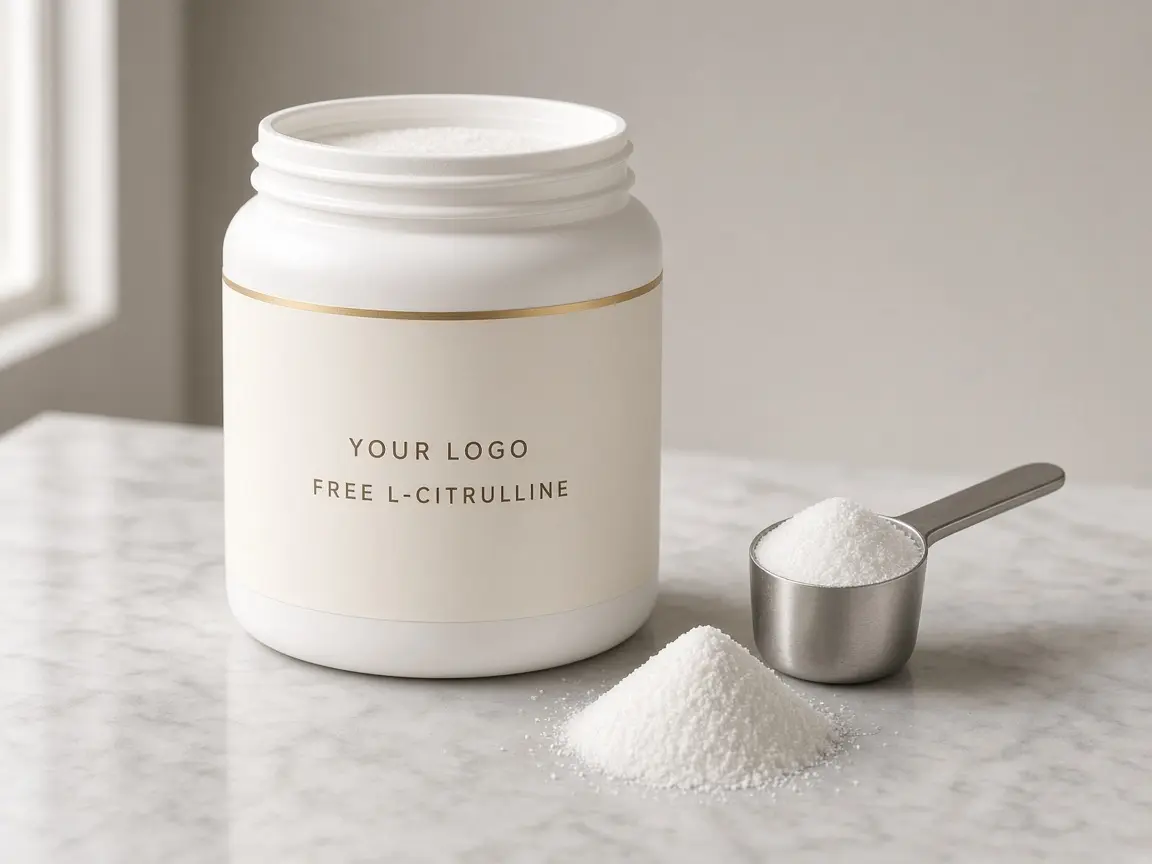
Use when: The target formula specifies free L-citrulline rather than citrulline malate.
Specify: Grams per serving, target assay, tub or stick format, flavor, and packaging barrier requirements.
Trade-off: Citrulline malate is a separate material and is quoted against its stated ratio.
Default format: Powder tub or stick pack.

Use when: The formula names citrulline malate and a ratio.
Specify: Supplier ratio, total grams per serving, and assay basis.
Trade-off: For a nominal 2:1 citrulline-to-malate ratio, the theoretical citrulline fraction is approximately two-thirds by weight. Confirm the supplier specification and assay basis before calculating the citrulline amount per serving.
Default format: Powder tub or stick pack.

Use when: Beet is a circulation ingredient in the formula.
Specify: Nitrate-standardized beetroot powder or extract, or a beetroot extract standardized to a defined polyphenol marker. Confirm the assay method and reporting basis on the supplier specification.
Trade-off: The nitrate-standardized material and the polyphenol extract are quoted as separate ingredients.
Default format: Powder tub or stick pack.

Use when: The project is a capsule formula whose fill weight and serving count accommodate the target citrulline amount.
Specify: Capsules per serving, citrulline form and milligrams, and, when pine bark is included, the OPC or proanthocyanidin assay and method.
Trade-off: A target amount that exceeds a practical capsule count is quoted as a powder.
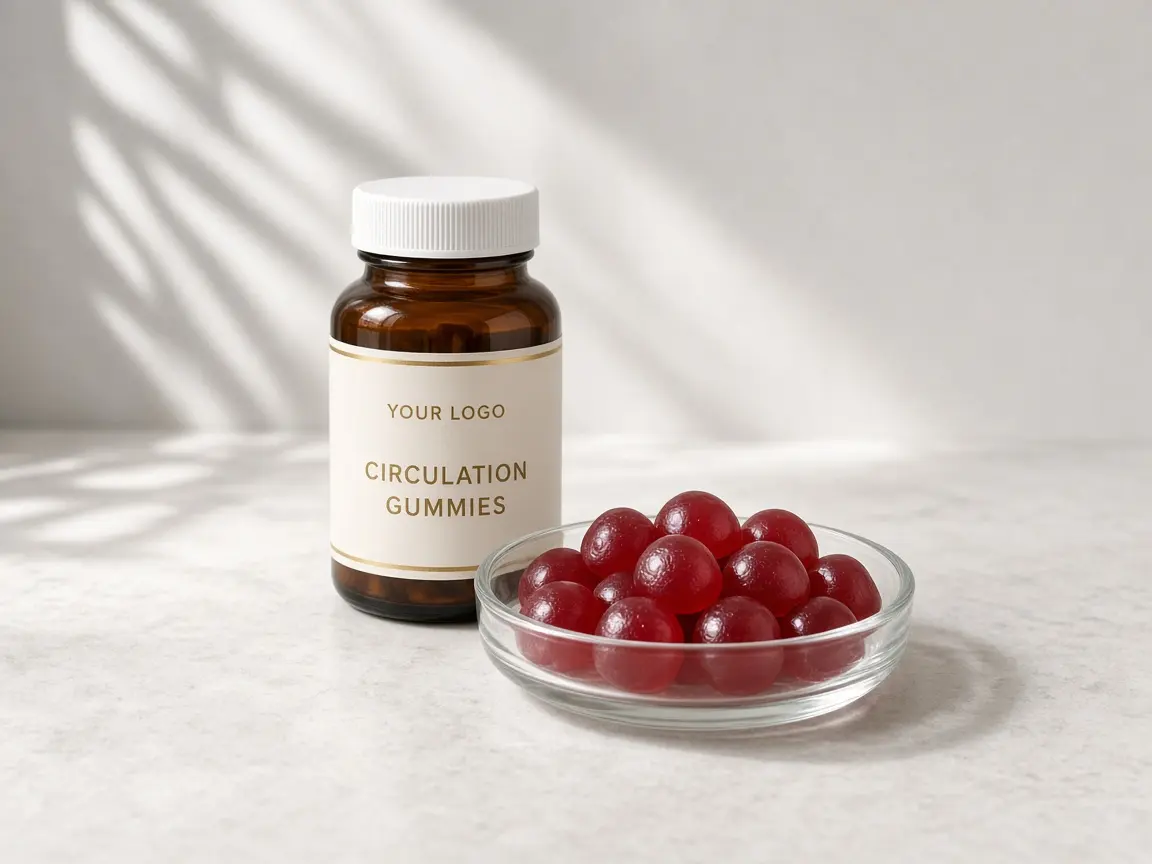
Use when: The active load is feasible for the target gummy size and process.
Specify: L-citrulline milligrams per serving, gummies per serving, piece weight, and sweetener system.
Trade-off: That gummy serving is its own quote. A gram-dose powder is a separate project.
Default format: Gummy.

Use when: The product is a vitality capsule built on maca and Panax ginseng.
Specify: Gelatinized maca or raw powder, and the extract ratio if one is printed. Panax ginseng root and the ginsenoside assay. American ginseng is specified as its own material.
Default format: Hard capsule.

Use when: The vitality capsule is built on oyster peptide.
Specify: Oyster peptide at 70%. The assay method named on that grade. Milligrams per serving, and capsules per serving.
Trade-off: The 70% figure is peptide content. A zinc line on the same label is elemental milligrams and the salt. A citrulline gram dose stays on the powder cards.
Default format: Hard capsule.

Use when: The project is an existing arginine shot.
Specify: L-arginine grams per shot, fill volume, pH, preservative system, and any maca or taurine declared on the same label.
Default format: Liquid shot.
Formula Specifications and Quote Requirements
Quote variable | What to send | Why it changes the quote |
|---|---|---|
| Ingredient identity | Ingredient name, form, ratio, and the supplier specification | Sets material cost and the specification basis |
| Serving specification | Amount per serving, units per serving, and finished-product content where the specification defines it | Sets active load and unit cost |
| Format and pack | Dosage form, pack type, and count or net weight per pack | Sets the production route and pack cost |
| Order quantity | Expected order quantity, number of SKUs, and whether several SKUs are purchased together | Sets batch size, material buys, and MOQ |
| Testing scope | The finished-product tests to include in batch release | Sets test cost and the documents supplied with the lot |
Zinc, when declared, is specified as elemental milligrams and as the salt. For saffron-containing formulas, confirm the ingredient identity and the marker compounds or assay parameters on the supplier specification and on the approved product specification.
Branded ingredients are specified only after the required authorization and supplier documentation are confirmed. Otherwise, the quote is based on the agreed generic ingredient specification.
Final label claims and market-specific compliance remain the brand owner’s responsibility. KS Nutripharma reviews claim language within the agreed project scope and does not provide regulatory approval.
What you receive in the initial review
- A preliminary assessment of the proposed ingredient form and dosage form.
- The specifications that can be quoted, and the details that still need confirmation.
- The next steps for sample development, testing, and a project-specific quotation.
Manufacturing Formats and Feasibility
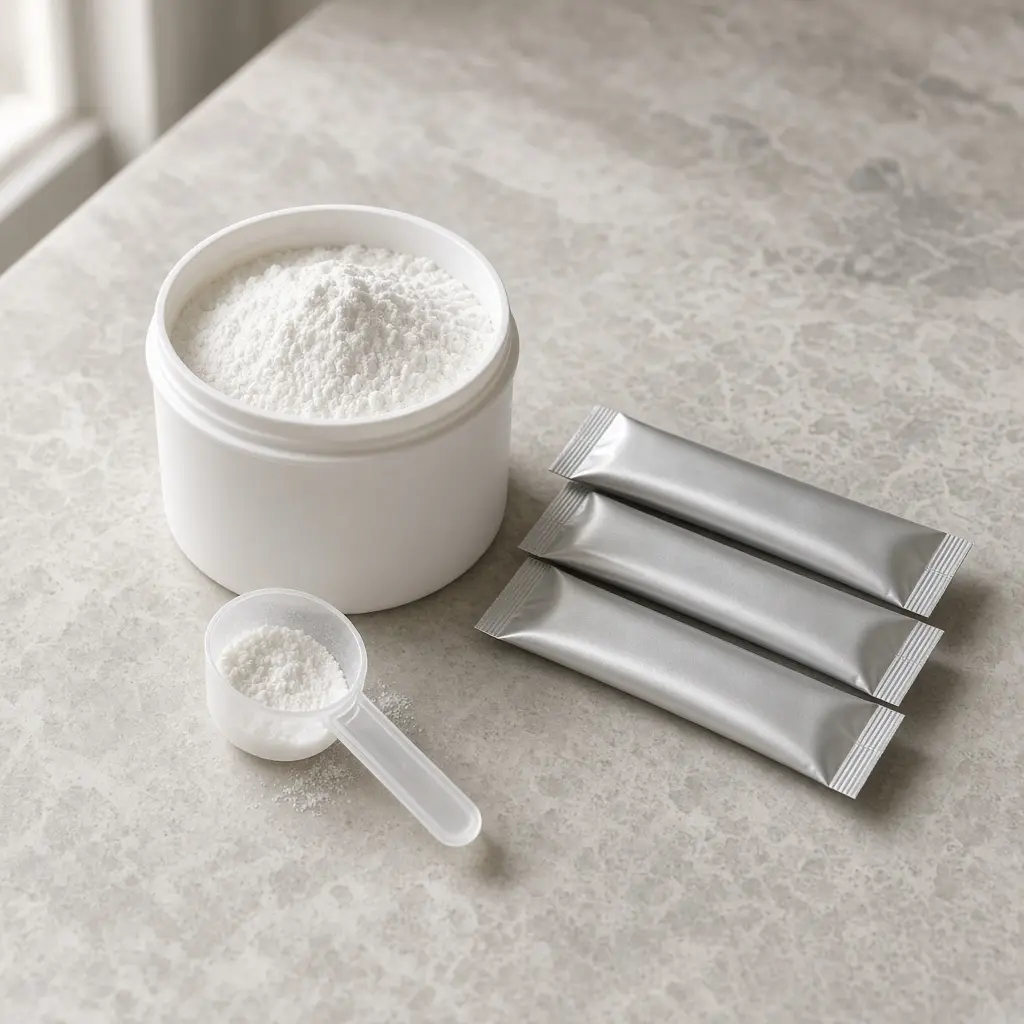
Best for: Servings measured in grams, packed in a tub or a stick.
Why this format: Bulk density, flow, and fill weight decide which pack is practical.
Typical formula cards: Free L-citrulline powder. Citrulline malate powder. Beet nitrate powder.
What to lock: Bulk density, mix, flavor trial, moisture barrier, fill weight.
Manufacturing note: Flavor, color, and moisture are confirmed on the sample.
Best for: A dry blend whose fill weight fits the capsule size and the stated capsule count.
Why this format: The serving is a closed unit dose at capsule-scale milligrams.
Typical formula cards: Capsule circulation stack. Maca and Panax ginseng capsule.
What to lock: HPMC or gelatin shell, capsule size, fill weight, capsules per serving.
Manufacturing note: Fill weight and capsule count are confirmed on the sample.
High-dose capsule formulation
Best for: An active load the target piece size and cook can carry.
Why this format: A cook trial evaluates active load, taste, texture, and process feasibility for the proposed formula.
Typical formula cards: Circulation gummy.
What to lock: Active load after the cook, gummies per serving, pectin or gelatin, sweetener system.
Manufacturing note: MOQ is calculated from the formula, the batch size, the pack, and the cook trial.
Best for: A brief that already names a tablet.
Why this format: Tablet weight, hardness, and disintegration are set for that formula.
What to lock: Blend composition, compressibility, tablet weight, hardness, and disintegration.
Manufacturing note: Converting a capsule formula to a tablet requires a separate review of blend composition, compressibility, tablet weight, and disintegration requirements.
Best for: A shot with a defined fill volume.
Why this format: The specification is volume, pH, preservation, and stability.
Typical formula cards: Arginine liquid.
What to lock: Grams per shot, bottle, preservative system, stability plan.
Manufacturing note: Converting a capsule formula into a liquid shot requires a new assessment of solubility, pH, preservation, and stability.
Best for: A shot where a dry component and a liquid base should stay apart until activation.
Why this format: Powder sits in the cap. The liquid stays in the bottle. They mix when the pack is activated, not for the full shelf life.
Typical formula cards: A named dry active plus a liquid base. The arginine liquid card remains a single-chamber shot.
What to lock: Chamber assignment, dry-fill weight, liquid volume, activation, and the post-mix drink window.
Manufacturing note: A gram-scale citrulline serving often will not fit the cap. Dual-chamber is quoted when the dry load fits the chamber and the split changes the stability file.
Incoming Material Verification
The supplier CoA covers the incoming lot: identity, assay, and the contaminant tests required for that grade. It does not show that the finished product meets its specification.
Finished-Product Release
The approved release specification may include identity, the citrulline, nitrate, or botanical assay named for that product, microbiology, heavy metals, and the physical checks for the format.
Quality control
Third-Party Testing
A third-party report is added when the specification names the test, the sample, and the laboratory. It supplements the supplier CoA and finished-product release.
How to read a CoA
The figures below are planning ranges. They are not a minimum every formula and pack can accept. The confirmed MOQ and lead time follow the formula, dosage form, order quantity, raw-material minimums, packaging, testing scope, and the production schedule.
| Format | Typical planning MOQ |
|---|---|
| Capsules | About 3,000–5,000 finished units |
| Tablets | About 5,000–10,000 finished units |
| Powder sticks | Often from about 10,000 individual stick packs |
| Powder tubs | Quoted with the formula and the tub |
| Gummies | Calculated after the cook trial, from the formula, batch size, and pack |
| Liquids | Quoted with volume, preservative system, and bottle |
A bulk-powder quote is by kilogram and is separate from a finished-unit or stick-pack count.
| Stage | Typical lead time | Starts after |
|---|---|---|
| Sample | 7–15 days | An approved working specification. Ingredient procurement, new flavors, and packaging tooling sit outside this window unless the schedule includes them |
| Production | 30–45 days | Approval of the final specification, pack, artwork, order, and production schedule |
- Brief. A formula, a reference label, or a concept.
- Initial review. The proposed formula, dosage form, and outstanding details are identified.
- Working specification. The formulation and manufacturing parameters needed for the sample are defined.
- Sample development. The sample is evaluated against that working specification.
- Final specification and quotation. Revisions, packaging, testing scope, MOQ, and price are confirmed after the sample review.
- Production. Begins after the final specification, artwork, order, and schedule are approved.
Can I request a quote with a reference label?
Yes. Send the public product label, the target market, the dosage form, the expected quantity, and the packaging preference if you know it. The initial review identifies the ingredient details available from the label and the specifications that still need confirmation.
What information is needed to quote a citrulline formula?
Specify free L-citrulline or citrulline malate, the supplier ratio where one applies, the target amount per serving, the dosage form, and the packaging. For citrulline malate, the supplier specification and assay basis are confirmed before the citrulline amount per serving is calculated.
What determines MOQ and lead time?
MOQ and lead time depend on the formula, dosage form, order quantity, raw-material minimums, packaging, testing scope, and production schedule. Gummies and customized packs may require additional feasibility work before the commercial terms can be confirmed.
When can a branded ingredient be included in a product specification?
The required authorization and supplier documentation are confirmed before the branded ingredient is specified. If those requirements are not met, the quote uses the agreed generic ingredient specification, where that material suits the project and the destination market.
Related Men’s Health Manufacturing Routes
Tongkat Ali, tribulus, and horny goat weed are quoted on testosterone support when the brief names them. L-carnitine, CoQ10, and the reproductive-nutrient set are quoted on male fertility. Daily ginseng, B vitamins, and caffeine products are quoted on men’s energy. Citrulline in a pre-workout is quoted on muscle building. Yohimbine HCl is quoted only on a brief that names the form and the destination market. This range sits inside men’s health supplements.
Request a Male Performance Formula Review
Send the formula card or reference label, the target market, the dosage form and pack, the quantity, and a target cost if you have one.
Disclaimer: This page is for wholesale and supplement-manufacturing reference only. It does not provide medical advice and it does not claim that a formula treats erectile dysfunction or any other disease. Circulation and vitality language is structure/function positioning for the destination market. Ingredient eligibility varies by market. KS Nutripharma provides manufacturing feasibility and the technical documents agreed for each project, not regulatory approval or legal advice. The brand owner is responsible for the final label and market compliance.
Written by KS Nutripharma Formulation Team · Reviewed by KS Nutripharma Director of R&D (PhD, Food Science · 19+ years nutraceutical development) · Updated October 14, 2026 · About Us