

Anxiety Relief Supplements OEM, ODM & Private Label Service
Daytime theanine, GABA-led, and botanical calm SKUs
KS Nutripharma is an anxiety relief supplements manufacturer for OEM, ODM, private-label, and second-source calm-support products. We convert the brief into a quotation-ready specification — identity · assay/method · milligram basis · format · destination — before production.
Daytime and situational calm-support products with destination-specific claim and labeling review.
New SKU — destination, architecture, format. Request Formula Feasibility
Existing formula — BOM, COA, label, pack. Send Your BOM
Second source — current specification, BOM, COA. Request a Second-Source Review
Typical first reply is within one business day on a complete brief. NDA available before detailed formula exchange.
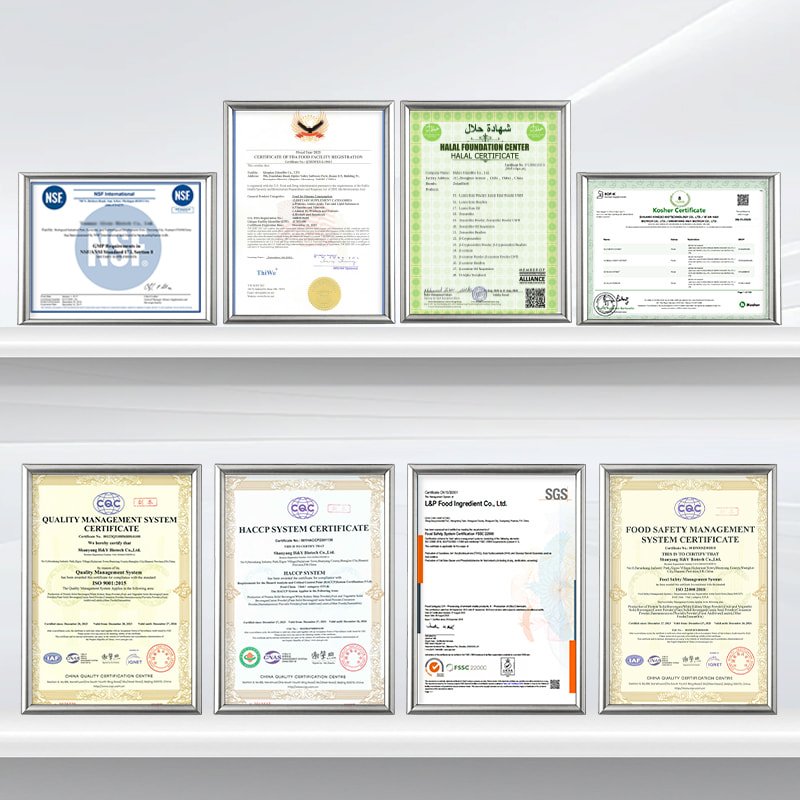
Certifications: cGMP · ISO 9001 · ISO 22000 · HACCP · FSSC 22000 · Halal · Kosher
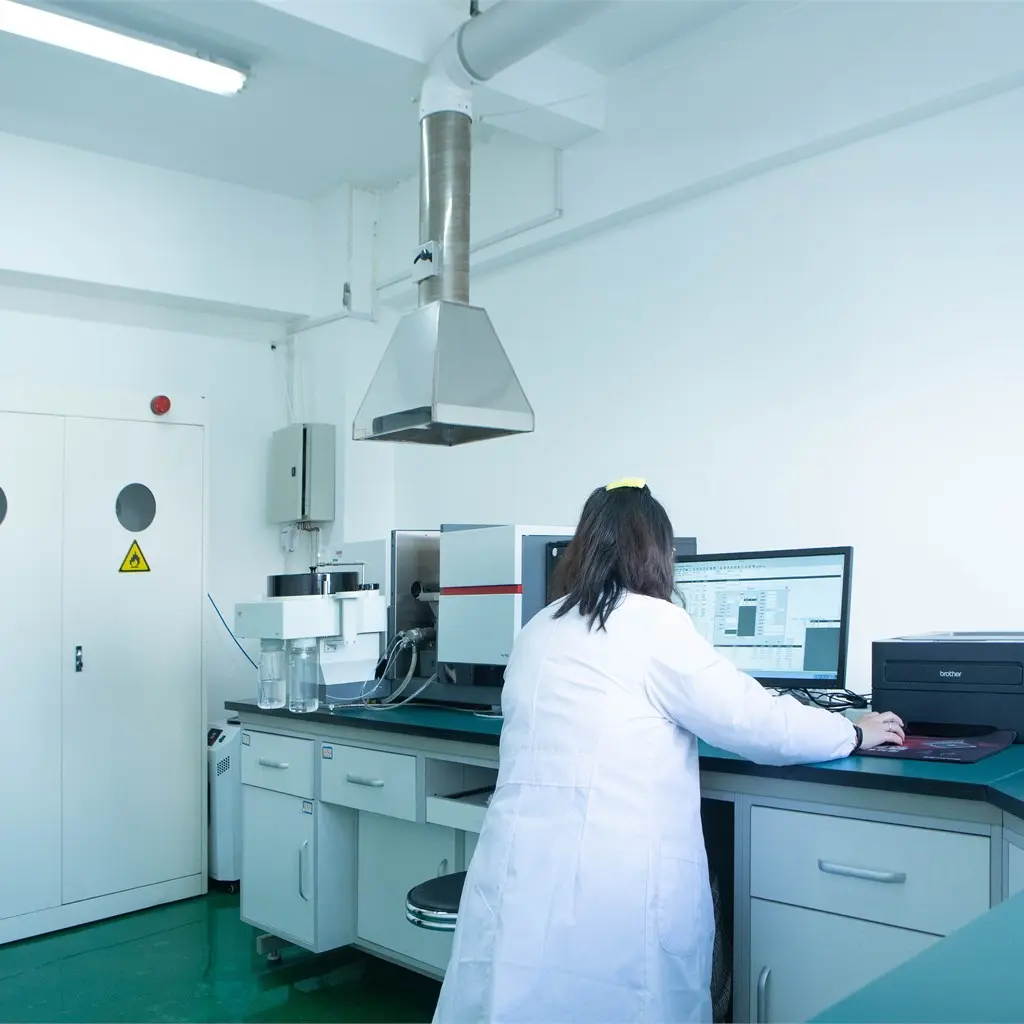
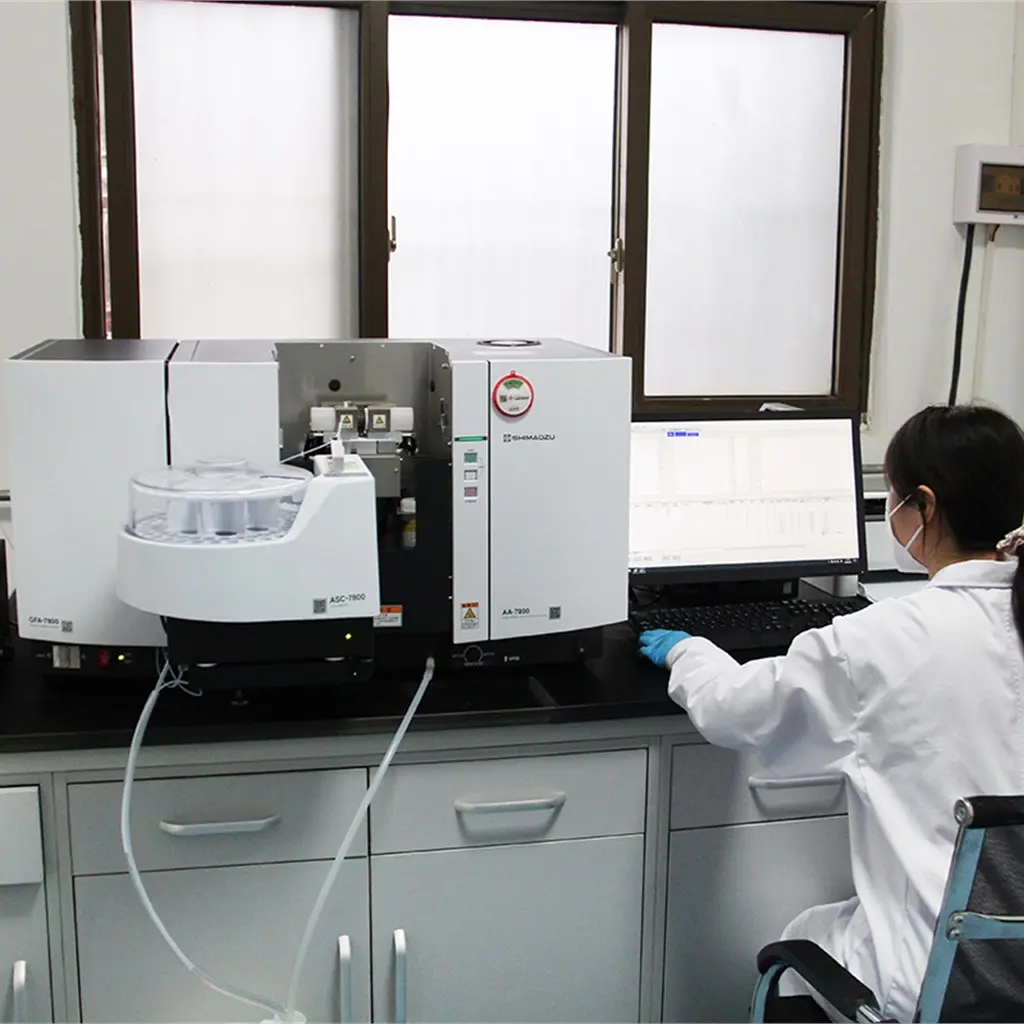
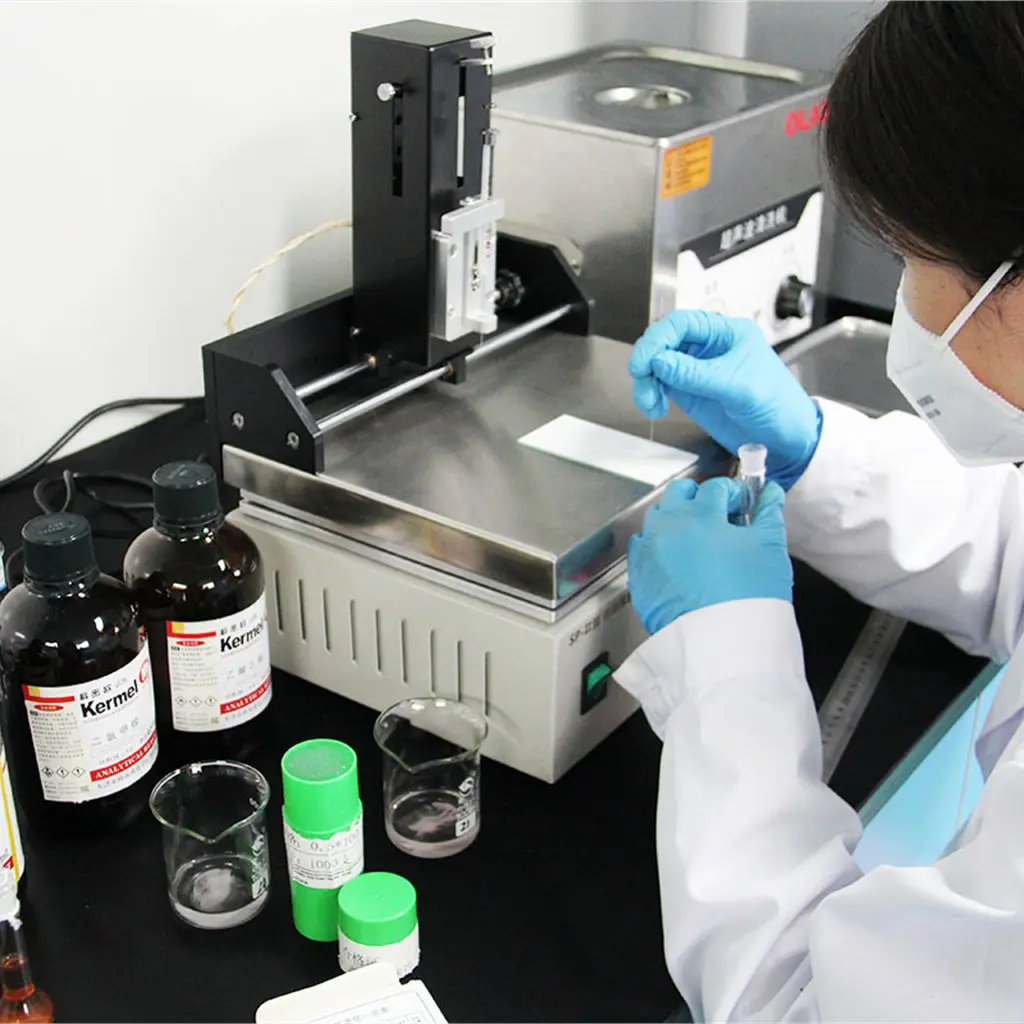
Testing: in-house QC and batch COA; third-party testing through SGS or Eurofins when specified.
Anxiety Relief Supplement Manufacturing at a Glance
| Capability | What we support |
|---|---|
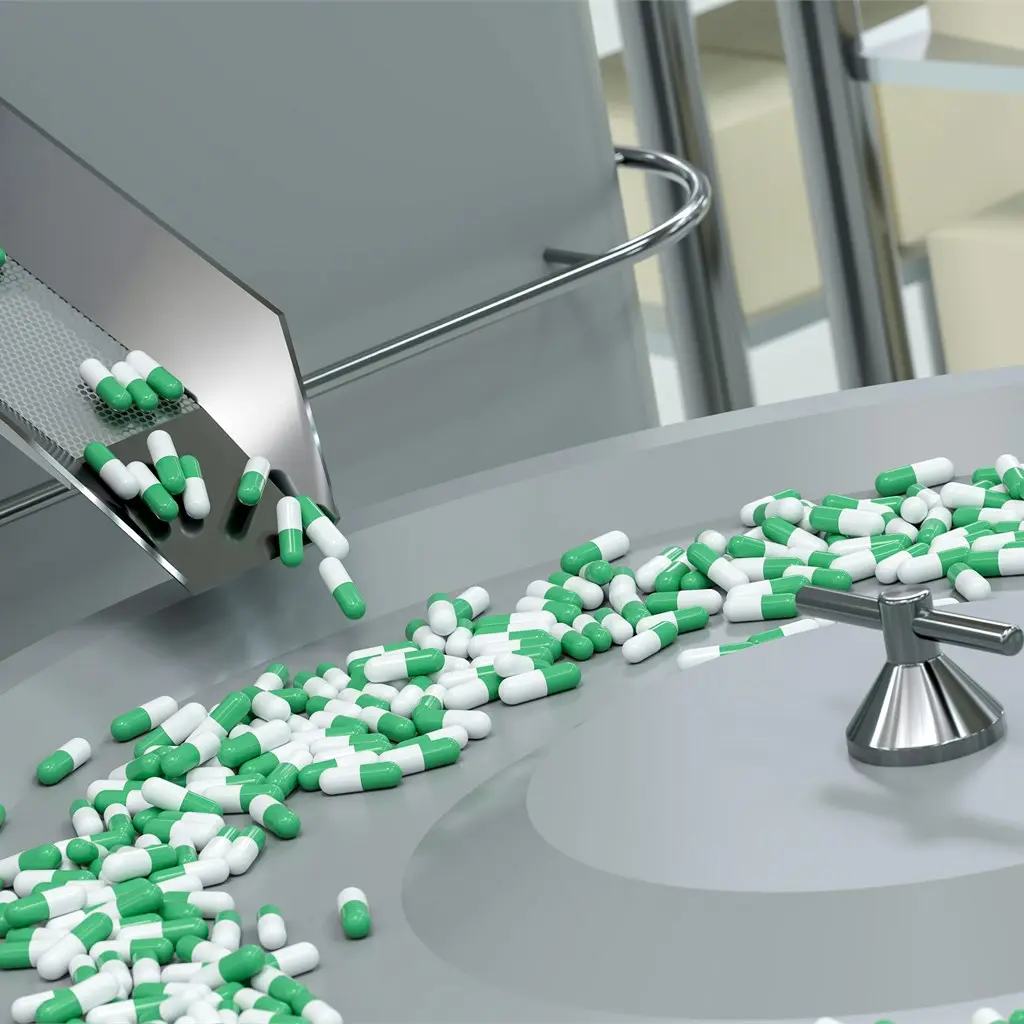
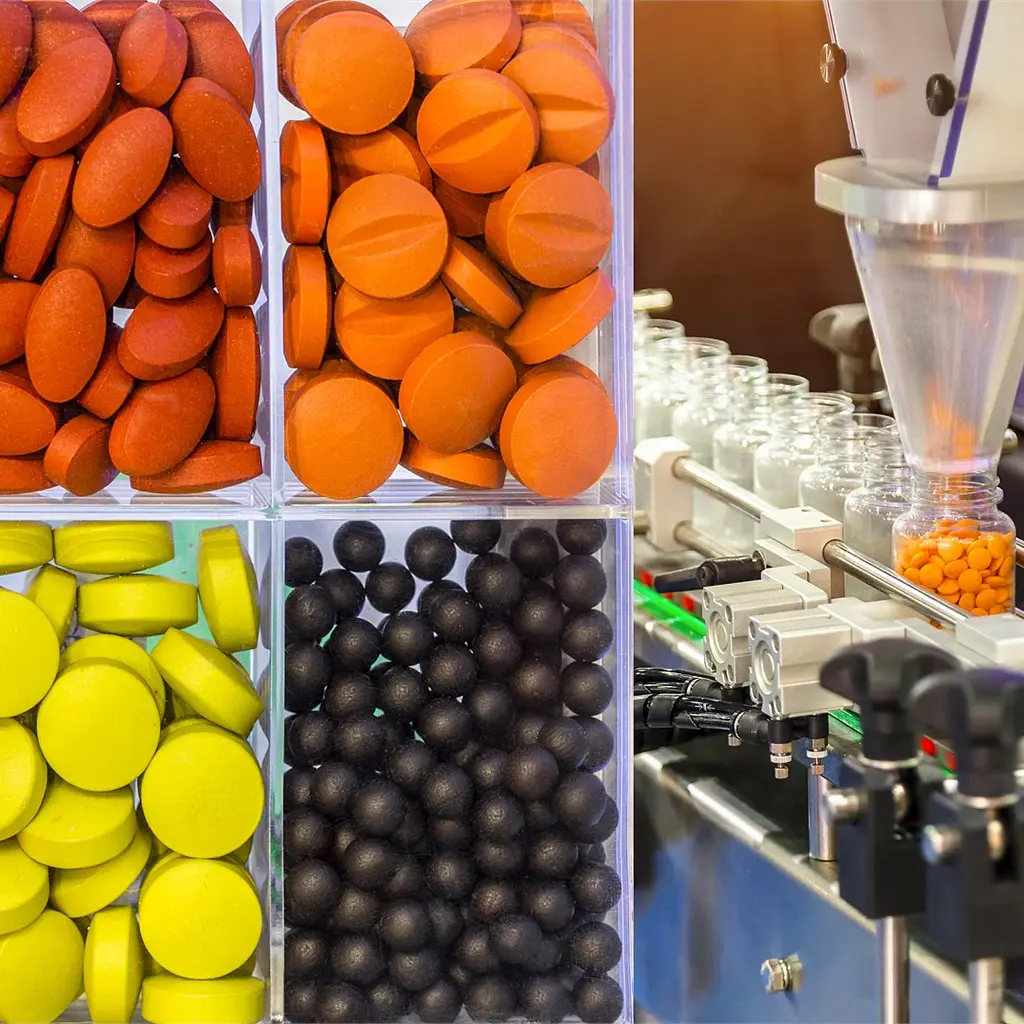
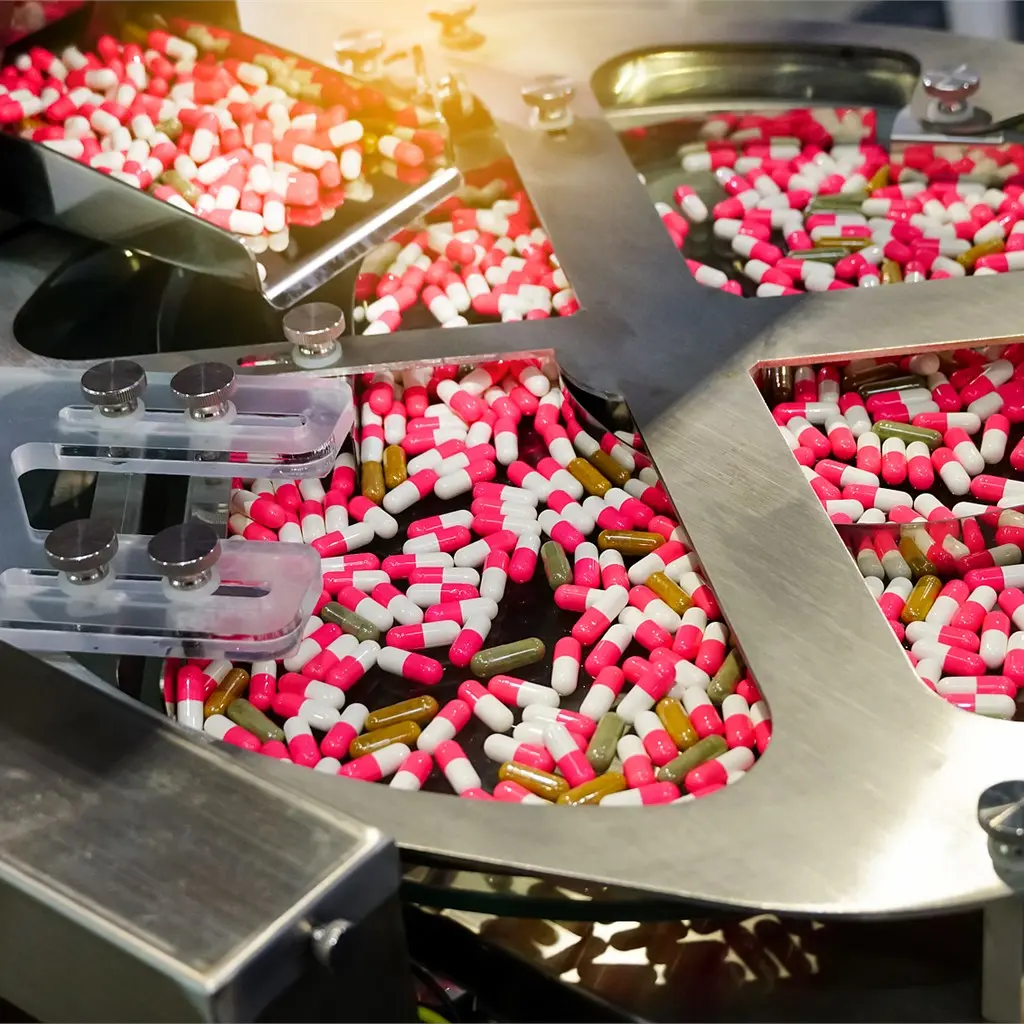
| Finished products | Capsules, tablets, powders/sticks, and project-specific calm gummies |
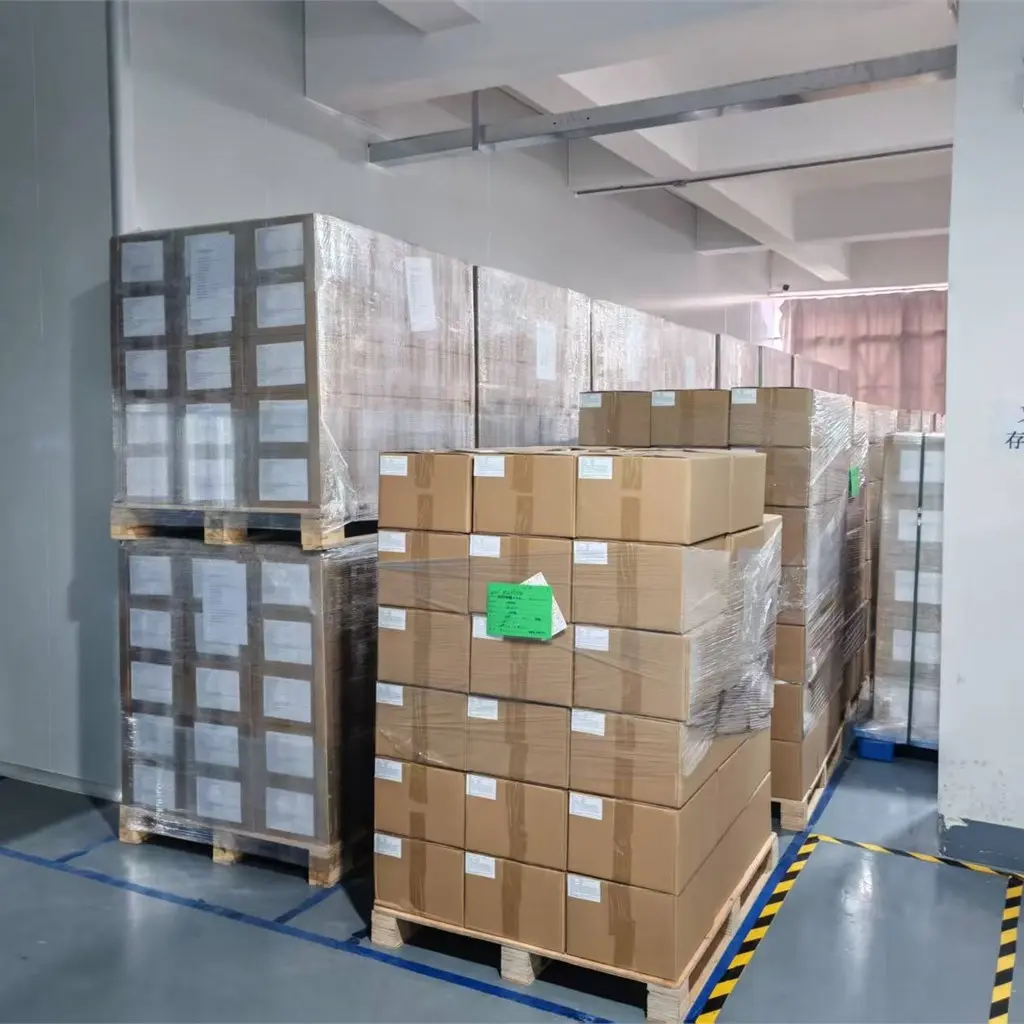
| Line capacity | 5+ million capsules/day · 12+ million tablets/day · 2+ million gummies/day. Line capacity and plant scale: Manufacturing Capacity. |
| Powder / ingredients | Powder and stick programs quoted after the format file is locked. Raw-material processing 5,000+ t/year |
| Planning MOQ | Capsules typically 3,000–5,000 units/SKU; tablets 5,000–10,000 |
| R&D | Destination, format and manufacturing feasibility |
| OEM routes | New SKU · existing formula · second source |
| QA file | Approved specification · batch COA · test methods · allergen / non-GMO / vegan declarations when applicable · SDS/TDS · pack / batch records · third-party and stability when specified |
“Anxiety complex 500 mg” is not a sufficient specification for quotation. Two quotes are comparable when identity, method, milligram basis, format, serving and destination match.
Buyer Snapshot
A licensed grade name is not interchangeable with a generic assay at the same declared milligram.
You have: a concept, destination and an ingredient idea — often daytime theanine or occasional / as-needed calm.
Need: a quotation-ready specification, destination screen, manufacturing feasibility and quotation basis.
Send: destination · architecture · format · pack · target order quantity / annual volume. Include the active specification if already fixed; otherwise a reference label or competitor product.
You receive: gap list, feasibility route and next-step quotation.
You have: BOM, COA and label.
Need: equivalency review and a feasible manufacturing route.
Send: BOM · COA · label · pack · finished-product test panel · current volume.
You receive: gap list, feasibility and sample route.
You have: an approved specification.
Need: lot qualification, equivalency review and a qualification sample.
Send: current specification · BOM · incoming and finished-product COAs · label · pack · current batch / order volume · quality questionnaire.
You receive: equivalency review and qualification route.
Anxiety Supplement Product Architecture
Single-active or multi-active. Each printed row keeps its own specification.
Customer positioning | Route |
|---|---|
| Ashwagandha-led stress support | Stress relief supplements |
| Saffron or daytime mood botanical | Mood support supplements |
| Evening wind-down or melatonin-free sleep | Sleep support supplements |
| Theanine for attention, or a choline lead | Focus supplements |
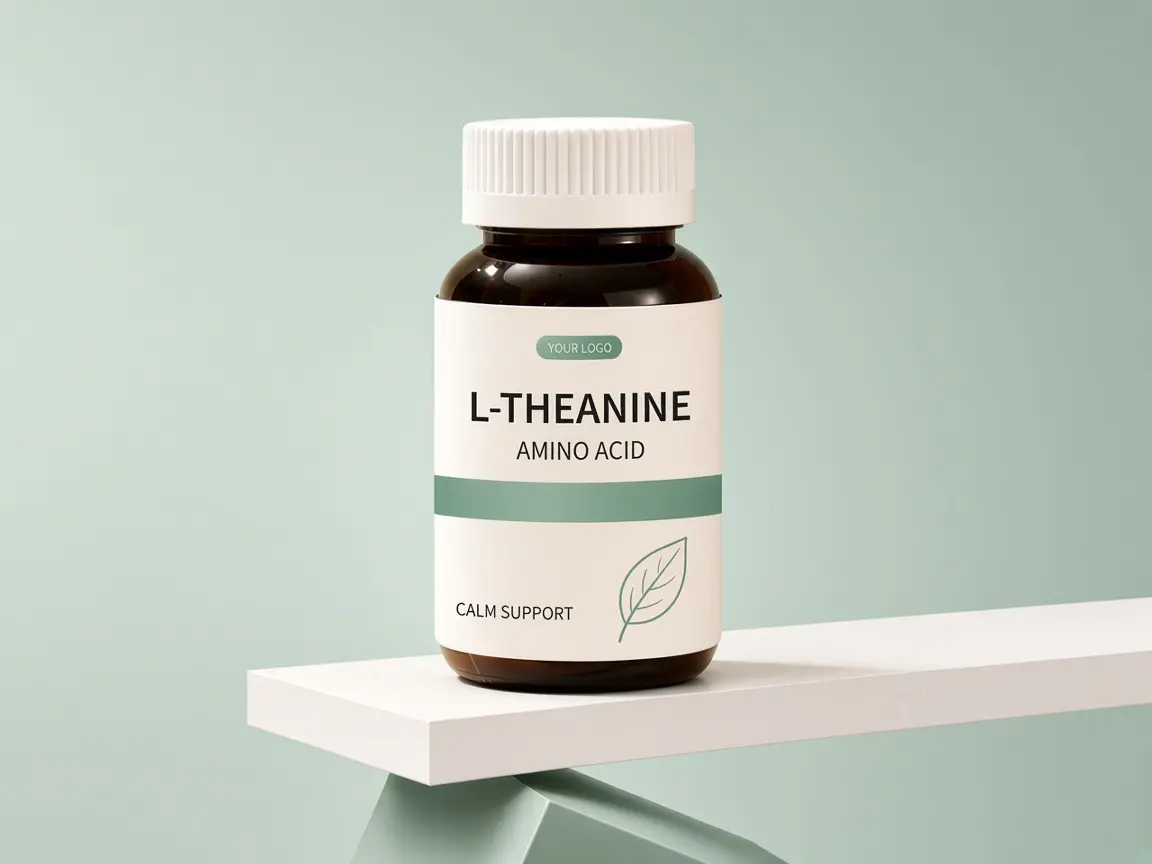
Best fit: Daytime L-theanine formulas without GABA.
Specify: L-theanine identity and HPLC assay. Green-tea extract DER is a different material.
Boundary: Focus-positioned theanine formulas route to the Focus program.
Typical format: Capsule.
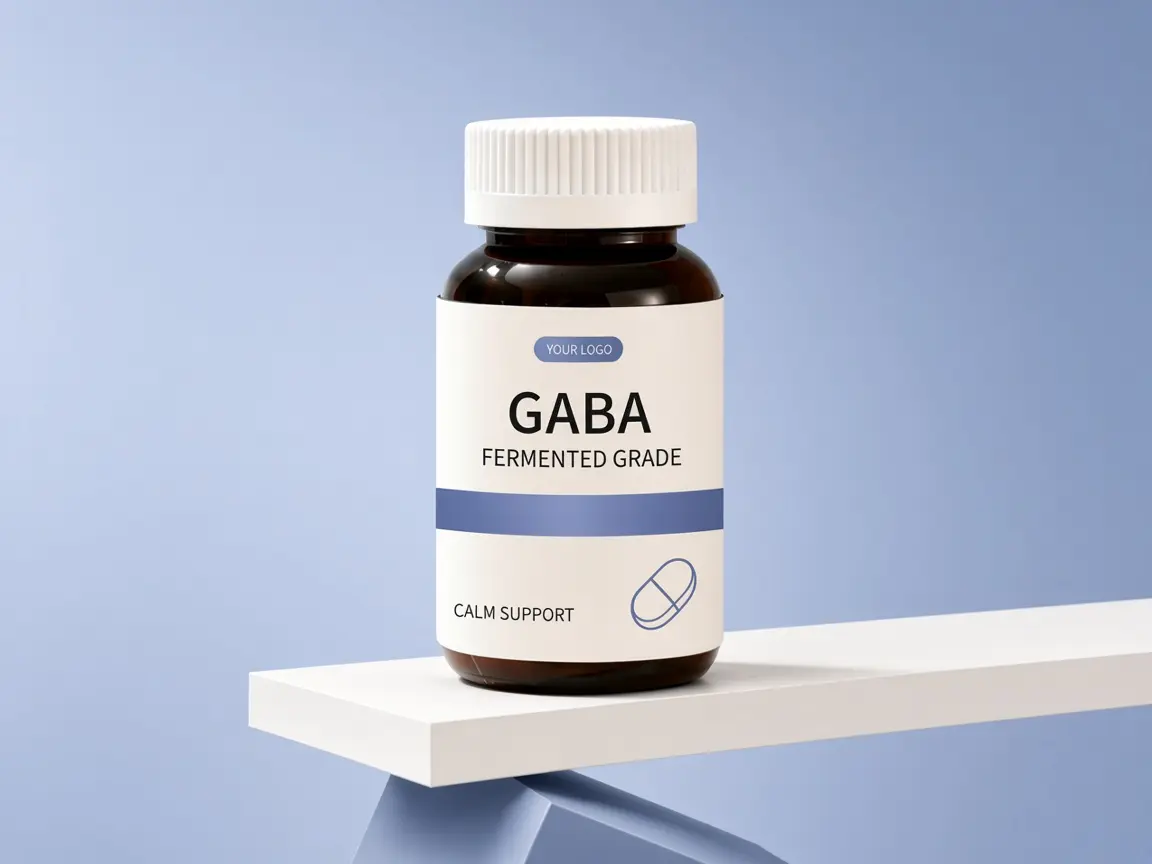
Best fit: Formulas that print GABA as the lead active.
Specify: Chemical identity, fermented or licensed grade, assay, and destination.
Boundary: If destination review does not support that GABA identity and process, the quote moves to daytime theanine or a botanical card.
Typical format: Capsule; gummy after cook feasibility and finished-piece assay review.
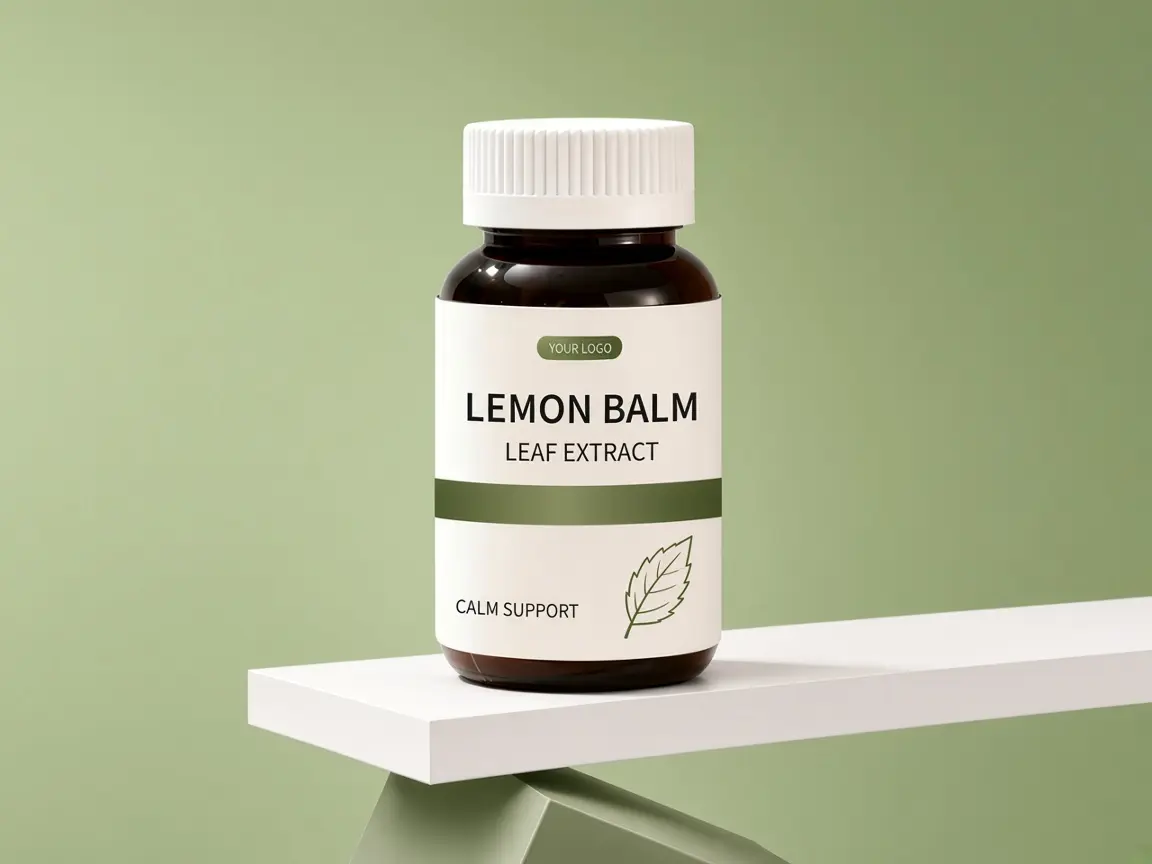
Best fit: Daytime Melissa officinalis leaf formulas.
Specify: Leaf powder, named-ratio extract, or rosmarinic-acid extract with HPLC.
Boundary: Not interchangeable with passionflower. Evening lemon-balm sleep formulas route to the Sleep program.
Typical format: Capsule.
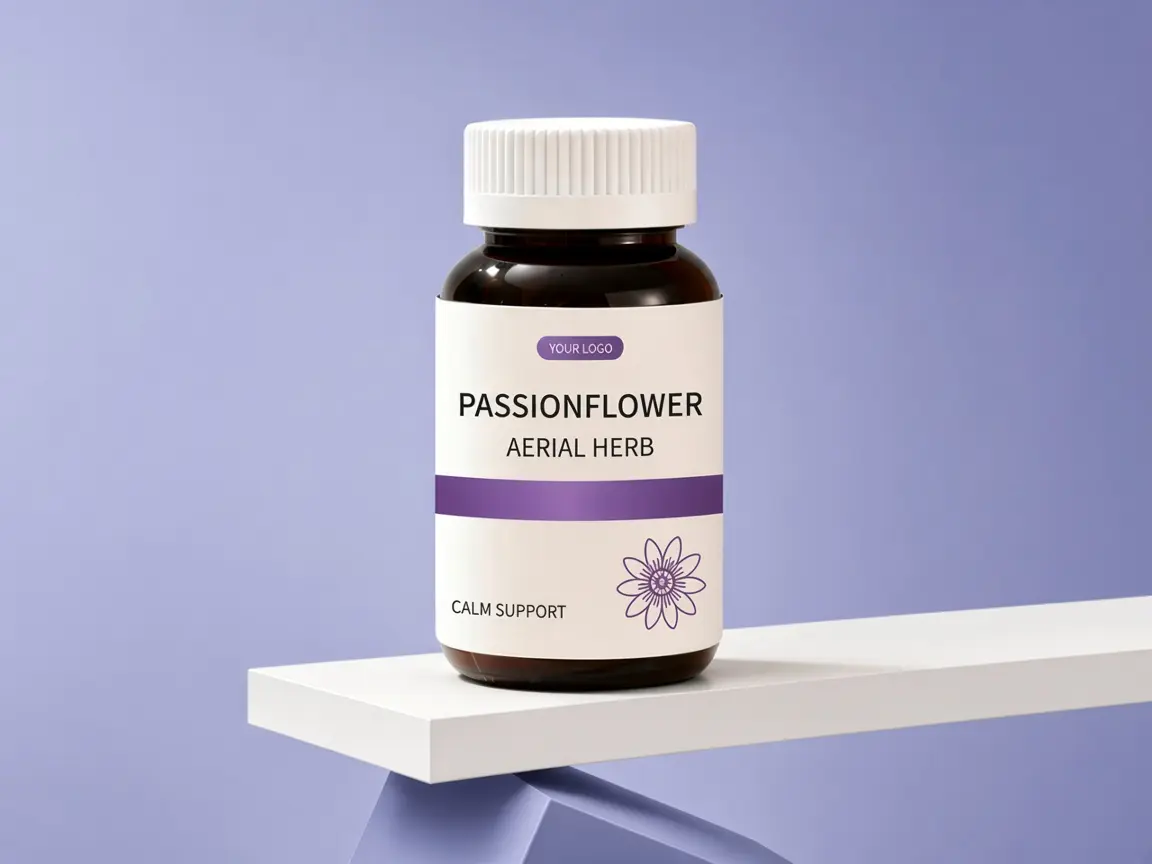
Best fit: Passiflora incarnata aerial-herb formulas.
Specify: Aerial powder, named-ratio extract, or flavonoid / vitexin extract with the method named.
Boundary: Not interchangeable with lemon balm or P. edulis fruit material.
Typical format: Capsule.
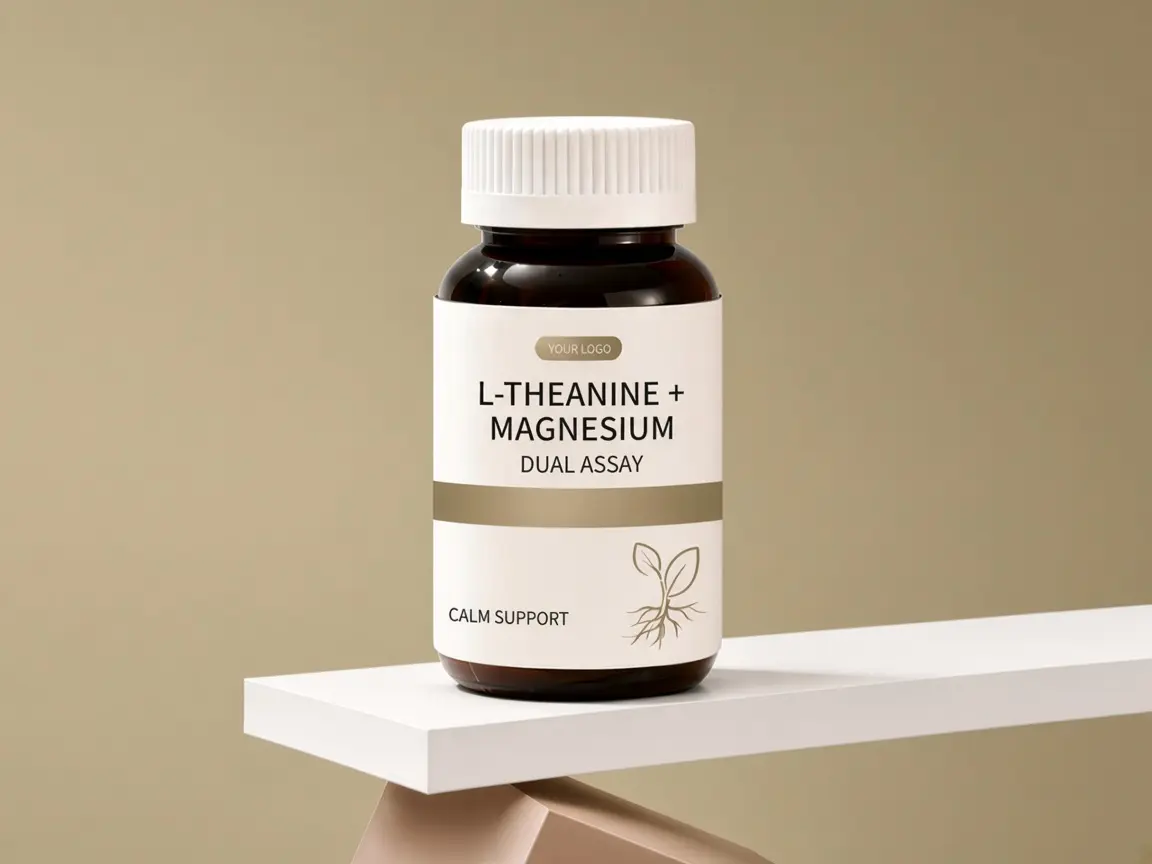
Best fit: Two-row daytime calm formulas that print L-theanine and magnesium, without ashwagandha.
Specify: L-theanine assay plus magnesium salt and elemental milligrams.
Boundary: Ashwagandha–magnesium stress formulas route to the Stress program; melatonin-free sleep formulas route to the Sleep program.
Typical format: Capsule.
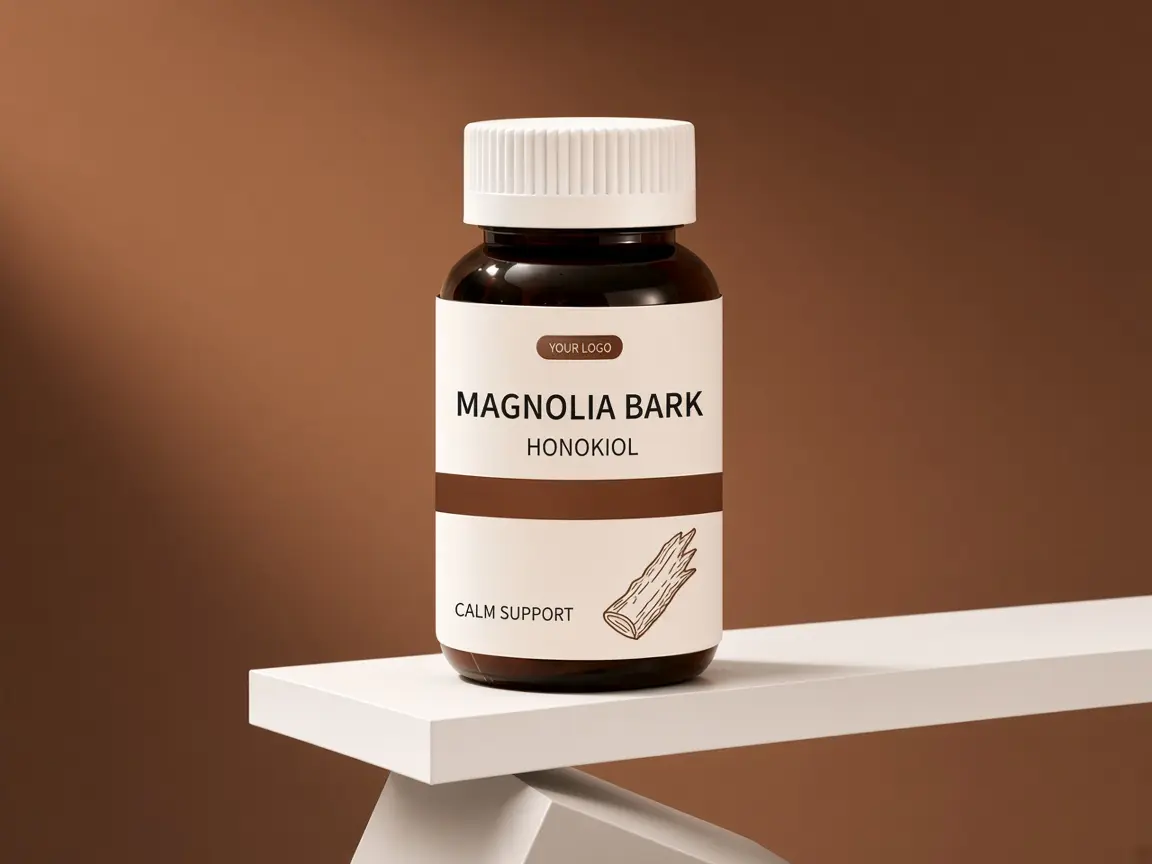
Best fit: Magnolia bark formulas with honokiol and/or magnolol.
Specify: Magnolia officinalis bark identity and the named HPLC peak or sum.
Boundary: Used for evening-oriented calm formulas rather than daytime theanine formulas.
Typical format: Capsule.
Calm Ingredient Specifications for Finished-Product Manufacturing
Commercial reference only; not an intake recommendation.
Need a different grade or load? Send the target specification for review.
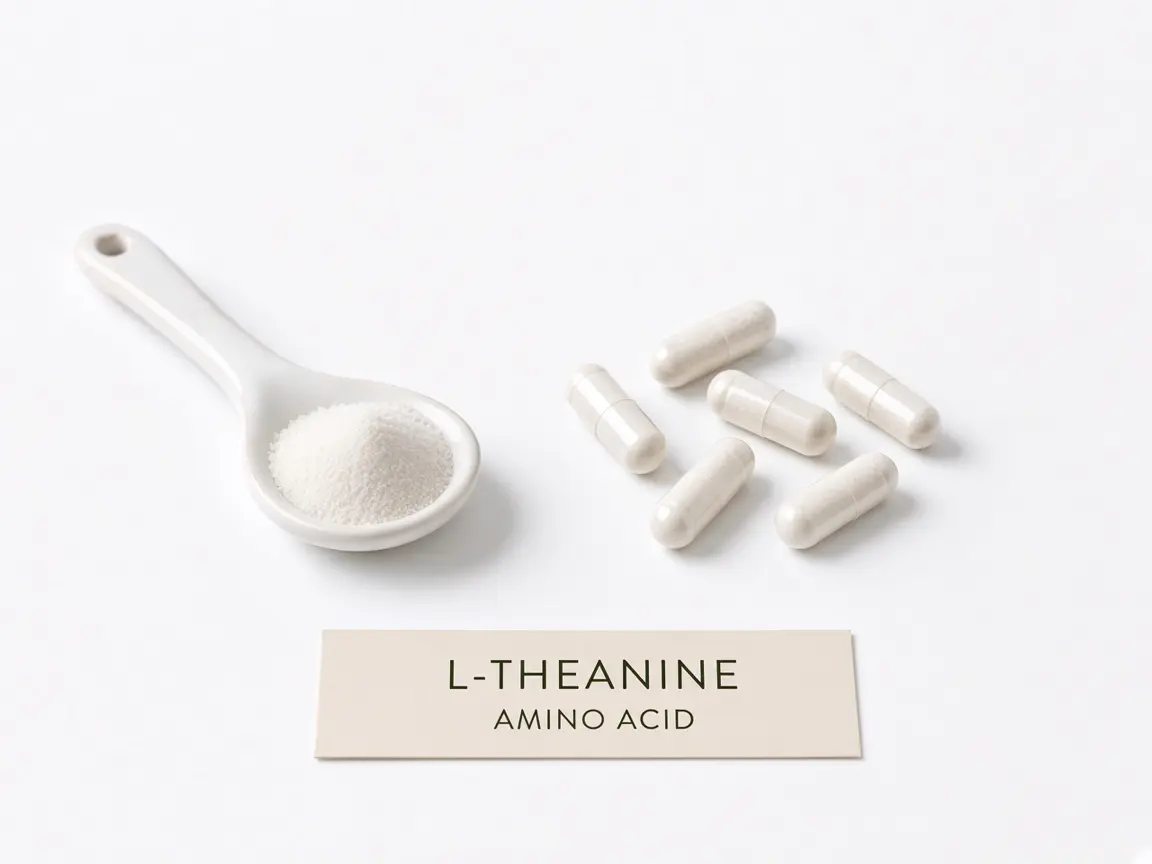
Identity: L-theanine amino acid. Green-tea extract DER is a different material.
Specification: Example commercial specification: ≥98% L-theanine, subject to the approved supplier specification. Example finished-product declarations include 100 mg or 200 mg L-theanine; these figures are quotation references, not intake recommendations. Licensed names print only with authorization.
Method: HPLC (or the named method on the spec).
Quote basis: Amino-acid milligrams and a green-tea DER (catechins / residual caffeine) are separate materials.
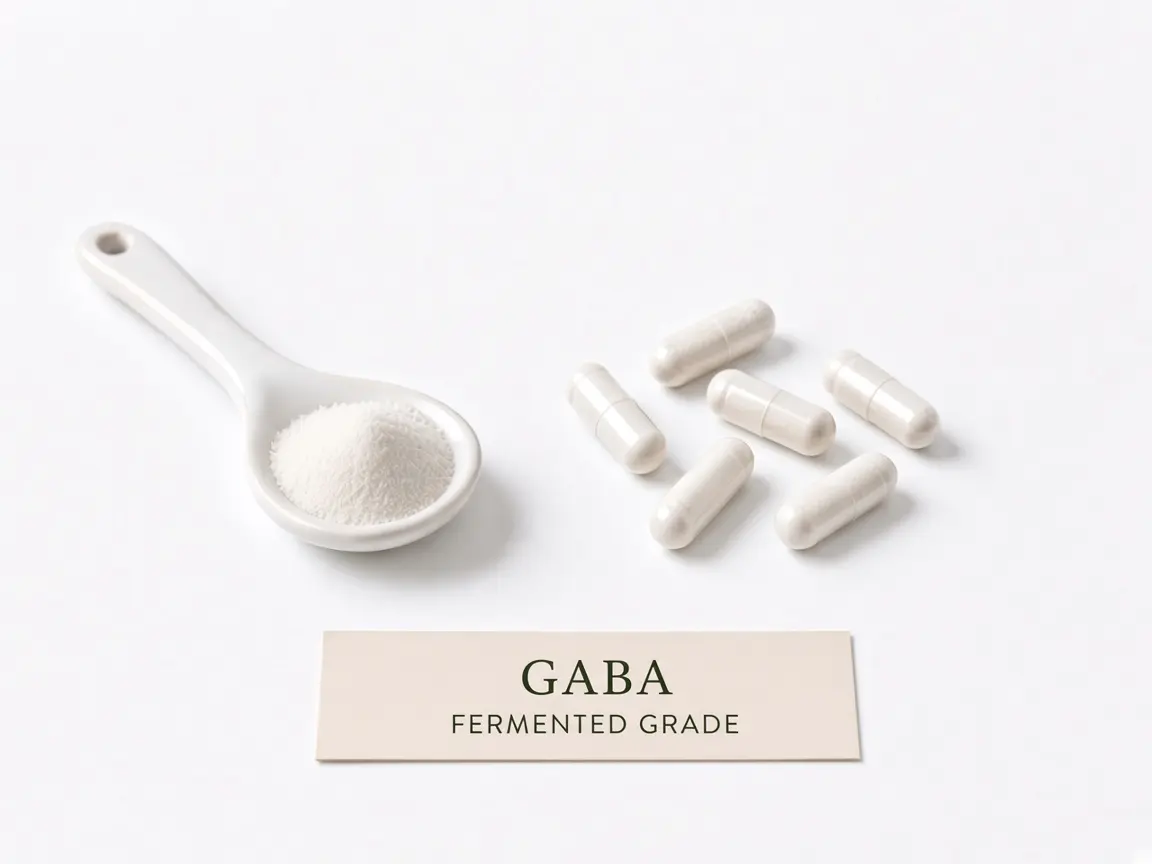
Identity: γ-aminobutyric acid. Fermented GABA is the usual start.
Specification: Observed commercial specifications: approximately 99% GABA isolate and approximately 20% GABA content in a fermented preparation; a licensed grade is a separate file. Final quotation follows the approved supplier specification.
Method: HPLC (or the named method on the spec).
Quote basis: 99% isolate, 20% GABA content and a licensed name are different fill weights and different destination files at the same declared milligram.
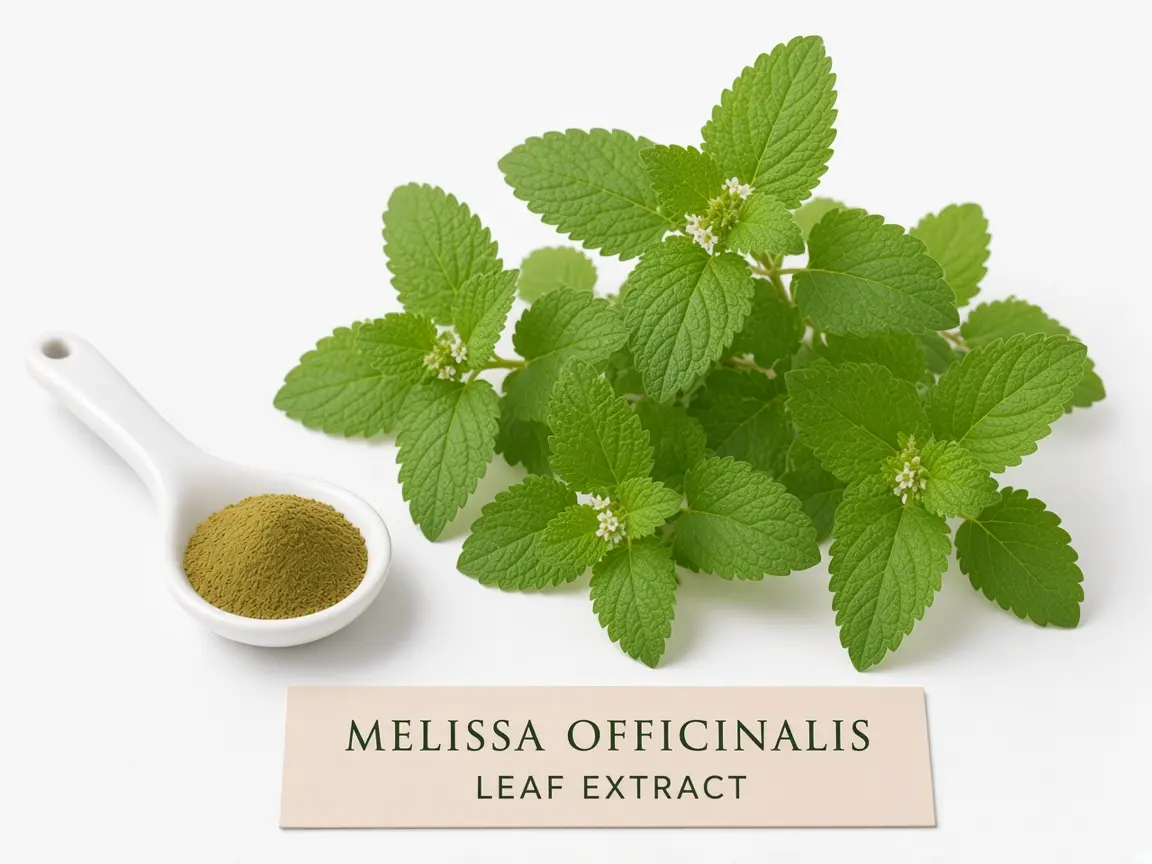
Identity: Melissa officinalis leaf — powder, named-ratio extract, or rosmarinic-acid extract.
Specification: Rosmarinic acid % + HPLC when a marker will print. Powder or a real DER when the panel is leaf identity only.
Method: HPLC for rosmarinic acid when specified.
Quote basis: Leaf powder, ratio extract and rosmarinic extract are separate materials at the same printed milligram.
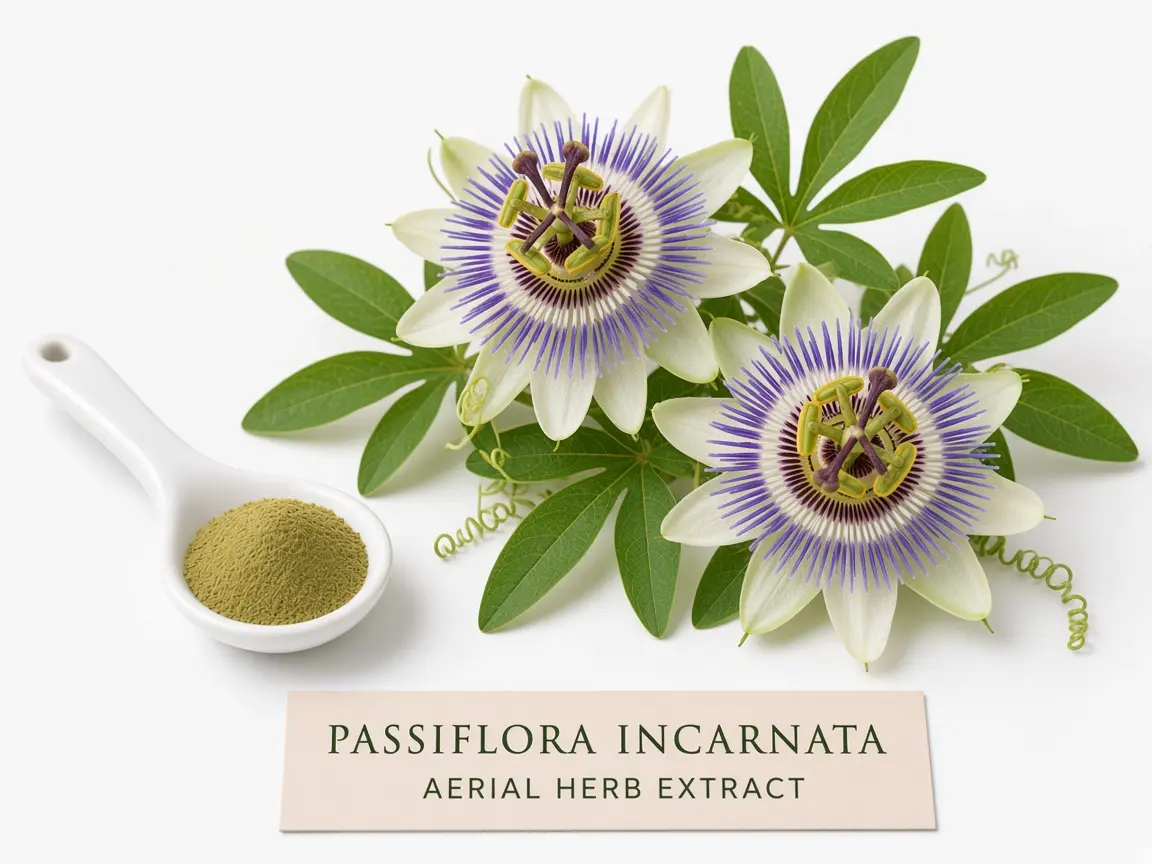
Identity: Passiflora incarnata aerial herb — not P. edulis fruit.
Specification: Total flavonoids and/or vitexin, method named. Commercial specifications may state 3.5% or 4% total flavonoids, but the assay basis and reference standard must be named before comparing quotes — not the same assay as a named vitexin peak.
Method: HPLC for the printed flavonoid / vitexin definition.
Quote basis: Flavonoid total vs vitexin peak vs DER are separate quote lines.
Identity: Named magnesium salt — bisglycinate is the usual start on this card. Citrate, oxide, malate, taurate and L-threonate are different files.
Specification: Salt identity + elemental milligrams + compound fill weight. Fully reacted vs buffered must be stated.
Method: Elemental magnesium by ICP-OES or AA (named on the spec).
Quote basis: Two “magnesium 100 mg” lines can differ by more than 2× in fill when the salt changes.
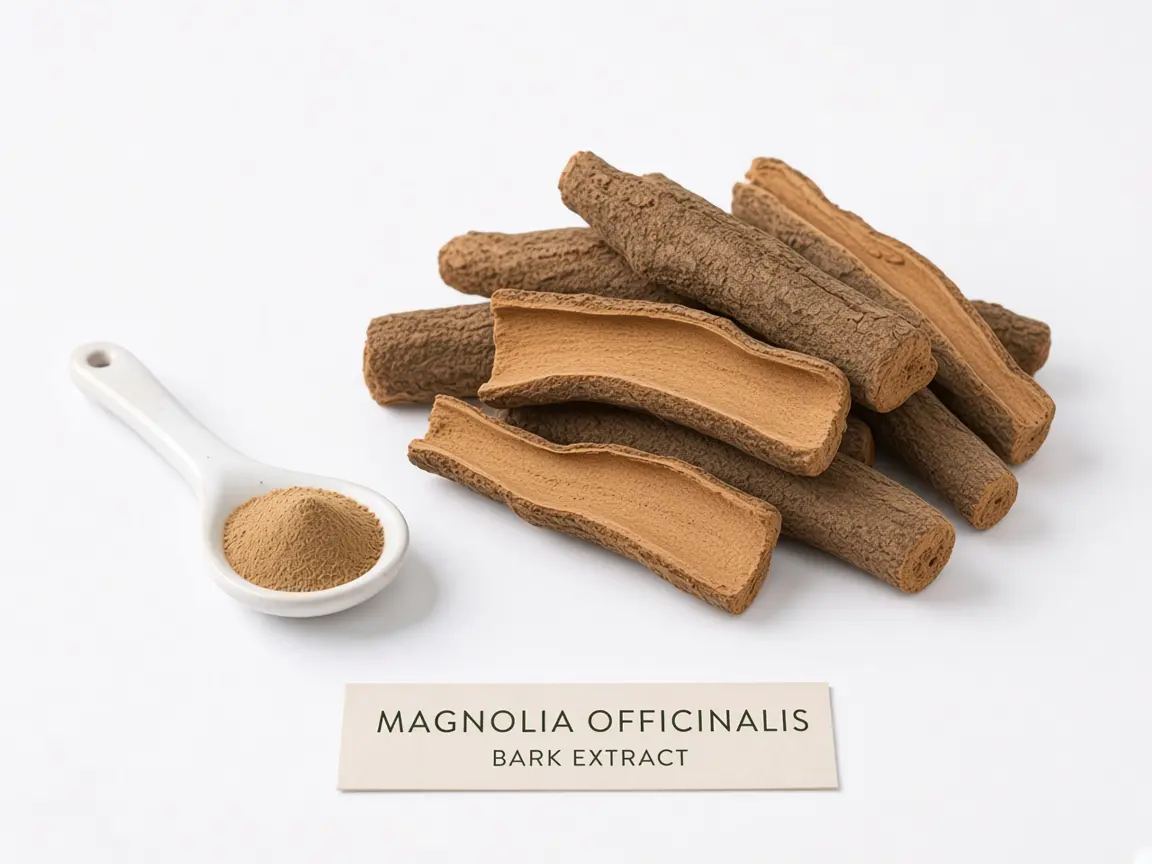
Identity: Magnolia officinalis bark.
Specification: Honokiol, magnolol, a combined assay and the extraction ratio must be specified separately.
Method: HPLC for the named peak or sum.
Quote basis: Honokiol %, combined %, and high-assay honokiol milligrams are separate weigh-ups.
Choose the Calm Format: Capsules, Tablets, Powder or Gummies
Capsules are the typical first route for L-theanine, GABA and the botanical cards. Other formats are quoted after fill-weight, compression or cook parameters are locked. Softgel is quoted when the active system has a compatible liquid fill.
Typical fit: L-theanine, GABA, lemon balm, passionflower and theanine + magnesium.
Key control: Premix and finished-product content uniformity when a botanical is a small fraction of fill.
What to lock: Shell; unit count; assay grade that sets tap density.
Manufacturing note: 99% GABA isolate and a fermented preparation at 20% GABA content do not fill the same capsule at the same declared milligram.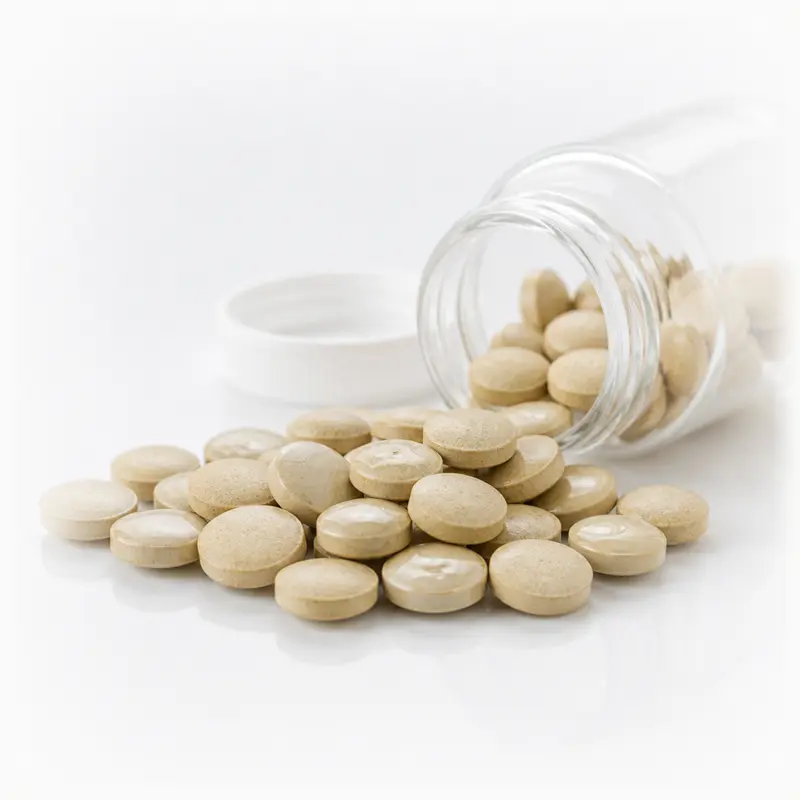
Typical fit: Higher-solid theanine or magnesium panels after compression feasibility review.
Key control: Compression load and moisture.
What to lock: Tooling, tablet weight, hardness, coat if specified.
Manufacturing note: Capsule-to-tablet conversion is re-validated before a press run.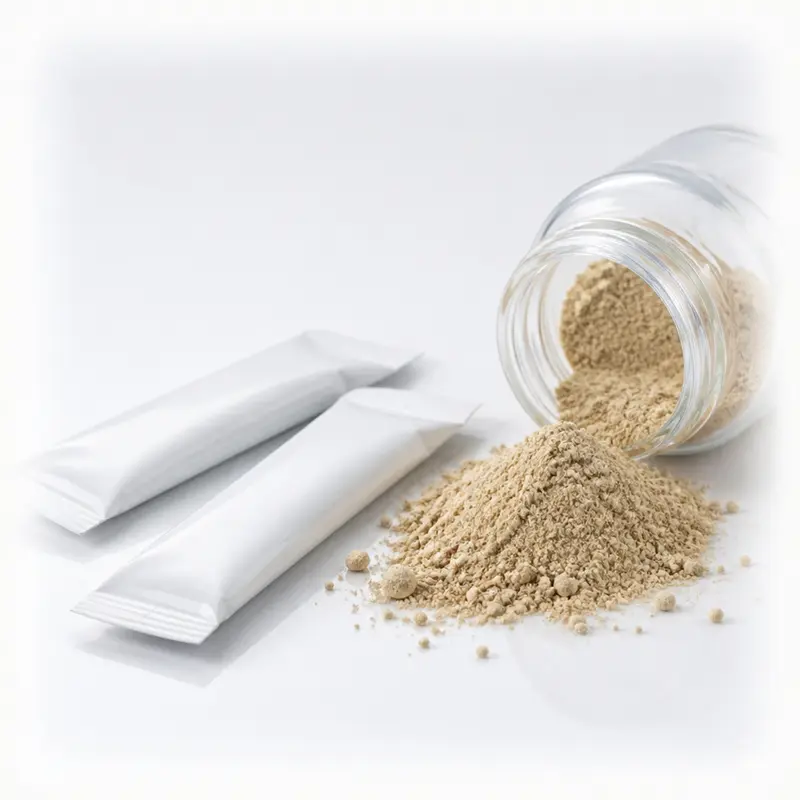
Typical fit: A named theanine + magnesium drink after flavor and uniformity lock.
Key control: Blend uniformity, taste and water activity.
What to lock: Mesh, elemental magnesium, flavor, barrier film.
Manufacturing note: A saffron row on a stick is quoted on the mood file.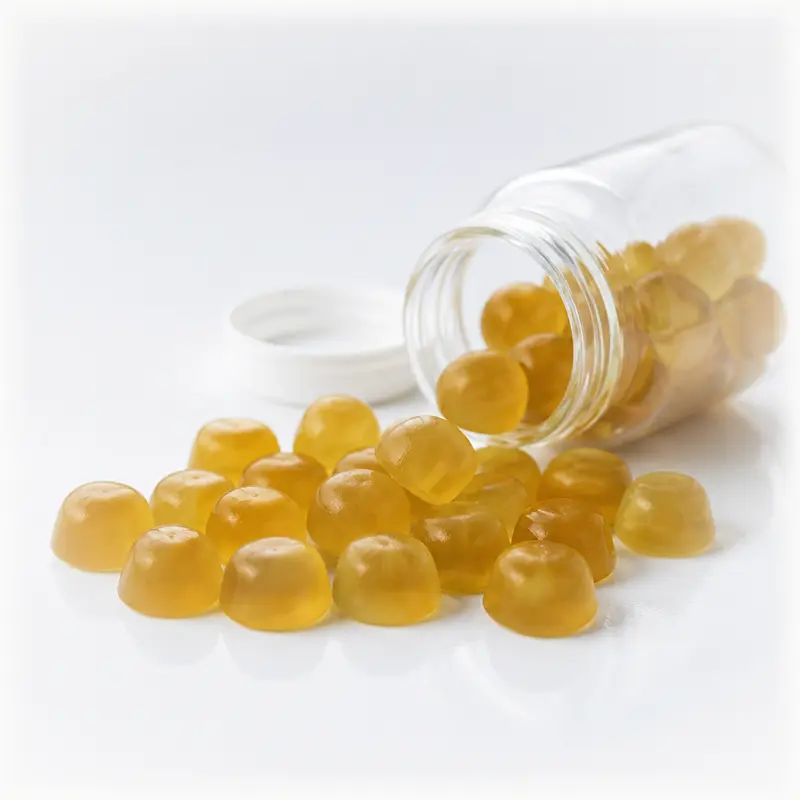
Typical fit: A GABA-led or theanine lifestyle unit after cook feasibility.
Key control: Finished-piece assay. Drum solids % is not the label.
What to lock: Finished-piece assay; pectin vs gelatin; flavor; sugar or sugar-free.
Manufacturing note: Higher active loads require a separate gummy feasibility review for piece weight, assay and sensory parameters.
1. Concept review — architecture, destination and the declared core active.
2. Source qualification — match the active to an approved ingredient specification and qualified source.
3. Feasibility — destination eligibility; fill weight, compression or cook; grade, format and pack only against the approved specification.
4. Quotation — after the ingredient grade and manufacturing specification are aligned.
5. Sample and qualification — sample against the reviewed specification; approve the master specification; complete required supplier and quality qualification documents.
6. Production — schedule against the locked file.
The incoming COA verifies the raw-material lot; finished-product testing verifies the manufactured product.
Incoming identity → in-process fill / uniformity → finished-product COA for each declared active → release → change control.
| QC risk | Control |
|---|---|
| “GABA 100 mg” with no grade | Fill mass follows isolate vs fermented vs licensed grade; destination locked first |
| Unnamed botanical or “theanine” assay | Amino-acid vs green-tea DER; rosmarinic or flavonoid / vitexin + method |
| Magnesium 100 mg with no salt | Salt + elemental mg + compound weight before the capsule count is set |
| Drum-solids percentage treated as finished-piece assay | Finished-piece assay after gummy processing |
| Licensed name on artwork without a license | Authorization file, or a reviewed equivalent specification |
| Dry GABA or L-theanine specified for a softgel | Liquid-fill compatibility review; hard capsule is normally the first manufacturing route |
| Hygroscopic GABA or magnesium salt | Moisture barrier + desiccant where required by the stability specification |
| Lemon balm / passionflower odor and color | Barrier and light review; gummy color after processing |
| Low-dose botanical blend | Content uniformity; light-barrier packaging where required |
| Gummy water activity and color | Film and piece-integrity review after gummy processing |
Alternate lots follow change control. Lots outside specification are placed on hold. Quality issue handling: Nonconforming lots are placed on hold and investigated through documented root-cause and corrective-action procedures. A barrier pack reduces a named risk; it does not by itself establish shelf life. See Quality Control and Confidentiality & IP Protection.
Destination review covers ingredient status and labeling before quotation.
United States. Structure/function claims used in dietary-supplement labeling require substantiation and, where applicable, FDA notification and the required disclaimer. Website and other promotional claims require separate review based on how and where they are used.
European Union. GABA projects require destination-specific review of identity, production process, purity and applicable food-supplement status.
United Kingdom. The same fields are reviewed against the UK file. U.S. shelf availability does not establish eligibility in another market.
Other destinations. Destination-specific ingredient, registration and labeling requirements are reviewed. Halal capsule programs are quoted when specified in the brief. Australia, Japan and Southeast Asian markets: destination-specific registration, notification or ingredient review applies.
Ashwagandha-led and saffron-led briefs are quoted on their owner pages. Suntheanine®, PharmaGABA®, Affron®, KSM-66®, Sensoril® and similar licensed grades require customer authorization. NSF / USP requirements are handled only when specified in the RFQ. Organic programs and caffeine-led SKUs are outside this line. Regulatory documentation is prepared against the agreed destination and ingredient specification; final market authorization and label responsibility remain with the brand owner.
Planning ranges after formula, format, serving, pack and schedule are locked. Final MOQ and timing depend on the approved specification and production schedule. Target order quantity / annual volume belongs on the same brief. Pilot quantities and bulk ingredient requirements should be quoted separately.
| Format | Planning Range | Planning Timing |
|---|---|---|
| Capsules | 3,000–5,000 units/SKU | Sample 7–15 days; mass production 30–45 days |
| Tablets | 5,000–10,000 units/SKU | Quoted after process parameters are approved |
| Gummies / powder | Quoted after the format specification is locked | Cook or film pilot first |
Can you work from a competitor label if we do not have the original BOM?
Yes. Send the label or a photo of the Supplement Facts panel, destination and format. KS maps each declared row to a named ingredient identity and flags specification gaps before sampling.
Can you quote GABA for an EU or UK SKU?
Only after the GABA identity, production process and specification are checked against that destination file. A U.S. listing does not by itself establish eligibility in another market. If that file does not pass, the quote moves to a theanine or botanical architecture.
Can you match an existing calm formula if the original ingredient is proprietary?
KS can review whether an authorized equivalent specification is feasible. A generic ingredient is not treated as automatically equivalent to a licensed grade.
Does “non-drowsy” mean the formula will not cause sleepiness?
No. Non-drowsy is a product-positioning choice for a daytime theanine architecture. Individual response is not guaranteed.
Why is a gummy quote different from the capsule milligrams on the brief?
Cook, water activity and piece weight change what the finished gummy can declare. The quote uses finished-piece assay, not drum solids percentage. Higher active loads are reviewed for piece weight, assay and sensory parameters before a gummy route is locked.
Start Your Calm Supplement Manufacturing Project
A complete RFQ returns a feasibility decision, specification gap list, quotation basis and sample route without reopening the same specification questions.
RFQ response: specification gap list · feasibility decision · proposed grade where adjustment is needed · quotation basis · sample route · required QA documents.
New SKU — Request Formula Feasibility
Existing formula — Send Your BOM
Second source — Request a Second-Source Review
Related Anxiety Relief Supplement Manufacturer Pages
Category routes
- Brain Health Supplements
- Focus Supplements
- Stress Relief Supplements
- Mood Support Supplements
- Sleep Support Supplements
Calm ingredient manufacturer pages
- GABA Supplement
- L-Theanine Supplements
- Lemon Balm Supplement Manufacturer
- Passionflower Supplement Manufacturer
- L-Theanine + Magnesium Supplement Manufacturer
Adjacent manufacturer pages
Disclaimer: Wholesale / brand manufacturing and product-development reference only. Not intended to diagnose, treat, cure, or prevent any disease. Dietary supplements are not drugs. Milligram figures, grade percentages and formula examples are development references, not recommended intakes or catalog guarantees. Branded ingredient names appear only as customer-licensed options.
Written by KS Nutripharma Formulation Team | Reviewed by KS Nutripharma Director of R&D (PhD, Food Science | 19+ years nutraceutical development) | Updated September 2026