
Professional Passionflower Supplements Manufacturer
KS Nutripharma is a passionflower supplement manufacturer for OEM, ODM, and private-label programs. We manufacture finished passionflower dietary supplements—capsules, tablets, powders, and gummies, as single-ingredient or combination formulas—for sleep-support assortments, from specified Passiflora incarnata aerial herb (powder, ratio extract, or flavonoid-specified extract), with a batch COA and finished-unit testing as scoped.
Passiflora incarnata aerial herb—not P. edulis passion fruit—is the material specified for this product line. For procurement, specify the Latin name, plant part, material route, marker, method, milligrams per serving, and dosage form before comparing quotes. Typical capsule programs start from about 3,000–5,000 units. Samples follow specification and material confirmation.
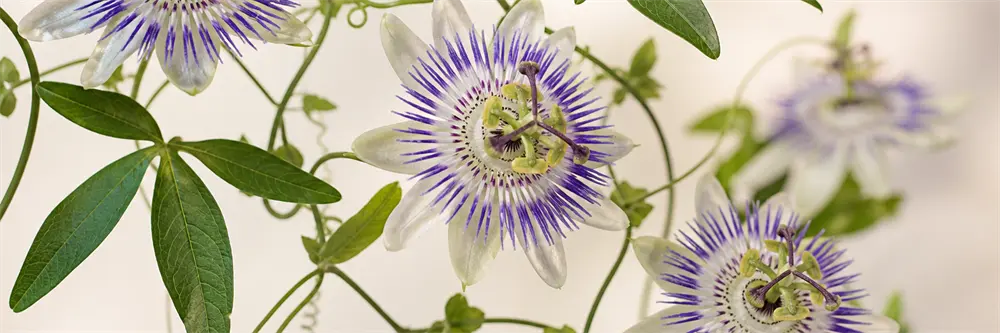
Fresh P. incarnata flowering aerial herb. Species and plant part start identity; a named assay still has to be written on the file.
Send Your Formula / Spec → Get a Feasibility Review · Request a Passionflower Sample
Have two supplier COAs to map before sampling? Compare two COAs.
cGMP · ISO 9001 · ISO 22000 · HACCP · FSSC 22000 · Halal · Kosher · in-house lab + SGS/Eurofins pathways · batch COA
Certifications · Quality Control
Passionflower Manufacturing at a Glance
Capability | Typical starting point |
|---|---|
| Botanical | Passiflora incarnata L. |
| Plant part | Aerial herb |
| Material | Aerial powder / ratio extract / flavonoid-specified extract |
| Formats | Capsules / tablets / powder / gummies |
| Marker file | Total flavonoids and/or vitexin + method, incoming vs finished-unit basis |
| Documents | COA / specification / identity + scoped safety tests |
| Capsule MOQ | From about 3,000–5,000 units |
| Samples | After specification and material confirmation |
| Mass production | After formula, artwork, pack, and schedule confirmation |
Oral dietary supplements only. Tea, tincture, and juice are quoted as separate projects.
Custom Passionflower Supplement Formulation for Private Label SKUs
These are common starting architectures for private-label development—not frozen SKUs. R&D matches the brief to channel, format, companions, and destination market. Serving size, marker, and pack stay customizable. Aerial powder vs ratio vs flavonoid-specified extract is written in full after format.
Choose your formula
If your brief is… | Start with |
|---|---|
| Single-ingredient extract with a printed flavonoid or vitexin marker | F01 |
| Aerial powder or named-ratio extract | F02 |
| Passionflower + L-theanine | F03 |
| Passionflower + magnesium | F04 |
| Passionflower + GABA | F05 |
| Evening / sleep-support SKU | F06 |
| Daytime calm SKU | F07 |
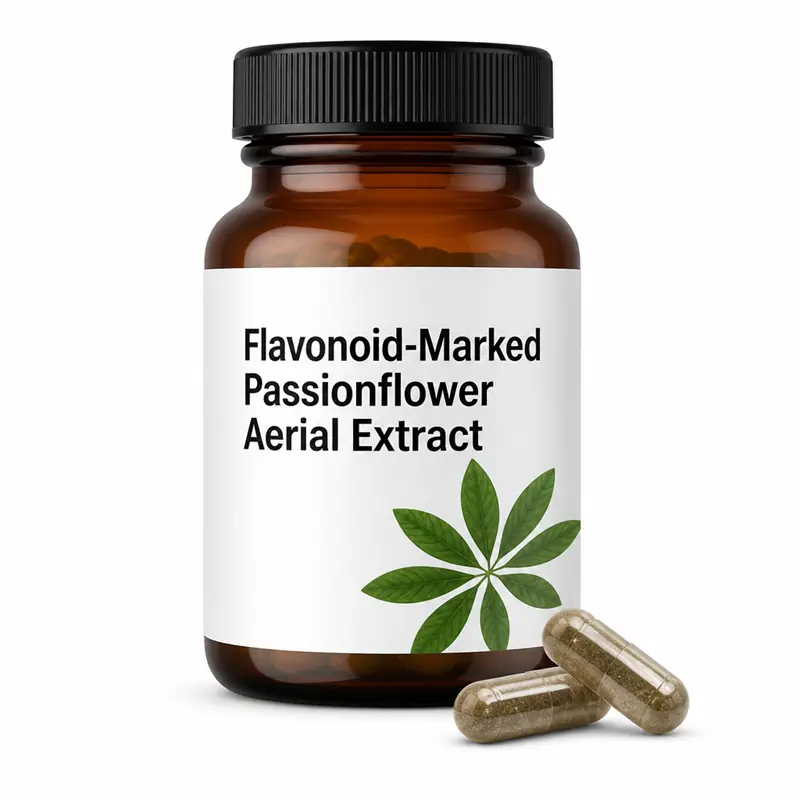
Use when: The panel will print a standardized passionflower aerial extract. Commercial talk often names total flavonoids or vitexin. Common starting point for single-ingredient programs.
Specify: Extract mg per serving; analyte name + method; whether the % is incoming only or finished as well; capsule vs tablet.
Trade-off: Compact numbered extract vs a specified HPLC file and higher kg cost than herb powder (F02).
Default format: Hard capsule.
Manufacturing note: Aerial extract is hygroscopic and dark olive-brown; it often needs a glidant before size 0/00 fill. Incoming extract % is not the capsule assay.
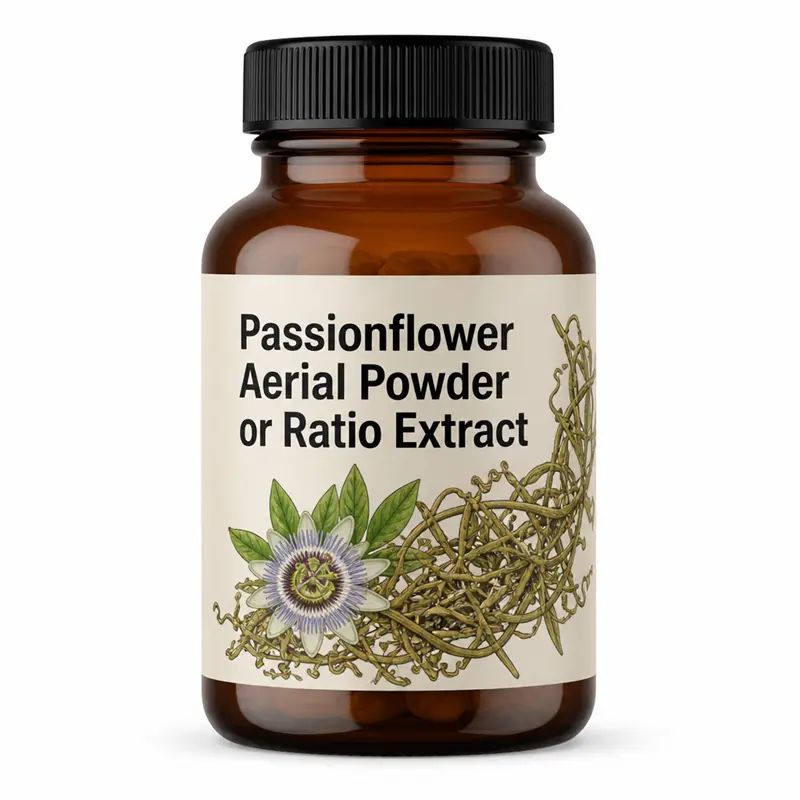
Use when: The bottle will print herb powder milligrams, or a named-ratio extract, without a flavonoid percentage claim.
Specify: Plant part = aerial / flowering herb; powder vs ratio; mg as herb or as extract; solvent if extract. If any flavonoid number will appear, use F01.
Trade-off: Lower kg cost and whole-herb identity vs a larger fill and no honest marker milligram. Do not copy 250 mg extract talk onto a 1 g herb-powder fill.
Default format: Capsule or stick.
Manufacturing note: 500 mg–1 g herb powder needs size 00 or a two-piece serving; grassy odor is a stick-film problem. A named 10:1 without a real DER is not a grade.
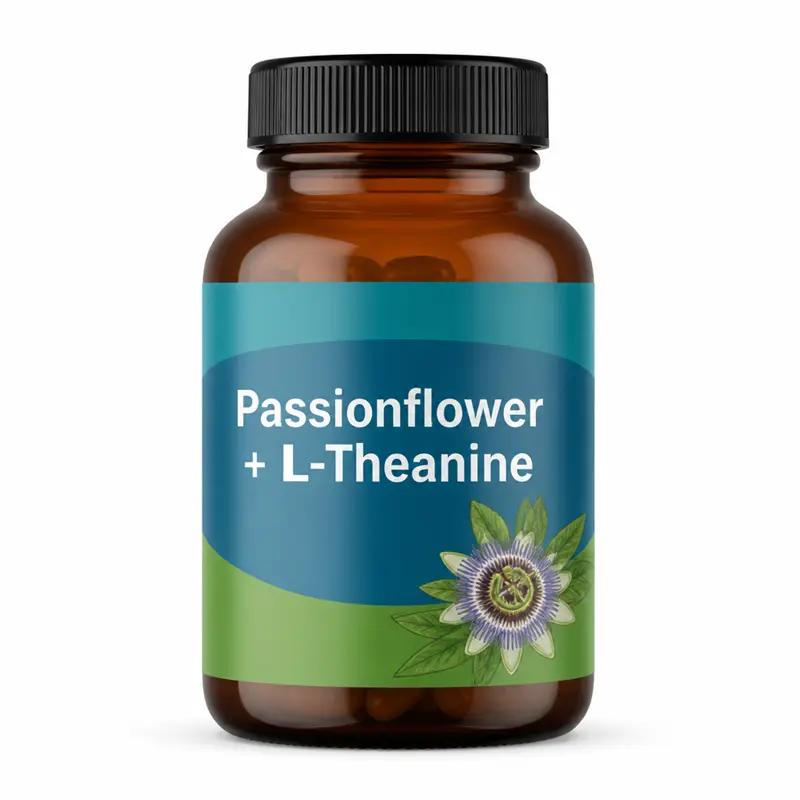
Use when: The panel names L-theanine as the second identity.
Specify: Theanine grade + mg; passionflower extract mg + flavonoid file; count per day.
Trade-off: A named amino companion vs two assays.
Default format: Hard capsule.
Manufacturing note: Low-dose theanine can segregate in a dark botanical blend. Two methods, not one “calm assay.”
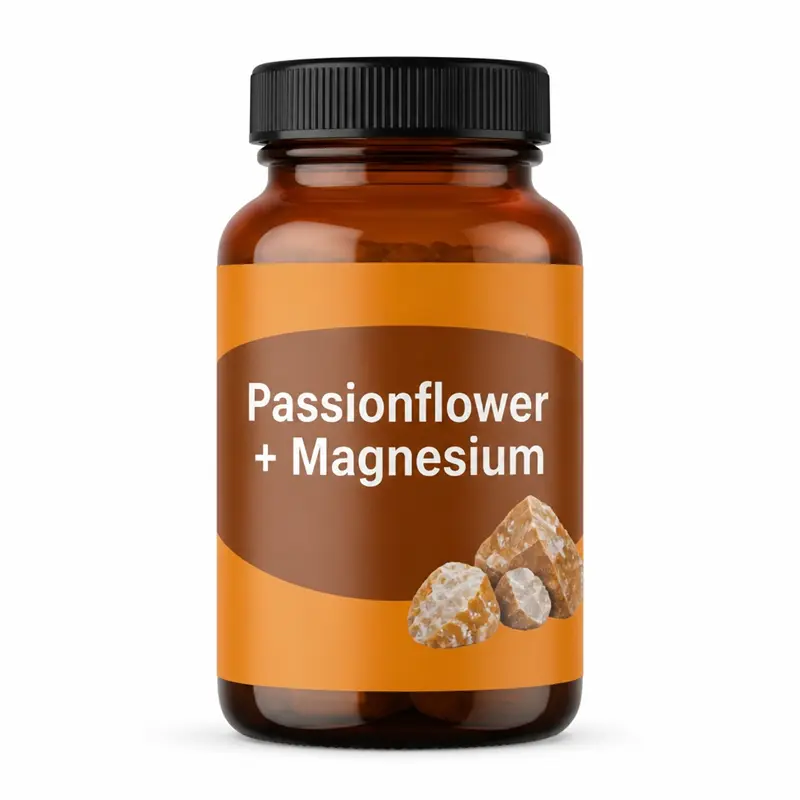
Use when: The brief wants a mineral + botanical evening or relaxation capsule. Magnesium → magnesium bisglycinate.
Specify: Magnesium salt + elemental mg; passionflower extract mg + flavonoid file; capsule count.
Trade-off: Mineral stack vs a larger unit than F01. Oxide is not the salt for this brief.
Default format: Capsule or tablet.
Manufacturing note: Bisglycinate bulk density drives piece count. 400 mg elemental magnesium plus 500 mg extract will not share a mini capsule—split count or tablet.
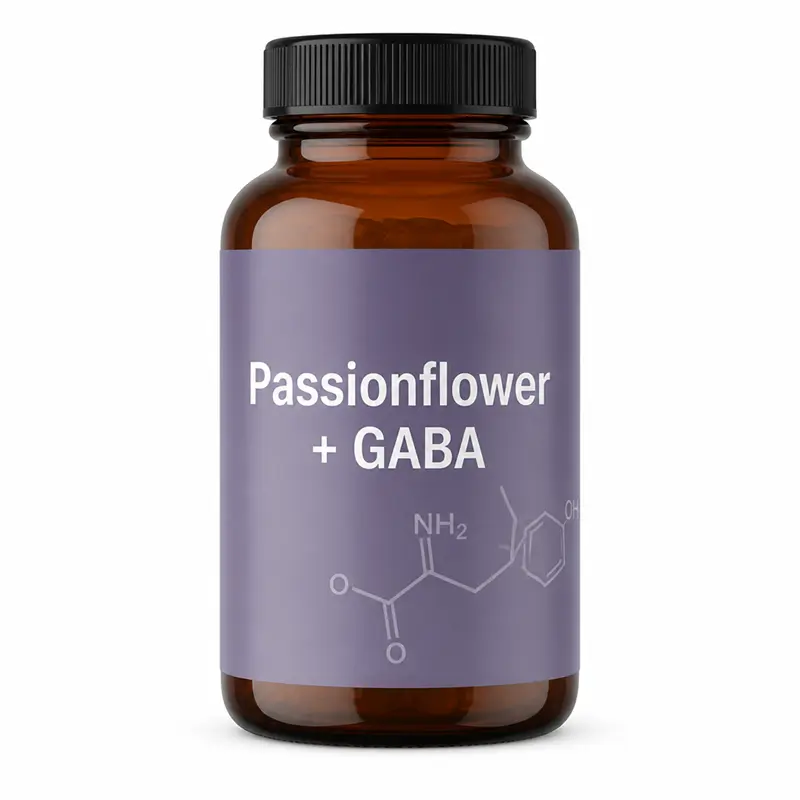
Use when: The BOM names GABA (fermented 99% / 20% or a named licensed grade).
Specify: GABA grade + mg; passionflower flavonoid file; destination-market GABA status.
Trade-off: A second named identity vs a market-file review before the formula is frozen. Physical compatibility does not establish regulatory eligibility.
Default format: Hard capsule.
Manufacturing note: Confirm GABA eligibility before the blender. Fermented GABA is hygroscopic next to aerial extract.
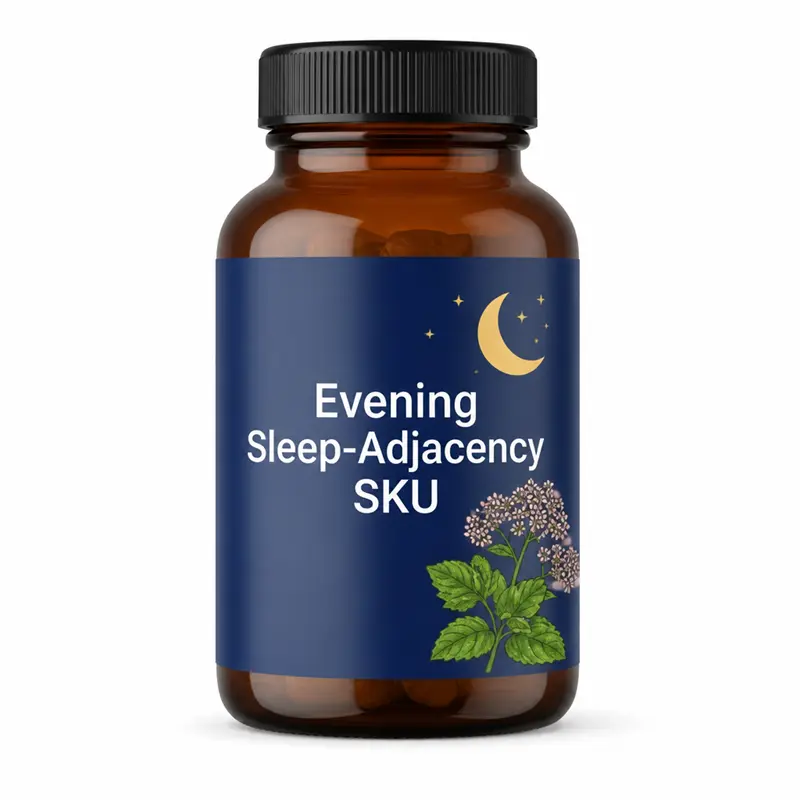
Use when: The SKU sits in a sleep-support assortment as an evening botanical. Optional named companions: lemon balm, valerian, hops, melatonin (immediate-release, market-dependent).
Specify: F01 or F03/F04 as the base; melatonin if used (dose + IR vs ER + market); timing = evening.
Trade-off: Sleep-aisle placement vs a tighter warning review. High-dose valerian + passionflower is a grogginess file, not morning readiness.
Default format: Hard capsule.
Manufacturing note: Valerian, hops, or melatonin change the warning file and next-day grogginess brief—they do not change the passionflower HPLC analyte.
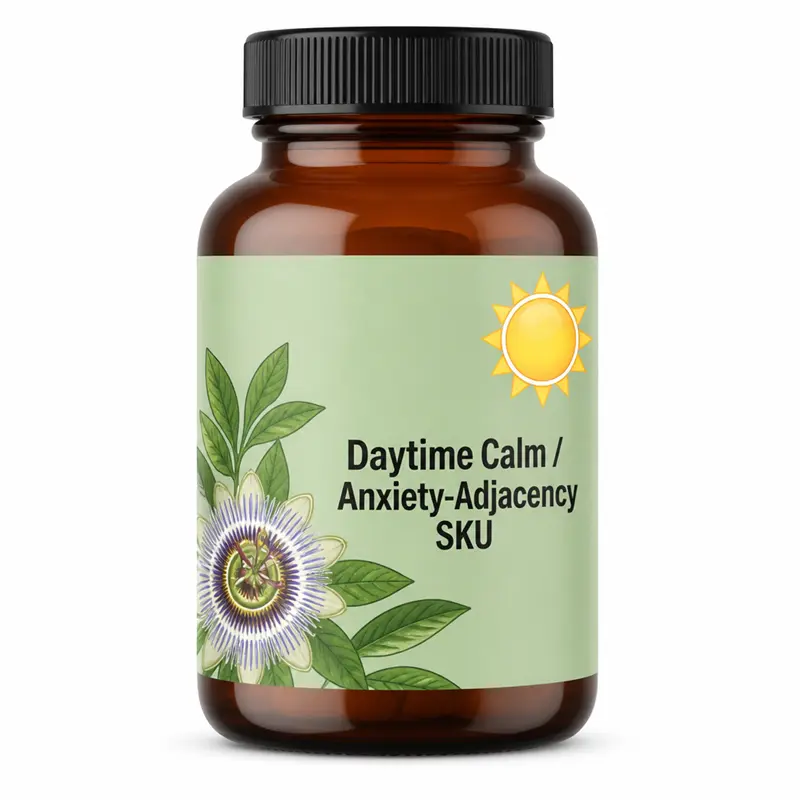
Use when: The SKU is sold for daytime calm or occasional-tension positioning, not bedtime.
Specify: Lower sedative-botanical load; theanine optional; no high-dose valerian or hops as heroes.
Trade-off: Same P. incarnata aerial as F06—the clock, companions, and artwork change. One bottle cannot claim all-day calm and deep sleep.
Default format: Hard capsule.
Manufacturing note: Keep high-dose sedative botanicals off the daytime BOM so artwork, serving time, and warning review stay on one clock.
Choose the Passionflower Format: Capsules, Tablets, Powder or Gummies
Aerial odor, fill weight, and whether the panel will state flavonoids or vitexin decide the first SKU more often than line speed. Capsules remain the usual extract launch. Gummies cost more in flavor work and finished assay.
A capsule BOM is not reused as a gummy BOM. Liquids, tinctures, and teas are quoted after a dedicated feasibility file. Softgel only when an oil companion is actually on the BOM.
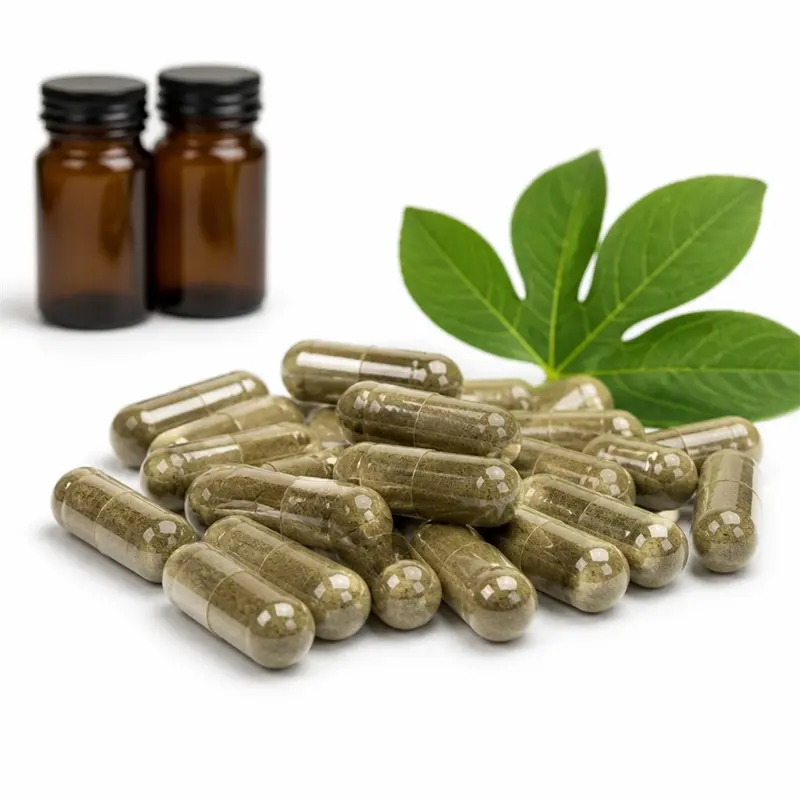
Best for: F01–F07 as the usual extract launch—the passionflower capsule path when odor, marker, and companions share one dry unit.
Why: Shell isolates herb odor; dry extract and amino/mineral companions share one unit; lowest typical MOQ.
Typical formula cards: F01–F05.
What to lock: Gelatin vs HPMC; capsule size 00 / 0 / 1; extract mg; flavonoid or vitexin file if claimed.
Manufacturing note: 250 mg extract often fits size 0 or 1 with a glidant; 500 mg extract usually needs size 00. Elemental magnesium raises count or forces a tablet. Dark aerial extract dusts. Dry extract is not a softgel fill unless an oil phase is on the BOM.
→ Hard Capsules
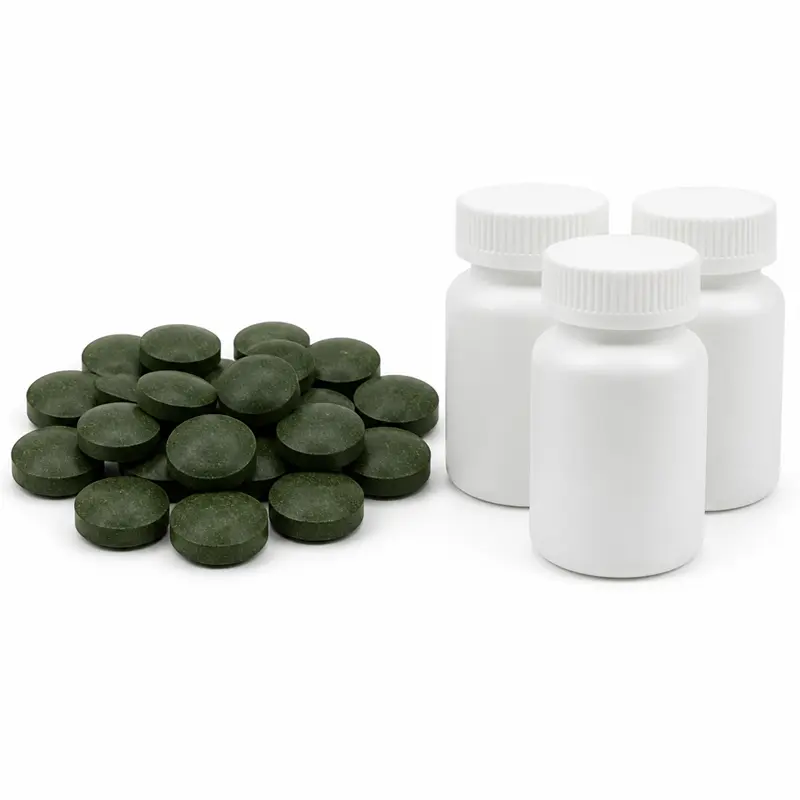
Best for: Extract SKUs in tablet-led channels; magnesium combinations that will not fit one capsule.
Why: Compact bottles, lower unit cost at volume, coat can control dust and herb color.
Typical formula cards: F01, F04.
What to lock: Tablet weight; coat; disintegration; piece assay.
Manufacturing note: Aerial extract is dark green-brown and hygroscopic. Mottling, friability, and weight variation are QC items. A capsule BOM is re-validated before a tablet run.
→ Tablets
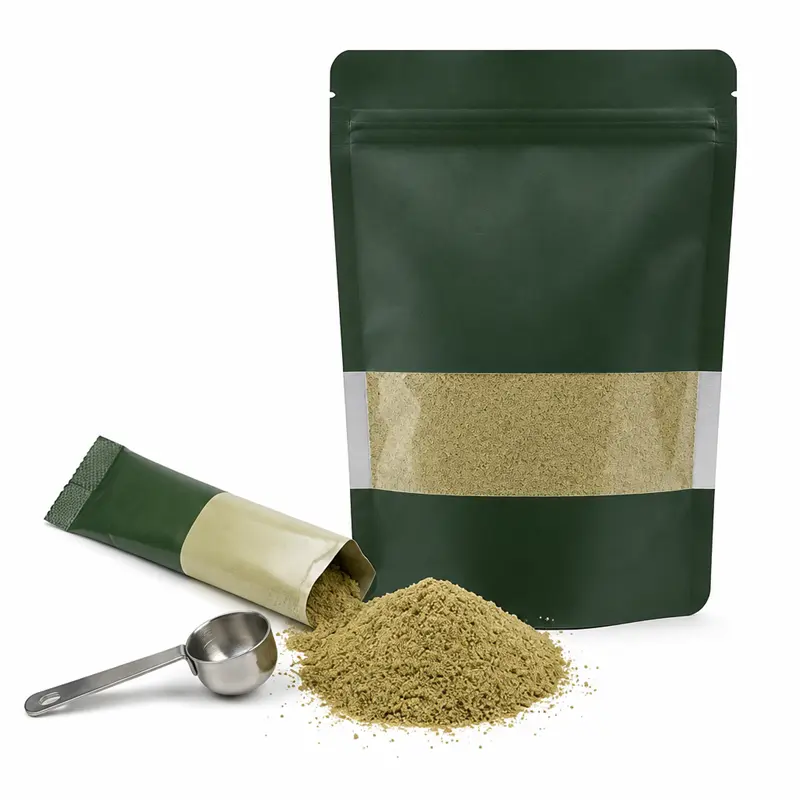
Best for: F02 herb-powder identity fills; gram-scale servings that will not fit a single capsule.
Why: Stick programs can carry herb milligrams without a compact extract claim.
Typical formula cards: F02.
What to lock: Herb powder vs extract in the name; mesh; g per stick; flavor; moisture-barrier film.
Manufacturing note: Herb powder is not 10:1 extract powder. Tea bags are quoted separately.
→ Powders and Granules
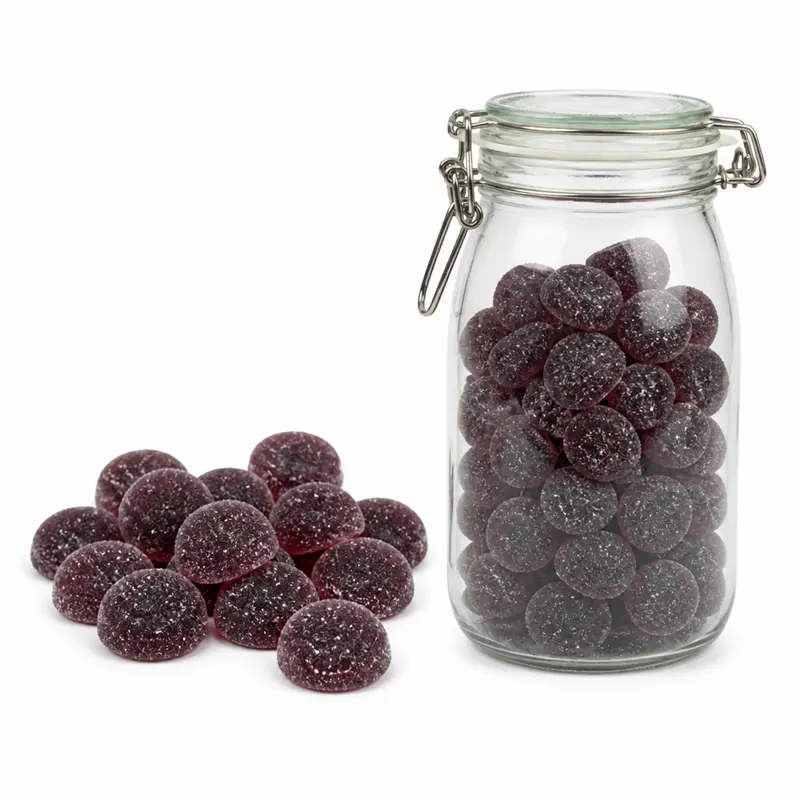
Best for: Modest extract load on F01 or F07—the passionflower gummy path when flavor and piece assay are in the brief. Not 500 mg extract plus 400 mg elemental magnesium in one piece.
Why: Suitable for brands using a gummy-led consumer format. Flavor is the project. Higher MOQ after a sensory pilot.
Typical formula cards: F01, F07.
What to lock: Extract mg per piece; whether flavonoids or vitexin will be claimed; pectin vs gelatin; sugar system.
Manufacturing note: Cook heat, pH, and water activity move flavonoids. Dark extract also moves color. Finished-piece assay is required if a marker is on the label.
→ Gummies
Write six fields before anyone compares price. Those fields decide identity, serving math, fill, and the label.
Field | What to write | What fails the quote |
|---|---|---|
| Species | Passiflora incarnata L. | “Passionflower / passion fruit 250 mg” as one line |
| Plant part | Aerial herb / flowering herb | Fruit, peel, seed, or no part |
| Trade term “vine” | Optional alias only | Using “vine” instead of a plant-part specification |
| Material route | Powder, named-ratio extract, or flavonoid-specified extract | “Passionflower 250 mg” with no route |
| Marker + method | Total flavonoids and/or vitexin + HPLC | “4% standardized” with no compound |
| Assay stage | Incoming extract, finished unit, or both | Drum COA copied onto the bottle |
“Vine” is commonly used commercially for the aerial herb, but the botanical specification should state P. incarnata aerial parts rather than relying on “vine” alone.
If origin will be declared on the finished label, include the origin specification in the RFQ and supplier documentation.
Public reference files and commercial files answer different questions:
Reference | What it means on this PO |
|---|---|
| EMA herbal monograph on Passiflorae herba | Botanical / herbal-medicinal identity reference, not a U.S. dietary-supplement label |
| Ph. Eur. (dried herb ≥1.5% total flavonoids expressed as vitexin; dry extract ≥2.0%) | Pharmacopoeial floor, not a universal commercial grade |
| Supplier COA | Incoming material actually purchased |
| Finished-product specification | Release criterion for the SKU |
The aerial herb’s chemistry is mainly C-glycosyl flavones. Vitexin is the usual named HPLC peak and the Ph. Eur. reference for total flavonoids. Isovitexin, orientin, and isoorientin sit on the same chromatogram as identity/profile peaks unless the PO names them as the claim analyte. Apigenin is not the default commercial marker for this aerial extract.
Commercial COAs often print 3.5% or 4% total flavonoids, sometimes expressed as vitexin, sometimes as a named vitexin peak. Those are different assays. 3.5% vs 4% is usually method, moisture basis, or supplier grade talk—not two pharmacopeial classes. Ph. Eur. ≥2.0% (dry extract, as vitexin) is a floor, not a retail “4%” grade.
What the COA prints | Treat it as |
|---|---|
| Total flavonoids 3.5–4% | A total, often expressed as vitexin—name the method |
| Vitexin x% HPLC | Named peak only |
| Isovitexin / orientin / isoorientin | Profile unless the claim names that peak |
| 4:1 / 10:1 / 20:1 | A ratio, not a flavonoid % |
A named ratio is a drug-extract ratio (DER) only when starting herb, finished extract, and solvent are on the file. Native extract ratio / native equivalent is a different number from DER. Do not convert 10:1 into 4% or 10% flavonoids.
Named ratio | Production meaning | Not equivalent to |
|---|---|---|
| 4:1 or 5:1 | Mild concentration if DER and solvent are real | A flavonoid % |
| 10:1 | Common commercial talk; still needs DER + solvent | 10% flavonoids or 4% flavonoids |
| 20:1, 25:1, 50:1 | Only with a documented DER | A higher marker % |
Standardized botanical pathways: standard extracts.
“4%” is not a complete specification unless the analyte, analytical method, reference basis, and assay stage are defined.
Weak specification | Production-ready specification |
|---|---|
| Passionflower 4% | P. incarnata aerial extract |
| 4% standardized | Total flavonoids ≥ X%, expressed as vitexin, by named method |
| 4% vitexin | Vitexin ≥ X% by HPLC |
| 10:1 extract | Named DER + solvent; not a 4% file |
| 250 mg extract | 250 mg extract / serving |
| COA attached | Incoming assay + finished-product specification |
Two “4% / 500 mg” prices are not a comparison until each quote is converted to marker milligrams per serving. Send both COAs; we map species, plant part, analyte, method, and assay stage before anyone pays for the wrong sample.
Extract weight × assay = marker amount per serving
Illustration only—not recommended intakes.
Quote | What the file says | Extract / serving | Marker / serving |
|---|---|---|---|
| A | Total flavonoids 4% | 250 mg | 10 mg flavonoids |
| B | Total flavonoids 4% | 500 mg | 20 mg flavonoids |
| C | Vitexin 2% HPLC | 500 mg | 10 mg vitexin |
| D | 10:1, no named analyte | 500 mg | No flavonoid milligram to compare |
A and C both yield “10 mg” but not of the same compound. D cannot enter the table until a DER and an analyte exist. Incoming extract % is not finished-unit milligrams—blend, moisture, and gummy cook change the number that can be printed.
Buyer requirement | Use this route when… | What to specify |
|---|---|---|
| Lowest-cost herb identity | Aerial herb powder (F02) | Species + plant part + mesh |
| Compact capsule, RFQ says 10:1 | Ratio extract (F02) | DER + solvent; do not convert to 4% |
| Compact capsule without a printed marker | Ratio extract (F02) | DER + solvent + extract mg |
| Printed flavonoid claim, RFQ says 3.5% or 4% | Flavonoid-specified extract (F01) | Analyte + HPLC + incoming vs finished |
| Printed vitexin claim | Vitexin-specified extract (F01) | Vitexin + method + assay stage |
| High-load gummy | Feasibility review first | Extract load + cook stability + piece assay |
| Combination formula | F01 as the botanical | Marker file + companion grades |
Release has to prove botanical identity, plant part, and—when a marker is on the file—the named assay method. Powder color does not close those rows.
Botanical identity testing verifies that the incoming material matches the specified botanical; marker assay quantifies the named chemical marker. HPLC flavonoid assay does not replace identity, and identity does not replace a printed marker milligram.
Incoming: identity (P. incarnata aerial), appearance, named assay, moisture, microbiology, heavy metals, pesticides and residual solvents as scoped, bulk density when fill weight depends on it.
In-process: blend uniformity (especially low-dose theanine or GABA), capsule fill or tablet weight, hardness/friability where applicable, gummy piece weight and water activity when that format is in scope.
Finished: agreed specification, microbiology, pack inspection, batch file. Hold/release when a result is outside spec. Third-party reports (SGS / Eurofins) when the RFQ asks. Methods: quality control.
Changing the extract supplier after approval restarts qualification.
We review relaxation, sleep-support, and other structure/function positioning against the destination market before artwork approval. For U.S. dietary-supplement labeling, FDA structure/function claims under 21 CFR 101.93 describe effects on body structure or function; they are not disease claims and they are not FDA approval of the finished bottle.
Usually discussable (verify locally): evening relaxation · calm · sleep-support · nervous-system support · bedtime wellness · occasional tension.
Daytime calm programs that sit in relaxation assortments: anxiety relief. Evening formulas and daytime formulas need two artworks.
Market-dependent before the BOM is frozen: GABA; melatonin; pediatric gummies; the word “anxiety” in some destinations.
The EMA Passiflorae herba file is a herbal-medicinal monograph (traditional use around mild mental stress and sleep; pregnancy and lactation not recommended for lack of reproductive-toxicity data). It is not a dietary-supplement claim deck and not a default formula.
Review item | Manufacturing implication |
|---|---|
| Drowsiness with evening stacks | Warning review on valerian / hops / melatonin combinations |
| GABA | Destination eligibility before confirming the BOM |
| Pregnancy / lactation | Not a default SKU |
| Gastrointestinal discomfort | Qualitative warning review as scoped |
Infant and pet products are out of scope.
Aerial extract is hygroscopic and aromatic. Packaging is selected against moisture, odor, dosage form, shelf-life target, and destination-market requirements.
Format | Typical start |
|---|---|
| Capsules / tablets | HDPE or PET, induction seal; desiccant when moisture leads |
| Powder / sticks | Moisture-barrier film and a flavor brief |
| Gummies | Water-activity pack of its own |
Shelf life follows formulation, pack, storage, and stability data for that SKU.
OEM. You send a BOM or a confirmed spec. We confirm manufacturability, sample against that spec, then run commercial units.
ODM. You send channel, evening vs daytime direction, format, and a milligram direction. We propose a material route and formula card, confirm the aerial file, sample, then scale. A product concept is enough to start.
Typical timeline after specification, material, and artwork confirmation
| Stage | Typical |
|---|---|
| First technical reply | About one business day on a complete brief |
| Sample | 7–15 days after specification and material confirmation |
| Pilot | 15–25 days as scoped |
| Mass production | 30–45 days after formula, artwork, pack, and schedule |
Flavor work, dual HPLC, and finished flavonoid assay add time before the sample clock starts. An NDA is available before you send a BOM. A project manager is assigned when the specification is in review.
Example RFQ
Passiflora incarnata aerial extract, [total flavonoids or vitexin] [x]% HPLC, [250/500] mg per capsule, 60-count HPMC, destination [US/EU/…], evening relaxation or daytime calm, companions [none / theanine mg / Mg salt + elemental mg / GABA grade], artwork language to review, first PO quantity.
Scope | Typical start |
|---|---|
| Capsules | About 3,000–5,000 units |
| Tablets | About 5,000–10,000 units |
| Powder / stick retail | Often from about 10,000 units |
| Gummies / liquids | After feasibility |
| Bulk aerial herb or extract on a finished-product project | Quoted by kg |
Bulk kilograms and finished retail units are different quotes.
Send any of the following: existing formula, supplier COA, target dosage, finished-product concept, required format, target market. Missing fields are acceptable—we identify specification gaps before quotation.
Request a Passionflower Supplements Manufacturing Quote
Send any of the following:
- Existing formula
- Supplier COA
- Target dosage
- Finished-product concept
- Required format
- Target market
Missing information is acceptable. We can identify the specification gaps before quotation.
Related Product Pages