
Develop Market-Ready GABA Supplements with End-to-End OEM, Private Label, and Ingredient Sourcing Solutions
OEM • Private Label • Bulk GABA Supply • Custom Formulations • Global Compliance
From bio-fermented GABA raw material sourcing to finished gummies, capsules, powders, and functional beverages — we partner with global brands to develop, manufacture, and launch GABA supplements that meet FDA, EU, Japan, and China compliance standards. Whether you need bulk fermented GABA powder (99% or 20% purity), a custom sleep formula, or a complete private-label product line, our platform delivers batch-to-batch consistency, flexible MOQs, and full regulatory dossier support.
Why Brands Choose KSNutripharma®:
- Bio-Fermented GABA Supply (99% & 20% Specs) — direct relationships with established Japanese and Korean fermentation producers
- Custom Formulation Development — in-house R&D for sleep, stress, cognitive, and functional beverage applications
- Multi-Dosage Manufacturing — capsules, gummies, powders, stick packs, tablets, and RTD beverages under cGMP
- Global Regulatory Support — dossier preparation for U.S. (FDA/GRAS), EU (novel food/supplement), Japan (FOSHU), and China (NHC)
Mature Formulations (Proven Market Demand)
We develop market-ready GABA formulas using bio-fermented GABA (99% purity) as the standard active ingredient. All formulations are validated for stability, sensory acceptability, and manufacturing feasibility before production.
- GABA (bio-fermented, 99%): 100–200 mg
- Melatonin: 1–3 mg
- L-Theanine: 100–200 mg
- Magnesium (bisglycinate): 100–200 mg elemental
- Glycine: 3 g
- Clinical basis: 100 mg fermented GABA reduced sleep latency by ~20% in a 2016 double-blind trial; plasma GABA peaked at ~30 minutes post-ingestion
- Target market: Adult sleep supplements, Amazon/DTC, pharmacy retail
- GABA (bio-fermented, 99%): 50–100 mg
- Ashwagandha (KSM-66): 300–600 mg
- Lemon Balm: 300–600 mg
- Saffron extract: 30 mg
- Clinical basis: 2.01–100 mg GABA intake linked to reduced cortisol and chromogranin A; 100 mg affects central stress markers (alpha/beta EEG ratio)
- Target market: Daily wellness, women’s health, corporate wellness programs
- GABA (bio-fermented, 99%): 100 mg
- L-Theanine: 200 mg
- 5-HTP: 50–100 mg
- Vitamin B6: 10–25 mg
- Target market: Mood support, non-drowsy daytime calm, student/young professional segment
Trending Formulations (High-Growth Segments)
- GABA (bio-fermented, 99%): 50–100 mg + Melatonin: 1–2 mg + L-Theanine: 50 mg + Passionflower: 50 mg
- Format advantage: Flavor-masking for GABA’s mild umami note; preferred by Amazon and mass-market retailers
- GABA (bio-fermented, 99% or 20%): 100 mg equivalent + Magnesium: 50 mg + L-Theanine: 50 mg + Chamomile extract: 25 mg
- Format advantage: 20% spec can be used for beverage-base concentrates; 99% spec for precise single-serve dosing
- GABA (bio-fermented, 99%): 25–50 mg + L-Theanine: 25 mg + Lemon Balm: 25 mg (low-dose, sugar-free or reduced-sugar
- Format advantages: Child-friendly dosing, pectin-based for vegan positioning, school-safe calm support
- GABA (bio-fermented99%) 100 mg + Ashwagandha 300 mg + Saffron 15 mg + Vitamin D3 25 mcg + Magnesium 150 mg
- Target market: Hormonal balance, perimenopause support, daily adaptogen stacks
- GABA (bio-fermented99%) 100 mg + Lion’s Mane500 mg + Phosphatidylserine 100 mg + Taurine 500 mg
- Target market: Esports, executive performance, athletic recovery
Compatible Functional Ingredients
GABA works synergistically with a broad range of functional ingredients. Our formulation team has validated compatibility, stability, and sensory profiles for the following ingredient categories:
- L-Theanine — Alpha-wave enhancement, anxiolysis without sedation; synergistic with GABA for sleep and calm formulas
- Glycine — Core body temperature reduction, sleep quality; stacks well with GABA in powder and beverage formats
- Taurine — GABA-A receptor modulation, cardiovascular support; popular in sports recovery and energy-calming hybrids
- 5-HTP — Serotonin precursor; combines with GABA for mood-support and sleep formulas targeting serotonin-GABA pathways
- Magnesium (bisglycinate, citrate, glycinate) — GABA receptor co-agonist; essential for sleep and stress formulas
- Zinc — Cofactor for neurotransmitter synthesis; supports GABAergic function in cognitive stacks
- Calcium — Modulates GABA release; relevant for bone-health + calm positioning in women’s formulas
- Ashwagandha (Withania somnifera) — HPA-axis cortisol modulation; the most requested GABA pairing in 2024–2025
- Lemon Balm (Melissa officinalis) — GABA transaminase inhibition; extends GABAergic activity duration
- Chamomile — Apigenin binding to benzodiazepine receptors; classic sleep-stack pairing
- Passionflower — GABA reuptake inhibition; popular in gummy and liquid sleep formulas
- Valerian Root — GABAergic modulation; traditional sleep ingredient with established consumer recognition
- Saffron (Crocus sativus) — Serotonin reuptake inhibition, mood support; premium positioning in stress formulas
- Rhodiola rosea — Adaptogenic stress buffer; pairs with GABA for daytime focus + calm formulations
- Vitamin B6 (Pyridoxal-5-Phosphate) — Cofactor for GABA synthesis from glutamate; essential for any GABA formula
- Vitamin D3 — Mood and immune modulation; increasingly included in women’s stress and daily wellness stacks
- Lion’s Mane (Hericium erinaceus) — NGF stimulation; pairs with GABA for focus + calm cognitive formulas
- Phosphatidylserine (PS) — Cortisol blunting, membrane integrity; executive performance and sports recovery
- Citicoline (CDP-Choline) — Cholinergic support; combined with GABA in mental wellness and esports products
- Alpha GPC — Acetylcholine precursor; high-bioavailability alternative to citicoline in premium stacks
GABA Supplement Formats We Manufacture
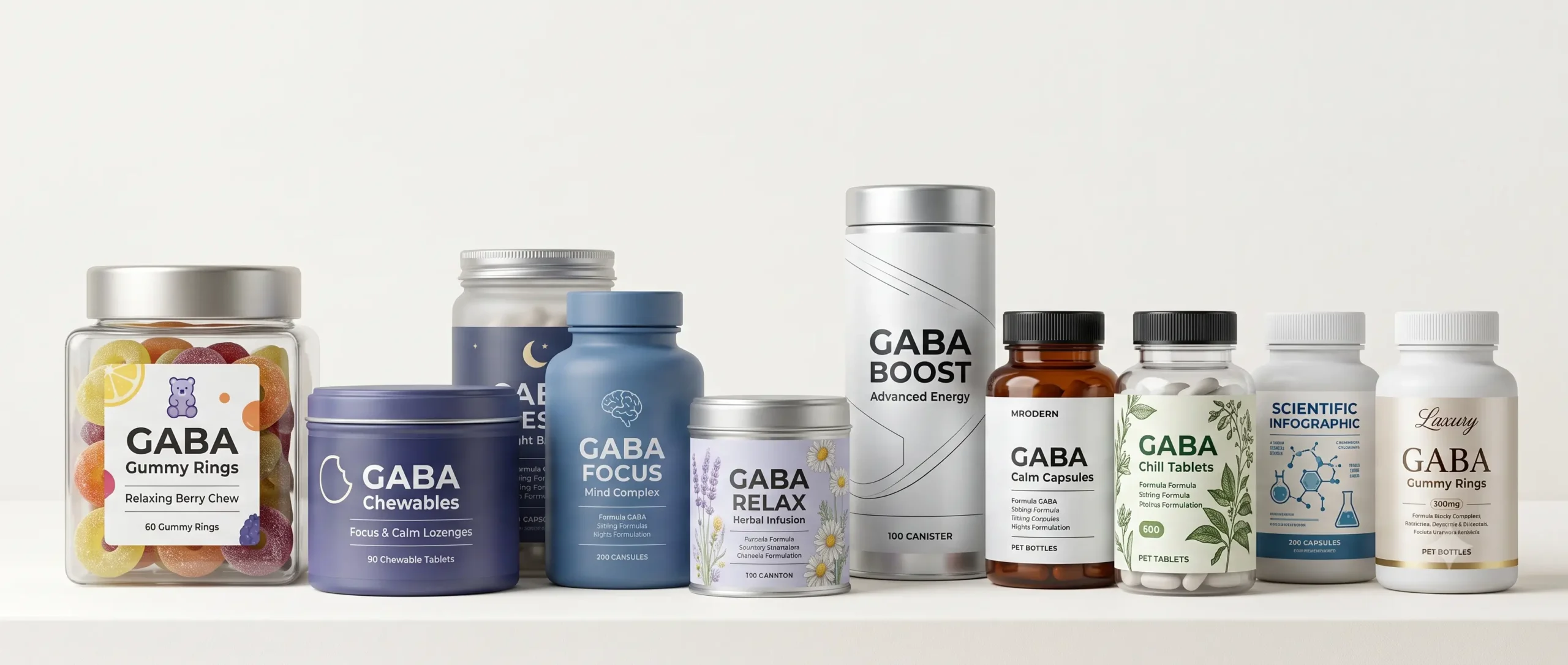
We manufacture GABA across the full spectrum of OEM supplement formats. Each dosage form is selected based on your target consumer, channel strategy, and product positioning.
- Suitable For: Adult sleep, stress, and cognitive formulas; pharmacy and professional channels
- Advantages: Precise dosing, long shelf life, lowest cost per unit, minimal flavor masking required
- Limitations: Less appealing to gummy-preferring demographics; requires swallowing comfort
- MOQ Reference: Flexible (contact for project-specific minimums)
- Suitable For: Cost-sensitive mass market, travel packs, combination formulas with high actives
- Advantages: High production throughput, compact packaging, stable under compression and heat
- Limitations: Slower dissolution than capsules; effervescent requires moisture-controlled manufacturing environment
- Suitable For: Sleep, stress, kids’ calm, Amazon/DTC, mass retail, flavor-forward positioning
- Advantages: Highest consumer acceptance, excellent flavor masking for GABA’s mild umami note, strong visual differentiation
- Limitations: Higher per-unit cost, moisture sensitivity, shorter shelf life than capsules, sugar-content considerations
- MOQ Reference: Flexible; sugar-free and reduced-sugar options available
- Suitable For: Functional beverages, pre-workout calm stacks, sleep drink mixes, subscription/DTC models
- Advantages: Flexible dosing, fast absorption, cost-effective for high-dose formulas, convenient single-serve packaging
- Limitations: Requires moisture-barrier packaging (opaque, desiccant, heat-sealed); flavor masking critical for palatability
- Stability Note: Bio-fermented GABA powder is highly stable at elevated temperatures and across wide pH, but finished products require protection from light, moisture, and heat. Amber or opaque containers with proper sealing are recommended.
- MOQ Reference: 500 kg+ for bulk; flexible for stick-pack sachets
- Suitable For: Daily wellness, premium positioning, convenience retail, on-the-go consumption
- Advantages: Highly water-soluble, stable across pH 3–7, immediate consumption format, strong premium pricing potential
- Limitations: Higher MOQ (10,000 L+ for RTD), shorter shelf life, requires aseptic or hot-fill processing, heavier logistics
- MOQ Reference: 10,000 L+ for RTD; flexible for beverage powder blends
- Suitable For: Oil-soluble co-ingredients (e.g., vitamin D3, omega-3 + GABA combinations)
- Advantages: Excellent oxygen barrier, suitable for lipid-based actives
- Limitations: Limited demand for GABA alone; higher MOQ; capsule format generally preferred for powder actives
The global GABA market is projected to reach USD 6.3 billion by 2035, growing at 6.1% CAGR. Asia Pacific leads with 27.8% of revenue, driven by Japan’s mature functional-food infrastructure and expanding demand across China and South Korea. In the U.S., sleep-support and stress-management categories continue to outperform the broader supplement market.
Growing Consumer Demand For:
- Sleep Support — GABA is one of the fastest-growing non-hormonal sleep ingredients, second only to melatonin in search volume
- Stress Relief & Calm Mood — post-pandemic demand for daily adaptogen and neurotransmitter-based formulas remains elevated
- Functional Beverages — RTD sleep drinks and relaxation shots are driving new format innovation in convenience retail
- Gummies — the preferred format for sleep and stress SKUs on Amazon, DTC, and mass retail
- Daily Wellness — GABA is increasingly positioned as a foundational ingredient in women’s health, sports recovery, and mental wellness stacks
For brand owners and distributors, this means GABA product development is a defensible, multi-year growth category — provided the supply chain and regulatory strategy are structured correctly from day one.
In the global dietary supplement and functional food industries, bio-fermented GABA dominates the market with approximately 92% share. It is the default commercial standard for food-grade and supplement-grade GABA worldwide. Enzymatic production accounts for roughly 5%, while chemical synthesis and plant extraction hold negligible market share due to regulatory restrictions, cost inefficiency, and consumer preference for natural-origin ingredients.
Bio-Fermented GABA (Industry Standard, ~92% Market Share)
Manufactured via lactic acid bacteria fermentation — most commonly Lactobacillus hilgardii K-3 or L. plantarum strains — bio-fermented GABA is converted from L-glutamate using the enzyme glutamate decarboxylase (GAD). This is the undisputed industry standard for commercial GABA production.
- Primary Specifications: 99% purity (high-grade supplement and pharmaceutical use) and 20% purity (food-grade and bulk formulation applications)
- Purity & Quality: 99% spec meets USP-grade requirements; 20% spec is suitable for food fortification, beverage bases, and cost-optimized supplement formulations
- Regulatory: FDA GRAS notices GRN 257 (2008) and GRN 595 (2015) for food use at 100 mg/serving; approved by Japan’s MHLW for FOSHU; China’s NHC approved fermented GABA for food use in 2009 at ≤500 mg/day
- Clinical Differentiation: A 2006 crossover study (n=13) reported 100 mg fermented GABA increased alpha-wave power by ~50% versus placebo via EEG measurement
- Supply Security: We maintain direct relationships with established Japanese and Korean fermentation producers; dual-source procurement ensures continuity
- Best For: Virtually all commercial supplement and food applications — sleep supplements, stress formulas, functional beverages, gummies, capsules, and powders
Enzymatic GABA (~5% Market Share, Emerging)
Biocatalytic production using isolated glutamate decarboxylase enzymes rather than whole-cell fermentation. This method offers high conversion efficiency and simplified downstream purification, but remains a niche alternative to established fermentation processes.
- Purity: Typically ≥90% with reduced process impurities
- Market Position: Growing interest but limited commercial scale compared to fermentation
- Best For: Brands seeking process-patent differentiation or specific purity requirements not met by standard fermentation specs
Chemical Synthetic GABA
Produced by chemical synthesis from precursors such as succinimide or γ-chlorobutyronitrile. While historically significant, chemical synthesis now holds negligible market share in the food and supplement industries due to three factors: (1) China’s NHC explicitly restricts food-grade GABA to fermentation-derived material; (2) consumer preference for clean-label, natural-origin ingredients has eroded synthetic positioning; (3) fermentation technology has achieved cost parity at scale, eliminating the historical cost advantage of chemical synthesis.
- Purity: ≥98% but with limited commercial demand in supplements
- Regulatory Note: Not permitted for food use in China; restricted in EU novel food pathways; minimal regulatory acceptance for supplement-grade applications
- Best For: Industrial and pharmaceutical applications outside the food/supplement sector where synthetic amino acid sourcing is still permitted
Plant-Derived GABA
Extracted from germinated brown rice, soybean, or tea leaves where GABA accumulates under anaerobic conditions. Concentrations are inherently low and variable (e.g., germinated brown rice: ~25 mg/100g; white tea: ~0.5 g/kg), making commercial extraction cost-prohibitive for most supplement applications. Market share is negligible.
- Best For: Ultra-premium whole-food positioning, ‘naturally occurring’ label claims, and organic lines where cost is secondary to brand narrative
For 95% of commercial supplement and food applications, bio-fermented GABA is the correct choice. The decision matrix below reflects actual market practice:
| Product Positioning | Recommended Source | Rationale |
| Premium Sleep Supplement | Bio-Fermented GABA (99%) | USP-grade purity, clean-label appeal, FDA GRAS history, clinical EEG data, FOSHU eligibility |
| Functional Beverage / RTD | Bio-Fermented GABA (99% or 20%) | Water-soluble, stable across pH, 100 mg/serving GRAS precedent, natural positioning; 20% spec for cost-optimized beverage bases |
| Cost-Sensitive Capsule / Tablet | Bio-Fermented GABA (99%) | Fermentation has achieved cost parity with synthetic at scale; 99% spec provides ≥98% assay at competitive pricing without synthetic regulatory risk |
| Food Fortification / Bulk Use | Bio-Fermented GABA (20%) | Lower purity spec is cost-efficient for food applications where 100 mg/serving dosing is achieved via higher inclusion rate; fully GRAS-compliant |
| Whole-Food / Organic Line | Plant-Derived GABA | Naturally occurring claim; limited to ultra-premium positioning due to high cost and low yield |
Bio-fermented GABA is not an emerging alternative — it is the established commercial standard, commanding approximately 92% of global market share. Five factors explain this dominance:
Regulatory Precedent & Global Acceptance
Fermented GABA from L. hilgardii K-3 holds FDA GRAS status (GRN 257, 595), Japan FOSHU approval history, and China NHC food-ingredient authorization. No other GABA source has achieved equivalent regulatory breadth. China’s explicit restriction of synthetic GABA for food use (permitting only fermentation-derived) has cemented fermented GABA as the mandatory source for the world’s largest food market.
Cost Parity at Scale
Historically, chemical synthesis held a cost advantage. Today, industrial fermentation technology has achieved cost parity — or better — at commercial volumes, while offering superior regulatory acceptance and consumer positioning. The economic rationale for synthetic GABA in food and supplements has effectively disappeared.
Clean Label & Consumer Preference
Consumer demand for ‘natural’ and ‘fermented’ ingredients continues to accelerate. Bio-fermented GABA aligns with clean-label positioning without the synthetic amino acid stigma that increasingly affects purchasing decisions in premium channels. Market research consistently shows that ‘bio-fermented’ or ‘naturally produced’ claims drive higher conversion in sleep and stress supplement categories.
Established Clinical Research
Fermented GABA has been the subject of peer-reviewed human trials measuring alpha-wave activity, cortisol reduction, and sleep quality. A 2006 crossover study demonstrated EEG alpha-wave increases of ~50% with 100 mg fermented GABA versus placebo. This clinical differentiation is not available for synthetic alternatives at equivalent dosing.
Supply Stability & Scalability
Leading Japanese and Korean fermentation producers have scaled GABA output to industrial volumes with consistent batch-to-batch quality. Our dual-source procurement strategy ensures supply continuity even during peak demand cycles. The 99% and 20% purity specifications cover the full spectrum from pharmaceutical-grade supplements to food fortification applications.
OEM Manufacturing Recommendation
For all new GABA product launches, we recommend bio-fermented GABA as the default raw material. Use the 99% purity spec for supplement-grade capsules, gummies, tablets, and powders. Use the 20% purity spec for food-grade applications, beverage bases, and bulk formulations where cost optimization is critical. Enzymatic and synthetic sources are reserved for specific technical or pharmaceutical applications outside standard supplement manufacturing.
Our manufacturing process is built on supplier qualification, raw material audit, and full traceability — not just production. We manage the entire supply chain so you don’t have to.
Supplier Qualification & Raw Material Audit
- Every GABA supplier is qualified under cGMP vendor audit protocols, including on-site facility inspections for fermentation producers
- Certificate of Analysis (CoA) review for every incoming lot; identity confirmation by FTIR or HPLC against reference standards
- Incoming inspection: appearance, moisture, assay, heavy metals, and microbiological screening before release to inventory
- Specification verification: 99% purity spec confirmed by HPLC assay; 20% purity spec verified by titration or HPLC with appropriate dilution factors
Inventory Control & Traceability
- Lot-coded inventory management with FIFO rotation; full chain-of-custody documentation from raw material to finished product
- Quarantine and release protocols; rejected materials are segregated and documented with root-cause analysis
- Dual-source strategy for bio-fermented GABA ensures supply continuity during peak demand or regional disruption
Manufacturing Workflow
- Step 1: Raw Material Weighing & Dispensing — weighed under controlled conditions with second-person verification
- Step 2: Blending & Homogenization — validated for uniformity (RSD <5% across blend samples)
- Step 3: Dosage Form Manufacturing — encapsulation, tableting, gummy deposition, or beverage blending under environmental monitoring
- Step 4: In-Process Testing — blend uniformity, moisture content, weight variation, and dissolution (where applicable)
- Step 5: Packaging & Labeling — primary packaging (bottles, blister packs, stick-pack film, gummy jars) with compliant label review
- Step 6: QC Release — finished product testing against specification; stability data review; batch record archival
Quality is not a final checkpoint — it is embedded at every stage from raw material to finished product release.
Raw Material Qualification Program
- Identity: FTIR or HPLC confirmation against USP or in-house reference standards
- Purity / Assay: HPLC-UV quantification; ≥99% for high-grade supplement use (99% spec); ≥20% for food-grade applications (20% spec)
- Moisture: Karl Fischer titration; <5% for 99% powder to prevent degradation and caking
- Heavy Metals: ICP-MS for lead, arsenic, cadmium, mercury within USP <232> / EFSA limits
- Microbiology: USP <61>, <62> — total aerobic count, yeast/mold, Enterobacteriaceae, Salmonella, E. coli
- Residual Solvents: GC-MS per ICH Q3C (applicable to enzymatic and synthetic material where relevant)
- 2-Pyrrolidone: HPLC monitoring for process-specific impurity (relevant to non-fermentation sources)
- GMO Status: Bio-fermented GABA verified non-GMO where required for EU and organic markets
Finished Product Stability Program
- Accelerated stability: 40°C / 75% RH for 6 months per ICH Q1A(R2)
- Real-time stability: 25°C / 60% RH for 24–36 months with scheduled pull points
- Testing parameters: assay, degradation products, moisture, dissolution, microbiology, organoleptic properties
- Stability-indicating methods validated for GABA and all co-actives in multi-ingredient formulas
- Shelf-life claims supported by statistical trend analysis and specification compliance
Safety & Compliance Benchmark
A comprehensive USP safety review (2021) evaluated GABA clinical studies, adverse event databases, and toxicology literature. Key findings:
- No serious adverse events reported at intakes up to 18 g/day for 4 days or 120 mg/day for 12 weeks
- Chronic administration to rats and dogs at 1 g/kg/day showed no signs of toxicity
- Some studies showed a transient, moderate drop in blood pressure (<10% change); caution advised for concurrent anti-hypertensive use
- Pregnancy/lactation: Insufficient data; conservative labeling recommended
We prepare regulatory dossiers and compliance documentation for every major market. Below is a jurisdiction-by-jurisdiction summary:
United States (FDA)
GABA is marketed as a dietary ingredient under DSHEA. Structure-function claims (e.g., ‘promotes relaxation,’ ‘supports restful sleep’) are permitted with the standard disclaimer. Bio-fermented GABA from L. hilgardii K-3 has FDA GRAS status (GRN 257, 2008; GRN 595, 2015) for food use at 100 mg per serving in beverages, cereals, confectionery, and dairy. GRAS database: https://cfsanappsexternal.fda.gov/scripts/fdcc/index.cfm?set=GRASNotices&id=595
European Union (EFSA)
GABA is regulated under Directive 2002/46/EC for food supplements. Member states have established maximum daily doses ranging from 500 mg to 1,000 mg. No EFSA-authorized health claims specific to GABA exist as of 2026; brands must rely on general wellness or structure-function messaging. Bio-fermented GABA may require novel food assessment under Regulation (EU) 2015/2283 if the production organism is not previously consumed in the EU.
Japan (MHLW / Consumer Affairs Agency)
GABA is one of the most established functional ingredients in Japan, with over 20 years of FOSHU use. Japan’s notified functional food database contained 9,367 products as of March 2025. Permitted claims include blood pressure management and stress reduction for appropriately substantiated products. This is the most mature regulatory environment for GABA globally.
China (NHC / SAMR)
GABA was approved as a new food ingredient by the Ministry of Health in 2009, with a recommended daily intake not exceeding 500 mg. Critically, only bio-fermentation-derived GABA is permitted for food and supplement use; synthetic GABA is explicitly restricted. This regulatory requirement has made bio-fermented GABA the mandatory — and effectively only — commercial source for the China market. Both 99% and 20% purity specs from qualified fermentation producers are accepted.
Canada (Health Canada)
GABA is permitted in Natural Health Products (NHPs) with appropriate site licenses and Natural Product Number (NPN) applications. We support NHP dossier preparation including ingredient safety, quality, and efficacy documentation.
Australia (TGA)
Regulated by the Therapeutic Goods Administration as a complementary medicine ingredient. Listed medicines (AUST L) containing GABA require evidence of traditional use or scientific substantiation for label claims.
Packaging is a critical differentiator in supplement retail. We offer turnkey private-label packaging design and production to match your channel strategy and brand positioning.
- HDPE / PET Bottles — Standard supplement bottles with child-resistant caps (CRC), desiccant canisters, and tamper-evident seals; suitable for capsules, tablets, and gummies
- Stand-Up Pouches — Flexible packaging for powders and gummies; resealable zip-lock, matte or gloss finish, with custom printing
- Stick Packs / Sachets — Single-serve powder or granule formats; ideal for functional beverages, travel packs, and subscription models
- Retail Boxes / Folding Cartons — Shelf-ready packaging with custom die-cuts, embossing, and foil stamping for premium positioning
- Amazon-Ready Packaging — FBA-compliant labeling, barcode integration, and frustration-free packaging standards
- Costco / Club Store Packaging — Pallet-ready display cartons, multi-pack configurations, and bulk club-format sizing
- Blister Packs — Individual dose blister cards for pharmacy, travel, and clinical trial use; PVC/PVDC or aluminum options
- Display Cartons / PDQ Trays — Point-of-sale display units for retail merchandising and seasonal promotions
All packaging artwork undergoes compliant label review for structure-function claims, allergen statements, and jurisdiction-specific formatting before production.
We structure our engagement model to support both startup brands and established enterprises. Our tiered approach ensures you can validate product-market fit before scaling.
| Stage | MOQ / Scale | Lead Time | Purpose |
| Sample / Pilot Run | 500–1,000 units | 4–6 weeks | Formula validation, sensory testing, stability baseline, sales sample generation |
| First Production Run | 3,000–5,000 units | 6–8 weeks | Market launch, Amazon/DTC testing, retail buyer presentations |
| Scale-Up Run | 10,000–50,000 units | 8–10 weeks | Channel expansion, subscription fulfillment, regional retail rollout |
| Enterprise Volume | 100,000+ units | 10–12 weeks | National retail, international distribution, multi-SKU portfolio |
Lead times include: formula finalization, raw material procurement (99% or 20% spec GABA), production scheduling, QC testing, and packaging assembly. Expedited timelines available for validated repeat orders. Custom formulation development adds 2–4 weeks for R&D and stability protocol design.
Why Global Brands Partner With KSNutripharma®
We are not a raw material broker. We are a full-stack GABA product development and manufacturing partner with the infrastructure, expertise, and regulatory depth to take your product from concept to global shelf.
Ingredient Sourcing You Can Trust
Direct relationships with established Japanese and Korean bio-fermented GABA producers. We source both 99% and 20% purity specs to match your formulation and cost requirements. Dual-source procurement eliminates single-point-of-failure risk. Every lot arrives with full CoA, identity verification, and chain-of-custody documentation.
Clinical Formulation Expertise
Our in-house R&D team has 50+ combined years in nutraceutical formulation. We don’t just mix ingredients — we design evidence-based stacks with validated stability, sensory profiles, and manufacturing feasibility. From mature sleep formulas to trending functional beverages, every formula is built to perform in the market and on the production line.
Flexible MOQ & Fast Sampling
Start with a 500-unit pilot run to validate product-market fit. Scale to 100,000+ units without changing manufacturing partners. Sample turnaround in 4–6 weeks means you can present physical products to retail buyers and investors faster than traditional OEM timelines.
Regulatory Expertise Across Jurisdictions
U.S. FDA GRAS/NDI, EU novel food and supplement notification, Japan FOSHU consultation, China NHC new food ingredient — we have prepared and submitted dossiers for all major markets. This reduces your time-to-market and eliminates costly regulatory missteps.
Transparent QC & Full Documentation
Every batch is tested for identity, purity, microbiology, heavy metals, and stability. Batch records, CoAs, and stability data are retained for regulatory audit readiness. You receive full documentation with every shipment — no surprises, no gaps.
International Shipping & Logistics
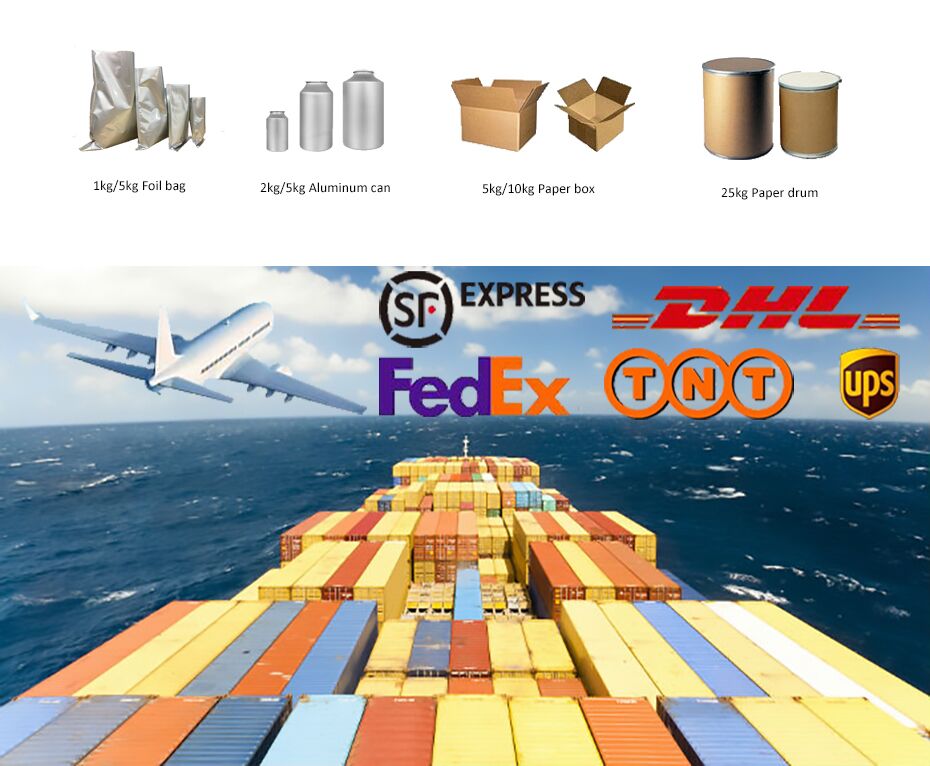
We ship finished products globally with temperature-controlled options, customs documentation, and Incoterms flexibility (FOB, CIF, DDP). Our logistics team manages freight forwarding, customs clearance, and last-mile delivery coordination.
Start Your GABA Product Development Today
Whether you need bio-fermented GABA raw material (99% or 20% purity), a custom sleep formula, or a complete private-label product line, we provide the sourcing, formulation, manufacturing, and regulatory support to bring your product to market.
Contact our team to discuss your project requirements, request a sample, or schedule a facility audit.
- Request a Bio-Fermented GABA Sample & CoA (99% or 20% spec)
- Schedule a Custom Formulation Consultation
- Get a Project Quote & Timeline
Yes. Bio-fermented GABA is our primary and recommended source, representing approximately 92% of global market share. We maintain direct supply relationships with established Japanese and Korean fermentation producers. We source both 99% purity (supplement-grade) and 20% purity (food-grade) specifications. Every lot is delivered with full CoA, identity verification, and traceability documentation.
Yes. Our in-house R&D team develops custom formulations across sleep, stress, cognitive, sports recovery, and functional beverage categories. We use bio-fermented GABA (99% purity) as our standard active ingredient. We validate every formula for stability, sensory acceptability, and manufacturing feasibility before production. You can start with one of our mature formulations or develop a fully proprietary stack.
We offer two primary bio-fermented GABA specifications: 99% purity for supplement-grade applications (capsules, gummies, tablets, powders) and 20% purity for food-grade applications and cost-optimized bulk formulations (beverage bases, food fortification). Both specs are FDA GRAS-compliant and sourced from qualified fermentation producers.
Our manufacturing facilities operate under cGMP (21 CFR Part 111) compliance. We hold relevant certifications including ISO 9001, HACCP, and NSF/GMP registration. Additional certifications (organic, kosher, halal, non-GMO) can be arranged based on your market requirements.
Yes. We produce pectin-based and gelatin-based gummies with sugar-free, reduced-sugar, and natural sweetener options (monk fruit, stevia, allulose). Sugar-free gummies are increasingly requested for sleep and kids’ calm formulations.
Yes. Bio-fermented GABA is highly water-soluble and stable across pH 3–7, making it ideal for RTD beverages, relaxation shots, and powder drink mixes. We offer both RTD manufacturing (10,000 L+ MOQ) and beverage powder blending with flexible MOQs. The 20% purity spec can be used for beverage-base concentrates to optimize cost.
MOQs vary by dosage form: capsules and gummies start at 3,000–5,000 units; powders at 500 kg for bulk and flexible for stick packs; RTD beverages at 10,000 L. Pilot runs of 500–1,000 units are available for formula validation and market testing.
Yes. We prepare regulatory dossiers for U.S. FDA (DSHEA structure-function claims, GRAS notification), EU (supplement notification, novel food assessment), Japan (FOSHU consultation), China (NHC new food ingredient), Canada (NHP), and Australia (TGA). Our regulatory team reviews label claims, allergen statements, and formatting before production.
Standard lead times are 6–8 weeks for first production runs and 4–6 weeks for repeat orders. Custom formulation development adds 2–4 weeks for R&D and stability protocol design. Expedited timelines are available for validated repeat orders.
Gamma-aminobutyric acid (GABA) is a four-carbon non-proteinogenic amino acid and the principal inhibitory neurotransmitter in the mammalian central nervous system. A comprehensive USP safety review (2021) found no serious adverse events at doses up to 18 g/day for short-term use or 120 mg/day for 12 weeks. Chronic rodent studies at 1 g/kg/day showed no toxicity. Some individuals may experience a transient, moderate blood pressure reduction.
Clinical trials reporting efficacy for sleep and stress have typically used 200–300 mg/day(99% spec), 500mg/day with 20% spec. For food applications, 100 mg per serving is a commonly recognized benchmark aligned with FDA GRAS notifications (GRN 595). We formulate within these evidence-based ranges and adjust for your target market’s regulatory maximums. Our 99% purity spec is used for precise supplement dosing; 20% spec is used for food fortification where higher inclusion rates are acceptable.
All claims, data, and regulatory references in this document are sourced from the following publicly available authorities:
- FDA GRAS Notice GRN 595 — Bio-Fermented GABA as food ingredient (100 mg/serving): https://cfsanappsexternal.fda.gov/scripts/fdcc/index.cfm?set=GRASNotices&id=595
- FDA GRAS Notice Inventory — Pharma Foods International filings: https://cfsanappsexternal.fda.gov/scripts/fdcc/?set=GRASNotices&sort=GRN_No&order=DESC&startrow=1&type=basic&search=Pharma%20Foods%20International%20Co.,%20LTD
- USP Safety Review of GABA (PMC/NIH, 2021): https://pmc.ncbi.nlm.nih.gov/articles/PMC8399837/
- Effects of Oral GABA on Stress and Sleep — Comprehensive Review (PMC/NIH): https://pmc.ncbi.nlm.nih.gov/articles/PMC7527439/
- GABA Sleep Mechanism & BBB Research (PMC/NIH, 2025): https://pmc.ncbi.nlm.nih.gov/articles/PMC12651798/
- Global GABA Market Report (Market.us, 2026): https://market.us/report/gaba-gamma-aminobutyric-acid-market/
- EU GABA Supplement Regulatory Framework (IndexBox, 2026): https://www.indexbox.io/store/european-union-gaba-supplements-market-analysis-forecast-size-trends-and-insights/
- FSAI Safety Assessment of BIOGABA® (Novel Food, EU): https://www.fsai.ie/getmedia/8c6b4a8a-3112-498c-a9f2-4f2cc545af53/final-biogaba-report.pdf
- ScienceDirect — GABA Overview & China Regulatory Status: https://www.sciencedirect.com/topics/agricultural-and-biological-sciences/gamma-aminobutyric-acid
- PharmaGABA® Clinical Data & Manufacturing: https://pharmagaba.com/
- PharmaGABA® Research Summary (Primacy): https://primacy.io/research-library/pharmagaba
- L-Theanine & GABA Synergy Review (University of Worcester): https://eprints.worc.ac.uk/8508/7/Psychotropic%20effects%20of%20L-theanine%20and%20its%20clinical%20properties%20Filipe%20Lopes%20Sakamoto%20et%20al.pdf