Supporting Product Development Decisions
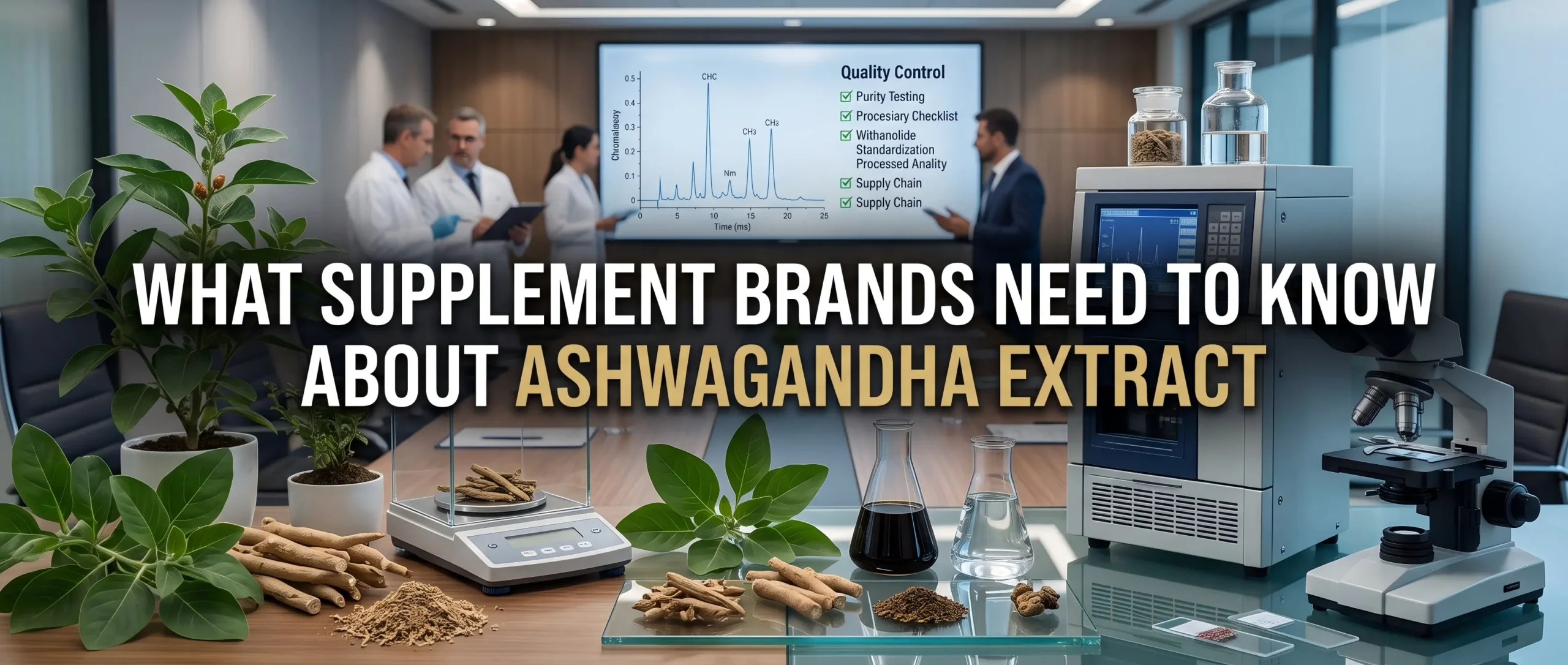
What supplement brands need to know to develop, position, and sell Ashwagandha products in 2025-2026
This page answers 8 critical questions for brand owners:
- Why do consumers buy Ashwagandha? → Product positioning
- Why do consumers return products? → Risk avoidance
- What finished product formats sell? → Format selection
- Which extract type should I choose? → Raw material strategy
- What do consumers discuss online? → Trend analysis
- What formulations are trending? → Product development
- What market trends matter? → Category strategy
- How do I position my brand? → Commercial decisions
1. Consumer Purchase Drivers
Understanding why consumers buy Ashwagandha products is the foundation of every product decision. The following insights are synthesized from Amazon 5-star reviews (US, UK, Canada), Reddit community discussions, and iHerb verified purchase data.
1.1 Sleep Support (Highest Frequency)
Sleep improvement is the #1 cited reason for purchase satisfaction. Consumers consistently report benefits after 2-4 weeks of consistent use.
Consumer Language from Reviews:“Fall asleep faster” | “Sleep through the night” | “Wake up refreshed” | “No more tossing and turning” | “Finally deep sleep again”
OEM Insight:Products positioned for sleep should emphasize sustained use (2-4 weeks) rather than immediate effects. Consider combining with Magnesium Glycinate or L-Theanine for enhanced sleep positioning.
1.2 Stress & Anxiety Management
The second most frequently cited benefit. Consumers describe a sense of calm without sedation, distinguishing Ashwagandha from pharmaceutical alternatives.
Consumer Language from Reviews:“Feel calmer” | “Less reactive” | “Not overthinking” | “I don’t overreact anymore” | “General sense of calm” | “Anxiety is manageable now”
OEM Insight:Stress positioning is the largest market segment. Avoid medical claims (“treats anxiety”). Use “stress support” and “helps maintain calm” as structure/function language.
1.3 Work Productivity & Mental Clarity
Office workers and knowledge professionals frequently mention cognitive benefits, describing an effect distinct from stimulant-based nootropics.
Consumer Language from Reviews:“Better focus” | “Mental clarity” | “Improved productivity” | “Clearer thinking” | “Not scattered anymore” | “Calmer mind, better work”
OEM Insight:This positions Ashwagandha as a caffeine alternative or complement. Pair with L-Theanine and Lion’s Mane for a cognitive stack targeting professionals.
1.4 Exercise Recovery & Physical Performance
Male consumers and fitness enthusiasts frequently cite recovery and strength benefits. KSM-66 products receive disproportionately high ratings in this category.
Consumer Language from Reviews:“Recovery is faster” | “Less sore after gym” | “Strength went up” | “Can train harder” | “Better endurance” | “KSM-66 is worth it for lifting”
OEM Insight:KSM-66 is the clear choice for sports nutrition positioning. Reference Wankhede et al. (2015) RCT on muscle strength. Combine with Creatine Monohydrate or Beta-Alanine.
1.5 Brand Trust & Quality Signals
A maturing consumer base increasingly reads labels critically. The following signals drive purchase confidence across all demographic segments.
Consumer Language from Reviews:“Third-party tested” | “Root only, not leaf” | “Standardized extract” | “Clinically studied ingredient” | “KSM-66 is the gold standard” | “Certificate of Analysis”
OEM Insight:Using branded, clinically studied ingredients (KSM-66, Sensoril, Shoden) provides immediate credibility. If using generic extract, emphasize third-party testing and withanolide standardization prominently on the label.
2. Consumer Complaint Analysis
Understanding why consumers return products is more valuable than understanding why they buy. Each complaint category below includes: the complaint pattern, its likely root cause, and an actionable OEM recommendation to prevent it.
Critical Statistic:The #1 reason for 1-star reviews is NOT side effects – it is ‘no noticeable effect.’ This is almost entirely preventable through correct ingredient selection and transparent labeling.
| Consumer Complaint | Likely Root Cause | OEM Recommendation |
| “Didn’t notice anything” | Root powder, not standardized extract; withanolides too low | Use ≥2.5% standardized extract; label withanolide % clearly; use branded extract (KSM-66/Sensoril) |
| “Too sleepy / fatigued” | Sensoril at high dose (>500mg) or taken during daytime | Include timing guidance (“evening use” for Sensoril); offer lower-dose option |
| “Anxiety got worse” | Idiosyncratic reaction in sensitive individuals; rare but documented | Add caution in FAQ; recommend starting with half dose; advise discontinuation if occurs |
| “Stomach upset / nausea” | Raw powder irritates GI; often taken on empty stomach | Use extract over raw powder; add “take with food” on label; consider enteric coating |
| “Headache” | Possible GABA modulation sensitivity; dehydration | Recommend adequate hydration; lower starting dose; discontinue if persistent |
| “Hair loss / hormone concerns” | Indirect thyroid interaction concerns; anecdotal reports increasing | Include balanced thyroid FAQ; advise consultation with healthcare provider |
| “Didn’t match claims” | Overhyped marketing (“stress relief in 3 days” / “boost testosterone”) | Use compliant structure/function claims only; set realistic 2-4 week expectation timeline |
The Preventable Complaint Pattern
Analysis of “no effect” complaints reveals that the vast majority involve products using raw ashwagandha root powder (0.1-0.5% withanolides) rather than a standardized extract (2.5-10% withanolides). Consumers see “1000 mg Ashwagandha” on the label and expect results, but without sufficient withanolide content, the product cannot deliver clinically meaningful effects.
Key Takeaway for Brands: Always use a standardized extract with a minimum 2.5% withanolides. Clearly state the withanolide percentage on the Supplement Facts panel. If using KSM-66 (5%) or Sensoril (10%), leverage the branded ingredient’s clinical validation in marketing materials.
3. Finished Product Market Overview
The Ashwagandha supplement market has matured. Product formats are now highly standardized across Amazon, iHerb, Walmart, and Costco. The following data guides format selection for new product development.
| Format | Market Share | Target Consumer | Strategic Fit |
| Capsules | 55-60% (Dominant) | All demographics | Mass market, easiest launch |
| Gummies | 20-25% (Fastest growth) | Women, 18-35 | Premium, social-friendly, DTC |
| Tablets | 10-12% | Value-conscious | Retail/Walmart, budget positioning |
| Powder | 5-8% | Fitness, biohackers | Sports nutrition, flexible dosing |
| Liquid Drops | 2-3% | Natural/organic seekers | Boutique, premium positioning |
Format Selection Matrix by Brand Strategy
- Mass Market Entry: Capsules (300- 600 mg KSM-66). Lowest MOQ, broadest appeal, simplest formulation.
- Female-Focused Brand: Gummies (100- 150 mg per gummy, 2-count serving). Higher margins, social media friendly, taste-driven repeat purchase.
- Sports/Fitness Brands: Powder (unflavored or flavored, 300- 600 mg per scoop). Stackable with protein, flexible dosing.
- Value/Retail Brand: Tablets (600 mg generic extract). Lowest cost per unit, Walmart/Costco channel appropriate.
- Premium/Wellness Brand: Liquid drops or liposomal. Boutique positioning, enhanced absorption claims.
4. Extract Landscape: KSM-66 vs Sensoril vs Shoden
Extract selection is the single most important product decision. Each standardized extract has distinct characteristics that determine optimal positioning, dosing, and target consumer. The following comparison is based on published clinical data, manufacturer specifications, and marketplace performance.
| Feature | KSM-66 | Sensoril | Shoden | Generic 5% |
| Plant Part | Root only | Root + Leaf | Root + Leaf | Variable |
| Withanolides | 5% | 10% | 35% | 5% |
| Typical Dose | 300-600mg | 125-250mg | 60-120mg | 300-600mg |
| Clinical Trials | 24+ RCTs | 12+ RCTs | 3+ RCTs | Variable |
| Best Positioning | Stress / Sports | Sleep / Calm | Cognitive / Premium | General / Budget |
| Price Tier | Premium | Premium | Ultra-premium | Economy |
Strategic Extract Selection Guide
Choose KSM-66 When:
- Target market: Stress management & sports nutrition
- Consumer profile: Broad demographic, male skew for fitness
- Key advantage: Largest clinical evidence base (24+ RCTs), strongest consumer recognition
- Positioning: “Clinically studied,” “Gold standard,” “Root-only traditional”
Choose Sensoril When:
- Target market: Sleep support & relaxation
- Consumer profile: Adults 35+, stress-focused, evening routine
- Key advantage: Higher withanolide concentration (10%), calming profile
- Positioning: “Sleep & calm,” “Double strength,” “Stress relief”
Choose Shoden When:
- Target market: Cognitive health & premium positioning
- Consumer profile: Biohackers, professionals, premium supplement buyers
- Key advantage: Ultra-high withanolides (35%), ultra-low dose (60-120mg), novel positioning
- Positioning: “Ultra-concentrated,” “Clinical strength,” “Next-generation”
Brand Positioning Matrix
| Tier | Extract Type | Target Price | Consumer Profile |
| Entry Level | Generic powder | $8-15/bottle | Price-sensitive, first-time buyers |
| Mass Market | 5% Standardized | $15-25/bottle | Mainstream wellness consumers |
| Premium | KSM-66 or Sensoril | $25-40/bottle | Quality-conscious, brand-loyal |
| Clinical | Branded + COA | $35-55/bottle | Evidence-driven, health-optimizers |
| Ultra Premium | Shoden or stack | $50-80/bottle | Biohackers, premium lifestyle |
Premium Strategy Insight:The market is moving upmarket. Entry-level generic extract products face commoditization and high return rates. Brands using clinically validated, branded extracts (KSM-66, Sensoril, Shoden) command higher price points, lower return rates, and stronger consumer loyalty.
5. Consumer Community Insights
Reddit discussions provide deeper consumer mindset insights than Amazon reviews. The following topics represent the most frequently discussed and emotionally charged subjects in r/Supplements, r/Nootropics, r/Biohackers, and r/PeterAttia. Each topic includes the community consensus and what it means for brand strategy.
Topic 1: KSM-66 vs. Sensoril – Which is best for My Goal?
The #1 recurring discussion. Users debate which extract fits specific goals: sleep, fitness, anxiety, or daytime focus. The emerging consensus is KSM-66 for daytime/sports and Sensoril for evening/sleep, though individual variation is frequently noted.
What This Means for Brands: Create comparison content on your product page. If you offer both extracts, provide clear guidance. If you offer one, explain why you chose it and for whom it is optimal. This content ranks well for SEO and reduces purchase hesitation.
Topic 2: Should I Cycle Ashwagandha?
The second most common question. Popular protocols include 8 weeks on / 2 weeks off and 12 weeks on / 4 weeks off. There is no clinical consensus, but the community increasingly favors periodic breaks to maintain sensitivity.
What This Means for Brands:Avoid “take every day forever” language. Consider cycle-friendly packaging (e.g., 60-capsule supply for an 8-week cycle). Include cycling suggestions in usage directions. This addresses a top consumer concern proactively.
Topic 3: Why Did Ashwagandha Stop Working?
Many users report initial strong benefits that weaken over time. Discussions center on tolerance vs. adaptation to a new stress baseline. Some users find that cycling restores effectiveness.
What This Means for Brands:Set realistic expectations in product descriptions. Explain that Ashwagandha works by supporting the body’s stress response systems, and that effects may stabilize as the body adapts. Position it as a wellness foundation, not a dramatic daily experience.
Topic 4: Emotional Blunting – The Growing Concern
One of the most controversial topics. Users describe: “I don’t feel stressed anymore… but I don’t feel excited either.” The term “emotional blunting” has become a recognized concern. A 2024 Cureus systematic review found no substantial RCT evidence, but anecdotal reports are frequent.
What This Means for Brands:Acknowledge this concern in your FAQ section. State that individual responses vary and recommend starting with a lower dose. Include guidance on when to discontinue. This transparency builds trust and preempts negative reviews from sensitive individuals.
Topic 5: Libido Effects – Highly Variable
Men frequently report increased libido; some women report decreased libido. The mechanism is unclear and responses are highly individual. This topic generates significant engagement but no consensus.
What This Means for Brands:Include a balanced statement in FAQs: “Individual responses to Ashwagandha vary, including effects on libido. Discontinue use if you experience any unwanted effects.” Avoid making libido claims in marketing unless supported by specific clinical data.
Topic 6: Best Brand – Daily Recommendations
“Best Ashwagandha brand” threads appear daily. Frequently recommended: NOW, Gaia, Nutricost, Life Extension, Nootropics Depot. KSM-66 and Sensoril are consistently preferred over generic extracts.
What This Means for Brands:Brand trust is increasingly important. Using a branded, clinically studied extract (KSM-66, Sensoril, Shoden) provides instant credibility. If using generic extract, invest heavily in third-party testing transparency and quality storytelling.
6. Trending Ingredient Combinations
The final question every brand owner asks: “What do I pair it with?” The following combinations are validated by marketplace sales data, Reddit community recommendations, and clinical rationale. Each combination includes the target consumer, positioning angle, and typical dosages.
| Combination | Target Use | Ashwagandha Dose | Positioning Angle |
| + L-Theanine | Calm focus | 300 mg KSM-66 | Stress + productivity, no drowsiness |
| + Magnesium Glycinate | Sleep support | 125 mg Sensoril | Deep sleep + muscle relaxation |
| + Rhodiola Rosea | Adaptogen synergy | 300 mg KSM-66 | All-day stress resilience |
| + Lion’s Mane | Cognitive health | 60mg Shoden | Mental clarity + nerve support |
| + Vitamin D3 | Immunity + mood | 300 mg KSM-66 | Winter wellness foundation |
| + GABA | Relaxation | 125 mg Sensoril | Evening wind-down formula |
| + Creatine | Sports recovery | 300 mg KSM-66 | Strength + recovery stack |
| + Saffron Extract | Women’s wellness | 300 mg KSM-66 | Mood + PMS support |
| + Apigenin + L-Theanine | Deep sleep | 125 mg Sensoril | Huberman-style sleep stack |
Emerging Combinations (2025-2026 Growth)
- Ashwagandha + Saffron Extract: Women’s wellness, mood support. Emerging clinical evidence for PMS and menopausal symptom support.
- Ashwagandha + Apigenin + L-Theanine: Sleep stack popularized by Huberman Lab protocol discussions. High engagement on social media.
- Ashwagandha + Tongkat Ali: Male vitality stack. Both ingredients are individually popular; combined targeting testosterone support positioning.
- Ashwagandha + Probiotics: Gut-brain axis positioning. Emerging research on adaptogen-gut microbiome interactions.
7. Market Trends 2025-2026
The following market trends are shaping the Ashwagandha category and directly impacting OEM product strategy. These trends are synthesized from industry reports, retail data, and consumer sentiment analysis.
Trend 1: Branded Ingredient Preference
Consumers are increasingly searching for specific extract brands (KSM-66, Sensoril, Shoden) rather than generic “Ashwagandha.” This mirrors the broader supplement market shift toward clinically validated, trademarked ingredients. Brands using generic extracts face commoditization pressure.
Strategic Implication: Budget for branded ingredients. Higher price points, lower return rates, and stronger consumer loyalty typically offset the cost premium.
Trend 2: Premiumization & Dosing Transparency
Consumers are moving beyond “how many milligrams?” to “how many withanolides?” Products that prominently display withanolide content (verified by HPLC) command premium pricing and generate higher review scores.
Strategic Implication: Always include the withanolide percentage on the Supplement Facts panel. Consider adding a QR code linking to the Certificate of Analysis for ultimate transparency.
Trend 3: Clean Label & Third-Party Verification
Third-party testing (NSF, USP, Informed Choice, BSCG) is increasingly expected, particularly for sports nutrition positioning. Clean label demands (non-GMO, vegan, gluten-free) are now table stakes.
Strategic Implication: Obtain relevant third-party certifications for your target channel. Amazon shoppers increasingly look for testing verification badges on product images.
Trend 4: Supply Chain Traceability
Origin stories matter. Consumers want to know where their ashwagandha is grown (India is preferred), how it is extracted, and whether farmers are fairly compensated.
Strategic Implication: If sourcing from India, include origin information on packaging. Ixoreal Biomed (KSM-66 manufacturer) provides detailed traceability documentation that brands can leverage in marketing.
Trend 5: Women’s Health & Hormone-Aware Positioning
Female consumers represent the fastest-growing Ashwagandha demographic. There is increasing interest in Ashwagandha for PMS support, menopausal wellness, and stress-related skin health. However, hormone interaction concerns are also most prevalent among this group.
Strategic Implication: Develop women-specific formulations (lower dose, combined with Saffron or Vitex). Include hormone balance FAQs with evidence-based, balanced language.
Trend 6: Subscription & Habit-Forming Formats
Gummies and stick packs drive higher subscription retention than capsules due to taste-driven habit formation. The daily ritual aspect creates stronger brand loyalty.
Strategic Implication:For DTC brands, prioritize gummy or flavored powder formats for subscription models. The repeat purchase rate is 30-40% higher than capsules for these formats.
8. OEM Product Development Insights
This chapter consolidates all intelligence into actionable product development guidance. Use this as a decision framework for Ashwagandha product launches.
8.1 Extract Selection Decision Tree
- Broad market, stress/sports focus, maximum credibility → KSM-66 (300-600 mg, 5% withanolides)
- Sleep/relaxation focus, calming positioning → Sensoril (125-250 mg, 10% withanolides)
- Cognitive/premium niche, ultra-concentrated positioning → Shoden (60-120 mg, 35% withanolides)
- Budget entry, value positioning → Generic 5% standardized extract (300-600 mg)
- Avoid: Raw root powder without standardization (highest return rate, lowest satisfaction)
8.2 Dosage Guidelines by Format
| Format | Serving Size | Active per Serving | Notes |
| Capsules (KSM-66) | 1-2 capsules | 300-600 mg | Most common; size 0 or 00 |
| Capsules (Sensoril) | 1-2 capsules | 125-250 mg | Higher concentration, smaller dose |
| Gummies | 2 gummies | 200-300 mg | Include natural flavor masking |
| Powder | 1 scoop (3-5g) | 300-600 mg | Unflavored or natural vanilla/cocoa |
| Softgels | 1-2 softgels | 300mg | Oil-based for enhanced absorption |
| Liquid Drops | 1-2 mL | 150-300 mg | Include pipette for precise dosing |
8.3 Label Claim Recommendations
- Primary Claims: Adaptogen / Helps maintain calm / Supports healthy stress response / Promotes restful sleep
- Avoid: Treats anxiety / Cures insomnia / Reduces cortisol (this is a measurement, not a claim) / Boosts testosterone
- Required Disclosures: Pregnancy/breastfeeding warning. Thyroid condition caution. Medication interaction advisory.
8.4 Quality & Testing Checklist
- Heavy metals: Pb <3ppm, As <1ppm, Cd <1ppm, Hg <0.3ppm (per USP <232>/<233>)
- Microbiology: TPC <5000 CFU/g, Yeast/Mold <300 CFU/g, E. coli negative, Salmonella negative
- Withanolide verification by HPLC with reference standards (withanoside IV)
- Identity confirmation by macroscopic, microscopic, or HPTLC fingerprinting
- Third-party testing certificate (NSF, USP, Eurofins, SGS)
8.5 Competitive Differentiation Strategies
- Transparency Leader: Full COA on website, QR code on bottle, origin story video
- Clinical Credibility: Use branded extracts with published RCTs, reference studies on packaging
- Format Innovation: First-to-market formats in your region (gummies in EU, liposomal in Asia)
- Stack Specialist: Curated combinations with synergistic ingredients (see Chapter 6)
- Cleanest Label: Organic certification, vegan capsule, zero fillers, non-GMO verified
Final Recommendation:The Ashwagandha market in 2025-2026 rewards quality, transparency, and clinical credibility over low pricing. Brands that invest in branded extracts, third-party testing, and evidence-based positioning will capture the growing premium segment and achieve lower return rates than commodity competitors.
Clinical Evidence & Regulatory Sources
- Chandrasekhar K, et al. A prospective, randomized double-blind, placebo-controlled study of safety and efficacy of a high-concentration full-spectrum extract of ashwagandha root in reducing stress and anxiety in adults. Indian J Psychol Med. 2012;34(3):255-262. PMID: 23439798
- Cheah KL, et al. Effect of Ashwagandha (Withania somnifera) extract on sleep: A systematic review and meta-analysis. PLoS One. 2021;16(9):e0257843. PMID: 34582491
- Bonilla DA, et al. Effects of Ashwagandha (Withania somnifera) on Physical Performance: Systematic Review and Bayesian Meta-Analysis. J Funct Morphol Kinesiol. 2021;6(1):12. PMID: 33670194
- Wankhede S, et al. Examining the effect of Withania somnifera supplementation on muscle strength and recovery. J Int Soc Sports Nutr. 2015;12:43. PMID: 26609282
- Lopresti AL, et al. An investigation into the stress-relieving and pharmacological actions of an ashwagandha extract. Medicine (Baltimore). 2019;98(37):e17186. PMID: 31517876
- Majeed M, et al. A standardized Ashwagandha root extract alleviates stress, anxiety, and improves quality of life. Medicine (Baltimore). 2023;102(41):e35521. PMID: 37832082
- Arumugam S, et al. Effects of Ashwagandha Supplements on Cortisol, Stress, and Anxiety Levels: A Systematic Review and Meta-Analysis. Explore. 2024. PMID: 39348746
- World Health Organization. Radix Withaniae. WHO Monographs on Selected Medicinal Plants, Volume 4. Geneva: WHO; 2009:373-391.
- European Medicines Agency. Withaniae somniferae radix. HMPC Assessment Report. https://www.ema.europa.eu/en/medicines/herbal/withaniae-somniferae-radix
- Health Canada. Ashwagandha – Withania somnifera. Natural Health Products Ingredients Database. https://webprod.hc-sc.gc.ca/nhpid-bdipsn/atReq?atid=ashwagandha
- U.S. Pharmacopeia. Ashwagandha Root; Powdered Ashwagandha Root Extract. USP-NF.
- KSM-66 Official Clinical Study Summaries. Ixoreal Biomed. https://ksm66ashwagandhaa.com/
Consumer Insight Sources
- Amazon Best Sellers: Best Ashwagandha. https://www.amazon.com/Best-Sellers-Ashwagandha/zgbs/hpc/23777928011
- Reddit r/Supplements – Community discussions on Ashwagandha cycling, tolerance, and brand comparisons (2024-2025)
- Reddit r/Nootropics – KSM-66 vs Sensoril vs Shoden community analysis (2024-2025)
- Reddit r/PeterAttia – Best ashwagandha supplement discussion. https://www.reddit.com/r/PeterAttia/comments/1pfc6uv/
- Amazon UK/US review analysis – 5-star and 1-star review pattern study (2024-2025)
Industry & Market Research
- Astute Analytica. Brain Health Supplements Market Report 2025-2035. https://www.astuteanalytica.com/industry-report/brain-health-supplements-market
- Sharper Human Journal. Ashwagandha Extract Types: KSM-66 vs Sensoril vs Shoden (2026). https://sharperhuman.com/journal/ashwagandha-extract-types-ksm-66-vs-sensoril-vs-shoden/
- Nootropics Depot. Sensoril vs KSM-66 vs Shoden comparison. https://nootropicsdepot.com/articles/ashwagandha-sensoril-vs-ksm66-/
- Strom Sports. KSM-66 vs Sensoril vs Shoden technical comparison (2021). https://stromsports.co.nz/blogs/news/about-ashwagandha-and-the-differences-between-ksm-66-sensoril-and-shoden-ashwagandha-extracts
- Cureus. Ashwagandha Comprehensive Review (2024). DOI: 10.7759/cureus.5797