Jujube Seed Supplements Manufacturing at a Glance
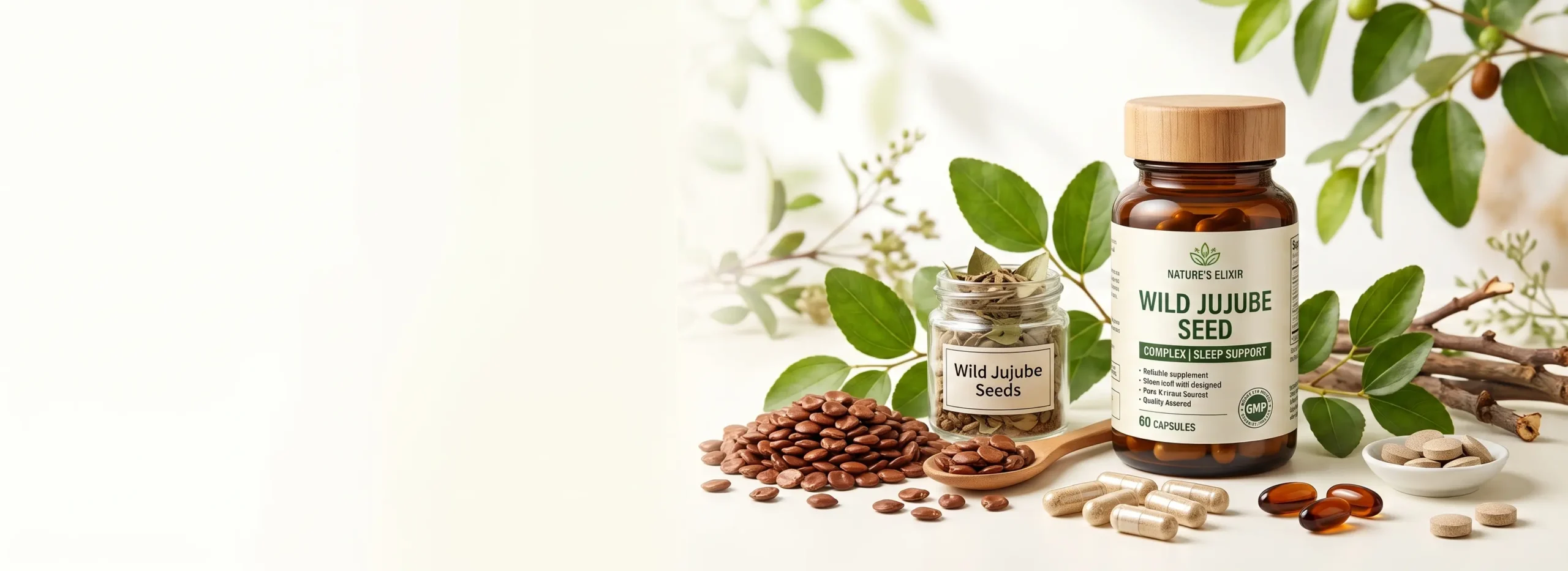
KS Nutripharma® is a jujube seed supplement manufacturer for OEM, ODM, and private-label programs. We manufacture finished dietary supplements from Ziziphus spinosa seed (wild jujube seed, suanzaoren, Ziziphi Spinosae Semen) for sleep-support assortments. Primary format is standardized seed-extract capsules; tablets, powders/sticks, and selected combination formulas follow feasibility review.
The key procurement issue is raw-material identity. Wild jujube seed is not jujube fruit and not date. We lock species, plant part, roast status, marker specification, and assay method before sampling.
Send your jujube seed specification · Compare two jujube seed COAs · Request OEM / ODM feasibility
cGMP · ISO 9001 · ISO 22000 · HACCP · FSSC 22000 · Halal · Kosher · in-house lab + SGS / Eurofins as scoped
Typical first reply is one business day on a complete brief. An NDA is available.
Procurement Snapshot
Item | Typical project answer |
|---|---|
| Material | Z. spinosa seed extract (not fruit, not Phoenix date) |
| Marker | Named jujuboside and/or spinosin + method |
| Primary format | Hard capsules |
| Capsule MOQ | About 3,000–5,000 units |
| Sample | 7–15 days after specification and material confirmation |
| Production | 30–45 days after formula, artwork, pack, and schedule lock |
| Documentation | Spec · batch COA · safety panel as required for the destination |
Wild Jujube Seed Formula Solutions
Starting architectures for a seed-led herbal evening SKU. Kampo prescriptions and insomnia-treatment SKUs are not quoted. Melatonin-free paths are the single-extract, theanine, and GABA pairs. Pick the closest architecture or send a BOM.
Use when: One seed extract, fast launch, melatonin-free botanical start.
Specify: Z. spinosa seed; extract mg (solo talk often 200–400 mg—fill window); named saponin % + HPLC.
Trade-off: A second flavonoid release line is a dual-assay file. Theanine is a second SKU. A higher % is a cost choice, not a better conversion.
Default format: Hard capsule.
Use when: The label or the QC file will print both saponins and the flavonoid analyte.
Specify: Two analytes, two methods, two bases (as-is or dry). Extract mg still named.
Trade-off: More assay cost and a tighter supplier file than a single saponin release. Still a single-herb seed SKU, not a valerian pair.
Default format: Hard capsule.
Use when: The channel sells a quiet-mind / racing-thoughts evening SKU and the brief omits melatonin.
Specify: Seed assay file + L-theanine mg and purity.
Trade-off: GABA is the onset-amino pair; magnesium is the mineral pair. Theanine plus magnesium is a separate BOM.
Default format: Hard capsule.
Use when: The onset line needs GABA as the named amino companion.
Specify: Seed file + GABA identity and mg. A branded GABA grade prints only with a license the brand owner holds.
Trade-off: Theanine is the quiet-mind pair. GABA claims need destination review in some markets.
Default format: Hard capsule.
Use when: The buyer already holds a European-style evening pair: valerian root plus jujube seed.
Specify: Seed assay + valerian V. officinalis root / rhizome + named valerenic acids. Odor sits on the valerian side.
Trade-off: A cleaner single-herb panel stays seed-only. Residual-drowsiness copy follows the valerian file. Hops, if wanted, is a named third identity: hops extract.
Default format: Hard capsule.
Use when: The evening SKU needs a mineral companion.
Specify: Seed file + magnesium bisglycinate salt and elemental Mg. “500 mg bisglycinate” is a salt weight, not 500 mg magnesium.
Trade-off: Amino positioning is theanine or GABA. Salt bulk often forces two capsules or a tablet.
Default format: Hard capsule or tablet.
Use when: The assortment already runs tart cherry and the brief wants an all-night / anthocyanin-adjacent twin.
Specify: Seed assay + tart cherry P. cerasus / anthocyanin file.
Trade-off: Red date is the fruit-powder twin. Melatonin milligrams go on the BOM only when the destination allows it.
Default format: Hard capsule or stick.
Use when: An East-Asian blood/qi concept needs red date on the ingredient list.
Specify: Seed extract + assay on its own line; fruit powder or concentrate powder on a second line (Z. jujuba fruit). A single “jujube blend 800 mg” is incomplete.
Trade-off: Fruit adds sweetness and stick mouthfeel. It does not supply the flavonoid assay. Suanzaoren Tang (five herbs) and Guipi Tang (ten herbs) are scoped customer BOMs.
Default format: Hard capsule or flavored stick.
Choose the Jujube Seed Format: Capsules, Tablets, Powder, Gummies or Softgels
Dry seed extract is mildly bitter, slightly oily, and hygroscopic. Tea, tincture, and drops are quoted as scoped files.
Best for: Default jujube seed capsule manufacturer path when the extract and one companion share a dry unit.
Manufacturing note: Lock HPMC vs gelatin, size 00 / 0 / 1, extract load, and moisture-control pack. Flow aids are normal. A vegetarian softgel is a different shell system from HPMC.
Best for: When mineral bulk or higher fill weight will not fit one capsule.
Manufacturing note: Lock tablet weight, coating, and disintegration for that coat. Re-validate a capsule BOM before a press run. Weight variation is a QC item on hygroscopic botanicals.
→ Tablets
Best for: A retail gummy after heat and water-activity review.
Manufacturing note: Cook heat moves saponins. Incoming extract % does not establish finished-piece potency. Lock extract mg per piece, pectin vs gelatin, and whether a release analyte will be printed.
→ Gummies
Best for: Evening drink mix when fruit powder or tart cherry needs gram-level room.
Manufacturing note: Lock mesh, stick vs jar, water activity, and whether any assay % will be printed. Extract mg and seed-powder mg are different lines. A 300 mg extract serving and a 2 g fruit-powder serving are different fills.
Best for: Named seed-oil fills only.
Manufacturing note: Softgel needs an oil phase. Dry extract stays in a two-piece shell or a tablet. Lock oil mg, oxidation file, and light-barrier pack.
Two “2% jujuboside” offers are not equivalent purchase specifications until species, plant part, roast status, analyte, and method match. As-is vs dry basis, DER, and whether the filled unit will be assayed belong on the same comparison.
Seed, fruit, and date are three purchase orders
| What the brief says | What the drum actually is | This OEM page |
|---|---|---|
| Wild jujube seed / suanzaoren / Z. spinosa seed | Acid jujube seed | Finished seed supplement |
| Jujube fruit / red jujube / Z. jujuba fruit | Red-date fruit | Companion line only, with its own milligram line |
| Date / date seed | Often Phoenix dactylifera | Separate material |
| “Jujube” with no plant part | Unspecified | Cannot be quoted until seed or fruit is named |
Print species, plant part, and whether milligrams are extract, powder, or oil. A bare “Jujube 500 mg” line is incomplete.
Species, roast, and identity
Default conversation: Ziziphus jujuba Mill. var. spinosa / Z. spinosa seed (Ziziphi Spinosae Semen). Open-market stand-ins include Z. mauritiana (理枣仁) and Z. yunnanensis (滇枣仁). Both can produce a saponin or flavonoid peak. Neither is a cheaper spinosa seed. A UV “2%” on a stand-in is still a stand-in.
If origin will be printed, name the province the supplier file supports. Origin does not guarantee a 2% jujuboside result.
Identity may be confirmed by HPTLC or HPLC characteristic profiles against an approved spinosa seed reference, with DNA or additional marker analysis when the raw-material risk assessment requires it.
Raw (生) and roasted (炒) seed are different extracts. Roast changes stick flavor, extraction behavior, and the chromatogram some buyers expect for a traditional processing story. An untitled “seed extract 2%” with no roast line cannot be priced against another untitled 2%.
Extract, seed powder, and seed oil
| Route | What the panel can print | Not the same specification |
|---|---|---|
| Standardized extract | Extract mg + named % + method | Fruit powder |
| Dual-assay extract | Each analyte with its own method | One blended “jujube %” |
| Seed powder | Seed mg + identity | A 2% saponin grade |
| Seed oil | Oil mg; softgel only when the fill is oil | A dry-extract capsule |
Name the extraction solvent (water, or a listed food-grade ethanol cut). Residual solvent follows the destination file. DER (for example 10:1) is a starting-material ratio, not assay potency. Quote DER and assay as separate fields.
Chinese Pharmacopoeia Ziziphi Spinosae Semen is an identity conversation for the crude seed. It is not a 2% commercial-extract catalog.
Solo extract talk often sits around 200–400 mg extract per serving. Seed-oil servings are oil mg. Seed-powder servings are powder mg. A decoction load and a capsule load are different architectures.
A jujuboside brief and a spinosin brief are different release files. Total jujubosides, jujuboside A, and jujuboside B are not interchangeable labels for the same %.
Specification | What it means |
|---|---|
| UV total saponins ~2% | Broad saponin assay; not equivalent to jujuboside A |
| HPLC jujuboside A (or A+B) | Named marker with a defined method |
| HPLC spinosin | Separate flavonoid marker; print only when the label or QC file asks |
| DER 10:1 | Extraction ratio, not assay potency |
Assay math: extract mg × named % = active mg when the % is the same analyte and the capsule is assayed after blend and fill. Example: 300 mg extract × 2% = 6 mg if that 2% is the agreed definition and the filled unit still tests to it.
A drum COA and a capsule label are different documents. How to Read a COA.
Check | What we lock |
|---|---|
| Identity | Z. spinosa / Ziziphi Spinosae Semen, seed |
| Assay | Named analyte, method, as-is or dry basis |
| Adulteration file | Characteristic peaks; DNA when the risk file asks. Color is not identity |
| Safety | Micro, metals, pesticides; seed aflatoxin; residual solvent; residual fumigants where the destination requires them |
| Finished unit | Fill weight, moisture, disintegration, label-potency assay when a % is printed |
Incoming qualification covers identity, roast as named, moisture, mesh, and assay against the approved method. Safety fields follow the destination file. Incoming acceptance is not label potency on the filled unit.
Hold sealed drums dry and away from prolonged heat. Marker retention is checked on the stability program when a % is printed. Oil SKUs add an oxidation file.
Pack. Default capsules and tablets: HDPE or PET + induction seal + desiccant. Humid export: Alu-Alu or high-barrier blister. Sticks after flavor and Aw review. Light-barrier for oil.
R&D center · Quality control · Manufacturing capacity · Certifications
Regulatory classification must be confirmed for the specific ingredient, extract specification, dosage form, and destination market before commercialization. A manufacturing quote is not legal approval. Brand-owner counsel owns the finished label.
United States. Oral dietary-supplement programs are discussed as structure/function, not disease treatment. Copy we will not print includes treats insomnia, cures sleeplessness, and Kampo-drug indications. Prop 65 lead may be relevant on herbal files. Name melatonin on the BOM before artwork if it is in scope.
European Union. Classification can differ by member state (food supplement, traditional herbal medicinal product, or a Novel Food question where applicable). Documentation is required before commercialization. Quotes do not describe the ingredient as “EU-approved.” Residual-fumigant testing is scoped to the destination file.
Japan. Food versus pharmaceutical classification for 酸棗仁 / サンソウニン must be reviewed with the brand owner’s counsel before a functional-food export is priced. Kampo granules are scoped projects.
Canada NHP and Australia: send the product class on the brief. We manufacture to the approved file.
OEM: locked spec or BOM → material qualification → sample → production.
ODM: channel, architecture or a named BOM, format, destination → approved extract specification → sample → production. A concept brief is enough to start an ODM review.
Tablet planning typically starts around 5,000–10,000 units. Powder / stick often from about 10,000 units after film and flavor lock. Gummies and oil softgels after feasibility. Ask for current MOQ against the dosage form.
What to send. Destination market and product class. Plant part = seed. Roast status. Assay specification (analyte + HPLC or UV). Solvent if extract. F01–F04 or a BOM. Format. Melatonin yes/no. Two incumbent COAs if you have them. Quantity.
Example RFQ. Ziziphus spinosa seed extract, [raw / roasted], solvent [water / x% food-grade ethanol], [analyte]% by [HPLC/UV], [___] mg per capsule, 60 ct HPMC, destination [named market and class], architecture [F01–F04 or BOM], melatonin [no / yes if the destination allows], first order [qty].
Is wild jujube seed the same as jujube fruit or dates?
No. This OEM page is Z. spinosa seed. Fruit is a second milligram line when wanted. Date usually means Phoenix dactylifera.
If both COAs say 2%, which one do I buy?
Ask which analyte and which method. UV total saponins ~2% is not HPLC jujuboside A. Recalculate active mg from extract mg × the named %. Then decide whether the filled capsule will be assayed.
Should I specify raw or roasted for a capsule vs a stick?
Capsules usually follow the HPLC file you already hold. Sticks that will taste the powder should name roast. If artwork prints “roasted seed,” the drum must match.
Can you make a melatonin-free formula?
Yes. Unless the BOM adds melatonin after the destination class allows it.
Can you work with my existing jujube seed extract supplier?
Yes. Send the incumbent COA. We qualify identity, roast, named assay, moisture, mesh, and the destination safety panel, then fill. Label potency on the filled unit is still a separate release if a % is printed.
Can you develop a jujube seed formula from a concept rather than a finished BOM?
Yes. Send destination, serving target, format, and whether the SKU is seed-only or a named companion. We lock the extract specification before sampling.
Can you copy Suanzaoren Tang?
The five-herb decoction is a scoped customer BOM plus destination review. Guipi Tang follows the same rule.
What should I include in an RFQ?
Destination and product class; Latin name and plant part; roast; assay specification or two COAs; solvent if extract; F01–F04 or a BOM; format; quantity.
Ready to Manufacture Your Jujube Seed Supplement?
Send the intended market, Z. spinosa seed (not fruit), roast status, labeled extract milligrams, and the assay line you will print—analyte plus HPLC or UV. A finished formula is not required to start. If two supplier sheets both say “2% jujuboside,” send both; we check species, roast, method, and whether filled-unit potency is in release. Melatonin stays off the BOM unless the destination allows it. Typical first reply is one business day on a complete brief. An NDA is available.
Have two COAs? Compare two seed COAs
Have a seed spec or BOM? Send a seed spec
Related Product Pages
- Valerian Supplement Manufacturer
- L-Theanine Supplements
- GABA
- Magnesium Bisglycinate Supplements
- Tart Cherry Supplement Manufacturer
- Lemon Balm Supplement Manufacturer
- Passionflower Supplement Manufacturer
- Hops Extract Supplement Manufacturer
- Ashwagandha Supplements
- How to Read a COA
Compare two seed COAs · Request melatonin-free feasibility · Request a packaging review
Disclaimer: Wholesale / brand manufacturing reference. Not intended to diagnose, treat, cure, or prevent any disease. Not an insomnia drug, Kampo drug, or a red-jujube fruit SKU. Structure/function follows destination counsel. Milligrams and marker percentages are development examples. Novel Food / Japan medicinal-list status must be confirmed for that market. Brand owners remain responsible for finished-label compliance with local counsel. KS Nutripharma provides manufacturing feasibility and documentation support — not legal approval.
Written by KS Nutripharma Formulation Team | Reviewed by KS Nutripharma Director of R&D (PhD, Food Science | 19+ years nutraceutical development) | Updated September 2026