1. Executive Summary (30-Second Formulation Guide)
Question | Quick Answer |
|---|---|
| Typical formulation dose band | 5–30 mg/day in many commercial and clinical designs [1][2] |
| EU supplement ceiling | Up to 30 mg/day for general population (exclusions apply) [4] |
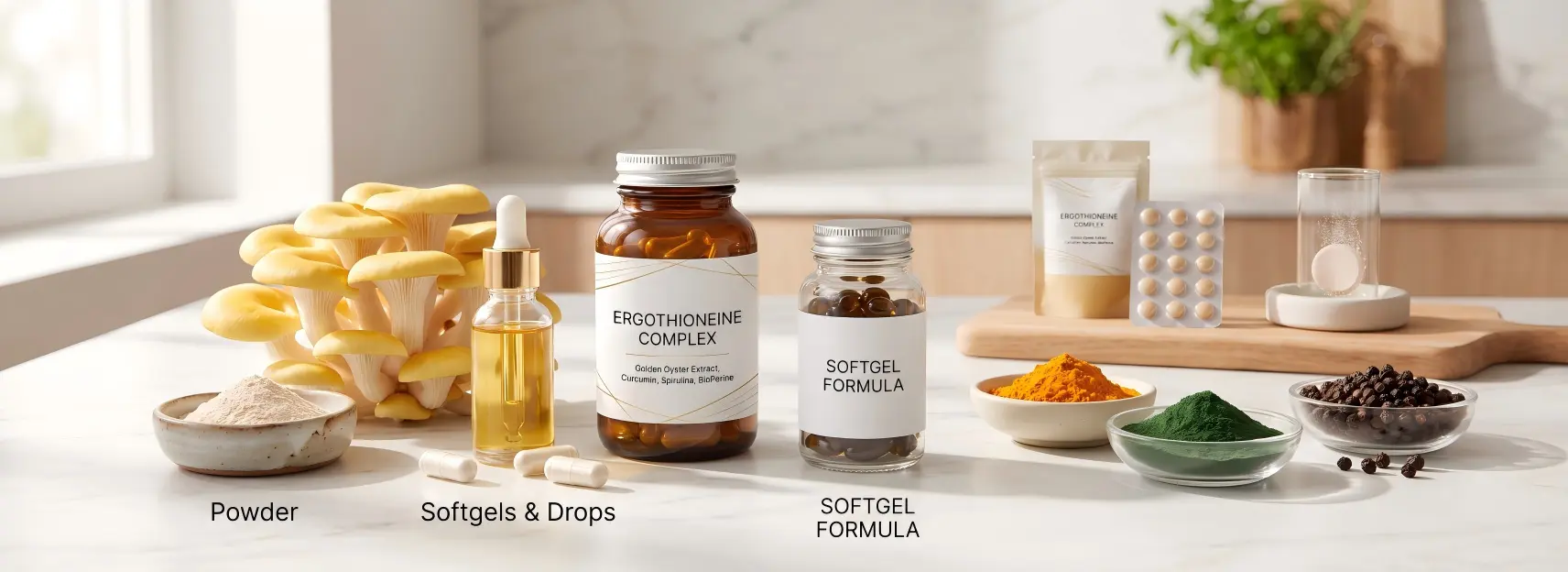
| Common dosage forms | Capsules, tablets, powders/sticks, gummies, functional beverages |
| Heat behavior | Generally suitable for standard supplement processing; validate each process |
| Solubility | Highly water-soluble (~46–50 mg/mL at 25°C in referenced specs) [3] |
| Flavor impact | Usually low at typical use levels; co-ingredients often drive masking need |
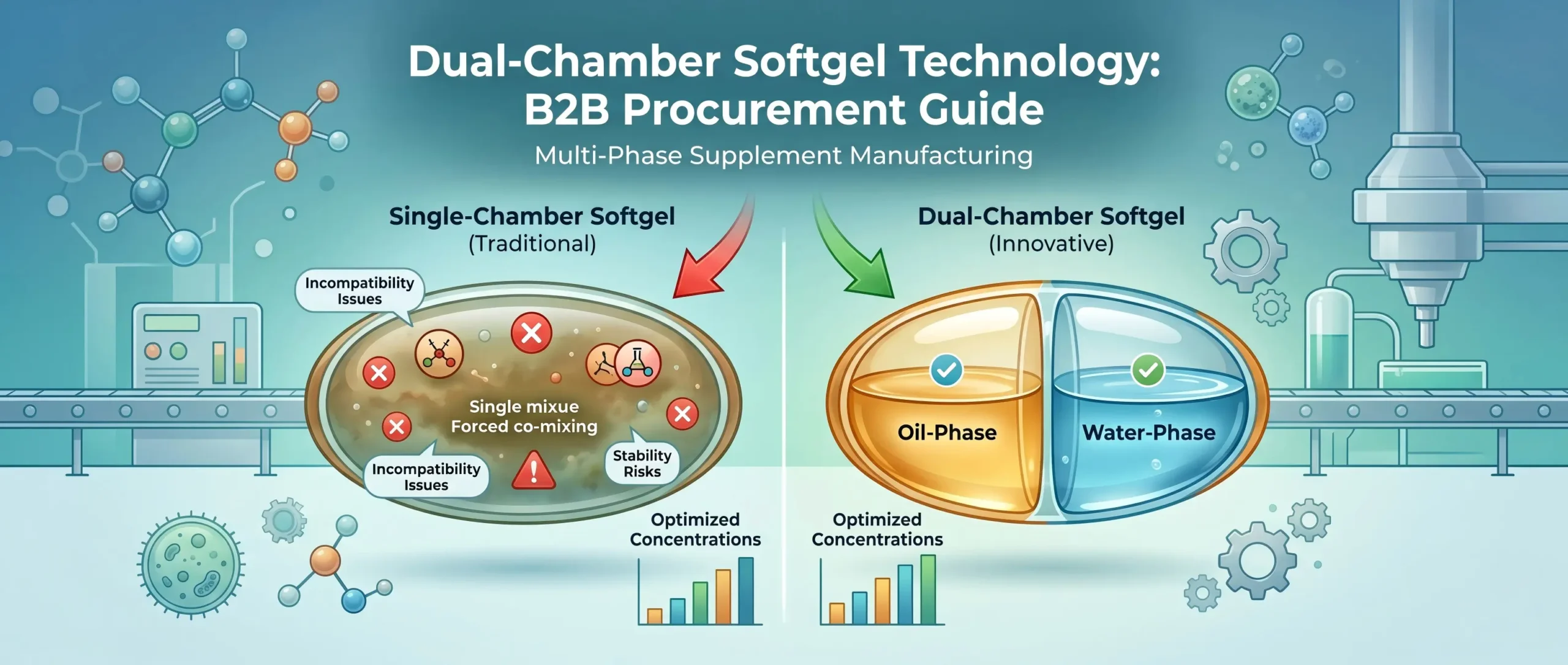
| Softgels | Generally not preferred for uncomplexed hydrophilic powder |
Regulatory snapshot (orientation only):
- EU Novel Food: L-ergothioneine authorized; food supplements up to 30 mg/day (general population, excluding pregnant/lactating women) and 20 mg/day for children older than 3 years [4]
- U.S. FDA GRAS notices: Multiple notices cover defined food uses (examples: GRN 734, GRN 1191, GRN 1270). Use levels are notice-specific (for example, GRN 734/1191 include 5 mg/serving food uses; GRN 1270 includes intended use levels up to 150 mg/100 g in specified food categories)—not a universal “150 mg per supplement serving” rule [6][7][8]
- Canada / other markets: Confirm current Natural Health Product / local pathway limits before locking dose
Ergothioneine’s thione tautomer contributes to greater resistance to auto-oxidation and comparatively strong thermal/chemical stability versus many biological thiols such as glutathione, supporting conventional dry-dose manufacturing when process controls are validated [9][10].
Key Takeaways
- Capsules remain the most practical dosage form for most ergothioneine products.
- Powders and RTDs benefit from ergothioneine’s water solubility.
- Gummies require additional validation for thermal processing and shelf-life retention.
- Ingredient compatibility should be confirmed during pilot manufacturing.
- Finished-product stability—not raw-material stability—determines commercial shelf life.
- EU Novel Food ceilings and claim rules (including Regulation (EC) No 1924/2006) must be checked before artwork freeze [4][13].
How Our Formulation Recommendations Are Developed
Input | Role in This Guide |
|---|---|
| Commercial formulation experience | Format selection, fill constraints, stack practicality |
| Peer-reviewed literature | Physicochemical and human-dose context [1][2][9][10] |
| Pilot manufacturing observations | Uniformity, process loss, sensory risk |
| GMP production expectations | Release testing, documentation, change control |
| Stability testing practice | ICH-aligned shelf-life logic [11] |
| Regulatory review | Novel Food / GRAS / claims pathway orientation [4][6][7][8][12][13] |
| Customer project feedback | Recurring failure modes and OEM bottlenecks |
Preprints are treated as preliminary / emerging only and are not used as core dose-design authority.
Formulation Decision Tree
What product are you developing?
                │
        ┌───────┼────────┬──────────┐
        │       │        │          │
     Capsule  Powder   Beverage   Gummy
        │       │        │          │
   Low-dose? Stick/     Acidic /   Cook temp
   need MCC    scoop     pasteurize  & aw risk
   premix?     control   validated? validated?
        │       │        │          │
        └───────┴────────┴──────────┘
                        │
                 Need a stack?
                        │
              Yes → Compatibility Matrix
              No  → Lock single-ingredient formula
                        │
              Regulatory Matrix (market ceiling + claims)
                        │
              Packaging Decision Guide
                        │
              Prototype Validation Checklist
                        │
              Pilot → Scale-up → Commercial
Formulation Selection Matrix
Product Goal | Best Format | Why |
|---|---|---|
| Daily wellness | Capsule | Lowest complexity, highest stability, lowest cost |
| Longevity / cellular | Capsule | Easy stacking with NMN, CoQ10, PQQ when disclosed |
| Beauty-from-within | Powder/stick | Easy collagen + vitamin C combinations |
| Sports recovery | Stick pack | Creatine/electrolyte compatibility and convenience |
| Functional beverage | RTD | High water solubility; requires thermal validation |
| Premium moisture-sensitive SKU | Capsule + blister | Unit-dose barrier and travel durability |
| Mass retail cost focus | Tablet | Efficient compression at scale |
| Lifestyle compliance SKU | Gummy | High preference; highest process/stability burden |
Relative Manufacturing Cost & Complexity
Format | Manufacturing Complexity | Relative Cost |
|---|---|---|
| Capsule | Low | $ |
| Tablet | Low | $ |
| Powder/stick | Medium | $$ |
| Gummy | High | $$$ |
| RTD | Very High | $$$$ |
2. Understanding Ergothioneine as a Functional Ingredient
Parameter | Value |
|---|---|
| Name | L-Ergothioneine / Ergothioneine |
| CAS | 497-30-3 |
| Molecular formula | C9H15N3O2S |
| Molecular weight | 229.30 g/mol |
| Appearance | White to off-white crystalline powder |
| PubChem CID | 5351619 [3] |
2.1 Chemical Properties
L-ergothioneine is a sulfur-containing histidine derivative. Its imidazole thione–thiol tautomerism favors the more stable thione form under physiological conditions—central to antioxidant behavior and manufacturing robustness [9][10].
2.2 Water Solubility
- Water: approximately 46–50 mg/mL at 25°C (specification-dependent) [3]
- PBS (pH 7.2): approximately 10 mg/mL in referenced conditions
- Aqueous solutions are typically colorless and transparent
- Sparingly soluble in ethanol, DMSO, and DMF
Supports RTDs, stick packs, and reconstitution powders when flavor systems and pH are controlled.
2.3 pH Stability
Published food-science and formulation practice commonly treat beverage systems around pH 2.8–3.6 as feasible with retention validation. Many teams target finished-product buffering near pH 4.0–7.0 for broader matrix robustness. High-pH systems (>8) deserve extra hydrolysis and assay monitoring.
2.4 Oxidation Resistance
Ergothioneine resists auto-oxidation relative to many thiols, scavenges multiple reactive species, and can chelate divalent metal cations—useful for antioxidant positioning, but also a reason to evaluate interactions with copper/iron salts in aqueous systems [9][10].
2.5 Thermal Stability
Anhydrous material is reported to decompose at roughly 275–277°C. Standard drying, granulation, and compression temperatures are typically far below this threshold. Prolonged aqueous heating, pasteurization, UHT, and gummy cook steps still require format-specific assay retention studies.
2.6 Hygroscopicity and Flowability
High-purity grades (often 98–99.5% HPLC) are typically free-flowing crystalline powders. Confirm COA particle-size and moisture limits for direct compression/capsule fill. Storage guidance is supplier-specific; sealed, cool, dry conditions are baseline—follow the COA.
Technical Property Summary
Property | Typical Reference Range |
|---|---|
| Water solubility (25°C) | ~46–50 mg/mL |
| PBS solubility (pH 7.2) | ~10 mg/mL |
| Decomposition | ~275–277°C |
| Working pH focus | Validate across intended matrix; often design near 4.0–7.0 |
| Particle size (example) | e.g., 95% pass 80 mesh (confirm COA) |
| Storage | Sealed, cool, dry; follow supplier COA |
3. Choosing the Right Dosage Form
3.1 Capsules
Most common commercial format.
- Fits 5–30 mg easily in Size 0–00 fills
- Gelatin or HPMC shells both viable
- HPMC often preferred for lower shell moisture and vegetarian positioning
- Desiccant canisters and induction seals recommended for multi-ingredient formulas
3.2 Tablets
Direct compression or wet granulation both viable when flow/compressibility are confirmed.
- Typical hardness target example: 4–7 kp
- Immediate-release disintegration target example: ≤30 minutes
- Compatible with MCC, DCP, mannitol, PVP/HPMC binders, CCS/SSG disintegrants, magnesium stearate lubricants
3.3 Powder Sticks and Sachets
Strong fit for sports, longevity stacks, and convenience SKUs.
- Rapid aqueous dissolution
- Low native flavor impact at typical mg levels
- Use aluminum-laminated moisture-barrier film
- Premix low-dose active to protect content uniformity
3.4 Gummies
Feasible with process discipline.
Challenges: cook temperature, water activity, acidulants, co-ingredient flavor.
Practical controls:
- Add ergothioneine during cooling (<60°C) when process allows
- Prefer lower-temperature gelling systems when possible (e.g., pectin routes)
- Validate assay after cook, cure, and shelf storage
- Do not assume bulk powder shelf life equals gummy shelf life
3.5 Functional Beverages and RTDs
Strong physicochemical fit due to solubility and clear solutions.
- Validate pasteurization / UHT retention under real pH, time, temperature, and matrix
- Consider amber/opaque packs for finished-goods risk control
- Confirm flavor and acidulant interactions in pilot sensory + assay panels
3.6 Softgels
Generally not recommended for uncomplexed hydrophilic ergothioneine powder in oil fills.
Softgels may be considered only with validated emulsified/complexed delivery designs. For most projects, capsules/tablets are more manufacturable and cost-efficient.
Dosage Form Comparison
| Dosage Form | Stability Outlook | Manufacturing Ease | Relative Cost | Best For |
|---|---|---|---|---|
| Capsules | Excellent | High | Low–Medium | Daily wellness / healthy aging |
| Tablets | Excellent | High | Low | Mass-market daily use |
| Powder sticks | Good | Medium | Medium | Sports, stacking, convenience |
| Gummies | Moderate | Lower | Higher | Lifestyle compliance SKUs |
| RTD beverages | Good | Lower | Higher | Premium functional drinks |
| Softgels | Conditional | Lower | Higher | Specialty complexed systems only |
Requires moisture-barrier packaging. Requires thermal-process validation.
4. Recommended Ergothioneine Dosage by Product Positioning
This section is for product development and regulatory planning, not consumer self-treatment. Full clinical serving design: Ergothioneine Dosage.
Human studies and commercial designs commonly cluster around 5–30 mg/day [1][2]. Match destination-market ceilings before artwork freeze.
| Product Positioning | Suggested Formulation Band | Notes |
|---|---|---|
| Healthy aging / cellular | 10–25 mg/day | Align with densest older-adult / longevity commercial band |
| Cognitive support concepts | 10–25 mg/day | Match disclosed daily serving; avoid disease claims |
| Eye-health concepts | 5–15 mg/day (concept-dependent) | Keep claims structure/function; validate stack doses separately |
| Immune wellness concepts | 5–10 mg/day | Often part of multi-nutrient formulas |
| Sports recovery concepts | 10–20 mg/day | Powder/RTD formats common |
| Beauty-from-within concepts | 10–30 mg/day | Use peer-reviewed / commercial precedent cautiously; treat preprint skin data as preliminary only |
| Stress / daily wellness concepts | 5–10 mg/day | Entry SKUs and stacks |
Always keep total daily intake inside applicable local limits (for example, EU 30 mg/day supplement ceiling) [4]. For EU claim language on beauty/immune/eye concepts, also review Regulation (EC) No 1924/2006 [13].
Ingredient Loading Limits (Practical)
| Format | Typical Fill / Serving Capacity | Practical EGT Loading |
|---|---|---|
| Size 0 capsule | ~400–500 mg fill (excipient-dependent) | Easily accommodates typical 5–30 mg EGT doses |
| Size 00 capsule | Higher fill capacity | Useful for multi-active stacks |
| Tablet | Tooling/hardness dependent | EGT dose usually not limiting; companions are |
| Stick pack | Often 2–10 g total powder | No practical EGT limitation at typical doses |
| Gummy | Matrix-dependent piece weight | Validate dispersion, cook loss, and shelf retention |
| RTD | Per-bottle volume dependent | Solubility rarely limiting; process retention is |
Regulatory Considerations by Market
Orientation only—confirm current local counsel guidance before commercialization.
Region | Ingredient Status | Maximum Supplement Level (high level) | Key Notes |
|---|---|---|---|
| European Union | Novel Food (L-ergothioneine) [4][12] | 30 mg/day general population (exclusions apply); 20 mg/day children >3 | Claims also governed by Regulation (EC) No 1924/2006 [13] |
| United States | GRAS notices for defined food uses [6][7][8] | Product-/notice-specific; not a single universal supplement RDA | Match intended use to applicable notice; DSHEA claim discipline for supplements |
| United Kingdom | Novel food pathway (confirm continuity) | Do not assume EU text auto-transfers | Local authorization check required |
| Canada | Natural health products/food pathway depends on class | Confirm current NHPID / licence expectations | Dose and claim pathway can differ from U.S./EU |
| Australia / New Zealand | TGA / FSANZ pathway by product class | Review ARTG / novel food expectations | Local assessment before launch |
| Japan | Foods with function claims / related pathways vary | Company responsibility + category rules | Case-by-case dossier review |
5. Best Ingredient Stacks for Ergothioneine
Stacks below are positioning and mechanism-compatibility concepts, not proven disease therapies.
5.1 Healthy Aging Stack
Concept logic: mitochondrial protection + cellular energy/longevity companions.
Companion | Role in Concept |
|---|---|
| NMN / NR | NAD+-pathway longevity stacks |
| CoQ10 | Mitochondrial electron-transport companion |
| PQQ | Cellular/mitochondrial concept companion |
| Resveratrol | Healthy-aging polyphenol companion |
| Spermidine | Longevity concept companion |
5.2 Cognitive Health Stack
Companion | Role in Concept |
|---|---|
| Citicoline / alpha-GPC | Cholinergic support concepts |
| Lion’s Mane | Nootropic botanical concepts |
| Phosphatidylserine | Membrane-support concepts |
| Bacopa monnieri | Cognitive botanical concepts |
5.3 Eye Health Stack
Companion | Role in Concept |
|---|---|
| Lutein/zeaxanthin | Macular pigment concepts |
| Astaxanthin | Carotenoid antioxidant concepts |
| Bilberry/saffron extract | Vision-support botanical concepts |
Use compliant structure/function language only. Do not imply treatment of macular degeneration or other diseases.
5.4 Immune Support Stack
| Companion | Role in Concept |
|---|---|
| Vitamin C / Vitamin D3 | Foundational micronutrient concepts |
| Zinc | Immune-nutrient concepts |
| Beta-glucans / mushroom extracts | Innate-immunity positioning concepts |
5.5 Beauty From Within Stack
Companion | Role in Concept |
|---|---|
| Collagen peptides | Nutricosmetic matrix |
| Ceramides / hyaluronic acid | Barrier/hydration concepts |
| Vitamin C / astaxanthin | Collagen/antioxidant companions |
EU beauty claims must rely on authorized claim language where applicable under Regulation (EC) No 1924/2006 (for example, vitamin C collagen wording), not unverified “anti-aging cure” phrasing [13].
5.6 Sports Recovery Stack
Companion | Role in Concept |
|---|---|
| Creatine | Performance/recovery staple |
| CoQ10 / taurine/magnesium | Cellular energy/recovery companions |
| Electrolytes | Hydration concepts |
Preferred formats: powder sticks and RTDs.
Synergy Matrix (Formulation View)
Category | Example Core Stack | Typical Formats |
|---|---|---|
| Healthy aging | EGT + NMN/NR + CoQ10 + PQQ | Capsule |
| Cognitive | EGT + citicoline + Lion’s Mane + PS | Capsule/tablet |
| Eye health | EGT + lutein/zeaxanthin + astaxanthin | Capsule/dual-unit system |
| Immune | EGT + C/D + zinc + beta-glucans | Capsule/powder |
| Beauty | EGT + collagen + ceramides + vitamin C | Powder/RTD |
| Sports | EGT + creatine + electrolytes | Stick/RTD |
6. Ingredient Compatibility Guide
Ingredients | Compatibility | Formulation Challenge | Recommendation |
|---|---|---|---|
| Vitamin C | Excellent | Low chemical conflict at typical use | Direct blend in dry formats; confirm sensory in liquids |
| CoQ10 | Good | Lipophilic vs hydrophilic polarity gap | Separate dispersion, dual-unit, or softgel for CoQ10 only |
| Curcumin | Moderate | Poor inherent solubility/bioavailability | Micellar, phytosome, or piperine strategy for curcumin—not for EGT |
| NMN / NR | Excellent | Humidity sensitivity of companions | Moisture-barrier pack + desiccant |
| Resveratrol | Excellent | Powder flow/sensory | Standard dry blend with flow aids as needed |
| Creatine | Excellent | Dose bulk dominates fill | Stick/RTD preferred over small capsules |
| Magnesium salts | Excellent | Salt-specific moisture behavior | Select citrate/glycinate/oxide by formula goal |
| Probiotics | Conditional | Moisture and temperature dominate risk | Avoid high-heat formats; protect Aw and packaging |
| Iron | Conditional | Potential metal interaction/chelation concerns | Separate layer, dual-unit, or staggered release design |
| Copper (Cu2+) | Caution | Aqueous copper can stress EGT levels | Avoid copper vessels and unprotected co-solutions |
| Astaxanthin/Lutein | Good–Moderate | Oil-soluble carotenoids | Dual-phase or separate softgel unit alongside EGT capsule |
| Collagen peptides | Excellent | Sensory / solubility in sticks | Powder/RTD with flavor system validation |
Potential Incompatibilities to Control
- Strong oxidizers over long storage
- Copper salts in aqueous contact
- High-pH matrices (>8) without validation
- Aggressive gummy musk/flavor reactants—prefer validated botanical masking systems
- Missing assay adjustment for raw-material purity (label mg ≠ powder weight)
7. Excipients and Manufacturing Considerations
7.1 Fillers / Diluents
MCC, dibasic calcium phosphate, mannitol—useful for low-dose geometric dilution and practical unit size.
7.2 Binders
PVP K-30, HPMC, pregelatinized starch; co-processed direct-compression systems where justified.
7.3 Lubricants / Glidants
Magnesium stearate (example 0.25–1.0%), colloidal silicon dioxide (example 0.1–0.5%).
7.4 Disintegrants
Croscarmellose sodium, sodium starch glycolate, crospovidone (typical 2–5% ranges).
7.5 Capsule Shell Selection
- Gelatin: widely available
- HPMC: lower moisture, vegetarian/clean-label positioning
- Band sealing optional for extra moisture protection
7.6 Moisture Protection
Desiccant canisters, induction seals, nitrogen flush (especially for sensitive co-ingredients), aluminum-laminated stick film.
Capsule Formula Example (10 mg EGT / capsule) — Illustrative
Ingredients | Function | mg/Capsule | % w/w |
|---|---|---|---|
| L-Ergothioneine (adjust for assay) | Active | ~10.2 (for 98% grade example) | ~5.1 |
| Microcrystalline cellulose | Filler | 120.0 | 60.0 |
| Mannitol | Filler | 50.0 | 25.0 |
| Croscarmellose sodium | Disintegrant | 10.0 | 5.0 |
| Magnesium stearate | Lubricant | 2.0 | 1.0 |
| Colloidal silicon dioxide | Glidant | 2.0 | 1.0 |
Tablet Formula Example (25 mg EGT / tablet) — Illustrative
Ingredients | Function | mg/Tablet | % w/w |
|---|---|---|---|
| L-Ergothioneine (adjust for assay) | Active | ~25.5 (for 98% grade example) | ~12.75 |
| Microcrystalline cellulose | Filler | 100.0 | 50.0 |
| Dibasic calcium phosphate | Filler | 40.0 | 20.0 |
| Pregelatinized starch | Binder | 15.0 | 7.5 |
| Croscarmellose sodium | Disintegrant | 10.0 | 5.0 |
| Magnesium stearate | Lubricant | 3.0 | 1.5 |
| Colloidal silicon dioxide | Glidant | 2.0 | 1.0 |
Adjust active weight to deliver label-claim mg from the actual HPLC assay. Validate all examples in pilot before scale-up.
8. Stability and Shelf-Life Considerations
Apply ICH Q1A(R2) principles as a quality framework even when the product is a dietary supplement [11].
8.1 Suggested Stability Framework
Study | Typical Conditions | Purpose |
|---|---|---|
| Accelerated | 40°C ± 2°C / 75% RH ± 5% RH, ≥6 months | Early risk signals |
| Intermediate | 30°C ± 2°C / 65% RH ± 5% RH | If accelerated shows significant change |
| Long-term | 25°C ± 2°C / 60% RH ± 5% RH through proposed shelf life | Label expiry support |
8.2 Stress Factors
Factor | Formulation Implication |
|---|---|
| Heat | Usually manageable in dry formats; validate gummy/RTD thermal steps |
| Humidity | Critical for powders, sticks, gummies, and moisture-sensitive companions |
| Light | Often robust; amber/opaque packs still prudent |
| Oxygen | Relatively resistant vs many thiols; nitrogen flush helps sensitive stacks |
8.3 Packaging Protection
Pack | Use Case |
|---|---|
| HDPE + induction seal + desiccant | Capsules/tablets |
| Alu-Alu blister | High-humidity markets/unit dose |
| Alu-laminated stick film | Powders/drink mixes |
| Amber glass | Premium liquids / RTD shots |
8.4 Shelf-Life Expectation
With validated packaging and assay trends, 24 months is a common commercial target; 36 months is attainable only with supporting real-time data—not by assumption.
Stability Checklist
9. Manufacturing Process by Dosage Form
All processes should run under applicable GMP with documented batch records.
9.1 Capsules
- Raw material receipt + QC release (COA, identity, assay, micro)
- Weighing / dispensing
- Geometric pre-blend for low dose
- Final blend + blend uniformity check
- Capsule fill
- Polish / inspection
- Bottle with desiccant, induction seal, label
9.2 Tablets
- Receipt + QC release
- Weighing
- Granulation if required (control drying temperatures)
- Sizing
- Final blend with extragranular lubricants/disintegrants
- Compression (hardness/friability in-process controls)
- Optional film coat
- Bottle or blister pack
9.3 Powder Sticks
- Receipt + QC release
- Weighing of actives, flavors, sweeteners, acidulants
- Premix minors with carrier
- Final blend + uniformity/moisture / sensory checks
- Stick fill on alu-laminated film
- Carton/case pack
9.4 Gummies
- Syrup cook to target solids
- Cool before adding heat-sensitive actives when process allows
- Add ergothioneine + flavors/acids
- Deposit
- Cure/dry to target moisture
- Optional coating
- Moisture-protective packaging
Critical Process Control Points (CCP)
Format | Critical Control Points |
|---|---|
| Capsules | Blend uniformity · Geometric dilution for low dose · Capsule weight variation · Segregation during transfer · Desiccant/seal integrity |
| Tablets | Granule moisture · Compression force / hardness · Friability · Content uniformity · Optional coat weight |
| Powder/sticks | Geometric dilution · Blend homogeneity · Moisture pickup · Fill-weight accuracy · Film WVTR / seal strength |
| Gummies | Active addition temperature · Cook time/solids · Water activity · Acidulant timing · Assay retention after cure and shelf storage |
| RTD | Target pH · Pasteurization / UHT time-temperature · Dissolved oxygen / headspace · Light protection · Post-process assay |
Scale-Up Considerations (Lab → Pilot → Commercial)
Stage | Focus | Common Adjustments |
|---|---|---|
| Lab (bench) | Compatibility, sensory, initial assay math | Small blender; hand fill; short stability screen |
| Pilot (1–5 kg+) | Mixer type, blend time, sampling plan, yield | Scale geometric dilution; lock in-process specs |
| Commercial | Validated blend time, content uniformity, cleaning validation, batch genealogy | Re-confirm assay retention after equipment change |
Scale-up rule: Do not assume lab blend times transfer. Re-verify uniformity, yield, and cleaning residues at each equipment class change.
Packaging Decision Guide
Product | Best Primary Package | Why |
|---|---|---|
| Capsule/tablet (standard) | HDPE + induction seal + desiccant | Cost-efficient moisture control |
| Capsule (premium / humid markets) | Alu-Alu blister | Max unit-dose barrier |
| Powder | Alu-laminated stick/sachet | Portability + WVTR control |
| Gummy | PET/barrier bottle or individually wrapped barrier film | Moisture and sticking control |
| RTD | Amber / opaque bottle with controlled headspace | Light/oxygen and premium presentation |
| Bulk ingredients | Double PE + desiccant in drum/carton | Transit and warehouse protection |
10. Packaging Recommendations
Packaging | Best Fit | Key Controls |
|---|---|---|
| HDPE bottles | Capsules/tablets | Induction seal, CRC, desiccant |
| Blister (Alu-Alu) | High-humidity / travel SKUs | Max barrier |
| Stick packs/sachets | Powders/drink mixes | Alu laminate, seal integrity, optional N2 flush |
| Amber glass | Premium RTD / liquids | Light/oxygen barrier, higher logistics cost |
| Bulk bags/drums | B2B ingredient supply | Double PE + desiccant + controlled storage |
Transit validation (for example ISTA protocols) is recommended for gummies and fragile packs.
11. Quality Specifications for Finished Products
Illustrative release targets—finalize with QA and market rules.
Test | Example Method Framework | Example Acceptance Concept |
|---|---|---|
| Identity | FTIR / HPLC / LC-MS | Matches reference |
| Assay | HPLC-UV or HPLC-MS/MS | Typically 90.0–110.0% of label claim |
| Dosage uniformity | USP <905> | Meet AV criteria |
| Disintegration | USP <701> | IR example ≤30 min |
| Dissolution (if used) | USP <711> | Meet Q at specified time |
| Microbiology | USP <61>/<62> | Meet TAMC/TYMC + pathogen absence |
| Heavy metals | ICP-MS | Meet Pb/Cd/As/Hg limits |
| Moisture | KF / LOD | Format-specific limits |
| Appearance | Visual | Matches standard |
| Pack integrity | Dye ingress / vacuum decay | No leaks |
Identity/spec depth for bulk buying: L-Ergothioneine vs Ergothioneine.
12. Common Formulation Mistakes
- Choosing softgels for uncomplexed hydrophilic EGT
- Ignoring moisture control for co-ingredients
- Overloading too many actives into one fill
- Underestimating gummy flavor/process assay loss
- Skipping geometric dilution for 5–10 mg fills
- Launching without forced-degradation / accelerated data
- Using disease-treatment claims
- Assuming bulk stability equals finished-product stability
- Confusing mushroom powder weight with purified ergothioneine mg
- Freezing artwork before assay math and identity string are locked
Why Ergothioneine Formulations Fail (Failure Analysis)
| Failure Mode | Typical Root Cause | Prevention |
|---|---|---|
| Capsule assay scatter | Poor mixing/segregation | Geometric dilution + blend uniformity testing |
| Label under-delivery | Wrong assay calculation / no overage policy where justified | Assay-true weigh + validated recovery |
| Gummy potency loss | Heat addition too early/high Aw | Cool-phase addition + shelf assay |
| RTD potency drift | Pasteurization + pH + oxygen | Process challenge study before claim lock |
| Caking/clumping | Moisture ingress | Barrier film, desiccant, humidity-mapped warehouse |
| Metal-related instability | Copper contact / unprotected aqueous iron-copper systems | Material of construction + formula separation |
| Claim rejection | Unsupported disease / anti-aging cure language | 1924/2006 / DSHEA-compliant claim review [13] |
| Launch delay | Artwork ahead of specs | Freeze identity string + assay math first |
Prototype Readiness Checklist
Before authorizing a pilot batch:
Commercialization Timeline (Illustrative)
Week 1–2   Formula concept + regulatory screen
Week 2–3   Lab prototype + sensory / assay math
Week 4–6   Pilot batch + in-process controls
Week 6–10  Accelerated stability kickoff + packaging lock
Week 8–11  Artwork / Supplement Facts freeze
Week 10–14 Commercial production readiness
Week 12+   Scale-up PO + launch (parallel long-term stability continues)
Timelines vary by format complexity (gummy/RTD usually longer than capsule).
13. Product Concepts for Different Markets
Illustrative concepts only. Claims must be market-cleared.
Healthy Aging Capsule
- Actives example: EGT 25 mg + NMN 250 mg + resveratrol 100 mg + CoQ10 100 mg
- Serving example: 2 capsules daily
- Claim style example: “Supports healthy aging at the cellular level.” (structure/function + disclaimer where required)
Brain Health Capsule
- Actives example: EGT 25 mg + citicoline 250 mg + Lion’s Mane 500 mg + Bacopa 300 mg
- Claim style example: “Supports focus and mental clarity.” (structure/function)
Eye Health Concept
- Actives example: EGT 10 mg + lutein 10 mg + zeaxanthin 2 mg + astaxanthin 4 mg
- Prefer capsule or dual-unit system if carotenoids need oil delivery
- Keep disease language out of artwork
Beauty Powder
- Actives example: EGT 5–25 mg + collagen peptides + HA + vitamin C + ceramides
- Use authorized micronutrient claims where available under Regulation (EC) No 1924/2006 (e.g., vitamin C / collagen formation in the EU) [13]
- Treat emerging oral-skin evidence as preliminary until peer-reviewed confirmation is locked for your claim file
Sports Recovery Drink Mix
- Actives example: EGT 10 mg + creatine 3 g + taurine + magnesium + electrolytes
- Format: stick pack / RTD
Women’s Wellness Tablet
- Actives example: EGT 10 mg + iron bisglycinate + folate + vitamin D3
- Consider layer separation or dual-unit strategies if iron–EGT interaction risk is material
Daily Longevity Sachet
- Actives example: EGT 20 mg + spermidine + PQQ + NAD+ precursor
- Format: sachet / stick
Premium Cellular Defense Capsule
- Actives example: EGT 30 mg (confirm market ceiling) + glutathione + ALA + selenium
- Packaging: amber glass optional for premium positioning
14. OEM & Private Label Development Checklist
Market Definition & Regulatory
Formulation Development
Testing & Validation
Manufacturing & Packaging
Commercial Launch
OEM partner path: Ergothioneine Supplements OEM.
15. Frequently Asked Questions
What is the best dosage form for ergothioneine?
Capsules and tablets usually offer the best balance of stability, ease, and cost. Gummies and RTDs are viable with stronger process validation.
Can ergothioneine be used in gummies?
Yes—preferably added during cooling when process allows, with assay retention and shelf-life validation.
Is ergothioneine water-soluble?
Yes—highly water-soluble in typical referenced ranges (~46–50 mg/mL at 25°C) [3].
Can it be combined with NMN?
Yes, as a formulation concept; verify each market’s regulatory status and finished-product stability.
Can it be mixed with collagen?
Yes, in powders and beverages when sensory and moisture controls are validated.
Does it work with CoQ10?
Common stack conceptually; manage hydrophilic vs lipophilic delivery differences.
Is it suitable for sports nutrition?
Yes, as an antioxidant/recovery-concept active in powders and RTDs.
Can it be formulated into RTD beverages?
Yes—validate thermal process retention and packaging.
How should raw material be stored?
Follow the supplier COA. Typical practice: sealed, cool, dry conditions.
Does it require special encapsulation?
Usually no for standard capsules/tablets. Softgel systems need specialized design.
What excipients are commonly used?
MCC, mannitol, DCP, PVP/HPMC, magnesium stearate, colloidal silica, CCS/SSG.
Can it be used in stick packs?
Yes—use moisture-barrier laminates and premix for uniformity.
What shelf life is realistic?
Often 24 months with validation; 36 months only with supporting real-time data.
Is moisture control important?
Critical for many finished formats and moisture-sensitive co-ingredients.
16. Related Resources
Foundations
- What Is Ergothioneine?
- Ergothioneine Benefits
- Ergothioneine Dosage
- L-Ergothioneine vs Ergothioneine
- Best Ergothioneine Supplement (Evaluation Guide)
- Ergothioneine Supplements OEM
17. Develop Custom Ergothioneine Supplements with KS Nutripharma
- Capsules, tablets, gummies, powders, sachets, and drink mixes
- Fermentation-derived L-ergothioneine sourcing (high-purity HPLC grades)
- Custom formulation and disclosed ingredient-stack design
- Pilot and commercial manufacturing under quality-system controls
- Flavor development support for powders/gummies/RTDs
- Stability testing orientation and documentation packs (COA, TDS, SDS)
- Private-label packaging options
Request the Ergothioneine Formulation Development Toolkit
Includes:
- Formulation checklist
- Excipient Selection Guide
- Stability Plan Template
- Pilot batch record template
- COA review template
- Ingredient compatibility worksheet
KS Nutripharma — Ergothioneine formulation and OEM manufacturing partner
Ergothioneine Supplements OEM
References
- Cheah I. K., Tang R. M. Y., Yew T. S. Z., Lim K. H. C., Halliwell B. (2017). Administration of pure ergothioneine to healthy human subjects. Antioxidants & Redox Signaling. https://doi.org/10.1089/ars.2016.6778
- The Effect of Ergothioneine Supplementation on Cognitive Function, Memory, and Sleep in Older Adults with Subjective Memory Complaints: A Randomized Placebo-Controlled Trial. Nutraceuticals, 2025. https://doi.org/10.3390/nutraceuticals5030015
- PubChem. Ergothioneine (CID 5351619). https://pubchem.ncbi.nlm.nih.gov/compound/5351619
- European Commission. Commission Implementing Regulation (EU) 2018/462 (L-ergothioneine as a novel food). https://eur-lex.europa.eu/eli/reg_impl/2018/462/oj
- ChEBI. ergothioneine (CHEBI:4828). https://www.ebi.ac.uk/chebi/CHEBI:4828
- U.S. FDA. GRAS Notice Inventory — GRN 734. https://hfpappexternal.fda.gov/scripts/fdcc/index.cfm?id=734&set=GRASNotices
- U.S. FDA. GRAS Notice Inventory — GRN 1191. https://hfpappexternal.fda.gov/scripts/fdcc/index.cfm?id=1191&set=GRASNotices
- U.S. FDA. GRAS Notice Inventory — GRN 1270. https://hfpappexternal.fda.gov/scripts/fdcc/index.cfm?id=1270&set=GRASNotices
- Halliwell B., Cheah I. K., Tang R. M. Y. (2018). Ergothioneine – A diet-derived antioxidant with therapeutic potential. FEBS Letters. https://doi.org/10.1002/1873-3468.13123
- Cheah I. K., Halliwell B. (2021). Ergothioneine, recent developments. Redox Biology, 42, 101868. https://doi.org/10.1016/j.redox.2021.101868
- ICH. Q1A(R2) Stability Testing of New Drug Substances and Products. https://database.ich.org/sites/default/files/Q1A%28R2%29%20Guideline.pdf
- EFSA NDA Panel (2016). Safety of synthetic l-ergothioneine as a novel food. EFSA Journal. https://doi.org/10.2903/j.efsa.2016.4629
- European Commission. Regulation (EC) No 1924/2006 on nutrition and health claims made on foods. https://eur-lex.europa.eu/legal-content/EN/TXT/?uri=CELEX:32006R1924
- Effects of Continuous Oral Intake of DR.ERGO® Ergothioneine Capsules on Skin Status: A Randomized, Double-Blind, Placebo-Controlled Trial. medRxiv, 2025. https://www.medrxiv.org/content/10.1101/2025.10.16.25337962v1 (Preprint — preliminary / emerging evidence only; not used as core dose-design authority.)
Illustrative formulation guidance for professional product development. Validate every formula through pilot manufacturing, analytical release testing, stability studies, and qualified regulatory review before commercialization.