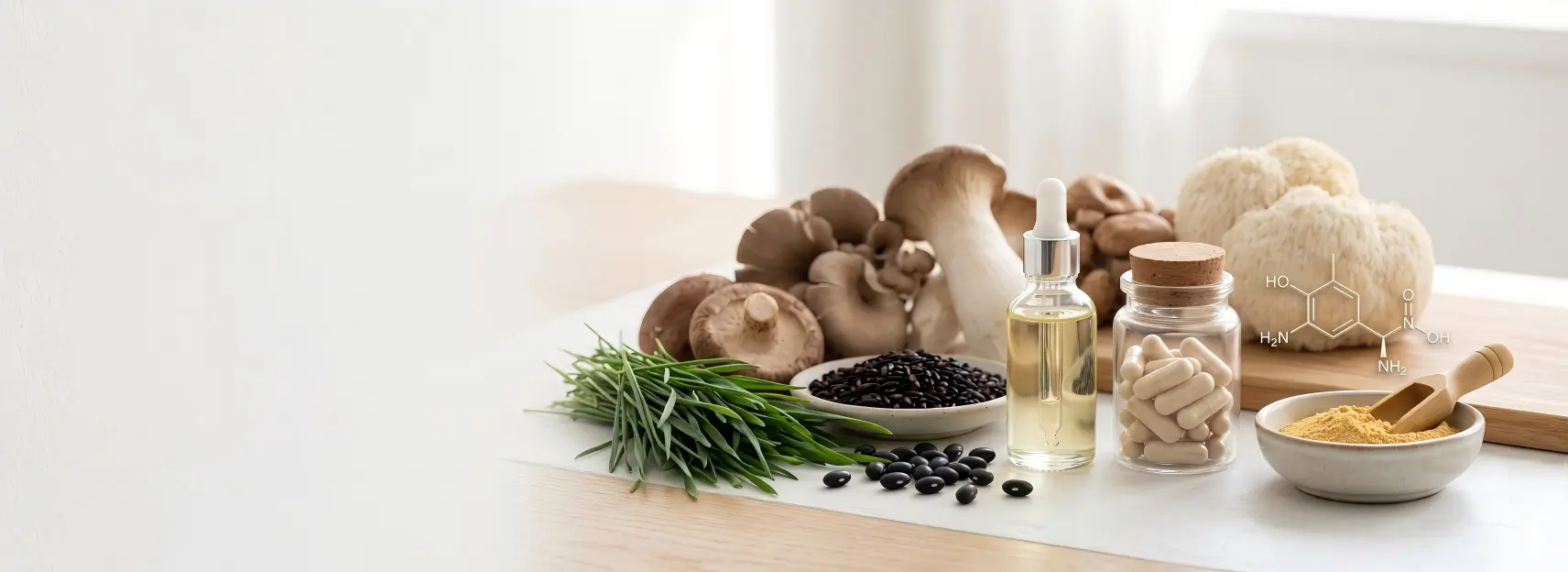
Ergothioneine: The Complete Guide to the Longevity Antioxidant
One-Minute Summary
Ergothioneine (ERGO) is a rare, sulfur-containing amino acid derivative discovered in 1909. Humans cannot synthesize it, so it must be obtained entirely from diet—primarily mushrooms. Unlike common antioxidants, ergothioneine possesses a dedicated cellular transporter (OCTN1) that actively delivers it into high-stress tissues such as the brain, liver, kidneys, eyes, and bone marrow. Its thione–thiol tautomeric structure gives it exceptional stability: it resists auto-oxidation, has a body half-life of approximately one month, and can be recycled non-enzymatically. Current research links higher ergothioneine levels to better cognitive health, cardiovascular protection, mitochondrial support, and healthy aging. Multiple U.S. FDA GRAS notices cover fermentation-derived L-ergothioneine for specified food uses, and it is available as a bulk ingredient or finished supplement through fermentation-derived production at KS Nutripharma.
Why Should You Care About Ergothioneine?
If you have never heard of ergothioneine until today, you are not alone. For over a century, this molecule sat quietly in the footnotes of biochemistry textbooks. So why, in 2026, are longevity experts, supplement formulators, and health-conscious consumers suddenly paying attention?
Here is the short answer: ergothioneine may be the most evolutionarily validated antioxidant that most people have never heard of.
Why Is Everyone Suddenly Talking About It?
Three forces converged to push ergothioneine into the spotlight:
- The OCTN1 discovery (2005) — Scientists found that humans evolved a dedicated molecular transporter whose principal physiological job is to pull ergothioneine out of food and shuttle it into the brain, liver, kidneys, eyes, and bone marrow. The body does not do this for vitamin C, resveratrol, or curcumin. That fact alone changed how researchers viewed ergothioneine: from “interesting fungal metabolite” to “probable essential nutrient.” See [3].
- The “longevity vitamin” hypothesis (2018) — Professor Bruce Ames argued that because humans cannot make ergothioneine, yet have evolved a specialized retention system for it, chronic dietary shortfall may accelerate aging. This reframed ergothioneine not as a supplement fad, but as a potential micronutrient gap in the modern diet. See [4].
- FDA GRAS clarity (2018–2026) — Regulatory clarity allowed brands to formulate with confidence. Blue California’s fermentation-derived ergothioneine received a “no questions” FDA letter under GRN 734 [9] (closed May 7, 2018). Later, Gene III Biotechnology’s L-ergothioneine received a “no questions” letter under GRN 1270 [10] (closed January 22, 2026), covering intended use levels up to 150 mg/100 g in specified food categories. Fermentation scale-up has also materially lowered ingredient cost versus earlier extraction routes.
Why Is It Different from Vitamin C?
Vitamin C is a valuable antioxidant—but it is also generic. It has no dedicated ergothioneine-style transporter for selective long-term tissue retention, no comparable tissue-selective accumulation pattern, and a much shorter functional window in circulation. When oxidative stress spikes, vitamin C is consumed rapidly and must be constantly replenished.
Ergothioneine operates on an entirely different timescale. Because of its thione structure, it does not auto-oxidize readily. Because of OCTN1, it accumulates where oxidative load is high. And because it can be recycled non-enzymatically, a single exposure can persist in the body for roughly 30 days. It is less like a fire extinguisher (vitamin C) and more like fire-resistant building material.
Why Do Longevity Experts Discuss It?
Longevity science is shifting from “adding more energy” (NMN, NAD+ boosters) to “protecting what you already have” (mitochondrial integrity, DNA stability, telomere length). Ergothioneine sits squarely in the second category:
- It accumulates in mitochondria, the organelles that NAD+ pathways help power.
- It has been linked to Nrf2 and sirtuin-related cellular defense pathways associated with healthy aging biology.
- Emerging work explores effects related to telomere biology under oxidative stress.
- Population studies show that people with higher blood ergothioneine levels have lower cardiovascular mortality risk and better cognitive markers as they age.
In other words, if NMN is the engine upgrade, ergothioneine is the rust-proofing. Explore complementary OEM stacks on our antioxidant supplements and ergothioneine supplements pages.
Why Are Supplement Brands Adding It?
From a commercial perspective, ergothioneine checks boxes brands care about:
- Differentiation: Still novel enough to stand out in a crowded antioxidant market.
- Science story: The OCTN1 transporter, the “longevity vitamin” framing, and peer-reviewed clinical and epidemiological data support credible positioning.
- Formulation stability: Unlike glutathione or resveratrol, it is comparatively stable in powder, capsule, and many beverage systems.
- Stack compatibility: It pairs well with NMN, CoQ10, astaxanthin, collagen, and related longevity actives.
- Premium pricing: Science-led positioning often supports mid-to-premium retail price points.
- Regulatory safety narrative: Published FDA GRAS notices reduce compliance uncertainty for qualified uses.
At KS Nutripharma, inquiry volume for ergothioneine bulk and OEM projects has risen sharply since 2024, driven by brands launching longevity stacks, beauty-from-within lines, and mitochondrial health products. See OEM ergothioneine manufacturing.
Why Do Mushrooms Contain So Much?
Mushrooms are fungi, and fungi are among the few organisms that can synthesize ergothioneine. They produce it as a self-defense molecule against oxidative and environmental stress. When you eat mushrooms, you are essentially borrowing their cellular armor.
The problem? Average U.S. mushroom intake is modest and heavily skewed toward white button mushrooms, which typically contain less ergothioneine than oyster or porcini varieties. Even mushroom enthusiasts rarely consume enough to match the 10–50 mg doses used in many research and commercial supplement designs.
Did you know? Humans have evolved a transporter with exceptionally high preference for ergothioneine—something very few dietary antioxidants possess. This evolutionary investment strongly suggests ergothioneine is not optional for long-term cellular resilience.
If You Only Remember One Thing from This Guide, Remember This
Ergothioneine is the only known dietary antioxidant with its own dedicated high-affinity mammalian transporter (OCTN1).
Your body does not evolve complex molecular machinery for optional nutrients. It evolved OCTN1 for a reason.
Key Takeaways
- Ergothioneine moved from obscure to essential because of the OCTN1 discovery, Ames’ longevity-vitamin framing, and FDA GRAS clarity.
- It differs from vitamin C: longer half-life, tissue-selective delivery, and non-enzymatic recycling.
- Mushrooms are rich in it, but modern diets rarely provide research-level doses—creating demand for supplements and functional foods.
CTA: Looking for pharmaceutical-grade L-ergothioneine bulk powder or OEM capsules? KS Nutripharma offers high-purity fermentation-derived ergothioneine with full COA support under ISO and cGMP manufacturing systems.
Key Takeaways
- Ergothioneine is a dietary micronutrient not synthesized by humans or higher plants—only certain fungi and bacteria produce it.
- The OCTN1 transporter (SLC22A4), identified as ergothioneine’s physiological substrate in 2005, indicates an evolutionarily conserved role.
- Mushrooms are the dominant dietary source, with oyster, king oyster, shiitake, and porcini varieties among the richest.
- Fermentation-derived L-ergothioneine is now the industry standard for supplements, offering high purity, scalability, and sustainability.
- Multiple FDA GRAS notices cover fermentation-derived L-ergothioneine under defined use conditions (including GRN 734 [9] and GRN 1270 [10]).
- Current evidence supports antioxidant, anti-inflammatory, mitochondrial protective, and neuroprotective roles; it is not approved to treat any disease.
Why Is Ergothioneine Suddenly Becoming Popular?
If you are reading this in 2026, you may be wondering: why is everyone talking about ergothioneine now, when it was discovered back in 1909? The answer is a convergence of scientific breakthroughs, regulatory milestones, and market dynamics that transformed this once-obscure fungal metabolite into one of the most discussed ingredients in longevity and antioxidant nutrition.
The Science Explosion
Ergothioneine publications have grown rapidly since the mid-2010s. In 2005, discovery of the OCTN1 transporter by Grundemann et al. showed that the human body had evolved a dedicated delivery system for ergothioneine—a strong signal of biological importance [3]. By 2010, Paul and Snyder at Johns Hopkins proposed the term “physiologic cytoprotectant,” reframing ergothioneine as a protective nutrient rather than a passive antioxidant [2].
A major conceptual inflection came in 2018, when Professor Bruce Ames published his seminal argument classifying ergothioneine as a putative “longevity vitamin” ([4]). Ames argued that because humans cannot synthesize ergothioneine, yet have evolved a specialized transporter to accumulate it in tissues most vulnerable to oxidative damage, dietary shortfall over decades could contribute to accelerated aging and age-related dysfunction.
Regulatory Milestones
Scientific credibility alone does not drive market adoption—regulatory clarity does.
Milestone | Detail | Source |
|---|---|---|
| U.S. FDA GRAS (Blue California) | GRN 734; “no questions” letter May 7, 2018; intended food uses at 5 mg/serving in specified categories | [9] |
| EU Novel Food | L-ergothioneine authorized; food supplements up to 30 mg/day for the general population (excluding pregnant/lactating women) under EU rules | [11] |
| U.S. FDA GRAS (Gene III) | GRN 1270; “no questions” letter January 22, 2026; intended use levels up to 150 mg/100 g in specified foods | [10] |
The Longevity Industry Effect
As the longevity supplement market expanded beyond NMN and resveratrol, formulators sought ingredients with: (1) a unique mechanism of action, (2) strong safety data, and (3) regulatory pathways. Ergothioneine checked all three. Leading longevity brands have launched ergothioneine stacks with NMN, CoQ10, and spermidine, positioning it as the mitochondrial antioxidant that complements NAD+ boosters.
Consumer and B2B interest in terms such as “ergothioneine supplement,” “ergothioneine longevity,” and “ergothioneine vs glutathione” has risen sharply in recent years. The global ergothioneine ingredient market remains niche but is widely expected to grow at a double-digit CAGR through 2030, driven by fermentation cost reductions and expanding clinical evidence.
Did you know? Ergothioneine is often called the “missing piece” of the longevity antioxidant stack. While NMN supports cellular NAD+ metabolism, ergothioneine helps protect the mitochondria that produce that energy from oxidative burnout. See related OEM options for liposomal CoQ10 and spermidine.
Key Takeaways
- Ergothioneine is not new—it has been known since 1909—but its biological importance was clarified after 2005.
- OCTN1 discovery, Ames’ longevity-vitamin hypothesis, and FDA/EU regulatory milestones created the conditions for market adoption.
- Longevity brands now view ergothioneine as complementary to NMN and CoQ10, filling the mitochondrial-protection gap.
CTA: Stay ahead of the market trend. KS Nutripharma supplies fermentation-derived L-ergothioneine with documentation support for U.S., EU, and Asian market projects.
What Is Ergothioneine?
Definition and Discovery
Ergothioneine (2-mercaptohistidine trimethylbetaine) is a naturally occurring sulfur-containing amino acid derivative first isolated in 1909 by French pharmacist Charles Tanret from the ergot fungus Claviceps purpurea. It is formally classified as an L-histidine derivative with a unique thioimidazole ring structure. Despite being known for over a century, ergothioneine remained relatively obscure until the early 2000s, when a series of discoveries revealed its biological significance. Chemical identity is catalogued in PubChem CID 5351619 [8].
The OCTN1 Transporter Breakthrough
In 2005, Grundemann and colleagues identified ergothioneine as the specific physiological substrate of the organic cation/carnitine transporter 1 (OCTN1, encoded by the SLC22A4 gene) ([3]). This discovery was pivotal: the existence of a dedicated, high-affinity transporter (apparent Km around 21 μM) strongly suggests that ergothioneine is not merely a dietary curiosity but an essential physiological cytoprotectant.
OCTN1 is highly expressed in tissues under chronic oxidative stress:
- Bone marrow and hematopoietic cells
- Brain neurons and eye tissues
- Liver and kidneys
- Intestinal epithelium (especially during inflammation)
This selective tissue distribution pattern implies that the body actively prioritizes ergothioneine delivery to sites most vulnerable to oxidative damage.
Why Humans Cannot Synthesize Ergothioneine
Ergothioneine biosynthesis is restricted to certain fungi (basidiomycetes and ascomycetes) and select bacteria, particularly actinomycetes such as Mycobacterium species. Higher plants, animals, and humans lack the biosynthetic enzymes—most notably the sulfoxide synthase (EgtB) and C-S lyase (EgtE) required to construct the thioimidazole ring.
Consequently, all ergothioneine in human tissues is of exogenous origin. Because the body has evolved a specialized uptake and retention system without the ability to manufacture the compound, researchers including Professor Bruce Ames have proposed classifying ergothioneine as a putative “longevity vitamin”—a dietary micronutrient important for healthy aging ([4]).
Did you know? OCTN1 is one of the few known transporters with such a strong physiological preference for a single dietary antioxidant. Its existence implies that ergothioneine occupies a distinctive role in human physiology.
Key takeaway
- Ergothioneine is an L-histidine derivative with a thioimidazole ring, discovered in 1909.
- OCTN1 (SLC22A4) is the dedicated transporter that actively delivers ergothioneine to high-stress tissues.
- Humans cannot synthesize ergothioneine; it must be obtained from diet or supplementation.
Why Is Ergothioneine Called the “Longevity Antioxidant”?
Over the past decade, ergothioneine has moved from niche mycochemistry to mainstream longevity research, driven by converging evidence linking low plasma ergothioneine levels to aging and age-related disease risk.
1. Mitochondrial Protection
Mitochondria are a primary source of reactive oxygen species (ROS) in cells. Ergothioneine accumulates in mitochondria and helps protect against oxidative phosphorylation-associated damage. Unlike many antioxidants that are excluded from or rapidly degraded within mitochondria, ergothioneine’s stability allows it to function as a longer-term mitochondrial shield. For stack concepts, see mitochondrial OEM formulas with CoQ10.
2. Resistance to Autoxidation
Conventional thiol antioxidants like glutathione are prone to spontaneous oxidation. Ergothioneine exists predominantly in the thione tautomeric form at physiological pH, making it extraordinarily resistant to auto-oxidation. This structural feature means it can persist in circulation and tissues without rapid depletion ([1], [2]).
3. Long Half-Life and Recycling
Dietary ergothioneine is not significantly metabolized in mammalian tissues and has a biological half-life of approximately one month. Its oxidized forms can be non-enzymatically recycled back to the reduced state, and mammalian thioredoxin reductase can also regenerate it. This creates a durable antioxidant capacity that few molecules match.
4. Nrf2 Pathway Activation
Ergothioneine activates the nuclear factor erythroid 2-related factor 2 (Nrf2) pathway and can upregulate heme oxygenase-1 (HO-1), enhancing the cell’s endogenous antioxidant defenses rather than merely scavenging free radicals directly.
5. Telomere Protection
Emerging research indicates that ergothioneine may help slow telomere shortening under oxidative stress conditions, linking it more directly to cellular aging mechanisms.
Important YMYL disclaimer: While preclinical and early clinical evidence is promising, ergothioneine is not approved by the FDA or any regulatory body to treat, cure, or prevent any disease. It should be viewed as a supportive nutrient for healthy aging, not a therapeutic agent.
Key Takeaways
- Ergothioneine protects mitochondria, a primary source of cellular ROS.
- Its thione form resists auto-oxidation, contributing to an approximate 30-day half-life in the body.
- It activates Nrf2/HO-1 and may support telomere integrity—directly linking it to aging biology.
Chemical Structure and Biological Characteristics
Technical Specifications
Property | Value |
|---|---|
| Chemical Name | L-Ergothioneine; 2-mercaptohistidine trimethylbetaine |
| CAS Number | 497-30-3 |
| Molecular Formula | C9H15N3O2S |
| Molecular Weight | 229.30 g/mol |
| Appearance | White to off-white crystalline powder |
| Water Solubility | Highly water soluble (literature reports around hundreds of mM at ambient temperature) |
| pKa | Approximately 10.0 (thiol/thione system) |
| Storage | Protect from light and moisture; cold storage recommended for long-term stability |
Identity and physicochemical data: PubChem [8] and peer-reviewed pharmacology reviews [1], [5].
Thione vs. Thiol: Why Stability Matters
Ergothioneine’s defining structural feature is its thioimidazole ring, which exists in equilibrium between:
- Thiol form (-SH): A standard sulfhydryl group
- Thione form (=S): A sulfanylidene group
At physiological pH (approximately 7.4), the thione form predominates. This is fundamentally different from glutathione or cysteine, which remain predominantly in the thiol form and are therefore highly susceptible to auto-oxidation. The thione configuration confers:
- Resistance to metal-catalyzed oxidation
- Limited formation of stable disulfide bonds (unlike glutathione, which forms GSSG)
- Preservation of antioxidant capacity under oxidative stress
This helps explain why ergothioneine has a half-life of about 30 days in vivo, whereas glutathione turns over far more rapidly under stress.
Why Ergothioneine Is More Stable Than Glutathione
Features | Ergothioneine | Glutathione |
|---|---|---|
| Predominant form at pH 7.4 | Thione (stable) | Thiol (reactive) |
| Auto-oxidation rate | Extremely low | High |
| Half-life in body | Approximately 1 month | Minutes to hours |
| Disulfide formation | Does not readily occur | GSSG common |
| Metal chelation | Strong (Cu2+, Fe2+) | Moderate |
| Recycling mechanism | Non-enzymatic + thioredoxin | Glutathione reductase-dependent |
Based on [2], [5], and comparative antioxidant reviews. For finished-product OEM with glutathione systems, see glutathione supplements.
Key takeaways
- The thione form of ergothioneine at physiological pH makes it extraordinarily stable compared with thiol antioxidants.
- Ergothioneine does not readily form disulfides and has an approximate 30-day half-life versus minutes for glutathione under stress.
- This stability allows it to function as a long-term cellular protectant rather than a rapidly depleted scavenger.
Where Does Ergothioneine Come From?
1. Mushrooms: The Dominant Dietary Source
Mushrooms are by far the richest dietary source of ergothioneine because they are the fruiting bodies of fungi—organisms capable of producing it. Content varies dramatically by species, cultivation conditions, and analytical method.
Representative ergothioneine content (mg/kg dry weight):
Mushroom Species | Common Name | Ergothioneine (mg/kg d.w.) |
|---|---|---|
| Pleurotus ostreatus | Oyster | 1,180–11,800 |
| Pleurotus eryngii | King oyster | 541–1,720 |
| Boletus edulis | Porcini | 528–7,270 |
| Lentinula edodes | Shiitake | 123–2,090 |
| Agaricus bisporus | White button | 0.46–630 |
| Flammulina velutipes | Enoki | 151–298 |
| Hericium erinaceus | Lion’s mane | Approximately 376 (mycelium; method-dependent) |
Sources: [7]; reviews in Nutrition Research Reviews [15].
Key insight: Oyster mushrooms (Pleurotus species) and porcini consistently show the highest concentrations. White button mushrooms, while the most consumed in the U.S., contain significantly less ergothioneine than specialty varieties.
2. Fermentation: The Modern Production Standard
For supplement and functional food applications, microbial fermentation is now the dominant production method. Engineered strains of Escherichia coli, Corynebacterium glutamicum, or selected yeasts are cultivated in industrial bioreactors, followed by purification to yield high-purity L-ergothioneine.
Advantages of fermentation:
- Purity: Routinely achieves ≥98% (and often higher) purity
- Scalability: Industrial fermenters enable metric-ton monthly output
- Sustainability: No reliance on wild mushroom harvesting
- Cost efficiency: Substantially lower cost than extraction at scale
- Consistency: Batch-to-batch uniformity with full COA documentation
Leading suppliers have achieved FDA GRAS status for fermentation-derived L-ergothioneine under defined intended uses. At KS Nutripharma, fermentation-derived L-ergothioneine is produced under cGMP and ISO quality systems with full traceability.
3. Chemical Synthesis
Chemical synthesis of ergothioneine is technically possible but economically and environmentally unfavorable for most commercial supplement applications. It requires multiple steps with low atom economy and generates significant waste. Consequently, synthetic ergothioneine is uncommon as the primary supply route for large-scale supplement manufacturing (though EU Novel Food authorization historically included synthetic L-ergothioneine from Tetrahedron).
4. Plant and Animal Sources
Trace amounts of ergothioneine are found in:
- Tempeh (fermented soybeans; on the order of ~200 mg/kg d.w. in published analyses)
- Oat bran (trace)
- Black beans/kidney beans (trace)
- Chicken liver (modest vs. mushrooms)
- Red meat (trace)
These levels are orders of magnitude lower than mushrooms. Presence in plants is thought to result from soil-borne fungal networks transferring ergothioneine to roots. Conventional agricultural practices such as excessive tillage may disrupt these networks and potentially reduce crop ergothioneine content.
Natural vs. Fermentation-Derived: A Comparison
Factor | Mushroom Extraction | Fermentation |
|---|---|---|
| Purity | Variable (often low to moderate concentrates) | ≥98% typical for supplement grades |
| L-form specificity | Mixed matrices | High L-ergothioneine specificity |
| Scalability | Limited by harvest | High |
| Heavy metals | Soil accumulation risk | Controlled |
| Residual solvents | Possible (extraction) | Typically none (water-based) |
| Sustainability | Resource-intensive | Lower environmental impact at scale |
| Cost | High | Substantially lower than extraction |
| Regulatory | Food ingredients | FDA GRAS notices; EU Novel Food pathway |
Key Takeaways
- Oyster and porcini mushrooms contain the highest dietary ergothioneine levels.
- Fermentation-derived L-ergothioneine is the industry standard for supplements due to purity, scalability, and cost advantages.
- KS Nutripharma supplies high-purity fermentation-derived L-ergothioneine with COA and regulatory documentation support.
CTA: Need a sample COA or TDS for your R&D team? Request materials via the KS Nutripharma ergothioneine page.
How Ergothioneine Works in the Human Body
The Transport Pathway
Unlike most antioxidants that passively diffuse into cells, ergothioneine follows a highly regulated transport pathway:
Dietary Intake → Intestinal OCTN1 → Bloodstream → Tissue-Specific OCTN1 Uptake → Mitochondria & Nucleus
- Intestinal absorption: OCTN1 is expressed in the intestinal epithelium and actively absorbs dietary ergothioneine.
- Systemic distribution: Ergothioneine enters erythrocytes via OCTN1 and circulates throughout the body.
- Tissue accumulation: High-OCTN1 tissues (brain, liver, kidney, eye, bone marrow) selectively concentrate ergothioneine.
- Subcellular localization: Ergothioneine accumulates in mitochondria and nuclei, compartments highly vulnerable to oxidative damage.
Mechanisms of Action
Reactive oxygen species (ROS) scavenging
Ergothioneine directly neutralizes hydroxyl radicals (•OH), peroxynitrite (ONOO−), singlet oxygen (1O2), and hypochlorous acid (HOCl). In certain assays, its rate constant for scavenging peroxyl radicals exceeds that of glutathione by more than fivefold.
Metal chelation
The thione group forms stable, redox-inactive complexes with divalent metal ions (Cu2+, Fe2+, Hg2+). This helps prevent metal-catalyzed Fenton reactions that generate highly damaging hydroxyl radicals—a mechanism distinct from simple ROS scavenging.
DNA and protein protection
By scavenging ROS and chelating metals, ergothioneine helps protect:
- Nuclear DNA from oxidative strand breaks
- Mitochondrial DNA from mutation
- Protein thiol groups from oxidation and carbonylation
- Lipid membranes from peroxidation
Anti-inflammatory signaling
Ergothioneine can modulate NF-κB signaling, reduce NLRP3 inflammasome activation, and suppress pro-inflammatory cytokine production (TNF-α, IL-6). This may contribute to mitigating “inflammaging”—chronic low-grade inflammation associated with aging.
Sirtuin and Nrf2 activation
Studies indicate ergothioneine can activate SIRT1 and SIRT6 pathways while upregulating Nrf2/HO-1 antioxidant response elements. These epigenetic and transcriptional effects position it as a hormetic stress-response modulator rather than merely a direct antioxidant.
Did you know? Ergothioneine is one of the few antioxidants that can be non-enzymatically recycled back to its active form after oxidation, giving it exceptional reuse capacity within the cell.
Key takeaways
- OCTN1 actively transports ergothioneine into high-stress tissues and mitochondria.
- Ergothioneine works through ROS scavenging, metal chelation, DNA/protein protection, and Nrf2/SIRT activation.
- Non-enzymatic recycling makes it a uniquely persistent cellular protectant.
Health Benefits Supported by Current Research
The following summary grades evidence based on the quantity and quality of available human, animal, and in vitro studies.
Evidence Pyramid
Systematic Reviews & Meta-Analyses (highest) → Randomized Controlled Trials (RCTs) → Pilot Clinical Trials → Animal Studies → In Vitro Studies (lowest).
- Level 1: Systematic reviews/meta-analyses — Limited for hard disease endpoints
- Level 2: RCTs / pilot trials — Cognitive health, skin health, and related wellness outcomes
- Level 3: Animal studies — Strong support for neuroprotection, cardiovascular protection, mitochondrial support
- Level 4: In vitro / mechanistic studies — Robust antioxidant, anti-inflammatory, and Nrf2 activation data
Evidence Summary Table
Potential Benefits | Proposed Mechanism | Human Evidence | Animal/In Vitro | Current Strength |
|---|---|---|---|---|
| Healthy Aging/Longevity | Telomere protection; SIRT1/6 activation; mitochondrial support | Epidemiological (plasma levels correlate with age/risk markers) | Strong | Promising |
| Brain health / cognitive function | Neuroprotection; anti-inflammatory; biomarker stabilization | Pilot RCT in MCI ([12], [13]); additional RCT in older adults with subjective memory complaints | Strong | Emerging |
| Eye health | Antioxidant protection of retinal cells; tear film support | Limited clinical data | Moderate | Emerging |
| Cardiovascular health | Endothelial protection; lower oxidative stress burden | Epidemiology: higher plasma ERGO associated with lower CVD risk and mortality ([6]) | Strong | Promising |
| Immune support | Macrophage protection; reduced NLRP3 activation | Limited | Strong | Early |
| Skin health/anti-aging | UV protection; Nrf2/HO-1; pigment-related endpoints | RCT evidence for oral 30 mg/day skin endpoints ([14]) | Strong | Emerging-to-strong |
| Exercise recovery | Reduction in exercise-induced oxidative stress | Limited | Moderate | Early |
| Mitochondrial support | Direct mitochondrial accumulation; ROS scavenging | Indirect biomarker studies | Strong | Strong |
Evidence framing based on [1], [5], [6], [12], [13], and [14].
Notable Clinical and Epidemiological Findings
Cognitive health: A completed pilot study [12] in older adults with mild cognitive impairment evaluated ergothioneine (25 mg, three times weekly for one year). The medRxiv report (2024) [13] described improved learning/memory assessment performance and stabilized neurofilament light chain versus placebo trajectories, with no safety signal in clinical laboratory markers.
Cardiovascular epidemiology: A landmark 2020 study published in Heart (BMJ Group) found that higher plasma ergothioneine levels were associated with reduced mortality and decreased risk of cardiovascular disease in a large community cohort ([6]).
Skin health: An oral ergothioneine supplementation trial [14] evaluated 30 mg/day for eight weeks on skin condition endpoints in women aged 35–59.
CTA: For mechanisms, formulation concepts, and OEM options, see the ergothioneine supplements manufacturer page.
Key Takeaways
- Evidence strength ranges from early (animal only) to emerging (pilot human trials) to promising (epidemiology + preclinical).
- Most disease-treatment claims remain unsupported; current evidence is promising but still evolving.
- Brain health, skin endpoints, and cardiovascular epidemiology currently offer some of the strongest human-relevant data.
Foods Rich in Ergothioneine
While supplements offer precision dosing, dietary sources help contextualize ergothioneine’s role in traditional diets.
Food | Ergothioneine Content | Serving Consideration |
|---|---|---|
| Oyster mushrooms | 1,180–11,800 mg/kg d.w. | Highest known common culinary source |
| Porcini (dried) | 528–7,270 mg/kg d.w. | Concentrated; small amounts yield significant intake |
| Shiitake mushrooms | 123–2,090 mg/kg d.w. | Widely available; moderate to high content |
| King oyster mushrooms | 541–1,720 mg/kg d.w. | Popular in Asian cuisine |
| Tempeh | Approximately 201 mg/kg d.w. | Fermented soy; viable for vegetarians |
| Chicken liver | Approximately 47 mg/kg d.w. | Modest; not a primary source |
| Black beans / kidney beans | Approximately 2.1 mg/kg d.w. | Trace only |
| Oat bran | Approximately 1.8 mg/kg d.w. | Minimal contribution |
Data compiled from [7] and related nutrition literature.
How Much Ergothioneine Do People Consume Daily?
Average dietary intake varies by region and diet pattern:
- USA: Approximately 1–3 mg/day (low mushroom consumption, dominated by white button)
- Europe: Approximately 2–4 mg/day (higher specialty mushroom intake in some regions)
- Asia (Japan, China): Approximately 5–10 mg/day (higher shiitake, oyster, and maitake consumption)
- Vegetarians/vegans: Highly variable; depends on mushroom intake
- Heavy mushroom consumers: Up to 20+ mg/day possible with daily oyster/porcini intake
Can Diet Provide Enough?
Probably not for optimal longevity-support dosing. Even with a mushroom-rich diet, achieving the 10–50 mg/day doses used in research and premium supplements would require consuming large volumes of mushrooms daily. For example:
| Target Dose | Approximate Fresh Oyster Mushroom Equivalent |
|---|---|
| 10 mg | Roughly 150 g (species- and moisture-dependent) |
| 30 mg | Roughly 500 g oyster mushroom |
| 30 mg | Often kilograms of white button mushroom |
Given that average American mushroom consumption is low and dominated by lower-ERGO white button varieties, dietary intake alone likely falls short of research-level intakes. This gap creates demand for standardized supplements and functional foods.
Did you know? A single 30 mg ergothioneine capsule can provide more ERGO than a multi-kilogram intake of white button mushrooms—an impractical dietary target for most people.
Key Takeaways
- Oyster and porcini mushrooms are the richest dietary sources, but achieving research-level doses from food alone is impractical.
- Average Western intake is likely 1–3 mg/day, far below the 10–50 mg used in many studies and premium products.
- This dietary gap explains demand for standardized supplements and functional food ingredients.
Ergothioneine vs. Other Popular Antioxidants
Comparative analyses are among the most searched consumer queries. Here is an evidence-informed comparison:
Property | Ergothioneine | Glutathione | CoQ10 | Vitamin C | Astaxanthin | NAC | ALA |
|---|---|---|---|---|---|---|---|
| Dedicated transporter | Yes (OCTN1) | No | No | SVCT | No | No | No |
| Half-life in body | ~30 days | Minutes–hours | ~1–2 days | Hours (tissue pool longer) | ~16 hours | ~5–6 hours | ~30 min |
| Mitochondrial access | High | Moderate | High (lipid) | Low | Moderate | Low | Moderate |
| Blood–brain barrier | Yes (via OCTN1) | Poor | Partial | Yes | Yes | Limited | Yes |
| Auto-oxidation resistance | Excellent | Poor | Good | Moderate | Good | Poor | Poor |
| Metal chelation | Strong | Moderate | Weak | Weak | Weak | Strong | Strong |
| Water solubility | High | High | Low | High | Low | High | Moderate |
| Stability in formulation | Excellent | Poor (often needs protection) | Moderate | Good | Good | Poor | Poor |
| Recycling mechanism | Non-enzymatic + thioredoxin | Glutathione reductase | Ubiquinone reductase | N/A | N/A | N/A | N/A |
Comparative synthesis from [1], [2], and antioxidant pharmacology reviews.
Key Differentiators
- OCTN1-mediated transport helps ergothioneine reach tissues that other antioxidants may not concentrate as efficiently, including bone marrow and selected brain regions.
- Stability allows formulation into beverages, powders, and topical-adjacent systems with fewer degradation issues than glutathione or NAC.
- Dual mechanism (direct ROS scavenging + metal chelation + Nrf2 activation) provides broader protection than single-pathway antioxidants.
CTA: Learn more about L-form sourcing and OEM specs on the ergothioneine supplements page, or compare broader antioxidant portfolio options.
Ergothioneine Supplement Forms
Modern formulation technology enables ergothioneine delivery across multiple dosage forms:
Form | Pros | Cons | Typical Users |
|---|---|---|---|
| Bulk powder | Cost-effective; flexible dosing; easy to blend | Requires encapsulation equipment; taste masking may be needed | Brands, OEM, compounders |
| Capsules (veg/softgel) | Precise dosing; consumer-friendly; good stability | Higher per-unit cost | End consumers, wellness brands |
| Tablets | High-density packaging; efficient manufacturing | Compression and heat exposure considerations | Mass-market supplements |
| Softgels | Useful in lipid-compatible stacks | Limited to oil-compatible systems | Beauty-from-within, CoQ10 combos |
| Stick packs/sachets | Convenience; on-the-go; flavor masking | Higher packaging cost; moisture sensitivity | Functional beverages, travel |
| Functional beverages | Novel delivery; high engagement | Stability testing required; shorter shelf life | Lifestyle brands, RTD |
| Liposomal systems | Premium positioning; advanced delivery story | Higher complexity and cost | Premium longevity brands |
See also liposomal manufacturing capabilities and beauty/nutricosmetic formats.
Formulation Considerations
Ergothioneine’s heat and light stability simplifies formulation compared with glutathione or resveratrol. Best practices include:
- pH: Formulate between pH 4–8 for optimal solubility and stability
- Excipients: Compatible with common fillers (microcrystalline cellulose, maltodextrin)
- Combinations: Synergistic positioning with NMN, CoQ10, astaxanthin, and vitamin C
- Packaging: Amber or opaque containers recommended for long-term storage
CTA: Need formulation guidance for your next product? Explore the antioxidant supplements portfolio or request OEM support on the ergothioneine page.
Typical Dosage Used in Supplements
The following dosage ranges reflect current market products and clinical study designs:
Dosage | Context | Evidence Base |
|---|---|---|
| 5 mg/day | Maintenance; general wellness | Emerging; low-dose commercial positioning |
| 10 mg/day | Standard antioxidant support | Common in commercial supplements |
| 25 mg/day | Targeted healthy aging; cognitive/skin positioning | Used in human trials and premium SKUs |
| 30 mg/day | Cognitive/skin-oriented formulas | Used in clinical settings (e.g., skin RCT at 30 mg/day) |
| 50 mg/day | High-intensity support positioning | Limited human data; strong preclinical rationale |
Regulatory context: FDA GRAS notices define intended use levels by notice (for example, GRN 734 at 5 mg/serving in specified foods [9]; GRN 1270 at up to 150 mg/100 g in specified foods [10]). EU Novel Food rules authorize food supplements up to 30 mg/day for the general population (excluding pregnant and lactating women) under Regulation (EU) 2018/462 [11]. Always match claims and use levels to the destination market.
Note: Optimal dosing depends on formulation goals, target population, and combination ingredients. For dosage and OEM guidance, refer to ergothioneine supplements.
Is Ergothioneine Safe?
Regulatory Status
Region / Agency | Status | Details |
|---|---|---|
| U.S. FDA | GRAS notices (multiple) | Including GRN 734 [9] and GRN 1270 [10]; intended uses as stated in each notice |
| European Union | Novel Food authorized | EU 2018/462 [11]; supplements up to 30 mg/day (general population, with exclusions) |
| Japan | Food ingredient context | Accepted as naturally occurring in mushrooms; product-specific rules apply |
| Australia / NZ | Permitted under food rules | Confirm local schedule and labeling requirements |
FDA GRAS notices are publicly searchable in the FDA GRAS Notification Inventory; see [9], [10].
Toxicology and Safety Data
Acute and chronic toxicity: Preclinical toxicology packages submitted for GRAS evaluations showed no adverse effects at doses far exceeding typical human supplemental intakes. Ergothioneine is not metabolized to toxic byproducts and is primarily excreted unchanged in urine.
Pregnancy and lactation: Adequate human clinical trials in pregnant or lactating populations are limited. Medical consultation is advised before use during pregnancy. EU Novel Food authorization excludes pregnant and lactating women from the general-population supplement use level.
Drug interactions: No clinically significant drug interactions have been documented. Because OCTN1 also transports certain medications (for example, metformin), theoretical competitive inhibition exists at very high concentrations. No cases of clear clinical relevance have been established for supplemental doses.
Side effects: Human clinical trials and post-market experience generally report good tolerability at common supplemental doses (often up to about 25–50 mg/day in studied settings). Mild gastrointestinal discomfort may occur in a small subset of users, as with many dietary supplements.
Upper intake level: No formal Tolerable Upper Intake Level (UL) is universally established. Use the applicable GRAS notice or Novel Food authorization as the practical compliance benchmark for your market.
Notice: Current evidence suggests that L-ergothioneine is well tolerated in human populations at supplemental doses used in trials. Individuals with pre-existing medical conditions, those taking prescription medications, or those who are pregnant should consult a qualified healthcare provider before beginning supplementation.
Who Should Consider Ergothioneine Supplements?
Primary Beneficiary Groups
Population | Rationale | Evidence Quality |
|---|---|---|
| Healthy aging /older adults (55+) | Plasma ergothioneine often declines with age; associated with cognitive and cardiovascular risk markers | Strong epidemiological |
| Brain health seekers | MCI pilot and older-adult cognitive trials; OCTN1 highly expressed in neurons | Emerging |
| Eye Health Users | OCTN1 highly expressed in ocular tissues | Moderate / emerging |
| Athletes / active individuals | Exercise generates ROS; mitochondrial protection may aid recovery | Emerging |
| High oxidative stress individuals | Smokers, urban dwellers, high UV exposure | Moderate |
| Beauty/skin health users | Oral skin RCT endpoints; Nrf2 activation narrative | Emerging-to-strong |
| Immune Support Users | Macrophage protection; anti-inflammatory signaling | Preclinical |
| Vegetarians/vegans | May have lower dietary intake if mushroom consumption is limited | Theoretical |
| Heavy screen users/executives | Eye strain and mental fatigue positioning | Early |
| Shift workers | Circadian disruption increases oxidative stress | Theoretical |
Who Should Seek Medical Advice First
- Individuals with autoimmune conditions (OCTN1 variants are associated with Crohn’s disease and rheumatoid arthritis in genetic studies; clinical significance of supplementation in these populations is unknown)
- Those on chemotherapy or radiation therapy (theoretical antioxidant interaction)
- People with diagnosed neurodegenerative or cardiovascular disease (supplementation should complement, not replace, standard care)
Did you know? Plasma ergothioneine levels often decline after age 60 in studied populations, precisely when mitochondrial dysfunction and oxidative stress tend to rise. This inverse correlation is one reason researchers call it a “longevity vitamin.”
Key takeaways
- Older adults, brain health seekers, athletes, and high-stress individuals are primary target populations.
- Vegetarians and beauty-from-within consumers represent growing market segments.
- Anyone with autoimmune disease or undergoing cancer treatment should consult a physician first.
How to Choose High-Quality Ergothioneine Ingredients
For B2B buyers, brands, and formulators, ingredient quality directly impacts product efficacy, regulatory compliance, and consumer trust.
Procurement Checklist
Criterion | Specifications | Why It Matters |
|---|---|---|
| Purity | ≥98% (HPLC) | Ensures consistent potency and minimizes contaminants |
| Isomeric form | L-ergothioneine (CAS 497-30-3) | Only the L-form is biologically active and transported by OCTN1 |
| Production method | Fermentation (preferred) | Scalable, sustainable, free from extraction solvents |
| Heavy metals | <10 ppm (Pb, Cd, As, Hg aggregate/policy-dependent) | Critical for long-term safety |
| Residual solvents | None detected | Fermentation avoids organic solvent residues |
| Microbiology | Total plate count <1,000 CFU/g; no pathogens | USP/EP-style compliance |
| Particle size | Customizable (80–200 mesh typical) | Affects flowability and capsule/tablet performance |
| Flowability | Carr index <25% preferred | Important for high-speed manufacturing |
| COA provided | Batch-specific, preferably third-party verified | Verifies all claims |
| Certifications | ISO 9001, cGMP, HACCP | Quality system assurance |
| Stability data | 24–36 months at recommended storage | Supports shelf-life claims |
| Regulatory | Relevant GRAS Notice / Novel Food pathway | Enables legal market entry |
Typical Technical Specifications (KS Nutripharma Standard)
Parameter | Specifications |
|---|---|
| Appearance | White to off-white crystalline powder |
| Assay (HPLC) | ≥98.0% |
| CAS Number | 497-30-3 |
| Identification | HPLC / NMR |
| Particle Size | 80–200 mesh (customizable) |
| Bulk Density | 0.3–0.6 g/mL |
| Loss on Drying | ≤5.0% |
| Heavy Metals (Pb) | <10 ppm |
| Arsenic | <2 ppm |
| Residual Solvents | None detected |
| Total Plate Count | <1,000 CFU/g |
| Yeast & Mold | <100 CFU/g |
| E. coli / Salmonella | Negative |
| Shelf Life | 24–36 months |
| Storage | Cool, dry place; protect from light |
| Packaging | 1 kg/bag, 25 kg/drum (customizable) |
| MOQ | 1 kg (bulk powder) |
| Lead Time | 2–4 weeks (stock); 6–8 weeks (bulk) |
| OEM/ODM | Capsule, tablet, softgel, sachet available |
| Private Label | Available |
Supplier Evaluation Framework
- Verify GRAS/Novel Food coverage: Confirm the notice or authorization covers your intended use category and market.
- Audit manufacturing: Prefer cGMP-certified facilities with in-house QC/QA laboratories.
- Request samples: Evaluate organoleptic properties (white crystalline powder, odorless, mild taste).
- Review clinical and documentation portfolio: Suppliers investing in human data and complete dossiers demonstrate long-term commitment.
- Assess OEM capabilities: Can the supplier provide encapsulation, tableting, blending, and private-label services?
Supplier Comparison: Global Landscape
Factor | Chinese Factory (e.g., KS Nutripharma) | European Factory | Japanese Factory | U.S. Distributor |
|---|---|---|---|---|
| MOQ | 1–25 kg | 10–100 kg | 5–50 kg | 1–10 kg |
| Price competitiveness | High | Moderate | Lower | Lowest (marked up) |
| Lead time | 2–6 weeks | 4–8 weeks | 4–6 weeks | 1–2 weeks (stock) |
| OEM/Private Label | Full service | Limited | Limited | None (distribution only) |
| Clinical support | Growing | Moderate | Limited | Limited |
| Regulatory support | GRAS/Novel Food documentation pathways | Novel Food focus | Japan food approval | GRAS documentation focus |
| Production capacity | Metric tons/month | Limited | Limited | N/A |
CTA: Download or request the KS Nutripharma ergothioneine supplier checklist via kssupplements.com/ergothioneine-supplements.
How Industrial Ergothioneine Is Produced
Understanding the production process helps B2B buyers assess quality and capacity.
Fermentation Process Flow
Fermentation (engineered strain, industrial bioreactor)
↓
Cell harvest and lysis
↓
Primary purification (filtration, centrifugation)
↓
Chromatographic purification (ion exchange, crystallization)
↓
Drying (spray dry or vacuum freeze-dry)
↓
QC testing (HPLC purity, heavy metals, microbiology)
↓
Packaging (aluminum foil bag / fiber drum)
↓
Shipment (cold chain or ambient, as required)
Key quality control points:
- In-process HPLC: Monitors purity at each purification stage
- Heavy metals: ICP-MS testing for Pb, Cd, As, Hg
- Microbiology: USP <61> / <62> style compliance
- Residual solvents: GC-MS verification (typically none for fermentation)
- Stability: Accelerated and real-time stability studies
At KS Nutripharma, fermentation-derived L-ergothioneine is manufactured under strict cGMP conditions with full batch records and traceability from seed culture to finished powder.
Ergothioneine Bulk vs. Finished Supplements
Attribute | Bulk Powder (B2B) | Finished Supplements (B2C) |
|---|---|---|
| Primary buyer | Brands, OEMs, contract manufacturers | End consumers, retailers |
| MOQ | 1–25 kg (varies by supplier) | Bottle/box quantities |
| Lead time | 2–6 weeks (stock); 8–12 weeks (custom) | Immediate (retail) |
| Purity requirement | ≥98% | Formulated to deliver labeled dose |
| Testing responsibility | Buyer verifies; supplier provides COA | Brand/contract manufacturer |
| OEM available | Yes (from select suppliers such as KS Nutripharma) | N/A |
| Private label | Yes | Yes |
| Regulatory burden | Buyer assumes for finished product | Brand assumes |
| Cost structure | $/kg ingredient cost | $/unit retail price |
Why Brands Choose Bulk Ergothioneine from KS Nutripharma
- Formulation flexibility: Combine with NMN, CoQ10, collagen, or botanicals
- Margin control: Direct ingredient sourcing reduces per-unit cost
- Speed to market: Established GRAS/Novel Food pathways accelerate launch planning
- Storytelling: Fermentation-derived, science-backed positioning resonates with educated consumers
CTA: Ready to source high-purity L-ergothioneine? Contact KS Nutripharma for COA, samples, and OEM quotes.
Best Time to Take Ergothioneine
A common consumer question is: when should I take it?
| Timing | Rationale | Recommendation |
|---|---|---|
| Morning | Aligns with daytime oxidative load and habit formation | Preferred for most users |
| With food | Supports intestinal OCTN1 absorption context; reduces GI sensitivity | Recommended |
| Empty stomach | Faster absorption possible, but unnecessary given long half-life | Optional |
| Evening/night | May support overnight cellular recovery routines | Acceptable |
| Pre-workout | Potential reduction in exercise-induced oxidative stress | Emerging practice |
| With fat-containing meal | Not required (water-soluble), but no harm | Optional |
Practical guidance: Because ergothioneine has an approximate 30-day half-life, precise timing is less critical than with short-half-life nutrients like vitamin C. Consistency matters more than clock-watching. Most KS Nutripharma formulation partners recommend morning with breakfast for consumer compliance.
How Long Does It Take to Notice Effects?
Unlike caffeine or melatonin, ergothioneine is not acutely psychoactive. Its benefits accumulate through cellular protection over time.
Timeline | Expected Changes | Evidence Base |
|---|---|---|
| Week 1–2 | Subtle changes in energy; reduced exercise soreness (anecdotal) | Limited |
| Week 4–8 | Early biomarker or skin-parameter shifts in some trials | Pilot / RCT subsets |
| Week 8–12 | Potential improvements in skin hydration/appearance endpoints | Skin RCT data |
| Month 3–12 | Cognitive and neurodegeneration-biomarker signals in MCI pilots | 2024 pilot literature |
| Month 6+ | Long-term mitochondrial and cardiovascular protection (biomarker shifts) | Epidemiological |
Important: Ergothioneine is a long-term protective nutrient, not a quick-fix stimulant. Manage consumer expectations accordingly.
Can Ergothioneine Be Taken With…
Ergothioneine has no known negative interactions and is highly stack-compatible:
Nutrient | Synergy | Notes |
|---|---|---|
| NMN | Excellent | NMN supports NAD+; ergothioneine protects mitochondria that produce energy |
| Resveratrol | Good | Complementary longevity pathways |
| CoQ10 | Excellent | Lipid-soluble mitochondrial support + water-soluble OCTN1-delivered ERGO; see liposomal CoQ10 |
| Astaxanthin | Good | Membrane + aqueous/mitochondrial coverage |
| Vitamin C | Good | Complementary antioxidant network |
| Glutathione | Good | ERGO may spare glutathione under stress |
| Collagen | Neutral | Popular in beauty stacks |
| Omega-3 | Good | Anti-inflammatory synergy |
| PQQ | Excellent | Biogenesis + protection pairing |
| Spermidine | Good | Autophagy + healthy aging stack |
Did you know? The mitochondrial stack of NMN + CoQ10 + ergothioneine + PQQ remains one of the fastest-growing combinations in premium longevity supplements.
What Scientists Still Don’t Know (Research Gaps)
Top-tier health content must acknowledge limitations. Here is what remains unresolved:
Unanswered Questions
- Long-term RCTs: Multi-year, placebo-controlled randomized trials for mortality or major disease endpoints are still lacking.
- Optimal dosage: While 5–50 mg is common commercially, ideal doses for specific populations remain incompletely defined.
- Biomarkers: No universally accepted clinical biomarker panel exists to measure “ergothioneine status” or cellular protection in routine care.
- Combination efficacy: Most stacks (NMN + ERGO, CoQ10 + ERGO) lack formal interaction trials despite strong theoretical synergy.
- Disease endpoints: No trials support FDA-approved disease treatment claims.
- Population differences: OCTN1 genetic polymorphisms (SLC22A4 variants) may affect individual response; personalized dosing data are limited.
- Pregnancy and lactation: Safety data remain insufficient for formal recommendations.
KS Nutripharma position: Current evidence is promising but still evolving. We support continued investment in clinical research and advise brands to make claims consistent with existing evidence levels and local regulations.
Key Takeaways
- Ergothioneine has strong mechanistic and early clinical support, but long-term RCTs for disease endpoints are still needed.
- OCTN1 genetics, optimal dosing, and combination studies represent the next frontier of research.
Ergothioneine Market Trends and Why Supplement Brands Choose It
Market Trends (2024–2026)
- Ingredient market size: Growing at a double-digit CAGR; fermentation cost reductions have made ERGO accessible to mid-tier brands
- Top brands: Longevity and beauty brands have launched dedicated ergothioneine SKUs or stacks
- New product launches: Functional beverages, gummies, and topical-adjacent formats are emerging beyond traditional capsules
- Price trend: Bulk powder prices have fallen substantially since 2022 due to scaled fermentation; finished-product margins have expanded for early movers
- Raw material development: Engineered strains and process intensification are pushing purity higher while lowering costs
Why Supplement Brands Choose Ergothioneine
Factor | Why It Matters to Brands |
|---|---|
| Suitable claims | “Cellular protection,” “mitochondrial support,” and “healthy aging” can be framed as structure/function claims where permitted |
| Stack compatibility | Works with NMN, CoQ10, collagen, astaxanthin, and vitamin C without major chemical instability |
| Market differentiation | Still novel enough to stand out in a crowded antioxidant market |
| Premium pricing | High-science positioning supports elevated retail price points |
| Consumer awareness | Search interest and B2B inquiry volume have risen sharply |
| Clinical story | OCTN1 discovery and GRAS/Novel Food pathways provide a credible narrative |
CTA: Position your brand at the forefront of the longevity market. KS Nutripharma provides bulk ergothioneine, OEM capsules, and private-label solutions with regulatory documentation support.
Ingredient Positioning Map
Where does ergothioneine fit in the antioxidant and longevity landscape?
Prevention layer          Cellular layer              Mitochondrial layer
(Vitamin C)               (Ergothioneine)             (CoQ10)
General antioxidant       Cellular + nuclear          Electron transport
                          protection (OCTN1)          chain support

(Glutathione) → Intracellular thiol (rapid turnover)
(Astaxanthin) → Membrane protection
(NMN / NAD+) → Energy metabolism
(PQQ) → Mitochondrial biogenesis
Ergothioneine’s unique position: It bridges the gap between general water-soluble antioxidants (vitamin C) and lipid-soluble mitochondrial protectors (CoQ10, astaxanthin). Its OCTN1-mediated delivery to the nucleus and mitochondria gives it a cellular penetration profile few antioxidants can match.
Common Misconceptions
Myth 1: “Ergothioneine is just another antioxidant.”
False. Ergothioneine is the only known dietary antioxidant with a dedicated high-affinity mammalian transporter (OCTN1). It also exhibits metal chelation, Nrf2 activation, and non-enzymatic recycling—mechanisms that distinguish it from generic ROS scavengers.
Myth 2: “Only mushrooms contain ergothioneine.”
False. While mushrooms are the richest dietary source, ergothioneine is also found in tempeh, liver, and trace amounts in beans. More importantly, fermentation-derived L-ergothioneine is chemically identical to mushroom-derived ergothioneine and is the dominant form in supplements.
Myth 3: “Higher dose is always better.”
False. Regulatory authorizations define use ceilings by market and notice, but most research and commercial products use 5–50 mg. There is no evidence that megadosing provides proportional additional benefit, and cost-effectiveness typically peaks around 10–30 mg for many consumer products.
Myth 4: “Ergothioneine replaces glutathione.”
False. Ergothioneine and glutathione have complementary roles. Glutathione is the primary intracellular thiol for detoxification but is rapidly depleted. Ergothioneine is a stable, long-term protectant that may spare glutathione from depletion.
Myth 5: “Ergothioneine works immediately.”
False. Ergothioneine is not a stimulant. Its benefits accrue through cumulative cellular protection over weeks to months, similar to CoQ10 or omega-3 fatty acids.
Ergothioneine Glossary
Term | Definition |
|---|---|
| ROS | Reactive oxygen species; unstable molecules that can damage cells |
| OCTN1 | Organic cation/carnitine transporter 1 (SLC22A4); the dedicated ergothioneine transporter |
| Oxidative stress | An imbalance between free radicals and antioxidants in the body |
| Nrf2 | Nuclear factor erythroid 2-related factor 2; a master regulator of antioxidant gene expression |
| Mitochondria | Cellular organelles responsible for energy production; a primary source of ROS |
| Cytoprotectant | A substance that protects cells from harmful agents |
| Thione | A sulfur-containing functional group (=S) that is more stable than thiols |
| Thiol | A sulfur-containing functional group (-SH) prone to oxidation |
| L-isomer | The naturally occurring, biologically active form of ergothioneine |
| GRAS | Generally Recognized as Safe; U.S. FDA status pathway for food ingredients |
| Novel Food | EU regulatory category for foods not consumed significantly before 1997 |
| Half-life | The time required for a substance to reduce to half its initial concentration |
| Inflammaging | Chronic low-grade inflammation associated with aging |
Frequently Asked Questions
Is ergothioneine a vitamin?
Not officially. While it fits many criteria for a vitamin (not synthesized by humans, requires a dedicated transporter, shortfall linked to aging risk markers), it has not been formally classified as a vitamin by any regulatory authority. Professor Bruce Ames proposed the term “longevity vitamin” to describe its potential role in healthy aging ([4]).
Is ergothioneine an amino acid?
It is an amino acid derivative—specifically, a derivative of L-histidine with a trimethylbetaine group and a thioimidazole ring. It is not one of the 20 proteinogenic amino acids.
Is L-ergothioneine better than D-ergothioneine?
Yes. The L-form (CAS 497-30-3) is the naturally occurring and biologically active isomer. OCTN1 specifically recognizes L-ergothioneine. Always verify L-form specification on your COA.
Is mushroom ergothioneine “natural”?
Yes, mushrooms produce ergothioneine endogenously through fungal biosynthesis. In supplements, “natural” often refers to extraction versus fermentation. Fermentation-derived L-ergothioneine is chemically identical to mushroom-derived ergothioneine and is generally preferred for commercial scale.
Can you get enough ergothioneine from food alone?
Probably not for optimal longevity-support dosing. While a mushroom-rich diet provides some ergothioneine, achieving 10–50 mg/day would require consuming large amounts of mushrooms daily—far exceeding typical Western dietary patterns.
What foods contain the most ergothioneine?
Oyster mushrooms, king oyster mushrooms, porcini, and shiitake contain the highest concentrations. Tempeh, liver, and beans contain much lower amounts.
Is ergothioneine FDA approved?
Ergothioneine is not FDA-approved as a drug. However, multiple suppliers have obtained FDA GRAS status for defined food uses (for example, GRN 734 [9] and GRN 1270 [10]).
Is ergothioneine vegan?
Fermentation-derived L-ergothioneine is suitable for vegans. Mushroom-derived ergothioneine is also vegan. Ergothioneine from animal tissues (for example, liver) would not be. Most commercial supplements use fermentation or mushroom sources.
What is ergothioneine powder?
It is the bulk ingredient form—typically a white to off-white crystalline powder with ≥98% purity—used by manufacturers to produce capsules, tablets, and functional foods.
What is bulk ergothioneine?
Bulk ergothioneine refers to kilogram-scale quantities sold to B2B customers (brands, contract manufacturers, compounders) for formulation into finished products. MOQs often start at 1 kg.
What purity should supplement brands buy?
≥98% HPLC purity is the industry standard for dietary supplements. Cosmetic or higher-spec applications may require ≥99%. Always request a batch-specific COA.
Is fermentation better than extraction?
For commercial supplement production, yes in most cases. Fermentation offers superior purity (≥98%), scalability, consistency, lower cost, and absence of residual solvents compared with mushroom extraction.
Can ergothioneine be combined with NMN?
Yes. There is no known negative interaction. The combination is increasingly popular because NMN supports NAD+ metabolism while ergothioneine protects mitochondria from oxidative damage.
Can it be combined with CoQ10?
Yes. CoQ10 is a lipid-soluble mitochondrial antioxidant; ergothioneine is water-soluble with mitochondrial access via OCTN1. Together they provide complementary coverage. See liposomal CoQ10 OEM.
Is ergothioneine heat stable?
Yes. Ergothioneine exhibits excellent heat stability for typical supplement manufacturing (tableting, encapsulation). Prolonged extreme heat can still cause some degradation, so process validation remains best practice.
How should ergothioneine be stored?
Store bulk powder in a cool, dry place away from direct sunlight. Cold storage is preferred for long-term inventory; ambient storage with desiccant is acceptable for shorter-term use. Follow the supplier TDS for solution storage.
Does ergothioneine cross the blood–brain barrier?
Yes. OCTN1 is expressed in brain neurons and blood–brain barrier endothelium. Ergothioneine has been detected in brain tissue after oral administration in animal models, and human studies report correlations between plasma and cerebrospinal fluid levels.
Does ergothioneine support mitochondria?
Yes. Ergothioneine accumulates in mitochondria and protects against ROS generated during oxidative phosphorylation. Preclinical models show preservation of mitochondrial membrane potential and reduced mitochondrial DNA damage.
What is the difference between ergothioneine and glutathione?
Ergothioneine is more stable (thione form), has a dedicated transporter (OCTN1), has a much longer half-life (approximately 30 days vs. minutes under stress), and does not readily form disulfides. Glutathione is the body’s primary intracellular thiol but is rapidly depleted and poorly absorbed orally in many forms. See glutathione supplements.
Is ergothioneine suitable for daily use?
Current evidence suggests that daily supplementation with L-ergothioneine at common commercial doses is well tolerated. Match dose and claims to local regulations (for example, EU Novel Food 30 mg/day for general-population supplements). As with any supplement, long-term use should be discussed with a healthcare provider.
Related Pages
Anchor Text | Target Page | Purpose |
|---|---|---|
| Ergothioneine supplements OEM | https://kssupplements.com/ergothioneine-supplements/ | Pillar manufacturing and formulation page |
| Antioxidant supplements | https://kssupplements.com/antioxidant-supplements/ | Broad antioxidant portfolio |
| Liposomal CoQ10 | https://kssupplements.com/liposomal-coq10-supplements/ | Mitochondrial stack partner |
| Glutathione supplements | https://kssupplements.com/glutathione-supplements/ | Complementary thiol antioxidant |
| Spermidine supplements | https://kssupplements.com/spermidine-supplements/ | Longevity stack partner |
| Beauty supplements | https://kssupplements.com/beauty-supplements/ | Beauty-from-within / nutricosmetic formats |
| Liposomal supplements | https://kssupplements.com/liposomal-supplements/ | Advanced delivery systems |
Research Timeline and Key Milestones
Year | Milestone | Significance |
|---|---|---|
| 1909 | Discovered by Charles Tanret in ergot fungus | First isolation and structural characterization |
| 2005 | Grundemann identifies ergothioneine as OCTN1 substrate | Established physiological relevance [3] |
| 2010 | Paul & Snyder propose “physiologic cytoprotectant” | Reframed as essential protective nutrient [2] |
| 2017 | Kalaras et al. quantify mushroom ERGO content | Enabled dietary intake modeling [7] |
| 2018 | Ames “longevity vitamin” framework; EU Novel Food extension | Scientific and regulatory inflection [4], [11] |
| 2018–2019 | Blue California FDA GRAS (GRN 734) | First major U.S. fermentation GRAS pathway [9] |
| 2020 | Heart study: ERGO linked to reduced CVD mortality | Major epidemiological validation [6] |
| 2024 | MCI pilot cognitive data published (medRxiv / NCT03641404) | Transition toward stronger human evidence [12], [13] |
| 2026 | Gene III FDA GRAS (GRN 1270) | Expanded intended-use levels in specified foods [10] |
Compare Our Ergothioneine Ingredient Solutions
Solution | Suitable For | MOQ | Lead Time |
|---|---|---|---|
| Ergothioneine powder (≥98%) | Supplement brands, compounders | 1 kg | 2–4 weeks |
| Capsule OEM | Private label brands | Project-dependent (often from several thousand units) | 4–6 weeks |
| Tablet OEM | Retail/mass-market brands | Project-dependent | 4–6 weeks |
| Softgel OEM | Beauty/premium brands | Project-dependent | 5–7 weeks |
| Premix/sachet | Functional food/beverage | 25 kg typical | 3–5 weeks |
Expert Review and References
This guide was reviewed by the KS Nutripharma R&D Team and reflects peer-reviewed literature and public regulatory records as of July 2026.
References
In-text citations use square brackets (for example, [3]) corresponding to the numbered list below.
- Cheah, I. K., & Halliwell, B. (2021). Ergothioneine, recent developments. Redox Biology, 42, 101868. https://doi.org/10.1016/j.redox.2021.101868
- Paul, B. D., & Snyder, S. H. (2010). The unusual amino acid L-ergothioneine is a physiologic cytoprotectant. Cell Death & Differentiation, 17, 1134–1140. https://doi.org/10.1038/cdd.2009.163
- Grundemann, D., Harlfinger, S., Golz, S., et al. (2005). Discovery of the ergothioneine transporter. PNAS, 102(14), 5256–5261. https://doi.org/10.1073/pnas.0408624102
- Ames, B. N. (2018). Prolonging healthy aging: Longevity vitamins and proteins. PNAS, 115(43), 10836–10844. https://www.pnas.org/doi/10.1073/pnas.1809045115
- Halliwell, B., Cheah, I. K., & Tang, R. M. Y. (2018). Ergothioneine – A diet-derived antioxidant with therapeutic potential. FEBS Letters, 592(20), 3357–3366. https://doi.org/10.1002/1873-3468.13123
- Smith, E., et al. (2020). Ergothioneine is associated with reduced mortality and decreased risk of cardiovascular disease. Heart, 106(9), 691–697. https://doi.org/10.1136/heartjnl-2019-315485
- Kalaras, M. D., Richie, J. P., Calcagnotto, A., & Beelman, R. B. (2017). Mushrooms: A rich source of the antioxidants ergothioneine and glutathione. Food Chemistry, 233, 429–433. https://doi.org/10.1016/j.foodchem.2017.04.109
- PubChem. Ergothioneine (CID 5351619). National Library of Medicine. https://pubchem.ncbi.nlm.nih.gov/compound/5351619
- U.S. FDA. GRAS Notice Inventory — GRN 734 (Ergothioneine, Blue California). https://hfpappexternal.fda.gov/scripts/fdcc/index.cfm?id=734&set=GRASNotices
- U.S. FDA. GRAS Notice Inventory — GRN 1270 (L-ergothioneine, Gene III Biotechnology). https://hfpappexternal.fda.gov/scripts/fdcc/index.cfm?id=1270&set=GRASNotices
- European Commission. Commission Implementing Regulation (EU) 2018/462 (L-ergothioneine as a novel food). https://eur-lex.europa.eu/eli/reg_impl/2018/462/oj
- ClinicalTrials.gov. NCT03641404 — Investigating the Efficacy of Ergothioneine to Delay Cognitive Decline (Pilot). https://clinicaltrials.gov/study/NCT03641404
- Wu, L. Y., et al. (2024). Investigating the efficacy of ergothioneine to delay cognitive decline in mild cognitively impaired subjects: A pilot study. medRxiv. https://www.medrxiv.org/content/10.1101/2024.07.08.24310085v1
- ClinicalTrials.gov. NCT06886061 — Effect of Continuous Intake of Ergothioneine-containing Supplements on Skin Condition. https://clinicaltrials.gov/study/NCT06886061
- Borodina, I., et al. (2020). The biology of ergothioneine, an antioxidant nutraceutical. Nutrition Research Reviews. https://doi.org/10.1017/S0954422419000301
Disclaimer: This article is for informational and educational purposes only. It does not constitute medical advice. Ergothioneine is not intended to diagnose, treat, cure, or prevent any disease. Always consult a qualified healthcare professional before starting any new supplement regimen.