If you’re searching for “What Is Phosphatidylserine,” you’re likely asking several questions at once:
Whether you’re a consumer researching supplements, a biohacker optimizing your stack, or a brand looking for OEM manufacturing guidance, this article covers everything you need to make an informed decision.
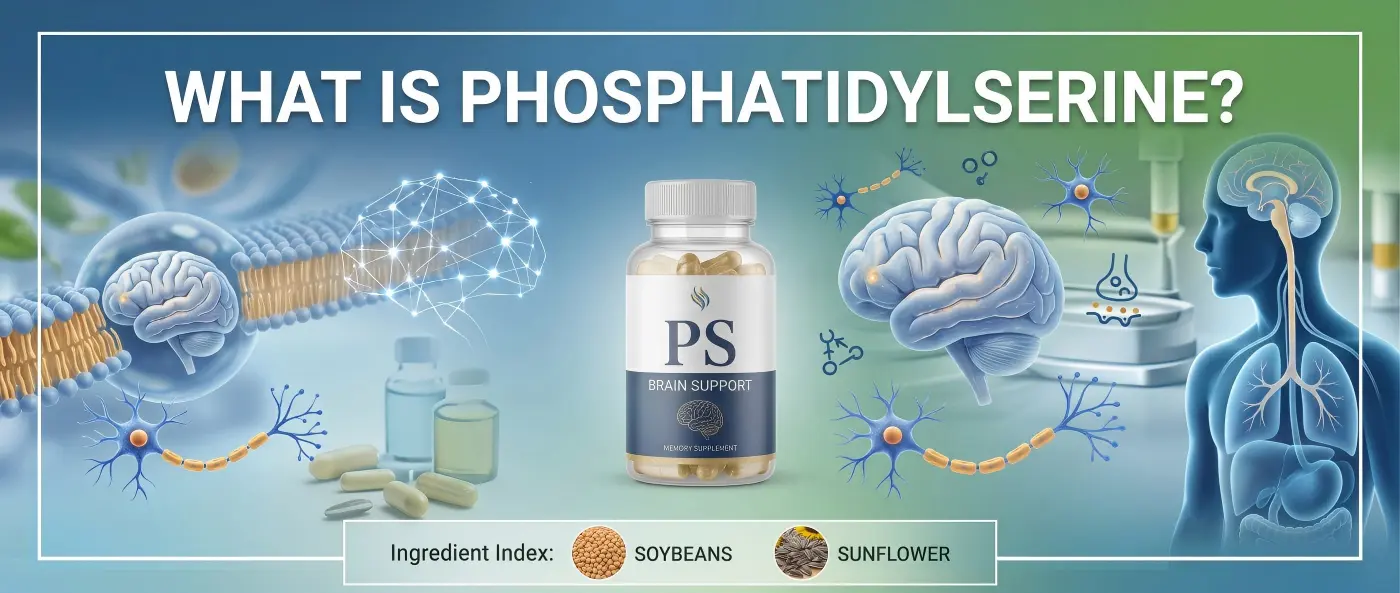
4. Where Does Phosphatidylserine Come From?
Natural Food Sources
Before supplementation existed, humans obtained PS from:
| Food Source | Approximate PS Content |
|---|
| Bovine brain | 713 mg per 100 g |
| Atlantic mackerel | 480 mg per 100 g |
| Chicken heart | 414 mg per 100 g |
| Atlantic herring | 360 mg per 100 g |
| Tuna | 194 mg per 100 g |
| Soy lecithin | 10–30 mg per 100 g |
| White beans | ~100 mg per 100 g |
The challenge: obtaining therapeutic doses (100–300 mg) from food alone would require consuming hundreds of grams of organ meat or fish daily—impractical for most modern diets.
The Bovine Brain Era (History)
Early PS supplements were derived from bovine brain cortex (BC-PS). These products showed promising clinical results in the 1980s and 1990s. However, concerns about bovine spongiform encephalopathy (BSE, or “mad cow disease”) led to the discontinuation of brain-derived PS in most markets.
Today, all commercially available PS supplements are plant-derived.
Modern Manufacturing: Enzymatic Conversion
Contemporary PS is produced through enzymatic transphosphatidylation using phospholipase D (PLD) from Streptomyces species. The process works as follows:
Non-GMO Soy or Sunflower Lecithin
    ↓
Phospholipase D + L-Serine
    ↓
Enzymatic Conversion (Transphosphatidylation)
    ↓
Purification & Drying
    ↓
Phosphatidylserine Powder (20%, 50%, or 70% purity)
Research published in Foods demonstrated that this enzymatic process can achieve >88% PS purity from both soy and sunflower lecithin under optimized conditions, making it a commercially viable and safe alternative to animal sources.
Why All Supplements Today Are Plant-Derived
Safety: Eliminates BSE/TSE risk
Scalability: Soy and sunflower are abundant agricultural commodities
Regulatory: FDA, EFSA, and other agencies prefer plant-derived sources for dietary supplements
Certifications: Non-GMO, Kosher, Halal, and vegan claims are only possible with plant sources
5: Phosphatidylserine Benefits?
Memory & Cognitive Aging
The most searched benefit. PS is best studied for age-associated memory impairment and mild cognitive decline.
A 15-week double-blind RCT in 157 non-demented elderly patients (mean age 73) found that 300 mg/day of PS combined with DHA significantly improved immediate recall compared to placebo.
A 3-month RCT in 72 adults aged 60–80 showed that 100 mg PS plus 80 mg phosphatidic acid improved memory scores, particularly in those with lower baseline cognitive function.
A 2024 RCT in 190 older adults with mild cognitive impairment found that a combination of PS, alpha-linolenic acid, and ginkgo flavonoids improved short-term memory and arithmetic performance over 12 months.
Key takeaway: PS shows the strongest memory evidence in older adults with existing memory complaints, not necessarily in healthy young adults seeking enhancement.
Focus & Attention
PS supports attention primarily through cholinergic membrane maintenance and HPA axis modulation. The ADHD evidence (covered in Module 12) suggests particular benefits for inattention in children.
Stress & Cortisol Management
PS is one of the few supplements with human evidence for blunting cortisol response to acute stress:
This makes PS popular among athletes, executives, and anyone experiencing chronic stress.
Healthy Aging
Beyond memory, PS supports neuroplasticity and neuroprotection—functions that become increasingly important after age 50. The FDA’s qualified health claim specifically addresses this demographic.
Exercise Recovery
By reducing exercise-induced cortisol and supporting membrane repair, PS may:
Sleep Support
While not a sedative, PS’s cortisol-modulating effects may indirectly support sleep quality in individuals whose insomnia is linked to elevated evening cortisol or HPA axis dysregulation.
6: What Does the Science Actually Say?
Below is a transparent breakdown of the evidence quality.
| Evidence Type | Finding | Quality | Key Study |
|---|
| FDA Qualified Health Claim | “Consumption of phosphatidylserine may reduce the risk of cognitive dysfunction and dementia in the elderly. FDA concludes that there is little scientific evidence supporting this claim.” | Official | FDA, 2003 (updated 2004) |
| Human RCT (Memory) | 300 mg PS + DHA improved immediate recall in elderly | Moderate | Vakhapova et al., 2010 |
| Human RCT (Memory) | 100 mg PS + PA improved memory in 60–80 year olds | Moderate | Richter et al., 2013 |
| Human RCT (Cortisol) | 600 mg PS reduced exercise-induced cortisol by 39% | Moderate | Starks et al., 2008 |
| Human RCT (ADHD) | 200 mg/day PS improved ADHD symptoms and auditory memory in children | Moderate | Hirayama et al., 2014 |
| Meta-Analysis | PS had positive effect on memory in older adults with cognitive decline (9 studies, 961 participants) | Moderate | 2022 Systematic Review |
| Human RCT (ADHD + Omega-3) | PS-Omega3 (250 mg/day) improved hyperactive-impulsive symptoms in ADHD children | Moderate | Manor et al., 2012 |
| Human RCT (Epilepsy + ADHD) | PS-Omega3 did NOT improve ADHD symptoms in children with epilepsy | Low (underpowered) | AGPI Trial, 2024 |
What Is Proven
PS supplementation (100–300 mg/day) can improve memory in older adults with age-associated cognitive decline.
PS can blunt acute cortisol responses to exercise and mental stress.
PS is safe and well-tolerated in studied populations.
What Is Promising
ADHD symptom improvement (especially inattention) in children.
Exercise recovery and performance enhancement.
Mood and stress resilience support.
What Still Lacks Evidence
Cognitive enhancement in healthy young adults (nootropic effects).
Direct neuroprotection in Alzheimer’s disease (evidence is preliminary).
Long-term safety data beyond 6 months.
7: Phosphatidylserine Benefits by Age
Children (4–12 years)
Primary use: ADHD symptom support, attention improvement.
Evidence: 200 mg/day showed improvements in ADHD symptoms and short-term auditory memory in a 2-month RCT.
Caution: Always consult a pediatrician before use.
Students (13–25 years)
Primary use: Exam stress, study focus, memory consolidation.
Evidence: Limited direct RCTs in this age group. Benefits may be more related to stress/cortisol management than direct cognitive enhancement.
Practical note: Many students stack PS with choline sources (Alpha GPC or Citicoline) for combined membrane + neurotransmitter support.
Working Adults (25–55 years)
Primary use: Brain fog, meeting fatigue, stress resilience.
Evidence: Cortisol-blunting effects are most relevant here. PS may help maintain mental clarity during high-stress work periods.
Onset: Stress-related benefits may appear within 1–2 weeks; memory benefits typically require 4–8 weeks.
Athletes
Primary use: Exercise recovery, cortisol management, endurance.
Evidence: 600–800 mg/day has been shown to reduce exercise-induced cortisol and improve testosterone-to-cortisol ratio.
Practical note: Best taken pre-workout or in the post-workout window for acute stress support.
Older Adults (55+ years)
Primary use: Memory support, cognitive aging, healthy brain maintenance.
Evidence: Strongest demographic for PS. Multiple RCTs show memory improvement in those with age-associated cognitive decline.
FDA claim: Specifically authorized for elderly cognitive dysfunction and dementia risk reduction (qualified claim).
8: Who Uses Phosphatidylserine?
Based on Amazon, iHerb, Reddit, and Quora discussions, here are the dominant user personas:
The Student
Scenario: Exam period, high stress, needs sustained attention.
Stack: PS + Alpha GPC + DHA
Feedback pattern: “Took 2–3 weeks to notice; less mental fatigue during long study sessions.”
The Office Worker
Scenario: Brain fog, back-to-back meetings, screen fatigue.
Stack: PS + L-Theanine + Magnesium
Feedback pattern: “Not a stimulant feeling—more like my brain doesn’t crash at 3 PM.”
The Gamer
Scenario: Long sessions, reaction time, mental endurance.
Stack: PS + Citicoline + Caffeine
Feedback pattern: Mixed. Some report improved consistency; others expect immediate boosts and are disappointed.
The Older Adult
Scenario: Forgetting names, slower word recall, worried about cognitive decline.
Stack: PS + DHA + B-Complex
Feedback pattern: “Memory feels more consistent after 6–8 weeks. Not dramatic, but noticeable.”
The Athlete / Hybrid Trainer
Scenario: Heavy training blocks, poor recovery, elevated stress.
Stack: PS + Creatine + Omega-3
Feedback pattern: “Less soreness, better sleep, feel less ‘wired’ after hard sessions.”
9: Popular Supplement Combinations
PS + Alpha GPC
Synergy: Alpha GPC provides choline for acetylcholine synthesis; PS maintains the membranes where acetylcholine receptors reside.
When to use: For comprehensive cholinergic support—memory, focus, and learning.
Overlap warning: Both support acetylcholine but through different mechanisms. They are complementary, not redundant.
Typical dosing: Alpha GPC 300 mg + PS 100 mg
PS + Citicoline (CDP-Choline)
Synergy: Citicoline provides both choline and cytidine (for uridine synthesis). PS adds membrane integrity.
When to use: For neuroprotection and long-term brain health.
Research note: Citicoline has strong evidence for episodic memory in older adults; PS complements this structurally.
PS + DHA
- Synergy: DHA is the primary omega-3 in brain phospholipids. PS + DHA combinations have shown enhanced memory effects in clinical trials.
- When to use: For aging populations and anyone seeking maximum membrane support.
- Mechanism: DHA incorporates into PS in neuronal membranes, enhancing fluidity and signaling.
PS + Omega-3 (EPA/DHA)
PS + Bacopa Monnieri
Synergy: Bacopa supports synaptic communication and antioxidant defense; PS supports membrane integrity.
When to use: For memory and learning stacks with Ayurvedic backing.
Onset: Bacopa requires 8–12 weeks; PS typically 4–8 weeks.
PS + Lion’s Mane
PS + Ashwagandha
Synergy: Both modulate the HPA axis and cortisol. Ashwagandha works at the receptor/adaptogen level; PS works at the membrane/signaling level.
When to use: For stress resilience and adrenal support.
Caution: Monitor for excessive cortisol suppression if combining with other adaptogens.
PS + Magnesium
Synergy: Magnesium supports NMDA receptor function and GABA; PS supports membrane stability.
When to use: For sleep, anxiety, and neuromuscular recovery.
10: Phosphatidylserine vs Other Brain Nutrients
PS vs. Alpha GPC
PS: Membrane repair, maintenance, cortisol modulation. Slower onset (weeks).
Alpha GPC: Direct acetylcholine precursor. Faster focus enhancement (hours).
Verdict: They serve different roles. Many users take Alpha GPC in the morning for focus and PS in the evening for recovery and membrane repair.
PS vs. Citicoline
PS: Structural phospholipid for membrane integrity.
Citicoline: Choline + cytidine donor that supports both acetylcholine and phosphatidylcholine synthesis.
Verdict: Citicoline is more “metabolic”; PS is more “structural.” Ideal for different stages of cognitive support.
PS vs. Phosphatidylcholine (PC)
PS: Specialized brain phospholipid; signaling molecule; cortisol modulation.
PC: Most abundant membrane phospholipid; choline source; liver support.
Verdict: PC is a generalist; PS is a brain specialist. PC can be converted to PS in the body, but direct PS supplementation bypasses this rate-limited pathway.
PS vs. DHA
PS: Phospholipid that carries signaling functions.
DHA: Omega-3 fatty acid that integrates into membrane phospholipids.
Verdict: Complementary. DHA is the “fatty acid cargo”; PS is the “phospholipid vehicle.” Combined supplements show enhanced effects.
PS vs. Bacopa
PS: Western nootropic with membrane mechanism.
Bacopa: Ayurvedic herb with antioxidant and synaptic mechanisms.
Verdict: Both are memory-focused but work through entirely different pathways. Can be stacked.
PS vs. Ginkgo Biloba
PS: Supports membrane integrity and cortisol.
Ginkgo: Improves cerebral blood flow and acts as an antioxidant.
Verdict: Ginkgo is circulatory; PS is structural. Some clinical trials combine them successfully.
11: How Much Phosphatidylserine Should You Take?
Evidence-Based Dosing
| Dose | Use Case | Evidence Base |
|---|
| 100 mg/day | General maintenance, mild memory support | Multiple RCTs in elderly |
| 200 mg/day | ADHD support, stress management | Hirayama et al., 2014 |
| 300 mg/day | Memory improvement, cognitive aging | Vakhapova et al., 2010 |
| 600 mg/day | Exercise cortisol reduction | Starks et al., 2008 |
| 800 mg/day | Intensive exercise/athletic performance | Monteleone et al., 1992 (bovine-derived era) |
Timing
Morning: For focus and daytime stress resilience.
Evening: For sleep support and recovery (especially if stress/cortisol-related insomnia).
With food: PS is fat-soluble; take with a meal containing healthy fats for optimal absorption.
How Long Until It Works?
1 week: Possible stress/calmness effects.
4 weeks: Subtle memory improvements may begin.
8–12 weeks: Optimal results for memory and cognitive aging.
Note: PS is not a stimulant. Benefits are gradual and cumulative.
12: Side Effects & Safety
Is PS Safe?
Yes. Phosphatidylserine is Generally Recognized As Safe (GRAS) by the FDA for food use, and dietary supplement safety data is robust.
Known Side Effects
Mild digestive discomfort (nausea, stomach upset) at higher doses
Insomnia (rare; usually if taken too late in the day for sensitive individuals)
Headache (rare)
Drug Interactions
Anticholinergic medications: PS supports cholinergic function; may theoretically interact.
Blood thinners: High-dose PS (especially with DHA/EPA) may have mild anticoagulant effects. Consult a physician if on warfarin or similar medications.
Stimulants: May complement ADHD medications but should be discussed with a prescribing physician.
Pregnancy & Breastfeeding
ADHD & Children
Long-Term Safety
No serious long-term toxicity has been reported in human studies up to 6 months.
As with all supplements, periodic reassessment with a healthcare provider is recommended.
13: Consumer Questions from Reddit & Quora
“Does phosphatidylserine actually work?”
The honest answer: It depends on your goal and baseline health.
For memory in older adults: Moderate evidence. Multiple RCTs show improvement in age-associated memory impairment.
For stress/cortisol: Reasonable evidence. Measurable cortisol reduction in exercise studies.
For focus in healthy young adults: Weak evidence. Don’t expect a Limitless pill.
Reddit consensus: “Subtle but real. Not a stimulant. Takes weeks.”
“Should I take Alpha GPC or PS?”
This is the most debated comparison in nootropic communities.
Alpha GPC = Acetylcholine production → Immediate focus, learning speed.
PS = Membrane repair + cortisol → Long-term maintenance, stress recovery.
Popular stack: Alpha GPC in the morning (focus), PS in the evening (recovery and membrane repair).
“Does PS lower cortisol too much?”
No. The research supports PS helping to regulate the cortisol response to stress, not suppressing healthy baseline cortisol. You need cortisol to wake up, exercise, and function. PS appears to blunt the excessive spikes that occur with acute stressors, not the normal diurnal rhythm.
“Does PS help ADHD?”
For children: Moderate evidence. A 2014 RCT showed 200 mg/day improved ADHD symptoms and short-term auditory memory.
A 2021 meta-analysis confirmed a small but significant effect on inattention.
For adults: Very limited evidence. Most ADHD studies focus on children.
Important: PS is not an FDA-approved ADHD treatment. It may be a useful adjunct, not a replacement for standard care.
“How long does PS take to work?”
Based on clinical data and user reports:
| Timeline | Effect |
|---|
| 1 week | Reduced stress response, subtle calmness |
| 4 weeks | Early memory improvements, better sleep |
| 8–12 weeks | Full cognitive benefits, optimal memory support |
“Soy or Sunflower?”
This debate is growing:
| Factor | Soy PS | Sunflower PS |
|---|
| Cost | Lower | Higher |
| Allergen risk | Soy allergen potential | Lower allergen risk |
| GMO | Often GMO (unless specified Non-GMO) | Naturally Non-GMO |
| Bioavailability | Good | High (some sources suggest superior) |
| Clean label appeal | Moderate | Excellent |
| Supply stability | High volume | Growing but smaller |
Bottom line: For mass-market products, soy PS offers cost efficiency. For premium, allergen-free, clean-label positioning, sunflower PS is the preferred choice.
“Should I stack PS with Creatine?”
An emerging trend in biohacking and hybrid athlete communities. The rationale:
Creatine supports ATP energy metabolism.
PS supports membrane integrity and cortisol management.
No direct interaction, but the combination covers energy + structure + recovery.
14: Amazon/iHerb Review Insights
Five-Star Reviews: What Consumers Love
Common themes from high-rated PS products:
“Easy to swallow” → Capsule size and coating matter.
“Noticeable calm focus” → Stress-related benefits are felt first.
“Better stress resilience” → Cortisol modulation is perceptible.
“Helpful alongside Omega-3” → Consumers intuitively stack with fish oil.
“Improved memory consistency after several weeks” → Realistic expectations lead to satisfaction.
“No jitters compared to caffeine” → Non-stimulant positioning is valued.
“Trusted clean-label and sunflower-derived” → Premium positioning wins.
Takeaway for Brands: Emphasize sustained use (4–8 weeks), position sunflower-derived PS for premium markets, and consider combination formulas over single-ingredient products.
One-Star Reviews: What Consumers Hate
Common complaints:
“Didn’t notice any effect” → Unrealistic expectations or insufficient dosing.
“Dose too low” → 100 mg products marketed as “Maximum Strength” disappoint.
“Capsule too large” → Softgels can be bulky.
“Expensive” → PS is a premium ingredient; value perception matters.
“Poor smell” → Phospholipid oxidation is a real issue.
“Stomach discomfort” → Taking with food mitigates this.
“Shipping damage” → PS is sensitive to heat and oxidation.
Takeaway for Brands:
Avoid underdosed products (100 mg is maintenance-level, not “maximum strength”).
Control oxidation and odor through proper encapsulation and packaging.
Optimize capsule size or use powder formats.
Set realistic expectations on product pages.
15: How to Choose a High-Quality Phosphatidylserine Supplement
Purity Specifications
| Purity | Typical Use | Notes |
|---|
| 20% | Basic supplements, functional foods | Lower cost, higher excipient load |
| 50% | Standard capsules, powders | Balanced cost and potency |
| 70% | Premium supplements, clinical-grade | Highest potency, lowest capsule burden |
Source Material
Soy-derived: Cost-effective, widely available. Ensure Non-GMO certification.
Sunflower-derived: Non-GMO by nature, lower allergen risk, premium positioning.
Quality Markers to Demand
HPLC verification: High-Performance Liquid Chromatography is the gold standard for PS content verification.
Non-GMO certification: Essential for soy-derived PS.
Third-party testing: Heavy metals, microbiology, residual solvents.
BSE/TSE-free statement: Required for export to EU and other regulated markets.
Allergen statements: Soy PS must declare soy allergen; sunflower PS is allergen-friendlier.
Stability data: PS is prone to oxidation; peroxide values and shelf-life data matter.
Delivery Format
Softgels: Good for oil-soluble PS, but can be large and sensitive to heat.
Hard capsules: Versatile, can combine with other powders.
Powder: Flexible for functional foods, beverages, and custom formulations.
Tablets: Require binders; less common for PS due to lipid nature.
16: OEM & Private Label Opportunities for Brands
Why Brands Are Adding PS to Their Lines
- FDA-qualified health claim: Rare for a non-vitamin ingredient. Allows specific cognitive health messaging.
- Aging demographic: Global population over 60 is projected to reach 21.4% by 2034, driving cognitive health demand.
- Clean-label trend: Sunflower PS enables non-GMO, soy-free, allergen-free claims.
- Stackability: PS combines well with choline sources, omega-3s, adaptogens, and vitamins.
OEM Manufacturing Specifications
| Parameter | Standard Options |
|---|
| Source | Soy lecithin or Sunflower lecithin |
| Purity | 20%, 50%, 70% PS |
| Appearance | Off-white to light yellow powder (60 mesh) |
| Test Method | HPLC |
| Moisture | ≤ 2.0% |
| Heavy Metals | Pb ≤ 1.0 ppm, As ≤ 1.0 ppm |
| Microbiology | TPC ≤ 10⁴ CFU/g, Yeast/Mold ≤ 10³ CFU/g |
| Shelf Life | 24 months (sealed, cool, dry, protected from light) |
Dosage Form Opportunities
Single-ingredient capsules: 100 mg, 200 mg, 300 mg
Nootropic blends: PS + Alpha GPC + Bacopa + Lion’s Mane
Stress/adrenal formulas: PS + Ashwagandha + Rhodiola + Magnesium
Senior cognitive health: PS + DHA + Citicoline + B-Vitamins
Sports recovery: PS + Creatine + Electrolytes + Omega-3
Functional foods: PS-fortified beverages, nutrition bars, gummies
MOQ & Export Considerations
MOQ: Ranges from 1–25 kg for R&D/samples to 300+ kg for commercial production.
Certifications: ISO22000, HACCP, BRC, cGMP, Kosher, Halal, FDA-registered facility.
Documentation: COA per batch, TDS, MSDS, allergen statements, GMO-free declarations, BSE/TSE-free certificates.
Packaging: 25 kg/carton with double-layer food-grade liner; customizable for brand requirements.
Custom Formulation Support
Formulation guidance: PS stability in combination products
Flavor masking: For powder and beverage applications
Stability testing: Accelerated and real-time shelf-life studies
Regulatory guidance: Label claim compliance by market (US, EU, APAC)
17. FAQ (Frequently Asked Questions)
1. What is phosphatidylserine used for? PS is primarily used to support memory, cognitive function, stress resilience, and healthy brain aging. It is also used by athletes to manage exercise-induced cortisol.
2. Is phosphatidylserine safe? Yes. PS is GRAS-listed by the FDA and has been safely used in human clinical trials at doses up to 800 mg/day. Mild digestive discomfort is the most common side effect.
3. Does phosphatidylserine really work? The evidence is strongest for memory support in older adults with age-associated cognitive decline and for cortisol management under stress. Evidence for cognitive enhancement in healthy young adults is limited.
4. How long does phosphatidylserine take to work? Stress-related benefits may appear within 1–2 weeks. Memory benefits typically require 4–8 weeks of consistent use, with optimal results at 8–12 weeks.
5. Can I take phosphatidylserine every day? Yes. Clinical studies have used daily dosing for up to 6 months without serious adverse effects.
6. Is phosphatidylserine better than Alpha GPC? They serve different functions. Alpha GPC is a direct acetylcholine precursor (fast focus). PS is a structural membrane phospholipid that supports long-term brain health and cortisol regulation. They are complementary, not competitors.
7. Is phosphatidylserine better than phosphatidylcholine? PS is more specialized for brain function and signaling. PC is more abundant and serves general membrane and liver functions. For cognitive support, PS is the superior choice.
8. Does phosphatidylserine reduce cortisol? PS can blunt acute cortisol spikes in response to exercise and mental stress. It does not appear to suppress healthy baseline cortisol levels.
9. Should phosphatidylserine be taken with food? Yes. PS is fat-soluble and absorbs best when taken with a meal containing dietary fat.
10. Is sunflower phosphatidylserine better than soy? Sunflower PS is naturally non-GMO, has lower allergen risk, and appeals to clean-label consumers. Soy PS is more cost-effective and has a longer supply history. Both have clinical evidence for efficacy.
11. What is the best phosphatidylserine dosage? For memory: 100–300 mg/day. For cortisol/stress: 600–800 mg/day. For ADHD in children: 200 mg/day.
12. Can phosphatidylserine be combined with DHA? Yes. PS + DHA combinations have shown enhanced memory effects in clinical trials and are a popular stack for cognitive aging.
13. Can phosphatidylserine help students and professionals? It may help with stress resilience and sustained attention, but evidence for direct cognitive enhancement in healthy young adults is weaker than for older populations.
14. Is phosphatidylserine suitable for long-term use? Current data supports safety up to 6 months. Long-term studies beyond this timeframe are limited but no serious concerns have emerged.
15. What should brands look for when sourcing phosphatidylserine ingredients? Brands should verify HPLC-tested purity, Non-GMO certification (for soy), allergen statements, heavy metal and microbiological testing, BSE/TSE-free documentation, and stability data.
16. Does phosphatidylserine help with sleep? Indirectly, yes. By modulating cortisol and HPA axis function, PS may improve sleep quality in individuals whose insomnia is linked to stress.
17. Can phosphatidylserine cause headaches? Headaches are a rare side effect. If they occur, reducing the dose or taking with food may help.
18. Is phosphatidylserine vegan? Plant-derived PS from soy or sunflower is suitable for vegetarians and vegans. Always verify the capsule material (gelatin vs. vegetable cellulose).
19. What’s the difference between 20%, 50%, and 70% PS? These numbers refer to the purity of the PS extract. Higher purity means less filler, smaller capsules, and more active ingredient per serving.
20. Can I take phosphatidylserine with ADHD medication? PS has been studied alongside standard ADHD care, but you should always consult your prescribing physician before combining supplements with stimulant or non-stimulant ADHD medications.
21. Does phosphatidylserine have a taste or smell? Pure PS powder has a mild, characteristic phospholipid odor. High-quality products should not have a rancid or strong fishy smell, which indicates oxidation.
22. How is phosphatidylserine manufactured today? Modern PS is produced via enzymatic conversion of soy or sunflower lecithin using phospholipase D and L-serine. This replaces the older bovine-brain extraction method.
23. What certifications should a PS manufacturer have? Look for ISO22000, HACCP, BRC, cGMP, Kosher, Halal, and FDA-registered facility status. Third-party testing is essential.
24. Can phosphatidylserine be used in functional foods? Yes. PS is GRAS-listed in the US and can be incorporated into beverages, nutrition bars, and other functional food applications, though stability and taste masking require formulation expertise.
25. Why do some PS products smell bad? Phospholipids are prone to oxidation. Poor storage, low-quality raw materials, or inadequate antioxidant protection can lead to rancidity. Proper packaging (nitrogen-flushed, light-protected) and low peroxide values are quality indicators.
References & Sources
Hirayama S, et al. – The effect of phosphatidylserine administration on memory and symptoms of attention-deficit hyperactivity disorder: a randomised, double-blind, placebo-controlled clinical trial.
Journal of Human Nutrition and Dietetics, 2014.
https://pubmed.ncbi.nlm.nih.gov/23495677/ Vakhapova V, et al. – Phosphatidylserine containing ω-3 Fatty acids may improve memory abilities in non-demented elderly with memory complaints: a double-blind placebo-controlled trial.
Dementia and Geriatric Cognitive Disorders, 2010.
https://www.researchgate.net/publication/44649060 EFSA NDA Panel – Scientific Opinion on the substantiation of health claims related to phosphatidylserine.
EFSA Journal.
https://www.efsa.europa.eu/ Glade MJ, Smith K. – Phosphatidylserine and the human brain. Nutrition, 2015. doi:10.1016/j.nut.2014.10.014
Kato-Kataoka A, et al. – Soybean-derived phosphatidylserine improves memory function of the elderly Japanese subjects with memory complaints. Journal of Clinical Biochemistry and Nutrition, 2010. doi:10.3164/jcbn.10-62