Table of Contents
How to Use This Guide
What Are Elderberry Gummies?
Benefits: What the Science Actually Shows
- What the Evidence Supports
- What the Evidence Does Not Support
- How Elderberry May Work: Mechanistic Hypotheses
- Why the Full Formula Matters
Do Elderberry Gummies Really Work?
What’s Inside: Ingredients & Formulation Architectures
- Core Ingredients
- Formulation Architectures on the Market
- How to Read a Label Like a Formulator
Safety, Side Effects & Who Should Avoid Them
Elderberry Gummies vs Elderberry Syrup
Market Trends 2026 and Beyond
- Market Size and Growth Trajectory
- Six Structural Trends
Competitive Landscape: Lessons from Leading Brands
- The Three-Tier Market
- Choosing Your Entry Lane
Product Development Blueprint for Supplement Brands
- Three Manufacturing-Ready Blueprints
- What Wins vs What Fails
- White-Space Opportunities
Choosing the Right Elderberry Gummies Manufacturer
- Weighted Evaluation Framework
- Elderberry Extract Grades
- Red Flags to Walk Away From
Frequently Asked Questions
References
- Scientific & Regulatory References
- Market & Label Sources
1. Introduction
| Key takeaway —This guide serves two readers at once: consumers evaluating elderberry gummies, and supplement brands planning an elderberry SKU. Every section is self-contained — jump straight to what you need. |
Elderberry gummies sit at the intersection of two questions. Consumers ask: do they actually work, and are they safe? Brands ask: what should the formula look like, and who should manufacture it? This guide answers both — with peer-reviewed clinical evidence, teardowns of leading retail formulas, and production insight from our formulation science team. Every health statement is limited to structure/function territory and tied to a primary source; every market figure is labeled with its source and methodology.
Key takeaways before you start:
- The science: across five randomized controlled trials (936 adults), elderberry supplementation started within 48 hours of symptom onset was associated with reduced duration and severity of upper respiratory symptoms; a 2019 meta-analysis found a large mean effect size. Evidence does not support disease-prevention claims.[1][2]
- The market: the elderberry supplements market is estimated at roughly USD 1.5 billion in 2025, with a long-term CAGR of about 8.9% toward 2036.[11]
- The formula: elderberry + vitamin C + zinc is the baseline architecture in roughly 60–70% of Amazon elderberry gummy SKUs (internal retail shelf audit, July 2026).
- The white space: sugar-free children’s elderberry gummies — no major brand currently offers one.
| Manufacturing with KS Supplements ✓ OEM / ODM Available ✓ MOQ from 5,000 units ✓ Lead Time 4–6 weeks ✓ cGMP · NSF · HACCP · ISO9001 · ISO22000 · FSCC22000 · HALAL · KOSHER ✓ Daily Capacity 1,000,000+ Gummies ✓ Request a Quote → kssupplements.com |
2: What Are Elderberry Gummies?
| Key takeaway —Elderberry gummies are chewable dietary supplements built around standardized Sambucus nigra extract. Gummies are now the category’s mainstream format because they solve its biggest problem: compliance. |
Elderberry gummies are chewable dietary supplements formulated with extracts or concentrates of black elderberry (Sambucus nigra), a fruit with a long history of traditional use in European herbal medicine for seasonal immune support. Within the immunity category, elderberry has moved from a niche botanical remedy to a year-round maintenance product — and gummies have become its dominant delivery format.
Format evolution. The category has moved through four stages: traditional syrups (flexible dosing, but poor portability and low compliance), capsules and tablets (precise standardization, but swallowing fatigue), gummies (palatability plus habit formation — the mainstream phase), and today’s functional blends that pair elderberry with vitamin D3, zinc, melatonin, probiotics, or adaptogens.
Why gummies dominate. Compliance is a performance determinant: a moderately dosed gummy taken consistently often outperforms a high-potency capsule used irregularly. Gummies also carry higher perceived value in retail and e-commerce, suit multi-ingredient formulas, and achieve the strongest adherence among children.
Primary use cases. Demand clusters around four scenarios: daily immune maintenance; pediatric immune support (ages 2–12 with age-appropriate formulas); seasonal reinforcement during cold and flu season; and travel or high-exposure readiness — a scenario directly studied in a randomized trial of long-haul air travelers.[4]
3. Elderberry Gummies Benefits: What the Science Actually Shows
| Key takeaway —Clinical evidence supports conditional, early-intervention immune support — not disease prevention. Honest framing is both a regulatory requirement and a trust asset. |
What the Evidence Supports
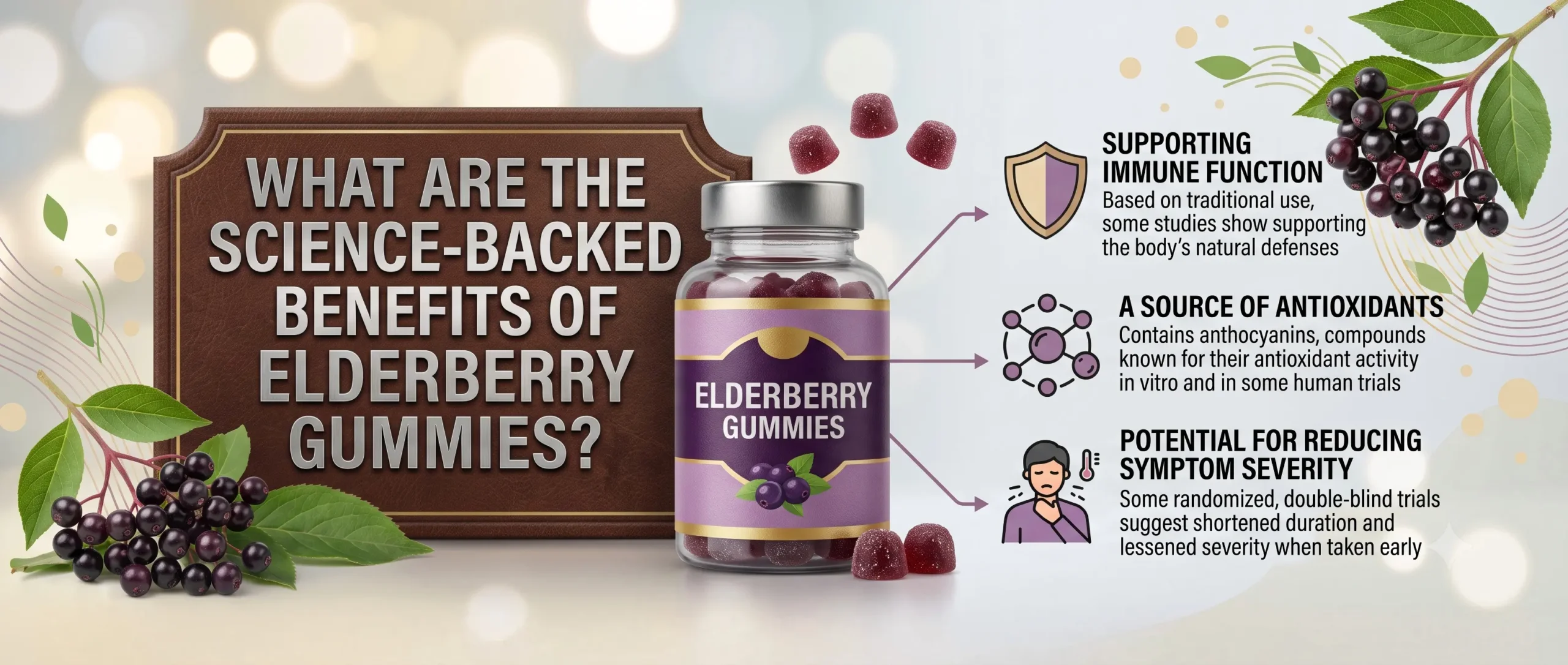
- Across five randomized controlled trials involving 936 adults, elderberry supplementation — when started within 48 hours of symptom onset — was associated with reduced duration and severity of cold and flu symptoms, with no serious adverse events reported.[1]
- A 2019 meta-analysis of randomized, controlled clinical trials found a large mean effect size for upper respiratory symptom reduction.[2]
- In one double-blind RCT of influenza patients, symptoms were relieved on average about four days earlier in the elderberry group than in the placebo group.[3]
- In a randomized, double-blind trial of long-haul air travelers, elderberry supplementation was associated with significantly shorter cold duration and milder symptoms among travelers who did catch a cold.[4]
What the Evidence Does Not Support
- There is no convincing evidence that elderberry prevents colds or influenza, and elderberry products must never be positioned as a vaccine substitute or a treatment.[5][6]
- Major medical references describe the overall evidence base as promising but limited — small sample sizes, heterogeneous formulations, and variable dosing protocols.[6]
How Elderberry May Work: Mechanistic Hypotheses
Three mechanisms are proposed in the literature. They rest largely on in vitro and preliminary data and should be read as hypotheses, not confirmed clinical pathways:
- Viral entry interference — elderberry anthocyanins have been observed to interact with viral surface proteins in vitro, potentially limiting cellular attachment.[1]
- Immune response modulation — elderberry bioactives may influence cytokine signaling involved in early immune activation.[1][6]
- Antioxidant activity — the berries’ high polyphenol content contributes antioxidant capacity, which may help the body manage oxidative stress during immune responses.[6]
Why the Full Formula Matters
Vitamin C contributes to the normal function of the immune system, including the support of various cellular immune functions.[7] Zinc is required for normal immune cell development and function, and is widely used in early cold-season support formulas.[8] These are structure/function statements consistent with FDA dietary supplement labeling rules; disease prevention or treatment claims are not permitted.[9]
4. Do Elderberry Gummies Really Work?
| Key takeaway —Real-world effectiveness is a product of formulation quality and compliance — the gummy format’s biggest contribution is that people actually take it. |
The perception–reality gap. Consumers fall into three archetypes. High-belief users treat elderberry as near-preventive and risk expectation mismatch during breakthrough illness. Functional skeptics — the largest commercial segment — use it as conditional support and respond to branding and social proof. Evidence-oriented users audit labels, reward transparency, and punish underdosed formulas.
Compliance as a hidden efficacy driver. Gummy formats improve adherence versus capsules and syrups: more stable dosing behavior, stronger habit loops, and higher perceived effectiveness over time. Market research on gummy supplements consistently identifies taste and ease of use as the format’s core growth drivers.[12]
The verdict. Positioned honestly — as early-intervention immune support — elderberry gummies are a reasonable, evidence-informed choice. Positioned as prevention, they disappoint consumers and attract regulatory risk.[1][2][9]
5. What’s Inside: Ingredients & Formulation Architectures
| Key takeaway —The category has standardized around a core trio — elderberry, vitamin C, zinc — with differentiation happening in dose, source quality, sweetener system, and certifications. |
Core Ingredients
- Black elderberry extract (Sambucus nigra) — the active backbone; look for standardization to anthocyanins.
- Vitamin C — supports normal immune function; ascorbic acid or whole-food sources.[7]
- Zinc — supports normal immune cell development and function; citrate or gluconate forms are common.[8]
- Supporting actives — vitamin D3, echinacea, and propolis appear in premium seasonal formulas.[18]
- Base and excipients — pectin (plant-based gelling, now the default for clean-label and children’s products), natural flavors, and a sweetener system.[15][22]
Formulation Architectures on the Market
| Formula Type | Typical Composition | Market Position |
| Elderberry only | 100–500 mg juice powder equivalent | Basic immune support |
| Elderberry + Vitamin C | 50–100 mg extract + 90 mg vitamin C | Mainstream daily support |
| Elderberry + C + Zinc | Adds 7.5–11 mg zinc | Core immune formula — roughly 60–70% of Amazon SKUs (internal audit, July 2026) |
| Elderberry + C + Zinc + D3 / Echinacea | Full seasonal stack | Premium seasonal support |
| Sleep + Immune hybrid | Adds melatonin 1–3 mg + L-theanine | Dual-function nighttime niche |
| Organic/clean label | Organic concentrate, fruit-based sweetening | Premium natural channel |
Table 1: Commercial elderberry gummy formula architectures. Sources: retail label teardowns [13]–[20]; internal shelf audit, July 2026.
How to Read a Label Like a Formulator
- Look for a standardized extract with stated anthocyanin content — not just the word elderberry on the label.
- Commercial gummies typically provide 15–100 mg of concentrated extract per serving (or 100–500 mg fresh-juice equivalent). Products below roughly 30 mg of extract per serving are unlikely to match the doses used in clinical research.[1][13][14]
- Watch sugar: the best-performing SKUs cluster at 2 g of sugar or less per serving.[12][19]
6. Safety, Side Effects & Who Should Avoid Them
| Key takeaway —Commercially manufactured elderberry gummies have a favorable safety profile — but raw elderberry is toxic, and some populations should avoid supplementation or consult a physician first. |
- Across 936 participants in five major clinical studies, adverse events were rare and no serious events were reported.[1]
- Possible mild effects include stomach upset (usually when taken on an empty stomach), nausea, and rare allergic reactions.[5][6]
- Raw or unripe elderberries — as well as the plant’s leaves, stems, and bark — contain cyanogenic compounds that can cause nausea, vomiting, and diarrhea. Commercial heat-processed extracts eliminate this risk, which is why manufacturing discipline matters.[5]
- Not recommended without medical guidance: pregnant or breastfeeding women (insufficient safety data); people with autoimmune conditions; anyone taking immunosuppressant drugs, since elderberry may stimulate immune activity; and people using diuretics or diabetes medication.[5][6]
- Children: use age-appropriate pediatric formulas (typically ages 2 and up), follow label dosing, and store gummies out of reach — they look and taste like candy.[15]
7. Elderberry Gummies vs. Elderberry Syrup
| Key takeaway —The active ingredient is the same; the difference is behavioral. Gummies trade some dosing flexibility for substantially better compliance. | ||
| Dimension | Gummies | Syrup |
| Taste & acceptance | High — candy-like, kid-friendly | Strong herbal taste, lower acceptance |
| Compliance | High — habit-forming daily ritual | Lower — measuring, refrigeration, taste fatigue |
| Dose flexibility | Fixed per piece | Flexible per spoonful |
| Extract per serving | Moderate (15–100 mg extract typical) | Often higher per serving |
| Portability | Excellent | Limited — liquid, refrigerate after opening |
| Best for | Families, daily maintenance, travel | Short-term intensive use, flexible dosing |
Table 2: Format comparison. Sources: product labels and retail listings [13][14][16]; gummy market research [12].
8. Market Trends for 2026 and Beyond
| Key takeaway —Demand is structurally growing at roughly 8.9% CAGR, but the bar for entry is rising: low sugar, clean label, and pectin bases are no longer differentiators — they are market access requirements. |
Market Size and Growth Trajectory
The elderberry supplements market is estimated at approximately USD 1.5 billion in 2025 and USD 1.6 billion in 2026, with a long-term CAGR of about 8.9% toward roughly USD 3.7 billion by 2036. The United States remains the dominant growth engine at roughly 9.5% CAGR, while China and Southeast Asia show mid-single-digit expansion on rising preventive-health spending.[11]
Growth is structurally supported by three drivers: persistent global demand for immune health products, the expansion of e-commerce-first supplement brands, and the acceleration of private label manufacturing in the US and Europe.[11][12]
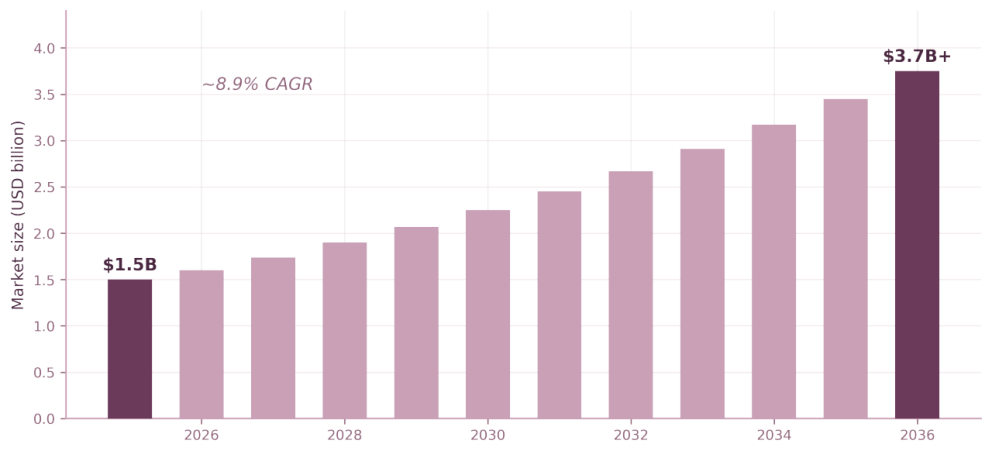
Figure 1: Elderberry supplements market trajectory, 2025–2036 (USD billion). Source: Future Market Insights [11].
Six Structural Trends
- Sugar reduction becomes a filter. Best-performing elderberry gummies cluster at 2 g of sugar or less per serving; stevia and monk fruit systems are increasingly standard, with allulose emerging as a texture bridge. Products above 3 g are progressively excluded from top ranking clusters.[12]
- Clean label becomes baseline. No artificial colors or flavors, non-GMO inputs, and transparent sourcing are now entry requirements; clean-label failure reduces retail distribution probability.[12][16]
- Pectin transition locks in. Vegan demographics, kosher and halal alignment, and better heat stability favor pectin over gelatin. Pectin adds roughly 15–25% to COGS but meaningfully expands the addressable market.[22]
- Pediatric becomes the highest-LTV subcategory. Seasonal repurchase cycles, strong parental loyalty, and low price elasticity make kids’ immune gummies a separate revenue engine — with safety framing, not clinical over-claiming, as the conversion driver.[15]
- Dual-function formulas expand the category. Elderberry paired with sleep, gut, stress, or beauty ingredients carries 20–40% price premiums and faces lower direct SKU competition.[18]
- Amazon-first commercialization. Review velocity drives ranking stability, and fully loaded Amazon economics often require a gross margin above 50%. Amazon is not a channel — it is a pricing stress test.[21]
9. Competitive Landscape: Lessons from Leading Brands
| Key takeaway —The market splits into three tiers — clinical trust, distribution excellence, and certification-driven premium. New entrants must pick one lane; hybrid positioning without clarity typically underperforms. |
The Three-Tier Market
| Brand | Formulation Signature | Competitive Moat | Lesson for OEMs |
| Sambucol | 15.8 mg juice powder (approx. 500 mg fresh juice) + vitamin C + zinc | 25+ years of research heritage | Clinical heritage is the strongest — and slowest — moat [13] |
| Nature Made | 100 mg elderberry + 90 mg vitamin C + zinc | USP Verified quality mark | Third-party certification justifies premium at pharmacy [20] |
| Nature’s Way | 50 mg 64x extract (from 3,200 mg elderberries) + C + D3 + zinc | Taste optimization, category-leading Amazon velocity | Taste, not potency, drives the No. 1 position [14][21] |
| Zarbee’s | 45 mg elderberry + vitamins A, C, D, E + zinc | Pediatrician-founded, clean label | Founder credibility converts parental trust [15] |
| Garden of Life / Gaia Herbs | Organic extracts, fruit-based sweetening | Full certification stack (USDA Organic, Non-GMO, Vegan) | Certification density unlocks natural-channel shelf space and 30–50% premiums [16][17] |
| Olly | Elderberry + melatonin + L-theanine + botanicals | Created the Immunity Sleep hybrid subcategory | Dual-function positioning reduces head-on competition [18] |
| MegaFood | 400 mg organic elderberry, only 2 g sugar | Low-sugar benchmark in a 3–4 g category | Sugar control is a genuine, defensible differentiator [19] |
Table 3: Representative brands by market tier. Formulations per retail labels and listings [13]–[20], accessed July 2026.
Choosing Your Entry Lane
| Ambition | Required Investment | Timeline | Risk Level |
| Tier-1 trust challenger | USD 200K+ in clinical studies, advisory board, certifications | 2–4 years | High |
| Tier-2 Amazon contender | USD 50–100K in formulation, Amazon PPC, review generation | 6–12 months | Moderate |
| Tier-3 premium disruptor | USD 75–150K in organic certification, DTC branding | 6–18 months | Moderate–High |
Table 4: Entry positioning trade-offs. Internal OEM market analysis, July 2026.
10. Product Development Blueprint for Supplement Brands
| Key takeaway —Win with a therapeutic-dose core SKU, 2 g sugar or less, a pectin base, and channel-specific packaging — then extend into a second SKU once reviews compound. |
Three Manufacturing-Ready Blueprints
| Blueprint | Specifications | Positioning |
| Core Immune SKU | Elderberry extract 50–100 mg (standardized anthocyanins) + vitamin C 90 mg + zinc 7.5–11 mg; optional vitamin D3 25–30 mcg; pectin base; 2–3 g sugar max | Mass-market daily immune support |
| Premium Clean Label SKU | Organic elderberry concentrate (100–200 mg equivalent) + whole-food vitamin C + fruit-based sweetening (under 1 g sugar target) + full certification stack | Natural channel / premium tier |
| Sleep + Immune Hybrid | Elderberry 50–65 mg + melatonin 1–3 mg + L-theanine 50–100 mg + calming botanicals | Nighttime dual-function; requires sleep labeling compliance |
Table 5: Formula blueprints aligned to clinical dose ranges [1][3] and retail benchmarks [13]–[20].
What Wins vs. What Fails
- Winning patterns: a therapeutic-dose threshold of 50 mg or more of standardized extract; a 2–3 SKU architecture; sugar at or below 2 g; certification stacking; channel-specific packaging design.
- Failure patterns: fairy-dust dosing below 15 mg; over-stacked low-dose blends; unverified extracts; texture instability (the top return driver); channel-agnostic packaging.
White-Space Opportunities
- Sugar-free children’s elderberry gummies — no major brand offers one; pectin base with stevia or monk fruit.
- NSF Certified for Sport elderberry gummies — zero products currently carry this certification, in a market with tens of millions of competitive athletes.[21]
- Clinical-strength practitioner-channel formula — 200–300 mg standardized extract with professional labeling and dosing protocols.[1][3]
- Women’s immunity plus hormonal-health blends; travel-size blister formats for the growing travel supplement segment.
11. Choosing the Right Elderberry Gummies Manufacturer
| Key takeaway —Score manufacturers on quality systems, extract expertise, formulation flexibility, commercial terms, and communication. Anything below 3.5 out of 5 in a critical category is structural risk. |
Weighted Evaluation Framework
| Factor | Weight | What to Verify |
| Quality systems & testing | 25% | COA availability, third-party testing, GMP compliance with 21 CFR Part 111 [10] |
| Elderberry extract expertise | 20% | Experience with standardized extracts, supplier relationships, anthocyanin verification |
| Formulation flexibility | 20% | Custom development capability, sugar-free and pectin systems |
| Commercial terms | 20% | MOQ, tiered pricing, lead time, total cost of ownership |
| Communication | 15% | Response speed, language fluency, dedicated account manager |
Table 6: Manufacturer scorecard — the ideal partner scores 4+ on all five factors.
Elderberry Extract Grades
| Grade | Concentration | Anthocyanins | Typical Use |
| Basic juice powder | 4–6:1 | Not standardized | Budget SKUs, entry private label |
| Standardized extract | 32:1 | 3.2–6.5% | Mid-tier consumer products |
| High-ratio extract | 64:1 | Standardized, high | Premium, clinically aligned doses [14] |
| Organic concentrate | Variable | Varies by batch | Clean-label premium tier [16][17] |
Table 7: Extract sourcing grades and applications.
Red Flags to Walk Away From
- Vague answers about extract standardization, or proprietary-blend masking of doses.
- No third-party testing, or refusal to provide COA samples.
- No GMP certification or cGMP compliance documentation.[10]
- Unrealistic pricing — a quote 50% below the field means quality corners are being cut.
- Pressure to commit before prototype sampling; no verifiable facility or refusal of audits.
| Manufacturing With KS Supplements ✓ OEM / ODM Available ✓ MOQ from 5,000 units ✓ Lead Time 4–6 weeks ✓ cGMP · NSF · HACCP · ISO9001 · ISO22000 · FSSC22000 · HALAL · KOSHER ✓ Dosage Forms: Gummies · Capsules · Powders — daily capacity 1,000,000+ gummies ✓ Request a Quote → kssupplements.com |
12. Frequently Asked Questions
Are elderberry gummies effective?
Clinical evidence from five randomized controlled trials involving 936 adults indicates that elderberry supplementation, started within 48 hours of symptom onset, may reduce the duration and severity of cold and flu symptoms; a 2019 meta-analysis confirmed a large mean effect size. Elderberry gummies are not a vaccine substitute and work best as early-intervention immune support rather than prevention.[1][2]
Do elderberry gummies work better than syrup?
The active ingredient is the same. The key difference is compliance and convenience: gummies are easier to take consistently, especially for children and adults who dislike syrup’s medicinal taste. Syrup retains an edge in dosing flexibility and often delivers a higher extract dose per serving.[12][13]
Are elderberry gummies safe for children?
Yes, for children ages 2 and up when using age-appropriate pediatric formulas at roughly half of adult doses. Never give elderberry supplements to children under 2 unless directed by a pediatrician, and store gummies out of reach — they look and taste like candy.[15]
What are the side effects of elderberry gummies?
Serious side effects are rare with commercially manufactured products. Mild effects can include stomach upset (usually on an empty stomach), nausea, and rare allergic reactions. Raw or unripe elderberries contain cyanide-producing compounds — which is why only commercially processed products should be used.[1][5]
Can elderberry gummies prevent colds?
No. Current evidence does not support disease prevention. The supported role is early-intervention support that may shorten the duration and lessen the severity of symptoms once they appear.[5][6]
How much elderberry should be in a gummy?
Commercial gummies typically contain 15–100 mg of standardized extract (or 100–500 mg fresh-juice equivalent) per serving. Look for standardized extracts with stated anthocyanin content; products below roughly 30 mg of extract per serving are unlikely to reflect clinically studied doses.[1][14]
Are organic elderberry gummies worth the extra cost?
USDA Organic certification ensures no synthetic pesticides and no GMO ingredients, and consumers pay 30–50% premiums for it. That said, non-organic products from reputable manufacturers with strong third-party testing can also deliver high quality — the choice depends on your priorities and budget.[16][17]
Can I take elderberry gummies with other medications?
Consult your healthcare provider. Elderberry may interact with immunosuppressant medications (it can stimulate immune activity), as well as diuretics and diabetes medications. Always disclose all supplements you take to your provider.[5]
What ingredients pair well with elderberry?
Vitamin C and zinc form the core immune trio. Vitamin D3 and echinacea appear in premium seasonal stacks, and melatonin plus L-theanine powers the sleep-immune hybrid niche.[7][8][18]
How do I know if an elderberry gummy is high quality?
Look for a standardized extract with stated anthocyanin content, third-party testing with COA availability, GMP certification, transparent labeling with exact amounts (no proprietary blends), and certifications relevant to your needs — USDA Organic, Non-GMO, Vegan, USP Verified, or NSF Certified for Sport.[10][20]
13. References
Scientific & Regulatory References
1.Harnett J, Oakes K, Carè J, et al. The effects of Sambucus nigra berry on acute respiratory viral infections: a rapid review of clinical studies. Advances in Integrative Medicine. 2020;7(4):240-246.
2. Hawkins J, Baker C, Cherry L, Dunne E. Black elderberry (Sambucus nigra) supplementation effectively treats upper respiratory symptoms: a meta-analysis of randomized, controlled clinical trials. Complementary Therapies in Medicine. 2019;42:361-365.
3. Zakay-Rones Z, Thom E, Wollan T, Wadstein J. Randomized study of the efficacy and safety of oral elderberry extract in the treatment of influenza A and B virus infections. Journal of International Medical Research. 2004;32(2):132-140.
4. Tiralongo E, Wee SS, Lea RA. Elderberry supplementation reduces cold duration and symptoms in air-travellers: a randomized, double-blind placebo-controlled clinical trial. Nutrients. 2016;8(4):182.
5. National Center for Complementary and Integrative Health (NCCIH). Elderberry: Usefulness and Safety. nccih.nih.gov/health/elderberry.
6. Harvard Health Publishing. What are the health benefits of elderberry? health.harvard.edu.
7. NIH Office of Dietary Supplements. Vitamin C — Fact Sheet for Health Professionals. ods.od.nih.gov.
8. NIH Office of Dietary Supplements. Zinc — Fact Sheet for Health Professionals. ods.od.nih.gov.
9. U.S. Food and Drug Administration. Structure/Function Claims — Dietary Supplement Labeling Guidance. fda.gov.
10. U.S. Food and Drug Administration. Current Good Manufacturing Practice (cGMP) for Dietary Supplements — 21 CFR Part 111.
11. Future Market Insights. Elderberry Supplements Market: Industry Analysis and Opportunity Assessment, 2026–2036 (paid market report).
12. Coherent Market Insights. Gummy Supplements Market — Size and Trends (paid market report).
Market & Label Sources (Accessed July 2026)
13. Sambucol — official product information pages (adult and kids gummies).
14. Nature’s Way Sambucus Elderberry Immune Gummies — retail label listing.
15. Zarbee’s Children’s Elderberry Immune Support — official product page.
16. Garden of Life Dr. Formulated Adult Elderberry Gummies — retail label listing.
17. Gaia Herbs Black Elderberry Gummies — retail label listing.
18. Olly Immunity Sleep Gummies — retail label listing.
19. MegaFood Elderberry Immune Support Gummies — retail label listing.
20. Nature Made Elderberry with Vitamin C and Zinc — USP Verified product listing.
21. Amazon category sales report for elderberry gummies (third-party market tracker, July 2026).
22. Glanbia Nutritionals. Gummy Supplement Trends: Formats, Flavors, and Functions for 2026 (industry insight).
Prepared by the KS Supplements Formulation Science Team and reviewed by the Quality & Regulatory Affairs group. Last updated: July 2026. This content is for informational purposes only and does not constitute medical advice. Consult a qualified healthcare provider before beginning any supplement regimen.