Quick Answer
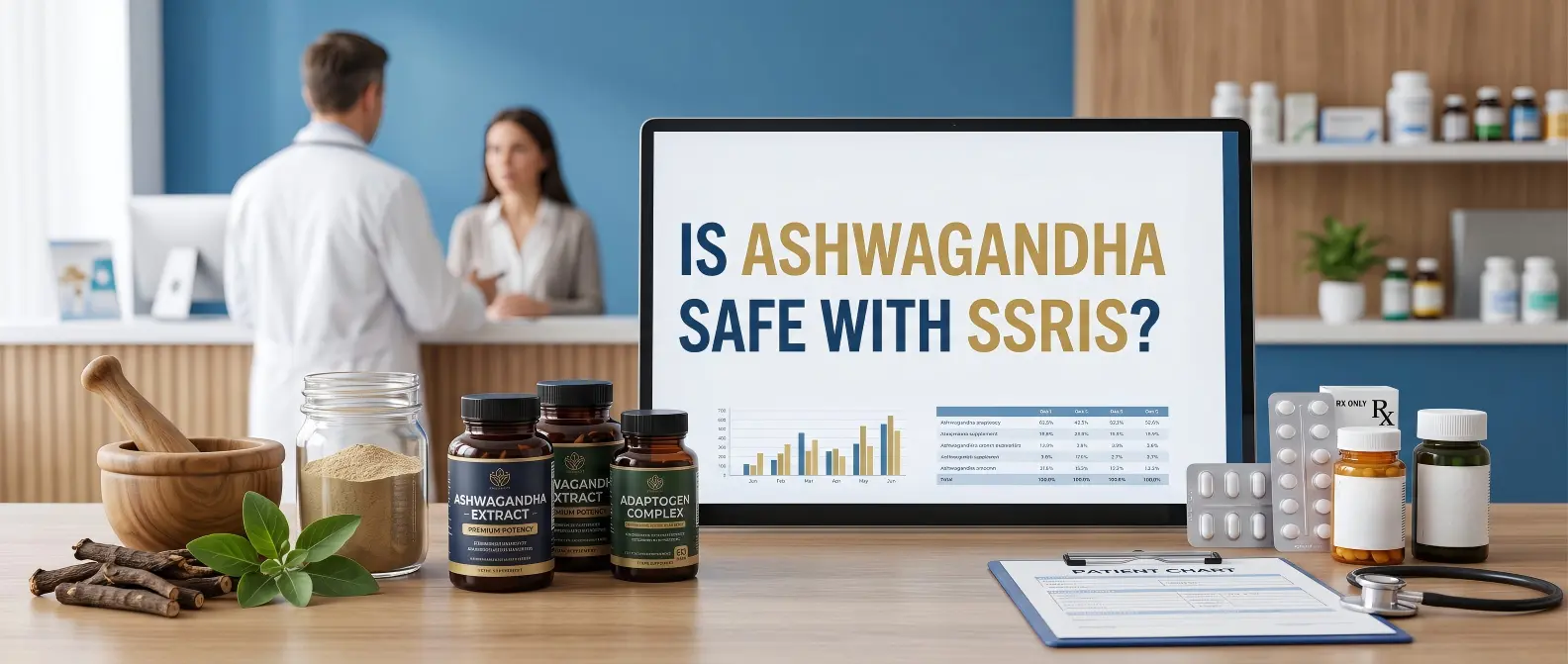
Bottom Line: Current evidence does not show that Ashwagandha is absolutely contraindicated with SSRIs. However, there is insufficient clinical evidence confirming safety. Potential interactions involving CYP3A4/CYP2D6 enzyme inhibition, GABA receptor modulation, and serotonergic activity have been proposed in mechanistic studies. Consumers taking SSRIs should consult their healthcare provider before using Ashwagandha.
Key Takeaways
- No large-scale RCTs have specifically evaluated Ashwagandha-SSRI combinations in humans [Evidence Level: Very Limited]
- Ashwagandha may inhibit CYP3A4 and CYP2D6 enzymes that metabolize many SSRIs [Evidence Level: Mechanistic]
- Case reports document specific adverse signals: severe diarrhea with sertraline; myalgia and nausea with escitalopram [Evidence Level: Case Reports]
- Ashwagandha’s GABA-mimetic activity may cause additive sedation with SSRIs [Evidence Level: Preclinical]
- No confirmed serotonin syndrome cases attributed to Ashwagandha-SSRI combinations exist in the literature
- Consumers on SSRIs should always consult their healthcare provider before starting Ashwagandha
- For supplement brands: use conservative positioning, transparent labeling, clinically validated dosages, and comprehensive medication interaction warnings
Evidence Summary
| Evidence Category | Rating | Interpretation |
| Human RCTs (Ashwagandha-SSRI combinations) | ★☆☆☆☆ | No dedicated RCTs conducted |
| Pharmacokinetic interaction data | ★★☆☆☆ | In vitro and animal data available |
| Case reports / Pharmacovigilance | ★★★☆☆ | Signals identified; causation unconfirmed |
| GABA-mimetic mechanism (sedation) | ★★★★☆ | Strong preclinical evidence |
| Serotonin syndrome risk | ★☆☆☆☆ | No confirmed cases; theoretical only |
| Thyroid hormone modulation | ★★★★☆ | Strong RCT evidence (Sharma 2018) |
| Overall Evidence Quality | Moderate but Inconclusive | Caution warranted; more research needed |
1. What Is Ashwagandha?
Botanical Profile
- Botanical Name: Withania somnifera (L.) Dunal, Solanaceae family
- Common Names: Ashwagandha, Indian Ginseng, Winter Cherry
- Plant Part Used: Primarily root (traditional); leaf also used in some extracts
- Origin: Native to India, Pakistan, Sri Lanka, Middle East, and North Africa
- CAS Number: 90147-43-6 (Ashwagandha root extract)
- WHO Monograph: Radix Withaniae, WHO Monographs on Selected Medicinal Plants, Volume 4 (2009)
Source: WHO Monographs on Selected Medicinal Plants, Vol. 4, 2009; PMID references throughout
Active Compounds & Standardization
- Primary Markers: Withanolides (steroidal lactones), including withanolide A, withaferin A, withanone, and withanoside IV
- Additional Constituents: Alkaloids (withanine, somniferine), sitoindosides, saponins, flavonoids
- Standardization Levels: 2.5%, 5% (KSM-66), 10% (Sensoril), 35% (Shoden) withanolides by HPLC
Three Standardized Extracts Compared
| Feature | KSM-66 | Sensoril | Shoden | Generic 5% |
| Plant Part | Root only | Root + Leaf | Root + Leaf | Variable |
| Withanolides | 5% | 10% | 35% | 5% |
| Typical Dose | 300-600mg | 125-250mg | 60-120mg | 300-600mg |
| Clinical Trials | 24+ RCTs | 12+ RCTs | 3+ RCTs | Variable |
| Best Positioning | Stress / Sports | Sleep / Calm | Cognitive / Premium | General / Budget |
| Price Tier | Premium | Premium | Ultra-premium | Economy |
Brand Formulation Insight:Extract selection is the single most important product decision. KSM-66 offers the strongest clinical evidence base (24+ RCTs) and highest consumer recognition, making it the safest choice for broad stress/sports positioning. Sensoril suits sleep-focused products. Shoden enables ultra-low-dose premium formulations (60-120mg) for the biohacker market.
2. What Are SSRIs?
Selective Serotonin Reuptake Inhibitors (SSRIs) are the most commonly prescribed class of antidepressant medications. They work by blocking the reuptake of serotonin into neurons, increasing its availability in synaptic clefts.
Commonly Prescribed SSRIs
| Generic Name | Brand Names | Common Indications |
| Sertraline | Zoloft | Depression, anxiety, OCD, PTSD |
| Fluoxetine | Prozac, Sarafem | Depression, OCD, bulimia |
| Escitalopram | Lexapro, Cipralex | Depression, generalized anxiety |
| Paroxetine | Paxil, Seroxat | Depression, anxiety, OCD, panic |
| Citalopram | Celexa | Depression |
| Fluvoxamine | Luvox | OCD, social anxiety |
Prescription Volume
According to Nunes et al. (2025), SSRIs account for approximately 63.7% of all antidepressant prescriptions, with sertraline (37.9%), fluoxetine (20.0%), escitalopram (17.5%), and citalopram (16.3%) being the most commonly prescribed agents.
Source: Nunes JCF, et al. J Multidiscip Healthc. 2025;18:4749-4762. PMID: 40259022
Market Context for Brands:With over 37 million adults in the U.S. taking antidepressants and SSRIs representing the dominant class, the overlap between SSRI users and Ashwagandha consumers is substantial. This creates both a significant market opportunity and a responsibility for brands to provide accurate safety information.
Medical Disclaimer:This article provides educational information only and does not constitute medical advice. Consumers should never start, stop, or change any prescription medication without consulting their healthcare provider.
3. Can Ashwagandha Be Taken with SSRIs?
The Current State of Evidence
The honest scientific answer is: there is currently limited high-quality clinical research directly evaluating the safety of Ashwagandha when used alongside SSRIs. No large-scale randomized controlled trials have been conducted specifically on this combination.
Evidence Level: Human RCTs on Ashwagandha-SSRI combinations:★☆☆☆☆ (None conducted)
Evidence Level: Pharmacokinetic interaction studies:★★☆☆☆ (In vitro/in vivo data available)
Evidence Level: Case reports and pharmacovigilance:★★★☆☆ (Signals identified)
What Studies Have Found
According to a comprehensive 2025 review by Kowalski et al. published in the Journal of Multidisciplinary Healthcare [1], Ashwagandha may inhibit CYP3A4 and CYP2D6 – two cytochrome P450 enzymes responsible for metabolizing many SSRIs. This inhibition could theoretically increase SSRI blood levels and amplify side effects.
The same review documented specific adverse interaction signals from pharmacovigilance databases:
- Concomitant use with sertraline: severe diarrhea reported
- Concomitant use with escitalopram: myalgia, epigastric pain, nausea, restless legs syndrome
- Concomitant use with paroxetine: generalized myalgia, ocular hypertension
Source: Kowalski P, et al. Ashwagandha (Withania somnifera) and Its Effects on Well-Being – A Review. J Multidiscip Healthc. 2025;18:3121-3149. PMCID: PMC12252077
Important Distinction:These reports are derived from pharmacovigilance databases and case series, not controlled clinical trials. Causation has not been established. The interactions may be coincidental or involve confounding factors.
Regulatory & Formulation Insight:Products that include a clear medication interaction warning and a recommendation to consult healthcare providers demonstrate regulatory awareness and consumer care. This builds trust rather than deterring purchase. Include warnings for: pregnancy, thyroid conditions, autoimmune conditions, and medication use.
4. Potential Risks and Drug Interactions
While direct Ashwagandha-SSRI interaction data is limited, several mechanisms of potential concern have been identified through pharmacological research.
4.1 Increased Sedation
Ashwagandha has well-documented GABA-mimetic activity. Research by Candelario et al. (2015) [5] published in the Journal of Ethnopharmacology demonstrated that Ashwagandha’s active compounds directly bind to GABA-A receptors, confirmed through antagonist studies. SSRIs can also cause drowsiness, particularly during initial weeks of treatment.
Evidence Level: GABA-mimetic mechanism:★★★★☆ (Strong preclinical; additive effect theoretical)
Source: Candelario M, et al. J Ethnopharmacol. 2015;171:264-272. PMID: 25857727
4.2 Serotonin-Related Concerns
Ashwagandha modulates serotonin receptor activity, including 5-HT1A and 5-HT2 receptors, in preclinical studies [6]. SSRIs increase synaptic serotonin by blocking reuptake. The theoretical concern is whether combined use could excessively increase serotonergic signaling.
- No confirmed cases of serotonin syndrome have been attributed to Ashwagandha-SSRI combinations in published literature
- A 2024 meta-analysis noted moderate heterogeneity in serotonin-related outcomes across Ashwagandha studies
Evidence Level: Serotonin syndrome risk:★☆☆☆☆ (No confirmed cases; theoretical concern)
Source: Mikulska P, et al. Phytomedicine. 2024. DOI: 10.1055/a-2802-8363
4.3 Thyroid Effects
Ashwagandha’s effects on thyroid function are among the most clinically significant. Sharma et al. (2018) [2] conducted a landmark RCT in 50 adults with subclinical hypothyroidism, finding that 600mg/day Ashwagandha for 8 weeks significantly lowered TSH and increased T3 (~41.5%) and T4 (~16%) versus placebo.
This is particularly relevant because thyroid dysfunction and depression frequently co-occur, and some SSRIs may affect thyroid hormone binding. Case reports of Ashwagandha-associated thyrotoxicosis also exist.
Evidence Level: Thyroid hormone modulation:★★★★☆ (Strong RCT evidence for hypothyroidism)
Source: Sharma AK, et al. J Altern Complement Med. 2018;24(3):243-248. DOI: 10.1089/acm.2017.0183
4.4 Individual Variability Factors
- Age: Older adults may metabolize both Ashwagandha and SSRIs more slowly
- CYP2D6 Genetics: Poor metabolizers may be at higher interaction risk
- SSRI Dose and Duration: Higher doses may alter interaction dynamics
- Concurrent Conditions: Thyroid disorders, liver impairment affect metabolism
5. Clinical Evidence at a Glance
| Topic | Evidence Strength | Key Studies |
| Stress / Cortisol reduction | Strong | Chandrasekhar 2012 [3]; Lopresti 2019 |
| Sleep quality improvement | Moderate | Cheah 2021 meta-analysis [4] |
| General anxiety symptoms | Moderate | Mikulska 2024 meta-analysis [6] |
| Depression treatment | Limited | Small RCTs; not a replacement for antidepressants |
| Sports performance / Recovery | Moderate | Wankhede 2015 [7]; Bonilla 2021 |
| Thyroid hormone modulation | Strong (hypothyroidism) | Sharma 2018 [2] |
| SSRI interactions / Safety | Very Limited | Kowalski 2025 [1]; case reports only |
| Serotonin syndrome risk | Very Limited | No confirmed cases in literature |
6. Who Should Avoid or Use Caution with Ashwagandha?
The following populations should exercise caution or avoid Ashwagandha use, particularly when taking prescription medications including SSRIs.
| Population | Concern | Recommendation |
| Pregnancy / Breastfeeding | Insufficient safety data | Avoid use |
| Hyperthyroidism | May worsen thyroid overactivity [2] | Avoid or use only with endocrinologist supervision |
| Autoimmune conditions | May stimulate immune system | Use with caution; consult physician |
| Taking immunosuppressants | Potential immune interaction | Consult physician before use |
| Taking SSRIs / SNRIs | Potential CYP/serotonin interaction [1] | Consult physician; do not self-initiate |
| Taking thyroid medication | May alter thyroid hormone levels [2] | Monitor thyroid function; consult physician |
| Scheduled surgery | May interact with anesthesia/sedatives | Discontinue 2 weeks before surgery |
| Children / Adolescents | Limited safety data | Not recommended without physician guidance |
Labeling Insight for Brands:Including a comprehensive “Who Should Avoid” section on product pages and packaging demonstrates duty of care. This information also helps reduce negative reviews from consumers who should not have used the product. Consider adding a pre-purchase screening FAQ.
7. What Consumers Are Asking Online
The following questions are compiled from Reddit (r/Supplements, r/Nootropics), Quora, and Amazon review analysis. They represent real consumer concerns that brands should proactively address.
Q: Can I take Ashwagandha at night with my antidepressant?
A: There is no established optimal timing. Some consumers prefer morning dosing to avoid potential sleepiness; others take Ashwagandha at night for its sleep-supporting properties. Consult your healthcare provider for personalized guidance.
Q: Will Ashwagandha make my SSRI work better?
A: There is no clinical evidence supporting synergy between Ashwagandha and SSRIs. Brands should avoid any language suggesting enhancement of antidepressant effects.
Q: Why do I feel so sleepy after starting Ashwagandha?
A: Ashwagandha’s GABA-mimetic activity can cause drowsiness [5], which may be additive with SSRI-related fatigue. Starting with a lower dose and taking with food may help. If excessive drowsiness occurs, discontinue and consult your provider.
Q: Why do I feel emotionally numb on Ashwagandha?
A: The “emotional blunting” discussion is increasingly common on Reddit. While some users report feeling calmer but less emotionally responsive, no clinical studies have systematically documented this effect. Individual responses vary significantly.
Q: Can Ashwagandha cause serotonin syndrome?
A: No confirmed cases of serotonin syndrome attributed to Ashwagandha-SSRI combinations exist in the published literature. However, the theoretical risk cannot be completely excluded given Ashwagandha’s serotonergic activity.
Q: Is it safe to take Ashwagandha with sertraline specifically?
A: There is no direct clinical evidence. Pharmacovigilance data has identified severe diarrhea as a reported signal when Ashwagandha is combined with sertraline [1]. Medical supervision is recommended.
Context:Online discussions reflect personal experiences, not clinical evidence. Individual responses to supplements and medications vary significantly.
8. What Healthcare Professionals Generally Recommend
Evidence-Based Professional Guidance
- Do not self-medicate: Discuss any new supplement with your prescribing physician or pharmacist
- Start cautiously: If approved, begin with the lowest effective dose and monitor for side effects
- Monitor symptoms: Report any new or worsening symptoms (drowsiness, GI issues, mood changes, anxiety)
- Avoid abrupt changes: Never stop SSRIs suddenly; withdrawal symptoms can occur
- Consider timing separation: Some providers suggest spacing Ashwagandha and SSRI doses by several hours
Brand Communication Strategy:Supplement brands that echo these cautious, evidence-based principles demonstrate medical awareness and build consumer trust. Include a standard medication interaction disclaimer on all Ashwagandha products: “If you are taking prescription medications, consult your healthcare provider before use.”
9. What Supplement Brands Should Consider
This section translates consumer safety concerns into actionable product development strategy. Each recommendation is accompanied by evidence level and implementation guidance.
9.1 Conservative Positioning
- Avoid: “Treats anxiety,” “Cures depression,” “Boosts serotonin”
- Use: “Supports stress management,” “Helps maintain a sense of calm,” “Promotes relaxation”
- FDA 21 CFR 101.93 requires structure/function claims to be truthful, not misleading, and substantiated by evidence
Evidence Level: Regulatory requirement:★★★★★ (Federal law)
9.2 Appropriate Dosage Selection
| Extract | Daily Dose | Withanolides | Evidence Base |
| KSM-66 | 300-600mg | 15-30mg | 24+ RCTs |
| Sensoril | 125-250mg | 12.5-25mg | 12+ RCTs |
| Shoden | 60-120mg | 21-42mg | 3+ RCTs |
| Generic 5% | 300-600mg | 15-30mg | Variable |
Evidence Level: Safety at these dosages:★★★★☆ (Supported by multiple 8-12 week RCTs)
9.3 Transparent Labeling Checklist
- Clearly state withanolide percentage (e.g., “Standardized to 5% withanolides”)
- Include extract type (KSM-66, Sensoril, or generic)
- Add medication interaction warning
- Include pregnancy/breastfeeding, thyroid, and autoimmune condition cautions
- Standard FDA disclaimer: “This product is not intended to diagnose, treat, cure, or prevent any disease”
9.4 Third-Party Testing Standards
- Identity: HPTLC or HPLC fingerprinting confirming Withania somnifera
- Potency: Withanolide content verification by HPLC (withanoside IV reference standard)
- Heavy Metals: Pb <3ppm, As <1ppm, Cd <1ppm, Hg <0.3ppm (USP <232>)
- Microbiology: TPC <5000 CFU/g, Yeast/Mold <300 CFU/g, E. coli negative, Salmonella negative
- Residual Solvents: Per USP <467> for non-water extracts
10. Formulation Opportunities for Mental Wellness Products
Instead of positioning Ashwagandha as a standalone antidepressant alternative, brands can develop evidence-informed combination products targeting specific wellness categories.
| Combination | Target Use | Ashwagandha | Positioning |
| + L-Theanine | Calm focus | 300mg KSM-66 | Non-drowsy stress support |
| + Magnesium Glycinate | Sleep support | 125mg Sensoril | Deep sleep formula |
| + Saffron Extract | Women’s mood wellness | 300mg KSM-66 | Hormone-aware mood support |
| + Lion’s Mane | Cognitive support | 60mg Shoden | Mental clarity stack |
| + Rhodiola Rosea | Adaptogen synergy | 300mg KSM-66 | All-day resilience |
| + Vitamin D3 | Immunity + mood | 300mg KSM-66 | Winter wellness foundation |
Regulatory Note:All product claims must comply with local regulations. Disease treatment claims for dietary supplements are prohibited in most jurisdictions.
Product Development Insight:The most successful Ashwagandha products on the market combine branded extracts with synergistic ingredients. KSM-66 + L-Theanine is the most validated stress-support stack. Ashwagandha + Magnesium Glycinate dominates the sleep category. Consider your target demographic when selecting combinations.
11. Summary for Supplement Brands
This decision framework consolidates all intelligence into actionable guidance for Ashwagandha product development.
11.1 Extract Selection Decision Tree
- Broad market stress/sports + maximum credibility: KSM-66 (300-600mg, 5% withanolides)
- Sleep/relaxation focus: Sensoril (125-250mg, 10% withanolides)
- Cognitive/premium positioning: Shoden (60-120mg, 35% withanolides)
- Budget entry/value positioning: Generic 5% standardized extract (300-600mg)
- Avoid: Raw root powder without standardization (highest return rate)
11.2 Recommended Warning Language
“If you are taking prescription medications, including antidepressants (SSRIs), consult your healthcare provider before using this product. Discontinue use and consult your physician if you experience any adverse reactions.”
11.3 Recommended Target Markets by Evidence Strength
- Strongest Evidence / Lowest Risk: Stress management (general adult population)
- Moderate Evidence: Sleep support, exercise recovery
- Emerging Evidence: Cognitive support, women’s wellness
- Avoid Claims: Depression treatment, anxiety disorder treatment, SSRI augmentation
11.4 Competitive Differentiation Strategies
- Transparency Leader: Full COA on website, QR code on bottle, origin story
- Clinical Credibility: Branded extracts with published RCTs, study references on packaging
- Stack Specialist: Curated synergistic combinations (see Chapter 10)
- Cleanest Label: Organic, vegan, zero fillers, non-GMO verified
- Third-Party Certified: NSF, USP, Informed Choice for sports channel credibility
12. Why Supplement Brands Partner with KSNutripharma
Developing Ashwagandha products that meet safety, quality, and regulatory standards requires expertise at every stage. KSNutripharma provides end-to-end OEM and private label manufacturing services.
Standardized Ashwagandha Extract Options
- Multiple withanolide specifications: 2.5%, 5%, and 10% by HPLC
- Root-only and full-spectrum extract options
- Branded ingredient sourcing: KSM-66, Sensoril, Shoden
- Custom formulation development
OEM & Private Label Manufacturing
- Capsules, Tablets, Gummies, Powders, Softgels, Stick Packs
- Flexible MOQ: 1,000 units per SKU (first order flexible)
- Production lead time: 4-6 weeks after sample approval
Quality Assurance
- Batch consistency, identity testing, microbial testing, heavy metals screening (ICP-MS), residual solvent verification
Regulatory Documentation
- COA, specification sheets, stability testing (ICH), export documentation, allergen statements
Formulation Support
- Ingredient compatibility assessment, custom dosage design, packaging design with regulatory review
13. Frequently Asked Questions
The following questions are optimized for FAQ Schema markup and target high-search-volume queries.
Can Ashwagandha increase serotonin levels?
Preclinical studies suggest Ashwagandha may modulate serotonin receptor activity (5-HT1A, 5-HT2), but human clinical data is limited [6]. Ashwagandha does not directly increase serotonin synthesis or block reuptake like SSRIs.
Can Ashwagandha replace antidepressants?
No. Ashwagandha is a dietary supplement, not a medication. It has not been evaluated by the FDA for treating depression or anxiety disorders. Never discontinue prescribed antidepressants without consulting your healthcare provider.
Should I stop taking SSRIs before using Ashwagandha?
No. Abruptly discontinuing SSRIs can cause discontinuation syndrome. Any changes to antidepressant regimens should be medically supervised. If both are used together, medical supervision is essential.
Which Ashwagandha extract is most researched?
KSM-66 is the most extensively studied with 24+ published RCTs covering stress, sleep, sports performance, and cognitive function. Sensoril has 12+ RCTs focused on stress and sleep.
Can Ashwagandha gummies be taken with SSRIs?
The delivery format (capsule, gummy, powder) does not change interaction potential. The active compounds (withanolides) are the same. Consumers taking SSRIs should consult their healthcare provider before using any Ashwagandha product regardless of format.
Is KSM-66 different from Sensoril?
Yes. KSM-66 is root-only, 5% withanolides, 24+ RCTs. Sensoril is root+leaf, 10% withanolides, different phytochemical profile. They have different optimal use cases, dosages, and evidence bases.
What are the risks of taking Ashwagandha with sertraline?
Pharmacovigilance data has identified severe diarrhea as a reported signal [1]. Theoretical concerns include CYP3A4/CYP2D6 inhibition increasing sertraline blood levels. Medical supervision is recommended.
Does Ashwagandha interact with antidepressants?
Potential interactions have been proposed involving CYP enzyme inhibition, GABA modulation, and serotonergic activity [1][5][6]. However, no large-scale clinical trials have directly studied these combinations. Caution and medical supervision are advised.
Conclusion
The question of whether Ashwagandha is safe to take with SSRIs does not have a simple yes-or-no answer. The evidence can be summarized as follows:
- No large-scale RCTs have directly studied Ashwagandha-SSRI combinations
- Pharmacological data suggests theoretical interaction mechanisms (CYP enzymes, GABA, serotonin)
- Pharmacovigilance data has identified potential adverse signals, but causation is unconfirmed
- Healthcare providers recommend caution, medical supervision, and individualized assessment
For supplement brands, this evidence landscape creates both responsibility and opportunity. Brands that develop Ashwagandha products with conservative positioning, transparent labeling, appropriate dosage, and comprehensive consumer education not only reduce regulatory and safety risks – they build the trust and credibility that drive long-term brand success.
At KSNutripharma, we help wellness brands develop science-informed Ashwagandha supplements through OEM, private label, and custom formulation services. From standardized botanical extracts to finished dosage forms, our team supports every stage of product development while prioritizing quality, regulatory compliance, and long-term market success.
References
[1] Kowalski P, et al. Ashwagandha (Withania somnifera) and Its Effects on Well-Being – A Review. J Multidiscip Healthc. 2025;18:3121-3149. PMCID: PMC12252077
[2] Sharma AK, et al. Efficacy and Safety of Ashwagandha Root Extract in Subclinical Hypothyroid Patients. J Altern Complement Med. 2018;24(3):243-248. DOI: 10.1089/acm.2017.0183
[3] Chandrasekhar K, et al. A prospective, randomized double-blind, placebo-controlled study of safety and efficacy of a high-concentration full-spectrum extract of ashwagandha root in reducing stress and anxiety. Indian J Psychol Med. 2012;34(3):255-262. PMID: 23439798
[4] Cheah KL, et al. Effect of Ashwagandha (Withania somnifera) extract on sleep: A systematic review and meta-analysis. PLoS One. 2021;16(9):e0257843. PMID: 34582491
[5] Candelario M, et al. Direct evidence for GABAergic activity of Withania somnifera on mammalian ionotropic GABAA and GABAC receptors. J Ethnopharmacol. 2015;171:264-272. PMID: 25857727
[6] Mikulska P, et al. Ashwagandha (Withania somnifera) – Current State of Knowledge. Phytomedicine. 2024. DOI: 10.1055/a-2802-8363
[7] Nunes JCF, et al. Uncovering antidepressant prescription patterns: a three-year analysis of outpatient trends. J Multidiscip Healthc. 2025;18:4749-4762. PMID: 40259022
[8] World Health Organization. Radix Withaniae. WHO Monographs on Selected Medicinal Plants, Volume 4. Geneva: WHO; 2009:373-391.
[9] European Medicines Agency. Withaniae somniferae radix. HMPC Assessment Report. https://www.ema.europa.eu/en/medicines/herbal/withaniae-somniferae-radix
[10] U.S. Food and Drug Administration. 21 CFR 101.93 – Certain types of statements for dietary supplements. https://www.ecfr.gov/current/title-21/chapter-I/subchapter-B/part-101/subpart-E/section-101.93
[11] U.S. Pharmacopeia. Ashwagandha Root Extract. USP-NF Monograph.
[12] Reddit r/Supplements – Community discussions on Ashwagandha and medication interactions (2024-2025)
[13] Reddit r/Nootropics – Ashwagandha emotional blunting and SSRI co-use experience threads (2024-2025)
[14] Quora topic analysis: Ashwagandha and antidepressant interaction questions (2024-2025)
[15] Ixoreal Biomed. KSM-66 Ashwagandha Clinical Study Summaries. https://ksm66ashwagandhaa.com/
[16] Cureus. Ashwagandha Comprehensive Review (2024). DOI: 10.7759/cureus.5797