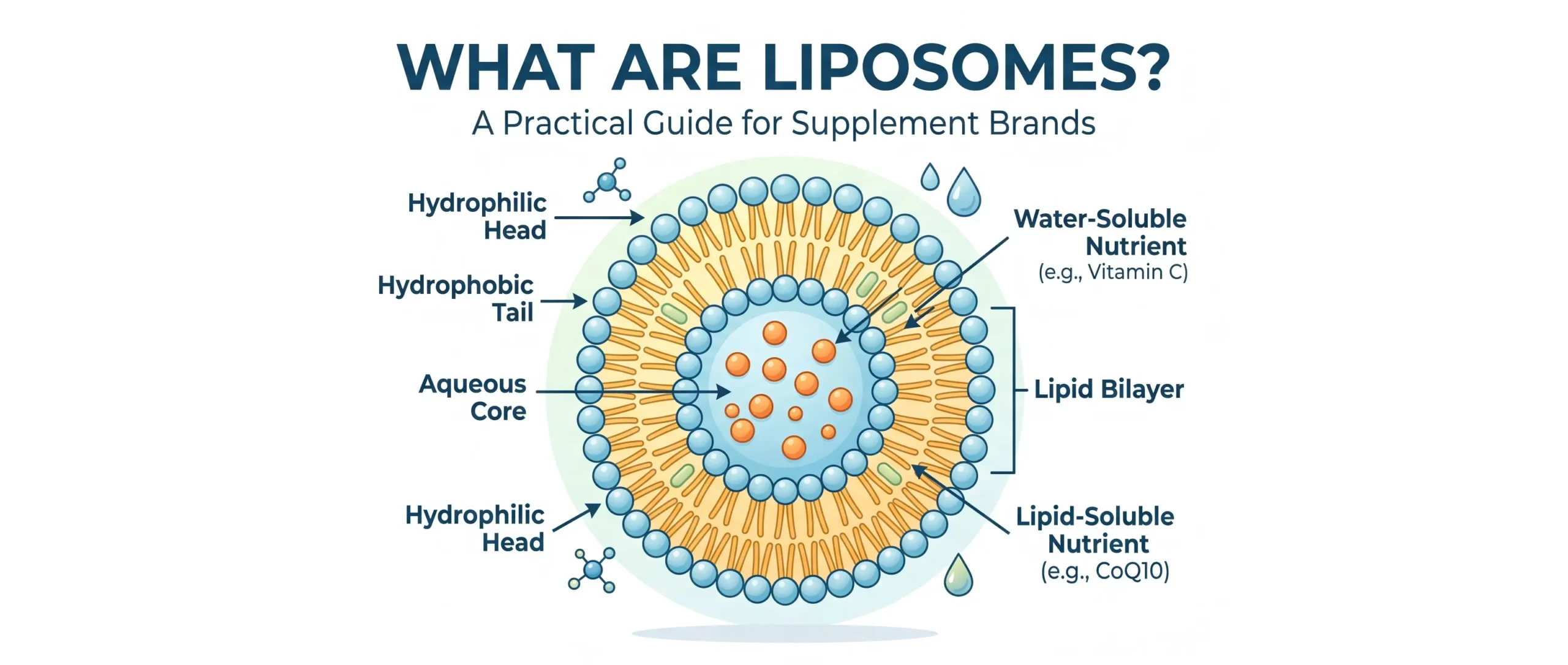
A Practical Guide for Supplement Brands
Introduction: Why Liposomal Technology Is a Commercial Imperative for Supplement Brands
The global nutraceutical market has crossed a threshold. Consumers are no longer satisfied with ingredient lists—they demand proof of absorption. This shift has placed bioavailability at the center of product differentiation, and liposomal delivery has emerged as the most scientifically credible technology to address it.
For supplement brand owners and procurement professionals, the decision to develop a liposomal product line is not merely technical. It is a strategic investment that directly impacts:
Product efficacy and consumer retention
Premium pricing and margin expansion
Brand differentiation in saturated categories
Regulatory defensibility in competitive markets
This guide is structured to answer the questions that actually drive purchasing decisions:
Can this factory manufacture a stable liposomal product that I can sell globally?
We move from technical foundation → commercial value → manufacturing reality → procurement evaluation → OEM partnership.
What Are Liposomes?
Definition: The Phospholipid Bilayer Architecture
Liposomes are microscopic spherical vesicles composed of one or more phospholipid bilayers that structurally mimic natural cell membranes. This biomimetic architecture is the foundation of their functional advantage.
Each phospholipid molecule is amphiphilic:
A hydrophilic (water-attracting) head group (phosphate-based)
Two hydrophobic (water-repelling) fatty acid tails
In aqueous environments, these molecules self-assemble into bilayers: hydrophilic heads orient outward, hydrophobic tails shield inward. This creates a vesicle with:
An aqueous core (hydrophilic interior)
A lipid bilayer membrane (hydrophobic region)
An external aqueous environment
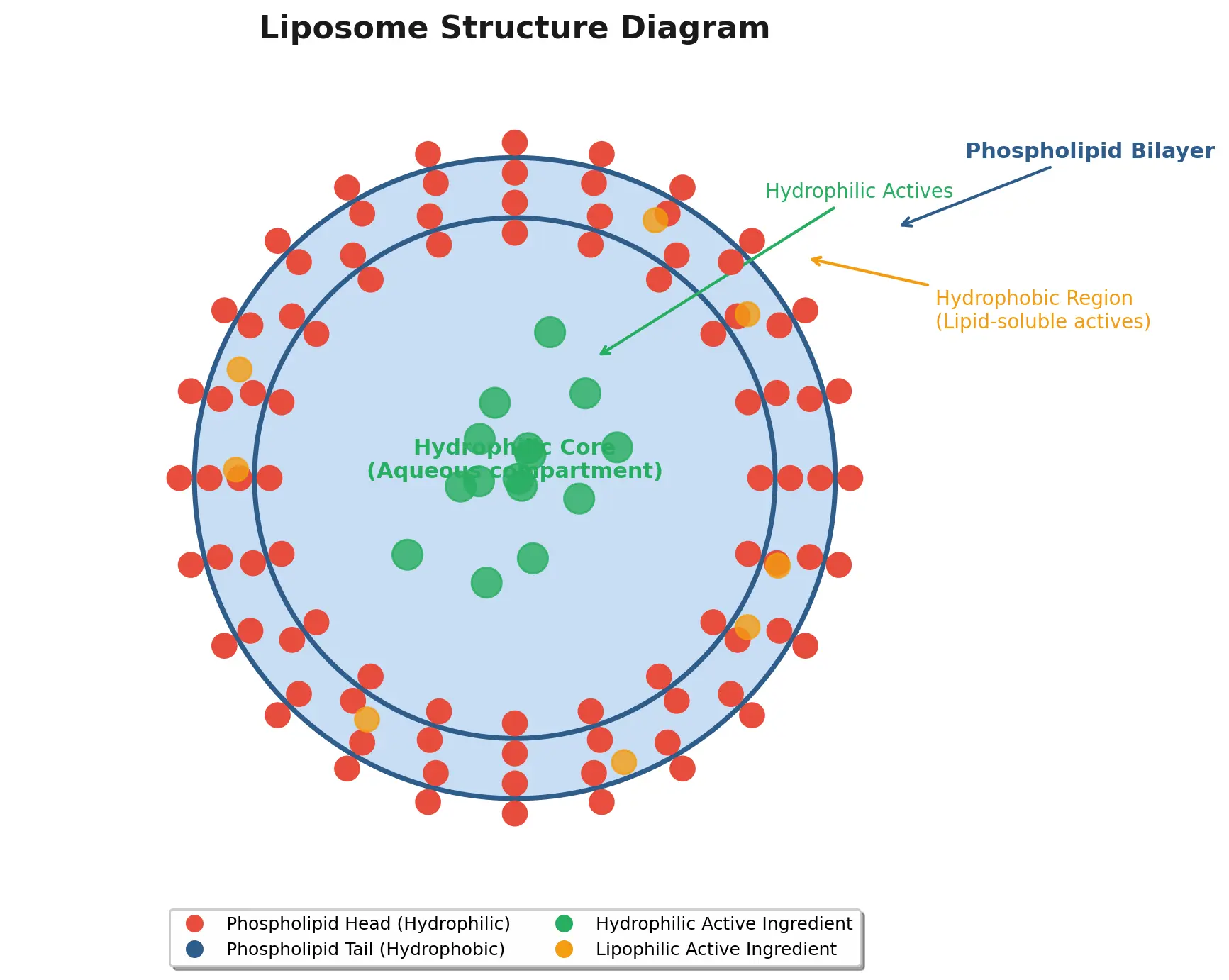
Figure: Liposome Structure Diagram — phospholipid bilayer with hydrophilic heads (red), hydrophobic tails (blue), hydrophilic actives (green) in the aqueous core, and lipophilic actives (orange) embedded in the membrane.
The primary phospholipid used in supplement-grade liposomes is phosphatidylcholine (PC), typically sourced from non-GMO soy or sunflower lecithin. PC constitutes approximately 40% of human cell membrane lipids, contributing to the exceptional biocompatibility and safety profile of liposomal formulations.
How Liposomes Work: Three Mechanisms of Enhanced Delivery
- Encapsulation of Water-Soluble Compounds
The aqueous core encapsulates hydrophilic actives such as Vitamin C, NMN, and glutathione, protecting them from premature GI degradation.
- Integration of Lipid-Soluble Compounds
The hydrophobic bilayer region accommodates lipophilic compounds such as curcumin, CoQ10, and resveratrol. This dual-compartment capability makes liposomes uniquely versatile.
- Enhanced Cellular Uptake
Because liposomes structurally resemble cell membranes, they interact with intestinal epithelial cells through:
Membrane fusion: Direct merging with enterocyte membranes
Endocytosis: Cellular engulfment via membrane invagination
Lymphatic transport: Entry into intestinal lacteals, bypassing hepatic first-pass metabolism
Research published in the International Journal of Nanomedicine demonstrates that liposomes in the 50–200 nm range are optimized for enhanced drug solubility, protection from enzymatic degradation, overcoming efflux pumps, and effective circulation time. Nanoliposomes (<200 nm diameter, PDI <0.2) easily cross cellular membranes and represent the best-performing category for oral delivery.
Why Supplement Brands Use Liposomal Delivery
Enhanced Bioavailability
Clinical evidence consistently demonstrates improved absorption of poorly bioavailable nutrients.
A randomized, double-blind, placebo-controlled crossover study (2025) evaluated liposomal versus non-liposomal Vitamin C in healthy adults. Results showed liposomal Vitamin C was 1.77× more bioavailable, with significantly higher Cmax, AUC₀₋ₜ, and AUC₀₋∞ values. The formulation achieved 65.85% encapsulation efficiency with particle sizes below 100 nm.
For NMN, a 2025 exploratory clinical study (Annals of Clinical and Medical Case Reports) compared liposomal and non-liposomal NMN (350 mg/day, 4 weeks). The liposomal group demonstrated 83–84% increases in blood NAD⁺ concentrations, with sustained elevation even 4 weeks post-discontinuation.
Improved Stability
Many high-value nutraceuticals are inherently unstable:
Glutathione: Rapid oxidation in aqueous/acidic environments
NMN: Temperature, moisture, and pH sensitivity
Vitamin C: Photochemical oxidation
Liposomal encapsulation creates a protective barrier against oxidative stress, enzymatic breakdown, and pH fluctuations during storage and GI transit.
Better Ingredient Protection
The gastrointestinal environment is hostile to unprotected bioactives. Liposomes provide:
Acid resistance: Protection during gastric transit (pH 1.5–3.5)
Enzymatic shielding: Reduced exposure to proteases and esterases
Controlled release: Gradual release in the intestinal lumen
Premium Product Positioning
Liposomal products command 40–100% price premiums over conventional formulations. This positioning aligns with educated consumers who read peer-reviewed research, understand bioavailability concepts, and pay for demonstrably superior delivery technology.
Common Ingredients Used in Liposomal Supplements
| Ingredient | Primary Challenge | Liposome Benefit | Key Clinical Evidence |
| Glutathione | Poor stability; rapid oxidation | Protective encapsulation; enhanced systemic availability | Improved plasma levels vs. free glutathione |
| Curcumin | <1% oral bioavailability; rapid glucuronidation | Enhanced uptake via lymphatic transport; bypasses hepatic first-pass | 9–20× higher plasma concentrations |
| NMN | Water-soluble; hepatic first-pass metabolism | Encapsulation protection; potential lymphatic uptake | 83–84% increase in blood NAD⁺ (2025 clinical study) |
| Vitamin C | Absorption saturation; GI irritation at high doses | Enhanced absorption beyond transport saturation; reduced gastric irritation | 1.77× higher bioavailability (randomized human trial) |
| CoQ10 | Highly lipophilic; poor water solubility | Lipid bilayer integration; enhanced dissolution | Multiple PK studies show improved bioavailability |
| Resveratrol | Rapid metabolism; low aqueous solubility | Improved solubility; protection from rapid metabolism | Enhanced plasma levels and tissue distribution |
Why Many Liposomal Supplements Fail in Commercial Production
This is the question procurement professionals should ask first—and the topic almost no competitor covers.
Lab formulation ≠ Commercial production. The transition from R&D bench to commercial scale is where most liposomal products fail.
The Scale-Up Failure Points
| Manufacturing Challenge | Commercial Impact | OEM Capability Required |
| Particle aggregation | Reduced absorption; sedimentation in packaging | High-pressure homogenization or microfluidization |
| Low encapsulation efficiency | Lower efficacy; label claim non-compliance | Formula optimization; active loading techniques |
| Phospholipid oxidation | Short shelf life; rancidity; consumer complaints | Nitrogen protection; antioxidant addition; oxygen-barrier packaging |
| Phase separation | Product inconsistency; returns; regulatory risk | Stability validation; emulsifier optimization |
| Inconsistent batch-to-batch quality | Brand reputation damage; regulatory scrutiny | Process analytical technology (PAT); validated SOPs |
| Particle size drift | Loss of bioavailability advantage | In-process DLS monitoring; controlled extrusion parameters |
Why These Failures Occur
- Thin-film hydration limitations:The traditional method produces heterogeneous multilamellar vesicles (300–600 nm) that require secondary extrusion. At scale, extrusion membranes foul, clog, and introduce batch-to-batch variability.
- Shear stress damage:High-pressure homogenization can degrade sensitive actives if parameters are not precisely controlled.
- Thermal sensitivity:Hydration above the lipid transition temperature (Tm) is necessary, but excessive heat degrades thermolabile ingredients.
- Oxidative cascade:Unsaturated phospholipids oxidize during processing and storage, compromising both stability and safety.
- Scale-up physics:Local hydration conditions in a 500L vessel are fundamentally different from a 1L flask. Without process validation, particle size distribution shifts unpredictably.
How Liposomal Supplements Are Manufactured
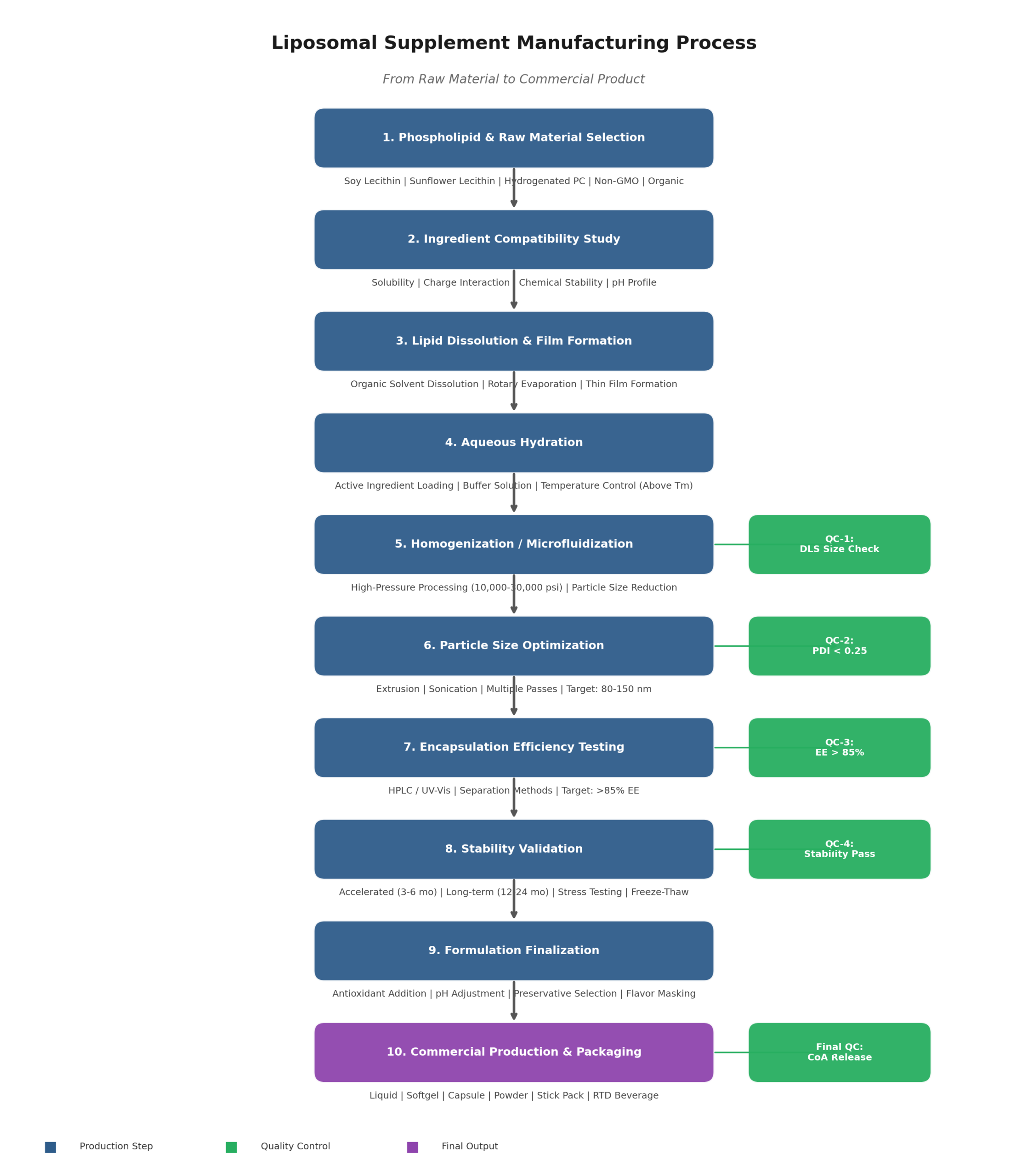
Figure: Complete liposomal manufacturing process from raw material selection through commercial production, with integrated quality control checkpoints.
Step 1: Phospholipid & Raw Material Selection
The foundation of every liposomal product. Phospholipid source determines cost, allergen profile, stability, and clean-label positioning.
Step 2: Ingredient Compatibility Study
Before any manufacturing, we evaluate:
Solubility: Matching active to aqueous core or lipid bilayer
Charge interaction: Preventing electrostatic destabilization
Chemical stability: Ensuring active and lipid do not degrade each other
pH profile: Optimizing for active stability and liposome integrity
Step 3: Lipid Dissolution & Film Formation
Phospholipids dissolve in organic solvent (typically ethanol or chloroform), then the solvent is evaporated under reduced pressure using rotary evaporation, leaving a thin lipid film on the flask wall.
Step 4: Aqueous Hydration
The lipid film hydrates with an aqueous buffer containing the active ingredient. Temperature is controlled above the lipid Tm to ensure proper bilayer formation. The hydration rate directly impacts encapsulation efficiency—slower hydration typically yields higher EE.
Step 5: Homogenization / Microfluidization
The lipid-aqueous mixture passes through a high-pressure microfluidizer (10,000–30,000 psi). Two streams collide at controlled angles, breaking lipid aggregates into unilamellar vesicles in the 50–150 nm range.
QC-1: DLS Size Check — Verify initial particle size distribution.
Step 6: Particle Size Optimization
Further extrusion through polycarbonate membranes or additional microfluidization passes progressively narrow the size distribution.
QC-2: PDI < 0.25 — Polydispersity index confirms monodisperse population.
Step 7: Encapsulation Efficiency Testing
Separation of encapsulated from free active (centrifugation, dialysis, or size-exclusion chromatography) followed by quantitative HPLC or UV-Vis analysis.
QC-3: EE > 85% — Premium quality threshold.
Step 8: Stability Validation
Accelerated stability: 3–6 months at 25°C/60% RH
Long-term stability: 12–24 months at recommended storage
Stress testing: 40°C/75% RH to identify degradation pathways
Freeze-thaw cycles: Assess shipping robustness
QC-4: Stability Pass — Particle size, EE, and appearance within specification.
Step 9: Formulation Finalization
Antioxidant addition, pH adjustment, preservative selection, and flavor masking (if applicable).
Step 10: Commercial Production & Packaging
Final cGMP manufacturing with batch release testing and Certificate of Analysis (CoA) documentation.
Final QC: CoA Release — Complete analytical documentation for every batch.
Choosing the Right Phospholipid
Not all phospholipids are equivalent. The choice directly impacts cost, stability, allergen labeling, and market positioning.
| Source | Advantages | Typical Application | Considerations |
| Soy Lecithin | Cost-effective; widely available; high PC content | Mass-market supplements; budget positioning | Allergen labeling in some markets; GMO concerns unless specified |
| Sunflower Lecithin | Soy-free; non-allergenic; clean-label friendly | Premium positioning; allergen-sensitive markets | Higher cost; supply availability |
| Hydrogenated PC | Superior oxidative stability; extended shelf life | Liquid liposomal formulations; long shelf-life products | Less natural positioning; saturated fat content |
| Organic PC | Clean-label; organic certification; premium positioning | Organic brands; EU market; health-conscious segments | Highest cost; limited supply chain |
| Egg-derived PC | High purity; specific fatty acid profile | Pharmaceutical applications; specialized formulations | Not vegan; allergen concerns |
Selection Criteria for Procurement
When evaluating phospholipid sources, verify:
PC content: ≥70% phosphatidylcholine for optimal bilayer formation
Fatty acid composition: Unsaturated fatty acids (oleic, linoleic) enhance fluidity; saturated fatty acids improve stability
Cholesterol addition: 0–50 mol% cholesterol modulates membrane rigidity and permeability
Residual solvent: <50 ppm per ICH Q3C guidelines
Heavy metals: Arsenic <1.5 ppm, Lead <1.0 ppm, Cadmium <0.5 ppm, Mercury <0.3 ppm
Liposomal Delivery Formats
Liposomal supplements can be delivered in multiple formats, each with distinct manufacturing requirements, stability profiles, and commercial applications.
| Format | Advantages | Challenges | OEM Feasibility | Shelf Stability |
| Liquid | Fast absorption; flexible dosing; easy to flavor | Requires refrigeration or preservatives; heavier to ship | High | 12–18 months (refrigerated) |
| Softgel | Consumer familiarity; dose precision; portable | Filling consistency; leakage risk; higher cost | High | 24–36 months |
| Hard-shell Capsule | Powder or liquid-filled; versatile; cost-effective | Limited liquid fill volume; moisture sensitivity | High | 24 months |
| Powder (spray-dried) | Lightweight; lowest shipping cost; longest shelf life | Potential EE loss during drying; reconstitution required | Medium | 24–36 months |
| Stick Pack | Single-serve convenience; on-the-go positioning | Moisture barrier critical; fill accuracy | High | 18–24 months |
| Shot / RTD Beverage | Functional beverage integration; premium positioning | pH stability; flavor masking; beverage compatibility | Medium | 12–18 months |
| Gummy | Novel format; taste appeal; broad consumer base | Heat during gummy processing; moisture; EE maintenance | Medium | 12–18 months |
Format Selection Guidance
Liquid: Best for immediate absorption claims; requires cold-chain or robust preservative systems
Softgel: Best for premium positioning; highest consumer trust in liposomal category
Powder: Best for e-commerce and international shipping; lowest cost per dose
Stick Pack: Best for convenience and trial-size marketing
Typical Technical Specifications
Procurement professionals require concrete specifications to evaluate products and compare suppliers.
| Parameter | Typical Specification | Testing Method | Commercial Impact |
| Particle Size (Z-Average) | 80–150 nm | Dynamic Light Scattering (DLS) | Determines cellular uptake efficiency |
| Polydispersity Index (PDI) | <0.25 | DLS | Indicates batch uniformity; PDI >0.3 suggests aggregation |
| Encapsulation Efficiency (EE) | >85% | HPLC or UV-Vis after separation | Directly correlates with product efficacy |
| Zeta Potential | ≥±30 mV | Electrophoretic Light Scattering | Predicts colloidal stability |
| Appearance | Uniform milky dispersion; no visible particles | Visual inspection | Consumer acceptance; quality perception |
| pH | 5.5–7.5 | pH meter | Active stability; gastric tolerance |
| Heavy Metals | USP <231> / ICH Q3D limits | ICP-MS | Regulatory compliance; safety |
| Microbiology | USP <61> / USP <62> compliant | Plate count / Pathogen screening | Safety; shelf life |
| Residual Solvent | <50 ppm (ICH Q3C) | GC-MS | Regulatory compliance; safety |
| Viscosity | 50–500 cP (liquid) | Brookfield viscometer | Filling consistency; consumer experience |
Regulatory Considerations for Liposomal Supplements
Global regulatory frameworks for liposomal supplements vary significantly. Your OEM partner must navigate these requirements for market access.
United States
| Aspect | Requirements |
| Regulatory framework | FDA; DSHEA (Dietary Supplement Health and Education Act) |
| Product classification | Dietary supplement (not drug, unless disease claims made) |
| Facility requirements | FDA-registered; cGMP compliant (21 CFR 111) |
| Labeling | Structure/function claims allowed; disease claims prohibited |
| NDI notification | New Dietary Ingredient notification if ingredient not marketed before 1994 |
| GRAS status | Generally Recognized As Safe for food-grade phospholipids |
European Union
| Aspect | Requirement |
| Regulatory framework | EFSA; EU Food Supplements Directive (2002/46/EC) |
| Novel Food status | Liposomal forms of non-traditional ingredients may require Novel Food authorization |
| Health claims | Only EFSA-approved claims permitted (EU Register on nutrition and health claims) |
| GMP requirements | EU GMP guidelines for food supplements |
| Allergen labeling | Mandatory for soy, sunflower (if applicable) |
Australia & New Zealand
| Aspect | Requirement |
| Regulatory framework | TGA (Therapeutic Goods Administration) |
| Product classification | Listed medicine (AUST L) or food supplement depending on claims |
| Manufacturing | TGA-licensed facility; GMP certification |
| Ingredient restrictions | Check TGA Permissible Ingredients Determination |
Middle East & Other Markets
| Aspect | Requirement |
| Halal certification | Required for Muslim markets; verify phospholipid source and processing |
| Kosher certification | Required for Jewish markets; verify lipid source and equipment |
| Export documentation | Certificate of Free Sale, Certificate of Origin, Health Certificate |
Critical Procurement Question
Does your OEM partner have documented regulatory compliance for your target markets, or do they expect you to figure this out?
Shelf Life & Packaging Considerations
Shelf life is one of the most frequently asked questions in liposomal procurement—and one of the most variable.
Shelf Life by Format
| Format | Typical Shelf Life | Recommended Storage | Critical Factors |
| Liquid | 12–18 months | 2–8°C (refrigerated); protect from light | Oxidation; microbial growth; phase separation |
| Softgel | 24–36 months | 15–25°C; <60% RH | Gelatin shell integrity; fill leakage; oxidation |
| Hard-shell Capsule | 24 months | 15–25°C; <60% RH | Moisture ingress; capsule brittleness |
| Powder | 24–36 months | 15–25°C; <40% RH | Rehydration during storage; caking |
| Stick Pack | 18–24 months | 15–25°C; <40% RH | Moisture barrier integrity; seal quality |
Packaging Technologies
| Technology | Purpose | Application |
| Amber glass bottles | UV light protection | Liquid liposomal supplements |
| Nitrogen flushing | Oxygen exclusion; oxidation prevention | Liquid and softgel products |
| Aluminum pouches | Moisture and light barrier | Powder and stick pack formats |
| Desiccant inserts | Humidity control | Capsules and softgels |
| Induction sealing | Tamper evidence; oxygen barrier | Bottled liquids |
Storage Conditions Impact
Research confirms that liposomal formulations stored at 2–8°C maintain particle size and encapsulation efficiency significantly longer than those stored at 25°C. For every 10°C increase above optimal storage, chemical degradation rates approximately double (Arrhenius kinetics).
Liposomes vs. Other Delivery Technologies
For brands evaluating delivery technology options, understanding the competitive landscape is essential.
| Technology | Structure | Best For | Limitations | Relative Cost |
| Liposomes | Phospholipid bilayer vesicles | Broad applicability; both hydrophilic and lipophilic actives | Stability challenges; higher manufacturing complexity | $$$ |
| Nanoemulsions | Oil-in-water droplets (surfactant-stabilized) | Lipophilic actives; high loading | Surfactant requirements; potential GI irritation | $$ |
| Micelles | Surfactant aggregates (20–100 nm) | Lipophilic actives; simple formulation | Lower loading capacity; surfactant-dependent | $ |
| Phytosomes | Phospholipid complexes (not vesicles) | Botanical extracts; standardized complexes | Not true encapsulation; limited protection | $$ |
| LNPs (Lipid Nanoparticles) | Ionizable lipids + helper lipids + cholesterol + PEG | Nucleic acid delivery (mRNA, siRNA) | Complex formulation; limited to specific actives; higher cost | $$$$ |
Key distinction: Liposomes offer the unique advantage of dual-compartment loading (aqueous core + lipid bilayer) and biomimetic cell membrane fusion, which neither nanoemulsions, micelles, nor phytosomes can replicate.
Popular Liposomal Products in Today’s Market
Understanding commercially successful applications helps brands identify viable development opportunities.
Beauty & Skin Health
Liposomal Glutathione: Brightening; antioxidant protection
Liposomal Collagen Boosters: Coenzyme Q10, Vitamin C combinations
Liposomal Hyaluronic Acid: Hydration support
Healthy Aging & Longevity
Liposomal NMN: NAD⁺ precursor; cellular energy
Liposomal NR (Nicotinamide Riboside): Alternative NAD⁺ pathway
Liposomal Resveratrol: Sirtuin activation; cardiovascular support
Immune Support
Liposomal Vitamin C: Enhanced absorption; immune function
Liposomal Vitamin D3: Fat-soluble vitamin delivery
Liposomal Zinc: Mineral absorption; immune modulation
Sports & Performance
Liposomal CoQ10: Mitochondrial energy; cardiovascular support
Liposomal L-Carnitine: Fat metabolism; exercise performance
Liposomal Curcumin: Inflammation management; recovery
Liver & Detoxification
Liposomal Milk Thistle: Silymarin delivery; liver support
Liposomal NAC (N-Acetyl Cysteine): Glutathione precursor; detoxification
Our Liposomal Product Development Process
Figure: KS Nutripharma’s 9-step liposomal product development workflow, from initial consultation through global shipping.
| Step | Activity | Timeline | Deliverables |
| 1. Project Consultation | Define target ingredient, dosage form, and market requirements | Week 1 | Project brief; regulatory pathway assessment |
| 2. Formula Evaluation | Assess ingredient compatibility, stability risks, and regulatory status | Week 2 | Feasibility report; risk assessment |
| 3. Ingredient Compatibility Study | Solubility, charge interaction, pH profile, chemical stability | Week 3–4 | Compatibility data; formulation recommendations |
| 4. Prototype Development | Lab-scale formulation; process parameter screening; initial QC | Week 5–6 | Prototype samples; preliminary CoA |
| 5. Pilot Batch Production | Scale-up validation; process consistency; batch documentation | Week 7–8 | Pilot batch; process validation report |
| 6. Stability Testing | Accelerated & long-term stability; particle size monitoring; EE validation | Month 3–6 | Stability summary report; shelf-life claim |
| 7. Packaging Selection | Amber bottles, nitrogen flushing, aluminum pouches, moisture barriers | Month 6–7 | Packaging specification; compatibility data |
| 8. Commercial Production | cGMP manufacturing; batch release testing; CoA documentation | Month 8+ | Commercial batch; complete documentation |
| 9. Regulatory Documentation & Global Shipping | Export certificates; customs documentation; ongoing regulatory support | Ongoing | Market-ready product; compliant documentation |
Why Brands Choose KS Nutripharma for Liposomal Manufacturing
| Capability | Value for Your Brand |
| 19+ Years Experience | Proven supplement manufacturing expertise across complex delivery systems |
| 260+ Skilled People | Dedicated R&D, QA, QC, and production teams with liposomal-specific training |
| 81,000㎡ Manufacturing Facility | Large-scale production capacity with room for volume growth |
| 12 Production Lines | Flexible manufacturing across all dosage forms (liquid, softgel, capsule, powder, gummy) |
| 2 R&D Centers | Faster formulation development; parallel project execution |
| 500+ Global Brands Served | Extensive OEM/ODM experience with diverse market requirements |
| Export to 60+ Markets | International regulatory familiarity; documentation readiness |
| Daily Capacity | 2M+ softgels, 5M+ capsules, 12M+ tablets, 2M+ gummies |
Quality Infrastructure
ISO 9001 certified quality management system
cGMP compliant manufacturing (21 CFR 111)
FDA-registered facility
In-house analytical laboratory with DLS, HPLC, UV-Vis, TEM capability
ICH-compliant stability chambers
HACCP food safety management
Liposomal Manufacturer Evaluation Checklist
Use this checklist to evaluate any potential liposomal OEM partner. A manufacturer that cannot provide documentation for these items represents a procurement risk.
☐ Particle size tested by DLS — Every batch, not periodic
☐ Encapsulation efficiency report — Method validation documented
☐ Stability report — Accelerated and long-term data available
☐ HPLC method validation — For active ingredient quantification
☐ GMP certification — Current, with scope covering liposomal products
☐ ISO certification — Quality management system independently audited
☐ Batch traceability — Complete raw material to finished product tracking
☐ Pilot production available — Willingness to produce development batches
☐ Scale-up capability — Documented technology transfer from lab to commercial
☐ Export documentation — Experience with Certificates of Free Sale, Health Certificates
☐ Regulatory support — Ability to provide market-specific compliance guidance
☐ NDA/IP protection — Confidentiality agreements and formulation protection
☐ In-house analytical capabilities — DLS, HPLC, TEM, zeta potential, not outsourced
☐ Process validation — IQ/OQ/PQ documentation for manufacturing equipment
☐ Supplier qualification — Audited phospholipid and raw material suppliers
Case Study: Liposomal NMN Development
Challenge: A longevity supplement brand required a liposomal NMN formula with target particle size below 120 nm and shelf life exceeding 24 months for global e-commerce distribution.
Approach:
Selected sunflower-derived phosphatidylcholine for clean-label positioning
Optimized microfluidization parameters (pressure, flow rate, passes) to achieve target particle size
Incorporated tocopherol antioxidant system and nitrogen-flushed packaging
Conducted 24-month accelerated and real-time stability studies
Results:
Particle size: 105 ± 12 nm (Z-average); PDI 0.18
Encapsulation efficiency: 88.5%
Stability: No significant particle size change or EE loss at 24 months at 25°C/60% RH
Regulatory: Complete documentation package for US, EU, and Australian market entry
Outcome: Successful market launch; product remains in commercial production
How We Validate Liposomal Quality
Our quality validation program addresses the critical quality attributes that determine product performance.
Particle Size & Distribution (DLS)
Instrument: Malvern Zetasizer Nano ZS
Parameters: Z-average, PDI, intensity distribution
Frequency: Every batch; in-process monitoring during scale-up
Acceptance: 80–150 nm; PDI <0.25
Impact: Particle size directly correlates with cellular uptake efficiency and lymphatic transport
Encapsulation Efficiency (HPLC/UV-Vis)
Method: Separation via ultrafiltration (MWCO 10–30 kDa) or protamine aggregation
Quantification: HPLC with validated method or UV-Vis spectrophotometry
Frequency: Every batch; stability timepoints
Acceptance: >85% for premium products; >70% minimum
Impact: Unencapsulated active is subject to degradation and poor absorption
Zeta Potential
Instrument: Malvern Zetasizer Nano ZS
Acceptance: ≥±30 mV
Impact: Predicts colloidal stability; prevents aggregation during storage
Morphology Verification (TEM)
Method: Transmission Electron Microscopy with negative staining
Frequency: Development batches; annually for commercial products
Impact: Confirms unilamellar vesicle structure; identifies multilamellar or irregular particles
Stability Testing
Accelerated: 40°C/75% RH for 3–6 months
Long-term: 25°C/60% RH for 12–24 months
Freeze-thaw: 3 cycles, -20°C to 25°C
Parameters monitored: Particle size, PDI, EE, pH, appearance, microbial limits
Impact: Establishes shelf-life claims; identifies degradation mechanisms
Microbiologicals & Heavy Metals
Microbiology: USP <61> (Total Aerobic Microbial Count), USP <62> (Specified Microorganisms)
Heavy Metals: ICP-MS per USP <232> / ICH Q3D
Frequency: Every batch
Impact: Safety assurance; regulatory compliance
FAQ:
Are liposomes proven to improve absorption?
Yes, for specific ingredients with documented bioavailability challenges. The strongest evidence exists for Vitamin C (1.77×), NMN (83–84% NAD⁺ increase), and curcumin (9–20× plasma concentration improvement). Liposomal delivery is not universally superior for all nutrients.
What ingredients work best in liposomes?
Ingredients with poor inherent bioavailability benefit most: glutathione, curcumin, NMN, CoQ10, and resveratrol. Water-soluble vitamins with absorption saturation (Vitamin C) also show meaningful improvement.
Can liposomal formulas be made into capsules?
Yes. Liposomal supplements are commercially available as liquid, softgel, hard-shell capsule, powder, stick pack, shot/RTD beverage, and gummy formats. Each format has distinct stability and manufacturing requirements.
What particle size is considered effective?
For oral supplement applications, 80–150 nm is the optimal range. Particles below 50 nm may raise rapid clearance concerns; particles above 200 nm show reduced cellular uptake. The FDA identifies particle size as a critical quality attribute for liposomal products.
What is encapsulation efficiency?
Encapsulation efficiency (EE%) quantifies the percentage of active ingredient successfully incorporated into liposomes versus remaining free in solution. EE% = (Total active − Free active) / Total active × 100. Industry benchmarks: ≥70% acceptable, ≥85% premium, ≥90% pharmaceutical-grade.
Can liposomes survive stomach acid?
Yes. The phospholipid bilayer provides protection during gastric transit (pH 1.5–3.5). However, the degree of protection depends on formulation quality, particle size, and gastric residence time. Liposomes are designed to release actives in the intestinal lumen where absorption occurs.
What phospholipids are commonly used?
Phosphatidylcholine (PC) from soy lecithin, sunflower lecithin, or hydrogenated sources. PC constitutes ~40% of human cell membranes, ensuring biocompatibility. Cholesterol (0–50 mol%) is often added to modulate membrane rigidity.
Can liposomes be spray-dried?
Yes, but with caution. Spray-drying can reduce encapsulation efficiency due to thermal stress and shear forces. Freeze-drying (lyophilization) is preferred for powder liposomal products, though it requires cryoprotectants (e.g., trehalose) to prevent bilayer damage during freezing.
Can liposomes be filled into gummies?
Yes, but manufacturing complexity is higher. The heat during gummy base preparation (80–90°C) can degrade liposomes. Specialized processes using lower-temperature gelling systems or post-manufacture liposomal coating are required.
How long is liposome shelf life?
Depends on format and storage: Liquid (12–18 months refrigerated), softgel (24–36 months at 15–25°C), powder (24–36 months at 15–25°C), capsule (24 months at 15–25°C). Oxygen-barrier packaging and nitrogen flushing extend shelf life.
What testing is required for liposomal products?
Minimum: DLS (particle size, PDI), zeta potential, encapsulation efficiency (HPLC/UV-Vis), pH, appearance, heavy metals (ICP-MS), microbiology (USP). TEM for morphology verification is recommended for development and annual commercial verification.
What is the typical MOQ for liposomal OEM?
MOQ varies by format and complexity. Liquid formulations typically start at 500–1,000 L; softgels at 100,000–300,000 pieces; powders at 500–1,000 kg. Development/pilot batches may be available at lower volumes for formulation validation.
Can multiple ingredients be encapsulated together?
Yes, within compatibility limits. Hydrophilic actives load into the aqueous core; lipophilic actives integrate into the bilayer. However, chemical interactions between co-encapsulated ingredients must be evaluated during formulation development.
Are liposomal supplements GRAS?
The phospholipids themselves (lecithin, phosphatidylcholine) are GRAS. The liposomal formulation as a whole requires evaluation based on the specific active ingredient and intended use. GRAS self-affirmation or notification may be appropriate depending on the ingredient.
Can liposomal formulations be sugar-free?
Yes. Liquid liposomal products can be formulated without sugar using alternative sweeteners (stevia, monk fruit, erythritol) and sugar-free excipients. This is increasingly important for diabetic-friendly and keto positioning.
Can liposomes be organic?
Yes, if all components (phospholipids, active ingredients, excipients) are certified organic and the manufacturing process meets organic handling requirements. Organic PC is available but at premium cost.
What packaging works best for liposomal products?
Amber glass bottles with nitrogen flushing for liquids; blister packs or bottles with desiccants for softgels/capsules; aluminum laminate pouches with oxygen barrier for powders. UV protection and oxygen exclusion are critical for all formats.
Can liposomes be freeze-dried?
Yes. Freeze-drying (lyophilization) is the preferred method for producing stable liposomal powders. Cryoprotectants such as trehalose or sucrose are required to prevent bilayer damage during ice crystal formation. Reconstitution with water restores the liposomal dispersion.
Can liposomal formulas be customized?
Yes. Customization includes: active ingredient selection, dosage strength, particle size target, phospholipid source, additional ingredients (antioxidants, preservatives, flavoring), dosage form, and packaging. Full OEM/ODM services are available.
Developing Custom Liposomal Supplements with KS Nutripharma®
Liposomal technology represents a significant opportunity for supplement brands to differentiate through science-backed delivery enhancement. Success depends on partnering with a manufacturer that demonstrates:
✓ Proven formulation expertise with your target ingredients
✓ Validated manufacturing processes with documented particle size control
✓ Comprehensive QC capabilities including DLS, TEM, HPLC, and encapsulation efficiency testing
✓ Robust stability programs supporting realistic shelf-life claims
✓ Regulatory documentation for your target markets
✓ Scalable production from pilot batches to commercial volumes
Contact our team today to discuss your liposomal product development requirements, request samples, or schedule a facility audit. Our technical specialists will provide detailed feasibility assessments and formulation recommendations tailored to your brand positioning and market objectives.
This guide is intended for B2B procurement professionals and supplement brand owners evaluating liposomal manufacturing partnerships. All clinical data cited originates from peer-reviewed publications and publicly available research. Specific formulation performance depends on active ingredient characteristics, manufacturing parameters, and storage conditions.
References:
Gopi S, Balakrishnan P. Liposomal delivery enhances absorption of vitamin C into plasma and leukocytes: a double-blind, placebo-controlled, randomized trial. ResearchGate. 2025.
Kawakami S, Maeda Y, Fukuzawa Y. Intervention Study Comparing Blood NAD⁺ Concentrations with Liposomal and Non-Liposomal Nicotinamide Mononucleotide. Ann Clin Med Case Rep. 2025;14(11):1–12.
Akbarzadeh A, et al. Liposomes: classification, preparation, and applications. Nanoscale Res Lett. 2013;8:102.
Evers MJW, et al. State-of-the-Art Design and Rapid-Mixing Production Techniques of Lipid Nanoparticles for Nucleic Acid Delivery. Liposomes.ca Publications. 2018.
Food-Grade Liposome-Loaded Delivery Systems: Current Trends and Future Perspectives. Foods. 2025;14(17):2978.
Synthesis and characterization of nanometer-sized liposomes for encapsulation. Int J Nanomedicine. 2019;14:4679–4687.
Impact of Particle Size and Polydispersity Index on the Clinical Applications of Lipidic Nanocarrier Systems. PMC. 2018.
Liposomes: structure, composition, types, and clinical applications. PMC. 2022.