












Gut Health Supplement Manufacturing for OEM, ODM and Private Label
KS Nutripharma is a gut health supplements manufacturer for OEM, ODM, and private-label development, from new products to reference-formula assessment and second-source evaluation. Formulation requirements, dosage-form feasibility, and the quality specifications for a quotation are assessed from what you send.
Start with a product concept, a reference label, or an existing SKU. Strain names and CFU targets help when you have them. They are not required for the first review.
Match the Formula to the Right Route
A gut-health brief is not always a probiotic brief. Use the more specific route when the product is built around one of these objectives.
- Probiotic with a defined prebiotic: Synbiotic Supplements
- Fiber intake: defined fiber ingredients and the grams per serving — Fiber Supplements
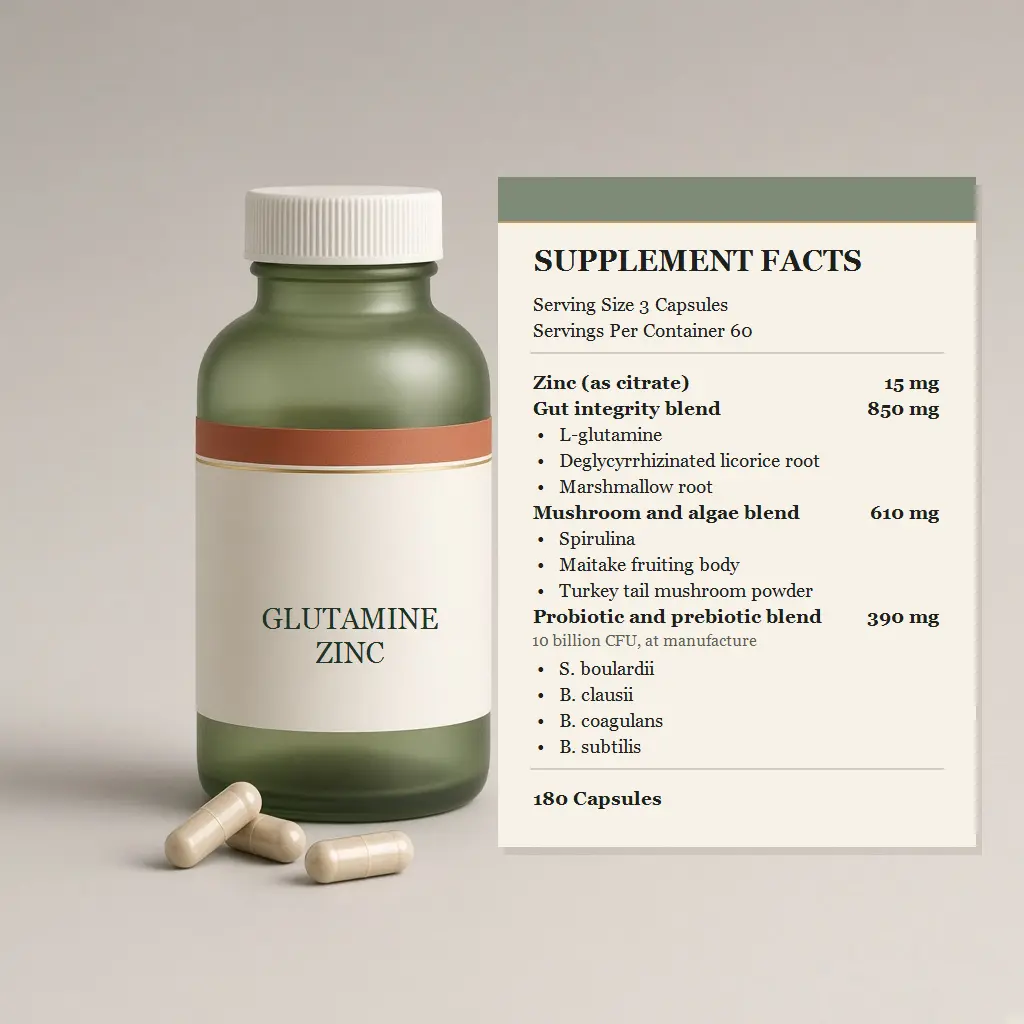
- Gut barrier support: L-glutamine, zinc carnosine, and the related specification — Gut Repair Supplements
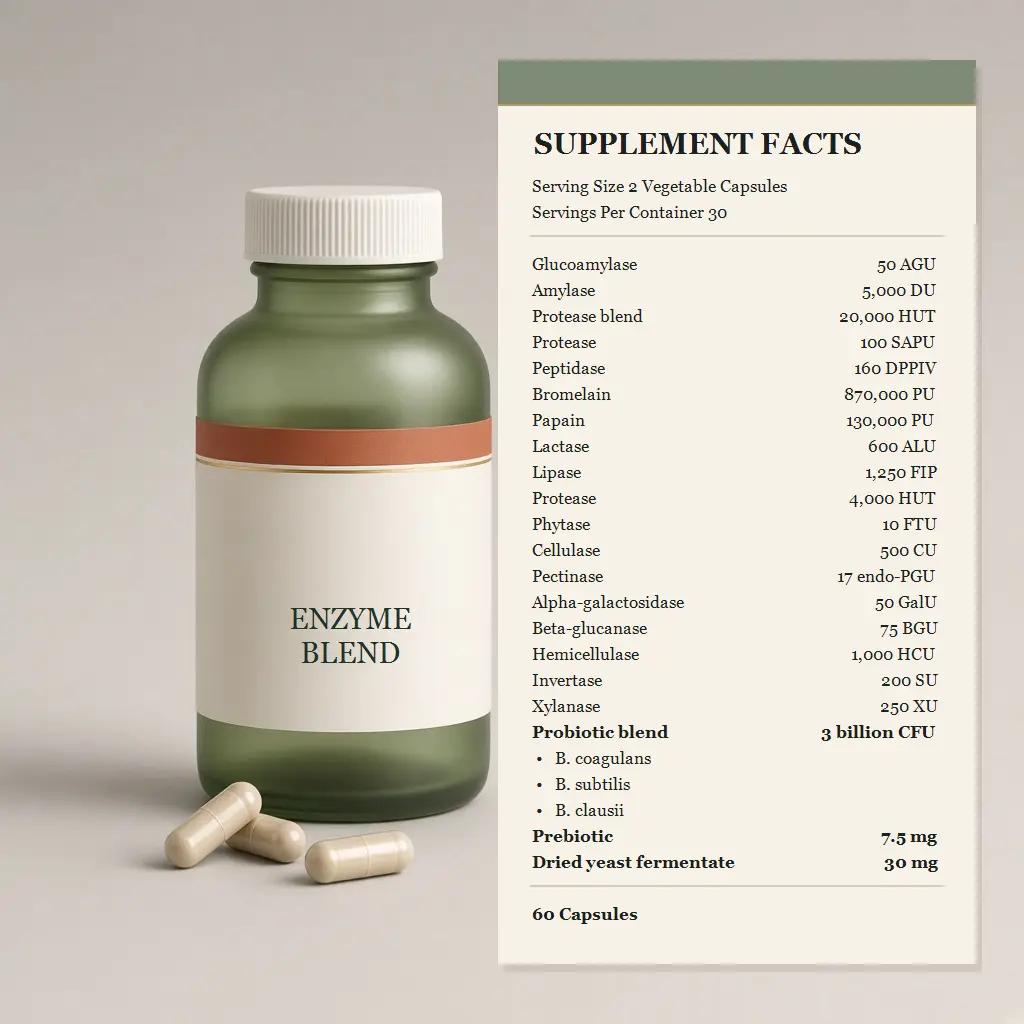
- Digestive enzyme activity: enzyme selection, activity units, and finished-product specifications — Digestive Enzyme Supplements
- Bloating, cleanse, or regularity positioning: Bloating Relief Supplements, Colon Cleanse Supplements, or Constipation Relief Supplements
Projects that combine more than one ingredient category can be assessed under one product brief. Each ingredient is specified separately. Deeper strain identity and count-method detail sits on probiotic supplements.
Gut Health Formulation Routes
The following routes cover common daily probiotic product concepts. They are starting points for development, not fixed formulas.
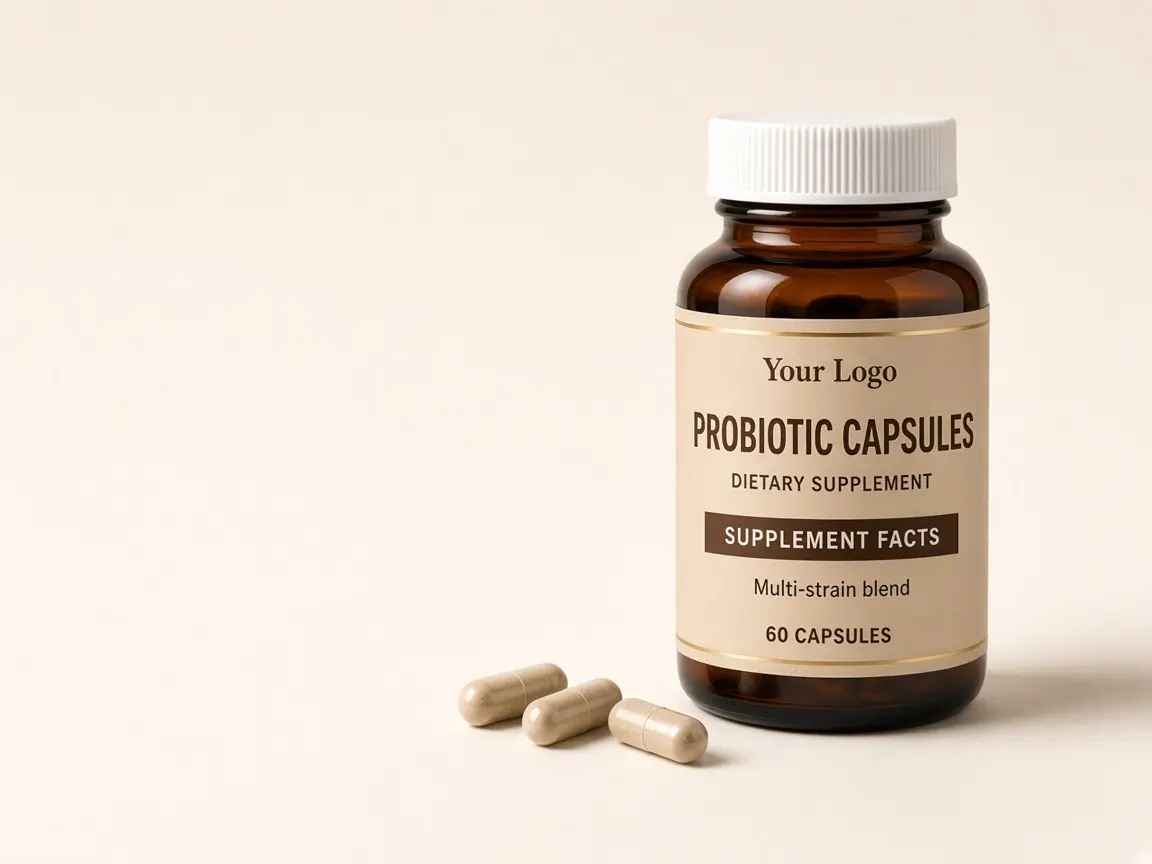
Use when: The SKU is a daily gut-health product built on one named strain or a defined multi-strain blend.
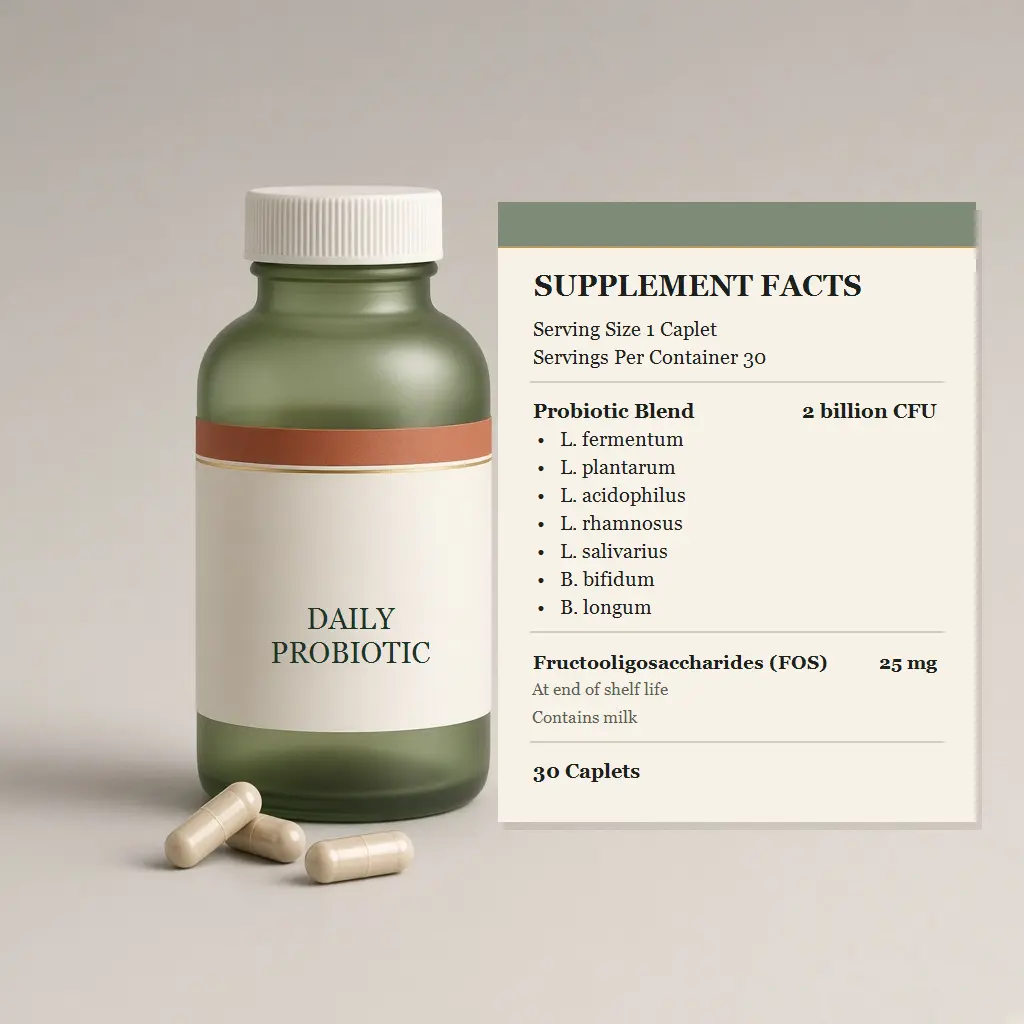
Specify: Strain identity, the CFU target per serving, and whether that target applies at manufacture or at the end of shelf life. The applicable test method and evidence requirements are confirmed for each project. Blend weight does not indicate CFU.
Trade-off: This route is primarily defined by strain identity and CFU requirements. A formula built around a defined prebiotic together with those cultures follows the synbiotic route below.

Use when: Serving size, intended use, or ingredient load favors a powder, in a multi-serve tub or a single-dose stick pack.
Specify: The culture material, the carrier, the serving weight, and how the powder will be used. Moisture control, powder handling, and the packaging barrier are assessed together against the CFU specification.
Trade-off: Tub and stick-pack configurations are assessed separately for filling, packaging, and order-quantity requirements.

Use when: The brand requires a gummy, and the strains, the processing conditions, the pack, and the shelf-life requirement can be evaluated before the formula is finalized.
Specify: Strain tolerance to heat and moisture. The count after processing and the CFU target at the end of shelf life are specified separately. A result after processing does not establish the count through shelf life.
Trade-off: Capsules or powders may be the more direct start when the specification depends on holding a defined live-culture count. Format selection still follows the strain, the process, the pack, and the stability requirement.
Format Feasibility
The route above chooses the product. The checks below decide whether that format can be manufactured and what drives the quotation. Tablets, liquids, and softgels can be assessed when the formula and the product requirements support them.
 Capsules
Checks: Fill weight, capsule shell, units per serving, and storage. A delayed-release capsule is specified on its own, including the count measured for that coating and those strains.
Quote impact: Fill specification, shell, pack, and order quantity. Detail sits on hard capsules.
 Powders and Stick Packs
Checks: Serving weight, flow, dose uniformity, moisture control, and packaging barrier.
Quote impact: Filling setup, pack type, and order quantity. Detail sits on powders and granules.
 Gummies
Checks: Strain tolerance to the gummy process, water activity, packaging, and the stability evidence plan.
Quote impact: Process requirements, packaging, testing scope, and lead time. Detail sits on gummies.
Supplier specifications, finished-batch results, and shelf-life evidence serve different purposes. The product specification must state whether the CFU target applies at manufacture or at the end of shelf life.
A shelf-life CFU claim requires an evidence plan for the formula, the packaging, and the intended storage conditions. Study design, test points, and any batch-specific testing are agreed for the project. Raw-material storage conditions inform the finished-product specification. They do not replace it.
| Specification | Requirement |
|---|---|
| Strain identity | Each strain named on the agreed supplier specification |
| CFU target | CFU per serving, with the specification stating at manufacture or at the end of shelf life |
| Count method | The enumeration method and test point agreed in the product specification and the testing scope |
| Storage | Storage conditions for the finished product |
| Packaging barrier | Moisture and oxygen protection assessed with the formula and the storage conditions |
| Finished-product release | The release tests, methods, and acceptance criteria agreed for that product |
| Quality record | What it can support |
|---|---|
| Finished-batch test results | The result for that released batch under the agreed method, including CFU at the point named in the specification. This result does not by itself prove CFU at the end of shelf life. |
| Supplier documentation | Identity, the supplier’s count, allergens, and contaminant statements for that raw-material lot. These records support raw-material qualification. They do not replace finished-product testing where the agreed specification requires it. |
| Calculated formulation targets | Target CFU per serving, fill weight, and any overage in the batch record. Overage is a design and batch-record target, not a measured count. |
| Stability evidence | Conclusions only for the formula, packaging, storage conditions, and time points included in the study. |
Quality documents and the testing scope can be reviewed during project qualification. Batch results are supplied under the agreed specification and release requirements.
Included when the specification or the shipment calls for them:
- Finished batch. The finished-product COA. Microbial results, heavy-metal results, and a stability report are included when they are in the agreed scope.
- Raw-material file. The supplier COA, an allergen statement for the carrier, the shell, and the processing aids, and Non-GMO documentation where the specification requires it and the document is available for that material.
- Export. The papers required for that destination market and that shipment.
- Site certificates. Copies that apply to the manufacturing site, available on request and subject to the disclosure rules for that project. Facility registration is a site record, not a product approval.
Label review can check whether the CFU statement matches the agreed specification, and can flag wording that may need a regulatory review. That review does not by itself clear the label for every destination market.
New SKU
Send: The concept, the target market, and the format you have in mind. A target cost or retail price helps when you have one.
What is assessed: The likely formulation route, a suitable starting format, and the specification details still to be confirmed.
What you receive: A development direction and the open specification items. This is not a finished formula.
Reference Formula
Send: The label or formula, the format, and the pack. Add an estimated first quantity when you know it.
What is assessed: The reference composition, the target specification, manufacturing feasibility, and the items the quotation still needs.
What you receive: The specification details that need clarification, and any change required for manufacturing. A reference label is the target for assessment, not a verified manufacturing formula.
Existing SKU or Second Source
Send: The current label or specification. Mark what must stay the same and what is open, such as packaging, target cost, or whether the CFU claim is at manufacture or at the end of shelf life.
What is assessed: Which items can be compared from the documents in hand, which differences are still open, and which tests or process checks are required.
What you receive: A specification gap assessment. Equivalence is not confirmed until the material, the process, the tests, and the pack have been reviewed.
Quotation input | Why it matters |
|---|---|
| Strain selection and supplier specification | Sets the materials to source and the supplier documents that come with them |
| CFU target and claim point | Sets the count requirement, and whether shelf-life evidence has to be assessed |
| Finished-product testing scope | Sets the test methods, release criteria, and reports included in the quotation |
| Dosage form and serving size | Sets the manufacturing route, the units per serving, and the applicable starting quantity |
| Packaging configuration | Sets the barrier requirement and the pack cost. A bottle, a blister, a tub, and a stick are separate lines |
| Initial order quantity | Sets the price basis. State finished units, bottles, or individual sticks, as applicable |
| Destination market | Sets which label, document, and export requirements are reviewed |
Strain sourcing, external CFU testing, stability screening, and a gummy process assessment are included when the quotation names them.
These are usual planning quantities for this category. The quotation names the exact basis. A count of finished capsules and a count of bottles are different orders. Five thousand capsules are not five thousand bottles.
The lead times below are indicative production lead times in calendar days. They start after the order is confirmed and the formula, artwork, packaging specifications, and production schedule are locked. They are not counted from the first inquiry, and they are not delivery dates. Purchasing, external testing, stability work, and transit sit outside that window unless the quotation includes them. A separate 500–1,000-unit commercial pilot is not offered.
A sachet and a stick pack are different packs. They are quoted on different quantity bases and are not interchangeable.
Format | Indicative starting quantity | Count basis | Indicative production lead time |
|---|---|---|---|
| Capsules | 3,000–5,000 | Finished capsules | 30–45 calendar days |
| Powders in tubs, pouches, or jars | 3,000 | Finished packs (tubs, pouches, or jars) | 25–30 calendar days |
| Sachets | 5,000 | Sachets | 30–45 calendar days |
| Stick packs | 30,000 | Individual sticks | 15–30 calendar days when the project fits the stick line |
Gummy, tablet, liquid, and softgel quantities and lead times are set after the formula and the process are reviewed. For a stick pack, the film and the fill decide whether the 15–30 day window applies.
Stage | Timing | What you receive |
|---|---|---|
| Initial review | Within one business day | Project type, missing information, and the recommended next step. This is not a quotation. |
| Feasibility and quotation | 3–5 calendar days after the required project details have been received | The route, the quantity band, the production window, and whether an external CFU test is required. |
| NDA, if needed | 1–3 business days, before the sample specification is locked | Confidentiality for proprietary formulation and project information. |
| Sample development | 7–15 calendar days after the specification for that sample is locked | A sample for evaluation, with revisions identified where needed. Not for sale, and not a process-validation batch. |
| Stability screening, when a shelf-life CFU is required | Set on the project, after the sample is in hand | An initial check of formula and pack suitability. This screening does not replace a longer stability study. |
| Manufacturing and release | The production lead time for that format | Production after the formula, the pack, the test scope, and the process are locked. Release uses the count measured on that run. |
What to Send
One form covers the first review and a later quotation. The three links below open that form. In the requirement, name the project type: new product, reference formula, or second source. The form does not select the type for you.
For the first review, send the project type, the target market, the preferred format, and any concept, label, or specification you already have.
For the quotation, add the first quantity, the target specification, the pack, the tests you need, and the launch timing when you have them. Open items are confirmed after the inquiry. An NDA is available before a sample specification is locked.
Discuss a new gut health product.
Evaluate a second-source opportunity.
Related
Disclaimer
Wholesale and brand-manufacturing reference only. Not intended to diagnose, treat, cure, or prevent any disease. Dietary supplements are not drugs. These directions are commercial formulation options. Serving size is set on the project specification. Brand owners remain responsible for structure/function or other claim substantiation, notifications where required, and finished-label compliance in each destination market. CFU and shelf life follow the finished formula, the point named in the specification, and the pack.
Written by KS Nutripharma Formulation Team | Reviewed by KS Nutripharma Director of R&D (PhD, Food Science | 19+ years nutraceutical development) | Technical review scope: live-culture identity, CFU at manufacture versus CFU at the end of shelf life, finished-batch results versus supplier documents, pack barrier, and format feasibility for capsules, powders, stick packs, and gummies | Updated October 2026