Ecdysterone in One Sentence
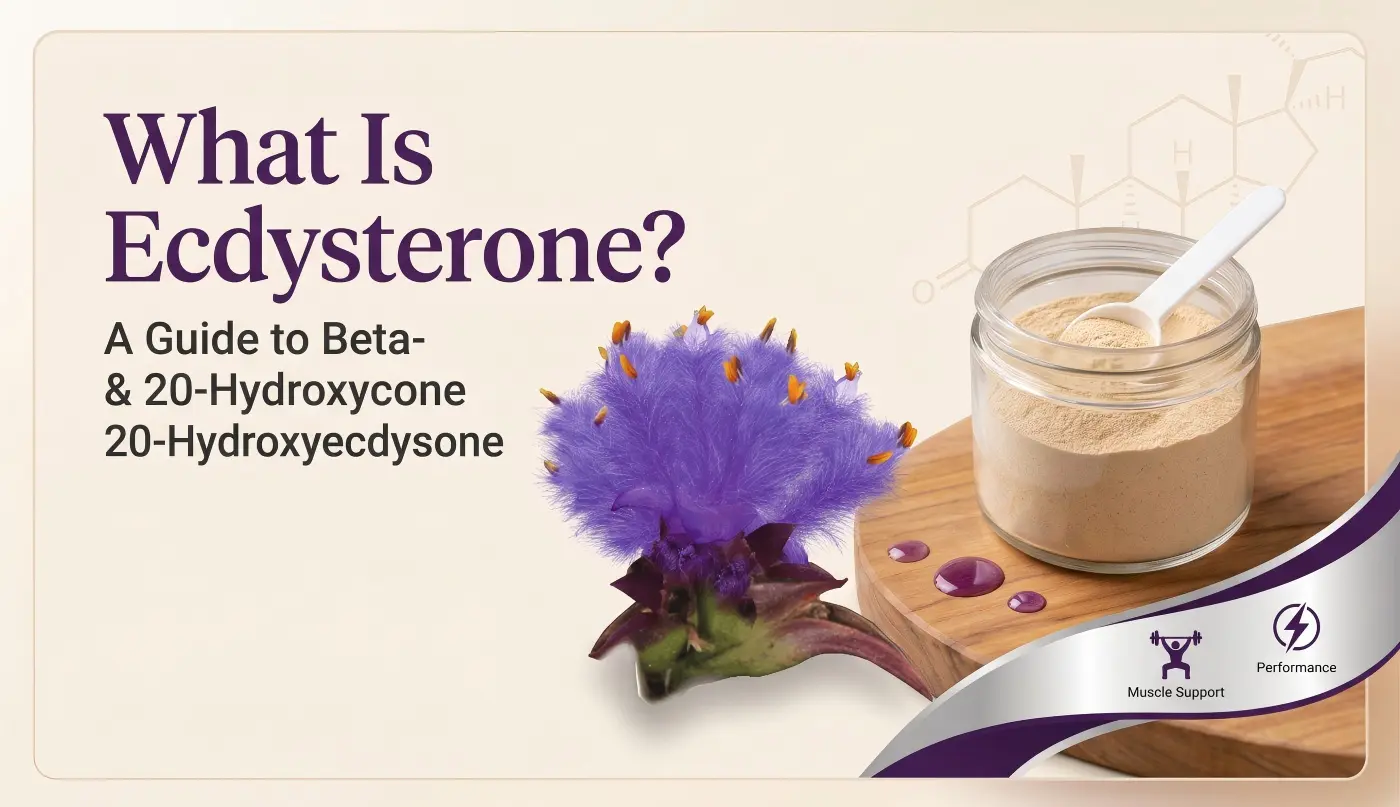
Ecdysterone is the common commercial name for 20-hydroxyecdysone (20E), a naturally occurring phytoecdysteroid found in plants such as Cyanotis arachnoidea and spinach. In ingredient procurement, the terms ecdysterone, beta-ecdysterone, and 20-hydroxyecdysone generally refer to the same chemical entity, CAS 5289-74-7 [1].
Introduction
Ecdysterone is a naturally occurring phytoecdysteroid, and in commercial supplement ingredients the term usually refers to 20-hydroxyecdysone (20E). It belongs to a broader class of steroid compounds found in certain plants and arthropods, but the commercially relevant form is the plant-derived extract standardized for 20E content.
In trade and scientific literature, ecdysterone, beta-ecdysterone, and 20-hydroxyecdysone are frequently used as synonyms. PubChem lists these names as synonyms associated with the same chemical record (CID 5459840, CAS 5289-74-7) [1]. However, commercial naming should always be verified against the actual ingredient specification, because not every product labeled ecdysterone contain the same material.
For procurement teams and formulation managers, the name alone is insufficient. This guide clarifies the chemical identity, botanical sources, standardization methods, and evidence status of ecdysterone as a commercial ingredient. It also explains what buyers should verify before placing a raw material order.
What Is Ecdysterone?
The Ecdysteroid Family
Ecdysteroids are a class of polyhydroxylated steroids. In arthropods, they function as molting hormones. In plants, they occur as secondary metabolites, likely serving a defensive role against herbivorous insects [2]. Over 500 natural ecdysteroids have been identified, but only a limited number occur in concentrations suitable for commercial extraction.
20-hydroxyecdysone (20E) is a commercially used phytoecdysteroid ingredient. It is a C27 steroid with hydroxyl substitutions at positions 2, 3, 14, 20, 22, and 25, and is typically extracted from Cyanotis arachnoidea roots or, less commonly, from spinach [3].
Chemical Identity
The systematic IUPAC name for 20-hydroxyecdysone is (2S,3R,5R,9R,10R,13R,14S,17S)-2,3,14-trihydroxy-10,13-dimethyl-17-[(2R,3R)-2,3,6-trihydroxy-6-methylheptan-2-yl]-2,3,4,5,9,11,12,15,16,17-decahydro-1H-cyclopenta[a]phenanthren-6-one. Its molecular formula is C27H44O7, with a molecular weight of 480.6 Da [1].
In procurement documents, the compound should be identified by:
• Chemical name: 20-hydroxyecdysone or beta-ecdysterone
• CAS Number: 5289-74-7
• PubChem CID: 5459840
• Molecular formula: C27H44O7
Is Beta-Ecdysterone the Same as 20-Hydroxyecdysone?
Yes. Beta-ecdysterone and 20-hydroxyecdysone are synonyms for the identical chemical entity (CAS 5289-74-7). The distinction is terminological, not chemical.
PubChem lists these names as synonyms associated with the same chemical record [1]. In scientific literature, 20-hydroxyecdysone is the preferred IUPAC-compliant name. In commercial and supplement industry usage, beta-ecdysterone and ecdysterone dominate.
However, a product labeled ecdysterone may contain:
• A high-assay 20-hydroxyecdysone material (95–98% HPLC)
• A Cyanotis arachnoidea root extract standardized to a specific 20E percentage
• A spinach extract with lower and variable ecdysteroid content
• A blend containing multiple ecdysteroids with 20E as the dominant component
Each of these represents a different material from a formulation, analytical, and regulatory perspective. Buyers should verify botanical source, extraction method, standardization, and assay result—not rely on the product name alone [3].
Is Ecdysterone the Same as Ecdysone?
No. Ecdysterone and ecdysone are related but distinct compounds.
Ecdysterone commonly refers to 20-hydroxyecdysone, which is ecdysone with an additional hydroxyl group at the C-20 position. Ecdysone (CAS 3604-87-3) is the biosynthetic precursor to 20-hydroxyecdysone. In mammalian systems, the two compounds may have different metabolic fates and biological activities [2].
This distinction matters for procurement because a Certificate of Analysis should specify 20-hydroxyecdysone (CAS 5289-74-7), not ecdysone (CAS 3604-87-3). Suppliers offering ecdysone as a substitute for ecdysterone are providing a different active compound.
Ecdysterone Terminology: What Does Each Name Mean?
The following table maps the common names used in scientific and commercial contexts:
| Term | What It Refers To | Procurement Note |
| Ecdysterone | Common commercial and scientific name | Usually 20-hydroxyecdysone; verify by CAS |
| Beta-ecdysterone | Commercial name | Same compound as 20-hydroxyecdysone |
| 20-Hydroxyecdysone | Chemical/scientific name | Specific active compound; preferred in COAs |
| 20E | Abbreviation | Same compound |
| Ecdysone | Different ecdysteroid | Precursor to 20E; NOT the same compound |
| Ecdysteroids | Compound family | Broader category including 20E, ecdysone, turkesterone |
| Turkesterone | Different ecdysteroid | 11α-hydroxy-20-hydroxyecdysone; structurally distinct |
Where Does Commercial Ecdysterone Come From?
Commercial ecdysterone extraction focuses on plant sources with the highest natural concentrations of 20-hydroxyecdysone:
| Source | Plant Material | Typical Commercial Role | Procurement Consideration |
| Cyanotis arachnoidea | Root | High-assay 20E extracts | Primary commercial source; verify botanical identity |
| Spinach (Spinacia oleracea) | Whole plant / aerial parts | Lower-concentration ecdysteroid source | Large raw material volumes required for potency |
| Rhaponticum carthamoides | Rhizome / root | Mixed phytoecdysteroid extracts | Often contains 20E alongside other ecdysteroids |
| Ajuga turkestanica | Plant material | Turkesterone + other ecdysteroids | Not a primary source for 20E isolate |
Why Botanical Sources Matter
The botanical source determines the ecdysteroid profile, extract yield, and analytical consistency. Cyanotis arachnoidea roots can contain substantially higher concentrations of ecdysteroids than many other botanical sources, which is one reason they are widely used for commercial 20E extraction. Actual content varies with plant material, origin, extraction process, and analytical method [3].
A 2016 investigation published in Scientific Reports analyzed European ecdysteroid supplements and found that products marketed as spinach-derived showed analytical profiles consistent with Cyanotis arachnoidea extract, representing a case of botanical identity substitution [3]. This illustrates why chromatographic fingerprinting and supplier verification are essential during qualification.
What Is Ecdysterone Studied For?
Ecdysterone has been investigated across multiple biological domains. The following framework distinguishes research directions from established clinical benefits:
Human Research
The most frequently cited human study is a 10-week randomized controlled trial by Isenmann et al. (2019), in which 46 young men received ecdysterone alongside resistance training. The study reported significant increases in bench press one-repetition maximum and lean body mass compared with placebo, with no adverse changes in liver or kidney biomarkers [4].
A separate metabolic syndrome study used a lower dose of ecdysterone combined with spinach powder and reported favorable effects on hyperlipidemia parameters, though the combined intervention design prevents isolation of ecdysterone-specific effects [5].
Preclinical Research
Animal and cell-based studies have investigated ecdysterone for muscle protein synthesis in C2C12 myotubes, anabolic effects in rodent models, metabolic outcomes, neuroprotection, and bone density. These studies provide mechanistic context but cannot be extrapolated to human efficacy claims [2].
Commercial Supplement Positioning
In the dietary supplement market, ecdysterone is primarily positioned in sports nutrition, adaptogenic formulas, and body composition products. Commercial positioning should not be interpreted as clinical proof of efficacy.
What Does the Evidence Actually Show?
The following evidence hierarchy table maps the current state of research as of 2026:
| Research Area | Evidence Type | Current Interpretation |
| Resistance exercise / muscle adaptation | One human RCT + preclinical research | Preliminary; not conclusive |
| Metabolic effects | Mainly preclinical + one combined human study | Insufficient for clinical claims |
| Neuroprotection | Mainly in vitro and animal models | Research area; not established benefit |
| Bone / tissue effects | Mainly preclinical | Research-stage evidence |
| General anabolic positioning | Mechanistic + limited human evidence | Not equivalent to proven clinical efficacy |
Is Ecdysterone Banned by WADA?
Ecdysterone is currently included in the WADA Monitoring Program under the anabolic agents category. Inclusion in the Monitoring Program does not mean the substance is prohibited.
The WADA Monitoring Program is designed to track substances that are not on the Prohibited List but may have potential for misuse in sport. Data collected through the program helps WADA assess whether a substance should be added to future Prohibited Lists [6].
Inclusion in WADA’s Monitoring Program does not itself make ecdysterone a prohibited substance. Separate food, supplement, and market-specific regulatory requirements still apply.
Do not describe ecdysterone as WADA-approved or WADA-certified; WADA does not certify individual supplement ingredients or products. Brands targeting athletes should advise consumers to consult the current WADA Prohibited List and their sport’s governing body before use.
How Is Ecdysterone Extract Standardized?
What Assay Means
Assay refers to the quantitative measurement of the active compound (20-hydroxyecdysone) in an extract, expressed as a percentage by weight. A 95% HPLC assay indicates that 20-hydroxyecdysone accounts for approximately 95% of the material under the specified analytical method. The remaining material may include other constituents, depending on the manufacturing process and specification.
Why Standardization Matters
Without standardization, the same product name can deliver vastly different active doses. A 500 mg serving of 50% extract provides 250 mg of active 20E; the same 500 mg serving of 95% extract provides 475 mg. This difference affects both efficacy expectations and formulation feasibility.
Batch-specific HPLC testing helps verify whether each production lot meets the agreed assay specification and supports more consistent active-content control across batches.
HPLC vs. UV Methods
HPLC with UV or PDA detection is commonly used to quantify 20-hydroxyecdysone in commercial raw materials. A non-specific UV spectrophotometric method may report total ecdysteroid-equivalent absorbance rather than selectively quantifying 20-hydroxyecdysone. For procurement, buyers should therefore confirm what the reported assay actually measures [3].
How Much Active 20E Does an Ecdysterone Extract Deliver?
The relationship between extract weight and active dose is governed by a simple formula:
Active 20E (mg) = Extract weight (mg) × Assay (as decimal)
For example, a 500 mg serving of extract at different assay levels delivers:
| Extract Grade | Extract Serving | Approx. 20E Delivered |
| 50% | 500 mg | 250 mg |
| 70% | 500 mg | 350 mg |
| 90% | 500 mg | 450 mg |
| 95% | 500 mg | 475 mg |
| 98% | 500 mg | 490 mg |
Ecdysterone Extract vs. High-Assay 20E
Buyers should understand the difference between a botanical extract and a higher-purity material:
| Material Type | What It Contains | Best Suited For | Documentation Needed |
| Standardized Cyanotis extract | 20E + botanical matrix + other ecdysteroids | Botanical positioning; general supplements | HPLC assay, botanical identity, heavy metals |
| High-assay material (90–98%) | Predominantly 20E with minimal matrix | High-potency formulas; precise dosing | HPLC chromatogram, reference standard traceability |
| Multi-ecdysteroid extract | 20E + turkesterone + others | Broad-spectrum ecdysteroid positioning | Full ecdysteroid profile by HPLC |
Ecdysterone in Supplement Formulations
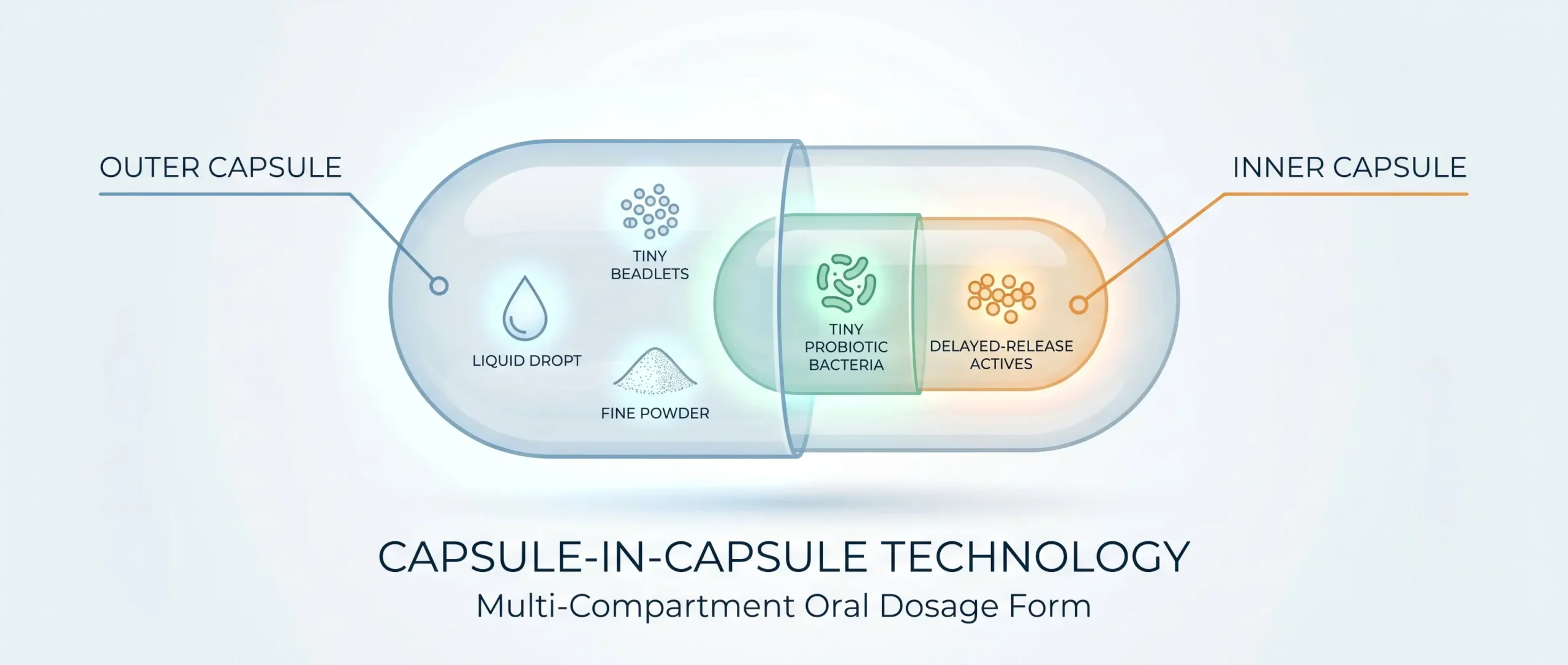
Ecdysterone-containing powders can generally be incorporated into capsules, tablets, and powder formulations, but manufacturability depends on assay, particle size, flowability, hygroscopicity, excipient system, and target serving weight.
Capsules
High-assay extracts (≥90%) may fit within standard capsule sizes at typical serving doses, but final capsule selection should be confirmed from measured bulk/tapped density and the complete formulation. A size 00 hard gelatin capsule holds approximately 735 mg of powder depending on density, though actual fill capacity varies with the specific material and excipient blend.
For capsule production options, see Ecdysterone Capsule Supplement Manufacturer.
Tablets
Tablet feasibility should be evaluated during formulation trials because compression behavior depends on the extract’s particle characteristics, moisture, bulk density, and excipient system. Film coating can improve swallowability and, depending on the coating system, may provide additional protection against environmental moisture.
For tablet production options, see Ecdysterone Tablet Supplement Manufacturer.
Powder
Powder formulations allow larger total serving weights and can accommodate flavor systems, sweeteners, and complementary ingredients. Taste and mouthfeel should be evaluated during development, particularly for flavored powder products. Blend uniformity testing is essential for powder batches.
For powder production options, see Ecdysterone Powder Supplement Manufacturer.
Ecdysterone Supplier Qualification Checklist
Before placing a raw material order, confirm the following:
1. Identity
- Chemical name: 20-hydroxyecdysone
• CAS number: 5289-74-7
• Botanical source: Cyanotis arachnoidea (or declared alternative)
• Plant part: Root (or declared alternative)
• HPLC chromatogram showing the 20E peak
2. Assay
- Method: HPLC (preferred) or UV (disclose limitations)
• Reference standard: Manufacturer and lot number
• Batch-specific result with chromatogram
• Assay range matches specification
3. Botanical Authentication
- Botanical name (Latin)
• Country of origin
• Traceability documentation
• Chromatographic fingerprint for identity verification
4. Contaminant Testing
- Heavy metals (lead, arsenic, cadmium, mercury)
• Pesticide residues
• Residual solvents
• Microbiology (total aerobic count, yeast/mold, E. coli, Salmonella)
5. Manufacturing Documentation
- Extraction method and solvent
• Standardization process
• Batch consistency data
• GMP or equivalent quality system certification
6. Regulatory Documentation
- Market-specific compliance documents
• Allergen statement
• GMO status
• Organic certification (if applicable)
• Halal / Kosher certification (if applicable)
7. Finished-Product Compatibility
- Target dosage form (capsule/tablet/powder)
• Particle size and flowability data
• Stability profile under anticipated storage conditions
• Packaging requirements
From Ingredient Qualification to Finished Product
The development pipeline for an ecdysterone supplement follows a logical sequence:
Step 1: Define the active
Confirm 20E / CAS 5289-74-7 / target assay grade.
Step 2: Select the source
Cyanotis arachnoidea or alternative botanical source.
Step 3: Select the grade
50% / 70% / 90% / 95% / 98% based on dosage form and cost targets.
Step 4: Validate documentation
COA/HPLC chromatogram/contaminants/traceability.
Step 5: Select dosage form
Capsule, tablet, or powder based on serving size and consumer preferences.
Step 6: Develop finished product
Formulation review, stability testing, batch production, and release.
Need to source or formulate an ecdysterone product? KS Nutripharma provides standardized beta-ecdysterone raw materials and OEM/ODM supplement manufacturing. See the relevant service pages for raw material specifications, dosage-form options, and project requirements.
Frequently Asked Questions
Q: What is ecdysterone?
A: Ecdysterone is the common commercial name for 20-hydroxyecdysone (20E), a naturally occurring phytoecdysteroid found in plants such as Cyanotis arachnoidea and spinach. In supplement ingredients, it is typically standardized to a specific percentage by HPLC.
Q: Is ecdysterone the same as ecdysone?
A: No. Ecdysterone commonly refers to 20-hydroxyecdysone, while ecdysone is a different compound (CAS 3604-87-3) and the biosynthetic precursor to 20E.
Q: What plants are used for commercial ecdysterone extraction?
A: Cyanotis arachnoidea (roots) is the primary commercial source. Spinach, Rhaponticum carthamoides, and Ajuga turkestanica also contain ecdysteroids, though concentrations and profiles vary [3].
Q: What does 95% ecdysterone mean?
A: It means the extract contains approximately 95% 20-hydroxyecdysone by HPLC assay. The remaining material may include other constituents depending on the manufacturing process.
Q: How is 20-hydroxyecdysone measured?
A: HPLC with UV or PDA detection is commonly used. A non-specific UV spectrophotometric method may report total ecdysteroid-equivalent absorbance rather than selectively quantifying 20-hydroxyecdysone [3].
Q: Is ecdysterone on the WADA Prohibited List?
A: No. Ecdysterone is on the WADA Monitoring Program, not the Prohibited List. The Monitoring Program tracks substances for potential misuse; inclusion does not mean prohibition [6].
Q: What should buyers request from an ecdysterone supplier?
A: Verify CAS number (5289-74-7), botanical source, HPLC assay method and result, heavy metal and microbial screening, and botanical authentication documentation.
Q: What is the difference between ecdysterone extract and high-assay 20E?
A: An ecdysterone extract is a botanical preparation standardized to contain a percentage of 20-hydroxyecdysone. High-assay 20E (95–98%) is a higher-purity material with less botanical matrix.
References
- [1] PubChem. 20-Hydroxyecdysone | C27H44O7 | CID 5459840. National Center for Biotechnology Information, U.S. National Library of Medicine. https://pubchem.ncbi.nlm.nih.gov/compound/20-Hydroxyecdysone
- [2] Parr MK, et al. Ecdysterone and Turkesterone—Compounds with Prominent Potential in Sport and Healthy Nutrition. Nutrients. 2024;16(9):1382. https://pmc.ncbi.nlm.nih.gov/articles/PMC11085066/
- [3] Hunyadi A, et al. Ecdysteroid-containing food supplements from Cyanotis arachnoidea on the European market: evidence for spinach product counterfeiting. Scientific Reports. 2016;6:37322. https://www.nature.com/articles/srep37322.pdf
- [4] Isenmann E, et al. Ecdysteroids as non-conventional anabolic agent: performance enhancement by ecdysterone supplementation in humans. Archives of Toxicology. 2019;93(7):1807-1816. https://pubmed.ncbi.nlm.nih.gov/31123801/
- [5] Kizelsztein P, et al. Urinary Elimination of Ecdysterone and Its Metabolites Following a Single-Dose Administration in Humans. Metabolites. 2021;11(6):366. https://pmc.ncbi.nlm.nih.gov/articles/PMC8227119/
- [6] World Anti-Doping Agency (WADA). The 2024 Monitoring Program. https://www.wada-ama.org/en/prohibited-list (see Monitoring Program section)