A Comprehensive Evidence-Based Guide for Consumers, Wellness Brands, and Supplement Buyers
Oxidative stress has become one of the most discussed topics in modern nutrition science. From skin aging and eye health to exercise recovery and mitochondrial function, antioxidant supplements are increasingly positioned as tools to support long-term wellness in high-stress modern environments.
However, not all antioxidants work the same way. Some act as direct radical scavengers, while others help activate the body’s own defense systems. Bioavailability, delivery format, ingredient sourcing, and formulation stability often determine whether an antioxidant supplement performs effectively in real-world applications.
For consumers, the challenge is understanding which antioxidants are supported by evidence. For wellness brand owners and supplement buyers, the challenge extends further into formulation strategy, ingredient standardization, stability testing, regulatory compliance, and manufacturing feasibility.
This guide explains what antioxidant supplements are good for, how they work, which ingredients have the strongest evidence, and how formulation technology influences efficacy and market success.
I. The Oxidative Stress Challenge
What Is Oxidative Stress?
Oxidative stress refers to an imbalance between reactive oxygen species (ROS) and the body’s ability to neutralize them through endogenous antioxidant defenses. ROS are naturally generated during metabolism, but excessive accumulation can contribute to lipid peroxidation, DNA oxidation, mitochondrial dysfunction, and protein damage.
Common contributors to oxidative stress include:
- Air pollution
- UV radiation
- Smoking
- Poor dietary patterns
- Chronic psychological stress
- Aging
- High-intensity exercise
- Sleep deprivation
According to the National Institutes of Health, oxidative stress is associated with multiple age-related physiological processes and inflammatory pathways.
Why Modern Lifestyles Increase Antioxidant Demand
Endogenous antioxidant systems such as glutathione, superoxide dismutase (SOD), catalase, and glutathione peroxidase naturally decline with aging. Studies suggest intracellular glutathione production decreases significantly after age 40, while mitochondrial oxidative burden increases over time.
Modern environmental exposure may further exceed the body’s natural buffering capacity. Urban pollution, processed diets, sedentary behavior, excessive screen exposure, and chronic stress collectively increase oxidative load.
As a result, antioxidant supplementation is increasingly used to support:
- Cellular protection
- Mitochondrial function
- Eye health
- Skin aging defense
- Cardiovascular support
- Exercise recovery
- Cognitive resilience
II. How Antioxidant Supplements Work
Free Radicals and Cellular Damage
Reactive oxygen species and reactive nitrogen species initiate oxidative chain reactions that damage cellular structures.
Major forms of oxidative damage include:
- Lipid peroxidation
- Protein carbonylation
- DNA oxidation
- Mitochondrial membrane disruption
Oxidative stress does not always function negatively. Moderate ROS production also participates in signaling pathways, exercise adaptation, and immune defense. Excessive suppression of ROS may impair beneficial hormetic responses.
Five Primary Mechanisms of Antioxidant Action
1. Direct Radical Scavenging
Compounds such as vitamin C, astaxanthin, and glutathione directly neutralize free radicals.
2. Enzyme Upregulation
Certain polyphenols activate endogenous antioxidant enzymes including:
- Superoxide dismutase (SOD)
- Catalase
- Glutathione peroxidase (GPx)
3. Metal Chelation
Some antioxidants reduce oxidative reactions by binding transition metals such as iron and copper, which catalyze ROS generation.
4. Antioxidant Recycling
Antioxidants operate as interconnected networks rather than isolated molecules.
For example:
- Vitamin C helps regenerate oxidized vitamin E
- Alpha-lipoic acid may help regenerate glutathione
- Glutathione supports intracellular antioxidant recycling
5. Gene Expression Modulation
Compounds such as curcumin, sulforaphane, EGCG, and resveratrol may activate the Nrf2 pathway, which regulates endogenous antioxidant defense genes.
III. Key Antioxidant Ingredients and Their Benefits
Vitamin C
Vitamin C is a water-soluble antioxidant involved in collagen synthesis, immune support, and oxidative defense.
Potential benefits include:
- Immune support
- Skin collagen production
- Reduced oxidative damage
- Exercise recovery support
Clinical reviews suggest vitamin C supplementation may modestly reduce cold duration in physically stressed populations.
Formulation considerations:
- Highly sensitive to moisture and oxygen
- Liposomal delivery may improve plasma retention
- Buffered forms may improve gastrointestinal tolerance
Coenzyme Q10
Coenzyme Q10 plays a critical role in mitochondrial ATP production and functions as a lipid-soluble antioxidant.
Potential applications:
- Cardiovascular support
- Energy metabolism
- Healthy aging
- Exercise performance
Ubiquinol generally demonstrates superior bioavailability compared with ubiquinone, particularly in older adults.
Astaxanthin
Astaxanthin is a carotenoid derived primarily from Haematococcus pluvialis algae.
Research has investigated astaxanthin for:
- Skin elasticity
- UV protection support
- Eye fatigue
- Exercise recovery
- Cognitive support
Unlike many carotenoids, astaxanthin spans the phospholipid membrane, allowing broader cellular membrane protection.
Formulation note:
- Oil-based softgels significantly improve absorption
- Natural astaxanthin differs structurally from synthetic forms
Lutein and Zeaxanthin
Lutein and Zeaxanthin are concentrated in the macula of the eye.
The AREDS2 study supported the role of lutein and zeaxanthin in reducing progression risk in age-related macular degeneration (AMD).
These carotenoids are widely used in:
- Eye health formulas
- Digital eye strain support
- Healthy aging supplements
Curcumin
Curcumin is the primary active polyphenol in turmeric.
Potential functions:
- Oxidative stress modulation
- Inflammatory pathway regulation
- Nrf2 activation
Native curcumin demonstrates extremely poor absorption. Modern formulations often utilize:
- Piperine
- Phytosome technology
- Liposomal delivery
- Nanoparticle systems
Resveratrol
Resveratrol is studied for:
- Vascular support
- Cellular aging pathways
- SIRT1 activation
However, rapid metabolism and low plasma bioavailability remain major formulation challenges.
Quercetin
Quercetin is a flavonoid found in onions, apples, and berries.
Research has investigated quercetin for:
- Exercise recovery
- Mast cell stabilization
- Oxidative stress reduction
- Immune modulation
Bioavailability may be improved when combined with bromelain.
Glutathione
Glutathione is often described as the body’s master intracellular antioxidant.
Potential roles include:
- Cellular Detoxification
- Oxidative stress regulation
- Mitochondrial support
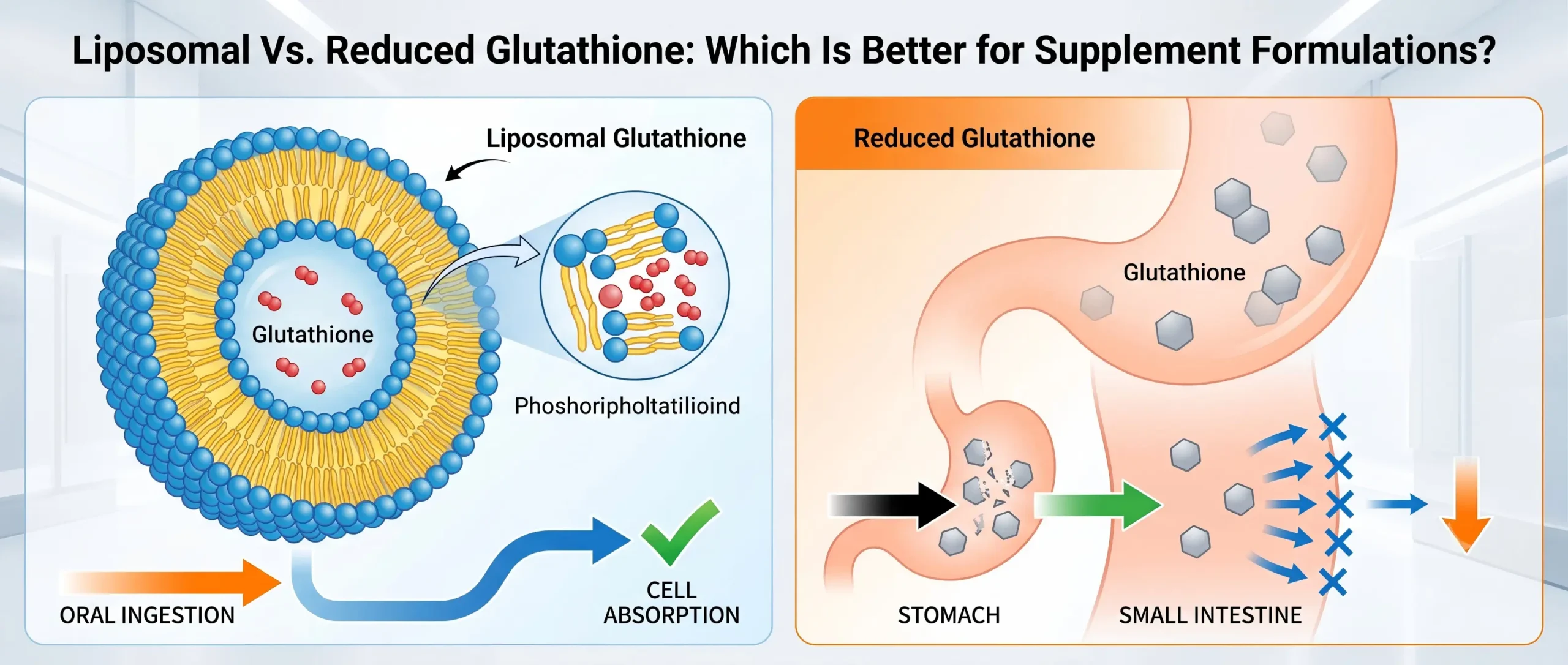
Standard oral glutathione has limited absorption. Liposomal glutathione may achieve improved systemic availability.
IV. Evidence-Based Health Benefits
Cardiovascular Health
Oxidative stress contributes to endothelial dysfunction and LDL oxidation.
Studies suggest:
- CoQ10 may support endothelial function
- Mixed tocopherols may reduce LDL oxidation
- Polyphenols may support vascular health
Formulation relevance:
- Ubiquinol generally outperforms ubiquinone in absorption
- Mixed tocopherols are preferred over isolated alpha-tocopherol
Cognitive Function and Neuroprotection
The brain is highly vulnerable to oxidative stress due to elevated oxygen consumption and lipid-rich tissue composition.
Research has explored:
- Astaxanthin for cognitive processing speed
- DHA + antioxidants for neuronal membrane protection
- Glutathione for mitochondrial support
Blood-brain barrier penetration varies substantially between antioxidant compounds.
Eye Health
AREDS2 remains one of the most influential antioxidant eye-health studies. The combination of:
- Lutein
- Zeaxanthin
- Zinc
- Vitamin C
- Vitamin E
was associated with reduced AMD progression risk in high-risk populations.
Skin Health and Photoaging
UV radiation significantly increases ROS production in skin tissue.
Research suggests:
- Astaxanthin may support skin elasticity
- CoQ10 may reduce wrinkle appearance
- Vitamin C supports collagen synthesis
Oil-based delivery systems generally improve carotenoid absorption.
Exercise Recovery and Athletic Performance
Exercise-induced oxidative stress is a major category within sports nutrition.
Research has investigated:
- Tart cherry concentrate for DOMS reduction
- Quercetin for VO2 support
- Astaxanthin for endurance recovery
However, excessively suppressing ROS immediately after training may impair adaptive signaling.
Metabolic Health and Mitochondrial Function
Mitochondrial dysfunction is increasingly associated with metabolic aging.
Compounds commonly investigated include:
- Alpha-lipoic acid
- CoQ10
- PQQ
- Resveratrol
Alpha-Lipoic Acid demonstrates both water- and fat-soluble antioxidant activity.
V. Why Some Antioxidants Fail Clinically
The ORAC Problem
ORAC values measure antioxidant activity in vitro, but they do not reliably predict:
- Human absorption
- Tissue penetration
- Mitochondrial localization
- Clinical outcomes
The United States Department of Agriculture removed its ORAC database because antioxidant capacity alone does not establish physiological relevance.
Bioavailability Bottlenecks
Many polyphenols demonstrate:
- Poor intestinal absorption
- Rapid metabolism
- Low plasma retention
- Limited blood-brain barrier penetration
This is particularly relevant for:
- Curcumin
- Resveratrol
- Quercetin
Formulation technology often determines efficacy more than raw ingredient potency alone.
The Antioxidant Paradox
Not all oxidative stress is harmful.
Moderate ROS signaling supports:
- Exercise adaptation
- Immune signaling
- Cellular resilience
- Hormesis pathways
Excessive antioxidant intake may blunt beneficial adaptation in some contexts.
VI. Formulation and Manufacturing Reality
Delivery Format Matters
Softgels
Best for:
- CoQ10
- Astaxanthin
- Vitamin E
- Omega-linked antioxidants
Advantages:
- Oxygen protection
- Improved lipid absorption
Hard Capsules
Best for:
- Polyphenols
- Vitamin C
- Botanical blends
Risks:
- Moisture sensitivity
- Oxidation during storage
Liposomal Liquids
Best for:
- Glutathione
- Vitamin C
Advantages:
- Enhanced cellular delivery
Challenges:
- Shelf-life limitations
- Refrigeration considerations
Gummies
High consumer preference but increased manufacturing challenges:
- Heat degradation
- Anthocyanin instability
- Moisture migration
VII. Stability Challenges in Antioxidant Manufacturing
Heat Sensitivity
Anthocyanins and certain carotenoids degrade rapidly under high-temperature gummy processing.
Oxygen Exposure
CoQ10, astaxanthin, and vitamin C may oxidize during:
- Mixing
- Encapsulation
- Bulk storage
Moisture Management
Polyphenols such as quercetin and resveratrol are hygroscopic and prone to:
- Caking
- Potency loss
- Poor powder flow
Nitrogen flushing and desiccant systems are commonly used to improve stability.
Odor Challenges
Sulfur-containing compounds such as NAC often require:
- Enteric coating
- Flavor masking
- Odor-control packaging
VIII. Safety and Regulatory Considerations
Drug-Nutrient Interactions
Certain antioxidants may interact with medications.
Examples include:
- Vitamin E + anticoagulants
- Green tea extract + beta blockers
- NAC + nitroglycerin
Consumers should consult healthcare professionals before combining supplements with prescription medications.
Upper Intake Limits
Fat-soluble antioxidants require additional caution.
Examples:
- Excessive vitamin E intake may increase bleeding risk
- High preformed vitamin A intake may be teratogenic
Regulatory Compliance
United States
The Food and Drug Administration permits structure/function claims but prohibits disease-treatment claims for dietary supplements.
European Union
The European Food Safety Authority regulates approved health claims.
China
The National Medical Products Administration regulates antioxidant-related health food registration through the Blue Hat system.
IX. Choosing the Right Antioxidant Formula
By Health Goal
| Health Goal | Primary Ingredients | Supporting Ingredients |
|---|---|---|
| Eye health | Lutein + Zeaxanthin | Zinc, Vitamins C/E |
| Skin beauty | Astaxanthin | CoQ10, Vitamin C |
| Healthy aging | CoQ10 | Resveratrol, ALA |
| Exercise recovery | Tart cherry | Quercetin |
| Immune support | Vitamin C + Zinc | Elderberry, NAC |
By Consumer Education Demand
High Familiarity
- Vitamin C
- Turmeric
- Green tea
- CoQ10
Emerging Awareness
- Astaxanthin
- Quercetin
- Resveratrol
Advanced/Early Adopter
- Urolithin A
- Ergothioneine
- PQQ
- SOD
X. OEM Manufacturing and Sourcing Considerations
For wellness brands and supplement buyers, manufacturing quality is often more important than marketing claims.
Key sourcing criteria include:
- cGMP certification
- Stability testing capability
- Raw material traceability
- Heavy metal testing
- Solvent residue analysis
- Ingredient standardization
What Buyers Should Audit
Standardization
Examples:
- 95% curcuminoids
- 20% lutein
- 10% astaxanthin
Extraction Method
- Ethanol extraction
- Supercritical CO2 extraction
- Water extraction
Stability Testing
Recommended conditions:
- 40°C / 75% RH accelerated testing
- Real-time shelf-life monitoring
COA Documentation
Should include:
- Active compound assay
- Heavy metals
- Microbiology
- Residual solvents
- Pesticide screening
XI. Frequently Asked Questions
Q: What Is the Strongest Antioxidant Supplement?
A: There is no single “strongest” antioxidant. Different antioxidants target different pathways and tissues. Glutathione supports intracellular defense, while astaxanthin specializes in membrane protection and CoQ10 supports mitochondrial energy systems.
Q: Are Antioxidants Safe to Take Daily?
A: Most antioxidant supplements are safe within established upper intake levels. Fat-soluble compounds require more caution than water-soluble antioxidants.
Q: Are Natural Antioxidants Better Than Synthetic Ones?
A: It depends on the compound. Natural astaxanthin generally differs significantly from synthetic astaxanthin, while synthetic vitamin C is considered bioequivalent to naturally sourced ascorbic acid.
Q: Is Liposomal Delivery Worth It?
A: Liposomal delivery appears most beneficial for compounds with poor oral bioavailability, particularly glutathione.
Q: Do Antioxidant Supplements Prevent Disease?
A: Current evidence does not support broad disease-prevention claims for antioxidant supplements in healthy populations. Benefits appear highly context-dependent and formulation-specific.
XII. Conclusion
Antioxidant supplements support multiple physiological systems, including cardiovascular health, eye health, skin protection, mitochondrial function, exercise recovery, and cellular defense against oxidative stress.
However, effectiveness depends on far more than ingredient selection alone.
Bioavailability, stability, delivery technology, ingredient standardization, and manufacturing quality ultimately determine whether an antioxidant supplement performs effectively in real-world use.
For consumers, the most practical strategy is:
- Prioritize a diverse whole-food diet
- Use targeted supplementation when appropriate
- Choose third-party tested formulations
For wellness brands and OEM buyers:
- Formulation simplicity often outperforms overstacked formulas
- Stability testing is essential
- Delivery technology creates market differentiation
- Traceable sourcing and regulatory compliance improve long-term brand credibility
As antioxidant science evolves, future growth will likely center on:
- Mitochondrial-targeted antioxidants
- Liposomal and phytosome delivery systems
- Precision formulations for specific populations
- Clinically validated biomarker-driven products