

Magnesium Taurate Supplement OEM, ODM & Private Label Service
KS Nutripharma is a magnesium taurate supplement manufacturer for OEM, ODM, and private-label programs. We produce finished capsules and tablets from a named taurate material, with the compound weight, the elemental magnesium line, the assay method, and the batch COA locked before a price is quoted. Where taurate sits against the other salts in a range is covered on the magnesium supplements program page.
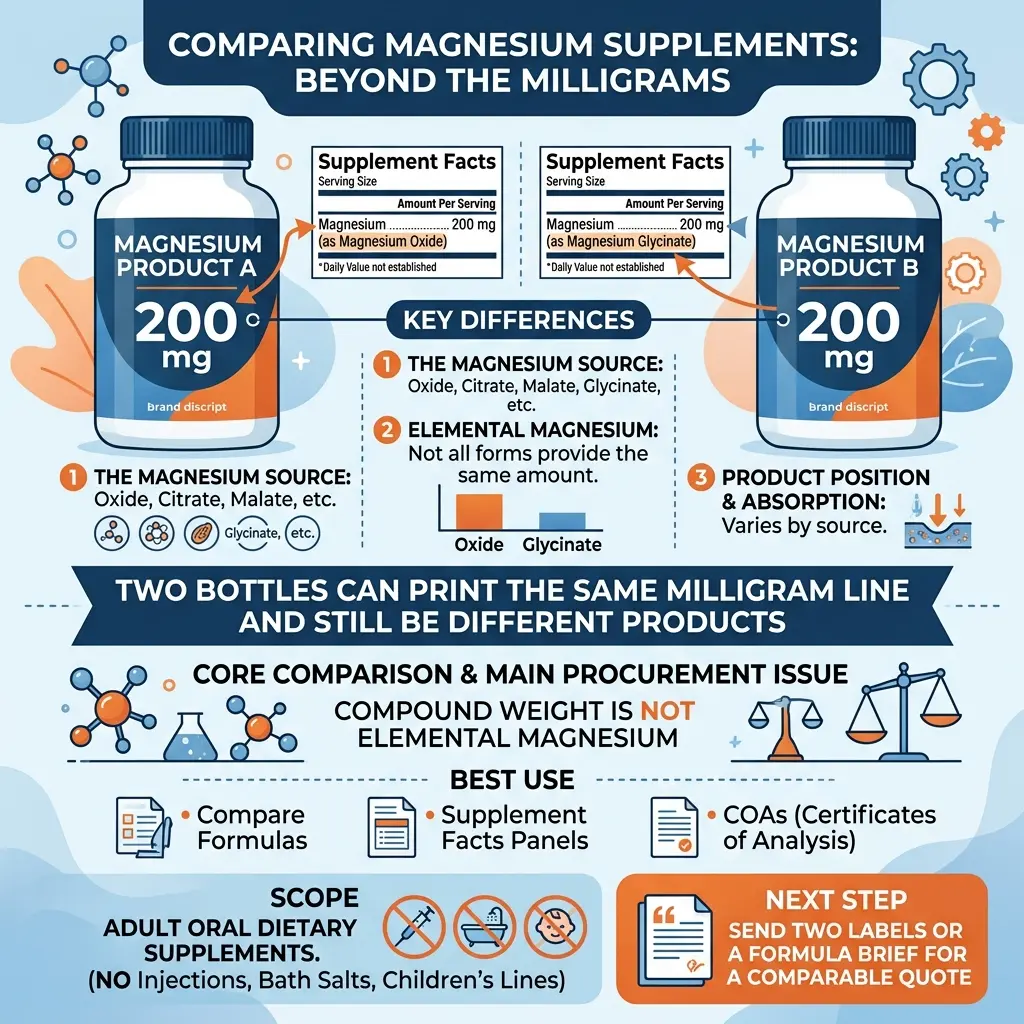
Magnesium taurate is a low-elemental salt, and that single fact runs this page. A genuine magnesium ditaurate carries roughly 8 to 9 percent elemental magnesium, so the compound weight behind any declared magnesium line is large — which sets the capsule size, the capsule count, and the honest ceiling on what one unit can deliver. It is also why materials sold under the name “magnesium taurate” at declared magnesium of 15 or 20 percent exist in the supply market. No pure ditaurate reaches those numbers, so a higher figure is telling you the composition, not the quality.
Already have a formula? Send your BOM — we review the material basis, the elemental arithmetic against your stated capsule count, and whether taurine appears once or twice on the panel.
Comparing two taurate quotes? Send both supplier specifications — with the declared magnesium percentage on each, we can tell you within a day whether you are pricing the same material.
Still setting the serving? Send your elemental target — we come back with the compound weight, the fill weight, and the units per serving it actually requires.
cGMP | ISO 9001 | ISO 22000 | HACCP | FSSC 22000 | Halal | Kosher | In-house lab + SGS/Eurofins pathways | Batch COA
Typical first reply is within one business day on a complete brief. Project manager assigned. NDA available.
Magnesium Taurate Supplement Manufacturing at a Glance
| What we manufacture | Oral magnesium taurate capsules and tablets |
| Identity | Magnesium taurate (magnesium ditaurate), CAS 334824-43-0. Reacted versus buffered or blended basis is confirmed before quoting |
| Nominal elemental magnesium | Roughly 8–9% for a genuine ditaurate; the batch COA governs |
| What two quotes must match | Material identity + declared magnesium percentage + compound mg + elemental mg + assay method + units per serving |
| Positioning | Commonly selected for heart- and nerve-positioned commercial panels. Label language stays inside the structure/function framework |
| Default format | Hard capsules; tablets where a higher elemental line has to fit fewer units |
| Scope | Oral dietary supplements. Not injections. Not infant or pet products |
| Documents | Batch COA; SGS/Eurofins pathways where the RFQ requires it |
Magnesium Taurate Formula Architectures
Five architectures cover almost every taurate brief we receive. Each is a starting point that gets adjusted against your elemental target and market, not a fixed catalogue item.
Companions come out of your brief with their own identity and assay — vitamin D3, and D3 with K2, which is developed as its own formulation architecture rather than a variant of a taurate capsule. Where a brand wants a daytime heart-positioned taurate and an evening bisglycinate as a pair, the two are quoted as two product specifications, not as one unit carrying both positions.
Use when: The product is a straightforward taurate capsule and the brand accepts the unit count that the material’s elemental percentage requires.
Specify: Material identity with the declared magnesium percentage; compound and elemental magnesium on separate lines; elemental magnesium per serving and units per serving; HPMC or gelatin shell.
Trade-off: Against F02, this is the architecture that stays honest about the unit count. At 8 to 9 percent, a 100 mg elemental serving needs roughly 1,100 to 1,250 mg of compound, which is two capsules rather than one before any excipient is added. Brands that will not accept two capsules end up back at the buffered-material question.
Default format: Hard capsules.
Use when: A single-capsule serving at a higher elemental line is a commercial requirement, and the brand is prepared to declare two magnesium sources rather than imply one.
Specify: Both salts by name, each one’s compound weight and elemental contribution, the total elemental magnesium, and the ingredient declaration for the target market.
Trade-off: This is the transparent version of what a 15 or 20 percent “magnesium taurate” delivers quietly. The elemental line and the unit count improve; the panel stops reading as a single-source taurate product, and the taurine ratio check no longer applies. Multi-salt formulas that go beyond a taurate-plus-oxide pair are quoted on our magnesium complex program, where the per-salt elemental breakdown is the whole exercise.
Default format: Hard capsules or tablets.
Use when: The brief calls for a taurine amount that the salt alone cannot reach at an acceptable magnesium level, which is the usual reason a heart-positioned panel carries both.
Specify: The taurate material with its compound and elemental contribution; the added free taurine amount with its own assay; the total taurine on the panel and how it is declared.
Trade-off: Against F01, the fill weight grows quickly, since the taurine you are adding sits on top of a compound that is already mostly taurine. It also closes the identity check in the section above, so the material basis has to be established on the incoming specification instead of being verifiable on the finished unit.
Default format: Hard capsules, frequently two per serving.
Use when: A companion vitamin is wanted on a nerve- or heart-positioned panel without adding a second mineral or another bulky active.
Specify: The B6 form — pyridoxine hydrochloride or pyridoxal-5-phosphate — and its amount per serving; the taurate material and its elemental contribution; the applicable B6 limit review for the destination market.
Trade-off: B6 is the cheapest addition on this list in fill-weight terms, which is precisely why it needs a limit and labeling review rather than a formulation review. Several markets cap B6 in supplements, and P5P and pyridoxine are not declared or priced alike.
Default format: Hard capsules.
Use when: The brand wants a recognisable heart-shelf pairing in one unit rather than as two bottles.
Specify: The CoQ10 form and whether it is a crystalline powder or a solubilised or beadlet grade; its assay and stability requirements; the combined fill weight against shell capacity; light-protective packaging.
Trade-off: Two bulky ingredients compete for the same shell, so this architecture usually forces either a lower elemental magnesium line or a larger unit count than F01 at the same magnesium. CoQ10 also brings its own light and oxygen sensitivity and its own assay to the release specification. Where the CoQ10 amount is the selling point, an oil-phase softgel developed as its own project generally serves it better than a dry blend.
Default format: Hard capsules; softgel on separate feasibility review.
Choose the Magnesium Taurate Format: Capsules or Tablets
The architectures above settle the composition. These cards cover what the fill weight does to the format.

Best for: Programs where a higher elemental line has to arrive in fewer units, and high-count bottles where cost per serving governs.
Why: A tablet can carry more mass than a capsule of comparable swallowability, which is the main reason a taurate brief moves to this format. Compressibility, tablet weight, hardness and friability, disintegration, and coating all get confirmed on trial, and a large mineral tablet is where coating and disintegration stop being routine. A taurate capsule and a taurate tablet at the same declared magnesium are two different development projects with different unit economics.
Default path: Tablets.

Best for: Most taurate programs, including single-salt capsules and the B6 and free-taurine architectures.
Why: Capsule count is an output of the arithmetic, not a preference. As a planning range, size 0 may take roughly 350 to 450 mg and size 00 roughly 500 to 650 mg of a powder blend, with actual capacity following the finished blend’s bulk and tapped density and confirmed by fill trial. Working back from the elemental target through the qualified lot’s assay to the compound weight and total fill weight gives the units per serving — and for taurate that answer is often two. The general arithmetic is worked through in how fill weight limits capsule count.
Default path: Hard capsules.
 Note
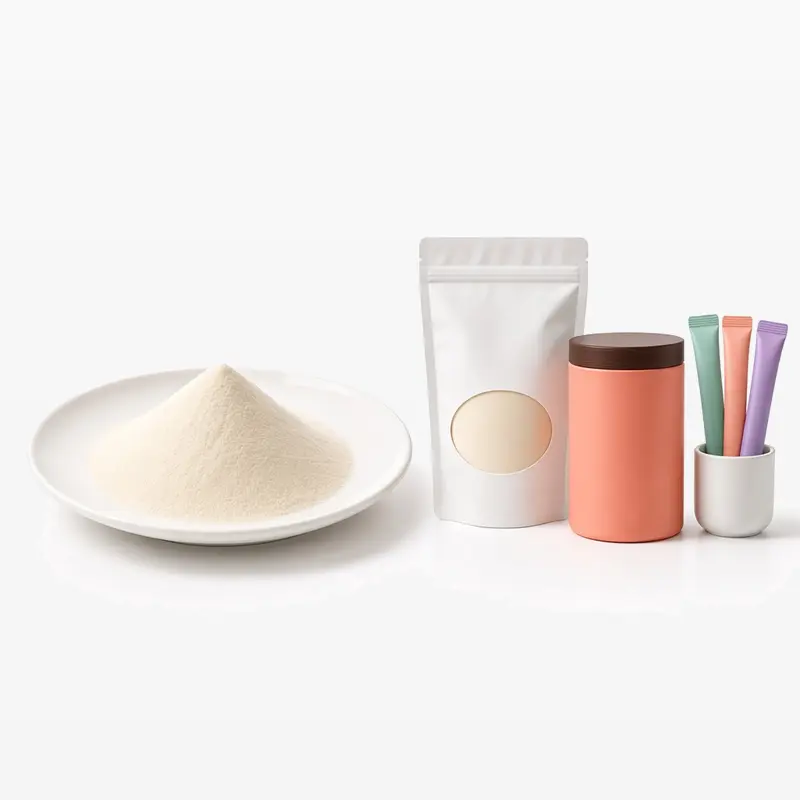
NotePowder is technically possible and some suppliers offer taste-neutral soluble grades, but it is not a default taurate format: the serving mass a low-elemental salt requires is substantial in a stick, and taste and dispersion have to be validated at the target magnesium level before the format is committed. Gummies and softgels are not default taurate formats either — the mineral load a gummy carries at a credible declared level is small relative to the compound weight involved, and a softgel needs an oil phase that a dry taurate salt does not provide.
Two suppliers can both write “magnesium taurate” on a specification and ship materials that are not chemically comparable. Unlike most salt-identity problems, this one is settled with arithmetic rather than with assurances.
The 8–9% ceiling, and what a higher number means
Magnesium ditaurate has a molecular weight of about 273, of which magnesium accounts for about 24 — roughly 8.9 percent by mass as a theoretical maximum. Commercial specifications sit just under it, commonly stated as magnesium not less than 8.0 percent on a dry basis, or as a range of 8.0 to 9.5 percent.
Materials are nevertheless offered under the same product name at magnesium of 15 percent and 20 percent on a dry basis. Those are not better grades of the same thing. The additional magnesium has to come from a denser source, and in practice it comes from magnesium oxide, which carries roughly 60 percent elemental magnesium. Some distributor listings state this openly, describing the material as a composition of magnesium oxide, taurine, and a carrier such as hydrolyzed vegetable protein.
None of this makes a buffered material illegitimate. It makes it a different purchase, with a different cost structure, a different declaration, and — where a protein carrier is involved — a possible allergen entry that a single-source taurate would not have. What is not acceptable is pricing the two against each other as though the name settled the question.
The practical test: ask for the declared magnesium percentage first. At 8 to 9 percent you are discussing a reacted ditaurate. Materially above that, ask what the additional magnesium source is and in what proportion, and request the composition in writing rather than a restatement of the trade name.
The same question recurs across the other magnesium salts. How reacted and buffered materials differ, and what a finished label does and does not reveal about either, is set out in buffered versus fully reacted magnesium.
Taurine inside the salt versus taurine added to the formula
In magnesium ditaurate the taurine is part of the salt. A formula may also add taurine separately, as a free amino acid, and both routes are common on heart-positioned panels. The two are not interchangeable on a bill of materials: “magnesium taurate 1,000 mg” and “magnesium taurate 500 mg plus taurine 500 mg” have different fill weights, different assay panels, and different declarations.
This is a specification field rather than a technicality, because the free-taurine amount is what determines whether the identity check below can be run at all.
The taurine ratio as an identity check
The two taurine groups make up most of the molecule, at roughly 10 mg of taurine for every 1 mg of elemental magnesium by mass. That ratio is fixed by the chemistry, and taurine is a routine assay — which makes it the most useful check available on a finished unit.
A capsule declaring 100 mg of elemental magnesium sourced wholly from magnesium ditaurate should carry on the order of 1,000 mg of taurine. If the assayed taurine comes in materially short of that, part of the magnesium is arriving from something other than the taurate. The check holds only when no free taurine has been added, or when the added amount is known and subtracted first.
Magnesium acetyl taurate is a separate material
Magnesium taurate and magnesium acetyl taurate are listed as two distinct permitted forms in Annex II of the EU food supplements directive [4]. They are not the same specification and should not be substituted for one another during sourcing, even where a supplier’s catalogue places them side by side. Both are authorised forms for EU food supplements; national rules and the rest of the product’s requirements still apply.
Compound weight versus elemental magnesium
A panel line reading “magnesium taurate 1,000 mg” states compound weight. At 8 to 9 percent, the elemental magnesium inside it is roughly 80 to 90 mg, and the remainder is taurine. Both figures belong on the specification, with the elemental result reported as a batch value and the method named. An elemental figure on its own is still not enough to produce against, and what a magnesium specification has to carry beyond it applies to every salt in the range. Our general approach to reading supplier documentation is set out in how to read a COA.
Identity and material basis
The specification names the material and its basis: magnesium ditaurate, or a buffered or blended composition with each magnesium source and its proportion stated. Identity is confirmed on the incoming COA, and the declared magnesium percentage is read against the 8 to 9 percent ceiling as the first screen on any new supplier.
Elemental magnesium, taurine, and assay basis
Elemental magnesium sits on its own line as a batch result with the method named, and the compound weight sits separately. Taurine content belongs on the specification as well, both because it carries the identity ratio and because it is the field that separates ligand taurine from anything added later. Which tests run on every lot and which are covered by supplier qualification follows the approved raw-material specification rather than a single fixed panel.
Grade selection and physical properties
Loss on drying, particle size or mesh, pH in solution, and bulk and tapped density belong on the specification, because each one closes off a format or changes a fill weight. Where a soluble or taste-neutral grade is offered, it is qualified as its own grade rather than treated as a variant of the standard powder, since a grade change on a low-elemental salt moves the serving mass as well as the taste.
Heavy metals, microbiology, and carriers
Testing scope and COA fields follow the locked product specification and the destination market’s finished-product requirements — heavy metals including lead, arsenic, cadmium, and mercury, plus microbiology, identity, and assay as applicable. Where a buffered material includes a protein or starch carrier, that carrier is documented for allergen declaration before the specification is approved, not after artwork.
An incoming COA establishes what arrived at the door. It does not establish what a serving of the finished product delivers, and on taurate projects the gap is wider than usual because the elemental figure is small and the compound weight behind it is large. How finished-product magnesium is tested covers the release side in more detail than a product page can.
Four stages close it. Raw-material qualification fixes identity and material basis, batch elemental magnesium with its method, taurine content, and the physical properties. Formula calculation converts the elemental target to compound weight, compound weight to total fill weight, and fill weight to capsule size, capsule count, or tablet weight. Dosage-form confirmation proves it on trial — fill and flow for capsules, compression and disintegration for tablets. Finished-product release then covers the finished specification, batch COA, and finished-unit assay where the market or the retailer requires it.
One limitation is worth stating plainly, because it decides how much documentation matters here. A finished-unit magnesium assay measures total elemental magnesium; it cannot attribute that magnesium to a particular salt. The taurine ratio is the one indirect check available, and it only reads cleanly when free taurine is absent or quantified. Everything else rests on the incoming material specification and the supplier qualification behind it — which is why the material basis is settled in writing before the first production batch rather than inferred from a release result afterwards.
To get a quote that survives contact with production, send the target elemental magnesium per serving and the units per serving you intend to declare, the material specification for each supplier under consideration with the declared magnesium percentage on it, any free taurine amount, the dosage form, the destination market, and the packaging direction. Two taurate quotes are comparable only when the material basis, the compound weight, the elemental magnesium, the assay method, and the serving architecture line up together — the general case is worked through in why two magnesium labels are not comparable. Where a field is missing on one side, we will tell you which question to put back to that supplier instead of estimating around it.
Serving size is established from the target elemental magnesium, the qualified lot’s assay, the fill capacity of the chosen format, and the finished-label requirements of the destination market. Both the elemental magnesium per serving and the number of units per serving are declared on the panel [3], and on a low-elemental salt the second figure is the one that gets negotiated.
Taurate is commonly selected for heart- and nerve-positioned commercial panels. That is a positioning convention rather than a claim, and the label language stays inside the structure/function framework, with substantiation held by the marketer, FDA notification within 30 days of marketing, and the required disclaimer on the label [2].
For US formulation review, NIH lists a tolerable upper intake level of 350 mg/day for magnesium from dietary supplements and medications for adults, which does not include magnesium naturally present in food [1]. That is a nutrition and regulatory reference used in safety review, not a formulation recommendation. Milligram and percentage figures on this page are development examples.
What is the difference between reacted and buffered magnesium taurate?
A reacted magnesium ditaurate gets all of its magnesium from the taurate salt and lands at roughly 8 to 9 percent elemental magnesium. A buffered or blended material reaches a higher figure by including a denser magnesium source, usually oxide, and sometimes a carrier. Both can be manufactured; they differ in cost, in declaration, and in what the taurine assay on the finished unit will show. Ask for the declared magnesium percentage and the composition in writing.
A supplier quoted magnesium taurate at 20% magnesium. Is that a better grade?
It is a different material. The theoretical maximum for a pure magnesium ditaurate is about 8.9 percent, so 20 percent cannot be reached by the taurate salt alone. Treat the higher number as information about composition and ask what the additional magnesium source is and in what proportion.
Is the taurine in magnesium taurate the same as taurine added to a formula?
Chemically it is the same amino acid, but on a bill of materials the two are separate entries with separate assays. Taurine inside the salt arrives with the magnesium and cannot be adjusted independently; added free taurine is its own line item, its own cost, and its own fill weight. A formula can contain both, and the panel has to make clear which amounts are being declared.
How many capsules will a 200 mg elemental magnesium serving take?
At 8 to 9 percent elemental magnesium, 200 mg requires roughly 2,200 to 2,500 mg of compound before excipients, which is beyond a two-capsule serving in any standard shell. Reaching that line in one or two units means either a tablet or a declared second magnesium source. This is the calculation to run before artwork is committed, since it is the one most often discovered late.
Can magnesium taurate be used in a cardiovascular-positioned formulation?
It can be considered as an ingredient in a cardiovascular- or metabolic-positioned dietary supplement concept, subject to the formulation, the destination market, and a compliant label review. It is not a treatment for hypertension, arrhythmia, or cardiovascular disease, and we do not develop drug-path products.
Can you manufacture from our existing taurate BOM?
Yes. We work from an existing BOM or a formulation brief and review the material identity and basis, the elemental magnesium target against the stated unit count, taurine on the panel, dosage-form feasibility, and packaging against the destination market before quoting. Where the BOM declares an elemental line that the specified material cannot deliver in the specified number of units, we flag it at review rather than at first production.
What should the raw-material COA show?
Material name and basis, identity confirmation with its method, batch elemental magnesium with the assay method named, taurine content, loss on drying, particle size or mesh, pH, bulk and tapped density, plus heavy metals and microbiology to the approved specification. A COA reporting only “magnesium taurate, conforms” has told you nothing you can formulate against.
What is the MOQ, and how are samples handled?
Both depend on the dosage form, the packaging format, and how much custom work the formula needs, so they are confirmed against your brief rather than quoted as a single number. Samples and pilot runs follow specification lock, because a sample made from an unqualified material tells you very little about the product you would receive — particularly here, where the material’s declared magnesium percentage changes the unit itself.
Related
- Magnesium Bisglycinate Supplements Manufacturing
- Magnesium L-Threonate Supplement Manufacturer
- Magnesium Complex Supplement Manufacturer
- Hard Capsules
- Tablets
References
- NIH Office of Dietary Supplements. Magnesium — Health Professional Fact Sheet. https://ods.od.nih.gov/factsheets/Magnesium-HealthProfessional/
- US FDA. Structure/Function Claims. https://www.fda.gov/food/nutrition-food-labeling-and-critical-foods/structurefunction-claims
- 21 CFR 101.36 — Nutrition labeling of dietary supplements. https://www.ecfr.gov/current/title-21/chapter-I/subchapter-B/part-101/subpart-A/section-101.36
- Directive 2002/46/EC on food supplements, Annex II (consolidated text). https://eur-lex.europa.eu/eli/dir/2002/46
Disclaimer: Wholesale and brand-manufacturing reference only. Not intended to diagnose, treat, cure, or prevent any disease. Dietary supplements are not drugs. Magnesium taurate is a specified magnesium salt for finished-product OEM — not a treatment for cardiovascular disease, hypertension, arrhythmia, metabolic disorders, or any medical condition. Milligram and percentage figures on this page are development and specification examples, not recommended intakes; nominal elemental percentages are calculated values that vary by material basis and lot, and the batch COA governs. Positioning language referenced here is market convention, not claim substantiation. Brand owners remain responsible for finished-label compliance and claim substantiation with local counsel.