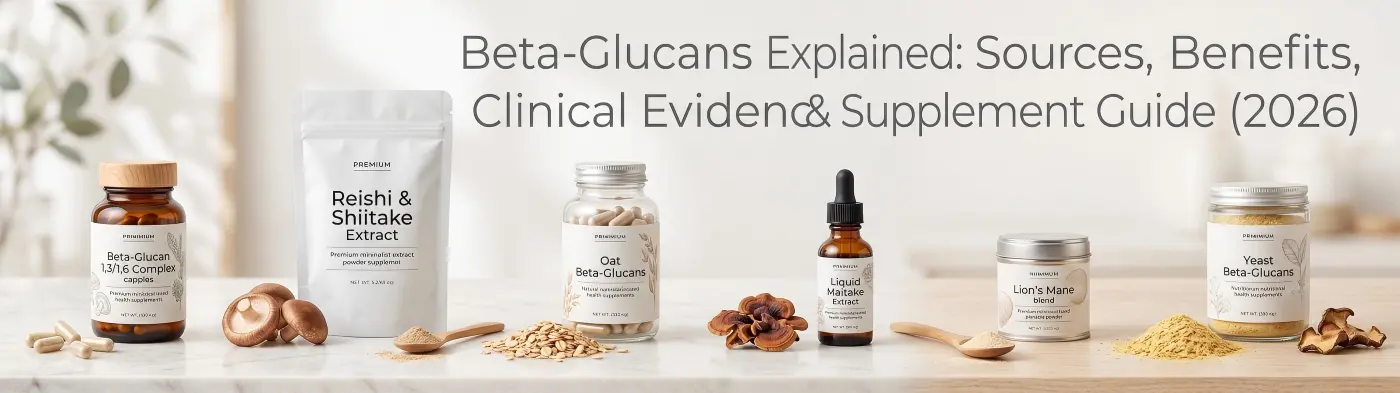
Quick Answer: What Are Beta-Glucans and Which Source Is Right for You?
Beta-glucans are natural polysaccharides found in the cell walls of oats, barley, yeast, and mushrooms. Different sources provide different benefits because their molecular structures differ:
Oat beta-glucan → cholesterol support and heart health (FDA-authorized claim)
Barley beta-glucan → metabolic health and glycemic control
Yeast beta-glucan → immune support and trained immunity (Wellmune®, Yestimun®)
Mushroom beta-glucan → wellness, healthy aging, and cognitive support
The best beta-glucan supplement depends on your health goals, rather than one source being universally superior. For cholesterol, look for 3 g/day of high-molecular-weight oat or barley beta-glucan. For immune support, 250–500 mg/day of yeast beta-1,3/1,6-glucan is the clinically validated dose. Always verify that the label specifies beta-glucan content separately from total polysaccharides—this is the most common labeling mistake in the mushroom supplement category.
Beta-Glucan Benefits at a Glance
| Benefit | Evidence Strength | Best Source | Key Regulatory Claim |
|---|
| Cholesterol reduction | Strong | Oat / Barley | FDA 21 CFR 101.81; EFSA Art. 14; Health Canada Approved |
| Immune support (URTI) | Moderate | Yeast | EFSA Novel Food; FSAI Approved |
| Blood sugar management | Moderate | Oat / Barley | EFSA Art. 13 (4 g per 30 g available carbs) |
| Gut health / prebiotic | Moderate | Oat / Yeast | Mechanism established; emerging clinical data |
| Weight management support | Emerging | Oat | EFSA satiety claim rejected (insufficient evidence) |
| Healthy aging | Emerging | Yeast / Mushroom | Pilot studies in adults 50–70 years |
| Exercise recovery | Moderate | Yeast | RCTs in marathon runners and stressed athletes |
| Skin health | Emerging | Yeast / Mushroom | Preclinical and early clinical data |
What Are Beta-Glucans?
Beta-glucans (β-glucans) are naturally occurring polysaccharides composed of glucose molecules linked through β-glycosidic bonds. They are structural components of the cell walls of cereals, fungi, yeast, algae, and bacteria. The specific molecular architecture—particularly the type of glycosidic linkage and degree of branching—determines their physiological function and commercial application.
Chemically, beta-glucans are classified by their backbone linkages:
β-(1→3) linkages: Common in fungal and yeast cell walls, often with β-(1→6) side branches
β-(1→4) linkages: Predominant in cereal grains such as oats and barley, typically interspersed with β-(1→3) linkages
β-(1→6) linkages: Found as branching points in fungal beta-glucans and as backbone structures in certain microbial sources
These structural differences are not merely academic distinctions. The linkage pattern determines solubility, viscosity, molecular weight, and—critically—biological activity. A beta 1→3 d glucan supplement derived from yeast triggers immune receptors that oat-derived beta-glucan does not activate, while cereal beta-glucans exhibit viscous properties that fungal beta-glucans lack.
According to the U.S. Food and Drug Administration, beta-glucan soluble fiber is defined as “a group of non-starch polysaccharides concentrated in the cell wall of the endosperm containing D-glucose units linked by β-glycosidic bonds” [21 CFR §101.81].
Why Are Different Beta-Glucans Not the Same?
This is one of the most misunderstood aspects of beta-glucan science. Not all beta-glucans are interchangeable. The source organism determines the primary linkage pattern, which in turn dictates whether the molecule functions primarily as a soluble fiber (viscous, bile acid-binding) or as an immunomodulator (pattern recognition receptor agonist).
Source matters only because structure follows source. The scientifically accurate statement is not ‘mushroom beta-glucan is superior,’ but rather ‘beta-(1→3/1→6)-glucans with specific branching patterns activate Dectin-1, regardless of whether they come from yeast, Reishi, or Shiitake.
| Source | Primary Linkage | Key Molecular Weight | Primary Function | Regulatory Claim Status |
|---|
| Oat | β-(1→3/1→4) | 100–3,000 kDa | Cholesterol reduction, glycemic control | FDA Authorized (21 CFR 101.81); EFSA Art. 14; Health Canada Approved |
| Barley | β-(1→3/1→4) | 100–2,000 kDa | Cholesterol reduction, fiber supplementation | FDA Authorized (2008); EFSA Art. 14; Health Canada Approved |
| Yeast | β-(1→3/1→6) | >1,000 kDa | Immune modulation, trained immunity | FDA GRAS; EFSA Novel Food (Wellmune, Yestimun); FSAI Approved |
| Mushrooms | β-(1→3/1→6) | Variable | Immune support, wellness | EFSA Novel Food (Lentinex); TGA Listed; Health Food Registration (CN) |
The molecular weight and viscosity of cereal beta-glucans are critical determinants of their cholesterol-lowering efficacy. EFSA’s Panel on Dietetic Products, Nutrition and Allergies (NDA) explicitly noted that “viscosity in the small intestine is determined by the concentration, molecular weight (MW) and solubility of oat beta-glucan” [EFSA Journal 2010;8(12):1885].
For immune-active 1→3, 1→6 beta glucan supplements, the triple-helix conformation and degree of branching determine binding affinity to Dectin-1 and complement receptor 3 (CR3). Yeast-derived beta-glucans with a higher degree of β-(1→6) branching demonstrate stronger immunomodulatory activity than linear β-(1→3) glucans from other sources.
Science-Backed Benefits of Beta-Glucan Supplements
Immune Health Support
Beta-glucan supplements may support immune health through trained immunity mechanisms. Multiple randomized controlled trials demonstrate:
Marathon runners: 250 mg/day Wellmune in a dairy beverage for 91 days (45 days pre- and post-marathon) decreased upper respiratory tract infection (URTI) symptom severity by 19% and total symptomatic days by 10% compared to placebo.
Stressed women: 250 mg/day Wellmune reduced URTI symptoms and improved mood state (POMS scores), with a 48% reduction in fatigue, a 38% reduction in confusion, and 38% reduction in tension.
Medical students: During cold-flu season, 250 mg/day Wellmune WGP for 90 days reduced symptom days by 43 days compared to placebo.
Children (1–4 years): A 12-week RCT in 174 Chinese children found fewer common childhood infectious illness episodes in the Wellmune group versus placebo.
A systematic review and meta-analysis of yeast beta-glucans for URTI prevention in healthy subjects concluded that supplementation may reduce the severity and symptomatic days of upper respiratory tract infections.
Healthy Cholesterol Support
This is the strongest evidence base for beta-glucan supplementation. The FDA, EFSA, and Health Canada have all authorized health claims based on significant scientific agreement:
FDA: Diets low in saturated fat and cholesterol that include 3 g/day of beta-glucan soluble fiber from oats or barley “may reduce the risk of heart disease.”
EFSA: “Oat beta-glucan has been shown to lower/reduce blood cholesterol. Blood cholesterol lowering may reduce the risk of (coronary) heart disease.” Effective dose: ≥3 g/day.
Health Canada: Approved therapeutic claims for both oat (2010) and barley (2012) beta-glucan at 3 g/day.
Meta-analyses consistently report 5–10% LDL cholesterol reduction at 3 g/day doses, with the effect magnitude correlating with baseline cholesterol levels and beta-glucan molecular weight.
Weight Management Support
Emerging evidence suggests beta-glucans may support weight management through increased satiety and prolonged gastric emptying. EFSA evaluated satiety claims but concluded that “a direct cause and effect relationship has not yet been established between the consumption of beta-glucans from oats and barley and a sustained increase in satiety leading to a reduction in energy intake.”
However, mechanistic studies show oat beta-glucan increases postprandial cholecystokinin (CCK) and peptide YY (PYY) levels in overweight adults, suggesting a physiological basis for appetite regulation that warrants further clinical investigation.
Blood Sugar Management
EFSA has authorized the claim that beta-glucans from oats or barley consumed as part of a meal contribute to the reduction of post-prandial blood glucose rises. The mechanism is well-established: increased luminal viscosity delays carbohydrate absorption and reduces the glycemic index of composite meals.
Gut Health Benefits
Beta-glucans function as fermentable fibers, supporting the growth of beneficial gut bacteria and increasing SCFA production. This prebiotic-like effect may contribute to the observed metabolic benefits beyond direct cholesterol binding.
Healthy Aging Support
As populations age, immune function declines (immunosenescence). Beta-glucan supplementation may help maintain immune vigilance in older adults. A pilot study in 100 healthy adults aged 50–70 found that 250 mg/day Wellmune modulated cytokine responses to viral encounters, suggesting potential benefits for aging immune systems.
Exercise Recovery & Stress
Intense exercise temporarily suppresses immune function (the “open window” theory). Multiple RCTs demonstrate that 250 mg/day yeast beta-glucan may reduce URTI incidence and symptom severity in endurance athletes, while also improving vigor and reducing fatigue scores.
Emerging Research Areas
Skin health: Beta-glucans are being investigated for wound healing and skin barrier support through modulation of macrophage activity and inflammatory tone.
Metabolic syndrome: Oat beta-glucan has shown hepatoprotective effects in mouse models of metabolic dysfunction-associated steatotic liver disease (MASLD), partially through reversal of intestinal dysbiosis and reduction of circulating TLR agonists.
Oncology supportive care: Several Phase 1 and 2 clinical trials are investigating beta-glucans (Imucell WBG, BTH1677/Imprime PGG) as adjuvants to conventional chemotherapy and immune checkpoint inhibitors in non-small cell lung carcinoma, colorectal cancer, and other malignancies. Early data suggest these products are well-tolerated and may improve remission rates when combined with standard therapy.
Important: No beta-glucan product has been approved as a treatment for cancer. Beta-glucan supplements are not intended to diagnose, treat, cure, or prevent any disease, including cancer. Oncology-related research is strictly investigational and should not be interpreted as therapeutic recommendations.
Natural Sources of Beta-Glucans
Oat Beta-Glucan
Oat beta-glucan is the most extensively studied cereal beta-glucan for cardiovascular health. It is a mixed-linkage β-(1→3/1→4)-D-glucan concentrated in the endosperm cell walls of oats (Avena sativa).
Regulatory Status:
FDA: Authorized health claim under 21 CFR §101.81 since 1997. Foods providing at least 0.75 g of beta-glucan soluble fiber per serving—as part of a diet delivering 3 g or more per day—may claim: “Soluble fiber from foods such as [oats], as part of a diet low in saturated fat and cholesterol, may reduce the risk of heart disease.”
EFSA: Article 14 disease risk reduction claim authorized: “Oat beta-glucan has been shown to lower/reduce blood cholesterol. High cholesterol is a risk factor in the development of coronary heart disease.” Minimum effective dose: 3 g/day.
Health Canada: Approved therapeutic claim in 2010 for oat products containing at least 1 g beta-glucan per serving, with a daily intake of 3 g.
Mechanism: The cholesterol-lowering effect depends on increased viscosity in the small intestine, which reduces bile acid reabsorption, increases hepatic bile acid synthesis from cholesterol, and consequently reduces circulating LDL-cholesterol concentrations.
A meta-analysis of 28 randomized controlled trials found that at least 3 g/day of oat beta-glucan lowered LDL cholesterol by approximately 0.25 mmol/L (roughly 10 mg/dL), with greater effects in hypercholesterolemic individuals.
Barley Beta-Glucan
Barley (Hordeum vulgare) contains beta-glucan with a linkage pattern similar to oats but typically with a lower average molecular weight (100–2,000 kDa for barley betafiber). In 2008, the FDA amended 21 CFR §101.81 to add barley betafiber as an eligible source of beta-glucan soluble fiber, following a petition from Cargill, Inc.
Regulatory Status:
FDA: Authorized claim under 21 CFR §101.81 (2008 amendment)
EFSA: Article 14 claim authorized via Commission Regulation (EU) No 1048/2012: “Barley beta-glucans have been shown to lower/reduce blood cholesterol. High cholesterol is a risk factor in the development of coronary heart disease.”
Health Canada: Approved in 2012: “The consumption of at least three grams of beta-glucan from barley grain products per day helps reduce cholesterol, which is a risk factor for heart disease.”
Clinical evidence demonstrates that 3 g/day of high-molecular-weight barley beta-glucan decreases total cholesterol, with the effect mediated primarily through interruption of bile acid enterohepatic circulation rather than inhibition of cholesterol absorption or synthesis.
Yeast Beta-Glucan
Yeast beta-glucan, primarily from Saccharomyces cerevisiae, consists of a β-(1→3)-linked backbone with β-(1→6)-linked side chains. This structure is recognized by the innate immune system through pattern recognition receptors, making it the preferred source for beta glucan immune support supplements.
Key Commercial Ingredients:
Wellmune WGP: A proprietary baker’s yeast beta 1,3/1,6 glucan manufactured by Kerry (formerly Biothera). It holds FDA GRAS status, EFSA Novel Food approval, and is Non-GMO Project Verified, Kosher, Halal, and gluten-free.
Yestimun®: A beta-glucan from brewer’s yeast (Saccharomyces cerevisiae) produced by Leiber GmbH. The Food Safety Authority of Ireland (FSAI) evaluated Yestimun and concluded it meets Novel Food criteria under Regulation (EC) No 258/97, with no safety concerns identified at proposed use levels.
Clinical Evidence: A 12-week randomized, double-blind, placebo-controlled trial in 198 adults with moderate stress found that yeast beta-glucan 1,3/1,6 at 120 mg and 204 mg daily was well-tolerated and under investigation for effects on respiratory tract infection, fatigue, immune markers, and gut microbiota (ISRCTN48336189).
In older adults (50–70 years), 250 mg/day of Wellmune for 90 days showed a trend toward reducing medically confirmed upper respiratory tract infections (URTIs) and symptom days, with LPS-stimulated blood showing increased interferon-gamma concentration at day 45.
EFSA’s NDA Panel evaluated yeast beta-glucans as a Novel Food ingredient in 2011 and concluded: “Data provided on subacute and sub-chronic toxicity, absorption, and limited human data do not give reason for concern.”
Mushroom Beta-Glucans
Medicinal mushrooms contain beta-glucans with immunomodulatory properties, though their structures vary by species and extraction method. Key sources include:
Lion’s Mane (Hericium erinaceus): Fruiting body contains beta-glucans concentrated in cell walls, typically 25–55% in quality dual extracts. Hericenones (fruiting body) and erinacines (mycelium) are co-active compounds.
Reishi (Ganoderma lucidum): A randomized, double-blind, placebo-controlled trial in healthy adults (18–55 years) demonstrated that Reishi beta-glucan significantly enhanced CD3+, CD4+, CD8+ T-lymphocytes, natural killer cell counts, and serum IgA levels over 84 days, with no adverse changes in kidney or liver function markers.
Shiitake (Lentinus edodes): EFSA evaluated Lentinex® (a shiitake extract) as a Novel Food and concluded it is safe, though noting that adverse effects reported from consumption of the fruiting body are not considered relevant due to the fermentative production process and heat sterilization.
Turkey Tail (Trametes versicolor), Maitake (Grifola frondosa), Chaga (Inonotus obliquus)
A study extracting beta-glucans from seven mushroom species found differential immunomodulatory effects on monocytic cell lines and alveolar cell injury models, underscoring that “beta-glucan extracts from the same edible shiitake mushroom Lentinus edodes produce differential in-vitro immunomodulatory and pulmonary cytoprotective effects.”
Critical Quality Note: For mushroom supplements, total polysaccharides ≠ beta-glucans. Mycelium-on-grain products can claim “30% polysaccharides” while containing minimal beta-glucans because the starch from the grain substrate is counted as alpha-glucan. Quality specifications should require beta-glucan content tested by enzymatic assay (e.g., Megazyme method) with alpha-glucan reported separately.
Oat vs. Barley vs. Yeast vs. Mushroom Beta-Glucans: The Complete Comparison
This is the most frequently searched comparison in the beta-glucan category. Understanding the differences is essential for both consumers and formulators.
| Features | Oat | Barley | Yeast | Mushroom |
|---|
| Primary Structure | β-(1→3/1→4) mixed linkage | β-(1→3/1→4) mixed linkage | β-(1→3) backbone, β-(1→6) branches | β-(1→3) backbone, β-(1→6) branches |
| Solubility | High (soluble fiber) | High to moderate | Low (insoluble, particulate) | Low to moderate |
| Molecular Weight | 100–3,000 kDa | 100–2,000 kDa | >1,000 kDa | Highly variable (50–2,000 kDa) |
| Primary Mechanism | Viscosity → bile acid binding | Viscosity → bile acid binding | Dectin-1/CR3 receptor activation | Dectin-1/TLR receptor activation |
| Clinical Claims | Cholesterol, glycemic | Cholesterol, glycemic | Immune, URTI prevention | Immune, wellness |
| FDA Status | Authorized health claim (21 CFR 101.81) | Authorized health claim (2008 amendment) | GRAS; food additive (21 CFR 172.898) | Dietary supplement; no authorized health claim |
| EFSA Status | Art. 14 disease risk reduction | Art. 14 disease risk reduction | Novel Food approved (Wellmune, Yestimun) | Novel Food (Lentinex approved) |
| Typical Dosage | 3 g/day for cholesterol | 3 g/day for cholesterol | 250–500 mg/day for immune | 500–1,500 mg/day for wellness |
| Cost (raw material) | $$$ | $$–$$$ | $$$$ | $$$–$$$$ |
| OEM Difficulty | Low (beverage/dry mix compatible) | Low | Medium (requires dispersible grade for beverages) | High (extraction variability, standardization challenges) |
| Suitable Products | Functional foods, fiber supplements, cereals | Functional foods, pasta, bakery | Immune capsules, gummies, RTD beverages | Wellness capsules, adaptogenic blends, nootropics |
Key Takeaway: Oat and barley beta-glucans are metabolic fibers whose efficacy depends on molecular weight and viscosity. Yeast and mushroom beta-glucans are immunomodulators whose efficacy depends on structural integrity (triple helix, branching degree) and receptor binding affinity. You cannot substitute one for the other and expect the same outcome.
How Beta-Glucans Work in the Human Body
Cholesterol Reduction
The primary mechanism for cereal beta-glucan’s cholesterol-lowering effect is interruption of bile acid enterohepatic circulation. Viscous beta-glucan in the small intestine binds bile acids, preventing their reabsorption in the terminal ileum. This increases fecal bile acid excretion, forcing the liver to upregulate de novo bile acid synthesis from cholesterol, thereby depleting circulating LDL-cholesterol pools.
A controlled, randomized, crossover study in 30 mildly hypercholesterolemic participants demonstrated that 3 g/day of high-molecular-weight barley beta-glucan increased bile acid synthesis (measured by serum 7α-hydroxy-4-cholesten-3-one) in all participants, with a linear relationship between log(viscosity) and bile acid synthesis markers in CYP7A1 SNP rs3808607 homozygous G carriers.
Notably, the cholesterol-lowering effect is not primarily mediated by reduced cholesterol absorption or suppressed cholesterol synthesis—pathways that were unaffected by beta-glucan intervention in isotope-tracer studies.
Immune Modulation
Fungal and yeast beta-glucans are recognized by the innate immune system through specific pattern recognition receptors (PRRs). This recognition triggers trained immunity—a heightened defensive state that prepares immune cells for faster responses to subsequent challenges.
Key Receptors:
Dectin-1: A C-type lectin receptor expressed on macrophages, dendritic cells, and neutrophils. Dectin-1 contains a hemITAM (hemi-immunoreceptor tyrosine-based activation motif) in its cytoplasmic tail. Upon beta-glucan binding, Src family kinases phosphorylate the membrane-proximal tyrosine, enabling Syk kinase recruitment via dual SH2 domain binding to clustered Dectin-1 receptors. This triggers PLCγ2 activation, calcium flux, and CARD9/Bcl10/Malt1-mediated NF-κB activation.
Complement Receptor 3 (CR3; CD11b/CD18): Binds smaller beta-glucan fragments and facilitates neutrophil priming against tumor cells tagged with monoclonal antibodies.
Toll-Like Receptors (TLRs): TLR-2/6 heterodimers may cooperate with Dectin-1 in recognizing certain beta-glucan conformations.
Once internalized by macrophages, beta-glucan particles are fragmented into smaller pieces, transported to bone marrow and reticuloendothelial tissues, and gradually released to prime circulating granulocytes and monocytes.
Glycemic Control
Cereal beta-glucans reduce postprandial glycemic responses through increased intestinal viscosity, which delays gastric emptying and slows glucose absorption. EFSA has authorized the claim: “Consumption of beta-glucans from oats or barley as part of a meal contributes to the reduction of the blood glucose rise after that meal,” requiring at least 4 g of beta-glucans per 30 g of available carbohydrates per meal.
Gut Microbiota Regulation
Beta-glucans reach the colon largely undigested, where they undergo fermentation by intestinal microbiota. This produces short-chain fatty acids (SCFAs)—primarily acetate, propionate, and butyrate—which support gut barrier integrity, modulate immune tone, and may contribute to metabolic health. A randomized controlled trial in mildly hypercholesterolemic subjects found that oat consumption increased fecal SCFAs and altered gut microbiota composition compared to rice.
Beta-Glucan Supplements: Which Type Is Best?
The “best” beta-glucan supplement depends on the target health outcome:
| Health Goal | Recommended Source | Typical Dosage | Key Specification |
|---|
| Cholesterol support | Oat or Barley | 3 g/day | High molecular weight (>1,000 kDa), ≥70% purity |
| Immune support | Yeast (Wellmune/Yestimun) | 250–500 mg/day | β-(1→3/1→6) structure, ≥80% purity |
| Daily wellness/cognitive | Mushroom (Lion’s Mane, Reishi) | 500–1,500 mg/day | Fruiting body extract, ≥25% beta-glucan (Megazyme assay) |
| Fiber supplementation | Oat + Barley blend | 3–5 g/day | Viscosity >10 cP (1% solution) |
For best beta glucan supplement selection, consumers should verify that the label specifies the source, linkage type, and—critically—whether beta-glucan content is measured separately from total polysaccharides.
Beta-Glucan Supplement Forms
The supplement format influences both consumer compliance and bioactive efficacy:
Capsules: Standard for yeast and mushroom beta-glucans (250–500 mg per capsule). Suitable for immune positioning.
Gummies: Growing format for children’s immune products; requires stability testing for moisture and beta-glucan retention.
Powders: Preferred for oat/barley beta-glucan fiber supplements; allows flexible dosing to reach 3 g/day cholesterol-claim thresholds.
Functional beverages: RTD beverages with dispersible yeast beta-glucan have demonstrated clinical efficacy (e.g., Wellmune in dairy beverages).
Sachets: Popular in Asian markets for on-the-go immune support.
For OEM formulators, beta glucan fiber supplement powders require attention to cold-water dispersibility, particle size distribution, and viscosity profile to ensure consistent dosing in finished products.
How to Read a Beta-Glucan Supplement Label
EEAT-compliant supplement evaluation requires understanding these label elements:
Total Polysaccharides ≠ Beta-Glucans
Many mushroom products advertise “30% polysaccharides.” This figure includes alpha-glucans (starches, glycogen) from grain substrates, which are not immunomodulatory. A quality Certificate of Analysis (COA) must report beta-glucan and alpha-glucan separately, ideally using the Megazyme enzymatic-spectrophotometric assay.
Standardization Percentage
Oat beta-glucan: Look for ≥70% beta-glucan by McCleary enzymatic method for concentrated extracts.
Yeast beta-glucan: Premium ingredients specify ≥80% beta-glucan with defined β-(1→3/1→6) ratios.
Mushroom extracts: Fruiting-body dual extracts should show ≥25% beta-glucans; premium European extracts reach 30–55%.
Source Declaration
The label must specify the biological source (Avena sativa, Saccharomyces cerevisiae, Lentinus edodes, etc.). “Proprietary blend” without source disclosure is a red flag.
Molecular Weight
For cholesterol claims, high molecular weight (>1,000 kDa) correlates with higher viscosity and greater efficacy. Some manufacturers provide MW data on technical datasheets.
Clinical Dosage
Verify that the serving size delivers the dose used in clinical trials:
Purity Testing
Third-party COAs should include:
Heavy metals (lead, arsenic, cadmium, mercury)
Microbiology (Salmonella, E. coli, total plate count)
Beta-glucan content by enzymatic method
Alpha-glucan content (to detect grain dilution in mushroom products)
Beta-Glucan Dosage Guide
| Goal | Source | Typical Dosage | Regulatory Reference |
|---|
| Cholesterol reduction | Oat beta-glucan | 3 g/day | FDA 21 CFR 101.81; EFSA Art. 14 |
| Cholesterol reduction | Barley beta-glucan | 3 g/day | Health Canada 2012; EFSA Art. 14 |
| Immune support (adults) | Yeast beta-glucan | 250–500 mg/day | Wellmune RCTs |
| Immune support (children 1–4) | Yeast beta-glucan | 250 mg/day | Wellmune pediatric RCT |
| Mushroom wellness | Reishi/Lion’s Mane | 500–1,500 mg/day | Reishi RCT (CD3+/NK cells) |
| Glycemic control | Oat/Barley | 4 g per 30 g available carbs/meal | EFSA Art. 13 |
Timing: For cholesterol benefits, beta-glucan can be consumed at any meal. For immune support, daily consistency is more important than specific timing. For glycemic control, beta-glucan must be consumed as part of the meal.
Are Beta-Glucan Supplements Effective?
Evidence strength varies by application:
| Claim Category | Evidence Strength | Key Studies |
|---|
| Cholesterol reduction | Strong | 22+ RCTs, 3 meta-analyses reviewed by EFSA NDA Panel; FDA authorized claim |
| Immune support (URTI) | Moderate | 10+ RCTs in adults/children; consistent reduction in symptom days and severity |
| Glycemic control | Moderate | EFSA authorized claim; mechanism well-established |
| Weight management | Emerging | Mechanistic support (CCK, PYY); sustained satiety claim rejected by EFSA |
| Cancer adjuvant | Investigational | Phase 1/2 trials ongoing; not approved for treatment claims |
Beta-Glucan Side Effects and Safety
Beta-glucans are generally recognized as safe for the general population. Key safety considerations:
Gastrointestinal Effects: As fermentable fibers, high doses of cereal beta-glucan may cause bloating, flatulence, or loose stools during the adaptation period. These effects typically resolve within 1–2 weeks of consistent use.
Immunocompromised Populations: While yeast beta-glucans are generally safe, individuals with severely compromised immune systems or those taking immunosuppressive medications should consult a healthcare provider before using immune-modulating supplements.
Allergenicity:
Yeast beta-glucan products should specify gluten-free status (relevant for brewer’s yeast-derived products). Yestimun’s allergen management program guarantees gluten below detection limits.
Mushroom-derived products may pose allergenic risks for sensitive individuals, though EFSA concluded that Lentinex® risk is not higher than normal shiitake consumption.
Regulatory Safety Status:
FDA: Oat and barley beta-glucan authorized as food ingredients with health claims (21 CFR 101.81); yeast beta-glucan (baker’s yeast glycan) listed as food additive under 21 CFR 172.898.
EFSA: Yeast beta-glucans evaluated as Novel Food (2011); no safety concerns at intended use levels.
FSAI: Yestimun beta-glucans meet Novel Food criteria with no safety concerns identified.
How to Choose the Best Beta-Glucan Supplement: Consumer Buying Guide
Checklist for Quality
Source disclosure: Does the label state the exact species/source (Avena sativa, Saccharomyces cerevisiae, Ganoderma lucidum)?
Standardization method: Is beta-glucan content measured by enzymatic assay (Megazyme/McCleary) or merely by crude polysaccharide precipitation?
Clinical dosage: Does one serving deliver the dose proven in RCTs (3 g for cholesterol; 250 mg for immune)?
Third-party testing: Is there a COA from an ISO/IEC 17025 accredited lab showing heavy metals, microbiology, and beta-glucan purity?
Molecular weight data: For cholesterol claims, does the supplier provide MW/viscosity data?
Certifications: Non-GMO, organic, vegan, kosher, halal—as required by your target market.
Regulatory status: FDA GRAS, EFSA Novel Food, Health Canada NHP—verify for your jurisdiction.
Red Flags to Avoid
❌ “Proprietary blend” without beta-glucan percentage: If the label hides the dose behind a blend, you cannot verify clinical efficacy.
❌ “Polysaccharides only” claims: Mushroom products advertising “30% polysaccharides” often contain 20%+ alpha-glucan (starch from grain substrate). Demand beta-glucan measured separately.
❌ Mycelium on grain without extraction: Mycelium grown on rice/brown rice contains mostly grain starch, not mushroom cell wall beta-glucans. Look for “fruiting body” and “dual extraction” (water + ethanol).
❌ No beta-glucan assay on COA: If the Certificate of Analysis only shows “total polysaccharides” or “extract ratio,” the product is not properly standardized.
❌ Extreme dosage claims: Products claiming “10,000 mg beta-glucan per serving” for immune support are either mislabeled or using low-purity, unstandardized material.
Beta-Glucan Extraction and Manufacturing Technologies
Understanding extraction methods is critical for B2B procurement and quality assurance. Different sources require fundamentally different processing approaches.
Oat Beta-Glucan Extraction
Dry Fractionation: The most common industrial method. Oat bran is separated from groats by roller milling and sieving, yielding concentrates with 5–15% beta-glucan. Further purification uses air classification to separate fiber-rich fractions.
Enzyme Treatment: Alpha-amylase and protease treatments remove starch and protein contaminants, increasing beta-glucan concentration to 30–70%. This is the basis for most commercial oat beta-glucan ingredients.
Membrane Filtration: Ultrafiltration and diafiltration using 10–100 kDa molecular weight cut-off membranes can concentrate beta-glucan to >70% purity while preserving high molecular weight. This is the premium route for cholesterol-claim ingredients where viscosity must be maintained.
Extrusion Processing: Extrusion is a high-temperature, short-time process commonly used for cereal products. Research shows that adjusting extrusion parameters (water content, temperature, screw speed) can maintain beta-glucan molecular weight while increasing solubility from 60% to 100%. However, excessive shear or temperature can degrade MW and reduce cholesterol-lowering efficacy.
Yeast Beta-Glucan Extraction
Autolysis: Yeast cells are incubated under controlled temperature and pH to activate endogenous enzymes, breaking down cell contents (proteins, nucleotides) while preserving cell wall beta-glucans. This yields autolyzed yeast extracts with 10–30% beta-glucan.
Alkaline Extraction: Sodium hydroxide (typically 1–3% NaOH at 80–100°C) solubilizes mannoproteins and disrupts cell wall structure, releasing beta-glucan. This is followed by neutralization, washing, and drying. Alkaline extraction can achieve >70% purity but may partially degrade beta-glucan structure if conditions are too harsh.
Enzymatic Hydrolysis: Protease (e.g., PA 3000) and alpha-amylase (e.g., Licuamil) are used to digest protein and starch contaminants from spent brewer’s yeast residue. Optimal conditions (15 U/ml protease, 3 U/ml alpha-amylase) can achieve final beta-glucan content of 67.7% on a dry weight basis.
Gentle Cell Wall Release: Premium manufacturers (e.g., Leiber for Yestimun) use proprietary gentle processes to release beta-glucan from the cell wall complex without compromising native structure, preserving biological activity during intestinal transit.
Mushroom Beta-Glucan Extraction
Hot Water Extraction: The traditional method for medicinal mushrooms. Dried fruiting bodies are boiled in water (typically 80–100°C for 2–4 hours) to solubilize beta-glucans and polysaccharides. This yields water-soluble extracts but may not capture all triterpenes.
Dual Extraction: Combines hot water extraction (for beta-glucans and polysaccharides) with ethanol extraction (for triterpenes, hericenones, erinacines). This is the gold standard for Lion’s Mane and Reishi extracts, yielding comprehensive active profiles.
Spray Drying / Freeze Drying: Extracts are concentrated and dried. Spray drying is cost-effective but may expose beta-glucans to high temperatures. Freeze drying preserves structure better but is significantly more expensive.
How Beta-Glucans Are Tested: Analytical Methods
Quality control depends on validated analytical methods. Here are the industry-standard approaches:
Cereal Beta-Glucan Testing
AOAC Method 995.16 / AACC Method 32-23.01 / ICC Standard No. 166: The Megazyme Mixed-Linkage Beta-Glucan Assay (K-BGLU) is the global reference method. The procedure involves:
Suspension and hydration in pH 6.5 buffer
Incubation with purified lichenase enzyme (specific for β-1,3/1,4 linkages)
Filtration and hydrolysis of filtrate with purified β-glucosidase
D-glucose quantification by glucose oxidase/peroxidase reagent at 510 nm
This method is specific for mixed-linkage [(1→3)(1→4)]-β-D-glucan and is accurate to ±0.1% in barley containing 4.0% beta-glucan.
McCleary Method: Developed by Dr. Barry McCleary, this streamlined enzymatic procedure is the basis for AOAC 995.16 and is recognized by CODEX as a Type II method. It is the only enzymatic kit commercially available for mixed-linkage beta-glucan quantification.
Yeast and Mushroom Beta-Glucan Testing
Megazyme K-YBGL Yeast and Mushroom Beta-Glucan Assay: Specifically designed for β-1,3 and β-1,3/1,6-glucans. Uses lyticase/exo-1,3-β-glucanase followed by β-glucosidase hydrolysis and glucose detection. This is critical because yeast/mushroom beta-glucans have different linkages than cereal beta-glucans and require different enzymatic specificity.
NMR Spectroscopy: Nuclear magnetic resonance (1H-NMR, 13C-NMR) is used to confirm linkage patterns (β-1,3/1,6 vs. β-1,3/1,4) and branching degrees. This is essential for verifying yeast beta-glucan structural integrity.
FTIR (Fourier-Transform Infrared Spectroscopy): Used to confirm the presence of beta-glycosidic bonds and detect adulteration with alpha-glucans (starch).
Molecular Weight Distribution: High-performance size-exclusion chromatography (HPSEC) with multi-angle laser light scattering (MALLS) is used to determine molecular weight distribution. For cholesterol claims, MW >1,000 kDa is typically required.
Why Beta-Glucan Standardization Matters
This is the industry barrier that most competitors fail to address. Standardization determines whether a beta-glucan ingredient delivers the clinical benefits its label promises.
Molecular Weight Preservation
For cereal beta-glucans, molecular weight directly determines viscosity, which directly determines bile acid binding and cholesterol-lowering efficacy. Studies show that beta-glucan degradation during fermentation, baking, or harsh extraction can reduce MW below the threshold required for clinical efficacy. High-MW and insoluble beta-glucan are considered positive for various physiological functions, including reduction of glycemic response by increasing food viscosity.
Branching Degree
For yeast and mushroom beta-glucans, the degree of β-1,6 branching determines Dectin-1 binding affinity. Over-processing (excessive heat, extreme pH, or aggressive mechanical shear) can cleave side branches, reducing immunomodulatory activity.
Extraction Damage
Alkaline extraction at excessive temperature or concentration can partially hydrolyze beta-glucan chains. Enzymatic extraction is gentler but may leave protein or starch residues if not optimized. The manufacturing techniques used influence the final structure—if the structure is compromised, immune health benefits may be reduced.
Solubility vs. Bioactivity
Cereal beta-glucans need high solubility for viscosity. Yeast beta-glucans need low solubility (particulate form) for optimal immune receptor recognition. A “soluble beta-glucan” claim for a yeast product may actually indicate structural degradation that reduces immune activity.
Batch Consistency
Premium suppliers provide batch-specific COAs with:
Beta-glucan content (enzymatic method)
Alpha-glucan content (starch detection)
Molecular weight distribution
Viscosity profile (for cereal products)
Heavy metals and microbiology
Without this data, formulators cannot guarantee finished product efficacy.
Global Beta-Glucan Market Overview
Market Size and Growth
The global beta-glucan market is experiencing robust expansion across multiple sectors:
Fact.MR: Valued at USD 1.6 billion in 2025, projected to reach USD 3.0 billion by 2036 at a 5.8% CAGR.
Fortune Business Insights: Valued at USD 536.64 million in 2025, projected to reach USD 1.255 billion by 2034 at a 9.90% CAGR.
IMARC Group: Valued at USD 582.7 million in 2025, projected to reach USD 991.4 million by 2034 at a 5.90% CAGR.
Mordor Intelligence: The broader beta-glucan and fucoidan market is expected to grow from USD 790 million in 2025 to USD 1.19 billion by 2031 at 7.06% CAGR.
Regional Growth Leaders
| Country/Region | CAGR (2026–2036) | Key Driver |
|---|
| Japan | 7.0% | FOSHU-approved beta-glucan immune health claims; Kirin Holdings iMUSE expansion |
| Australia | 6.7% | TGA-listed immune supplements; Blackmores/Swisse pharmacy growth |
| Canada | 6.0% | Health Canada approved cholesterol claims; Quaker heart-health launches |
| Germany | 5.8% | EFSA Regulation 432/2012 driving functional food fortification |
| USA | 5.5% | Mature replacement demand; structural constraints from limited FDA claim scope |
| Asia Pacific | ~9.5% | China yeast fermentation expansion; India nutraceutical growth |
Segment Breakdown
By Source: Yeasts lead with 36.7% market share (2025), followed by oats at ~45% of cereal-derived revenue. Soluble beta-glucan dominates the type segment at 63.4%.
By Application: Food and beverages captured 45.62% of market share in 2025. Dietary supplements are the fastest-growing segment at 9.12% CAGR.
Pharmaceutical: Contributed approximately USD 148 million in 2023, with growth driven by immunomodulatory adjuvant research.
Key Innovation Trends
Precision fermentation platforms for consistent high-purity yeast beta-glucan
Algae-derived marine beta-glucan sourcing (e.g., Kemin PRALISUR for pet nutrition)
Combination formulations integrating beta-glucan with probiotics, vitamins, and adaptogens
Encapsulation technologies for targeted-release supplement formulations
Personalized nutrition integration into AI-guided dietary supplement regimens
Animal Nutrition Applications
Beta-glucans represent one of the fastest-growing segments in animal nutrition, driven by global antibiotic-reduction mandates and the humanization of pet care.
Pet Nutrition
Yeast beta-glucan is increasingly incorporated into dog and cat supplements for immune support. Kemin’s PRALISUR™, containing >50% beta-1,3-glucan from algae, has been shown to stimulate immune systems in dogs, supporting cytokine production, white blood cell production, and antibody response. Research also suggests potential benefits for atopic dermatitis, inflammatory bowel disease, and osteoarthritis in companion animals.
Leiber® Beta-S for pets uses a gentle extraction process that preserves native beta-glucan structure, promoting colostrum quality in newborn animals, supporting recovery phases, and reducing chronic inflammation markers.
Livestock (Poultry, Swine, Cattle)
Yeast beta-glucan and MOS (mannan-oligosaccharides) are standard feed additives in modern livestock production:
Immunity: Stimulates macrophages and white blood cells, increasing disease resistance
Gut health: MOS binds pathogenic bacteria (E. coli, Salmonella), preventing intestinal colonization
Growth performance: Improves feed conversion ratios and weight gain
Vaccine adjuvant: Enhances antibody titers post-vaccination
ADM’s CitriStim® (a proprietary Pichia guilliermondii yeast) and Biofeed’s Biomannan® are used across poultry, swine, ruminants, and equine feeds to modulate immunity and gut integrity.
Aquaculture
Beta-glucan supplementation in fish and shrimp feeds is critical for managing disease in intensive production systems. Research demonstrates:
Enhanced immune responses in mirror carp (Cyprinus carpio) fed β-(1,3)(1,6)-D-glucan
Reduced mortality and improved feed efficiency in shrimp and finfish
Protection against nervous necrosis virus in sevenband grouper
Modulation of oxidative stress biomarkers in rainbow trout
The global expansion of aquaculture in Asia Pacific and Latin America is creating significant demand for species-specific beta-glucan formulations.
Equine Nutrition
In horses, beta-glucans are included primarily for immunomodulatory (yeast-derived) and digestive viscosity (cereal-derived) effects. Yeast beta-glucan supplements are used to support intestinal barrier function and stimulate innate immune responses in performance and breeding horses.
Beta-Glucan Ingredients for Supplement Formulations
This section addresses B2B procurement and OEM formulation requirements.
Common Ingredient Specifications
| Specification | Typical Application | Testing Method |
|---|
| 20% beta-glucan | Whole grain barley flour (e.g., Orafti β-Fit) | AOAC 992.28 |
| 30% beta-glucan | Concentrated oat bran ingredients | McCleary enzymatic method (AOAC 995.16) |
| 70% beta-glucan | High-purity oat extract | Megazyme / McCleary |
| 80% beta-glucan | Yeast immune ingredients (Wellmune, Yestimun) | Proprietary + NMR (β-1,3/1,6 ratio verification) |
| 85%+ beta-glucan | Pharmaceutical-grade yeast beta-glucans | GMP-certified production; USP/EP monograph |
| 90% beta-glucan | Ultra-high-purity oat extract (custom) | Megazyme / McCleary + MW distribution by HPSEC-MALLS |
Note on 90% Oat Beta-Glucan: Ultra-high-purity oat beta-glucan (up to 90%) is achievable through advanced enzymatic treatment combined with membrane filtration (ultrafiltration/diafiltration). However, formulators should note that excessive purification can reduce molecular weight and viscosity, which directly impacts cholesterol-lowering efficacy. EFSA and FDA authorized claims depend on the beta-glucan maintaining sufficient molecular weight to create intestinal viscosity. For cholesterol-positioned products, verify that the 90% material still meets the viscosity/MW thresholds required for regulatory claim eligibility, or adjust dosage upward to compensate for potential viscosity loss. For non-cholesterol applications (e.g., clean-label fiber fortification, low-dose functional beverages), 90% purity offers formulation flexibility and minimal impact on product texture.
Mushroom Beta-Glucan Specifications (Distinct Category)
Unlike cereal or yeast beta-glucans, mushroom beta-glucan content is inherently lower due to the structural complexity of fungal fruiting bodies. Mushroom raw materials typically contain 1–30% beta-glucan, varying dramatically by species, cultivation substrate, and processing method.
| Mushroom Form | Typical Beta-Glucan Range | Key Considerations |
|---|
| Fresh fruiting body | 1–5% (dry weight basis) | High moisture; not suitable for direct supplement use without extraction |
| Dried mushroom powder | 5–15% | Often sold as “whole mushroom powder”; contains high alpha-glucan (starch/glycogen) from natural fungal tissue |
| Hot water extract (1:1–10:1) | 10–25% | Standard commercial extract; beta-glucan concentrated but still mixed with other polysaccharides |
| Dual extract (water + ethanol) | 15–30% | Premium grade; ethanol phase extracts triterpenes, water phase concentrates beta-glucans |
| High-purity beta-glucan isolate | 30–50% | Rare and expensive; requires multi-stage purification; typically reserved for clinical or research applications |
Critical Procurement Note: When a mushroom supplement label claims “30% polysaccharides,” this does not mean 30% beta-glucan. Mushroom tissue naturally contains significant alpha-glucans (glycogen, starch-like compounds) that constitute 10–20% of dry weight. A product with 30% total polysaccharides may contain only 10–15% true beta-glucan. Always demand Megazyme K-YBGL assay reporting beta-glucan and alpha-glucan separately.
Source Selection Criteria
Oat: Specify molecular weight and viscosity. High-MW (>1,000 kDa) is required for EFSA cholesterol claim eligibility. Standard commercial grades range from 30–70%; custom 90% purity is available via membrane filtration but requires MW verification to ensure claim-compliant viscosity. Require McCleary method verification (AOAC 995.16 / AACC 32-23.01).
Barley: Verify betafiber content and molecular weight distribution. Ensure compliance with FDA 21 CFR 101.81 and Health Canada 2012 claim thresholds.
Yeast: Verify strain (Saccharomyces cerevisiae), linkage ratio (β-1,3/1,6), and Novel Food status for EU market access. Wellmune and Yestimun have established regulatory dossiers. Request NMR data for branching degree verification.
Mushroom: Demand fruiting-body origin (not mycelium-on-grain), dual-extraction (water + ethanol, DER ≥10:1), and third-party beta-glucan assay using Megazyme K-YBGL (not just crude polysaccharide precipitation). For Reishi, additionally request triterpene content (ganoderic acids). For Lion’s Mane, request hericenones/erinacines profile. Verify heavy metals (especially cadmium and lead, which bioaccumulate in mushrooms) and pesticide screening. Realistic expectation: 15–30% beta-glucan is the standard commercial range for quality mushroom extracts; claims above 30% require exceptional raw material and advanced purification, and should be accompanied by detailed COA and extraction methodology.
Delivery Formats for OEM
Capsules: Standard two-piece hard shells; require flowability testing for beta-glucan powders. Mushroom extracts often require excipient blending (e.g., microcrystalline cellulose) due to hygroscopicity. High-purity oat beta-glucan (90%) flows well and is ideal for high-dose capsules where capsule count must be minimized.
Gummies: Pectin or gelatin-based; beta-glucan stability under heat and acidic pH must be validated. Mushroom extracts may impart bitter/earthy notes requiring flavor masking.
Sachets: Single-serve powders; popular for immune-positioned products in Asian markets. Mushroom latte powders are a fast-growing SKU. 90% oat beta-glucan is ideal for low-volume, high-fiber sachets.
RTD beverages: Require cold-water dispersible beta-glucan with minimal viscosity to prevent mouthfeel issues. Yeast beta-glucan requires dispersible grades; mushroom extracts may need emulsification for suspension stability. 90% oat beta-glucan is particularly advantageous here—lower dosage volume and reduced viscosity impact compared to 30% concentrates.
Stability Considerations
Beta-glucan molecular weight degrades under extreme heat, acidic pH (<3.0), and prolonged storage at high humidity. Formulators should:
Verify beta-glucan retention after processing (retort, extrusion, baking, spray drying)
Specify molecular weight stability testing in stability protocols
Monitor viscosity changes during shelf-life studies (critical for oat/barley; especially critical for 90% oat beta-glucan if cholesterol claims are intended)
For mushroom extracts: Monitor beta-glucan stability during thermal processing; triterpenes may degrade under prolonged heat exposure in dual extracts
Regulatory Considerations
| Jurisdiction | Oat/Barley | Yeast | Mushroom |
|---|
| USA | FDA Authorized Health Claim (21 CFR 101.81); GRAS | FDA GRAS; Food Additive (21 CFR 172.898) | Dietary Supplement; GRAS self-affirmation; NDIN for new extracts |
| EU | EFSA Art. 14 Claim (Reg 432/2012); Art. 13 Claim | Novel Food approved (Wellmune, Yestimun) | Novel Food (Lentinex approved); Health Food Registration; traditional use possible for some species |
| Canada | Health Canada Approved Therapeutic Claim | Natural Health Product (NHP) pathway | NHP or Food; site license required |
| China | Health food registration (auxiliary lipid-lowering) | Novel Food (NHC 2010 notice); adult upper limit 250 mg/day | Health food registration pathway; new resource food approval for non-traditional species |
| Japan | FOSHU approval for cholesterol claims | FOSHU immune health claims | Food with Function Claims (FFC); individual species approval required |
Frequently Asked Questions (FAQ)
What is beta-glucan supplement used for?
Beta-glucan supplements are used primarily for two evidence-based purposes: (1) cholesterol reduction, where 3 g/day of oat or barley beta-glucan is supported by FDA, EFSA, and Health Canada authorized claims; and (2) immune support, where 250–500 mg/day of yeast beta-glucan has demonstrated efficacy in reducing URTI symptoms in multiple RCTs.
Do beta-glucan supplements lower cholesterol?
Oat and barley beta-glucan supplements may help maintain healthy cholesterol levels when consumed at 3 g/day as part of a diet low in saturated fat and cholesterol. This is not a treatment for high cholesterol; individuals with elevated LDL should consult healthcare providers for medical advice.
Which beta-glucan source is best?
For cholesterol: oat or barley. For immune support: yeast (Saccharomyces cerevisiae). For daily wellness with cognitive support: mushroom (Lion’s Mane, Reishi). The “best” source depends entirely on the target physiological outcome.
Are mushroom beta-glucans better than oat beta-glucans?
They are different, not directly comparable. Mushroom beta-glucans (β-1,3/1→6) are primarily immunomodulatory. Oat beta-glucans (β-1,3/1→4) are primarily metabolic (cholesterol and glycemic). Neither is universally “better”—they serve different functional purposes.
What is the difference between beta-(1,3/1,6) and beta-(1,3/1,4) glucans?
Beta-(1→3/1→6) glucans have a β-1,3 backbone with β-1,6 side branches, characteristic of fungi and yeast. This structure is recognized by Dectin-1 and CR3 immune receptors. Beta-(1→3/1→4) glucans have alternating β-1,3 and β-1,4 linkages, characteristic of cereals. This structure creates high viscosity in solution, enabling bile acid binding and cholesterol reduction.
What is the best beta-glucan supplement?
The best supplement is one that: (1) discloses the source and linkage type; (2) provides beta-glucan content separate from total polysaccharides; (3) uses a third-party accredited lab (ISO/IEC 17025); (4) delivers a clinically relevant dose; and (5) carries appropriate regulatory status (FDA GRAS, EFSA Novel Food, etc.) for your market.
When should I take beta-glucan supplements?
For cholesterol benefits: with meals, distributing 3 g/day across servings. For immune support: any time of day, but daily consistency is essential. For glycemic control: concurrently with carbohydrate-containing meals.
Are beta-glucan supplements safe?
Yes, for the general population. Cereal beta-glucans may cause temporary GI adaptation symptoms. Yeast beta-glucans are FDA GRAS and EFSA Novel Food approved. Immunocompromised individuals should consult healthcare providers before using immune-modulating supplements.
Can beta-glucans be taken every day?
Yes. Clinical trials have safely administered beta-glucans daily for 90 days (immune studies) and up to 12 weeks (pediatric studies) without significant adverse effects. Cereal beta-glucans at 3 g/day are intended for daily consumption as part of a heart-healthy diet.
Is beta-glucan a prebiotic?
Beta-glucans exhibit prebiotic-like properties by reaching the colon undigested and fermenting into short-chain fatty acids (acetate, propionate, butyrate). However, they are not classified as prebiotics in the strict sense (like inulin or FOS) because their primary fermentation kinetics and selective bacterial growth profiles differ from classical prebiotic definitions.
Are beta-glucans soluble fiber?
Oat and barley beta-glucans are classified as soluble dietary fibers. Yeast and mushroom beta-glucans are generally insoluble or only partially soluble. The solubility distinction is critical: soluble cereal beta-glucans form viscous gels, while insoluble yeast beta-glucans exist as particulates that interact with immune cells.
Is mushroom beta-glucan better than yeast beta-glucan for immunity?
Not necessarily. Yeast beta-glucan has a more consistent structure (β-1,3/1,6) and a larger body of RCT evidence (Wellmune, Yestimun) for URTI reduction. Mushroom beta-glucans vary significantly by species and extraction method. Some mushroom extracts show strong immunomodulation (Reishi, Shiitake), but standardization is more challenging than with yeast.
Does molecular weight matter?
Yes, significantly. For cereal beta-glucans, MW >1,000 kDa correlates with higher viscosity and greater cholesterol-lowering efficacy. For yeast beta-glucans, MW affects particulate size and receptor binding, though the optimal MW range for immune activity is less precisely defined than for cereal viscosity.
Are all mushroom supplements rich in beta-glucans?
No. This is the most common misconception. Mycelium-on-grain products often contain 20–40% alpha-glucan (starch from the grain substrate) and minimal true beta-glucan. Only products specifying “fruiting body,” “dual extraction,” and beta-glucan content by Megazyme assay can guarantee meaningful beta-glucan levels.
Can beta-glucans interact with medications?
Beta-glucans may theoretically interact with immunosuppressive medications (e.g., corticosteroids, biologics, post-transplant drugs) due to their immune-modulating effects. Individuals taking these medications should consult a healthcare provider. There are no known significant interactions with common cholesterol-lowering drugs (statins), though beta-glucan may have additive effects.
How long does beta-glucan take to work?
For cholesterol: measurable LDL reduction typically occurs within 4–8 weeks of consistent 3 g/day intake. For immune support: some studies show reduced URTI symptoms within 2–4 weeks, though trained immunity effects may build over 8–12 weeks. For glycemic control: acute post-meal effects are immediate with each dose.
Can beta-glucan supplements replace statins?
No. Beta-glucan supplements are food ingredients and dietary supplements, not pharmaceutical drugs. They may support healthy cholesterol levels as part of a diet low in saturated fat and cholesterol, but they do not replace prescription cholesterol-lowering medications. Never discontinue prescribed medications without consulting your physician.
Are beta-glucan supplements vegan?
Oat, barley, and mushroom beta-glucans are vegan. Yeast beta-glucan is generally vegan (yeast is a fungus, not an animal), though some extraction processes may use animal-derived enzymes. Check for vegan certification if this is a requirement.
What is the difference between Wellmune and Yestimun?
Both are proprietary yeast beta-1,3/1,6-glucans from Saccharomyces cerevisiae. Wellmune (Kerry) is derived from baker’s yeast and holds FDA GRAS, EFSA Novel Food, and Non-GMO Project Verified status. Yestimun (Leiber) is derived from brewer’s yeast and has FSAI Novel Food approval. Both have clinical evidence for immune support, though Wellmune has the larger published RCT portfolio.
References and Authoritative Sources
Regulatory References
FDA (U.S. Food and Drug Administration)
EFSA (European Food Safety Authority)
Health Canada
Summary of Health Canada’s Assessment of a Health Claim about Oat Products and Blood Cholesterol Lowering (2010).
Summary of Health Canada’s Assessment of a Health Claim about Barley Products and Blood Cholesterol Lowering (2012).
FSAI (Food Safety Authority of Ireland)
Clinical Studies and Meta-Analyses
Mechanistic Studies
Market and Industry Sources
Analytical Methods
Animal Nutrition
Disclaimer: This article is for informational purposes only and does not constitute medical advice. Beta-glucan supplements are not intended to diagnose, treat, cure, or prevent any disease. Individuals with existing health conditions, those taking medications (particularly immunosuppressants or cholesterol-lowering drugs), and pregnant or breastfeeding women should consult a qualified healthcare provider before using beta-glucan supplements. Regulatory claims mentioned reflect authorization status for food and supplement labeling; they do not indicate approval as drugs or medical treatments.