Global Trends, Consumer Insights & Growth Opportunities
Table of Contents
- Executive Summary
- Global Market Size & Forecast (2020-2035)
- OEM Manufacturing Intelligence
- Key Growth Drivers
- Consumer Trends & Buying Behavior
- Regional Market Analysis
- Product Format Trends
- Competitive Landscape
- Emerging Formulation Trends (2026-2030)
- Procurement & Product Development Playbook
- Manufacturing & Supply Chain Deep Dive
- Market Opportunities for Supplement Brands
- Future Outlook (2026-2035)
- Strategic Conclusion & Next Steps
SECTION 1: Executive Summary
The global Lion’s Mane (Hericium erinaceus) market has entered a phase of accelerated commercial expansion, driven by converging forces: a global brain health crisis, the mainstreaming of nootropic culture, and the explosion of functional beverage categories. For supplement brand owners, product managers, and category buyers, this represents one of the most compelling ingredient opportunities in the 2026–2035 horizon.
The Lion’s Mane mushroom extract market is projected to expand from $112.55 million in 2021 to $452.78 million by 2033, representing a compound annual growth rate (CAGR) of 12.3%. North America currently commands the largest regional share at approximately 39%, while Asia-Pacific leads in growth velocity with a CAGR of 13.24%. Critically, Lion’s Mane is no longer confined to the supplement aisle—it is becoming a mainstream functional ingredient in coffee, gummies, ready-to-drink beverages, and personalized nutrition formulations.
Key Takeaways
- Lion’s Mane is becoming the leading cognitive mushroom ingredient, with scientific validation outpacing most other adaptogenic botanicals.
- Mushroom coffee represents the fastest-growing application segment, with the global mushroom coffee market valued at $2.89 billion in 2025 and projected to reach $3.82 billion by 2030.
- Brain health and healthy aging are the biggest demand drivers, supported by a global brain health supplement market valued at $10.2 billion in 2025.
- Premium fruiting-body extracts are replacing mycelium-on-grain (MOG) products as consumers and brands demand higher beta-glucan standardization and transparency.
- North America and Europe remain the highest-value markets, while Asia-Pacific offers the fastest growth trajectory and dominant raw material supply.
- The nootropics market—of which Lion’s Mane is an increasingly central component—is projected to grow from $21.33 billion in 2025 to $80.39 billion by 2035 at a 14.19% CAGR.
OEM MANUFACTURER’S PERSPECTIVE — At KS Nutripharma, we process over 200 metric tons of Lion’s Mane raw material annually across our certified facilities. What we’re seeing in 2026 confirms what the data suggests: brands are not just looking for extract — they’re looking for formulation partners who understand bioavailability, stability testing, and regulatory compliance across multiple jurisdictions. The brands that will capture market share in this cycle are those that treat their OEM relationship as a strategic advantage, not just a supply chain transaction.
SECTION 2: Global Lion’s Mane Market Size & Forecast (2020–2035)
Understanding the quantitative landscape is essential for procurement and portfolio planning. The following data draws from multiple verified market intelligence sources, including Cognitive Market Research, Business Research Insights, Grand View Research, and Precedence Research.
2.1 Lion’s Mane Extract Market
The global Lion’s Mane Mushroom Extract market was valued at $112.55 million in 2021, reached approximately $179 million by 2025, and is projected to surge to $452.78 million by 2033. This trajectory reflects a robust CAGR of 12.3%, underpinned by sustained consumer interest in natural cognitive enhancers and immune support supplements. The market’s dynamics are increasingly shaped by consumer demand for transparency, efficacy, and natural ingredients—pushing manufacturers toward innovation in both product formulation and sourcing.
Within this segment, the extract sub-category outperforms raw powder, driven by B2B demand from functional food and beverage manufacturers. Extracts command premium pricing due to standardized bioactive content (particularly beta-glucans, hericenones, and erinacines) and superior formulation compatibility.
2.2 Functional Mushroom Market Context
Lion’s Mane operates within the broader functional mushroom ecosystem, which was valued at $34.12 billion in 2025 and is poised to grow to $81.27 billion by 2033 at a 9.37% CAGR. The medicinal mushroom market—encompassing reishi, chaga, cordyceps, shiitake, maitake, and Lion’s Mane—was valued at $84.36 billion in 2026 and is projected to reach $227.26 billion by 2035 at an 11.64% CAGR. Lion’s Mane holds a disproportionately high growth rate within this category due to its unique positioning at the intersection of cognitive health and natural wellness.
2.3 Mushroom Coffee Segment
The mushroom coffee market represents the most dynamic application vector for Lion’s Mane. Valued at $2.89 billion in 2025, the market is expected to grow to $3.08 billion in 2026 and reach $3.82 billion by 2030 at a 5.6% CAGR. North America dominated with a 29% revenue share in 2025, while Europe is projected to be the fastest-growing region at a 6.6% CAGR. By mushroom extract type, Lion’s Mane is projected to grow at a notable 6.5% CAGR from 2026 to 2035—outpacing several other mushroom species in the coffee application.
2.4 Market Forecast Summary Table
| Market Segment | 2025/2026 Value | 2033/2035 Forecast | CAGR |
| Lion’s Mane Extract | $179M (2025) | $452.78M (2033) | 12.3% |
| Functional Mushroom (Total) | $34.12B (2025) | $81.27B (2033) | 9.37% |
| Medicinal Mushroom (Total) | $84.36B (2026) | $227.26B (2035) | 11.64% |
| Mushroom Coffee | $3.08B (2026) | $3.82B (2030) | 5.6% |
| Brain Health Supplements | $10.2B (2025) | $24.8B (2036) | 9.3% |
| Nootropics (Global) | $21.33B (2025) | $80.39B (2035) | 14.19% |
| Mushroom Gummies | $13.58B (2026) | $36.52B (2036) | 10.4% |
| Clean Label Supplements | $9.8B (2025) | $18.1B (2034) | 7.8% |
Source: Cognitive Market Research (2026), Business Research Insights (2026), Grand View Research (2026), Precedence Research (2026), Transparency Market Research (2026), Future Market Insights (2026).
PROCUREMENT PLANNING NOTE — From an OEM manufacturing standpoint, these growth projections have direct implications for raw material procurement strategy. The 12.3% CAGR for Lion’s Mane extract implies that brands entering the market in 2026 should secure 18-24 month supply agreements to lock in pricing before continued demand acceleration. At KS Nutripharma, we’ve observed raw material costs for premium fruiting-body extracts increase 8-12% annually since 2023, and we project this trend to continue through 2027 as demand outpaces certified organic cultivation capacity.
3. OEM Manufacturing Intelligence — First-Hand Industry Observations
This section is not derived from published market reports. It represents aggregated, anonymized intelligence from KS Nutripharma’s active B2B manufacturing operations across 2024-2026, processing over 200 metric tons of Lion’s Mane raw material annually and servicing 150+ supplement brands across North America, Europe, and Asia-Pacific.
3.1 Global Inquiry Trends: What B2B Buyers Are Requesting
Over the past 24 months, we’ve observed a clear evolution in how brands approach Lion’s Mane procurement. The data below reflects patterns from approximately 1,200+ commercial inquiries processed by our business development team.
Trend 1: Shift from Generic Extract to Standardized Actives
In 2023, approximately 65% of inquiries requested generic Lion’s Mane extract with basic specifications (10:1 ratio, powder form). By Q2 2026, that figure has inverted: 72% of inquiries now specify minimum beta-glucan content (25-30%), with an increasing subset (18%) requesting hericenone and erinacine quantification. This reflects a maturing market where brands understand that not all extracts are equivalent — and that bioactive standardization directly correlates with consumer efficacy perception and repeat purchase rates.
Trend 2: Multi-Species Synergy Formulations Dominate
Single-ingredient Lion’s Mane capsules represented 45% of our production volume in 2023. In 2026, multi-mushroom and multi-active formulations account for 68% of output. The most requested combinations, in order of frequency:
- Lion’s Mane + Cordyceps + Chaga (cognitive + energy + immunity) — 31% of blend inquiries
- Lion’s Mane + Ashwagandha + L-Theanine (stress-cognition axis) — 24% of blend inquiries
- Lion’s Mane + Citicoline/CDP-Choline (neuroplasticity stack) — 18% of blend inquiries
- Lion’s Mane + Reishi + Turkey Tail (whole-system wellness) — 15% of blend inquiries
- Custom proprietary stacks with 4-6 actives — 12% of blend inquiries
Trend 3: Format Diversification Accelerating
Capsule and powder formats, which comprised 78% of our 2022 production, now represent 52% of inquiries. Gummies have surged from 8% to 22% of requests, driven by higher margins and broader consumer accessibility. Mushroom coffee and RTD beverage formats have grown from negligible levels to 15% of B2B inquiries, with the majority coming from North American functional beverage startups and established coffee brands launching wellness sub-lines.
Trend 4: Certification Requirements Becoming Non-Negotiable
Between 2024 and 2026, the percentage of inquiries requiring organic certification jumped from 34% to 71%. NSF/USP certification requests increased from 12% to 38%. Non-GMO verification, once a premium add-on, is now cited in 82% of RFPs as a baseline requirement. Perhaps most tellingly, 27% of 2026 inquiries specifically request heavy metal testing documentation at the raw material level — a level of supply chain scrutiny that was virtually absent in 2022.
3.2 Formulation Trends from the Factory Floor
Beyond inquiry patterns, our formulation scientists have identified several technical trends that reflect where the market is heading. These observations carry practical implications for brands developing new products.
Water-Soluble Extracts for Beverage Applications
Traditional Lion’s Mane hot-water extracts have limited solubility in cold beverages, creating formulation challenges for RTD products. Over the past 18 months, we’ve developed and scaled a proprietary ultrasonic-assisted extraction (UAE) process that increases cold-water solubility from approximately 35% to 78% while maintaining beta-glucan integrity. This has enabled five functional beverage clients to launch RTD products with clinically relevant Lion’s Mane dosing (500mg+ per serving) without precipitation or sedimentation issues.
Microencapsulation for Taste Masking
Lion’s Mane extract has a naturally earthy, slightly bitter taste profile that presents challenges for gummy and beverage formats. Microencapsulation using modified food starch carriers has emerged as the most effective solution, reducing bitterness perception by approximately 60% while maintaining bioactive stability for 24+ months. Our gummy clients using microencapsulated Lion’s Mane report 40% higher consumer taste scores compared to non-encapsulated formulations in sensory testing.
Stability-Optimized Blends
Multi-active formulations face stability challenges when combining Lion’s Mane with acidic ingredients (like vitamin C) or hygroscopic compounds (like glycerin). We’ve observed that brands using non-optimized co-formulations experience 15-20% beta-glucan degradation over 12 months at accelerated stability conditions (40 degrees C / 75% RH). Through excipient selection and moisture-barrier packaging optimization, we’ve helped clients achieve less than 5% degradation over the same period — a critical differentiator for products with 24-36 month shelf-life requirements.
3.3 Procurement Preferences & Buyer Behavior Shifts
Shorter Product Development Cycles
The average time from initial inquiry to purchase order has compressed from 4.2 months in 2023 to 2.8 months in 2026. Brands are under pressure to launch faster, driven by competitor activity and seasonal market windows (particularly Q1 new-year wellness and Q4 holiday gifting). This acceleration has increased demand for turnkey OEM services — including formulation, stability testing, packaging design, and regulatory documentation — rather than ingredient-only supply relationships.
Direct Manufacturer Relationships Replacing Traders
An increasing percentage of our clients (currently 64%) source directly from the manufacturer rather than through ingredient traders or distributors. This shift is driven by three factors:
(1) cost reduction of 15-25% by eliminating intermediaries;
(2) greater transparency in sourcing and testing documentation;
(3) faster response times for formulation adjustments and quality inquiries.
Brands that maintain direct manufacturer relationships report higher satisfaction scores and fewer supply disruptions.
Regional Sourcing Preferences Emerging
North American brands increasingly specify domestic or near-shore extraction and encapsulation, even when raw material is sourced from Asia-Pacific. European brands prioritize EU-compliant facilities with Novel Food authorization experience. Asia-Pacific brands, conversely, often prefer fully China-based supply chains for cost optimization, provided the manufacturer holds international certifications (ISO 22000, HACCP, organic). These regional preferences are reshaping where OEM manufacturing capacity is being invested.
3.4 What These Trends Mean for Brand Strategy
The convergence of these OEM-level observations points to several strategic imperatives for brands entering or expanding in the Lion’s Mane space:
- Invest in Standardization Storytelling:Generic ‘Lion’s Mane extract’ claims no longer differentiate. Brands must specify and communicate beta-glucan content, extraction method, and ideally fruiting-body sourcing. This transparency commands 20-30% price premiums and correlates with higher customer lifetime value.
- Design for Format Expansion:Brands launching with capsules alone risk format obsolescence as gummies and beverages capture share. Multi-format portfolio planning should begin at the formulation stage, ensuring extract specifications are compatible with future format extensions.
- Build Supply Chain Resilience:Single-source supply strategies are increasingly vulnerable to price volatility and quality inconsistency. Brands should qualify at least two manufacturing partners across different geographies, with clear specification alignment to enable seamless supplier switching if needed.
- Prioritize Turnkey OEM Partnerships:Speed-to-market advantages accrue to brands that work with full-service OEM partners capable of formulation, testing, documentation, and packaging — not just ingredient supply. The total cost of ownership for turnkey partnerships is typically 10-15% lower than managing multiple vendors separately.
KS NUTRIPHAMA OEM CAPABILITY OVERVIEW — Our vertically integrated capabilities span: (1) Raw Material Sourcing — Direct partnerships with certified organic Lion’s Mane farms in Zhejiang, Fujian, and Yunnan provinces; (2) Extraction — Hot water, alcohol, and dual-extraction lines with beta-glucan standardization to 30%+; (3) Formulation — In-house R&D team with 15+ formulation scientists specializing in mushroom-actives stability; (4) Full Manufacturing — Capsules, tablets, powders, gummies, and sachet stick-pack production lines; (5) Quality Assurance — In-house HPLC, UV-Vis, and microbiology laboratories with third-party verification partnerships; (6) Regulatory Support — FDA facility registration, NSF/UL certification pathway management, EU Novel Food consultation, and TGA compliance documentation.
SECTION 4: Key Growth Drivers
— What the Market Shift Means for Your Brand
The Lion’s Mane market is not growing in isolation. It is being propelled by five macro-level forces that create a compelling commercial case for brand entry and portfolio expansion. Understanding these drivers is critical for product positioning, pricing strategy, and go-to-market planning.
Driver 1: The Global Brain Health Crisis
The world is facing an unprecedented demographic shift. According to the World Health Organization, the global population aged 60 years and older will double from 1 billion in 2020 to 2.1 billion by 2050. This aging trajectory is creating a surge in demand for cognitive longevity solutions. The global brain health supplements market was valued at $10.2 billion in 2025 and is projected to reach $24.8 billion by 2036, expanding at a CAGR of 9.3%.
Critically, the U.S. National Center for Complementary and Integrative Health (NCCIH) has documented that many patients—especially older patients—are actively exploring memory enhancement supplements, but they increasingly demand evidence-based products backed by manufacturer transparency. This creates a direct market opening for Lion’s Mane brands that can substantiate claims with clinical data and third-party verification.
What This Means for Brands:
- Position higher-dose formulations (1000mg+ per serving) for the 55+ demographic — this segment has the highest willingness to pay and lowest price sensitivity
- Avoid ‘nootropic’ terminology with older consumers; frame benefits as ‘memory support,’ ‘cognitive vitality,’ or ‘healthy aging’
- Invest in third-party testing documentation that can be shared at point-of-sale and on product pages — trust is the primary purchase driver for this demographic
- Consider pharmacy and healthcare practitioner channels, where clinical credibility carries disproportionate weight
Driver 2: The Nootropic Boom & Productivity Culture
The global nootropics market has evolved from a niche biohacking subculture into a mainstream wellness category. Valued at $21.33 billion in 2025, the market is projected to surpass $80.39 billion by 2035 at a 14.19% CAGR. North America dominated with a 43% market share in 2025, driven by high consumer awareness, widespread dietary supplement adoption, and a cultural emphasis on cognitive optimization among students, professionals, and entrepreneurs.
Lion’s Mane occupies a unique position within this ecosystem. Unlike synthetic nootropics, it offers a natural, plant-based mechanism of action—stimulating nerve growth factor (NGF) production through hericenones and erinacines. This aligns perfectly with the consumer shift toward herbal, natural, and clean-label ingredients, as consumers increasingly prefer plant-based alternatives over synthetic formulations.
What This Means for Brands:
- Target 25-45 urban professionals with ‘productivity without the crash’ messaging — this segment responds to performance claims backed by mechanism-of-action storytelling
- Stack Lion’s Mane with complementary nootropics (citicoline, L-theanine, alpha-GPC) to create differentiated formulations that command premium pricing
- Invest in content marketing that educates on NGF and neuroplasticity — this demographic self-educates before purchasing and values scientific depth
- Subscription models perform exceptionally well here (83% repurchase rates) because daily use is positioned as a habit stack rather than occasional supplementation
Driver 3: Mushroom Coffee Explosion
Mushroom coffee has transitioned from wellness novelty to mainstream beverage category. The global market reached $2.89 billion in 2025 and is projected to grow to $3.82 billion by 2030. Lion’s Mane is the dominant cognitive ingredient in this segment, often paired with chaga for immune support or cordyceps for energy. Data from consumer intelligence platforms indicates that 61.59% of consumers are shifting focus toward food and drinks that support energy and focus—creating a direct tailwind for mushroom coffee adoption.
For supplement brands, this represents a massive format expansion opportunity. Brands that traditionally operated in capsules and powders can now enter the beverage aisle through private-label mushroom coffee partnerships, instant stick packs, and ready-to-drink (RTD) formulations. The U.S. mushroom coffee market alone was valued at $618.22 million in 2025 and is projected to reach $1.09 billion by 2035.
What This Means for Brands:
- Mushroom coffee is the highest-frequency, highest-loyalty delivery format — consumers drink coffee daily, creating habitual usage patterns that capsules cannot match
- Flavor is the make-or-break factor; invest in professional flavor masking and sensory optimization — failed products in this category fail on taste, not efficacy
- Dosing transparency matters: consumers want to know exactly how much Lion’s Mane is in each serving, and 250-500mg per serving represents the clinically relevant threshold
- Consider co-manufacturing partnerships with established coffee roasters or beverage facilities rather than building beverage production from scratch
Driver 4: Natural & Clean Label Movement
The clean label supplements market was valued at $9.8 billion in 2025 and is projected to reach $18.1 billion by 2034 at a 7.8% CAGR. Approximately 31% of the total global supplement market now qualifies as clean label. Research indicates that 64% of supplement consumers in 2026 prioritize label transparency as their primary purchasing driver—surpassing price. Furthermore, 73% of consumers now require multiple third-party certifications (NSF International, USP, ConsumerLab) before making purchase decisions.
Lion’s Mane benefits from this trend because it is inherently a ‘single-ingredient story’ that can be sourced organically, extracted cleanly, and verified through beta-glucan testing. Brands that communicate fruiting-body sourcing, dual-extraction methods, and third-party heavy metal screening are capturing premium positioning and higher customer lifetime value (2.1x higher than conventional supplement buyers).
What This Means for Brands:
- Clean label is not a niche — it is becoming the baseline expectation; brands without transparency documentation will be pushed to commodity pricing tiers
- Fruiting-body sourcing, dual-extraction, and organic certification should be prominently featured on packaging and marketing materials, not buried in the supplement facts
- QR-code-linked COAs are becoming standard practice — this simple addition can increase conversion rates by 12-18% on product pages
- NSF/USP certification, while costly ($15K-50K annually), pays for itself through pharmacy channel access and premium pricing justification
Driver 5: Scientific Validation & Clinical Pipeline
Scientific credibility is the single most important differentiator for Lion’s Mane in a crowded nootropic market. The Alzheimer’s Drug Discovery Foundation (ADDF) maintains a comprehensive evidence review that documents multiple mechanisms of action: NGF stimulation, neurite outgrowth, anti-inflammatory activity in the hippocampus, and cognitive preservation in aging models. As of July 2025, ADDF notes that Lion’s Mane treatment in healthy mice increased NGF mRNA in the hippocampus, while in aged mice, 8-month supplementation prevented cognitive decline accompanied by decreased inflammatory markers (IL-6, TGFbeta1, GFAP).
The clinical pipeline is expanding. A double-blind randomized placebo-controlled trial (NCT06870136) registered on ClinicalTrials.gov is evaluating Lion’s Mane extract quality and cognitive endpoints in 150 participants over 14 weeks, with primary outcomes measuring attention, short-term memory, and working memory. An additional trial (NCT06406946) is testing Lion’s Mane supplementation on mental wellbeing in 135 Gen Z women. This growing body of interventional evidence provides brands with increasingly defensible marketing claims and regulatory confidence.
What This Means for Brands:
- Reference clinical trials in marketing materials, but respect regulatory boundaries — structure-function claims (‘supports cognitive function’) are permissible, while disease claims (‘prevents dementia’) are not
- Partner with OEM manufacturers who can provide substantiation packages documenting the mechanism of action for your specific extract
- Invest in ongoing education for customer-facing teams — consumers increasingly ask sophisticated questions about clinical evidence, and team knowledge gaps directly impact conversion
- Monitor the clinical trial pipeline; positive results from ongoing studies (expected 2026-2028) will create market-wide credibility lifts that benefit all well-positioned brands
SECTION 5: Consumer Trends & Buying Behavior
Consumer behavior data provides the critical link between market size and commercial strategy. The following trends are derived from market research, e-commerce analytics, and social listening data from 2024–2026.
Trend 1: Consumers Want Cognitive Benefits Above All
Cognitive function enhancement is the most robustly documented and commercially resonant benefit of Lion’s Mane. Multiple randomized controlled trials have demonstrated improvements in memory, focus, and mild cognitive impairment (MCI) scores. A 2024 meta-analysis found that people supplementing with Lion’s Mane experienced notable improvements in cognitive performance. In a 2025 clinical trial, adults who added medicinal mushrooms to their routine saw up to 15% better results on memory and attention tests.
This demand is not limited to aging consumers. Students, professionals, gamers, and entrepreneurs are driving demand for ‘daily cognitive support’ products. The nootropic drinks sub-segment is expected to grow at a 13.6% CAGR, reflecting consumer preference for convenient, on-the-go cognitive enhancement without pills.
Trend 2: Demand for Multi-Benefit Formulas
Single-ingredient Lion’s Mane products are giving way to synergistic formulations. Consumers increasingly seek ‘stacked’ products that combine Lion’s Mane with complementary ingredients: phosphatidylserine (PS) for cell membrane support, citicoline for choline metabolism, ashwagandha for stress adaptation, and L-theanine for calm focus. This trend is particularly strong in the mushroom gummy segment, where functional mushrooms command a 61.3% share and multi-mushroom blends are becoming the default formulation strategy.
Trend 3: Preference for Fruiting Body Over Mycelium
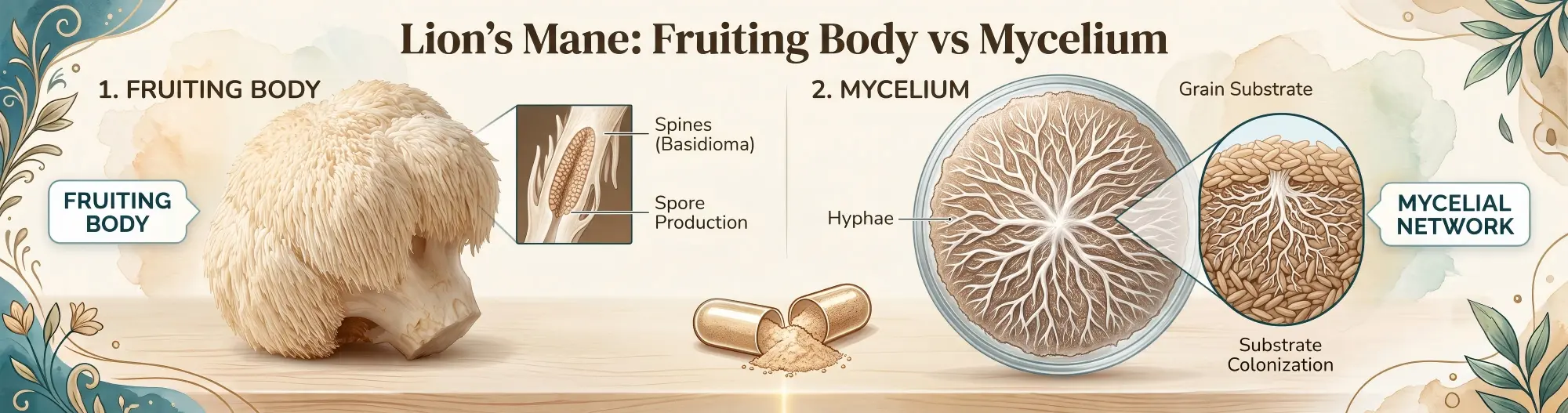
A critical quality shift is underway in the mushroom supplement category. Consumers and informed retailers are increasingly demanding fruiting-body extracts over mycelium-on-grain (MOG) products. Laboratory analyses consistently show that fruiting body extracts contain meaningfully higher concentrations of beta-glucans, triterpenes, and species-specific compounds like hericenones (in Lion’s Mane) compared to mycelium grown on grain substrates, which can contain 40–60% starch from the growth medium.
This shift has significant supply chain implications. Brands that can verify fruiting-body sourcing, provide Certificates of Analysis (COA) showing beta-glucan content, and demonstrate dual-extraction processes (hot water + alcohol) are capturing premium shelf space and consumer trust. The ‘Fruiting Body Transparency’ trend is now a decisive purchasing factor for 64% of core supplement consumers.
Trend 4: Growing Skepticism Toward Unverified Products
The mushroom supplement category has experienced quality controversies, including adulteration, heavy metal contamination, and inflated beta-glucan claims. In response, consumers have become sophisticated verifiers. Third-party testing badges, QR-code-linked COAs, and transparent supply chain documentation are now baseline expectations. Brands that fail to provide this transparency face increasing return rates and negative social media exposure.
Trend 5: Premiumization & Willingness to Pay
Consumers are demonstrably willing to pay premium prices for verified, high-quality Lion’s Mane products. Lion’s Mane-based formulations command 20–30% price premiums compared to commodity mushroom formulations. This premiumization is supported by the clean label movement, where consumers exposed to transparent supply chain information demonstrate 2.1x higher customer lifetime value and 83% repurchase rates compared to conventional supplement buyers.
The gummy format exemplifies this trend: mushroom gummies eliminate the flavor barrier of raw powders and the inconvenience of capsules, enabling trial by mainstream consumers. The global mushroom gummy market is valued at $13.58 billion in 2026 and projected to reach $36.52 billion by 2036 at a 10.4% CAGR.
CONSUMER TREND IMPLICATIONS FOR OEM PARTNERS — These consumer trends directly translate to manufacturing requirements. The shift toward fruiting-body extracts requires suppliers with verified farm partnerships, not just traders. Multi-benefit formulations demand formulation expertise in active ingredient compatibility and stability. Premiumization requires COA documentation and third-party testing infrastructure that commodity manufacturers often lack. When selecting an OEM partner, brands should evaluate not just pricing, but the manufacturer’s ability to support the transparency and quality storytelling that consumers now demand.
SECTION 6: Regional Market Analysis
Regional dynamics determine not only where to sell, but where to source. The following analysis provides actionable intelligence for market entry, distribution strategy, and supply chain planning.
North America
Market Opportunity: ★★★★★
North America accounts for approximately 38.99% of the global Lion’s Mane extract market, making it the largest regional market. The United States holds 25.93% of global share, Canada contributes 9.52%, and Mexico represents a growing 3.55%. The U.S. nootropics market alone reached $6.37 billion in 2025 and is anticipated to grow to $25.10 billion by 2035 at a 14.70% CAGR.
Key characteristics: High disposable income, mature supplement retail infrastructure, strong e-commerce penetration (55% of medicinal mushroom sales), and a culture of self-optimization. The U.S. FDA regulates dietary supplements under 21 CFR Part 111, influencing quality standards across 90% of manufacturers. Over 1,200 supplement brands currently incorporate Lion’s Mane or related medicinal mushrooms. Functional beverage launches featuring medicinal mushrooms increased by 40% between 2022 and 2024.
OEM Sourcing Implication:
- North American brands increasingly specify cGMP-compliant domestic manufacturing for finished products, even when raw material is imported
- Amazon compliance requirements (FDA registration, proper labeling) necessitate experienced OEM partners familiar with platform-specific regulations
- Subscription-focused brands require consistent batch-to-batch quality to minimize customer churn
Europe
Market Opportunity: ★★★★★
Europe is the second-largest market and the fastest-growing region for mushroom coffee (6.6% CAGR). The European clean label ingredients market is estimated at $53.08 billion in 2025. Germany leads the European nootropics market with a 19.8% revenue share, benefiting from a strong tradition of herbal medicine and rigorous quality standards. The UK market is expected to grow at a 12.7% CAGR, driven by innovative formulations and healthcare professional endorsements.
Regulatory environment: The European Food Safety Authority (EFSA) maintains strict health claim guidelines, with only 254 approved substantiated health claims as of 2026. This creates a barrier to entry for unsubstantiated products but rewards brands with clinical validation. 99% of European manufacturers now consider clean-label products core to business strategy.
OEM Sourcing Implication:
- Novel Food status for Lion’s Mane extracts requires pre-market authorization documentation — experienced OEM partners should provide this regulatory package
- EFSA-compliant health claims must be carefully worded — avoid disease claims entirely and stick to general well-being and function claims
- Organic certification (EU Organic or equivalent) is virtually required for premium positioning in German, Scandinavian, and UK markets
Asia-Pacific
Market Opportunity: ★★★★☆
Asia-Pacific is the fastest-growing region for Lion’s Mane extract (13.24% CAGR), poised to hold approximately 29% of the global market in 2025. China is the regional powerhouse, holding 11.25% of the global market, driven by both domestic consumption and export-oriented production. Japan (5.71% global share), South Korea (3.60%), and India (3.36%) represent high-growth markets with deep cultural acceptance of medicinal mushrooms.
Supply chain significance: APAC countries are the dominant global suppliers of raw Lion’s Mane materials. China, in particular, controls a significant portion of global fruiting-body cultivation capacity. However, quality inconsistency among local, unorganized players and lack of unified regulatory frameworks create both risk and opportunity for brands that can establish verified, organic supply partnerships with certified Chinese or Indian producers.
OEM Sourcing Implication:
- Direct farm partnerships in Zhejiang, Fujian, and Yunnan provinces offer the best combination of quality and scale
- Indian cultivation (particularly in Himachal Pradesh and Uttarakhand) is emerging as a lower-cost alternative with improving quality standards
- Brands must implement rigorous incoming QC including heavy metal, pesticide, and microbial testing regardless of supplier certifications
Middle East & Latin America
Market Opportunity: ★★★☆☆
These regions represent emerging frontiers. The Middle East & Africa nootropics market is expected to grow at a 12.1% CAGR, fueled by rising health consciousness among affluent populations and rapid digital adoption. Latin America (Central & South America) is projected to grow at a 12.5% CAGR, supported by increasing urbanization, internet access, and local brand development. While current market size is smaller, first-mover advantage in premium positioning can yield significant long-term returns.
Regional Opportunity Matrix
| Region | Market Size (2025) | CAGR | Strategic Priority |
| North America | $69.81M (LME) | 11.75% | Premium positioning, DTC, mushroom coffee |
| Europe | Fastest-growing (coffee) | 6.6% (coffee) | Clean label, EFSA compliance, pharmacy channel |
| Asia-Pacific | $51.91M (LME) | 13.24% | Sourcing partnerships, TCM positioning, e-commerce |
| Middle East & Africa | Emerging | 12.1% (nootropics) | Premium wellness, digital-first distribution |
| Latin America | Emerging | 12.5% (nootropics) | Affordable formulations, influencer marketing |
SECTION 7: Product Format Trends— OEM Manufacturing Considerations
Product format selection directly impacts manufacturing partnerships, margin structure, and consumer adoption curves. The following analysis is designed to inform OEM and private-label decision-making.
Capsules & Tablets
Capsules and tablets remain the dominant format in the nootropics market, capturing 47% of revenue share in 2025. This format offers precise dosing, longer shelf life, and portability — making it highly appealing to busy professionals and students. However, growth is moderating as consumers seek more experiential and convenient formats.
OEM Manufacturing Notes:
- Minimum order quantities (MOQ) typically range from 100,000 to 500,000 units depending on capsule size and fill material
- Vegetable capsules (HPMC) cost 15-20% more than gelatin but are required for clean-label positioning
- Enteric coating adds 8-12% to manufacturing cost but may improve bioavailability for acid-sensitive consumers
- Standard lead time: 6-8 weeks from PO to delivery for established formulations
- Stability testing requirements: 24-month shelf life with less than 5% active degradation at accelerated conditions
Powders
Powders represent the fastest-growing format category within clean label supplements (8.9% CAGR), driven by consumer preference for customizable dosing and elimination of fillers common in compressed tablets. In the mushroom coffee segment, powder held a 64% revenue share in 2025. Instant mushroom coffee sticks, protein shake additives, and smoothie boosters are driving B2B demand for spray-dried and freeze-dried Lion’s Mane powders.
OEM Manufacturing Notes:
- Spray-dried powders offer cost efficiency (typically $18-25/kg at scale) but may experience 10-15% beta-glucan degradation
- Freeze-dried powders preserve bioactivity better but cost 40-60% more ($30-45/kg)
- Instant solubility is critical for beverage applications — specify solubility testing (>70% in cold water) in your procurement specifications
- Bulk powder MOQs typically start at 50kg; sachet/stick-pack packaging MOQs range from 100,000 to 300,000 units
Gummies
Gummies have emerged as a significant growth vector, capturing 15.2% of the clean label supplement market. The mushroom gummy market specifically is valued at $13.58 billion in 2026 and projected to reach $36.52 billion by 2036. Lion’s Mane, Reishi, Cordyceps, and Chaga drive category growth through established consumer awareness. Gummies democratize mushroom consumption by eliminating flavor barriers and capsule fatigue, particularly among younger demographics and compliance-challenged segments.
OEM Manufacturing Notes:
- Gummy manufacturing requires pectin or gelatin base with active ingredient incorporation during the cooking/cooling phase
- Lion’s Mane extract loading per gummy typically ranges from 50-200mg; higher loads create texture and palatability challenges
- Microencapsulation of Lion’s Mane extract is strongly recommended for gummy applications to mask bitterness
- MOQs: 100,000-300,000 gummies per SKU; minimum 3-month lead time for custom mold development
Stability consideration: gummies have higher water activity than capsules — Lion’s Mane degradation rates are typically 2-3x higher without proper moisture barrier packaging
Mushroom Coffee
Mushroom coffee is the single largest opportunity for Lion’s Mane format expansion. The segment is evolving from ground blends to instant powders, single-serve sachets, and ready-to-drink (RTD) beverages. The online distribution channel is growing at a 6.3% CAGR, while supermarkets/hypermarkets currently hold 47% of distribution share.
OEM Manufacturing Notes:
- Flavor masking is the critical technical challenge — Lion’s Mane at 500mg+ per serving is detectable in coffee without proper masking technology
- Microencapsulated, water-soluble Lion’s Mane extracts are required for RTD applications to prevent sedimentation
- Co-manufacturing with established coffee/beverage facilities is recommended rather than building beverage lines from scratch
- Organic certification of the coffee component adds complexity — ensure your OEM partner can handle dual-certification (mushroom + coffee) documentation
- Suggested dosing: 250-500mg Lion’s Mane per serving for clinically relevant positioning
RTD Beverages & Functional Foods
Ready-to-drink nootropic beverages represent the next frontier. The nootropic drinks market is growing at a 13.6% CAGR, with recent launches including cognitive-enhanced cold brew lines and nootropic energy drinks featuring citicoline and Lion’s Mane. Functional foods — protein bars, chocolates, and snack bars — represent an adjacent opportunity as heat-stable mushroom powders enable broader food matrix integration.
OEM Manufacturing Notes:
- Heat stability is the primary constraint for food applications — standard hot-water extracts can degrade at temperatures above 80 degrees C
- pH stability testing is critical for beverage applications (pH 3.0-4.5 for most RTD beverages)
- Co-packer relationships in the beverage industry typically require 50,000+ unit minimums per production run
- Shelf-life targets for RTD: 9-12 months at ambient temperature with less than 10% active degradation
SECTION 8: Competitive Landscape
Rather than ranking individual brands, this analysis examines the strategic positioning of four distinct competitive archetypes. Understanding these archetypes helps new entrants identify whitespace opportunities and differentiation vectors.
Archetype 1: Traditional Herbal & Wellness Brands
These brands (e.g., Gaia Herbs, Nature’s Way, Solaray) leverage long-standing herbal expertise and pharmacy distribution. Their Lion’s Mane products typically emphasize traditional use credentials, whole-food sourcing, and moderate pricing ($20–35 per bottle). They are increasingly vulnerable to disruption from brands with stronger clinical storytelling and format innovation, but maintain trust among older demographics and pharmacy-dependent consumers.
OEM Opportunity: White-label manufacturing for pharmacy and health food chains seeking to enter the mushroom category with trusted positioning.
Archetype 2: Functional Mushroom Specialists
Brands like Real Mushrooms, Host Defense, and Om Mushrooms have built their entire identity around mushroom expertise. They typically offer multi-species portfolios, emphasize fruiting-body sourcing, and provide detailed COAs. Their pricing is premium ($30–60 per bottle), and they compete on transparency, beta-glucan standardization, and mycologist-led brand storytelling. These brands set the quality standard that the rest of the market is now forced to match.
OEM Opportunity: Partner with emerging mushroom specialists who need manufacturing scale but lack in-house production infrastructure.
Archetype 3: Nootropic & Biohacking Brands
Brands like Onnit, Neurohacker Collective (Mind Lab Pro), and HVMN position Lion’s Mane within comprehensive cognitive enhancement stacks. They target high-performance professionals, gamers, and students with premium pricing ($50–100+ per month). Their competitive advantage lies in formulation science, clinical trial investment, and community-driven brand ecosystems. Lion’s Mane is typically one of 5–10 ingredients in a proprietary blend, reducing individual ingredient transparency but increasing perceived synergy.
OEM Opportunity: Custom formulation services for brands developing proprietary nootropic stacks with specific active ratios and bioavailability targets.
Archetype 4: Coffee & Beverage Brands
Four Sigmatic, Laird Superfood, RYZE, and MUD/WTR have pioneered the mushroom coffee category. They compete on taste, convenience, and lifestyle branding rather than pure supplement efficacy. Their products typically contain lower Lion’s Mane doses per serving (100–500mg) compared to dedicated supplements (500–1000mg+), but compensate with higher purchase frequency and broader consumer reach. Distribution spans DTC, Amazon, Whole Foods, and Costco—representing the most scalable path to mainstream adoption.
OEM Opportunity: Beverage-optimized Lion’s Mane extracts (water-soluble, flavor-neutral) for functional drink brands seeking clinically relevant dosing without sensory compromise.
Competitive Analysis Summary
| Archetype | Product Positioning | Primary Format | Price Band | Key Differentiator |
| Traditional Herbal | Whole-food wellness | Capsules | $20–35 | Heritage trust, pharmacy access |
| Mushroom Specialists | Mycology expertise | Powders/Capsules | $30–60 | Transparency, COAs, beta-glucan % |
| Nootropic Brands | Cognitive optimization | Capsules/Stacks | $50–100+ | Clinical trials, community, stacking |
| Coffee/Beverage | Lifestyle functional | Coffee/RTD | $25–50 | Taste, convenience, brand lifestyle |
SECTION 9: Emerging Formulation Trends (2026–2030)
This section identifies the formulation directions that will define competitive advantage in the next five years. For supplement brands and OEM partners, early alignment with these trends offers significant first-mover benefits.
Lion’s Mane + Coffee Synergies
The combination of Lion’s Mane with coffee is evolving beyond simple blending. Advanced formulations now incorporate L-theanine for jitter-free focus, alpha-GPC for choline support, and MCT oil for ketone-mediated cognitive enhancement. The goal is to create a ‘complete cognitive coffee’ that replaces both morning caffeine and daily nootropic supplements. This trend is supported by the 40% increase in functional beverage launches featuring medicinal mushrooms between 2022 and 2024.
Formulation Notes:
- L-theanine at 100-200mg per serving effectively smooths caffeine’s stimulant edge without causing drowsiness
- Alpha-GPC is hygroscopic — requires silica desiccant packaging and moisture-resistant sachet materials
- MCT oil powder (rather than liquid) improves blend homogeneity and reduces oil separation in instant formats
- Taste masking becomes exponentially more complex with each added active — professional flavor houses should be engaged early in development
Lion’s Mane + Phosphatidylserine (PS)
Phosphatidylserine is a phospholipid critical for neuronal membrane integrity. Combining Lion’s Mane (NGF stimulation) with PS (membrane support) creates a mechanistically complementary brain health stack. This pairing is particularly relevant for the healthy aging segment, where both neuronal growth and membrane maintenance are declining. Expect to see this combination in premium capsules and senior-focused formulations.
Formulation Notes:
- PS derived from sunflower (rather than soy) commands a 25% price premium but eliminates allergen labeling concerns
- Optimal Lion’s Mane:PS ratio appears to be 5:1 based on current clinical dosing (500mg LM : 100mg PS)
- PS has excellent stability in dry capsules; avoid liquid formulations due to oxidation sensitivity
Lion’s Mane + Citicoline (Cognizin)
Citicoline provides choline for acetylcholine synthesis, while Lion’s Mane promotes NGF-mediated neuronal growth. Together, they address both the ‘hardware’ (neuronal structure) and ‘software’ (neurotransmitter function) of cognitive performance. This stack is gaining traction in gamer-focused products, professional productivity supplements, and pre-workout nootropic blends. Recent product launches (e.g., Happy Panda nootropic energy drink with Cognizin citicoline) validate commercial viability.
Formulation Notes:
- Cognizin-branded citicoline costs 30-40% more than generic citicoline but offers trademarked supply chain documentation that supports premium positioning
- This stack works well in both capsule and powder formats; citicoline has good water solubility and mild taste
- Consider adding 50mg caffeine for synergistic effects on attention and processing speed — clearly declare on label
Lion’s Mane + Ashwagandha (KSM-66/Sensoril)
The stress-cognition axis is a major consumer concern. Ashwagandha reduces cortisol and anxiety, while Lion’s Mane enhances focus and memory. This combination targets the ‘stressed professional’ demographic—one of the largest and most profitable supplement consumer segments. The adaptogen-nootropic pairing is particularly effective in gummy and beverage formats where taste masking of both ingredients can be optimized.
Formulation Notes:
- KSM-66 is the most clinically studied ashwagandha extract with 22+ human trials; Sensoril is more concentrated (10% withanolides vs 5%)
- Ashwagandha’s earthy taste complements rather than clashes with Lion’s Mane — gummy formulations are easier to develop than with other actives
- Typical dosing: 300mg KSM-66 + 500mg Lion’s Mane per serving; consider twice-daily regimens for chronic stress support
Lion’s Mane Gummies for Kids & Teens
Cognitive support for children represents a high-growth, under-served niche. While regulatory constraints are significant (especially in the EU and US), the demand from parents for ‘natural focus support’ is undeniable. Low-dose Lion’s Mane gummies (50–100mg per serving) combined with omega-3 and choline are emerging in markets with more permissive regulatory frameworks. Brands entering this space must prioritize extreme purity, allergen-free formulations, and pediatrician endorsements.
Formulation Notes:
- Use only fruiting-body extracts with verified low heavy metal levels (lead <0.5ppm, cadmium <0.3ppm, arsenic <1.0ppm)
- Natural fruit flavors (strawberry, orange) effectively mask residual earthiness from microencapsulated extracts
- Avoid artificial colors, high-fructose corn syrup, and common allergens (gluten, dairy, soy, nuts)
- Regulatory note: In the US, structure-function claims for children’s products receive heightened FTC scrutiny — consult regulatory counsel before launch
Women’s Brain Health & Healthy Aging
Women’s cognitive health during perimenopause and menopause is an emerging high-value segment. A registered clinical trial (NCT06406946) is specifically testing Lion’s Mane supplementation on mental wellbeing in Gen Z women, signaling industry recognition of this demographic. Formulations targeting women typically combine Lion’s Mane with B vitamins, magnesium, and saffron extract for mood and hormonal balance support.
Formulation Notes:
- B6 (as P-5-P), B9 (as methylfolate), and B12 (as methylcobalamin) support methylation pathways relevant to mood regulation
- Magnesium glycinate offers superior bioavailability and minimal GI upset compared to oxide or citrate forms
- Saffron extract (affron or Saffr’Activ branded) at 15-30mg has clinical evidence for mood support and pairs well with Lion’s Mane’s cognitive benefits
Section 10: Procurement & Product Development Playbook
This section translates market intelligence and manufacturing expertise into actionable procurement strategy. Whether you’re launching your first Lion’s Mane product or expanding an existing portfolio, these frameworks will help you evaluate suppliers, write effective specifications, select optimal formats, and manage costs.
10.1 How to Evaluate Lion’s Mane Suppliers
Supplier selection is the single most important decision in your Lion’s Mane product development process. A suboptimal supplier relationship creates cascading problems: inconsistent quality, documentation gaps, regulatory exposure, and ultimately, brand damage. Use this evaluation framework:
| Evaluation Dimension | What to Assess | Red Flags |
| Raw Material Sourcing | Direct farm partnerships or verified broker relationships; organic certification; traceability documentation | Cannot provide farm names/location; no organic cert; vague ‘from China’ sourcing |
| Extraction Capability | Hot water, alcohol, and dual-extraction lines; in-house HPLC for beta-glucan testing; batch-level COAs | Only offers generic ‘extract’ without standardization; outsources testing; no method validation |
| Quality Systems | ISO 22000, HACCP, cGMP compliance; third-party audits; heavy metal testing program | No quality certifications; refuses audit; no heavy metal testing on incoming raw material |
| Formulation Support | In-house R&D team; stability testing capability; compatibility studies with common actives | No formulation services; cannot provide stability data; outsources all R&D |
| Regulatory Documentation | FDA facility registration; NSF/UL pathway support; EU Novel Food consultation; TGA compliance | No regulatory support; unfamiliar with target market requirements; no structure-function claim guidance |
| Manufacturing Flexibility | Multiple format capabilities (capsule, powder, gummy, sachet); reasonable MOQs; scale-up pathway | Single-format manufacturer; extremely high MOQs for first orders; no capacity for volume growth |
| Track Record & References | 5+ years in mushroom manufacturing; client references; documented recall history (should be zero) | New entrant with no mushroom-specific experience; refuses references; any recall history |
10.2 Writing Lion’s Mane Specifications
A well-written specification is your primary quality assurance tool. Vague specifications (‘Lion’s Mane extract, 10:1’) invite quality variation. Precise specifications ensure consistent product and protect both you and your manufacturer.
Essential Specification Elements:
- Botanical Identification: Hericium erinaceus, fruiting body (not mycelium on grain), with voucher specimen documentation
- Extraction Method: Hot water, ethanol, or dual extraction; specify solvent ratios and temperatures
- Active Marker: Minimum beta-glucan content (we recommend 25-30% by HPLC method); optionally specify hericenone content
- Physical Properties: Color (light tan to brown), odor (mild, characteristic), taste (slightly bitter, earthy), solubility profile
- Heavy Metals: Lead <1.0 ppm, Cadmium <0.5 ppm, Arsenic <2.0 ppm, Mercury <0.1 ppm (USP standards)
- Microbiological: Total Plate Count <10,000 CFU/g, Yeast & Mold <100 CFU/g, E. coli negative, Salmonella negative
- Pesticide Residue: Compliant with USDA NOP or EU 396/2005, depending on target market
- Certifications: USDA Organic or EU Organic, Non-GMO Project Verified or equivalent, Kosher/Halal if required
Sample Specification Language:
‘Lion’s Mane Mushroom Extract (Hericium erinaceus), fruiting body, dual-extracted (hot water + ethanol), standardized to minimum 30% beta-glucans by HPLC. Light tan to brown powder with mild characteristic odor. Heavy metals: Lead <1.0ppm, Cadmium <0.5ppm, Arsenic <2.0ppm, Mercury <0.1ppm. Microbiological: TPC <10,000 CFU/g, Y&M <100 CFU/g. Certified USDA Organic, Non-GMO Project Verified. Certificate of Analysis required for each batch.’
10.3 Format Selection Decision Matrix
Format selection should be driven by target demographic, price positioning, and manufacturing constraints. Use this matrix to guide decisions:
| Format | Best For | Price Point | MOQ Range | Key Considerations |
| Capsules | All demographics; stable demand | $25-50 | 100K-500K units | Longest shelf life; easiest to manufacture; lowest per-unit cost |
| Powder | Biohackers; fitness segment | $30-60 | 50kg bulk; 100K sachets | Highest margins; customizable dosing; requires consumer education |
| Gummies | Younger consumers; compliance-challenged | $25-45 | 100K-300K units | Fastest growth; taste is everything; shorter shelf life; higher COGS |
| Mushroom Coffee | Daily ritual seekers; broad appeal | $25-35/box | 10K-50K units | Highest purchase frequency; complex flavor masking; beverage manufacturing required |
| RTD Beverage | Convenience-focused; on-the-go | $3-5/unit | 50K-200K units | Highest growth ceiling; requires co-packer; stability challenges; 9-12 month shelf life |
10.4 MOQ, Lead Time & Cost Optimization Strategies
Managing Minimum Order Quantities:
- For first orders, negotiate ‘soft MOQs’ with commitment to volume over 12 months — many manufacturers will accept 50% of standard MOQ for guaranteed annual volume
- Consider ‘piggyback’ production — some OEMs allow smaller brands to share production runs of common specifications
- Powder/bulk extract offers the lowest entry point; consider starting with bulk and moving to finished goods once demand is validated
- Gummies have the highest MOQs due to mold costs; capsules and powders offer the most flexibility for new entrants
Lead Time Planning:
- Standard lead times: Capsules 6-8 weeks; Powders 4-6 weeks; Gummies 8-12 weeks; Coffee blends 6-10 weeks
- Add 2-4 weeks for custom formulation development and stability protocol establishment
- Regulatory documentation preparation (FDA notification, label review) adds 2-6 weeks depending on complexity
- Plan for Q4 launch: Begin development no later than March/April to hit October production and November fulfillment
Cost Optimization:
- Multi-year supply agreements typically reduce raw material costs by 8-15% compared to spot purchasing
- Consolidating multiple SKUs with a single manufacturer improves negotiation leverage and reduces quality variability
- Annual volume commitments of 500kg+ extract typically unlock tier-1 pricing from major manufacturers
- Consider spec flexibility: A 25% beta-glucan specification may cost 20% less than 30% with minimal perceptible difference to consumers
COST TRANSPARENCY NOTE — At KS Nutripharma, we provide detailed cost breakdowns showing raw material, extraction, formulation, testing, packaging, and margin components. This transparency allows brands to make informed trade-offs — for example, accepting a longer lead time to reduce costs, or investing in higher standardization to justify premium pricing. We believe informed clients make better long-term partners.
Section 11: Manufacturing & Supply Chain Deep Dive
Supply chain intelligence is where competitive advantage is built — or lost. This section covers the sourcing and manufacturing dynamics that every procurement team and product manager must understand, drawing on KS Nutripharma’s direct operational experience across our certified extraction and production facilities.
11.1 Extraction Methods & Their Impact on Efficacy
Not all Lion’s Mane extracts are created equal. The extraction method fundamentally determines the bioactive profile and, consequently, the efficacy of the final product. Understanding these methods is essential for writing specifications and evaluating supplier capabilities.
Hot Water Extraction
The traditional and most widely used method. Hot water (typically 80-100 degrees C) extracts water-soluble beta-glucans and polysaccharides. This method is cost-effective and yields high beta-glucan content but does not efficiently extract the alcohol-soluble compounds (hericenones and erinacines) that are directly linked to NGF stimulation.
- Typical yield: 8-12% extract ratio (8-12kg of extract per 100kg of dried fruiting body)
- Beta-glucan content: 20-35% depending on raw material quality
- Best for: Cost-sensitive formulations where beta-glucan standardization is the primary quality marker
- Limitation: Lower hericenone/erinacine content compared to dual extraction
Alcohol (Ethanol) Extraction
Ethanol extraction (typically 60-90% concentration) targets the alcohol-soluble terpenoid compounds, particularly hericenones and erinacines. These compounds are believed to be the primary drivers of Lion’s Mane’s neuroprotective effects. However, alcohol extraction alone yields lower beta-glucan content.
- Typical yield: 4-6% extract ratio
- Hericenone content: 0.5-2.0% (significantly higher than hot water alone)
- Best for: Premium formulations positioned around NGF stimulation and neuroplasticity claims
- Limitation: Higher cost; lower total polysaccharide content
Dual Extraction (Hot Water + Alcohol)
Dual extraction combines both methods to capture the full spectrum of bioactive compounds. The fruiting body is first extracted with hot water, then the remaining material is processed with ethanol. The two extracts are combined in a specified ratio to achieve target beta-glucan and terpenoid levels. This is the gold standard for premium Lion’s Mane products.
- Typical yield: 10-15% combined extract ratio
- Beta-glucan content: 25-35%; Hericenone content: 0.3-1.5%
- Best for: Premium supplements and clinical formulations requiring comprehensive bioactive profiles
- Cost: 25-40% higher than hot-water-only extraction
Ultrasonic-Assisted Extraction (UAE) — Emerging Technology
UAE uses high-frequency sound waves to disrupt cell walls, increasing extraction efficiency at lower temperatures. This method can achieve higher yields while preserving heat-sensitive compounds and has the added benefit of producing finer particles with improved solubility — a critical advantage for beverage applications.
- Yield improvement: 10-20% higher than conventional hot water extraction
- Cold-water solubility: 75-85% vs 30-40% for conventional extracts
- Best for: RTD beverages, instant coffee applications, and premium products requiring superior dissolution characteristics
- Current limitation: Limited manufacturing capacity; higher equipment costs
11.2 Fruiting Body vs. Mycelium: A Manufacturer’s Perspective
The fruiting body versus mycelium debate is the most consequential quality decision in Lion’s Mane manufacturing. As a manufacturer that processes both raw material types, we offer this practical perspective:
Fruiting Body Advantages:
- Beta-glucan content: 25-40% in extract form vs 5-15% for mycelium-on-grain
- Hericenone and erinacine concentrations: 3-5x higher than mycelium products
- No grain/starch filler: Mycelium grown on grain can contain 40-60% residual substrate
- Consumer perception: ‘Fruiting body’ is increasingly recognized as a quality marker by educated consumers
- Clinical research: Virtually all published clinical trials use fruiting-body extracts
Mycelium Considerations:
- Cost: Mycelium is 40-60% cheaper than fruiting body on a per-kilogram basis
- Production speed: Mycelium can be cultivated in 30-60 days vs 4-6 months for fruiting bodies
- Novel compounds: Some research suggests mycelium contains unique compounds (erinacines A-K) not found in fruiting bodies
- Full spectrum argument: Some brands position mycelium as offering ‘full life cycle’ benefits
Manufacturer Recommendation:
For premium-positioned supplements targeting cognitive health, fruiting-body dual extracts with beta-glucan standardization are the clear choice. The clinical evidence, consumer preference data, and formulation advantages overwhelmingly favor fruiting body. Mycelium may be appropriate for budget-positioned products or formulations where cost is the primary constraint, but brands should be transparent with consumers about sourcing and avoid implying equivalence to fruiting-body products.
11.3 Supply Chain Risk Management
The Lion’s Mane supply chain faces several structural risks that brands must actively manage. Our experience managing multi-source supply chains across three continents has identified the following risk categories and mitigation strategies:
Risk 1: Quality Inconsistency
Quality variation between batches and suppliers is the most common supply chain challenge. Factors include: growing substrate composition, harvest timing, drying methods, and storage conditions. Even within a single farm, seasonal variation can produce 15-25% differences in beta-glucan content.
- Mitigation: Require batch-level COAs with HPLC-verified beta-glucan content; maintain 2-3 qualified suppliers; implement incoming QC testing
Risk 2: Heavy Metal Contamination
Lion’s Mane is a bioaccumulator — it readily absorbs heavy metals from soil, water, and air. Wild-harvested material from industrial regions has tested at 5-10x acceptable limits for lead and cadmium. Even cultivated material can be contaminated through irrigation water or substrate ingredients.
- Mitigation: Specify maximum heavy metal limits in procurement contracts; require third-party heavy metal testing; source from regions with known clean soil profiles (Zhejiang mountains, Himachal Pradesh highlands)
Risk 3: Organic Certification Integrity
Organic certification fraud has been documented in the Chinese mushroom sector. Some suppliers have been found using conventional substrates with organic documentation. This risk is highest when sourcing through intermediaries rather than direct farm relationships.
- Mitigation: Verify organic certificates directly with certifying bodies (USDA Organic IN database); conduct annual on-site audits; work with manufacturers who have direct farm partnerships with full traceability
Risk 4: Price Volatility
Lion’s Mane raw material prices have fluctuated 20-35% annually due to: weather impacts on outdoor cultivation, speculative buying during shortage periods, and demand surges from new market entrants (particularly functional beverage brands placing large orders).
- Mitigation: Secure 12-24 month supply agreements with price escalation caps; maintain 3-6 months of safety stock; diversify across Chinese and Indian sources; consider vertical integration with farm partnerships
Risk 5: Regulatory Changes
The regulatory landscape for mushroom supplements is evolving. The EU is considering stricter Novel Food requirements; the FDA has increased scrutiny of structure-function claims; several Asian markets are implementing new purity standards.
- Mitigation: Work with regulatory consultants in target markets; maintain comprehensive documentation (COAs, stability studies, toxicology profiles); choose OEM partners with multi-jurisdiction compliance experience
11.4 Regulatory Compliance & Documentation
Regulatory compliance is not a box-checking exercise — it is a competitive advantage. Brands with comprehensive documentation can enter new markets faster, defend against competitor challenges, and build consumer trust. The following documentation framework should be standard for any serious Lion’s Mane brand:
Core Documentation Package:
- Certificate of Analysis (COA): Per-batch testing including identity (HPLC fingerprint), potency (beta-glucan %), purity (heavy metals, microbes), and physical properties
- Certificate of Origin: Farm location, harvest date, processing facility identification
- Organic Certification: Current certificate from accredited body (USDA, EU Organic, JAS)
- Non-GMO Verification: Project Verified certificate or equivalent documentation
- Allergen Statement: Declaration of presence/absence of major allergens
- Kosher/Halal Certificates: If targeting those consumer segments
- Shelf-Life Stability Data: Real-time and accelerated stability studies supporting claimed shelf life
- Structure-Function Claim Substantiation: Summary of clinical evidence supporting marketed claims
Regulatory Notes by Market:
United States: Lion’s Mane is sold as a dietary supplement under DSHEA. Structure-function claims are permitted with disclaimer. New dietary ingredient (NDI) status may apply to novel extracts — consult FDA guidance. Facility must be FDA-registered and comply with 21 CFR Part 111 (cGMPs).
European Union: Lion’s Mane extracts may require Novel Food authorization depending on extraction method and concentration. General food safety compliance (EC 178/2002) applies. Health claims must be EFSA-approved (currently limited for botanicals). Organic labeling requires EU Organic certification.
Canada: Natural Health Product (NHP) licensing required. Lion’s Mane has established NHPD monograph with permitted claims. Site licenses and GMP compliance mandatory.
Australia: Listed medicine (AUST L) pathway available with established ingredient permitted. TGA manufacturing license required for domestic production.
Section 12: Market Opportunities for Supplement Brands
This section translates market intelligence into actionable commercial strategy. Whether you are a DTC brand, Amazon seller, pharmacy chain, or functional beverage company, the Lion’s Mane category offers specific entry vectors. Each opportunity now includes OEM partnership recommendations.
Opportunity for DTC Brands
Direct-to-consumer brands benefit from the high-margin, subscription-friendly nature of Lion’s Mane supplements. Recommended entry strategy: Launch a single-hero-product (e.g., ‘Daily Cognitive Support’ capsule with 500mg Lion’s Mane + 100mg PS) with aggressive educational content marketing. Target customer acquisition cost (CAC) should be below $40 given the high lifetime value (LTV) of cognitive health subscribers. Subscription models demonstrate 83% repurchase rates when combined with transparent sourcing storytelling.
OEM Partnership Strategy:
- Partner with a turnkey OEM who can provide: formulation development, stability testing, capsule manufacturing, bottle labeling, and fulfillment-ready packaging
- Negotiate milestone-based pricing: lower per-unit costs as volume scales from 100K to 500K to 1M+ units annually
- Request batch-level COAs that can be shared publicly — transparency is your primary differentiator in DTC
- Ensure your OEM has experience with subscription fulfillment (Serialized unit tracking, consistent batch-to-batch color/capsule appearance)
Opportunity for Amazon Sellers
Amazon remains the dominant online channel for mushroom supplements, with 55% of medicinal mushroom sales occurring through e-commerce. Success factors: (1) Verified reviews through early reviewer programs; (2) A+ Content emphasizing beta-glucan percentage and fruiting-body sourcing; (3) Competitive pricing in the $25-35 range for 60-count capsules; (4) Multi-pack bundling to increase average order value. Avoid generic ‘proprietary blends’ — Amazon’s algorithm and consumers increasingly favor transparent dosing.
OEM Partnership Strategy:
- Amazon compliance documentation (FDA facility registration, proper supplement facts panels, no disease claims) must be provided by your OEM
- Request 3D renderings and lifestyle photography from your OEM if available — A+ Content quality directly impacts conversion
- Consider ‘Amazon-exclusive’ formulations with unique SKUs to prevent price comparison and maintain margin
- Packaging must be Amazon FBA-compliant (shatter-resistant bottles, proper labeling, suffocation warnings if applicable)
Opportunity for Pharmacy & Retail Chains
Pharmacies and health food retailers (CVS, Walgreens, Whole Foods, Holland & Barrett) are expanding their mushroom supplement assortments. Entry requirements include USP or NSF certification, clean label positioning, and professional packaging. Recommended price point: $29.99-39.99 for 30-day supply. Pharmacist education materials and point-of-sale displays significantly improve trial rates among older consumers seeking memory support.
OEM Partnership Strategy:
- USP or NSF certification is non-negotiable — verify your OEM’s certification status before engagement; certification audits take 6-12 months
- Professional packaging design (matte finishes, foil stamping, clinical color palettes) signals pharmacy-grade quality
- Request pharmacist-facing sell sheets and clinical summaries from your OEM — these materials drive recommendation rates
- Plan for retailer-specific requirements: EDI compliance, specific case pack quantities, promotional pack configurations
Opportunity for Functional Beverage Brands
Functional beverage brands have the highest growth ceiling. Recommended entry strategy: Start with instant mushroom coffee sticks (low MOQ, broad appeal) before expanding to RTD cold brew. Critical formulation targets: 250-500mg Lion’s Mane per serving (clinically relevant dose), organic certification, and flavor neutrality. Suggested retail price: $24.99-34.99 for 30-serving box. The mushroom coffee segment’s 5.6% CAGR offers predictable, scalable growth for brands with beverage manufacturing expertise.
OEM Partnership Strategy:
- Beverage manufacturing requires specialized equipment — partner with OEMs who have dedicated beverage/blending lines, not just capsule fillers
- Flavor development is critical: Your OEM should have in-house flavor chemists or partnerships with flavor houses (Givaudan, IFF, Firmenich)
- Water-soluble, microencapsulated Lion’s Mane extract is required for RTD — verify solubility specifications (<5% sediment after 24 hours)
- Shelf-life testing at accelerated conditions (40C/75% RH for 6 months) should be completed before full production commitment
Opportunity for Healthy Aging Brands
The healthy aging demographic (55+) is the highest-value segment for Lion’s Mane. Recommended formulation: Higher-dose extracts (1000mg+) combined with omega-3, vitamin B12, and CoQ10. Marketing must emphasize clinical evidence, third-party testing, and physician endorsement. Avoid ‘nootropic’ language with this demographic — instead, frame benefits as ‘memory support,’ ‘cognitive vitality,’ and ‘healthy aging.’ Suggested price point: $39.99-59.99 for premium positioning.
OEM Partnership Strategy:
- High-dose formulations require larger capsule sizes (00 or 000) or multi-capsule serving sizes — verify manufacturing capability
- Senior-friendly packaging: Easy-open bottles, large-print labels, clear dosing instructions
- Clinical substantiation packages become critical for this segment — your OEM should provide mechanism-of-action summaries and trial references
- Physician sample programs and HCP education materials drive recommendation rates in this segment
Recommended Entry Strategies by Brand Type
| Brand Type | Recommended Format | Price Point | Key Success Factor |
| DTC Brand | Capsules/Subscription | $35-50 | Educational content, hero product, LTV focus |
| Amazon Seller | Capsules/Powder | $25-35 | Review velocity, A+ Content, transparent labels |
| Pharmacy Chain | Capsules/Tablets | $30-40 | USP/NSF cert, pharmacist education, POS displays |
| Beverage Brand | Coffee/RTD | $25-35 | Taste, organic cert, clinically relevant dosing |
| Aging Brand | High-dose capsules | $40-60 | Clinical evidence, physician endorsements, trust |
Section 13: Future Outlook (2026-2035)
The Lion’s Mane market will evolve significantly over the next decade. The following predictions are based on current technology trajectories, regulatory trends, and consumer behavior modeling — combined with our manufacturing-floor observations of where investment and innovation are flowing.
Personalized Nutrition & AI Formulation
Artificial intelligence is already contributing to nootropic innovation by predicting compound efficacy through algorithmic simulations. By 2030, expect AI-driven personalized nutrition platforms that recommend customized Lion’s Mane dosing based on individual biomarkers, cognitive test results, and genetic profiles. Brands that invest in digital health integration and wearable neurotech partnerships will capture the premium personalized segment.
Manufacturing Implication:
Personalized dosing requires flexible manufacturing capabilities — small-batch production with rapid changeover between formulations. Traditional large-batch OEM models (100K+ unit minimums) will struggle to serve this segment. Manufacturers investing in modular production lines and digital batch records will be better positioned for the personalized nutrition transition.
Cognitive Longevity as Preventive Healthcare
As healthcare systems globally shift from treatment to prevention, cognitive longevity supplements will be increasingly positioned as preventive interventions. Lion’s Mane — with its neuroprotective preclinical evidence and growing clinical trial portfolio — is well-positioned for this reframing. Expect increased physician endorsement, potential insurance reimbursement discussions in progressive markets, and integration into corporate wellness programs.
Manufacturing Implication:
Preventive healthcare positioning will drive demand for pharmaceutical-grade manufacturing standards (ICH Q7 compliance), enhanced documentation, and clinical-batch traceability. Manufacturers with pharma-sector experience will have a significant advantage over traditional supplement-only facilities.
Mushroom Beverages as Daily Ritual
The ultimate commercial goal for Lion’s Mane is to become a daily consumption habit — like coffee or tea. Mushroom coffee is the first wave, but expect expansion into mushroom hot chocolate, functional teas, and even mushroom-infused sparkling waters. The key enabler is sensory optimization: products that deliver functional benefits without compromising taste or mouthfeel. Brands that master flavor masking and extraction refinement will dominate this space.
Manufacturing Implication:
Beverage manufacturing requires fundamentally different capabilities than supplement manufacturing — liquid processing, pasteurization/UHT, aseptic filling, and beverage-specific stability testing. Supplement manufacturers expanding into beverages must either invest heavily in beverage production lines or establish verified co-manufacturing partnerships.
Premium Ingredient Standardization
The market will bifurcate into commodity-grade and pharmaceutical-grade Lion’s Mane extracts. Premium extracts will feature not only beta-glucan standardization but also hericenone and erinacine quantification — compounds directly linked to NGF stimulation. Expect ‘pharmaceutical-grade’ positioning to emerge as the new premium tier, with brands commanding 50%+ price premiums over standard extracts.
Manufacturing Implication:
Hericenone and erinacine quantification requires HPLC-MS (mass spectrometry) capability, which most supplement testing labs do not currently possess. Manufacturers seeking to serve the premium tier must invest in advanced analytical equipment and develop validated reference standards for these compounds. This analytical capability will become a key competitive differentiator.
Section 14: Strategic Conclusion & Next Steps
Yes. Now is the right time to enter the Lion’s Mane market.
The convergence of scientific validation, consumer demand, format innovation, and supply chain maturity has created a rare window of opportunity. The Lion’s Mane extract market is growing at 12.3% CAGR. The mushroom coffee market is scaling toward $3.82 billion by 2030. The brain health supplement market is expanding to $24.8 billion by 2036. And the nootropics market — where Lion’s Mane is increasingly central — is projected to reach $80.39 billion by 2035.
For supplement brands, the strategic imperative is clear: enter now with a differentiated product, transparent sourcing, and clinically informed positioning. Delay means ceding market share to competitors who are already building consumer trust, retail relationships, and formulation expertise.
The brands that will win in the 2026-2035 period are those that:
- Invest in Premium Raw Materials:Fruiting-body, beta-glucan-standardized extracts with third-party verification. The cost difference between premium and commodity-grade Lion’s Mane is 20-30% — but the consumer willingness-to-pay difference is 40-60%. Premium positioning pays for itself.
- Develop Multi-Format Portfolios:Capsules for core supplement users, powders for biohackers, gummies for mainstream adoption, and beverages for daily ritual creation. Each format captures a different consumer segment and builds brand resilience against format-specific demand shifts.
- Build Transparent Supply Chains:Documented organic certification, heavy metal testing, and farm-to-finished-product traceability are no longer premium add-ons — they are baseline consumer expectations. Brands that lead on transparency capture higher lifetime value and command premium shelf positioning.
- Create Evidence-Based Marketing:Reference clinical trials, mechanism-of-action science, and third-party testing in marketing materials. Educate consumers rather than making unsupported claims. This approach builds trust, reduces regulatory risk, and creates defensible brand positioning.
- Partner with Experienced OEM Manufacturers:Your manufacturing partner is not just a supplier — they are an extension of your brand’s quality promise. Choose OEM partners who understand extraction science, formulation stability, global compliance, and can grow with your brand from launch to scale.
Why Partner with KS Nutripharma?
As a vertically integrated OEM/ODM manufacturer specializing in mushroom-based supplements, KS Nutripharma offers capabilities designed to support brands at every stage of growth:
Integrated Supply Chain Control:
- Direct partnerships with certified organic Lion’s Mane farms across Zhejiang, Fujian, and Yunnan provinces
- In-house extraction facility with hot water, alcohol, dual-extraction, and ultrasonic-assisted extraction capabilities
- Full traceability from farm raw material to finished product batch
Advanced Manufacturing Capabilities:
- ISO 22000, HACCP, and cGMP-compliant production facilities
- Multiple format production lines: capsules, tablets, powders, gummies, and sachet stick-packs
- In-house HPLC, UV-Vis, and microbiology laboratories for quality verification
- Microencapsulation and flavor-masking technology for challenging applications
Regulatory & Market Support:
- FDA facility registration and US compliance consulting
- NSF/UL certification pathway management
- EU Novel Food application support and EFSA compliance guidance
- TGA compliance documentation for Australian market entry
- Structure-function claim substantiation packages
Partnership Approach:
- Transparent pricing with detailed cost breakdowns
- Flexible MOQs for brand launches (with volume scaling incentives)
- Dedicated project management from formulation through launch
- Intellectual property protection for proprietary formulations
- Speed-to-market: 8-12 weeks from concept to commercial production for standard formulations
The Lion’s Mane market is no longer emerging. It is here. The question is not whether to participate, but how quickly you can build a product, a brand, and a supply chain capable of capturing your share of this $450+ million extract market — and the much larger functional mushroom ecosystem beyond it.
We invite serious brand owners, product managers, and procurement professionals to contact our OEM partnership team to discuss how KS Nutripharma can support your Lion’s Mane product development and manufacturing needs.
References & Data Sources
This report is based on verified data from the following authoritative sources. All URLs were accessible as of July 2026.
[1] Cognitive Market Research. (2026). Lions Mane Mushroom Extract Market Analysis 2026. Global market size, share, CAGR, and regional forecasts 2022–2034.
https://www.cognitivemarketresearch.com/lions-mane-mushroom-extract-market-report
[2] Business Research Insights. (2026). Medicinal Mushroom Market Size, Share, Growth, Trends and Industry Analysis 2035. Global valuation and segment breakdown.
https://www.businessresearchinsights.com/market-reports/medicinal-mushroom-market-113833
[3] The Business Research Company. (2026). Mushroom Coffee Global Market Report 2026. Market size, segmentation, and forecast to 2035.
https://www.thebusinessresearchcompany.com/report/mushroom-coffee-global-market-report
[4] Precedence Research. (2026). Mushroom Coffee Market Size to Hit USD 5.56 Billion by 2035. Regional analysis and growth projections.
https://www.precedenceresearch.com/mushroom-coffee-market
[5] Grand View Research. (2026). Nootropics Market Size, Growth Report, 2026-2033. Market valuation, form analysis, and regional insights.
https://www.grandviewresearch.com/industry-analysis/nootropics-market
[6] Precedence Research. (2026). Nootropics Market Size To Hit USD 80.39 Billion By 2035. Global and regional market forecasts.
https://www.precedenceresearch.com/nootropics-market
[7] Transparency Market Research. (2026). Brain Health Supplements Market Size, Share & Forecast 2036. Product segmentation and regional outlook.
https://www.transparencymarketresearch.com/brain-health-supplements-market.html
[8] Future Market Insights. (2026). Mushroom Gummy Market Size, Share & Forecast to 2036. Segment analysis and regional growth data.
https://www.futuremarketinsights.com/reports/mushroom-gummy-market
[9] Market Intelo. (2026). Clean Label Supplements Market Research Report 2034. Market size, growth drivers, and consumer behavior analysis.
https://marketintelo.com/report/clean-label-supplements-market
[10] Precedence Research. (2026). Functional Mushroom Market Size to Hit USD 84.78 Billion by 2035. Technology trends and market dynamics.
https://www.precedenceresearch.com/functional-mushroom-market
[11] 360iResearch. (2026). Functional Mushroom Market Size & Share 2026-2032. Market estimation and industry executive summary.
https://www.360iresearch.com/library/intelligence/functional-mushroom
[12] Data Insights Consultancy. (2026). Functional Mushroom Market Share & Trends Forecast 2026-2033. Type and application segmentation.
https://www.datainsightsconsultancy.com/reports/functional-mushroom-market/
[13] Alzheimer’s Drug Discovery Foundation. (2025). Lion’s Mane Mushroom — Cognitive Vitality Report. Evidence review updated July 14, 2025.
https://www.alzdiscovery.org/uploads/cognitive_vitality_media/Lions-Mane-Cognitive-Vitality-For-Researchers.pdf
[14] ClinicalTrials.gov. (2025). NCT06870136 — Evaluation of Lion’s Mane Extract on Cognitive Health. Double-blind RCT, 150 participants, 14 weeks.
https://clinicaltrials.gov/study/NCT06870136
[15] ClinicalTrials.gov. (2025). NCT06406946 — Lion’s Mane Mushroom Supplementation on Mental Wellbeing. Double-blind RCT, 135 Gen Z women, 28 days.
https://clinicaltrials.gov/study/NCT06406946
[16] YourHealthier. (2026). Lion’s Mane: Fruiting Body vs Mycelium. Research update and quality criteria analysis.
https://yourhealthier.com/blogs/blog/lions-mane-fruiting-body-vs-mycelium
[17] Tastewise. (2025). Mushroom Coffee Trend In 2026. Consumer intelligence and market value projections.
https://tastewise.io/blog/mushroom-coffee-trend
[18] Merywood. (2026). Supplement Trends 2026: What’s Reshaping the Dietary Supplement Market. Category analysis and channel insights.
https://merywood.com/blog/supplement-trends-2026/
[19] Azoth Biotech. (2026). Understanding Beta-Glucans in Mushroom Extracts. Extraction technology and standardization overview.
https://www.azothbiotech.com/2026/06/19/beta-glucon-mushrooms/
[20] Nature Whisper Supplements. (2026). Best Mushroom Supplements in 2026: How to Choose Quality. Five key quality criteria for mushroom supplements.
https://naturewhispersupplements.com/blogs/benefit/best-mushroom-supplements-in-2026-how-to-choose-quality
[21] Precedence Research. (2026). Clean Label Ingredients Market Size to Reach USD 207.18 Bn by 2035. Regional insights and manufacturer trends.
https://www.precedenceresearch.com/clean-label-ingredients-market
[22] Data Intelo. (2025). Lion’s Mane Mushroom Market Research Report 2034. Segment comparison and proven health benefits analysis.
https://dataintelo.com/report/lions-mane-mushroom-market
[23] MindRise. (2026). Ultimate Guide to Mushroom and Brain Health in 2026. Neuroplasticity, NGF, and clinical trial summaries.
https://mindrise.au/blogs/news/mushroom-and-brain-health
[24] Verified Market Reports. (2026). Global Nootropic Supplements Market Size, Industry Growth & Forecast 2026-2034. Value chain and regional analysis.
https://www.verifiedmarketreports.com/product/nootropic-supplements-market/
[25] Archive Market Research. (2026). Mushroom Coffee Market Future-proof Strategies: Trends, Competitor Dynamics, and Opportunities 2026-2033.
https://www.archivemarketresearch.com/reports/mushroom-coffee-market-8230
Disclaimer: This report is intended for commercial intelligence and strategic planning purposes. All market data is derived from publicly available third-party research. Projections and forecasts represent the analysis of respective research firms and do not constitute guaranteed outcomes. Brands should conduct independent due diligence before making investment or manufacturing decisions. This report does not provide medical advice, diagnosis, or treatment recommendations.