



KS Nutripharma® — OEM/ODM Manufacturer for Constipation Relief Supplements
KS Nutripharma manufactures constipation relief supplements for OEM, ODM and private-label brands. This page focuses on fiber-based bowel-regularity formulas and projects built around a named magnesium salt. Product classification is assessed against the intended use and destination-market requirements. These projects sit within our Digestive Health Supplements range.
Send a product concept, an existing formula or a reference label, with the destination market, the intended use and the preferred format. We aim to respond within one business day with the next step.
Where You Are in the Project
Private label describes the branding arrangement. OEM and ODM describe how formula development and manufacturing responsibilities are divided. In an OEM project, you provide the formula and specifications. In an ODM project, we develop a proposed formula from your concept or reference label for your approval.
Starting point | Initial review | Information needed |
|---|---|---|
| Product concept | Ingredient and dosage-form feasibility | Intended use, destination market, target format |
| Reference label | Identifies the formula structure, the open specifications and the format fit | Label or Supplement Facts, destination market |
| Existing formula | Ingredient specifications and manufacturing requirements | Formula, target serving, packaging and testing |
Choose the Development Brief
| Development brief | Where it is handled | First review |
|---|---|---|
| Fiber-based bowel-regularity formula | This page | Psyllium identity, dietary fiber per serving, format |
| Named magnesium salt | This page | The salt, its specification, salt weight, elemental magnesium, format |
| General fiber supplementation | Fiber supplements | Fiber source, fiber grams per serving, dosage form |
| Colon cleanse concept | Colon cleanse supplements | Named ingredients, material specifications, intended use |
| Laxative drug or bowel-preparation positioning | Outside this supplement manufacturing scope | Intended use, formulation, labeling, destination market |
How a Project Is Screened
This page covers fiber-based bowel-regularity formulas and projects built around a named magnesium salt when positioned as dietary supplements.
Projects involving laxative drug actives, such as polyethylene glycol or bisacodyl, and products intended for bowel preparation fall outside this manufacturing scope. Classification depends on intended use, formulation, labeling and destination-market requirements. Projects with unresolved classification questions require further review before quotation.
Laxative botanicals, including senna and cascara, require review of species, plant part, material form and applicable market requirements. For botanical cleanse concepts, see the colon cleanse supplements page.
For the US market, OTC Monograph M007 covers OTC laxative drug products. It does not determine the classification of every constipation-related product.
Choose Your Constipation Relief Formula Route
For projects within this scope, development starts with one of two formula routes. A concept that only says “constipation formula,” without psyllium or a named magnesium salt, is not yet a quotation brief.
Fiber-based formula. Choose this route when bowel regularity is built on psyllium husk or husk extract and the concept does not already name a magnesium salt. The review then locks material form, dietary fiber per serving, powder behavior, and whether a high-gram serving belongs in a powder or a stick pack. A project aimed at general fiber intake is specified on the fiber supplements page.
Named magnesium salt. Choose this route when the brief already names one salt. The review then locks that salt and its grade, states elemental magnesium separately from salt weight, and assesses whether a capsule, powder or tablet can carry the target serving.

Use when: The brief is a bowel-regularity formula built on psyllium, rather than a project focused on general fiber intake.
Specify: Identify the material as Plantago ovata husk or husk extract. State ingredient weight and dietary fiber content per serving separately, and identify any additional fiber ingredients. Confirm the target serving and dosage form before quotation.
Trade-off: A higher fiber target may increase serving size and affect dosage-form feasibility. Product positioning and permitted claims are reviewed separately from the ingredient specification. Projects focused on general fiber intake are handled on the fiber supplements page.
Formats to assess first: Powder or stick pack for a high-gram serving.

Use when: The brief names one magnesium salt for a dietary-supplement positioning. The salt name alone does not decide whether the project is a mineral supplement or a laxative-drug product.
Specify: Name the magnesium salt and its raw-material grade. State the ingredient amount per serving separately from the declared elemental magnesium, using the selected material specification as the basis. Assess the target serving against the proposed dosage form and unit count.
Trade-off: Magnesium salts differ in elemental magnesium content and material properties. The selected salt affects the amount needed to reach the target elemental magnesium, and whether the proposed format is feasible.
Formats to assess: Capsule, powder or tablet, subject to the selected salt, target serving and formulation feasibility.

These briefs are not formula cards here. Each one is assessed from the named material specification, the formula and the destination market.
Mixed fiber. Inulin, resistant dextrin, partially hydrolyzed guar gum and similar fiber materials, including a blend of more than one fiber source, are specified on the fiber supplements page. A bowel-regularity brief built on psyllium stays on the bulking-fiber route.
Live cultures. A serving built on a live-culture count is specified on gut health supplements. A defined prebiotic in that same serving is specified on synbiotic supplements. The file names the strain, the count basis, stability and storage.
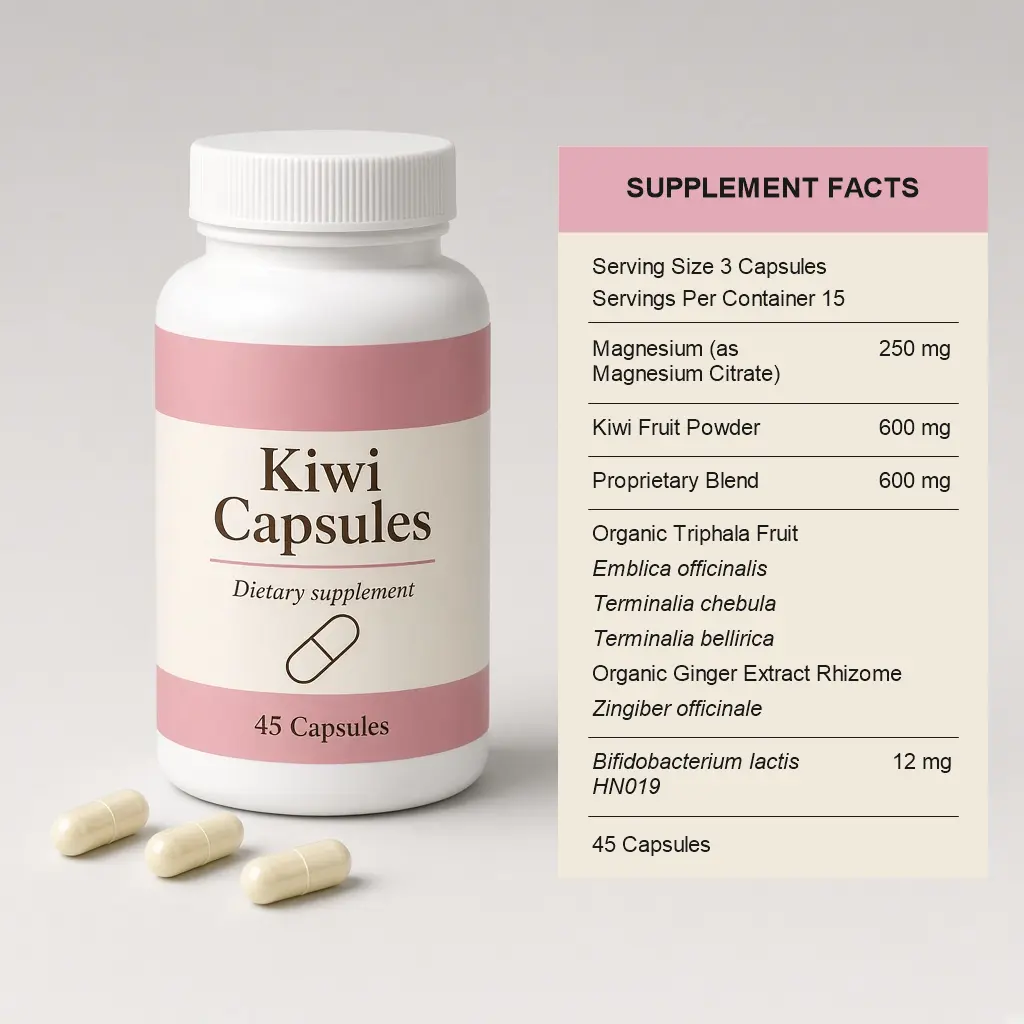
Fruit materials. A prune or kiwi concept is quoted from the named material and the serving.
Choose the Constipation Relief Format: Powders, Stick Packs, Capsules or Tablets
 Powders
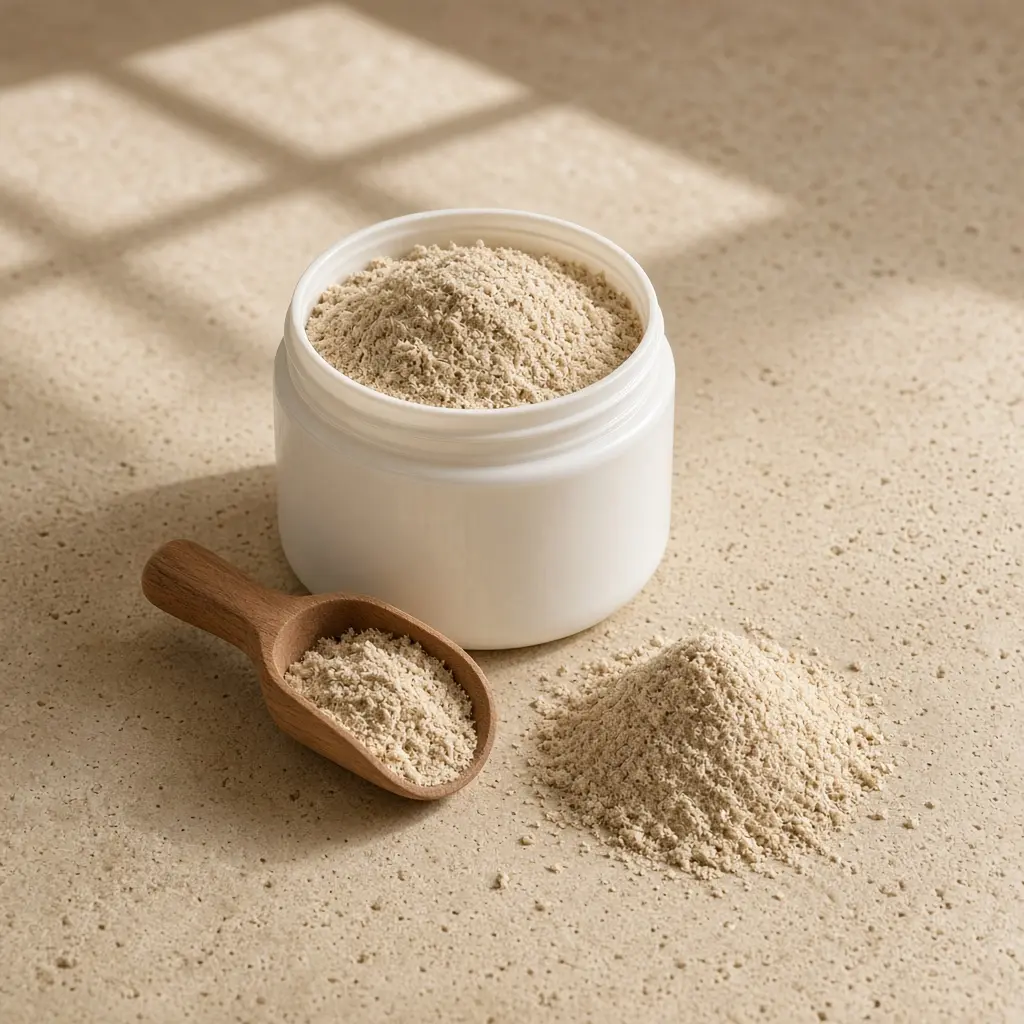
A powder suits a high-gram bulking fiber or a magnesium salt taken as a drink. Powder feasibility depends on the serving weight, the dispersion requirements and the moisture sensitivity of the formula. These factors also determine the appropriate pack.
Confirm before quotation: Target amount per serving, intended preparation method, pack type and required moisture barrier. Flavor is set on the sample. See powders and granules.
 Stick Packs
A stick pack contains one defined serving. Feasibility depends on net fill weight, powder flow, the seal and the moisture barrier.
Confirm before quotation: Net fill per stick, the target serving, the applicable label declaration, stick size or other pack requirement, film, seal and moisture barrier.
 Capsules
A capsule may suit a named magnesium salt or a fiber serving that fits a practical count. Feasibility depends on bulk density, capsule size and the number of capsules per serving.
Confirm before quotation: Target amount per serving, acceptable capsule count, capsule size and shell type. See hard capsules.
 Tablets
Tablet feasibility depends on blend compressibility, target tablet weight, hardness and disintegration requirements. Coating is assessed when the brief asks for it.
Confirm before quotation: Target tablet weight, tablets per serving, hardness, disintegration and whether coating is required. See tablets.

A product name does not fix the quotation. The material specification changes the serving size, the format that can carry it, and the price. Tests follow that material, the destination market, the customer’s specification and the tests agreed for the SKU. No single test list applies to every project.
Specification question | Fiber route | Magnesium salt route |
|---|---|---|
| Material identity | Plantago ovata husk or husk extract | The named magnesium salt and its raw-material grade |
| Content basis | Ingredient weight and dietary fiber per serving, stated separately | Salt weight and elemental magnesium, stated separately |
| Tests and limits | Fiber content, an identity method, and the quality limits that apply to that material | The elemental-magnesium basis on the selected specification, an identity method, and the quality limits that apply to that grade |
| Effect on the finished unit | Serving size, powder volume, pack size and format | The amount of that salt needed for the target elemental magnesium, and which formats can carry it |
| Send before quotation | Material specification, target dietary fiber per serving, net weight per serving | Salt specification, target elemental magnesium, amount per serving |
Ingredient specifications and lot COAs support incoming-material verification. Finished-product release follows the specification and the tests agreed for the SKU. An ingredient COA alone does not establish that the finished product meets its agreed release specifications.
The quotation states the finished-product specification for that SKU, the release tests agreed for it, and the documents included in the price. External laboratory work and additional stability work are marked as included or priced separately.
Supplier certificates and test reports support technical review but do not replace destination-market compliance requirements. The brand owner remains responsible for final labeling and claim substantiation. Site certificates are on Certifications and Compliance. How to Read a COA explains an ingredient COA. Group capacity is on Manufacturing Capacity.
The figures below are a first look. The quotation sets the minimum and the calendar for that SKU. Fill weight, packaging, testing, a new flavor and the production schedule can change both.
A sample, when the formula needs one, is planned at 7–15 days after the specification for that sample is confirmed. A new flavor can take longer. Sample approval does not start the commercial-production count. When a sample is required, the production file is confirmed after that approval.
Commercial production is counted from the date the formula, the packaging file and the production specification are confirmed and the production slot is set. Capsule, tablet, powder and stick ranges below use that same start.
Capsule and tablet counts are finished units. The powder count is the standard starting point for finished powder units, meaning a tub, pouch or jar. Stick packs are counted as sticks, not as display cartons. A high-gram psyllium serving is confirmed on the quotation, because fill weight can change the powder minimum and the calendar.
Format | Planning minimum | Commercial production |
|---|---|---|
| Capsules | About 3,000–5,000 finished units | About 30–45 days |
| Tablets | About 5,000–10,000 finished units | About 30–45 days |
| Powder, tub or pouch | 3,000 finished powder units | About 25–30 days |
| Stick packs | 30,000 sticks | About 15–30 days |
- Scope and specification. Intended use, destination market, formula route and format are clear before a sample date or a production date is set.
- Sample, when the formula needs one. The sample uses an agreed specification.
- Quotation. First-order quantity, expected repeat quantity, packaging and testing. The quotation states the MOQ, lead time and price for that project.
- Commercial production. Starts once the formula, the packaging file and the production specification are confirmed and the production slot is set.
Request a Constipation Relief Supplement Quote
Send your concept, reference label or existing formula, together with the destination market and preferred dosage form. You can provide the remaining technical specifications as they become available.
Send your formula or reference label.
Related
Fiber Supplements · Colon Cleanse Supplements
Disclaimer
For wholesale and brand-manufacturing reference only. Not a legal opinion. Not intended to diagnose, treat, cure or prevent any disease. Dietary supplements are not drugs. Nothing here is a recommended intake, a Drug Facts dose, or an authorization to sell a finished product. Brand owners remain responsible for claim substantiation and for finished-label compliance in each destination market.
Written by KS Nutripharma Formulation Team | Reviewed by KS Nutripharma Director of R&D (PhD, Food Science, 19+ years nutraceutical development) | Scope: formulation feasibility, ingredient specifications, dosage-form selection and destination-market review | Updated October 2026 | R&D Center