

Mood Support Supplements OEM, ODM & Private Label Solutions
Daytime botanical, methylated-nutrient, and precursor-based mood SKUs
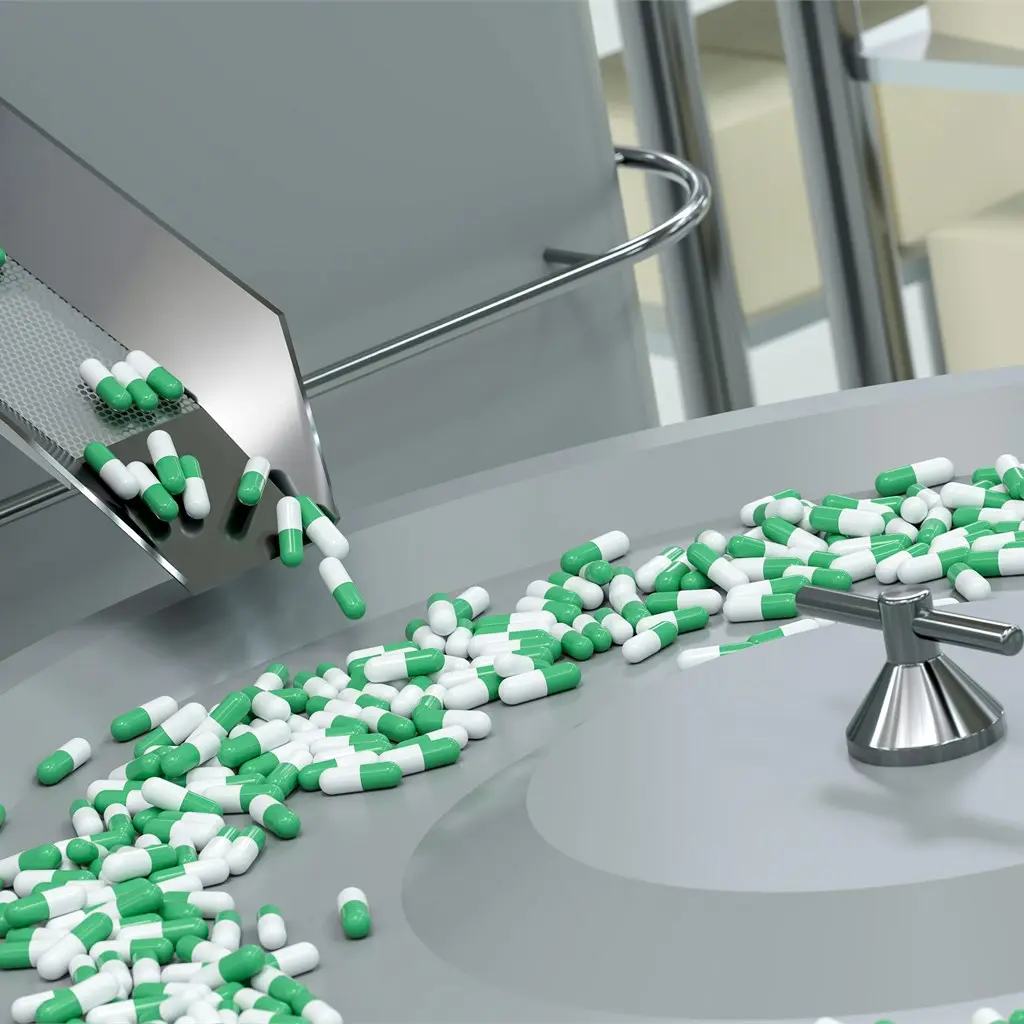
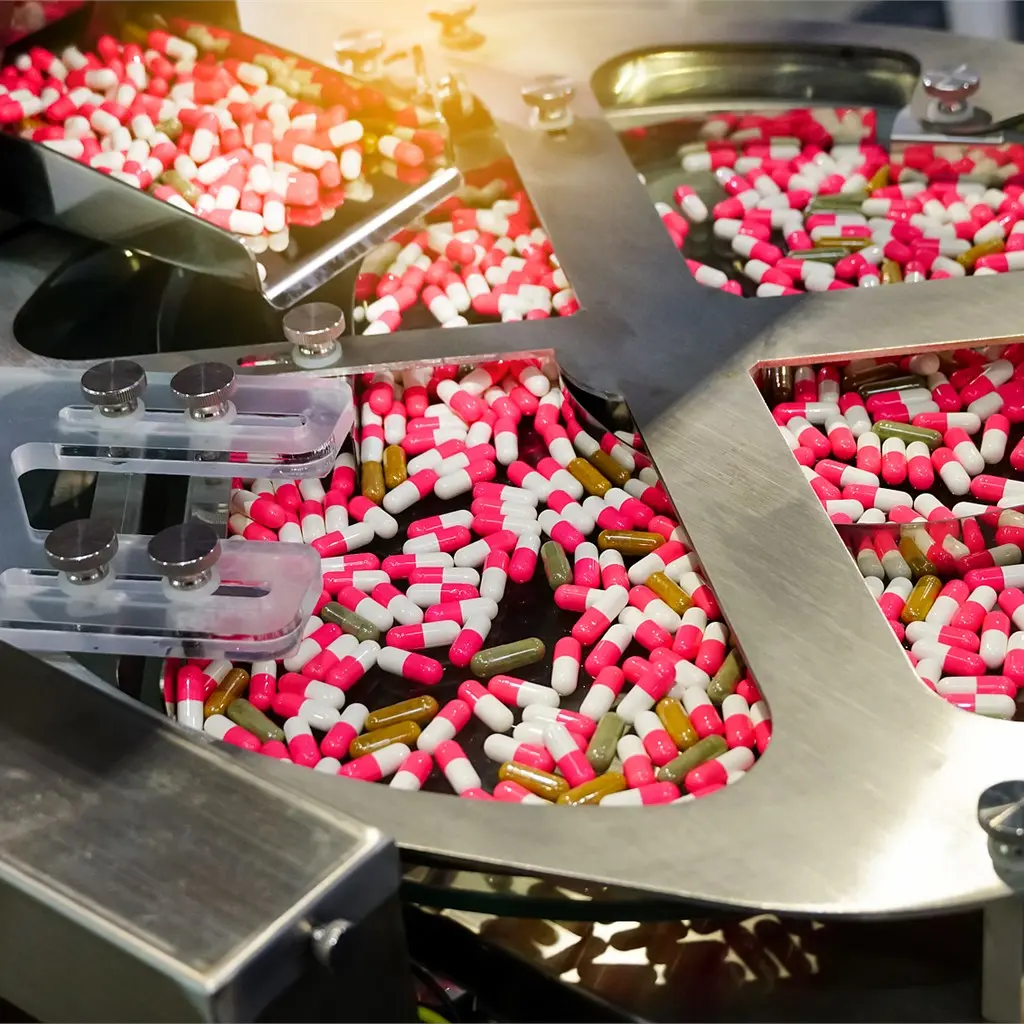
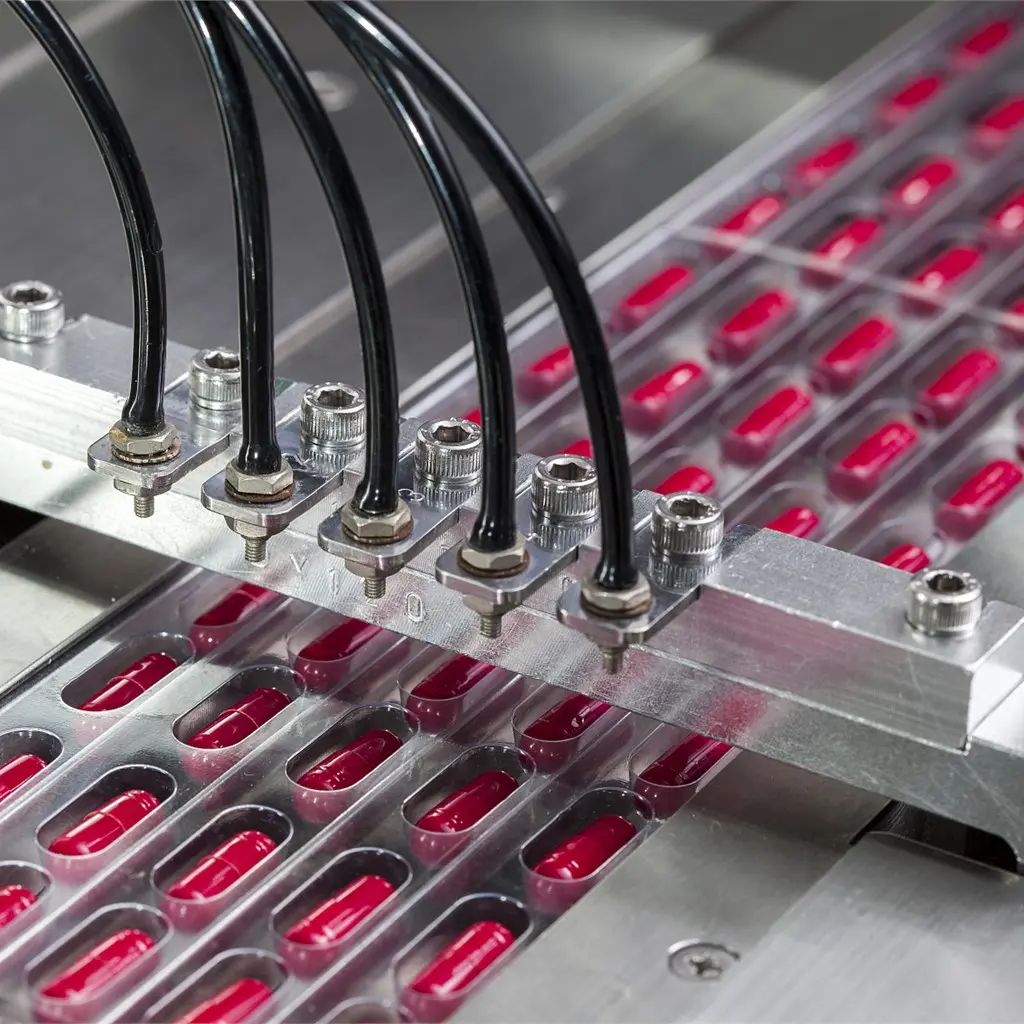
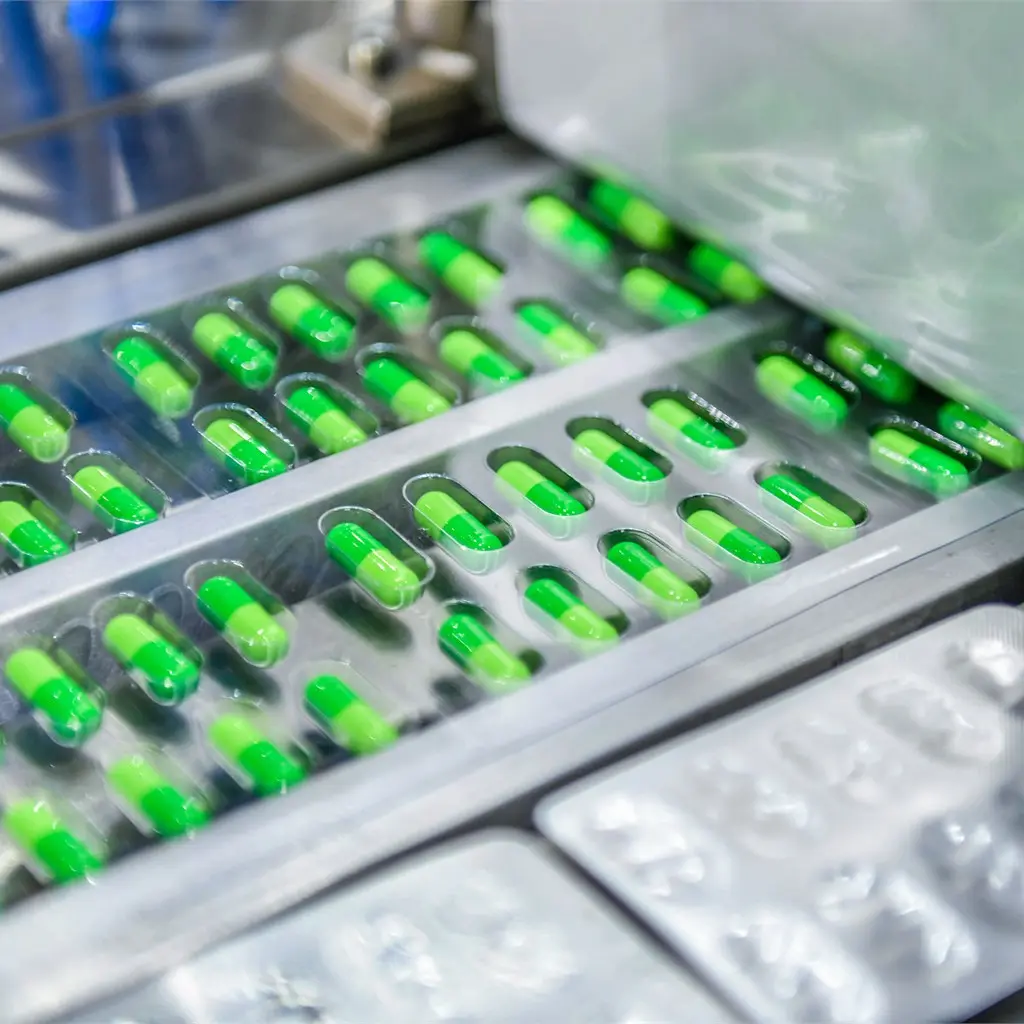
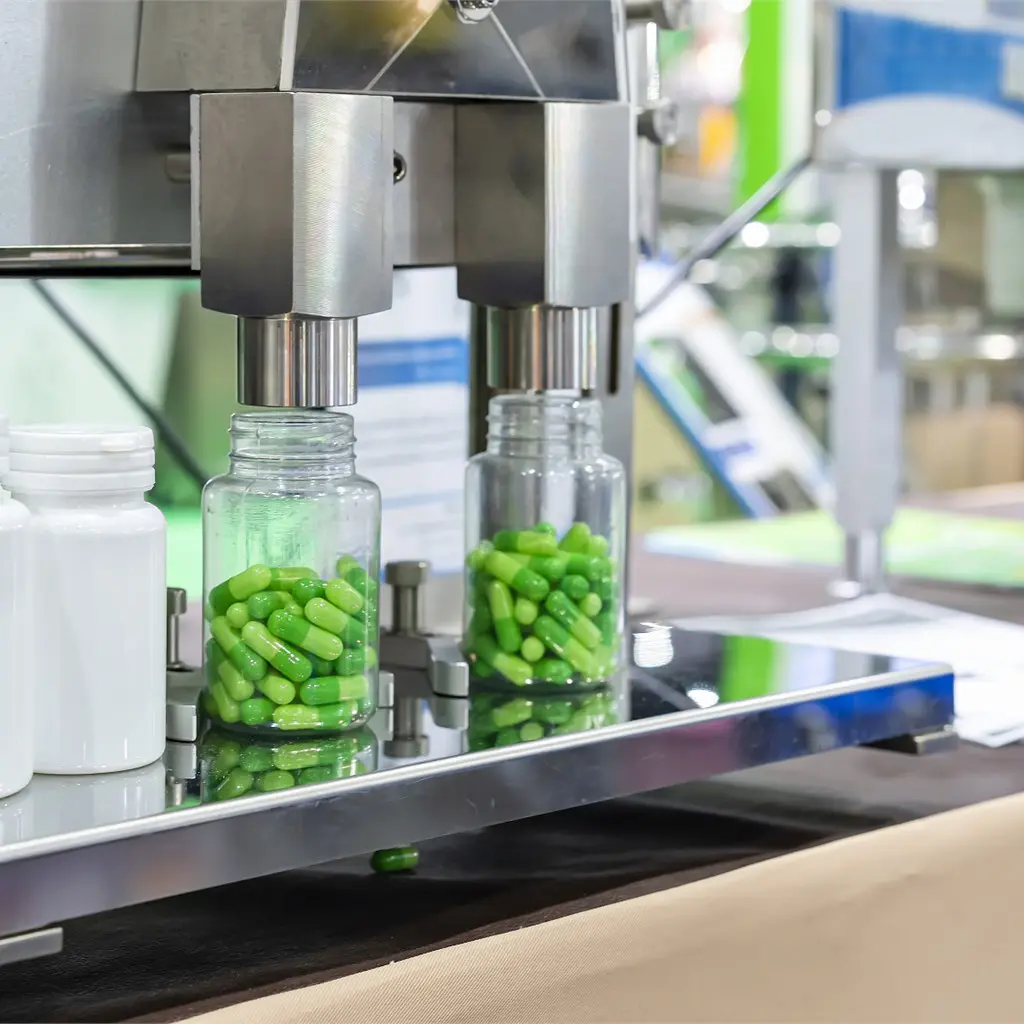
KS Nutripharma is a mood support supplements manufacturer for OEM, ODM, and private-label finished products — saffron, 5-HTP, methylated nutrients and other named botanical actives, including second-source projects based on an approved specification. Line capacity and plant scale: Manufacturing Capacity.
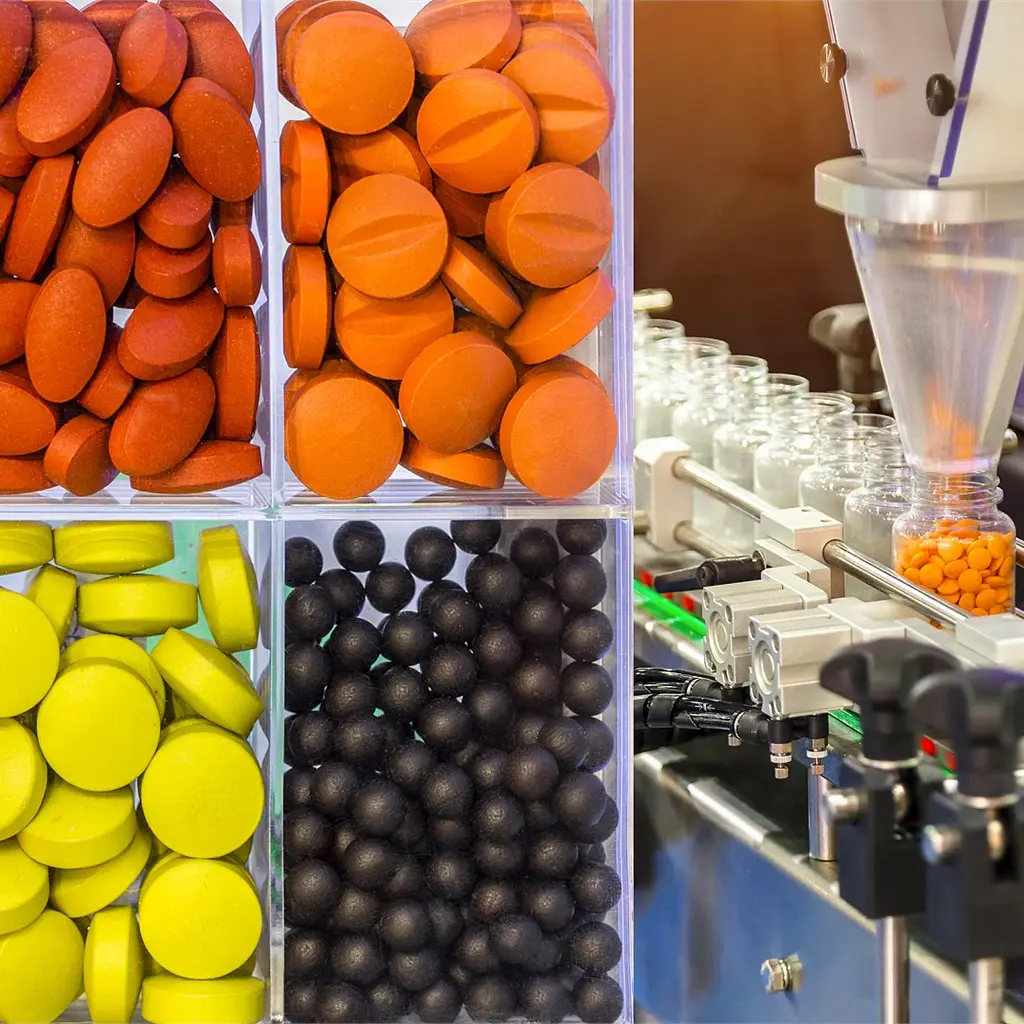
Core actives are sourced to a defined specification and qualified for the finished product. Feasibility review covers capsule filling, tablet compression or gummy processing; grade, format or pack may be adjusted when required.
Mood support is a commercial positioning term, not a disease-treatment category.
Typical first reply is within one business day on a complete brief. NDA available before detailed formula exchange.
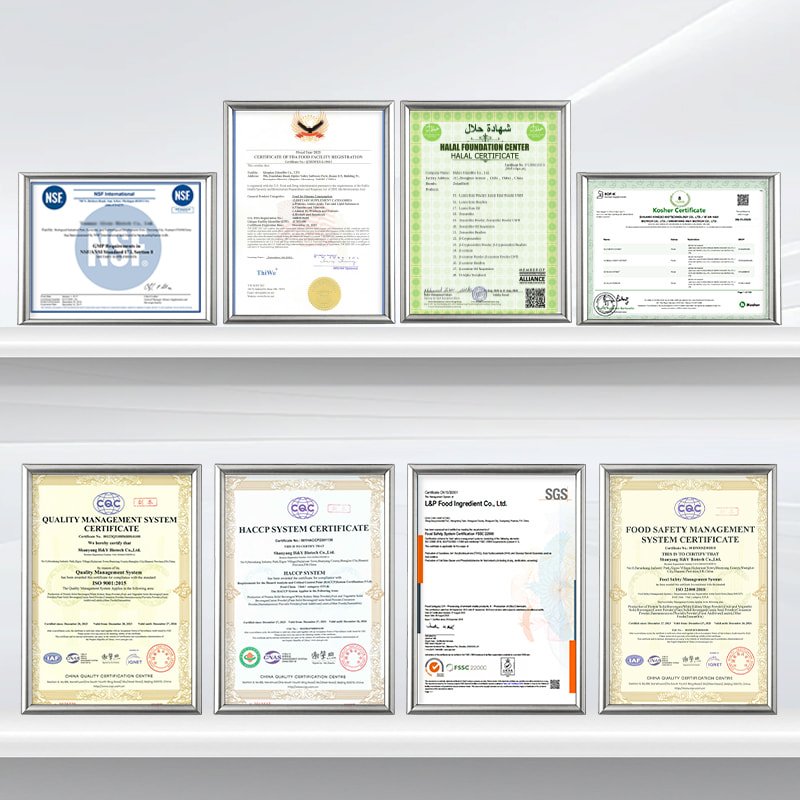
Certifications: cGMP · ISO 9001 · ISO 22000 · HACCP · FSSC 22000 · Halal · Kosher
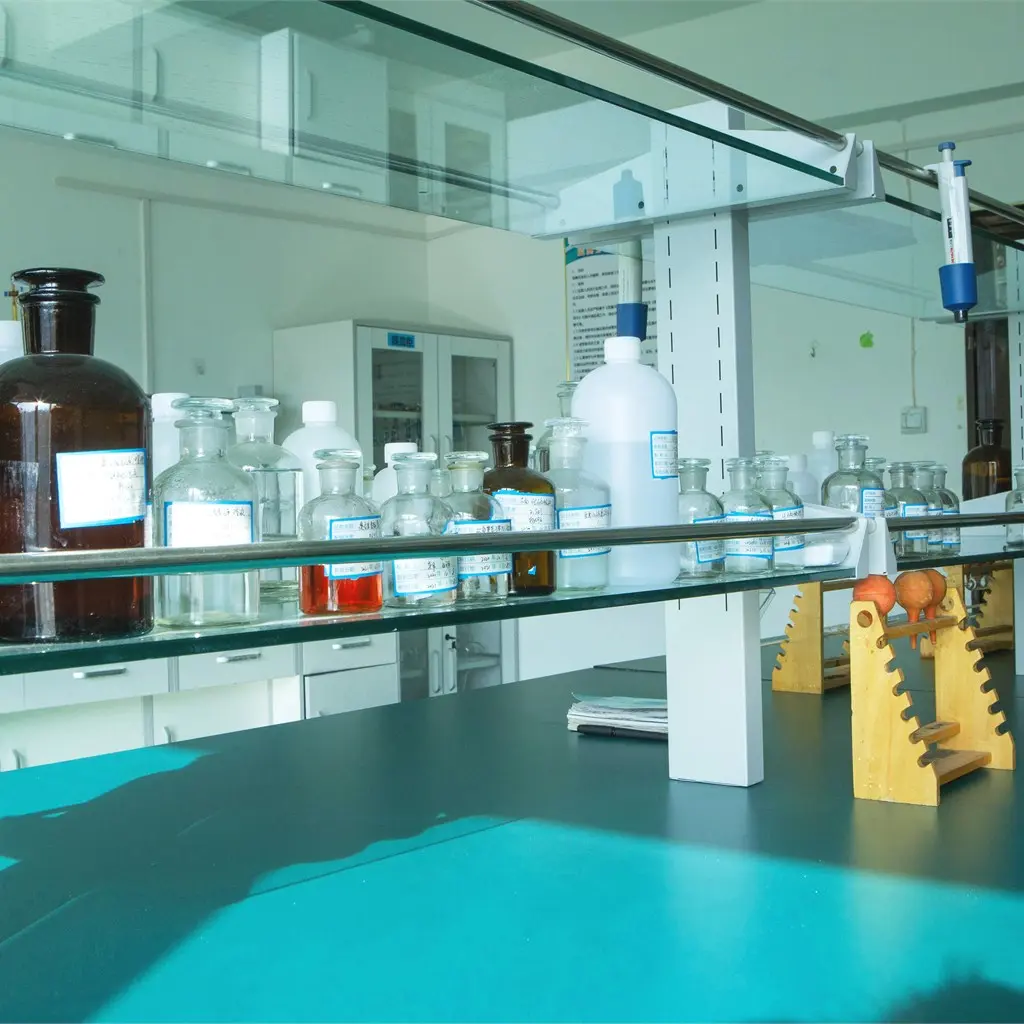
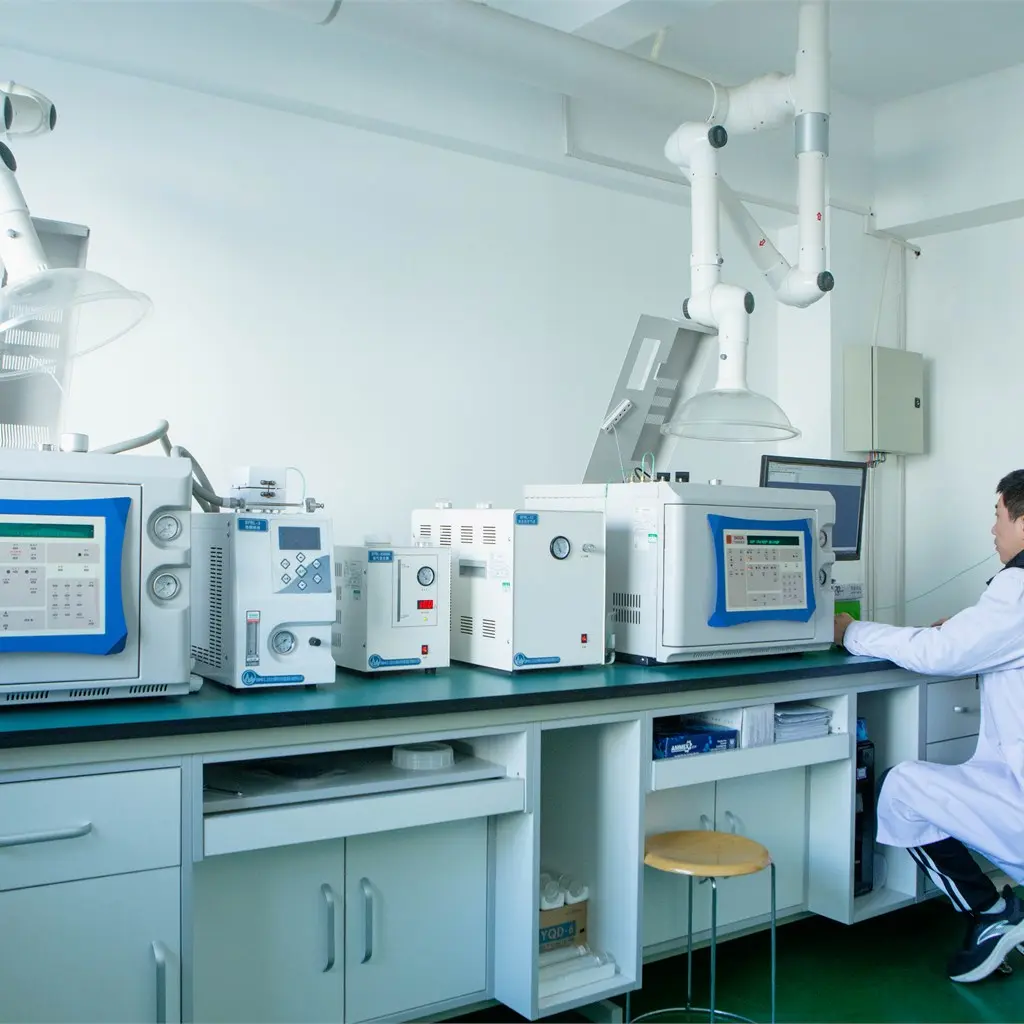
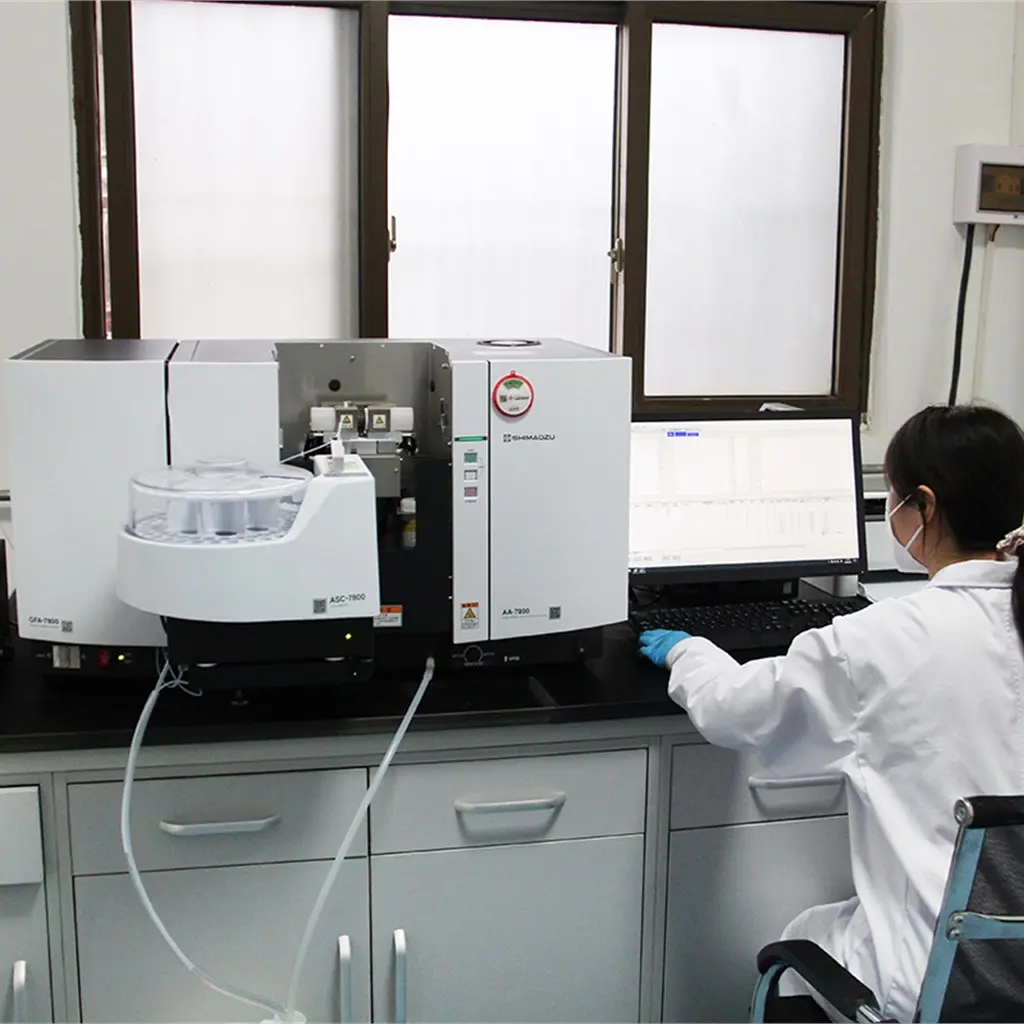
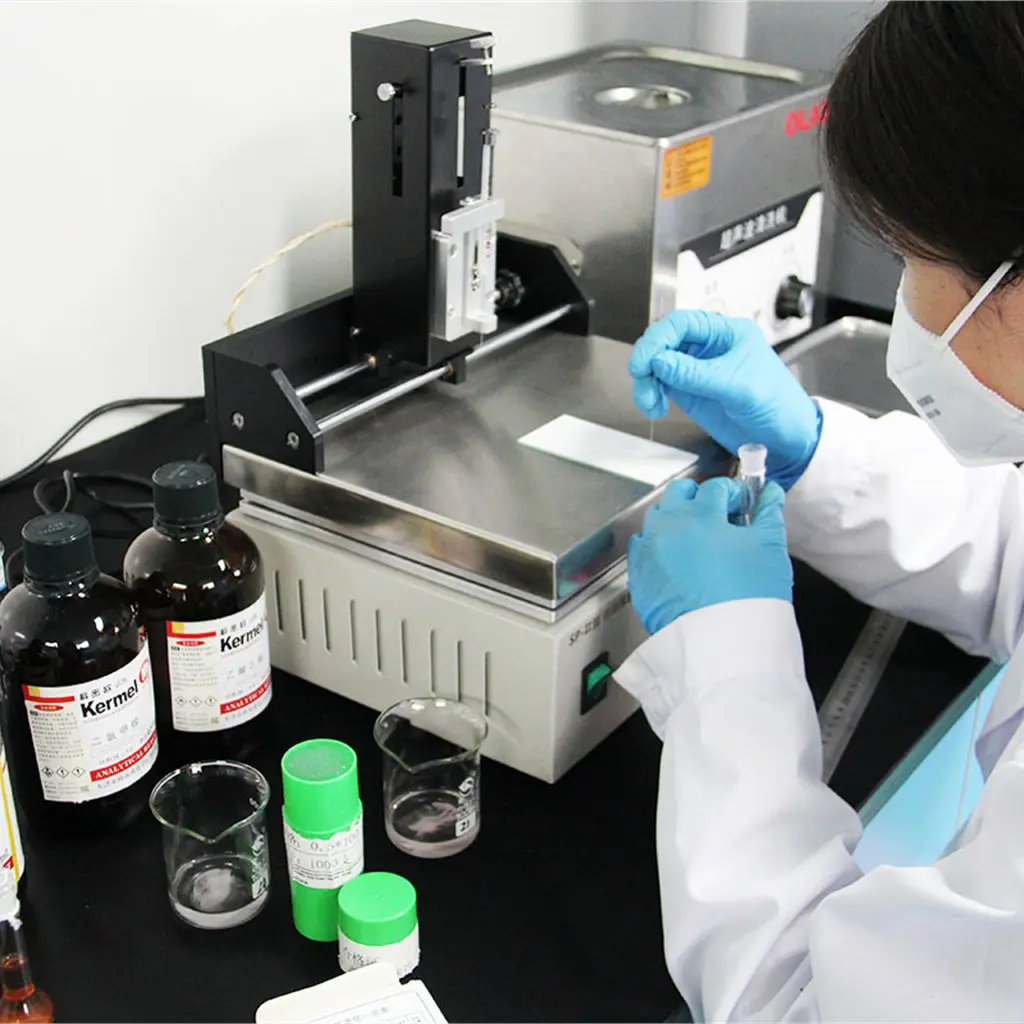
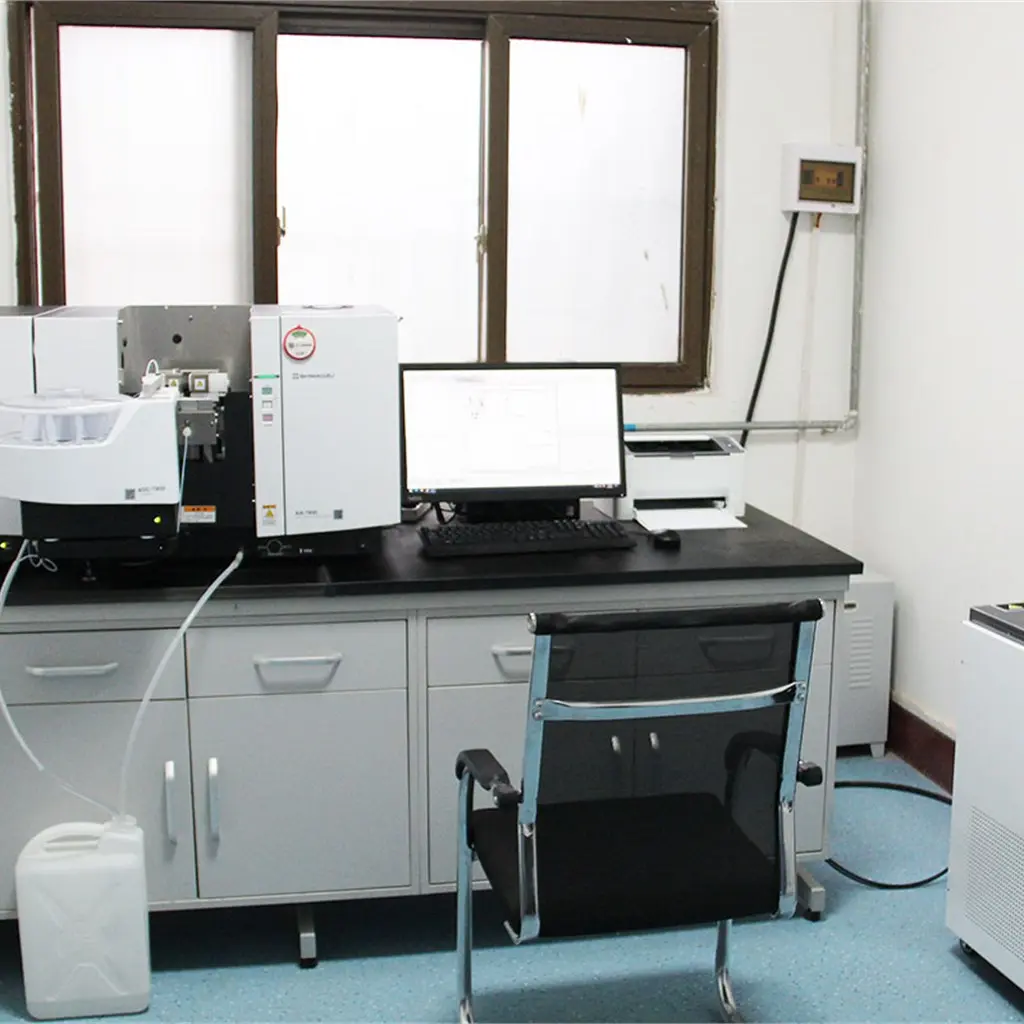
Testing: in-house QC and batch COA; third-party testing through SGS or Eurofins when specified.
Mood Support Supplement Manufacturing at a Glance
| Capability | What we support |
|---|---|
| Finished products | Capsules, tablets, powders/sticks, and project-specific saffron gummies |
| Line capacity | 5+ million capsules/day · 12+ million tablets/day · 2+ million gummies/day |
| Powder / ingredients | Powder and stick programs quoted after the format is locked. Raw-material processing 5,000+ t/year |
| R&D | Format feasibility |
| Project types | New SKU · existing formula · second source |
| Release documentation | Approved specification · batch COA (identity, assay, micro, metals) · pack / batch records · third-party and stability when specified |
Which Situation Matches Your Project?
Equivalence requires: identity, marker method, milligram basis and finished specification.
You have: a concept, destination and an ingredient idea.
Need: a core-active specification, manufacturing feasibility and quotation basis.
Send: destination · product type · core active · format · pack · target quantity / annual volume. A reference label or competitor product can be used when the milligram is not yet fixed. Licensed names require authorization.
You have: BOM, COA and label.
Need: equivalency review and a feasible manufacturing approach.
Send: BOM · COA · label · pack · finished-product test panel · current volume.
You have: an approved specification.
Need: lot qualification, equivalency review and a qualification sample.
Send: current specification · BOM · incoming and finished-product COAs.
Mood Supplement Product Architecture
Customer positioning | Route |
|---|---|
| Ashwagandha-led stress support | Stress relief supplements |
| GABA, daytime theanine or situational calm | Anxiety relief supplements |
| Evening wind-down | Sleep support supplements |
| DHA or phosphatidylserine positioning | Brain health supplements |
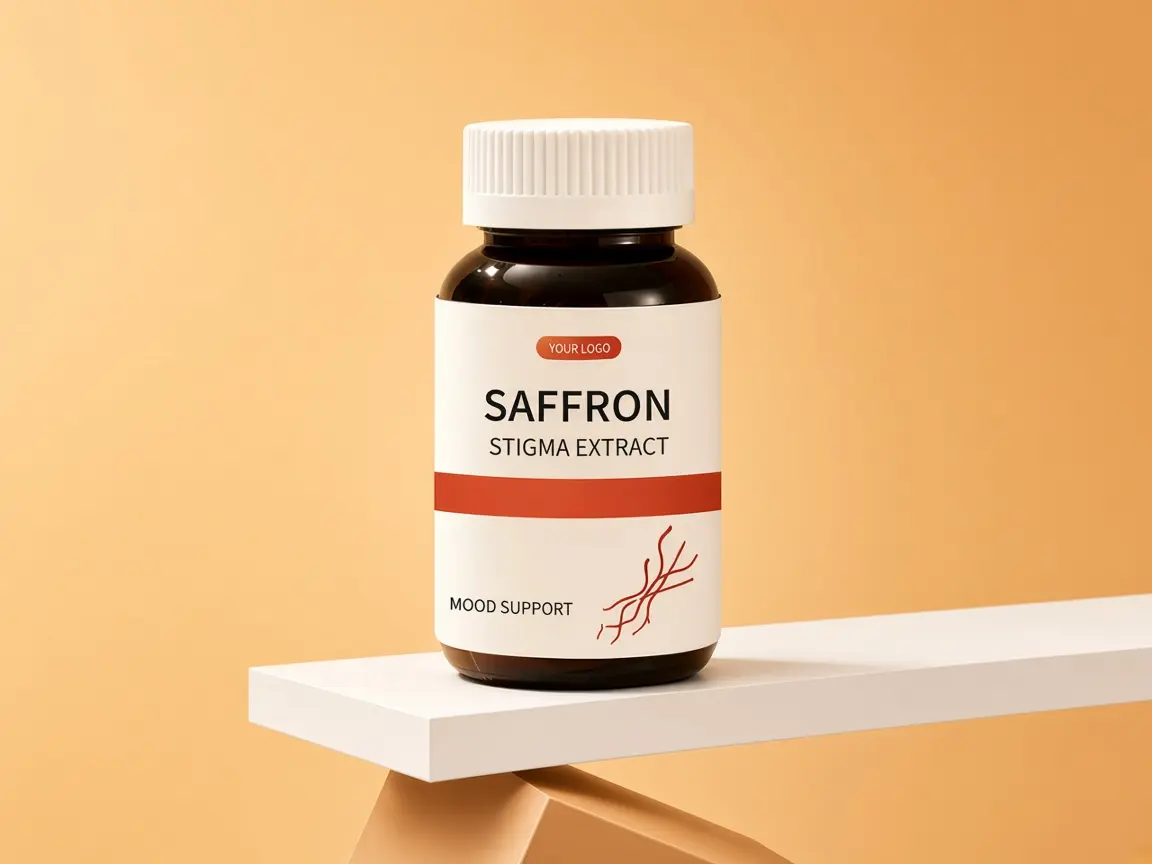
Use when: The SKU is a daytime saffron unit.
Specify: Saffron stigma extract, one BOM row.
Routing note: GABA and ashwagandha are handled on their respective product files.
Default format: Capsule.
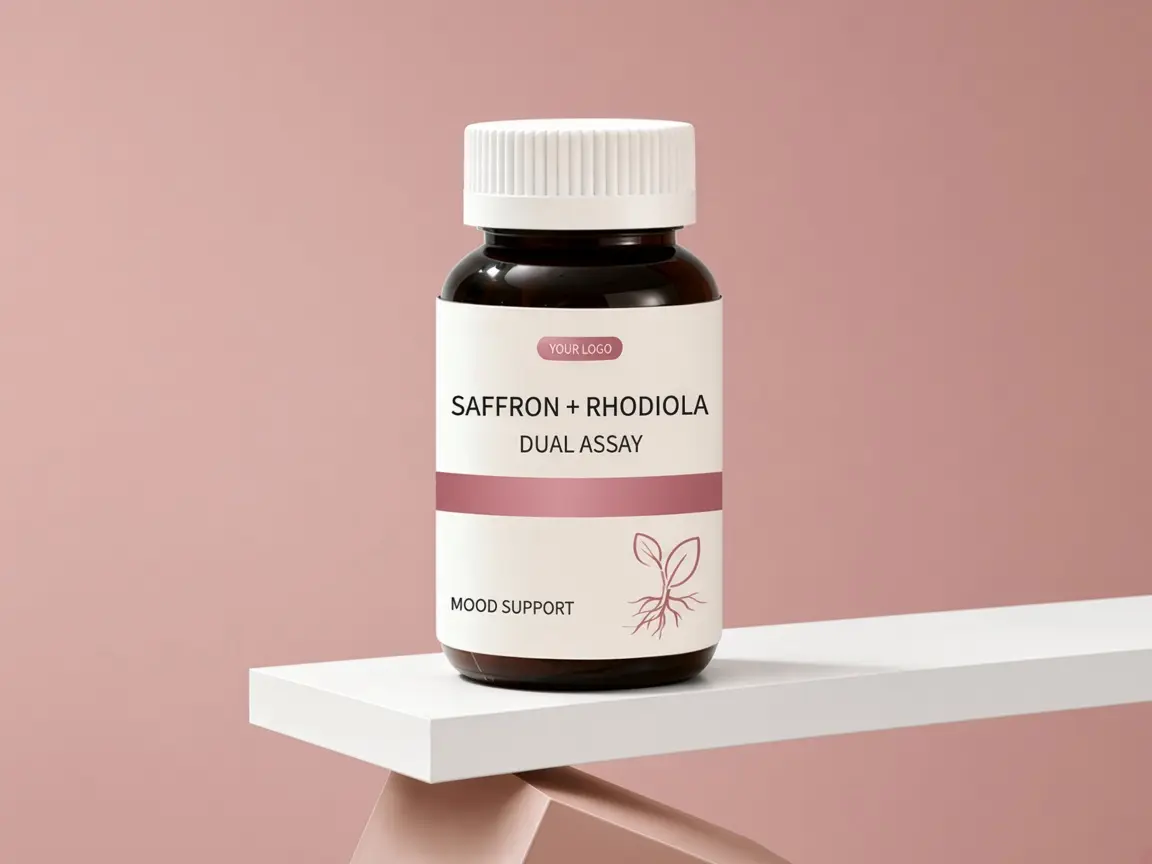
Use when: Saffron and rhodiola both print.
Specify: Saffron + rhodiola, each with its own assay.
BOM: Each printed active is specified and quoted separately.
Default format: Capsule.
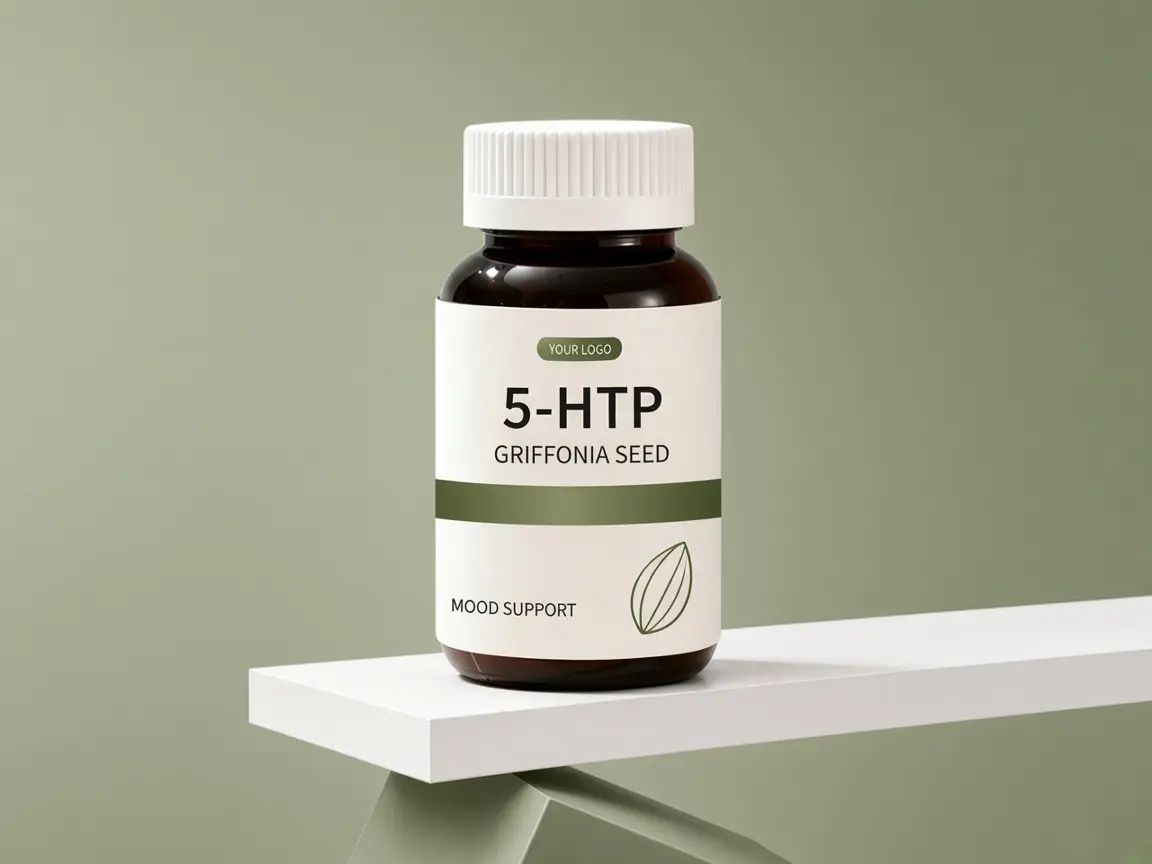
Use when: The brief names 5-HTP.
Specify: Griffonia seed extract or purified 5-HTP.
Routing note: St. John’s Wort is quoted as a separate unit.
Default format: Capsule.
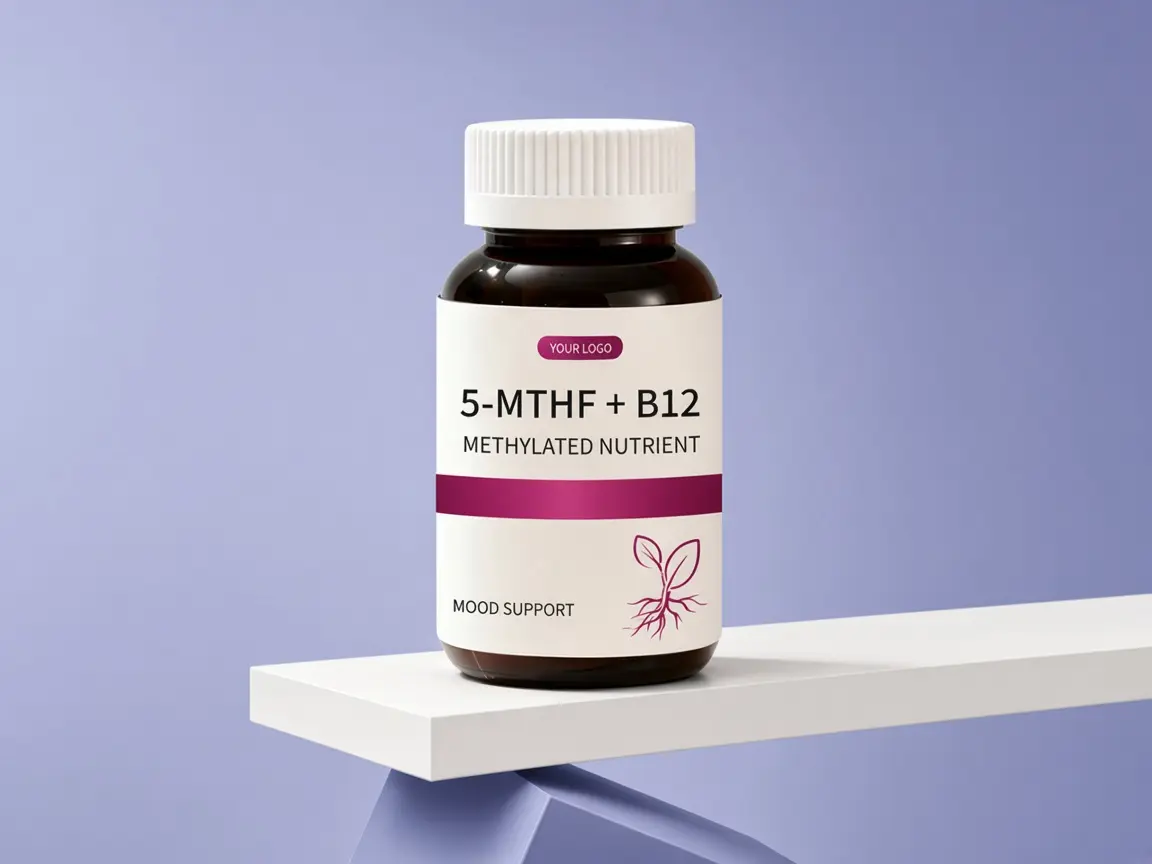
Use when: The panel is 5-MTHF plus a named B12.
Specify: Folate form + mcg, one B12 identity.
Additional actives: Vitamin D, zinc or magnesium may be added as separate BOM rows.
Default format: Capsule.
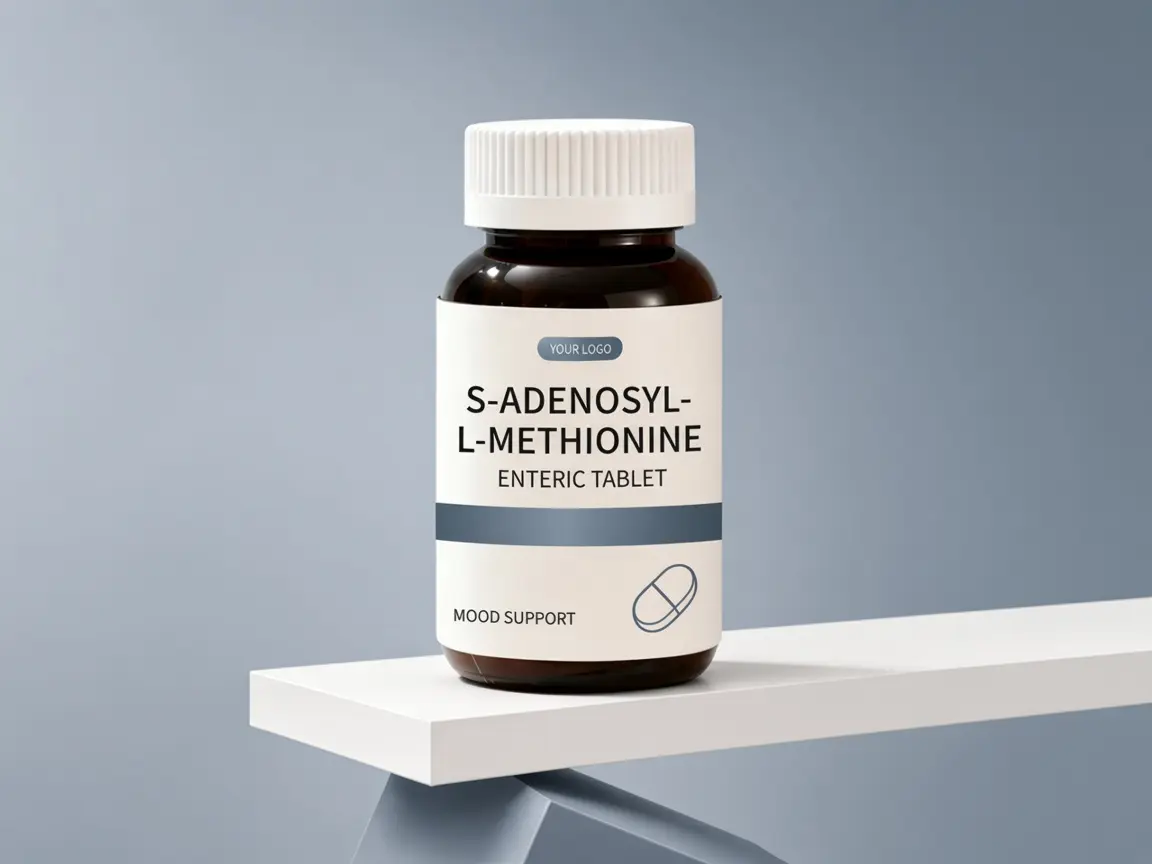
Use when: The brief names SAMe or St. John’s Wort.
Specify: Named ingredient identity, salt or form where applicable, and destination.
Default format: Capsule; SAMe often a moisture-controlled tablet.
Mood Ingredient Specifications for Finished-Product Manufacturing
These are frequently requested grades KS Nutripharma can supply for finished mood SKUs. Percentages and example milligrams are quotation references, not recommended intakes.
Custom grades can be reviewed against the target specification.
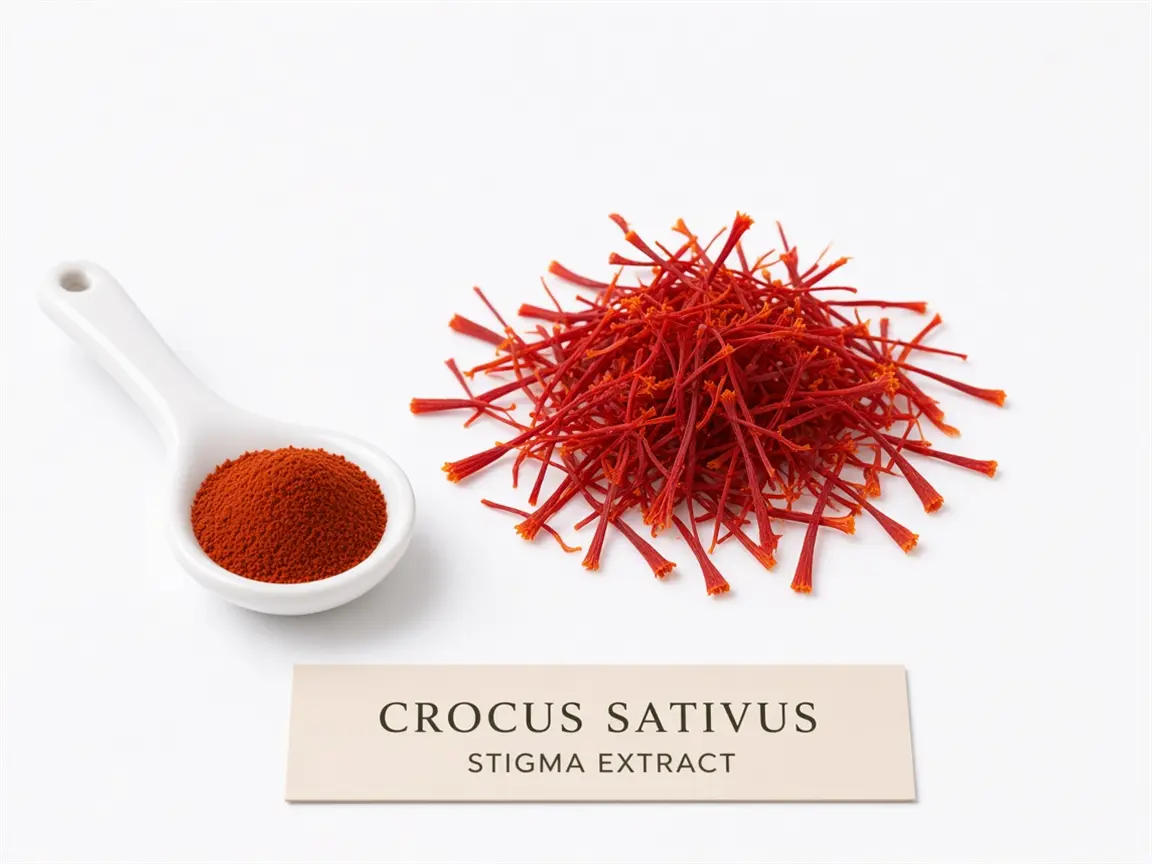
Identity: Crocus sativus
Plant part: Stigma
Form: Stigma extract
Specification: Crocin ≥2%, ≥3% or ≥5% by HPLC; dual-marker specifications may include crocin ≥5% + safranal ≥0.2%.
Method: HPLC for the declared crocin / safranal definition.
Format: Capsule; gummy by project feasibility
Quote basis: Stigma and petal material, HPLC and ISO 3632 specifications, and licensed versus non-branded extracts should be quoted as separate specifications even when the declared milligram is the same. Custom assay and example fills around 28–30 mg extract are reviewed against the target specification.
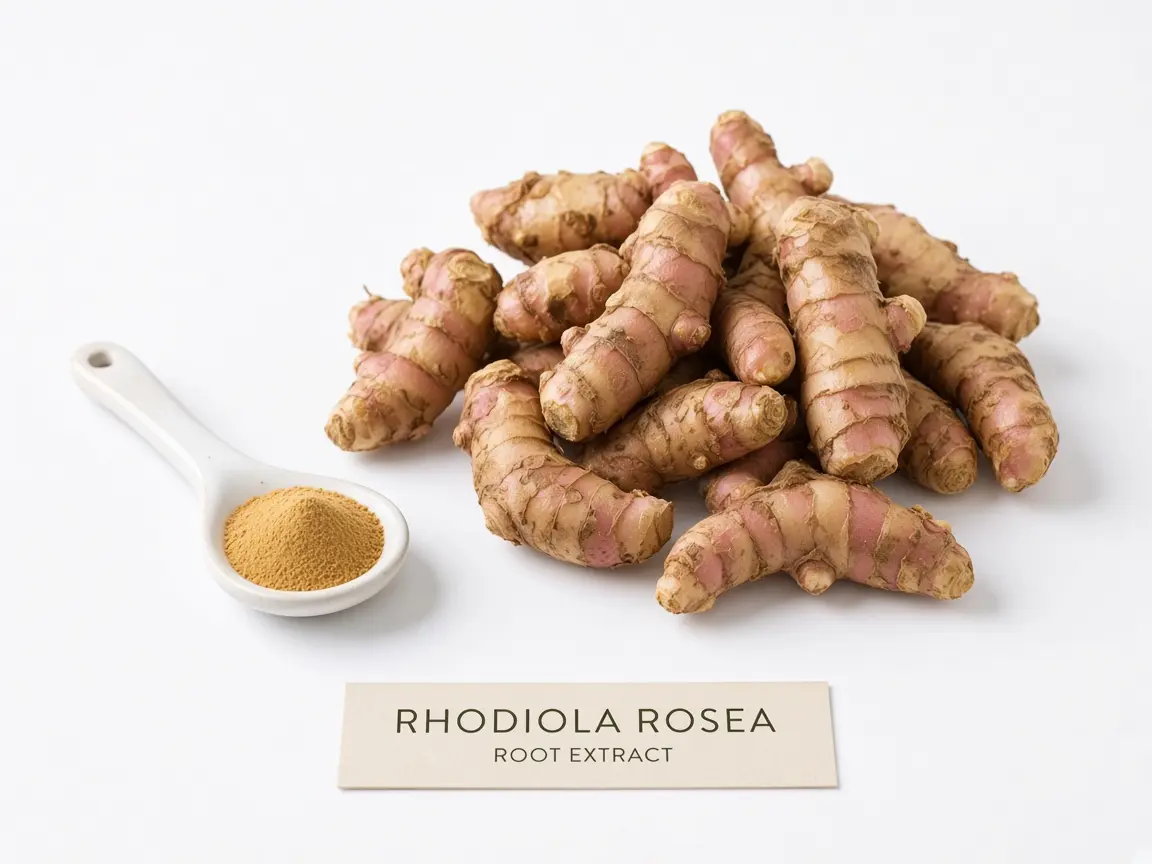
Identity: Rhodiola rosea
Plant part: Root / rhizome
Form: Dual-marker extract
Specification: Total rosavins + salidroside, method stated for both. Common specifications: 3% / 1%, 3%/2%, 5%/1% or 5%/2%.
Method: HPLC
Format: Capsule
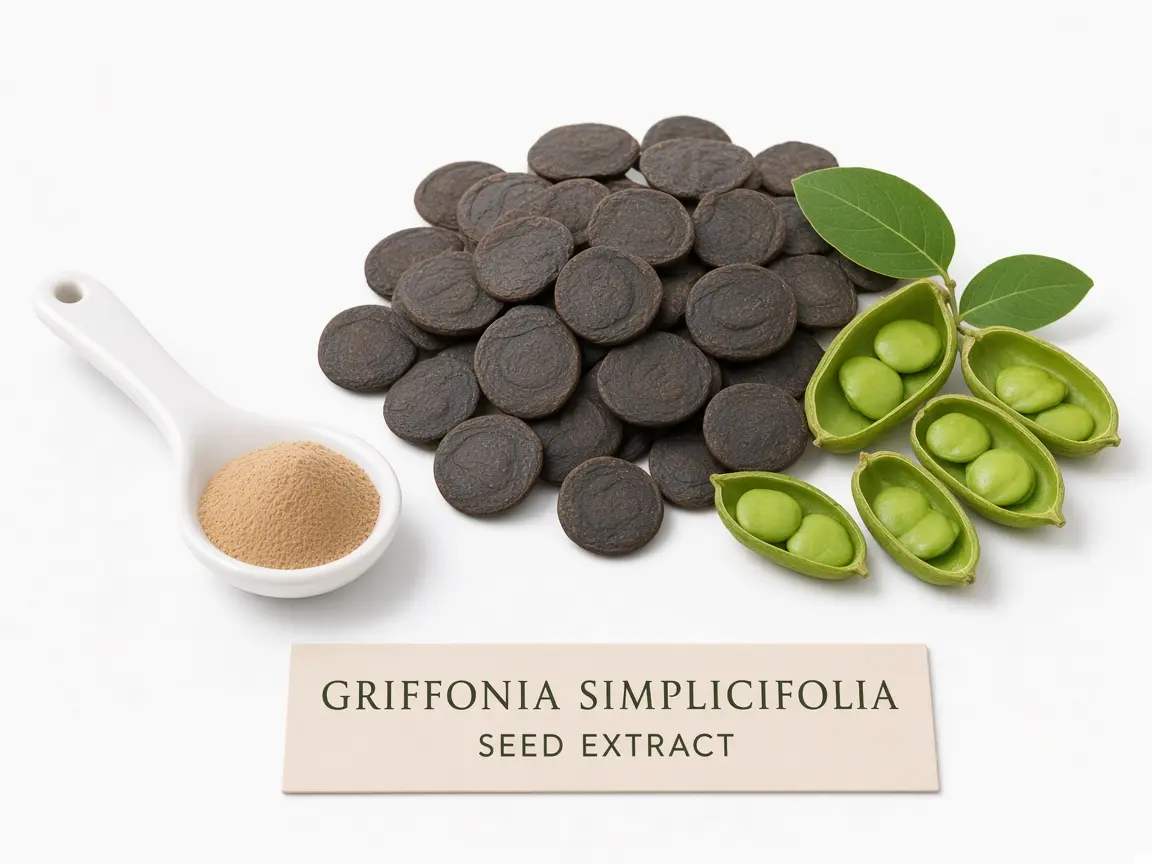
Identity: Griffonia simplicifolia seed extract or purified 5-HTP
Form: Isolate or seed extract
Specification: ≥98% isolate (often 98–99%) or seed extract ~20–30%. A ~50% band when the supply specification lists it.
Method: HPLC for 5-HTP %
Format: Capsule
Quote basis: Isolate and seed extract can require different fill weights even when the declared milligram is the same.
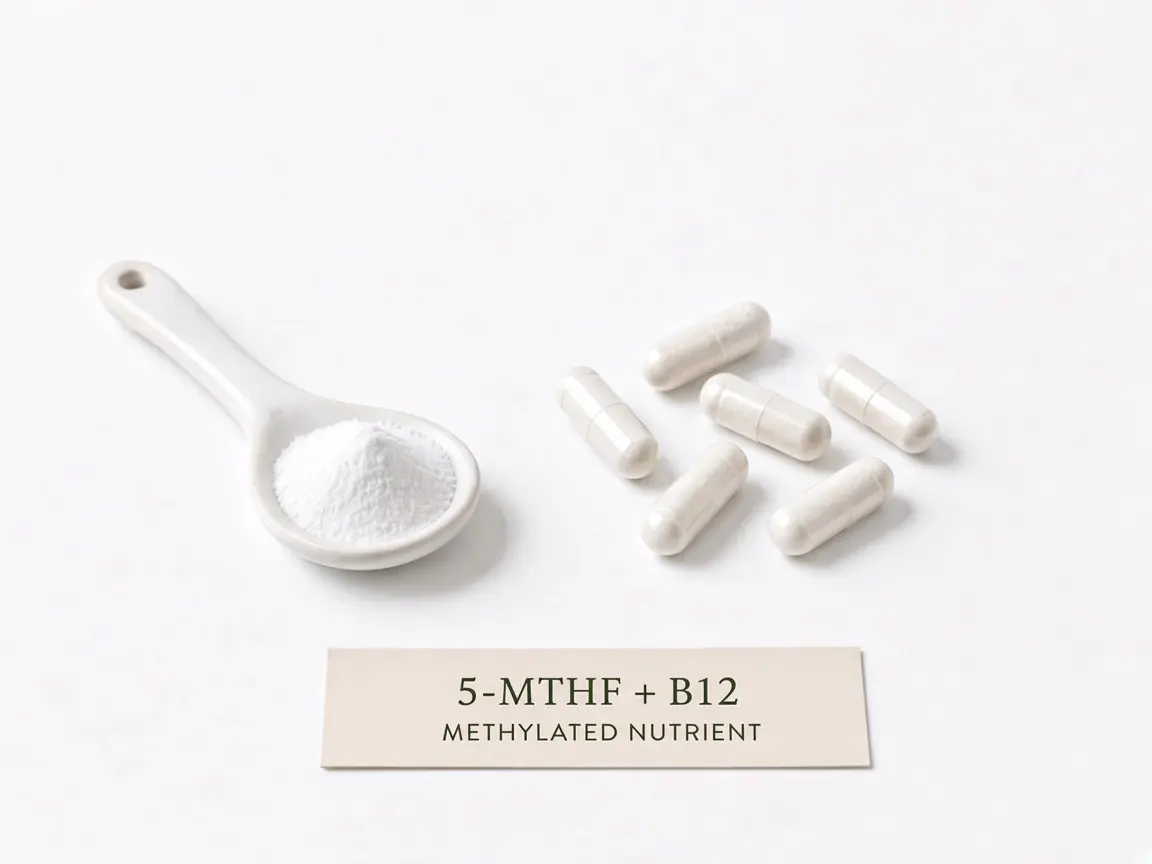
Identity: Named 5-MTHF salt
Salt / grade: Calcium (anhydrous or trihydrate), glucosamine salt, or monosodium where the destination file accepts it
Form: Micro-dose salt; premix when the serving cannot disperse directly
Specification: mcg as free acid, salt vs free-acid assay basis, and one B12 identity (methylcobalamin, adenosylcobalamin or cyanocobalamin). Common fills: 400 mcg or 1,000 mcg free-acid equivalent.
Method: Finished-product assay against the agreed method
Format: Capsule; tablet after uniformity review
Quote basis: Match the 5-MTHF salt, assay basis and B12 identity before comparing mcg values.
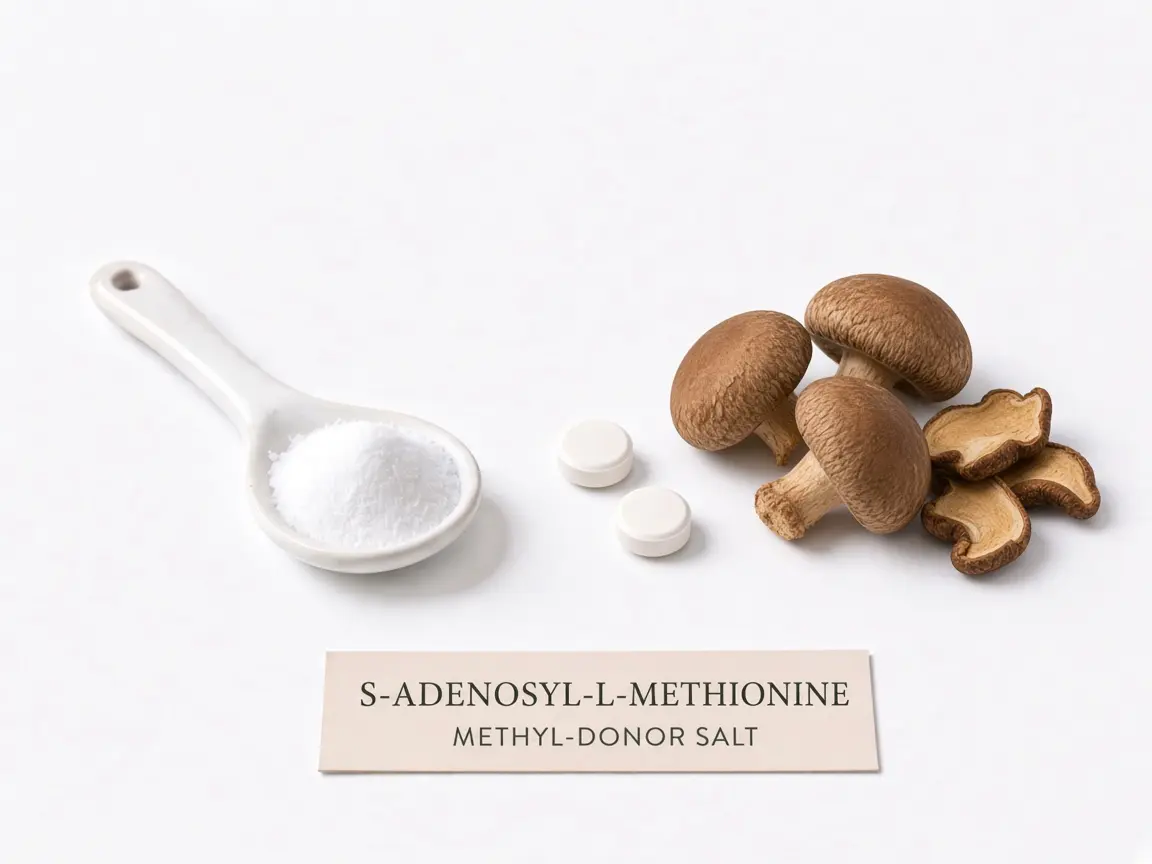
Identity: Named SAMe salt (disulfate tosylate or 1,4-butanedisulfonate)
Form: Moisture-sensitive salt for tablet manufacturing
Specification: SAMe content must be stated on either an ion basis or a salt basis.
Method: Named identity + basis on the approved COA
Format: Moisture-controlled or enteric tablet
Quote basis: Ion-basis and salt-basis specifications require different raw-material weights even when the declared milligram is the same.
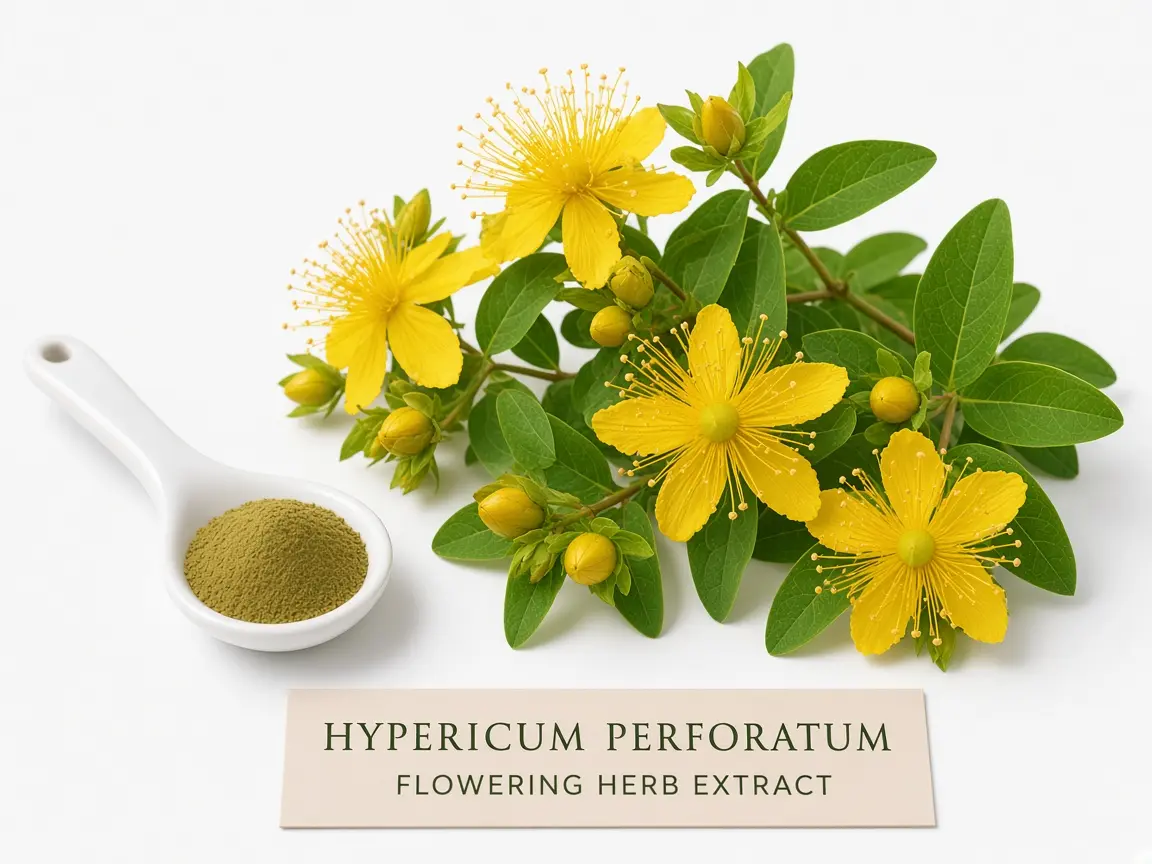
Identity: Hypericum perforatum
Plant part: Flowering herb / aerial parts
Form: Herb powder · ratio extract (4:1 / 10:1 / 20:1) · hypericins-standardized · hyperforin-specified
Specification: Hypericins 0.3% with HPLC or UV named. Hyperforin 1%–4% HPLC as a typical minimum, or a named maximum on a low-hyperforin specification. Example fills: 300 mg / 500 mg.
Method: Hypericins by named HPLC (preferred) or UV; hyperforin by HPLC when specified
Format: Capsule
Quote basis: Hypericin vs total hypericins vs hyperforin; food-supplement vs herbal-medicine classification.
Choose the Mood Format: Capsules, Tablets, Powder or Gummies
Capsules are the default for low-dose saffron and for 5-HTP. Other formats are quoted after capsule filling, tablet compression or gummy processing parameters are locked.
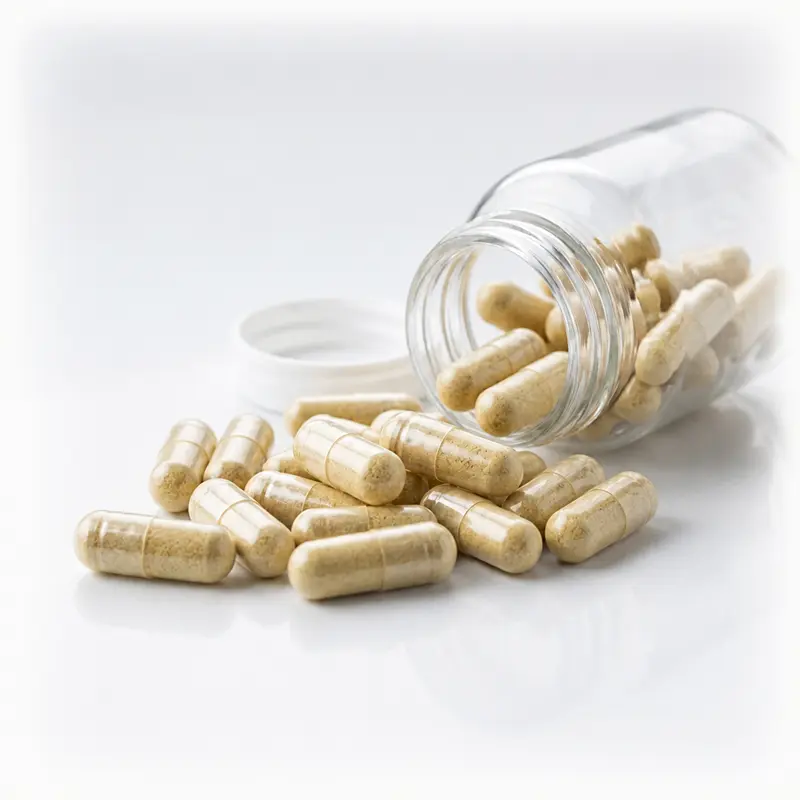
Best for: Saffron, 5-HTP, 5-MTHF and named botanicals.
Key control: Capsule size and unit count once the approved grade sets tap density.
What to lock: Shell; unit count; premix when saffron is a small fraction of fill.
Manufacturing note: Fill follows tap density of the approved grade.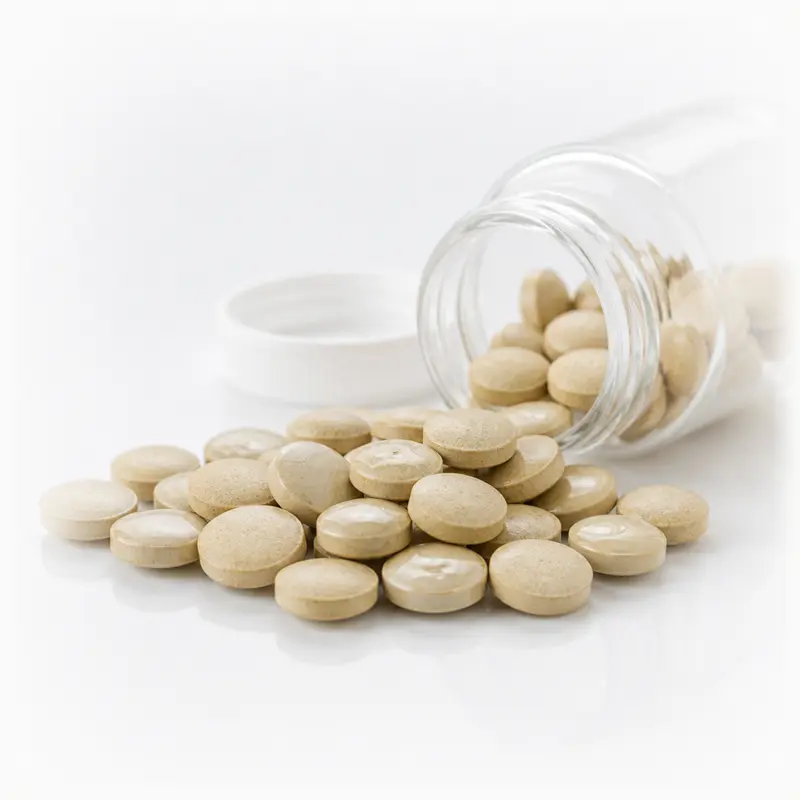
Best for: Methylated-nutrient formulas and SAMe with a moisture-controlled or enteric path.
Key control: Compression load.
What to lock: Tooling, tablet weight, hardness, coat if specified.
Manufacturing note: Capsule-to-tablet conversion is re-validated before a press run.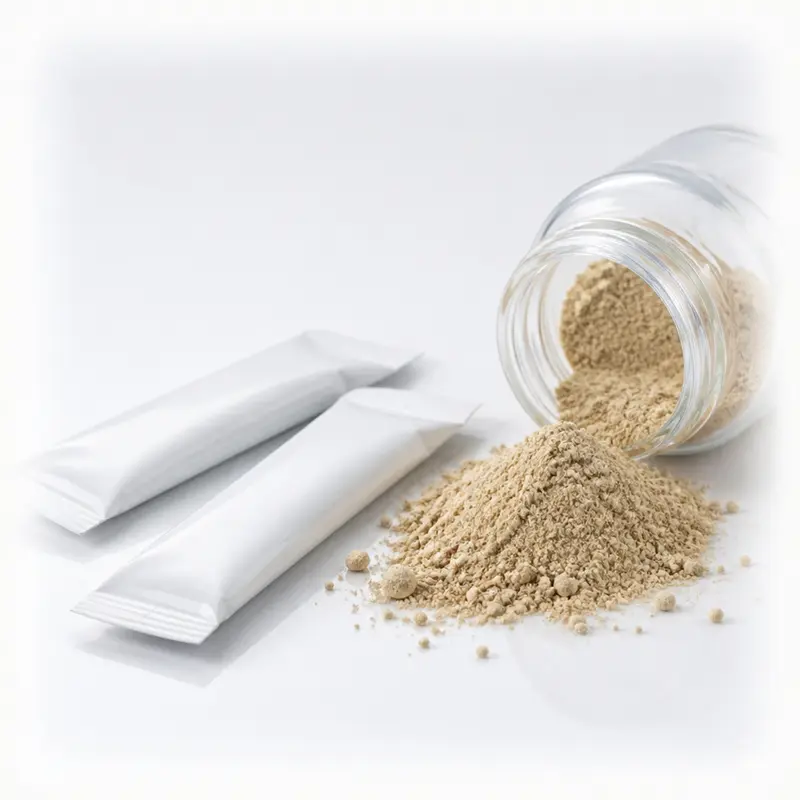
Best for: A named saffron or 5-MTHF drink after flavor and uniformity lock.
Key control: Blend uniformity and light/color.
What to lock: Mesh, water activity, flavor, barrier film.
Manufacturing note: Specify extract milligrams on the drink specification.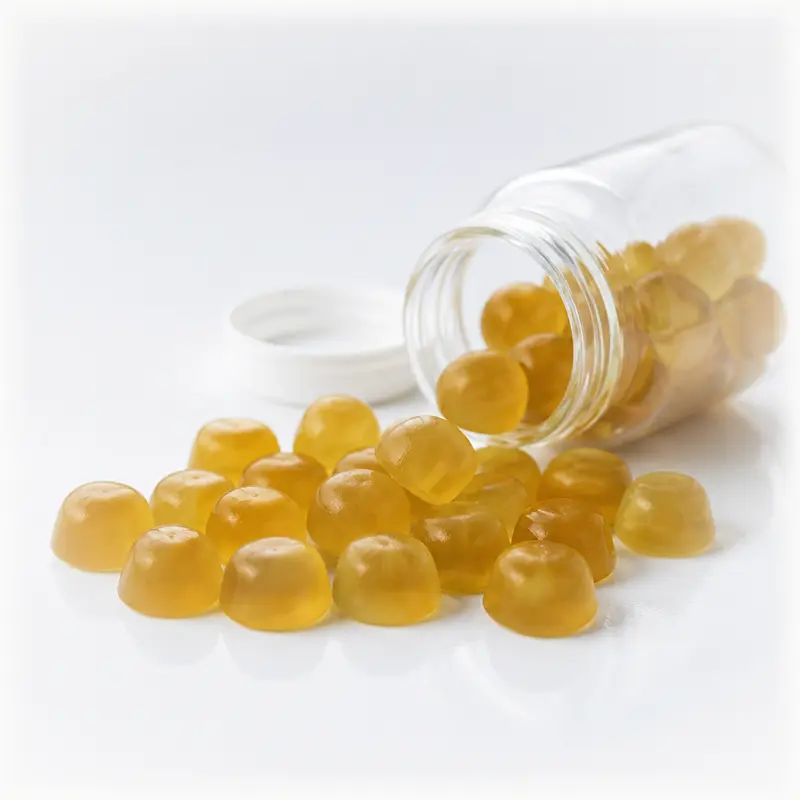
Best for: A saffron lead active after gummy-processing feasibility.
Key control: Finished-piece assay.
What to lock: Finished-piece assay; pectin vs gelatin; flavor; sugar or sugar-free.
1. Specification review — destination and the declared core active.
2. Supplier / grade qualification — match the active to an approved ingredient specification.
3. Manufacturing feasibility — capsule filling, tablet compression or gummy processing; adjust grade, format or pack.
4. Pilot / sample against the reviewed specification.
5. Specification approval — freeze the master specification.
6. Commercial production — schedule against the locked file.
The incoming COA verifies the raw-material lot; finished-product testing verifies the manufactured product.
Incoming identity → in-process fill / uniformity → finished-product COA for each declared active → release → change control.
| QC risk | Control |
|---|---|
| Petal substitution or pigment-based saffron lots | Stigma identity + HPLC marker testing for crocin / safranal |
| Low-dose saffron in a large capsule fill | Premix + finished-product content uniformity |
| Microgram 5-MTHF in a dense blend | Cascade dilution + finished-product assay |
| Low-dose saffron blend | Light-barrier packaging where required by the stability specification |
| Hygroscopic SAMe salt | Moisture barrier + desiccant where required by the stability specification |
| 5-MTHF / B12 light or moisture | Light-barrier packaging where required by the stability specification |
| Gummy water activity and color | Film and piece-integrity review after gummy processing |
Alternate lots follow change control. Lots outside specification are placed on hold. A barrier pack reduces a named risk; it does not by itself establish shelf life. See Quality Control and Confidentiality & IP Protection.
MOQ and timing are indicative planning ranges and depend on the approved formula, format, pack and production schedule. Target order quantity / annual volume belongs on the same brief. Pilot quantities and bulk ingredient should be quoted separately.
Format | Planning range | Typical timing |
|---|---|---|
| Capsules | 3,000–5,000 units/SKU | Sample 7–15 days; mass production 30–45 days |
| Tablets | 5,000–10,000 units/SKU | Quoted after process parameters are approved |
| Gummies / powder | Quoted after the format specification is locked | Gummy-processing or film pilot first |
Destination determines the applicable ingredient and compliance review before quotation.
- Saffron — stigma extract and marker method; authorization if a licensed grade is used on the label.
- 5-HTP — destination-specific status review.
- SAMe — destination-specific status review; ion basis or salt basis.
- St. John’s Wort — food-supplement vs herbal-medicine classification; interaction-related wording is reviewed with the label.
- Rhodiola — CITES Appendix II annotation #2 by shipment form.
KS does not manufacture products positioned as treatments for depression, bipolar disorder or other medical conditions.
Affron®, Safr’Inside®, Quatrefolic® and similar licensed grades require customer authorization. NSF / USP requirements are handled only when specified in the RFQ. Organic programs are outside this line.
Manufacturing support does not constitute legal approval. Brand owners remain responsible for finished-label compliance.
Can you work from a competitor label if we do not have the original BOM?
Yes. Send the label or a photo of the Supplement Facts panel, destination and format. KS maps each declared row to a named ingredient identity and flags specification gaps before sampling.
Can you use our existing supplier and COA?
Yes. Incoming qualification is against your specification; the finished product is released against the manufactured specification. Send the current supplier COA with the brief.
Can you quote a custom grade outside the listed specification window?
Yes, as a custom BOM review — different species, plant part, marker, method, salt, licensed grade or finished-product target — once a qualified supplier specification is available.
Can you support a second-source project without changing the declared specification?
Yes, when the incoming lot qualifies against the approved specification. Licensed names still need authorization.
Start Your Mood Support Manufacturing Project
Two quotes are comparable when identity, method, milligram basis, format, serving and destination match.
RFQ response: specification gaps · feasibility decision · quotation basis · sample route.
New SKU — Request Formula Feasibility
Existing formula — Send Your BOM
Second source — Request a Second-Source Review
Related Mood Support Supplement Pages
Category routes
- Brain Health Supplements
- Focus Supplements
- Memory Supplements
- Stress Relief Supplements
- Anxiety Relief Supplements
- Sleep Support Supplements
Mood ingredient manufacturer pages
- Saffron Supplement Manufacturer
- 5-HTP Supplement Manufacturer
- 5-MTHF Supplement Manufacturer
- St. John’s Wort Supplement Manufacturer
- Rhodiola Supplement Manufacturer
Adjacent manufacturer pages
Disclaimer: Wholesale / brand manufacturing and product-development reference only. Not intended to diagnose, treat, cure, or prevent any disease. Dietary supplements are not drugs. Structure/function language, ingredient status, and product classification vary by country. Brand owners remain responsible for finished-label compliance with local counsel. KS Nutripharma provides manufacturing feasibility and documentation support — not legal approval. Milligram figures, grade percentages, fill windows, and formula examples are development references, not recommended intakes or catalog guarantees. Branded ingredient names appear only as customer-licensed options, not as default house grades.