

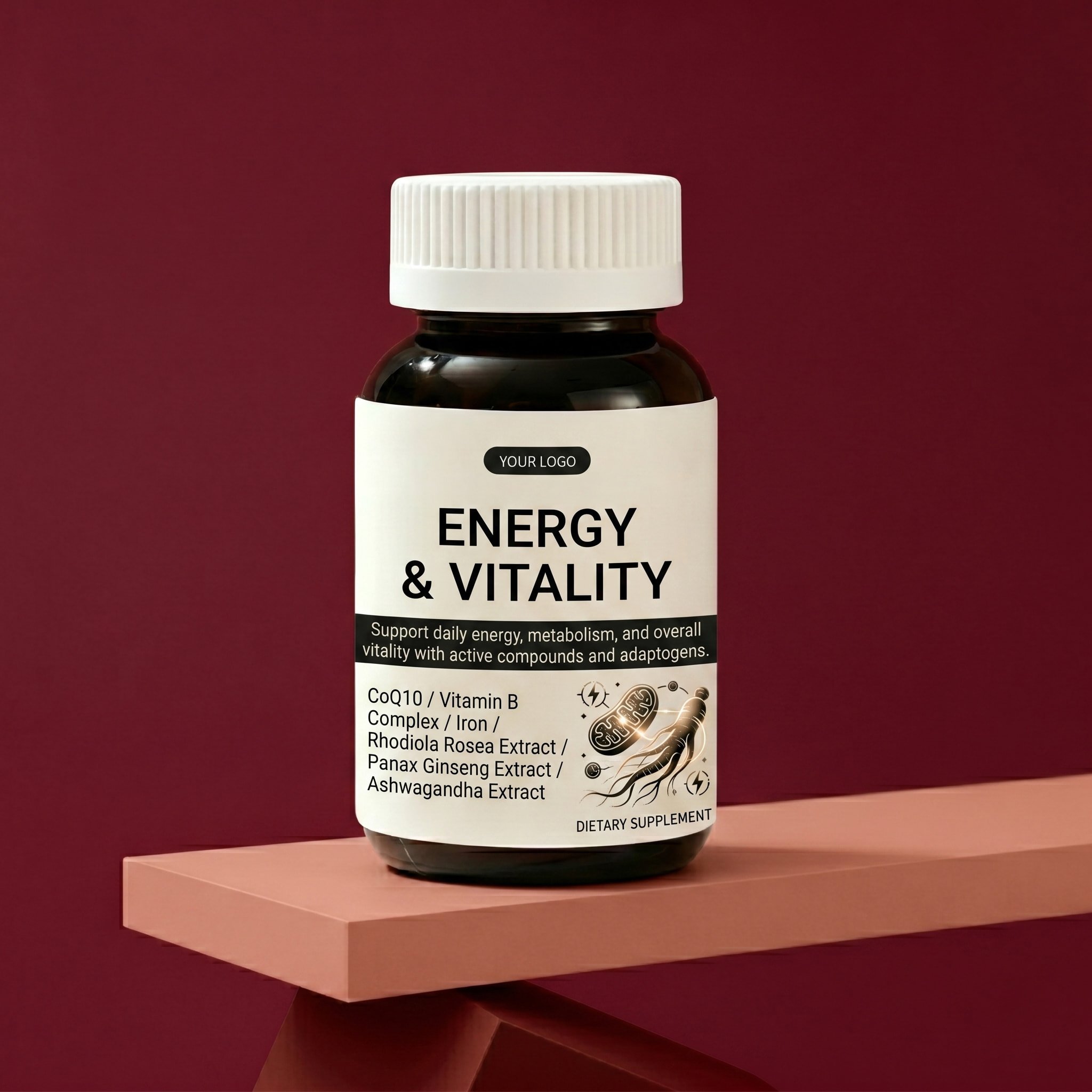
Private Label Women’s Daily Multivitamins - Capsules, Tablets, Gummies, Powders & Stick Packs
Source iron-strategy-ready women’s multivitamin manufacturing for Amazon, retail, practitioner, and beauty-wellness brands – from mature market formulas to scalable commercial supply.
If a brand team is evaluating a women’s multivitamin contract manufacturer or private label women’s multivitamin partner, five decisions usually decide the first PO:
- Should the hero SKU include iron, exclude iron, or offer both? Iron drives women’s-aisle relevance and also drives stability, taste, and safety-packaging risk.
- Is this a daily foundational multi, a beauty multi, an active multi, or a 50+ multi? Each lane owns different search and shelf language.
- Which format matches the channel? Capsules and tablets carry full-spectrum loads; gummies and stick packs need honest nutrient ceilings.
- Can folate, vitamin A, and mineral upper limits clear the target market? US, EU, and Canada do not share one label math.
- Are pilot MOQ, COA fields, and timeline workable for an Amazon or retail test? Launch fails more often on documentation and format feasibility than on ingredient lists.
OEM/ODM Manufacturing Solutions for Global Supplement Brands
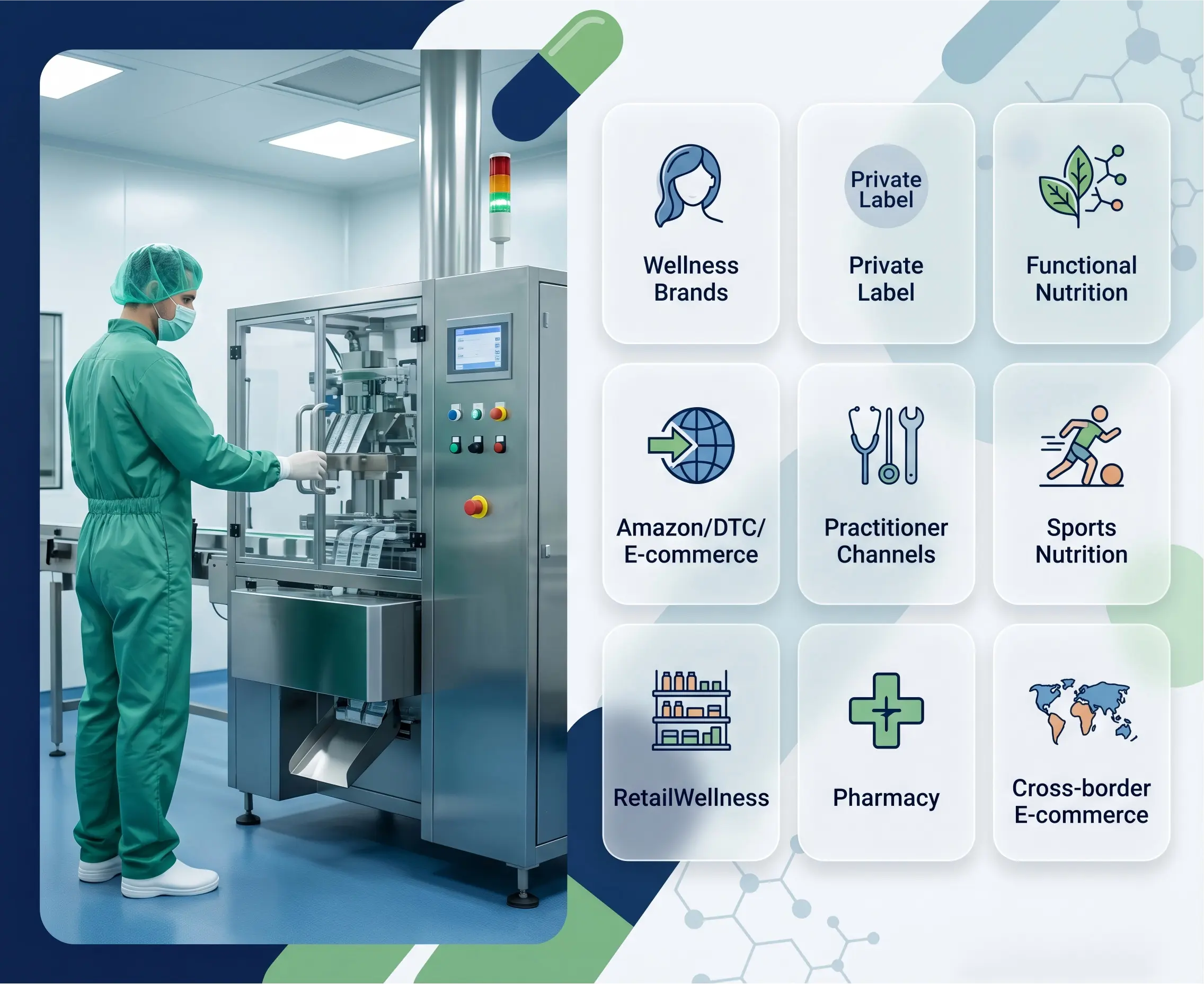
KS Nutripharma® supports:
- Women’s wellness brands
- Private label supplement companies
- Functional Nutrition Brands
- Amazon and DTC supplement sellers
- Practitioner supplement channels
- Sports lifestyle nutrition brands
- Retail wellness distributors
- Pharmacy supplement companies
- Cross-border e-commerce supplement brands
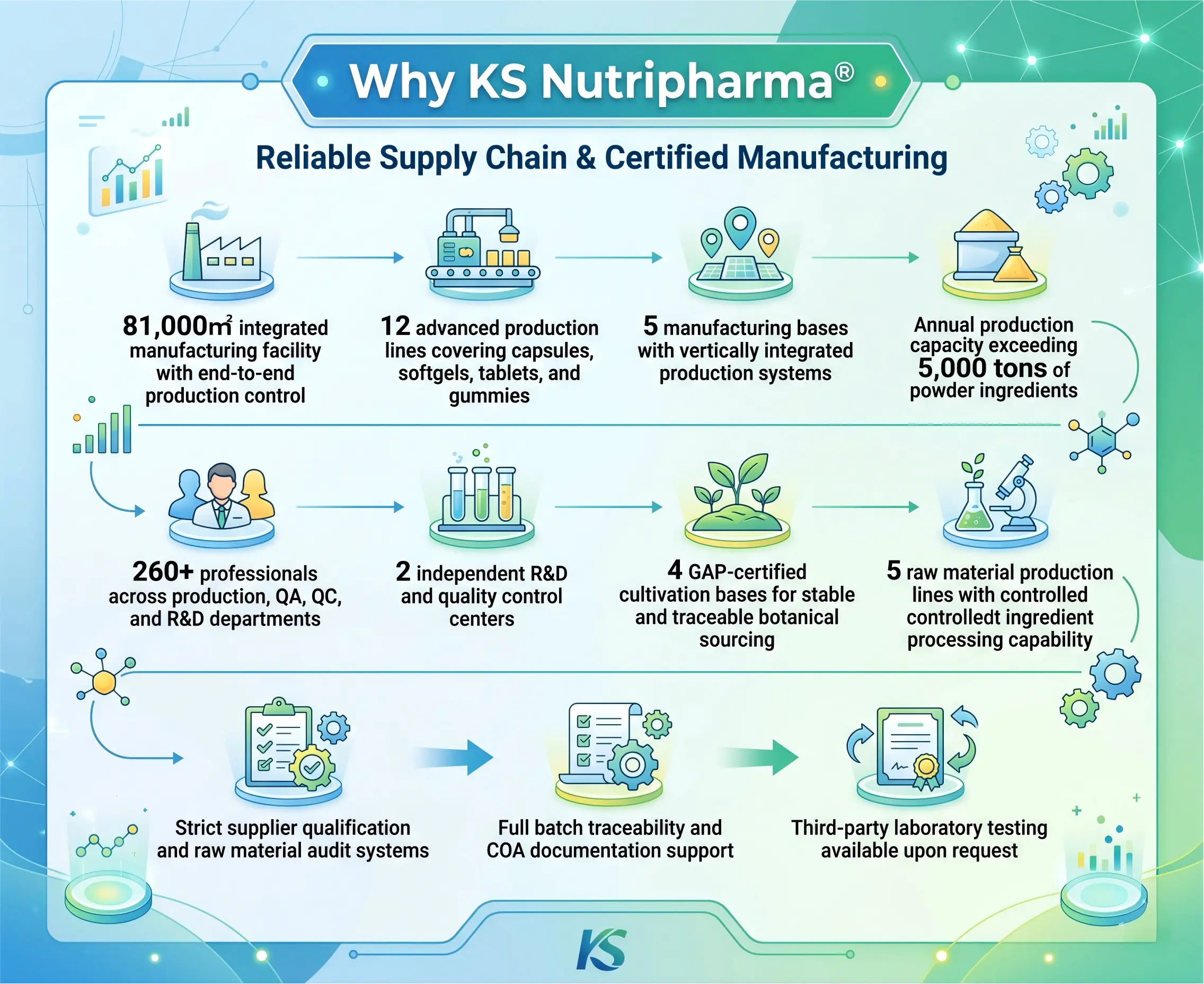
Why KS Nutripharma®
Women’s Multivitamin Supplements Formulation Expertise
Specialized in women’s daily nutrition systems, energy-support nutrient blends, metabolic wellness positioning, and high-bioavailability multivitamin formulation architecture over 19 years.
Scalable Manufacturing Infrastructure
From pilot batches to large-volume commercial production, 81,000㎡ factory area, 12 production lines, and millions of daily supplement output capacity.
Global Compliance Support
cGMP, ISO 22000, ISO 9001, HACCP, FSSC 22000, HALAL, and KOSHER compliant systems, with full export documentation and third-party testing support available, supporting North America, Europe, Southeast Asia, the Middle East, and international cross-border supplement markets.
Advanced Delivery Technologies
Liposomal systems, collagen instant-dissolution technology, sustained-release systems, flavor masking solutions, and beauty beverage optimization technologies available.
Commercial Scaling Support
Flexible MOQ systems, pilot-batch programs, packaging coordination, supply-chain planning, and long-term OEM/ODM partnership support.
Documents KS Nutripharma Can Support Before a First PO
Procurement and compliance teams typically clear these items before artwork lock and first PO. Request the pack with the inquiry.
Manufacturing certifications
cGMP / ISO 9001 / ISO 22000 / HACCP / FSSC 22000 / Halal / Kosher documentation set – used for retailer and importer questionnaires. Full posture: Certifications & Compliance.
FDA-registered facility posture
Registration-related confirmation for US import and Amazon documentation files.
Sample COA (redacted)
Shows how vitamin assay fields, mineral elemental values, microbiology, and heavy metals appear on commercial batches. Reading tip: How to Read a COA.
Women’s multi test panel list
Assay scope for key vitamins, elemental minerals (especially iron, iodine, zinc), microbes, heavy metals, and format-specific moisture/Aw options.
Iron & folate specification notes
Iron form and elemental iron per serving; folate form (folic acid vs methylfolate) and mcg DFE presentation – locked before Supplement Facts draft.
Packaging compatibility notes
Bottle + desiccant / blister / Alu stick recommendations by climate lane – especially for iron-containing and gummy systems. Related engineering: Moisture Control & Stability.
Traceability overview
Lot linkage, retention sample practice, COA-to-batch mapping for audit and recall readiness. Process depth: Quality Control.
Typical release documents on commercial batches (project-scoped): finished-goods COA / vitamin and mineral assays as agreed / microbial panel / heavy metals / allergen statements / export support files / retention sample reference
12 Market-Proven Women's Multivitamin Formulas for Private Label & OEM
These are mature commercial concepts already selling across Amazon, iHerb, pharmacy, practitioner, beauty, and cross-border channels – written for launch decisions. Amounts below are formulation planning directions, not guaranteed label claims; finalize per market, assay method, and Supplement Facts rules.
Market reality: “Women’s energy multivitamin” and B-forward daily SKUs convert when the occasion is clear: busy professionals, active schedules, and daily vitality merchandising (structure/function only).
Typical formula direction
- Elevated B-complex architecture vs basic daily multi
- Magnesium and iron strategy locked to channel
- Optional CoQ10 or light botanical energy adjacency only when stability and claim language stay clean
- Avoid disease or hormone-drug implications
Best formats: Capsules / tablets / stick-pack twins for lifestyle brands
Why brands launch it: Stronger PDP bullets than “complete nutrition” alone / easy Amazon occasion storytelling
Market reality: Beauty multivitamins and hair-skin-nails multis already own dedicated search demand. They sit beside women’s daily multi but win on biotin-forward and beauty-nutrient merchandising.
Typical formula direction
- Women’s vitamin core at practical daily loads
- Biotin emphasis within market-sensible bands
- Zinc, vitamin C, vitamin E, selenium support
- Optional: collagen peptide companion as a twin SKU rather than overloading one tablet
- Optional brightening, hydration, or hair line extensions as separate PDPs
Best formats: Capsules / gummies / softgels for oil-soluble beauty stacks
Why brands launch it: Higher perceived differentiation / beauty-aisle adjacency / clearer PDP than a generic daily multi alone
Cluster note: Keep foundational daily multi and Beauty Multivitamins as separate SKUs when possible.
Market reality: Sports and active-lifestyle brands need a women’s multi that sits next to protein and recovery – not a pharmacy-only “complete vitamin” story.
Typical formula direction
- Women’s vitamin core with B-vitamin and magnesium emphasis
- Electrolyte-adjacent minerals (magnesium, potassium, calcium) at format-feasible loads
- Iron strategy matched to active female shoppers (often a dual listing: with iron / iron-free)
- Optional antioxidant stack kept secondary to the multi promise
Best formats: Capsules / stick packs / effervescent (mineral load gated)
Why brands launch it: Bundle with sports SKUs / clearer active occasion / less direct competition with pharmacy value multis
Market reality: 50+ women’s multis are a durable retail and Amazon segment. Shoppers expect age-lane labeling, vitamin D emphasis, and often different iron policy than younger women’s daily SKUs.
Typical formula direction
- Vitamin D3 and B12 emphasis vs younger daily formulas
- Calcium / magnesium / vitamin K2 architecture where market-allowed and format-feasible (high calcium often works better as a twin SKU)
- Often iron-free or lower-iron vs young-adult women’s multi
- Optional lutein / eye-adjacent nutrients for senior merchandising (claim-reviewed)
Best formats: Easy-swallow tablets / capsules
Why brands launch it: Demographic loyalty / retail senior-aisle adjacency / natural line extension from Formula 1
R&D Pipeline: Gap and Trend Formulas for Brands That Want White Space
These directions are development-ready concepts for brands that need first-mover SKUs. They are not positioned as mass-market proven bestsellers. Feasibility, sensory, stability, and claim language must be gated before artwork.
Compatible Ingredient Library for Women's Multivitamin OEM
Ingredient directions below are organized for formula architecture – not as a shopping list to dump into one serving. Final identity, elemental contribution, and market limits are locked in the project brief.
A generic adult multi and a women’s multi often share many vitamin names. Buyers still lose conversions when the SKU fails women’s-aisle expectations.
Commercial differences brands should lock early
- Iron strategy: Women’s daily SKUs commonly compete as iron-containing or as intentional iron-free alternatives. Generic multis often under-specify this decision.
- Folate storytelling: Women’s buyers and practitioner channels expect clear folate identity and mcg DFE math – especially when methylated systems are part of the premium story.
- Calcium / magnesium load: Bone- and lifestyle-adjacent women’s formulas often raise mineral load, which changes tablet size, gummy feasibility, and interaction risk. High calcium loads are often cleaner as a twin SKU under Calcium Supplements.
- Beauty adjacency: Biotin, collagen-support nutrients, and hair-skin-nails merchandising sit next to women’s multi search – but a beauty multi is not the same SKU as a foundational daily multi.
- Life-stage separation: Prenatal, menopause, and hormone-balance SKUs should not be forced into one “women’s multi” label. Keep the daily multi clean, then extend under the broader Women’s Wellness Supplements cluster.
Formulation differences that decide manufacturability
- Elemental iron form and dose vs oxidation, color, and metallic taste
- Vitamin A / beta-carotene policy by market and life-stage aisle
- Iodine inclusion for women’s daily vs thyroid-sensitive merchandising caution
- Methylated B vitamins vs standard forms for practitioner vs mass retail
- Whether beauty actives belong inside the multi or as a twin beauty SKU
Buyer rule: Lock iron path + folate form + format + destination market before artwork. Women’s multi projects fail more often on those four gates than on “longer ingredient lists.”
Women’s multi SKUs fail when treated like a generic vitamin premix poured into any format. These are the control points that should be locked before scale-up.
Iron Form, Elemental Dose, and Pack Safety
Iron decides aisle relevance, sensory risk, color stability, and child-resistant packaging needs. Bisglycinate and other gentler forms often improve commercial tolerance stories, but elemental iron per serving still must clear destination-market rules. Iron-containing and iron-free twins are often smarter than one compromised SKU. When the commercial story depends on advanced iron delivery rather than a moderate multi dose, keep iron as a companion SKU so the daily multi label stays clean.
Folate Identity and mcg DFE Math
Folic acid and methylfolate are not interchangeable on paperwork. Lock chemical identity, mcg DFE presentation, and whether the premium story depends on 5-MTHF before artwork. Practitioner SKUs usually need this gate earlier than mass retail SKUs.
Mineral Interactions and Tablet Engineering
High iron, copper, zinc, calcium, and magnesium in one compressed system create interaction, size, and disintegration trade-offs. If calcium load dominates, a women’s multi plus a separate calcium SKU often protects both labels.
Vitamin Stability Under Real Process Windows
Oxidation-sensitive vitamins, humidity-sensitive minerals, and gummy cook temperatures are common failure points. Potency overage should be tied to assay method and shelf-life promise, not guessed after a pretty sample. For humidity and pack matching detail, see Moisture Control & Stability Engineering.
Gummy and Stick-Pack Nutrient Ceilings
A capsule formula cannot be copied into a gummy or stick pack without cutting mineral load, revisiting iron, and re-validating flavor. Brands that skip this gate create reviews about taste and potency disappointment.
Life-Stage Claim Separation
Daily women’s multi, prenatal, menopause, and hormone-balance products serve different search intent and different regulatory scrutiny. Keep the daily multi label clean; route life-stage extensions through the women’s wellness cluster rather than overloading one PDP.
Label Claim Discipline (YMYL)
Energy, vitality, beauty, and stress-adjacent language must stay structure/function and market-reviewed. Disease, pregnancy-outcome, and hormone-drug claims do not belong on a standard women’s multi brief.
Quality path buyers should expect: qualified incoming materials -> locked iron/folate/forms -> controlled process window -> in-process checks -> finished-goods release -> retention samples -> deviation review when needed.
Capsules
Best when the brand needs transparent ingredient forms, practitioner-style labels, methylated systems, or iron-containing formulas with cleaner sensory control.
Works well for: Formulas 1-5, 7, 9, 12
Watch-outs: Capsule count rises quickly with mineral load; set serving expectation early.
Format depth: Hard Capsules
Tablets
Best when mass retail wants one- or two-tablet daily convenience and high vitamin/mineral load. Film coating improves swallowability and taste.
Works well for: Formulas 1, 2, 3, 5, 8
Watch-outs: Disintegration, coating robustness, and mineral interaction under compression.
Format depth: Tablets
Gummies
Best when compliance and lifestyle merchandising matter more than maximum mineral density.
Works well for: Formula 10; selected iron-free or beauty-forward variants of Formulas 3 and 6
Watch-outs: Heat/Aw potency loss; iron usually limited; sugar or sweetener system must match channel filters.
Format depth: Gummies
Powders & Stick Packs
Best when the brand sells ritual, travel, or beverage occasions.
Works well for: Formulas 7 and 11; beauty drink twins
Watch-outs: Metallic taste from iron/minerals; humidity; seal integrity.
Format depth: Powders & Granules
Softgels
Best as oil-soluble twins (vitamin E, carotenoids, beauty oils) beside a water-soluble women’s multi – not as a dumping ground for full mineral systems.
Works well for: Formula 6 hybrids / T6
Format depth: Softgel Solutions
Liquids
Useful for selected beauty or wellness line extensions; full-spectrum mineral liquids need strict taste and stability gates.
Format depth: Liquids
Women’s multivitamin projects should clear market math before creative claims.
United States (FDA / DSHEA)
Structure/function positioning support, Supplement Facts architecture, iron and folate declaration checks, and export documentation coordination. Final claims remain brand-owned.
European Union
Vitamin/mineral upper-limit feasibility, permitted nutrient forms, botanical add-on review, and nutrition-claim compatibility. Novel ingredients need an early gate.
Canada (NHP)
NPN documentation coordination, ingredient assessment, and formula architecture review support for NHP pathways.
Life-stage split
Pregnancy and lactation positioning should route to a dedicated prenatal SKU. Menopause and hormone-balance claims belong on those dedicated SKUs, not on a generic women’s daily multi. See Prenatal Vitamins.
Documentation culture
Buyer-facing compliance posture and COA literacy should be cleared before artwork lock – use the verification pack above rather than stacking extra resource pages here.
| Stage | Typical volume | Designed for |
|---|---|---|
| Pilot | 500-1,000 units | Formula lock, Amazon test, pack check |
| First commercial | 5,000-10,000 units | Regional / e-comm launch |
| Full-scale | 100,000+ units | Retail and export programs |
Format references: Capsules from 5,000 (4-6 weeks) / Tablets from 5,000 (4-6 weeks) / Powders from 2,000 (3-5 weeks) / Stick packs from 10,000 (5-7 weeks) / Gummies from 10,000 (6-8 weeks)
Capacity detail for questionnaires: Manufacturing Capacity.
| Stage | Duration |
|---|---|
| Requirement confirmation | 3-5 business days |
| Sample development | 7-14 business days |
| Stability pre-testing | 2-4 weeks |
| Pilot production | 1-2 weeks |
| Commercial manufacturing | 2-4 weeks |
Typical standard programs: 6-10 weeks. Iron-containing systems, gummy validation, multi-market labeling, and custom packaging can extend timelines.
Brand teams evaluating OEM partners for women’s daily nutrition usually need more than a generic vitamin line list. The practical checklist:
- Iron-path fluency – with-iron, iron-free, and dual-listing architectures without forcing one compromised formula.
- Folate and B-form transparency – folic acid vs methylfolate, and activated B options for premium lanes.
- Format honesty – capsules/tablets for full-spectrum loads; gummies and stick packs only inside realistic nutrient ceilings.
- Women’s line architecture – clear separation from prenatal, menopause, hormone-balance, gut, and beauty twin SKUs so each page and PDP keeps its search intent.
- Assay-ready documentation – COA fields, elemental mineral clarity, and market-limit checks before artwork.
- Pilot-to-export scaling – workable MOQ bands and packaging matched to climate lanes for Amazon, retail, and cross-border.
Capacity line for planning: 81,000+ m2 / 12 production lines / multi-format daily output planning across capsules, tablets, gummies, powders, and stick packs. Company background: About Us.
Ready to Launch Your Women’s Multivitamin SKU?
Share target market, dosage form, iron path (with iron / iron-free / both), preferred formula number (1-12) or trend code (T1-T6), packaging, and first-order volume. Within 24 hours, a structured feasibility path comes back covering formula architecture, iron/folate and stability risks, MOQ, timeline, and the verification documents available for the compliance file.
Start Your Women’s Multivitamin Project
KS Nutripharma – Women’s multivitamin and women’s daily nutrition contract manufacturing for global supplement brands.
No. Iron-containing and iron-free women’s multis both exist as mature commercial SKUs. The better question is which shopper and channel the brand is serving – and whether a dual listing outperforms one SKU. Brands that want a stronger iron absorption story often keep the daily multi iron-free or moderate-iron, then add a dedicated iron twin.
Not automatically. Identity, mcg DFE math, and destination-market rules decide. Premium and practitioner SKUs often lead with methylfolate where allowed; mass retail may still use folic acid or dual strategies.
Usually no. Gummies need a reduced mineral load, stricter heat/Aw planning, and often an iron-free or low-iron path. Treat gummies as Formula 10 architecture, not as a capsule clone.
Keep pregnancy and lactation positioning on a dedicated prenatal SKU. Mixing life-stage claims weakens search clarity and raises YMYL risk.
Capsule or tablet pilots often 500-1,000 units; first commercial commonly 5,000-10,000. Stick packs and gummies usually need higher launch volumes.
Certification documentation set, redacted sample COA layout, women’s multi test panel list, iron/folate specification notes, and a written feasibility reply with MOQ/timeline bands.
NDA-based project coding, restricted access, and controlled manufacturing documentation. Policy overview: Confidentiality & IP Protection.
The brand owns final label claims, marketplace copy, and post-handover storage/distribution unless otherwise contracted. Manufacturing controls in-process discipline and agreed release testing.