

Professional Ecdysterone Supplements Manufacturing Platform | OEM & ODM Solutions
30-Second Buyer Snapshot
| Buyer Question | Procurement Answer |
|---|---|
| Which dosage forms are practical? | Capsules, tablets, powders and stick packs — selected according to active load and total serving weight. |
| Can I launch a single-ingredient product? | Yes. Single-ingredient capsules or tablets are suitable when the target active load fits the selected dosage form. |
| Can I combine ecdysterone with creatine? | Yes. Higher total serving weights often make powder a more practical architecture. |
| Do you support formula development? | Yes. ODM projects can include formula architecture, feasibility review and development sampling. |
| Can I supply my own formula? | Yes. OEM projects are manufactured against buyer-approved specifications. |
| Can you support commercial-scale production? | 5M+ capsules/day and 12M+ tablets/day, with powder and sachet production available for qualified projects. |
| What is the typical MOQ? | Capsules and tablets typically start from 3,000–5,000 units/SKU; powder and sachet projects may vary by formula and packaging. |
| How long does production take? | Samples: 7–15 days; pilot batches: 15–25 days; commercial production: typically 30–45 days after approval. |
| What QC is performed? | Raw-material qualification plus finished-product testing against the approved specification. |
| What affects the quotation? | Raw-material specification, active load, dosage form, serving size, formula complexity, quantity, packaging and destination market. |
- 19+ Years Manufacturing Experience · 81,000+ m² GMP-Compliant Facility · 12 Automated Production Lines · 60+ Export Markets
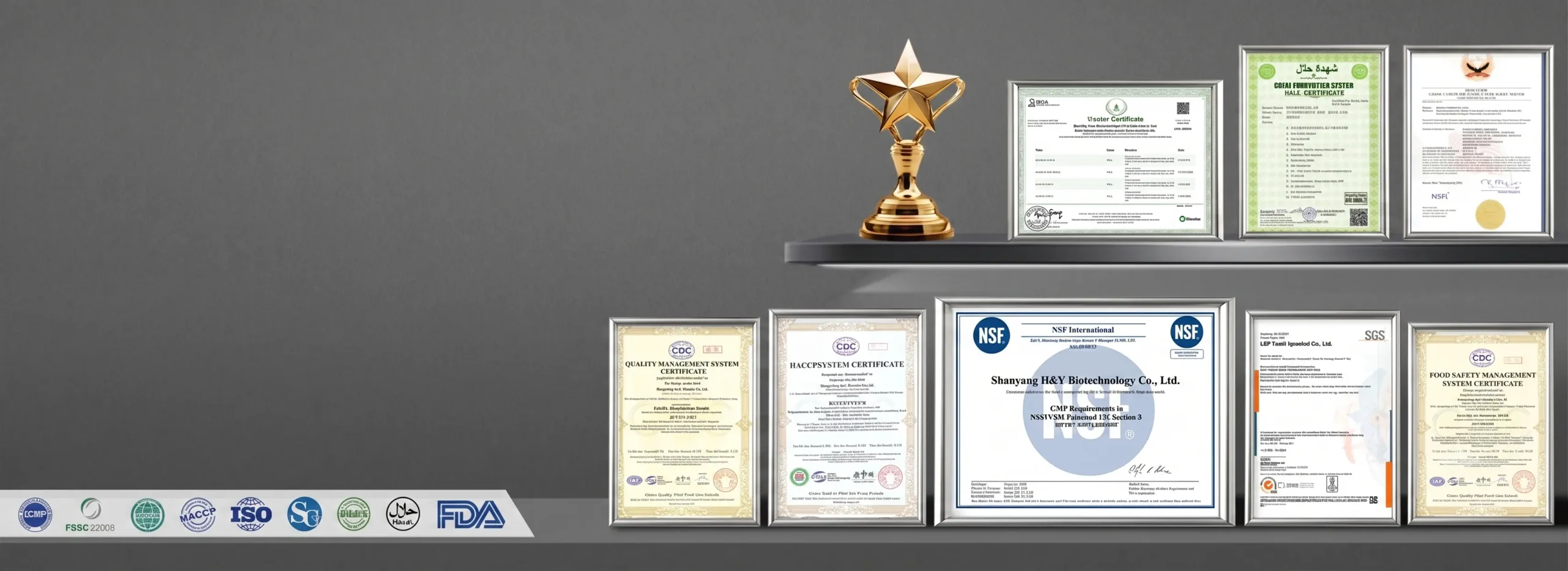
- Quality Systems: cGMP · ISO 9001 · ISO 22000 · HACCP · FSCC22000 ·Halal · Kosher · Non-GMO
Ecdysterone RFQ Checklist — Key Specifications to Confirm Before Production
Before quoting or finalizing a beta-ecdysterone supplement, we confirm the raw-material specification against the finished-product formula, serving size, target market and cost structure.
- Target beta-ecdysterone content per serving
- Dosage form and serving size
- Single-ingredient vs multi-ingredient formula
- Target retail price and sales channel
- Target market and labeling requirements
- Preferred raw-material grade, if already specified
- Capsule/tablet fill-weight or other dosage-form constraints
- Required certifications and documentation
- Packaging format and target order quantity
→ Beta-Ecdysterone Raw Material · Global Raw Material Supply Network
Brief Ingredient Specification
| Parameter | Typical Specification |
|---|---|
| Botanical source | Cyanotis arachnoidea C.B.Clarke |
| Active | Beta-Ecdysterone (20-Hydroxyecdysone, CAS 5289-74-7) |
| Standardization | 50%, 60%, 95%, 98%, 99% HPLC grades; UV grades available for specified applications |
| Analytical method | HPLC or UV according to the approved specification |
| COA | Batch-specific |
Choosing the Raw-Material Grade
The appropriate beta-ecdysterone grade depends on the target active load, serving size, dosage form and cost structure of the finished product.
Higher-assay material can reduce the amount of extract required per serving, which may be useful when capsule or tablet fill capacity is limited. The final grade should therefore be selected according to the approved formula, target cost and finished-product specification, rather than assay percentage alone.
For detailed grade comparison and HPLC/UV interpretation, see the Beta-Ecdysterone Raw Material page.
Ecdysterone Formats & Dosage-Form Decision Guide
Beta-ecdysterone can be developed across several solid-dose and powder formats. The most suitable format depends on serving weight, formula complexity, positioning and manufacturing constraints.
Best When
Low-to-moderate serving weight, single-ingredient products, or moderately complex formulas requiring a convenient solid-dose format.
Key Constraint
Capsule fill volume and bulk density. The target active load must be checked against capsule size and total fill weight.
Typical Applications
Beta-ecdysterone capsules, botanical performance formulas, and multi-ingredient wellness blends.
Best When
Compact fixed-dose products, cost-conscious formulations, and high-volume supplement programs.
Key Constraint
Compression behavior, tablet weight and mechanical strength. The formula must provide suitable flow and compressibility for consistent production.
Typical Applications
Standardized ecdysterone tablets and fixed-dose performance or sports-nutrition products.
Best When
Higher serving weights or multi-ingredient sports and performance formulas where capsule or tablet capacity may become restrictive.
Key Constraint
Sensory profile, powder flowability, moisture control and blend uniformity.
Typical Applications
Ecdysterone + creatine formulas, pre-workout architectures, performance blends and higher-serving-weight powders.
Best When
Single-serving powder products where portability, convenience and precise pre-measured dosing are important.
Key Constraint
Filling accuracy, powder flow and moisture-barrier packaging.
Typical Applications
On-the-go performance products, single-serving ecdysterone powders and travel-friendly supplement formats.
Ecdysterone Product Architecture Guide
Marketed ecdysterone products generally fall into a small number of recurring formulation architectures. The examples below are intended as commercial formulation references, not standardized dosage recommendations. Final specifications should be determined by the target product, raw-material assay, dosage form and destination-market requirements.
Key Ingredients
Beta-Ecdysterone — standardized to the approved assay.
Preferred Format
Capsule / Tablet
OEM Focus
Active load, capsule fill volume or tablet weight.
Key Ingredients
Beta-Ecdysterone + Creatine; optional beta-alanine or citrulline.
Preferred Format
Powder
OEM Focus
High total serving weight, flavor, flowability and moisture control.
Key Ingredients
Beta-Ecdysterone 200 mg + Ajuga turkestanica extract 1,200 mg per serving in a documented commercial product; supporting ingredients included AstraGin 50 mg, cyclodextrin 30 mg and naringin 20 mg.
Preferred Format
Capsule
OEM Focus
Extract identity, assay and specification control.
Key Ingredients
Beta-Ecdysterone + Tongkat Ali; additional standardized botanicals may be included depending on the formula.
Preferred Format
Capsule
OEM Focus
Botanical standardization, total fill weight and ingredient compatibility.
A formula may work on paper but still require adjustment during manufacturing. Before production, the key variables are evaluated against the selected dosage form and processing requirements.
| Manufacturing Variable | What It Determines |
|---|---|
| Beta-ecdysterone assay | Raw-material quantity required to deliver the specified active load |
| Active load per serving | Whether the target dose fits the selected dosage form |
| Total fill weight | Capsule, tablet or powder feasibility |
| Bulk density | Physical volume, capsule size and filling behavior |
| Ingredient ratio | Blend uniformity and distribution consistency |
| Low-inclusion ingredients | Whether minor ingredients can be distributed consistently throughout the batch |
| Compressibility | Tablet weight, hardness and production consistency |
| Powder flowability | Blending, filling and stick-pack performance |
| Moisture sensitivity | Processing conditions, packaging and storage requirements |
| Sensory properties | Need for flavoring, sweetening or taste-masking in powder formats |
What This Means for OEM Development
The formula is not finalized by ingredient selection alone. Active load, physical properties and dosage-form capacity must work together.
For example, a higher total active load may make capsules impractical because of fill-volume limitations, while a powder formula may require additional work on flowability, flavor, dispersion and moisture control.
The feasibility review allows the formulation team to identify these constraints before the production specification is locked.
Ecdysterone projects can involve different manufacturing constraints depending on active load, formulation complexity and dosage form. These factors should be evaluated during formulation development rather than after the production specification is finalized.
1. Active Load vs. Capsule Capacity
A high beta-ecdysterone load can increase total fill weight or capsule count beyond a practical format. When capsule capacity becomes restrictive, the formulation may need a larger capsule, multiple capsules per serving or a powder-based architecture.
2. Blend Uniformity
Multi-ingredient formulas with different inclusion levels, particle sizes or bulk densities require appropriate blending and material-handling controls. Mixing sequence and ingredient distribution should be evaluated to maintain consistent content throughout the batch.
3. Powder Flow & Filling
Powder and stick-pack products require consistent flowability for accurate filling. Differences in particle properties can increase segregation or filling-variation risk, making flow behavior an important pilot-development consideration.
4. Moisture & Packaging
Moisture-sensitive powders may require controlled processing and higher-barrier packaging. Packaging selection should be evaluated together with the formulation to support product stability through the intended storage period.
Once the formula and project requirements are received, the development process typically moves through the following stages. Actual timing depends on formula complexity, raw-material availability, testing requirements, packaging and artwork readiness.
1. Formula & Specification Review
Typical timing: 1–3 business days
Review the ingredient specifications, beta-ecdysterone assay, target serving, dosage form, packaging requirements and destination market.
↓
2. Feasibility & Quotation
Typical timing: 2–5 business days
Evaluate active load, fill weight, bulk density, dosage-form suitability, raw-material requirements and estimated production cost.
↓
3. Development Sample / Pilot Batch
Typical timing: 7–15 days for standard projects
Prepare samples or a pilot batch to verify fill weight, physical properties, sensory characteristics and basic formulation feasibility.
↓
4. Testing & Specification Confirmation
Typical timing: 3–7 business days*
Test the product against the approved finished-product specification and confirm the final formula and quality requirements.
↓
5. Packaging & Artwork Approval
Typical timing: Depends on artwork and packaging readiness
Confirm packaging format, label information, artwork and market-specific requirements before production release.
↓
6. Commercial Production & Final QC
Typical production lead time: Typically 4–6 weeks after formula, specifications, artwork and production requirements are approved.
Manufacture against the locked formula and production documents, followed by final QC review, packaging checks and batch documentation before shipment.
*Testing time varies by test scope and laboratory requirements.
Typical Project Timeline
Formula Review → Feasibility & Quote → Sample / Pilot → Testing & Approval → Artwork & Packaging → Commercial Production → Final QC & Shipment
For standard projects, samples may be available within 7–15 days, while commercial production commonly takes approximately 4–6 weeks after project specifications are locked. Complex formulas, new raw-material qualification, specialized testing or packaging development may require additional time.
A raw-material COA is only one part of quality control. Incoming beta-ecdysterone is checked against the approved raw-material specification before production, while the finished product is tested against its approved finished-product specification before release.
Raw Material Qualification
Incoming beta-ecdysterone is evaluated against the approved specification before being released for production.
| Control | Typical Check |
|---|---|
| Identity | Beta-Ecdysterone identity confirmation |
| Assay | HPLC or other approved analytical method according to the specification |
| Physical Properties | Appearance and relevant powder characteristics |
| Microbiology | Where required by the approved specification |
| Documentation | Batch-specific COA and supporting documentation |
Release criterion: Only material meeting the approved raw-material specification is released for production.
Finished-Product QC
Finished-product testing is based on the approved formula, dosage form and finished-product specification.
| Dosage Form | Typical Finished-Product Controls |
| Capsules | Appearance, fill weight, beta-ecdysterone content, microbiology where applicable, disintegration and packaging checks |
| Tablets | Appearance, weight, dimensions, hardness/friability where specified, beta-ecdysterone content, disintegration or dissolution where applicable |
| Powders | Appearance, net weight, beta-ecdysterone content, moisture or water activity where relevant, microbiology and packaging integrity |
| Stick Packs / Sachets | Fill weight, beta-ecdysterone content where applicable, seal integrity, packaging checks and relevant powder controls |
Testing parameters are determined by the approved formula, dosage form, product specification and destination-market requirements rather than applying one generic test panel to every product.
Batch Review & Release
Before shipment, applicable test results and batch documentation are reviewed against the approved specification. Finished-product release is based on the agreed quality requirements and applicable testing records.
Where a documented shelf-life program is required, storage conditions and stability requirements are established according to the approved specification and applicable testing program.
Packaging is not selected by format alone. For ecdysterone products, the final packaging configuration should match the dosage form, serving size, moisture sensitivity, stability requirements, target shelf life and distribution conditions.
| Dosage Form | Common Packaging Solutions | Key Packaging Considerations |
|---|---|---|
| Capsules | Bottles, jars, blister packs or other agreed retail formats | Capsule count, fill configuration, moisture protection, light exposure and retail presentation |
| Tablets | Bottles, jars, blister packs or other agreed retail formats | Tablet count, coating requirements, moisture protection and packaging configuration |
| Powders | Jars, pouches, bulk containers or other suitable formats | Serving weight, powder flow, moisture barrier, scoop configuration and resealability |
| Stick Packs / Sachets | Single-serving stick packs or sachets | Fill accuracy, powder flow, seal integrity, moisture barrier and unit-dose presentation |
Packaging Selection
The packaging format is confirmed after the formula, dosage form and serving configuration are established. For powder products, moisture behavior and filling characteristics should be considered before the packaging specification is finalized.
Packaging selection can also be aligned with the intended sales model:
- Retail / DTC: bottles, jars, blister packs, pouches and unit-dose formats
- Sports nutrition: larger powder containers, pouches and convenient single-serving formats
- Travel / on-the-go: stick packs and sachets
- Bulk supply: larger containers or bulk packaging according to project requirements
What We Confirm Before Packaging Release
- Final dosage form and serving configuration
- Net weight or capsule/tablet count
- Packaging material and barrier requirements
- Label and artwork specifications
- Closure, seal or filling requirements
- Destination-market packaging requirements
- Shipping and storage conditions
Packaging is finalized together with the formula and production specification rather than treated as a separate step after manufacturing requirements have been locked.
Request an Ecdysterone Manufacturing Quote
Send your beta-ecdysterone specification, target active per serving, preferred dosage form, formula status, estimated order quantity and packaging requirements.
If the formula is not finalized, send the product concept and target market. We can first assess active load, serving weight and dosage-form feasibility, then define the appropriate development and quotation path.
KS Nutripharma supports beta-ecdysterone OEM, ODM and private label supplement development from raw-material specification through finished-product manufacturing.
Compliance and Product Development Disclaimer
This page is provided for B2B ingredient sourcing, product development and supplement manufacturing reference. Information about ecdysterone is not medical advice and should not be interpreted as a diagnosis, treatment or disease-prevention claim. Product claims, dosage, labeling, ingredient use and marketability must be reviewed against the laws and regulations applicable to the destination market before commercialization.
KS Nutripharma | Ecdysterone Supplement Manufacturing | OEM | ODM | Private Label
Capsules and tablets are suitable for single-ingredient or moderately complex formulas when the target active load fits the available fill or compression range. Powder is generally more practical when total serving weight is high, particularly for formulas containing high-load ingredients such as creatine.
Yes. Beta-ecdysterone and creatine can be developed in the same performance-oriented formula. Because creatine can contribute substantial serving weight, powder is often more practical than capsules. Final development should consider total serving weight, powder flow, flavor requirements and destination-market requirements.
Yes. OEM projects can be manufactured against a buyer-supplied formula and approved specifications, subject to ingredient qualification, manufacturing feasibility, quality requirements and applicable destination-market requirements.
Yes. Beta-ecdysterone can be specified and tested according to the approved analytical method, including HPLC grades. UV-based specifications may also be considered for qualified applications. The assay method and calculation basis should be agreed as part of the approved raw-material specification.
The quality documentation can include the approved raw-material specification, batch-specific COA, finished-product specification, applicable test results and other project-specific quality documents. The final documentation package is agreed during project qualification according to the formula and destination-market requirements.
MOQ depends on the dosage form, formula complexity, raw-material requirements, packaging configuration and production batch size. The applicable MOQ is confirmed during project quotation rather than treated as a fixed quantity for every ecdysterone product.
Samples typically take 7–15 days, pilot batches approximately 15–25 days, and commercial production typically 30–45 days after the formula, specifications, packaging and artwork are approved. Actual timing depends on project complexity, material availability and production scheduling.
The main inputs are the target active specification, formula or product concept, dosage form, serving configuration, estimated order quantity, packaging requirements and destination market. A finalized formula is not required for an initial feasibility review. For the complete specification requirements, see the Ecdysterone RFQ Checklist.