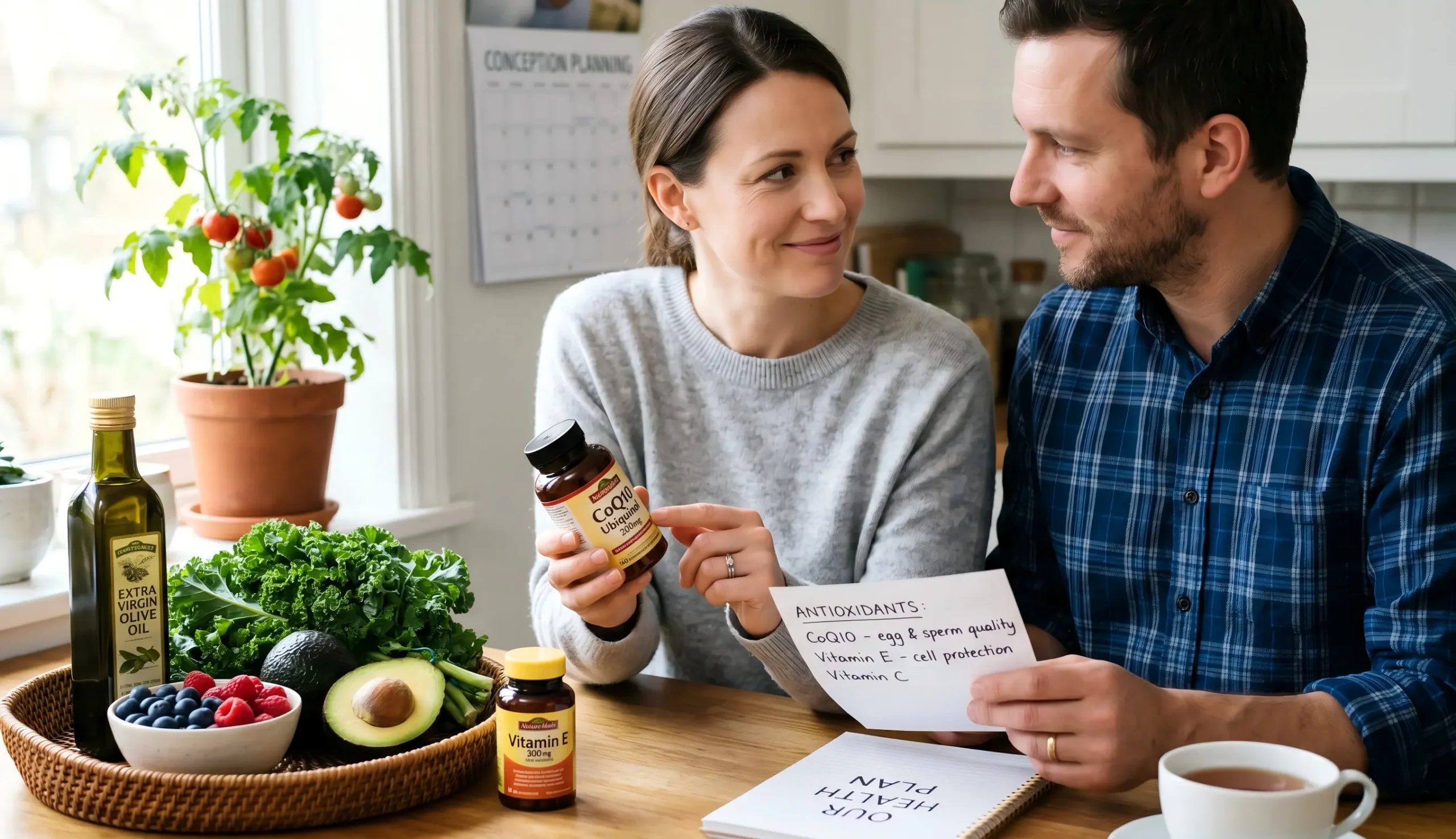
Introduction: Why Antioxidants Matter in Fertility
Oxidative stress is increasingly recognized as one of the most important hidden contributors to infertility in both men and women. Reactive oxygen species (ROS) are naturally produced during metabolism, but when oxidative stress exceeds the body’s antioxidant defenses, reproductive cells become highly vulnerable.
Sperm cells are particularly sensitive because of their high polyunsaturated fatty acid content and limited internal antioxidant protection. Eggs, ovarian tissue, and the uterine environment are also vulnerable to mitochondrial damage and inflammatory oxidative stress.
As fertility clinics increasingly integrate antioxidant supplementation into IVF preparation and reproductive support protocols, one question continues to dominate both consumer and clinical searches:
Which antioxidant is actually best for fertility?
The answer is more complex than choosing a single ingredient. Fertility is a multi-compartment biological system involving mitochondrial energy production, DNA integrity, hormonal signaling, membrane stability, and implantation biology. Different antioxidants target different oxidative pathways, which is why combination protocols often outperform single-agent supplementation.
This guide combines:
- Clinical fertility protocol insights
- Oxidative stress biology
- Fertility supplement comparison frameworks
- Antioxidant stacking principles
- IVF preparation strategies
- Nutraceutical formulation intelligence
- Clinical-grade supplement considerations
Understanding Oxidative Stress and Fertility
How Oxidative Stress Affects Male Fertility
Male infertility is strongly associated with oxidative stress. Excess ROS may impair:
- Sperm motility
- Sperm membrane integrity
- DNA stability
- Mitochondrial ATP production
Sperm cells require large amounts of energy to move efficiently. Their flagella rely heavily on mitochondrial ATP production, making them highly sensitive to mitochondrial dysfunction and oxidative damage.
Elevated oxidative stress is commonly observed in:
- Smokers
- Obesity-related infertility
- Varicocele patients
- Idiopathic infertility
- Advanced paternal age
Oxidative stress may also contribute to sperm DNA fragmentation, which has been associated with reduced fertilization rates, lower embryo quality, recurrent pregnancy loss, and poor IVF outcomes.
How Oxidative Stress Affects Female Fertility
Female reproductive aging is closely tied to oxidative biology. Mitochondria within oocytes provide the energy required for:
- Chromosome separation
- Cell division
- Embryo development
As women age, mitochondrial efficiency declines while oxidative damage accumulates. This may contribute to:
- Reduced ovarian reserve
- Poor egg quality
- Aneuploidy risk
- Implantation dysfunction
Oxidative stress may additionally affect:
- Endometrial receptivity
- Hormonal signaling
- Placental development
- Ovulatory function
Conditions such as PCOS, endometriosis, obesity, and advanced maternal age are frequently associated with elevated oxidative and inflammatory stress.
Why Fertility Is a Multi-Compartment Oxidative Problem
Fertility-related oxidative stress does not occur in a single biological location. Multiple oxidative compartments are involved simultaneously.
| Oxidative Compartment | Main Damage Type | Key Antioxidants |
|---|---|---|
| Lipid membranes | Lipid peroxidation | Vitamin E, Lycopene |
| Aqueous cytoplasm | ROS accumulation | Vitamin C, NAC |
| Mitochondria | ATP dysfunction | CoQ10, Carnitine |
| Detox systems | Glutathione depletion | NAC, Selenium |
This is one reason why fertility specialists increasingly favor combination antioxidant protocols instead of single-ingredient products.
There Is No Single “Best” Antioxidant for Every Fertility Problem
Different fertility challenges involve different biological mechanisms. The best antioxidant strategy depends on the underlying reproductive bottleneck.
| Fertility Goals | Most Common Antioxidant Strategy |
|---|---|
| Low sperm motility | CoQ10 + L-Carnitine |
| Sperm DNA fragmentation | Vitamin C + Vitamin E + NAC |
| Poor egg quality | CoQ10 (Ubiquinol) |
| Advanced maternal age | CoQ10 + DHEA |
| PCOS-related infertility | NAC + Myo-Inositol |
| Oxidative stress support | Multi-antioxidant stack |
| IVF preparation | CoQ10 + antioxidant protocol |
Instead of searching for a universal “best antioxidant,” modern fertility nutrition focuses on matching the antioxidant system to the specific reproductive problem.
Best Antioxidants for Male Fertility
CoQ10 for Sperm Motility and Mitochondrial Function
CoQ10 is one of the most clinically researched fertility antioxidants for men because it directly supports mitochondrial ATP production.
Potential fertility applications include:
- Sperm motility support
- Oxidative stress reduction
- DNA fragmentation support
- IVF preparation
Ubiquinol, the reduced form of CoQ10, is often preferred in advanced fertility protocols because of its higher bioavailability.
Typical fertility-support dosages commonly range from: 200–600 mg/day
Who May Benefit Most from CoQ10?
CoQ10 is frequently used in:
- Low sperm motility
- Advanced paternal age
- Oxidative stress-related infertility
- IVF and ICSI preparation
Related Guide
→ CoQ10 for Fertility: Benefits, Dosage, IVF Protocols & Clinical Evidence
L-Carnitine for Sperm Energy Metabolism
L-Carnitine plays a major role in transporting fatty acids into mitochondria for ATP generation.
Because sperm cells are highly energy-dependent, carnitine is commonly included in male fertility formulations focused on:
- Progressive motility
- Sperm maturation
- Energy metabolism
- Mitochondrial support
Typical dosages commonly range from: 1–2 g/day
Why Carnitine Is Often Combined with CoQ10
CoQ10 supports mitochondrial electron transport, while carnitine helps shuttle fatty acids into mitochondria for energy production.
This mitochondrial pairing is widely used in male fertility antioxidant stacks.
Vitamin C and Vitamin E for Sperm DNA Protection
Vitamin C and Vitamin E work in different oxidative environments and are frequently combined in fertility antioxidant protocols.
| Nutrient | Primary Role |
|---|---|
| Vitamin C | Aqueous ROS scavenging |
| Vitamin E | Lipid membrane protection |
This combination is commonly used for:
- DNA fragmentation support
- Oxidative sperm damage
- Smoking-related fertility support
- IVF preparation
Typical fertility-support dosages may include:
- Vitamin C: 500–1,000 mg/day
- Vitamin E: 200–400 IU/day
Related Guide
→ Vitamin C & Vitamin E for Sperm DNA Fragmentation
NAC for Oxidative Stress and Glutathione Support
N-Acetylcysteine (NAC) supports glutathione synthesis, one of the body’s major intracellular antioxidant systems.
NAC is commonly used in fertility support protocols targeting:
- Oxidative stress reduction
- DNA protection
- Hormonal balance
- Metabolic fertility dysfunction
Typical dosages commonly range from:
- 600–1,800 mg/day
Related Guide
→ NAC for Fertility and PCOS Support
Lycopene for Membrane Oxidative Stability
Lycopene is a carotenoid antioxidant that integrates into lipid-rich reproductive tissues.
Potential fertility applications include:
- Membrane oxidative protection
- Sperm concentration support
- Lipid peroxidation reduction
Lycopene is commonly obtained from:
- Tomato paste
- Cooked tomatoes
- Lipid-based supplements
Because it is fat-soluble, absorption improves significantly when consumed with dietary fats.
Best Antioxidants for Female Fertility
CoQ10 for Egg Quality and Ovarian Aging
CoQ10 is one of the most commonly used antioxidants in IVF preparation and ovarian support protocols.
Because oocytes rely heavily on mitochondrial energy production, CoQ10 is frequently used for:
- Egg quality support
- Advanced maternal age
- Diminished ovarian reserve
- IVF preparation
Many fertility clinics use:
- 400–600 mg/day ubiquinol
particularly in women over 35 or patients with poor ovarian response.
Related Guide
→ CoQ10 for Egg Quality and IVF Preparation
NAC for PCOS Fertility Support
PCOS is frequently associated with:
- Insulin resistance
- Chronic inflammation
- Oxidative stress
- Ovulatory dysfunction
NAC is often combined with:
- Myo-inositol
- Vitamin D
- Omega-3 fatty acids
Potential goals of these protocols include:
- Ovulation support
- Metabolic balance
- Oxidative stress reduction
Related Guide
→ NAC for PCOS Fertility Protocols
Antioxidants for Implantation and Recurrent Pregnancy Loss
Oxidative stress may negatively affect implantation biology and endometrial receptivity.
Common antioxidant approaches may include:
- Vitamin C
- Vitamin E
- CoQ10
Potential goals include:
- Supporting oxidative balance
- Improving endometrial environment
- Reducing systemic oxidative burden
These protocols are often individualized based on reproductive history and clinical evaluation.
Why Antioxidant Stacking Often Works Better Than Single Ingredients
The Multi-Compartment Oxidative Stress Model
Fertility oxidative stress affects multiple biological systems simultaneously. No single antioxidant protects every compartment.
This is why fertility clinics increasingly favor combination protocols rather than isolated single ingredients.
The 4-Phase Fertility Defense System
Phase 1: Lipid Protection
Primary nutrients:
- Vitamin E
- Lycopene
Main goal:
- Protect reproductive cell membranes
Phase 2: Aqueous ROS Neutralization
Primary nutrients:
- Vitamin C
- NAC
Main goal:
- Neutralize intracellular oxidative stress
Phase 3: Mitochondrial Energy Protection
Primary nutrients:
- CoQ10
- Carnitine
Main goal:
- Support ATP production
- Improve mitochondrial efficiency
Phase 4: Detox Recycling
Primary nutrients:
- NAC
- Selenium
Main goal:
- Support glutathione recycling
- Maintain antioxidant enzyme systems
Clinical Fertility Antioxidant Protocol Models
Mild Fertility Support Protocol
Best For
- General oxidative stress
- Early fertility optimization
Example Stack
- CoQ10 200 mg
- Vitamin C 500 mg
- Vitamin E 200 IU
IVF Preparation Protocol
Best For
- Egg quality support
- Advanced maternal age
- IVF candidates
Example Stack
- Ubiquinol 600 mg
- Vitamin C + E
- DHEA (when clinically appropriate)
Related Guide
→ Antioxidants for IVF Preparation
Severe Male Fertility Protocol
Best For
- High DNA fragmentation
- Oligoasthenoteratozoospermia (OAT)
Example Stack
- CoQ10
- NAC
- Carnitine
- Vitamin C + E
PCOS Fertility Protocol
Best For
- Ovulatory dysfunction
- Insulin resistance
Example Stack
- NAC
- Myo-inositol
- Vitamin D
- Omega-3 fatty acids
How Long Do Fertility Antioxidants Take to Work?
Spermatogenesis Timeline
Sperm development takes approximately 74 days. This means measurable changes often require:
- 3 months for semen parameter changes
- 6 months for conception probability shifts
Oocyte Maturation Timeline
Egg quality support is also gradual because mitochondrial recovery and follicular development require sustained nutritional support over multiple reproductive cycles.
Many fertility clinics recommend:
- 2–3 months of preparation before IVF
- Long-term consistency rather than short-term high dosing
Safety, Risks, and Clinical Limitations
Important Contraindications
Vitamin E
Use caution with:
- Warfarin
- Anticoagulant medications
Vitamin C
High doses may not be appropriate for:
- Calcium oxalate kidney stone history
CoQ10
May interact with:
- Statin medications
- Certain chemotherapy agents
Selenium
Excess intake may affect:
- Thyroid-sensitive individuals
More Antioxidants Are Not Always Better
Very high antioxidant doses may paradoxically create pro-oxidant effects.
Potential concerns include:
- Oxidative imbalance
- Nutrient competition
- Hormonal interference
Balanced formulation design is important in fertility nutrition.
Antioxidants Are Not a Cure for Infertility
Antioxidants should be viewed as supportive tools rather than standalone infertility treatments.
Underlying causes still require proper evaluation, including:
- Hormonal disorders
- Structural abnormalities
- Genetic conditions
- Endometriosis
- Severe male factor infertility
Clinical-Grade Fertility Supplement Manufacturing Insights
Why Fertility Antioxidant Formulation Matters
Clinical-grade fertility supplements involve more than ingredient selection alone.
Major formulation considerations include:
- CoQ10 oxidation stability
- Ubiquinol softgel protection
- NAC moisture sensitivity
- Lycopene bioavailability optimization
- Multi-antioxidant compatibility
Common Fertility Dosage Forms
| Dosage Form | Common Applications |
|---|---|
| Softgels | CoQ10, Vitamin E, Lycopene |
| Hard capsules | NAC, Vitamin C, mineral blends |
| Powder blends | Functional fertility nutrition |
| Sachets | Drink mixes and IVF nutrition support |
OEM Fertility Supplement Development
Modern fertility supplement brands increasingly focus on:
- Clinical positioning
- Stability testing
- Bioavailability enhancement
- Multi-pathway antioxidant systems
- IVF-focused formulations
Related Guide
→ Fertility Antioxidant OEM Manufacturing Guide
How to Choose the Right Fertility Antioxidant Strategy
Step 1: Identify the Fertility Bottleneck
Examples include:
- Low motility
- Low sperm count
- DNA fragmentation
- Poor egg quality
- PCOS
- Recurrent IVF failure
Step 2: Match the Biological Mechanism
Examples:
- Mitochondrial dysfunction → CoQ10
- DNA oxidation → Vitamin C + E
- Glutathione depletion → NAC
- Membrane oxidative stress → Lycopene
Step 3: Build a Multi-Compartment Stack
The most comprehensive fertility protocols often combine:
- Mitochondrial antioxidants
- Membrane antioxidants
- Aqueous antioxidants
- Detox pathway support
Step 4: Commit to a Biological Timeline
Most fertility antioxidant strategies require:
- 3 months for semen parameter changes
- 6 months for conception-related outcomes
- Longer durations for IVF optimization
Final Verdict: Which Antioxidant Is Best for Fertility?
No single antioxidant is universally “best” for every fertility challenge.
However, based on current clinical evidence, CoQ10 — particularly in ubiquinol form — has one of the strongest overall evidence profiles for both male and female fertility because it directly supports mitochondrial energy production, one of the core biological drivers of reproductive function.
That said, fertility is a systems-level biological process. Combination antioxidant strategies often outperform isolated single ingredients because oxidative stress affects multiple cellular compartments simultaneously.
Modern fertility protocols frequently combine:
- CoQ10 for mitochondrial energy support
- Vitamin C + E for membrane and DNA protection
- NAC for glutathione support
- Carnitine for sperm energy metabolism
- Lycopene for membrane oxidative stability
For consumers, clinicians, and fertility supplement brands alike, fertility nutrition is increasingly moving toward clinically designed, multi-pathway antioxidant systems rather than isolated single-ingredient solutions.