

Advanced Liposomal Vitamin C Delivery System for Next-Generation Nutraceutical Brands
Liposomal Vitamin C Supplements represent a high-efficiency delivery architecture for ascorbic acid, engineered to overcome the limitations of conventional vitamin C, including poor gastrointestinal absorption, rapid plasma clearance, and dose-dependent saturation effects.
By encapsulating Vitamin C within phospholipid bilayer vesicles, the liposomal system enables improved cellular uptake, sustained circulation time, and enhanced utilization efficiency—making it a preferred delivery format for premium immune support and beauty-from-within formulations.
For B2B nutraceutical brands, Liposomal Vitamin C is not just a nutrient upgrade but a formulation strategy upgrade, enabling premium positioning across immune health, antioxidant defense, skin radiance, and daily wellness categories.
KS Nutripharma® operates as an OEM/ODM contract manufacturer, specializing in liposomal delivery system development and private-label production. It is built around turnkey formulation services that support global brands from product concept and formulation design to scalable manufacturing and compliant packaging for commercial supplement launches.
| 19+ Years Nutraceutical Manufacturing | 81,000 m² GMP-Compliant Facility | 12 Production Lines |
| 500+ Brands Served Globally | 60+ Export Markets | 2 Dedicated R&D Centers |
| 5 M Capsules / Day | 2M Softgels / Day | 12M Tablets / Day |
| 2 M Gummies / Day | 7 International Certifications | 100% Batch Traceability |
Dedicated Liposome Production Infrastructure
- High-Pressure Homogenization Systems: Industrial-scale high-pressure homogenization systems optimized for liposome formation, particle size reduction, and batch-to-batch consistency.
- Liposomal Drying Technologies — Spray-dried and freeze-dried manufacturing options selected according to formulation characteristics, stability objectives, dosage form, and commercial positioning.
- Liposome Characterization — In-house characterization capabilities including particle size distribution, polydispersity index (PDI), encapsulation efficiency evaluation, and zeta potential analysis for formulation optimization and quality verification.
- Powder Redispersibility – Evaluation of powder redispersibility after reconstitution to support consistent product performance.
- Process Scale-Up Engineering – Process transfer from laboratory development to pilot production and full-scale commercial manufacturing while maintaining critical quality attributes.
- Dynamic Light Scattering (DLS)— In-house particle size analysis.
- HPLC Analytical Laboratory—Analytical laboratory supporting raw material identification, assay verification, encapsulation efficiency studies, stability evaluation, and finished product quality control.
- Phospholipid Carrier Development— Scientific selection and optimization of phospholipid carrier systems based on ingredient compatibility, phosphatidylcholine content, dosage form, and stability requirements.
- ICH-Compliant Stability Chambers— Stability studies designed according to ICH guidelines, including evaluation of particle size stability, encapsulation integrity, moisture control, and active ingredient retention throughout shelf life.
- Pilot Development & Process Validation— Pre-commercial validation batches (1–10 kg powder; 5,000–50,000 finished units), supports formulation optimization, engineering verification, process scale-up, and commercial readiness prior to full-scale manufacturing.
WHY CHOOSE LIPOSOMAL VITAMIN C FOR SUPPLEMENTS?
Core Value Positioning
- Enhanced bioavailability vs. standard ascorbic acid
- Reduced gastrointestinal irritation at higher dosages
- Improved cellular delivery through phospholipid encapsulation
- Flexible formulation integration (immune, skin, beauty, energy systems)
- Premium market positioning for functional nutrition brands
Primary Application Areas
- Immune system support formulations
- Beauty-from-within/skin radiance products
- Daily antioxidant defense supplements
- Premium wellness subscription products
- Multi-ingredient longevity and metabolic stacks
Traditional vitamin C absorption is limited by sodium-dependent transporters in the intestinal wall, which become saturated at higher dosages, reducing marginal absorption efficiency.
In contrast, liposomal encapsulation enables:
- Phospholipid-mediated transport across biological membranes
- Reduced degradation in gastrointestinal conditions
- Improved cellular delivery efficiency
- More stable plasma concentration profiles
This structural advantage explains the rapid growth of vitamin c liposomal supplements in both mass market and premium nutraceutical segments.
Search demand and commercial performance indicate strong global consumer interest in liposomal formats, particularly in high-intent purchase segments such as:
- best liposomal vitamin c supplement (high competition, premium positioning category)
- liposomal vitamin c supplements (fast-growing long-tail demand segment)
- liposomal vitamin c supplement (core high-volume search term)
- vitamin c supplement liposomal (emerging formulation-based search intent)
Despite varying competition levels, these keywords consistently reflect one core market shift:
consumers are actively prioritizing delivery systems over raw ingredient form.
For nutraceutical brands, liposomal Vitamin C is not simply an ingredient upgrade—it is a delivery system repositioning tool that enables:
- Premium immune support product positioning
- High-bioavailability antioxidant formulations
- Beauty-from-within and skin radiance SKUs
- Subscription-based daily wellness products
- Multi-ingredient functional stacks (NMN, glutathione, collagen systems)
Liposomal systems are particularly effective for Vitamin C due to:
- Water-soluble instability protection within phospholipid vesicles
- Improved oxidative resistance during storage
- Compatibility with liquid, capsule, and powder delivery formats
- Synergy potential with lipid-based actives in advanced formulations
This makes liposomal Vitamin C one of the most commercially scalable entry points into liposomal nutraceutical product development.
Established (Mature) Selling Formulations
The liposomal vitamin C category is no longer an emerging niche; it has entered a mainstream premium supplementation segment driven by absorption efficiency positioning and immune-health demand.
Global market estimates indicate that liposomal vitamin C reached approximately USD 1.2 billion in 2025, with projections exceeding USD 2.5 billion by 2034 (CAGR ~9.1%). Within the broader liposomal supplement category, vitamin C represents the dominant share, accounting for 60%+ of consumer preference, primarily due to immune and antioxidant positioning.
Across major retail ecosystems such as Amazon, iHerb, GNC, and Walmart, liposomal vitamin C consistently ranks as a top-tier immune supplement category.
Key demand drivers include:
- Post-pandemic immune resilience positioning remains structurally embedded in consumer behavior
- “Bioavailability awareness” is now mainstream, with consumers actively differentiating liposomal vs. standard ascorbic acid.
- Beauty-from-within positioning is accelerating category expansion beyond immune health
- Clean-label expectations (non-GMO lecithin, vegan capsules, third-party testing) are baseline requirements, not differentiators
- Subscription-based replenishment models are expanding rapidly in DTC and marketplace channels
This is the most commercially validated multi-ingredient system across Amazon and iHerb ecosystems.
Core architecture typically includes:
- 1,000–1,500 mg vitamin C (ascorbic acid base)
- Zinc (typically 15 mg, amino acid chelate form)
- Quercetin (50–100 mg, immune modulation and zinc ionophore role)
- Elderberry extract (~50 mg, polyphenol antiviral positioning)
- Citrus bioflavonoids (50–100 mg, capillary and antioxidant synergy)
- Rosehip extract (50–100 mg, natural vitamin C co-factor)
- Alpha-lipoic acid (up to 100 mg in premium systems)
Commercial validation: multi-ingredient immune complexes such as Codeage demonstrate strong market acceptance in both Amazon and iHerb ecosystems.
This represents the most stable, long-cycle formulation architecture.
Core structure:
- 1,000 mg vitamin C
- Bioflavonoids (hesperidin, rutin, or quercetin blends)
- Rosehip extract
This model is supported by long-term category leaders such as NOW Foods and Solgar.
Scientific rationale: bioflavonoids stabilize vitamin C oxidation kinetics and extend antioxidant activity window, improving systemic persistence.
A high-growth niche formulation includes:
- Liposomal vitamin C (~1,000 mg equivalent)
- Propolis extract (~100 mg)
- Honey-based delivery matrix (liquid sachet format)
This structure is strongly associated with premium “natural immunity” branding, exemplified by Beekeeper’s Naturals.
Mechanistic rationale: propolis contains flavonoid compounds (including CAPE) with immunomodulatory and antimicrobial activity, aligning with consumer preference for “clean natural defense systems.”
his is a minimalist formulation strategy targeting high-trust consumers.
Core elements:
- 500–1,000 mg vitamin C
- Sunflower lecithin phospholipid system (non-GMO)
- Capsule or liquid encapsulation format
This architecture is used by brands such as Dr. Mercola and MegaFood, emphasizing:
- Ingredient transparency
- Third-party testing
- Non-GMO sourcing
- Minimal additive philosophy
High-Growth Formulation Trends (2026+)
This is one of the fastest-growing antioxidant architectures.
Core logic:
- Vitamin C regenerates reduced glutathione
- Glutathione recycles oxidized vitamin C
Result: bidirectional antioxidant amplification system
This category is increasingly positioned toward detox, skin clarity, and oxidative stress management.
Typical architecture:
- Liposomal vitamin C (low-to-moderate dose 100–500 mg)
- Marine or fermented collagen peptides
- Hyaluronic acid (100–200 mg)
- Optional glutathione or resveratrol
This formulation is driven by the rapid expansion of ingestible beauty positioning across Asian and Western markets.
Delivery formats are typically powders and functional drinks, reflecting lifestyle integration.
Inspired by Japanese nutraceutical engineering logic:
- Immediate-release + sustained-release vitamin C system
- Hyaluronic acid inclusion
- Citrus flavonoid synergy (hesperidin-based systems)
This architecture is increasingly adopted for premium differentiation due to its time-release pharmacokinetic narrative.
This category replicates topical skincare logic in oral supplements:
- Vitamin C + vitamin E + ferulic acid synergy model
The formulation mirrors dermatological antioxidant systems widely recognized in skincare science, translating topical logic into systemic supplementation.
Advanced premium systems combine:
- Vitamin C (liposomal)
- Glutathione
- Astaxanthin
- Hyaluronic acid
- Lycopene and selenium complexes
This is positioned as a “multi-layer oxidative defense system” targeting skin aging, hydration, and environmental stress protection.
Additional Synergistic Co-Ingredients (Formulation Opportunities)
For brands seeking differentiation beyond mainstream immune and beauty stacks, the following ingredient library provides a science-backed expansion toolkit. These actives are selected for their low-to-moderate market saturation, validated biological mechanisms, and high compatibility with liposomal delivery systems.
They are structured here as functional clusters rather than isolated ingredients, enabling more strategic formulation design.
This cluster supports clean-label positioning and “whole-food vitamin C” narratives, often used to reinforce natural sourcing claims.
- Acerola Cherry (100–500 mg)
A natural vitamin C source containing approximately 17–34% ascorbic acid. Positioned as a whole-food antioxidant system for clean-label immune support. - Camu Camu (100–500 mg)
One of the highest natural vitamin C-dense fruits (~3% fresh weight). Commonly used in superfood immunity positioning. - Amla Berry (Indian Gooseberry) (100–500 mg)
Provides vitamin C combined with polyphenolic tannins, contributing to enhanced stability and traditional Ayurvedic immune positioning.
Strategic value: These ingredients are typically used to support “natural origin” claims and to differentiate from synthetic ascorbic acid systems in premium SKUs.
This group enhances vitamin C stability, vascular integrity, and antioxidant cycling efficiency.
- Hesperidin (50–100 mg)
Citrus-derived flavonoid supporting microcirculation and vascular health. - Rutin (50–100 mg)
Capillary-strengthening flavonoid commonly used in circulatory support systems. - Grape Seed Extract (Proanthocyanidins) (100–300 mg)
High-potency antioxidant supporting collagen protection and vascular defense. - Pine Bark Extract (Pycnogenol® equivalent OPC systems) (50–100 mg)
Enhances vitamin C regeneration and systemic antioxidant capacity.
Strategic value: These compounds are widely used to construct “vascular + skin antioxidant synergy” claims without entering high-regulation medical territory.
This cluster is centered on endogenous antioxidant regeneration pathways and detox signaling systems.
- N-Acetyl Cysteine (NAC) (200–600 mg)
Direct glutathione precursor supporting respiratory and detox pathways. - Selenium (Selenomethionine) (50–200 mcg)
Essential cofactor for glutathione peroxidase activity. - Manganese (2–5 mg)
Cofactor for superoxide dismutase (SOD), supporting enzymatic antioxidant defense.
Strategic value: This group is frequently used in “cellular detox” and oxidative stress positioning, particularly in combination with liposomal vitamin C and glutathione systems.
Designed for beauty-from-within, structural integrity, and collagen metabolism positioning.
- Copper (Bisglycinate) (1–2 mg)
Supports collagen cross-linking via lysyl oxidase activity. - Silica (Orthosilicic Acid) (10–20 mg)
Connective tissue cofactor supporting skin elasticity and bone matrix formation. - Bamboo Extract (Silica source) (100–300 mg)
Natural alternative positioned for hair, skin, and nail health. - Biotin (2,500–10,000 mcg)
Keratin synthesis support for hair and skin structure. - L-Lysine / L-Proline (500–1,000 mg each)
Structural amino acids essential for collagen formation and tissue repair.
Strategic value: This cluster is foundational for premium beauty formulations and is often combined with hyaluronic acid, collagen peptides, and vitamin C systems.
Available Dosage Forms & Commercial Manufacturing Strategy
Liposomal Vitamin C products are fundamentally format-driven businesses. The choice of dosage form directly determines target consumer segment, pricing architecture, and manufacturing complexity.
Suitable for:
- Lipophilic actives such as CoQ10, astaxanthin, vitamin E
- High-end cardiovascular and anti-aging positioning
Key commercial characteristics:
- Strong premium perception in retail channels
- Excellent oxidative stability for fat-soluble compounds
- Higher manufacturing complexity and MOQ barrier
Typical MOQ:
- ~8,500 finished units (60-count format)
- ~500,000 bulk softgels
Strategic implication:
Softgels are margin-driven SKUs, not entry-level products.
Best suited for:
- Pure liposomal vitamin C systems
- Vitamin C + zinc / bioflavonoid immune stacks
Key commercial characteristics:
- Cost-efficient and highly scalable
- Transparent or clear capsule formats allow visible liposomal liquid (strong consumer trust signal)
- Strong compatibility with mainstream retail (Amazon / iHerb)
Limitations:
- Standardized perception (less premium differentiation)
- Sensitive to moisture control during storage
Typical MOQ:
- ~2,500 finished units (60-count)
- ~150,000 capsules bulk
Strategic implication:
This is the default go-to-market format for most brands entering the category.
Best suited for:
- Liposomal vitamin C + glutathione systems
- B-complex and adaptogen blends
Key commercial characteristics:
- Strong “bioavailability-first” positioning
- Premium pricing potential
- Flexible dosing and sublingual perception
Limitations:
- Shorter shelf life once opened
- Flavor masking complexity
- Higher shipping weight and logistics cost
Typical MOQ:
- ~5,000 units
- ~100 gallons bulk
Strategic implication:
Liquid systems are high-margin but operationally complex SKUs.
Best suited for:
- Vitamin C + propolis + honey systems
- Collagen + vitamin C beauty blends
Key commercial characteristics:
- Strong travel and on-the-go positioning
- Precise dosing control
- High perceived premium value in Asian and DTC markets
Limitations:
- High packaging cost per unit
- Sustainability concerns
Typical MOQ:
- ~1,500 units
- ~1,000 kg bulk
A next-generation format positioned for advanced absorption claims.
Best suited for:
- Pure liposomal vitamin C
- Vitamin C + resveratrol / anti-aging actives
Key commercial characteristics:
- Bypasses gastrointestinal absorption pathway
- Strong innovation-driven positioning
- High differentiation potential
Limitations:
- Limited consumer familiarity
- Taste and texture optimization challenges
Typical MOQ:
- Custom, generally ≥5,000 units
Powders are the fastest-growing format in beauty-from-within categories.
Best suited for:
- Vitamin C + collagen + hyaluronic acid systems
- Functional beauty beverages
Key commercial characteristics:
- High flexibility in dosing
- Strong integration into wellness lifestyle habits
- Cost-efficient per serving
Limitations:
- Stability challenges in humidity
- Flavor formulation complexity
Typical MOQ:
- ~1,500 units or ~1,000 kg bulk
Effervescents are designed for experience-driven supplementation markets.
Best suited for:
- Vitamin C + glutathione skin systems
- Immune and detox blends
Key commercial characteristics:
- Fast dissolution and sensory appeal
- Strong premium experiential positioning
- High consumer compliance
Limitations:
- Complex manufacturing process
- Moisture sensitivity
Typical MOQ:
- 2,500–5,000 units
Gummies function primarily as mass-market acquisition products.
Best suited for:
- Entry-level vitamin C
- Vitamin C + zinc children’s formulations
Key commercial characteristics:
- High palatability and consumer acceptance
- Strong retail penetration
Limitations:
- Low active dosage capacity
- Heat and sugar formulation constraints
Typical MOQ:
- ~2,500 units (60-count)
Core Engineering Parameters for Liposomal Systems
Liposomal performance is defined not by ingredient selection alone, but by structural engineering quality at the nanoscale level. These parameters directly determine bioavailability consistency, batch reproducibility, shelf stability, and retail performance—which are critical for commercial success in premium supplement markets.
For OEM buyers, these metrics represent the difference between a standard liposomal product and a clinically credible delivery system.
Ensures uniform nanoscale dispersion across batches.
→ Directly influences absorption consistency and bioavailability predictability in end consumers.
Measures how effectively active ingredients are entrapped within phospholipid vesicles.
→ Higher EE% = higher functional payload delivery + improved cost efficiency per mg active.
Indicates electrostatic repulsion between particles.
→ Prevents aggregation, phase separation, and instability during storage.
Defines particle uniformity within the formulation.
→ Lower PDI = more consistent absorption behavior and improved product visual stability.
Evaluates resistance of phospholipids and actives to oxidative degradation.
→ Directly extends shelf life and preserves functional potency during distribution.
Measures structural recovery after spray-drying or freeze-drying processes.
→ Ensures liposomal integrity is preserved after conversion into powder formats.
Assesses structural resistance under thermal and mechanical stress.
→ Enables scalable industrial production without performance degradation.
High-purity phosphatidylcholine systems enhance membrane mimicry.
→ Improves cellular uptake efficiency and delivery performance.
Validates long-term degradation behavior under commercial storage conditions.
→ Critical for retail distribution, export compliance, and brand reputation protection.
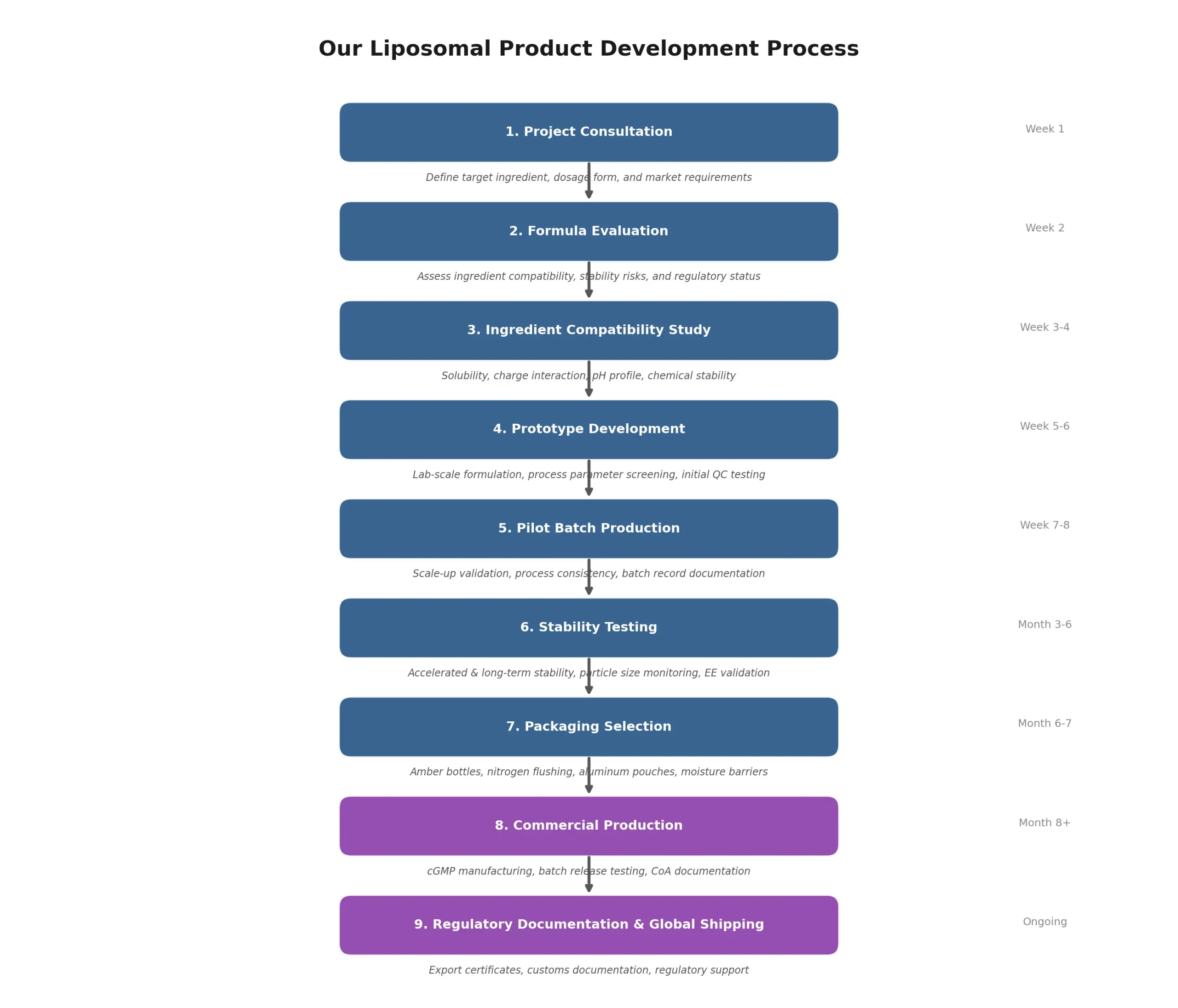
| Stage | Timeline | Key Deliverables |
| 1. Inquiry | 1–3 days | Requirements document; initial feasibility assessment |
| 2. Formula & Quotation | 3–7 days | Custom formula proposal; pricing; regulatory pathway review |
| 3. Sample | 1–2 weeks | Physical sample with COA; organoleptic evaluation |
| 4. Pilot Batch | 2–3 weeks | 1–10 kg powder or 5,000–50,000 units; stability samples retained |
| 5. Scale-Up | 3–4 weeks | Process parameter lock; equivalence data; batch record validation |
| 6. Commercial Production | Per schedule | Full-scale manufacturing; in-process controls; finished product testing |
| 7. QC Release & Delivery | 1–2 weeks | Final COA; regulatory documentation; export logistics |
Commercial Production Overview
Formula Design → Pilot Batch → Scale-Up Validation → Commercial Production → QC Testing → Global Delivery
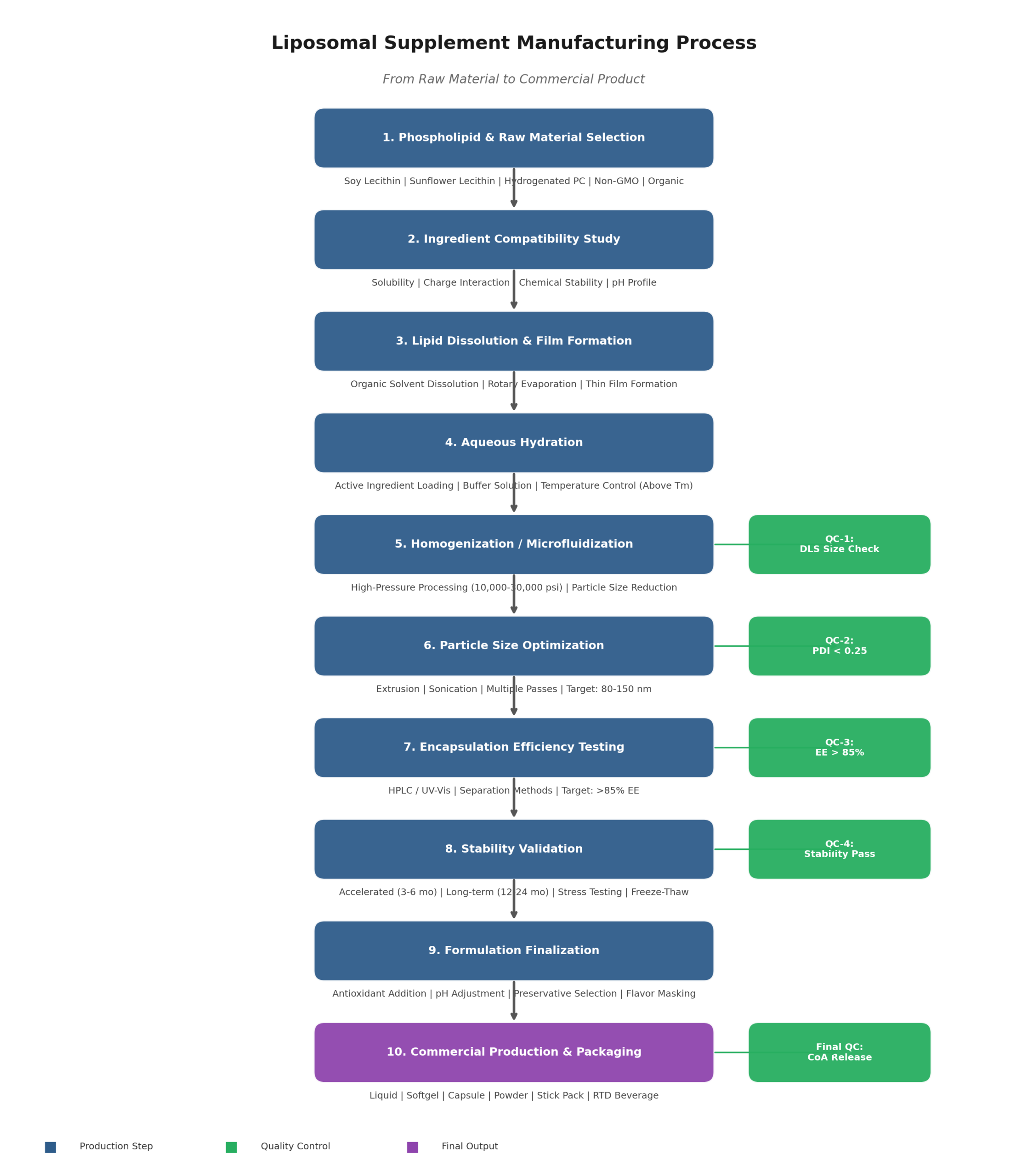
Standard Contract Manufacturing Benchmarks (US/EU OEM)
Manufacturing scale is directly tied to dosage form complexity:
- Capsules / Tablets: ~2,500 units minimum (6–8 weeks lead time)
- Softgels: ~8,500 units minimum (8–10 weeks)
- Gummies: ~2,500 units minimum (8–10 weeks)
- Powder systems: ~1,500 units minimum (6–8 weeks)
- Liquid systems: ~5,000 units minimum (8–10 weeks)
- Effervescents: ~2,500–5,000 units minimum
Startup & Low-MOQ Entry Pathways
For early-stage brands or market validation:
- Private label US shipment: ≤500 bottles (low-risk validation batch)
- Bulk liposomal powder (50–70% VC): 1 kg entry level
- High purity liposomal powder: ~1 kg premium grade input
- Japanese OEM systems: ~1,000+ capsules (premium beauty positioning)
- European liposomal powders: custom formulations with multi-active systems
Cost Structure Logic (Critical Procurement Insight)
Three core cost drivers determine product feasibility:
- MOQ leverage effect
- Low MOQ → 2–3× higher unit cost
- High MOQ → significant cost reduction but higher capital exposure
- Landed cost structure
- Typically 1.5–2× factory price after freight, customs, and brokerage
- Raw material complexity
- Liposomal systems cost 3–5× more than standard vitamin C due to phospholipid encapsulation requirements
For B2B brand owners, formulation and format decisions should follow a market-entry-to-scale logic model:
1) Market Entry Strategy (Lowest Risk)
- Immune stack formulation (Vitamin C + Zinc + Quercetin + Bioflavonoids)
- Hard capsule format
- Amazon / iHerb validated positioning
This represents the lowest failure-risk category entry point.
2) High-Growth Expansion Strategy
- Beauty-from-within systems (Vitamin C + Collagen + Hyaluronic Acid + Glutathione)
- Powder or effervescent formats
- DTC + influencer-driven distribution model
This is currently the fastest-growing commercial segment globally.
3) Market Expectation Shift (Critical Insight)
- Liposomal delivery is now baseline expectation, not premium differentiation
- Clean-label phospholipid sourcing (non-GMO sunflower lecithin) is mandatory
- Consumers actively evaluate CoA, particle size, and encapsulation transparency
4) Dose Positioning Strategy
- 500 mg → entry-level wellness positioning
- 1,000 mg → clinical-grade mainstream standard
- 1,500 mg+ → performance / biohacking segment
5) Format-to-Demographic Mapping
- Capsules → 45+ convenience-driven consumers
- Liquids / sachets → 25–45 lifestyle + travel users
- Powders → 25–40 beauty + fitness segment
- Gummies → families and entry-level users
6) Compliance & Risk Constraints
- FDA classification: dietary supplement (not drug)
- Only structure/function claims permitted:
- immune support
- antioxidant protection
- collagen synthesis support
- Disease claims are strictly non-compliant
7) Supply Chain Risk Considerations
Phospholipid sourcing (especially sunflower lecithin) is a critical supply chain dependency risk factor.
Recommended sourcing strategy:
- Diversify away from geopolitically unstable regions
- Prefer Argentina and European non-GMO lecithin supply chains
- Lock long-term contracts for stability assurance
| Packaging Format | Barrier Properties | Best For | Shelf Life Support |
| Aluminum Laminate Pouches | Excellent moisture, oxygen, and light barrier | Stick packs; bulk powder; export shipments | 24–36 months |
| HDPE Bottles + Induction Seal | Good moisture barrier; moderate oxygen barrier | Standard retail; North American market | 18–24 months (with desiccant) |
| Blister Packs (Alu-Alu) | Excellent individual dose protection; zero moisture transmission | Pharmacy channel; clinical trials; premium positioning | 24–36 months |
| Amber Glass Bottles | Excellent light protection; good oxygen barrier (with proper seal) | Liquid formulations; premium positioning | 12–18 months (liquid) |
| Nitrogen-Flushed Containers | Displaced oxygen reduces oxidation risk | High-value formulations; extended shelf life targets | +6–12 months extension |
Packaging Components
- Desiccants:Silica gel canisters (1–3 g per bottle, depending on headspace volume) for powder products
- Oxygen Absorbers:Iron-based scavengers for oxygen-sensitive formulations
- Nitrogen Flushing:Applied during filling to reduce headspace oxygen to <3%
- Secondary Packaging:Cartons with UV varnish for light protection; tamper-evident seals
Storage Recommendations
| Product Form | Recommended Storage | Acceptable Range | Critical Warnings |
| Powder (spray-dried) | 15–25°C; <60% RH | 5–30°C; <75% RH | Protect from moisture and direct sunlight |
| Powder (freeze-dried) | 2–8°C preferred; 15–25°C acceptable | 2–30°C; <60% RH | Refrigeration extends shelf life; protect from moisture |
| Liquid suspension | 2–8°C | 2–25°C (short-term) | Shake well before use; do not freeze |
| Capsule / Softgel | 15–25°C; <60% RH | 5–30°C; <75% RH | Protect from heat and humidity |
Standard Batch Documentation
- Certificate of Analysis (COA)— Batch-specific test results for all specification parameters
- Product Specification— Complete quality specification with test methods and acceptance criteria
- Technical Data Sheet (TDS)— Product description, composition, physicochemical properties, handling guidelines
- Material Safety Data Sheet (MSDS)— Safety information, hazard classification, handling precautions, first aid
- Residual Solvent Report— GC-MS analysis confirming compliance with ICH Q3C limits
- Heavy Metal Report— ICP-MS data for Pb, Cd, As, Hg
- Microbiology Report— TAMC, TYMC, specified organism testing per USP <61>, <62>
- Stability Summary— Available stability data with storage conditions and retest period
Regulatory & Compliance Statements
- Allergen Statement— Free from major allergens; customizable per market requirements
- Non-GMO Statement— Available for non-GMO formulations
- BSE/TSE Statement— Free from bovine spongiform encephalopathy / transmissible spongiform encephalopathy risk materials
- Halal Certificate— Available upon request
- Kosher Certificate— Available upon request
- ISO 22000— Certified
- FSSC 22000— Certified
- cGMP Compliance— Per 21 CFR Part 111 (US) and applicable EU regulations
Ready to Develop Your Liposomal Vitamin C Product with KS Nutripharma?
Whether you are launching a new premium liposomal supplement or expanding your existing product portfolio, our formulation scientists and manufacturing team are ready to support every stage of development—from concept and pilot production to full-scale commercial manufacturing.
Let’s Build Your Next Liposomal Supplement Together
✔ Custom Formula Development
✔ OEM & Private Label Manufacturing
✔ Pilot Batch Production
✔ Regulatory Documentation
✔ Global Export Support
Request a Formula Consultation | Request Samples | Get an OEM Quotation