

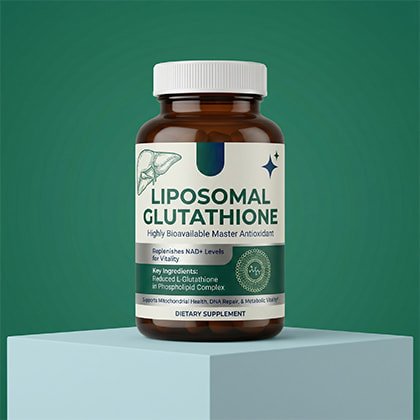
Private Label Liposomal Glutathione — Liquids, Capsules, Softgels, Stick Packs & Gummies
cGMP contract manufacturing for reduced glutathione (GSH) SKUs: liposomal liquids, capsules, softgels, stick packs, and gummies — with oxidation-controlled processing, claim-safe formula paths, and pilot-to-commercial scale.
For: antioxidant brands · beauty-from-within · liver wellness · healthy aging / longevity · private label & Amazon sellers
What you can start from: 12 ready formula concepts · custom OEM/ODM · format + pack matched to your channel
KS Nutripharma: 19+ years · 81,000+ m² facility · 12 production lines · 500+ brands · 60+ export markets · FDA-registered · cGMP · ISO 9001 · ISO 22000 · HACCP · FSSC 22000 · Halal · Kosher · Non-GMO options
Typical launch bands: Pilot 500–1,000 · First commercial 5,000–10,000 · Capsules from 5,000 (4–6 weeks) · Softgels/sticks/gummies from 10,000
Buyer scan: GSH assay & GSH/GSSG retention · encapsulation efficiency (where claimed) · phospholipid system · barrier pack · US/EU/multi-market label support
Available Formulation Concepts-Beauty & Skin Brightening Series
To support diverse market positioning strategies, KS NutriPharma offers a wide range of liposomal glutathione supplement concepts designed for beauty, healthy aging, liver wellness, sports nutrition, and premium longevity categories. Formulations can be customized according to target market requirements, dosage forms, regulatory frameworks, and branding objectives.
Liver Health Series
Healthy Aging Series
Sports Recovery Series
Available Delivery Formats
Other High-Demand Liposomal Supplement Categories
Liposomal products consistently follow 3 core logic patterns:
1. Absorption Upgrade Positioning: “Better bioavailability than standard capsules/tablets.”
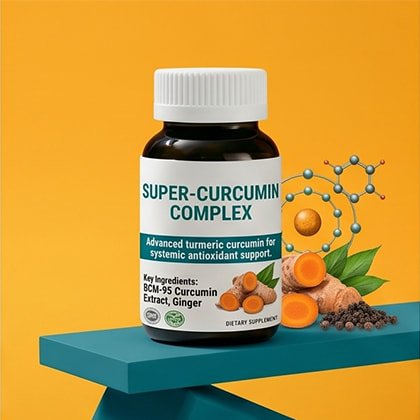
2. High-Value Active Ingredient Enhancements: Glutathione, CoQ10, Curcumin, NAD+ precursors
3. Lifestyle Problem Mapping: Immune support/Anti-aging/Stress & sleep/Energy & fatigue/Detox & liver health.
Market Positioning: Energy/brain function/stress support
Typical Formulation Logic:
- B1, B2, B3 (Niacinamide preferred), B5, B6, B7, B9, B12
- Liposomal delivery for improved absorption
- Synergists:
- Choline (brain support)
- Inositol (nervous system balance)
Market Positioning: Sleep/muscle relaxation/stress reduction
Typical Formulation Logic:
- Magnesium glycinate/citrate/malate
- Liposomal carrier system (reduces GI discomfort)
- Synergists:
- Vitamin B6 (magnesium utilization support)
- L-Theanine (relaxation synergy)
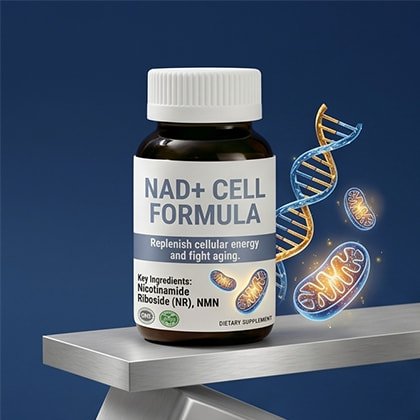
Market Positioning: Cellular energy / longevity / anti-aging
Typical Formulation Logic:
- NR (Nicotinamide Riboside) or NMN
- Liposomal delivery system (emerging premium format)
- Synergists:
- Resveratrol
- CoQ10
- PQQ
Market Positioning: Liver support / detox / alcohol recovery support
Typical Formulation Logic:
- Silymarin extract (standardized milk thistle)
- Liposomal encapsulation for liver bioavailability
- Synergists:
- NAC (glutathione precursor)
- Artichoke extract
- Dandelion root extract
- Structure stays standardized for R&D consistency and regulatory traceability
- Content is customized to GSH stability science, delivery physics, and target-market positioning
Liposomal glutathione OEM work is not “put GSH in phospholipids.” Commercial formulas are built on five concurrent decision layers. Missing any one of them is how SKUs pass a sample panel and fail 90-day stability, retailer questionnaires, or marketplace claim review.
Layer 1 – Regulatory Alignment Before Ingredient Lock
Different regions treat reduced glutathione, phospholipid carriers, dose levels, and antioxidant/liver language differently.
Region lens | What we screen early |
|---|---|
| United States (DSHEA) | Structure/function claim boundaries / NDI exposure on novel delivery systems / high-dose paths / Supplement Facts presentation |
| EU (EFSA / Novel Food) | Novel Food risk under Reg. (EU) 2015/2283 for delivery systems / vitamin/mineral maxima / Reg. (EC) 1924/2006 claim limits |
| Canada (NHP) | NPN feasibility / medicinal vs non-medicinal classification / monograph alignment where applicable |
| Other (UK / TGA / ASEAN / GCC) | Case-by-case listing/import/label readiness |
Commercial rule: Lock claim lane (“antioxidant support,” “cellular protection,” “liver health support”) before artwork. Therapeutic detox / disease language is a reformulation and recall risk, not a marketing upgrade.
Layer 2 – Bioavailability & Liposomal Delivery Optimization
Oral GSH faces enzymatic degradation and limited systemic availability in conventional forms. Formulation design therefore prioritizes:
- Gastrointestinal protection via liposomal encapsulation
- Phospholipid carriers that support membrane-compatible uptake
- Intracellular delivery efficiency as a design objective (not a slogan)
- Process choices that reduce first-pass / GI breakdown of the reduced form
Core objective: maximize defensible systemic availability of reduced glutathione-supported by encapsulation metrics and retention data, not only phospholipid presence on a label.
Tech references: What Is Encapsulation Efficiency of Liposomal Supplements / Liposomal vs Reduced Glutathione
Layer 3 – Ingredient Stability & Oxidation Control Engineering
GSH is highly sensitive to oxidation (GSH -> GSSG), moisture/oxygen, process heat, and pH instability in liquid systems.
| Stressor | Typical commercial failure | Engineering response |
|---|---|---|
| Oxygen / light | Potency fade, GSSG rise | Liposomal shielding / nitrogen / barrier pack / light-protective packaging |
| Moisture / Aw | Capsule/stick/gummy assay loss | RH-controlled process / barrier laminates / desiccants |
| Process heat | Encapsulation collapse, GSH loss | Low-temp emulsification / gummy cook gates / overage policy |
| pH / aqueous stress | Liquid flavor + potency drift | pH window design / co-antioxidant matrix / preservative balance |
Stabilization stack we commonly apply: liposomal shielding / nitrogen-protected manufacturing windows / synergistic antioxidant co-formulation / low-temperature emulsification and blending
Layer 4 – Functional Synergy & Metabolic Support Design
To strengthen antioxidant-network positioning (claim-safe), formulas may integrate:
- Endogenous glutathione recycling support (e.g., ascorbate systems)
- Redox-balance companions that support GSH/GSSG narrative without medical claims
- Enzymatic cofactor support (e.g., selenium-dependent pathways, where market-allowed)
- Complementary antioxidant network ingredients (ALA, polyphenols, CoQ10-format-dependent)
Synergy is selected for lipid/aqueous compatibility and regulatory fit, not ingredient-count marketing.
Layer 5 – Commercial Scalability & Manufacturing Feasibility
Every concept must survive:
- cGMP scalable production (not bench-only emulsions)
- Stable sourcing of GSH grades + phospholipid systems
- Format compatibility (liquid / capsule / softgel / stick / gummy)
- Cost architecture for premium, clinical-leaning, or mass-wellness positioning
Available Formulation Strategies
| Strategy | Architecture | Best commercial use |
|---|---|---|
| Direct reduced glutathione system | High-purity reduced L-glutathione (GSH) as primary active | Cost-efficient antioxidant support; simpler regulatory path |
| Liposomal glutathione delivery system | GSH encapsulated in phospholipid liposomal carriers | Core premium format; absorption + stability + uptake story |
| Synergistic antioxidant regeneration system | GSH + Vitamin C + ALA + Se cofactors +/- NAC precursor support | High-performance cellular defense / liver-wellness stacks |
Reference stacks already mapped on this page: Beauty & Skin Brightening / Liver Health / Healthy Aging / Sports Recovery (12 mature formula concepts). Use those as launch templates; customize dose, format, and claim lane per market.
Each Liposomal Glutathione SKU starts from a core antioxidant delivery system, then adds optional modules only when they improve positioning and remain stable inside the chosen delivery format.
- Modules are selectively applied based on:
- Target-market regulations (FDA / EFSA / NMPA / others)
- Product positioning (clinical-leaning / premium wellness / beauty / liver support)
- Delivery format (capsule / liquid / sachet / softgel / gummy)
- Liposomal stability and lipid-phase compatibility constraints
| Module | Role | Typical ingredients | Format caution |
|---|---|---|---|
| Glutathione Core System | Intracellular antioxidant base | Reduced L-GSH / phospholipid liposomal matrix / recycling cofactors | Required foundation |
| Antioxidant Network | Redox recycling & lipid protection | Vitamin C / ALA / Vitamin E / selected polyphenols | Watch oil/water phase split |
| Liver & Phase II Support | Hepatic wellness positioning | Milk thistle (silymarin) / NAC / sulfur amino acids / Se cofactors | Keep claims structure/function |
| Bioavailability Enhancement | Delivery performance | Advanced liposomal encapsulation / phospholipid optimization / nano-emulsion stabilization | Must be measurable (EE / PSD) |
| Skin Brightening & Beauty Longevity (optional) | Beauty-from-within | Vitamin C + GSH synergy / collagen-protection companions / skin cofactors | Softgel/liquid/stick often preferred |
| Immune Defense Support (optional) | Immune resilience | Zn / Se / Vitamin D (where allowed) / antioxidant immune cofactors | Dose vs fill budget |
| Mitochondrial Energy Support (optional) | Energy / vitality | Ubiquinol/CoQ10 / PQQ / L-carnitine | Softgel/lipid compatibility |
| Adaptogen Stress Response (optional) | Stress resilience | Rhodiola / Ashwagandha complexes / neuro-oxidative stress companions | Sensory + botanical assay load |
Implementation Rules (Critical)
- Not every module belongs in every formula. Over-stacking destroys liposome integrity, fill budgets, and claim clarity.
- Select only stability-compatible combinations for the lipid/aqueous system.
- Remove modules that do not serve the hero positioning (beauty vs liver vs longevity vs sports).
- Maintain full regulatory compliance per destination market before artwork lock.
- Prefer modular line architecture: one hero core SKU + 1-2 positioned extensions, not a 12-ingredient first PO.
- Standardized early screening to protect global market entry feasibility and prevent late-stage reformulation.
Regulatory strategy starts before phospholipid grade, dose, and claim copy are locked. For liposomal antioxidant systems, the highest-cost mistakes are usually claim language and novel-delivery classification, not capsule color.
United States – FDA / DSHEA Lens
- DSHEA dietary supplement pathway alignment
- NDI notification risk assessment (novel liposomal systems, unusual carriers, aggressive dose stories)
- GRAS / established-ingredient status checks where relevant
- Supplement Facts compliance and structure/function claim boundaries
- Early ingredient screening reduces NDI exposure and keeps US launch paths DSHEA-defensible.
European Union – EFSA / Novel Food Lens
- Novel Food classification under Regulation (EU) 2015/2283 (delivery-system scrutiny)
- Safety expectations for antioxidants, phospholipids, and bioactive companions
- Maximum permitted levels for vitamins/minerals/functional actives
- Health-claim compliance under Regulation (EC) No 1924/2006
- Only EU-compatible or pre-assessable builds advance for Europe-first briefs.
Canada – NHP Lens
- NPN licensing feasibility
- Monograph alignment where antioxidants / related compounds apply
- Medicinal vs non-medicinal ingredient classification
- Dosage-form and labeling readiness for NHP registration
Other Markets – UK / Australia / Asia / Middle East
Case-by-case review covering UK post-Brexit alignment, TGA listed vs registered pathways, ASEAN harmonization expectations, and GCC/Middle East import + labeling requirements.
Pre-Formulation Regulatory Risk Assessment (Gate)
Before formula lock:
- Multi-country ingredient status mapping
- Claim limitation analysis (antioxidant / cellular protection / liver support – not disease detox therapy)
- Liposomal delivery classification risk (novel excipient / Novel Food flags)
- Export documentation readiness (COA fields, specs, stability scope, labeling pack)
Outcome: scientifically coherent, claim-safe, and commercially approvable architectures for the markets you actually intend to ship.
- Lifecycle QC from raw material identity through finished liposomal release, built for batch consistency, oxidation control, and audit traceability.
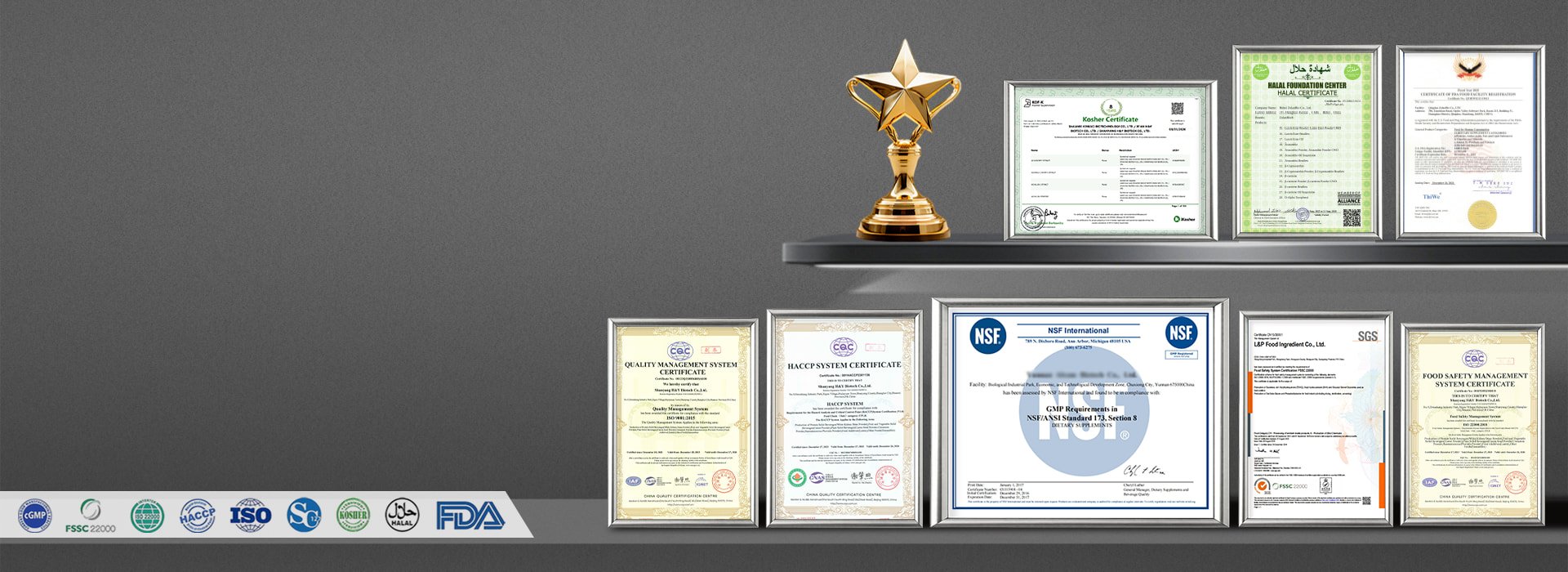
Facility posture: cGMP / ISO 9001 / ISO 22000 / HACCP / FSSC 22000 / Halal / Kosher / FDA-registered / Non-GMO options (scoped per project)
Liposomal GSH QC is more than a total glutathione number. Buyers should expect controls that distinguish reduced GSH, track oxidation markers, and verify liposome performance where the label story depends on delivery technology.
Raw Material Identity Verification
Check | Methods/focus |
|---|---|
| Active identity | HPLC assay for reduced L-glutathione |
| Carrier authenticity | FTIR / phospholipid profile verification |
| Spec matching | Reference standards vs approved vendor specs |
| Incoming gate | Reject/quarantine on identity or purity deviation |
Contaminant Safety Assurance
Aligned to USP / ICH-informed panels as scoped:
- Heavy metals (Pb, As, Cd, Hg)
- Microbiology (pathogens + total count)
- Pesticide residues (when botanical companions are present)
- Residual solvents (liposomal processing inputs, where applicable)
Product Stability Validation (Liposomal-Specific)
| Stability dimension | What we monitor |
|---|---|
| Accelerated shelf stress | Temperature + humidity challenge |
| Liposome integrity | Particle-size distribution/encapsulation efficiency |
| Oxidative retention | GSH/GSSG ratio trend/labeled potency retention |
| Format physicals | Separation, seal integrity, Aw, sensory drift |
- Objective: liposomal structure and reduced-glutathione potency remain commercially defensible across intended shelf life.
Batch Traceability & Retention
Unique batch coding / retained reference samples / archived production + QC records / backward traceability to phospholipid and GSH lots.
Certificate of Analysis (COA) Package
Typical international release pack:
- Glutathione assay (reduced form emphasis as specified)
- Encapsulation efficiency / liposomal validation (where applicable)
- Contaminant & safety panels
- Stability summary (when scoped)
- Batch manufacturing record references
KS Nutripharma manufactures liposomal glutathione SKUs inside a multi-base cGMP system built for lipid delivery, finished-dose scale, and export documentation – not bench emulsions only.
Full capacity overview: Manufacturing Capacity
Facility Snapshot (Buyer Questionnaire Ready)
| Item | KS Nutripharma figure |
|---|---|
| Manufacturing bases | 5 integrated bases |
| Facility area | 81,000+ m2 |
| Production lines | 12 specialized lines (supplements + functional ingredients) |
| GAP cultivation bases | 4 |
| Brands supported | 500+ |
| Export markets | 60+ |
| Experience | 19+ years |
| Ingredient processing | 5,000+ tons raw material / year |
| Lipid / delivery tech line | Microencapsulation and lipid delivery processing line on site |
| Certifications | FDA-registered / cGMP / ISO 9001 / ISO 22000 / HACCP / FSSC 22000 / Halal / Kosher / Non-GMO options |
Finished-Dose Daily / Annual Capacity (Planning Reference)
| Dosage form | Capacity | Liposomal GSH relevance |
|---|---|---|
| Hard capsules | 5,000,000+ capsules/day | Liposomal powder filling / microencapsulated actives / HPMC, gelatin, pullulan, enteric options/sizes 000-3 |
| Softgels | 2,000,000+ softgels / day | Liposomal softgels / oil suspension / dual-phase / gelatin, fish gelatin, vegetarian, starch shells |
| Tablets | 12,000,000+ tablets/day | Companion antioxidant / multi-phase SKUs when GSH line needs tablet twins |
| Powders & granules / sticks | 5,000 tons / year | Liposomal powders / stick packs / sachets / canisters / instantized & granulated systems |
| Gummies | 2,000,000+ gummies/day | Trial SKUs after GSH retention gate/pectin, gelatin, vegan, sugar-free paths |
| Liquids | 3,000 tons/year | Liposomal liquids / emulsions / nanoemulsions / concentrates / shots / drops |
Capsule shell options: HPMC vegetarian / gelatin / pullulan / enteric / acid-resistant
Softgel shell options: gelatin / fish gelatin / vegetarian / starch-based
Liquid formats used for GSH programs: oral liquids/emulsions/suspensions/concentrates / functional shots
Liposomal Delivery Capability On These Lines
KS Nutripharma runs liposomal delivery across capsules, softgels, powders, and liquids – with glutathione listed as a core application alongside Vitamin C, CoQ10, curcumin, resveratrol, and NMN-class stacks.
Supporting platforms on the same campus:
- Liposomal delivery systems (GSH flagship path)
- Microencapsulation (stability / taste / oxidation protection) – see Liposomal vs Microencapsulation
- Nanoemulsion systems (solubility / uptake positioning where formula allows) – see Liposomal vs Nanoemulsion
- Controlled / sustained-release and enteric options for companion SKUs
- Capsule-in-capsule and dual-phase softgel for multi-phase antioxidant builds
Delivery tech hub: Advanced Nutraceutical Delivery Systems
GSH manufacturing context: Glutathione Supplements Manufacturing
GSH-Specific Process Controls Inside Capacity
Capacity alone does not protect reduced glutathione. Lipid-sensitive GSH runs use:
- High-shear emulsification parameter lock
- Controlled phospholipid hydration
- Particle-size distribution control
- In-process encapsulation-efficiency checks at critical points
- Oxygen / light / RH windows matched to format
- QA release only after agreed GSH assay and safety panels clear
Target discipline: key active parameters controlled with RSD <= 5% where process capability supports it (confirm per formula).
Pilot-to-Commercial Transition (Same Facility Path)
| Stage | What happens on KS lines | Exit gate |
|---|---|---|
| Lab / R&D | Vesicle formation, EE baseline, sensory/pH window | Evaluation sample |
| Pilot | Plant-like emulsification + fill/seal + oxidative stress check | Pilot release pack |
| First commercial | Locked process on production equipment | Batch COA + retention samples |
| High volume | Multi-line scheduling across 5 bases / 12 lines | Continuity plan for reorder volume |
Scale-up is gated on liposomal integrity and GSH retention, not organoleptic approval alone. Low-MOQ commercial entry commonly starts from 3,000-5,000 units for qualified projects; GSH pilots can start lower (see MOQ section).
Packaging Capacity Matched to Channel
- Bottles: HDPE / PET / glass / amber / child-resistant / tamper-evident
- Blister: Alu-Alu / PVC-Alu
- Stick packs and sachets for unit-dose beauty / travel GSH
- Retail, Amazon-ready, club, and subscription pack configurations
- Multi-pack / kit options for AM-PM or program SKUs
What Procurement Can Put in the RFQ File
- Facility: 5 bases / 81,000+ m2 / 12 lines
- Format capacity: capsules 5M+/day / softgels 2M+/day / tablets 12M+/day / gummies 2M+/day / powders 5,000 t/year / liquids 3,000 t/year
- Delivery tech: on-site lipid / liposomal / microencapsulation line
- Cert pack: FDA-registered + cGMP + ISO / HACCP / FSSC + Halal / Kosher
- Export posture: 60+ markets / documentation support
-> Manufacturing Capacity / Quality Control / R&D Center / Certifications & Compliance
This section covers order volume and commercial scale gates only. Daily / annual line capacity sits in Production Capability above.
Volume Stages
Pilot – 500-1,000 units
For: formula lock, Amazon/DTC test, pack check
Gate: liposome integrity / GSH/GSSG retention / sensory / seal integrity
First commercial – 5,000-10,000 units
For: regional / e-comm launch
Gate: batch reproducibility / pack-line validation / accelerated stability
Note: qualified private-label entry commonly starts around 3,000-5,000 units depending on format
Full-scale – 100,000+ units
For: retail / export programs
Gate: sourcing continuity / cost structure / QC reproducibility across reorders
Format MOQ & Lead Time (Confirm Per Project)
- Capsules: from 5,000 units / 4-6 weeks
- Softgels: from 10,000 units / 5-7 weeks
- Stick packs: from 10,000 units / 5-7 weeks
- Gummies: from 10,000 units / 6-8 weeks
- Liquids: project-scoped / typically 5-8 weeks after formula lock
What Moves Price Beyond MOQ
GSH grade and dose / phospholipid system / encapsulation depth / barrier packaging / contaminant panel / rush schedule / multi-market label packs
What Moves Scale Timing
Sell-through data / regional clearance status/phospholipid and GSH availability/channel expansion needs
Predictable cycle with exit criteria at each gate. Liposomal complexity can extend any phase.
Requirement & technical alignment – 3-5 business days
Decide: positioning, format, claim lane, regulatory pre-screen
Exit: written roadmap + risk flags
Sample development & lab optimization – 7-14 business days
Decide: prototype liposomal system, EE / sensory tuning
Exit: evaluation-ready samples + open issues list
Stability pre-testing – 2-4 weeks
Decide: accelerated stress, liposome integrity, oxidative retention
Exit: pack / formula lock recommendation
Pilot production & process validation – 1-2 weeks
Decide: cGMP pilot, parameter lock, reproducibility
Exit: validated pilot release package
Full-scale commercial production – 2-4 weeks
Decide: industrial run, full QC, packaging finalization
Exit: market-ready batches + traceability pack
Typical total: 6-10 weeks for standard programs.
Extend when: high EE targets, multi-market Novel Food/NDI risk, gummy retention validation, complex beauty/longevity stacks, or specialty barrier packaging.
- Structured risk management for GSH integrity, phospholipid continuity, and uninterrupted GMP production.
Glutathione programs are uniquely exposed to oxidation-grade variability and phospholipid supply quality. Commodity dual-sourcing without assay cross-validation is not enough.
Dual Sourcing for Critical Inputs
Primary + secondary qualified suppliers for:
- Reduced L-Glutathione (GSH)
- Phospholipid / liposomal carrier systems
- Stabilization co-antioxidants (ascorbate / ALA systems, as used)
Cross-validation of specs and assay consistency / geographic diversification for logistics/geopolitical buffering
Approved Vendor List (AVL) Discipline
Pre-qualification audits / spec alignment / ongoing quality/delivery/consistency scoring / periodic re-audit
- Only AVL-cleared suppliers enter production.
Batch-Level COA Dual Verification
- Supplier COA review
- Internal laboratory confirmation (HPLC/FTIR as applicable)
- Purity + degradation-marker screening critical to oxidation control
Deviation -> automatic batch rejection protocol.
Strategic Safety Stock
3-6 months buffering for critical actives and phospholipids (SKU-dependent) / demand-forecast procurement / emergency replenishment for high-volume SKUs / priority allocation for long-term partners
Controlled Upstream Integration (Selected Materials)
Standardized botanical partnerships (e.g., milk thistle companions) / controlled lipid/phospholipid channels / origin documentation where applicable / fermentation- or synthesis-based GSH systems under GMP-aligned standards
- Legal + operational controls so custom liposomal architectures cannot leak across clients or internal brands.
Differentiation in this category sits in encapsulation architecture, antioxidant synergy ratios, stability process windows, and claim-safe positioning, not commodity GSH sourcing alone.
NDA – Pre-Development Requirement
Available before technical exchange, covering:
- Liposomal formulation architecture and process parameters
- Ingredient strategy and antioxidant synergy design
- Commercialization roadmap
- Supplier/sourcing structures (where disclosed)
- No technical disclosure without formal confidentiality protection.
Full Formulation Ownership Transfer
Upon project completion for custom-developed formulas:
- Client-exclusive ownership of formulation IP and technical documentation
- No internal reuse of client-specific formulas
- Handover of specs, SOPs, and COA references as contracted
- Batch history / manufacturing record access per agreement
Optional Exclusivity Structures
Regional / category (e.g., liposomal glutathione in a defined channel) / time-bound / volume-threshold, contract-defined.
Strict OEM/ODM Separation
No commercialization of client formulas under an internal brand / no cross-client reuse of private formulas / segregated project data / independent documentation architecture
- Post-production support built for liposomal antioxidant systems, where most field issues are oxidation, packaging, or storage stress, not “mystery potency.”
24-Hour Technical Response
Dedicated triage within 24 hours for:
- Stability / performance inquiries
- Manufacturing or batch technical questions
- Initial quality deviation intake
- Packaging-formulation compatibility questions
72-Hour Root Cause Analysis (RCA)
When deviation is confirmed in scope:
- Structured RCA initiation within 72 hours
- Cross-functional review (QA / QC / production / formulation)
- Preliminary technical diagnosis
- Initial corrective action proposal
Frequent true causes in GSH systems: oxygen/light abuse / barrier-pack failure / Aw rise in sticks/gummies / process heat retention loss / storage outside label conditions / GSH -> GSSG drift
Replacement & CAPA Path
For confirmed manufacturing-related issues:
- Replacement or commercial remedy per RCA outcome
- Deviation classification (critical / major / minor)
- CAPA implementation and process learning loop
Stability & Performance Investigation Support
Liposome integrity re-check / packaging-active interaction analysis / oxidation pathway / GSH retention profiling / shelf-life reassessment when evidence warrants
Regulatory Update Advisory
Ongoing monitoring support for ingredient status, liposomal classification signals, labeling adjustments, and antioxidant claim-language updates across FDA / EFSA / Health Canada / TGA-relevant lanes.
Responsibility boundary: KS Nutripharma controls manufacturing, in-process discipline, and agreed release testing. Brand owns final label claims, marketplace copy, and post-handover storage/distribution unless otherwise contracted.
Ready to Launch Your Liposomal Glutathione SKU?
Share target market(s), dosage form, preferred formula concept (Beauty / Liver / Healthy Aging / Sports, or custom), claim lane, packaging/climate lane, and first-order volume. Within 24 hours, KS Nutripharma returns a feasibility path covering liposomal architecture, oxidation/packaging risks, MOQ, timeline, and the verification documents available for your compliance file.
KS Nutripharma – Liposomal glutathione and antioxidant-system contract manufacturing for global supplement brands.
Standard oral GSH often struggles with GI degradation and weaker bioavailability storytelling. Liposomal systems encapsulate GSH in phospholipid carriers to improve protection and uptake potential, but only when encapsulation efficiency, particle-size control, and oxidative retention are engineered and documented.
Most brands launch liquid liposomal for premium bioavailability positioning or capsules for private-label/retail speed. Softgels suit lipid stacks. Stick packs fit beauty/travel rituals. Gummies should usually wait until retention data clears a feasibility gate.
Yes. The page’s 12 mature formula concepts are modular extensions of one GSH core. We keep the antioxidant delivery system stable, then add beauty, liver, mitochondrial, or recovery modules without overloading the first PO.
At minimum: identity + glutathione assay (reduced form as specified), contaminant panels, and, when the label depends on delivery technology, encapsulation efficiency and relevant physicals. Stability summaries are scoped by market and risk.
Structure/function antioxidant support, cellular protection, and carefully reviewed liver-health support language. Avoid disease treatment, cure, or aggressive “detox therapy” claims unless counsel clears a specific market pathway.
Pilots often 500-1,000 units; first commercial commonly 5,000-10,000. Softgels, sticks, and gummies usually need higher launch volumes. Liquids are project-scoped after formula lock.
NDA before technical exchange, restricted project access, no cross-client reuse of private formulas, and optional exclusivity structures. Custom-developed formulas transfer to client ownership as contracted.
24-hour technical acknowledgment, 72-hour RCA target for in-scope deviations, CAPA, and replacement discussion when the root cause is manufacturing-related under the agreed scope. Packaging and storage conditions are part of the investigation.