

Engineer Liposomal Fisetin Supplements for the Longevity Market
Fisetin has emerged as one of the most promising plant-derived senolytic flavonoids for healthy aging and cellular renewal. However, conventional fisetin supplements face three fundamental formulation limitations: extremely poor water solubility (10.45 μg/mL), low oral bioavailability (44.1%), and rapid first-pass metabolism via glucuronidation and sulfation. These physicochemical barriers restrict commercial performance despite strong scientific interest.
Liposomal encapsulation addresses these engineering barriers through phospholipid nanocarriers (100–200 nm particle size, >58% entrapment efficiency), improving aqueous dispersion, protecting the active ingredient during digestion, and supporting more efficient intestinal absorption. The result is a premium delivery platform aligned with the fisetin market projected to reach $7.09 billion by 2030 (13.3% CAGR).
As an experienced liposomal supplement manufacturer, KSNutripharma® provides OEM and private label liposomal fisetin solutions with customizable formulations, multiple dosage forms (softgels, capsules, powders, liquids), scalable production, and comprehensive quality documentation to help brands launch differentiated products in the rapidly expanding healthy aging market.
| 19+ Years Nutraceutical Manufacturing | 81,000 m² GMP-Compliant Facility | 12 Production Lines |
| 500+ Brands Served Globally | 60+ Export Markets | 2 Dedicated R&D Centers |
| 5 M Capsules / Day | 2M Softgels / Day | 12M Tablets / Day |
| 2 M Gummies / Day | 7 International Certifications | 100% Batch Traceability |
Dedicated Liposome Production Infrastructure
- High-Pressure Homogenization Systems: Industrial-scale high-pressure homogenization systems optimized for liposome formation, particle size reduction, and batch-to-batch consistency.
- Liposomal Drying Technologies — Spray-dried and freeze-dried manufacturing options selected according to formulation characteristics, stability objectives, dosage form, and commercial positioning.
- Liposome Characterization — In-house characterization capabilities including particle size distribution, polydispersity index (PDI), encapsulation efficiency evaluation, and zeta potential analysis for formulation optimization and quality verification.
- Powder Redispersibility – Evaluation of powder redispersibility after reconstitution to support consistent product performance.
- Process Scale-Up Engineering – Process transfer from laboratory development to pilot production and full-scale commercial manufacturing while maintaining critical quality attributes.
- Dynamic Light Scattering (DLS)— In-house particle size analysis.
- HPLC Analytical Laboratory—Analytical laboratory supporting raw material identification, assay verification, encapsulation efficiency studies, stability evaluation, and finished product quality control.
- Phospholipid Carrier Development— Scientific selection and optimization of phospholipid carrier systems based on ingredient compatibility, phosphatidylcholine content, dosage form, and stability requirements.
- ICH-Compliant Stability Chambers— Stability studies designed according to ICH guidelines, including evaluation of particle size stability, encapsulation integrity, moisture control, and active ingredient retention throughout shelf life.
- Pilot Development & Process Validation— Pre-commercial validation batches (1–10 kg powder; 5,000–50,000 finished units), supports formulation optimization, engineering verification, process scale-up, and commercial readiness prior to full-scale manufacturing.
Why Develop Liposomal Fisetin Instead of Conventional Fisetin?
Conventional Fisetin Faces Critical Commercial Limitations
Although fisetin demonstrates strong research potential in cellular senescence and healthy aging, its physicochemical characteristics present substantial formulation challenges that directly impact product viability.
| Parameter | Conventional Fisetin | Liposomal Fisetin | Why It Matters |
| Water Solubility | <0.1 mg/mL (practically insoluble) | Phospholipid encapsulation improves dispersion | Poor dissolution = limited absorption |
| Oral Bioavailability | <10% (rapid glucuronidation) | 2–5x enhanced absorption (liposomal transport) | Low systemic exposure = weak efficacy signals |
| Systemic Exposure | <2 hours (rapid metabolism) | Extended release profile | Short duration = inconsistent consumer experience |
| Premium Positioning | Commodity ingredient | High-value delivery technology | Margin compression vs. differentiation |
| Consumer Compliance | High doses needed (500–1,400 mg intermittent) | Lower effective doses possible | Dose tolerance and GI comfort |
Source: Fisetin physicochemical data from PMC peer-reviewed review (PMC10532335, 2023); liposomal enhancement from animal pharmacokinetic studies; human bioavailability data from Cambridge Journal of Nutritional Science (2026).
Challenge: Fisetin is practically insoluble in water (10.45 μg/mL), limiting dissolution before intestinal absorption.
Liposomal Solution: Phospholipid bilayers disperse lipophilic fisetin into nano-sized vesicles, improving gastrointestinal dispersion and absorption potential.
Challenge: Free fisetin undergoes extensive first-pass glucuronidation and sulfation before reaching systemic circulation.
Liposomal Solution: The liposomal phospholipid membrane provides a protective carrier that shields fisetin from enzymatic degradation during GI transit.
Challenge: Only a limited proportion of conventional fisetin achieves therapeutic plasma levels after oral administration.
Liposomal Solution: Nano-sized liposomal vesicles (100–200 nm) increase surface area interaction with intestinal membranes, improving absorption vs. conventional powder formulations.
Challenge: As longevity supplements become increasingly competitive, brands require more than high-dose ingredients to justify premium pricing.
Liposomal Solution: Liposomal delivery enables clinically inspired positioning, premium pricing, clean-label marketing, and stronger consumer perception of advanced formulation technology.
MARKET-PROVEN FORMULATION SYSTEMS
Commercial fisetin formulations have converged into several stable and repeatable architectures across global nutraceutical markets. These systems reflect real-world purchasing behavior, formulation feasibility, and consumer compliance patterns in the longevity category.
Formulation Logic: Purity + Clinical Simplicity + Dose Transparency
This is the most widely adopted baseline architecture for fisetin products targeting senolytic positioning.
Core Structure:
- Liposomal Fisetin (150–500 mg per serving)
- Non-GMO sunflower phospholipid system
- Phosphatidylcholine-based vesicle carrier
Commercial Rationale:
- Maximizes ingredient transparency
- Supports “clean-label longevity” positioning
- Reduces formulation complexity and regulatory risk
- Suitable for both entry and premium-tier SKUs
Product Strategy Positioning:
- Foundational senolytic support
- Daily maintenance or intermittent protocols
- Entry-to-mid premium longevity segment
Formulation Logic: Complementary Flavonoid Pathway Targeting
This architecture combines fisetin with structurally related polyphenols to expand senolytic and antioxidant coverage.
Core Structure:
- Liposomal Fisetin (150–300 mg)
- Quercetin (50–200 mg, phytosome or standardized extract)
- Optional: Luteolin (25–100 mg)
Functional Rationale:
- Fisetin: primary senolytic pathway modulation
- Quercetin: complementary cellular stress pathway regulation
- Luteolin: inflammatory signaling modulation support
Commercial Rationale:
- Multi-target longevity positioning
- Higher perceived formulation sophistication
- Increased average order value potential
Product Strategy Positioning:
- Cellular rejuvenation blends
- Anti-aging + inflammatory balance formulas
- Mid-to-premium longevity segment
Formulation Logic: Multi-Pathway Cellular Health Coverage
This is a high-complexity formulation system designed for premium longevity positioning and advanced consumer segments.
Core Structure:
- Liposomal Fisetin (200–500 mg)
- Resveratrol (100–300 mg)
- Quercetin (100–300 mg)
- Luteolin (optional)
- EGCG (50–200 mg standardized extract)
Functional Rationale:
- Broad polyphenol network activity
- Antioxidant + mitochondrial support pathways
- Cellular stress response modulation
Commercial Rationale:
- Premium positioning architecture
- Supports “advanced longevity system” branding
- High differentiation in competitive markets
Product Strategy Positioning:
- Multi-functional longevity complexes
- Anti-aging + cellular defense systems
- Premium and ultra-premium SKUs
Trending Formulation Directions (2026+)
These formulations reflect directional innovation in longevity supplementation, driven by advances in metabolic science, NAD+ research, and the evolution of senolytic protocols.
Formulation Logic: Senolytic Clearance + Cellular Energy Restoration
This is the fastest-growing conceptual framework in advanced longevity formulations.
Core Structure:
- Liposomal Fisetin (150–300 mg)
- NAD+ precursors (NR or NMN, 250–500 mg)
- Resveratrol (100–300 mg)
- TMG (500–1000 mg)
Functional Rationale:
- Fisetin: senescent cell clearance support
- NAD+ precursors: cellular energy metabolism support
- Methylation support for metabolic balance
Commercial Rationale:
- Aligns with “cellular renewal cycle” positioning
- Supports subscription-based product models
- Strong premium pricing justification
Product Strategy Positioning:
- Cellular energy + longevity systems
- Metabolic aging support formulations
- High-end biohacking category
Formulation Logic: Cellular Recycling + Protein Quality Control
This architecture focuses on intracellular repair and recycling mechanisms.
Core Structure:
- Liposomal Fisetin (100–250 mg)
- Spermidine (1–10 mg)
- Urolithin A (250–500 mg)
- Berberine (optional metabolic support)
Functional Rationale:
- Supports autophagy-related cellular clearance
- Enhances mitochondrial quality control
- Complements senolytic activity
Commercial Rationale:
- Strong positioning in advanced aging science
- Appeals to longevity-focused consumers
- Differentiated from standard antioxidant blends
Product Strategy Positioning:
- Cellular recycling support systems
- Mitochondrial renewal formulations
- Advanced longevity protocols
Formulation Logic: Brain Aging + Neuroinflammatory Balance
This system targets age-related cognitive decline pathways through polyphenol synergy.
Core Structure:
- Liposomal Fisetin (150–300 mg)
- EGCG (100–300 mg)
- L-Theanine (100–200 mg)
- Curcumin phytosome or liposomal form (200–500 mg)
Functional Rationale:
- Neuroinflammation modulation
- Oxidative stress regulation in neural tissue
- Neuroplasticity support pathways
Commercial Rationale:
- Expands fisetin positioning beyond longevity into cognition
- Strong lifestyle supplement positioning
- High repeat purchase potential
Product Strategy Positioning:
- Brain health + aging support systems
- Cognitive performance longevity blends
- Neuro-aging prevention category
Functional Co-Formulation Matrix for Liposomal Fisetin
This section defines compatible ingredient systems based on biochemical compatibility, absorption synergy, and formulation stability.
Designed to amplify cellular senescence modulation pathways.
- Quercetin (primary synergy compound)
- Luteolin (NF-κB modulation support)
- Kaempferol (flavonoid pathway diversity)
Role in formulation:
Enhances multi-pathway senolytic coverage and strengthens longevity positioning.
Supports cellular energy production and mitochondrial integrity.
- CoQ10 (ubiquinol form preferred)
- PQQ (mitochondrial biogenesis support)
- Urolithin A (mitophagy regulation)
Role in formulation:
Improves perceived “energy + vitality” positioning and expands product use cases.
Supports cellular energy metabolism and repair pathways.
- NMN / NR (NAD+ precursors)
- TMG (Trimethylglycine/Betaine, methylation support)
- Vitamin B complex (optional metabolic cofactors)
Role in formulation:
Aligns fisetin with modern longevity cycle frameworks.
Provides systemic oxidative stress modulation.
- EGCG (Green Tea Extract, 50%+ polyphenols)
- Curcumin (preferably phytosome or liposomal)
- Resveratrol (preferably phytosome or liposomal)
Role in formulation:
Supports broad-spectrum cellular defense positioning.
Optimizes absorption and systemic exposure of lipophilic compounds.
- Phospholipid complexes (sunflower lecithin-based)
- MCT oil (lipid carrier system)
- Black Pepper Extract Piperine (metabolic enzyme modulation, optional)
Role in formulation:
Improves overall functional efficiency of multi-ingredient systems.
Available Dosage Forms & Commercial Manufacturing Strategy
Different consumer groups, regulatory environments, and retail channels require different dosage formats. KSNutripharma supports multiple liposomal delivery systems, enabling brands to select the most appropriate format based on target market positioning, consumer preferences, and commercialization strategy.
The preferred format for oil-based liposomal systems, offering excellent protection against oxidation, premium shelf appeal, and convenient daily use. Ideal for high-end longevity and healthy aging product lines.
A versatile solution for single-ingredient or multi-ingredient formulations. Suitable for clean-label products, botanical longevity blends, and cost-effective commercial manufacturing.
Designed for brands seeking fast absorption and flexible dosing. This format supports premium positioning and is suitable for consumers who prefer liquid supplements over capsules.
A stable, easy-to-handle format suitable for capsules, stick packs, sachets, or bulk ingredient supply. Recommended for customized formulations and large-scale OEM projects requiring flexible downstream processing.
Core Engineering Parameters for Liposomal Fisetin Manufacturing
Liposomal Fisetin performance is determined by a set of controlled manufacturing parameters that directly impact stability, bioavailability potential, and commercial scalability. These parameters define whether a formulation is suitable for premium retail, mass production, or long-term OEM supply.
Particle size determines dispersion stability and absorption consistency in liposomal systems. Tight nanoscale control ensures uniform product behavior across production batches.
Commercial impact
- Stable formulation performance
- Consistent batch quality
- Improved scale-up reliability
Encapsulation efficiency reflects how much fisetin is successfully integrated into the liposomal structure rather than remaining free in solution.
Commercial impact
- Higher active ingredient utilization
- Improved stability of fisetin
- Better formulation efficiency for OEM production
Polydispersity Index (PDI) indicates how uniform particle sizes are within the system. Lower values reflect better structural consistency.
Commercial impact
- Predictable manufacturing performance
- Reduced batch variability
- Stronger quality control assurance
Zeta potential indicates the electrostatic stability of liposomal particles and their resistance to aggregation during storage and transport.
Commercial impact
- Reduced risk of particle aggregation
- Improved shelf stability
- Better transport durability
Stability testing ensures the liposomal system maintains structural integrity and active protection under real-world storage conditions.
Commercial impact
- Supports commercial shelf-life claims
- Ensures global distribution readiness
- Reduces product failure risk
The quality of phospholipids directly affects liposome formation, stability, and reproducibility.
Commercial impact
- Reliable liposome structure formation
- Flexible formulation design
- Suitable for clean-label positioning
Standardized production systems ensure every batch meets defined specifications for particle size, encapsulation, and active content.
Commercial impact
- Scalable OEM production
- Consistent product performance
- Strong long-term brand reliability
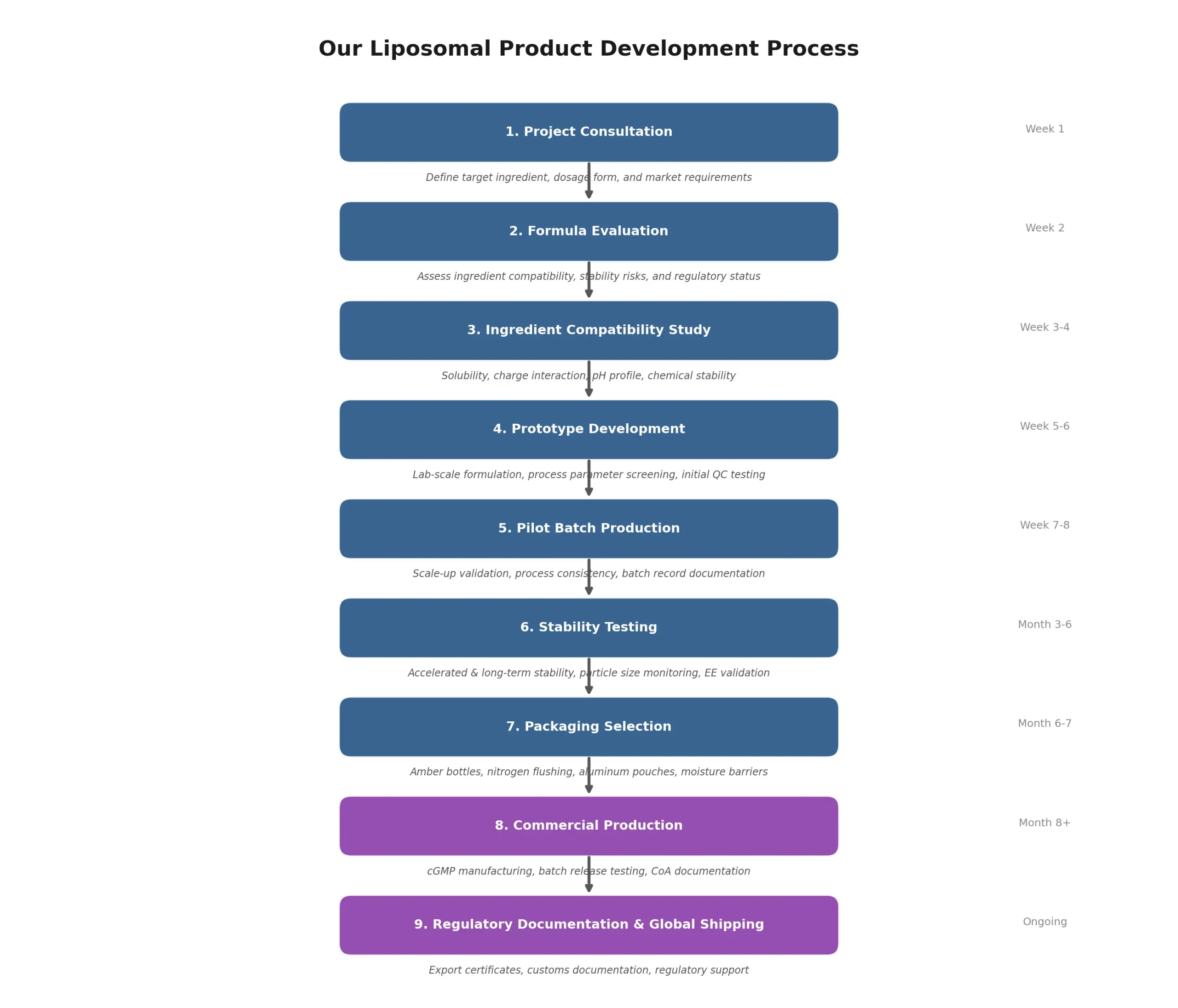
| Stage | Timeline | Key Deliverables |
| 1. Inquiry | 1–3 days | Requirements document; initial feasibility assessment |
| 2. Formula & Quotation | 3–7 days | Custom formula proposal; pricing; regulatory pathway review |
| 3. Sample | 1–2 weeks | Physical sample with COA; organoleptic evaluation |
| 4. Pilot Batch | 2–3 weeks | 1–10 kg powder or 5,000–50,000 units; stability samples retained |
| 5. Scale-Up | 3–4 weeks | Process parameter lock; equivalence data; batch record validation |
| 6. Commercial Production | Per schedule | Full-scale manufacturing; in-process controls; finished product testing |
| 7. QC Release & Delivery | 1–2 weeks | Final COA; regulatory documentation; export logistics |
Commercial Production Overview
Formula Design → Pilot Batch → Scale-Up Validation → Commercial Production → QC Testing → Global Delivery
| Packaging Format | Barrier Properties | Best For | Shelf Life Support |
| Aluminum Laminate Pouches | Excellent moisture, oxygen, and light barrier | Stick packs; bulk powder; export shipments | 24–36 months |
| HDPE Bottles + Induction Seal | Good moisture barrier; moderate oxygen barrier | Standard retail; North American market | 18–24 months (with desiccant) |
| Blister Packs (Alu-Alu) | Excellent individual dose protection; zero moisture transmission | Pharmacy channel; clinical trials; premium positioning | 24–36 months |
| Amber Glass Bottles | Excellent light protection; good oxygen barrier (with proper seal) | Liquid formulations; premium positioning | 12–18 months (liquid) |
| Nitrogen-Flushed Containers | Displaced oxygen reduces oxidation risk | High-value formulations; extended shelf life targets | +6–12 months extension |
Packaging Components
- Desiccants:Silica gel canisters (1–3 g per bottle, depending on headspace volume) for powder products
- Oxygen Absorbers:Iron-based scavengers for oxygen-sensitive formulations
- Nitrogen Flushing:Applied during filling to reduce headspace oxygen to <3%
- Secondary Packaging:Cartons with UV varnish for light protection; tamper-evident seals
Storage Recommendations
| Product Form | Recommended Storage | Acceptable Range | Critical Warnings |
| Powder (spray-dried) | 15–25°C; <60% RH | 5–30°C; <75% RH | Protect from moisture and direct sunlight |
| Powder (freeze-dried) | 2–8°C preferred; 15–25°C acceptable | 2–30°C; <60% RH | Refrigeration extends shelf life; protect from moisture |
| Liquid suspension | 2–8°C | 2–25°C (short-term) | Shake well before use; do not freeze |
| Capsule / Softgel | 15–25°C; <60% RH | 5–30°C; <75% RH | Protect from heat and humidity |
Standard Batch Documentation
- Certificate of Analysis (COA)— Batch-specific test results for all specification parameters
- Product Specification— Complete quality specification with test methods and acceptance criteria
- Technical Data Sheet (TDS)— Product description, composition, physicochemical properties, handling guidelines
- Material Safety Data Sheet (MSDS)— Safety information, hazard classification, handling precautions, first aid
- Residual Solvent Report— GC-MS analysis confirming compliance with ICH Q3C limits
- Heavy Metal Report— ICP-MS data for Pb, Cd, As, Hg
- Microbiology Report— TAMC, TYMC, specified organism testing per USP <61>, <62>
- Stability Summary— Available stability data with storage conditions and retest period
Regulatory & Compliance Statements
- Allergen Statement— Free from major allergens; customizable per market requirements
- Non-GMO Statement— Available for non-GMO formulations
- BSE/TSE Statement— Free from bovine spongiform encephalopathy / transmissible spongiform encephalopathy risk materials
- Halal Certificate— Available upon request
- Kosher Certificate— Available upon request
- ISO 22000— Certified
- FSSC 22000— Certified
- cGMP Compliance— Per 21 CFR Part 111 (US) and applicable EU regulations
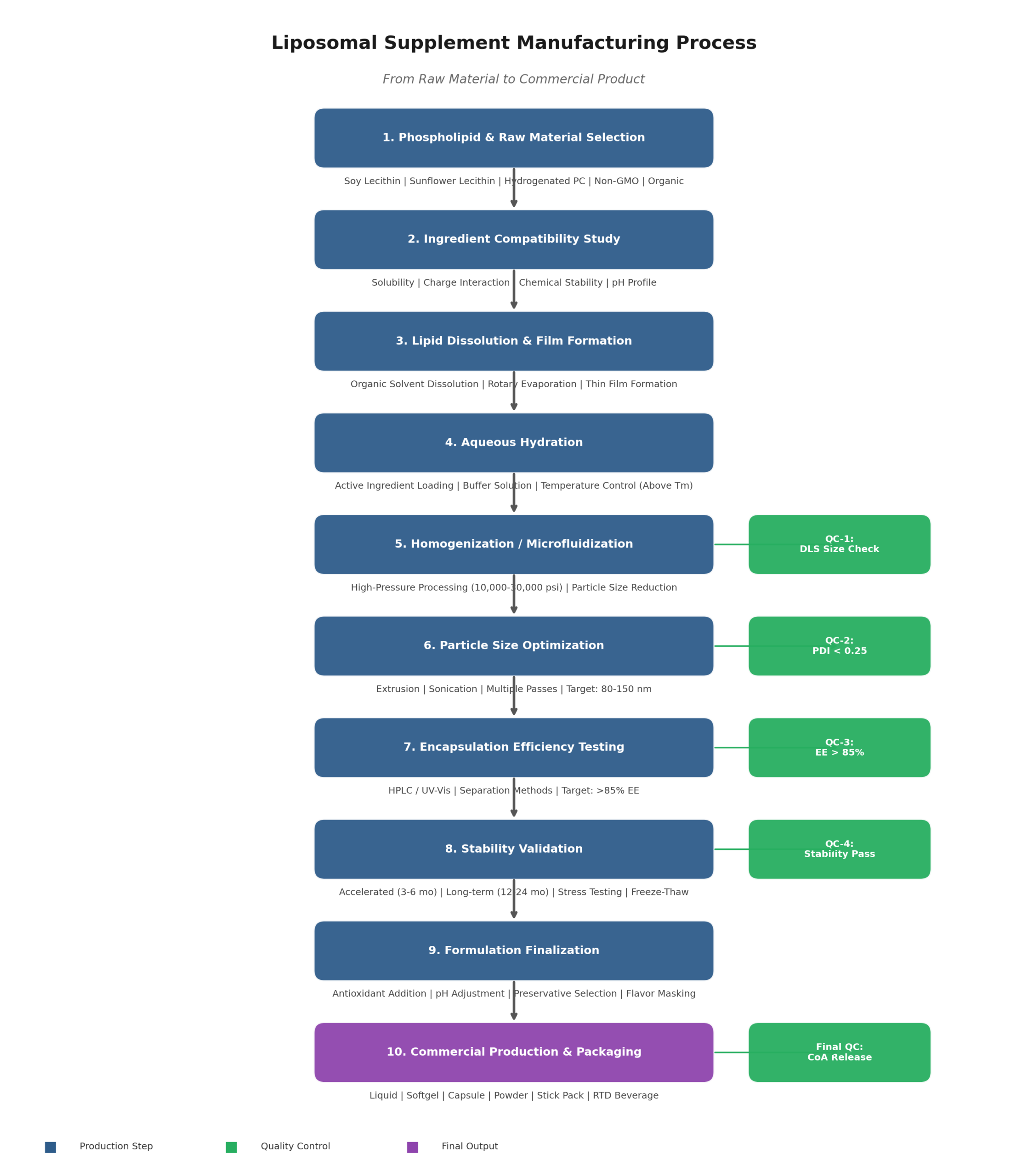
1. Quality Standards
Liposomal fisetin manufacturing follows strict quality control protocols to ensure stability, safety, and batch-to-batch consistency across commercial production.
Core Quality Parameters
- Encapsulation efficiency (EE%): ≥75% target range
- Particle size: 100–350 nm (liquid systems)
- PDI (uniformity): ≤0.25 preferred
- Zeta potential: stability-optimized for anti-aggregation performance
Manufacturing Standards
- GMP-compliant production environment
- Heavy metal and microbial testing per batch
- Stability validation (accelerated + real-time testing)
- HPLC verification for active content accuracy
2. Packaging Formats
Packaging is selected based on dosage form, oxidation sensitivity, and commercial positioning.
Liquid Liposomal Fisetin
- Amber glass bottles (premium oxidation protection)
- Food-grade PET bottles (cost-optimized retail SKU)
- Single-dose sachets/stick packs (DTC convenience format)
Powder Liposomal System
- Aluminum foil stick packs
- HDPE jars (bulk retail/supplement blends)
- Industrial drums (B2B ingredient supply)
Capsule / Softgel Formats
- HPMC / gelatin bottles (capsule SKU)
- Blister packs (pharmacy-grade distribution)
- Softgel bottles (premium lipid delivery system)
3. MOQ (Minimum Order Quantity)
MOQ varies depending on dosage form and level of customization.
- Liquid liposomal fisetin: 3,000 – 10,000 units
- Stick pack format: 50,000 – 200,000 sachets
- Hard capsules: 50,000 – 150,000 capsules
- Softgels: 300,000+ units (standard industrial run)
- Bulk powder (OEM ingredient): 25 – 200 kg per batch
4. Lead Time
Production timelines depend on formulation complexity, packaging type, and stability validation requirements.
- Sample development: 7 – 14 days
- Pilot batch production: 2 – 4 weeks
- Standard OEM production: 4 – 6 weeks
- Customized formulation + packaging: 6 – 10 weeks
Factors affecting lead time:
- Stability testing requirements
- Packaging material sourcing
- Custom formulation adjustments
- Regulatory or export documentation needs
5. Commercial Summary
Liposomal fisetin OEM production is structured to balance bioavailability performance, scalability, and retail readiness. Manufacturing feasibility is determined by dosage form selection, while packaging and MOQ are aligned with brand positioning strategy.
Ready to Develop Your Liposomal Products with KS Nutripharma?
Whether you are launching a new premium liposomal supplement or expanding your existing product portfolio, our formulation scientists and manufacturing team are ready to support every stage of development—from concept and pilot production to full-scale commercial manufacturing.
Let’s Build Your Next Liposomal Supplement Together
✔ Custom Formula Development
✔ OEM & Private Label Manufacturing
✔ Pilot Batch Production
✔ Regulatory Documentation
✔ Global Export Support
Request a Formula Consultation | Request Samples | Get an OEM Quotation