
Hawthorn Supplement OEM, ODM & Private Label Service
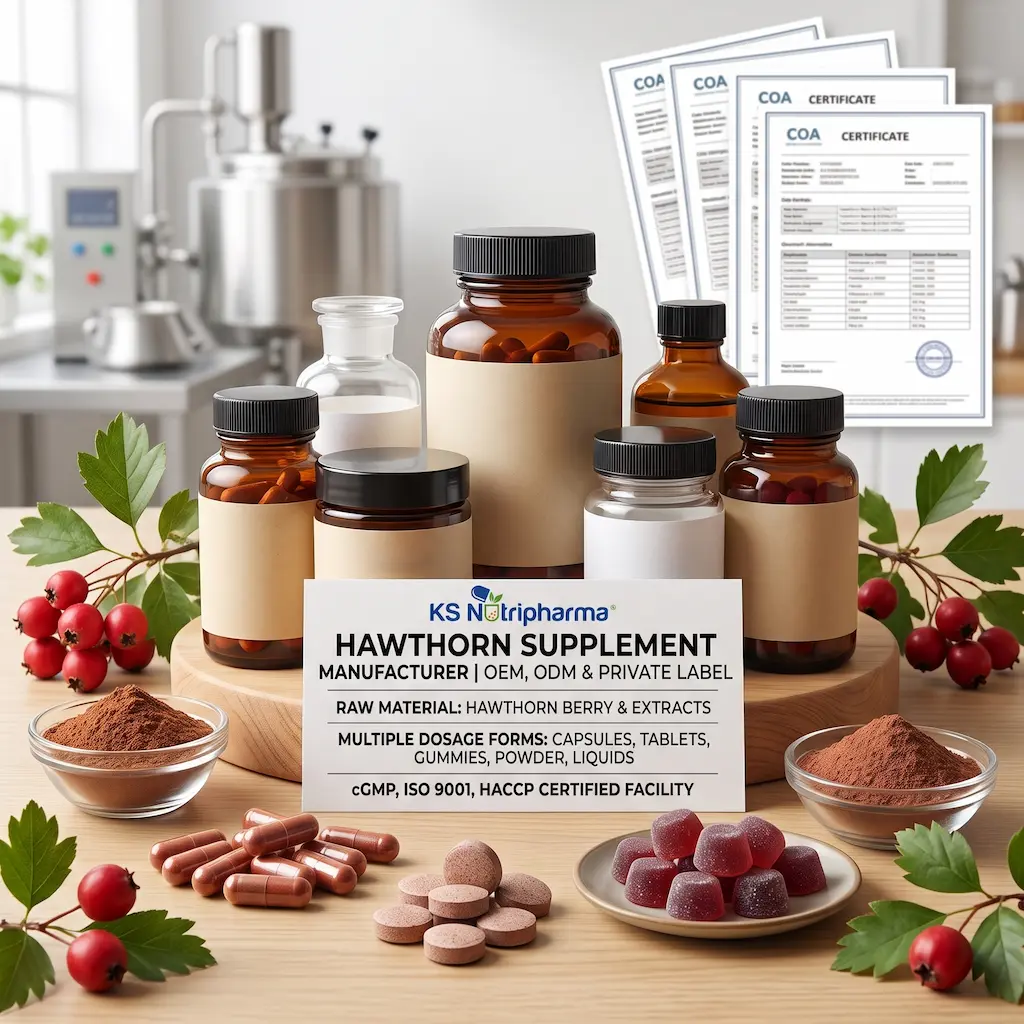
KS Nutripharma is a hawthorn supplement manufacturer for OEM, ODM, and private-label programs. We manufacture finished hawthorn berry supplements and support hawthorn extract manufacturing across capsules, tablets, powder, gummies, and liquids for liver health assortments and other botanical formulas, subject to formula and format feasibility.
Hawthorn extract is incomplete without species and plant part — “hawthorn extract 500 mg” has not yet said which one. A usable quote locks species, plant part, material basis, and any declared marker with its assay method.
cGMP · ISO 9001 · ISO 22000 · HACCP · FSSC 22000 · Halal · Kosher · batch COA
Manufacturing Capacity · Certifications · Quality Control
Capsule capacity: 5+ million capsules/day
Hawthorn Manufacturing at a Glance
Item | Typical information |
|---|---|
| Business model | OEM, ODM, private label — finished units |
| Program type | Bulk hawthorn material (kg) or finished supplement manufacturing — quoted separately |
| Primary ingredient | Crataegus berry (fruit) or leaf & flower extract |
| Multi-ingredient formulas | Each additional botanical or nutrient is specified as a separate BOM row |
| Formats | Capsule when fill is feasible; tablet, powder, gummy, liquid after feasibility |
| Scope | Human oral dietary supplements; no organic-certified program |
Procurement checklist — fields for the brief
Species · Berry or leaf & flower · Powder vs extract · Extract weight or named marker · Assay method · Extract ratio, if used · Dosage form · Serving size · Destination market · Intended label / product positioning, if already defined
Hawthorn Formula Options for OEM and Private Label
R&D reviews fill weight before artwork. Typical commercial loads are development ranges, not recommended intakes.
Named branded grades and additional botanicals are quoted from the BOM when specified and authorized. Anxiety and weight-loss hero SKUs are out of scope.
Use when: The SKU declares hawthorn fruit/berry as the primary botanical.
Specify: Berry/fruit species, powder or extract, and the declared material basis.
Trade-off: Not a leaf-and-flower specification. Not Chinese hawthorn fruit for a digestive assortment.
Typical format: Capsule.
Use when: The approved formula or reference specification names hawthorn leaf and flower, such as Crataegi folium cum flore. This names the plant material; it is not an efficacy claim.
Specify: Leaf & flower species and the named flavonoid or oligomeric procyanidins (OPC) specification, if applicable. Licensed grades such as WS 1442 appear only when the brief names them with authorization.
Trade-off: Not a berry-fruit specification.
Typical format: Capsule or tablet.
Use when: A digestive-wellness or East-Asian assortment prints Chinese hawthorn fruit. See ginger extract when ginger is the companion row.
Specify: Crataegus pinnatifida fruit and the intended powder/extract basis.
Trade-off: Western Crataegus species are a different purchase specification.
Typical format: Capsule.
Use when: Hawthorn sits beside grape seed, garlic, olive leaf, or hibiscus on a cardiovascular-wellness stack. See olive leaf extract when olive leaf is named.
Specify: The hawthorn row for the named species and plant part. Each companion botanical is its own milligram line. A blend total weight cannot be quoted.
Trade-off: Hawthorn remains its own botanical row; disease-treatment claims are outside the manufacturing scope.
Typical format: Capsule.
Use when: A liver-support BOM names hawthorn as a companion row; milk thistle or artichoke remains the botanical hero.
Specify: The hawthorn row with the approved grade fields. Milk thistle or artichoke is specified separately.
Trade-off: Hawthorn remains a separate botanical row from the primary liver-complex ingredients.
Typical format: Capsule.
Choose the Hawthorn Format: Capsules, Tablets, Powder, Gummies or Liquid
Dosage form selection follows active-load and process feasibility. Berry powder, berry extract, and leaf-and-flower extract can be evaluated across capsules, tablets, powders, gummies, and liquids, subject to load, process, stability, and finished-product testing requirements.
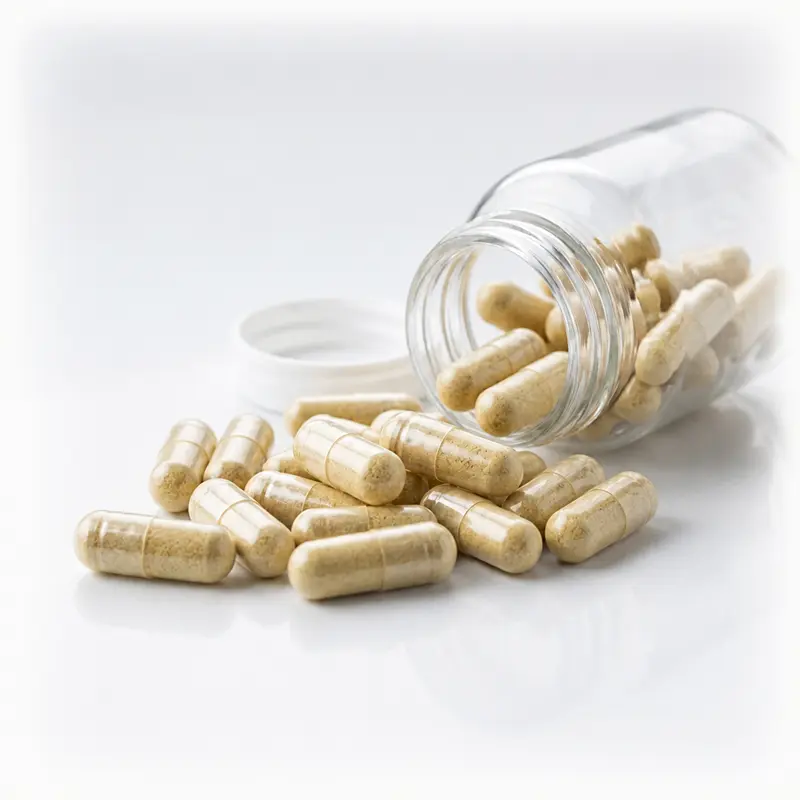
Best for: Most hawthorn finished-unit programs where the target fill is capsule-feasible.
Specify: Capsule size, fill weight, units per serving, HPMC or gelatin.
Feasibility: Berry powder occupies more volume than a concentrated leaf-and-flower extract. If the target serving exceeds practical capsule capacity, evaluate a larger capsule, additional capsules per serving, or an open-powder format before artwork lock.
→ Hard capsules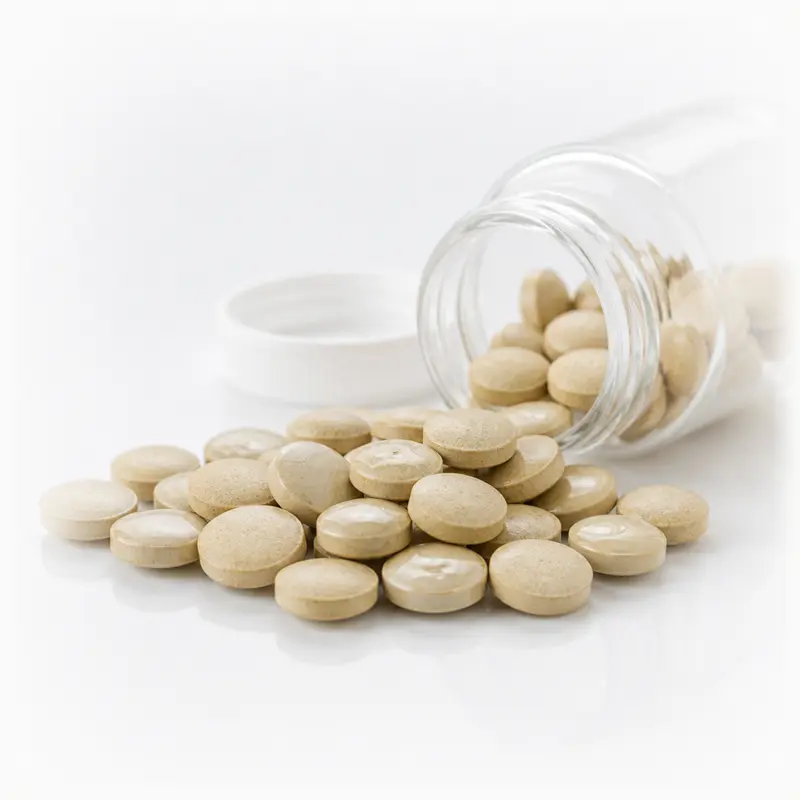
Best for: Leaf-and-flower programs that need compact count.
Specify: Tablet weight, tablets per serving, hardness, disintegration, uncoated vs film coat.
Feasibility: Leaf-and-flower extracts can present flow, moisture, and taste challenges; granulation or coating may be evaluated after compression trials. Film coating is specified after tablet weight, hardness, friability, and disintegration are within range.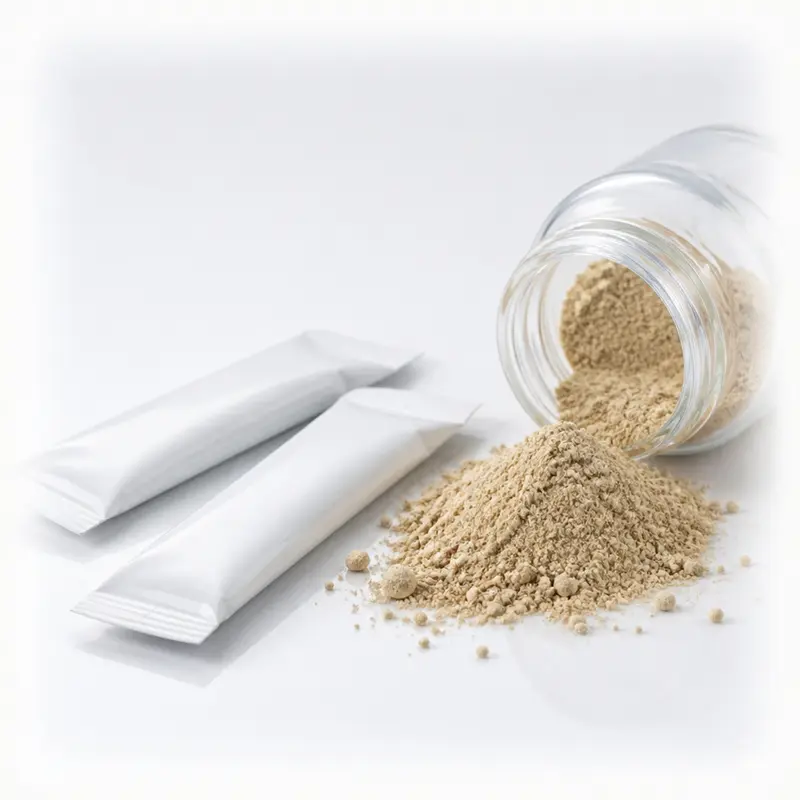
Best for: Stick or canister programs after identity is split.
Specify: Berry powder vs extract powder; serving basis; flavor and flow requirements.
Feasibility: Culinary hawthorn fruit powder and a standardized supplement extract are different raw-material specifications.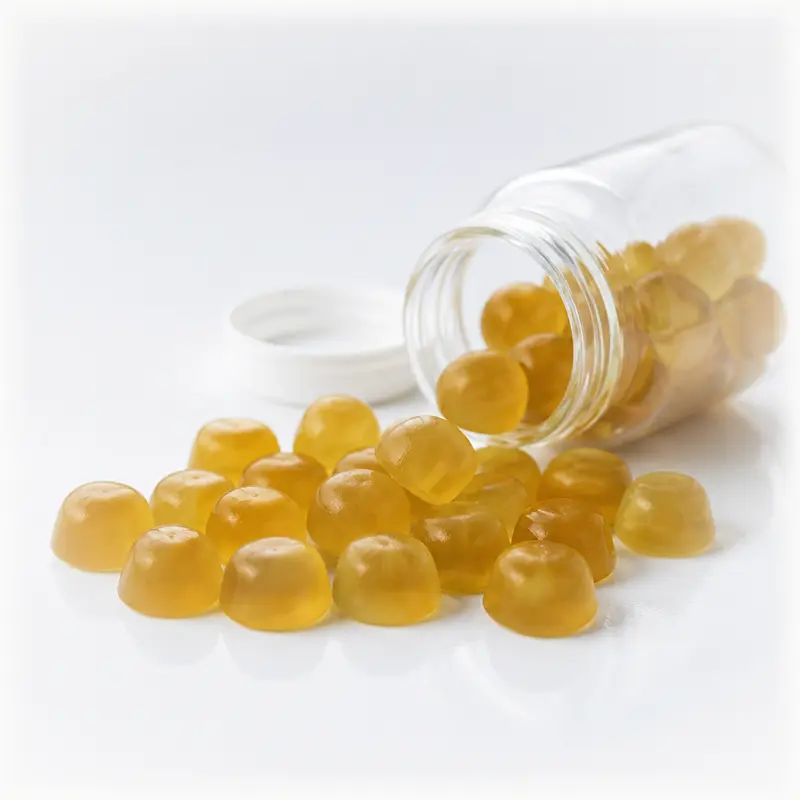 Gummies
Best for: Lower-load hawthorn gummy programs after cook feasibility.
Specify: Piece weight + pieces per serving + finished-piece assay if a marker is claimed.
Feasibility: Not the default format for a high-load leaf-and-flower extract.
→ Gummies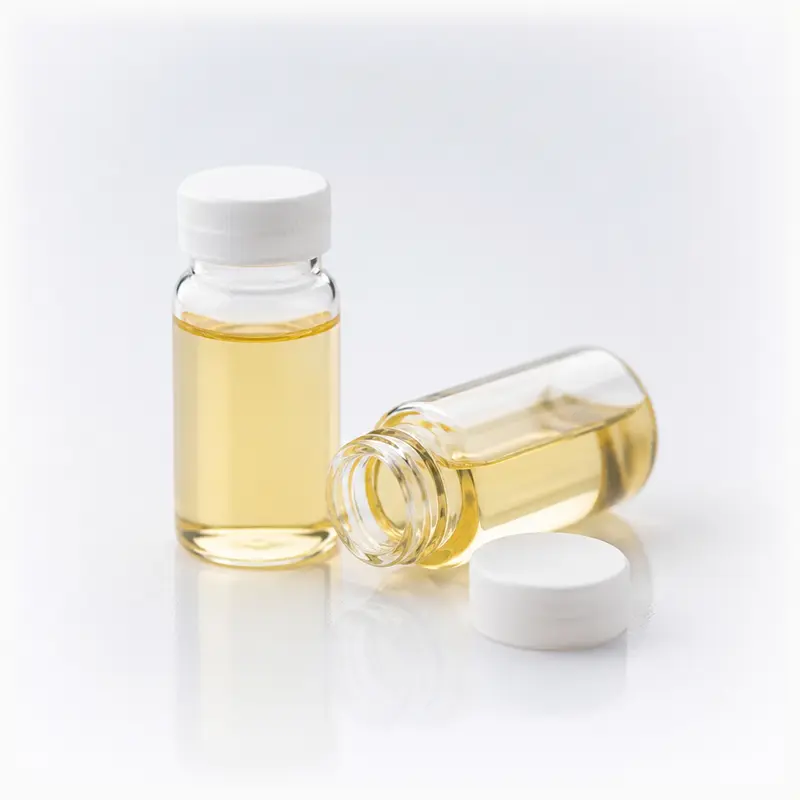 Liquid
Best for: Briefs that lock mg/mL and serving volume.
Specify: mg/mL, serving volume, preservative system, and finished-product testing method.
Feasibility: Finished oral-liquid OEM requires a defined concentration, serving volume, preservation system, and release specification. Tincture programs are scoped separately from standard finished oral-liquid manufacturing.
→ Liquids
A usable quote names species and plant part first, then the marker name and method. Extract ratio sits on its own line.
Hawthorn as a liver-complex row is specified on the liver health supplements manufacturing page when the assortment sits in that line. The hawthorn row remains a separate ingredient specification and is not interchangeable with milk thistle.
1. Berry versus leaf and flower
Berry and leaf & flower are separate raw-material specifications. Root or other plant parts require a different raw-material specification.
Use the plant part named in the approved artwork or reference specification. If the brief says berry/fruit, quote the fruit specification; if it names leaf & flower or Crataegi folium cum flore, quote the corresponding leaf-and-flower specification. Do not substitute one for the other to reach the same milligram weight.
Berry and leaf-and-flower extracts should not be compared by extract weight alone; plant part, species, marker system, and assay method must match first.
2. Species
Western programs may specify Crataegus monogyna or C. laevigata; older specifications may use C. oxyacantha / English hawthorn terminology. Chinese fruit programs may specify C. pinnatifida. Species must be matched to the plant part on the purchase order.
3. Total flavonoids versus OPC
Two suppliers can both quote “2%” while referring to different marker families or analytical methods. A percentage is not comparable until the marker and assay method match. Lock total flavonoids or a named flavonoid analyte with the expression basis and assay method. Vitexin-related language may appear on leaf-and-flower specifications; it is an example, not a default SKU.
4. Extract ratio versus standardization
Extract ratio and standardization answer different procurement questions. A 4:1 figure describes the extraction input; flavonoid or OPC standardization defines a separately measured constituent. Specify extract ratio separately from marker standardization.
5. What “hawthorn 500 mg” means
500 mg berry powder, 500 mg of a 4:1 extract, and a standardized leaf-and-flower extract are different purchases. These panel languages are what the artwork can mean — examples, not catalog SKUs or recommended intakes:
Label declaration | What it commits you to |
|---|---|
| Hawthorn Berry Powder — 500 mg | Fruit-powder identity + weight |
| Hawthorn Berry Extract — 500 mg (4:1) | Extract weight + ratio; not a marker % |
| Hawthorn Leaf & Flower Extract standardized to X% flavonoids | Plant part + marker family + method |
| Hawthorn Leaf & Flower Extract standardized to X% OPC | A different marker family from total flavonoids |
6. Label declaration → raw-material specification → finished-product verification
A 500 mg extract declaration is a label specification; it does not mean the finished-product COA will assay “500 mg extract” directly. Finished testing follows the declared marker and approved assay basis.
Two hawthorn extracts are commercially comparable only when species, plant part, material basis, marker definition, assay method, and declared extract ratio are aligned with the same finished-product specification.
7. Licensed / branded grades
WS 1442 and similar authorized branded grades appear only when the brief names the grade and the required authorization is available — not as a default catalog item.
8. Contaminant specification
Hawthorn pricing carries the applicable pesticide, heavy-metal, and microbiological panels.
Have two hawthorn extract COAs? Identity fields can be compared before price.
A higher extract load or marker target can change the finished unit configuration before artwork is locked.
Leaf-and-flower extract can present bitterness and hygroscopicity at higher loads; multiple capsules or coated tablets may become the more practical configuration after feasibility testing.
Overage is set from stability and process data for the approved grade — a project decision.
(1) Comparing “hawthorn extract” quotes before species and plant part match
Challenge
Two suppliers quote “hawthorn extract” at different prices.
Approach
Normalize the approved specification first. If species or plant part differs, treat the offers as different materials rather than competing prices.
(2) Comparing flavonoid % and OPC % as if they were equivalent
Challenge
Two suppliers both report a percentage, but the percentages refer to different marker systems.
Approach
Compare the analyte definition and assay method before using the percentage in a price comparison.
Incoming material is checked against the approved raw-material specification and applicable contaminant panels. A raw-material COA does not replace finished-product release testing. Finished-unit release follows the approved finished-product specification and declared assay basis. Batch documentation includes the applicable specification and COA. See How to Read a COA.
MOQ and production timing
Format | Typical starting quantity |
|---|---|
| Capsules | About 3,000–5,000 finished units/SKU |
| Tablets | About 5,000–10,000 finished units/SKU |
| Liquids / gummies | Quoted after format feasibility |
Typical starting quantities; final MOQ depends on formula, dosage form, packaging configuration, testing plan, and SKU requirements. A kilogram drum quote is a raw-material quote — finished-unit MOQ is separate. Samples typically take 7–15 days after specification lock; mass production typically takes 4–6 weeks after formula, artwork, testing plan, and schedule are confirmed. Reorders are usually shorter than the first commercial batch.
Can hawthorn berry and hawthorn leaf & flower be quoted as the same ingredient?
No. They are separate raw-material specifications with different COA requirements.
Is a flavonoid percentage the same as an OPC percentage?
No. They are different marker families. A percentage is comparable only when the substance and method match. A 4:1 extract ratio is not either percentage.
Is Chinese hawthorn (C. pinnatifida) the same raw material as Western hawthorn?
No. C. pinnatifida fruit is a different species/material specification from Western Crataegus programs. Species and plant part must match the purchase order.
Can the label say hawthorn lowers blood pressure?
No. Blood-pressure, heart-failure, and palpitations treatment claims are outside the manufacturing scope. Any permitted structure/function language remains the brand owner’s responsibility with local regulatory counsel.
What to Send for a Hawthorn Quote
A complete brief lets us quote against a defined specification rather than a generic price range.
Our review sequence: species → plant part → powder or extract → marker / extract ratio → dosage form → finished-product testing → quotation.
Send the completed procurement checklist above, and identify whether the RFQ is for raw material or finished units.
Already have a COA or BOM? Send the file instead of rebuilding the specification from scratch.
Typical first reply is within one business day on a complete brief. Complete briefs are reviewed by the project team. NDA is available for custom formulas and customer-specific specifications. See Confidentiality & IP Protection.
Related Supplement Manufacturing Solutions
Disclaimer: Wholesale / brand manufacturing and product-development reference only. Dietary supplements are not intended to diagnose, treat, cure, or prevent any disease. This page does not make blood-pressure, heart-failure, or palpitations claims.
Milligram figures are development examples, not recommended intakes.
Structure/function language and ingredient classification vary by country; brand owners remain responsible for finished-label compliance with local counsel. KS Nutripharma provides manufacturing feasibility and documentation support — not legal approval.
Written by KS Nutripharma Formulation Team | Reviewed by KS Nutripharma Director of R&D (PhD, Food Science | 19+ years nutraceutical development) | Technical review scope: Crataegus identity, plant-part specification, marker/assay basis, extract ratio, finished-product feasibility, and QC release | Updated September 2026