

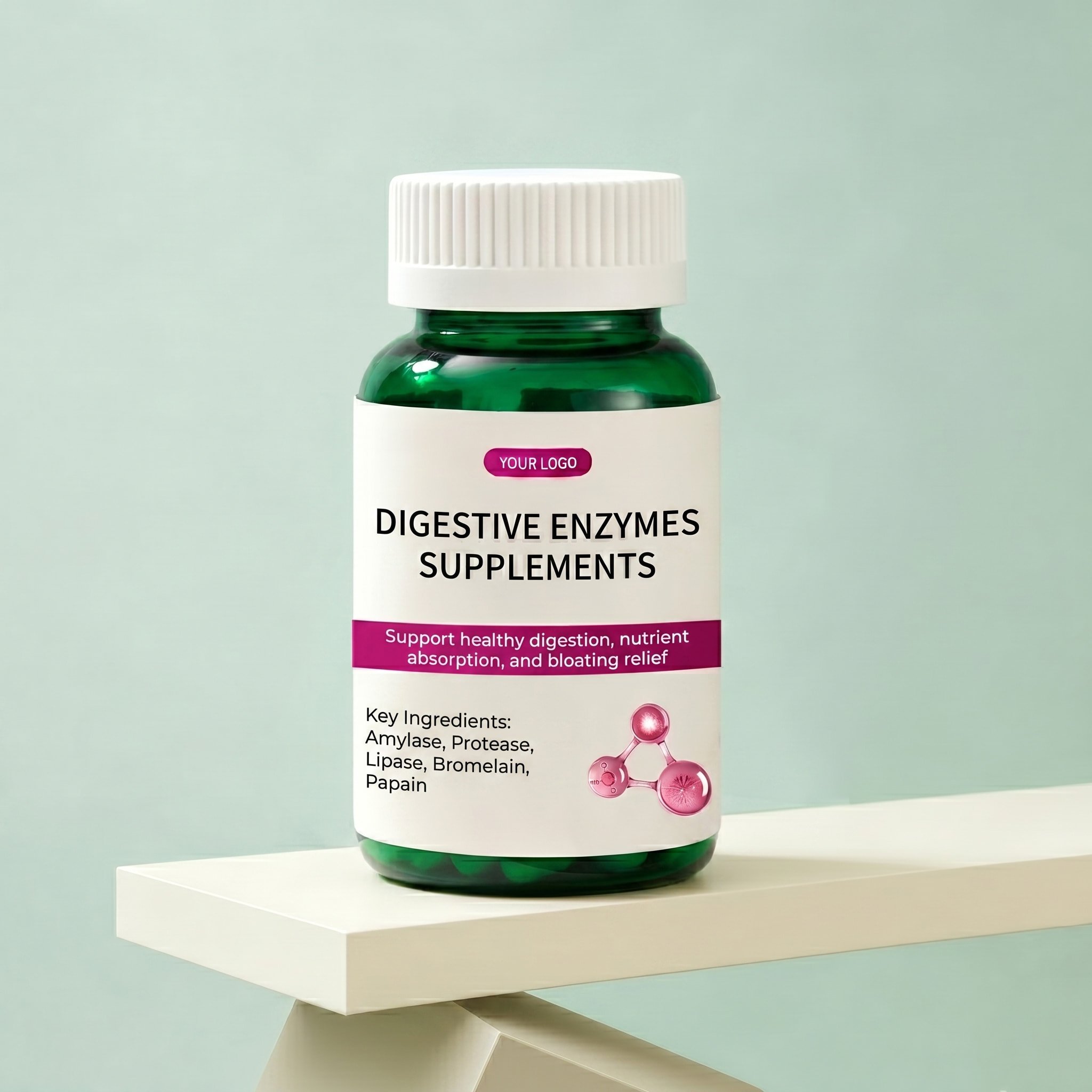
Private Label Digestive Enzymes — Capsules, Chewables, Gummies, Powders & Stick Packs
Source activity-stable digestive enzyme manufacturing for Amazon, retail, practitioner, and sports brands — from proven market formulas to scalable commercial supply.
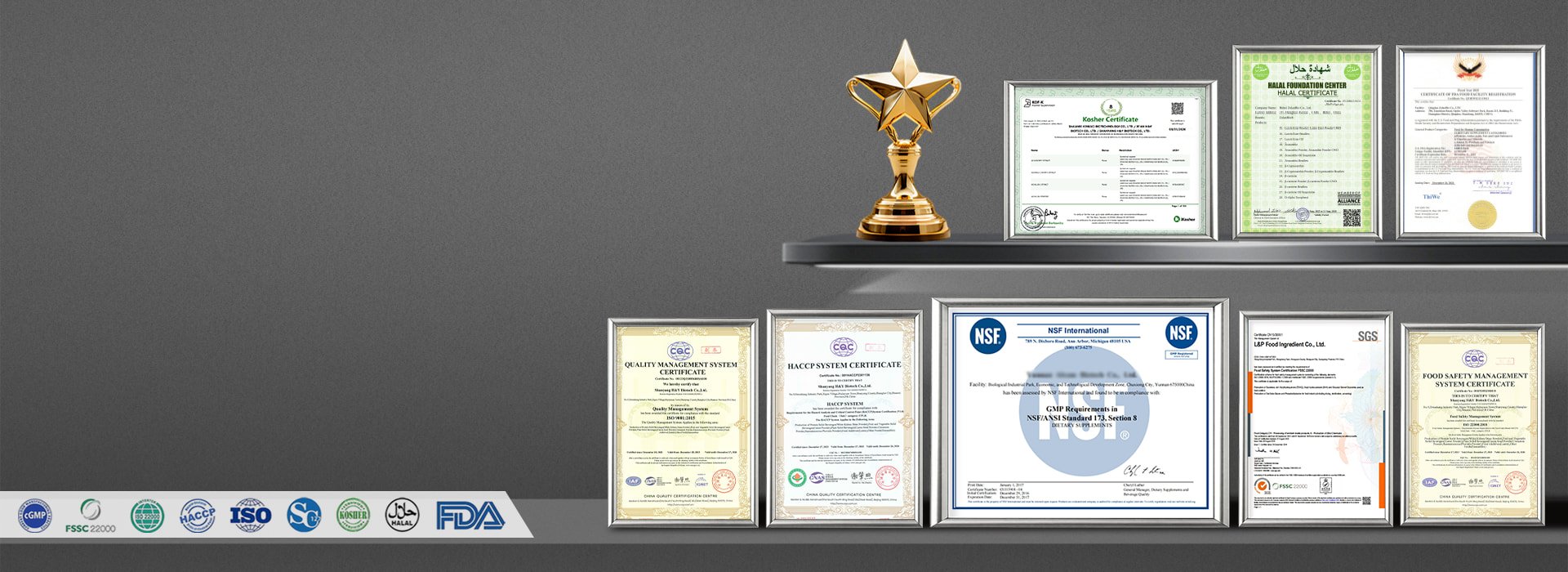
KS Nutripharma: 19+ years / 81,000+ m² facility / 12 production lines / 500+ brands / 60+ export markets / FDA-registered / cGMP / ISO 9001 / ISO 22000 / HACCP / FSSC 22000 / Halal / Kosher / Non-GMO options
Capacity planning: 5,000,000+ capsules/day / 2,000,000+ softgels/day / 12,000,000+ tablets/day / 2,000,000+ gummies/day
Formats: Capsules / Tablets / Chewables / Gummies / Powders / Stick Packs / Sachets / Liquids (project-scoped)
Give Your Team the Files They Need to Approve Us
Procurement teams usually verify these items before the first PO. Request the pack with your inquiry.
Trust item | What you can request | Why it matters |
|---|---|---|
| Manufacturing certifications | cGMP / ISO 9001 / ISO 22000 / HACCP / FSSC 22000 / Halal / Kosher documentation set | Confirms facility posture for retailer and importer questionnaires |
| FDA-registered facility posture | Registration-related confirmation for your compliance file | Common US import / Amazon documentation ask |
| Sample COA (redacted) | Enzyme activity method/units stated, microbiology, heavy metals fields | Shows how release data will look on your batches |
| Enzyme test panel list | Activity by enzyme class, microbes, moisture/Aw options, metals | Defines QC scope before artwork and PO |
| Packaging compatibility notes | Bottle + desiccant/blister / Alu stick recommendations by climate lane | Prevents activity loss after a good lab sample |
| Traceability overview | Lot linkage, retention sample practice, COA-to-batch mapping | Supports audit and recall readiness |
Typical release documents on commercial batches (project-scoped): finished-goods COA / enzyme activity specs / microbial panel / heavy metals/allergen statements/export support files/retention sample reference
Build vs. Buy: Choose Your Manufacturing Path
| Path | Best when | Trade-offs | KS Nutripharma fit |
|---|---|---|---|
| In-house manufacturing | You already own validated enzyme lines, QC, and volume | CapEx, enzyme stability expertise, idle capacity risk | Not required — use us as overflow / second source later |
| Contract OEM (custom formula) | You need brand-owned ratios, activity story, and multi-market packs | Longer lock cycle than white-label | Core model: formula + process + docs + scale |
| Private-label / mature formula | You need speed to Amazon or retail test | Less differentiation until you customize | Start from Formulas 1–12, then iterate |
Buyer rule: Lock activity units + format + packaging climate lane before artwork. Enzyme SKUs fail more often on declaration and humidity than on “ingredient list length.”
12 Market-Proven Digestive Enzyme Formulas for Private Label & OEM
These are mature commercial concepts already selling across Amazon, iHerb, pharmacy, practitioner, sports, and cross-border channels — written for launch decisions. Activity bands below are formulation planning ranges, not guaranteed label claims; finalize per market and COA method.
Market reality: “Complete digestive” searchers already buy enzymes or probiotics. Combos raise AOV and are widely sold in US private label – but moisture/compatibility must be engineered, not hoped for.
Typical formula direction
- Multi-enzyme core (protease / amylase / lipase +/- lactase / cellulase)
- Multi-strain probiotics or Bacillus coagulans (shelf-stable path)
- Optional: ginger, peppermint, fennel
- Moisture-barrier capsule + desiccant bottle
Best formats: Capsules (preferred over gummies for dual-active control)
Why brands launch it: Cross-sell from single-category heroes / clearer meal + gut merchandising
Cluster link: Pair with Probiotic contract manufacturing for twin-SKU lines.
Market reality: Aging shoppers search for gentler daily digestion and nutrient-utilization adjacent positioning (structure/function only).
Typical formula direction
- Broad multi-enzyme at moderate, tolerability-led loads
- Optional lactase for dairy-heavy senior diets
- Optional: ginger, artichoke extract, peppermint
- Optional micronutrients only when label math and interactions are clean (e.g. B-vitamins – project-scoped)
Best formats: Easy-swallow capsules / smaller count bottles
Why brands launch it: Demographic loyalty / lower “sports extreme” competition / retail senior-aisle adjacency
Market reality: Gummies drive trial and family compliance. Mature commercial enzyme gummies exist – only when bitterness masking and heat/Aw retention are honest.
Typical formula direction
- Process-tolerant enzyme selection (not every high-load protease belongs in gummies)
- Optional low-dose lactase for family dairy occasions
- Pectin or gelatin matrix per market
- Berry / citrus / mint flavor systems; sugar-free options
Best formats: Gummies (pectin vegan where required)
Why brands launch it: Higher compliance / visual merchandising / twin SKU beside capsule hero
Launch note: Confirm activity retention after cook/deposit before artwork lock.
Market reality: Stick packs convert digestion support from “pill habit” to travel and meal-ritual use – growing in lifestyle and sports channels.
Typical formula direction
- Multi-enzyme blend designed for powder flow and flavor masking
- Optional bromelain / papain for protein-meal positioning
- Rapid-dissolve carriers; bitterness mask
- Low-Aw formula + aluminum laminate sticks
Best formats: Stick packs / sachets / canister twins
Why brands launch it: Convenience / multipack gifting / beverage-brand entry into digestive aisle
R&D Pipeline: Trend Formulas Not Yet Widely Commercialized
These directions are development-ready concepts for brands that want first-mover SKUs. They are not positioned as mass-market “proven bestsellers.” Feasibility, sensory, stability, and claim language must be gated before artwork.
Compatible Ingredient Library for Digestive Enzyme OEM
Use this library to build or upgrade SKUs: lock the enzyme activity layer, then add botanicals, microbiome companions, and delivery systems shoppers already understand.
Match format to enzyme stability, sensory load, and channel. Use the linked capability pages when you need process depth for a specific dosage form.
Format | Best for | Main risk | Typical MOQ* | Lead time* |
|---|---|---|---|---|
| Hard capsules | Daily / combos / sports | Weaker acid-protection story vs delayed-release | 5,000 units | 4-6 weeks |
| Advanced hard capsule technologies (delayed-release / specialty) | High-potency / practitioner | Moisture + capsule cost | 5,000 units | 4-6 weeks |
| Tablets (chewable / OD) | Lactase / dining-out | Taste + friability | 5,000-10,000 | 5-7 weeks |
| Powders & granules (stick packs / sachets / canisters) | Meal companion, travel | Seal leaks, Aw rise, bitterness | Powder from 2,000; sticks from 10,000 | 3-7 weeks |
| Gummies | Family trial | Heat/Aw activity retention | 10,000 units | 6-8 weeks |
| Liquids / shots | Fast sensory formats | Stability + preservative system | Project-scoped | Project-scoped |
| Softgels | Oil-compatible / specialty enzyme systems | Enzyme-in-softgel feasibility gate | Project-scoped | Project-scoped |
Confirm per enzyme load, activity targets, and packaging.
Delivery technology support
- Acid protection, beadlets, moisture barriers, and multi-phase release: Advanced nutraceutical delivery systems
- Capsule engineering beyond standard fill: Advanced hard capsule technologies
- Softgel process options when the formula path requires them: Advanced softgel technologies
Digestive enzyme SKUs fail when treated like ordinary vitamin blends. These are the control points KS Nutripharma locks before scale-up.
| Control point | What we manage | Buyer confirmation before PO |
|---|---|---|
| Humidity / RH window | Controlled blending and encapsulation environments | Process RH window for your format |
| Moisture / Aw | Formula + pack designed to limit moisture-driven activity loss | Target Aw for powders, sticks, gummies |
| Temperature exposure | Low-heat handling; gummy cook gates for enzyme survival | Peak process temperature limits by format |
| Enzyme overage model | Overage tied to labeled activity promise | Written activity policy in project brief |
| Multi-enzyme ratio balance | Blend uniformity across protease/amylase/lipase classes | Uniformity checks on pilot |
| Enzyme-probiotic coexistence | Moisture, open-time, and pack matched to both actives | Combo feasibility gate before artwork |
| Bitterness / sensory | Masking for gummies, chewables, sticks | Sensory sign-off on sample |
| Packaging match | Desiccant bottles, Alu sticks, blisters matched to climate lane | Pack structure approved before artwork |
Typical failure modes (and how we gate them)
| Failure mode | Why it happens | Gate before scale |
|---|---|---|
| Activity short on COA vs label | Unit method mismatch / insufficient overage / heat-moisture abuse | Lock assay method + overage + process window |
| Gummy “great sample, dead commercial” | Cook/deposit inactivation ignored | Pilot retention assay after real process |
| Enzyme + probiotic clash | Hygroscopic enzymes raise Aw around cultures | Separate feasibility; barrier pack; often spore path |
| Claim / listing rejection | Medical language or unsupported enzyme “therapy” copy | Structure/function review per market |
| Tropical FBA complaints | Bottle inadequate for humidity lane | Blister or upgraded barrier + desiccant model |
Quality path: qualified incoming enzymes (activity verified) -> controlled process window -> in-process checks -> finished-goods release -> retention samples -> deviation review when needed
| Lactase | ALU | Target per serving + chewable vs capsule |
| Cellulase | CU | If plant-meal positioning requires it |
Commercial advantages of unit-locked specs: batch-to-batch consistency / stronger retail and practitioner credibility / fewer Amazon documentation disputes / clearer COA literacy for importers
GAP botanical cultivation bases (where used for companion extracts) support traceable plant ingredients – they are not a substitute for enzyme activity control. Enzyme programs prioritize supplier audit, activity verification, and moisture-controlled manufacturing.
| Stage | What happens | Typical timing | Exit gate |
|---|---|---|---|
| Inquiry intake | Market, format, activity promise, formula #, pack, volume | Same day – 24 hours | Written feasibility outline |
| NDA (if needed) | Formula and project coding protection | 1-3 business days | Signed NDA / project code |
| Lab / bench sample | Prototype formula, sensory, basic handling checks | 7-14 business days | Approved sample or revision list |
| Stability pre-check | Activity trend risk, moisture/Aw, pack compatibility as scoped | 2-4 weeks | Pack/formula lock recommendation |
| Pilot batch | Small cGMP run, process check, release docs | 1-2 weeks | Pilot release package |
| Commercial PO | Full run, COA, export docs, retention samples | 2-4 weeks | Released goods + traceability pack |
Pilot acceptance focus: activity vs brief / appearance / fill or seal integrity / sensory (if flavored) / pack condition after handling
If something goes wrong
- Rapid technical review (target 24-hour first response on stability, pack, or batch questions)
- Root-cause review with batch data when deviation is confirmed (72-hour RCA target for scoped investigations)
- CAPA path and replacement discussion for confirmed manufacturing-related deviations
- Formula or pack optimization before the next production round
Responsibility boundary: KS Nutripharma controls manufacturing, in-process discipline, and agreed release testing. Brand owns final label claims, marketplace copy, and storage/distribution after handover unless otherwise contracted.
Facility posture: cGMP / ISO 9001 / ISO 22000 / HACCP / FSSC 22000 / Halal / Kosher / FDA-registered / Non-GMO options
| Support area | Examples of deliverables/coordination |
|---|---|
| Release & quality docs | COA, enzyme activity specs, microbial & heavy metal panels, allergen / Non-GMO statements |
| Label coordination | Supplement Facts review support, activity unit presentation, prohibited medical-claim avoidance notes |
| Market lanes | North America, Europe, Southeast Asia, Middle East, Latin America, cross-border e-commerce |
| Export pack | Export documentation preparation, retention sample reference, batch traceability mapping |
Final label claims remain brand-owned and must be market-reviewed (including US structure/function, EU claim rules, and destination-market labeling).
| Stage | Typical volume | Designed for |
|---|---|---|
| Pilot | 500-1,000 units | Formula lock, Amazon test, pack check |
| First commercial | 5,000-10,000 units | Regional / e-comm launch |
| Full-scale | 100,000+ units | Retail and export programs |
Format references: Capsules from 5,000 (4-6 weeks) / Powders from 2,000 (3-5 weeks) / Stick packs from 10,000 (5-7 weeks) / Gummies from 10,000 (6-8 weeks) / Chewables often 5,000-10,000 (5-7 weeks)
| Stage | Duration |
|---|---|
| Requirement confirmation | 3-5 business days |
| Sample development | 7-14 business days |
| Stability pre-testing | 2-4 weeks |
| Pilot production | 1-2 weeks |
| Commercial manufacturing | 2-4 weeks |
Typical standard programs: 6-10 weeks. Enzyme complexity, gummy process validation, probiotic combos, packaging, and multi-market labeling can extend timelines.
Pack options: HDPE bottles / glass / blister / sachets / stick packs / pouches / retail cartons
E-commerce priorities: shipping durability, moisture protection, subscription-friendly counts
Clean-label options: Non-GMO systems, vegan capsules, gelatin-free gummies, simplified declarations, natural flavors – scoped per formula
Sustainability and retail aesthetics are packaged around the activity-stable formula – not the other way around.
Ready to Launch Your Digestive Enzyme SKU?
Share your target market, dosage form, enzyme activity promise (or Formula 1-12 / Trend T1-T10), whether probiotics are included, packaging, and first-order volume. Within 24 hours, KS Nutripharma returns a feasibility path covering formula architecture, stability/packaging risks, MOQ, timeline, and the verification documents available for your compliance file.
KS Nutripharma – Digestive enzyme and enzyme-probiotic contract manufacturing for global supplement brands.
Inquiry Checklist
- Target market(s): US / EU / SEA / Middle East / LatAm / cross-border
- Dosage form: capsule / chewable / gummy / stick / powder / other
- Activity promise: enzyme list + units (or “match Formula #”)
- Probiotics included? Yes/No (strain direction if yes)
- First-order volume: pilot vs first commercial band
- Packaging: bottle/blister/stick/carton needs + climate lane
What You Receive Within 24 Hours of Inquiry
Within 24 business hours, you will receive a structured feasibility reply covering:
- Recommended formula path (Formulas 1-12 or trend T1-T10) – or why a requested format is high-risk
- Enzyme activity/packaging/humidity risk flags
- Suggested dosage form and pack structure
- Indicative MOQ and timeline band
- Documentation list for your channel (COA activity fields, certs, optional stability scope)
- Next-step options: NDA, sample, or pilot planning
Lock each enzyme to a stated unit system (e.g. protease HUT, lactase ALU) and matching assay method. Do not mix incompatible unit systems on one Supplement Facts line without method notes.
Yes, after feasibility review. Process-tolerant enzyme selection and post-process activity retention matter more than copying a capsule formula into a gummy matrix.
Often yes, with moisture-barrier packaging and compatibility engineering. Spore systems are frequently more practical for Amazon FBA. Fragile high-CFU vegetative blends need a stricter gate – see also Probiotic OEM.
Activity method mismatch, humidity abuse in powder/gummy formats, over-promised labels without overage, and medicalized claim language.
Capsule pilots often 500-1,000 units; first commercial commonly 5,000-10,000. Stick packs and gummies usually need higher launch volumes.
Yes. HPMC/pullulan capsules and plant/microbial enzyme architectures are standard for clean-label lines. Animal pancreatin paths are market- and channel-dependent.
NDA-based project coding, restricted access, and controlled manufacturing documentation. Protection applies to proprietary digestive enzyme formulas, activity ratios, flavor systems, and delivery technologies.
Certification documentation set, redacted sample COA layout (with activity fields), enzyme test panel list, and a written feasibility reply with MOQ/timeline bands.
We review batch and process data, define corrective actions (CAPA), and align rework or replacement options when the deviation is manufacturing-related under the agreed scope.
Formulation and quality-supported project coordination. Technical questions on activity, packaging, and documentation are handled inside the project thread – not left as open sales follow-ups only.