

Tart Cherry Supplements OEM, ODM & Private Label Service
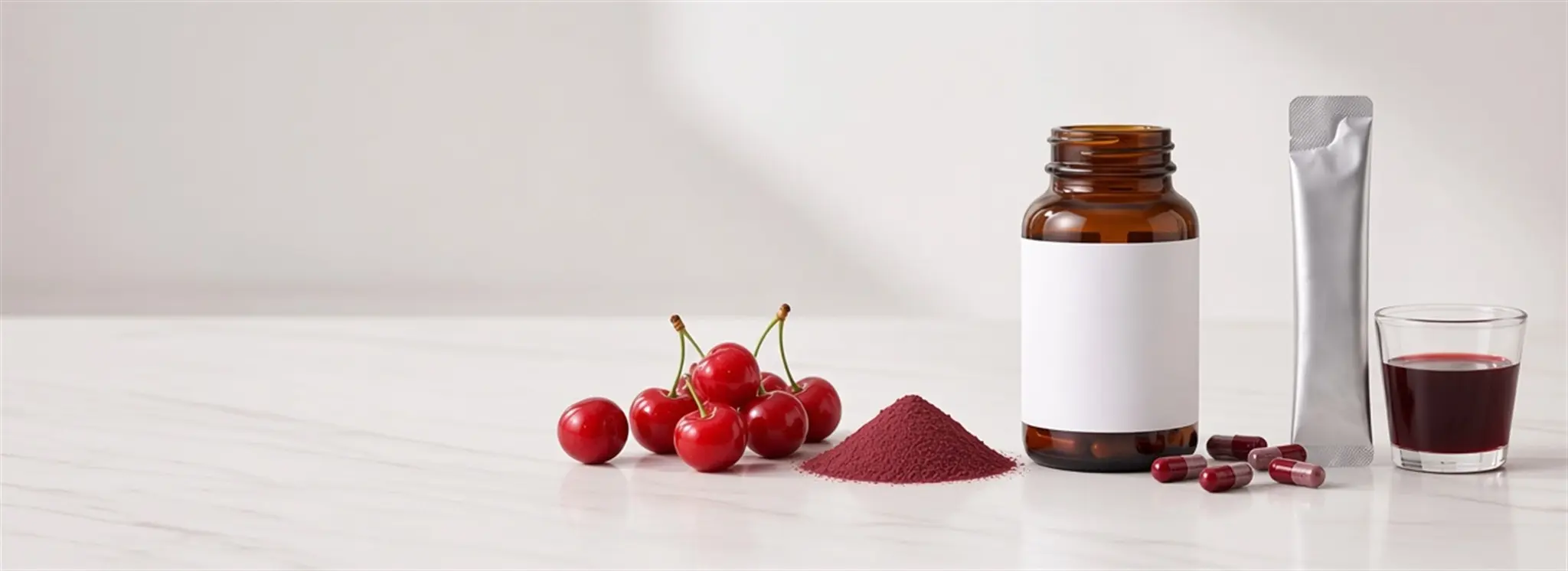
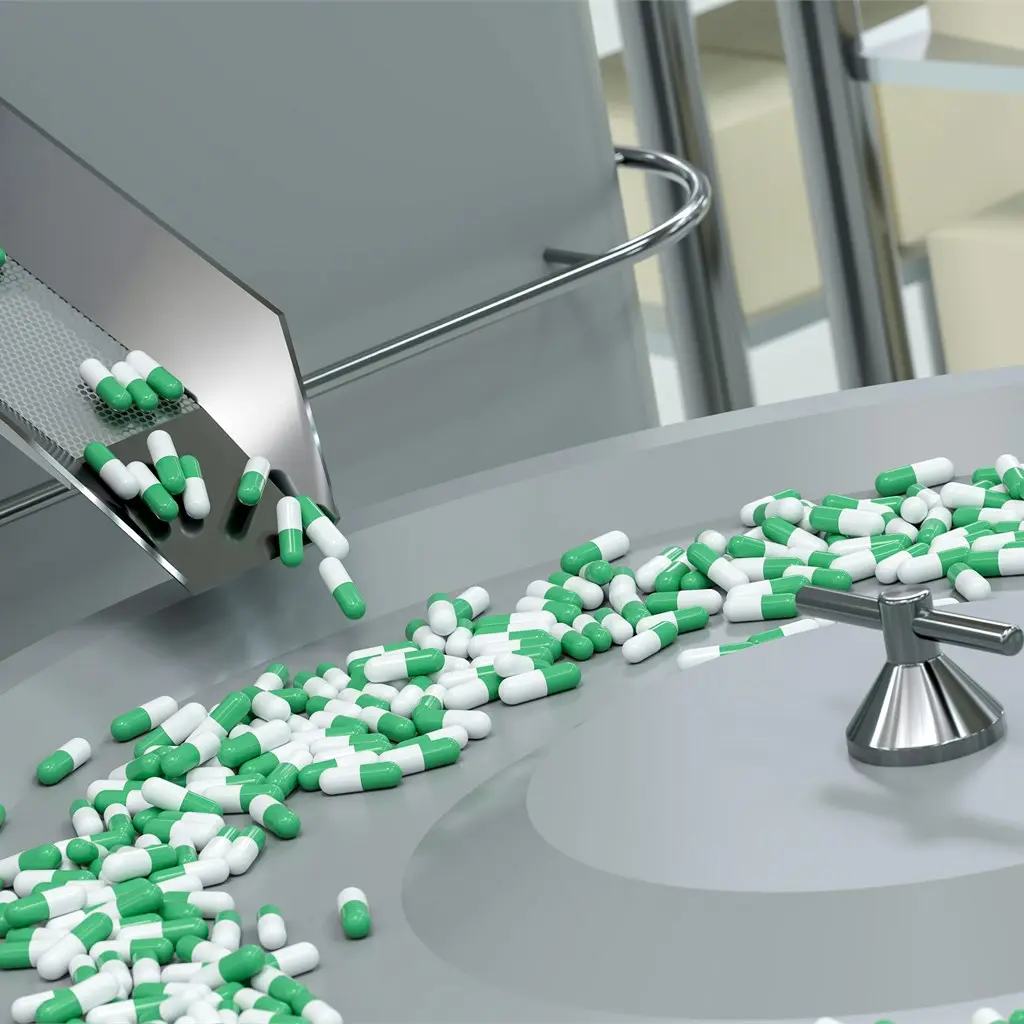
KS Nutripharma is a tart cherry supplement manufacturer for OEM, ODM, and private-label programs. We manufacture finished tart cherry dietary supplements for natural antioxidant assortments — anthocyanin- or polyphenol-specified capsules, fruit powder, solid-drink / stick powders, and oral concentrate — with specified Prunus cerasus identity, dosage form, testing panel, and batch COA.
P. cerasus is tart / sour cherry. Montmorency is specified only when the brief claims it and the supporting supplier documentation supports the cultivar identity. Unspecified P. cerasus is a different claim set. Sweet cherry (P. avium) is a different plant. Acerola (Malpighia) is a vitamin C file. “Black cherry” / “dark cherry” alone does not establish botanical identity; the PO should state the Latin name, plant part, and applicable specification.
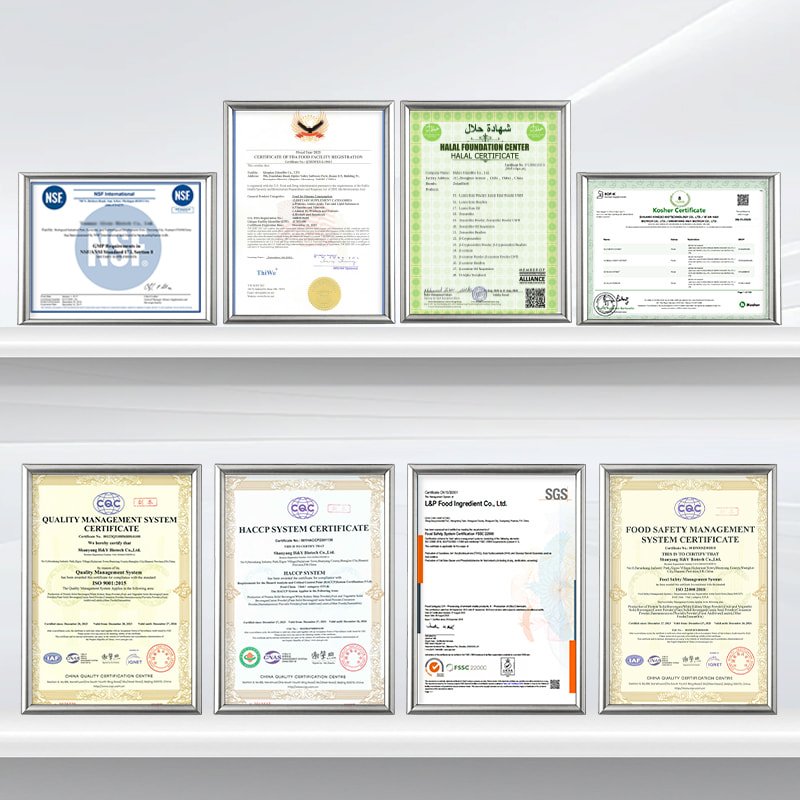
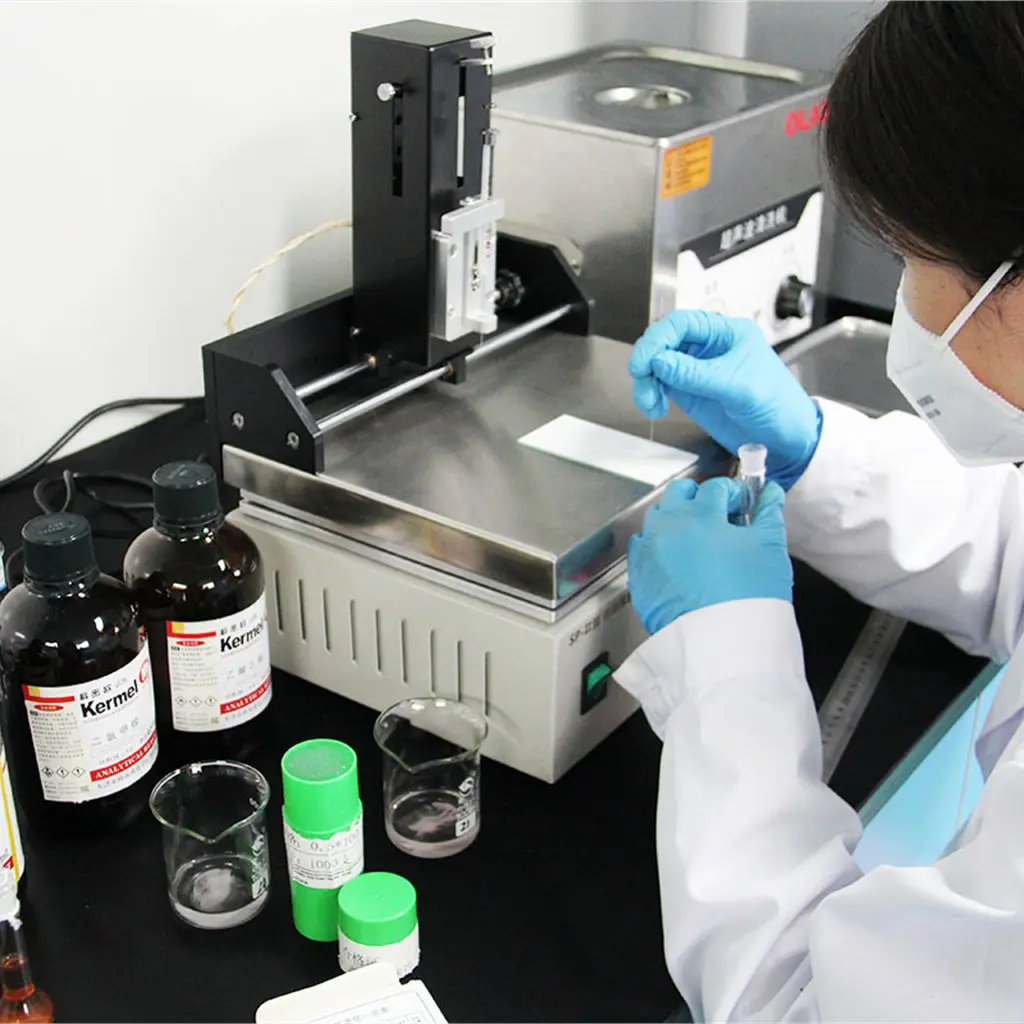
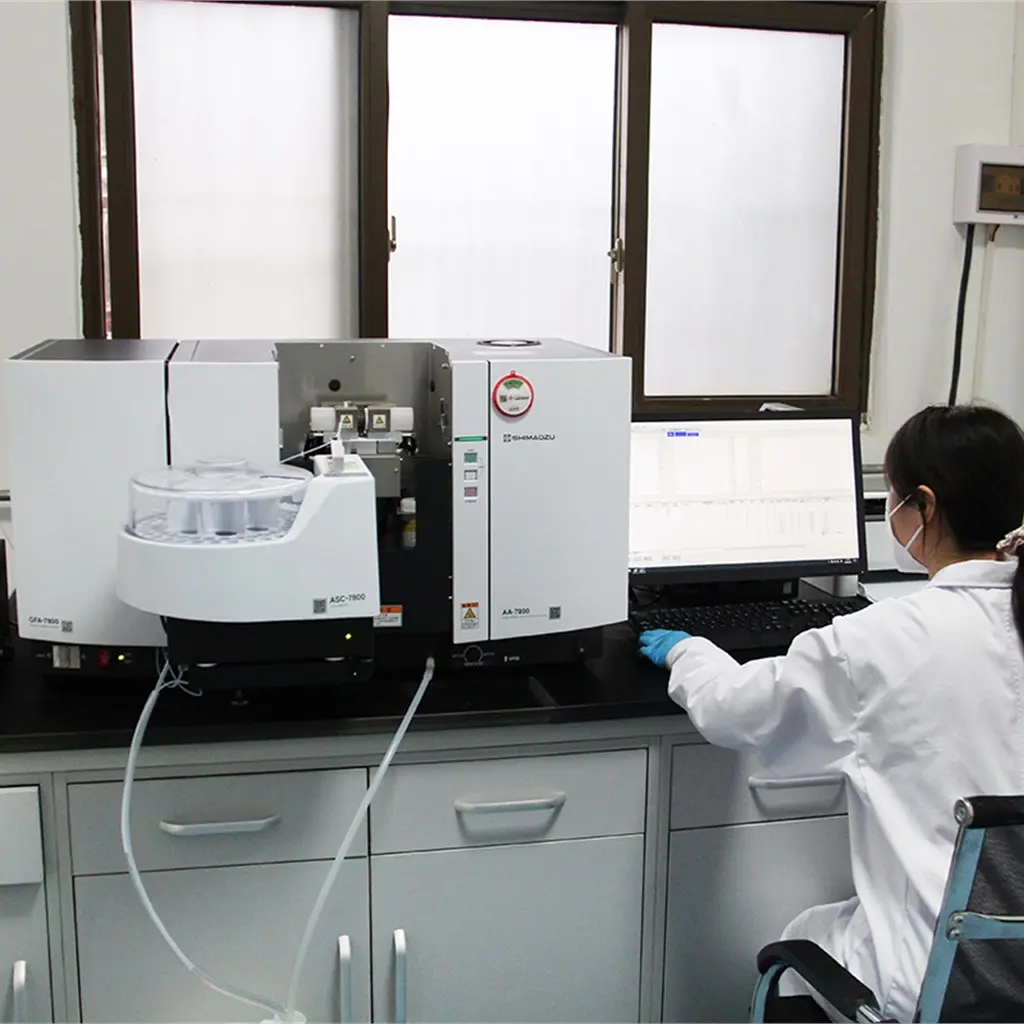
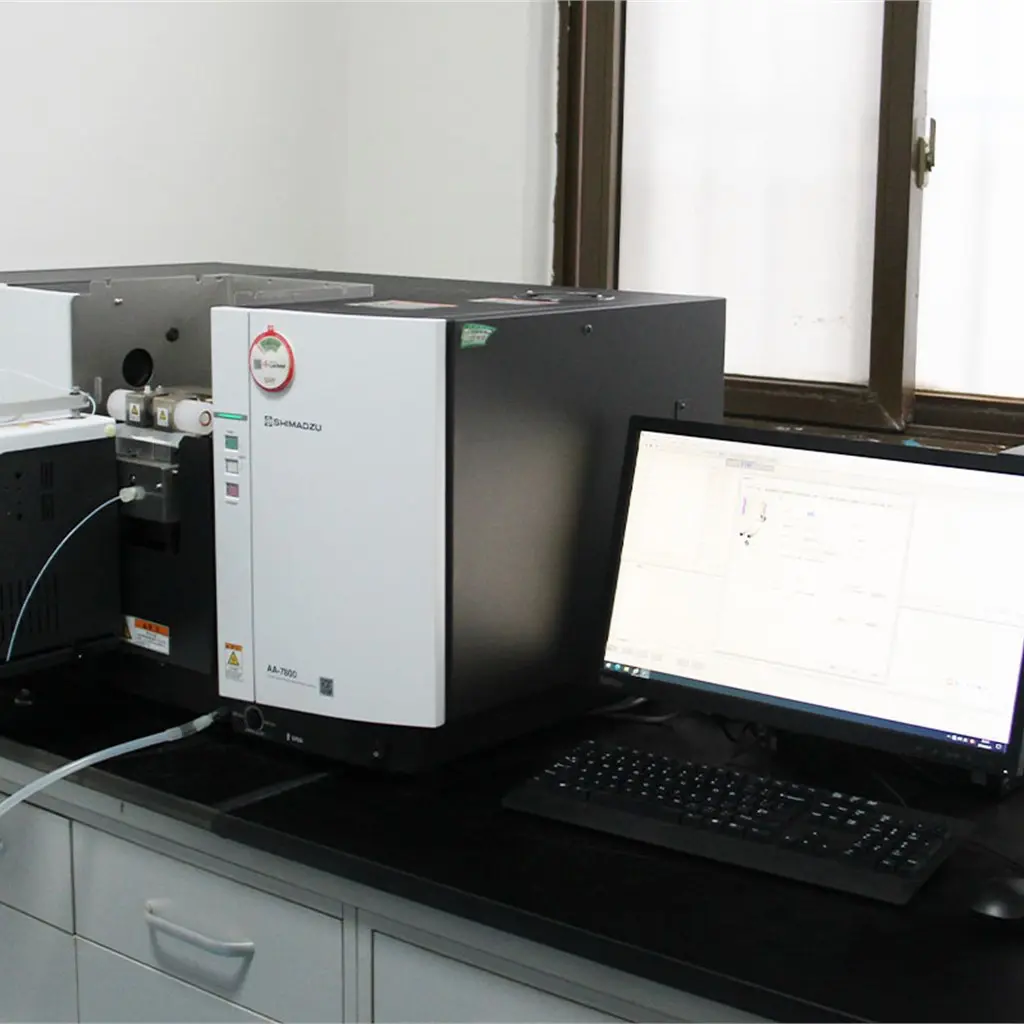
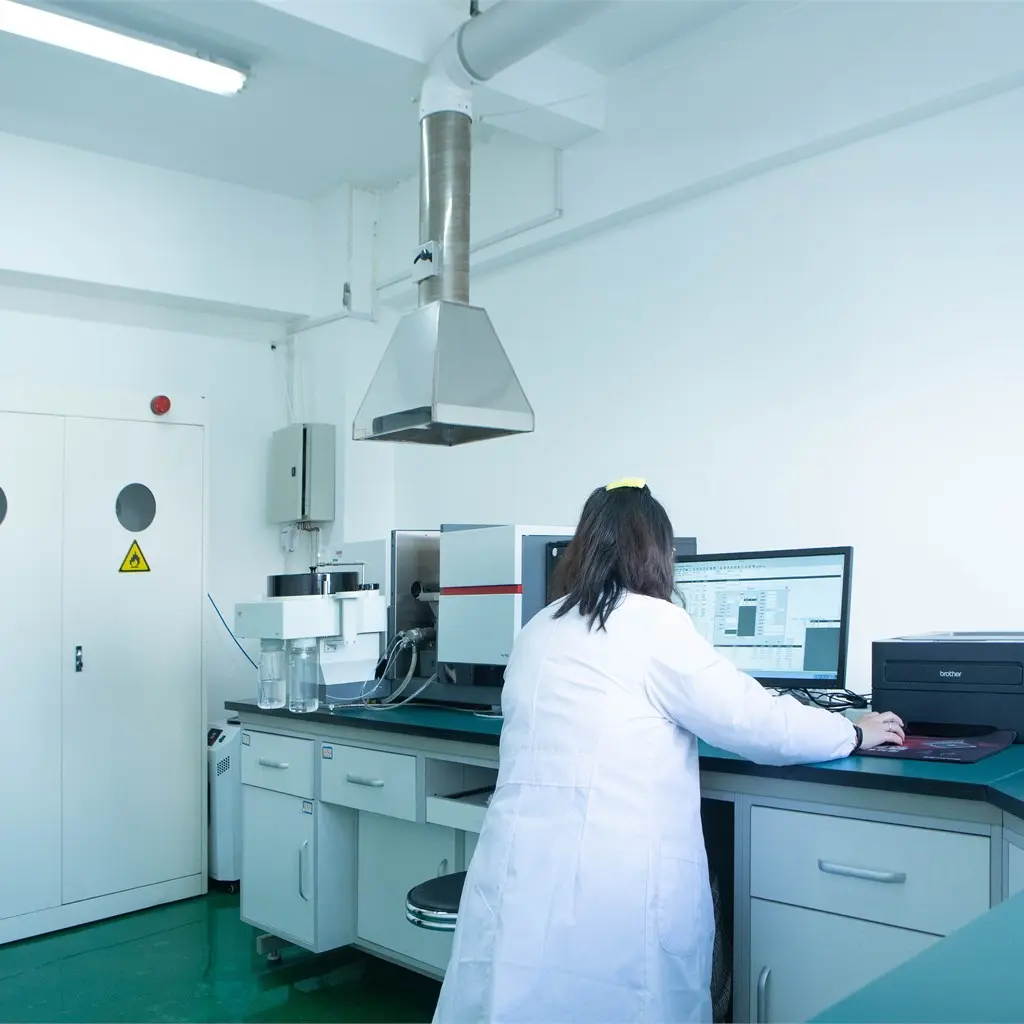
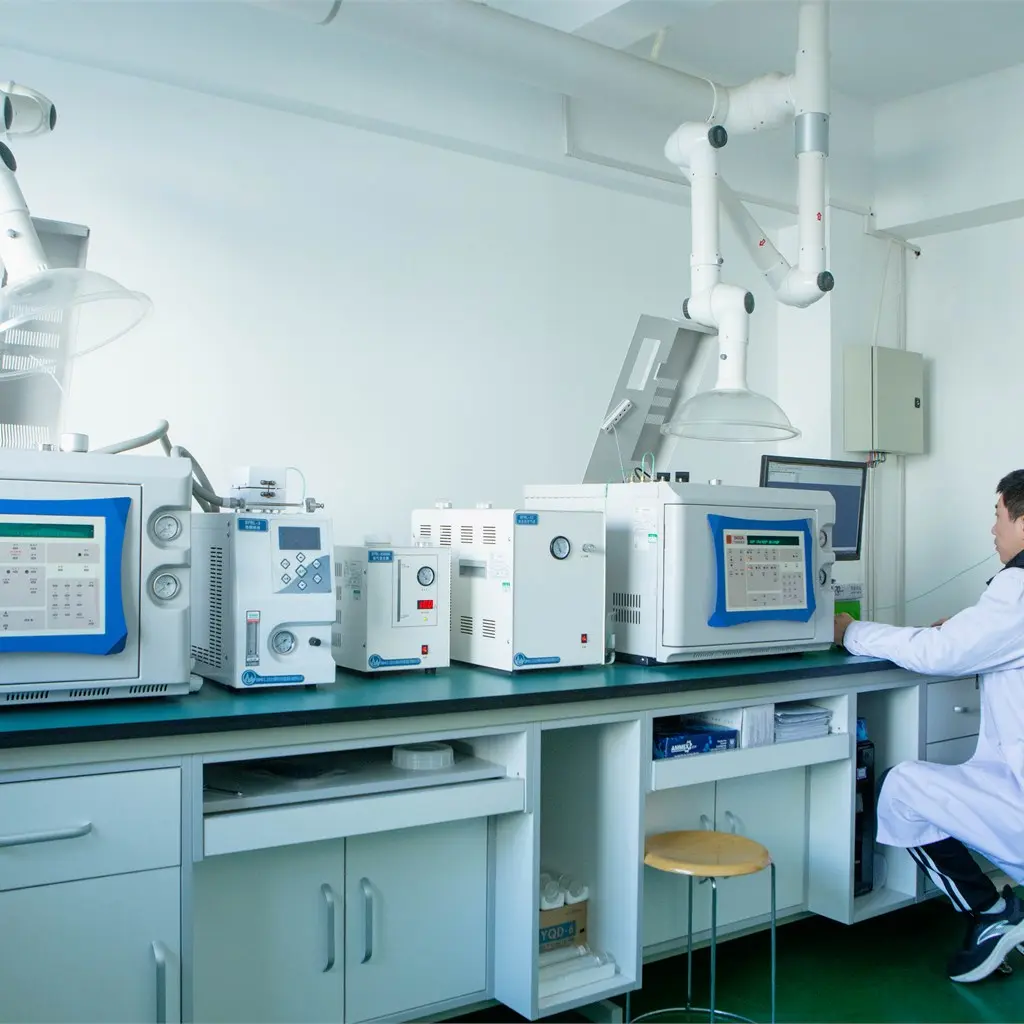
cGMP · ISO 9001 · ISO 22000 · HACCP · FSSC 22000 · Halal · Kosher · in-house lab + SGS/Eurofins pathways
About Us · Manufacturing Capacity · Certifications · Quality Control
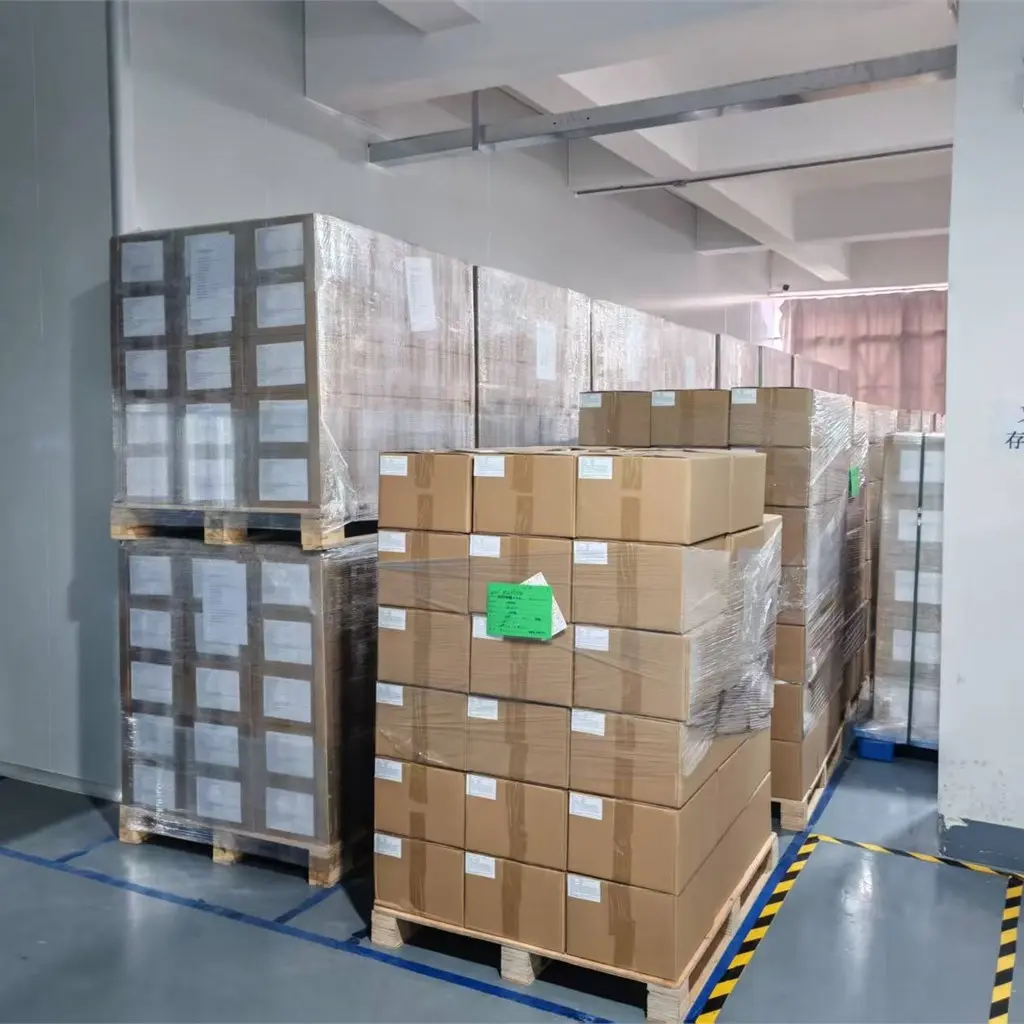
12 production lines · 81,000+ m² · 260+ professionals · since 2007 · 500+ brands · 60+ markets
Typical first reply within one business day on a complete brief. Project manager assigned. NDA available.
Tart Cherry Supplement Manufacturing at a Glance
| Capability | Typical starting point |
|---|---|
| Botanical | Prunus cerasus; Montmorency when claimed and documented |
| Material | Fruit / juice powder · named-ratio extract · anthocyanin or polyphenol extract · oral concentrate |
| Assay | Identity method and quantitative method are separate fields. Anthocyanin comparison: HPLC vs UV-Vis |
| Formats | Capsules · fruit powder · solid drink / sticks · oral concentrate after review· tablets / gummies when named. Softgel only with a compatible fill system |
| Product-development directions | Antioxidant-related positioning · exercise-recovery · evening adjacency · joint-comfort adjacency |
| Documents | Batch COA · specification · incoming and finished assay when potency is sold |
| Capsule MOQ | About 3,000–5,000 units |
| Scope | Human oral dietary supplements. Not gout / uric-acid treatment. Not an organic line |
Tart Cherry OEM Formulas We Manufacture
These ranges are formulation-development examples, not standard SKUs, recommended intakes, or guaranteed stock specifications. Final levels depend on ingredient specification, destination market, format, sensory requirements, and finished-product testing. R&D center.
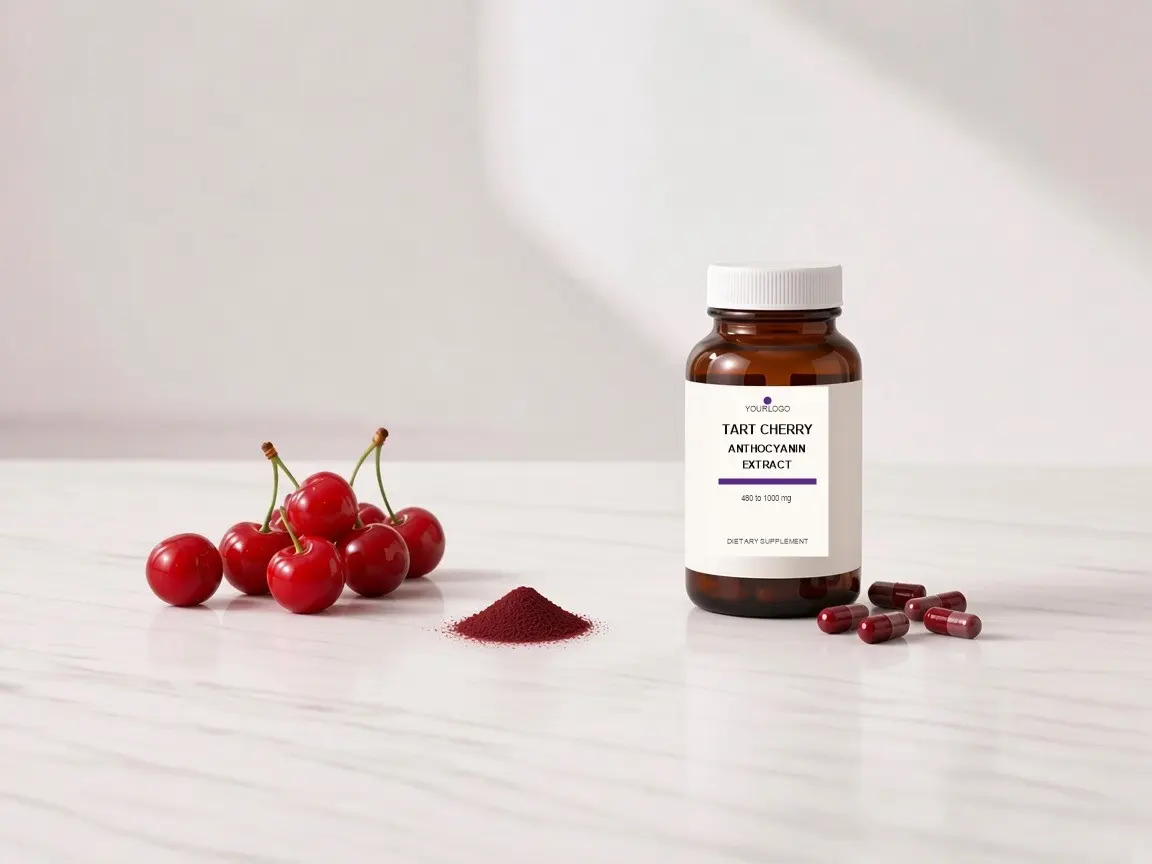
Use when: The panel prints extract milligrams plus a pigment or polyphenol number.
Specify: Extract often 480–1,000 mg/serving (including ~650 mg extract fills). One analyte per line.
Trade-off: Compact capsule and a comparable COA, against higher kg cost than fruit powder.
Default format: Hard capsule.
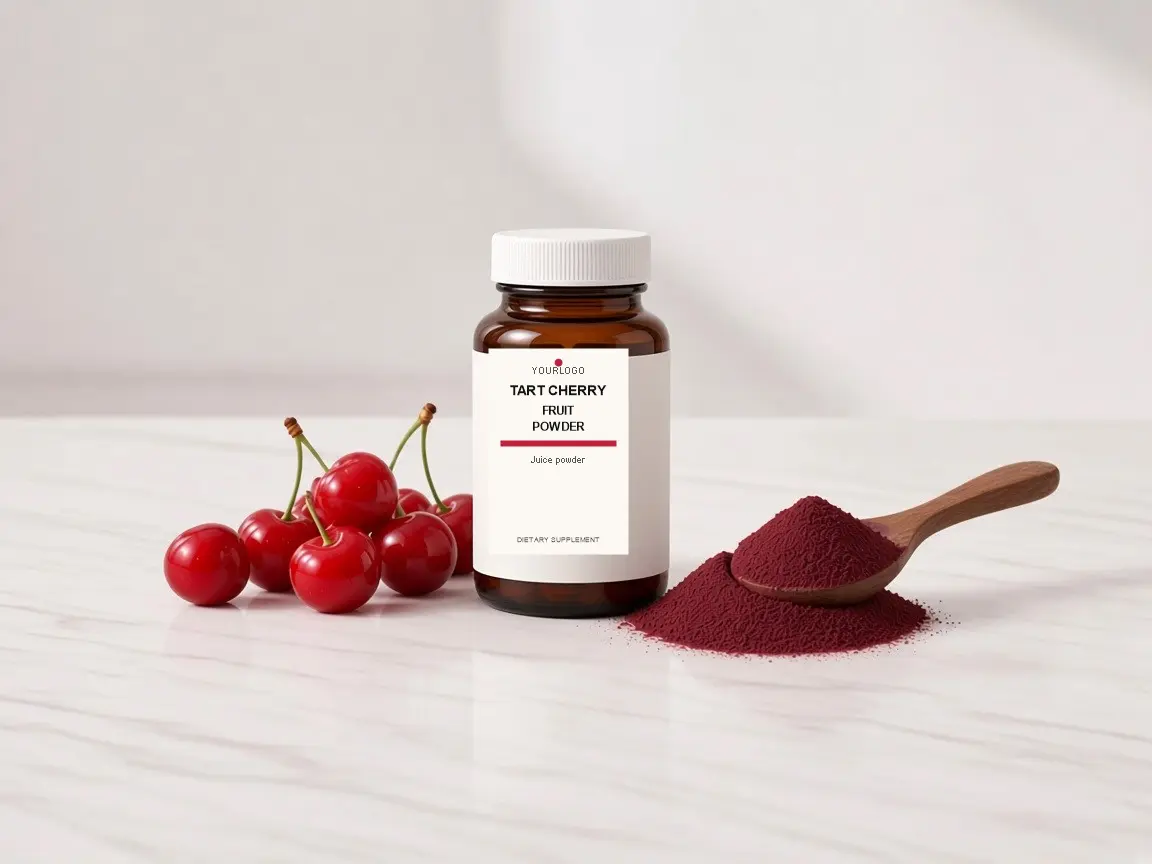
Use when: The panel prints fruit or juice identity, not a high-% extract.
Specify: Juice powder vs freeze-dried fruit; often 600–2,400 mg in a capsule or small stick, higher in a drink mix; sugar / calories if the destination file needs them.
Trade-off: Juice language and drink formats, against fill, moisture, acid, and color. A 500 mg extract serving does not translate directly into a gram-level fruit-powder serving.
Default format: Bulk powder, stick, or larger capsule.
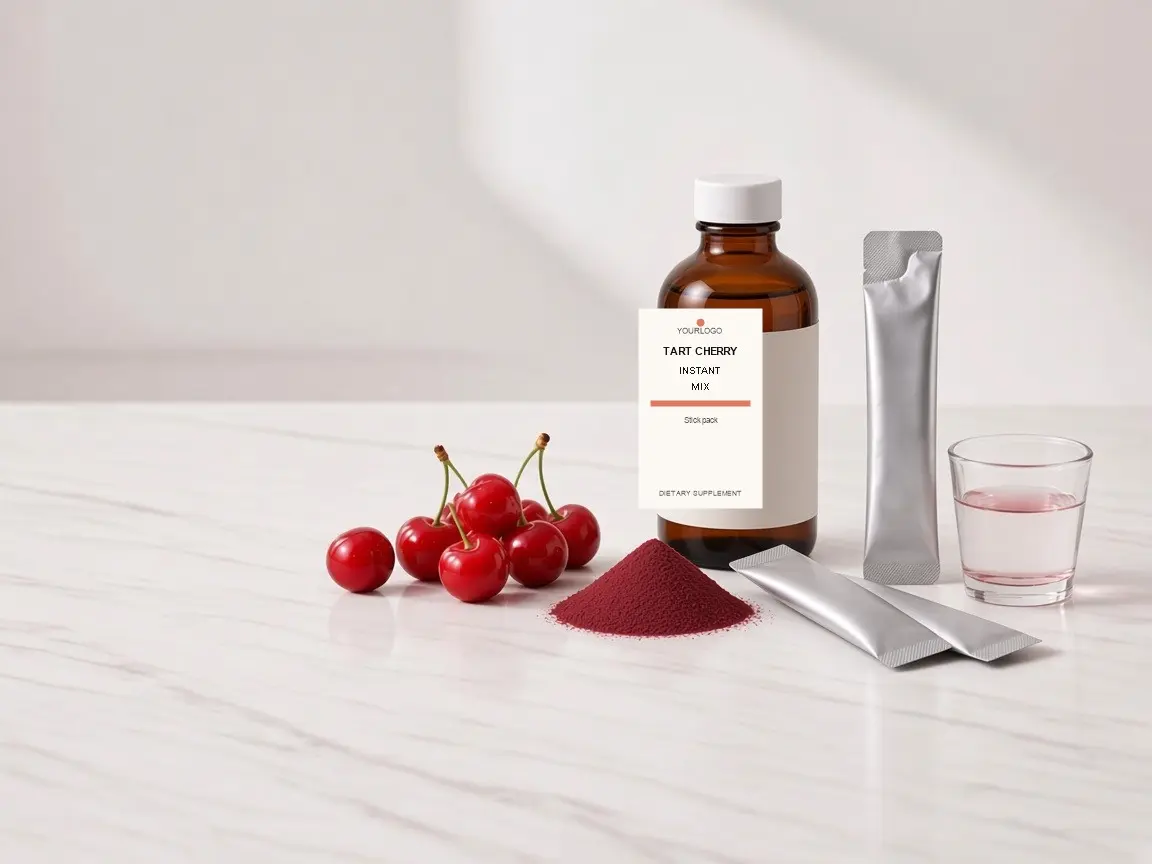
Use when: The unit is mixed in water.
Specify: Fruit-powder or concentrate-derived row, often 2–8 g powder/serving; carrier and flavor.
Trade-off: Gram-level room, against film, flavor, and a destination file that may sit closer to a beverage.
Default format: Stick / sachet / jar.
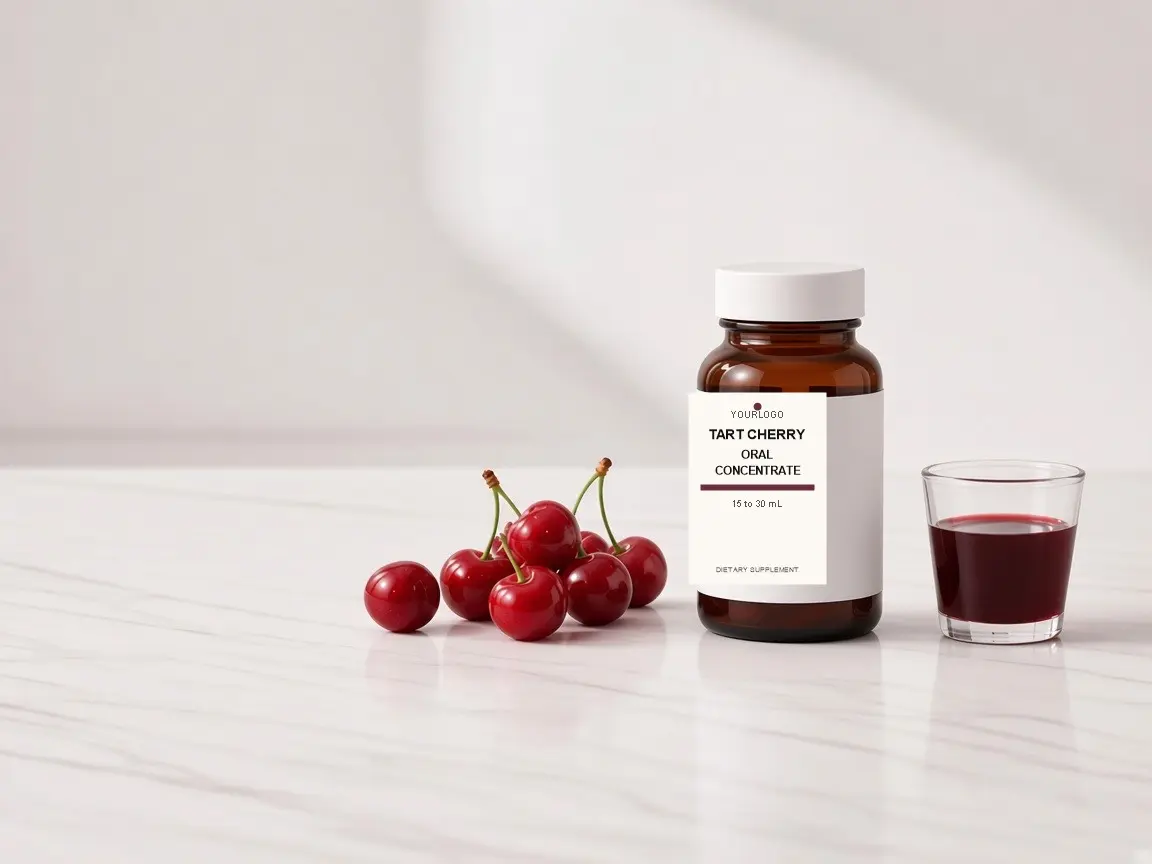
Use when: The serving is mL, not dry extract milligrams.
Specify: Solids or concentration basis; often 15–30 mL; sugar / calorie line; light / oxygen pack.
Trade-off: Volume language used in many juice dossiers, against sugar, microbiology, and pack.
Default format: Liquid (project-scoped).
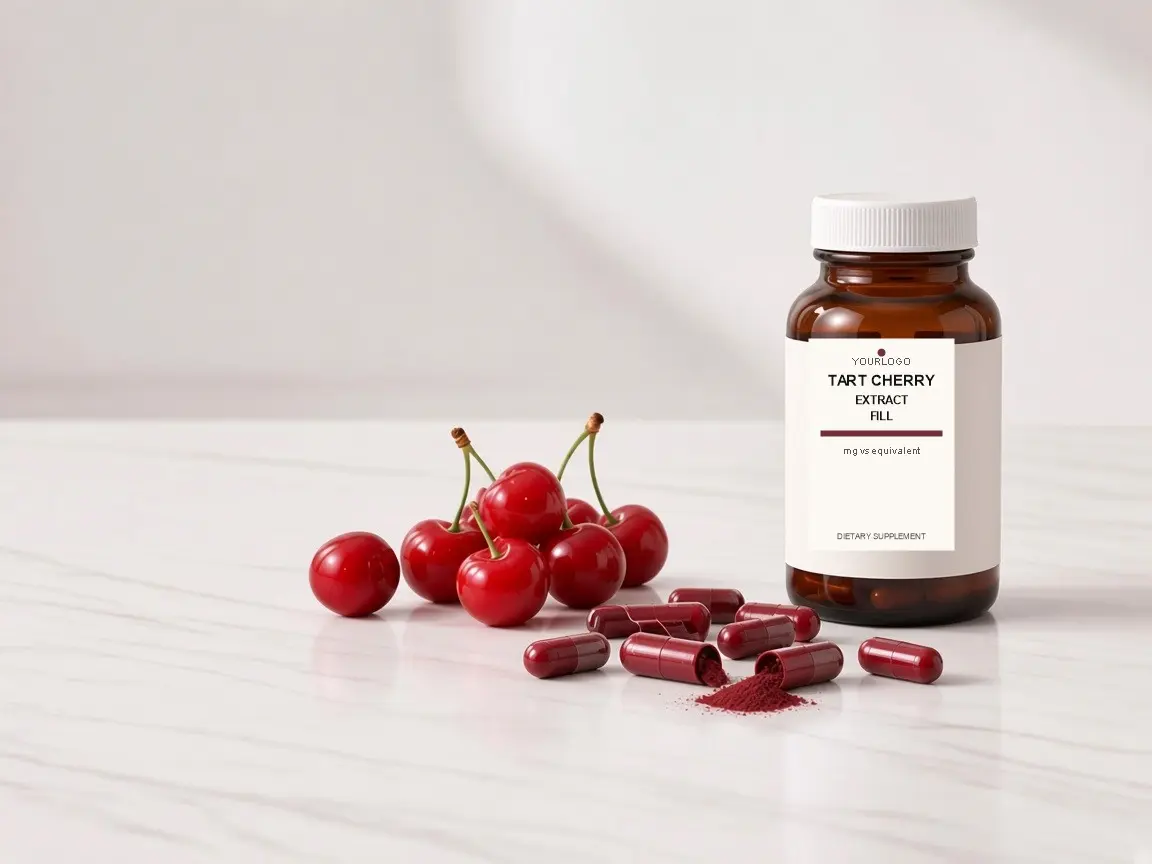
Use when: The panel will print either a straight extract weight or a fresh-fruit equivalent.
Specify: Filled extract mg (often 250–650 mg) plus the declared extract ratio. Equivalent figures (often 3,000 mg talk on a 10:1 fill) are artwork math, not the capsule fill.
Trade-off: Equivalent copy is familiar; extract milligrams are easier to defend.
Default format: Hard capsule.
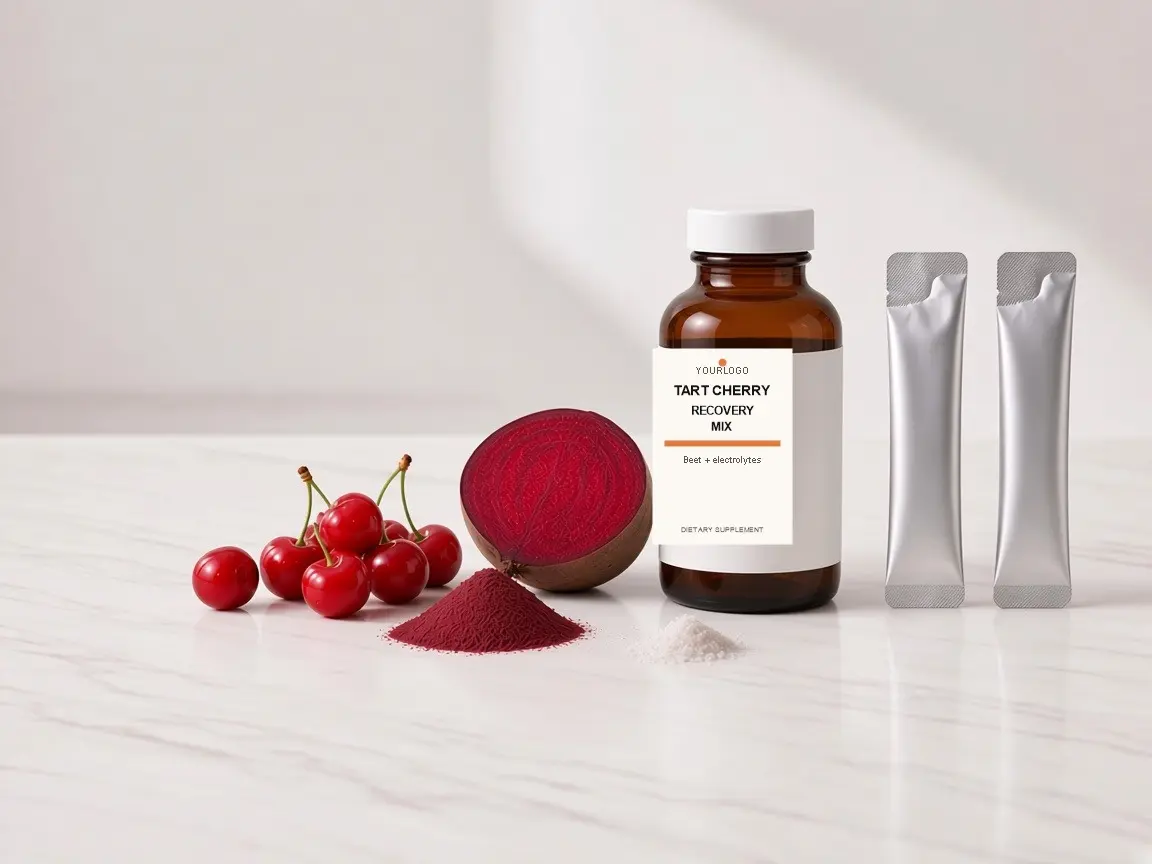
Use when: Daytime / peri-workout powder.
Specify: Tart cherry as named powder or extract (often 2,000–2,400 mg powder); beetroot + nitrate file if claimed; optional BCAA ~3,000 mg (2:1:1 only if assayed); Mg / K / Na by elemental amount.
Trade-off: Room for gram-level companions against flow, acid, and flavor. Recovery positioning follows the finished formula and destination-market claim review — not a universal efficacy claim.
Default format: Stick / jar powder.
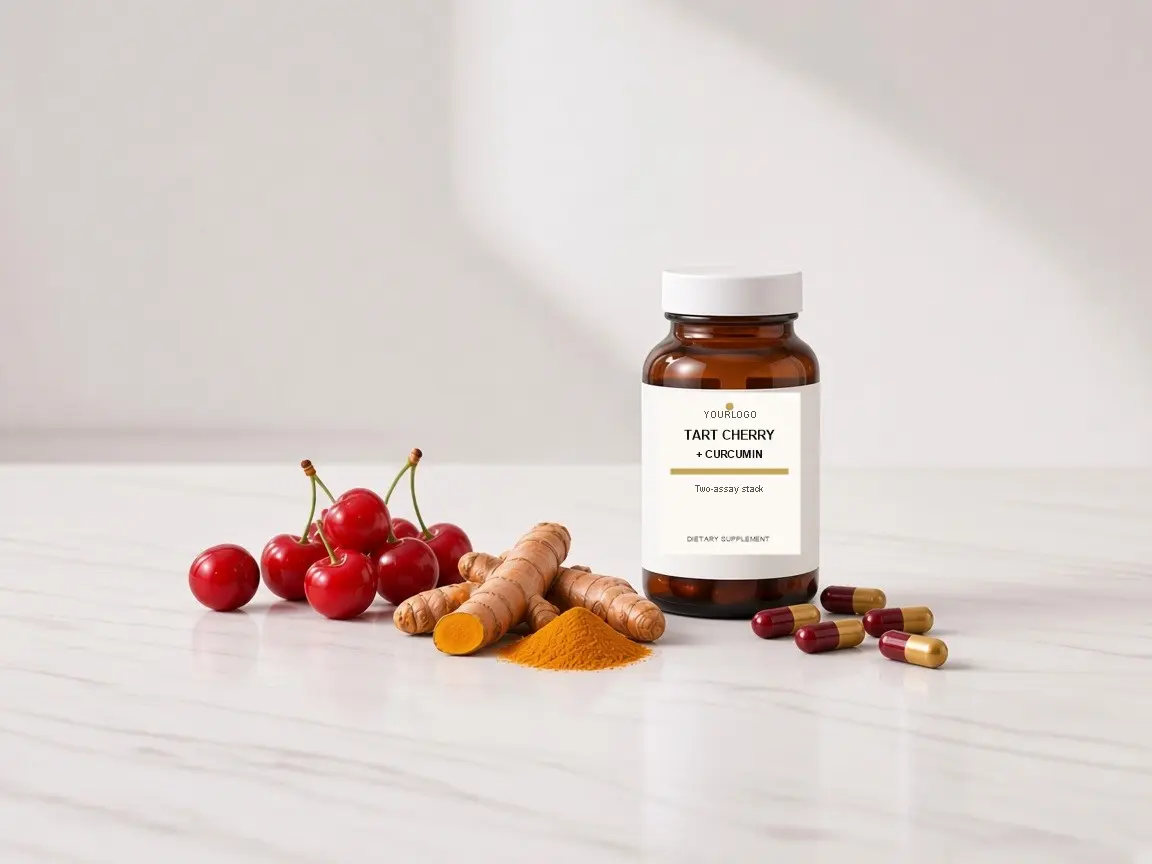
Use when: Turmeric sits on the same brief. Liposomal curcumin when the BOM is liposomal; otherwise name the curcuminoids file.
Specify: Tart cherry ~800 mg extract; curcuminoids (95% talk often 250–300 mg, or liposomal equivalent); quercetin, bromelain (GDU), or piperine only if named.
Trade-off: Two assays and color migration. Not arthritis or gout treatment.
Default format: Hard capsule.
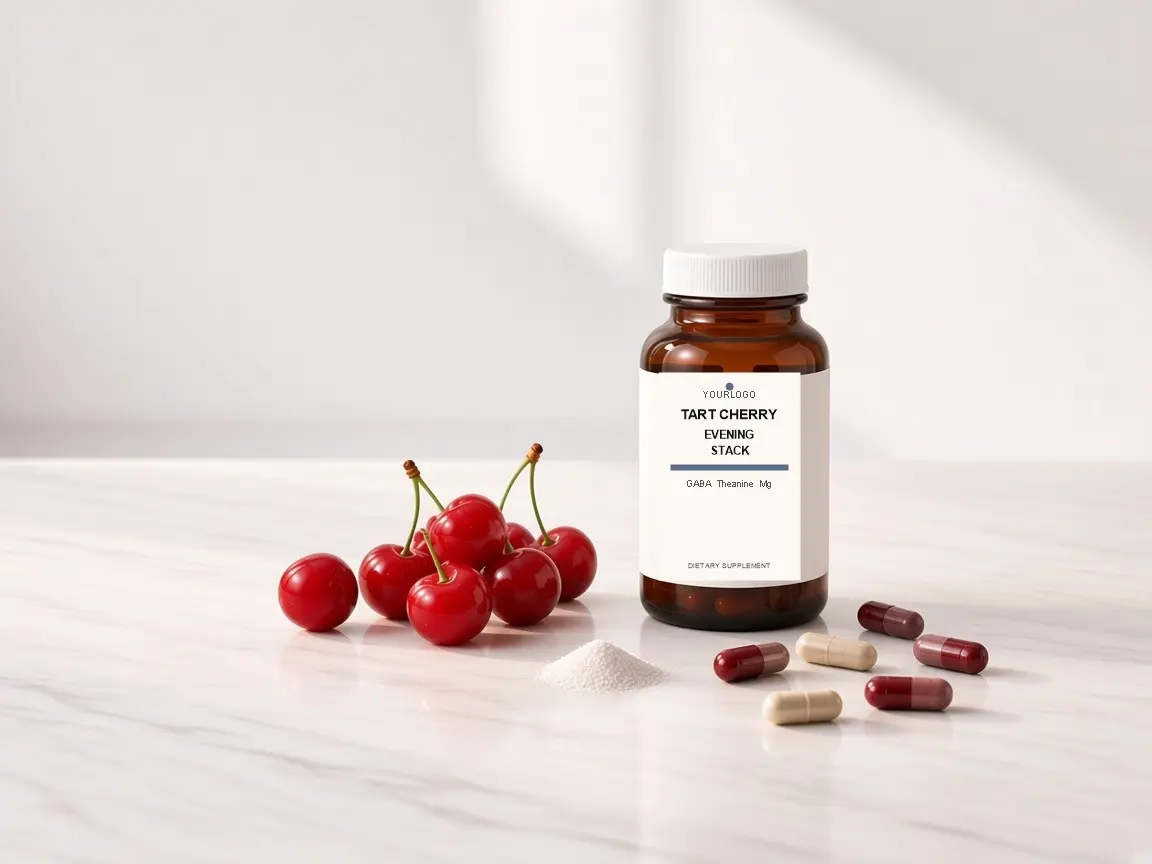
Use when: An evening sleep-support SKU, separate from daytime recovery. Sleep support.
Specify: Tart cherry as extract or powder above; GABA 150–200 mg; L-theanine 100–150 mg; magnesium bisglycinate with salt + elemental Mg (often 30–50 mg elemental); melatonin only if measured and market-allowed. Gram-level glycine → powder or stick.
Trade-off: Separate artwork and BOM from recovery sticks. Sleep positioning is an evidence-informed development lane, not a clinical claim.
Default format: Hard capsule (stick when mineral / amino load requires it).
Choose the Tart Cherry Format: Capsules, Powder, Solid Drink or Oral Concentrate
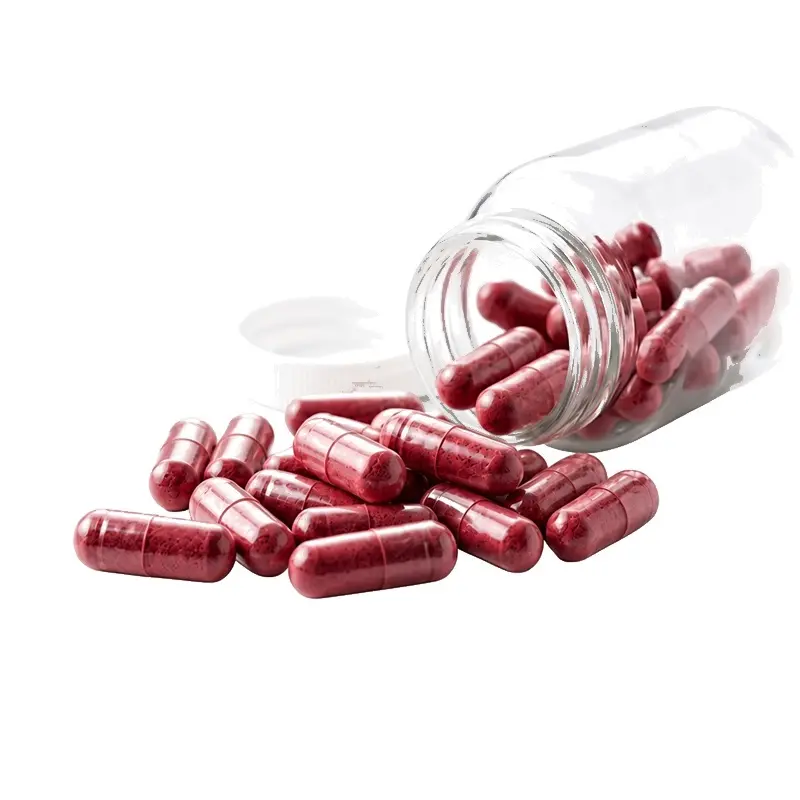
Best for: Specified extracts and most combinations.
Why: Shell holds acid and color; fill stays controllable.
What to lock: Form; assay file if claimed; HPMC vs gelatin; count/day. Vegan = HPMC hard capsules.
Manufacturing note: Dry powder is the usual capsule fill. Softgel needs a compatible liquid or semi-solid system and its own feasibility file — not a renamed hard-capsule blend.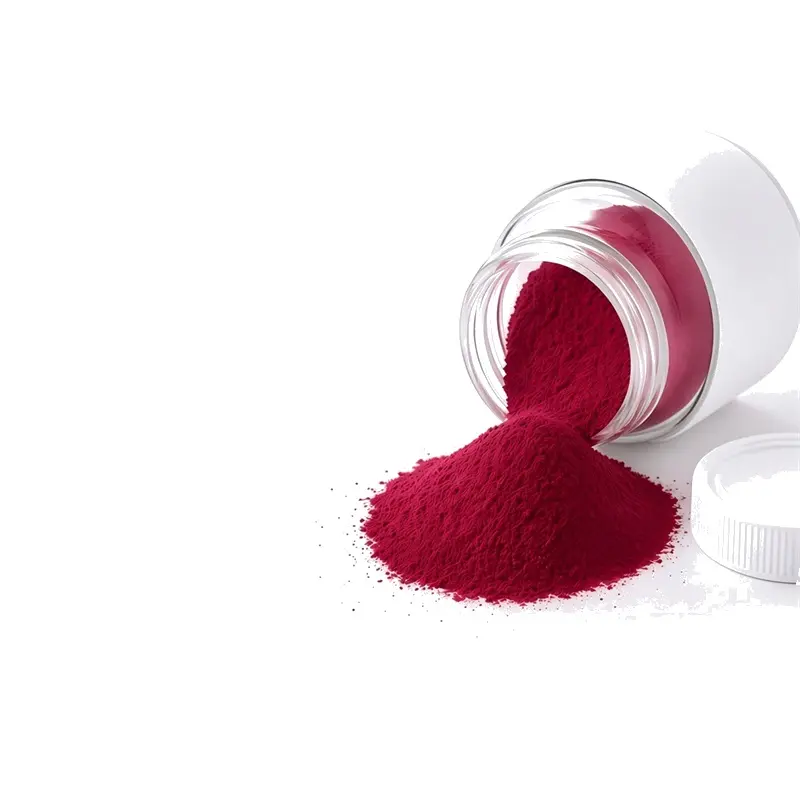
Best for: Identity powder, bulk into a filling line, or the tart-cherry row in a larger mix.
What to lock: Juice powder vs freeze-dried fruit; mesh; moisture; whether anthocyanins will be printed.
Manufacturing note: Hygroscopic fruit powders often fail packaging before a headline %. Color is not an assay.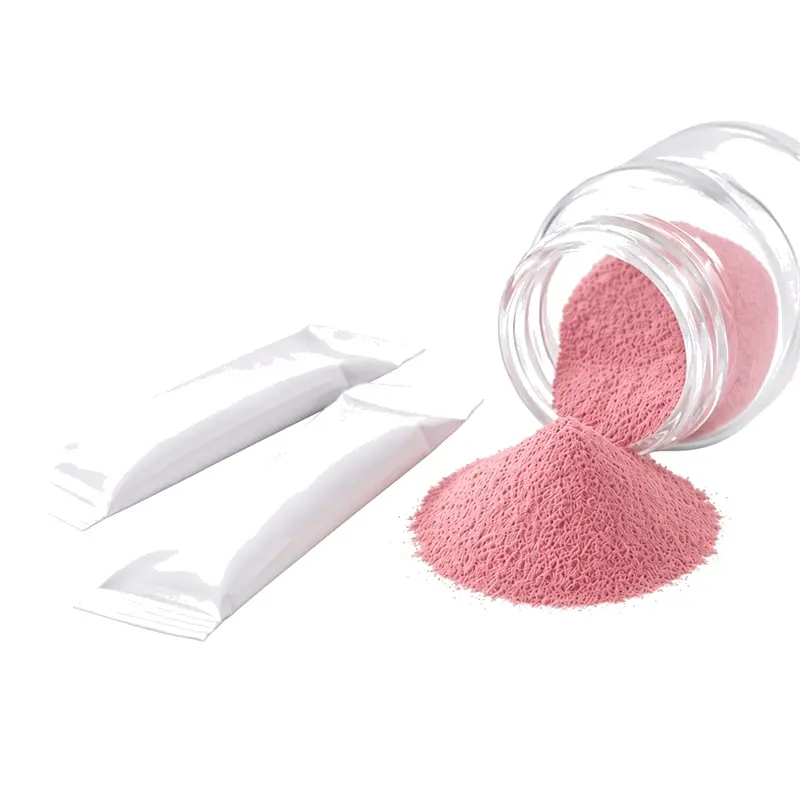
Best for: Mixes reconstituted in water.
What to lock: Reconstitution weight; flavor; acid; barrier film; finished anthocyanin assay if a number is printed.
Manufacturing note: Destination review may treat this closer to a solid beverage than to an unflavored capsule.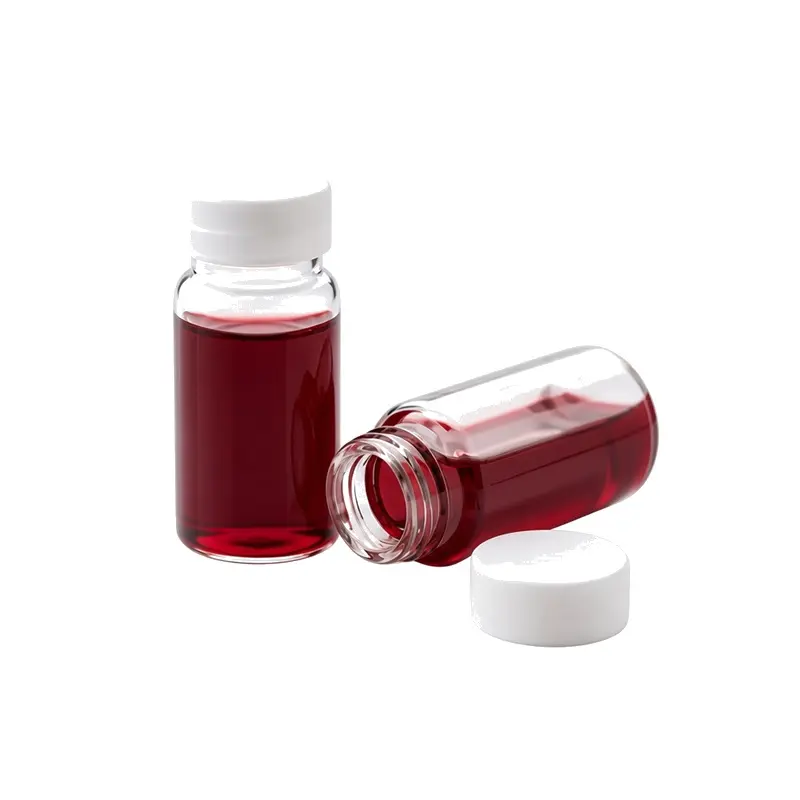
Best for: mL-dosed concentrate after feasibility.
What to lock: Solids; assay/mL if claimed; micro; light / oxygen pack.
Manufacturing note: Not the usual first unflavored-capsule SKU.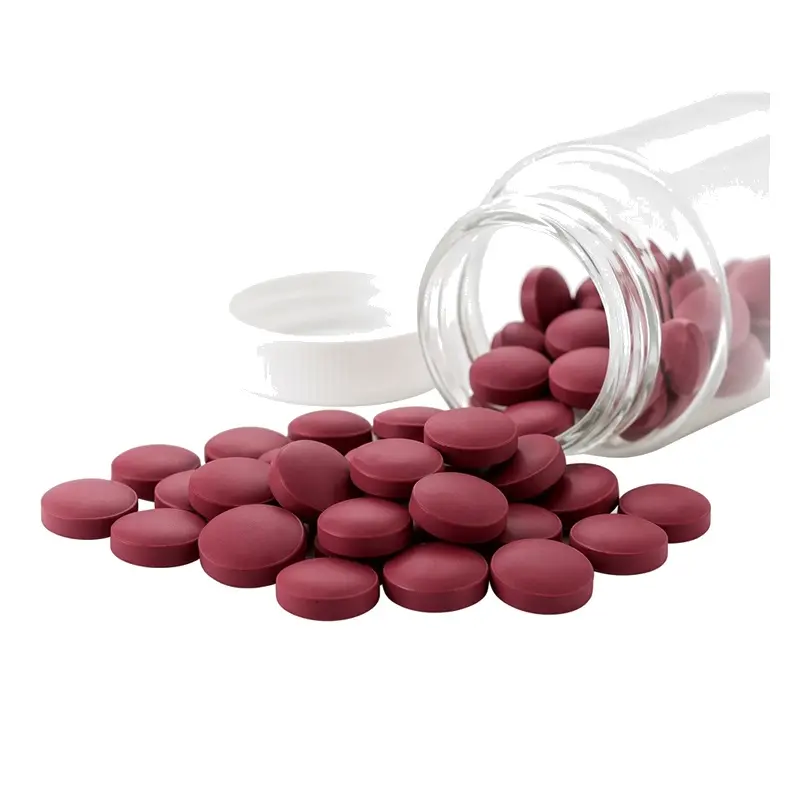
Best for: Compact pharmacy-style count when the brief names a tablet.
Why: A press can carry more solids than one capsule. Standardized extract usually compresses more cleanly than juice powder.
What to lock: Compressibility, hardness vs disintegration, film coat if acid or color would mark the punch or bottle, assay after compression.
Manufacturing note: Common risks include mottling, sticking, and excessive hardness. The capsule BOM is revalidated before compression, including finished assay and disintegration.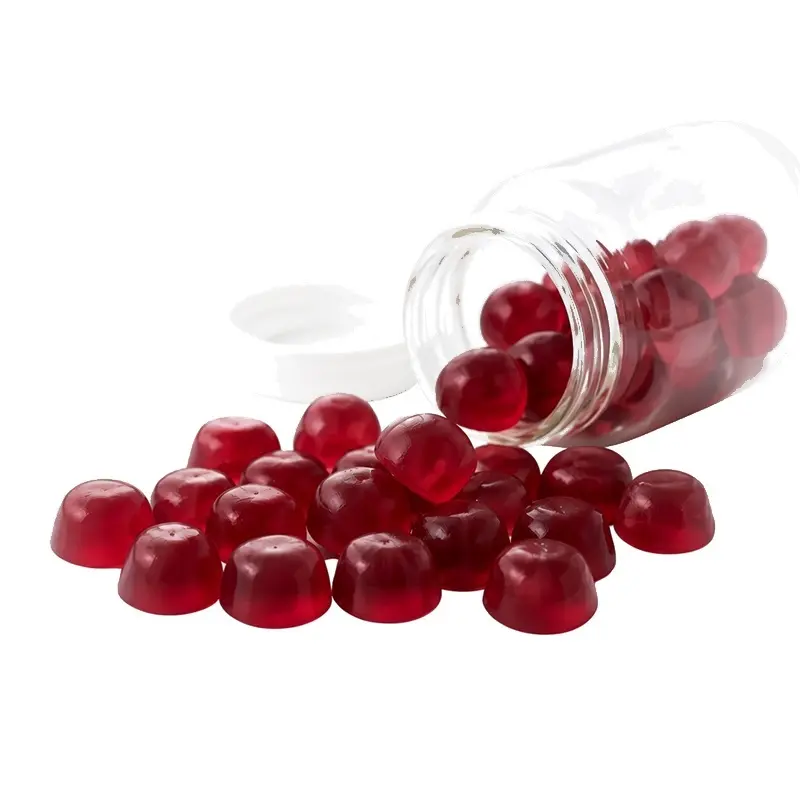
Best for: Consumer retail after a cook-and-assay pilot.
Why: Piece count and flavor. Cook temperature, residence time, and water activity set the assay ceiling.
What to lock: Load per piece, pieces per serving, Aw, pectin vs gelatin, sugar or sugar-free, finished-piece assay.
Manufacturing note: The specification is more process-dependent than a capsule file because cook conditions, water activity, piece weight, and finished-unit assay affect the final product. Flavor and acid follow the pilot assay. Pectin is the vegan gel; gelatin is animal-derived.
A quote lines up only after botanical identity, plant part, material form, analyte, method, dose basis, and finished-unit assay scope are aligned. [1]
Written on the file | Still undefined until named |
|---|---|
| 25% | Anthocyanins, polyphenols, ascorbic acid, or a house number — name the analyte |
| 25:1 | Extraction ratio / DER-related declaration. It does not prove a 25% analyte assay. Confirm the declared DER basis and calculation before comparing suppliers |
| 250 mg of a 4:1 · ~480 mg licensed skin / fruit powder · 650 mg extract fill · “3000 mg” equivalent · 15–30 mL | Different fill, license, extract-weight, artwork-math, and volume lines. Study-reported anthocyanin milligrams on one research lot are not a batch release spec |
| HPLC or pH-differential number without method detail | Analyte, reference standard, expression basis, sample preparation, and calculation. HPLC and pH-differential spectrophotometry (UV-Vis) are different quantitative routes; they stay on separate specification lines unless those fields are aligned |
| Incoming drum assay | The label after blending, compression, cooking, drying, or stick mixing |
| Malpighia or black / dark cherry | This P. cerasus purchase order |
Send the current COA; we map it against the applicable specification row before quotation.
Field | How it is specified |
|---|---|
| Identity | Follows the agreed botanical specification. TLC or HPLC fingerprint may support identity; they are identity tools, not potency assays |
| Anthocyanins | State HPLC or pH-differential spectrophotometry (UV-Vis). Those results stay on separate specification lines unless method, reference standard, and expression basis are aligned [1] |
| Named phenolics | Method appropriate to the named analyte, typically HPLC |
| Total phenolics | Folin–Ciocalteu may be used as a defined spectrophotometric method; it reports reducing capacity under that method. Named individual phenolics require chromatography. Different methods stay on separate quote lines [1] |
| Extract ratio / DER | Documented calculation basis |
Material | Typical specification | Commercial basis |
|---|---|---|
| Fruit / juice powder | Identity; anthocyanins if claimed | Available |
| Ratio extract | 4:1 / 10:1 / 20:1 / 25:1 + calculation basis | Custom |
| Anthocyanin-standardized extract | % or mg + named anthocyanin method | Custom |
| Polyphenol-standardized extract | % + named phenolic method | Custom |
| Extract-weight fill | Filled mg (e.g. 250 / 480 / 650 / 1,000); assay only if printed | Custom |
| Fruit-equivalent artwork | Filled mg + declared extract ratio (e.g. 10:1 with “3000 mg” copy) | Custom |
| Oral concentrate | Solids / mL; assay/mL if claimed | Project-based |
| Licensed / trademarked material | Per named license (including ~480 mg skin-powder conversations) | Licensed only |
An incoming chromatographic number is not the label after blending, compression, cooking, drying, or stick mixing. When potency is sold, the finished unit has its own specification.
What QA verifies before production
- Botanical identity and plant material
- Incoming COA vs the agreed specification
- Analyte, method, and assay basis
- Contaminant panel required by destination
- Dosage-form feasibility
- Finished-product testing plan
- Pack and stability requirements
- Batch documentation
Field-by-field document reading: How to Read a COA.
Anthocyanin illustration (e.g. total anthocyanins ≥2.0% HPLC on the extract as filled):
Extract in the unit | Calculated anthocyanins (illustration) |
|---|---|
| 500 mg | ~10 mg |
| 800 mg | ~16 mg |
| 1,000 mg | ~20 mg |
Math holds only for that incoming % and method. Fruit-powder grams and concentrate millilitres do not convert through this table. Polyphenol % does not convert into anthocyanin mg.
Stage | What is confirmed |
|---|---|
| 1. Material qualification | Identity · assay · method · supplier COA · contaminant panel |
| 2. Formula feasibility | Dose · fill weight · flow · flavor · format · pack |
| 3. Finished-product qualification | Finished assay · micro · heavy metals · pesticides · stability / pack |
| 4. Production and repeat-order control | Approved BOM · approved specification · change control · batch documentation · repeat-production control |
Material, specification, or process changes are reviewed against the approved file before repeat production.
Need a second source? Send the current COA, specification, or finished label. → contact
Planning ranges, not a quote. Scope moves with format, film, flavor, and the testing panel. Repeat orders follow the approved BOM and change-control file. → Quality control
| Item | Planning start |
|---|---|
| Identity and assay | P. cerasus (Montmorency when claimed); named form; incoming and finished unit when potency is sold |
| Melatonin | Assayed if labeled |
| Contaminants | Metals, micro, and pesticides per destination |
| Pack | Light- and moisture-barrier for red-purple powders |
| Capsule MOQ | About 3,000–5,000 units |
| Tablet MOQ | About 5,000–10,000 units |
| Powder / stick / solid drink | Format- and packaging-dependent; planning starts may be around 10,000 units for selected configurations |
| Concentrate / gummies | After feasibility |
| Bulk raw material | kg quote, separate from finished-unit MOQ |
| Sample | About 7–15 days after specification agreement |
| Mass production | About 30–45 days after approvals, format-dependent |
| Shelf life | Per that SKU’s stability program |
| Commercial cost | Form, analyte, method, finished-assay scope, count, and pack — not a public $/kg list |
Development direction | We can manufacture toward | We do not print as default |
|---|---|---|
| Antioxidant-related positioning | Specified dry SKUs, fruit powder, solid drink, concentrate | Disease treatment; acerola vitamin C as tart cherry |
| Exercise-recovery adjacency | Sticks / drink mixes | Medical CK / CRP guarantees |
| Sleep-support adjacency | Evening stacks | Insomnia drug; unmeasured “natural melatonin” |
| Joint-comfort adjacency | Curcumin or matrix stacks when named | Gout / uric-acid / arthritis treatment |
Organic lines are out of scope. Retail clones are quoted from the BOM. Licensed files only when named. For U.S. programs, structure/function claims require substantiation and are subject to the applicable FDA notification and disclaimer requirements; other markets use their own claim rules. [4]
Warning copy is written from the finished formula, serving size, and destination-market file. Fruit powders, solid drinks, and oral concentrates need sugar and calorie disclosure where the destination requires it. Liquids also need a microbiological control plan. GI discomfort wording is added when fruit acids or larger powder servings warrant it. Medication-interaction statements are reviewed against the full BOM. Destination-market maximums or restricted claims are checked when they apply. Gout, kidney disease, and insomnia treatment sit outside this program.
Exercise recovery. Tart cherry juice has been studied in exercise-recovery protocols. A 2026 systematic review of 19 trials reported improvement in some recovery outcomes, with substantial heterogeneity and evidence certainty from very low to moderate. Those findings are not automatically transferred to every tart cherry extract or finished dosage form. Recovery positioning follows the actual formulation and destination-market claim review. [3]
Sleep. Sleep positioning is an evidence-informed product-development lane, not a clinical claim. Human studies have reported mixed but potentially relevant sleep outcomes, with substantial variation in product form, dose, duration, and population. Evidence remains limited and heterogeneous. [2]
Daytime recovery and evening adjacency keep separate artworks and BOMs.
What tart cherry specifications do you offer?
Juice powder, ratio extract, anthocyanin- or polyphenol-standardized extract, extract-weight fill, fruit-equivalent artwork, oral concentrate, and licensed files when named. Vitamin C–graded cherry extracts sit on a separate Malpighia file.
Is tart cherry the same as acerola?
No. Prunus cerasus here; Malpighia is a vitamin C file.
Do you supply Montmorency tart cherry?
Yes when the brief or artwork claims Montmorency and the supplier file supports it.
Can you qualify our existing tart cherry raw material?
Yes. Send the current COA or specification and the target finished format. We review identity, analyte, method, dose, contaminant requirements, and finished-product feasibility before deciding whether to replace or retain the material.
Can you manufacture capsules, solid drinks, or oral concentrate?
Yes. Capsules are the usual first extract format. Powder, sticks, concentrate, tablets, and gummies follow feasibility. Softgel after a compatible fill review.
What is the capsule MOQ?
Planning range about 3,000–5,000 units. Other formats and bulk kg are quoted by format.
Can you match a competitor COA?
Send the file. Identity, form, analyte, method, and finished-assay scope are taken from it. Retail formulas are not reverse-engineered as catalog grades.
Do you make tart cherry for gout?
No disease-treatment SKUs. Joint-comfort adjacency is case-by-case under destination structure/function rules.
What to Send for a Quote
A competitor COA is enough to start. Change any example value to another option. Add BOM, quantity, and pack for a finished OEM quote.
Optional Example
Botanical: Prunus cerasus or Other
Montmorency: Yes / No
Plant part: Fruit / skin / juice
Material: Powder · ratio · anthocyanin · polyphenol · extract-weight · equivalent · concentrate · licensed
Serving: mg / g / mL
Printed assay: HPLC · pH-differential · Folin · identity only
Equivalent artwork: No / filled mg + ratio
Licensed material: No / name
Format: HPMC · gelatin · powder · stick · concentrate · tablet · gummy · softgel
Direction: Antioxidant-related / recovery / evening / joint-comfort
Melatonin: No / Yes if measured
Companions: None / beet + electrolytes / curcumin / evening stack / named BOM
Quantity: 5,000 capsules — units / kg
Destination: [market]
Typical first reply within one business day. Project manager assigned. NDA available.
Send your COA · Need a second source? · Request a specification review · Get an OEM quote
Related Product Pages
- Liposomal Curcumin Supplements
- Magnesium Bisglycinate Supplements
- Joint Health Supplements
- How to Read a COA
- Hard Capsules
Technical and Regulatory References
- Sabou V, O’Leary MF, Liu Y, Brown PN, Murch SJ, Bowtell JL. Review of Analytical Methods and Reporting of the Polyphenol Content of Tart Cherry Supplements in Human Supplementation Studies Investigating Health and Exercise Performance Effects: Recommendations for Good Practice. Frontiers in Nutrition. 2021;8:652094. https://pubmed.ncbi.nlm.nih.gov/33842524/
- The Effect of Tart Cherry on Sleep Quality and Sleep Disorders: A Systematic Review. 2025. https://pubmed.ncbi.nlm.nih.gov/40964149/
- Effects of Tart Cherry Juice Supplementation on Recovery from Exercise-Induced Muscle Damage in Athletes: A Systematic Review and Meta-Analysis. Sports Medicine – Open. 2026. https://pubmed.ncbi.nlm.nih.gov/41945263/
- U.S. Food and Drug Administration. Structure/Function Claims. https://www.fda.gov/food/nutrition-food-labeling-and-critical-foods/structurefunction-claims
- Royal Botanic Gardens, Kew. Prunus cerasus L. Plants of the World Online. https://powo.science.kew.org/taxon/urn:lsid:ipni.org:names:729577-1
Disclaimer: Wholesale, OEM/ODM and product-development reference only. Not intended to diagnose, treat, cure or prevent disease. Final formulation, claims, labeling and regulatory status depend on the finished product and destination market. KS Nutripharma provides manufacturing feasibility and documentation support, not legal approval. All formulation ranges and specifications shown are development examples, not recommended intakes, guaranteed stock specifications or public catalog grades.