Professional Lemon Balm Supplements Manufacturer
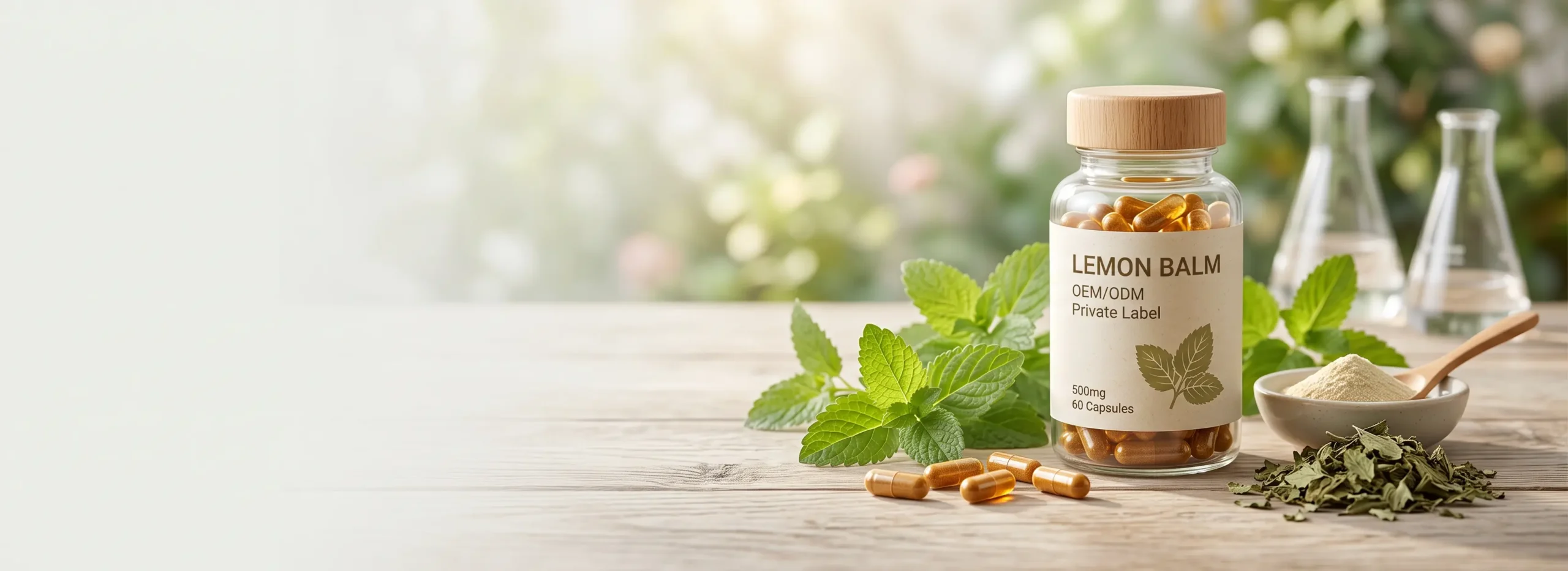
KS Nutripharma is a lemon balm supplement manufacturer for OEM, ODM, and private-label programs. We develop finished lemon balm dietary supplements—capsules, tablets, powders, and gummies, as single-ingredient or combination formulas—for sleep-support assortments and evening-relaxation SKUs, with a specified Melissa officinalis leaf grade (powder or rosmarinic-acid-specified extract), formula architecture, and batch COA. A first quote is usable once you name the leaf route, rosmarinic-acid file, serving size, format, evening or daytime timing, and destination market.
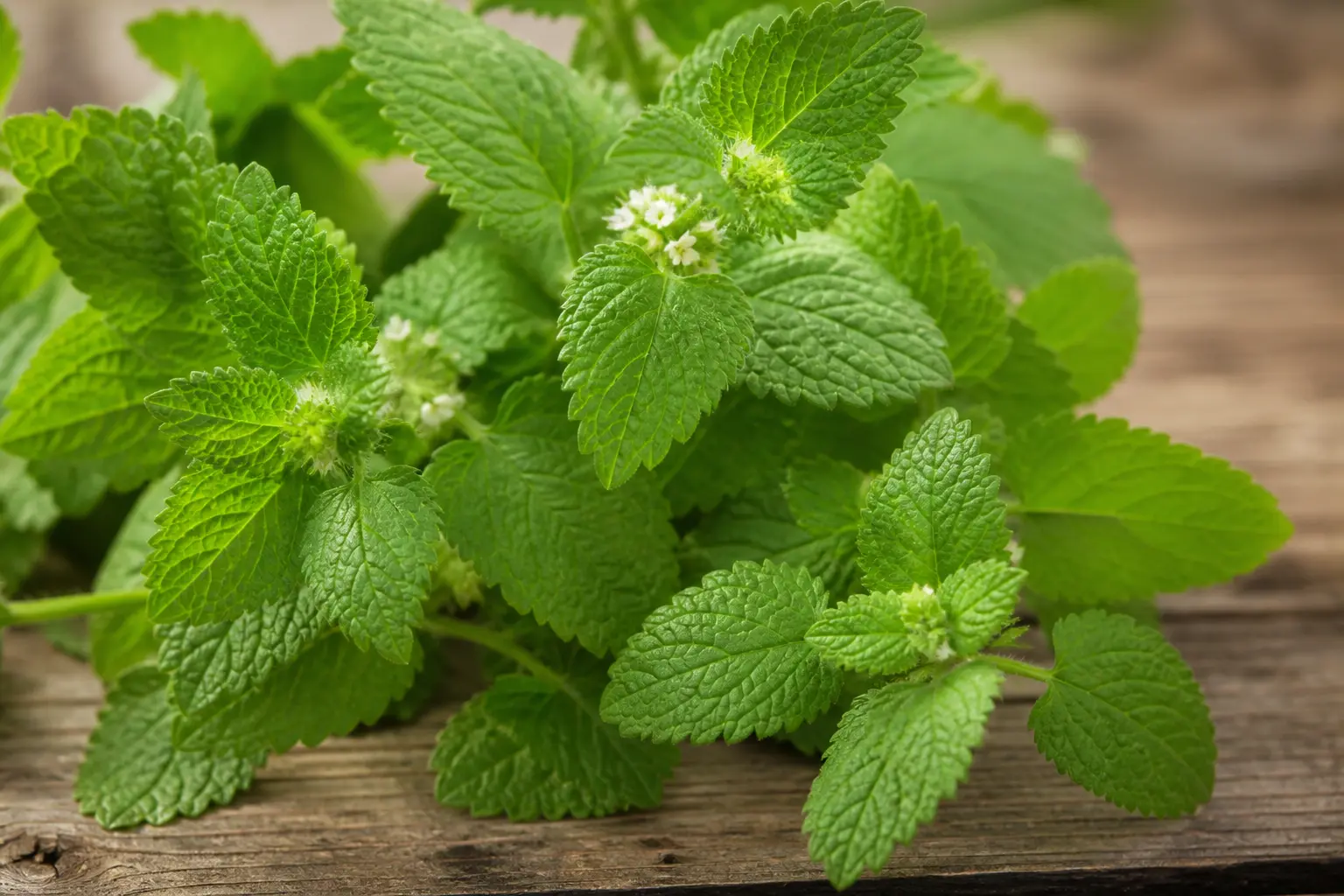
Lemon balm supplement and melissa officinalis supplement name the same commercial leaf when the species is M. officinalis and the plant part is leaf. They are not lemon verbena, lemongrass, lemon peel, or Monarda (bee balm). A rosmarinic-acid-specified leaf extract, a ratio extract, and milled leaf powder are different purchase orders. Lemon balm essential oil and topical lip products are different files.
Have a formula, COA, or only a product concept? Send it.
Send Your Spec → Species, Marker, Method & Assay Check
Send Your Formula → Fill Weight, Format & MOQ
Compare Two COAs · Have Only a Product Concept? → Get an ODM Feasibility Review
cGMP · ISO 9001 · ISO 22000 · HACCP · FSSC 22000 · Halal · Kosher · in-house lab + SGS/Eurofins pathways · batch COA
About Us · Manufacturing Capacity · Certifications · Quality Control
Custom Lemon Balm Supplement Formulation for Private Label SKUs
Choose the closest architecture below. Final formulation depends on format, serving size, market and companion ingredients. KS formulation team and R&D center match the brief to channel, then confirm the leaf route and rosmarinic-acid file.
Manufacturing Snapshot
Formats: Capsules / Tablets / Powder / Gummies
Typical MOQ: 3,000–5,000 capsules · 5,000–10,000 tablets
Samples: 7–15 days after spec confirmation
Mass production: 30–45 days
Documentation: COA + specification + testing as scoped
Choose Your Formula
If your brief is… | Start with |
|---|---|
| Single-ingredient extract with a printed marker | F01 |
| Whole-leaf powder or named-ratio extract | F02 |
| Lemon balm + L-theanine | F03 |
| Lemon balm + magnesium | F04 |
| Lemon balm + GABA | F05 |
| Evening / sleep-support SKU | F06 |
| Daytime calm SKU | F07 |
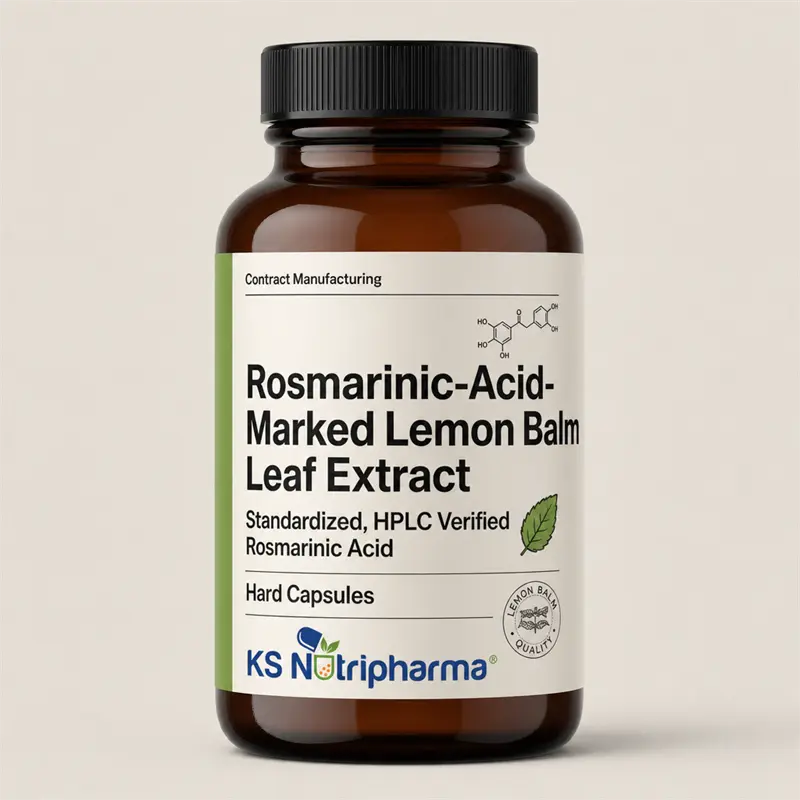
Use when: The panel will print a standardized lemon balm leaf extract. Commercial talk often names rosmarinic acid. This is the default lemon balm supplement SKU.
Specify: Extract mg per serving + rosmarinic acid % + capsule vs tablet.
Trade-off: Compact numbered extract vs a specified HPLC file and higher kg cost than leaf powder (F02).
Default format: Hard capsule.
Manufacturing note: Incoming extract COA is not a finished-piece assay. Branded extracts only when the BOM names them and trademark files exist.
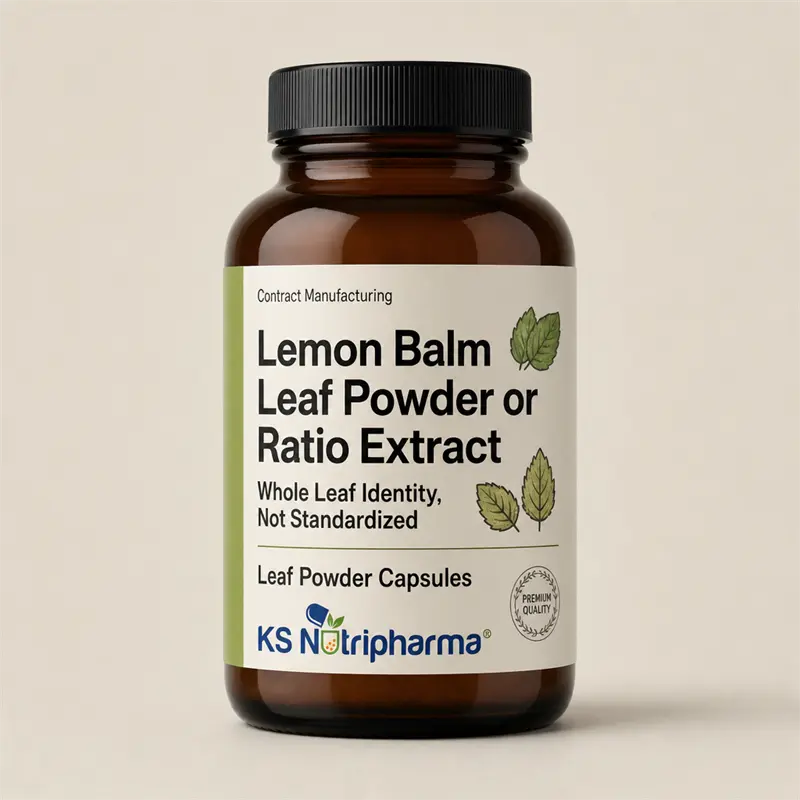
Use when: The bottle will print leaf powder milligrams, or a named-ratio extract, without a rosmarinic-acid percentage claim.
Specify: Plant part = leaf; powder vs ratio; mg as leaf or as extract; solvent if extract. If any rosmarinic number will appear, use F01.
Trade-off: Lower kg cost and whole-leaf identity vs a larger fill and no honest marker milligram.
Default format: Capsule or stick.
Manufacturing note: A high ratio is valid only with a real DER. Leaf-powder milligrams are not interchangeable with extract milligrams.
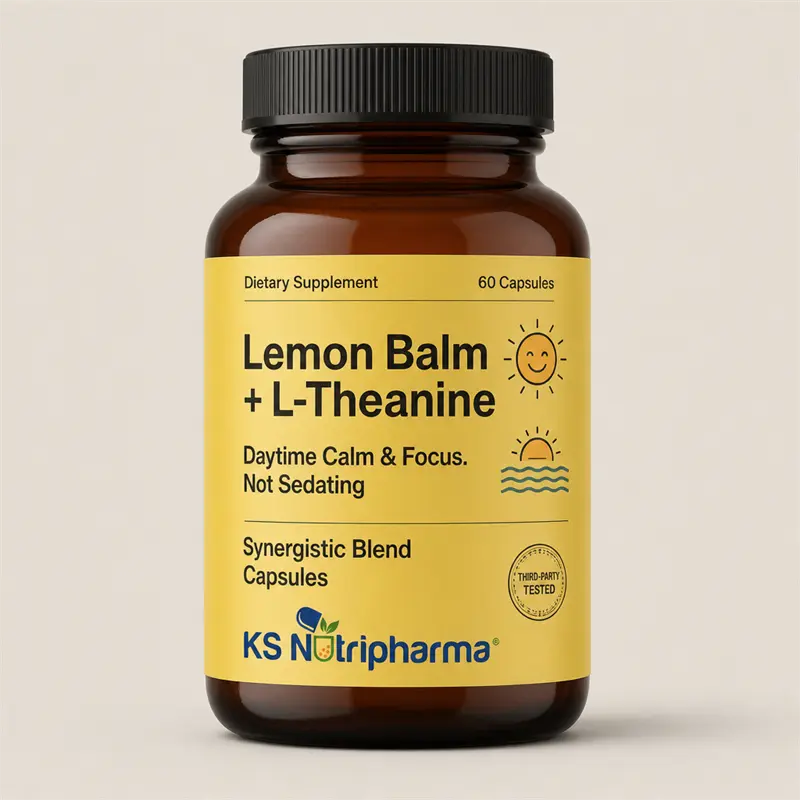
Use when: The panel names L-theanine as the second identity—evening wind-down or daytime calm-focus without caffeine as the hero.
Specify: Theanine grade + mg; lemon balm extract mg + rosmarinic file; count per day.
Trade-off: A recognizable amino companion vs two assays.
Default format: Hard capsule.
Manufacturing note: Do not add caffeine to “fix” daytime. A ready theanine + magnesium twin is a different formula file.
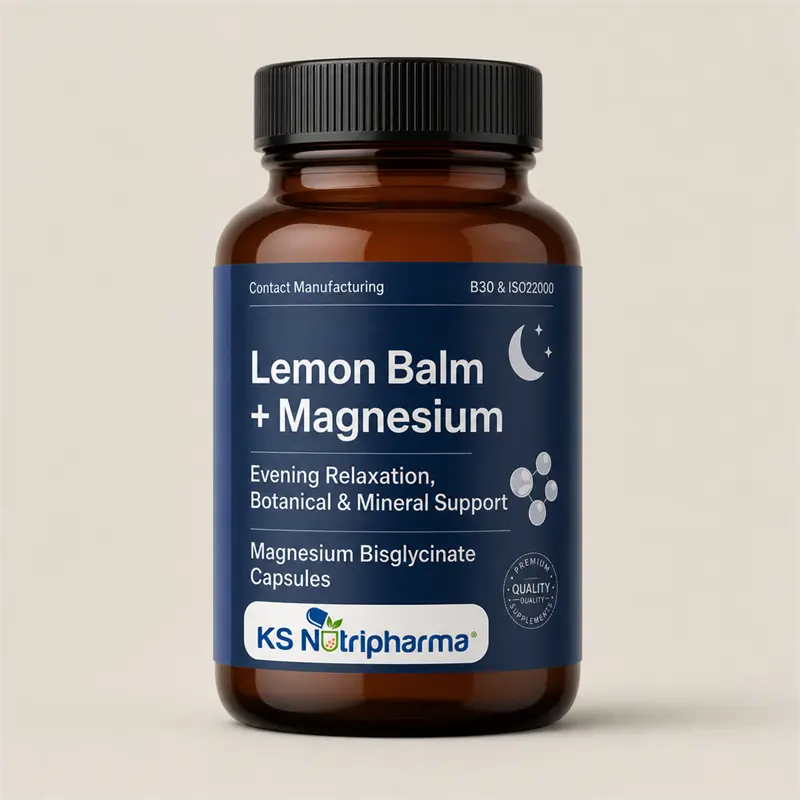
Use when: The brief wants a mineral + botanical evening or relaxation capsule. Magnesium conversation → magnesium bisglycinate.
Specify: Magnesium salt + elemental mg; lemon balm extract mg + rosmarinic file; capsule count (elemental magnesium drives size).
Trade-off: Pharmacy-familiar mineral stack vs a larger unit than F01. Oxide is not the default salt for this brief.
Default format: Capsule or tablet.
Manufacturing note: 400 mg elemental magnesium will not sit in a mini capsule next to 600 mg extract.
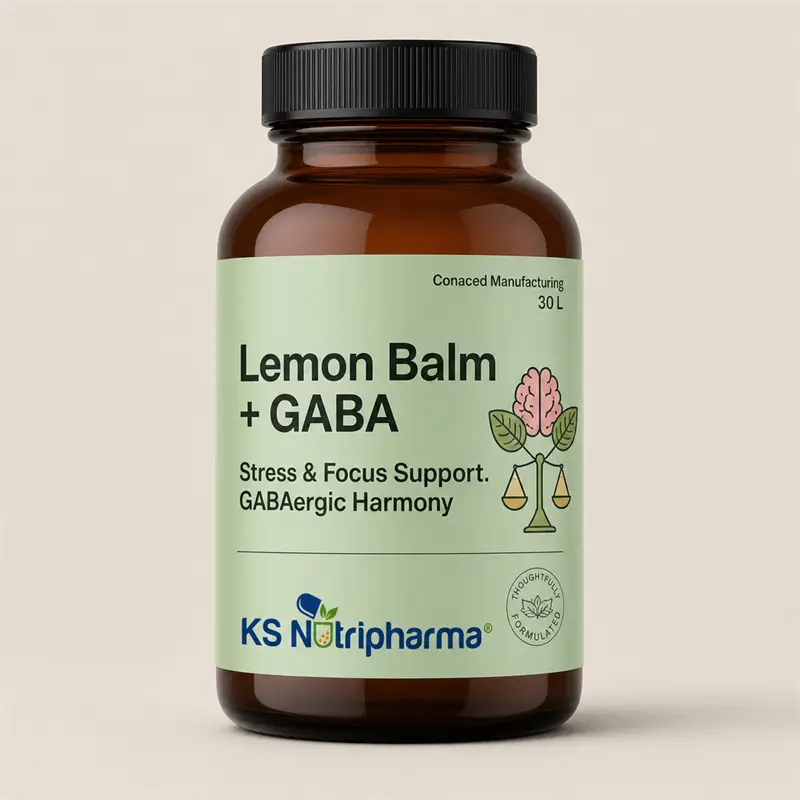
Use when: The BOM names GABA (fermented 99% / 20% or a named licensed grade).
Specify: GABA grade + mg; lemon balm rosmarinic file; destination-market GABA status.
Trade-off: A second named identity vs a market-file review before finalizing the formula. Physical compatibility does not establish regulatory eligibility.
Default format: Hard capsule.
Manufacturing note: GABA eligibility is destination-specific.
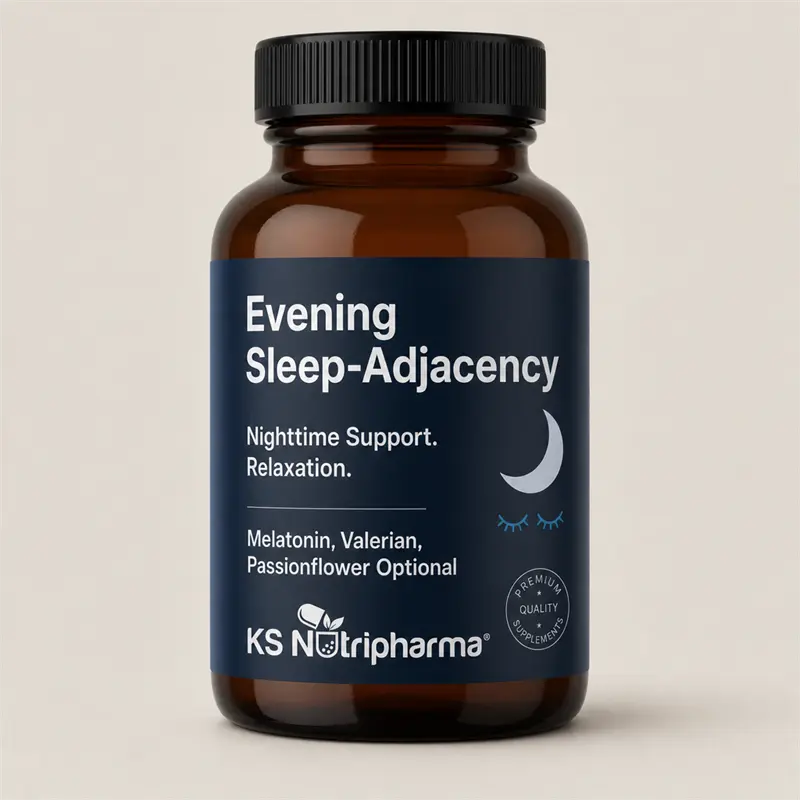
Use when: The SKU sits in a sleep-support assortment as the botanical in an initiation / evening-relaxation formula. Optional named companions: melatonin (immediate-release, market-dependent), valerian, passionflower—each with its own identity and warning review.
Specify: F01 or F03/F04 as the base; whether melatonin is on the BOM (dose + IR vs ER + market); timing = evening.
Trade-off: Sleep-aisle adjacency vs a tighter warning review. High-dose valerian + lemon balm is a grogginess/label brief, not a morning-readiness SKU.
Default format: Hard capsule.
Manufacturing note: Structure/function only.
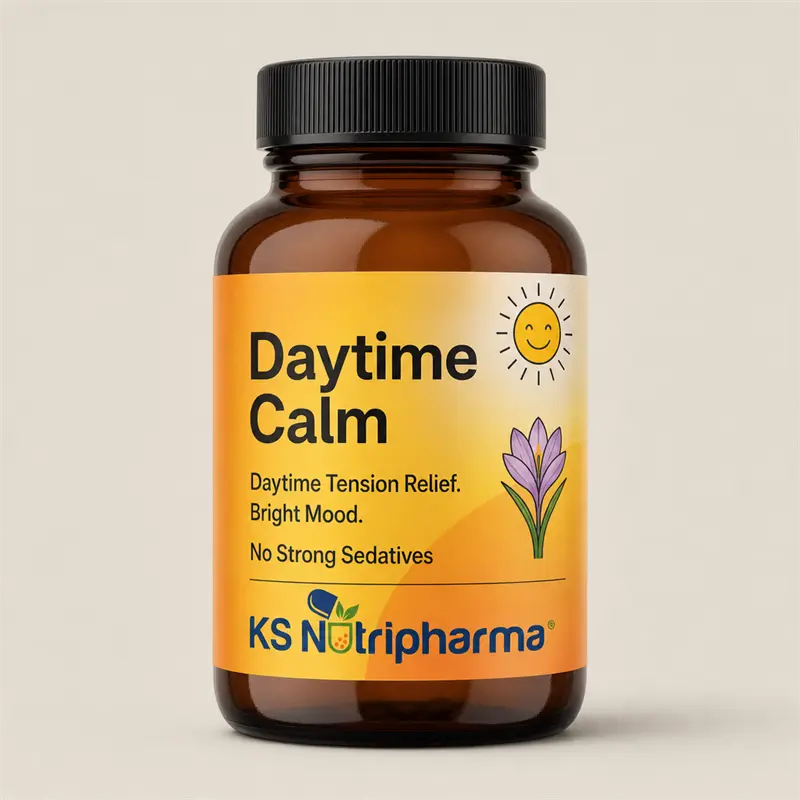
Use when: The SKU is sold for daytime tension / calm-focus, not bedtime. Category adjacency → anxiety relief. Optional saffron (crocin / safranal if claimed).
Specify: Lower sedative-botanical load; theanine optional; no high-dose valerian or hops as heroes; saffron markers if labeled.
Trade-off: Same Melissa leaf as F06—the timing and companions change, not the species. Two artworks, not one bottle that claims all-day calm and deep sleep.
Default format: Hard capsule.
Manufacturing note: Anxiety-disorder or SSRI-adjacent copy is out of scope.
Choose the Lemon Balm Format: Capsules, Tablets, Powder or Gummies
Leaf odor, fill weight, and whether the panel will state rosmarinic acid decide the first SKU more often than line speed. Capsules remain the default extract launch. Gummies already appear in lifestyle channels; they cost more in flavor work and finished assay.
Format-specific manufacturing constraints
A capsule BOM is not reused as a gummy BOM. Liquids, tinctures, teas, and essential-oil softgels are quoted after a dedicated feasibility file.
Send the target formula, milligram basis, and serving size. Send Your Formula → Format Feasibility
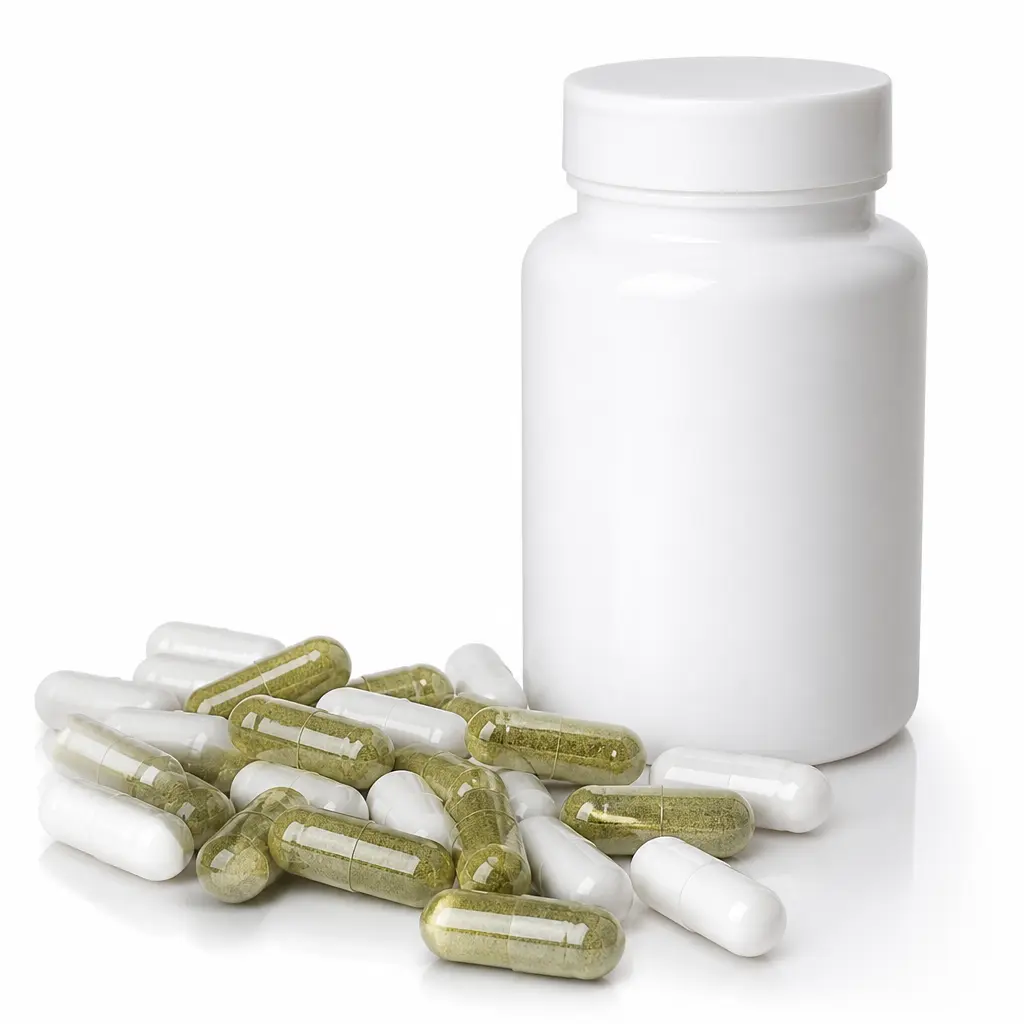
Best for: F01–F07 as the usual start.
Why: Fastest sample loop, lowest typical MOQ, shell isolates leaf odor, dry extract and amino/mineral companions share one unit.
What to specify: Gelatin vs HPMC; capsule size; extract mg; rosmarinic file if claimed.
Manufacturing note: Elemental magnesium raises count. Dry extract is not a softgel fill unless an oil phase is on the BOM.
→ Hard Capsules
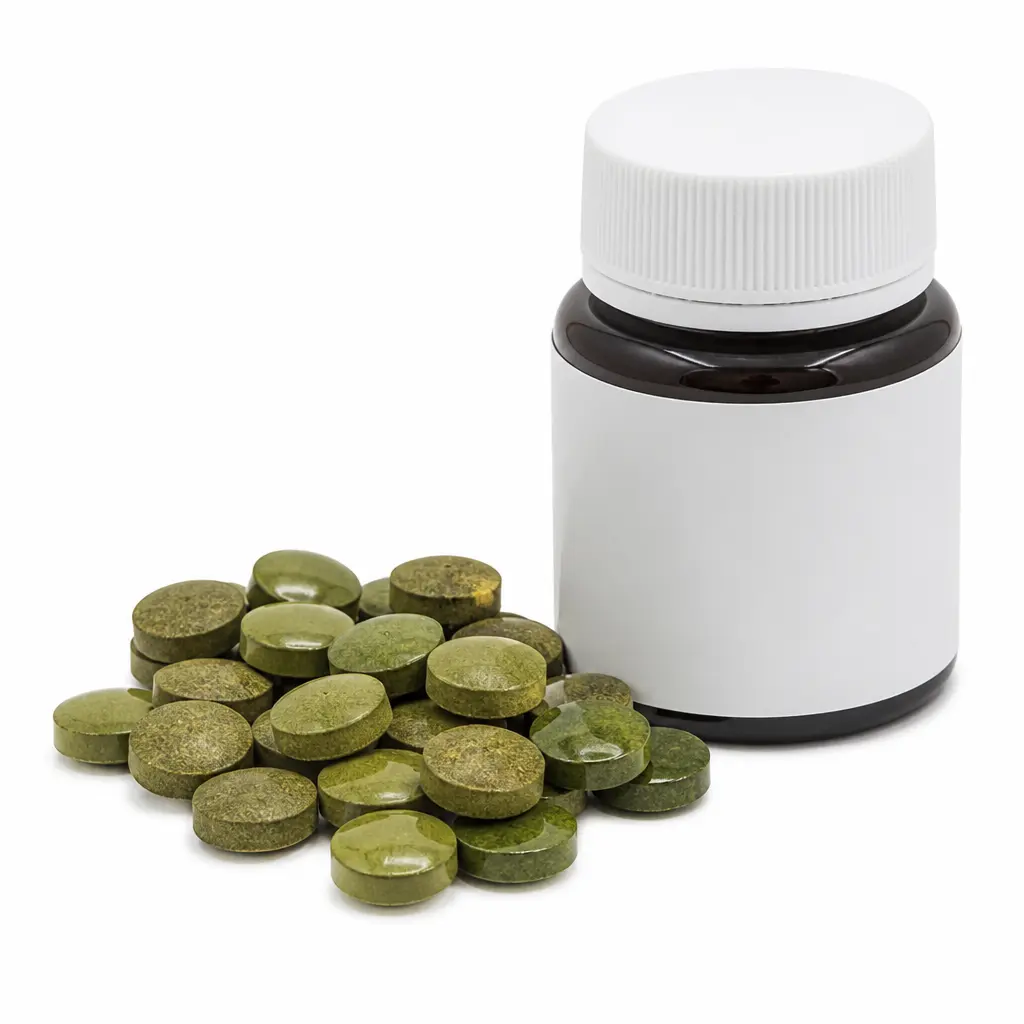
Best for: F01 when the channel is tablet-led; F04 when elemental magnesium will not fit one capsule.
Why: Pharmacy-compact bottles, lower unit cost at volume, coat can control dust and leaf color.
What to specify: Tablet weight; coat; disintegration; piece assay.
Manufacturing note: Leaf extract is dark. Mottling and friability are QC items. A capsule BOM is re-validated before a tablet run.
→ Tablets
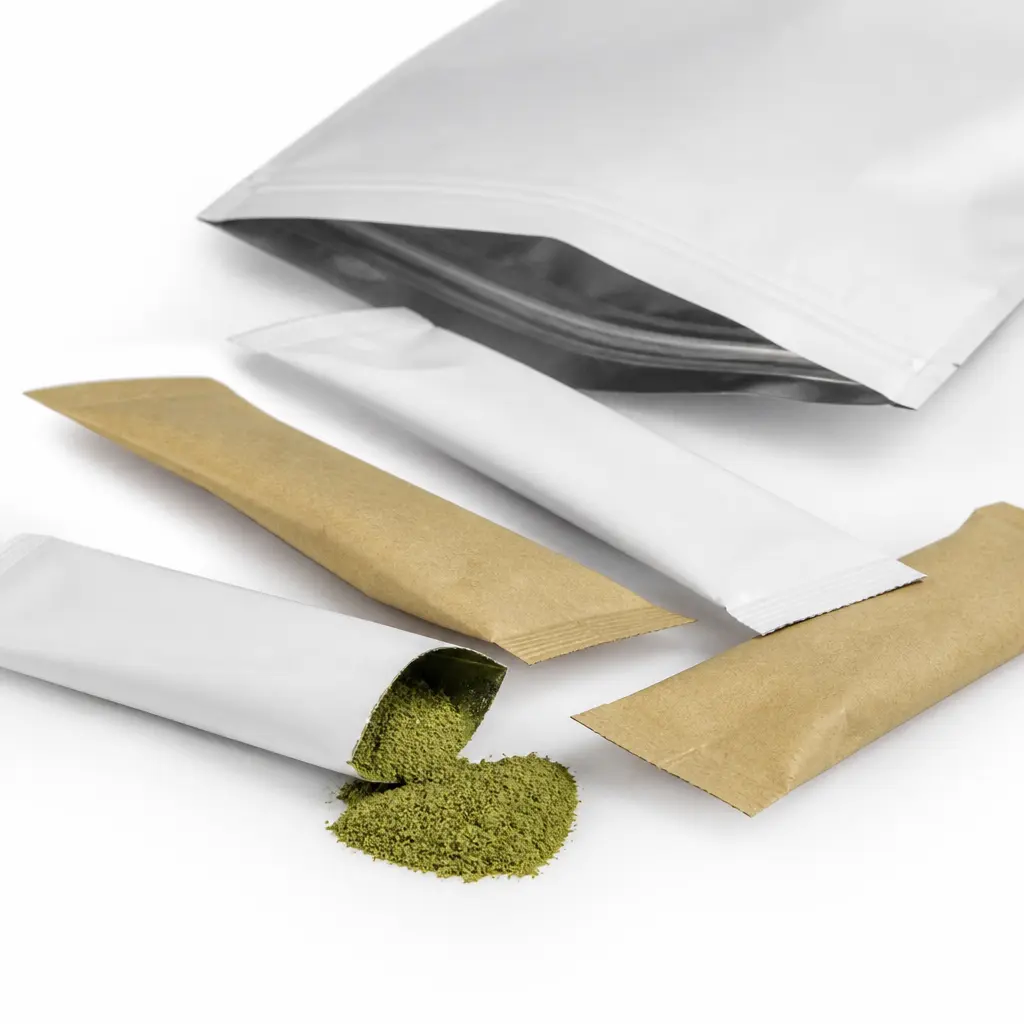
Best for: F02 identity powders; F04 when magnesium also runs as a drink mix.
Why: Gram-scale leaf servings, stick / DTC channel, leaf identity without a compact extract milligram.
What to specify: Fruit-leaf vs extract in the name; g per stick; flavor; moisture-barrier film.
Manufacturing note: Leaf powder is not extract powder. Tea bags are a food path, quoted separately.
→ Powders and Granules
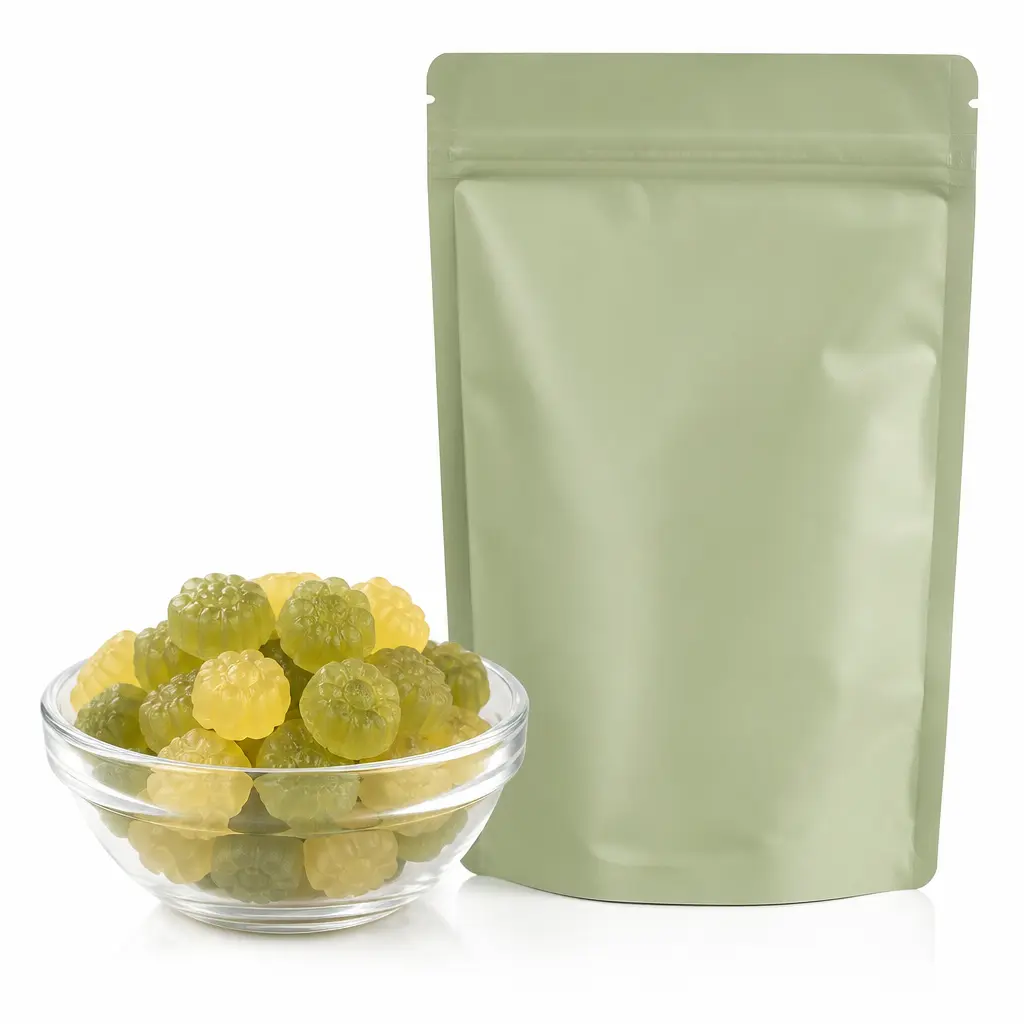
Best for: F01 or F03 at a modest extract load—not a 600 mg extract plus 400 mg elemental magnesium in one piece.
Why: Lifestyle / DTC premium. Flavor is the project. Higher MOQ after a sensory pilot.
What to specify: Extract mg per piece; whether rosmarinic acid will be claimed; pectin vs gelatin; sugar system.
Manufacturing note: Cook heat, pH, and water activity move phenolics. Finished-piece assay is required if a marker is on the label.
→ Gummies
Confirm species, plant part, material route, marker, method, and assay basis before you compare price. Those six fields decide identity, serving math, odor, and the label.
Public herbal monographs treat Melissa officinalis L., folium (leaf) as the defined herbal substance. The EMA HMPC monograph on Melissae folium is written for traditional herbal medicinal products, not for a U.S. dietary-supplement SKU—but it is the standard public identity file for this leaf. The matching EMA assessment report records hydroxycinnamic acids, in particular rosmarinic acid, as quality markers and notes that the European Pharmacopoeia requires a minimum rosmarinic-acid content in the dried leaf. The monograph provides a botanical and analytical reference.
Your commercial extract still requires its own agreed specification, assay method and acceptance range. Commercial COAs often report a rosmarinic-acid percentage on a dry extract. Those findings do not transfer to every leaf-powder capsule, tea bag, or essential-oil drop.
| Field to specify | Why it changes the PO | Common miss |
|---|---|---|
| Melissa officinalis | Lemon-named herbs are not the same species | A lemon-scented lookalike quoted as lemon balm |
| Leaf | Default commercial plant part for oral supplements | Essential oil, root, or “melissa herb” with no part |
| Route: powder / ratio / rosmarinic extract | Three materials; quotes are not interchangeable | “Lemon balm 300 mg” with no route |
| Rosmarinic acid + HPLC | Default marker conversation on extract SKUs | “5% standardized” with no compound or method |
| Incoming % vs finished mg | Blend, moisture, and gummy cook are not zero-loss | Drum COA copied onto the bottle |
Two “5% lemon balm” extracts are different materials until species, plant part, analyte, method, and milligram basis match.
Standardized botanical pathways: standard extracts.
Leaf powder. Identity SKU. Larger serving mass, stronger odor, darker fill. No rosmarinic milligram unless extra testing is on the file.
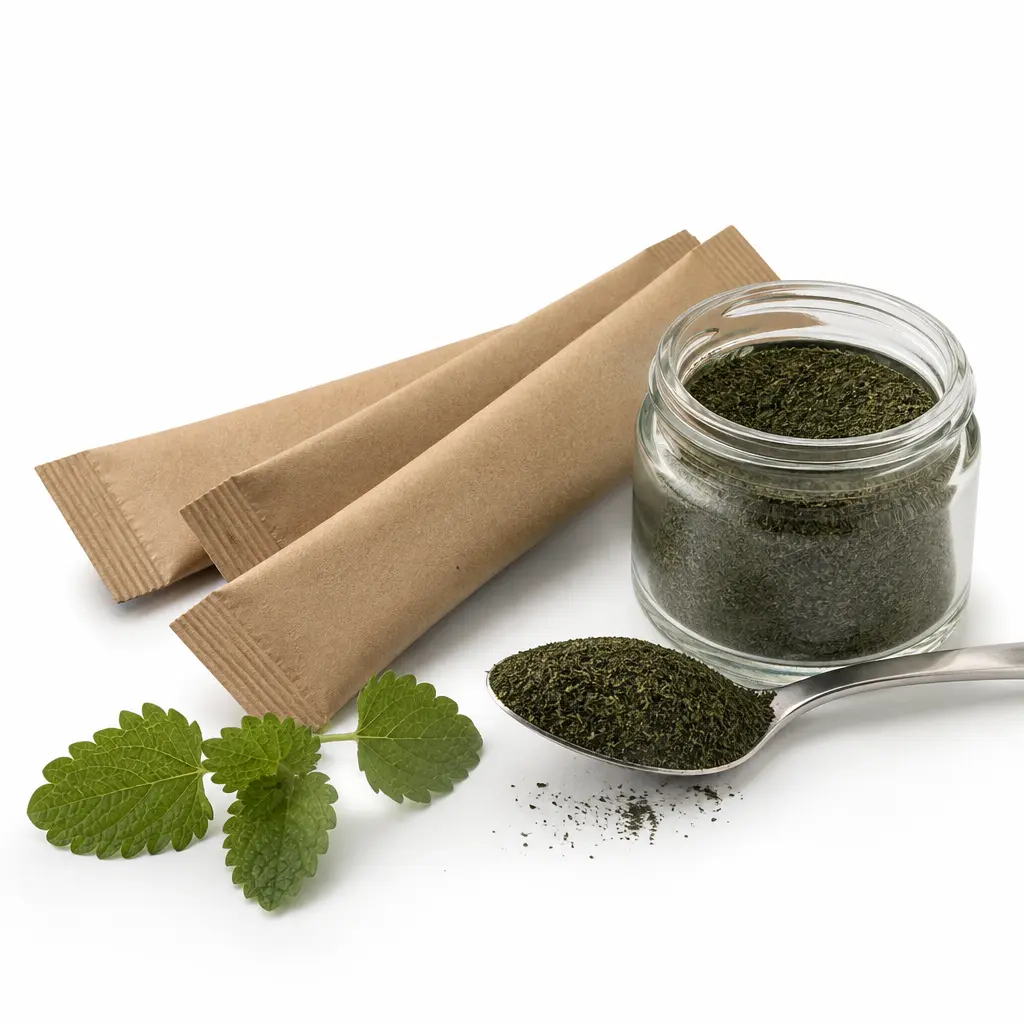
Ratio extract. Concentrated leaf described as a real DER. Ratio is not 10× rosmarinic acid.
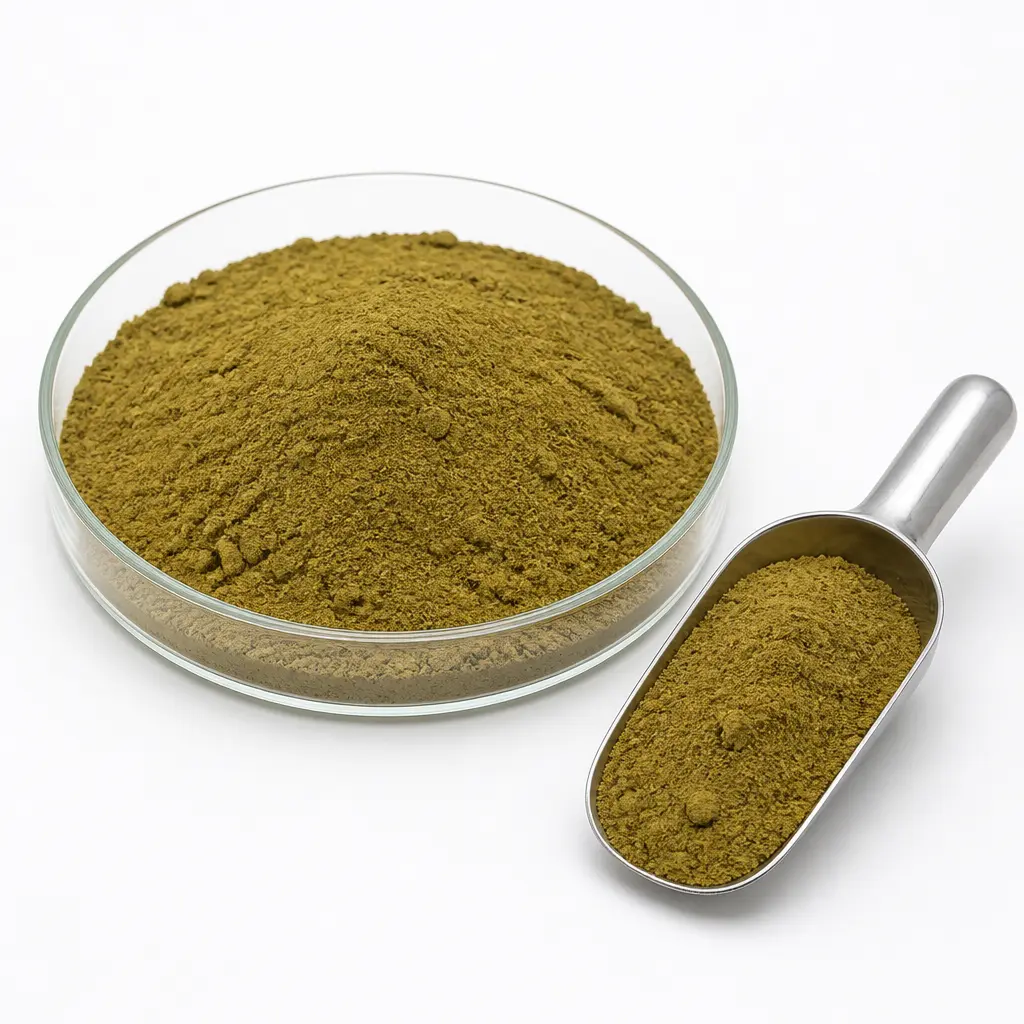
Rosmarinic-acid-marked extract. F01 default. Ph. Eur. dry-extract monographs use rosmarinic acid as the assay analyte; your commercial grade still needs the % and method written on the PO.
Which route. Panel will state rosmarinic milligrams → F01. Panel will state leaf identity only → F02. Brief is an essential-oil softgel → new file.
Two misses show up on the same RFQ more than any other.
RFQ red flag: “5% standardized” without a named analyte or method. Rosmarinic acid, total hydroxycinnamic acids, and volatile oil are different numbers.
The wrong lemon plant. A PO written on a lemon-named lookalike cannot be released as this SKU.
Send both COAs. We map species, plant part, and the marker file before anyone pays for a sample of the wrong leaf. Compare Two COAs → Identity, Marker & Method
Marked leaf-extract conversations often sit at 300 mg or 600 mg extract per serving, in one or two capsules. Leaf-powder fills are typically higher (500 mg–1 g+) and are not the same potency story as 300 mg of a named extract.
Extract weight × assay = marker amount per serving
Illustration only: 300 mg extract × 5% rosmarinic acid = 15 mg rosmarinic acid. A 300 mg extract line is not 300 mg rosmarinic acid.
Extract in the unit | Illustration (5% rosmarinic acid on that extract) | Calculated marker |
|---|---|---|
| 300 mg | 5% | 15 mg |
| 600 mg | 5% | 30 mg |
Drum COA ≠ capsule guarantee without finished-unit assay.
Companion talk, when used: L-theanine often 100–200 mg; magnesium specified as elemental mg and salt; GABA specified as grade plus destination status. Do not load a capsule-grade extract plus a pharmacy magnesium dose into one gummy piece and call it equivalent.
Send Your Required Rosmarinic Acid Grade → Get the Matching COA
Production-ready checklist
- Identity
- Manufacturability
- Finished testing
- Label compliance
What we receive | Why it is returned | What to send instead |
|---|---|---|
| Melissa / lemon herb 300 mg | Species, part, and route missing | M. officinalis leaf extract 300 mg + marker file |
| Tea bags + capsules, one spec | Tea is not the default oral solid | Oral solid brief; tea as its own project |
| Essential oil 1% on a dry capsule | Wrong material class | Dry extract, or a separate oil-fill file |
| 400 mg elemental Mg + 600 mg extract in one mini gummy | Fill will not fit | Split count, powder SKU, or lower load |
Finalize classification and claim language before you finalize the leaf grade. For U.S. dietary-supplement labeling, FDA structure/function claims under 21 CFR 101.93 describe effects on body structure or function; they are not disease claims and they are not FDA approval of the finished bottle.
Shelf language that is usually discussable (verify locally): evening relaxation · calm · sleep-support adjacency · nervous-system support · bedtime wellness.
Artwork that stalls the file: treats insomnia · cures anxiety · herpes / cold-sore treatment · replaces melatonin as a drug story.
Market-dependent items: GABA on the same BOM (F05); melatonin on the same BOM (F06); pediatric gummies; the word “sleep” in some destinations. Evening SKUs and daytime SKUs need two artworks.
The EMA Melissae folium file discusses traditional use around mild mental stress, sleep adjacency, and mild gastrointestinal complaints. That is a herbal-medicinal monograph, not a dietary-supplement label and not a default formula. Brand owners still review finished warnings with local counsel.
Issue | Manufacturing implication |
|---|---|
| Drowsiness | Review evening combinations and daytime artwork |
| Valerian / hops / melatonin | Warning review before finalizing the formula |
| GABA | Destination-market eligibility before confirming the BOM |
| Pregnancy / lactation | Avoid default formulation assumptions |
| Thyroid-related medication language | Destination-specific; do not invent copy |
| Drug-related language (insomnia, herpes, anxiety disorder) | Out of scope for this manufacturing brief |
Infant and pet products are out of scope.
Release has to prove species, leaf, and the named rosmarinic-acid method when that marker is on the file. Powder color does not close those rows.
Incoming conversation: identity (M. officinalis leaf), appearance, named assay, moisture, microbiology, heavy metals, pesticides and residual solvents as scoped, bulk density when fill weight depends on it.
In-process: blend uniformity (especially low-dose theanine or GABA), capsule fill or tablet weight, hardness/friability where applicable, gummy piece weight and water activity when that format is in scope.
Finished: agreed specification, microbiology, pack inspection, batch file. Incoming extract % is not finished-unit milligrams—blend dilution, moisture, and gummy cook change the result. Volatile-oil grades, if anyone insists on them, need a separate handling file.
Hold/release when a result is outside spec. Third-party reports (SGS / Eurofins) when the RFQ asks. Methods: quality control.
RFQ → confirm species, leaf, and rosmarinic file → sample (taste pilots for gummies) → artwork (timing + destination warnings) → production → batch COA → shipment. Changing the extract supplier after approval restarts qualification.
Leaf extract is hygroscopic and aromatic. A common capsule/tablet start is HDPE or PET with an induction seal; desiccant when moisture leads. Stick film needs a moisture barrier and a flavor brief. Gummies need their own water-activity pack. Light-barrier aluminum is a priority when an oil fill is actually on the BOM.
Shelf life follows formulation, pack, storage, and stability data for that SKU.
Bottles, jars, pouches, sachets, blisters where available, cartons, export cases. Standard versus custom artwork, Supplement Facts, batch/expiry, barcode.
OEM. You send a BOM or a confirmed spec. We confirm manufacturability, sample against that spec, then run commercial units.
ODM. You send channel, timing (evening vs daytime), format, and a milligram direction. We propose an F01–F07 architecture, confirm the leaf file, sample, then scale. No final formula? Send the product concept.
| Stage | Typical |
|---|---|
| First technical reply | About one business day on a complete brief |
| Sample | 7–15 days after specification and material confirmation |
| Pilot | 15–25 days as scoped |
| Mass production | 30–45 days after formula, artwork, pack, and schedule |
| Scope | Typical start |
|---|---|
| Capsules | ~3,000–5,000 units |
| Tablets | ~5,000–10,000 units |
| Powder / stick retail | Often from ~10,000 units |
| Gummies / liquids | After feasibility |
| Bulk leaf or extract on the finished-product project | Quoted by kg |
Bulk kilograms and finished retail units should be specified and quoted as different material routes. Flavor, dual HPLC, and finished rosmarinic assay add time before the sample lead time.
Example RFQ
Melissa officinalis leaf extract, rosmarinic acid [x]% HPLC, [300/600] mg per capsule, 60-count HPMC, destination [US/EU/…], evening sleep-adjacency or daytime calm, companions [none / theanine mg / Mg salt + elemental mg / GABA grade], artwork language to review, first PO quantity.
An NDA is available before you send a BOM. A project manager is assigned when the specification is in review.
Send Your Lemon Balm Spec
Send the rows you already have. Missing fields can stay as a product concept—we map them before the quote.
| Confirm before the first quote | Project answer |
|---|---|
| Botanical | Melissa officinalis L. Leaf. Commercial name: lemon balm |
| Material route | Leaf powder / ratio extract / rosmarinic-acid-standardized extract — name one |
| Markers | Rosmarinic acid + HPLC + incoming vs finished-unit basis |
| Timing | Evening sleep-adjacency or daytime calm |
| Potency | mg extract or mg leaf powder per serving. Development talk often 300 / 600 mg extract |
| Architectures | F01–F07. Serving size, marker, and pack stay customizable |
| Formats | Capsules first. Tablets for pharmacy-compact packs. Powder / stick as its own SKU. Gummies after flavor and load review |
| Target market | Country + food-supplement class + relaxation / sleep-support / calm language |
| Documents | COA / specification / identity + rosmarinic acid (or named alternate) + safety tests as scoped |
| MOQ / lead time | Capsules ~3,000–5,000 units · tablets ~5,000–10,000 · samples 7–15 days after spec confirmation · mass production 30–45 days |
Send Your Existing Spec → Species, Marker, Method & Assay Check
Send Your Formula → Fill Weight, Format & MOQ · Compare Two COAs
Have Only a Product Concept? → Get an ODM Feasibility Review