
Xanthohumol Ingredient Supplier | Hops Flower Extract Manufacturer
KS Nutripharma provides high-quality Xanthohumol-rich Hops Extract sourced from Humulus lupulus Linn. female flowers. Our standardized hops extract is available with 3%, 5%, 10%, 15%, 20%, and 90% Xanthohumol specifications for dietary supplement brands, nutraceutical manufacturers, and functional food developers.
With advanced extraction technology, HPLC testing, and GMP-compliant production, we deliver consistent, scalable Xanthohumol ingredients for antioxidant, healthy aging, metabolic wellness, and premium botanical supplement formulations.
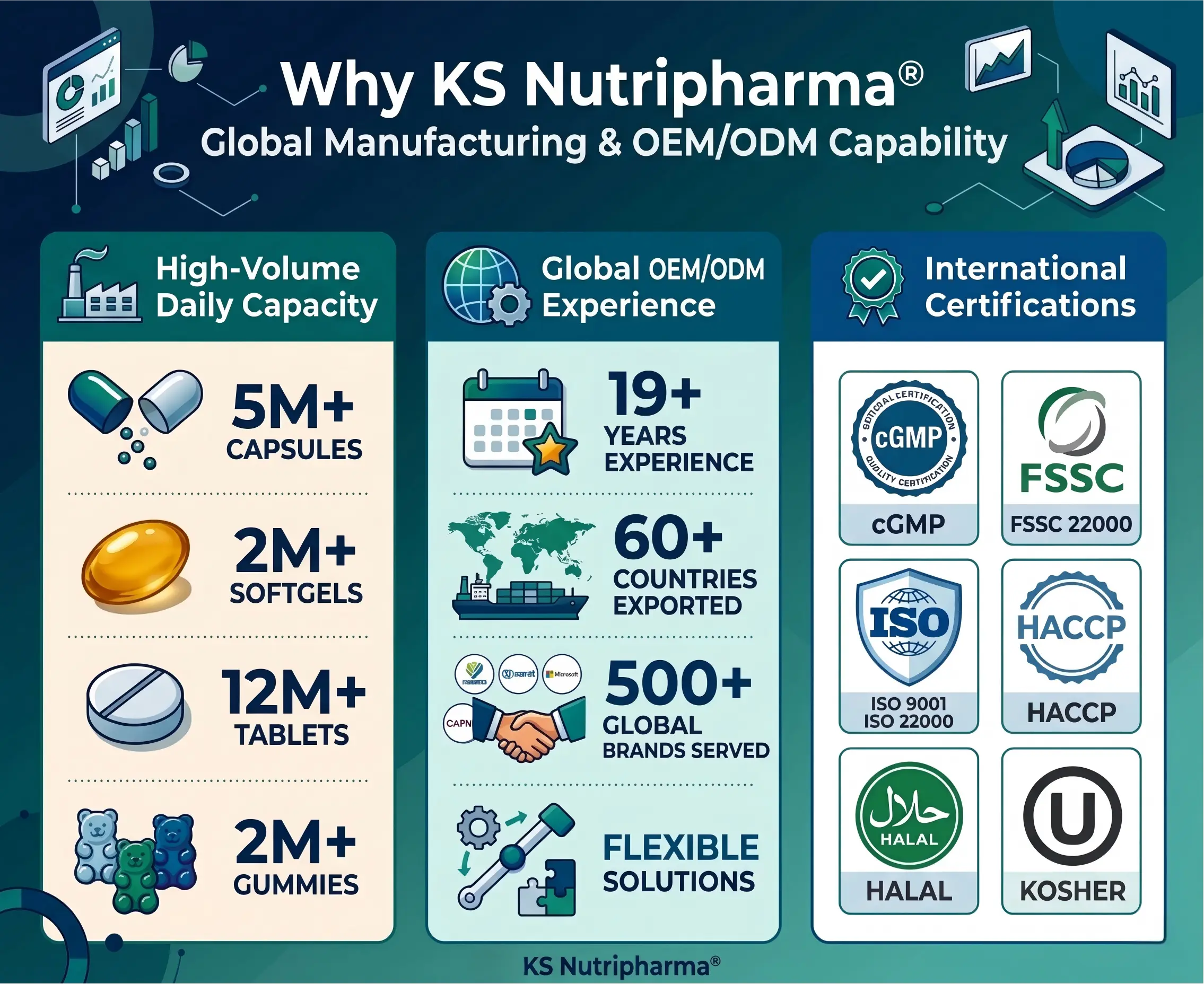
19+ years · 81,000+ m² cGMP facility · 12 production lines · 500+ brands · 60+ export markets · FDA-registered · cGMP · ISO 9001 · ISO 22000 · HACCP · FSSC 22000 · Halal · Kosher · Non-GMO
→ About Us · Manufacturing Capacity · Certifications & Compliance · Quality Control
Product Snapshot
| Attribute | KS Nutripharma Specification |
| Product Name | Hops Flower Extract |
| Botanical Source | Humulus lupulus Linn. (female inflorescence) |
| Active Marker | Xanthohumol (Prenylated Chalcone) |
| CAS Number | 6754-58-1 |
| Molecular Formula | C₂₁H₂₂O₅ | MW: 354.4 |
| Available Assays | 3%, 5%, 10%, 15%, 20%, 90%, 99% (HPLC-tested) |
| Appearance | Yellow to greenish-yellow fine powder |
| Test Method | HPLC (UV-Vis detection at 290 nm) |
| Standard MOQ | 1 kg (Sample) | 25 kg (Commercial) |
| Sample Availability | 10–20 g sealed bag, COA included |
| Lead Time | 3–5 business days (USA/EU warehouse stock); 10–15 days (factory direct) |
| Shelf Life | 24 months when stored properly (sealed, cool, dry, away from light) |
| OEM/ODM | Available — capsules, tablets, softgels, gummies, powders, liquids |
| Certifications | ISO 9001, ISO 22000, HACCP, FSSC 22000, cGMP, FDA-registered, HALAL, KOSHER |
| Global Warehouses | Los Angeles, CA | New Jersey, NJ | Rotterdam, Netherlands |
| Production Capacity | 5,000+ tons/year raw material processing | 81,000+ m² facility footprint |
| Traceability | GAP-certified cultivation → Extraction → Standardization → COA release |
Is Xanthohumol the Right Ingredient for Your Product?
Xanthohumol is a prenylated chalcone concentrated in the lupulin glands of Humulus lupulus. Its unique pharmacokinetic profile—poor systemic absorption but high local concentration in the GI tract—makes it functionally distinct from resveratrol, curcumin, or EGCG.
Suitable For
- Healthy Aging & Longevity — Extends lifespan in Drosophila by 14.89% and improves locomotor activity (Wongchum & Dechakhamphu, 2021)
- Antioxidant Defense — Reduces oxidatively damaged purines and urinary 8-OHdG at 12 mg/day in healthy adults (Ferk et al., 2016)
- Women’s Wellness — Alleviates menopausal hot flashes and improves lipid profiles when combined with red clover (Kim et al.)
- Metabolic Health — Improves glucose control, dyslipidemia, and fatty liver in rodent models of metabolic syndrome (Gómez-Zorita et al., 2024)
- Gut Health & IBD Support — Phase 2 XMaS trial (NCT04590508) showed remission-level disease activity scores in Crohn’s patients at 24 mg/day for 8 weeks (Stevens et al., Oregon State University / NUNM)
- Beauty-from-Within — Antioxidant and anti-inflammatory mechanisms support skin vitality applications
- Immune Modulation — Suppresses IL-1β, IL-6, and TNF-α release from PBMCs ex vivo at 0.125 mg doses (Jung et al., 2022)
Not Ideal For
- Children’s Products — Limited pediatric safety data; phytoestrogenic metabolites (8-prenylnaringenin) raise developmental concerns
- High-Acid Beverages (pH < 3.5) — Xanthohumol cyclizes to isoxanthohumol in acidic environments, altering bioactivity and solubility
- High-Moisture Gummies (unprotected) — Hygroscopicity and oxidation risk require microencapsulation or liposomal delivery
- Mass-Market Sports Energy — Low oral bioavailability and sedative-associated hop constituents conflict with stimulant positioning
- Iron-Fortified Formulas — Polyphenolic structure may chelate divalent cations, reducing iron bioavailability
- Products targeting immediate CNS effects — Low blood-brain barrier penetrance limits direct neuroprotective delivery
Grade Selection Center — Which Assay Should You Choose?
KS Nutripharma offers seven standardized grades. The right choice depends on your dosage form, target market, cost structure, and regulatory positioning.
| Grade | Best For | Cost Index | Typical Products | KS Recommendation |
| 3% | Cost-sensitive mass market | ★★★★★ (Lowest) | Mass-market capsules, bulk powders, private-label wellness | Use when label claim is “hops extract” rather than exact assay; good for combo formulas |
| 5% | Entry-level functional foods | ★★★★☆ | Functional beverages (pH-neutral), starter supplement lines | Minimum viable assay for credible antioxidant positioning; water-dispersible grades available |
| 10% | Amazon / DTC premium capsules | ★★★★☆ | Premium capsules, beauty-from-within tablets | Sweet spot for cost-per-mg of active; compatible with most encapsulation lines |
| 15% | Mid-tier longevity brands | ★★★☆☆ | Longevity stacks, women’s health complexes | Differentiation grade; strong clinical narrative per capsule dose |
| 20% | Premium longevity / metabolic | ★★★☆☆ | High-end longevity formulas, gut health protocols | Optimal for 50–100 mg daily dose claims; strong batch-to-batch consistency |
| 90% | Clinical / research-grade | ★★☆☆☆ | Clinical trials, practitioner lines, research institutions | High-purity isolation; requires advanced formulation (micellar / liposomal) for bioavailability |
| 99% | R&D / API / pharmaceutical | ★☆☆☆☆ (Highest) | API development, analytical standards, novel drug delivery research | Reference-grade purity; available with full characterization (NMR, MS, HPLC) |
Formulation Decision Tree:
- Capsule / Tablet → 10% or 20% (standard fill weight, direct compression compatible)
- Softgel → 90% (reduced fill volume, oil-soluble matrix)
- Functional Drink (pH > 4.0) → 5% or 10% water-dispersible grade (microencapsulated or nanoemulsion)
- Gummy → 10% or 20% with microencapsulation (heat-stable, taste-masked)
- Powder Sachet → 3% or 5% (cost-optimized, instantized)
- Clinical Trial → 90% or 99% (dose-precision, batch homogeneity)
Technical Characteristics — Engineering Data for R&D
The following parameters are critical for formulation scientists and process engineers. All data are based on KS Nutripharma in-house testing, peer-reviewed literature, and USP/EP reference methods.
| Parameter | Specification / Value | Formulation Implication |
| Solubility — Water | < 0.1 mg/mL (practically insoluble) | Requires liposomal, micellar, or microencapsulated delivery for aqueous applications; ethanol or oil-based carriers preferred |
| Solubility — Ethanol | 10 mg/mL (≥96% EtOH); 35.44 mg/mL in DMSO | Standard solvent for analytical prep; ethanol-based tinctures viable at low concentrations |
| Solubility — Oil | Dispersible in MCT / sunflower oil with surfactant | Softgel-compatible; KS Nutripharma offers oil-dispersion pre-mix services |
| Heat Stability | Retains ≥95% activity at 80°C for 30 min | Suitable for standard tablet compression and capsule filling; avoid prolonged exposure >100°C |
| pH Stability | Stable pH 4.0–7.0; cyclizes to isoxanthohumol at pH < 3.5 | Avoid high-acid beverages; buffer gummy matrices to pH ≥ 4.0; enteric coating recommended for gastric protection |
| Light Stability | Degrades under UV/strong visible light; store in amber containers | Use opaque or amber packaging; minimize exposure during manufacturing |
| Oxidation Sensitivity | Moderate; prenyl group susceptible to oxidative cleavage | Include antioxidant excipients (ascorbyl palmitate, mixed tocopherols) in formulation; nitrogen flush during packaging |
| Hygroscopicity | Low to moderate (powder form) | Standard desiccant sufficient; avoid open-air exposure >60% RH |
| Particle Size (99% grade) | D50: 20–40 μm; 100% pass 80 mesh | Directly compressible; good flowability for high-speed capsule lines |
| Bulk Density | 0.35–0.55 g/mL (tapped) | Standard for V-blender and bin-blender operations; calculate fill weight accordingly |
| Flowability (Carr Index) | 15–22% (good to fair flow) | No glidant required for most operations; 0.5% colloidal SiO₂ recommended for high-speed tableting |
| Melting Point | 172°C | No thermal degradation concern during standard processing; avoid hot-melt extrusion without stabilization |
| Shelf Life (unopened) | 24 months at 2–8°C (recommended); 12 months at 25°C/60% RH | Cold-chain storage extends stability; KS US/EU warehouses maintain climate-controlled conditions |
| Heavy Metals | Pb < 2 ppm; As < 2 ppm; Cd < 1 ppm; Hg < 1 ppm | Exceeds USP <232> / ICH Q3D limits; safe for daily chronic use |
| Residual Solvents | < 50 ppm (ethanol / CO₂ extraction only) | Meets ICH Q3C; no toxic solvents used in KS extraction process |
| Microbiology | TPC < 1,000 CFU/g; Yeast/Mold < 100 CFU/g; Salmonella / E.coli Negative | Pharmaceutical-grade microbiological standard; suitable for immunocompromised-targeted products |
Based on KS Nutripharma R&D data, peer-reviewed compatibility studies, and 15+ years of botanical formulation experience.
Compatible Ingredients (Synergistic Combinations)
- Resveratrol: Shared Nrf2/ARE antioxidant pathway; combined prenylation + stilbene structure enhances membrane permeability
- Astaxanthin: Dual lipid-phase antioxidant; xanthohumol stabilizes astaxanthin against photo-oxidation in oil matrices
- Coenzyme Q10 (Ubiquinone): Mitochondrial energy + metabolic support; both are lipophilic and compatible in softgel or MCT-based systems
- Quercetin: Complementary flavonoid metabolism; quercetin inhibits xanthohumol sulfation, potentially improving bioavailability
- NMN (Nicotinamide Mononucleotide): Longevity stack pairing; xanthohumol targets inflammation while NMN targets NAD⁺ depletion; no chemical incompatibility observed
- EGCG (Green Tea Extract): Synergistic anti-inflammatory and chemopreventive effects in preclinical models; both polyphenols stable at neutral pH
- Berberine: Metabolic health combination; berberine (AMPK activator) + xanthohumol (anti-inflammatory) for glucose/lipid synergy
- Curcumin (with piperine): Shared NF-κB inhibition; liposomal co-delivery enhances absorption of both actives
- Rice Protein: Documented increase in xanthohumol bioavailability and metabolite exposure in humans (Langley et al., 2021)
- Bacillus coagulans / Lactobacillus strains: Xanthohumol acts as a prebiotic modulator; enhances beneficial gut bacteria while suppressing pathogens (Stevens et al.)
Not Recommended / Caution Required
- Iron (Fe²⁺/Fe³⁺): Polyphenolic chelation reduces iron bioavailability; separate dosing by ≥2 hours if co-formulation unavoidable
- High-Moisture Formulas (>15% water activity): Risk of hydrolysis and microbial growth; requires microencapsulation or water activity reduction to < 0.65
- High-Acid Beverages (pH < 3.5): Cyclization to isoxanthohumol alters activity profile; use buffered systems or enteric-coated particles
- Strong Oxidizers (peroxides, hypochlorites): Prenyl group oxidation leads to degradation products with unknown safety profiles
- Calcium / Magnesium (high dose): Potential complexation with chalcone hydroxyl groups; may reduce dissolution rate
Procurement managers often optimize on $/kg alone. The following analysis shows why higher-assay grades frequently deliver lower total formulation cost and higher margin.
| Grade | Dosage per Serving (mg XN) | Fill Weight per Capsule | Capsule Size Impact | Downstream Cost Impact |
| 3% | 50 mg XN | ~1,667 mg extract | Size 00 (large) | High excipient load; larger bottle; higher shipping weight; lower consumer appeal |
| 10% | 50 mg XN | ~500 mg extract | Size 0 (standard) | Standard bottle; moderate shipping; acceptable swallowability |
| 20% | 50 mg XN | ~250 mg extract | Size 1 (compact) | Smaller bottle → lower packaging cost; lower shipping; premium positioning |
| 90% | 50 mg XN | ~56 mg extract | Size 3 (mini) | Minimal excipient; smallest bottle; lowest shipping; highest perceived value; may require liposomal carrier |
Example: Switching from 10% to 20% grade for a 60-count bottle reduces total extract weight by 50%, enabling a 30% smaller bottle, 25% lower shipping cost, and 15% improvement in gross margin—while delivering the same active dose per serving.
KS Nutripharma operates an integrated QC system across every production stage, from GAP-certified cultivation to final COA release. Our facilities are cGMP, ISO 9001, ISO 22000, HACCP, and FSSC 22000 certified, with FDA-registered manufacturing and HALAL/KOSHER production options.
| Control Category | Test / Method | KS Nutripharma Standard |
| Identity | HPLC (290 nm) + TLC fingerprint | Every batch matched against authenticated reference standard (Sigma-Aldrich X0379 or in-house 99% standard) |
| Potency | HPLC quantification of xanthohumol + isoxanthohumol | Assay ±5% of label claim; isoxanthohumol reported as process indicator |
| Heavy Metals | ICP-MS per USP <232> / ICH Q3D | Pb < 2 ppm; As < 2 ppm; Cd < 1 ppm; Hg < 1 ppm (stricter than regulatory minimum) |
| Microbiology | USP <61> / <62> (TAMC / TYMC) | TPC < 1,000 CFU/g; Yeast/Mold < 100 CFU/g; Salmonella / E.coli / S.aureus Negative |
| Pesticides | GC-MS/MS multi-residue screen (EU Regulation 396/2005) | Below LOD for 500+ pesticide residues; compliant with EU, US, and Japan MRLs |
| Residual Solvent | GC-HS per ICH Q3C | Ethanol / CO₂ only; total residual solvents < 50 ppm; no Class 1 or Class 2 solvents |
| Aflatoxins | HPLC-FLD (B1, B2, G1, G2) | Total aflatoxins < 4 μg/kg (EU limit); B1 < 2 μg/kg |
| Stability | Accelerated (40°C/75% RH, 6 months) + Long-term (25°C/60% RH, 24 months) | Real-time stability data available; ICH Q1A(R2) compliant protocols |
| Batch Consistency | Inter-batch CV analysis (n ≥ 3 batches) | Assay CV < 3%; heavy metals CV < 10%; full statistical process control (SPC) charts maintained |
| Traceability | Blockchain-linked batch records + GAP cultivation logs | Full seed-to-shelf traceability; retention samples stored ≥ 3 years |
| Third-Party Testing | Eurofins / SGS / Bureau Veritas independent verification | Available on request; COA includes third-party lab reference for 99% grade |
Importance: KS Nutripharma maintains 20% technical/R&D staff, 50+ patented extraction technologies, and 2 dedicated R&D centers. Our hops extract is produced via supercritical CO₂ extraction followed by chromatographic purification—no toxic solvents, no synthetic carriers.
| Attribute | Xanthohumol | Resveratrol | EGCG | Curcumin | Astaxanthin |
| Source | Hops (Humulus lupulus) | Grape / Polygonum | Green tea | Turmeric | Haematococcus pluvialis |
| Chemical Class | Prenylated chalcone | Stilbene | Catechin (flavanol) | Curcuminoid | Carotenoid (xanthophyll) |
| Primary Mechanism | Nrf2/ARE, NF-κB, gut microbiome | SIRT1, AMPK, Nrf2 | EGFR, NF-κB, COMT | NF-κB, COX-2, Nrf2 | Singlet oxygen quenching |
| Bioavailability | Low (enhanced by micelles / rice protein) | Low (enhanced by piperine) | Moderate (unstable in gut) | Very low (enhanced by piperine / liposomes) | High (lipid-soluble) |
| GI Targeting | Excellent (poor systemic absorption = high local GI concentration) | Poor | Moderate | Good | Poor |
| Clinical Trial Stage | Phase 2 (Crohn’s, COVID-19) | Extensive (longevity, metabolic) | Extensive (cancer, weight) | Extensive (inflammation) | Moderate (exercise, skin) |
| Cost per Active mg | Medium-High | Low | Low | Low | High |
| Differentiator | Unique gut-localized action; prebiotic; phytoestrogen metabolite | Longevity icon; wine association | High-volume commodity; caffeine synergy | Broad anti-inflammatory; culinary familiarity | Visual red color; skin health; eye health |
| Best Paired With | NMN, Berberine, Probiotics | NMN, Quercetin, Pterostilbene | Caffeine, L-theanine | Boswellia, Ginger, Piperine | Omega-3, Vitamin E, Lutein |
| Market | Status | Label / Claims | KS Support |
| United States | Dietary Supplement (DSHEA); hops GRAS for food use | Antioxidant, Cellular Health, Women’s Health (structure/function claims with disclaimer) | FDA-registered facility; NDI consultation; label review; structure/function claim substantiation |
| European Union | Traditional herbal use possible; novel food assessment for >90% grades | General wellness; avoid disease claims per EU Regulation 1924/2006 | EFSA-compliant dossier support; traditional use documentation; member-state regulatory guidance |
| Canada | Natural Health Product (NHP) — hops on NHPD monograph | Traditional digestive aid; sedative; antioxidant (with approved NHP claims) | NHP site license support; bilingual label review; NHPD monograph alignment |
| Japan | Food / Food with Function Claims (FFC) possible | Antioxidant, Gut Health (FFC system with scientific substantiation) | FFC application support; FOSHU consultation partner network |
| Australia | Listed medicine (TGA) or food ingredient | Traditional indication: sleep / digestive support | TGA GMP certification available; ARTG listing support via local partner |
| Dosage Form | Suitable Grades | Process Notes |
| Hard Capsules | 10%, 20% | Direct fill or granulation; standard excipient compatibility; size 0–1 optimal |
| Tablets | 10%, 20% | Direct compression with 0.5% Mg stearate + 2% MCC; avoid high-pressure ejection |
| Softgels | 90% | Oil-dispersed in MCT or sunflower oil; compatible with gelatin and veg-capsule shells |
| Gummies | 10%, 20% (microencapsulated) | Buffer to pH ≥ 4.0; add antioxidant; use water-dispersible grade; max 95°C, <20 min cook time |
| Powders / Sachets | 3%, 5%, 10% | Instantize with maltodextrin or inulin; protect from light and oxygen during blending |
| Functional Beverages | 5%, 10% (water-dispersible) | pH 4.0–7.0; use nanoemulsion or liposomal system for clear beverages; opaque acceptable for juices |
| Liposomal Liquids | 90%, 99% | KS Nutripharma liposomal delivery service available; particle size 50–150 nm; shelf-stable 12 months |
| Not Recommended | — | High-acid carbonated drinks (pH < 3.0); high-heat candy (>120°C); unprotected high-moisture syrups |
The following evidence table summarizes peer-reviewed and clinical data relevant to procurement and marketing decisions.
| Health Area | Human Evidence | Animal Evidence | Mechanism | Safety |
| Antioxidant / DNA Protection | RCT: 12 mg/day × 14 days ↓ DNA damage in lymphocytes (Ferk et al., 2016) | Rat: ↓ MDA, ↑ GSH, ↑ SOD/catalase | Nrf2/ARE pathway activation; detoxification enzyme induction (α-GST) | Well-tolerated; no adverse events in Phase 1 (n=30, 8 weeks) |
| Anti-Inflammatory | Ex vivo: 0.125 mg suppressed IL-1β, IL-6, TNF-α in PBMCs (Jung et al., 2022) | Mouse: ↓ NF-κB, ↓ COX-2, ↓ iNOS | Inhibition of TLR2/CD14 signaling; NF-κB suppression | No toxicity at 24 mg/day; no hepatic/renal biomarker changes |
| Crohn’s / IBD | Phase 2 (XMaS): 24 mg/day × 8 weeks → remission scores in active Crohn’s (Stevens et al., NUNM/OSU) | Mouse: strengthened intestinal barrier; reshaped gut microbiome | Bile salt hydrolase inhibition; ↓ secondary bile acids; prebiotic modulation | No detectable toxicity; no serious adverse events |
| Metabolic Syndrome | No published RCTs in metabolic syndrome yet | Rat/mouse: ↓ glucose, ↓ triglycerides, ↓ body weight, ↓ hepatic steatosis | ↓ De novo lipogenesis; improved insulin sensitivity; AKT/mTOR modulation | 1000 mg/kg in mice × 3 weeks: no histopathological toxicity |
| Neuroprotection | No human neuroprotection trials published | Mouse (APP/PS1): restored cognition in Morris water maze; reshaped gut-brain axis | Autophagy enhancement; mTOR inhibition; gut microbiota restoration | Well-tolerated in human safety trials; BBB penetrance low |
| COVID-19 Adjuvant | RCT (n=50): 1.5 mg/kg TID × 7 days ↓ mortality 20% vs 48% control; ↓ IL-6, D-dimer (Dąbrowski et al., 2023) | — | Anti-inflammatory; antiviral; anticoagulant modulation | No adverse effects reported in critically ill patients |
| Longevity | No human longevity trials | Drosophila: +14.89% mean lifespan; improved stress resistance | Antioxidant enzyme upregulation; improved metabolic flux | Safety profile favorable vs. corticosteroids per OSU researchers |
- Raw Material Source: Humulus lupulus L. cultivated in GAP-certified bases in Northern China (Xinjiang, Northeast) and sourced from EU-compliant European hop suppliers (Barth-Haas quality standard alignment)
- Extraction: Supercritical CO₂ extraction at 60–90°C, up to 1,000 bar pressure, followed by chromatographic purification (patented technology) — no toxic solvents
- Standardization: HPLC-guided blending to target assay; batch homogeneity verified by inter-batch CV < 3%
- Testing: In-house HPLC, ICP-MS, GC-MS/MS, microbiology; third-party verification by Eurofins / SGS for 90% and 99% grades
- Warehousing: Climate-controlled storage at Los Angeles, New Jersey, and Rotterdam; temperature/humidity logged continuously
- Lot Traceability: Blockchain-linked batch records from cultivation lot → extraction batch → finished goods lot → COA number
- Retention Samples: Every batch retained for ≥3 years; available for re-testing or dispute resolution
- Recall Protocol: Full traceability enables targeted lot recall within 24 hours; mock recall exercises conducted quarterly
Ready to Manufacture Your Xanthohumol Project?
Share your concept, target mg xanthohumol/serving, format, market, companions, and volume. We will return grade recommendation, serving math, cost-per-serving options, samples, and a commercialization path.
KS Nutripharma — Xanthohumol Ingredient and Supplements Manufacturer · Private Label & OEM/ODM
Related Resources
Trust & capability
- About Us
- Manufacturing Capacity
- R&D Center
- Quality Control
- Certifications & Compliance
- Global Raw Material Supply Network
- Global Presences
- Confidentiality & IP Protection
- Processing Technologies
- FAQs
- Contact Us
Engineering & development guides
- Supplement Development Guide
- Advanced Nutraceutical Delivery Systems
- Advanced Hard Capsule Technologies
- Advanced Softgel Technologies
- Moisture Control & Stability Engineering
- Functional Beverage Stick Pack Engineering
- High-Fiber Blending Technology
- How to Read a COA
- Extraction Technology Guide
- Ingredient Guide
- Regulatory Compliance Guide
Format hubs
Xanthohumol topic cluster
- What Is Xanthohumol?
- Xanthohumol Benefits
- Xanthohumol Dosage Guide
- Hops Extract vs Xanthohumol
- Xanthohumol Formulation Guide
- How to Choose a Xanthohumol Supplier
- Xanthohumol Ingredient Manufacturer
- Xanthohumol Side Effects & Safety
B2B manufacturing reference. Not intended to diagnose, treat, cure, or prevent any disease. Structure–function claims must be reviewed for each target market.
Xanthohumol is quantified by reversed-phase HPLC with UV detection at 290 nm. UV spectrophotometry alone is insufficient because hop extracts contain multiple prenylated flavonoids (isoxanthohumol, 8-prenylnaringenin, 6-prenylnaringenin) that overlap in UV spectra. HPLC separates these congeners and provides accurate, specific assay values. KS Nutripharma uses Agilent 1260 Infinity II HPLC systems with validated methods per ICH Q2(R1).
Xanthohumol retains ≥95% activity after 30 minutes at 80°C, making it stable for standard capsule filling and tablet compression. However, it is light-sensitive and moderately oxidation-sensitive. KS Nutripharma recommends: (1) manufacturing under yellow/amber light, (2) nitrogen flushing during packaging, (3) inclusion of 0.1–0.5% ascorbyl palmitate or mixed tocopherols as antioxidant excipients, and (4) opaque or amber primary packaging.
In standard gummy processing (85–95°C, 15–20 min, pH 3.0–3.5), unprotected xanthohumol can lose 15–30% due to heat + acid cyclization to isoxanthohumol. KS Nutripharma’s microencapsulated grade (available for 10% and 20%) retains >90% activity under these conditions. We recommend buffering the gummy matrix to pH ≥ 4.0 or using enteric-coated particles.
For mass-market capsules: 10%. For premium longevity/metabolic positioning: 20%. For clinical trials or practitioner channels: 90%. For API or research: 99%. If cost is the primary driver and label claim flexibility exists: 3% or 5%. Contact our R&D team for a free formulation consultation to determine the optimal grade for your dosage form and target dose.
Yes. Xanthohumol shows no chemical incompatibility with NMN or berberine in accelerated stability testing (40°C/75% RH, 3 months). NMN + xanthohumol is a popular longevity stack. Berberine + xanthohumol targets metabolic health (AMPK activation + anti-inflammatory synergy). Both combinations are stable in capsule and tablet formats at neutral pH.
Native xanthohumol is practically insoluble in water (<0.1 mg/mL). KS Nutripharma offers water-dispersible grades (10% and 20%) produced via microencapsulation with modified food starch or gum arabic. These achieve stable dispersions at 50–100 mg/L in pH-neutral beverages. For acidic drinks (pH < 4.0), liposomal or nanoemulsion delivery is required to prevent precipitation and cyclization.
Recommended. The prenyl side chain of xanthohumol is susceptible to auto-oxidation. In KS stability studies, formulations containing 0.2% ascorbyl palmitate or 0.5% mixed tocopherols showed 40% less degradation over 12 months at 25°C/60% RH compared to unprotected controls. For oil-based softgels, 1% rosemary extract (carnosic acid) is also effective.
Xanthohumol is a chalcone; isoxanthohumol is its flavanone isomer formed by acid-catalyzed cyclization (e.g., in the stomach or low-pH beverages). Isoxanthohumol has weaker anti-inflammatory activity but stronger phytoestrogenic effects (8-prenylnaringenin is a metabolite). KS Nutripharma reports isoxanthohumol content on every COA as a process indicator. For maximum xanthohumol retention, use enteric coating or buffered matrices.
Hops extracts have a long history of safe use in food and beverages (including beer) in the US and EU. Xanthohumol as a purified extract is marketed as a dietary supplement ingredient in the US under DSHEA. It is not currently the subject of a finalized FDA GRAS notification or EFSA Novel Food authorization as a standalone purified compound. KS Nutripharma provides regulatory guidance, label claim review, and New Dietary Ingredient (NDI) consultation support for US market entry. For EU, traditional herbal use documentation is available; novel food assessment may be required for >90% grades depending on member state.
Every KS Nutripharma shipment includes: (1) Certificate of Analysis (COA) with HPLC chromatogram, (2) Material Safety Data Sheet (MSDS), (3) Technical Data Sheet (TDS) with solubility and stability data, (4) Allergen Statement, (5) Non-GMO Declaration, (6) Halal/Kosher Certificate (if applicable), and (7) Batch-specific heavy metals and microbiology report. Third-party testing reports (Eurofins/SGS) available on request for 90% and 99% grades.
All URLs verified as of July 2026. Sources are from peer-reviewed journals, government databases, and authoritative research institutions.
[1] Linus Pauling Institute, Oregon State University. “Xanthohumol Crohn’s Disease Phase 2 Trial (XMaS)”. https://lpi.oregonstate.edu/research-insider/xanthohumol-crohns-disease-clinical-trial
[2] Linus Pauling Institute Research Newsletter. “Xanthohumol and Metabolic Syndrome Research”. https://lpi.oregonstate.edu/sites/lpi.oregonstate.edu/files/pdf/newsletters/fw2018_hi-res.pdf
[3] MDPI Antioxidants. “Antioxidant Potential of Xanthohumol: Evidence from Human and Animal Studies”. https://www.mdpi.com/2076-3921/13/12/1559
[4] National University of Natural Medicine (NUNM). “Xanthohumol Study for Inflammatory Bowel Disease”. https://nunm.edu/2024/11/nunm-researchers-advance-study-of-hops-compound-for-treating-inflammatory-bowel-disease/
[5] ClinicalTrials.gov. “XMaS Phase 2 Clinical Trial (NCT04590508)”. https://ctv.veeva.com/study/a-phase-2-clinical-trial-xanthohumol-metabolism-and-signature-xmas-in-crohns-disease
[6] Alzheimer’s Drug Discovery Foundation (ADDF). “Xanthohumol Cognitive Vitality Report”. https://www.alzdiscovery.org/uploads/cognitive_vitality_media/Xanthohumol_%28drug_in_development%29.pdf
[7] PMC / NIH. “Xanthohumol—A Miracle Molecule with Biological Activities”. https://pmc.ncbi.nlm.nih.gov/articles/PMC10970401/
[8] PMC / NIH. “Selective Antimicrobial and Cytotoxic Effects of Hop Compounds”. https://pmc.ncbi.nlm.nih.gov/articles/PMC12540922/
[9] Nature Scientific Reports. “RP-HPLC Bioanalytical Method for Xanthohumol”. https://www.nature.com/articles/s41598-026-36078-0
[10] Sigma-Aldrich (Merck). “Xanthohumol Technical Data & Specifications”. https://www.sigmaaldrich.com/HK/en/product/sigma/x0379
[11] Barth-Haas Group. “Xanthohumol Extract Technical Data Sheet”. https://www.barthhaas.com/fileadmin/user_upload/downloads/sharepoint/xanthohumolextrakt-tds-en.pdf
[12] KS Nutripharma Official Website. “Company Profile, Certifications & Manufacturing”. https://kssupplements.com/about-us/
[13] KS Nutripharma R&D Center. “Scientific Research & Analytical Testing Capabilities”. https://kssupplements.com/rd-center/
[14] KS Nutripharma Manufacturing. “Production Capacity & Facility Overview”. https://kssupplements.com/manufacturing-capacity/
[15] International Journal of Molecular Sciences. “Bioavailability and Cardiometabolic Effects of Xanthohumol”. https://ouci.dntb.gov.ua/en/works/7PxRyYn7/
[16] W5122 Multistate Research Activity Report. “Xanthohumol Gut Microbiome Clinical Trial (NCT03735420)”. https://nimss.org/storage/11502/W5122-Multistate-Research-Activity-2024-Accomplishments-Report_FINAL.pdf